September 7, 2025
September 7, 2025


Intro to Mass Readings for Sunday
Intro to Mass Readings for Sunday

The Catholic Pursuit of Divine Wisdom
The ancient question posed in the Book of Wisdom, “who can know God’s counsel, or who can conceive what the LORD intends?” (Wisdom 9:13), speaks directly to the heart of the Catholic spiritual life. It is a profound acknowledgment of the vast chasm between our limited human intellect and the infinite mind of God. This passage is more than a poetic reflection on human frailty; it is a foundational text that illuminates the Church’s understanding of grace, revelation, and the indispensable role of the Holy Spirit. For the contemporary Catholic navigating a world of complex choices and moral ambiguity, these verses serve as a vital reminder that true wisdom is not achieved through human effort alone but is a divine gift that must be humbly received.
From a Catholic theological perspective, the personified “Wisdom” described in this book is understood as a prefigurement of the Holy Spirit. The Church Fathers saw in these texts a foreshadowing of the Third Person of the Trinity, the Advocate whom Christ would send “from on high” (Wisdom 9:17). This passage powerfully affirms the Catholic teaching on the necessity of grace. While the Church champions the use of reason, it also insists that reason alone is insufficient to grasp the mysteries of faith or to discern God’s will. Our “deliberations are timid” and our “plans are unsure” (Wisdom 9:14) precisely because our nature is fallen. It is only through the gift of the Holy Spirit, first received in Baptism and strengthened in Confirmation, that our minds are illuminated and our wills are fortified to understand and choose what is pleasing to God.
The modern application of this teaching is deeply practical. Consider a Catholic professional facing an ethical dilemma where the most profitable path conflicts with moral teaching. Human reasoning, weighed down by “a perishable body” (Wisdom 9:15), might rationalize the compromised choice. However, by seeking the Spirit’s guidance through prayer and the sacraments, they receive the spiritual clarity to choose the path of integrity, even at a personal cost. Similarly, a family discerning a major life decision can find their human plans full of anxiety. By turning to God and seeking His counsel together, they can find a peace and certainty that transcends worldly logic, trusting that the Spirit is making their “paths on earth straight” (Wisdom 9:18).
Ultimately, this passage from Wisdom challenges every Catholic to a life of profound humility. It calls us to recognize our dependence on God and to actively cultivate a relationship with the Holy Spirit. In a world that prizes self-reliance, it is a radical call to trust that the wisdom we truly need is not found within ourselves, but is a grace freely given to those who ask.
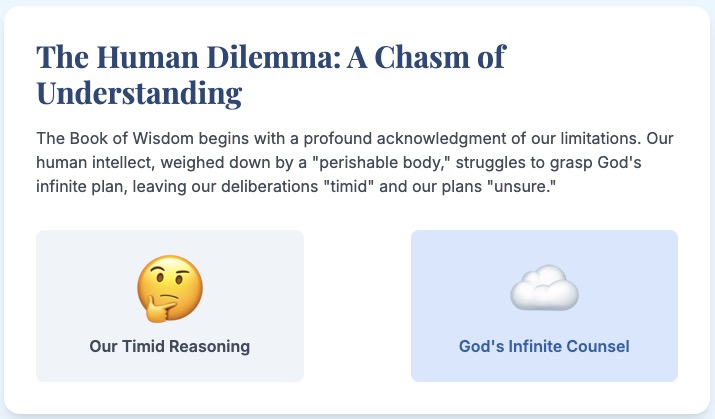
The Human Dilemma: Timid Deliberations
The essay begins by acknowledging the "vast chasm between our limited human intellect and the infinite mind of God," stating that our deliberations are often "timid" and our plans "unsure."
- Think of a time you faced a significant decision where you felt your own reasoning was insufficient. What did that feeling of limitation or "timidness" teach you?
- In what ways does modern life, with its emphasis on data and planning, make it harder to accept that our plans can be "unsure"?
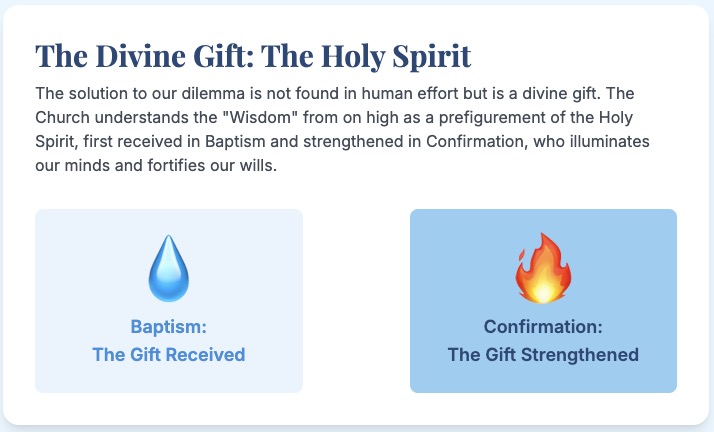
The Divine Gift: The Holy Spirit
The essay explains that from a Catholic perspective, the "Wisdom" described in the reading is a prefigurement of the Holy Spirit, a divine gift that illuminates our minds and fortifies our wills.
- The Church teaches that reason alone is not enough to grasp the mysteries of faith. How does the gift of the Holy Spirit complement our human reason?
- The essay connects this divine wisdom to the sacraments of Baptism and Confirmation. How does this understanding change your perspective on the graces you received in those sacraments?
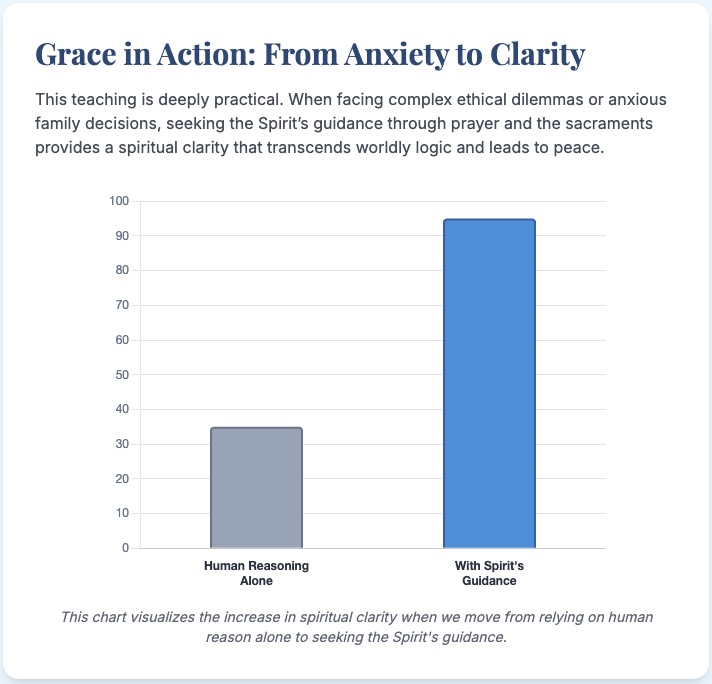
Grace in Action: Making Paths Straight
The essay provides two practical examples of this grace at work: a professional facing an ethical dilemma and a family discerning a major life decision.
- Which of these two examples resonates more with your own life experiences? Why?
- Can you think of another modern situation where relying on "worldly logic" would lead to a different outcome than seeking the Spirit's guidance?
- What does it mean for you, personally, for the Spirit to make your "paths on earth straight"?
The Ultimate Call: A Life of Humility
The essay concludes that this passage is a "radical call to trust that the wisdom we truly need is not found within ourselves, but is a grace freely given to those who ask."
- Our culture often prizes self-reliance. How can we, as Catholics, practice a healthy dependence on God without neglecting our own responsibilities?
- What is one practical step you can take this week to more actively "cultivate a relationship with the Holy Spirit" and seek His wisdom in a specific area of your life?
FIRST
READING


23rd Sunday of Year C
Wisdom 9:13-18b
Wisdom 9:13-18b
POP-UP Video | NAB w/ Notes | LECTIONARY
Click graphic above to view intro to reading

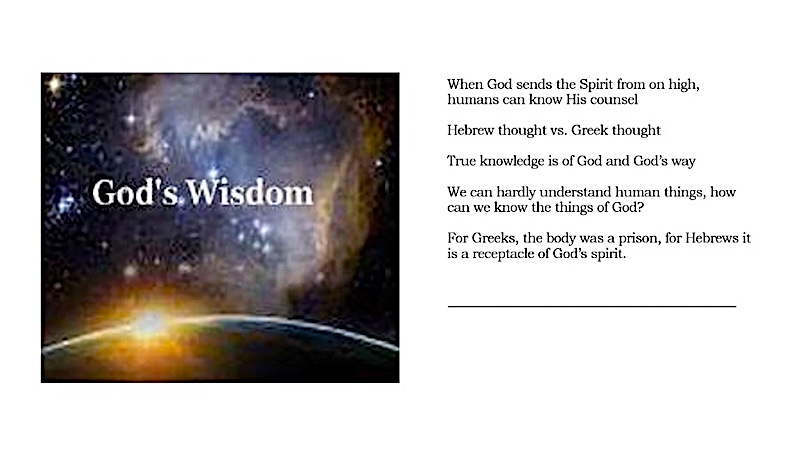
Fr. Paul emphasizes three key points:
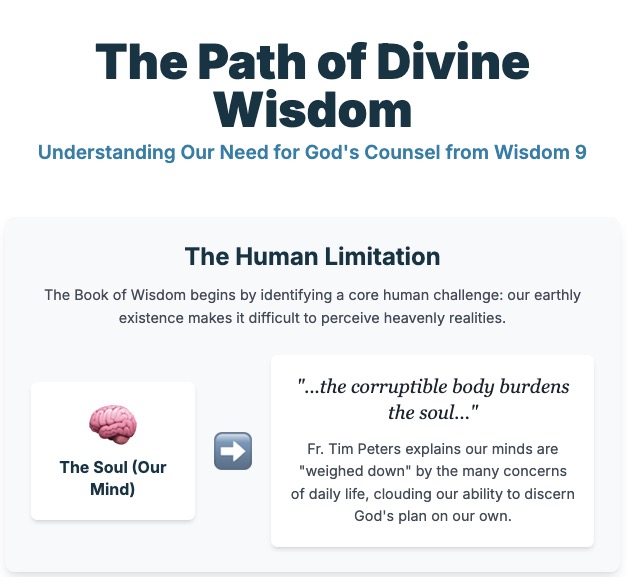
- Human Limitation: It’s difficult for us as mortals, weighed down by our physical bodies, to truly grasp heavenly matters or understand God’s ultimate plan. Our thinking is often described as “timid” or uncertain.
- Wisdom as a Gift: The only way we can know God’s will is if He gives us the gift of wisdom and sends the Holy Spirit to guide us.
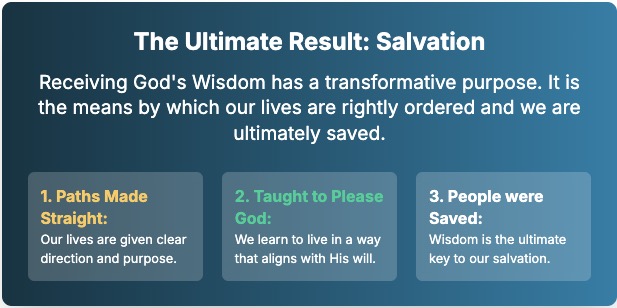
- Salvation through Wisdom: It is this divine wisdom, not our own cleverness, that “straightens our paths” and ultimately leads to salvation.
In short, the reading is a humble acknowledgment that we need God’s divine help to understand His purpose and live according to His will.o others. When we recognize our own limitations and need for God, we find it much easier to be merciful to those around us. Ultimately, the reading frames humility as the key to finding favor with God and living a life rooted in the truth of who we are.
Clipart by Fr. Richard Lonsdale
Larry Broding Commentary
23rd Sunday of Year C

Wisdom to Live in
Uncertain Times
by Larry Broding

Facing a world of uncertainty and despair, the author of the Wisdom of Solomon wrote to a Jewish community in Alexandria struggling to maintain its faith within a dominant Greek culture. This book presents “Lady Wisdom” as the bridge between Jewish tradition and Greek philosophy, offering a path to right living.
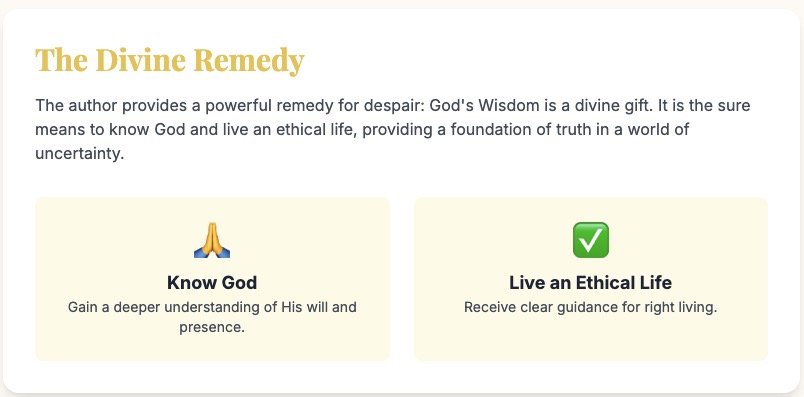
The reading acknowledges the human condition—our plans are unsure and our knowledge is limited, which can lead to hopelessness. However, it provides a powerful remedy: God’s Wisdom, a divine gift, is the sure means to know God and live an ethical life.
Early Christians equated this Wisdom with the Holy Spirit. For believers today, the Spirit is our guide through a world that can feel indifferent. Through prayer and discernment, the Holy Spirit gives us the strength to seek God’s will, offering a clear path and profound hope in the face of life’s challenges.

Fr. Tim Peters Commentary
23rd Sunday of Year C
Catholic Bible Study Video Series

Fr. Peters teaches at Saint John’s Seminary in Camarillo, CA.
23rd Sunday of Year C


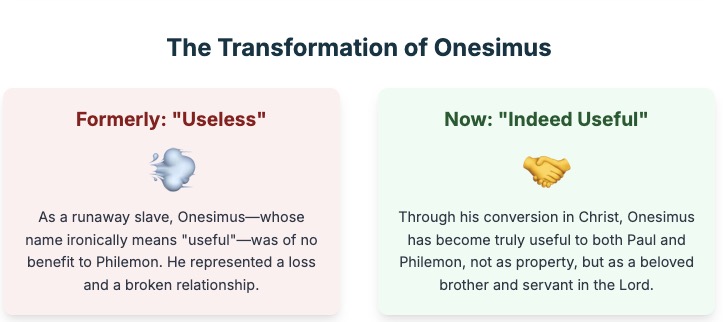
Paul’s brief, personal letter to Philemon is a profound and practical masterclass in Catholic social teaching. In his appeal for the runaway slave Onesimus, Paul presents a radical vision where the bonds of faith completely reorder worldly structures. He challenges Philemon, and every contemporary Catholic, to move beyond a relationship of legal rights and obligations to one of covenantal love and reconciliation. The letter is a timeless exhortation to see others not through the lens of the state or society, but through the eyes of Christ, recognizing a shared brotherhood that transcends all earthly distinctions.
From a Catholic theological perspective, the letter is a living icon of the Mystical Body of Christ. Through Baptism, both Philemon the master and Onesimus the slave have been incorporated into a new family, a spiritual reality that supersedes their legal status. When Paul asks Philemon to receive Onesimus “no longer as a slave but more than a slave, a beloved brother” (Philemon 16), he is calling him to live out the truth of this new identity.
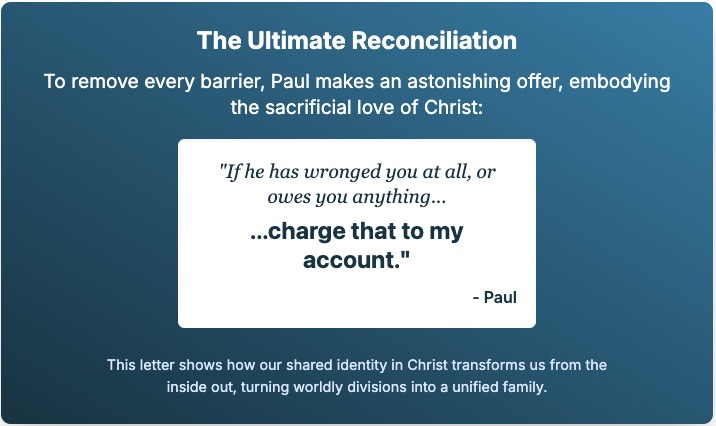
This dynamic mirrors the Sacrament of Reconciliation, where forgiveness restores not only our vertical relationship with God but also our horizontal relationship with the Church, the community wounded by our sin. Paul’s offer to absorb any debt Onesimus owes is a powerful imitation of Christ, who mediates for us and pays the debt we could never pay, making reconciliation possible.
For the modern Catholic, the conflict between worldly rights and Christian duty is a daily reality. A business owner, for example, has the legal right to pay a minimum wage, but their Catholic faith calls them to provide a just wage that respects the dignity of their employee as a “beloved brother.” In a politically polarized world, we have the “right” to dismiss those with opposing views, but our faith demands that we seek to understand and love them, recognizing our shared identity as children of God. Within our own families, we may feel we have a “right” to hold a grudge over a past hurt, but the letter to Philemon challenges us to absorb the cost of forgiveness for the sake of unity.
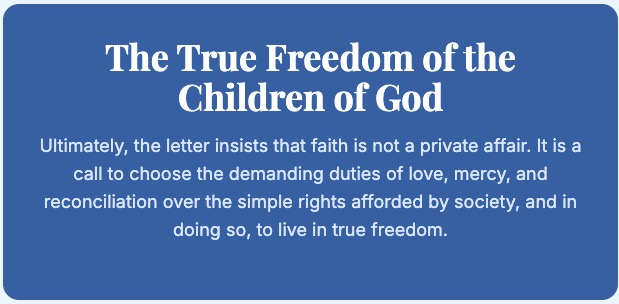
Ultimately, this letter insists that for a Catholic, faith is not a private affair. It must actively transform how we interact with the world. It is a call to choose the demanding duties of love, mercy, and reconciliation over the simple rights afforded by society, and in doing so, to live in the true freedom of the children of God.
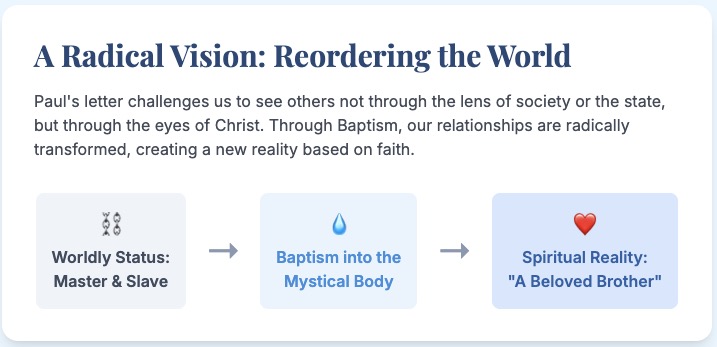
A Radical Vision: A New Way of Seeing
The essay begins by stating that the letter to Philemon "presents a radical vision where the bonds of faith completely reorder worldly structures."
- What are some of the "worldly structures" or social labels (e.g., job title, political party, wealth, social status) that we use to define people today?
- What does it mean to see someone "through the eyes of Christ" rather than through the "lens of the state or society"? How does this change our perspective?
- Why is this vision considered so "radical," both in Paul's time and today?
Theological Foundations: The Mystical Body
The essay highlights that through Baptism, we are incorporated into a "new family, a spiritual reality that supersedes" worldly status.
- How does the concept of the Mystical Body of Christ challenge our modern, individualistic way of thinking about faith?
- Paul offers to "absorb any debt" Onesimus owes, which the essay says is a "powerful imitation of Christ." How does this action help us understand the nature of both Reconciliation and true forgiveness?
- The essay connects forgiveness to both a "vertical relationship with God" and a "horizontal relationship with the Church." Why is it important to heal both?
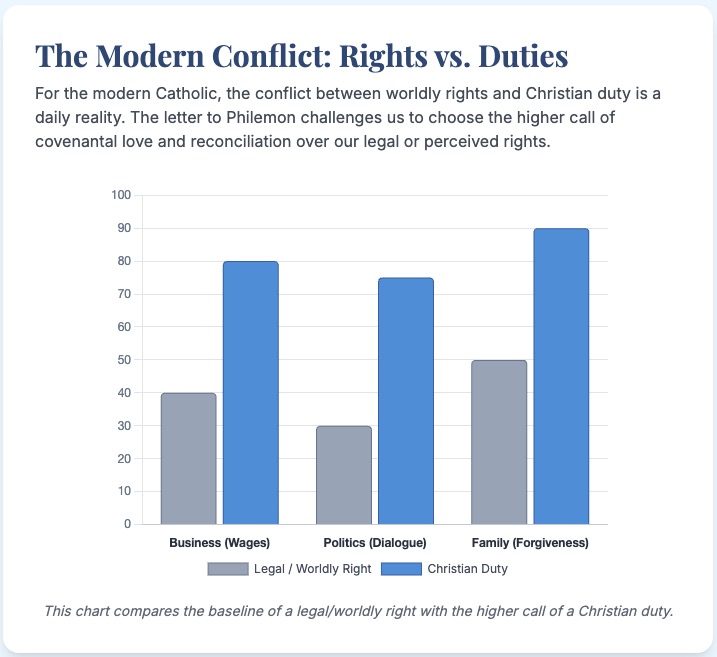
The Modern Conflict: Rights vs. Duties
The essay argues that for the modern Catholic, the conflict between our rights as citizens and our duties as Christians is a daily reality.
- Discuss the three examples given in the essay:
- A business owner's right to pay a minimum wage vs. the duty to pay a just wage.
- The right to dismiss opposing political views vs. the duty to seek understanding and love.
- The right to hold a grudge in a family vs. the duty to absorb the cost of forgiveness.
- Which of these examples feels most challenging or relevant in your own life?
- Can you think of another modern situation where a Catholic might feel torn between their legal rights and their Christian duties?
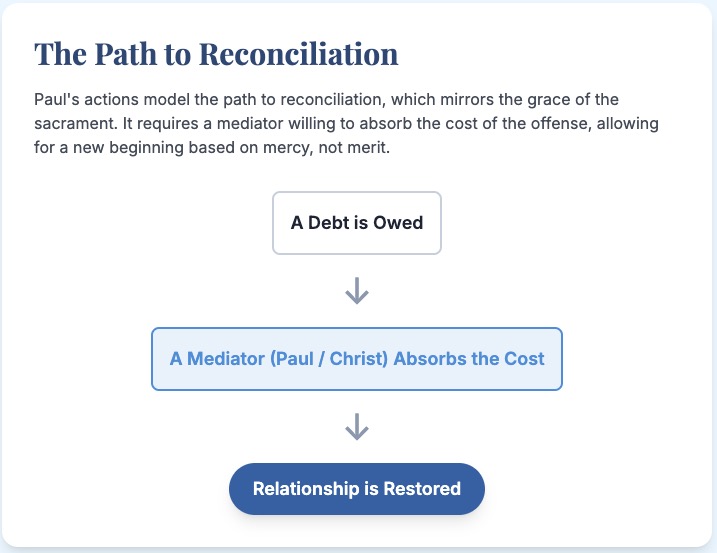
Closing Reflection: Faith in Action
The essay concludes that "faith is not a private affair. It must actively transform how we interact with the world."
- What is one specific relationship or situation in your life where you could more actively choose the "demanding duties of love, mercy, and reconciliation" over insisting on your personal rights?
SECOND
READING

23rd Sunday of Year C
Phil 9-10, 12-17
Phil 9-10, 12-17
POP-UP Video | NAB w/ Notes | LECTIONARY
Click graphic above to view intro to reading
This reading is from a very short, personal letter written by St. Paul while he was in prison. He’s writing to his friend, Philemon, about a difficult situation.
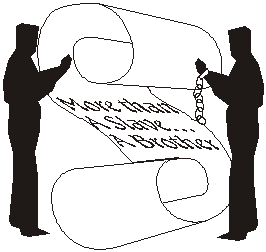
Philemon’s slave, Onesimus, had run away and, in the process, met Paul and converted to Christianity. Paul grew to love Onesimus like a son.
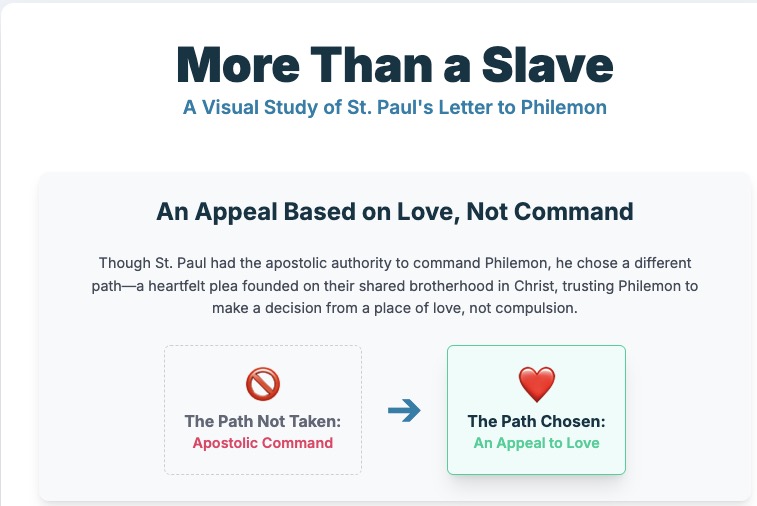
The main point of the letter is Paul’s appeal to Philemon. He is sending Onesimus back, but he asks Philemon to welcome him “no longer as a slave but more than a slave, a beloved brother.”
Essentially, Paul is saying that their shared faith in Christ has radically transformed their relationship. The old social labels of “master” and “slave” are now secondary to their new, shared identity as brothers in the Lord. It’s a powerful, real-life example of the Gospel’s power to bring about forgiveness and reconciliation, breaking down social barriers.
Clipart by Fr. Richard Lonsdale
Larry Broding Commentary
23rd Sunday of Year C
Like a Brother or Sister
in Christ
by Larry Broding
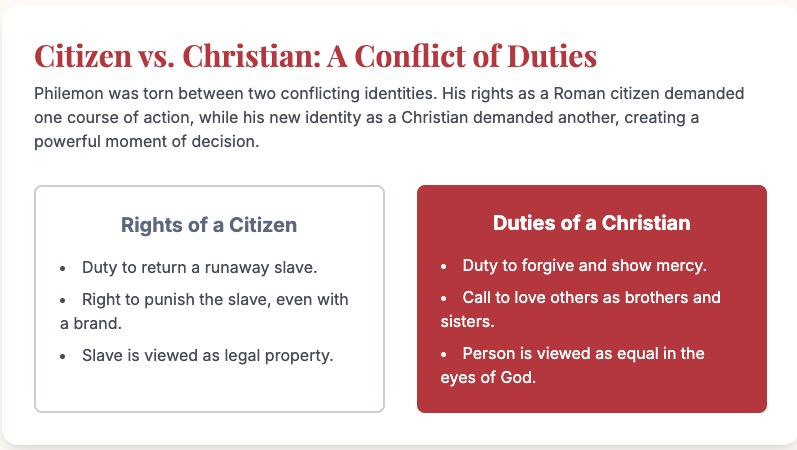
Paul’s letter to Philemon, though personal, was a public appeal to the house church in Colossae concerning the runaway slave, Onesimus. Acting as a spiritual father to both men, Paul sidesteps Roman law, which would have allowed for Onesimus’s severe punishment. Instead, he presents a radical new reality based on their shared faith.
The core of his appeal is that Philemon should receive Onesimus back not as property, but as a “beloved brother,” equal in status and worth in the eyes of God. This created a clear conflict between Philemon’s rights as a Roman citizen and his duties as a Christian. The letter powerfully illustrates a timeless principle: for believers, the duties of faith—like forgiveness and love—must always trump the rights of the state. This freedom in Christ requires us to prioritize our spiritual identity above all else, a lesson that comes with a cost.
Fr. Tim Peters Commentary
23rd Sunday of Year C
Catholic Bible Study Video Series
Fr. Peters teaches at Saint John’s Seminary in Camarillo, CA.
23rd Sunday of Year C

The Catholic Call to Count the Cost
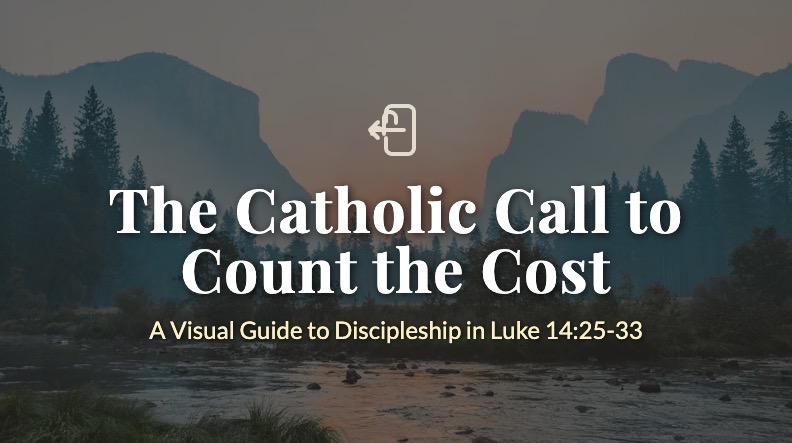
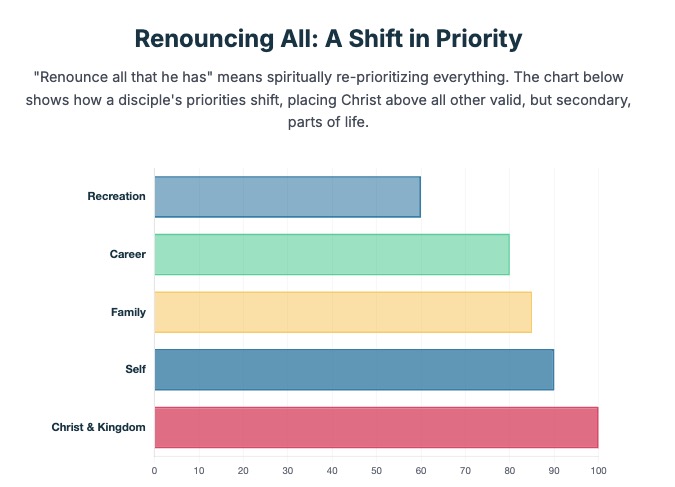
In the Gospel of Luke 14:25-33, Jesus turns to the great crowds following him and delivers one of his most challenging teachings on the nature of true discipleship. He presents a stark, uncompromising call to prioritize him above all else, outlining the significant costs associated with following him. For the contemporary Catholic, this passage is not a historical relic but a timeless and urgent invitation to examine the depth of one's commitment. It demands a radical reordering of life's priorities, moving beyond a superficial faith to an all-encompassing devotion that shapes every decision and relationship.
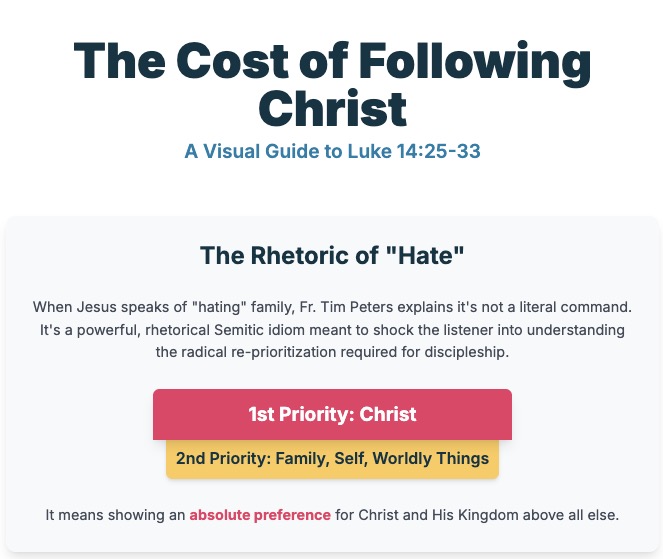
From a Catholic theological perspective, this passage is understood not as a literal command to hate one's family, but as a powerful Semitic idiom demanding spiritual detachment. The Church teaches that all our loves must be properly ordered, with God as the ultimate and supreme love. Our love for family, friends, and even our own life must flow from and be subordinate to our love for God. When Jesus speaks of carrying one's cross, it is a direct call to participate in his own sacrifice. This is a central tenet of Catholic spirituality, where personal sufferings and daily struggles are not seen as meaningless, but can be united with Christ's sacrifice on the cross for the redemption of the world.
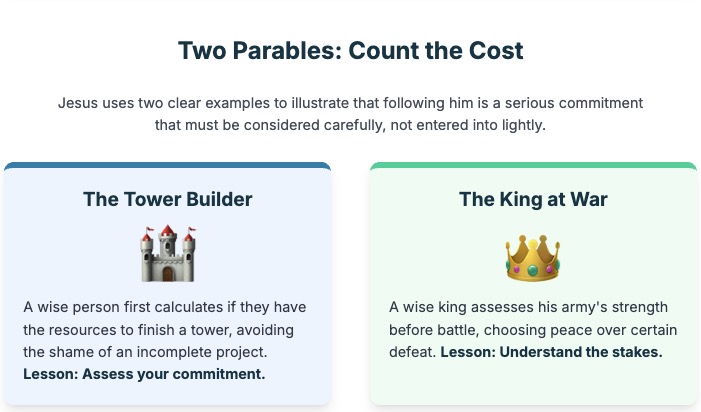
The parables of the tower builder and the king going to war underscore the virtue of prudence. A disciple must thoughtfully and deliberately choose Christ, fully aware of the sacrifices required, rather than making a rash, emotional decision that cannot be sustained.
For the modern Catholic, the "trip wires" Jesus describes are ever-present. The attachment to family can manifest as prioritizing a child's sporting event over Sunday Mass or conforming to secular family values that contradict Church teaching. The attachment to possessions is perhaps even more pervasive in a consumerist culture, where the pursuit of wealth, career success, and material comfort can easily become the central focus of life, draining the energy and ability to be a true disciple. Carrying the cross today may not mean literal crucifixion, but it does mean accepting the social martyrdom that can come from defending Church teaching on controversial issues, or the personal sacrifice of forgiving a deep hurt.
Ultimately, Luke 14:25-33 challenges every Catholic to move beyond a "comfortable" faith. It asks us to honestly assess our lives: Is Jesus truly the Lord of our hearts, or is he merely one priority among many? The call to renounce all our possessions is a call to hold everything loosely, to recognize that every good thing is a gift from God, and to be willing to give it all back to him. It is a radical, lifelong commitment that requires us to constantly count the cost and, with the help of God's grace, choose Christ above all.

Opening Reflection: The Radical Call
Jesus's teaching is a "stark, uncompromising call" that demands a "radical reordering of life's priorities."
- What is your initial, honest reaction when you hear Jesus's words about hating family and renouncing everything? Do they feel inspiring, intimidating, or something else?
- What does a "radical reordering of life's priorities" look like in the 21st century?
Theological Foundations
Three key theological concepts from a Catholic perspective.
- Spiritual Detachment: The essay explains that "hating" family is an idiom for spiritual detachment. How is properly ordering our loves, with God at the top, different from simply loving our family less?
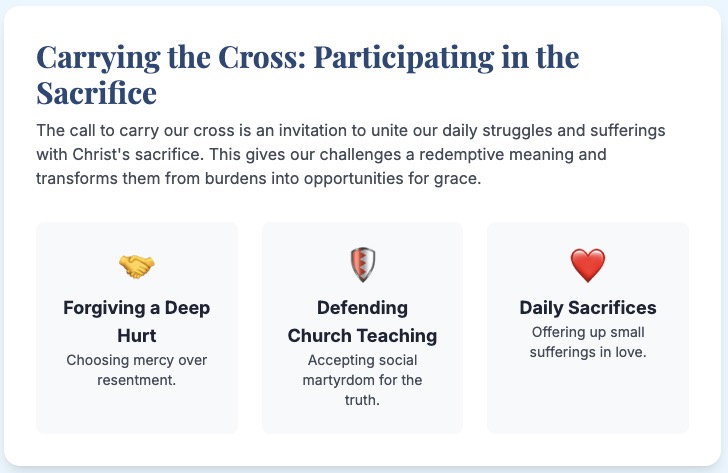
- Participating in the Cross: How does the idea of uniting our personal sufferings with Christ's sacrifice change the way we might view the difficult or painful moments in our lives?
- Prudence: Why is it important to "thoughtfully and deliberately choose Christ," as the essay suggests, rather than making a purely emotional or rash decision to follow Him?

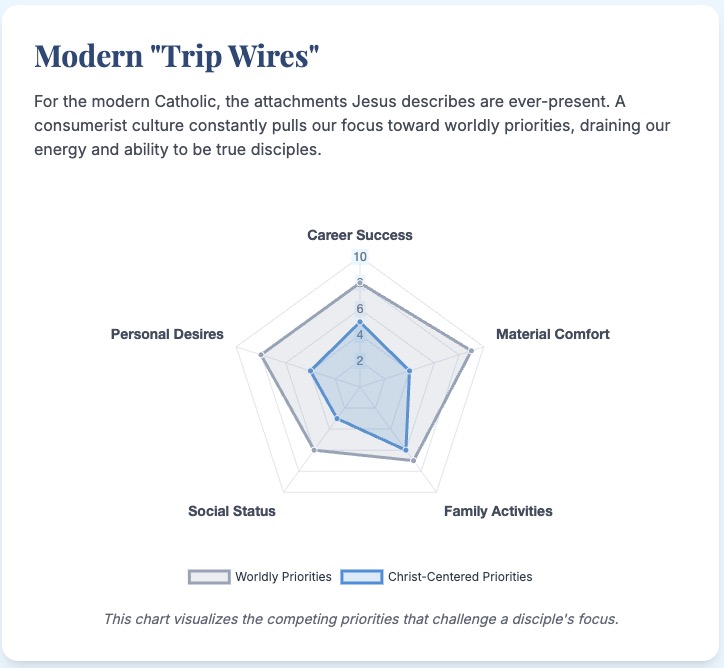
Modern "Trip Wires"
Jesus's warnings to contemporary life:
- The text gives the example of prioritizing a child's sporting event over Sunday Mass. What are other common, everyday examples of how our "attachment to family" can conflict with our commitment to Christ?
- In what specific ways does our consumerist culture make "attachment to possessions" a particularly difficult challenge for Catholics today?
- The essay mentions "social martyrdom" for defending Church teaching. What does this look like in your personal or professional life?
Personal Assessment
Moving beyond a "comfortable" faith.
- Honestly assess: "Is Jesus truly the Lord of our hearts, or is he merely one priority among many?" What is one practical way you can examine this in your own life this week?
- What does it mean for you, personally, to "hold everything loosely" and be willing to "give it all back to God"?
GOSPEL
READING

23rd Sunday of Year C
Luke 14:25-33
Luke 14:25-33
POP-UP Video | NAB w/ Notes | LECTIONARY
Click graphic above to view intro to reading
The central theme of this Gospel reading is the cost of discipleship. Jesus makes it clear that following him requires a total and absolute commitment.

Fr. Paul explains that Jesus’s seemingly harsh words to “hate” one’s family are hyperbole. It’s an extreme way of saying that nothing—not even our closest family relationships or our own lives—should get in the way of our commitment to the Gospel.
This commitment involves two key things:
- Accepting the Cross: Disciples must be willing to make difficult decisions and sacrifices for the sake of the Gospel.
- Renouncing Possessions: We should not be “possessed by our possessions.” This is highlighted as a critical challenge for most people today.
Ultimately, the message is that subordination to Jesus must be total, placing the Gospel above everything else.
Clipart by Fr. Richard Lonsdale
Larry Broding Commentary
23rd Sunday of Year C
What Makes A Disciple?
by Larry Broding
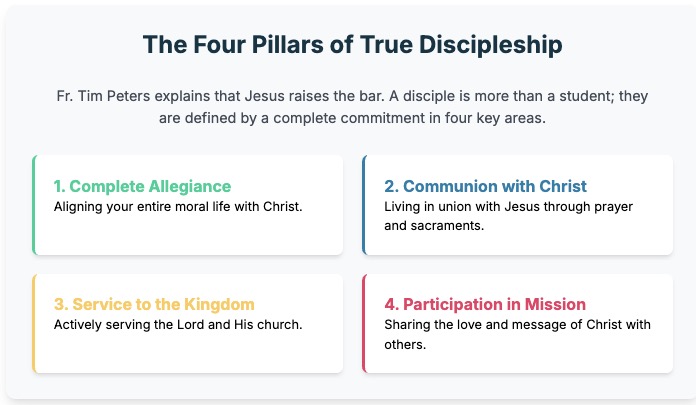
True Christian discipleship is defined not by external actions like going to church or reading scripture, but by total devotion to Jesus Christ.
In the Gospel of Luke, Jesus outlines three main obstacles, or “TRIP WIRES,” that can prevent someone from being a true disciple:
- Attachment to Family: Jesus’s call to “hate” one’s family is not about emotional revulsion. It’s a Semitic idiom meaning spiritual detachment—the ability to put God’s will before even the most important family relationships and self-interest.
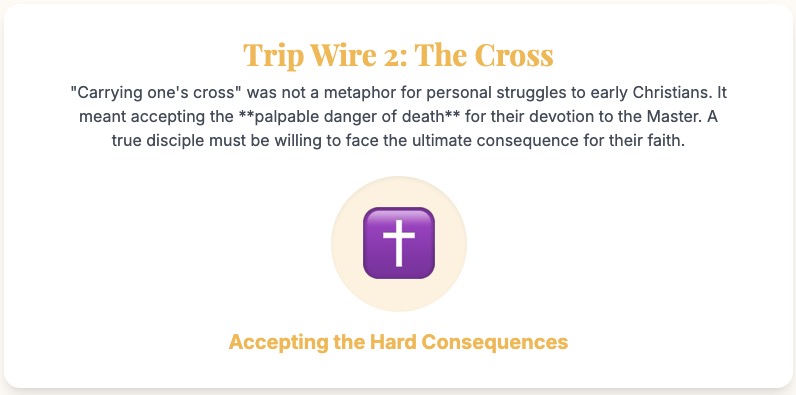
- The Cross: For early Christians, “carrying one’s cross” was not just about enduring personal struggles; it meant accepting the very real and palpable danger of death for their faith.
- Attachment to Possessions: Through the parables of the tower builder and the king going to war, Jesus warns that one must “count the cost” before following him. Divided priorities and attachment to material things drain a person’s ability to be a disciple.
Ultimately, discipleship requires a radical renunciation of both earthly possessions and relational attachments, placing God as the absolute center of one’s life.


Fr. George Corrigan, OFM Commentary
23rd Sunday of Year C
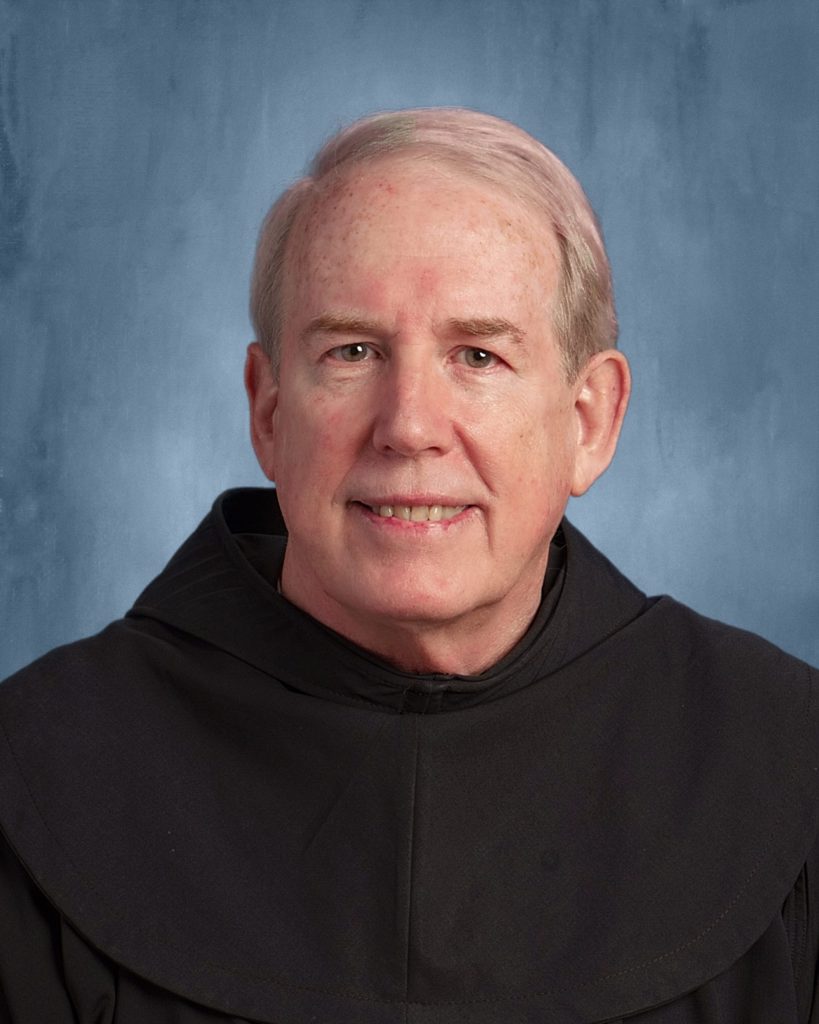
Musings of a Franciscan Friar
Exaltation of the Holy Cross
John 3:1-21 comprises a single, cohesive scene within the Johannine narrative and should be studied as a single narrative – but this day we glance at a small portion that forms a capstone like statement of the role of Jesus in our salvation. We looked at the larger narrative (John 3:1-21) earlier in June as part of the celebration of Holy Trinity Sunday. If you would like to read anew the larger narrative as a pdf file, it can be found on-line here. If you would like to read the longer narrative online it is available in six installments:
Fr. Tim Peters Commentary
23rd Sunday of Year C
Catholic Bible Study Video Series

Fr. Peters teaches at Saint John’s Seminary in Camarillo, CA.
23rd Sunday of Year C
PORTABLE VERSION | YOUTUBE | HOME
Small Group Discussion Guides

Fr. Thibodeau
Bible Study Notes
Bp. John P. Dolan
Fr. Tobin
Fr. Conley Bertrand
23rd Sunday of Year C
Cycle C (PDFs)
📖 Old Testament (43 pp.)
📖 Epistles (87 pp.)
📖 Gospels (182 pp.)
📖 Daily Gospels (208 pp.)
SOURCE: Come, Lord Jesus
Carmelite Reflections and Prayers
Lectio Divina

78-page PDF with reflections and prayers for each day of the month
Lectio Divina SEPTEMBER 2025 (PDF)
Lectio Divina SEPTEMBER 2025 [Mobi]
Lectio Divina SEPTEMBER 2025 [ePub]
______________
“Lectio divina is an authentic source of Christian spirituality recommended by our Rule. We therefore practise it every day, so that we may develop a deep and genuine love for it, and so that we may grow in the surpassing knowledge of Christ. In this way we shall put into practice the Apostle Paul’s commandment, which is mentioned in our Rule: “The sword of the Spirit, too, which is the word of God, is to dwell abundantly in your mouth and in your hearts; and whatever things you have to do, let them be done in the word of the Lord.” (Carmelite Constitutions (2019), n. 85.)
Source: Carmelites
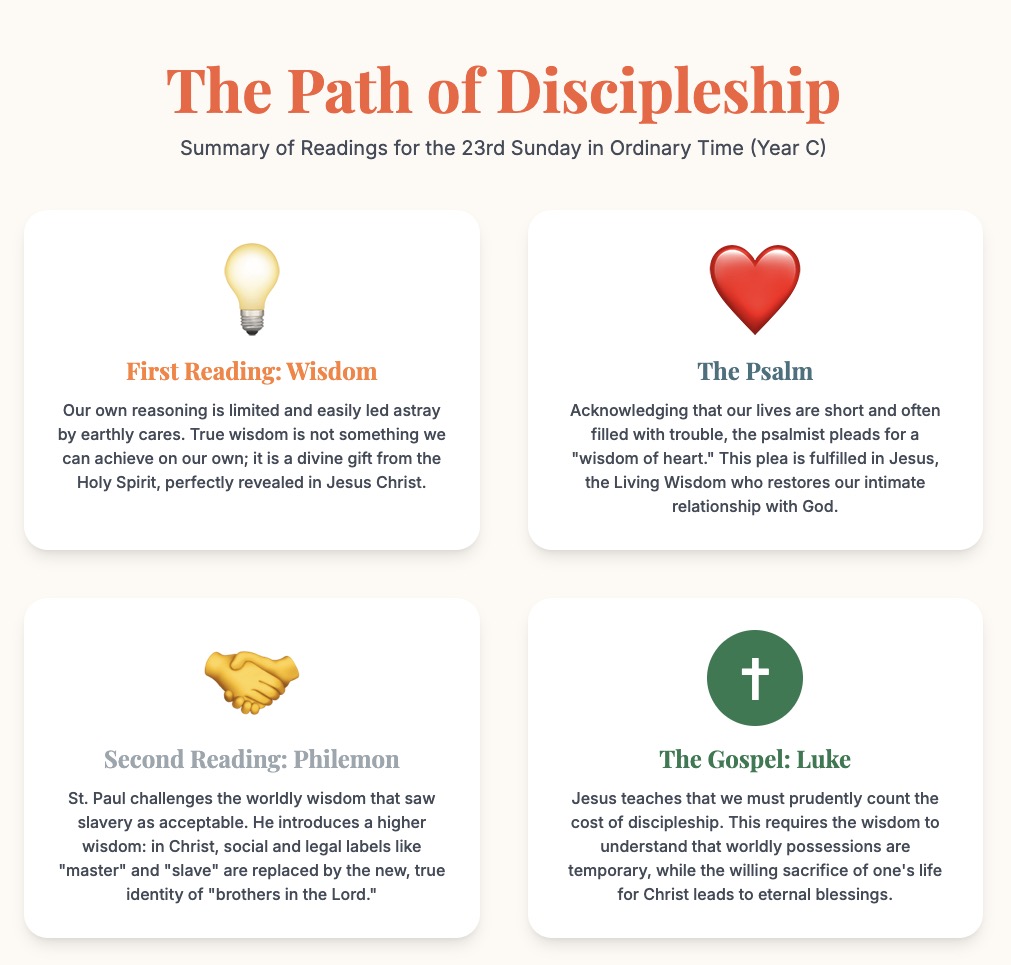
Infographic was generated using AI Google Gemini 2.5 Pro (w/ Canvas Chart.js and Tailwind CSS). Permission granted for this infographic to be used in any non-profit website or parish ministry. A Link or shoutout to AGAPE BIBLE STUDY and THE WORD THIS WEEK would be greatly appreciated.
FIRST READING | SECOND READING | GOSPEL