Commentary Intro to Mass Readings for Sunday
CommentaryIntro to Mass Readings for Sunday
December 14, 2025
December 14, 2025
3rd Sunday of Advent (A)


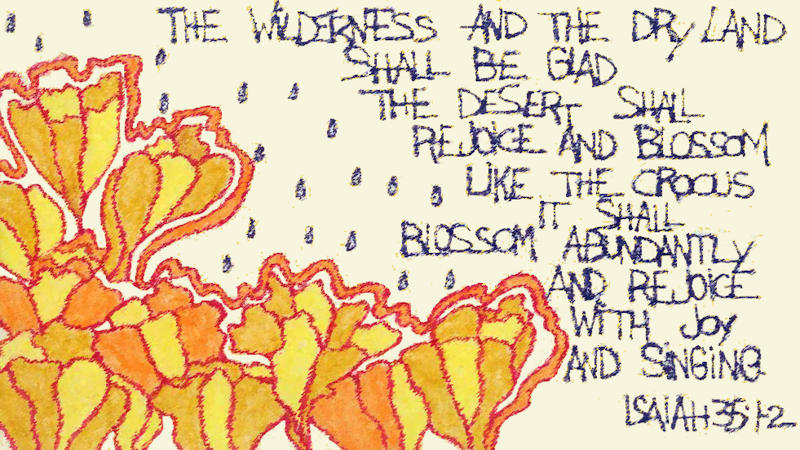

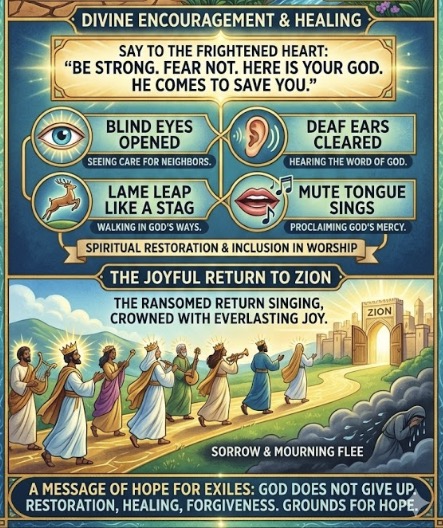
Fr. Galetto analyzes the imagery of Isaiah 35, highlighting the dramatic contrast between the arid desert and the lush splendor of Lebanon as a symbol of Messianic transformation. He notes that this chapter, likely written during the Babylonian Exile (Deutero-Isaiah), serves as a message of hope and restoration following a previous section on judgment. Galetto explains that while the blind and lame were historically excluded from worship, the Messiah’s arrival reverses this status. He interprets these healings metaphorically, suggesting that true salvation involves spiritually hearing God’s word, seeing the needs of neighbors, and walking in the ways of the Lord.

Word-Sunday.com

Desolation to Hope
by Larry Broding
What words give you hope when you are down? Why do these words encourage you?
Preaching the “joy” of Gaudete Sunday can feel discordant when the world—or your congregation—feels like a spiritual wilderness. Larry Broding’s commentary on Isaiah 35 offers a crucial theological corrective that bridges the gap between despair and hope.
Broding moves beyond the poetic imagery of blooming deserts to strike at the heart of the passage: the difference between human striving and Divine intervention. He reminds the homilist that the transformation of the “ruins”—whether they be physical landscapes or human souls—is entirely reliant on God’s movement, not our own. This resource is perfect for structuring a homily that relieves the faithful of the burden of “manufacturing” holiday cheer, pointing them instead to the God who reveals Himself in the lowest, most desolate places.
Father Tim Peters




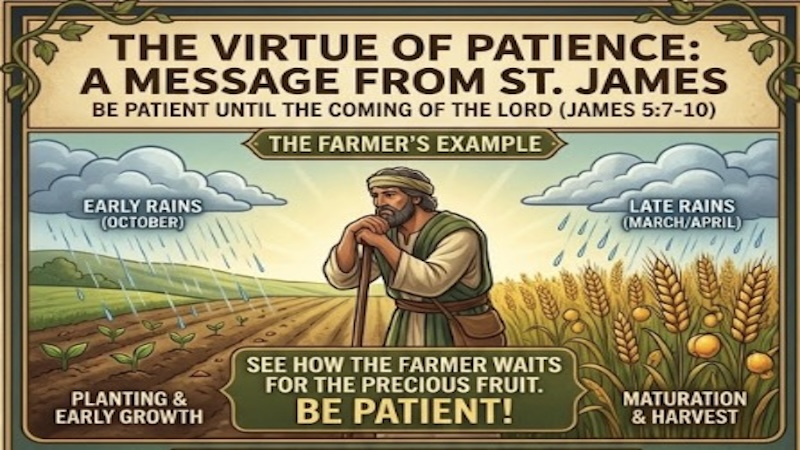
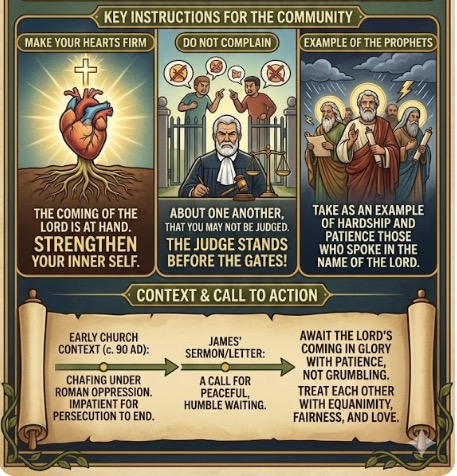
This reflection on the Letter of St. James highlights the central theme of patience amidst persecution. Dating the text to around 90 AD, Fr. Galetto explains that the community was chafing under Roman oppression and anxious for the Lord’s immediate return. The letter serves as a sermon urging believers to live peaceably and avoid grumbling against one another while waiting for judgment. Fr. Galetto clarifies the agricultural metaphor of the “early and late rains,” noting that just as farmers must wait for the harvest, Christians—like the prophets before them—are not exempt from suffering and must endure it with equanimity.
Word-Sunday.com
Patience Without Distraction
by Larry Broding
How are your Christmas preparations coming along? How many distractions and irritations have you been faced with this holiday season?
If you often find yourself tiptoeing around the “Faith vs. Works” debate when preaching on the Letter of James, Larry Broding’s commentary offers a refreshing and historically grounded pivot. Rather than pitting James against Paul, Broding reframes the text as a manual for community survival. He argues that James’s call for patience isn’t about passive waiting; it is an active defense against the “gossips, back-biters, and rumor mongers” who threaten the church when anticipation turns into frustration.
This commentary is an excellent resource for any homilist looking to connect the Advent themes of waiting with the practical realities of parish dynamics. Broding provides the theological bridge to show that the Second Coming should be the ultimate motivator for kindness, reminding us that “distracted faith is a dead faith.”
Father Tim Peters



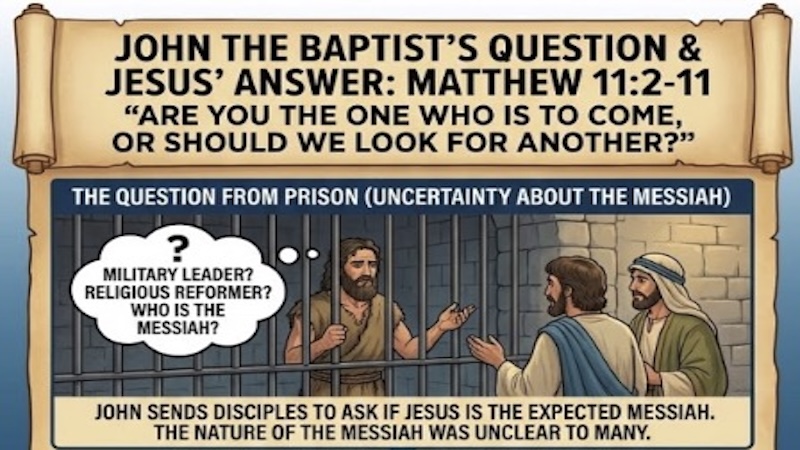
Fr. Galetto analyzes John the Baptist’s inquiry from prison, attributing the confusion regarding Jesus’ identity to prevailing expectations of a military or political Messiah. Jesus responds by citing His miracles—healing the blind and lame—which Galetto identifies as the specific fulfillment of Isaiah’s prophecies. He explains that Jesus’ warning against “taking offense” addresses those disappointed that He did not fit the role of a conqueror. Finally, Galetto clarifies the paradox of John’s status: while John is the greatest prophet due to his unwavering integrity and role as precursor, those who live in the full reality of the post-Resurrection Kingdom possess a unique greatness.
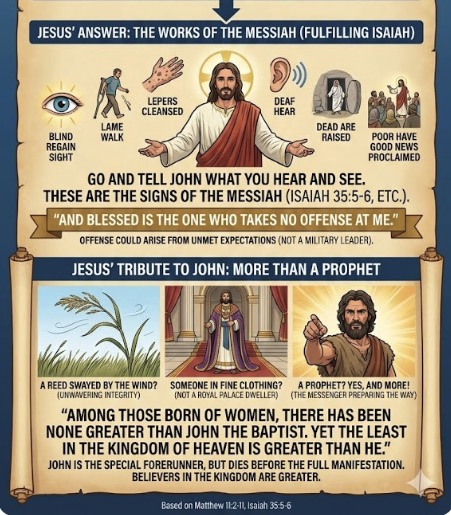
Word-Sunday.com
by Larry Broding
Have you caught the “holiday spirit” yet? How do you get into the holiday mood? Do you rely on others or events to spark your “Christmas feeling?”
As the sensory overload of the holidays begins—the lights, the carols, the forced cheer—many in your congregation are secretly battling the “Christmas doldrums,” waiting for a spiritual surge to simply “fix” them. Larry Broding’s commentary on Matthew 11:2-11 offers a powerful pastoral angle for this Sunday, moving beyond the historical context of John the Baptist’s imprisonment to address the very modern struggle of unmet expectations.
Broding challenges the preacher to ask a difficult question: Are we worshipping God as He is, or are we disappointed that He isn’t the “Mr. Fix-it” we want Him to be? By drawing a parallel between our holiday hopes and John’s prison-cell doubts, Broding provides a roadmap for helping your parishioners navigate the gap between what they expect of God and how Jesus actually defines His mission.
This resource is essential for any homilist looking to move their congregation from merely observing the “signposts” of the faith to truly participating in the Kingdom.
friarmusings.com

John the Baptist – Continued
- Scriptural Context
- Liturgical Context
- The Question
- The Response
- Jesus’ View of John
- Some Final Thoughts
PDF COMMENTARY | INDEX
(Matthew 11:2-11)
Father Tim Peters

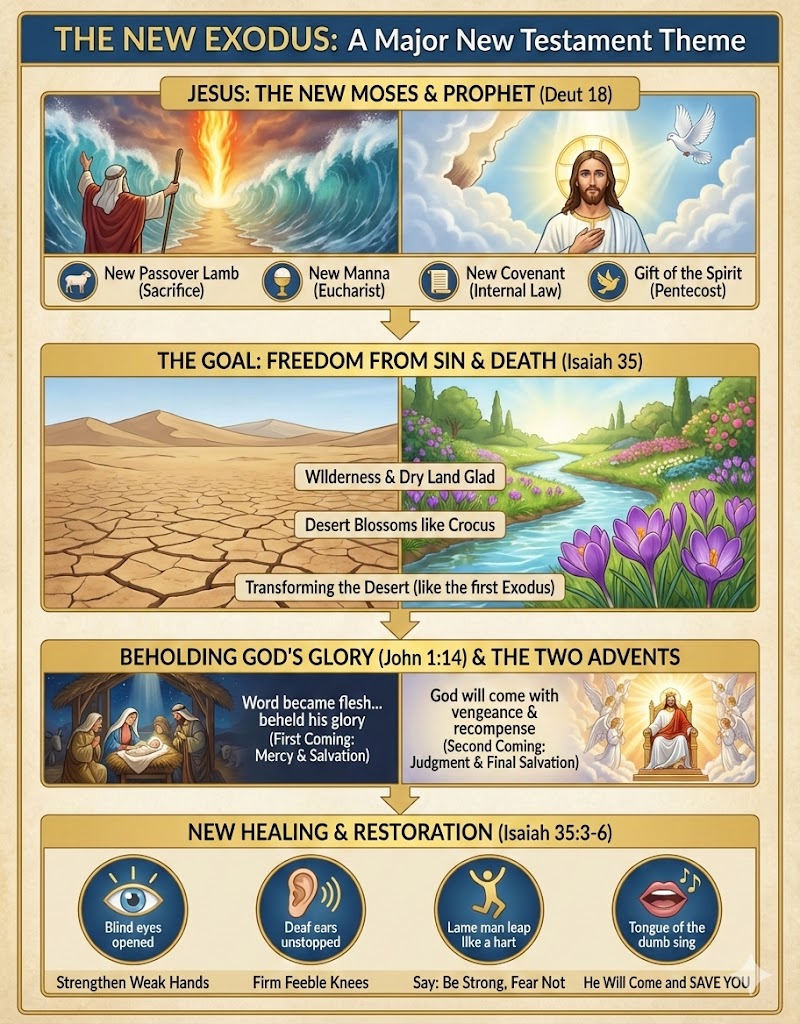
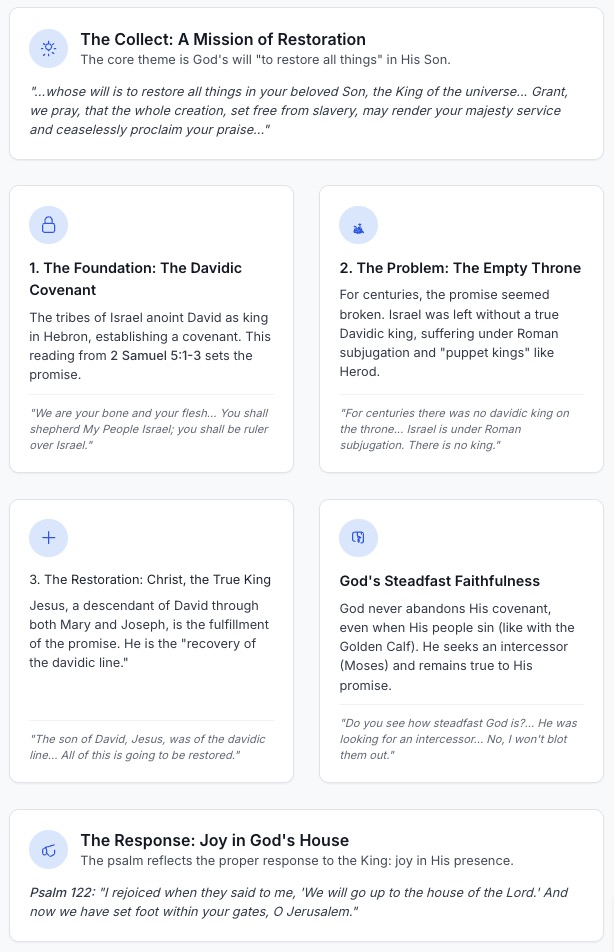
Infographics were created using Nano Banana Pro with Gemini 3.0. They draw inspiration from the commentary above from Agape Bible Study, but are not officially associated with or endorsed by Michal Elizabeth Hunt. They may be copied for personal use or for use in any non-profit ministry. All works on the Agape Bible Study were licensed under a Creative Commons Attribution 3.0 Unported License.

Hector Molina – Catholic Evangelist
3rd Sunday of Advent (A)
The Probing Prophet: John the Baptist
John the Baptist’s inquiry about Jesus’ identity as the Messiah and Jesus’ response highlights the importance of understanding and trusting in God’s plan, and serves as a call to Christians to remain steadfast in hope, persevere, and prepare for the coming of Jesus Christ.
Refer to timestamp links to immediately go to that section of video.
00:00 John the Baptist, imprisoned for denouncing Herod’s sin, sends disciples to Jesus to confirm if he’s the Messiah, while Jesus praises John as a prophet preparing the way for him.
- Jesus tells John’s disciples that he is the one who brings fulfillment to prophecy, as evidenced by his miracles and preaching to the poor, and then praises John as a prophet and messenger preparing the way for him.
- John the Baptist, the herald of the new Exodus and precursor to Christ, is in prison, having been arrested for condemning Herod Antipas’s adulterous relationship with his brother’s wife, Herodias.
- John the Baptist, as a prophet, denounced public sinners, including Herod Antipas and his adulterous relationship with his sister-in-law Herodius, for their grave sin, which led to scandal and ultimately cost him.
- John, imprisoned for denouncing the king and queen’s sinful ways, sends his disciples to Jesus to ask if he is the expected Messiah or if they should look for another.
- John the Baptist, like Elijah, denounced wicked rulers, specifically Herod Antipas and his wife Herodius, and ultimately paid the price with his life, mirroring Elijah’s persecution by King Ahab and Queen Jezebel.
- John the Baptist, having heard about Jesus’ miracles, sends a delegation to ask Jesus if he is the Messiah or if they should look for another.
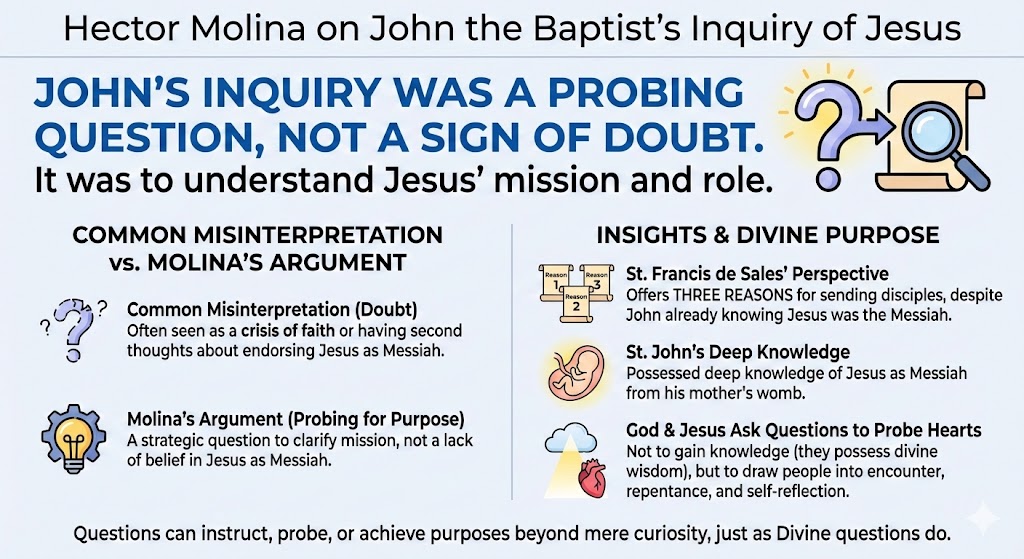
07:45 John the Baptist’s inquiry about Jesus’ identity as the Messiah was not a sign of doubt, but rather a probing question to understand Jesus’ mission and role.
- John’s inquiry about Jesus’ identity as the Christ may seem to indicate doubt, but it questions whether he is actually having second thoughts about endorsing Jesus as the Messiah.
- The speaker argues that John the Baptist did not have a crisis of faith or doubt Jesus’ identity as Messiah, contrary to a common interpretation.
- St. Francis de Sales gives three reasons why John the Baptist sent his disciples to ask Jesus if He was the Messiah, despite knowing Jesus was the Messiah.
- St. John the Baptist, who had a deep knowledge of Jesus as the Messiah from his mother’s womb, sends his disciples to ask Jesus if he is the one to come, despite knowing him to be the Messiah.
12:15 God asks questions not to gain knowledge, but to probe hearts and draw people into an encounter with Him, leading to repentance and self-reflection.
- We ask questions not only to gain knowledge, but also to instruct, probe, or achieve other purposes beyond mere curiosity or ignorance.
- God, and Jesus as the divine majesty, ask questions not out of ignorance, but to probe the hearts of people, as they already possess divine wisdom and knowledge of all things.
- God asks questions in the scriptures, not out of ignorance, but to draw people into an encounter with Him, repentance, and self-reflection, for their benefit, not His.
- St. John the Baptist sent his disciples to Jesus not to verify if He was the Messiah, but to make Him known to the world and to redirect his own disciples to learn from Jesus personally.

16:57 John the Baptist sends his disciples to Jesus to confirm his identity as Messiah and strengthen their faith, citing fulfilled Old Testament prophecies and miracles.
- John the Baptist sends his disciples to Jesus to encounter Him for themselves, not out of doubt, but to strengthen their faith and recognition of Jesus as the Messiah.
- St. John sent his disciples to Jesus to detach them from himself and prevent them from esteeming him more than the Savior.
- St. John sent his disciples to question Jesus not because he doubted Jesus was the Messiah, but to help them see Jesus’ divine majesty and detach from him.
- John the Baptist’s questioning of Jesus was not a reflection of a crisis of faith, but rather an opportunity for his disciples to hear Jesus’ answer and confirm his identity as Messiah.
- Jesus tells John’s disciples to report what they see and hear, citing Old Testament prophecies fulfilled through his miracles, such as the blind receiving sight and the lame walking.
- Jesus quotes Isaiah 61:1, proclaiming good news to the poor, and tells John’s disciples that prophecies of healings and miracles, such as the blind receiving sight and the lame walking, are being fulfilled in him.
25:57 Jesus fulfills Old Testament prophecies as the Messiah, citing miracles as evidence, and calls believers to remain steadfast in hope and persevere.
- Jesus quotes Old Testament scriptures, exceeding prophecies of the Messiah by mentioning lepers being cleansed and the dead being raised to prove he is the Messiah.
- The desert will blossom and the redeemed of Zion will return with joy, obtaining everlasting happiness as sorrow and sighing flee away.
- Jesus tells John’s disciples that he is the fulfillment of Old Testament prophecies about the Messiah, citing his miracles as evidence.
- The Psalm 146 and Isaiah 35 prophecies foretell the Messiah’s deeds, including setting prisoners free, opening the eyes of the blind, and upholding the righteous, all fulfilled in Jesus.
- No matter the circumstances, believers are called to remain steadfast in hope and persevere, trusting that God’s promises will be fulfilled.
31:46 Jesus contrasts John the Baptist’s unwavering commitment and simple lifestyle with the world’s values, highlighting that despite being the greatest man born, the least in the kingdom of heaven is greater due to God’s grace.
- Jesus asks the crowds what they expected to see when they went out to John in the wilderness, identifying John as more than a prophet, a messenger preparing the way for Jesus.
- John the Baptist is contrasted with Herod Antipas, as an immovable and steadfast figure, unlike a reed blown by the wind, symbolizing his unwavering commitment to his message despite public opinion.
- Jesus compares and contrasts John the Baptist’s simple, austere lifestyle with that of King Herod Antipas, highlighting their vastly different approaches to life and leadership.
- Jesus asserts that John the Baptist is the greatest man born among women, yet surprisingly claims that even the least person in the kingdom of heaven is greater than him.
- Jesus contrasts John’s greatness in this world with the even greater status of the least in the kingdom of God, which surpasses John’s greatness due to the mercy and riches of God’s grace made possible through Jesus’ pascal mystery.
- The least in the kingdom of heaven, perfected in righteousness and sanctified by God’s grace, is greater than John the Baptist, who was great prior to the inauguration of the kingdom of God.