The Deacon, Deacon’s Digest, FREE resource bulletin
The Deacon, Deacon’s Digest, FREE resource bulletin
December 28, 2025
December 28, 2025
Holy Family (A)


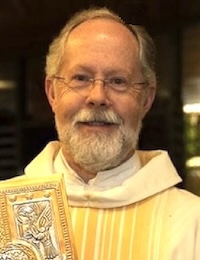
Deacon Peter
McCulloch
(Diocese of Broken Bay)
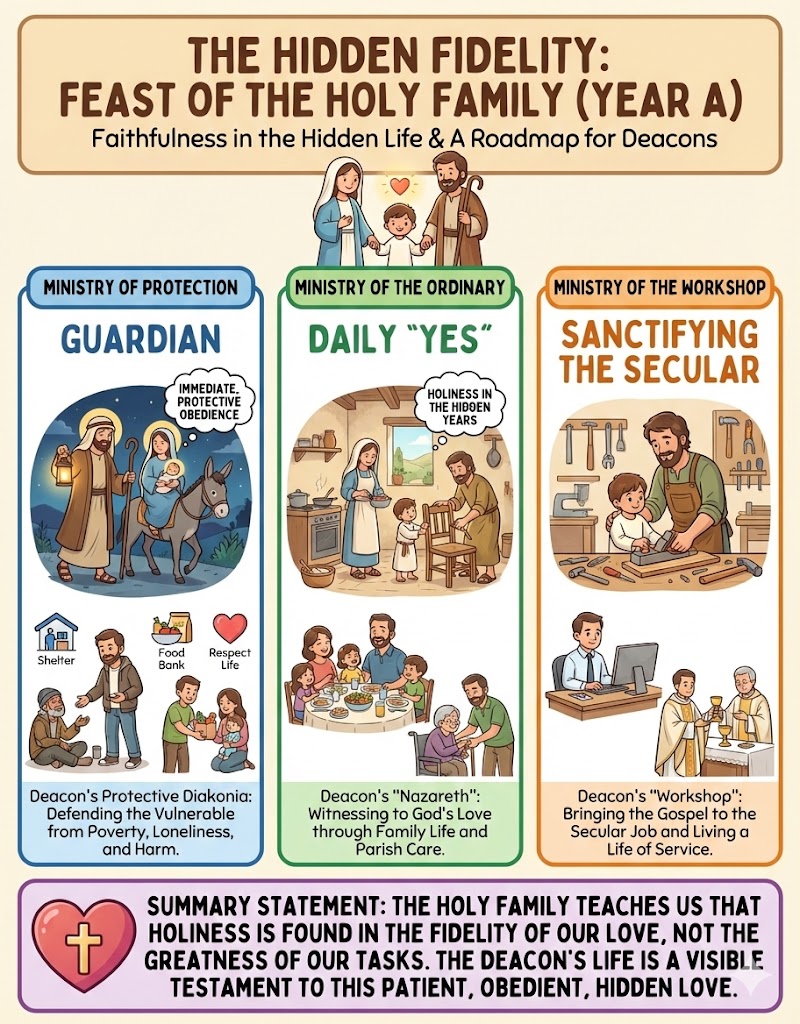
Coming so closely after the glory of Christmas, the Feast of the Holy Family grounds us in a stark reality. The Gospel is not an idyllic portrait, but a story of crisis: a dream in the night, a command to flee, the danger of a tyrant, the life of a refugee in Egypt, and a cautious return to a hidden, ordinary town.
This is the life of the Holy Family: faithfulness amid fear, stability in the face of uncertainty, and holiness in the “hidden” years. For the deacon, whose own life is a dual vocation balancing family, a secular job, and ordained ministry, this feast is not just an ideal – it is a practical roadmap.
The deacon, who often serves in the unnoticed corners of parish and community life, shares deeply in that “hidden fidelity” of Joseph and Mary.
AT MASS

Joseph’s greatness is revealed in his immediate, protective obedience. He steps up in the middle of the night to protect his family. The deacon, as a minister of charity, is ordained to share in this same protective ministry.
Guardian of the “Family”: The deacon is called to be awake to the “Herods” that threaten his parish family: the tyranny of poverty, the danger of loneliness, the isolation of the sick, the crisis of homelessness.
The Flight to Egypt: The deacon’s ministry of diakonia is the Church’s organized “flight to Egypt.” It is the protective action that brings the vulnerable to a place of safety. The food pantry, the crisis fund, the respect life ministry, the outreach to migrants and
Refugees – these are not “add-ons” to parish life; they are the fundamental, protective work of St. Joseph, continued in the Body of Christ.
IN THE PARISH
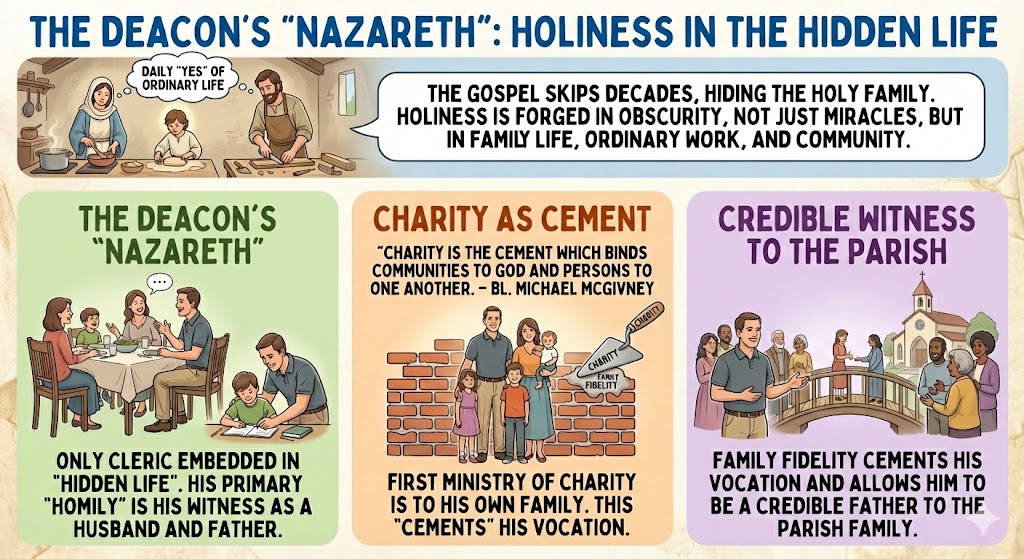
The Gospel skips decades, hiding the Holy Family in the obscurity of Nazareth. These “silent years” are where holiness is forged – not in dramatic miracles, but in the daily “yes” of family life, ordinary work, and community.
The Deacon’s “Nazareth”: The deacon is the only cleric who, by design, remains fully embedded in this “hidden life.” His primary “homily” is often his witness as a husband and father. His “yes” to God is lived out in the ordinary: in his marriage, in raising his children, in the patience and sacrifice that family life demands. This “Nazareth” is the source of his credibility.
Charity as Cement: As Blessed Michael McGivney knew, “Charity is the cement which binds communities to God and persons to one another.” The deacon’s first ministry of charity is to his own family. This fidelity “cements” his own vocation and allows him to be a credible witness to the parish family.
AT THE MARGINS
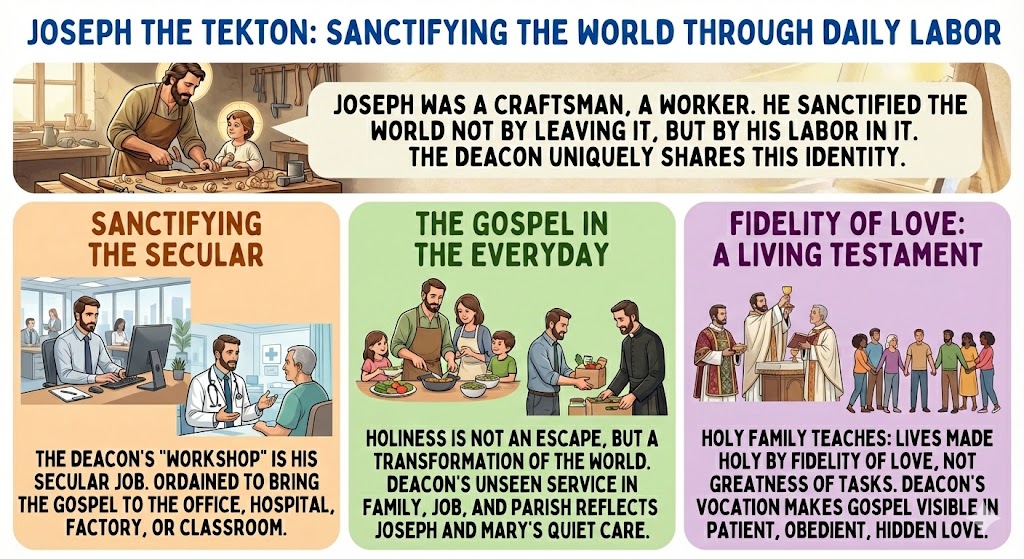
Joseph was a tekton—a craftsman, a worker. He sanctified the world not by leaving it, but by his labor in it. The deacon, uniquely, shares this identity.
Sanctifying the Secular: The deacon’s “workshop” is his secular job. He is the Church’s presence in the office, the hospital, the factory floor, or the classroom. He is ordained to bring the Gospel there, to live a life of integrity, service, and justice in the “hidden” world of daily work.
The Gospel in the Everyday: This feast reminds the deacon, and the whole Church, that holiness is not an escape from the world but a transformation of it. The deacon’s steady, unseen service in his family, his job, and his parish reflects the quiet, steadfast care of Joseph and the profound, trusting faith of Mary.
The Holy Family teaches us that our lives are made holy not by the greatness of our tasks, but by the fidelity of our love. The deacon’s vocation is a living testament to this: a life that makes the gospel visible, not in the dramatic, but in the patient, obedient, and hidden love of the everyday.