





PDF DOWNLOADS – save them on your desktop, iPad, tablet, or E-ink device.
- Faith & Spirituality
(10 pages) - Virtue & Daily Life
(10 pages) - Family & Life Stages
(9 pages) - Healing & Pastoral Care
(7 pages) - Parish & Mission
(5 pages) - Justice & Peace
(9 pages) - Culture, Tech & Creation
(6 pages)
TIP: Links will open PDF’s in a popup window, where you can click download button. Chrome browser also has an AI button, that can generate 1-2 sentence summaries for every insert in the PDF, if you want something shorter for your bulletin.
Lectionary Based
Our Sunday Readings
Edrianne Ezell
Catholic Scripture Study
Vince Contreras
Stewardship
The Diocese of Youngstown and the Diocese of Camden publish quarterly batches of dated, one-paragraph stewardship reflections tied directly to each Sunday’s scripture readings in both English and Spanish (sourced from the Archdiocese of St. Louis).
The Diocese of Dodge City provides unbranded, copy-and-paste Word documents, PDFs, and social-media-friendly infographics in both English and Spanish.
The International Catholic Stewardship Council offers copy-and-paste parish resources, short prayers, and practical stewardship blurbs.
Liturgical Year Columns
The Archdiocese of Detroit provides Stewardship Thoughts for Parish Bulletins, a downloadable collection of short weekly reflections on the Sunday Liturgy of the Word.
Catechesis & Faith Formation.
The Diocese of La Crosse offers 16 free printable PDF and JPG handouts covering foundational topics like the Our Father, God’s Love, and Encountering Jesus.
The USCCB regularly share short promotional blurbs and prayer intentions for vocations, respect life, and liturgical seasons.
BulletinInserts.org offers short, printable essays on Christian living, theology, and family life.
BibleParent provides free printable coloring pages and scripture activities designed for kids to complete during services.
Sunday’s Word—Ready to Print
The Pastor’s Desk provides 150 bulletin inserts each related to a verse or verses from the Sunday readings. They are organized under seven categories.
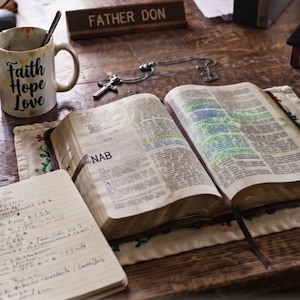
7 Categories
What Each of the 50 Topics Includes
- Three standalone inserts: One rooted in the First Reading, one in the Second Reading, and one in the Gospel—giving you options throughout the week such as bulletin columns, social media posts, or personal daily meditation. Each reflection concludes with a bold takeaway alternating between a one-sentence prayer, a reflection question, or a practical action for the week.
How to Use These Inserts
- Use As Written: Copy any complete insert and drop it directly into your parish bulletin or weekly email.
- Collect Snippets for Homilies: Browse across topics for fresh angles or Scripture connections. Select text to bring up the ADD TO NOTE popup button on the website and save snippets directly into the NOTES side panel. (Button on bottom right)
- Mix and Write Your Own: Combine passages from different topics, adapt wording for your parish, or use a snippet as a starting point to write your own reflection.
1. Faith & Spirituality
Adoration & Prayer
Tearing Open the Heavens in Silence (Isaiah 63:19b–64:2)
Advent begins not with sentimental cheer, but with an urgent plea for God to break through the silence of a weary world. The prophet cries out to the Lord to rend the heavens and come down, shaking the mountains with a divine presence so tangible that nations tremble. In Eucharistic Adoration, this ancient longing finds its quiet fulfillment. When we kneel before the monstrance, we are asking Christ to tear open the distractions, anxieties, and spiritual numbness that cloud our daily lives. Prayer during this season is less about multiplying words and more about exposing our hearts to the fire of God’s presence, trusting that he acts mightily for those who wait for him. True adoration strips away our self-reliance and awakens a holy anticipation for the King who comes to dwell among us.
Lord Jesus, rend the heavens of my distracted heart and teach me to wait in silent, expectant awe before your presence.
Enriched in Every Word of Prayer (1 Corinthians 1:4–5)
Saint Paul reminds the Corinthians that through union with Christ Jesus, they have been enriched in every way, specifically in all discourse and all knowledge. Many Catholics hesitate in their personal prayer life because they feel spiritually impoverished or unsure of what to say to God. Yet Advent teaches us that authentic prayer originates not in our eloquence, but in the grace already poured into our souls at Baptism. When we enter into prayer, we are simply returning to God the very gifts of faith and understanding he has first bestowed upon us. Rather than treating prayer as a burdensome obligation or a spiritual performance, we can approach the Father with confidence, knowing that the Holy Spirit supplies the words and deepens our intimacy with Christ as we prepare for his coming.
What spiritual gift or grace from the past year do you most need to thank God for in your daily prayer this week?
Keeping Watch Through the Night (Mark 13:35–36)
Jesus warns his disciples to remain watchful because no one knows when the lord of the house will return—whether in the evening, at midnight, at cockcrow, or in the morning. Notice how these four watches span the darkest hours of the night, the exact moments when fatigue sets in and the temptation to fall asleep is strongest. In the spiritual life, midnight represents those dry, unglamorous seasons when God feels distant and our prayers seem to bounce off the ceiling. Advent calls us to persevere in prayer precisely during these quiet watches, refusing to abandon our post when emotional consolation fades. By carving out non-negotiable time for daily prayer, we keep the lamps of our souls trimmed and burning, ready to welcome the Master the instant he knocks.
Set an alarm ten minutes earlier each morning this week to spend quiet time with the Sunday Gospel before checking your phone.
Church Doctrine
The Father Who Redeems Us From of Old (Isaiah 63:16b)
In the midst of national ruin and spiritual exile, Isaiah anchors his hope in an unchanging doctrinal truth: the Lord is our Father, and our Redeemer from of old is his name. Church doctrine is never a collection of abstract, dusty rules; rather, it is the faithful preservation of God’s revealed identity across every generation. When human institutions crumble or cultural confusion threatens to obscure the truth, the perennial teachings of the Church remind us who we are and to whom we belong. We are not spiritual orphans left to invent our own meaning, nor are we abandoned to our own moral failures. Because God’s fatherhood and redemptive mercy are eternal realities, the deposit of faith serves as a steady compass guiding us safely through the shifting sands of history toward Christ.
Almighty Father, anchor my mind in the unchanging truths of your Church so that I may never lose my way in a confused world.
Confirmed Firm to the End (1 Corinthians 1:8)
Saint Paul assures the believers in Corinth that Christ will keep them firm to the end, irreproachable on the day of our Lord Jesus Christ. This promise highlights the Catholic understanding of sanctifying grace and the reliability of God’s covenantal fidelity. Doctrine is the protective guardrail that keeps the Christian community aligned with apostolic truth until the Second Coming. Without clear doctrinal boundaries, faith easily dissolves into personal opinion or passing cultural trends. By embracing the Creed and the Catechism with humility, we allow Christ to stabilize our convictions and guard our souls against error. Advent invites us to rediscover the beauty of orthodox belief, recognizing that sound teaching does not restrict our freedom—it preserves us blameless for the glorious return of our Savior.
Which specific teaching of the Catholic Creed feels hardest for you to grasp right now, and how can you study it this week?
The Authority Entrusted to the Servants (Mark 13:34)
In his brief parable of the traveling master, Jesus notes that the homeowner places his servants in charge, assigning each one his own work while ordering the gatekeeper to be on the watch. This image captures the apostolic structure of the Catholic Church. Before ascending to the Father, Christ did not leave his flock without visible leadership or clear teaching authority; he entrusted the stewardship of the household to the Apostles and their successors. The Magisterium serves as that faithful gatekeeper, guarding the integrity of the Gospel across the centuries so that every generation receives the full, unadulterated truth of salvation. Submitting our minds and hearts to the teaching office of the Church is an act of Advent readiness, ensuring we are found faithfully carrying out the Master’s work when he returns.
Read one short section of the Catechism of the Catholic Church this week on the Second Coming of Christ.
Communion of Saints
Remembering Those Who Walked in His Ways (Isaiah 64:4)
Isaiah declares that the Lord gladly meets those who do right and who remember him in his ways. Throughout salvation history, a great cloud of witnesses has walked this exact path of faithfulness, blazing a trail through darkness and trial. In the Communion of Saints, we are never walking through Advent alone. The patriarchs, prophets, martyrs, and hidden holy ones of every age stand beside us, offering their intercession and example as we await the Messiah. When our own spiritual energy falters, we can lean on the strength of the Church Triumphant. Their lives prove that human weakness is no barrier to divine grace when a soul remains attentive to God’s ways, inspiring us to persevere in hope until we join their eternal chorus in heaven.
God of all ages, unite my Advent waiting with the prayers of the saints who walked faithfully in your ways before me.
Called Into Fellowship With His Son (1 Corinthians 1:9)
Paul reminds the Church that God is faithful, and by him we were called to fellowship with his Son, Jesus Christ our Lord. That sacred word—fellowship, or koinonia—lies at the heart of the Communion of Saints. Because every baptized believer is grafted onto Christ, we are simultaneously united to one another across time and space. Death cannot sever the bond forged in the waters of Baptism and nourished at the Eucharistic table. During Advent, as we look forward to the reunion of heaven and earth at the end of time, we celebrate our living solidarity with the saints in glory and the souls in purgatory. Our prayers lift up the faithful departed, while the saints in heaven intercede tirelessly to help us remain faithful to our shared calling.
How does knowing that the saints are actively praying for you change the way you face your current spiritual struggles?
Every Servant Assigned a Unique Task (Mark 13:34)
When the master leaves his house, he assigns each servant his own distinct work to accomplish before his return. Within the Communion of Saints, no two members share the exact same mission, yet every single role is indispensable to the life of the household. Saint Thérèse of Lisieux served through hidden acts of love, Saint Francis Xavier through daring missionary journeys, and countless canonized parents through quiet domestic sacrifice. Advent challenges us to stop comparing our spiritual path to someone else’s and instead embrace the specific vocation God has placed right in front of us. By faithfully fulfilling our daily duties with great love, we take our rightful place alongside the saints in preparing the world for the arrival of the King.
Choose one patron saint this week and ask for their intercession as you carry out your daily family or work responsibilities.
Heaven & Eternity
What No Eye Has Seen or Ear Heard (Isaiah 64:3)
Isaiah marvels that from of old no ear has heard and no eye has seen any God but the Lord doing such wondrous deeds for those who wait for him. Human imagination falls dramatically short when trying to picture the glory of heaven. Even our brightest earthly joys are mere shadows compared to the beatific vision awaiting those who persevere in faith. Advent lifts our gaze beyond the fleeting anxieties of bills, schedules, and seasonal stress, reminding us that our true homeland lies in eternity. Knowing that God has prepared wonders beyond our wildest comprehension frees us from clinging desperately to worldly comforts. We wait with joyful expectancy, confident that the infinite majesty of heaven will infinitely outweigh every passing sorrow we endure on earth.
Lord of eternity, lift my eyes beyond temporary worries and fill my heart with longing for the unseen joys of heaven.
Awaiting the Revelation of Our Lord (1 Corinthians 1:7)
Saint Paul praises the Corinthians because they are not lacking in any spiritual gift as they eagerly await the revelation of our Lord Jesus Christ. Notice the posture of the early Christians: they did not view the end of the world with morbid dread, but with eager, hopeful anticipation. In Catholic theology, the Parousia—Christ’s final return in glory—is the ultimate fulfillment of all human history, when justice will triumph and every tear will be wiped away. Advent trains our souls to desire heaven above all else. When eternity is our primary horizon, daily setbacks lose their power to paralyze us, and every act of charity becomes an eternal investment that prepares us to welcome Christ face-to-face without fear.
If Christ were to return in glory tonight, what part of your daily life would bring you the greatest joy to offer him?
Beware Lest He Come Suddenly (Mark 13:36)
Jesus urges his followers to stay alert lest the master return suddenly and find them sleeping. While many people associate Advent strictly with preparing for Christmas morning, the Church’s liturgy during these first weeks points squarely toward the end of time and our personal encounter with eternity. None of us knows the hour when our earthly pilgrimage will conclude and we will stand before the judgment seat of Christ. This sobering truth is not meant to provoke panic, but rather spiritual clarity. Living with eternity in mind means refusing to postpone repentance, reconciliation, or generosity until tomorrow. By keeping our souls in a state of grace today, the sudden arrival of the Lord becomes a moment of joyful homecoming rather than a shocking awakening.
Examine your conscience tonight and make a concrete plan to go to the Sacrament of Reconciliation before Christmas.
Holiness
The Clay in the Hands of the Potter (Isaiah 64:7)
In one of Scripture’s most tender metaphors, Isaiah confesses that the Lord is our Father; we are the clay and he is the potter, all of us the work of his hands. Holiness is not a self-improvement project achieved through sheer willpower; it is the result of yielding our stubborn, unformed lives to the shaping hands of the Divine Artist. Sometimes the potter must press firmly, smooth out rough edges, or place the vessel into the kiln to make it strong and radiant. During Advent, surrender means allowing God to reshape our habits, soften our pride, and mold our desires into the likeness of his Son. When we stop resisting his touch, even our weaknesses become raw material for grace.
Divine Potter, soften the hardened areas of my pride and shape my soul into a vessel worthy of your grace.
Sanctified in Christ Jesus (1 Corinthians 1:2–3)
Writing to a flawed and often divided community in Corinth, Paul addresses them as those sanctified in Christ Jesus and called to be holy, extending to them grace and peace from God our Father. It is striking that Paul calls them sanctified before they have perfected their behavior. In Catholic understanding, holiness begins as an objective gift received at Baptism, where we are claimed by Christ and set apart for God. From that foundation, we spend our entire lives cooperating with grace to become in practice what we already are in identity. Advent invites us to reclaim our baptismal dignity, stepping away from mediocrity and allowing the peace of Christ to govern our choices, thoughts, and relationships.
Where in your daily routine are you settling for spiritual mediocrity instead of living out your baptismal call to holiness?
Be Watchful and Alert (Mark 13:33)
Jesus commands his disciples plainly: be watchful and be alert, for you do not know when the time will come. Holiness requires spiritual vigilance—an active, intentional awareness of how our daily habits either draw us closer to God or dull our sensitivity to his voice. Spiritual sleepiness rarely happens overnight; it creeps in through small compromises, unchecked entertainment, gossip, and neglected prayer. Advent acts as a spiritual alarm clock waking us from complacency. By practicing intentional detachment and guarding our senses, we cultivate a pure heart capable of recognizing Christ’s subtle presence in the Eucharist, in Scripture, and in the neighbors we encounter every day.
Identify one daily habit that numbs your spiritual alertness and replace it with a brief prayer or act of charity this week.
Marian Devotion
Waiting for the God Who Acts (Isaiah 64:3)
Isaiah speaks of a God who acts for those who wait for him, a promise that found its supreme fulfillment in the Immaculate Heart of the Blessed Virgin Mary. For centuries, Israel waited in longing for the Messiah to descend and redeem his people, yet it was Mary’s humble, receptive faith that opened the door for the Word to become flesh. Unlike the proud who demand signs and miracles on their own terms, Mary waited in quiet trust, pondering God’s promises in her heart. Walking through Advent alongside Our Lady teaches us how to wait without impatience or anxiety. Under her maternal guidance, our souls learn to make room for Jesus, trusting that God is faithful to every word he has spoken.
Mary, Mother of Advent expectancy, teach my impatient heart to wait in silent trust for the fulfillment of God’s promises.
Sustained by the Faithfulness of God (1 Corinthians 1:9)
Saint Paul anchors our Christian hope in a single bedrock truth: God is faithful. Nobody understood the faithfulness of God more intimately than the Virgin Mary. From the moment the Archangel Gabriel announced the Incarnation until she stood beneath the shadow of the Cross, Mary relied completely on the Lord’s unfailing fidelity. Even when the path ahead looked uncertain or painful, she never doubted that the Almighty would fulfill his covenant. As we journey through Advent, devotion to Mary reminds us that we do not have to manufacture our own strength to remain faithful. By consecrating our days to her care, we ask her to obtain for us the same steadfast grace that sustained her until the birth of her Son.
How can you imitate Mary’s quiet trust in God’s faithfulness when facing an uncertain situation in your life this week?
The Faithful Gatekeeper on Watch (Mark 13:34)
In Jesus’ parable, the master departs and orders the gatekeeper to remain strictly on the watch until his return. Throughout the Church’s liturgical tradition, the Blessed Virgin Mary is honored as the Gate of Heaven—the vigilant watcher who kept the lamp of faith burning brightly when all others faltered. At the Annunciation, she kept watch with an open ear; at Bethlehem, she kept watch over the newborn King; and in the Upper Room, she kept watch with the Apostles awaiting the Spirit. Turning to Mary during Advent places us directly beside the most attentive disciple in history. She gently nudges us awake whenever our spiritual vigilance flags, keeping our hearts focused on the coming of her Son.
Pray one slow, deliberate decade of the Rosary today, meditating specifically on the Joyful Mystery of the Annunciation.
Sacraments
Filthy Rags Washed Clean by Mercy (Isaiah 64:5)
Isaiah offers a brutally honest diagnosis of the human condition: we have all become like something unclean, and all our good deeds are like polluted rags, withered like leaves carried away by our guilt. Left to our own devices, we cannot scrub away the stain of sin or restore our fractured relationship with God. This is precisely why Christ instituted the Sacraments—tangible channels of divine mercy that heal what human effort never could. In the Sacrament of Reconciliation, the Father takes our withered, guilt-stained lives and clothes us anew in the radiance of sanctifying grace. Advent calls us to step out of denial, bring our brokenness honestly to the confessional, and allow God’s sacramental mercy to make us whole.
Merciful Father, strip away my excuses and draw me to the Sacrament of Confession so your grace may restore my soul.
No Lack of Any Spiritual Gift (1 Corinthians 1:7)
Saint Paul rejoices that the faithful are not lacking in any spiritual gift as they await the revelation of our Lord Jesus Christ. In the Catholic Church, this abundance of spiritual gifts flows directly from the seven Sacraments. Through Baptism we are reborn; in Confirmation we are sealed with the Spirit’s strength; and in the Holy Eucharist we receive the very Body and Blood of the Savior whose coming we celebrate. Far from leaving us empty-handed during our earthly pilgrimage, Christ equips us with everything required to persevere in holiness. Approaching the altar with deeper reverence during Advent transforms our weekly Mass attendance into a genuine encounter with the Lord who already comes to us under the appearances of bread and wine.
What practical step can you take before Mass this Sunday—such as arriving ten minutes early—to receive the Eucharist more attentively?
Do Not Let Him Find You Sleeping (Mark 13:36)
Jesus cautions his followers against spiritual slumber, warning them not to let the master return suddenly and find them asleep. One of the greatest dangers in Catholic life is slipping into sacramental routine—receiving the Eucharist out of mere habit or going months without examining our conscience in Confession. When we approach the Sacraments half-asleep, we miss the transformative power Christ longs to pour into our hearts. Advent awakens us to the urgency and beauty of sacramental grace. By preparing intentionally for Sunday Mass, fasting faithfully before Communion, and seeking absolution for our sins, we keep our souls wide awake and receptive to the divine life Christ offers at every altar.
Fast for at least one full hour before receiving Holy Communion this Sunday while offering a silent prayer of longing for Christ.
Spiritual Warfare
Hardened Hearts and Wondering Paths (Isaiah 63:17)
Isaiah asks the Lord a piercing question: why do you let us wander from your ways and harden our hearts so that we fear you not? In spiritual warfare, the enemy rarely attacks with obvious horror; instead, he subtly tempts us to drift away from God’s commandments and allows small resentments to calcify our hearts. Once a heart grows hard, it loses its healthy reverence for God and becomes deaf to the promptings of the Holy Spirit. Advent is a season of spiritual battle where we ask the Lord to soften our resistance and break the grip of habitual sin. Recognizing where we have wandered is the essential first victory in reclaiming ground for Christ.
Lord Jesus, shatter any spiritual apathy or hardness in my heart and restore within me a holy reverence for your name.
Kept Firm Against Accusation (1 Corinthians 1:8)
Saint Paul promises that Christ will keep us firm to the end, irreproachable on the day of our Lord Jesus Christ. Satan’s very name means “the accuser,” and one of his favorite tactics in spiritual warfare is bombarding believers with shame, discouragement, and despair over past sins. When we listen to the enemy’s voice, we become paralyzed and convinced we are beyond redemption. Paul’s words dismantle that lie: our security rests not in our own flawless track record, but in Christ’s power to uphold and justify us. During Advent, when the tempter tries to convince you that spiritual change is impossible, stand firm on the faithfulness of Jesus, who fights alongside you and cleanses every repentant soul.
When you feel discouraged by a recurring fault this week, how can you intentionally invoke the name of Jesus to reject shame?
The Gatekeeper Guarding the Threshold (Mark 13:34)
Jesus instructs that the gatekeeper of the household must remain strictly on the watch while the master is away. In the ancient world, the gatekeeper controlled who entered the courtyard and who was barred at the threshold—a vivid picture of daily spiritual warfare. Every day, countless thoughts, images, temptations, and anxieties knock at the door of our minds and hearts. If we fall asleep at our post, destructive influences slip inside unchallenged and disturb our inner peace. Advent trains us to become vigilant gatekeepers of our souls. By guarding what we watch, read, and dwell upon, we slam the door on temptation and keep our inner household pure for the arrival of the King.
Practice custody of the eyes and mind today by immediately turning away from any media, gossip, or thought that disturbs your peace.
Theology of the Body
The Work of Your Hands (Isaiah 64:7)
Isaiah reminds us that we are the clay and God is our potter, declaring that all of us are the work of his hands. Saint John Paul II’s Theology of the Body illuminates this foundational truth: the human body is not an accidental biological shell or a piece of property to be manipulated at will, but a sacred masterpiece crafted directly by the Creator. Every human person—male and female—is intentionally designed to make visible the invisible mystery of God’s love. During Advent, as we prepare to celebrate the Word becoming human flesh in the womb of Mary, we are called to reverence our physical bodies and the bodies of others as temples of the Holy Spirit, created for communion and self-gift.
Creator God, teach me to reverence my body and the bodies of others as the sacred handiwork of your loving design.
Enriched in Every Way in Christ (1 Corinthians 1:5)
Paul writes that in Christ we have been enriched in every way, embracing the whole person—body, mind, and spirit. Catholic anthropology rejects the ancient heresy that the soul is good while the physical body is somehow inferior or irrelevant to salvation. Because Christ assumed a real human body and rose bodily from the dead, our physical existence is deeply integrated into our spiritual destiny. How we treat our bodies through rest, temperance, chastity, and physical acts of mercy directly shapes our capacity to love God and neighbor. Advent invites us to honor this unity of body and soul, offering our physical energy, our voices, and our concrete actions as living worship to the Lord who comes to redeem the whole person.
How does viewing your physical body as an essential part of your spiritual life change how you care for your health and purity?
Staying Awake in the Body (Mark 13:33–35)
Jesus repeatedly commands his disciples to be watchful and stay awake, using deeply physical, embodied language to describe spiritual readiness. In our digital age, it is dangerously easy to live entirely inside our heads—disengaged from physical reality, distracted by screens, and numb to the bodily needs of the people right beside us. Yet love is always incarnational; it requires physical presence, attentive eyes, open ears, and tangible acts of service. Advent calls us back into embodied attentiveness. By putting down our devices, looking our loved ones in the eye, and showing up physically for those who are hurting, we mirror the Incarnation of Christ, who entered human flesh to be truly present to us.
Choose one conversation today to be completely physically present—putting away all screens and giving your full, undivided attention.
2. Virtue & Daily Life
Accountability
Owning Our Guilt Without Excuses (Isaiah 64:5–6)
Isaiah refuses to blame God or outside enemies for Israel’s spiritual collapse, confessing frankly that we have all become like something unclean and are carried away by our guilt, with no one calling upon the Lord’s name. Genuine moral accountability begins with this same fearless honesty. In daily life, it is far easier to rationalize our bad habits, shift blame onto stressful circumstances, or minimize how our choices hurt others. Yet growth in virtue stalls the moment we stop telling ourselves the truth. Advent invites us to step out of the shadows of self-justification and stand transparently before God. When we own our failures without excuses, we stop hiding from grace and open the door for God’s healing mercy to rebuild our character from the ground up.
Lord of truth, give me the courage to stop making excuses for my faults and own my choices honestly before you.
Irreproachable on the Day of the Lord (1 Corinthians 1:8)
Saint Paul reminds the Corinthians that Christ will keep them firm to the end, irreproachable on the day of our Lord Jesus Christ. While grace does the heavy lifting in our salvation, living irreproachably requires daily personal accountability. In Catholic spirituality, an evening examination of conscience is one of the simplest ways to stay answerable to God before small compromises turn into entrenched habits. Knowing that we will one day give an accounting of our lives before Christ does not breed anxiety; instead, it sharpens our focus and gives every ordinary decision eternal weight. By inviting a trusted friend, spouse, or spiritual director to hold us to our commitments, we strengthen our resolve to walk blamelessly until the Savior returns.
Which area of your daily life—finances, speech, screen time, or prayer—most needs honest accountability this week?
Each Servant Assigned His Own Work (Mark 13:34)
Before departing on his journey, the master places his servants in charge and assigns each one his own specific work. Notice that the master does not give vague suggestions; he delegates clear, personal responsibility to every member of the household. In daily life, accountability means faithfully fulfilling the duties attached to our state in life, especially when nobody is watching or handing out applause. Whether we are caring for aging parents, completing a tedious project at work, or keeping a promise to a neighbor, our integrity is forged in how we handle the tasks entrusted solely to us. Advent challenges us to audit our commitments and ensure that when the Master checks on his household, he finds our assigned work diligently completed.
Review your overdue promises or unfinished responsibilities today and complete one task you have been putting off.
Charitable Speech
Calling Upon Your Name With Sincerity (Isaiah 64:6)
Isaiah laments that in a time of spiritual decline, there is no one who calls upon the Lord’s name or rouses himself to cling to God. How we use our voices reveals the true condition of our hearts. In Catholic moral teaching, human speech is sacred because it mirrors the Divine Word through whom all things were made. When our daily conversation is dominated by cynicism, complaints, or harsh criticism, we dull our capacity to speak words of praise and blessing. Advent calls us to purify our speech, aligning our tongues with the truth and gentleness of Christ. By choosing to invoke God’s name with reverence and speak constructively to those around us, our everyday conversations become channels of grace rather than sources of division.
Heavenly Father, purify my tongue from cynicism and complaint so my words may bring peace and blessing to others.
Enriched in All Discourse (1 Corinthians 1:4–5)
Saint Paul gives thanks to God because the believers in Corinth have been enriched in every way in Christ, specifically in all discourse and all knowledge. Notice that Paul highlights discourse—the way Christians speak, teach, and converse with one another—as a primary arena of divine grace. Yet in that very same letter, Paul has to correct the Corinthians for using their words to boast, argue, and fracture the community. Spiritual enrichment is meant to build up the Body of Christ, never to tear down a neighbor’s reputation. During Advent, charitable speech means resisting the urge to win every argument, refusing to participate in workplace or family gossip, and deliberately using our words to encourage someone who feels overlooked or discouraged.
How can you use your words today to affirm or encourage someone in your family, parish, or workplace who feels unseen?
Speaking With Alertness at Every Hour (Mark 13:35)
Jesus warns his disciples to stay watchful at every hour—whether in the evening, at midnight, at cockcrow, or in the morning—because the master could return at any moment. Imagine how differently we would speak if we truly believed Christ was standing right beside us during every phone call, text thread, and dinner-table conversation. Careless remarks, sarcastic jabs, and digital outrage often thrive when we forget that God hears every word we utter. Advent vigilance extends directly to our lips and our keyboards. Practicing a brief pause before speaking or hitting send allows the Holy Spirit to filter out impatience and pride, ensuring that our words are always ready to pass inspection by the Lord of the house.
Practice a twenty-four-hour fast from complaining, gossip, and sarcastic remarks, replacing them with deliberate words of gratitude.
Forgiveness
Do Not Remember Our Guilt Forever (Isaiah 64:8)
Just beyond our Sunday reading’s final verse, Isaiah pleads with the Father not to be exceedingly angry or remember our guilt forever, trusting in the mercy of the Potter who shaped us. Even within Sunday’s passage, Isaiah confesses our withered, guilt-stained state while clinging to God as our Redeemer from of old. Experience of God’s staggering mercy is the foundation of all Christian forgiveness. When we grasp how patiently the Father bears with our repeated failures, holding onto grudges against those who have hurt us becomes impossible to justify. Advent invites us to release old resentments and unpaid emotional debts, allowing the liberating warmth of God’s forgiveness to thaw the cold corners of our hearts before Christmas arrives.
Merciful Father, because you do not hold my sins against me forever, give me the grace to release every grudge I carry.
Sustained in the Fellowship of Christ (1 Corinthians 1:9)
Paul reminds us that God is faithful and has called us into fellowship with his Son, Jesus Christ our Lord. Genuine fellowship cannot survive without constant, practical forgiveness. Whenever imperfect people live, work, or worship closely together, misunderstandings and wounds are inevitable. Left untreated, minor irritations harden into silent walls that suffocate love and fracture families. Extending forgiveness does not mean pretending a wrong never happened or excusing harmful behavior; rather, it means choosing not to let bitterness dictate our future. During Advent, repairing strained relationships prepares a clean, welcoming dwelling for the Prince of Peace. By taking the humble first step toward reconciliation, we protect the sacred unity Christ died to establish among us.
Is there someone in your life whom you have quietly written off, and what small step toward reconciliation can you take this week?
Settling Accounts Before the Master Returns (Mark 13:36)
Jesus urges his followers not to let the master return suddenly and find them sleeping. One of the most dangerous forms of spiritual sleep is postponing forgiveness, assuming we will always have plenty of time next month or next year to mend a broken relationship. Pride convinces us to wait for the other person to apologize first, trapping both parties in stubborn isolation. Yet Advent reminds us that time is short and the hour of the Lord’s arrival is unknown. Letting the sun go down on unresolved anger leaves our souls vulnerable and unprepared. Making peace today—through a phone call, a handwritten note, or a quiet prayer of release—frees us to greet Christ with an unburdened heart.
Reach out today to one person with whom tension lingers, offering a warm word, a prayer, or an honest apology.
Gratitude & Joy
Gladly Meeting Those Who Do Right (Isaiah 64:4)
Isaiah declares a joyful truth that often gets lost in somber penitential reflections: the Lord gladly meets those who do right and who remember him in his ways. God is not a reluctant judge waiting to catch us in a mistake; he is a loving Father who delights in welcoming his faithful children. Christian joy is rooted in this certainty that God rejoices over us and works wonders for those who wait for him. Even when external circumstances feel heavy or uncertain, gratitude shifts our focus from what is missing to how faithfully God has carried us thus far. Cultivating an observant, thankful heart during Advent turns ordinary moments of obedience into joyful encounters with the living God.
Joyful Lord, open my eyes to recognize the quiet wonders you are already working in my life as I wait for you.
Giving Thanks Continually for God’s Grace (1 Corinthians 1:4)
Before addressing a single problem in the Corinthian church, Saint Paul begins with an eruption of gratitude: I give thanks to my God always on your account for the grace of God bestowed on you in Christ Jesus. Notice that Paul’s thanksgiving is deliberate and continual, anchored not in the Corinthians’ perfection, but in God’s generosity. In daily life, gratitude is a deliberate spiritual discipline rather than a spontaneous mood. When we intentionally name the graces God has poured into our lives and the lives of others, anxiety loses its grip and authentic joy takes root. Advent invites us to resist seasonal stress and comparison by making daily thanksgiving the starting point of every prayer.
What are three specific, ordinary graces in your life right now that you have been taking for granted?
Keeping Watch With Eager Anticipation (Mark 13:37)
When Jesus tells his disciples—and all of us—to watch, his command carries the lively energy of a household eagerly awaiting the return of a beloved master, not a prisoner dreading a jailer. True Christian watchfulness is infused with hope and joyful expectancy. In a culture that treats December as a frantic race of shopping lists and social obligations, Advent restores the deep, unshakeable joy of knowing that our redemption is drawing near. Gratitude slows us down enough to savor the quiet blessings of family, parish community, and daily bread. When our hearts are grounded in thankfulness for Christ’s first coming at Bethlehem, we await his final return with radiant peace.
Write down three specific things you are grateful to God for each night this week before going to sleep.
Moral Decisions
Wandering From Your Ways (Isaiah 63:17)
Isaiah asks the Lord why we wander from his ways and harden our hearts until we no longer reverence him. Moral drift rarely begins with a dramatic rebellion; instead, it happens through a series of small, seemingly harmless compromises when we ignore the quiet voice of conscience. Over time, repeated rationalizations dull our moral sensitivity until right and wrong begin to blur. Advent invites us to recalibrate our internal compass against God’s revealed law. Making sound moral decisions requires slowing down, refusing to follow the crowd simply because a behavior is socially acceptable, and asking honestly whether a choice leads us closer to Christ or subtly pulls us off his path.
Lord Jesus, keep my conscience sharp and tender so I never drift away from your commandments through small compromises.
Confirmed in Knowledge and Grace (1 Corinthians 1:5–8)
Paul reminds believers that in Christ they have been enriched in all knowledge and will be kept firm to the end, irreproachable on the day of the Lord. Navigating complex moral decisions in modern life requires more than good intentions; it demands a well-formed conscience illuminated by faith and reason. Catholic moral tradition teaches that God never leaves us to guess blindly in ethical dilemmas—he supplies the wisdom of Scripture, the teaching of the Church, and the light of the Holy Spirit. When facing a difficult choice at home, in finances, or in public life, pausing to seek God’s wisdom ensures that our decisions uphold human dignity and withstand the test of eternity.
When you face a difficult moral choice this week, what concrete steps will you take to consult Church teaching and pray before deciding?
Acting With Integrity When the Master Is Away (Mark 13:34)
Jesus describes a householder who travels abroad, leaving his servants in charge of the property and each responsible for his own work. The true test of moral character is what we do when authority figures are absent, oversight is minimal, and nobody would ever find out if we cut corners. Whether it involves honesty on an expense report, integrity in academic work, or fidelity to our marriage vows in private thoughts, moral decisions define who we truly are. Advent reminds us that no corner of our lives is hidden from God. Choosing the harder right over the easier wrong prepares our souls to stand confidently before the Master whenever he returns.
Identify one area where you are tempted to cut corners when nobody is watching, and commit to full integrity today.
Peacemaking
Rending the Heavens to Heal Brokenness (Isaiah 63:19b)
Isaiah cries out for God to rend the heavens and come down, bringing divine order to a land torn apart by conflict, exile, and human pride. True peace is never merely the absence of noise or an uneasy truce; in Scripture, shalom means the restoration of right relationships with God, with ourselves, and with one another. Left to our own devices, human beings often escalate tensions through pride, defensiveness, and stubbornness. Peacemaking begins when we invite God’s grace to break into our polarized families, neighborhoods, and parishes. By humbling ourselves first and refusing to fuel hostility, we become instruments of the Prince of Peace who descends to heal our fractured world.
Prince of Peace, break through the walls of pride and division in my home and make me an instrument of your reconciliation.
Grace and Peace From God Our Father (1 Corinthians 1:3)
Saint Paul opens his letter with the classic Christian greeting: grace to you and peace from God our Father and the Lord Jesus Christ. Notice the order: grace always comes before peace. We cannot manufacture lasting harmony in our relationships until we first receive the interior peace that flows from God’s grace. When our hearts are anxious, insecure, or grasping for control, we inevitably project that turmoil onto the people around us. Conversely, a soul anchored in Christ’s peace brings calm into tense rooms and defuses escalating arguments. During Advent, becoming a peacemaker means staying rooted in prayer so that we respond to irritation with patience rather than retaliation.
Where in your family, parish, or social circle are you currently tempted to win an argument rather than build true peace?
Keeping Watch Over the Household in Harmony (Mark 13:34–35)
In Jesus’ parable, the master leaves his servants in charge of a single shared household, expecting them to maintain order and readiness until his return. Nothing disrupts a household faster than infighting among the servants while the master is away. In our parishes and families, division and bitterness distract us from our shared mission of preparing for Christ. Peacemaking requires active vigilance—stepping in gently to clear up misunderstandings, refusing to take sides in petty disputes, and assuming the best motives in others. When we guard the unity of our homes and communities, we create a peaceful haven where Christ is eager to dwell.
Intentionally de-escalate one tense conversation or online exchange this week by listening patiently and responding with gentleness.
Sabbath & Leisure
Waiting Still Before the Lord (Isaiah 64:3)
Isaiah proclaims that God works wondrous deeds for those who wait for him. In a culture addicted to constant productivity, busyness, and endless stimulation, simply stopping to wait feels unnatural—even guilty. Yet genuine Catholic leisure is not idleness or mindless scrolling; it is the receptive stillness of a soul resting in God’s presence and delighting in his creation. When we never slow down, we lose our ability to hear God’s quiet voice or notice the needs of the people sitting across the dinner table. Advent invites us to reclaim sacred unhurriedness, carving out quiet margins in our week where we stop striving and allow God to restore our weary minds and bodies.
Lord of rest, free me from the tyranny of constant busyness and teach my soul to rest peacefully in your presence.
Called Into Fellowship With His Son (1 Corinthians 1:9)
Paul reminds us that God has called us into fellowship with his Son, Jesus Christ our Lord. That divine fellowship finds its weekly heartbeat in the Third Commandment: keeping holy the Lord’s Day. Sunday is not simply the leftover end of the weekend for catching up on errands and chores; it is the cornerstone of Christian time, set apart for Eucharistic worship, family meals, and restorative rest. Protecting Sunday leisure declares that our worth comes from being God’s beloved children, not from how much we produce or consume. During Advent, reclaiming Sunday as a true oasis of worship and unhurried fellowship renews our joy and keeps Christmas preparations from degenerating into exhaustion.
What unnecessary errand, chore, or work habit can you intentionally set aside this Sunday to protect true Sabbath rest?
Staying Awake to What Truly Matters (Mark 13:33)
Jesus commands his disciples to be watchful and alert, warning against the spiritual numbness that overtakes an unguarded life. Ironically, constant busyness is one of the enemy’s most effective ways of putting our souls to sleep. When our calendars are packed from dawn until midnight, we drift through the days on autopilot, too exhausted to pray, reflect, or connect deeply with loved ones. Authentic leisure wakes us up. Stepping outside for a quiet walk, reading a good book, sharing an unhurried meal, or sitting in silence before the Blessed Sacrament restores our spiritual alertness. Advent calls us to simplify our schedules so we stay wide awake to God’s presence.
Block off one completely unscheduled hour this week—free from errands and screens—to rest, pray, or enjoy unhurried time with loved ones.
Stewardship
All of Us the Work of Your Hands (Isaiah 64:7)
Isaiah reminds us that we are the clay and God is our potter, acknowledging that all of us—and everything we possess—are the work of his hands. Biblical stewardship begins with this liberating realization: we are not absolute owners of our time, talents, or material wealth, but grateful caretakers managing gifts that belong entirely to God. When we cling tightly to money or possessions out of fear, we forget that our generous Father is the source of every blessing. Advent invites us to loosen our grip on earthly goods, practicing intentional generosity that reflects our trust in God’s providence and prepares our hearts to welcome the King who was born in a borrowed stable.
Generous Father, remind me that everything I have belongs to you, and make me a faithful, open-handed steward of your gifts.
Enriched in Every Way for Service (1 Corinthians 1:5–7)
Saint Paul celebrates that in Christ we have been enriched in every way and are not lacking in any spiritual gift as we await the Lord’s return. God never pours out spiritual gifts, financial resources, or personal abilities merely for our private comfort; every grace is entrusted to us for the building up of the Church and the relief of our neighbors. Good stewardship means taking an honest inventory of the skills, time, and resources God has placed in our hands and deploying them purposefully. During Advent, rather than letting holiday spending spiral into excess, we can redirect our resources toward supporting our parish and serving local families in need.
How can you intentionally redirect a portion of your time, talent, or holiday budget this week toward serving your parish or the poor?
Managing the Master’s Household Faithfully (Mark 13:34)
In Jesus’ parable, the master leaves his servants in charge of his property, assigning each one a specific task to manage until he returns. Notice that the servants do not own the house—they are stewards entrusted with caring for the master’s possessions and ensuring the household thrives in his absence. At the end of time, Christ will ask each of us not how much we accumulated for ourselves, but how faithfully we invested what he entrusted to us. Living with an Advent mindset means treating every hour, every dollar, and every opportunity as a sacred trust held on loan from the King.
Review your calendar and budget today and make one concrete adjustment that reflects Christ’s priorities over worldly excess.
Workplace Ethics
Doing Right and Remembering God’s Ways (Isaiah 64:4)
Isaiah declares that the Lord gladly meets those who do right and who remember him in his ways. For most adults, the workplace is the primary arena where faith is tested and lived out every single day. It is tempting to compartmentalize our lives—keeping religion neatly tucked inside Sunday morning while operating by ruthless, self-serving rules from Monday through Friday. Yet God expects us to remember his ways in every spreadsheet, client meeting, and job site. Practicing honest pricing, treating coworkers and subordinates with genuine dignity, and refusing to cut ethical corners turns ordinary labor into authentic worship that pleases the Father.
Lord of all labor, help me remember your ways in every workplace decision so my daily work honors your truth.
Blameless in Our Daily Calling (1 Corinthians 1:8)
Saint Paul assures believers that Christ will keep them firm to the end, irreproachable on the day of our Lord Jesus Christ. Carrying an irreproachable reputation into the workplace does not mean preaching loudly at coworkers; it means demonstrating quiet, undeniable integrity in how we work. Keeping commitments, giving an honest day’s effort for an honest day’s pay, speaking fairly about colleagues behind their backs, and refusing to exploit customers are powerful witnesses to the Gospel. During Advent, as workplaces often grow frantic with year-end deadlines and stress, a Catholic professional grounded in Christ’s peace brings fairness, patience, and moral clarity to the entire team.
Where are you currently tempted to compromise honesty, diligence, or patience in your daily work, and how can you correct course?
Diligent at Our Assigned Post (Mark 13:34–35)
Jesus describes a master who assigns each servant his own work and expects them to stay alert at their post rather than slacking off while he is away. In Catholic social teaching, human work is a noble participation in God’s ongoing creation, never a mere drudgery to be endured with minimal effort. Whether you manage a team, teach students, care for a home, or serve customers, performing your assigned tasks with diligence and care honors the Master who placed you there. Advent vigilance calls us to resist workplace apathy, bring our best effort to even hidden tasks, and treat every person we serve as if we were serving Christ himself.
Approach your most tedious or frustrating work task today with deliberate excellence, offering it silently as a prayer to Christ.
3. Family & Life Stages
Aging & Seniors
Our Redeemer From of Old (Isaiah 63:16b)
In the twilight years of life, when physical strength fades and familiar faces pass away, Isaiah anchors our dignity in an eternal truth: the Lord is our Father, and our Redeemer from of old is his name. Modern culture often measures human worth by productivity and speed, subtly tempting seniors to feel sidelined or forgotten. Yet in God’s household, advancing age is a season of deep spiritual harvest. You have walked with the Lord through decades of changing seasons, and your faithfulness remains a living pillar for younger generations. Advent reminds you that God has not forgotten a single prayer you have whispered or sacrifice you have offered. As you await the Lord’s coming, your quiet perseverance and intercessory prayer hold immense power in the Church.
Faithful Father, remind me that my worth is anchored in your eternal love, and use my prayers to bless younger generations.
Kept Firm to the End (1 Corinthians 1:8)
Saint Paul offers a deeply comforting promise to everyone entering the later chapters of life: Christ will keep you firm to the end, irreproachable on the day of our Lord Jesus Christ. Growing older often brings anxieties about declining health, memory loss, or becoming dependent on others. You may wonder if you still have the energy to serve God the way you once did. Paul reassures you that your perseverance does not rest on your physical stamina, but on Christ’s unfailing strength upholding your soul. Every slow step, every offered-up ache, and every Rosary prayed from a living room chair is precious to the Savior. Advent invites you to lean wholly on his faithfulness as he prepares you for the joyful crown of eternal life.
Which memory of God’s faithfulness from earlier in your life can you share with a younger family member or friend this week?
Keeping Watch Through the Night (Mark 13:35–36)
Jesus urges his disciples to remain watchful whether the master arrives in the evening, at midnight, at cockcrow, or in the morning. For seniors, the later watches of life are not a passive waiting room; they are an active, vital ministry of watchfulness. Like Simeon and Anna in the Temple—who spent their golden years fasting, praying, and watching for the consolation of Israel—you are uniquely positioned to keep the lamp of faith burning in your family and parish. Even if mobility limits your external activities, your spiritual alertness pierces the darkness and draws down grace upon your loved ones. Advent honors your lifelong vigilance, promising that when the Master knocks, he will find your heart wide awake and ready to welcome him home.
Offer one decade of the Rosary today specifically for the spiritual protection and faith of the children and youth in your parish.
College Life
Rousing Yourself to Cling to God (Isaiah 64:6)
Isaiah laments a generation where no one calls upon the Lord’s name or rouses himself to cling to God. On a college campus—surrounded by late-night study sessions, weekend parties, shifting ideologies, and constant social pressure—faith rarely survives on autopilot. If you do not intentionally cling to Christ, the current of campus culture will effortlessly sweep you away from your Catholic roots. Advent acts as a mid-semester wake-up call before finals and winter break arrive. Choosing to step away from the noise, find the campus Newman Center, and call upon God’s name takes real grit. Yet when you make that deliberate effort to hold fast to the Lord, you discover an unshakeable anchor that holds steady through every academic and social storm.
Lord Jesus, give me the courage to stand firm in my faith on campus and cling to you amid every distraction.
Not Lacking in Any Spiritual Gift (1 Corinthians 1:7)
Saint Paul writes to young believers navigating a vibrant, secular city, assuring them that they are not lacking in any spiritual gift as they eagerly await the revelation of our Lord Jesus Christ. College students often feel under-equipped when classmates challenge Catholic teaching or mock traditional morality. You might feel like you do not have all the theological answers yet. Paul reminds you that through Baptism and Confirmation, the Holy Spirit has already equipped you with everything needed to live courageously for Christ. You do not need a theology degree to be a joyful, authentic witness in your dorm or study group. Leaning into campus fellowship and the Sacraments unlocks the grace God has already placed within your soul.
What is one concrete way you can connect with faithful Catholic peers at your campus ministry or local parish this week?
Be Watchful and Alert (Mark 13:33)
Jesus commands his followers to be watchful and be alert, for no one knows when the time will come. College life is notorious for inverted sleep schedules, endless scrolling, and putting off serious spiritual questions until “after graduation.” Yet the habits you build between eighteen and twenty-two quietly shape the adult you are becoming. Spiritual alertness on campus means guarding your time, protecting your purity, and refusing to let stress or entertainment numb your conscience. Advent invites you to wake up from spiritual complacency right now. By carving out fifteen minutes of daily silence and staying faithful to Sunday Mass even during finals week, you keep your soul awake for the things that truly last.
Put your phone on silent outside your bedroom or desk tonight and spend fifteen uninterrupted minutes reading Mark’s Gospel.
Families
The Clay in the Hands of the Potter (Isaiah 64:7)
Isaiah proclaims a comforting truth for every household: the Lord is our Father; we are the clay and he is the potter, all of us the work of his hands. Family life is rarely neat or predictable; between mismatched schedules, spilled milk, sibling squabbles, and unexpected bills, most homes feel far more like raw, messy clay than a finished porcelain masterpiece. Yet God is actively shaping your family right in the middle of that daily chaos. Advent invites you to stop striving for a picture-perfect holiday facade and instead yield your household to the Master Potter. When your family prays together, forgives quickly, and centers the week around Sunday Mass, God molds your ordinary domestic life into a radiant domestic church.
Divine Potter, shape our messy, busy household into a domestic church where your peace and love are clearly seen.
Grace and Peace in Your Household (1 Corinthians 1:3)
Saint Paul greets the Christian community with words every family desperately needs to hear: grace to you and peace from God our Father and the Lord Jesus Christ. During December, family life easily gets hijacked by frantic shopping, school concerts, travel logistics, and mounting stress. When parents are exhausted and children are overstimulated, tempers flare and peace vanishes from the dinner table. Paul reminds us that genuine peace is not something we buy at a store or engineer through a flawless calendar; it is a gift received from Christ. Placing an Advent wreath at the center of your kitchen table and lighting the candles together each evening re-anchors your home in the grace of the Prince of Peace.
What single holiday commitment or distraction can your family trim from your calendar this week to protect peaceful family time?
Every Member Assigned a Work (Mark 13:34)
In Jesus’ parable, the master departs and leaves his servants in charge, assigning each one his own work so the household stays ready for his return. A thriving Catholic family works the exact same way: every person—from the youngest toddler picking up toys to parents working and praying—has a vital role in preparing the home for Christ. Advent is the ideal season to unite your household around shared acts of service and watchfulness. Whether children help place straw in a wooden manger for each secret act of kindness, or the whole family delivers groceries to a neighbor in need, working together teaches everyone that faith is lived out through concrete love.
Gather your household tonight around the Advent wreath, light the first candle, and choose one shared act of charity for this week.
Marriage
Gladly Meeting Those Who Walk Together (Isaiah 64:4)
Isaiah rejoices that the Lord gladly meets those who do right and who remember him in his ways. In Catholic marriage, husband and wife are called to walk side-by-side along God’s ways, becoming visible signs of Christ’s faithful love for the Church. Over years of shared mortgages, career pressures, and parenting demands, it is easy for spouses to drift into functioning like efficient business partners rather than spiritual companions. Advent invites you to slow down and remember the Lord together. When a couple prays aloud with one another—even for two minutes before sleep—they invite Jesus directly into the center of their marriage, discovering anew that God gladly meets spouses who seek him hand-in-hand.
Lord Jesus, draw our hearts closer to you and to one another as we walk together through this season of Advent.
Confirmed Firm to the End (1 Corinthians 1:8–9)
Saint Paul anchors Christian perseverance in two bedrock promises: Christ will keep you firm to the end, and God is faithful. Every married couple faces seasons when romantic feelings ebb, communication feels strained, or unexpected trials test their patience. On those difficult days, a marriage survives not on fleeting emotion, but on the grace of the Sacrament of Matrimony and the unshakeable fidelity of God. Because God is faithful to his covenant, he supplies the daily strength spouses need to remain faithful to theirs. Advent calls husbands and wives to renew their self-giving love, choosing patience over irritation and tenderness over pride as they prepare their hearts for Christ.
How can you concretely serve or lighten your spouse’s burden today without waiting to be asked or expecting praise?
Staying Awake to Each Other (Mark 13:33–35)
Jesus repeatedly warns his followers to be watchful and stay awake, refusing to let routine lull them into spiritual sleep. In marriage, one of the greatest threats is taking your spouse for granted—assuming you already know everything they think and feel while drifting into separate worlds of work and screens. Spiritual watchfulness in marriage means staying wide awake to your spouse’s emotional, physical, and spiritual needs. It means listening without interrupting, offering genuine affection, and protecting time for uninterrupted conversation. By keeping watch over your marriage with intentional care during Advent, you safeguard your home against apathy and keep your love vibrant for the Master’s return.
Set aside thirty screen-free minutes with your spouse tonight to talk, listen attentively, and pray together for your marriage.
Parenting
We Are the Clay, You Are Our Potter (Isaiah 64:7)
Isaiah reminds us that we are the clay and God is our potter, all of us the work of his hands. Every parent feels the heavy weight of trying to raise faithful, resilient children in an increasingly confusing culture. At times, you may worry that your children are not listening or that your own parental shortcomings are holding them back. Isaiah offers deep relief: you are not the ultimate potter—God is. Your sacred role as a parent is to shape the clay faithfully through love, clear boundaries, and daily example, while trusting the Holy Spirit to mold your children’s souls in his own timing. Advent frees parents from anxious perfectionism, inviting you to place your children confidently into the Father’s capable hands.
Heavenly Father, relieve my parental anxieties and mold my children’s hearts according to your loving wisdom and grace.
Enriched in Every Word and Example (1 Corinthians 1:4–5)
Saint Paul gives thanks because believers have been enriched in Christ in all discourse and all knowledge. Children absorb their deepest lessons about faith not from formal lectures, but from watching how their parents speak, react under stress, and treat others when nobody else is around. When your children see you apologize humbly after losing your temper, prioritize Sunday Mass over weekend sports, or speak kindly about a difficult neighbor, they witness the Gospel in action. Advent gives parents a golden opportunity to saturate their home with rich Catholic traditions—from Saint Nicholas Day shoes to bedtime Scripture stories—planting seeds of faith that will bear fruit for a lifetime.
What is one simple Catholic Advent tradition you can intentionally explain and practice with your children this week?
Ordering the Gatekeeper to Watch (Mark 13:34)
In Jesus’ parable, the master places his servants in charge and specifically orders the gatekeeper to remain strictly on the watch. Every Catholic parent serves as the gatekeeper of their home’s threshold. Today, worldly influences do not need to knock on your front door—they stream silently through tablets, phones, video games, and peer groups. Being a vigilant gatekeeper does not mean raising children in fear; it means exercising loving wisdom over what enters their eyes, ears, and minds while they are young. Advent challenges parents to stay alert, review digital boundaries, and ensure their home remains a safe sanctuary where Christ’s voice is heard above the noise.
Review the screens, apps, or media your children use most this week and have a calm, loving conversation about guarding their hearts.
Single & Widowed Life
The God Who Acts for Those Who Wait (Isaiah 64:3)
Isaiah proclaims a promise tailored directly for anyone walking through a season of waiting or loss: from of old no ear has heard and no eye has seen any God but the Lord doing such wondrous deeds for those who wait for him. Whether you are single and longing for a spouse, navigating life after divorce, or carrying the quiet ache of widowhood, holiday seasons can amplify feelings of solitude. Yet Scripture assures you that waiting is never wasted in God’s economy. While the world rushes past, the Lord is quietly working unseen wonders in your soul, deepening your capacity for love and communion. Advent meets you right in your longing, reminding you that your life is whole, purposeful, and fiercely loved by God today.
Lord of all comfort, meet me in my quiet waiting and fill every ache of solitude with your faithful presence.
Called Into Fellowship With His Son (1 Corinthians 1:9)
Saint Paul declares that God is faithful, and by him you were called into fellowship with his Son, Jesus Christ our Lord. In a society—and sometimes even a parish culture—that can unintentionally make single or widowed adults feel incomplete without a nuclear family, Paul anchors your identity in an unbreakable communion. Through Baptism, you belong completely to the household of God. You are never a second-class citizen in the Church; rather, your unique freedom of heart allows you to love, pray, and serve with remarkable generosity. Advent invites you to lean deeply into your friendship with Christ and claim your vital place within your parish family.
How can you step out in fellowship this week—perhaps by inviting another single or widowed parishioner for coffee or Mass?
Every Servant Assigned a Unique Mission (Mark 13:34)
Before departing, the master assigns each servant his own distinct work to accomplish before his return. Notice that Jesus does not restrict meaningful work to one specific state of life; every single disciple has an irreplaceable assignment in building up the Kingdom. For single and widowed Catholics, this season offers unique availability to notice the lonely, mentor younger believers, serve in parish ministries, and sustain the Church through dedicated prayer. Your presence in the pews and your concrete acts of charity bring vital strength to the entire Body of Christ. Advent calls you to embrace your specific mission with confidence, knowing the Master deeply values the work entrusted to your hands.
Identify one ministry, neighbor, or friend who could benefit from your unique time and presence this week, and reach out to them.
Teenagers
Do Not Harden Your Heart (Isaiah 63:17)
Isaiah asks God a blunt question that hits close to home for every teenager: why do we wander from your ways and harden our hearts? Between group chats, social media comparison, school drama, and pressure to fit in, it is easy to put up a cool, guarded front and act like nothing—not even God—really matters to you. Over time, that protective shell hardens your heart and makes prayer feel awkward or fake. Advent challenges you to drop the act before God. He already knows every insecurity, frustration, and question you carry. When you let your guard down and talk honestly to Jesus, he softens your heart and gives you a strength no crowd can ever offer.
Jesus, break through the walls I put up to fit in, and give me a fearless, open heart that isn’t afraid to follow you.
Not Lacking Anything You Need (1 Corinthians 1:7)
Saint Paul tells believers that in Christ they are not lacking in any spiritual gift as they await the Lord’s return. Teenagers constantly get hit with messages telling them they are not enough—not popular enough, athletic enough, attractive enough, or smart enough. Social media feeds that lie every single minute. Paul flips that script completely: because of Jesus, you already have every spiritual gift required to live a bold, meaningful life right now. You do not have to wait until you are older to be a saint or make a real difference in your school. God has wired you with specific strengths and placed you in your exact friend group for a reason.
Where in your school, team, or friend group do you feel pressured to blend in instead of using the gifts God gave you?
Stay Awake in a Distracted World (Mark 13:33–36)
Jesus tells his followers straight up: be watchful and be alert, and do not let him find you sleeping. Think about how easy it is to lose hours scrolling through short videos or gaming until late at night, leaving your brain foggy and your soul completely numb. Spiritual sleep isn’t just closing your eyes—it’s drifting through life on autopilot without ever asking where you are headed. Advent is Christ’s wake-up call to take charge of your attention. By setting real limits on your phone, showing up fully for your family and friends, and giving God honest time in prayer, you stay sharp, free, and ready for whatever God calls you to do.
Put your phone away one full hour before bed tonight and spend five minutes talking honestly with God about your day.
Vocations
Lord, You Are Our Father (Isaiah 63:16b)
Isaiah grounds Israel’s identity in a clear, liberating truth: the Lord is our Father, and our Redeemer from of old is his name. Every authentic Catholic vocation—whether to the priesthood, consecrated religious life, holy matrimony, or generous singlehood—begins with discovering whose child you are. When young people feel anxious or paralyzed about choosing their future path, it is often because they view vocation as a high-stakes guessing game rather than a loving conversation with a Father who knows them inside out. God is not hiding his will from you; he desires your holiness and joy far more than you do. Advent invites you to rest in your identity as God’s beloved son or daughter, trusting his fatherly guidance one step at a time.
Loving Father, quiet my fears about the future and help me listen with trust to the path you have prepared for me.
Called to Fellowship With His Son (1 Corinthians 1:9)
Saint Paul reminds the Church that God is faithful, and by him we were called to fellowship with his Son, Jesus Christ our Lord. The word “vocation” literally means a calling—an invitation spoken directly by Christ into the depths of a human heart. Before God ever calls you to a specific role in the Church, he first calls you into deep personal friendship with Jesus. Whether he is inviting you to lay down your life at the altar as a priest, embrace consecrated virginity as a sign of heaven, or build a Christ-centered family in marriage, every vocation is simply a unique way of living out that baptismal fellowship. Advent sharpens our hearing so we can recognize Christ’s gentle voice above the clamor of worldly ambition.
What fears, expectations, or noisy distractions keep you from asking Jesus honestly how he wants you to love and serve him?
Assigning Each Servant His Own Work (Mark 13:34)
In Jesus’ parable, the master places his servants in charge and assigns each one his own specific work before departing. God never creates generic Christians; he crafts each soul with a unique mission that nobody else can fulfill in quite the same way. If you are discerning your vocation, stop waiting for lightning bolts or skywriting—look closely at the gifts God has given you, the needs of the Church around you, and where your deepest joy meets the world’s hunger. And for all of us already living out our vocations, Advent reminds us to pray fervently for our priests, seminarians, religious, and engaged couples so the Master’s household lacks nothing when he returns.
Pray one Hail Mary today specifically for an increase in vocations to the priesthood and consecrated life from your own parish.
4. Healing & Pastoral Care
Addiction & Recovery
Rousing Yourself to Cling to God (Isaiah 64:6)
Isaiah describes the painful numbness of spiritual bondage, lamenting that no one calls upon the Lord’s name or rouses himself to cling to God. If you are wrestling with addiction—whether to alcohol, substances, gambling, or compulsive digital habits—you know firsthand how helplessness can pin you down. Willpower alone rarely breaks chains that have wrapped tightly around the mind and body. Recovery begins with that decisive inner awakening Isaiah describes: rousing yourself to reach out and cling desperately to a Power greater than yourself. Advent meets you right in the wreckage without judgment. God does not wait for you to clean yourself up before he listens; he waits for you to cry out for help, ready to meet your honesty with grace that breaks every chain.
Lord of mercy, break through my isolation today and give me the humility to cling to your strength and ask for help.
God Is Faithful to Uphold You (1 Corinthians 1:8–9)
Saint Paul offers a steady anchor to anyone walking the daily road of recovery: Christ will keep you firm to the end, and God is faithful. Relapse, shame, and fear of failure often whisper that you are permanently broken or beyond restoration. Yet Paul shifts the burden of ultimate victory off your fragile shoulders and onto the unshakeable faithfulness of God. Recovery is built one twenty-four-hour stretch at a time, sustained by grace working through honest sponsors, support groups, and the Sacraments. Even if you have stumbled seventy times, God’s covenantal fidelity has not wavered. Advent invites you to step out of secrecy, trust that Christ is actively keeping you firm today, and walk forward with renewed hope.
What single honest step—such as calling a sponsor, attending a meeting, or going to Confession—will you take for your recovery today?
Staying Watchful One Hour at a Time (Mark 13:33–35)
Jesus commands his disciples to be watchful and alert, reminding them that vigilance is practiced across the four distinct watches of the night. Anyone in recovery understands that thinking about staying sober or free for the next ten years feels overwhelming, whereas staying alert through this evening, midnight, or morning is completely achievable. Temptation thrives when we let our guard down during moments of hunger, anger, loneliness, or fatigue. Spiritual watchfulness means recognizing your personal triggers early, avoiding familiar traps, and guarding the doorway of your habits one watch at a time. Advent calls you to stay awake to God’s presence right now, trusting that Christ stands beside you through every dark hour until dawn breaks.
Identify your highest-risk trigger time today and put a concrete safeguard or phone call in place before that hour arrives.
Grief & Loss
Rending the Heavens in Our Sorrow (Isaiah 63:19b–64:1)
When grief pierces your heart, cheerful holiday music and crowded stores can feel almost unbearable. Isaiah gives voice to the raw ache every mourner knows: oh, that you would rend the heavens and come down, with the mountains quaking before you. Scripture never asks you to paste on a fake smile or pretend that losing someone you love does not hurt. Instead, Advent validates your longing for God to tear open the painful silence of separation and bring comfort into your aching home. Your tears are sacred to the Father who wept over the brokenness of this world. Even when sorrow makes prayer feel nearly impossible, simply whispering that ancient Advent cry—”Come, Lord Jesus”—invites Christ directly into the quiet emptiness left behind.
Compassionate Savior, enter the quiet ache of my grief today and hold my broken heart in your gentle peace.
Called Into Unbroken Fellowship (1 Corinthians 1:9)
Saint Paul reminds grieving hearts of an eternal reality that death cannot undo: God is faithful, and by him you were called into fellowship with his Son, Jesus Christ our Lord. Because those who die in Christ remain united to him, they are never truly severed from you. Every time you participate in the Holy Eucharist, the veil between heaven and earth grows thin, and you stand at the very same altar alongside your beloved dead. Grief changes how you love someone, shifting physical presence into spiritual communion, yet the bond forged in Christ endures forever. Advent anchors your sorrow in the certainty of the Resurrection, promising a joyful reunion where every tear will finally be wiped away.
Which cherished memory of your loved one can you offer to God today in gratitude for the gift of their life?
Watching With Hope Until Dawn (Mark 13:35)
Jesus speaks of keeping watch through the deepest hours of the night—at midnight and at cockcrow—before morning arrives. Grief often feels like an endless midnight where familiar routines feel hollow and the future looks uncertain. Yet notice that in Jesus’ words, the night is always moving toward morning; darkness never has the final word in God’s household. You do not have to rush your mourning or force yourself to feel festive before you are ready. Simply keep the small flame of faith burning one day at a time, letting trusted friends and your parish community carry you when you feel weak. Advent promises that morning is coming, and the Master will bring healing light into your sorrow.
Light a candle at home today in memory of your loved one and pray silently for their eternal rest in Christ.
Loneliness
The God Who Gladly Meets You (Isaiah 64:4)
Loneliness can feel heaviest during the holidays, when television commercials and social media feeds showcase crowded dinner tables while your own house sits quiet. Isaiah speaks a tender word directly into that ache: the Lord gladly meets those who do right and who remember him in his ways. You are never invisible or forgotten by the Father. Even when the phone does not ring and nobody stops by, the Creator of the universe delights in meeting you right where you sit. Advent transforms lonely silence from an empty void into a sacred sanctuary where God speaks directly to your soul. By turning toward the Lord in your solitude, you discover a faithful companion who never leaves your side.
Loving Father, turn my lonely silence into a sacred meeting place where I experience your nearness and tender care.
Never Alone in the Body of Christ (1 Corinthians 1:3–9)
Saint Paul greets believers with grace and peace from God our Father, reminding them that God has called them into fellowship with his Son, Jesus Christ our Lord. Loneliness often convinces you that nobody notices your absence or cares about your story. Yet through Baptism, you are woven into a global family that spans every parish pew and every century. You belong to Christ, and you belong to his Church. Advent invites you to resist the impulse to withdraw deeper into isolation when you feel disconnected. Stepping out to attend weekday Mass, join a parish coffee hour, or offer a warm greeting to someone else sitting alone breaks the grip of loneliness and awakens genuine Christian communion.
Who in your parish, neighborhood, or apartment building might also be feeling isolated right now, and how can you reach out to them?
Keeping Watch Together (Mark 13:34–37)
In Jesus’ parable, the master leaves his servants together in one household, instructing all of them to watch until he returns. Christian faith was never meant to be a solitary survival mission; we were created to keep watch side-by-side. Sometimes loneliness persists because we wait passively for others to notice our need rather than taking a small, brave step toward community. Advent challenges you to open the door of your heart just enough to let others in. Whether by volunteering at a parish outreach ministry, calling an old friend, or sharing an honest word with your pastor, reaching outward connects you to the living warmth of Christ’s household.
Make one phone call or send one personal message today to check in on a friend, relative, or fellow parishioner.
Mental Health
The Potter’s Gentle Hands on a Weary Mind (Isaiah 64:7)
When anxiety races through your thoughts or depression wraps a heavy fog around your days, you can easily feel fractured or defective. Isaiah offers a deeply reassuring truth: we are the clay and God is our potter, all of us the work of his hands. God understands every delicate nerve, chemical rhythm, and emotional wound within you because he fashioned you with infinite care. Struggling with mental health is not a moral failure or a sign that God has abandoned you; it is part of carrying human fragility in a wounded world. Advent invites you to release harsh self-judgment and rest your exhausted mind in the Potter’s patient hands, trusting that he works gently through prayer, rest, and wise medical care.
Gentle Potter, quiet the storm of anxious thoughts in my mind and hold my fragile heart in your patient care.
Grace and Peace Beyond Anxiety (1 Corinthians 1:3)
Saint Paul begins his letter with a blessing tailored for troubled minds: grace to you and peace from God our Father and the Lord Jesus Christ. Anxiety thrives on projecting worst-case scenarios into tomorrow, stealing your strength for today. Depression pulls you backward into regret and heaviness. Paul anchors your soul right in the present moment, where God’s grace is actively flowing and Christ’s peace stands guard over your heart. Catholic spirituality embraces both supernatural prayer and practical human support—counseling, healthy routines, and trusted friends—as channels of God’s healing grace. Advent reminds you that you do not have to fix everything tonight; you are held securely by a faithful Savior right now.
What is one practical, healthy step—such as resting, stepping outside, or talking with a counselor or friend—you can take today for your mental well-being?
Guard the Threshold of Your Mind (Mark 13:34–35)
Jesus instructs that the gatekeeper must stay alert at the threshold of the household. When your mental health feels vulnerable, guarding what enters your mind becomes essential self-care. Endless doomscrolling, late-night news cycles, and harsh self-criticism act like intruders that rob your peace and exhaust your nervous system. Being a wise gatekeeper means gently shutting the door on toxic noise and filling your mind instead with quiet scripture, calming music, and truthful affirmations of your dignity in Christ. Advent invites you to simplify your mental environment, creating peaceful space where hope can breathe again.
Turn off news and social media feeds two hours before bedtime tonight and rest your mind with a short, peaceful Psalm.
Sick & Homebound
God Acts for Those Who Wait (Isaiah 64:3)
When chronic illness, mobility limits, or recovery keeps you confined to your home or hospital bed, life can feel frustratingly small while everyone else rushes past. Isaiah speaks a powerful promise straight into your room: from of old no ear has heard and no eye has seen any God but the Lord doing such wondrous deeds for those who wait for him. Your quiet endurance is never hidden from the Father. Even when you cannot drive to daily Mass or volunteer in parish ministries, your patient waiting united to Christ’s Cross carries immense spiritual weight for the whole Church. Advent transforms your living room or bedside into a sacred chapel where God works unseen wonders through your love.
Lord Jesus, unite my physical pain and limitations to your Cross, and let my quiet waiting bring grace to the world.
Enriched in Every Spiritual Gift (1 Corinthians 1:5–7)
Saint Paul assures believers that in Christ they have been enriched in every way and are not lacking in any spiritual gift as they await the Lord’s return. Illness may strip away physical stamina, independence, or familiar routines, yet it can never diminish your baptismal dignity or rob you of spiritual fruitfulness. Through the Sacrament of the Anointing of the Sick and Holy Communion brought to your home by parish ministers, Christ comes directly to your bedside to strengthen your soul. You remain an indispensable, active member of the Body of Christ whose intercessory prayers uphold your family, your pastor, and your entire parish community.
How can you invite your parish community into your home this week—perhaps by requesting a visit with Holy Communion or Anointing?
Keeping Watch From Where You Are (Mark 13:34–37)
In Jesus’ parable, the master assigns each servant a specific task within the household so all remain ready for his arrival. If health challenges keep you homebound, your assigned post is right where you sit today. Like the vigilant gatekeeper watching through the night, your faithful prayers, offered-up discomforts, and warm words to visiting family or caregivers shine a steady light in a hurried world. Advent assures you that the Master sees every silent act of patience and values your faithfulness just as much as the busiest parish volunteer. Keep your lamp trimmed with hope, knowing Christ draws near to comfort and crown your perseverance.
Choose one specific intention—such as your parish priests or a struggling family member—to offer your daily prayers and discomforts for today.
Suffering & Patience
Waiting Through the Fire (Isaiah 64:1–3)
Isaiah cries out for God to come down like fire kindling brushwood and making water boil, acknowledging how intensely God’s people long for deliverance amid prolonged trial. When suffering drags on without clear answers, impatience and discouragement quickly test our faith. Yet Scripture reveals that God often uses seasons of waiting not to punish us, but to purify our love and strip away illusions of self-sufficiency. Like gold refined in a furnace, patient endurance deepens our capacity to receive God’s grace. Advent honors the quiet courage of everyone carrying a heavy cross, reminding you that the God who shakes mountains is already moving on your behalf even when you cannot yet see the outcome.
Almighty Father, give me patient endurance under the weight of my cross and deepen my trust in your unseen timing.
Confirmed Firm Until the Day of Christ (1 Corinthians 1:8–9)
Saint Paul anchors suffering believers in an unshakeable certainty: Christ will keep you firm to the end, and God is faithful. Notice that Paul does not promise an immediate escape from every earthly hardship; instead, he promises supernatural endurance that carries you all the way home to glory. In Catholic theology, suffering united to Jesus is never wasted—it becomes redemptive love that heals souls and builds up the Church. When your own strength feels completely depleted, lean back into the faithfulness of Christ, who walked the road to Calvary ahead of you and promises never to abandon you in the dark.
When frustration or pain tests your patience this week, how can you intentionally offer that moment to Jesus for someone else’s good?
Persevering Through the Four Watches (Mark 13:35–36)
Jesus reminds his disciples that the master may return in the evening, at midnight, at cockcrow, or in the morning, urging them not to fall asleep before relief arrives. Suffering tests our patience precisely because we do not know which watch we are currently standing in—whether our trial is nearly over or still stretching toward dawn. Spiritual sleep in times of suffering looks like giving up on prayer or growing bitter toward God. Advent calls us to steady, active patience: taking each hour as it comes, clinging to small daily graces, and trusting that the Master’s arrival will transform every sorrow into eternal joy.
Whisper a short prayer of trust—”Jesus, I surrender this pain to you”—each time impatience or discouragement rises today.
5. Parish & Mission
Church Unity
All of Us the Work of One Potter (Isaiah 64:7)
Isaiah reminds God’s people of a humbling truth that dissolves parish rivalries and ideological factions: the Lord is our Father; we are the clay and he is the potter, all of us the work of his hands. Every parish brings together people with wildly different backgrounds, personalities, liturgical preferences, and viewpoints. When we forget that the same Divine Potter is molding every person in the pews beside us, minor disagreements can quickly harden into division. True Catholic unity does not require everyone to look or think identically; it requires recognizing one another as beloved children shaped by the same Father. Advent calls our parish community to lay down stubborn pride, embrace mutual patience, and let God craft our diverse gifts into one unified vessel of praise.
Divine Potter, heal every quiet division in our parish and mold our diverse gifts into one united household of faith.
Called Into One Fellowship in Christ (1 Corinthians 1:9)
Saint Paul writes to a Corinthian community notorious for splitting into competing cliques, anchoring their reconciliation in a single truth: God is faithful, and by him you were called into fellowship with his Son, Jesus Christ our Lord. Church unity is not a fragile political compromise negotiated by committees; it is a supernatural reality forged at the baptismal font and nourished at one Eucharistic altar. When we are united to Jesus, we are inextricably bound to every fellow Catholic who shares his Body and Blood. Advent invites us to guard this sacred fellowship fiercely—refusing to let gossip, parish politics, or personal grievances fracture the Body of Christ as we prepare together to welcome our King.
Where in your parish or Catholic circle are you tempted to divide into “us versus them,” and how can you build communion instead?
Servants of One Shared Household (Mark 13:34)
In Jesus’ parable, the traveling master leaves his servants together in charge of a single household, assigning each one a distinct task while expecting everyone to work toward his return. Notice that the servants do not own separate houses; they share responsibility for the exact same property. A vibrant parish thrives when ministries, councils, and families cooperate rather than compete for credit or resources. Whether someone serves in the choir, teaches religious education, unlocks the doors early, or prays quietly from the back pew, every role supports the whole household. Advent challenges us to cheer for the success of every parish ministry, keeping our eyes fixed on the Master whose arrival unites all our efforts.
Pray by name today for your pastor, parish staff, and one ministry group outside your own circle of involvement.
Discipleship & Evangelization
Calling Upon His Name Together (Isaiah 64:6–7)
Isaiah laments a spiritual drought in which no one calls upon the Lord’s name or rouses himself to cling to God, yet immediately turns upward to invoke the Father as our Potter. Authentic evangelization always starts with this personal awakening—rousing ourselves from comfortable cultural Catholicism to cling wholeheartedly to Jesus. You cannot share a fire that is not burning in your own soul. When parishioners genuinely encounter the living God in prayer and Scripture, their joy becomes naturally contagious. Advent awakens our missionary spirit, reminding us that neighbors, coworkers, and lapsed family members are quietly starving for the hope we carry. By living with visible confidence in the Father’s love, we draw others to call upon his name alongside us.
Lord Jesus, rouse my soul from spiritual complacency and fill me with joyful courage to share your hope with others.
Enriched in All Discourse and Testimony (1 Corinthians 1:4–6)
Saint Paul rejoices that the Corinthians have been enriched in Christ in all discourse and all knowledge, noting that the testimony to Christ was confirmed among them. Many Catholics shrink back from evangelization because they fear being put on the spot with difficult theological questions. Yet Paul shows that effective witness rests on the testimony to Christ confirmed within your own lived experience. Sharing how Jesus has brought peace to your anxiety, forgiveness to your past, or purpose to your family speaks louder than any debate. Advent gives us effortless openings to invite friends and neighbors back to Mass, parish penance services, or Christmas celebrations, trusting the Holy Spirit to supply the words we need.
Who is one friend, coworker, or family member you can warmly invite to join you for Advent prayer or Sunday Mass this month?
Sent to Watch and Work Until He Comes (Mark 13:34–37)
Jesus tells his disciples that the master assigns each servant his own work and commands everyone to stay alert until he returns. Missionary discipleship is not reserved exclusively for priests, missionaries, or parish staff; Christ assigns every baptized believer a specific territory in the world to prepare for his coming. Your workplace, your neighborhood block, your child’s sports sideline, and your local grocery store are the exact fields where Jesus has stationed you on watch. Evangelization happens when we carry Christ’s attentiveness into ordinary encounters—listening deeply, serving generously, and speaking gently about our faith. Advent reminds us that time is precious, urging us to step boldly into our mission fields before the Master returns.
Pray for one specific person in your daily routine who has drifted from the Church, and look for a natural way to show them Christ’s kindness this week.
Faith Formation
Remembering the Lord in His Ways (Isaiah 64:4)
Isaiah declares that the Lord gladly meets those who do right and who remember him in his ways. Faith formation is far more than memorizing religious facts in childhood and putting our Catechism on a dusty shelf after Confirmation; it is a lifelong discipline of learning and walking in God’s ways. As adults face shifting cultural values, complex ethical questions, and deeper life trials, an eighth-grade understanding of Catholicism simply cannot sustain a mature soul. Advent calls us back to the school of Christ. By opening Sacred Scripture, studying the teachings of the Church, and reflecting on the liturgical readings each week, we train our minds to recognize God’s voice and walk steadily along his paths.
God of wisdom, give me a humble, teachable heart that hungers to understand your Word and follow your ways more deeply.
Enriched in All Knowledge of Christ (1 Corinthians 1:5)
Saint Paul thanks God that believers have been enriched in every way in Christ, specifically in all knowledge. In the Catholic tradition, faith and reason are two wings on which the human spirit rises to the contemplation of truth. Deepening our knowledge of Christ—through Bible studies, parish book groups, solid Catholic podcasts, or reading the lives of the saints—does not make faith dry or academic; it fuels deeper love and wonder. You cannot love someone you do not know. Advent offers a natural reset button to swap out ten minutes of daily news or entertainment for intentional spiritual reading, allowing the richness of Catholic truth to illuminate your mind and strengthen your daily walk with Jesus.
What single topic of Catholic faith—such as the Mass, Scripture, or a saint’s life—will you commit to learning more about during Advent?
Alert Students of the Master’s Word (Mark 13:33–37)
Jesus closes his discourse with an urgent command aimed at every listener: what I say to you, I say to all: ‘Watch!’ Staying spiritually alert requires feeding our minds on truth rather than drifting passively on whatever ideas popular culture serves up. When Catholics neglect ongoing faith formation, secular assumptions quietly replace Gospel wisdom without us even noticing. Active watchfulness means engaging thoughtfully with Sunday homilies, participating in parish formation opportunities, and passing the richness of our faith on to our children and grandchildren. Advent invites us to wake up intellectually and spiritually, ensuring our lamps are filled with the oil of sound doctrine and living prayer when Christ appears.
Read the upcoming Sunday Mass readings aloud before arriving at church this weekend and note one verse that speaks directly to your life.
Parish Hospitality
The Lord Who Gladly Meets the Seeker (Isaiah 64:4)
Isaiah paints an unforgettable portrait of God’s welcoming heart: the Lord gladly meets those who do right and who remember him in his ways. Notice that word—gladly. God does not greet approaching souls with crossed arms or cold indifference; he rushes out with joy to welcome everyone seeking his face. Every parish is called to mirror that exact divine warmth the moment someone steps onto the church parking lot or crosses the threshold into the narthex. During Advent and the approaching Christmas season, visitors, infrequent churchgoers, and weary seekers walk through our doors carrying unspoken burdens. Offering a genuine smile, sliding over to make room in a crowded pew, and welcoming strangers warmly makes God’s glad welcome tangible.
Welcoming Father, fill our parish with your own joyful hospitality so every visitor feels genuinely seen, valued, and at home.
Grace and Peace Extended to All (1 Corinthians 1:3)
Saint Paul opens his letter by extending grace and peace from God our Father and the Lord Jesus Christ to the entire local church in Corinth. True parish hospitality goes far deeper than handing out printed bulletins at the door; it is creating a spiritual atmosphere where anyone—whether a lifelong daily communicant, a frazzled young parent with crying toddlers, or a hesitant newcomer—encounters Christ’s peace. When regular parishioners stay locked inside familiar social circles after Mass, newcomers easily feel invisible. Advent challenges us to look outward in the pews, introduce ourselves to someone we do not recognize, and extend the same gracious welcome Christ has first extended to us.
Who sitting near you at Mass this Sunday looks unfamiliar or alone, and how can you greet them warmly before or after the liturgy?
The Gatekeeper Waiting at the Door (Mark 13:34)
In Jesus’ parable, the master specifically orders the gatekeeper to remain strictly on the watch at the entrance of the house. In any parish community, every single parishioner shares in the ministry of the gatekeeper. How we treat people at the doors—welcoming families with noisy children, assisting elderly neighbors on icy steps, and greeting visitors with unhurried kindness—either opens the way to Christ or accidentally blocks the threshold. Advent reminds us that when we welcome a stranger into our parish home, we are welcoming Jesus himself. Staying alert to the needs of guests turns an ordinary Sunday morning into a powerful witness of Christian charity.
Arrive at Mass ten minutes early this Sunday, sit near the middle or front so visitors can easily find aisle seats, and greet two people you don’t know.
6. Justice & Peace
Civil Unrest
When Nations Tremble Before the Lord (Isaiah 64:1)
Isaiah cries out for God to descend with such undeniable majesty that the mountains quake and the nations tremble at his presence. Times of civil unrest—marked by polarized streets, angry rhetoric, and deep distrust in public institutions—can leave ordinary citizens feeling anxious and helpless. Yet Isaiah reminds us that earthly powers and turbulent crowds never hold the final authority over human history; God alone is Sovereign. In Catholic social teaching, authentic civic stability requires more than police power or political victory—it demands moral conversion and respect for the common good. Advent invites believers to anchor their hope not in partisan triumphs, but in the King whose justice restores true order to fractured communities.
Sovereign Lord, steady my anxious heart amid public turmoil and bring your justice and peace to our divided streets.
Grace and Peace Amid Public Division (1 Corinthians 1:3)
Saint Paul addresses a city teeming with civic factions and social friction by extending grace and peace from God our Father and the Lord Jesus Christ. When public anger spills over into hostility, Christians are called to be a calming, stabilizing presence rather than adding fuel to the fire. Grounded in Christ’s peace, Catholic citizens can oppose injustice firmly without succumbing to hatred, vengeance, or dehumanizing language toward political opponents. Advent trains our hearts to respond to social upheaval with principled charity, prayerful discernment, and unwavering respect for the dignity of every neighbor, even across sharp ideological lines.
How can you respond with calm, Christ-centered charity the next time you encounter heated political or social anger this week?
Staying Alert Without Giving In to Fear (Mark 13:33–36)
Jesus urges his followers to be watchful and alert, refusing to let sudden upheavals catch them spiritually asleep. Notice that Christ calls for vigilance, never panic. During periods of civil unrest, sensational media coverage easily tempts us either to retreat into bitter cynicism or to lash out in fear. Spiritual alertness means keeping our eyes fixed on Christ, upholding the rule of law alongside genuine compassion for the aggrieved, and refusing to let worldly chaos dictate our inner peace. Advent reminds us that our ultimate citizenship is in heaven, freeing us to work patiently for civic harmony here on earth.
Pray one decade of the Rosary today specifically for local civic leaders, law enforcement, and peace in your city.
Human Trafficking
Rending the Heavens to Free the Oppressed (Isaiah 63:19b)
Isaiah pleads passionately for God to rend the heavens and come down into a world scarred by cruelty and captivity. Modern human trafficking—whether through forced labor, commercial sexual exploitation, or coercion of the vulnerable—is a grave sin crying out to heaven for justice. Too often, trafficking thrives in plain sight behind closed doors while society looks away. Advent shatters that comfortable indifference, calling Catholics to stand alongside the oppressed and demand that the hidden works of darkness be brought into the light. By refusing to ignore modern slavery, we join the prophet’s cry for God’s liberating justice to break into our world.
Liberating God, tear open the hidden darkness of human trafficking and rescue every person trapped in exploitation.
All Enriched With Sacred Dignity in Christ (1 Corinthians 1:5–9)
Saint Paul reminds us that God has called humanity into fellowship with his Son, Jesus Christ our Lord, enriching believers with every grace. Catholic moral teaching insists that every human person is created in God’s image and redeemed by the precious Blood of Christ—never a commodity to be bought, sold, or consumed. Human trafficking violently desecrates that sacred dignity, reducing image-bearers of God to merchandise. Advent awakens our moral conscience to defend the inviolable worth of every woman, man, and child, urging us to examine our supply chains, support survivor shelters, and uphold laws that punish exploiters.
What concrete step can you take this week—such as researching ethical holiday shopping or supporting an anti-trafficking shelter—to defend human dignity?
The Gatekeeper Protecting the Vulnerable (Mark 13:34)
In Jesus’ parable, the master orders the gatekeeper to stay strictly on the watch while he is away. In our communities, hotels, airports, schools, and parishes, every alert citizen can serve as a vigilant gatekeeper against exploitation. Traffickers count on distracted bystanders who fail to notice warning signs in vulnerable youth or isolated workers. Advent watchfulness calls us to open our eyes to the realities happening in our own neighborhoods, learn the indicators of trafficking, and speak up courageously when someone’s freedom is threatened.
Learn the national human trafficking hotline number today and save it in your phone so you are prepared to report suspicious signs.
Immigrants & Refugees
You Are Our Father and Redeemer (Isaiah 63:16b)
Isaiah anchors Israel’s hope during exile in a universal truth: the Lord is our Father, and our Redeemer from of old is his name. Displaced families, asylum seekers, and refugees fleeing violence or crushing poverty often arrive at unfamiliar borders feeling stripped of security and belonging. Yet in God’s household, no human being is ever a stranger or an unwanted intruder; every migrant bears the face of our common Father. Catholic social teaching balances the legitimate right of nations to regulate borders with the urgent moral duty to welcome, protect, and uphold the dignity of vulnerable newcomers. Advent reminds us that Jesus himself soon became a refugee fleeing into Egypt under cover of night.
Compassionate Father, protect every displaced family seeking safety and open our hearts to welcome the stranger with dignity.
Fellowship Without Borders (1 Corinthians 1:9)
Saint Paul declares that God is faithful and has called us into fellowship with his Son, Jesus Christ our Lord. That sacred fellowship transcends every national boundary, language barrier, and legal status. In the Catholic Church, a migrant sitting in the pew beside you is not an outsider—they are a full brother or sister united to you in the Body of Christ. Advent challenges us to resist harsh generalizations and political caricatures, choosing instead to encounter immigrants and refugees as real individuals with families, stories, and God-given gifts that enrich our parishes and communities.
How can you extend personal warmth or practical support to an immigrant or refugee family in your parish or neighborhood this month?
Welcoming the Master in the Stranger (Mark 13:34–36)
Jesus warns his disciples to keep watch lest the master arrive unexpectedly and find them sleeping. Throughout the Gospels, Christ teaches that he often arrives disguised in the hungry, the thirsty, and the stranger knocking at our door. When parishes and Catholic charities provide winter coats, language classes, legal aid, or warm hospitality to newcomers, they are directly welcoming the Lord of the house. Advent calls us to stay wide awake to the human needs on our doorstep, ensuring we never miss Christ because he arrived speaking a different language.
Donate warm winter clothing, food, or financial support this week to a local Catholic refugee resettlement or migrant ministry.
Marginalized
No Eye Has Seen What God Prepares for the Forgotten (Isaiah 64:3)
Isaiah proclaims that God works wondrous deeds for those who wait for him—a promise brimming with hope for everyone pushed to the edges of society. Whether overlooked because of disability, chronic poverty, mental illness, or social stigma, marginalized people are frequently treated as invisible by a fast-paced, status-obsessed culture. Yet Scripture reveals that God reserves his fiercest tenderness for those whom the world passes by. Advent turns worldly values upside down: the Creator of the universe comes not to the palaces of the powerful, but to the margins of Bethlehem, proving that the forgotten hold the place of honor in his Kingdom.
Lord of the lowly, open my eyes to see, honor, and befriend those whom our society pushes to the margins.
Sanctified and Enriched in Christ (1 Corinthians 1:2–5)
Saint Paul addresses the Corinthian church—composed largely of laborers, freedmen, and people of humble social standing—declaring them sanctified in Christ Jesus and enriched in every way. In God’s eyes, human worth has zero connection to wealth, résumé, physical ability, or social influence. Every baptized person possesses equal royal dignity in the Body of Christ. Advent challenges parishes to examine whether anyone in our community feels sidelined by physical barriers, social cliques, or unspoken prejudices, calling us to actively draw every member into the vibrant center of parish life.
Who in your workplace, school, or parish is most frequently left out of conversations, and how can you include them today?
Every Servant Given Dignity and Purpose (Mark 13:34)
In Jesus’ parable, the master leaves no servant idle or discarded; he places all his servants in charge and assigns each one meaningful work. A truly just society and a healthy parish recognize that marginalized individuals are not merely passive recipients of charity, but gifted contributors with vital roles to play in the household of God. Advent watchfulness means making room at the table for everyone’s voice and talents, ensuring that persons with disabilities, the elderly, and the disadvantaged are valued as indispensable partners in the Gospel mission.
Look for an opportunity this week to listen patiently to someone who is rarely given a voice in your community.
Poverty & Almsgiving
Withered Leaves and Shared Bread (Isaiah 64:5)
Isaiah describes human fragility vividly, noting how quickly our earthly security can wither like leaves carried away by the wind. Recognizing how completely we depend on God’s unearned generosity strips away pride and awakens genuine compassion for neighbors struggling to afford groceries, rent, or heating this winter. In Catholic tradition, almsgiving is not optional spare-change charity; it is an act of justice and worship that acknowledges God as the true owner of all wealth. During Advent, fasting from unnecessary luxuries frees up concrete resources to lift heavy burdens from families living on the financial edge.
Generous Father, soften my attachment to material comforts and move me to share generously with neighbors in need.
Enriched in Order to Give (1 Corinthians 1:5–7)
Saint Paul reminds believers that in Christ they have been enriched in every way and are not lacking in any spiritual gift. When God blesses us with financial stability, food on the table, or material abundance, those blessings are meant to flow through our hands to relieve the poverty of others. During a season dominated by aggressive commercialism and extravagant gift lists, Advent calls Catholics to practice countercultural simplicity. Redirecting a meaningful portion of our holiday spending toward direct almsgiving honors Christ far more deeply than filling carts with things nobody truly needs.
Before buying another holiday gift this week, how can you match or redirect part of your budget to help a local family in poverty?
Stewards Answering for the Master’s Resources (Mark 13:34)
Jesus reminds us that the master leaves his servants in charge of his property, expecting them to manage the household faithfully until his return. Everything in our bank accounts and closets belongs ultimately to God, held in trust to care for his children. When the Master returns, he will ask how we used his resources to feed the hungry and shelter the homeless. Advent wakes us up from consumer distraction, urging us to practice deliberate, sacrificial almsgiving while the opportunity is right before us.
Contribute groceries, gift cards, or a financial donation today to your parish St. Vincent de Paul society or local food pantry.
Prison Ministry
The Potter Who Reshapes Broken Clay (Isaiah 64:7)
Isaiah offers a message of radical hope that echoes through every prison cell: the Lord is our Father; we are the clay and he is the potter, all of us the work of his hands. Society frequently defines incarcerated men and women solely by the worst mistake they ever committed, treating them as permanently ruined beyond repair. Yet the Divine Potter never throws away damaged clay; he gently reworks it on the wheel until it becomes a vessel of honor. Advent proclaims that no prison wall, criminal record, or past sin can block God’s redemptive grace from transforming a repentant heart.
Divine Potter, enter every prison cell with your healing mercy and reshape broken lives into vessels of your grace.
Called Into Fellowship With Christ (1 Corinthians 1:9)
Saint Paul declares that God is faithful and has called us into fellowship with his Son, Jesus Christ our Lord. That calling reaches behind razor wire and concrete walls just as powerfully as it reaches into suburban parish pews. When Catholics visit the imprisoned, correspond with inmates, or support families left behind by incarceration, they affirm that those behind bars remain our brothers and sisters in Christ. Advent calls us to reject a throwaway culture, upholding both true accountability for wrongdoing and genuine pathways toward rehabilitation, restorative justice, and spiritual rebirth.
How can you pray for or support incarcerated individuals and their innocent families who are separated during the holidays?
Watching Through the Long Night (Mark 13:35)
Jesus speaks of keeping watch through the darkest hours of the night—at midnight and at cockcrow—until morning arrives. For someone serving a long sentence, prison life can feel like an endless midnight marked by loneliness, regret, and fear of the future. Yet Advent brings the promise that Christ steps directly into the darkest nights of human existence to offer light and freedom of soul. Supporting prison ministry—through prayer, letters, or volunteering—reminds those behind bars that God has not forgotten them and that dawn is still possible in Christ.
Offer a sincere prayer today for prison chaplains, volunteers, inmates, and victims of crime seeking healing and peace.
Sanctity of Life
Crafted by the Hands of Our Father (Isaiah 64:7)
Isaiah confesses with awe that the Lord is our Father; we are the clay and he is the potter, all of us the work of his hands. Every single human life—from the tiny, unseen child newly conceived in the womb to the frail elder nearing natural death—is a deliberate masterpiece fashioned directly by God’s hands. No human being is ever an accident, a burden, or a disposable inconvenience. Advent, the season celebrating God entering human history as an unborn child in Mary’s womb, stands as a radiant witness to the sacredness of every human life. Defending the unborn and supporting mothers in crisis honors the Creator who shapes each soul in love.
Creator of all life, awaken our culture to reverence every human person from conception to natural death as your sacred handiwork.
Confirmed and Sustained by God’s Faithfulness (1 Corinthians 1:8–9)
Saint Paul assures believers that Christ will keep them firm to the end and that God is faithful. Many women and families facing an unexpected pregnancy or a difficult prenatal diagnosis feel overwhelmed by fear, financial pressure, or isolation, wondering how they could possibly carry on. Paul’s promise reminds the Church that we must make God’s faithfulness tangible through practical, unwavering support. Standing for the sanctity of life means walking alongside vulnerable mothers, fathers, and fragile newborns with housing, medical care, emotional encouragement, and post-abortive healing mercy.
What concrete support—such as diapers, financial aid, or volunteer time—can you offer a local pregnancy resource center this month?
Guarding the Threshold of Vulnerable Life (Mark 13:34)
In Jesus’ parable, the master places his servants in charge and specifically orders the gatekeeper to remain strictly on the watch. Every Catholic is called to serve as a vigilant gatekeeper defending human life at its most vulnerable thresholds—the beginning and the end of earthly existence. When society promotes abortion or assisted suicide as easy solutions to human hardship, Christians stay wide awake, offering genuine compassion and life-affirming care instead. Advent calls us to protect the defenseless with courage and tenderness, welcoming every child as a reflection of the infant Christ.
Pray one Hail Mary today for expectant mothers facing fear or pressure, asking Mary to surround them with support and courage.
Social Justice
Doing Right and Walking in God’s Ways (Isaiah 64:4)
Isaiah declares that the Lord gladly meets those who do right and who remember him in his ways. In Catholic teaching, doing right is never restricted to private piety; it demands building social structures that respect human dignity, pay fair wages, protect families, and safeguard the vulnerable. God cannot be separated from justice for our neighbor. Advent challenges us to examine how our economic choices, civic participation, and community involvement either uphold or undermine the common good. When we work actively to remove systemic barriers that trap families in poverty, we prepare a straight highway for the Lord.
God of justice, align my daily choices and civic life with your commandments so all people may flourish in dignity.
Enriched for the Common Good (1 Corinthians 1:5–7)
Saint Paul celebrates that believers are enriched in every way in Christ and not lacking in any spiritual gift. Catholic social doctrine teaches the universal destination of goods—the principle that the earth’s resources and human achievements are meant to benefit everyone, not merely a privileged few. True social justice balances personal responsibility with genuine solidarity, ensuring that every worker, child, and elder can access what is required to live a dignified human life. Advent calls us to place people above profit and solidarity above selfishness as we await the Kingdom of God.
How can you use your voice, resources, or influence this week to advocate for fair treatment of workers and vulnerable families?
Accountable for the Whole Household (Mark 13:34)
Jesus describes a householder who leaves his servants in charge of a single shared household, expecting them to care for the entire estate until his return. Social justice rests on this exact truth: humanity is one interconnected family sharing one common home. We cannot turn a blind eye while one wing of the house suffers hunger, inadequate healthcare, or unsafe neighborhoods while another wing lives in excess. Advent watchfulness opens our eyes to our shared responsibility for the common good, inspiring concrete action that reflects Christ’s justice.
Research one local Catholic social ministry in your diocese this week and learn how you can support its work for justice.
World Peace
When Nations Quake Before God’s Presence (Isaiah 64:1)
Isaiah cries out for God to descend and make his name known to the nations, longing for the day when human arrogance bows before divine majesty. Across a world scarred by brutal wars, terrorism, and endless cycles of retaliation, human diplomacy alone repeatedly falls short of securing lasting peace. Isaiah reminds us that true peace begins when nations humble themselves before God’s moral law and recognize every people as children of one Father. Advent turns our longing toward the Prince of Peace, urging us to pray fervently for the conversion of leaders and the silencing of weapons across the globe.
Prince of Peace, break the cycle of violence among nations and turn the hearts of world leaders toward reconciliation.
Grace and Peace From God Our Father (1 Corinthians 1:3)
Saint Paul opens his letter with the universal Christian blessing: grace to you and peace from God our Father and the Lord Jesus Christ. In Catholic teaching, authentic world peace is never built on sheer military dominance or fragile treaties; it is the fruit of justice ordered by charity. Global peace starts locally—in reconciled families, honest workplaces, and parishes that refuse to harbor hatred toward any nationality or people. During Advent, every Rosary prayed for peace and every act of forgiveness practiced in our own homes plants seeds of Christ’s peace in a war-weary world.
Which war-torn region of the world have you grown numb to in the news, and how can you commit to praying for its people daily?
Keeping Watch for the Dawn of Peace (Mark 13:35–37)
Jesus commands his followers to stay awake and watch through the darkest hours of the night, refusing to surrender to despair before morning comes. Watching daily news of global conflict can easily tempt us to grow cynical, assuming war and hatred are permanent fixtures of human existence. Advent refuses to surrender to despair. By staying alert in prayer, supporting global Catholic relief efforts for war victims, and living as peaceful witnesses in our daily lives, we keep watch for the dawn when Christ will finally make wars cease to the ends of the earth.
Offer your Holy Communion this Sunday specifically for peace in the Middle East, Ukraine, and every region torn by war.
7. Culture, Tech & Creation
Artificial Intelligence
We Are the Clay, Not the Machine (Isaiah 64:7)
Isaiah anchors human identity in an irreplaceable truth: the Lord is our Father; we are the clay and he is the potter, all of us the work of his hands. As artificial intelligence rapidly automates writing, art, diagnostics, and daily decisions, society faces a subtle temptation to treat human beings as mere biological algorithms—or to surrender our moral agency to clever software. Catholic anthropology insists that no machine, however sophisticated, possesses an immortal soul, a conscience, or the capacity to love. Human persons are uniquely crafted in the image of God for communion with him. Advent calls us to use digital tools strictly as instruments serving human flourishing, never allowing efficiency or synthetic intelligence to replace genuine human presence, creativity, and empathy.
Creator God, keep me anchored in my sacred dignity as your child, and let technology always serve human love rather than replace it.
Enriched in Knowledge, Anchored in Christ (1 Corinthians 1:5–8)
Saint Paul celebrates that believers have been enriched in every way in Christ, specifically in all knowledge, while reminding us that Christ alone keeps us firm to the end. Today, artificial intelligence can summarize vast libraries of information in seconds, yet raw data is never the same thing as wisdom. Wisdom requires discernment, moral truth, and a heart ordered toward God. When we rely uncritically on automated answers or allow algorithms to shape our beliefs and spiritual reflections, we risk outsourcing the very discernment God asks us to cultivate. Advent invites us to bring critical thinking and Catholic moral clarity to emerging technologies, ensuring our pursuit of knowledge always leads us closer to the Living Truth.
Where are you tempted to let automated tools or algorithms do your thinking, writing, or discernment instead of engaging your own mind and prayer?
The Human Gatekeeper Must Stay Awake (Mark 13:34)
In Jesus’ parable, the master places his servants in charge and specifically orders the gatekeeper to remain strictly on the watch. Automation promises convenience, yet handing over too much control can lull us into moral and intellectual sleep. Whether in workplaces deploying AI systems, schools navigating academic integrity, or families managing smart devices at home, human beings remain morally responsible for the decisions made under their watch. A machine cannot repent, exercise mercy, or be held accountable before God. Advent challenges us to remain alert gatekeepers over every tool we use, ensuring that human dignity, truth, and justice always govern technology.
Review how you use AI or automated tools this week and commit to keeping authentic human judgment and honesty at the center of your work.
Care of Creation
When Mountains Quake Before Their Maker (Isaiah 64:1–2)
Isaiah describes the physical universe responding vividly to the presence of its Creator, with mountains quaking and brushwood kindling at his descent. Creation is never dead, meaningless raw material to be exploited without restraint; it is God’s handiwork bearing witness to his majesty. In Catholic teaching, caring for the earth flows directly from honoring the Creator who fashioned it and entrusted it to human stewardship. When we treat natural resources with reckless waste or pollution, we disrespect both God’s artistry and the poor who suffer most from environmental degradation. Advent invites us to look at the natural world with renewed wonder, recognizing that all creation groans in eager expectation for Christ’s redeeming arrival.
Creator of heaven and earth, give me a reverent heart that honors your handiwork and cares responsibly for our common home.
Everything Enriched in Christ (1 Corinthians 1:5–9)
Saint Paul reminds us that God is faithful and has enriched creation through his Son, Jesus Christ our Lord. Because the Word became flesh and entered the material universe, all created matter is destined for redemption and renewal when Christ returns in glory. Authentic Christian ecology avoids two extremes: worshipping nature as divine on one hand, or plundering it out of greed on the other. Instead, Catholics practice grateful stewardship—reducing waste, conserving energy, and appreciating the beauty of God’s gifts. During Advent, simplifying our consumption honors the Creator and preserves the earth’s blessings for future generations.
What is one practical habit—such as reducing food waste, recycling faithfully, or conserving energy—you can adopt at home this week?
Stewards Caring for the Master’s Estate (Mark 13:34)
Jesus depicts a master who travels abroad and leaves his servants in charge of his property, expecting them to care for the household until his return. Earth itself is the Master’s estate entrusted to humanity’s care—we are tenants and caretakers, never absolute owners free to wreck the property while he is away. How we manage land, water, wildlife, and material goods reflects our respect for the Lord who made them. Advent calls us to wake up from throwaway habits, tending God’s creation with gratitude and restraint so the household stands ready to welcome its rightful King.
Step outside for ten quiet minutes today without headphones, observing the beauty of God’s creation and thanking him for it.
Consumerism
Withered Leaves Carried Away by Our Guilt (Isaiah 64:5)
Isaiah offers a sobering reality check for a shopping-obsessed December: our self-made security is as fragile as withered leaves carried away by the wind. Modern consumerism relentlessly preaches that buying one more gadget, outfit, or luxury item will finally satisfy the restlessness inside our souls. Yet the thrill of a new purchase fades almost before the packaging hits the recycling bin, leaving behind clutter, debt, and spiritual emptiness. Advent cuts cleanly through advertising illusions, reminding us that human hunger is infinite and can only be filled by God himself. Stepping back from compulsive shopping frees our hearts to receive the true gift of Christ.
Lord Jesus, free my heart from the illusion that possessions can satisfy my soul, and teach me the joy of true simplicity.
Already Enriched in Christ Jesus (1 Corinthians 1:4–7)
Saint Paul gives thanks because in Christ believers have been enriched in every way and are not lacking in any spiritual gift. Consumer culture thrives on manufacturing discontent—convincing you every time you open a browser or walk past a storefront that you are missing something essential. Paul proclaims the exact opposite: in Jesus, you already possess infinite treasure. You do not need to overspend to prove your love to your family or earn admiration from neighbors. Advent invites us to rest securely in God’s abundance, choosing thoughtful, meaningful expressions of love over frantic materialism.
Where in your holiday shopping or daily spending are you buying things to impress others or soothe stress rather than out of genuine need?
Do Not Let Shopping Put Your Soul to Sleep (Mark 13:33–36)
Jesus warns his disciples to be watchful and alert, refusing to let the master return suddenly and find them sleeping. Nothing numbs spiritual alertness in December faster than drowning in catalogs, flash sales, and crowded malls until Christmas Eve arrives and we have barely prayed for five minutes. Consumerism puts our souls to sleep by keeping our eyes glued to earthly storefronts instead of lifting them toward heaven. Advent wakes us up from retail frenzy, calling us to guard our time, limit unnecessary purchases, and keep Christ at the unmistakable center of our preparations.
Declare a forty-eight-hour moratorium on non-essential online browsing and shopping this week, redirecting that time to prayer or family.
Digital Wellness
Rousing Yourself From the Screen to Cling to God (Isaiah 64:6)
Isaiah laments a spiritual lethargy where no one calls upon the Lord’s name or rouses himself to cling to God. Today, endless digital feeds, notifications, and streaming platforms make it effortless to drift through entire evenings passively glued to glowing screens. While technology connects us across distances, unguarded screen habits quietly drain our attention span, disrupt our sleep, and crowd out silent prayer. Advent calls us to rouse ourselves from digital numbness and deliberately cling to the living God. Reclaiming mastery over our devices restores mental clarity and opens quiet space for the Holy Spirit to speak to our hearts.
Lord of stillness, break the pull of endless scrolling in my life and restore my hunger for silent prayer and real presence.
Grace and Peace Beyond the Notification Feed (1 Corinthians 1:3)
Saint Paul greets believers with grace to you and peace from God our Father and the Lord Jesus Christ. Outrage-driven social media algorithms and breaking-news alerts profit by keeping your nervous system perpetually agitated, envious, or angry. You will never find Christ’s peace inside an infinite scroll. Protecting digital wellness means recognizing that our attention is a sacred gift meant for God and the people right in front of us. During Advent, curating what enters our minds through screens safeguards our interior peace and allows God’s grace to settle deeply into our souls.
Which app, website, or digital habit most consistently steals your peace or wastes your time, and how can you set a firm boundary on it today?
The Gatekeeper Guarding Your Attention (Mark 13:34–35)
Jesus instructs that the gatekeeper of the household must remain strictly on the watch while the master is away. Your smartphone is an open doorway into your home and mind—without a vigilant gatekeeper, strangers, advertisers, and endless distractions walk straight into your living room at every hour of the day and night. Practicing digital wellness means acting as a decisive gatekeeper: turning off non-essential notifications, charging your phone outside the bedroom, and choosing real conversations over virtual distractions. Advent wakes us up to live fully present in the physical world Christ came to redeem.
Leave your phone in another room during dinner and overnight tonight so your mind and soul can truly rest.
Pop Culture
What No Eye Has Seen or Ear Heard (Isaiah 64:3)
Isaiah marvels that no ear has heard and no eye has seen any God but the Lord doing such wondrous deeds for those who wait for him. Popular culture—through movies, music, podcasts, and celebrity trends—constantly dazzles our eyes and ears with glittering promises of fame, romance, and excitement. Yet even the finest human entertainment is at best a faint echo of the beauty we are made for, and at worst a distortion that dulls our desire for holiness. Advent trains us to engage pop culture with discernment, enjoying genuine artistry that reflects truth and beauty while refusing to let worldly entertainment define our values or our longing for heaven.
God of all beauty, train my eyes and ears to seek what is true, noble, and pure amid the noise of popular culture.
Enriched in All Discourse and Discernment (1 Corinthians 1:5–8)
Saint Paul celebrates that believers are enriched in Christ in all discourse and all knowledge so they may stand irreproachable on the day of the Lord. Catholics are not called to hide in a bunker away from culture, nor are we called to swallow every cultural trend uncritically. Instead, enriched by the Gospel, we engage stories, music, and media thoughtfully—separating wheat from chaff and sparking meaningful conversations about human longing, redemption, and grace. Advent invites us to audit our media diet, ensuring that what we watch and listen to strengthens rather than erodes our fidelity to Christ.
Think about the shows, music, or podcasts you consumed most this past month: do they draw your heart closer to Christ or numb your conscience?
Staying Awake Amid Entertainment (Mark 13:33–36)
Jesus urges his followers to stay watchful and alert, warning against letting comfort or distraction lull them to sleep before the master returns. Entertainment is meant to refresh us, yet binge-watching late into the night or immersing ourselves in cynical, violent, or impure media quietly puts our spiritual senses to sleep. When we constantly anesthetize ourselves with background noise and streaming marathons, we stop noticing God’s subtle invitations in daily life. Advent calls us to wake up, choose uplifting stories that nourish the soul, and keep our hearts vigilant for the arrival of the King.
Swap one hour of television or streaming entertainment this week for reading Scripture, a spiritual classic, or sharing an unhurried conversation.
 Highlight text or double-click a paragraph anywhere on the site to ADD TO NOTES. You can also click ASK AI to copy your selection to the clipboard with a command prompt, ready for you to paste manually into the chat above.