DEC 15, 2024
TIME Magazine Athlete of the Year
✨ Caitlin Clark's recognition as Time's Athlete of the Year in 2024 serves as a testament to her remarkable achievements, both on and off the basketball court. Just as Zephaniah 3:14-18a speaks of God's joy and exultation over his people, Clark's talent and passion for the game brought together communities to celebrate her extraordinary abilities and unselfish play. Her determination and resilience, despite facing challenges like the Olympics roster omission, reflect the spirit of perseverance and hope found in Zephaniah's message. Moreover, her optimism for the future of women's sports echoes the hope of a new normal, much like the restoration and renewal promised in Zephaniah's prophecy.
SCROLL TO READ MORE

TIME (2:10)—Caitlin Clark took the WNBA—and basketball—to a new level. See the best of 2024 with Caitlin Clark.
Sunday Readings Bible Study
Sunday Readings Bible Study
- BIBLE STUDY
- FR. RICCI’S PODCAST
- LECTOR PREP
- DISCUSSION QUESTIONS
- FIRST READING
- SECOND READING
- GOSPEL
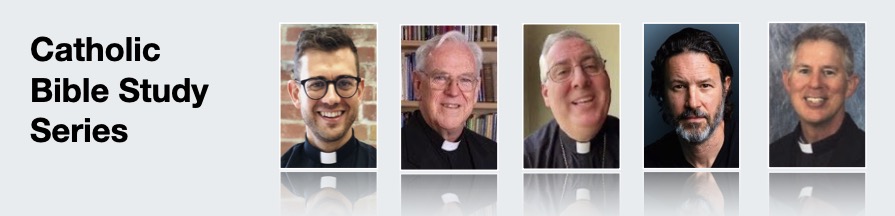
⬇️ Outside the Chapel
Fr. Rob
Alyssa and
Justine
Advent season serves as a catalyst for accepting discomfort, proclaiming the gospel truthfully, and engaging youth in significant ways, fostering a Christ-centered transformed life.
SOURCE: Outside the Chapel

⬇️ Fr. Geoffrey Plant
Fr. Geoffrey
Plant
During Gaudete Sunday, the faithful are called to emulate John the Baptist’s humility and commitment to preparing the way for Christ. This shift in focus from self-centeredness to serving others is integral to true discipleship.
SOURCE: Fr. Geoffrey Plant

⬇️ Luke’s Gospel for All Ages
Bishop Mark
0’Connell
Valuing fairness, generosity, and uprightness in our interactions with others, regardless of their societal standing, is a key lesson we can draw from the life and teachings of John the Baptist.

⬇️ Centre for Christian Spirituality
Bishop D. Walker
Evangelizing through his ministry, John the Baptist’s teachings emphasize the importance of repentance, generosity, and living justly in preparation for the coming Messiah, highlighting the transformative power of faith and the need for a genuine response to God’s love.

⬇️ Unpacking the Mass
Kieth
Nester
N – Coming Soon!
SOURCE: Unpacking the Mass

⬇️ Fr. Tim Peters
Fr. Tim
Peters
The arrival and infancy of Jesus serve as fulfillment of biblical prophecies, confirming his identity as the Messiah. Recognizing his divine significance through faith, prayer, and repentance becomes essential in embracing the transformative power of his message, underscoring the ultimate role of Jesus in salvation history.
SOURCE: Fr. Tim Peters


INTRO | READING 1 | READING 2 | GOSPEL

Fr. Andrew Ricci’s Podcast
Fr. Andrew, ordained in 1997 as a priest for the Diocese of Superior, serves as the Rector of the Cathedral of Christ the King.
1st Reading – Zephaniah 3:14-18a
- The people shout for joy and exult at the power of God who turns away their enemies.
- God is in the midst of the people and they are no longer afraid.
Response – Isaiah 12:2-3,4b-6
- “Cry out with joy and gladness: for among you is the great and Holy One of Israel.”
- We are confident and unafraid for our strength and courage is the Lord.
2nd Reading – Philippians 4:4-7
- We rejoice in the Lord and have no anxiety; rather we pray with thanksgiving as we make our petitions known to God.
- The peace of God guards our hearts and minds in Christ Jesus.
Gospel – Luke 3:10-18
- John the Baptist gives advice and direction to the people.
- John’s preaching prepares the people for the coming of Jesus.
SOURCE: Study, Pray, Serve

Lector Prep
A close look at upcoming Sunday readings, focusing on the lector’s understanding and proclamation
Greg has has served the church with his website since 1999 helping lectors prepare to proclaim the Scriptures in our Sunday assemblies.
For each Sunday’s first and second readings (and occasionally for the gospel), the Notes give the historical and theological background, plus suggestions on oral interpretation.
⬇️ Bulletin Inserts and Study Guides
OUR SUNDAY READINGS by Edrianne Ezell*
SCRIPTURE STUDY by Vince Contreras*
LECTIONARY COMMENTARY by Fr. Tobin*
ECHOING GOD’S WORD by Fr. Thibodeau*
WEEKDAY READINGS by Kieran J. O’Mahony*
⬇️ Handouts for Children
SDC WORKSHEET for children
CATHOLIC KIDS BULLETIN
CATHOLIC MOM resources
⬇️ Carmelite Lectio Divina
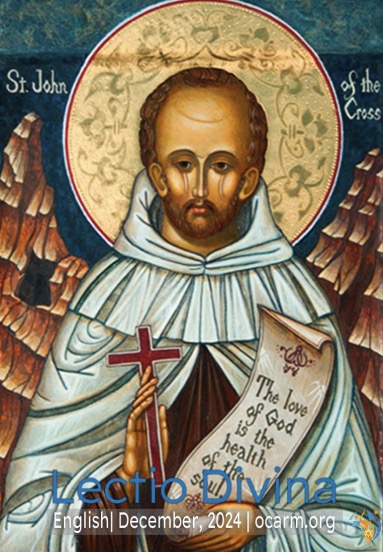
74 page PDF with refections and prayers for each day of the month.
Lectio Divina December 2024 (PDF)
Lectio Divina December 2024 [Mobi]
Lectio Divina December 2024 [ePub]
Source: Carmelites
⬇️ More Resources
ADVENT E-BOOK 2024


HISTORY
Zephaniah 3:14-18a conveys a message of hope and joy amidst trials to Israelites during a tumultuous period around 640-621 BCE. It is essential to examine the historical and political context of this passage to understand its significance.
During this time, the Assyrian Empire was declining, while the Babylonian Empire, led by Nebuchadnezzar II, was ascending. The Israelites were caught in the middle of this power struggle, with Judah, the southern kingdom, under the threat of Babylonian invasion. King Josiah of Judah was implementing religious reforms in an attempt to appease God and stave off impending doom.
Zephaniah, a prophet likely of royal or aristocratic lineage, delivered a message targeting the Judahites and Jerusalemites. He prophesied impending judgment on various nations, including Judah, due to their idolatry and disobedience to God’s law. However, he also offered hope for a remnant who would survive and experience restoration.
The passage addresses Daughter Zion, a personification of Jerusalem, urging her to rejoice. It promises that God’s presence will remove judgments and enemies, transforming sorrow into praise. The author seeks to encourage the Israelites to trust in God’s saving power despite their dire circumstances.
SOCIETY
The sociological and cultural context of Zephaniah 3:14-18a plays a crucial role in understanding its message. Set in ancient Israelite society, the passage draws on prevalent customs, beliefs, and practices that influenced its meaning and interpretation.
During this time, Israelite religion centered on the worship of Yahweh, with idolatry and syncretism posing persistent challenges. Prophets like Zephaniah often delivered divine messages, warning against disobedience and promising judgment or restoration. This passage’s call for Daughter Zion to rejoice would resonate with an audience familiar with the significance of Jerusalem as the center of religious and political life.
The Israelites believed in a covenant relationship with Yahweh, which they expressed through obedience to the Mosaic Law. This passage emphasizes the importance of righteousness and justice, reflecting the societal expectation to follow God’s commands. By addressing the “daughter of Zion” and referencing the “King of Israel,” the passage draws on the Israelites’ sense of national identity and pride.
Social customs, such as communal singing and rejoicing in times of victory or celebration, were integral to Israelite society. The passage uses these familiar practices to convey a message of hope and divine deliverance. Additionally, the reference to removing enemies and evil from Jerusalem underscores the Israelites’ desire for security and stability amidst regional conflicts.
THEOLOGY
Zephaniah 3:14-18a holds theological significance within the Roman Catholic tradition, offering insights applicable to contemporary Catholics. The passage emphasizes themes of hope, divine judgment, and restoration, resonating with key aspects of Catholic theology.
Catholic teaching affirms that God is just and merciful, a concept illustrated in this passage. While Zephaniah warns of judgment on Israel’s enemies and the unfaithful, he also offers hope for restoration, reflecting the Catholic belief in the redemptive power of God’s love.
The image of Daughter Zion rejoicing echoes the Marian tradition within Catholicism, which sees Mary as a symbol of the Church and a model of faithfulness. Catholics may draw inspiration from Mary’s example, trusting in God’s promises and finding joy amid life’s challenges.
The passage’s call to righteousness and justice aligns with the Catholic emphasis on social justice and the obligation to care for the marginalized. Pope Francis’ teachings on solidarity, compassion, and environmental stewardship are modern expressions of this biblical mandate.
Moreover, Zephaniah’s message of hope amid trials resonates with the Catholic understanding of redemptive suffering. Catholics facing adversity may find solace in the belief that their struggles, when united with Christ’s suffering, can become a source of grace and spiritual growth.
FIRST
READING
Amidst trials, God offers hope and joy to those who trust in His love. His presence transforms sorrow into songs of praise, ensuring His people never experience shame or loneliness.
Clipart by Fr. Richard Lonsdale
Zephaniah 3:14-18a
The content provided below has been generated using Artificial Intelligence for the WORD THIS WEEK. While it complements Fr. Andrew’s podcast and can enhance your study, please note that it is not officially associated with him or the podcast.
✨ HOPE

Baruch’s Proclamation of Restoration
I. God’s Call to Rejoice (Zephaniah 3:14-15)
- Daughter Zion commanded to rejoice and shout for joy
- Israel encouraged to be glad and exult with all their heart
- God’s presence removes judgments and turns away enemies
II. God’s Promise to His People (Zephaniah 3:16-17)
- God’s presence and mighty deeds ensure His people never experience shame
- The LORD removes those who cause pride and arrogance within Jerusalem
- Those who walk humbly and do what is just find refuge in the LORD
III. Future Hope for the Afflicted (Zephaniah 3:18a)
- Those afflicted are promised relief
- Trials and hardships will not consume or leave people in despair
- Encouragement to trust in God’s saving power and love

The Joy of God Among Us
EXCERPT: Zephaniah is the ninth of the Minor Prophets. His ministry took place in Jerusalem during the reign of King Josiah (639-609 BC). The central theme of his prophetic book is Yahweh's "Day of Judgment." Despite his warnings concerning God's divine judgment against an apostate covenant people, Zephaniah offered hope in an oracle telling the preservation of a faithful remnant of the covenant people who will be the core of a significant restoration (3:9-13). The promise of this glorious restoration becomes a hymn of jubilation in verses 14-18a.
Reading this passage should remind Christians of the Annunciation (Lk 1:26-38), when the angel Gabriel invited the Virgin Mary, a daughter of Zion, to rejoice and not fear because the Lord is with her (Lk 1:20, 28). In the Incarnation of the Word, the Lord God came to dwell among His people, and the salvation that Zephaniah promised became manifested in Mary's son, the "mighty Savior," the Son of God who has renewed us with His love poured out on the altar of the Cross.
SOURCE: Agape Bible Study Copyright © 2015; revised 2024 (Used with permission.)

HISTORY
Philippians 4:4-7, written by the Apostle Paul around AD 61-62, communicates the importance of joy, gratitude, and prayer to the early Christian community in Philippi. This letter must be understood within its historical and political context to grasp its full significance.
During this period, the Roman Empire maintained political control over much of the Mediterranean region, including Philippi, a Roman colony in Macedonia. Christians faced persecution under Roman authorities, resulting in fear, anxiety, and uncertainty within the early Church.
Paul, a former persecutor of Christians who experienced a dramatic conversion, sought to encourage and strengthen the Philippian church amid these challenges. As a Roman citizen and zealous missionary, Paul’s background and experiences shaped his teachings on joy, perseverance, and unity in Christ.
The letter addresses Gentile Christians, reminding them of their heavenly citizenship and calling them to live distinctively in a pagan society. This message of hope and steadfastness would have resonated with the Philippians, who were navigating a hostile political climate and striving to embody their newfound faith.
Furthermore, the Philippians’ economic reliance on Rome likely influenced Paul’s emphasis on gratitude and contentment. He encourages the community to celebrate their spiritual blessings and remain steadfast, even in adversity.
SOCIETY
The sociological and cultural context of Philippians 4:4-7 illuminates its relevance for the early Christian community in Philippi. As a Roman colony in Macedonia, Philippi’s culture was shaped by both Greek and Roman influences, presenting unique challenges for the fledgling church.
In the Roman world, the pursuit of honor and status dominated social interactions, often leading to division and strife. Paul’s emphasis on unity and harmony in Philippians 4:4-7 counters these cultural norms, inviting believers to embrace an alternative value system rooted in Christ.
Greek and Roman philosophy often promoted the ideal of self-sufficiency, while early Christians depended on one another for support and encouragement. Paul’s call to rejoice in all circumstances and rely on God’s provision (Philippians 4:4, 6) challenges the prevailing mindset of independence and self-reliance.
Pagan religious practices in Philippi involved ritualistic offerings and prayers aimed at appeasing the gods and securing personal benefits. Paul’s instruction to offer prayers and petitions “with thanksgiving” (Philippians 4:6) reframes the purpose of prayer, focusing on gratitude and trust in a loving God rather than manipulative attempts to control divine favor.
Additionally, the Greek concept of eudaimonia, or human flourishing, often emphasized external circumstances and material well-being. Paul’s teaching on contentment in all situations (Philippians 4:11-12) provides a counter-cultural perspective, highlighting the spiritual resources available to Christians and inviting them to redefine their understanding of happiness and success.
THEOLOGY
Philippians 4:4-7 holds theological significance within Roman Catholic tradition, offering insights applicable to contemporary Catholics. Key themes in this passage include joy, gratitude, prayer, and peace, which resonate with Catholic teaching and spirituality.
Catholic theology highlights the importance of joy as a fruit of the Holy Spirit and a reflection of one’s relationship with Christ. Paul’s call to rejoice in the Lord always (Philippians 4:4) reminds Catholics that true joy transcends circumstances and is rooted in the experience of God’s love.
Gratitude is another essential element of Catholic spirituality, with the Eucharist serving as the central act of thanksgiving in Catholic worship. Paul’s instruction to offer prayers “with thanksgiving” (Philippians 4:6) aligns with the Catholic emphasis on cultivating a grateful heart and recognizing God’s blessings.
Prayer plays a pivotal role in Catholic life, fostering intimacy with God and seeking divine guidance. Paul’s encouragement to present requests to God (Philippians 4:6) underscores the Catholic belief in the power of prayer and invites believers to trust in God’s providence.
The promise of God’s peace (Philippians 4:7) reflects the Catholic understanding of peace as both a gift from God and a responsibility for Christians to promote. Contemporary Catholics can apply this message by striving for inner peace and working for peace in their communities and the world.
SECOND
READING
Finding peace means embracing gratitude, gentleness, and prayer. By turning worries into requests and focusing on the good, God’s incomprehensible peace will guard our hearts and minds.
Clipart by Fr. Richard Lonsdale
Philippians 4:4-7
The content provided below has been generated using Artificial Intelligence for the WORD THIS WEEK. While it complements Fr. Andrew’s podcast and can enhance your study, please note that it is not officially associated with him or the podcast.
✨ PEACE
Paul’s Prayer for Spiritual Growth
I. Encouragement to Rejoice (Philippians 4:4)
- Call to rejoice in the Lord always
- Emphasis on maintaining a gentle and open spirit
II. God’s Nearness (Philippians 4:5)
- Reminder of the Lord’s nearness
- Encouragement to avoid anxiety by trusting in God’s presence
III. Prayer and Petition (Philippians 4:6)
- Instruction to make requests through prayer and petition
- Emphasis on gratitude and thanksgiving in all circumstances
IV. God’s Peace (Philippians 4:7)
- Assurance that God’s peace will guard hearts and minds in Christ Jesus
- Promise of God’s peace, surpassing all understanding

HISTORY
Luke 3:10-18, part of the Gospel of Luke, recounts John the Baptist’s ministry and his proclamation of the coming Messiah. The passage’s historical and political context illuminates its significance for the early Christian community.
During this period, the Roman Empire controlled Judea, with Herod Antipas ruling as tetrarch of Galilee and Perea. John the Baptist emerged as a prophetic figure, calling Israel to repentance and preparing the way for Jesus’ ministry. His message of baptism and repentance challenged the existing religious and political establishment.
Luke, the author, was a Gentile physician and companion of Paul. He wrote his Gospel to provide an orderly account of Jesus’ life and teachings for Theophilus, a Gentile seeking to understand Christianity. Luke’s emphasis on Jesus’ compassion and concern for the marginalized would resonate with his audience, who likely faced social and political challenges in the Roman Empire.
John the Baptist’s ministry occurred during a time of messianic expectation, with many Jews longing for deliverance from Roman oppression. His proclamation of the coming Messiah (3:16-17) would have stirred hope within this context, offering a vision of liberation and restoration.
SOCIETY
The sociological and cultural context of Luke 3:10-18 provides valuable insights into the passage’s meaning and relevance for its original audience. As a diverse region under Roman rule, first-century Palestine was shaped by various customs, beliefs, and practices that influenced the message of John the Baptist.
In Jewish society, ritual washings and purification rites were common, creating a cultural backdrop for John’s message of baptism and repentance. By calling people to undergo a symbolic cleansing, John offered an alternative to the existing religious system and invited individuals to renew their relationship with God.
The practice of tithing and almsgiving was also prevalent in Jewish culture. John’s instruction to tax collectors and soldiers (Luke 3:12-14) challenges these professions, often associated with corruption and extortion, to use their resources ethically and responsibly.
During this period, many Jews anticipated the coming of a messianic figure who would restore Israel’s political autonomy and usher in an era of justice and righteousness. John’s proclamation of the coming Messiah (Luke 3:16-17) taps into these expectations, offering hope for a renewed society and inviting individuals to prepare their hearts for this transformative event.
THEOLOGY
The Roman Catholic theological context of Luke 3:10-18 provides valuable insights and applications for contemporary Catholics. Key themes in this passage include baptism, repentance, and the role of John the Baptist, each of which resonates with Catholic teaching and spirituality.
Catholic theology affirms baptism as the sacrament of initiation into the Church, marking the believer’s entrance into the body of Christ. John the Baptist’s ministry, as described in Luke 3:10-14, serves as a precursor to Christian baptism, highlighting the importance of spiritual cleansing and renewal.
Repentance is another central theme in the passage, with John calling people to turn from their sins and bear fruit worthy of repentance (Luke 3:8). Catholic teaching emphasizes the importance of ongoing conversion, encouraging believers to examine their lives and continually turn towards God. The Sacrament of Reconciliation offers a tangible way for Catholics to experience the healing power of repentance.
The passage also underscores the role of John the Baptist as the forerunner of Jesus, preparing the way for his public ministry (Luke 3:16-17). This emphasis aligns with Catholic tradition, which recognizes John as a prophet and martyr and celebrates his feast days on June 24th and August 29th.
GOSPEL
John the Baptist emphasizes transformative living, stressing the need to produce good fruits, act justly, share generously, and serve ethically. He highlights Christ’s distinct baptism with the Holy Spirit and fire.
Clipart by Fr. Richard Lonsdale
Luke 3:10-18
The content provided below has been generated using Artificial Intelligence for the WORD THIS WEEK. While it complements Fr. Andrew’s podcast and can enhance your study, please note that it is not officially associated with him or the podcast.
✨ TRANSFORMATION

I. John’s Exhortation to the Crowds (Luke 3:10-11)
- People inquire about appropriate actions
- John emphasizes sharing and ethical behavior
II. John’s Advice to Tax Collectors and Soldiers (Luke 3:12-14)
- Tax collectors urged to cease extortion and deceit
- Soldiers cautioned against violence and false accusations
III. The Coming of the Messiah (Luke 3:15-17)
- Speculation regarding John’s identity as the Messiah
- John clarifies his role as a precursor to the Messiah
- Baptism with the Holy Spirit and fire anticipated
IV. John’s Message on Repentance (Luke 3:18)
- Emphasis on bearing good fruits as evidence of repentance
- Encouragement to act according to one’s vocation
- Warning against relying on lineage for salvation