DEC 22, 2024
Teaching With The Chosen: Elizabeth's Miraculous Pregnancy, Luke 1
✨ The Biblical account of Elizabeth's miraculous pregnancy and her encounter with Mary, found in Luke 1:39-45, has inspired numerous adaptations in various forms of art and media. One such adaptation can be found in the television series "The Chosen" in an episode titled "Elizabeth's Miraculous Pregnancy." The creators of the series beautifully capture the essence of the original text, while also bringing their unique vision to the story.
The series "The Chosen" remains faithful to the original Biblical story, accurately portraying the joy and wonder experienced by both Mary and Elizabeth. The costumes, setting, and dialogue all align with the cultural and historical context of the story. The actors' emotional performances allow the audience to connect with the characters on a more personal level, enhancing the impact of the narrative.
However, while the series stays true to the original events, it expands upon them, adding more details and elements of character development. For instance, it explores the emotional journey of Elizabeth and her husband Zechariah as they come to terms with the miracle of their child's conception in old age. This creative choice enriches the story, allowing viewers to engage with the narrative in a deeper way.
SCROLL TO READ MORE

This video excerpt from The Chosen was created for the educational purpose of enhancing your study of Elizabeth's Miraculous Pregnancy (and John leaping in the womb!) as found in Luke 1:5-25.


- VIDEOS
- FR. RICCI’S PODCAST
- LECTOR PREP
- FIRST READING
- SECOND READING
- GOSPEL
ENGLISH LECTIONARIES: The Jerusalem Bible (JB) is used in Australia and most countries, with some adaptations to fit local preferences. The New American Bible (NAB) is used in the U.S. and Philippians. The New Revised Standard Catholic Edition (NRSVCE) is used in Australia, Canada, Estonia, Finland and Central Africa. The English Standard Version (ESV) Catholic Edition is used in England/Wales.
⬇️ Word-Sunday

4th Sunday of Advent - YEAR C
FIRST READING — An unexpected Source
PSALM — Come, Lord, Restore Us
SECOND READING — The Reason Christ Came
GOSPEL — Old and New
⬇️ Outside the Chapel
Fr. Rob
Alyssa and
Justine
Mary’s visitation with Elizabeth highlights the transformative impact of faith and joy, emphasizing both women’s roles as expectant mothers and inspiring gratitude and solidarity during the Advent season.
SOURCE: Outside the Chapel
4th Sunday of Advent - YEAR C

⬇️ Fr. Geoffrey Plant
Fr. Geoffrey
Plant
On the 4th Sunday of Advent, the homily focuses on Mary’s visit to Elizabeth, emphasizing key themes from Jesus’ birth, His divine nature, and encouraging us to prepare spiritually and serve others during this special season.
SOURCE: Fr. Geoffrey Plant
4th Sunday of Advent - YEAR C

⬇️ Catholic Bible Studies
Father Bryan
Kujawa
The 4th Sunday of Advent, known as Advent Sunday, has a threefold focus: reflecting on the Incarnation of Christ, acknowledging the prophetic importance of His birth in Bethlehem, and highlighting the significance of repentance and prayer for salvation.
SOURCE: Fr. Bryan Kujawa
4th Sunday of Advent - YEAR C

⬇️ Centre for Christian Spirituality
Bishop D. Walker
Heartwarming and significant, Mary’s visit to Elizabeth during Advent embodies the essence of faith’s joy and fulfillment, accentuating the vital role of divine intervention and the promise of salvation manifesting through ordinary lives.
4th Sunday of Advent - YEAR C

⬇️ Unpacking the Mass
Kieth
Nester
Exploring significant theological themes, this episode delves into several essential concepts: Mary as the New Ark of the Covenant, the perfection of Jesus’ sacrifice, and the eternal nature of Christ.
SOURCE: Unpacking the Mass
4th Sunday of Advent - YEAR C

⬇️ Fr. Tim Peters
Fr. Tim
Peters
Rich in biblical significance, Luke 1’s narrative profoundly highlights the paramount roles of faith, divine intervention, and the fulfillment of God’s promises through the births of John and Jesus, stressing their importance in salvation history and the transformative work of the Holy Spirit.
SOURCE: Fr. Tim Peters
4th Sunday of Advent - YEAR C

4th Sunday of Advent - YEAR C

Fr. Andrew Ricci’s Podcast
Fr. Andrew, ordained in 1997 as a priest for the Diocese of Superior, serves as the Rector of the Cathedral of Christ the King.
1st Reading – Micah 5:2-5a
- Bethlehem is prophesied as the birthplace of the Messiah.
- The one to be born will stand firm and shepherd the flock, drawing strength from God and bringing peace to the ends of the earth.
Psalm – 80:2-3,15-16,18-19
- “Lord, make us turn to you; let us see your face and we shall be saved.”
- We call upon God for help, protection and salvation.
2nd Reading – Hebrews 10:5-10
- Christ offers the sacrifice of his body for our sins.
- In carrying out the Father’s will he consecrates us to God.
Gospel – Luke 1:39-45
- Mary travels to meet Elizabeth, who is filled with the Holy Spirit.
- Elizabeth then proclaims that Mary is blessed to be the mother of the Lord.
SOURCE: Study, Pray, Serve
4th Sunday of Advent - YEAR C

Lector Prep
A close look at upcoming Sunday readings, focusing on the lector’s understanding and proclamation
Greg has has served the church with his website since 1999 helping lectors prepare to proclaim the Scriptures in our Sunday assemblies.
For each Sunday’s first and second readings (and occasionally for the gospel), the Notes give the historical and theological background, plus suggestions on oral interpretation.
FIRST
READING
Micah foretells a future ruler from Bethlehem, emphasizing the humble town’s significance as King David’s birthplace and its role in God’s plan. The prophecy highlights societal expectations of power and salvation while revealing the coming Messiah’s impact.
Clipart by Fr. Richard Lonsdale
Micah 5:1-4a
NAB (USCCB) | ESVCE | NRSVCE | JB (Universalis)
✨ Bethlehem
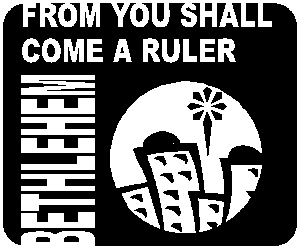
The Prophecy of Bethlehem’s Ruler (Micah 5:1-4a)
I. Bethlehem’s Insignificance and Significance
- Bethlehem Ephrathah: A small, seemingly insignificant town.
- Birthplace of a future ruler: Bethlehem’s divine role in God’s plan.
II. King David’s Lineage
- Ruler from ancient times: The connection to Israel’s beloved King David.
- Fulfillment of God’s promise: A ruler who will shepherd God’s people.
III. The Messiah’s Reign
- Universal peace: The coming Messiah will establish a reign of peace.
- Transformation: The end of conflict and the establishment of security.
- Messiah’s origins: A ruler from humble beginnings.
HISTORY
Micah 5:1-4a presents a prophetic message concerning the coming Messiah and God’s plans for Israel, with significant historical and political implications. The prophet Micah lived in the 8th century BCE, addressing the people of Judah and Jerusalem during a tumultuous period marked by political instability and the looming threat of the Assyrian Empire.
The author’s background as a prophet in Judah allowed him to provide insight into God’s will for the people, emphasizing the need for righteousness and social justice. Micah’s intended audience encompassed both the royal court and the common people, urging them to turn away from corruption and violence.
The prophecy highlights the coming of a ruler from Bethlehem who would shepherd God’s people and establish a reign of peace. This message offered hope to an oppressed people, particularly those living under the shadow of more prominent political entities. Additionally, it alluded to the fall of corrupt leadership in Israel and Judah, reflecting the ongoing struggle between the ruling elite and the people.
SOCIETY
Micah 5:1-4a demonstrates how sociological and cultural aspects of the time influenced the prophetic message, providing deeper meaning and relevance for its original audience. In ancient Israel, Bethlehem was a small, seemingly insignificant town compared to larger cities like Jerusalem. However, it held great significance as the birthplace of King David, Israel’s most beloved monarch.
By prophesying that the Messiah would come from Bethlehem, Micah taps into a cultural belief that God often chooses the seemingly insignificant to accomplish mighty deeds. This idea challenged the ruling class of Jerusalem, who may have believed that power and salvation would come from within their walls. The prophecy highlights God’s intention to overturn societal expectations and establish a new era of peace.
Sociologically, the Jewish people faced ongoing pressure to assimilate into the broader cultural practices of neighboring empires. Micah’s message emphasizes the importance of maintaining their cultural identity, while also calling for justice and righteousness in accordance with Jewish values. The reference to a ruler who would shepherd God’s people serves as a reminder of the societal responsibility to care for and protect one another.
THEOLOGY
Micah 5:1-4a holds profound theological significance within Roman Catholic tradition, as it is seen as a direct prophecy of Jesus Christ’s birth and his role as the Messiah. Catholic interpretation emphasizes the connection between the passage’s description of a ruler from Bethlehem and the narrative of Jesus’ birth in the Gospel of Luke.
The passage highlights the foundational Catholic belief in Jesus as the promised Messiah, who would establish a kingdom of peace and justice. This message serves as a reminder for contemporary Catholics of their calling to follow Christ’s example and work towards creating a more just and peaceful world.
In modern times, Catholics can apply Micah’s message by advocating for social justice, caring for the marginalized, and challenging oppressive structures. For instance, Catholic social teaching emphasizes the importance of prioritizing the needs of the poor and vulnerable, which aligns with Micah’s call for justice.
The concept of peace in Micah’s prophecy also has contemporary relevance, as Catholics strive to promote nonviolence and reconciliation in a world often marked by conflict. By reflecting on Micah 5:1-4a, Catholics can be inspired to cultivate a society that embodies the values and vision set forth in the passage.

The Messiah from Bethlehem
EXCERPT: The 8th-century BC prophet Micah was a contemporary of the prophet Isaiah. His ministry lasted from c. 750 – 687 BC, during the reigns of Davidic kings Jotham, Ahaz, and Hezekiah of Judah (Mic 1:1). Bethlehem was a small village about five miles south of Jerusalem in the region of Ephrath (Gen 35:16, 19; 1 Sam 17:12). It was the ancestral home of Naomi and her Judahite relative Boaz. Boaz married Naomi’s widowed daughter-in-law, the Moabitess Ruth, the great-grandmother of God’s anointed, the shepherd boy who became King of Israel: David, the son of Jesse, the son of Obed, the son of Boaz and Ruth (Ruth 4:21-22; 1 Sam 16:1, 11-13).
Micah announced that the Redeemer-Messiah promised since Adam’s fall from grace (Gen 3:15) would be born in Bethlehem, a village in the tribal lands of Judah and the birthplace of the great King David. Like his ancestor David, He would be a future ruler from humble origins. His destiny was to rule the covenant people, but His divine authority would extend to the ends of the earth, and His mission would be to inaugurate an era of peace with God (verses 3-4a). No Davidic king or his mother fulfills Micha’s description of the promised Davidic Messiah and his mother (the “she” of verse 3) other than Jesus and Mary. Micah’s prophecy also recalls passages from Isaiah 7:14, 9:5-6, 11:1-4, and God’s eternal covenant with David that his heir would rule forever over an everlasting kingdom (2 Sam 7:12-16; 23:5; Ps 89:3; Dan 2:44; etc.).
Jewish and Christian traditions interpret Malachi 5:1-4 as a Messianic prophecy. The Jewish view appears in the writings of the Jewish Talmud (Pesahim, 51.1 and Nedarim, 39.2). In the New Testament, St. Matthew applies Micah’s prophecy to Mary and Jesus, quoting Micah 5:1 from the LXX (Greek Septuagint translation of the Old Testament, which varies slightly from the Hebrew) as an Old Testament fulfillment passage (Mt 2:4-6). St. Matthew wrote: And you, Bethlehem, land of Judah, are by no means least among the rulers of Judah; since from you shall come a ruler, who is to shepherd my people Israel. Micah’s prophecy includes the powerful message that the promised Messiah is more than an ordinary man since his “origin is from old, from ancient times.” Micah’s “shepherd” imagery recalls the Messiah’s Bethlehem ancestor, the shepherd boy David, anointed by God to be a king to “shepherd” His people Israel (2 Sam 5:1-2; Mt 1:1) and his heir who God would send to “shepherd” His covenant people (Ezek 34:23-24).
Jesus identified Himself as the “Good Shepherd” (Jn chapter 10) sent by God the Father to gather the “lost sheep” of the house of Israel (Mt 10:6; 15:24; 18:11; Lk 15:6). And when the Magi came seeking the newborn King of the Jews, St. Matthew recorded that the chief priests advised King Herod of the prophecy identifying Bethlehem of Judea as the birthplace of the Messiah, quoting Malachi 5:1 in Matthew 2:6. St. John’s Gospel also records the opinion of the religious leaders’ response to Jesus coming from the Galilee, objecting that He could not be the Messiah when they protested: Is the Christ to come from the Galilee? Has not the Scripture said that the Christ [Messiah] is descended from David and comes from Bethlehem, the village where David was? (Jn 7:40-42).
Christian tradition has always interpreted Micah 5:1-4 as a prophecy of the birth of the Christ/Messiah in Bethlehem. “Christos” is the Greek word Christians used for the Hebrew word Mashiach, “Messiah.” “Bethlehem” is a village whose name means “house of bread.” It is a meaningful name for the birthplace of the One who announced that He came as the “bread of life” for the salvation of humanity. After the miracle feeding of the five thousand, Jesus said, “I am the bread of life; whoever comes to me will never hunger, and whoever believes in me will never thirst (Jn 6:35); it is a promise He fulfills in the miracle of the Eucharist. Early Christian apologist Tertullian (c. AD 155- c. 197) wrote: “Since the children of Israel accuse us of grave error because we believe in Christ, who has come, let us show them from the Scriptures that the Christ who was foretold has come … He was born in Bethlehem in Judah, as the prophet foretold: ‘But you, O Bethlehem are by no means least …’ (Mal 5:2)” (Adversus Iudaeos, 13). And St. Irenaeus (c. AD 135- c. 202) wrote: “In his day, the prophet Micah told us of the place where the Christ would be born: Bethlehem, in Judah. ‘O Bethlehem … too little to be among the clans of Judah, from you shall come forth for me one who is to be ruler of Israel.’ Bethlehem is also the homeland of David, and Christ was from the line of David, not only because he was born of the Virgin, but because he was born in Bethlehem” (Demonstratio praedicationis apostolicae, 63).
SOURCE: Agape Bible Study Copyright © 2015; revised 2024 (Used with permission.)
SECOND
READING
The author of Hebrews contrasts Old Testament sacrifices with Christ’s ultimate sacrifice, emphasizing that Christ’s offering of his body replaces and fulfills the law’s requirements. Through this willing obedience, believers are made holy and perfect.
Clipart by Fr. Richard Lonsdale
Hebrews 10:5-10
NAB (USCCB) | ESVCE | NRSVCE | JB (Universalis)
✨ Fulfillment
Fulfillment of the Law Through Christ’s Sacrifice (Hebrews 10:5-10)
I. Inefficacy of Old Testament Sacrifices
- Shadow of good things to come: The old covenant’s inability to perfect the faithful.
- Continual offerings: The repetitive nature of Old Testament sacrifices.
II. Christ’s Perfect Sacrifice
- Fulfillment of God’s will: Christ’s obedience in offering his body.
- Abolishment of the old covenant: Christ’s sacrifice replaces the old law.
III. Sanctification Through Christ’s Offering
- Once for all: The eternal effectiveness of Christ’s sacrifice.
- Source of holiness: Christ’s offering perfects and sanctifies the faithful.
HISTORY
Hebrews 10:5-10 presents a theological argument within a specific historical and political context, emphasizing the superiority of Christ’s sacrifice over Old Testament sacrifices. The author of Hebrews, likely a Jewish Christian with a deep understanding of Jewish tradition and the early Christian faith, addresses a community facing challenges in their commitment to Christianity.
During the 1st century CE, Jewish Christians were under pressure from both Jewish authorities and the Roman Empire, which ruled over their lands. This context led the author to draw parallels between Jewish tradition and Christian beliefs, focusing on the fulfillment of the Old Testament through Christ.
The passage critiques the inefficacy of the old covenant’s sacrificial system, offering Christ’s obedience and self-offering as the perfect sacrifice. This message would resonate with early Jewish Christians navigating the complexities of their identity and faith in a time of political and social turmoil.
The author’s intended audience, likely a group of Jewish Christians wavering in their commitment to the new faith, would have found assurance in this message. It solidified their belief in Christ’s role as the ultimate high priest, whose sacrifice brought about salvation and a new covenant between God and humanity.
SOCIETY
Hebrews 10:5-10 draws from the sociocultural context of 1st-century Jewish Christians, particularly their understanding of sacrificial practices and the high priest’s role. The passage critiques the inefficacy of the old covenant’s system, contrasting it with Christ’s perfect sacrifice and eternal priesthood.
In ancient Jewish society, the high priest held a crucial role, offering sacrifices to atone for the people’s sins and mediate their relationship with God. The author of Hebrews highlights Christ’s role as the ultimate high priest, surpassing human priests in fulfilling God’s will through his obedience and self-offering.
The passage’s sociocultural context also includes the struggles of Jewish Christians reconciling their Jewish identity and newfound faith in Christ. By addressing the inadequacy of the old covenant, the author emphasizes the fulfillment of Jewish tradition through Christ, helping this community navigate their identity amidst a society marked by religious and cultural tensions.
Sociologically, the Jewish Christians’ emphasis on communal worship and the shared experience of faith highlights the need for a new understanding of atonement and sanctification. The passage’s focus on Christ’s perfect sacrifice emphasizes the communal aspect of redemption, shaping its original audience’s understanding of their faith journey.
THEOLOGY
Hebrews 10:5-10 holds profound Roman Catholic theological significance, illuminating the concepts of Christ’s eternal priesthood, the perfect sacrifice, and the new covenant. The passage serves as a foundation for understanding the fulfillment of Old Testament practices through Christ’s offering of his body.
The Catholic theological interpretation emphasizes Christ’s obedience to God’s will, linking it to his role as the high priest who offers the perfect sacrifice. This interpretation highlights the eternal nature of Christ’s priesthood, contrasting it with the mortal high priests of the old covenant.
The passage emphasizes the transformative power of Christ’s sacrifice, which sanctifies believers and brings about the new covenant. This concept shapes Catholic understanding of the Eucharist, where Christ’s sacrifice is re-presented and partaken in by the faithful.
For contemporary Catholics, this passage underscores the centrality of Christ’s sacrifice in their faith journey. It encourages reflection on obedience to God’s will and the call to holiness, as modeled by Christ. Additionally, the passage invites Catholics to embrace the Eucharist’s significance, recognizing the eternal nature of Christ’s priesthood and sacrifice.
Consecrated Through the Messiah
to do God’s Will
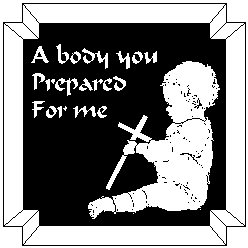
✨ EXCERPT: The writer of Hebrews quotes from the Greek Septuagint version (LXX) of the Old Testament in verses 7-9a (verses 6-8 in some translations) from Psalm 40 in our translations, but Psalm 39:7-9 in the Septuagint. The chapter and the later verse divisions were not included in Bibles until the 13th and 17th centuries AD. The Jewish Masoretic Version was a revised Old Testament text dating to the Middle Ages. In contrast, the Septuagint text predated Christ and was the main translation used in Jesus’s time and quoted in the New Testament. Differences appear in the phrase “but a body you prepared (fashioned) for me,” missing from the Jewish Masoretic version. It is a significant variation since the New Testament writer of Hebrews identifies this passage as a prophecy of the Incarnation and Christ’s submission to the will of the Father in His self-sacrifice.
Masoretic | Septuagint | New American |
Psalm 40:6-8 “Sacrifice and offering you did not want, but you dug ears for me; whole burnt offerings (holocausts) and sin offerings you did not request. Then I said, ‘Behold, I have come, it is written about me, in the [head of the] scroll of the book. To do your will, O my God, I delight.'” | Psalm 39:7-9 “Sacrifice and offering you did not want, but you fashioned [katartizo] a body for me; whole burnt offerings (holokautoma) and sin offerings you did not request. Then I said, ‘Behold, I have come, it is written about me in the head of the book [scroll]. To do your will, O my God, I intend…'” | Hebrews 10:5b-7 “Sacrifice and offering you did not desire, but a body you prepared [katartizo] for me; holocausts (holokautoma) and sin offerings you took no delight in. Then I said, ‘As is written of me in the [head of the] scroll, Behold, I come to do your will, O God.'” |
7 “Then I said, ‘As is written of me in the scroll, Behold, I come to do your will, O God.'”
The Greek translation of “as is written of me in the scroll” is instead “as it is written of me in the head of the scroll” (IBGE, vol. IV, page 601). The “head” may refer to the knob at the top of the wooden rod upon which the leather scroll, with the sacred words of God, was wound. In other words, the “part” which is on the stick containing the whole text may signify the “whole” of Sacred Scripture that is about Christ.
Jesus taught the Apostles in Luke 24:25-27 and 24:44-45 that everything written in the Scriptures was about Him. The writer of Hebrews believed this included Psalm 39 in the Septuagint (Greek) translation, Sacred Scripture that identifies the inadequacy of all the old Sinai Covenant sacrifices and offerings. It also points to a time from before the Incarnation of Christ when sacred Scripture alluded to the coming of the Messiah to fulfill the Law and do God’s will.
SOURCE: Agape Bible Study Copyright © 2015; revised 2024 (Used with permission.)
GOSPEL
Mary visits Elisabeth, where both women experience divine grace. Elisabeth recognizes Mary’s blessedness as the mother of the Lord, John the Baptist acknowledges Jesus in Mary’s womb, and the passage highlights the importance of faith in God’s promises.
Clipart by Fr. Richard Lonsdale
Luke 1:39-45
NAB (USCCB) | ESVCE | NRSVCE | JB (Universalis)
✨ Visitation
Mary’s Visit to Elisabeth (Luke 1:39-45)
I. Mary’s Journey
- Mary’s haste: Her prompt response to the news of Elisabeth’s pregnancy.
- Arrival at Zechariah’s house: Mary greets Elisabeth.
II. Elisabeth’s Response
- Filled with the Holy Spirit: Elisabeth’s divine revelation.
- Blessedness of Mary: Elisabeth acknowledges Mary as the mother of the Lord.
III. John the Baptist’s Recognition
- Unborn child’s reaction: John the Baptist leaps in Elisabeth’s womb.
- Fulfillment of God’s promise: Elisabeth’s proclamation of Mary’s blessedness for believing God’s words.
HISTORY
Luke 1:39-45, part of the infancy narrative in the Gospel of Luke, is set in the context of 1st-century Judea under Roman occupation. The author, traditionally believed to be Luke, a physician and companion of Paul, wrote for a Gentile audience, aiming to present a historical account of the events surrounding Christ’s birth and early life.
The political context of Roman rule contributed to the Jewish people’s anticipation of a Messiah who would liberate them from oppression. This passage, depicting the encounter between Mary and Elisabeth, foreshadows the birth of Jesus, the promised Messiah.
Elisabeth’s husband, Zechariah, was a priest in the Jerusalem temple, representing a significant connection to Jewish religious life. The mention of Elisabeth’s lineage from Aaron, the brother of Moses, emphasizes the couple’s revered status within Jewish society.
The passage also highlights the role of women in 1st-century Judea. Mary and Elisabeth exhibit faith, humility, and obedience to God’s will, offering a positive portrayal of women in a patriarchal society.
SOCIETY
Luke 1:39-45 reflects the sociocultural context of 1st-century Jewish society, with specific customs, beliefs, and practices shaping its meaning and relevance. The passage highlights the role of women, the significance of family lineage, and Jewish religious practices.
Mary’s visit to Elisabeth reflects the importance of kinship and support among women in a patriarchal society. The encounter emphasizes the bond between Mary and Elisabeth, who share a divine calling in the events leading to Christ’s birth. Their meeting showcases women as faithful and obedient to God’s will, elevating their status within a context that often marginalized them.
The passage emphasizes Elisabeth’s lineage from Aaron, Moses’ brother, highlighting the significance of family lineage and ancestry in Jewish society. This connection serves to validate Zechariah and Elisabeth’s revered status within the community, as well as the role of John the Baptist, their unborn son, in God’s divine plan.
The passage also touches on Jewish religious beliefs, such as the role of priests and the expectation of a coming Messiah. These aspects underscore the original audience’s anticipation of a Savior and their desire for liberation from Roman oppression.
THEOLOGY
Luke 1:39-45 contributes to Roman Catholic theology by providing insights into the Annunciation, the role of Mary and Elisabeth, and the divine calling of John the Baptist. The passage offers contemporary Catholics examples of faithfulness and obedience to God’s will, while foreshadowing the arrival of Christ, the Messiah.
The encounter between Mary and Elisabeth reveals the sanctity of their roles in God’s divine plan, with Mary carrying the Savior and Elisabeth bearing witness to this event. The passage offers a positive portrayal of women in a patriarchal society, serving as a model for contemporary Catholics to value and support women in their faith journeys.
Luke’s emphasis on Elisabeth’s lineage from Aaron underscores the importance of the Jewish religious tradition that paved the way for Christ’s arrival. This highlights the continuity between the Old and New Testaments, an essential aspect of Catholic theology.
For modern Catholics, the passage emphasizes the significance of accepting God’s will, as exemplified by Mary and Elisabeth. Their faithfulness and humility serve as models for contemporary Catholics seeking to live out their calling in their daily lives.
Event | Type | Matthew | Mark | Luke | John | |
1 | misc | John 01:01–18 | ||||
2 | nativity | Matthew 01:01–17 | Luke 03:23–38 | |||
3 | nativity | Luke 01:05–25 | ||||
4 | nativity | Luke 01:26–38 | ||||
5 | nativity | Luke 01:39–56 | ||||
6 | nativity | Matthew 01:18–25 | Luke 02:01–07 | |||
7 | nativity | Luke 02:08–15 | ||||
8 | nativity | Luke 02:16–20 | ||||
9 | nativity | Luke 02:21 | ||||
10 | nativity | Luke 02:22–38 | ||||
11 | nativity | Matthew 02:01–02 | ||||
12 | nativity | Matthew 02:01–12 | ||||
13 | nativity | Matthew 02:13–15 | ||||
14 | nativity | Matthew 02:16–18 | ||||
15 | Herod the Great's death | misc | Matthew 02:19–20 | |||
16 | youth | Matthew 02:21–23 | Luke 02:39–39 | |||
17 | youth | Luke 02:41–51 | ||||
18 | misc | Matthew 03:01–12 | Mark 01:01–08 | Luke 03:01–20 | John 01:19–34 | |
19 | misc | Matthew 03:13–17 | Mark 01:09–11 | Luke 03:21–22 | John 01:29–39 | |
20 | misc | Matthew 04:01–11 | Mark 01:12–13 | Luke 04:01–13 | ||
21 | miracle | John 02:01–11 | ||||
22 | ministry | John 02:13–25 | ||||
23 | ministry | John 03:01–21 | ||||
24 | ministry | Matthew 04:12–12 | Mark 01:14–14 | John 04:01–03 | ||
25 | miracle | Mark 01:21–28 | Luke 04:31–37 | |||
26 | parable | Mark 04:26–29 | ||||
27 | ministry | Matthew 13:53–58 | Mark 06:01–06 | Luke 04:16–30 | ||
28 | ministry | Matthew 04:18–22 | Mark 01:16–20 | Luke 05:1-11 | John 01:35–51 | |
29 | miracle | Luke 05:01–11 | ||||
30 | sermon | Matthew 05:02–12 | Luke 06:20–23 | |||
31 | miracle | Luke 07:11–17 | ||||
32 | parable | Luke 07:41–43 | ||||
33 | parable | Matthew 05:14–15 | Mark 04:21–25 | Luke 08:16–18 | ||
34 | sermon | Matthew 05:17–48 | Luke 06:29–42 | |||
35 | ministry | Luke 10:01–24 | ||||
36 | sermon | Matthew 06:01–18 | ||||
37 | parable | Luke 10:30–37 | ||||
38 | ministry | Luke 10:38–42 | ||||
39 | ministry | Matthew 06:09–13 | Luke 11:02–04 | |||
40 | parable | Luke 11:05–08 | ||||
41 | parable | Luke 12:16–21 | ||||
42 | ministry | John 04:04–26 | ||||
43 | ministry | Matthew 06:25–34 | Luke 12:22–34 | |||
44 | sermon | Matthew 07:01–05 | Luke 06:41–42 | |||
45 | sermon | Matthew 07:13–27 | ||||
46 | sermon | Matthew 07:15–20 | Luke 06:43-45 | |||
47 | parable | Matthew 07:24–27 | Luke 06:46–49 | |||
48 | miracle | Matthew 08:01–04 | Mark 01:40–45 | Luke 05:12–16 | ||
49 | miracle | Matthew 08:05–13 | Luke 07:01–10 | John 04:46–54 | ||
50 | miracle | Matthew 08:14–17 | Mark 01:29–34 | Luke 04:38–41 | ||
51 | miracle | Matthew 08:16–17 | Mark 01:32–34 | Luke 04:40–41 | ||
52 | miracle | Matthew 08:23–27 | Mark 04:35–41 | Luke 08:22–25 | ||
53 | miracle | Matthew 08:28–34 | Mark 05:01–20 | Luke 08:26–39 | ||
54 | miracle | Matthew 09:01–08 | Mark 02:01–12 | Luke 05:17–26 | ||
55 | ministry | Matthew 09:09 | Mark 02:13–14 | Luke 05:27–28 | ||
56 | parable | Matthew 09:17–17 | Mark 02:22–22 | Luke 05:37–39 | ||
57 | miracle | Matthew 09:18–26 | Mark 05:21–43 | Luke 08:40–56 | ||
58 | miracle | Matthew 09:20–22 | Mark 05:24–34 | Luke 08:43–48 | ||
59 | miracle | Matthew 09:27–31 | ||||
60 | miracle | Matthew 09:32–34 | ||||
61 | ministry | Matthew 10:02–04 | Mark 03:13–19 | Luke 06:12–16 | ||
62 | ministry | Matthew 10:34–36 | Luke 12:49–53 | |||
63 | ministry | Matthew 11:02–06 | Luke 07:18–23 | |||
64 | miracle | John 05:01–18 | ||||
65 | ministry | Matthew 12:01–08 | Mark 02:23–28 | Luke 06:01–05 | ||
66 | miracle | Matthew 12:09–13 | Mark 03:01–06 | Luke 06:06–11 | ||
67 | miracle | Matthew 12:22–28 | Mark 03:20–30 | Luke 11:14–23 | ||
68 | parable | Matthew 12:29–29 | Mark 03:27–27 | Luke 11:21–22 | ||
69 | ministry | Matthew 12:30–32 | Mark 03:28–29 | Luke 12:08–10 | ||
70 | ministry | Matthew 12:46–50 | Mark 03:31–35 | Luke 08:19–21 | ||
71 | parable | Matthew 13:03–09 | Mark 04:03–09 | Luke 08:05–08 | ||
72 | parable | Matthew 13:24–30 | ||||
73 | parable | Luke 13:06–09 | ||||
74 | miracle | Luke 13:10–17 | ||||
75 | parable | Matthew 13:31–32 | Mark 04:30–32 | Luke 13:18–19 | ||
76 | parable | Matthew 13:33–33 | Luke 13:20–21 | |||
77 | parable | Matthew 13:44–46 | ||||
78 | parable | Matthew 13:47–50 | ||||
79 | parable | Matthew 13:52–52 | ||||
80 | ministry | Matthew 14:06–12 | Mark 06:21–29 | Luke 09:07–09 | ||
81 | miracle | Matthew 14:13–21 | Mark 06:31–44 | Luke 09:10–17 | John 06:05–15 | |
82 | miracle | Matthew 14:22–33 | Mark 06:45–52 | John 06:16–21 | ||
83 | miracle | Matthew 14:34–36 | Mark 06:53–56 | |||
84 | sermon | Matthew 15:01–11 | Mark 07:01–23 | |||
85 | miracle | Matthew 15:21–28 | Mark 07:24–30 | |||
86 | miracle | Mark 07:31–37 | ||||
87 | miracle | Matthew 15:32–39 | Mark 08:01–09 | |||
88 | miracle | Mark 08:22–26 | ||||
89 | ministry | Matthew 16:13–20 | Mark 08:27–30 | Luke 09:18–21 | ||
90 | miracle | Matthew 17:01–13 | Mark 09:02–13 | Luke 09:28–36 | ||
91 | miracle | Matthew 17:14–21 | Mark 09:14–29 | Luke 09:37–49 | ||
92 | miracle | Matthew 17:24–27 | ||||
93 | sermon | John 06:22–59 | ||||
94 | ministry | Matthew 18:01–06 | Mark 09:33–37 | Luke 09:46–48 | ||
95 | miracle | Luke 14:01–06 | ||||
96 | parable | Luke 14:25–33 | ||||
97 | parable | Matthew 18:10–14 | Luke 15:04–06 | |||
98 | parable | Matthew 18:23–35 | ||||
99 | ministry | Matthew 18:01–06 | Mark 09:33–37 | Luke 09:46–48 | ||
100 | parable | Luke 15:08–09 | ||||
101 | parable | Luke 15:11–32 | ||||
102 | parable | Luke 16:01–13 | ||||
103 | parable | Luke 16:19–31 | ||||
104 | parable | Luke 17:07–10 | ||||
105 | miracle | Luke 17:11–19 | ||||
106 | parable | Luke 18:01–08 | ||||
107 | parable | Luke 18:09–14 | ||||
108 | ministry | Matthew 19:1-15 | ||||
109 | ministry | Matthew 19:16–30 | Mark 10:17–31 | Luke 18:18–30 | ||
110 | ministry | John 08:02–11 | ||||
111 | parable | Matthew 20:01–16 | ||||
112 | ministry | Matthew 20:17–19 | Mark 10:32–34 Mark 08:31 Mark 09:31 | Luke 18:31–34 | ||
113 | miracle | John 09:01–12 | ||||
114 | ministry | Matthew 20:20–28 | Mark 10:35–45 | |||
115 | ministry | John 10:01–21 | ||||
116 | miracle | Matthew 20:29–34 | Mark 10:46–52 | Luke 18:35–43 | ||
117 | miracle | John 11:01–44 | ||||
118 | ministry | Luke 19:02–28 | ||||
119 | ministry | Matthew 21:01–11 | Mark 11:01–11 | Luke 19:29–44 | John 12:12–19 | |
120 | ministry | Matthew 21:12–13 | Mark 11:15–18 | Luke 19:45–48 | ||
121 | miracle | Matthew 21:18–22 | Mark 11:12–14 | |||
122 | ministry | Matthew 21:23–27 | Mark 11:27–33 | Luke 20:01–08 | ||
123 | parable | Matthew 21:28–32 | ||||
124 | parable | Matthew 21:33–41 | Mark 12:01–09 | Luke 20:09–16 | ||
125 | parable | Matthew 22:01–14 | Luke 14:16–24 | |||
126 | ministry | Matthew 22:15–22 | Mark 12:13–17 | Luke 20:20–26 | ||
127 | ministry | Matthew 23:01–39 | Mark 12:35–37 | Luke 20:45–47 | ||
128 | sermon | Mark 12:41–44 | Luke 21:01-04 | |||
129 | ministry | Matthew 24:01–31 | Mark 13:01–27 | Luke 21:05–36 | ||
130 | parable | Matthew 24:32–35 | Mark 13:28–31 | Luke 21:29–33 | ||
131 | parable | Matthew 24:42–51 | Mark 13:34–37 | Luke 12:35–48 | ||
132 | parable | Matthew 25:01–13 | ||||
133 | parable | Matthew 25:14–30 | Luke 19:12–27 | |||
134 | parable | Matthew 25:31–46 | ||||
135 | ministry | Matthew 26:01–13 | Mark 14:03-09 | Luke 07:36–50 | John 12:02-08 | |
136 | misc | Matthew 26:14–16 | Mark 14:10–11 | Luke 22:01-06 | ||
137 | ministry | John 12:24–26 | ||||
138 | ministry | Matthew 26:26–29 | Mark 14:18–21 | Luke 22:17–20 | John 13:01–31 | |
139 | ministry | John 16:05–15 | ||||
140 | misc | Matthew 26:36–46 | Mark 14:32–42 | Luke 22:39–46 | ||
141 | passion | Matthew 26:47–49 | Mark 14:43–45 | Luke 22:47–48 | John 18:02-09 | |
142 | miracle | Luke 22:49–51 | ||||
143 | passion | Matthew 26:50–56 | Mark 14:46–49 | Luke 22:52–54 | John 18:10–12 | |
144 | passion | Matthew 26:57–68 | Mark 14:53–65 | Luke 22:63–71 | John 18:12–24 | |
145 | passion | Matthew 27:24–25 | ||||
146 | passion | Matthew 27:27–33 | Mark 15:20–22 | Luke 23:26–32 | John 19:16–17 | |
147 | passion | Matthew 27:34–61 | Mark 15:23–47 | Luke 23:33–54 | John 19:18–38 | |
148 | res app | Matthew 28:01 | Mark 16:01 | Luke 24:01 | ||
149 | res app | Matthew 28:02-08 | Mark 16:02-08 | Luke 24:02–12 | John 20:01–13 | |
150 | res app | Matthew 28:09–10 | Mark 16:09-13 | Luke 24:01-08 | John 20:14–16 | |
151 | res app | John 20:17–17 | ||||
152 | res app | Luke 24:13–32 | ||||
153 | res app | Luke 24:36–43 | John 20:19–20 | |||
154 | res app | Matthew 28:16–20 | Mark 16:14-18 | Luke 24:44–49 | John 20:21–23 | |
155 | res app | John 20:24–29 | ||||
156 | miracle | John 21:01–24 | ||||
157 | res app | Mark 16:19 | Luke 24:50–53 | |||
158 | misc | Matthew 28:19-20 | Mark 16:19-20 |
The table is based on the list of key episodes in the Canonical Gospels. The episode structure within the table is based on Edward Robinson's A Harmony of the Gospels in Greek((William Newcome (1834), Edward Robinson (ed.), A harmony of the Gospels in Greek, in the general order of Le Clere & Newcome, with Newcome's notes: Printed from the text and with the various readings of Knapp, Gould and Newman)) as well as Steven L. Cox and Kendell H Easley's Harmony of the Gospels.((Steven L. Cox; Kendell H. Easley (2006), "Analytical Outline of the Harmony", HCSB Harmony of the Gospels, B&H Publishing, p. xviii, ISBN978-0805494440)). The chart was obtained from Wikipedia and is posted here for convenience.((https://en.wikipedia.org/wiki/Gospel_harmony))
The Visitation: Mary Journeys from Nazareth to the House of Elizabeth
EXCERPT: After the angel Gabriel’s visit at the Annunciation, Mary immediately set out from Nazareth in Galilee to visit her kinswoman Elizabeth in Judea. She probably joined a caravan traveling to Jerusalem, making the 7-8-day journey to a town in the hill country of Judea. According to a Christian tradition that predates the Crusades, Elizabeth and her husband, the priest Zechariah, lived in Ein Kerem, about four miles west of Jerusalem (Shrines of the Holy Land, pages 125-29). After the covenant people returned from the Babylonian exile, the Book of Nehemiah records that the chief priests took up residence in or near Jerusalem (Neh 11:3).
As was the custom, Elizabeth was in seclusion for the first five months of her pregnancy, as the ancients counted without the concept of a zero place-value, but four months as we count (Lk 1:24). It was the sixth month of Elizabeth’s pregnancy, but the fifth month, as we count (Lk 1:36), when Mary traveled to visit her relative immediately after the Incarnation. Mary’s desire to see her kinswoman was probably prompted by the Holy Spirit as well as by her need to share her experience with someone who would understand.
42 When Elizabeth heard Mary’s greeting, the infant leaped in her womb, and Elizabeth, filled with the Holy Spirit, 42 cried out in a loud voice and said, “Most blessed are you among women, and blessed is the fruit of your womb.
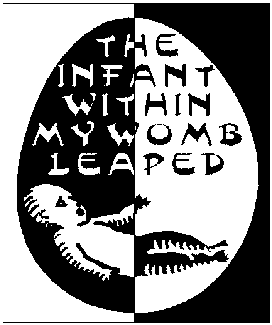
When Mary entered the house, and Elizabeth first heard Mary’s voice (Lk 1:40), the fetus of St. John the Baptist, recognizing the presence of his Lord, leaped for joy within his mother’s womb (Lk 1:41, 44). The unborn St. John’s response to Mary and the unborn Christ recalls God’s words to Jeremiah: Before I formed you in the womb, I knew you, before you were born I dedicated you, a prophet to the nations I appointed you (Jer 1:5). Think of the horror of abortion taking place daily as children, personally known by God from the womb and given as His holy gift, are violently murdered before (and in some cases after) their birth.
In Elizabeth’s Holy Spirit-inspired greeting to her kinswoman, she gave three blessings in verses 42-45:
- She blessed Mary.
- She blessed Jesus.
- She blessed the faith God gave Mary.
Elizabeth’s third blessing for Mary: Blessed are you who believed that what was spoken to you by the Lord would be fulfilled was because of her beliefin contrast to Zechariah’s unbelief (Lk 1:18-20). Mary is the first Christian. Her belief does not waver during the years of Jesus’s ministry or His Passion. She also faithfully prayed together with those who believed and waited for the coming of the Paraclete (Holy Spirit) in the Upper Room forty days after Jesus’s Ascension and fifty days after His Resurrection (Acts 1:13-14).
43 And how does this happen to me that the mother of my Lord should come to me?
Bible scholars (both ancient and modern) noticed the similarity between Elizabeth’s rhetorical question in Luke 1:43 and King David’s rhetorical question in 2 Samuel 6:9 when he said: How can the Ark of the Lord come to me? David was speaking of the Ark of the Covenant. They saw Elizabeth’s question as an intentional comparison between Mary and the Ark of the Covenant, the dwelling place of God among His people. See the chart on Mary as the Ark of the New Covenant). Verse 56 appears to confirm the comparison where Mary remained in Elizabeth’s house in the Judean hill country three months or two months as we count, just as the Ark stayed in the Judean hill country house of Obed-edom for the same length of time in 2 Samuel 6:11.
When Elizabeth said, “my Lord” in verse 43 and “the Lord” in verse 45, she referred to Jesus in verse 43 and God in verse 45. She refers to the Divinity of Jesus and, therefore, to Mary as “the mother of God.” By the strength of Elizabeth’s statement, prompted by the Holy Spirit, the Council of Ephesus declared Mary the “Mother of Jesus” and the “Mother of God” in AD 431. CCC 495: “Called in the Gospels ‘the mother of Jesus,’ Mary is acclaimed by Elizabeth, at the prompting of the Spirit and even before the birth of her son, as ‘the mother of my Lord.’ In fact, the One whom she conceived as man by the Holy Spirit, who truly became her Son according to the flesh, was none other than the Father’s eternal Son, the second person of the Holy Trinity. Hence the Church confesses that Mary is truly ‘Mother of God’ (Theotokos).” Also, see CCC 466, 495, and 509.
From what Elizabeth said in verse 45, she knows what the angel Gabriel told her husband and what the angel told Mary. It is knowledge imparted to her by the Holy Spirit in the moment of her joy, but other information must also have been shared with her by her husband (see Lk 1:60 where she knows the child’s name before Zechariah’s speech returned). For other references to the expression “fruit of your womb” in Scripture, see where God promised to bless Israel for covenant obedience: He will love and bless and multiply you; he will bless the fruit of your womb and the produce of your soil (Dt 7:13). Also, see Psalms 127:3 where Children too are a gift from the LORD [Yahweh], the fruit of the womb, a reward. Therefore, to reject the birth of a child is to reject a gift from God.
Like the Virgin Mary, Elizabeth knew Jesus’s identity as the Divine Messiah and Son of God. It was a revelation the angel Gabriel shared with Mary at the Annunciation that was later revealed to her kinswoman Elizabeth by the Holy Spirit at Mary’s visitation. Has the Holy Spirit revealed Jesus’s true identity to you, and do you believe He has the power to save you from your sins? Do you recognize His visitation in the miracle of the Eucharist when, by the power of the Holy Spirit, Jesus comes to greet you as a disciple and nourish you on your journey to salvation? If so, share that joy with everyone you meet, for you are keeping company with saints and angels in the knowledge the Holy Spirit has revealed to you!
SOURCE: Agape Bible Study Copyright © 2015; revised 2024 (Used with permission.)