
Children’s Liturgy
of the Word


Mark 10 Mission

Heidi Witte
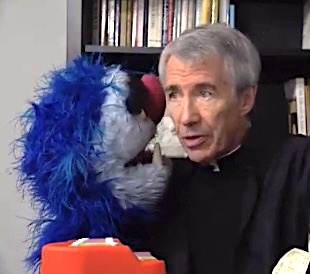
Big Al and
Fr. Joe

Isabella
D’Angelo
Sunday
Connection

52 Sundays

Catholic Kids
Bulletin
CATHOLIC MOM
- Sunday Mass Readings from USCCB
- Sunday Coloring Page
- Mass Worksheets
- Criss Cross Word Puzzle
- Maze
- Coloring page: Saint Jude, Apostle (October 28)
- Coloring page: All Saints (November 1)
- Coloring page: All Souls (November 2)
- Color and Pray the Rosary
- 5-Minute Gospel Reflection Video with Miss Heidi
- Full-Length Children’s Liturgy of the Word with Miss Heidi
- Lesson Plans

Jesus Helps Bartimaeus


READ ALOUD (3:27) – Cute simple story about an unusual friendship! Please join us for a kids book read aloud of Stick and Stone by Beth Ferry read by Miss Jill. Click the link to get details about purchasing your own copy to read along with me! https://amzn.to/3t38uvr

Word of the Week
HOPE
Stick and Stone
Stick and Stone is a simply written story that talks about bullying and that shows how a true friend is called to be a source of hope in the midst of distress. Given the current challenges that bullying pose to children, this book offers a way to think about and deal with bullying. When Stick rescues Stone from a prickly situation with Pinecone, the pair become fast friends. As the story progresses, themes of friendship, kindness, and hope are seen through friends that are able to support each other.

WHIMSY TUNES (4:35) – This simple and catchy song helps children remember the story of how Jesus healed Bartimaeus, and encourages them to trust in Jesus and his healing power.
Bartimaeus Sees the Light

KIDS CHURCH LIBRARY (4:33) –
Blind Bartimaeus
October 20-31, 2024

SOURCE: Catechist.com
PRAYER TABLEE
30th Sunday of Year B


Key words and topics appropriate for young children related to the Sunday readings:
FIRST READING
- God’s love: Emphasize that God loves and cares for everyone, no matter where they are.
- Gathering: Explain that God wants to bring people together to be happy and safe, like a shepherd gathering his sheep.
- Joy: Focus on how God turns sadness into happiness and makes our lives better.
- Blind and lame: Discuss how God helps those who need special care or have difficulties, like blind or lame people.
- God as a shepherd: Introduce the idea that God takes care of us like a shepherd takes care of his sheep, keeping us safe and loved.
- A river of happiness: Use this image to illustrate how God can turn tears of sadness into a river of joy and happiness.
- God’s plan: Share that God has a plan to bring everyone together to live in peace and joy.
SECOND READING
- Jesus as a high priest: Explain that Jesus is like a special leader who helps us talk to God and understand Him better.
- God’s Son: Share that Jesus is God’s Son and came to Earth to show us how to live and love like God wants us to.
- Kindness and understanding: Discuss how Jesus is kind and understands our problems, just like a good friend or a caring parent.
- Love and helping others: Emphasize that Jesus loves us and helps us when we make mistakes or feel sad.
- Following Jesus: Encourage the idea that we can learn from Jesus and try to be like Him in the way we treat others.
- Praying to Jesus: Explain that we can talk to Jesus and ask Him for help when we need it.
- Being gentle: Focus on the importance of being gentle and kind to others, just as Jesus is gentle with us.
GOSPEL
- Bartimaeus: Introduce Bartimaeus as a blind man who needed help and believed that Jesus could heal him.
- Jesus heals: Explain that Jesus has the power to heal people and make them feel better.
- Faith: Discuss how Bartimaeus had faith in Jesus and believed He could help him, even when others told him to be quiet.
- Kindness and compassion: Emphasize that Jesus was kind and caring towards Bartimaeus, listening to his request and healing him.
- Following Jesus: Encourage the idea that Bartimaeus chose to follow Jesus after he was healed, and we can follow Jesus too.
- Love and acceptance: Share that Jesus loves and accepts everyone, and we should treat others the same way.
- Sight and blindness: Use this concept to illustrate how Jesus can help us “see” more clearly in our lives, both in a physical and a spiritual sense.
The Gospel reading of Mark 10:46-52, which recounts the story of Jesus healing Bartimaeus, connects to the Liturgy of the Mass in several ways:
- Gathering: Just as the crowd gathered around Jesus on His way to Jericho, we gather as a community at Mass to encounter Jesus in the Eucharist.
- Call for Mercy: Bartimaeus cried out to Jesus for mercy, much like we do during the Penitential Rite, when we confess our sins and ask for God’s forgiveness.
- Word of God: The Gospel story is proclaimed during the Liturgy of the Word, inviting us to hear and reflect on Jesus’ message and actions in the healing of Bartimaeus.
- Eucharistic Prayer: As Jesus responded to Bartimaeus’ plea for healing, we offer our prayers during the Eucharistic Prayer, asking for God’s grace and intervention in our lives.
- Communion: When Bartimaeus received his sight and followed Jesus, it parallels our reception of Holy Communion. We are nourished by the Body and Blood of Christ, empowering us to follow Jesus more closely.
- Dismissal: After the Mass, we are sent forth, just as Bartimaeus was sent on his way, to live our lives as faithful disciples, sharing the love and mercy we have received from Jesus.
By reflecting on the Gospel story of Bartimaeus within the context of the Mass, we can deepen our appreciation of how the liturgy allows us to encounter Jesus and receive His healing and mercy in our lives.
Choose one of the following activities as a way to further reflect on the Sunday readings:
- In today’s Gospel, blind Bartimaeus is healed. Take a walk outside with your family. What do you see? For what do you want to thank God?
- Think about your family. Decide how the Lord has brought strength out of a weakness in your family. Does someone in your family need special help? How has this helped to bring out the best in your family?
- Review with your family the Corporal Works of Mercy. Have them select one or two of these to carry out this week: Feed the hungry – Give drink to the thirsty – Clothe the naked – Visit the imprisoned – Shelter the homeless – Visit the sick – Bury the dead.
- What would you say if Jesus asked you, “What do you want me to do for you?”
CHILDREN’S LITURGIES
30th Sunday of Year B

SOURCE: Holy Family FdL
What does faith begin with: seeing or hearing? According to Fr. Edward – and Saint Paul – it is what we hear that begins our faith.

SOURCE: Mary Jo Cole


SOURCE: Redemptorist Publications / Dominican Sisters of St. Joseph
Bartimaeus’s persistent faith in Jesus leads to his healing and serves as a reminder to express our desires and concerns to Him with trust.

SOURCE: Edmonton Catholic School District
We should open our hearts to recognize and respond to the needs of others, inspired by the example of faith and compassion demonstrated in the healing of the blind beggar by Jesus.
BIG AL & FATHER JOE
30th Sunday of Year B


SOURCE: Most Sacred Heart Parish, Eureka, MO
Embracing both the beauty and challenges of life allows us to appreciate God’s presence and fosters a deeper love for the world.
HANDOUTS
30th Sunday of Year B
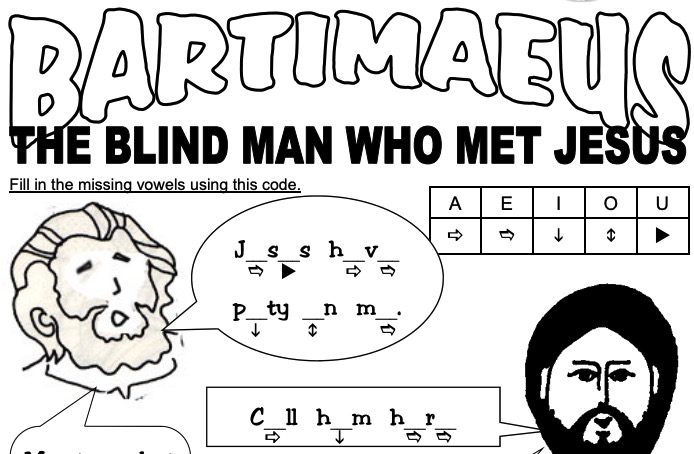

Download 8 1/2 x 10 (PDF)
S.D.C. is a Catholic Society that works in the field of Catechesis and the spreading of the Word of God in different ways. READ MORE
SOURCE: SDC Sunday Liturgy Resources
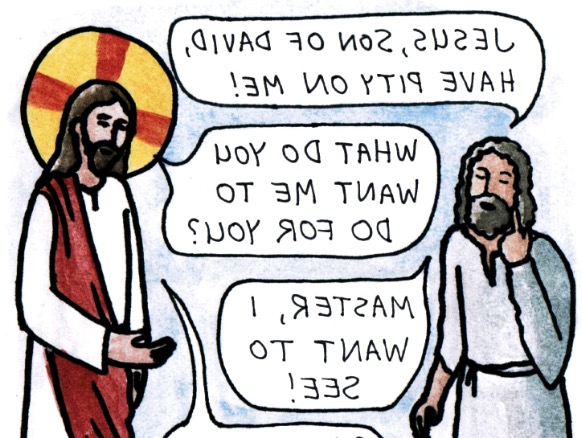
Download 4-pages (PDF)
The Kids’ Bulletins are a resource for Catholic kids who would like to have some fun while learning about the readings from the Sunday Mass every week. (Ordinary Form) They are made by a mom in Canada who is happy to share them with anyone who can use them to help learn or teach about the truth and beauty of the Faith.
SOURCE: Catholic Kids Bulletin

Download Activity (PDF)
Enjoy Catholic coloring pages, lesson plans, Mass worksheets, puzzles, and more to help you prepare for Sunday Mass. These activities, prepared by the Catholic Mom Sunday Gospel Team, are free for you to print and share with your family, classroom, or parish.
SOURCE: Catholic Mom
OBJECT LESSONS
30th Sunday of Year B

SOURCE: Ministry to Children
Faith and Healing
Q: How did Bartimaeus’ faith impact his healing?
A: Bartimaeus’ unwavering faith in Jesus as the Messiah and his power to heal led to his immediate restoration of sight, demonstrating that trust in Jesus can result in miraculous healing.
Q: What specific request did Bartimaeus make to Jesus?
A: Bartimaeus directly asked Jesus, “I want to see,” showing his clear intention and belief in Jesus’ ability to restore his vision.
Jesus’ Compassion
Q: How did Jesus demonstrate his care for Bartimaeus?
A: Jesus showed compassion by stopping to help Bartimaeus, a blind beggar considered punished for his disability, affirming that he was equally important as anyone else.
Q: What did Jesus say to Bartimaeus after healing him?
A: Jesus told Bartimaeus, “Go; your faith has made you well,” emphasizing the role of faith in the healing process.
Lessons for Believers
Q: What does Bartimaeus’ story teach about approaching Jesus?
A: The story encourages believers to cry out to Jesus for help, even if it seems unusual in church, as Jesus wants to hear from us and heal us.
Q: What should we understand about the timing of healing?
A: While healing is possible, it may not always come immediately, teaching us to trust in Jesus and believe in him even when we don’t understand his plans or timing.
I WANT TO SEE JESUS
OBJECTS: A bouquet of flowers

Isn’t this a beautiful bouquet of flowers? Can you imagine what it must be like to be blind and never see the beauty of things such as these beautiful flowers? The gift of sight is one of the most precious of all of God’s gifts.
There is a story in the Bible of a man named Bartimaeus. He had never seen the beauty of a bouquet of flowers, because Bartimaeus was blind. One day as he sat begging beside the road, he heard the sound of a large crowd of people coming his way. He asked someone what was happening and they told him that Jesus was passing by. Bartimaeus had heard of Jesus and about how he had healed many who were blind. He began to call out to Jesus. Others in the crowd tried to get Bartimaeus to be quiet, but he would not be silent.
Jesus heard the voice of Bartimaeus calling out to him and he stopped and asked, “What do you want me to do for you?”
“Teacher, I want to see!” said Bartimaeus.
“Go,” said Jesus, “your faith has healed you.” The Bible tells us that immediately, Bartimaeus received his sight.
That is a wonderful story, isn’t it? Unfortunately, stories about the blind don’t always end that way. There are many blind people who want to see, and yet they are never healed. Fanny Crosby was one of those people.
SOURCE: Sermon Writer
A DIFFERENT WAY OF SEEING
OBJECTS: None

We see light and color and shapes with our miraculous eyes. Our eyes allow us to see the faces of our friends and family, our pets, trees, flowers, lakes, streams, and mountains. They allow us to read wonderful books and we use our eyes to make things such as sewing, art or woodworking projects. We could go on and on about all the things our eyes enable us to see and do.
There is also a different way of seeing that has to do with what we feel and understand. Do you ever find your self saying, “Oh, I see. Now I understand.”
You may experience this when you see and believe that someone loves you. Or when you realize that the world is a beautiful place – God’s creation. Or you may use this different way of seeing to realize you have choices about what you do and that certain things make you happy. This is a different way of seeing and knowing.
There is a Bible story about a blind man who was sitting by the roadside hoping that the many people who were passing by would help him by giving him money. Although he couldn’t see with his eyes, he somehow knew that Jesus was coming and he began to shout saying, “Jesus, you son of David, have mercy on me!” (10:47).
SOURCE: Sermon Writer
 Highlight text or double-click a paragraph anywhere on the site to ADD TO NOTES. You can also click ASK AI to copy your selection to the clipboard with a command prompt, ready for you to paste manually into the chat above.