

COMMENTARY

SOURCE: The Mass Readings Explained
The church is not just a physical institution, but the kingdom of Christ already present on earth in mystery, playing a central role in uniting humanity to Christ and God.

SOURCE: Hearers of the Word
The sending out of the twelve disciples by Jesus serves as a model for the mission of the Christian community to proclaim the kingdom of God and promote conversion of heart through effective deeds of liberation.

The Bible Timeline®: The Story of Salvation
God has blessed us with every spiritual blessing and a rich inheritance in Christ, and it is our responsibility to embrace and live in God’s plan for us.

SOURCE: A Word Proclaimed
Preaching God’s word with authority and repentance has the power to heal, bring people back from sin, and bring the presence of Christ for healing and freedom.

SOURCE: A Walk in the Word
As disciples of Jesus, we are called to follow him, learn from him, and share the gospel with others, using our unique gifts and experiences to be a witness for Christ in the world.
Catena Aurea
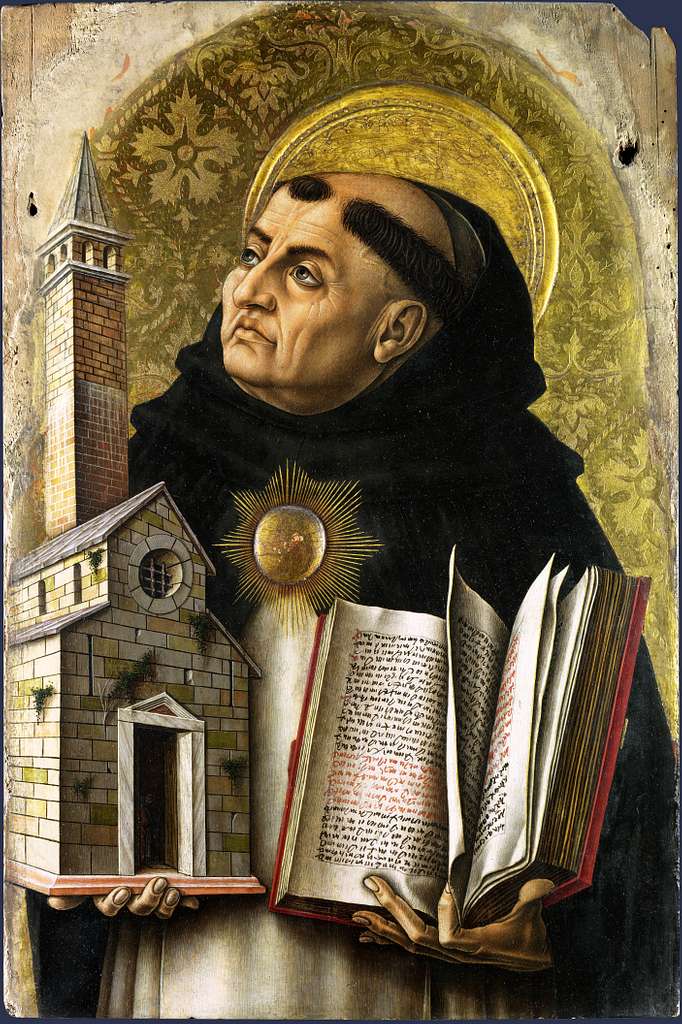
Catena Aurea

Humble Outreach: Jesus’ Model of Engaging All People, Valuing and Uplifting Overlooked Communities
THEOPHYLACT. The Lord not only preached in the cities, but also in villages, that we may learn not to despise little things, nor always to seek for great cities, but to sow the word of the Lord, in abandoned and lowly villages. Wherefore it is said, And he went round about the villages, teaching.
Jesus Grants Healing Abilities, Highlighting Disciples’ Humble Dependence on His Divine Power
BEDE. (in Marc. 2, 24) Now our kind and merciful Lord and Master did not grudge His servants and their disciples His own virtues, and as He Him self had healed every sickness and every infirmity, so also He gave the same power to His disciples. Wherefore it goes on: And he called unto him the twelve, and began to send them forth by two and two; and gave them power over unclean spirits. Great is the difference between giving and receiving. Whatsoever He does, is done in His own power, as Lord; if they do any thing, they confess their own weakness and the power of the Lord, saying in the name of Jesus, Arise, and walk.
Apostles Sent in Pairs: An Effective Strategy for Enhanced Ministry and Broad Gospel Reach
THEOPHYLACT. Again He sends the Apostles two and two that they, might become more active; for, as says the Preacher, Two are better than one. (Eccl. 4:9) But if He had sent more than two, there would not have been a sufficient number to allow of their being sent to many villages.
Apostles’ Partnership and Simple Lifestyle Symbolize Love, Trust, and Commitment to Sharing the Gospel
GREGORY. (Hom. in Evan. 17) Further, the Lord sent the disciples to preach, two and two, because there are two precepts of charity, namely, the love of God, and of our neighbour; and charity cannot be between less than two; by this therefore He implies to us, that he who has not charity towards his neighbour, ought in no way to take upon himself the office of preaching. There follows, And he commanded them, that they should take nothing for their journey, save a staff only; no scrip, no bread, no money in their purse: but be shod with sandals; and not put on two coats.
Preachers’ Faith in God’s Support Allows Prioritizing Spiritual Growth Over Material Worries
BEDE. (ubi sup.) For such should be the preacher’s trust in God, that, though he takes no thought for supplying his own wants in this present world, yet he should feel most certain that these will not be left unsatisfied, lest whilst his mind is taken up with temporal things, he should provide less of eternal things to others.
Apostles’ Embrace of Poverty: A Powerful Testimony Encouraging Others to Reject Materialism and Pursue Spiritual Riches
PSEUDO-CHRYSOSTOM. (Vict. Ant. e Cat. in Marc.) The Lord also gives them this command, that they might shew by their mode of life, how far removed they were from the desire of riches.
THEOPHYLACT. Instructing them also by this means not to be fond of receiving gifts, in order too that those, who saw them proclaim poverty, might be reconciled to it, when they saw that the Apostles themselves possessed nothing.
Apostles’ Reliance on Faith, Not Material Goods: A Symbol of Trust in God’s Care and Commitment to Simplicity and Spiritual Focus
AUGUSTINE. (de Con. Evan. 2, 30.) Or else; according to Matthew (Matt. 10:19), the Lord immediately subjoined, The workman is worthy of his meat, which sufficiently proves why He forbade their carrying or possessing such things; not because they were not necessary, but because He sent them in such a way as to shew, that they were due to them from the faithful, to whom they preached the Gospel. From this it is evident, that the Lord did not mean by this precept that the Evangelists ought to live only on the gifts of those to whom they preach the Gospel, else the Apostle transgressed this precept, when he procured his livelihood, by the labour of his own hands, but He meant that He had given them a power, in virtue of which, they might be assured, these things were due to them. It is also often asked, how it comes that Matthew and Luke have related that the Lord commanded His disciples not to carry even a staff, whilst Mark says, And he commanded them that they should take nothing for their journey, save a staff only. Which question is solved, by supposing that the word ‘staff’ has a meaning in Mark, who says that it ought to be carried, different from that which it bears in Matthew and Luke, who affirm the contrary. For in a concise way one might say, Take none of the necessaries of life with you, nay, not a staff, save a staff only; so that the saying, nay not a staff, may mean, nay not the smallest thing; but that which is added, save a staff only, may mean that, through the power received by them from the Lord, of which a rod is the ensign, nothing, even of those things which they do not carry, will be wanting to them. The Lord therefore said both, but because one Evangelist has not given both, men suppose, that he who has said that the staff, in one sense, should be taken, is contrary to him who again has declared, that, in another sense, it should be left behind: now however that a reason has been given, let no one think so. So also when Matthew declares that shoes are not to be worn on the journey, he forbids anxiety about them, for the reason why men are anxious about carrying them, is that they may not be without them. This is also to be understood of the two coats, that no man should be troubled about having only that with which he is clad, from anxiety lest he should need another, when he could always obtain one from the power given by the Lord. In like manner Mark, by saying that they are to be shod with sandals or soles, warns us that this mode of protecting the feet has a mystical signification, that the foot should neither be covered above nor be naked on the ground, that is, that the Gospel should neither be hid, nor rest upon earthly comforts; and in that He forbids their possessing or taking with them, or more expressly their wearing, two coats, He bids them walk simply, not with duplicity. But whosoever thinks that the Lord could not in the same discourse say some things figuratively, others in a literal sense, let him look into His other discourses, and he shall see, how rash and ignorant is his judgment.
Two Tunics’ Significance: Embracing Simplicity and Trusting God’s Provision, Rejecting Anxiety Over Future Material Needs
BEDE. (ubi sup.) Again, by the two tunics He seems to me to mean two sets of clothes; not that in places like Scythia, covered with the ice and snow, a man should be content with only one garment, but by coat, I think a suit of clothing is implied, that being clad with one, we should not keep another through anxiety as to what may happen.
Perfection’s Dual Views: Matthew and Luke Advise Total Renunciation, While Mark Allows Practicality, Acknowledging Various Stages of Spiritual Maturity
PSEUDO-CHRYSOSTOM. (Vict. Ant. e Cat. in Marc.) Or else, Matthew and Luke neither allow shoes nor staff, which is meant to point out the highest perfection. But Mark bids them take a staff and be shod with sandals, which (1 Cor. 7:6) is spoken by permission.
Anointing with Oil: Symbolizes God’s Mercy, Healing Power, Refreshment, Enlightenment, and Restoration Through Prayerful Intercession
PSEUDO-CHRYSOSTOM. (Vict. Ant. e Cat. in Marc.) Or else, that it might be a witness of the toil of the way, which they sustained for them; or as if the dust of the sins of the preachers was turned against themselves. It goes on, And they went and preached that men should repent. And they cast out many devils, and anointed with oil many that were sick, and healed them. Mark alone mentions their anointing with oil. James however, in his canonical Epistle, says a thing similar. For oil both refreshes our labours, and gives us light and joy; but again, oil signifies the mercy of the unction of God, the healing of infirmity, and the enlightening of the heart, the whole of which is worked by prayer.
THEOPHYLACT. It also means, the grace of the Holy Ghost, by which we are eased from our labours, and receive light and spiritual joy.
BEDE. (ubi sup.) Wherefore it is evident from the Apostles themselves, that it is an ancient custom of the holy Church that persons possessed or afflicted with any disease whatever, should be anointed with oil consecrated by priestly blessing.
Fr. George Corrigan OFM

Commentary Note Cards
COMMENTARY NOTE CARDS
When Ridiculed or Rejected
Sharing recovery’s joy, like the disciples, may face rejection. Persevere through ridicule, pressing on to offer hope to those in need, as it can be life-changing.

The Stakes are High
Accepting or refusing the gospel significantly impacts eternal life; welcoming apostles equates to welcoming Jesus, while rejecting them risks forfeiting salvation. Shaking dust off feet symbolizes separation from unbelievers.

Heaven and Earth are Married in Christ
Christ’s oneness unites Heaven, Earth, God, man, and the Church as his Bride, fulfilling God’s eternal plan through the symbolic union of male and female.

Navarre Bible Notes


Wikipedia Article

Wikipedia
Sermon Writer Exegesis

RIchard Niell Donovan

Gospel Exegesis
“He commanded them that they should take nothing for their journey, except a staff only: no bread, no wallet, no money in their purse, but to wear sandals, and not put on two tunics” (vv. 8-9). Jesus tells the twelve to take nothing but a staff and sandals—no bread, no bag, no money, and only a single tunic. Jesus prohibits not only frivolous items, but essential ones as well. His requirements go beyond simplicity to reckless faith. The disciples are to proceed without adequate preparation, trusting local people for hospitality but, above all, trusting God to provide for their needs.
Jesus is no ascetic—people have called him a drunk and a glutton (Matthew 11:19; Luke 7:34)—and he does not require his disciples to be ascetics. He does, however, require faith, and starting a journey without provisions is a profound act of faith.
RICHARD NIELL DONOVAN was a Disciples of Christ clergyman who published SermonWriter, for a paid subscription, from 1997-2020. After he died, his family has generously provided his resources without subscription.
 Highlight text or double-click a paragraph anywhere on the site to ADD TO NOTES. You can also click ASK AI to copy your selection to the clipboard with a command prompt, ready for you to paste manually into the chat above.