Study | Preach | Teach
Bible Study
Bible Study
Featured
Videos


The Bible Timeline®: The Story of Salvation
We are invited into the love of the Trinity as sons of God and should embrace our identity as children of God, participate in the work of salvation, and find hope in suffering for the glory of God.
- 00:00 God is one, and the Trinity is revealed in the readings for the Feast of the Most Holy Trinity.
- 00:43 The Gospel of Matthew mentions the Trinity, and there is something beautiful for us in Romans.
- 01:12 We are invited into the love of the Trinity as sons of God.
- 01:48 You have been invited into the life of the Trinity and have not received a spirit of slavery.
- 02:31 Embrace being a child of God, participate in the work of salvation, and find hope in suffering for the glory of God.

SOURCE: A Word Proclaimed
Baptism in the name of the Father, Son, and Holy Spirit allows us to enter into the divine life and participate in the rhythm of the Trinity, and we are encouraged to pray and seek understanding of this ineffable reality, worshiping and honoring them with joy.
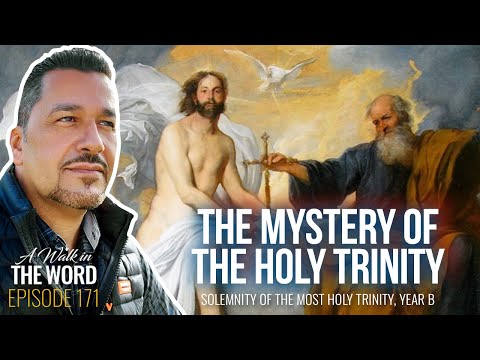
- 00:00 The gospel text mentions the Trinity as Father, Son, and Holy Spirit, which is a common theme in the writings of Paul.
- 01:07 The disciples went to Galilee, saw Jesus, worshiped, but doubted, and Jesus approached them.
- 03:06 Christ, the King, has all authority and power, and if the Catholic Church preaches with fervor and love, there would be peace in the world.
- 04:50 Jesus commands his disciples to go out and make disciples of all nations, baptizing them and teaching them.
- 06:02 John the Baptist prepares the Jewish people for the Messiah by baptizing with water, but Jesus will baptize with the Holy Spirit, fulfilling the prophets' promise of pouring out the spirit.
- 07:43 Jesus' baptism is a call to take on Satan, and our whole life is grounded on that moment when we were baptized.
- 09:13 God is a joyful communion of persons who want to share their love with us, even sending one of the Trinity to teach us not to judge and to live simply.
- 10:36 Baptism in the name of the Father, Son, and Holy Spirit allows us to enter into the divine life and participate in the rhythm of the Trinity, and we are encouraged to pray and seek understanding of this ineffable reality, worshiping and honoring them with joy.
- Baptism in the name of the Father, Son, and Holy Spirit allows us to enter into the divine life and participate in the rhythm of the Trinity, and we are encouraged to pray and seek understanding of this ineffable reality.
- Worship the Father, Son, and Holy Spirit with joy, looking forward to eternal life and honoring them.

SOURCE: A Walk in the Word
The solemnity of the Most Holy Trinity celebrates the mystery of God as Father, Son, and Holy Spirit, and emphasizes the importance of baptism and discipleship in entering into the life of Grace and communion with the Most Holy Trinity.
- 00:00 The solemnity of the Most Holy Trinity celebrates the mystery of God as Father, Son, and Holy Spirit, which is inaccessible to reason alone and is the central mystery of Christian faith.
- The significance of the solemnity of the Most Holy Trinity is underscored as it celebrates the great mystery of the Father, Son, and Holy Spirit.
- The mystery of the Holy Trinity is the central mystery of Christian faith and life, revealing God as Father, Son, and Holy Spirit, and is inaccessible to reason alone or even to Israel's Faith.
- The Holy Trinity is a mystery of faith, commemorated through the sending forth of the Holy Spirit.
- The Holy Trinity is the greatest mystery of our faith, and while we can know some things about God, we cannot know everything.
- 05:06 God reveals himself as a trinity of persons throughout salvation history, culminating in the disciples going to Galilee as directed by Jesus to see him.
- God reveals himself throughout salvation history, leaving traces of his trinitarian being in creation and Old Testament scriptures.
- God is revealed as a trinity of persons - Father, Son, and Holy Spirit - with the Incarnation of God's son and the sending of the Holy Spirit, culminating in the revelation of God as Holy Trinity in the Great Commission.
- The disciples went to Galilee as directed by Jesus, following the Great Commission.
- Jesus instructs the women at the tomb to tell the disciples to go to Galilee where they will see him, despite Matthew omitting some post-resurrection appearances.
- 10:18 The disciples were commissioned by Jesus to make disciples of all nations, but some doubted when they saw him, leading to a sense of hesitation and wavering in their reaction.
- Matthew's gospel focuses on the Great Commission and the disciples being called to be Fishers of Men in Galilee.
- Jesus gathers his disciples on a mountain, commissions them to make disciples of all nations, and some doubted when they saw him.
- Some disciples worshiped the Lord on the Mountaintop but some doubted, which is controversial in light of their previous experiences with the Risen Lord.
- Some disciples hesitated and were hesitant when they saw the Risen Lord, leading to a sense of doubt and wavering in their reaction.
- 15:39 Jesus meets his disciples, declares his authority, and commissions them to make disciples of all nations, fulfilling the prophecy of Daniel chapter 7.
- The disciples encountered the Risen Jesus and would have been struck with wonder and reluctance, which makes sense and is significant.
- Jesus comes to his disciples, meets them where they are, and encourages them to go and make disciples of all nations.
- Jesus declares that all authority in heaven and on Earth has been given to him, referencing a passage from the book of Daniel.
- Jesus declares that he has been given all authority in heaven and on Earth, commissioning his disciples to go and make disciples of all nations, fulfilling the prophecy of Daniel chapter 7.
- 20:19 Baptism in the name of the Father, Son, and Holy Spirit is essential for salvation and entering into the life of Grace, as emphasized by Jesus and the authority given to his Apostles to preach and teach in his name.
- Baptism in the name of the Father, Son, and Holy Spirit is necessary for salvation, as stated in Mark's gospel.
- Baptism is essential for entering into the life of Grace and becoming children of God, as it is the means by which we become Christians and receive the indwelling of the Holy Spirit.
- Jesus instructs to baptize in the singular name of the Father, Son, and Holy Spirit, emphasizing the importance of the Holy Trinity.
- Jesus emphasizes the doctrine of the Holy Trinity and confers authority to his Apostles to teach in his name.
- Jesus gives his Apostles the authority to preach and teach his gospel, enjoining them to obey his Commandments, and the church has been endowed with the authority to preach and teach in his name, as well as the authority to bind and loose.
- The similarities between Jesus commissioning his disciples and Moses commissioning Joshua to conquer the land for God are highlighted, emphasizing the power and authority of God.
- 28:06 Moses reminds Israelites of God's faithfulness, warns against forgetting monotheistic beliefs, and Jesus remains with us through the Holy Spirit, providing consolation and assurance.
- Moses reminds the new generation of their history and the faithfulness, favor, protection, and provision of God.
- God manifested himself to the Israelites through fire and cloud, as seen in the experiences of Moses and at Mount Sinai.
- Moses reminds the Israelites of the uniqueness of their God and warns them not to forget their monotheistic beliefs as they enter Canaan.
- Keep God's commandments, teach future generations to be faithful to the gospel, and remember that Jesus is always with us.
- Jesus remains with us always through the Holy Spirit, providing us with consolation and assurance of his abiding presence until the end of time.
- Abide in Jesus, experience his perpetual presence through the sacraments, and be nourished by his body and blood.
- 36:17 God's creation, the breath and spirit of God, and references to the Holy Trinity in the Old Testament scripture are highlighted in the context of the solemnity of the Most Holy Trinity.
- God created the heavens and the Earth through his word, reminiscent of the Book of Genesis and the prologue of John's gospel.
- The term "Ru" in the Book of Genesis refers to the breath and spirit of God, which is also a reference to the logos, or word of God, who became incarnate in the person of Christ.
- The Psalm 33 alludes to the Holy Trinity through references to the Father, the breath, and the spirit of his mouth, revealing traces of the Holy Trinity in the Old Testament scripture.
- God's steadfast love and covenant faithfulness are upon those who fear Him and hope in Him, as expressed in Psalm 33.
- 41:06 Baptism makes us children of God and discipleship requires embracing suffering, leading to communion with the Most Holy Trinity.
- Through baptism, we become children of God and heirs of God and fellow heirs with Christ, as the Holy Trinity is evoked in the passage from St. Paul's letter to the Romans.
- Baptism makes us children of God, but discipleship requires a decision and action, not just belief.
- To be a true follower of Christ, we must embrace and unite our sufferings with his, as there is no glory without the cross.
- The ultimate end of the divine economy is the entry of God's creatures into the perfect Unity of the Blessed Trinity, and we are called to be a dwelling for the Most Holy Trinity.
- The speaker reflects on the prayer of blessed Elizabeth of the Trinity and invites the audience to deepen their communion with God through the sacred liturgy and the teachings of Christ.
- Please like, comment, and subscribe to the YouTube channel and consider becoming a patron or buying a cup of coffee to support the podcast.

SOURCE: Hearers of the Word
As disciples, we are called to continue the mission of Jesus to make disciples of all nations, with the assurance of the Lord’s presence and authority.
- 00:00 The video reflects on Matthew 28:16-20, emphasizing the importance of understanding our mission as disciples and the assurance of the Lord's presence in the current context of upheaval in Christianity.
- 03:19 The endings of the gospels are intentional, with Matthew 28:16-20 emphasizing belief in Jesus for eternal life and serving as an open-ended, emotional conclusion.
- The gospel writers' choices in ending the story of Jesus are intentional, with Mark's ending intended to emphasize the next stage of the story being in the readers' hands, and Luke's ending linking to the Acts and possibly indicating a gap in time between the writing of the two books.
- Jesus led his disciples to Bethany, blessed them, and ascended into heaven, and the purpose of the gospel is to believe in Jesus as the Son of God for eternal life.
- The conclusion of Matthew's gospel in Matthew 28:16-20 serves as an open-ended ending that summarizes, amplifies, and appeals to the emotions, resembling the ending of the Acts of the Apostles.
- 07:04 Matthew 28:16-20 emphasizes the missionary outreach of the church and portrays Jesus as a new Moses figure, with unique vocabulary analyzed for its source.
- Paul lived in rented quarters for two years, teaching about the kingdom of God and the Lord Jesus Christ with boldness and without restriction, and the story in Matthew 28 is unique to Matthew's gospel and the vocabulary is analyzed to assess its source.
- The vocabulary in Matthew 28:16-20 is unique and distinct, with certain words occurring frequently and others being exclusive to this gospel.
- Matthew's closing paragraph in the gospel addresses the missionary outreach of the church, portrays Jesus as a new Moses figure, and emphasizes his final appearance from a mountain within the holy land.
- 12:10 The promise of God being with us is echoed throughout the Old Testament and is revealed in the name of God at the burning bush in Exodus 3:13-15.
- 14:21 The 11 disciples meet the risen Lord in Galilee and receive a commission to continue the mission to the whole world, with some worshipping Jesus and some doubting.
- The old testament text of Daniel 7:13-14 serves as the background for Matthew 28:16-20, with the 11 disciples going to Galilee to meet the risen Lord and receive a commission to continue the mission to the whole world.
- Some worshipped Jesus but some doubted, as noted in the early gospel of Matthew.
- 17:16 Jesus declares authority over heaven and earth, emphasizing making disciples of all nations and baptizing in the name of the trinity in Matthew 28:16-20.
- Jesus declares that he has been given authority over heaven and earth, echoing a similar statement in the gospel and reflecting the universal and cosmic authority of the risen lord.
- The mention of making disciples of all nations and baptizing them in the name of the father, son, and holy spirit in Matthew 28:19 is significant, as it marks the first mention of baptism in the gospel and the inclusion of both Jews and Gentiles, with the concept of the trinity present in the New Testament.
- 19:19 The speaker discusses the significance of "end of the age" in Matthew's gospel and its connection to Jesus' teachings, portraying Jesus as a Moses figure and emphasizing the importance of obeying God's law.
- The speaker discusses the significance of the phrase "end of the age" in Matthew's gospel and its connection to the teachings of Jesus.
- Matthew's gospel portrays Jesus as a Moses figure, echoing themes and phrases associated with Moses in the Jewish tradition.
- God promises to hand over the land to the people, instructing them to be strong and brave, obey the law, and memorize it in order to be successful.
- 23:20 The risen Lord is present in various ways, including in the neighbor in need, in created reality, in the word proclaimed, in the sacraments celebrated, and through the Holy Spirit, while the early Christians dealt with Jesus' absence in a different way and the speaker closes with a prayer for strength in faith and discipleship.
- The risen Lord is present in various ways, including in the neighbor in need, in created reality, in the word proclaimed, in the sacraments celebrated, and through the Holy Spirit.
- The early Christians dealt with Jesus' absence in a different way, and the speaker closes with a prayer for strength in faith and discipleship.
- The gospel for the feast of the holy trinity is Matthew 28:16-20, and the video will include a reflection on the current context, a reading of the text, a reflection on the endings of the different gospels, an exploration commentary on Matthew 28:16-20, a synthesis of the message, and a return to the current context and close.
- The speaker discusses the significance of departures in the gospel and the current upheaval in Christianity, emphasizing the importance of understanding our mission as disciples and the assurance of the Lord's presence.
SOURCE: The Mass Readings Explained
The mystery of the Most Holy Trinity is the central mystery of Christian faith and life. It is the mystery of God in himself.
Today I would like to begin with a question. What is the central mystery of the Christian faith? I think if you asked most Catholics that question they would probably say, “well either it's the incarnation, so the mystery of God becoming man in Christ,” or they would say “it's the mystery of the Eucharist because it's the source and the summit of the Christian life,” and those are obviously extremely important, very central, very profound mysteries of the faith. What is fascinating though is that if you look at the Catechism of the Catholic Church it actually teaches that the central mystery of the Christian faith is the one we celebrate today, it's the mystery of the Most Holy Trinity. So I would like to begin today just with a quote from the Catechism about this mystery before we look at the Scriptures that the church is going to use today to illuminate the mystery. This is what the Catechism of the Catholic Church 234 says about the mystery of the Trinity:
The mystery of the Most Holy Trinity is the central mystery of Christian faith and life. It is the mystery of God in himself. It is therefore the source of all the other mysteries of faith, the light that enlightens them. It is the most fundamental and essential teaching in the “hierarchy of the truths of faith.” The whole history of salvation is identical with the history of the way and the means by which the one true God, Father, Son, and Holy Spirit, reveals himself to men…
So notice that it is a pretty staggering statement that the church is making there; that the mystery of the Trinity is the central mystery of the faith, it's the foundation of all the other mysteries, ultimately because it's the mystery of who God is in himself. There are lots of other mysteries of our faith that tell us about what God does or what God has done, but this mystery is about who he is, One God: Father, Son and Holy Spirit. So with that in mind let's look at the readings for today's lectionary and let us try to see why does the church choose the readings she does and what does it reveal to us not just about what God has done but who He is and what is this mystery that we call the Trinity...
Fr. George
Corrigan
OFM
Fr. Corrigan, OFM
History, Culture & Theology

History,
Culture &
Theology
IN 100 WORDS

Historical Context

In Deuteronomy 4:32-34, 39-40, the historical context is crucial to understanding the significance of the passage. This section emphasizes the faithfulness of God to the Israelites throughout their history, reminding them of the miracles and wonders He performed on their behalf. The passage serves as a reminder to the Israelites to obey God's commandments and to keep His covenant, as He is the one true God who delivered them from slavery in Egypt. By understanding the historical context of Deuteronomy 4:32-34, 39-40, we can appreciate the deep connection between the Israelites and their God throughout their journey.
Cultural Context

In Deuteronomy 4:32-34, 39-40, the cultural context sheds light on the importance of oral tradition and storytelling in ancient Israelite society. The passage is a reminder to the Israelites of their shared history and heritage, emphasizing the significance of passing down stories of God's faithfulness from one generation to the next. In a culture where oral tradition played a vital role in preserving the community's identity and values, Deuteronomy 4:32-34, 39-40 served as a powerful tool to reinforce the Israelites' connection to their God and to each other. Understanding the cultural context enriches our interpretation of the passage and its impact on the Israelite community.
Theological Significance

In the Catholic theological context of Deuteronomy 4:32-34, 39-40, the passage highlights the concept of God's covenant with His people and the importance of fidelity to His commandments. It underscores the belief in God's faithfulness and the call for obedience as a response to His love and mercy. Within Catholic theology, this passage reinforces the idea of God's continuous presence and guidance in the lives of believers, inviting them to deepen their relationship with Him through prayer, worship, and righteous living. By emphasizing the covenant relationship between God and His people, Deuteronomy 4:32-34, 39-40 holds theological significance in Catholic teachings.
SOURCE: Content written in collaboration with OpenAI's GPT-3.5 model.

Historical Context

In Romans 8:14-17, the historical context reveals the societal structure of the Roman Empire, where adoption was a common practice to secure inheritance and social status. Paul's use of adoption imagery in this passage would have resonated with his audience, illustrating the believers' new status as children of God through faith in Christ. In the Roman world, adoption symbolized a legal and permanent change in one's identity and privileges, emphasizing the believers' intimate relationship with God as His heirs. Understanding the historical context of adoption in ancient Rome enriches our interpretation of Romans 8:14-17 and its significance for early Christian communities.
Cultural Context

In the cultural context of Romans 8:14-17, the concept of adoption would have held deep significance for the recipients of Paul's letter, who lived in a society where family ties and inheritance were crucial. In the Roman world, adoption was not merely a legal process but a social and religious practice that signified the transfer of rights, privileges, and responsibilities within a family. By using adoption language, Paul underscores the believers' new identity and relationship with God as His children, granted the same inheritance and status as natural-born sons. Understanding the cultural context enriches our appreciation of the familial imagery in Romans 8:14-17.
Theological Significance

In the Catholic theological context of Romans 8:14-17, the passage is often interpreted within the framework of the doctrine of divine filiation, which emphasizes the believers' intimate relationship with God as His adopted children. This theological concept highlights the transformative nature of grace, through which believers are incorporated into the family of God and share in Christ's sonship. The indwelling of the Holy Spirit, mentioned in the passage, is understood as the source of believers' spiritual rebirth and empowerment to live as children of God. Within Catholic theology, Romans 8:14-17 underscores the believers' participation in the divine life and their inheritance as co-heirs with Christ.
SOURCE: Content written in collaboration with OpenAI's GPT-3.5 model.

Historical Context

In the historical context of Matthew 28:16-20, this passage, known as the Great Commission, takes place shortly after Jesus' resurrection. It reflects the early Christian community's mission to spread the teachings of Jesus to all nations. The mention of "all authority in heaven and on earth" granted to Jesus underscores the disciples' commission to proclaim the Gospel boldly. This passage not only highlights the disciples' role as witnesses to Jesus' resurrection but also lays the foundation for the universal nature of the Christian faith. Understanding the historical context of Matthew 28:16-20 sheds light on the early church's mission and evangelistic efforts.
Cultural Context

In the cultural context of Matthew 28:16-20, the Great Commission reflects the Jewish roots of Christianity and the evolving relationship between Judaism and the emerging Christian movement. The mention of Jesus instructing his disciples to go and make disciples of all nations carries significance in a cultural context where the Jewish people viewed themselves as God's chosen nation. This commission challenges traditional boundaries and emphasizes the universal nature of the Gospel message, transcending cultural and ethnic barriers. Understanding the cultural context of Matthew 28:16-20 highlights the transformative impact of Jesus' teachings on early Jewish-Christian relations and the inclusive vision of the Christian faith.
Theological Significance

In the Catholic theological context of Matthew 28:16-20, the passage holds significant importance as it underscores the mission of the Church to evangelize and spread the Gospel message. The Great Commission is seen as a mandate from Jesus to the apostles, empowering them to continue his work on earth through teaching, baptizing, and making disciples of all nations. This passage emphasizes the role of the Church in transmitting the faith from generation to generation and serving as a beacon of light in a world in need of salvation. Understanding the Catholic theological context of Matthew 28:16-20 illuminates the Church's mission and calling to be a witness to Christ's love and truth.
Catena
Aurea
Compiled by
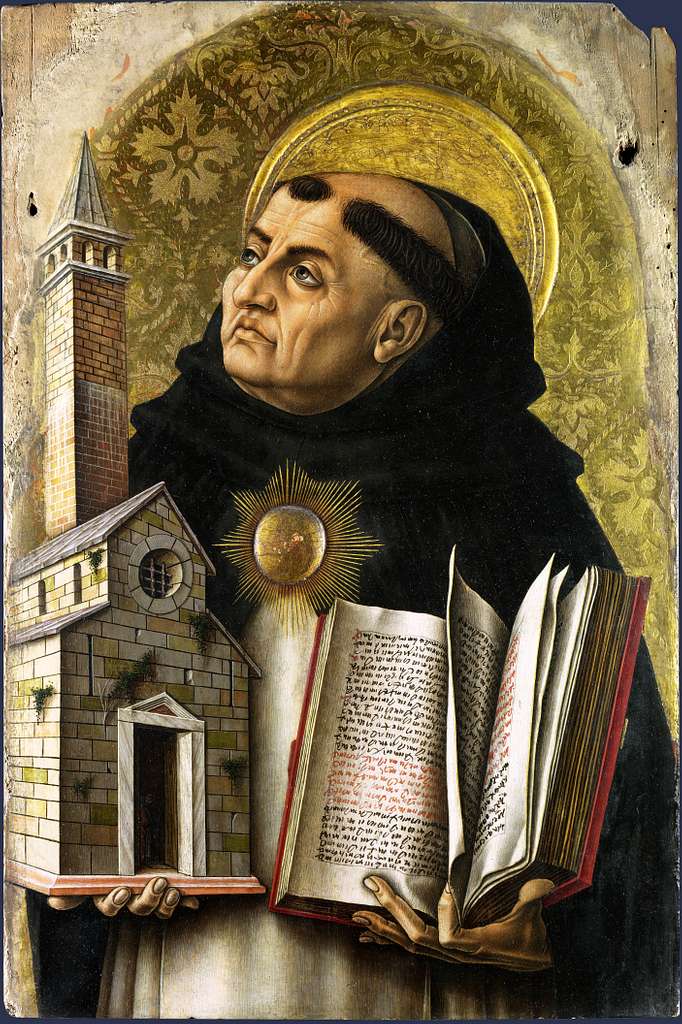
St. Thomas
Aquinas
Thomas Aquinas compiled this opus from sermons and commentaries on the Gospels written by the early Church Fathers, arranging their thoughts in such a way that they form a continuous commentary on each Gospel.
Mt 28:16–20
16. Then the eleven disciples went away into Galilee, into a mountain where Jesus had appointed them.
17. And when they saw him, they worshipped him: but some doubted.
18. And Jesus came and spake unto them, saying, All power is given unto me in heaven and in earth.
19. Go ye therefore, and teach all nations, baptizing them in the name of the Father, and of the Son, and of the Holy Ghost:
20. Teaching them to observe all things whatsoever I have commanded you: and, lo, I am with you alway, even unto the end of the world. Amen.
BEDE. ‘Beda, in Hom.’ non occ.) When Saint Matthew has vindicated the Lord’s Resurrection as declared by the Angel, he relates the vision of the Lord which the disciples had, Then the eleven disciples went into Galilee into a mountain where Jesus had appointed them. For when coming to His Passion the Lord had said to His disciples, After I am risen I will go before you into Galilee; (Matt. 26:32.) and the Angel said the same to the women. Therefore the disciples obey the command of their Master. Eleven only go, for one had already perished.
JEROME. After His Resurrection, Jesus is seen and worshipped in the mountain in Galilee; though some doubt, their doubting confirms our faith.
REMIGIUS. This is more fully told by Luke; how when the Lord after the Resurrection appeared to the disciples, in their terror they thought they saw a spirit.
BEDE. (Hom. Æst. in Fer. vi. Pasch.)b. The Lord appeared to them in the mountain to signify, that His Body which at His Birth He had taken of the common dust of the human race, He had by His Resurrection exalted above all earthly things; and to teach the faithful that if they desire there to see the height of His Resurrection, they must endeavour here to pass from low pleasures to high desires. And He goes before His disciples into Galilee, because Christ is risen from the dead, the first fruits of them that slept. (1 Cor. 15:20.) And they that are Christ’s follow Him, and pass in their order from death to life, contemplating Him as He appears with His proper Divinity. And it agrees with this that Galilee is interpreted ‘revelation.’
AUGUSTINE. (de Cons. Ev. iii. 25.) But it is to be considered, how the Lord could be seen bodily in Galilee. For that it was not the day of the Resurrection is manifest; for He was seen that day in Jerusalem in the beginning of the night, as Luke and John evidently agree. Nor was it in the eight following days, after which John says that the Lord appeared to His disciples, and when Thomas first saw Him, who had not seen Him on the day of the Resurrection. For if within these eight days the eleven had seen Him on a mountain in Galilee, Thomas, who was one of the eleven, could not have seen Him first after the eight days. Unless it be said, that the eleven there spoken of were eleven out of the general body of the disciples, and not the eleven Apostles. But there is another difficulty. John having related that the Lord was seen not in the mountain, but at the sea of Tiberias, by seven who were fishing, adds, This is now the third time that Jesus shewed himself to his disciples after he was risen from the (John 21:14.) dead. (Mark 16:14.) So that if we understand the Lord to have been seen within those eight days by eleven of the disciples, this manifestation at the sea of Tiberias will be the fourth, and not the third, appearance. Indeed, to understand John’s account at all it must be observed, that he computes not each appearance, but each day on which Jesus appeared, though He may have appeared more than once on the same day; as He did three times on the day of His Resurrection. We are then obliged to understand that this appearance to the eleven disciples on the mountain in Galilee took place last of all. In the four Evangelists we find in all ten distinct appearances of Our Lord after His Resurrection. 1. At the sepulchre to the women. 2. To the same women on their way back from the sepulchre. 3. To Peter. 4. To two disciples as they went into the country. 5. To many together in Jerusalem; 6. when Thomas was not with them. 7. At the sea of Tiberias. 8. At the mountain in Galilee, according to Matthew. 9. To the eleven as they sat at meat, because they should not again eat with Him upon earth, related by Mark. 10. On the day of His Ascension, no longer on the earth, but raised aloft in a cloud, as related by both Mark and Luke. But all is not written, as John confesses, for He had much conversation with them during forty days before His ascension, being seen of them, and speaking unto them of the things pertaining to the kingdom of God. (Acts 1:3.)
REMIGIUS. The disciples then, when they saw Him, knew the Lord; and worshipped Him, bowing their faces to the ground. And He their affectionate and merciful Master, that He might take away all doubtfulness from their hearts, coming to them, strengthened them in their belief; as it follows, And Jesus came and spake to them, saying, All power is given unto me in heaven and in earth.
JEROME. Power is given to Him, Who but a little before was crucified, Who was buried, but Who afterwards rose again.
BEDE. (ubi sup.) This He speaks not from the Deity coeternal with the Father, but from the Humanity which He took upon Him, according to which He was made a little lower than the Angels. (Heb. 2:9.)
CHRYSOLOGUS. (Serm. 80.) The Son of God conveyed to the Son of the Virgin, the God to the Man, the Deity to the Flesh, that which He had ever together with the Father.
JEROME. Power is given in heaven and in earth, that He who before reigned in heaven, should now reign on earth by the faith of the believers.
REMIGIUS. What the Psalmist says of the Lord at His rising again, Thou madest him to have dominion over the works of thy hands (Ps. 8:6.), this the Lord now says of Himself, All power is given unto me in heaven and in earth. And here it is to be noted, that even before His resurrection the Angels knew that they were subjected to the man Christ. Christ then desiring that it should be also known to men that all power was committed to Him in heaven and in earth, sent preachers to make known the word of life to all nations; whence it follows, Go ye therefore, and teach all nations.
BEDE. (‘Beda; in Hom.’ non occ.) He who before His Passion had said, Go not into the way of the Gentiles, (Matt. 10:5.) now, when rising from the dead, says, Go and teach all nations. Hereby let the Jews be put to silence, who say that Christ’s coming is to be for their salvation only. Let the Donatists also blush, who, desiring to confine Christ to one place, have said that He is in Africa only, and not in other countries.
JEROME. They first then teach all nations, and when taught dip them in water. For it may not be that the body receive the sacrament of Baptism, unless the soul first receive the truth of the Faith. In the name of the Father, the Son, and the Holy Ghost, that they whose Godhead is one should be conferred at once, to name this Trinity, being to name One God.
CHRYSOLOGUS. (Serm. 80.) Thus all nations are created a second time to salvation by that one and the same Power, which created them to being.
JEROME. (Didymi Lib. ii. de Spir. Sanct.) And though some one there may be of so averse a spirit as to undertake to baptize in such sort as to omit one of these names, therein contradicting Christ Who ordained this for a law, his baptism will effect nothing; those who are baptized by him will not be at all delivered from their sins. From these words we gather how undivided is the substance of the Trinity, that the Father is verily the Father of the Son, and the Son verily the Son of the Father, and the Holy Spirit the Spirit of both the Father and the Son, and also the Spirit of wisdom and of truth, that is, of the Son of God. This then is the salvation of them that believe, and in this Trinity is wrought the perfect communication of ecclesiastical discipline.
HILARY. (de Trin. ii. 1 &c.) For what part of the salvation of men is there that is not contained in this Sacrament? All things are full and perfect, as proceeding from Him who is full and perfect. The nature of His relation is expressed in the title Father; but He is nothing but Father; for not after the manner of men does He derive from somewhat else that He is Father, being Himself Unbegotten, Eternal, and having the source of His being in Himself, known to none, save the Son. The Son is the Offspring of the Unbegotten, One of the One, True of the True, Living of the Living, Perfect of the Perfect, Strength of Strength, Wisdom of Wisdom, Glory of Glory; the Image of the Unseen God, the Form of the Unbegotten Father. Neither can the Holy Spirit be separated from the confession of the Father and the Son. And this consolation of our longing desires is absent from no place. He is the pledge of our hope in the effects of His gifts, He is the light of our minds, He shines in our souls. These things as the heretics cannot change, they introduce into them their human explanations. As Sabellius who identifies the Father with the Son, thinking the distinction to be made rather in name than in person, and setting forth one and the same Person as both Father and Son. As Ebion, who deriving the beginning of His existence from Mary, makes Him not Man of God, but God of man. As the Arians, who derive the form, the power, and the wisdom of God out of nothing, and in time. What wonder then that men should have diverse opinions about the Holy Spirit, who thus rashly after their own pleasure create and change the Son, by whom that Spirit is bestowed?
JEROME. Observe the order of these injunctions. He bids the Apostles first to teach all nations, then to wash them with the sacrament of faith, and after faith and baptism then to teach them what things they ought to observe; Teaching them to observe all things whatsoever I have commanded you.
RABANUS. For as the body without the spirit is dead, so faith without works is dead also. (James 2:26.)
CHRYSOSTOM. And because what He had laid upon them was great, therefore to exalt their spirits He adds, And, lo, I am with you alway, even unto the end of the world. As much as to say, Tell Me not of the difficulty of these things, seeing I am with you, Who can make all things easy. A like promise He often made to the Prophets in the Old Testament, to Jeremiah who pleaded his youth, to Moses, and to Ezekiel, when they would have shunned the office imposed upon them. And not with them only does He say that He will be, but with all who shall believe after them. For the Apostles were not to continue till the end of the world, but He says this to the faithful as to one body.
RABANUS. Hence we understand that to the end of the world shall not be wanting those who shall be worthy of the Divine indwelling.
CHRYSOSTOM. He brings before them the end of the world, that He may the more draw them on, and that they may not look merely to present inconveniences, but to the infinite goods to come. As much as to say, The grievous things which you shall undergo, terminate with this present life, seeing that even this world shall come to an end, but the good things which ye shall enjoy endure for ever.
BEDE. (‘Beda in Hom.’ non occ.) It is made a question how He says here, I am with you, John 16:5. when we read elsewhere that He said, I go unto him that sent me. What is said of His human nature is distinct from what is said of His divine nature. He is going to His Father in His human nature, He abides with His disciples in that form in which He is equal with the Father. When He says, to the end of the world, He expresses the infinite by the finite; for He who remains in this present world with His elect, protecting them, the same will continue with them after the end, rewarding them.
JEROME. He then who promises that He will be with His disciples to the end of the world, shews both that they shall live for ever, and that He will never depart from those that believe.
LEO. (Serm. 72. 3.) For by ascending into heaven He does not desert His adopted; but from above strengthens to endurance, those whom He invites upwards to glory.
Of which glory may Christ make us partakers,
Who is the King of glory,
God blessed for ever,
AMEN.
xxxxxxxxxxx
19. So then after the Lord had spoken unto them, he was received up into heaven, and sat on the right hand of God.
20. And they went forth, and preached every where, the Lord working with them, and confirming the word with signs following. Amen.
PSEUDO-JEROME. The Lord Jesus, who had descended from heaven to give liberty to our weak nature, Himself also ascended above the heavens; wherefore it is said, So then after the Lord had spoken unto them, he was received up into heaven.
AUGUSTINE. (ubi sup.) By which words He seems to shew clearly enough that the foregoing discourse was the last that He spake to them upon earth, though it does not appear to bind us down altogether to this opinion. For He does not say, After He had thus spoken unto them, wherefore it admits of being understood not as if that was the last discourse, but that the words which are here used, After the Lord had spoken unto them, he was received into heaven, might belong to all His other discourses. But since the arguments which we have used above make us rather suppose that this was the last time, therefore we ought to believe that after these words, together with those which are recorded in the Acts of the Apostles, our Lord ascended into heaven.
GREGORY. (ubi sup.) We have seen in the Old Testament that Elias was taken up into heaven. But the ethereal heaven is one thing, the aerial is another. The aerial heaven is nearer the earth, Elias then was raised into the aerial heaven, that he might be carried off suddenly into some secret region of the earth, there to live in great calmness of body and spirit, until he return at the end of the world, and pay the debt of death. We may also observe that Elias mounted up in a chariot, that by this they might understand that a mere man requires help from without. But our Redeemer, as we read, was not carried up by a chariot, not by angels, because He who had made all things was borne over all by His own power. We must also consider what Mark subjoins, And sat at the right hand of God, since Stephen says, I see the heavens opened, and the Son of Man standing at the right hand of God. Now sitting is the attitude of a judge, standing of one fighting or helping. Therefore Stephen, when toiling in the contest, saw Him standing, whom he had for his helper; but Mark describes Him as sitting after His assumption into heaven, because after the glory of His assumption, He will in the end be seen as a judge.
AUGUSTINE. (de Symbolo, 4) Let us not therefore understand this sitting as though He were placed there in human limbs, as if the Father sat on the left, the Son on the right, but by the right hand itself we understand the power which He as man received from God, that He should come to judge, who first had come to be judged. For by sitting we express habitation, as we say of a person, he sat himself down in that country for many years; in this way then believe that Christ dwells at the right hand of God the Father. For He is blessed and dwells in blessedness, which is called the right hand of the Father; for all is right hand there, since there is no misery. It goes on: And they went forth and preached every where, the Lord working with than, and confirming the word with signs and wonders.
BEDE. (ubi sup.) Observe that in proportion as Mark began his history later, so he makes it reach in writing to more distant times, for he began from the commencement of the preaching of the Gospel by John, and he reaches in his narrative those times in which the Apostles sowed the same word of the Gospel throughout the world.
GREGORY. (ubi sup.) But what should we consider in these words, if it be not that obedience follows the precept and signs follow the obedience? For the Lord had commanded them, Go into all the world preaching the Gospel, and, Ye shall be witnesses even unto the ends of the earth.
AUGUSTINE. (Epist. cxcix. 12.) (Acts 1:8) But how was this preaching fulfilled by the Apostles, since there are many nations in which it has just begun, and others in which it has not yet begun to be fulfilled? Truly then this precept was not so laid upon the Apostles by our Lord, as though they alone to whom He then spoke were to fulfil so great a charge; in the same way as He says, Behold, I am with you always, even unto the end of the world, apparently to them alone; but who does not understand that the promise is made to the Catholic Church, which though some are dying, others are born, shall be here unto the end of the world?
THEOPHYLACT. But we must also know from this that words are confirmed by deeds as then in the Apostles works confirmed their words, for signs followed. Grant then, O Christ, that the good words which we speak may be confirmed by works and deeds, so that at the last, Thou working with us in word and in deed, we may be perfect, for Thine as is fitting is the glory both of word and deed. Amen.
ORIGINAL: e-Catholic 2000
Wikipedia
Key Words
Gospel
Sermon
Writer

Matthew 28:16-20 Exegesis
“baptizing them in the name of the Father and of the Son and of the Holy Spirit” (v. 19b). This Gospel tells of Jesus baptism (3:13-17), but he has not commanded the disciples to be baptized—and there is no record of them being baptized. In this Great Commission, however, he commands them to baptize as if this is a standard rite with which they are familiar. Of course, by the time this Gospel was written, baptism had become an established practice within the church.
In the very early church, baptism was done in the name of Jesus (Acts 2:38; 8:16; 10:48; 19:5; Romans 6:3; Galatians 3:27). The threefold baptismal formula (“in the name of the Father and of the Son and of the Holy Spirit”) was adopted later, and it is that later tradition that is reflected by Matthew’s account of the Great Commission.
Being baptized in the name of indicates a new relationship, a rebirth, an adoption. Being baptized in the name of the Father and of the Son and of the Holy Spirit indicates that the new relationship involves all three faces of the Trinity.
RICHARD NIELL DONOVAN was a Disciples of Christ clergyman who published SermonWriter, for a paid subscription, from 1997-2020. After he died, his family has generously provided his resources without subscription.