May 26, 2024

Study | Preach | Teach

Bible Study

Bible Study
COMMENTARYBIBLE STUDYTIPS FOR LECTORS
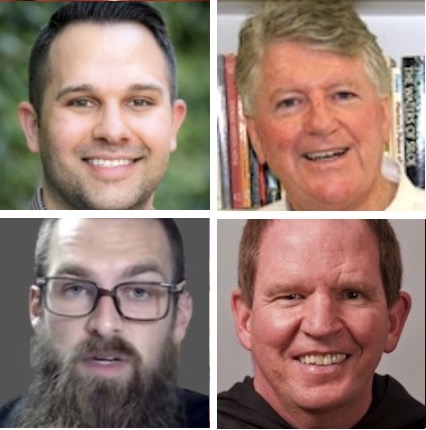
Matt ZemanekFr. Geoffrey PlantFr. Bryan KujawaFr. Galetto, OSAKeith Nester

Matt Zemanek

YouTube player

SOURCE: St. Timothy Catholic Church, Laguna Niguel, CA

We are invited to be part of the loving relationship of the Trinity and to reflect God’s love in our lives.

SUMMARY w/ Timestamps
  • 00:00 The upcoming Sunday is the Solemnity of the Most Holy Trinity, reminding us of the importance of worshiping a God who is three in one and the implications of that for us.
  • 11:03 God is love and created us for love, inviting us to be part of the loving relationship of the Trinity despite our doubt and brokenness.
    • God is love and in order for love to exist, it requires a community of persons, like in a marriage, where the lover, the Beloved, and the love between them are essential for any loving relationship.
    • Understanding the nature of God reveals that we were created for love and to be in union with a God who promises to never abandon us, as emphasized in the Gospel of Matthew.
    • The Feast of the Holy Trinity reminds us that we are created by love for love, even in the midst of our brokenness and doubt.
    • The disciples hesitated and felt unworthy of being in relationship with Jesus, but despite their doubt, Jesus approached them and told them to go.
    • Even in doubt and brokenness, we are invited to be part of the loving relationship of the Trinity and reflect its love in our lives.
  • 16:17 Jesus established the church to create a supportive community on the journey to understand God's love, emphasizing the importance of connection and relationship with others in fulfilling our yearning for love and belonging.
    • Jesus instituted the church to create a community that supports and helps each other on the journey towards a deeper understanding of God's love and relationship, as no one can have faith alone.
    • We are created in the image and likeness of God, who is perfect love, and we need connection and relationship with others to fulfill our yearning for love, belonging, truth, goodness, and beauty.
    • The passage in Daniel 7:13-14 parallels the concept of the Holy Trinity, with the son of man approaching the Ancient of Days, representing multiple Divine figures.
    • Jesus received dominion and kingship from God, and his everlasting authority as the Son of God took time for people to understand and develop the language to describe his divine nature.
    • The Council of NAA formed the Creed, important to articulate and recognize God's nature and faithfulness revealed by Jesus.
    • We are chosen and supported by God, and as we reflect his nature and mission, we are never alone in our journey.
  • 23:16 Matthew's gospel fulfills Old Testament prophecies, Acts aligns with church history, Matthias replaces Judas, symbolism of mountains, casting of lots in Old Testament.
    • Matthew's gospel focuses on Jesus fulfilling Old Testament prophecies for a Jewish audience, while Luke's Acts aligns with the history of the church with exact detail and eyewitness accounts.
    • Mias is elected to replace Judas, showing evidence of Apostolic Authority in the church and the intention for the office to be passed on.
    • The symbolism of the mountain in the Bible is that God calls individuals to go there.
    • Jesus' presence on significant mountains foreshadows his divine glory and the giving of the law, reminding his followers to spread the good news.
    • The casting of lots in the Old Testament involved the high priest wearing an ephod with gems representing the 12 tribes of Israel, and using stones or sticks to determine God's revealed law.
    • The Old Testament high priests were given the ability to make decisions in certain circumstances where the law did not speak, and some scholars believe they may have used a simple yes or no method to make decisions.
  • 28:51 The speaker emphasizes the brokenness in John 11, discusses Catholic Social teaching on government, and the church's role in nations, while promoting freedom of religion and evangelizing without imposing beliefs.
    • The author is emphasizing the significance of the brokenness and incompleteness portrayed in John 11.
    • The speaker discusses the idea of making every nation a Catholic nation and questions if there is anything in Catholic Social teaching that talks about the ideal government.
    • The ideal form of government is not explicitly stated in Catholic Social teaching, but there is an expectation for governments to provide for basic human rights in accordance with the teachings, with recent scholarship implying that capitalism provides the best opportunity for individuals to better themselves while still having a preferential option for the poor.
    • The church has been sustained for 2,000 years by the Holy Spirit, despite the flaws of its leaders, and it is meant to reflect the ideal nature of our relationship with one another in heaven, but it cannot be fully realized on Earth.
    • The church does not explicitly say that it should run every nation, but it would probably say that every nation should be a Christian Nation to the extent that they allow for Christian expression and align with social teaching.
    • Freedom of religion in the US is not fully practiced, leading to reluctance in evangelizing, but sharing the joy and love for Christ should be done without imposing beliefs on others.
  • 40:03 God's love for us, judgment after death, and the promise of a new creation in Heaven where time is irrelevant.
    • God loves us as we are, but also wants us to have a better and more abundant life, and the original Greek meaning of "the end" in the Bible refers to the completion of the age.
    • When we die, we will be judged and either go to heaven, purgatory, or hell, and at the end of time, all souls will be brought back together for the final judgment.
    • In Heaven, there will be perfect unity and a new creation, where Jesus will be with us in an intimate and unitive way.
    • Time is irrelevant in the concept of Heaven and God's presence, and the experience of time in the New Creation will be different from how it is now.
  • 44:18 Seek unity with God through prayer to prevent division, strive for unity in God's plan, pause and pray for peace, and reflect on the union offered by the Lord.
    • Seeking unity in the church and in the world starts with seeking union with God and bringing everything to prayer, which will help to prevent and reduce division.
    • God adds and multiplies, while the devil subtracts and divides, so we should strive for unity in God's plan and Will to make the enemy flee.
    • Instead of reacting defensively to attacks against the church, we should pause and pray for unity and peace, showing respect and reverence for others' beliefs.
    • Reflect on the union offered by the Lord, who seeks to recreate our hearts and the world, reminding us of who we are and whose we are, and praying for the ability to draw closer to God and one another.
  • 48:45 Reflect God's love and bring joy to those in need, as we are made in His image.

Fr. Geoffrey Plant

YouTube player

SOURCE: Fr. Geoffrey Plant’s Archives

The feast of the Most Holy Trinity celebrates the mystery of God as Father, Son, and Holy Spirit, and emphasizes God’s presence and authority in the world.

SUMMARY w/ Timestamps
  • 00:00 The feast of the Most Holy Trinity reflects on the mystery of the one God as Father, Son, and Holy Spirit, highlighting the difference from Judaism and Islam.
  • 04:50 God's presence is a mysterious force that transcends words, involving a tug of war between transcendence and immanence.
    • The word "God" is a job description, and it is important to understand the mysterious force we call God.
    • The word "mystery" comes from the Greek verb meaning to shut, and refers to a place of silence where we are rendered speechless, transcending the explanatory power of words.
    • God's presence is a mystery that involves a tug of war between transcendence and immanence, with the immanence of God referring to his indwelling in creation and the revelation of God through his word and Jesus Christ.
  • 10:14 The English word "God" comes from the Indo-European word ǵʰu-tó-m, which linguists suggest means a being whom one invokes and offers sacrifices to, and is also referred to as Sky Father, a term not used in the Bible but God is frequently referred to as "Father" in the New Testament.
    • Proto-Indo-European is the ancient ancestor of modern English and many other languages, spoken by Indo-Europeans on the Eurasian steppes, who utilized the power of the wheel and domesticated animals to spread their language far from its place of origin.
    • The English word "God" comes from the Indo-European word ǵʰu-tó-m, which linguists suggest means a being whom one invokes and offers sacrifices to, and is also referred to as Sky Father.
    • The term "Sky Father" in different linguistic branches becomes Zeus in Greek mythology and Jupiter in Roman mythology, and while "Sky Father" is not used in the Bible, God is frequently referred to as "Father" in the New Testament.
  • 15:25 St. Paul emphasizes Jesus' intimate experience of God as his father, the Spirit bears witness that we are God's children and heirs with the Messiah, and the first reading and Responsorial Psalm acknowledge God as creator.
    • St. Paul retained the Aramaic word "Abba" in the Greek text to emphasize Jesus' intimate experience of God as his own father, which made a lasting impression on his disciples, and to convey the idea that God is not a remote Sky Father, but a loving and intimate Father.
    • The Spirit bears witness that we are God's children, and as heirs with the Messiah, we share in his inheritance, but this comes with the cost of suffering, and the job of God is to rule with sovereign and saving love.
    • The first reading and Responsorial Psalm acknowledge God as creator, and various religions have creation stories.
  • 21:03 God creates the world in peace and supreme authority, bringing it into existence over six days.
    • The world is created out of primeval violence and humans are made to be slaves to the gods, living a miserable existence.
    • God, as the sole creator, brings the cosmos into existence in peace and supreme authority, creating realms and populating them over six days.
  • 24:53 Human beings represent God's authority on earth, and Jesus is the ultimate expression of God's presence as Emmanuel, "God-is-with-us."
    • Human beings are created in the image and likeness of God, representing God's royal rule on earth and the bearer of God's authority, and the divine presence continues in the person of Jesus.
    • Jesus, the Word become flesh, is the ultimate expression of God’s immanence, dwelling with us as Emmanuel, which means "God-is-with-us."
  • 27:33 Jesus commissions apostles to make disciples of all nations and assures them he will be with them always, fulfilling the prophecy of a child named Emmanuel, meaning "God-with-us."
    • Jesus commissions the apostles to make disciples of all nations and assures them that he will be with them always, as seen in the bookends of Matthew's gospel.
    • Joseph, being a righteous man, is told in a dream to take Mary as his wife because she has conceived by the Holy Spirit, and the child will be named Jesus, fulfilling the prophecy that the virgin will give birth to a son called Emmanuel, meaning "God-is-with-us."
    • Isaiah's prophecy of a child named Emmanuel, meaning "God-with-us," is fulfilled in the birth of Jesus, who is God-with-us.
  • 32:31 God is always with us, and all the feasts of the Church celebrate this.
  • The feast of the Most Holy Trinity is an opportunity to reflect on the mystery of the one God revealed as Father, Son, and Holy Spirit.
  • Judaism, Christianity, and Islam are referred to as the three Abrahamic faiths, with Judaism rejecting the doctrine of God as Trinity and reciting the central prayer known as the Shema.
  • Christianity affirms the Trinity as a revelation of the one God, highlighting a difference from Judaism and Islam.

Fr. Bryan Kujawa

SOURCE: Fr. Bryan Kujawa’s Archives. Switch videos using icon in the upper right corner.

YouTube player

SOURCE: Fr. Bryan Kujawa’s Archives Switch videos using icon in the upper right corner.

Fr. Paul Galetto, OSA

YouTube player

SOURCE: YouTube Video Playlist

Pentecost marks the transition from the law of Moses to the new law driven by Jesus and the Holy Spirit, with spiritual gifts benefiting others and the disciples being sent on a mission of peace and forgiveness.

SUMMARY w/ Timestamps
  • 00:00 The Feast of Pentecost is related to the Harvest and was a time when large crowds would come to Jerusalem, allowing Peter to preach to people from all over the Jewish World.
  • 01:06 Passover and Pentecost were celebrations in Jewish society, with Passover related to the Exodus from Egypt and Pentecost focused on Temple worship and Thanksgiving.
  • 02:14 Christians transition from the law of Moses to the new law driven by Jesus and the Holy Spirit, with fire and wind symbolizing God's presence and the spirit resulting in gifts that benefit others.
  • 03:37 The disciples spoke in different tongues, undoing the confusion of languages and allowing all people to understand each other.
  • 04:30 People from different places were amazed to hear others speaking in their own language, and Paul's letter to the Corinthians emphasizes the diversity of spiritual gifts.
  • 06:12 All spiritual gifts are needed for the benefit of others, just like different parts of the body are needed for the functioning of the whole.
  • 07:46 Jesus shows his disciples his wounds, breathes on them, and gives them the Holy Spirit, tying the events of the resurrection and Pentecost together in one story.
  • 08:42 The disciples are sent on a mission to bring peace and forgiveness, emphasized on Pentecost Sunday. Please pray for peace in Ukraine.

Keith Nester

YouTube player

SOURCE: YouTube Video Playlist

Embracing our identity as children of God and living in obedience to Him brings joy and fulfillment, and it is important to constantly remember who we are and seek guidance in our relationship with God.

SUMMARY w/ Timestamps
  • 00:00 Being open to receiving God's message and learning from both good and bad experiences is important for shaping our lives.
  • 02:29 Embracing family identity creates lasting impact, provides guidance, and prevents isolation and aimlessness.
    • People are quick to judge and write off others for saying something controversial, but we should try not to do that and remember that everyone has their own boundaries.
    • Teaching children to behave based on family identity rather than just because the parents said so creates a more meaningful and lasting impact.
    • Understanding and embracing a sense of family identity provides guidance and belonging, dictating behavior and preventing isolation and aimlessness.
  • 05:43 Understanding our identity in the Holy Trinity leads to living up to our family name as children of God, as seen in Moses reminding the Israelites of God's choosing and the importance of obedience.
    • Understanding our identity in the Holy Trinity determines how we should be and leads to living up to our family name as children of God.
    • Moses is reminding the Israelites that God chose them and they should keep his commandments to prosper in the promised land.
    • God chose the people and reminded them of what he has done for them, including rescuing, delivering, and performing miracles, but also emphasized the importance of obedience.
    • The Israelites took 40 years to reach the promised land because they kept forgetting where they came from and who they were, longing to return to Egypt despite being slaves there.
  • 10:03 God is our father who provides, guides, and shows our family identity, and our relationship with Him is based on grace and not our own doing.
    • God is a father who provides, guides, and shows his children their family identity, as seen in the story of the Israelites and in Psalm 33.
    • The Lord watches over those who fear Him and hope in His love, and those led by the spirit of God are considered children of God and heirs with Christ.
    • Jesus broke down the concept of God as our father personally, emphasizing the relationship of ABA Father, which was difficult for Jews to understand, and St. Paul connects this idea by discussing how our spirit bears witness with the Holy Spirit that we are sons of God.
    • We are not slaves, but rather sons and daughters of God, emphasizing the contrast between slavery and family.
    • You have responsibilities and privileges in your relationship with God, as you were chosen by His grace, not by your own doing.
    • The speaker emphasizes the importance of not getting caught up in the idea that our salvation depends on us, but rather on God's grace and choosing power.
  • 16:34 Belonging to God's family means suffering with Christ, acting in obedience, and inviting others into a relationship with the Holy Trinity.
    • We are called to be part of God's family and have an inheritance that is kept for us in heaven, but we must stay in the family to keep it.
    • Belonging to the family of God means suffering with Christ and acting according to that belonging, as confirmed by the Holy Spirit, as seen in the gospel of Matthew 28:16-20.
    • Jesus' final words mirror Moses' final words, calling for obedience and teaching others to bring them into the family of the Holy Trinity, which is an invitation into a relationship with God.
  • 20:27 God as our father is important, becoming children of God changes our identity and behavior, love and obedience are connected, and it brings joy to see our kids live out their values and identity as adults.
    • Many liberal denominations are downplaying the idea of God as the Father, but the speaker believes this is a scandalous lie and emphasizes the importance of God as our father.
    • Becoming a child of God through grace and baptism changes our identity and behavior, calling us to recognize and act according to our identity as sons and daughters of God.
    • Love and obedience are connected, and God desires to remain with you always.
    • As my kids grow up, I find joy in seeing them live out the values and identity we instilled in them, even though they are now adults.
  • 24:58 Growing up without growing apart is important in all relationships, including with God, and to achieve this, one must constantly remember who they are and seek guidance.
    • God wants us to grow up in our faith, just like St. Paul wrote to the Corinthians about not remaining as spiritual infants.
    • St. Paul wanted his children in the faith to grow up without severing the relationship, understanding his fatherhood in Christ, and not always being babies.
    • Growing up without growing apart is important in all relationships, including with God, and to achieve this, one must constantly remember who they are.
    • As children grow up, they may feel independent, but it's important for them to still seek guidance from their parents, just as the speaker does with their own father, and the same applies to our relationship with God.
  • 29:13 Growing in faith and relationship with God means sacrificing, shifting focus from oneself, and staying with the family despite suffering.
    • God wants us to grow in Grace and knowledge of truth, maturing in faith and relationship without getting stuck in self-focused, rule-keeping behavior.
    • In a relationship with God, it's important to remember who you are, be willing to sacrifice and suffer for the family, and shift the focus away from yourself.
    • Mature in faith means putting up with imperfections and sacrificing for the sake of the gospel and the family.
    • Growing up in the family of Christ means shifting focus from oneself, sacrificing, suffering, and living up to the family name.
    • Catholics have access to the sacrifice of the mass and the Eucharist, which helps them grow up without growing apart, and there are promises attached to becoming Catholic.
    • Stay with God and the family, despite suffering, as there is no better place to be.
  • The podcast discusses the upcoming Sunday readings for the Catholic church and the importance of being open to hearing and receiving God's message.
  • The speaker discusses the importance of being open to learning from both the good and bad aspects of experiences, and the need to remove obstacles in order to hear and be shaped by God's words.

Michal
Hunt

Agape Bible Study

Children of the Triune God

Most Holy Trinity

The readings for this Solemnity illuminate for us how all God’s words and mighty works prepared us for the revelation of the Most Holy Trinity. This revelation includes God’s gift of the new, universal, and everlasting covenant in Christ Jesus and the blessings we inherit through our rebirth in the Sacrament of Baptism that we renew whenever we receive the Eucharist.

FIRST READING

Moses' Appeal for the Israelites to be Obedient to the Commandments

Forty years after the Israelites' exodus out of Egypt, this passage is the conclusion of Moses' first homily to the new generation of Israelites about to embark on the conquest of the Promised Land. Moses bases his appeal to the children of the Exodus generation to be obedient to God's commands and prohibitions on the fact that Yahweh is the One and only God, and He has chosen to love Israel as His special possession out of all the nations of the earth. Moses tells them that Israel's history demonstrates the truth of monotheism by asking four rhetorical questions (verses 32-34):

  1. Did anything so great ever happen before?
  2. Was it ever heard of?
  3. Did a people ever hear the voice of God speaking from the midst of fire, as you did, and live?
  4. Or did any god venture to go and take a nation for himself from the midst of another nation, by testings, by signs and wonders, by war, with his strong hand and outstretched arm, and by great terrors, all of which the LORD, your God, did for you in Egypt before your very eyes?

Moses told them the belief in only one God and faith in the Law He spoke to His people makes the religion of the Israelites unique in the entire world.

Through the children of Israel, God revealed to the nations of the world that He alone is Lord over the entire earth, and there is no other. God did not reveal the mystery of His Triune nature to the Israelites at Mt. Sinai when He formed His corporate covenant, calling them out of the other nations of the world to be the one nation of His holy covenant people. However, in this passage, Moses presents a triple aspect to Israel's experience of Yahweh:

  1. God intimately revealed Himself "speaking from the midst of fire" (verse 33).
  2. Moses presented God as He who is both immanent "on earth below" and transcendent "in the heavens above" (verse 39).
  3. God created a unique communion with His covenant people who "fix in your hearts" in believing that there is only One God, and in maintaining the covenant relationship, they "must keep His statutes" (verses 39- 40).

READ MORE

Michal E Hunt, Copyright © 2014; revised 2023 Agape Bible Study; used with permission

SECOND READING

Children of God

St. Paul uses the example of the difference between a slave and a son in their relation to the master/father of a household. We are related to God, the Master of the household of the Church, not as a slave to his master but as adopted children who are part of God's family through our sacramental baptism into the life of Christ. In the passage, Paul invokes the Trinity in a liturgical formula like Revelation 1:4-5, instead of the theological formula as in Matthew 28:19:

  1. we cry "Abba, Father!" (verse 15)
  2. the Spirit himself bears witness (verse 16)
  3. we are joint-heirs with Christ (verse 17a) 

"Abba, Father" is how Jesus cried out to God the Father in His prayer in the Garden of Gethsemane (Mk 14:36). More than just an internal guide, the Holy Spirit is the principle of divine life in Christ (see Rom 5:5; Gal 5:30; 2 Pt 1:4). Then Paul makes the shocking statement that we are joint-heirs with Christ if only we suffer with him so that we may also be glorified with him (verse 17b). Paul's point is that Christ suffered before His glorification, and therefore, as His heirs, when we offer up our suffering with His suffering in His Passion, we have the promise that He will also raise us to glory in His name (also see Rom 5:2-5; 2 Cor 1:5, 7; 4:17; Phil 3:10-11; Col 1:24; 1 Pt 1:11; 5:1; Rev 2:17 and CCC 1996).

READ MORE

Michal E Hunt, Copyright © 2014; revised 2023 Agape Bible Study; used with permission

GOSPEL

Jesus sends forth the Apostles of the Trinity

In Matthew 28:7, when the women disciples discovered the empty tomb, the angel of God told them to go to the disciples and tell them that Jesus had risen from the dead and "now he is going ahead of you to the Galilee; that is where you will see him." Eleven Apostles met Him by the sea in Galilee (Jn 21:1-23), where Jesus continued His instructions to them. He gave Peter and the other Apostles their "marching orders" in establishing His Kingdom of the Church and revealed the nature of the Triune God by telling them to and make disciples of all nations, baptizing them in the name of the Father, and of the Son, and of the Holy Spirit (verse 19).

The Church calls Jesus's words in Matthew 28:19-20 "The Great Commission." The mission Jesus gave is universal for the emissaries of the One who has universal power over all the earth.  From the time of Jesus' Resurrection, the mission of God the Son became the mission of the Church, as Jesus told the Apostles in John 20:19b ~ As the Father has sent me, so I send you (see CCC 730).

The command to baptize with the theological Trinitarian formula: "In the name of the Father, and of the Son, and of the Holy Spirit" defines the communion between God and the baptized (see Jn 3:3-5 and CCC 1257, 1272-3). Rebirth through water and the spirit in Christian baptism is the means Jesus commands for entrance into the community of the New Covenant Kingdom and for eternal salvation: Whoever believes and is baptized will be saved (Mk 16:16a). In the Sacrament of Baptism, the baptized person's life configures to the risen Savior, and that person becomes incorporated into the Body of Christ that is His Church. The formula Jesus gave for the Sacrament of Baptism defines the Trinity and designates baptism as the union of the one baptized with the life of the Father, Son, and Holy Spirit. This union is the central mystery of faith for all who call themselves Christians and rests on their belief in the rebirth that forms the union of the believer with the life of the Most Holy Trinity (CCC 232-34, 237).

READ MORE

Michal E Hunt, Copyright © 2014; revised 2023 Agape Bible Study; used with permission

Discussion Questions

“In the name of the Father and of the Son
and of the Holy Spirit”

Most Holy Trinity

  1. Upon seeing the resurrected Jesus, how do the disciples respond (verse 17)? Why is doubt mingled with their worship? What do they doubt?
  2. Of the three actions commanded of the disciples by Jesus (verses 19-20), is there one that is central? How are they to make disciples? Of whom? With what resources? To what end?
  3. How much authority does Jesus have to give to his disciples when they are commissioned? In what ways can you fill this commission in the context of your family? Work? Community?
  4. What is your experience with evangelizing? What is your attitude toward doing it? What do you think Jesus wants you to do with any fears you may have?
  5. In what manner is Jesus with the Church always (verse 20; CCC 1374)?
  6. How do you recognize the on-going presence of Jesus in your life? What do you do to encourage his presence there?

DID YOU KNOW

Looking at the Old Testament with our knowledge of the New, we can see that the Trinity was foreshadowed, though it was not taught in terms of one God in three Persons. One of the most commonly cited intimations of the doctrine of the Trinity is that God speaks to himself in Genesis by using a plural: “Let us make man in our image,” and then we read “in the image of God he created him” (Genesis 1:26–27). The triple cry of the seraphim in Isaiah—”Holy, holy, holy is the Lord of hosts” (Isaiah 6:3)—is also thought to reflect the Trinity.

DOWNLOAD PDF

SOURCE: SundayScriptureStudy.com / used with permission

Love

Most Holy Trinity

FIRST READING

1. Moses heard the voice of God from a burning bush. How about you? Where do you hear the voice of God? In immigrant children being dropped over the U.S. border wall … starving people … doctors and nurses … people working for eco-justice … Pope Francis … nature … novels … music … your heart?

SECOND READING   

2. “We are … heirs of God and joint heirs with Christ.” What do we inherit with and in Christ? Which treasures do you want the most? Which do you need the most?

GOSPEL

3. Does the Holy Spirit draw us into the same dynamism of the Trinity which is love, mutual service and sharing? Could people drawn into this dynamism help re-create the world?

MORE QUESTIONS

SOURCE: Sunday Web Site at Saint Louis University

Not Available
Most Holy Trinity

NOT AVAILABLE

DOWNLOAD PDF

SOURCE: Portland Diocese

Solemnity of the Holy Trinity

Most Holy Trinity

  1. Share with the group or person next to you what spoke to you most in the Gospel. With this first question, try to refrain from commenting on what others said. Just share what spoke to you and then move on to the next person.
  2. Which person of the Blessed Trinity do you relate to the most?
  3. Instead of seeing ourselves as “beloved children” of God, many Catholics see themselves as “distant relatives.” Comment. What does it mean to you to be a child of God? To what extent have you shifted from seeing yourself as a “distant relative” to being a “child of God”?
  4. To what extent do you embrace the fact that being a child of God also means we must “suffer with Christ that we may also be glorified with him.”?
  5. The Great Commission of Jesus to us is to “make disciples” of all nations. How well or poorly does your parish act on this command of Jesus? How well or poorly do you act on it?
  6. Name 1 thing today’s Gospel says to us that we disciples of Jesus need to heed/ act on.

RESPONDING TO GOD’S WORD

Share with the person next to you one way you can act on this week’s readings. Suggestion: As we approach this great solemnity, try to relate to all three Persons of the Trinity. In other words, pray to all three persons of the Trinity.

SOURCE: Ascension Catholic Parish, Melbourne, FL

DOWNLOAD PDF