APR 20, 2025


Homilies
Homilies
- Bishop Barron
- MORE
- 1-MINUTE HOMILY
- 2-Minute Homily
- MSGR. Peter Hahn
- Fr. Jude Langeh
- FR. RUTTIG
- FR. MCCARTHY, OSA
BISHOP
BARRON
The Resurrection of the Lord

The Resurrection of the Lord


ONE MINUTE
HOMILY

The Resurrection of the Lord


TWO MINUTE
HOMILY

The Resurrection of the Lord


MSGR. PETER
HAHN
The Resurrection of the Lord


FR. JUDE
LANGEH, CMF


FR. KEVIN
RUTTIG
The Resurrection of the Lord


FR. TOM
McCARTHY, OSA

The Resurrection of the Lord


Deacon Peter McCulloch
Deacon of the
Diocese of Broken Bay, Australia
Now Featuring Google Notebook LM Podcasts
With each edition THE WORD THIS WEEK will provide conversations between two AI hosts for selected homilies, simulating a podcast-style discussion.
Each NotebookLM discussion is based on the provided homilies. The AI hosts summarize the material, and make connections between topics.
The Resurrection of the Lord

On the Heart of our Faith
Click below to show/hide questions.
This discussion guide has been generated by the WORD THIS WEEK'S Catholic AI Assistant based on Deacon McCulloch's homily.
Introduction
- Open the discussion by greeting the group and acknowledging the significance of Easter in the Christian faith.
- Highlight the core theme: the resurrection of Jesus and its profound impact on believers.
The Significance of Easter
- Why is Easter considered the most important day in the Christian calendar?
- What is the central message of Jesus' resurrection for Christians?
Understanding Easter Traditions
- Explore the origins of Easter traditions like chocolate eggs and springtime symbols.
- How do these traditions relate, if at all, to the true meaning of Easter?
- Discuss the impact of cultural stories, like the rabbit-eggs tale, on the perception of Easter's significance.
The Biblical Account of the Resurrection
- Read and reflect on St. Luke's account of the first Easter morning (Luke 24:1-12).
- How did the women react to the empty tomb, and why is it significant that women were the first witnesses?
- What was Peter's response upon seeing the empty tomb, and how did it influence the disciples' understanding?
The Resurrection’s Impact on the Disciples
- Analyze the transformation in the disciples' behavior post-resurrection.
- What role did fear of death play in the initial reactions of Jesus' followers?
- How did Jesus' resurrection embolden the disciples, particularly Peter and Paul?
Personal Reflection
- What does Jesus' resurrection mean for you personally?
- Reflect on St. Paul’s statement: “If Christ is not risen, then all our believing is in vain” (1 Cor. 15:17). How does this reinforce your faith?
The Resurrection’s Meaning for Christians Today
- Discuss the shift from viewing death as an endpoint to seeing it as a beginning because of the resurrection.
- In what ways can Christians share the message of Jesus' resurrection in today’s world?
- How can we, as members of Christ’s body, live out our baptism and new life in Christ daily?
Living the Easter Message
- Consider how we can actively spread the good news rather than passively waiting for heaven.
- What practical steps can we take to "shine Christ’s light" in our communities and the world?
- Identify actions that reflect the Easter message in everyday life.
Conclusion
- Wrap up the discussion by summarizing key insights shared by group members.
- Encourage participants to take these messages into their lives and consider how they can continue to explore and share the significance of Easter.
Homily Excerpt

Happy Easter! Today is the most important day of our Christian calendar, because this is the day we celebrate Jesus’ return from the dead. The truth of Jesus’ resurrection is at the very heart of our faith.
Given its importance, then, why do so many people only rabbit on about chocolate eggs at Easter?
Let’s go back a step. We don’t know exactly when Jesus was born, but we do know the month of his death and resurrection. It’s linked to the Jewish Passover, which is always between late March and late April each year.
This is springtime in the Northern Hemisphere. Have you heard of the mad March hare? Springtime is when rabbits and hares leave their winter hiding places and rush about eating, nesting and multiplying. Springtime is also when most wild birds lay their eggs. In the 1600s, someone in Germany linked these two events and started making up stories about rabbit-eggs.
These are fairytales, however. They simply distract us from the real Easter story. So let’s look at that now.
St Luke tells us that at dawn on the first Easter, Mary Magdalene and two other women went to Jesus’ tomb with a gift of spices…

GREAT BIG STORY (1:22) – Hundreds of thousands of crosses sit on a hill in northern Lithuania. Although this place of pilgrimage now represents both Christian devotion and the Lithuanian identity, the tradition of leaving crosses dates back to 1831..
The Hill of Crosses
Click below to show/hide questions.
This discussion guide has been generated by the WORD THIS WEEK'S Catholic AI Assistant based on Deacon McCulloch's homily.
Opening Remarks:
Reflect on the statement "Christ is risen! Alleluia!" Why is this proclamation central to the celebration of Easter?
Introduction to the Hill of Crosses:
Discuss the significance of the Hill of Crosses in Lithuania and its role as a symbol for the Lithuanian people's faith and independence.
- Why do you think the Hill of Crosses has been a powerful symbol for so many generations?
- How does this place inspire people of faith around the world?
Freedom of Faith:
Consider the contrast between the freedom to worship in some countries and the restrictions in others. Reflect on the situation in Soviet Russia and the current scenario in Ukraine.
- How do limitations on religious freedoms affect individuals and communities?
- What are the potential effects on a culture or society when religious expression is suppressed?
Malcolm Muggeridge's Experience:
Explore the narrative of Malcolm Muggeridge visiting a church in Kyiv and his transformation from atheism to faith.
- What aspects of the Ukrainian congregation's faith moved Muggeridge so deeply?
- How does Muggeridge's story illustrate the power of faith under persecution?
Symbols of Hope and Transformation:
Analyze how the cross, once a symbol of Roman tyranny, became a symbol of hope through Jesus' crucifixion.
- In what ways do symbols, such as the cross or the Hill of Crosses, empower individuals facing adversity?
- How can faith transform fear and oppression into hope and liberation?
Modern-Day Spiritual Warfare:
Discuss the broader implications of the ongoing spiritual battles described in the sermon, such as those between truth and lies, light and darkness.
- Identify examples of this spiritual warfare in contemporary society.
- How can individuals cultivate their faith and resilience in the face of these challenges?
Personal Reflection:
Encourage personal reflection on the message of the sermon.
- How can the message of Easter and the Hill of Crosses inspire your own faith journey?
- What actions can you take to support religious freedom and human dignity in your community and around the world?
Closing Thoughts:
Invite group members to share any final insights or commitments they have from the discussion. Christ is risen! Alleluia! Encourage everyone to carry the hope and joy of Easter into their daily lives.
Homily Excerpt
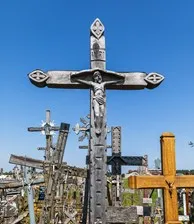
Today as we celebrate the joy of Easter, we are reminded that millions of people around the world cannot express their religious faith freely. They cannot do what we’re now doing: celebrating Jesus’ Resurrection and promise of eternal life.
In Northern Lithuania, two and a half hours’ drive from Vilnius, the capital, there’s a place called the Hill of Crosses. It’s a small hill in the middle of green farmland, densely covered with countless thousands of crosses of all shapes and sizes.
For hundreds of years, this hill has symbolised the deep Christian faith and independent spirit of the Lithuanian people. Every day, people go there to pray and reflect, and to add new crosses.
Among these crosses, there’s a statue of Jesus sitting under a roof, praying quietly. His sad face represents the millions of Christians who for years could only worship in secret under Soviet Russia.
The Soviets hated this hill; they bulldozed it and burnt the crosses many times. But despite the risks, the people kept returning. In 1973, after again bulldozing it, soldiers started guarding this hill, but still the locals returned late at night to plant new crosses.ings, crowning with thorns, and nails through his wrists and feet.

Our Four Deaths
This discussion guide has been generated by the WORD THIS WEEK'S Catholic AI Assistant based on Deacon Peter's homily.
1. Witnesses of the Resurrection
- Why is it significant that women were the first to witness the empty tomb according to all four Gospels?
- What can the details about the empty tomb teach us about the nature of Jesus’ resurrection?
2. Significance of the Resurrection for Faith
- How does Jesus’ resurrection form the foundation of Christian faith?
- Reflect on St. Paul's statement: "If Christ had not been raised, then our preaching has been in vain, and your faith is in vain" (1Cor.15:14). Why is the resurrection essential?
3. The Concept of 'Four Deaths'
- Discuss the four deaths as outlined in the sermon: baptism, embracing vocation, having children, and physical death.
- How does each 'death' signify a transformative process in Christian life?
- How does the idea of 'mini-Easters' provide comfort during life’s transitions?
4. Embracing New Beginnings
- How can the assurance of eternal life change the way we face challenges and transitions in our lives?
- Share personal experiences where you witnessed new life arising from endings or transformations.
Reflection and Application
- Encourage members to reflect on personal 'mini-Easters' they have experienced.
- How can the message of the resurrection inspire hope in our current difficulties?
Practical Exercises
- Consider journaling instances of personal renewal and transformation over the past year, connecting them to the concept of 'mini-Easters.'
- Plan a group activity that embodies the theme of transition and renewal, such as planting seeds or creating art that represents transformation.
Homily Excerpt
The theologian Michael Pakaluk tells us that Christians typically die four deaths.
The first is baptism. Baptism is a form of death because it represents the death of sin, the end of our former self, and our new birth into the life of Christ. In a very personal way, our Baptism mirrors Jesus’ death, burial and resurrection.
Our second death occurs when we embrace our chosen vocation, either the married life or a single life devoted to God. In 1981, Pope St. John Paul II wrote that marriage ‘takes up again and makes specific the sanctifying grace of baptism.’ What he meant is that on our wedding day we must die to ourselves as single individuals, and be reborn as an interdependent couple. [ii]
Our third death occurs when we have children. Every parents knows how devastating the birth of a first child can be to their way of life. For the sake of our children, we die to ourselves; we make great sacrifices for them. And while this means the end of one kind of life, it also means the beginning of a new life as a parent, with all the joys and heartaches that brings.
The fourth death occurs at the end of our mortal lives. For the faithful Christian, this is where we really can be confident of our own resurrection.

THE WORD THIS WEEK invites you to check out the Catholic AI assistant (located at the bottom right-hand corner), a homily preparation resource you can use to clarify or develop the insights and themes of Deacon Peter’s homilies.
Fr. Austin Fleming
The Resurrection of the Lord
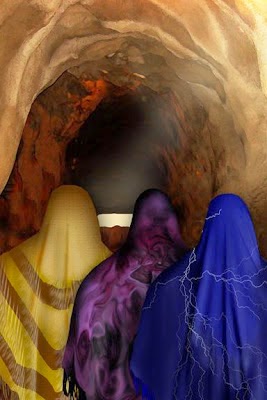
The Women at the Tomb by Julie Rodriguez Jones
2015 HOMILY – It’s THE Easter question and it’s as much a question for me as it is for you: where is Jesus in my life? Is he still hanging on the Cross, a murky mirror of my own pain and suffering? Am I stuck in Good Friday, awash in troubles, with little trust or hope? Have loss and confusion and disappointment and the dull ache of sadness rolled a stone against my heart, entombing me in my fears and my anxieties? Or am I making my way towards the tomb, one, heavy step at a time, slowly making my way to find Jesus, even a Jesus who has died, so that I might get at least that close to him? Or perhaps I’ve arrived at the tomb and concluded by virtue of my own inspection that indeed – there is no Jesus – just an empty hole in the earth which others (fools that they are!) take as proof of something that is – not. Or: perhaps like the two Mary’s and Salome, I’ve arrived at the tomb to find in its unexpected, unanticipated emptiness the healing of yesterday’s pain and suffering and reason to hope that all is not lost; that even what I thought was gone forever, what I was sure I had buried, what I thought I’d never find or see or love again: LIVES !
This discussion guide has been generated by the WORD THIS WEEK’S Catholic AI Assistant based on Father Austin’s homily. NEED HELP? Copy and paste a question into the chat bot in the lower right corner of the screen and have our Catholic Assistant help you.
Opening Reflection
– Consider the emotions that Mary Magdalene, Mary the mother of James, and Salome might have felt as they visited Jesus’ tomb. What do you think their journey reveals about their relationship with Jesus?
– Discuss why their mission to embalm Jesus with spices had significance. Consider the cultural and emotional aspects of this act.
Personal Reflection
– Reflect on how Easter traditions today, like dressing up or enjoying sweets, contrast with the original experience of Easter morning. How might these traditions add to or detract from the true meaning of Easter?
– Have you ever felt like your life is stuck in “Good Friday,” overwhelmed by struggles and lacking hope? Share your experiences and discuss how you navigate through these challenges.
Easter Questions
– Where do you see Jesus in your life? Is he on the Cross, in the tomb, or resurrected in your heart?
– Do you find any obstacles, like a metaphorical stone against your heart, preventing you from experiencing the peace and joy of the resurrection? How might you overcome these obstacles?
Finding Jesus in Our Lives
– Share instances where you have felt or seen Jesus in seemingly empty or challenging moments.
– Discuss how you might “roll back the stone” and open your heart to the hope and life that Jesus offers.
Seeing Jesus in Others
– Reflect on experiences where you have seen Jesus’ love and actions mirrored in others. What impact did this have on you?
– How can your own actions be a reflection of Jesus’ love to others in your community or group?
Sharing Your Story
– Encourage group members to think about how they might share their understanding of Easter and Jesus’ resurrection with others, beyond traditional Easter symbols.
– Prepare to share a personal story of how Jesus’ peace and joy have risen in your heart with someone who asks about your Easter experience.
Communion and Community
– Discuss the significance of sharing in Communion as an experience of meeting the Risen Jesus and filling one’s heart with joy and peace.
– How does communion represent a renewal or transformation in your faith journey?
Closing
– Invite group members to express any prayer requests related to the ideas discussed.
– Close the session with a prayer, asking for renewed faith and the courage to see and share Jesus’ presence in everyday life.
THE WORD THIS WEEK invites you to check out the Catholic AI assistant (located at the bottom right-hand corner), a homily preparation resource you can use to clarify or further develop the insights and themes of Fr. Fleming’s homily.
Dominican Blackfriars

The Resurrection of the Lord
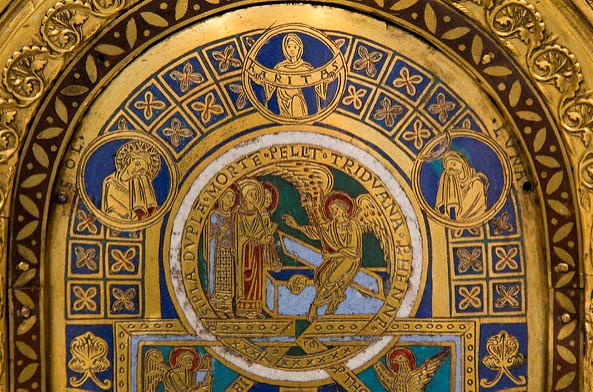
The image above is of an enamelled triptych, c.1150, found in the Victoria and Albert Museum, London.
Click below to show/hide questions.
This discussion guide has been generated by the WORD THIS WEEK'S Catholic AI Assistant based on the Dominican Blackfriars' homily for this week. NEED HELP? Copy and paste a question into the chat bot in the lower right corner of the screen and have our Catholic Assistant help you.
Opening Reflection
- Imagine you're part of the congregation at the Easter Vigil. How do the visual and auditory elements (fire, candle, proclamation) prepare you for the spiritual message of Easter?
- What significance does the paschal candle hold to you personally, as described in the sermon?
Understanding the Darkness
- Discuss the various forms of darkness described in the sermon such as personal sin and societal injustices. How have you or your community experienced these?
- Reflect on the description of darkness from Good Friday. How do these events resonate with times of personal or collective loss in your life?
Proclamation of Light
- The sermon highlights the repeated acclamation “The light of Christ” and the congregation's response. What emotions or thoughts arise in you during this exchange?
- How does shared liturgy in your church community help to strengthen your faith and hope?
Scriptural Insights
- Reflect on the role of women and apostles in Luke’s Gospel as discussed. How do fear and doubt transition to faith and proclamation in these narratives?
- How can we relate the conversion of mourners to preachers to our own transformation in faith?
Applying the Light of Easter
- Consider how Christ’s resurrection shines a light on our personal ambitions and daily actions. How does this perspective alter your view of career versus vocation?
- Discuss practical ways in which you can embody the light of Christ in your daily life. What actions can become ‘Eucharistic prayers’ of praise and thanksgiving?
Personal and Communal Action
- Reflect on the sermon’s challenge: "If all time belongs to Him, what does He ask of me today, tomorrow, and the next?" How can this inform personal goals and community actions?
- Share with the group one specific way you plan to answer God’s call in the coming week.
Closing Reflection
- How does the Easter message of resurrection and light inspire a renewed sense of purpose and gratitude in you?
- In what ways can you support each other as a group in living out the Easter message throughout the year?
Homily Excerpt
Easter Sunday. fr Richard Finn explains how the spreading of the light from the Easter candle during the Easter Vigil symbolizes Jesus Christ as hope in our darkness.

We know the darkness all too well – grave sin and petty betrayal, the selective blindness that leaves us unable to see our own faults but acutely aware of others’ misdeeds. It is the darkness in which the suicide bombers target innocent civilians, and in the rich increasingly protect and expand their wealth at the expense of the poor. It is also the bleak night in which we lose a friend, a child, a parent. This darkness had thickened on Good Friday when the disciples witnessed the horrific violence of the cross when all seemed lost.
Perhaps we know this gloom so well that it has grown hard to believe in the light? Yet, the threefold proclamation of ‘the light of Christ’ draws out of the congregation an answering affirmation ‘Thanks be to God’. The shared liturgy instills, refreshes, our faith; it nurtures hope. That’s one reason why we come to Church, to be saved from despair as we are called into the body of believers, to hear the proclamation handed down across the centuries, the apostles’ witness to the resurrection. The light of the Easter candle leads us forward into the church. It is mediated, transmitted to each one of us when we light our own candles from that Paschal candle. In this ritual pooling of the light we rediscover and deepen our faith in the Risen Christ and His Gospel.

Photograph by Fr Lawrence Lew OP of the chapel of St Albert the Great in Edinburgh, on Easter morning.
Click below to show/hide questions.
This discussion guide has been generated by the WORD THIS WEEK'S Catholic AI Assistant based on the Dominican Blackfriars' homily for this week. NEED HELP? Copy and paste a question into the chat bot in the lower right corner of the screen and have our Catholic Assistant help you.
Discussion Guide for Sermon on John Donne's Reflection and the Easter Message
Opening Prayer or Reflection: Begin the session with a prayer or moment of silence, inviting participants to open their hearts and minds to the discussion.
Introduction: Share a brief overview of John Donne's reflection from the sermon and set the context for the discussion. Emphasize the message of Easter: "Death and sin have been overcome! The Lord is Risen! Alleluia! Alleluia!"
Discussion Questions:
1. The Human Condition:
- How does the diversity of the congregation, as described in the sermon, reflect the varied personal circumstances present in our own group?
- Why is it significant that amidst different backgrounds and struggles, the message of Easter remains the same for everyone?
2. The Depth of God's Love:
- Discuss the notion that God's love, as demonstrated through the Resurrection, is greater than any challenge life presents. How does this impact our daily lives?
- How can we find hope and reassurance in this message when facing our own struggles?
3. The Reality of Human Emotion:
- Explore the statement, "What shall God have to do with that eye that never wept?" How do laughter and tears enhance our connection with the world and our faith?
- Discuss how continuing to experience both joy and sorrow can be part of our spiritual journey.
4. The Easter Morning Narrative:
- Reflect on the reactions of Mary of Magdala, Simon Peter, and the Beloved Disciple upon discovering the empty tomb. What do their different responses teach us about embracing faith?
- Why might the Evangelist highlight who arrives at the tomb first and who enters first? Discuss the symbolism of love (the Beloved Disciple) arriving first.
5. Timeless Assurance:
- How does the resurrection story give meaning to the challenges and joys we face today, just as it did for the earliest witnesses?
- What does it mean for us to live with the assurance that "Death and sin have been overcome"?
Personal Reflection:
- Encourage participants to share personal experiences where the Easter message has offered them hope or transformed their understanding of their circumstances.
- Invite everyone to consider how they might serve others, reflecting the love and hope of the Resurrection in their communities.
Closing Thoughts:
- Highlight the importance of embracing the reality of our emotions while rooting ourselves in the assurance of God's love.
- Remind the group of Mary of Magdala's journey from tears to understanding, illustrating the transformative power of love and faith.
Final Prayer: Conclude the session with a prayer, thanking God for the Resurrection and asking for strength to live with hope and compassion.
Homily Excerpt
Easter Sunday (C) | Fr John O’Connor proclaims the Resurrection of Christ which speaks to every human person amid the tears and laughter of our human condition, and amid the vicissitudes of life.
The English poet, John Donne, wrote in one of his sermons:
“And when God shall come to that last act in the glorifying of man, when he promises “to wipe all tears from his eyes”, what shall God have to do with that eye that never wept?”
Across the globe on Easter morning, sermons are being preached in a multitude of different languages to congregations of various nationalities and backgrounds. Within these congregations are to be found, sitting beside one another, men and women in very different personal circumstances. Some will have hearts full of joy; some will have lives neither especially happy nor especially burdensome; some will be struggling with worries and cares: trying to make ends meet, fighting ill health, struggling with relationships, but all feeling the weight of the world upon their shoulders.

Image: detail from ‘Crepuscular rays at dawn over the Normandy coast’ photographed by TeaMeister
Click below to show/hide questions.
This discussion guide has been generated by the WORD THIS WEEK'S Catholic AI Assistant based on the Dominican Blackfriars' homily for this week. NEED HELP? Copy and paste a question into the chat bot in the lower right corner of the screen and have our Catholic Assistant help you.
1. Creation and the Symbolism of the Days
- Reflect on the significance of the Creation Story as recounted in the sermon. How does the creation culminate with humanity being made in God's image, and what does this mean for us?
- Discuss the concept of Day Seven in the Creation Story. Why do you think the sermon suggests that Day Seven kept going?
- Explore how the sermon relates the Creation narrative to the concept of Sabbath. How did God's rest become a practice for His people?
2. The New Creation through Jesus
- How does Jesus’ healing of the paralyzed man on the Sabbath convey the idea of God and His Word continuing their work? How does Jesus embody the idea of a 're-run' of Day Six?
- Reflect on the significance of Jesus as the 'New Adam' and Pilate's presentation of him. How does this relate to the themes of humanity’s fall and its redemption?
- The sermon mentions, "the Creator God could take a final Sabbath Rest in the Tomb." Discuss the implications of this statement.
3. The Resurrection and the Eighth Day
- Consider the women's experience in the garden on the morning after the Sabbath. How does their encounter with the empty tomb serve as a turning point in the sermon’s narrative?
- Analyze the 'elusive' nature of Jesus' appearances post-resurrection. What might this suggest about the nature of this new creation and our relationship with the risen Christ?
- The idea of the Eighth Day is central to the sermon. How does it transform the traditional understanding of time and creation?
4. Music and Mystery
- Discuss how different styles of Easter music evoke various aspects of the resurrection's mystery. How do they capture both triumph and mysticism?
- Examine how the music and chants mentioned align with the sermon’s themes of mystery and the unseen nature of divine work.
5. Living in the Eighth Day
- Reflect on the idea that Christians are living in the early morning of the Eighth Day. What practical implications does this have for how we live out our faith?
- How do the Sacraments and Scriptures help us ‘hold’ Jesus by Faith, Hope, and Love in our current journey?
- Explore the sentiment that "we shall never hear, ‘Evening came, and morning; Day Eight is over’." What does this say about the eternal nature of our spiritual journey?
Conclusion
- Summarize what the ‘radiant noon’ of the Eighth Day represents for our faith journey. How can we as individuals and communities prepare for this eventual fulfillment in our everyday lives?
Reflection
- Spend some time reflecting on how this Easter message and its themes resonate personally. How can these insights shape our understanding and celebration of Easter in our spiritual practices?
Homily Excerpt
Easter Day. Fr Richard Conrad preaches on the unending eighth day.
Last night’s Easter Vigil readings began with the Creation Story. By his all-powerful Word, God crafted the cos¬mos in stages. At the story’s climax, he created the human being in his image. Each stage ended, ‘There was evening and there was morning, Day One, Day Two… Day Six.’ Then God rested. So God’s People used to keep the Seventh Day of the week holy, as a way of sharing God’s de¬light in his Creation.
We didn’t hear, ‘There was evening and there was morning, Day Seven.’ It’s as if Day Seven just kept going.
Eventually, God spoke his all-powerful Word into the world in a new way. When Jesus, the Word become flesh, healed the paralyzed man, he made him carry his mat home, though it was the Sabbath. He explained why: ‘My Father is working still, and I am working’ (John 5:17). The Father and his Word were breaking their Sabbath rest and picking up the work they had left unfinished at the end of Day Six.
That should have meant taking human beings on a smooth journey home, into the Triune God in whose image humanity was made. But the image had been spoiled; it needed remaking in a ‘re-run’ of Day Six. Two days ago, on Day Six of Holy Week, we heard Pilate bring forth Jesus crowned with thorns and say: ‘Be¬hold the Man.’ He shocked us with the ways we spoil what God crafted on Day Six – and we beheld the remedy, the New Adam’s Passion, which is God’s Word of fierce loyalty to his handiwork, a Word of mercy eloquent enough to re-fashion us.

Click below to show/hide questions.
This discussion guide has been generated by the WORD THIS WEEK'S Catholic AI Assistant based on the Dominican Blackfriars' homily for this week. NEED HELP? Copy and paste a question into the chat bot in the lower right corner of the screen and have our Catholic Assistant help you.
Introduction
- Purpose: This guide is intended to facilitate discussion around the themes of liberation and transformation as presented in Fr. Peter Hunter’s sermon.
- Main theme: The unparalleled liberation made possible by the Resurrection and how it offers a new way of living through the transcendence of human limitations.
1. Relocation vs. True Liberation
- Concept: Fr. Hunter starts with an analogy of families relocating from Britain to Australia, suggesting that relocation does not solve personal issues because the individual remains unchanged.
- Questions for Discussion:
- Have you ever experienced a situation where you thought a change of circumstances would solve your problems? How did it turn out?
- How does the idea of "taking ourselves with us" impact our understanding of change and solutions?
2. Radical Liberation through Easter
- Concept: Easter offers a radical form of liberation that allows individuals to transcend their current limitations and strive towards who God intends them to be.
- Questions for Discussion:
- What does "radical liberation" mean to you in the context of Easter?
- How does the Resurrection open up "new ways of living"?
3. The New South Africa as an Analogy
- Concept: Fr. Hunter reflects on South Africa post-Apartheid, equating its liberation to a shift in the nature of problems, though not an elimination of them.
- Questions for Discussion:
- In what ways does the shift from one set of problems to another reflect the transformation offered by Easter?
- Can you think of examples where liberation or change introduced new challenges that also brought about growth or improvement?
4. New Possibilities through Christ
- Concept: Rather than merely resetting things with God, the Resurrection creates new opportunities and ways of living rooted in transcending limitations.
- Questions for Discussion:
- How do the sacraments and church life contribute to this new way of living?
- How do you interpret the idea that "every limitation of our own lives has already been overcome"?
5. Transformation and Hope
- Concept: The sermon underscores that transformation doesn't necessarily alter everyday details immediately but imbues life with new meaning and hope.
- Questions for Discussion:
- In what ways can this "new life" be seen in our daily actions and relationships?
- How can the hope of the Resurrection influence your perspective on personal challenges?
Homily Excerpt
Easter Day. Fr Peter Hunter preaches on the unparalleled liberation made possible by the Resurrection.
The sacraments, and the life of the Church in general, lead us beyond our old ways. They are not simply ways of setting things right with God. They are part of a new humanity to which we have all been joined by our baptism.
‘Christ, my hope, is risen.’ In other words, Christ has, by love, transcended every limitation of human life, even death. And for those of us who are joined to him by our baptisms, that hope of transcendence dawns on our own lives too. What does that mean? That every limitation of our own lives has already been overcome.
It doesn’t mean that all the details change for us immediately. I find it amusing, and here in Jamaica we would particularly approve of the fact that St John makes it clear to us he won the race to the tomb against St Peter, something wonderfully trivial and normal. But when he got there, everything changed. His whole life meant something new. He saw, and he believed.
THE WORD THIS WEEK invites you to check out the Catholic AI assistant (located at the bottom right-hand corner), a homily preparation resource you can use to clarify or further develop the insights and themes of the homilies above.
Fr. Charles E. Irvin
The Resurrection of the Lord
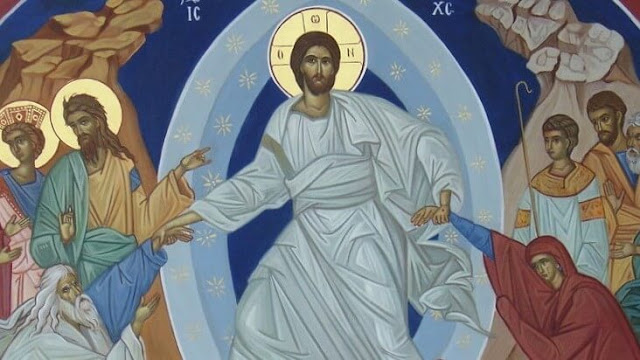

In our quest to find answers we must begin with the love of God, the God who has taken on our humanity and all that the forces of darkness in our world can hurl at us. God can be found in the passion and death of Jesus Christ. God can be gloriously found in Christ’s resurrection, and found in the power of God’s Holy Spirit who comes to us in the Risen Christ. Our Ancient Enemy, Satan, lives in defeat and despair, a condition in which we wants us all to live. God, however, cannot be outdone by our Ancient Enemy. He sent us His Christ to give us His life-giving Holy Spirit, that gift that Christ handed over to us when He died on the Cross, that gift that raised Jesus Christ from the dead, and that gift we will celebrate on the Feast of Pentecost, fifty days from now.
May the Spirit who infused the dead humanity of Jesus Christ and raised it in glory likewise infuse you your humanity and fill you with God’s life. If you surrender to His Presence, to the Spirit-filled Christ who left nothing to chance, He will love you, and gather you into Himself, and raise your humanity in His, into a new and higher life, one in which the glory of God is revealed to all who know you.
Truly, as was said so long ago, “The glory of God is humanity fully alive.” And that glory, if you surrender to Him who died to give it to you, is yours, O child of God. For Christ is truly risen and can be found now in the likes of you and me.
This discussion guide has been generated by the WORD THIS WEEK’S Catholic AI Assistant based on Fr. Irvin’s homily. NEED HELP? Copy and paste a question into the chat bot in the lower right corner of the screen and have our Catholic Assistant help you.
Opening Reflection:
Begin by reflecting on why you are here today. What brought you to this gathering? What are your expectations for this session, and how are you prepared to receive the message shared in the sermon?
Understanding Our Sacred Calling:
– Discuss the significance of gathering in a sacred place and time. How does this setting influence your receptiveness to the message of God?
– Explore what being part of the Church of the Apostles means to you. How do you treasure what has been handed down through generations?
Reflecting on Motivations:
– Consider the various reasons people attend Mass on Easter. Which of these resonate with you personally, and why?
– How does spiritual indifference affect your faith journey, and what strategies might help in overcoming it?
Facing Human Transience:
– Reflect on the idea that “nothing human lasts for very long,” using personal anecdotes or historical perspectives.
– How does this realization impact the way you perceive life and its inherent transience?
Confronting Skepticism and Belief:
– Engage in a dialogue about how skepticism towards the story of the Resurrection might be addressed within and outside the faith community.
– Discuss the role of faith in believing in the Resurrection, despite skepticism or doubt.
The Promise of Immortality and Love:
– Reflect on the connection between human love and immortality. Have you experienced a moment where love felt eternal?
– Share thoughts on the claim that the Resurrection story was not fabricated. What evidence or reasoning strengthens your belief?
Embracing Christ’s Victory:
– Discuss how the Resurrection illustrates God’s unselfish love. How does this love influence your personal life and relationships?
– Explore ways in which Christ’s love and resurrection inspire acts of noble character and selflessness in your life.
Recognizing Jesus in Our Journey:
– Share personal experiences where you have sensed Jesus walking with you during difficult times.
– Discuss how the story of Emmaus resonates with personal or communal crises faced today.
Seeking God’s Presence:
– How can we better recognize God’s presence in both collective and individual experiences?
– Consider ways to deepen your relationship with God through the experiences of passion, death, and resurrection.
Living the Easter Story:
– Reflect on what it means for you to be “fully alive” in the context of your faith.
– Discuss practical ways to carry the Easter message forward into everyday life beyond the celebration.
Concluding Reflection:
Close the session by sharing personal commitments or steps you plan to take based on the sermon’s teachings. Encourage mutual support and prayer as you seek to live out the promises of Easter.
Prayer:
End with a prayer inviting the Holy Spirit to guide your journey, fill your life with God’s presence, and help you embody the glory of God in all that you do.
THE WORD THIS WEEK invites you to check out the Catholic AI assistant (located at the bottom right-hand corner), a homily preparation resource you can use to clarify or further develop the insights and themes of Fr. Irvin’s homily.
Fr. George Smiga
- Alleluia Is Our Song - 2004
- The Challenge of Easter - 2007
- Easter Doubt and Faith - 2010
- Letting Christ Out - 2013
- The Curious Omission - 2016
- The Easter Egg - 2019
- Stronger Than Death - 2022
Alleluia is Our Song

We are an Easter people and Alleluia is our song. These are not my words but those of the great St. Augustine, bishop of Hippo, spoken some 1500 years ago at the Easter liturgy. Although they were spoken in a different language, at a different time and certainly in a different world, the faith which they profess is the same as the one we embrace this Easter morning. We are an Easter people and Alleluia is our song. We would be hard pressed to find a better lens through which to perceive the meaning of Easter than this faith assertion of Augustine. Because as we gather today after 40 days of Lent, after remembering Jesus’ last meal with the apostles, after reflecting on his unjust death, two questions are important ones for us to address. Why are we an Easter people? How do we sing our Alleluia song?
Why are we an Easter people? Because it is Easter that sets us apart from every other believer. It is Easter that distinguishes us from other good and moral people throughout our world. As Christians we believe that something happened on that first Easter morning. We believe that Jesus of Nazareth who suffered a cruel and unjust death, was raised up and glorified by the power of God. We believe that Jesus became for us the way to salvation. We believe that Jesus’ death and resurrection is a pattern for our own life. This explains why Easter is not simply good news for Jesus, but good news for us as well. For you and I believe that we who are united to Christ through faith and baptism will ourselves be raised up and glorified. St. Paul says this so clearly in his letter to the Romans. “If we have been united with him in a death like his, we will certainly be united with him in a resurrection like his.”
This discussion guide has been generated by the WORD THIS WEEK’S Catholic AI Assistant based on Fr. Smiga’s homily.
Historical and Faith Context:
– Discuss the significance of St. Augustine’s quote “We are an Easter people and Alleluia is our song.” How does this ancient proclamation resonate with us today?
– Reflect on the common faith shared from Augustine’s time to ours despite the historical and cultural differences.
Meaning of Easter for Christians:
– Why is Easter considered the defining element of Christian identity?
– How does Jesus’ resurrection serve as a “pattern for our own life”?
Understanding Resurrection as a Promise:
– How does the resurrection of Jesus guarantee the promises made to us?
– Reflect on personal moments of doubt and how faith in the resurrection offers hope.
Faith to Hope:
– Discuss how the faith in Jesus’ resurrection transitions into hope for our personal lives.
– In what ways does the belief in resurrection shape how Christians confront challenges and sufferings?
Singing Our Alleluia Song:
– What does it mean to sing Alleluia with open eyes?
– How can we acknowledge both the victory of Christ and the ongoing presence of evil in the world?
– How should the awareness of Christ’s suffering shape our response to suffering in others?
– Discuss practical ways you can participate in building God’s kingdom through acts of service.
Living as an Easter People:
– Reflect on how recognizing Christ’s resurrection impacts your daily life and decisions.
– How can you as a group, and individually, recommit to compassion and service in your community?
Conclusion and Prayer:
– As a group, discuss the impact of Easter on your faith journey and ways you plan to live out being an Easter people in the weeks and months to come.
– End the session with a collective singing of “Alleluia,” focusing on the renewed meaning and purpose it has gained through this discussion.
THE WORD THIS WEEK invites you to check out the Catholic AI assistant (located at the bottom right-hand corner), a homily preparation resource you can use to further clarify or further develop the insights and themes of Fr. Smiga’s homilies.
Pro-Life Homily Resources
The Resurrection of the Lord

Preaching on Life
Preaching on life is particularly appropriate on this day for the double reason that this is precisely the feast of life, and that many people will be in the Church today who do not hear our message the rest of the year. The pro-life message can be incorporated into the Easter homily in a very positive and clear way, as the following points suggest:
1. Easter is about the Resurrection of Christ, which was a physical resurrection. The human body and soul are set free from the kingdom of death; the way is opened for us to share this risen life.
2. This puts every human being in a different light; we can never look at each other the same again. Every person, in Christ, has been raised to the heights of heaven. Both options for the second reading emphasize this point. Easter, then, is our feast. It is not only about Jesus’ victory over death; it’s about our victory over death.
THE WORD THIS WEEK invites you to check out the Catholic AI assistant (located at the bottom right-hand corner), a homily preparation resource you can use to clarify or develop the insights and themes of Frank Pavone’s homily notes for preachers.
Msgr. Joseph Pellegrino
The Resurrection of the Lord

On Being Catholic

Being Catholic means that we are part of a Church with a huge number of devoted worshipers, 1.285 billion people or more. Back in 1984, I made my first trip to Rome with my parents and godmother. I was there for Pentecost and was able to assist the Holy Father, Pope St. John Paul II. Yup, it was just me and the pope, along with about a hundred other priests, and all sorts of bishops and cardinals. I told my parents to meet me in the Piazza San Pietro after the Mass. Well, when I left St. Peters, I saw this huge crowd of people, thousands and thousands, in the piazza, waiting for the Pope’s Sunday blessing. (I did find my parents, who were smart enough to go to the obelisk in the center of the piazza.) That is when it really hit me. The people in the piazza were from all over the world. And I was part of them. I belonged there. Every person who comes to Church on Easter belongs here. We are all part of this, this worldwide assemblage of devot
This discussion guide has been generated by the WORD THIS WEEK’S Catholic AI Assistant based on Fr. Pellegrino’s homily.
1. Catholic Identity and Ash Wednesday
– Why do you think many people who do not regularly attend Mass seek to receive ashes on Ash Wednesday?
– What does the act of wearing ashes symbolize for those who participate in this tradition?
– How does the notion that “Catholicism runs deep” resonate with you personally?
2. Participation in the Church
– Reflect on the sense of belonging the speaker felt at St. Peter’s Piazza. Have you ever experienced a similar feeling of connection within the Church?
– In what ways does being part of a global Catholic community influence your faith and actions?
– Do you feel a sense of unity with other Catholics worldwide? Why or why not?
3. Significance of the Eucharist
– What is the importance of the Eucharist in Catholic faith as described in the sermon?
– How do you perceive the Real Presence of the Lord in the Eucharist?
– Reflect on the story of Jamie Kelleher. How does the Eucharist provide comfort and strength in times of adversity?
4. Living as Easter People
– What does it mean to you to be an Easter person and to celebrate the new life offered by Christ?
– How does the message of Easter influence your outlook on life, particularly when facing challenges?
– How can the joy and hope of Easter be shared and reflected in daily life?
5. Role of Faith in Addressing World Issues
– How does your faith guide you in responding to news of violence, injustice, and suffering in the world?
– How does the sermon encourage action against evil while maintaining hope and optimism?
– Discuss ways you or your community can contribute to addressing injustice and supporting those in need.
6. Hope and Resilience in Faith
– How does the reminder to “not be afraid” and to hope in the risen Christ inspire you in your personal faith journey?
– In what ways can you, as part of the Catholic community, embody and spread the message of hope found in Christ’s resurrection?
Reflective Exercises
– Personal Reflection: Spend a few moments in silence, contemplating what it means to you personally to be Catholic. Consider writing down thoughts or prayers expressing your sense of identity and hope as an Easter person.
– Group Prayer: Conclude the session with a group prayer, inviting participants to offer prayers for unity, strength, and hope for the Church community and the world.
Action Points
– Encourage participants to attend Mass more regularly, seeking deeper connections with the Church and community.
– Explore opportunities to engage in social justice initiatives or support charitable efforts that align with Catholic teachings on helping the marginalized and oppressed.
THE WORD THIS WEEK invites you to check out the Catholic AI assistant (located at the bottom right-hand corner), a homily preparation resource you can use to clarify or develop the insights and themes of Msgr. Pelligrino’s homily.
Msgr. Charles Pope
The Resurrection of the Lord
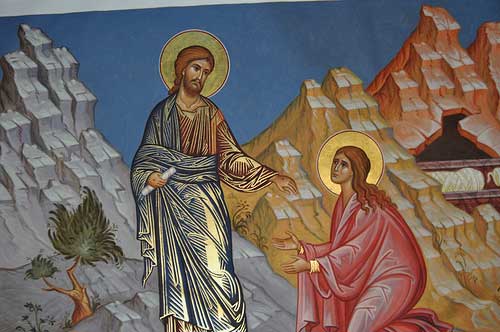
From Fear to Faith on Easter Morning
One option for Easter Sunday morning’s Mass is from the Gospel of John (20:1-8). (I have written before on the Matthean Gospel option (here)). Like most of the resurrection accounts, John’s version paints a portrait of a journey that some of the early disciples have to make: out of fear and into faith. It shows the need to experience the resurrection and then come to understand it more deeply. While the Gospel account begins with Mary Magdalene, the focus quickly shifts to St. John; let’s study his journey.
I. Reaction Mode
II. Recovery mode
III. Reassessment mode
IV. Resurrection Mode
THE WORD THIS WEEK invites you to check out the Catholic AI assistant (located at the bottom right-hand corner), a homily preparation resource you can use to clarify or develop the insights and themes of Msgr. Pope’s homily.
Fr. Jude Siciliano, OP

The Resurrection of the Lord
Easter Sunday
EXCERPT: Isn’t it strange that today’s Gospel reading on Easter Sunday does not include an appearance of the risen Christ?
It can feel a bit frustrating. If the reading continued, we would have heard about Jesus’ appearances: first to Mary Magdalene at the tomb (20:11ff), then to the disciples behind locked doors (20:19ff), and later to Thomas (20:26ff). But today’s reading ends before those encounters – with the beloved disciple entering the empty tomb, seeing the burial cloths, and believing. It lacks the clarity and drama we might expect for Easter morning. What’s going on? This is Easter!
What about Simon Peter and the other disciple? They too are in the dark. Peter enters the tomb first but sees only emptiness – he remains in darkness. But John tells us, “Then the other disciple also went in, the one who had arrived at the tomb first, and he saw and believed.” We’re not told exactly what time these events happened. It was dark when Mary arrived – was it still dark when the disciples came? Even if it was, the beloved disciple is no longer in the dark. His eyes have been opened. In the light of faith, he sees and believes.
This beloved disciple stayed with Jesus through his passion and crucifixion. He is a faithful witness. He sees the empty tomb and the burial cloths. Though they are not conclusive evidence – and he doesn’t fully understand – he believes immediately. There are people like him today: those who, despite the lack of tangible proof, trust that God is present, even in the most dire situations.the tomb first but sees only emptiness – he remains in darkness…
THE WORD THIS WEEK invites you to check out the Catholic AI assistant (located at the bottom right-hand corner), a homily preparation resource you can use to clarify or develop the insights and themes of Fr. Jude’s homily notes.
Fr. Tom Casey

The Resurrection of the Lord
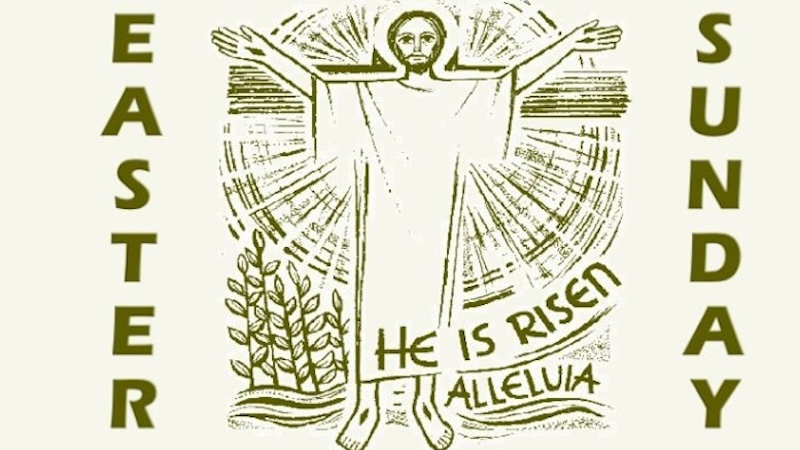
Christ Has Turned All Our Sunsets Into Dawns
2022 HOMILY – We are an Easter People and Alleluia is our song. The Easter liturgy makes it clear that the centre piece of the great drama of salvation is the passage of Christ from death to new life. In Christ not only is death defeated but even our fallen condition has become no longer a curse but a cause of rejoicing. Because of Christ’s resurrection we can shout triumphantly in the words of the Exsultet: ‘O happy fault that brought us so glorious a Redeemer’.
In the first reading of today’s Eucharist, Peter makes it clear that Jesus’ Resurrection from the dead was the direct action of God: ‘God raised him to life and allowed him to be seen’ (Acts 10:38). The Resurrection is God the Father’s response to the Cross, his affirmation of everything that Jesus preached and did, everything for which he lived and died. It is the definitive answer of the Father to a world that sought to silence Jesus forever. It is the supreme manifestation of the power of God’s Love – a love that is stronger than death, hatred or injustice. It is the final word between God and humanity in the dialogue of salvation: the great Amen of God, not just to humanity, but to all creation.
Bishop John Kobina Louis
The Resurrection of the Lord
Sunday Homilies

Bishop John Kobina Louis, PhD, is an auxiliary bishop of the Archdiocese of Accra, Ghana. He was ordained as an auxiliary bishop on 19th April 2023.
Fr. Michael Chua
The Resurrection of the Lord

Homily Excerpt

If you have been faithfully following and attending the masses of the Easter Triduum, you would realise that a liturgical hymn or two is weaved into each day’s liturgy, complementing the readings with beautiful lyrical poetry expounding profound theology. There is the Thomistic Eucharistic Hymn of Pange Lingua and the beautiful medieval Ubi Caritas on Maundy Thursday, the Stabat Mater for the Stations of the Cross and the Reproaches for the Good Friday liturgy, and finally the extraordinary chant of the mother of all vigils, the Exultet, which you would have heard last night if you attended the Easter Vigil mass in the Holy Night.
But this morning’s liturgy would not be an anti-climax, in fact the hymn that we’ve just been treated to is to be sung during masses throughout the Octave of Easter, the next eight days of the week till next Sunday. Its Latin name is “Victimae paschali laudes”, which is the incipit (opening words) of the traditional Easter sequence, “Christians, to the Paschal victim”. This plainsong chant hymn provides a dramatic celebration of Christ’s victory over death in the context of a dialogue between Mary Magdalene and a narrator.
Homily Excerpt
One of the terms that has come back into vogue and has made its way into political vocabulary of late, is “gaslighting.” Gaslighting involves the perpetrator trying to convince the target (the one being gaslighted) that what he perceives is not actual reality. By convincing the target to doubt himself / herself, the gaslighter gains power through distortion, lies, and misinformation. Soon the target may come to depend on the gaslighter for “truth”, since the target no longer trusts his own senses, perceptions, or even basic reasoning ability. That’s basically the premise of the 40s movie “Gaslight” which gave rise to this term.
It may be argued by many, especially critics of Christianity, that the Church has been gaslighting her members and the world, with the story of the resurrection and the explanation behind the empty tomb. Since the empty tomb raises more questions than it can provide answers, these critics argue that the Church has jumped on this opportunity to manipulate the truth about Jesus Christ, in order to exert mind-control over her members and perpetuate the biggest gaslighting lie for centuries.
Homily Excerpt
Easter means the “making right” of things that have gone wrong: the forgiveness of sins; the reversal of death; the repair of broken relationships with God, each other and creation. This is not just an elusive ideal but a reality. Christ’s resurrection has made this certain. This is the powerful message of Easter that continues to unravel its mysteries over the course of our lives. This is what we look forward to, a new creation. A transformation. We will not merely be going back to normal, we will be going forward to something different, something new. It’s an illusion to think that we’re going to return to the way life was before. There is no going back. The past is an empty tomb. Our Lord is Risen, He is not there!
What unfinished business is waiting for us? Is it a conversation we’ve been afraid to have with someone? Is it a decision we’ve been putting off? Is it a relationship with someone that needs mending? Today’s message is really that none of these questions need receive a silent answer nor lead us to a dead end. We are challenged once again to engage the unfinished business before us and live the resurrection—through the actions we can take, attitudes we can adopt, ready to allow the Lord to write the next chapter in our own gospel. And also, ready to discover how the risen Jesus is present NOW, in our time and place. As St Paul assures us, be “confident of this, that He who began a good work in you will carry it on to completion until the day of Christ Jesus” (Phil 1:6). Christ IS risen. He is Risen indeed! Alleluia!
THE WORD THIS WEEK invites you to check out the Catholic AI assistant (located at the bottom right-hand corner), a homily preparation resource you can use to clarify or develop the insights and themes of Fr. Chua’s homilies.
Fr. Vincent Hawkswell
The Resurrection of the Lord

Homily Excerpt
2025 HOMILY – “The resurrection of Jesus is the crowning truth of our faith in Christ,” the Catechism of the Catholic Church explains: “a faith believed and lived as the central truth by the first Christian community, handed on as fundamental by [Sacred] Tradition, established by the documents of the New Testament, and preached as an essential part of the Paschal mystery along with the cross: Christ is risen from the dead! Dying, he conquered death; to the dead, he has given life.”
The resurrection is a real, physical, historical event. Jesus died on Friday and his body was buried in a sealed and guarded tomb, but early on Sunday morning the tomb was found to be empty. The absence of his body could be, and has been, explained in other ways, but its discovery, first by the women, and then by John and Peter, is powerful testimony.
THE WORD THIS WEEK invites you to check out the Catholic AI assistant (located at the bottom right-hand corner), a homily preparation resource you can use to clarify or develop the insights and themes of Fr. Hawkswell’s homily.
Fr. Denis J. Hanly
The Resurrection of the Lord

Homily Excerpt

I suppose all of us tend to think that the greatness of the Resurrection is in Jesus overcoming death.
Yet, at the same time, if that were true, why are we sitting here? Because that would have taken and happened a long, long time ago, almost two thousand years, and it would have been a fact in time.
For that is not why we are here. We are here because Jesus not only overcame death, not only rose from the dead, but is with us.
He has come to stay with us, as he promised. “For a short time you will feel desperate,” he told his disciples. “But I shall come again, and I shall be with you all days, even to the end of the world.”
What keeps the church doors open is not a fact that Jesus rose from the dead and returned to his Father, something like perhaps we feel when we lose someone close to us, someone precious to us, and we mourn their passing, but we pray that they are happy in heaven with God Himself.
It is not that, it is…
THE WORD THIS WEEK invites you to check out the Catholic AI assistant (located at the bottom right-hand corner), a homily preparation resource you can use to clarify or develop the insights and themes of Fr. Hanly’s homily.
Fr. Tommy Lane
The Resurrection of the Lord
- Jesus here with us 2024
- Jesus with us though invisible 2021
- Jesus’ resurrection shows He is the answer to our questions 2016
- Jesus Continues in the Church 2015
- Christ is Risen! 2011
- Jesus Risen is the Light of the World 2008
- Jesus’ Resurrection reminds us of the glorious future awaiting us
- Related Homilies: Jesus Did Rise on Easter Sunday! 2021
- excerpts of funeral homilies
- belief in the resurrection (excerpt of funeral homily)
- cloth over Jesus’ head, The Sudarium
- stories about the next life and death
Fr. John Kavanaugh, S.J.
The Resurrection of the Lord

The postmodern world has problems with resurrection. It has problems with anything transcendent.
This life is all there is. You only go around once. Grab all the gusto. It doesn’t get any better than this.
Bound by immediate distraction, enthralled by skills of indulgence, we are jarred by talk of heaven. It is inappropriate.
Discomfort with transcendence churns in us Christians as well.
We want to make good sense of our faith, especially to those who think our beliefs a bit outdated. Our own discourse becomes less a matter of heaven and hell, forgiveness and redemption, than of self-fulfillment, illness and recovery, and how to be our own best friends.
Sometimes there even seems to be a hidden assumption lurking in our theology and ritual: This life is all there is. And—although more rarely—complaints can still be heard from premodern survivors that they rarely hear homilies and sermons about the four last things.
This discussion guide has been generated by the WORD THIS WEEK’S Catholic AI Assistant based on Fr. Kavanaugh’s homily. NEED HELP? Copy and paste a question into the chat bot in the lower right corner of the screen and have our Catholic Assistant help you.
Introduction
– The sermon begins with a focus on Colossians 3:2: “If then you were raised with Christ, seek what is above.”
– It discusses the postmodern world’s difficulty with concepts like resurrection and the transcendent.
1. The Challenges of Postmodernism
– Why do you think the postmodern worldview struggles with the idea of transcendence and resurrection?
– How does this worldview manifest in society’s approach to life and gratification?
2. Christian Discomfort with Transcendence
– In what ways do Christians also struggle with accepting the transcendent elements of their faith?
– Why has there been a shift in focus within Christian discussions from traditional beliefs to topics like self-fulfillment and personal well-being?
3. Focus on Earthly vs. Heavenly Realities
– The sermon mentions that there is more to life than earthly endeavors. How do we balance these two pursuits in our daily lives?
– How might an over-emphasis on the here and now affect our spiritual lives and faith practices?
4. The Collision Between Modern Sensibility and Worship Content
– Discuss what the sermon means by saying we are on a “collision course” with the content of our worship.
– How often do we reflect on the sacramental realities of our religious practices? How important is this reflection?
5. The Nature and Meaning of the Eucharist
– What does the sermon suggest about the true significance of the Eucharist beyond its community aspect?
– How does viewing Communion as a “pledge of eternal forgiveness” and “nutrition for transformed bodies” change our understanding of this sacrament?
6. Easter and the Promise of Resurrection
– Why is Easter considered Eucharistic, and what does the sermon suggest about the importance of believing in the resurrection of Christ?
– Reflect on how the resurrection reinforces the beliefs at the core of Christianity.
Reflection and Application
– Reflect on the statement: “We believe there is more than meets the eye.” How does this belief shape our outlook on life and faith?
– Consider how incorporating the sermon’s message into our lives might change our approach to worship, relationships, and our understanding of life’s purpose.
Concluding Thoughts
– Reflect on the creed: “We believe in the resurrection of the body and the life of the world to come.” Share thoughts on what this belief means personally.
– How can we better integrate the hope and promise of resurrection into our daily lives?
THE WORD THIS WEEK invites you to check out the Catholic AI assistant (located at the bottom right-hand corner), a homily preparation resource you can use to clarify or develop the insights and themes of Fr. Kavanaugh’s homily.
Bishop Frank Schuster
The Resurrection of the Lord
Homily Excerpt
It boils down to one reason, one moment in history: Jesus in fact rose from the dead and appeared to his disciples. This means God has in fact visited his people. As we await his return in glory, tonight we know in our hearts that he has never left. He is present all around us every day, in the Holy Eucharist and in the people we meet. He is in the heart of all the baptized and he is the light of the world. Our lives do not follow the predictable pattern of the universe, that we are born, we live, we die, and that’s it. Because of Jesus, we now know that death is not the end, our lives have direction, our existence has purpose and, as a result, our lives have changed forever. Life has changed because we must now look upon this world in light of the world to come, the Kingdom of God. This new sight or vision we have has implications on how we live our lives in the here and now. The world is no longer about me but about Jesus who died for my sins and rose for my salvation. We are baptized in this faith and remember our baptismal vows because life is no longer just about being born, living and dying. Life now includes resurrection and everlasting life.
THE WORD THIS WEEK invites you to check out the Catholic AI assistant (located at the bottom right-hand corner), a homily preparation resource you can use to clarify or develop the insights and themes of Bishop’s Schuster’s homily.

The Resurrection of the Lord

Be New Light in Darkness
Every year at the Easter Vigil, a new spark is struck from the flint to light a new candle. New holy water is blessed and new hosts are consecrated. We are beginning all over again, making all things new.Our Lord’s death and resurrection were the turning points in the history of creation. It made all things new…
It is not enough to have life, even God’s life. You must live it. Feel it. And open up to it. Jesus made it quite plain when He said, “I come that you might have life and have it abundantly.” Some of us are not concerned with the question of, “Is there life after death?” because they have not realized there is life after birth.
St. Paul tells us we are a new creation. We are radically different from what we would have been if Christ had not come; had not carried His cross to Calvary. Because of Christ, our lives should be different.
My friends, begin again. Make anew your relationship with Christ, and your life will also begin again. You will be the new light in darkness.
THE WORD THIS WEEK invites you to check out the Catholic AI assistant (located at the bottom right-hand corner), a homily preparation resource you can use to clarify or develop the insights and themes of Fr. Warren’s homily.
Fr. Jagodensky, SDS
The Resurrection of the Lord
Homily Excerpt
Good Friday has its “Goodbye God, Jesus, Mary, Joseph, and those glorious angels,” with us giving in, giving up, and caving into our faults, foibles, and failings. You know what I mean; it occurs every single day. Are those three “f” words holding us down? They’re never told to anyone. Cue “Simon and Garfunkel” once more? Easter is also about sharing those three “f’s,” asking for others’ encouragement, prayers, and support.
Here are three more “f” words. How about three “f” words that are proudly and sincerely living within ourselves and then shared, like a virus, with all we meet: faith, fidelity, and fruitfulness. If you noticed, those three “f” words are all about growth rooted in the seeds of His sacrifice. Tonight it surely has the Resurrected Christ singing to us and every day afterward, “I don’t know why you say ‘goodbye,’ [when] I say ‘hello.” That’s the miracle of this night. That’s the miracle of our lives to be lived in God’s bright light every day.
Please note that the provided video clips serve as additional resources to complement the homily. They may not have a direct correlation with the contributor’s original content. They aim to inspire preachers to enrich their own homilies, drawing ideas and insights from both the written material and the visual content explored.