September 21, 2025
September 21, 2025


Homily Videos Bishop Barron
Homily Videos Bishop Barron
Bishop Robert Barron

25th Sunday of Year C

Don’t Demonize—or Divinize—
the Powerful
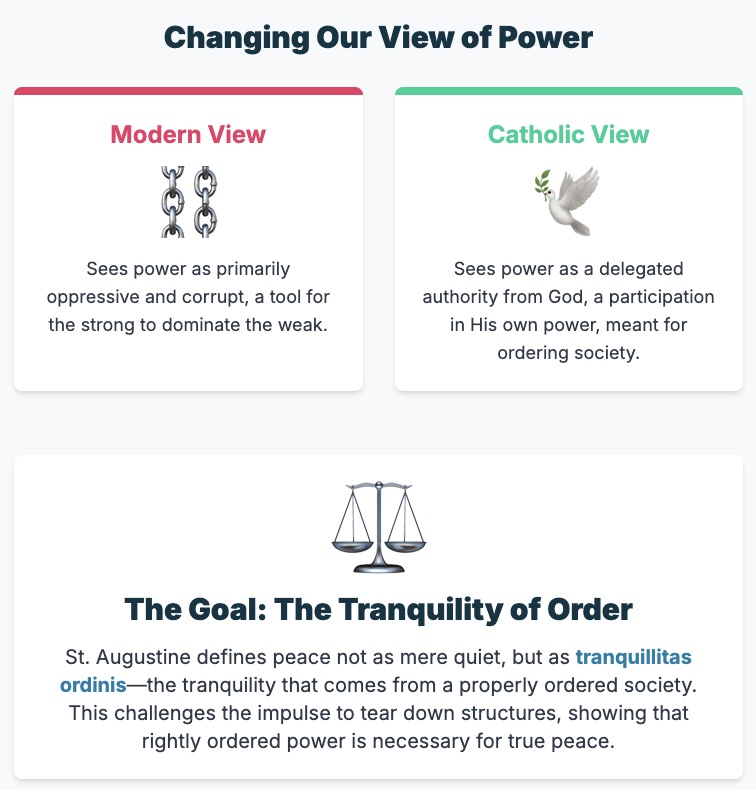
Catholic social teaching advocates for a balanced view of power and authority, cautioning against both the demonization and divinization of those in power, and instead promoting a responsible and caring exercise of authority, particularly for the benefit of the poor and marginalized.
Click to enlarge
Discussion Questions:
- Bishop Barron contrasts the modern view of power as primarily oppressive (from Nietzsche and Foucault) with the Catholic view of power as a delegated authority from God. How does this Catholic perspective change how we view our political institutions and leaders?
- St. Augustine defined peace as tranquillitas ordinis—the tranquility that comes from a properly ordered society. How does this idea challenge modern slogans like "Defund the Police" or the impulse to tear down existing structures?
- Bishop Barron suggests that our very salvation can be predicated on the orderliness of society. In what ways can a just and tranquil social order help or hinder our ability to live a good moral life?
Click to enlarge
Discussion Questions:
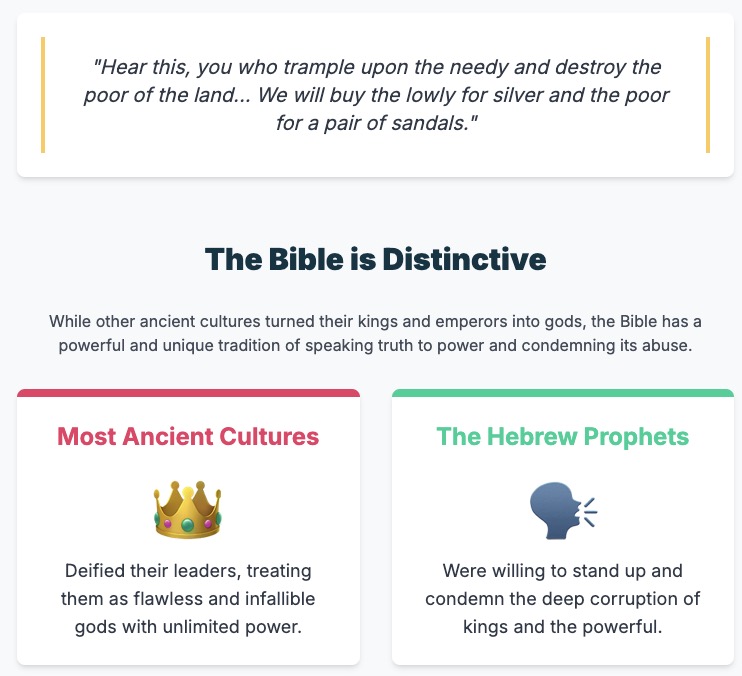
- Bishop Barron notes that unlike other ancient cultures that deified their rulers, the Bible has a strong tradition of "speaking truth to power." Why is this prophetic critique so essential to authentic faith?
- The prophet Amos condemns specific forms of economic corruption like fixing scales and cheating with currency. What are some modern equivalents of these practices in our own economic system?
- Amos's words are meant to "bug you." In what ways does our current economic system prioritize profit over the care for the poor and marginalized? How are we personally complicit in this?
Click to enlarge
Discussion Questions:
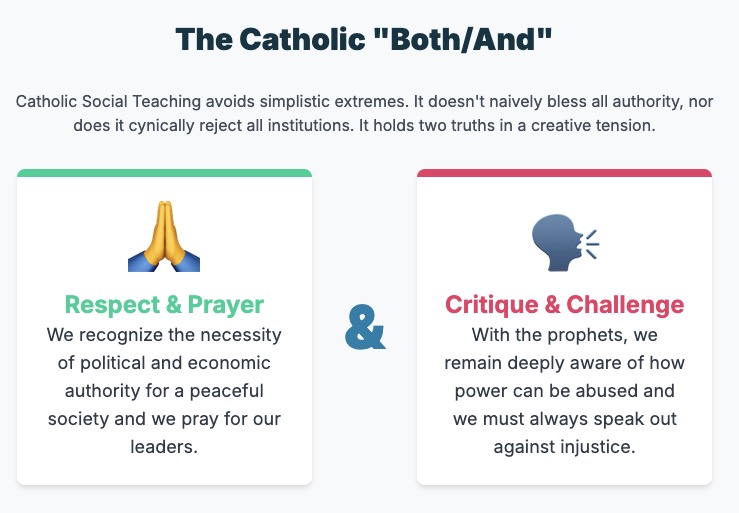
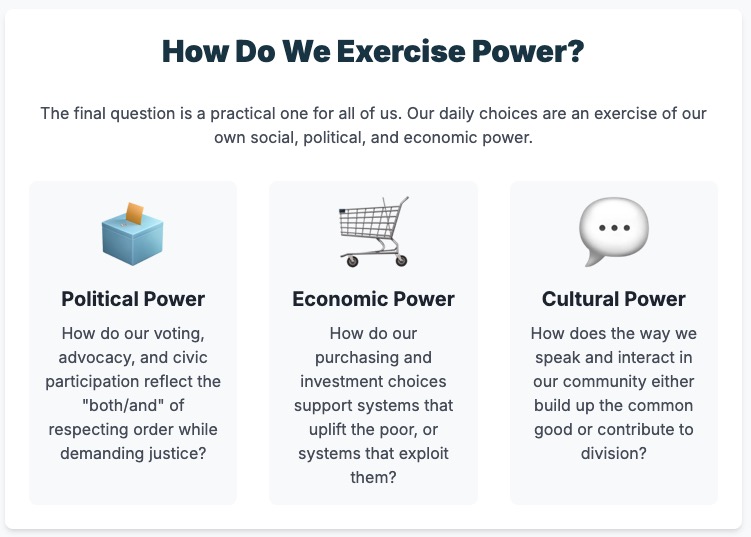
- How can we as individuals and as a Church live out this "both/and" teaching—simultaneously praying for our leaders as St. Paul commands, while also challenging injustice as the prophet Amos commands?
- Bishop Barron asks the final question: "How do we relate to power in our society? How do we exercise it?" How do your daily choices (voting, purchasing, speaking) reflect your relationship with political and economic power?
- How does the Sunday Mass itself model this "beautiful balance" through the combination of the scriptural readings (which often critique injustice) and the Prayers of the Faithful (which obligate us to pray for civil leaders)?

The Use and Abuse of Power
Catholic social teaching addresses power in society, stressing that it isn’t inherently negative, as God is all-powerful. However, how power is utilized matters. The Church focuses on justice, human dignity, and common good, recognizing power’s potential for positive and negative outcomes, emphasizing the need for ethical decision-making.
Click to enlarge
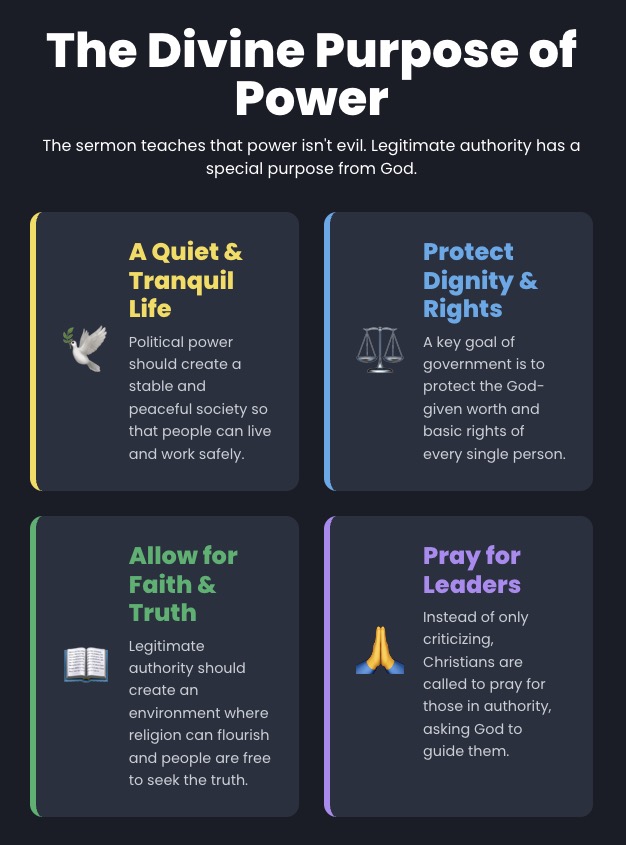
The sermon first establishes that power, in itself, is not evil. Citing St. Paul's Letter to Timothy, it argues that legitimate authority participates in God's own power and has a divine purpose: to create a stable and just society where human beings can flourish and find salvation.
Discussion Questions:
- Before this sermon, what was your initial reaction to the idea of "power"? Did you tend to view it more negatively (as oppression) or positively (as a tool for good)?
- St. Paul urges prayers "for kings, and for all in authority." In a modern, often cynical political climate, why might this instruction feel surprising or difficult? What does it mean to pray for a leader with whom you strongly disagree?
- The sermon states the purpose of government is to allow for a "quiet and tranquil life in all devotion and dignity." What does a tranquil and dignified life look like in our community today? What are the biggest threats to it?
- How can a government either help or hinder its citizens' ability "to be saved and to come to knowledge of the truth"? Can you think of historical or current examples?
Click to enlarge
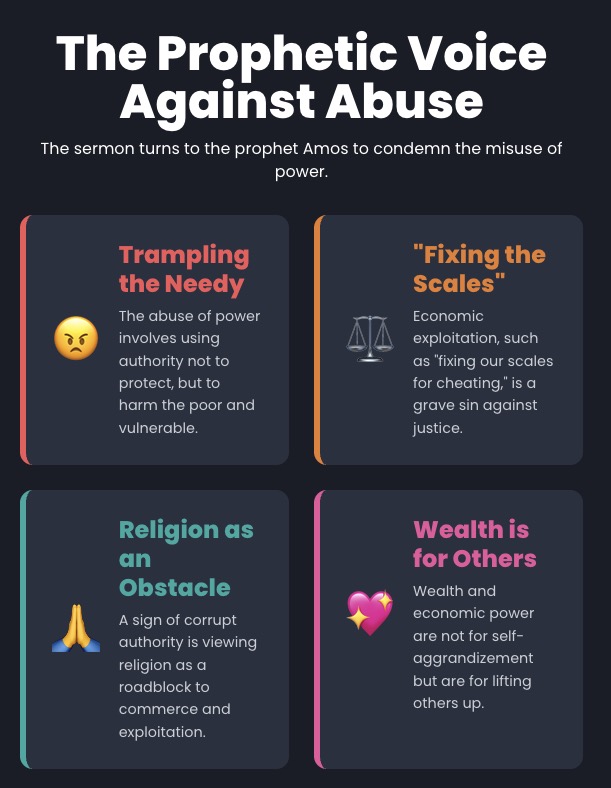
After establishing the good of power, the sermon turns to the fiery prophet Amos to present the other side of Catholic teaching: a sharp and uncompromising condemnation of the abuse of power. When authority is used not to protect but to harm, the Church must raise a prophetic voice for social justice.
Discussion Questions:
- Amos speaks with fiery anger against injustice. When is anger a righteous and necessary response to what is happening in the world?
- The prophet condemns those who "fix our scales for cheating." What are some modern, sophisticated ways that economic systems can be "fixed" or "gamed" to the disadvantage of the poor?
- The sermon quotes Pope Leo XIII: "Once the demands of necessity and propriety have been met in your own life, everything else you own belongs to the poor." How does this statement challenge our modern understanding of ownership, charity, and wealth?
- How can a government or leader succeed in providing "tranquility" (from Part 1) while still being guilty of "trampling upon the needy" (from Part 2)? Why is it important for the Church to address both aspects?
Click to enlarge
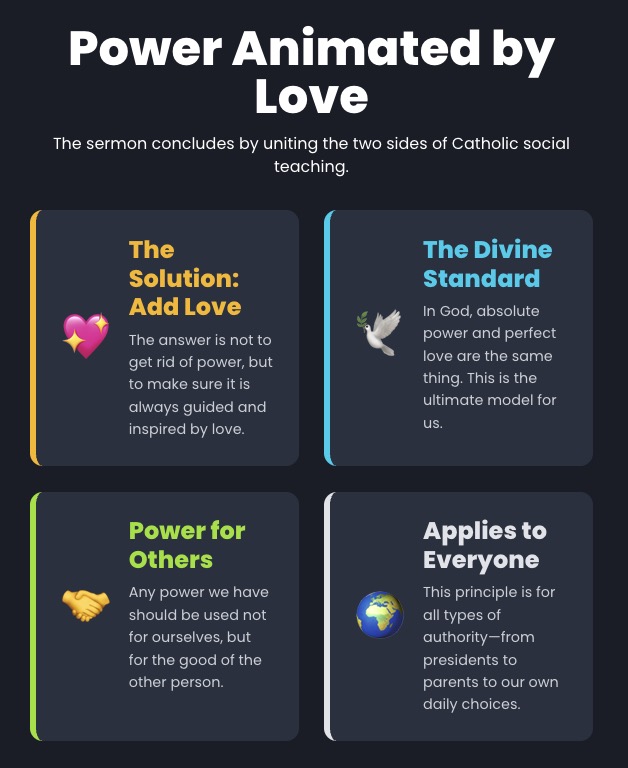
The guide concludes by uniting the two perspectives. The key to Catholic social teaching is ensuring that all power—political and economic—is animated by love. The ultimate model is God, in whom absolute power and perfect love are one and the same.
Discussion Questions:
- What does it practically mean for power to be "animated by love"? Can you describe what a politician, a business owner, or a parent acting with love-animated power would look like?
- The sermon challenges us to consider the power we "legitimately exercise." In what areas of your own life do you have power (e.g., at work, in your family, in your community, as a consumer)?
- Reflecting on those areas, what is one concrete step you could take this week to ensure your power is more fully "animated by love" and used for the good of others?
- After considering both St. Paul's call to respect authority and Amos's critique of injustice, how has your understanding of the Christian's role in society changed or deepened?
Father Geoffrey Plant
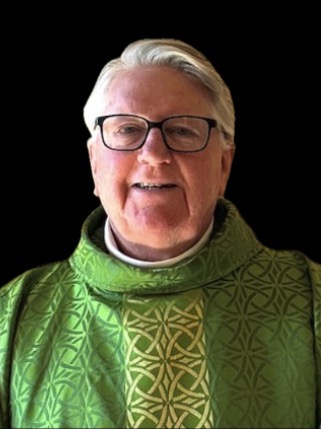
25th Sunday of Year C

God or Money
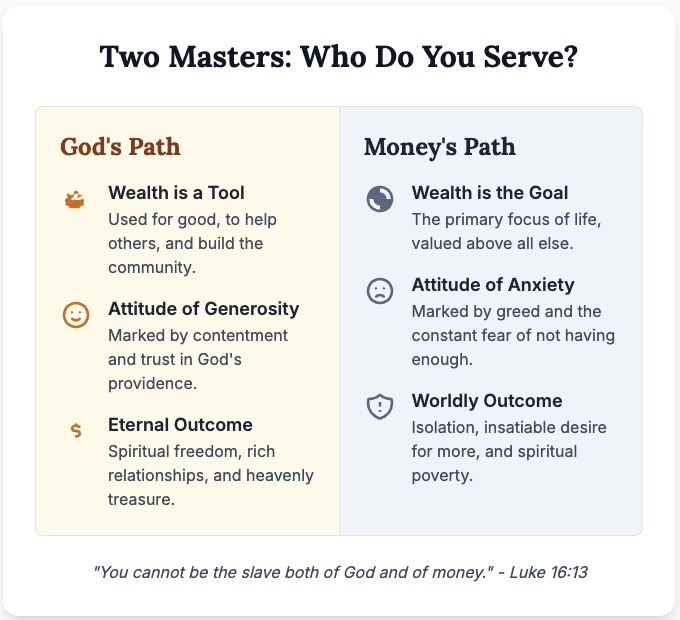
A key theme in Luke’s Gospel is concern for the poor. The Infancy Narrative, functioning as an overture, sounds notes that resonate throughout the entire Gospel. In today’s Gospel we are warned: You cannot be the slave both of God and of money.

Click to enlarge
The Great Reversal - God's Upside-Down Kingdom
The readings from Amos and Luke powerfully contrast the world's values with God's. Amos condemns the wealthy who exploit the poor and can't wait for the Sabbath to end to resume their greedy business. Luke's Gospel consistently champions the poor and lowly, promising that in God's Kingdom, the last will be first and the hungry will be filled.
Discussion Questions:
- Fr. Plant highlights Luke's version of the Beatitudes: "Blessed are you who are poor," not just "poor in spirit." Why do you think this literal focus on the materially poor is so central to Luke's Gospel? How does it challenge those of us who live in relative comfort?
- Amos describes people who see the Sabbath as a burden that gets in the way of making a profit. In what ways might we, in our modern culture, view rest, prayer, or worship as an "interruption" to more "productive" activities?
- The homily speaks of God's Kingdom as a "complete reversal of the world's values." Where do you see the world's values as being "upside-down"? What is one practical step we could take as a community to live by God's "right-way-up" code?

Click to enlarge
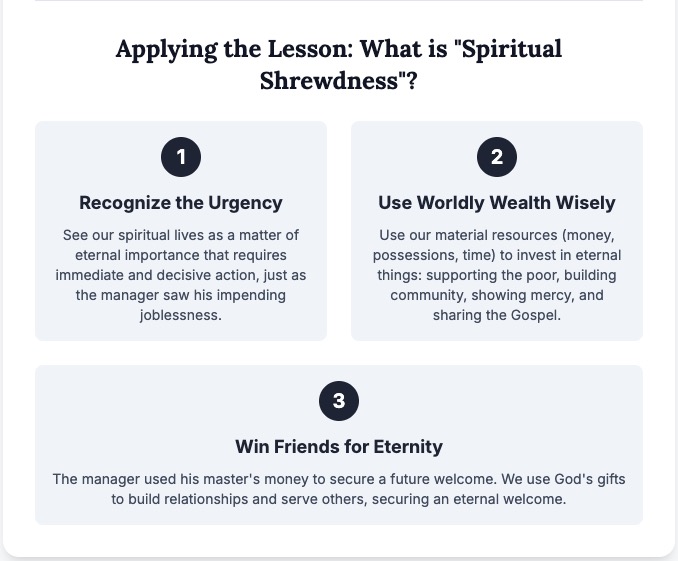
Theme 2: The Parable of the Shrewd Manager
This is one of Jesus' most difficult parables. A manager, about to be fired for mismanagement, cleverly reduces the debts of his master's debtors to secure his own future. Surprisingly, the master commends him for his "astuteness" or "shrewdness."
Discussion Questions:
- What is your initial reaction to this parable? Why do you think many people find it confusing that Jesus seems to use a dishonest person as an example?
- Fr. Plant emphasizes that the manager is praised not for his dishonesty, but for his decisive and shrewd action in a crisis. The lesson is for us to be just as astute and resolute in our pursuit of the Kingdom of God. What does it mean to be "spiritually shrewd"?
- The manager used his position and his master's wealth to secure a worldly future. Jesus tells his disciples to use worldly wealth ("dishonest mammon") to secure an eternal future. What are some concrete ways we can use our material resources (money, possessions, time) to "win friends for eternity"?
- The manager recognized his crisis and acted with urgency. What are the "spiritual crises" or moments of truth in our own lives that demand a similar urgency and decisive action?

Click to enlarge
Money the Warner - Our Relationship with Wealth
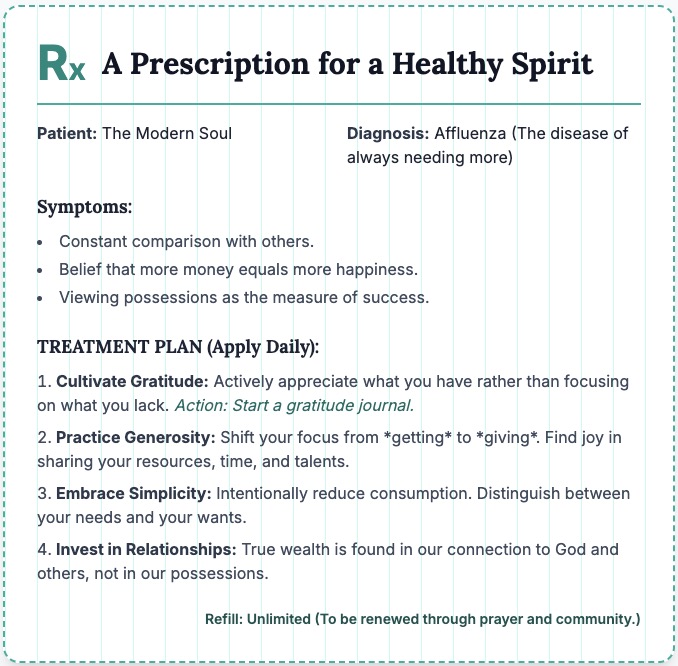
Fr. Plant concludes with a fascinating look at the origin of the word "money," tracing it to "Juno Moneta" (Juno the Warner), because the goddess's sacred geese warned of an attack on Rome's mint. The very word contains a warning.
Discussion Questions:
- Jesus gives a stark warning: "You cannot be the slave both of God and of money." What does it look like for a person to be a "slave to money"? Conversely, what does a healthy, free, and God-centered relationship with wealth and possessions look like?
- The homily mentions "Affluenza," the modern "disease" of always needing more. How can we cultivate a spirit of contentment and gratitude in a culture that constantly pushes for more consumption?
- If you had to write a "warning label" on a banknote, based on the Gospel message, what would it say?
Father Kevin Rettig

25th Sunday of Year C

God is Greater
This homily uses a powerful story to ask what we allow to become our master. It explores how greed, fear, and obsession enslave us, revealing that true freedom comes from grasping that God is always greater.
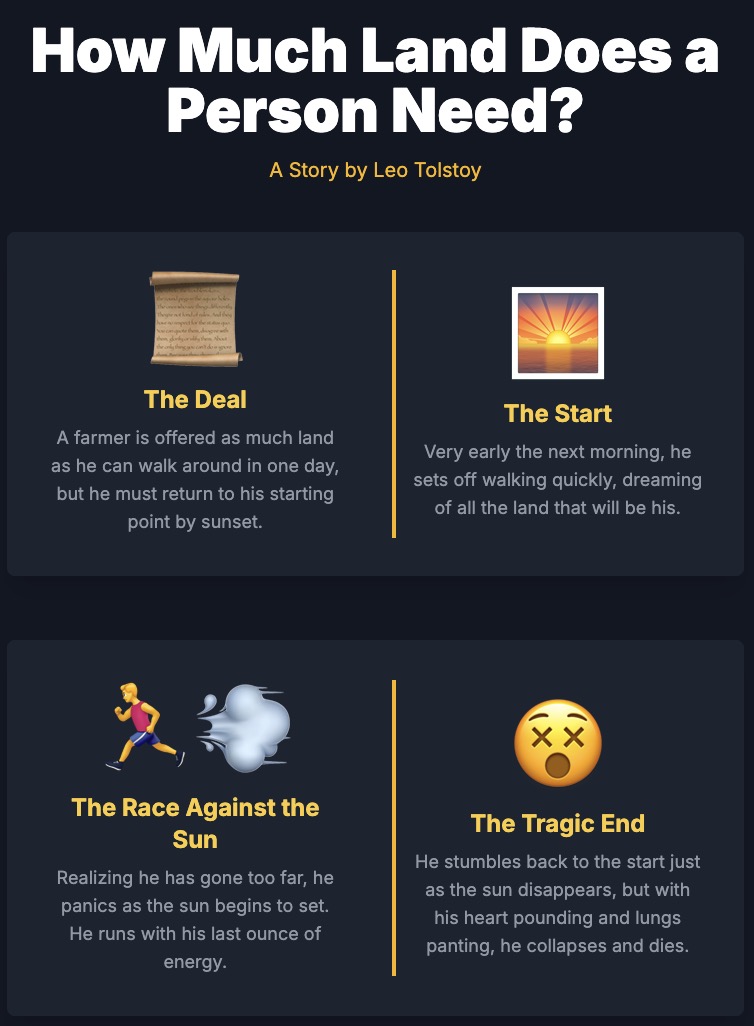
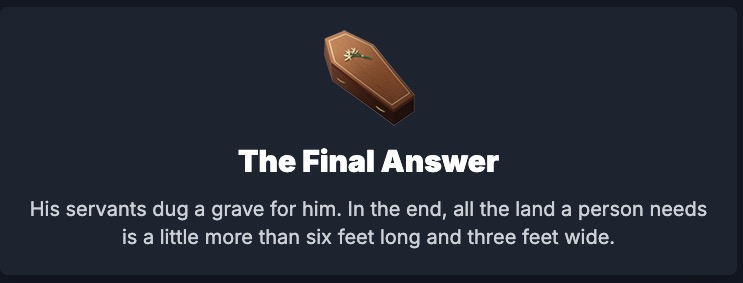
Click to enlarge
Discussion Questions:
- What does the tragic end of Tolstoy's farmer reveal about the nature of insatiable desire and the pursuit of "more"?
- The homilist asks, "How much of anything do we need?" How does our modern consumer culture answer that question for us, and how does that contrast with a Christian perspective?
- Think about a time you relentlessly pursued more of something (possessions, status, achievement). Did achieving it bring lasting satisfaction, or did it echo the farmer's experience?


Click to enlarge
Discussion Questions:
- The homilist lists several potential "masters": greed, technology, pain, fear, and even obsession with petty doctrines. Which of these do you see as most powerful in our culture today? Which one is the biggest temptation for you personally?
- Discuss the quote: "We are all born to love people and use things. Unfortunately we grow to love things and use people." How have you seen this inversion play out in society or in your own life?
- Pope Francis is quoted as warning against obsession with "petty doctrine." How can something seemingly good, like religious rules, become a "master" that blinds us to what truly matters?

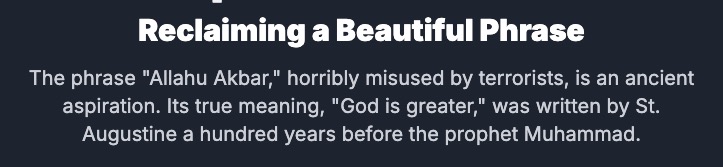
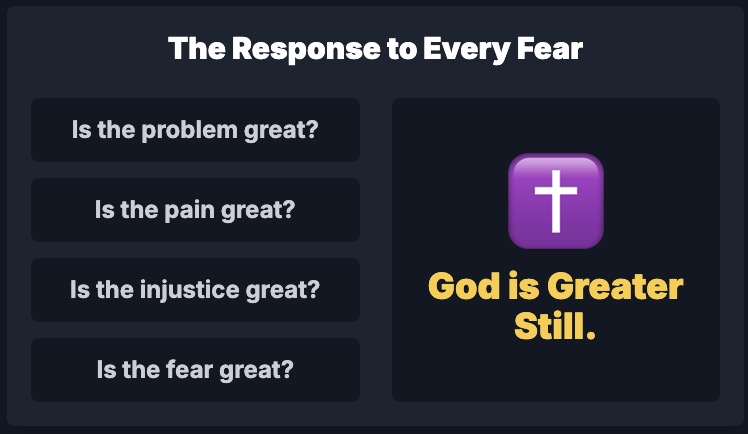
Click to enlarge
Discussion Questions:
- How does shifting the meaning of the prayer from "God is great" to "God is greater" change its power, especially when you are facing a specific problem, pain, or fear?
- When you are faced with a challenge that feels overwhelming, what is your typical first reaction? How might repeating "God is greater" as a mantra change that initial response?
- The homily concludes, "when at last we grasp the hand of the greater... Then we see that nothing can enslave us." What does it practically

Stewards of Creation
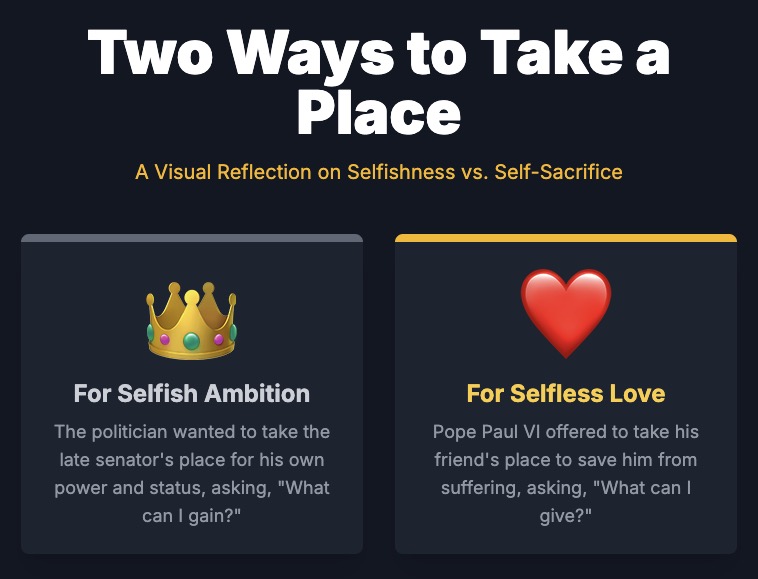
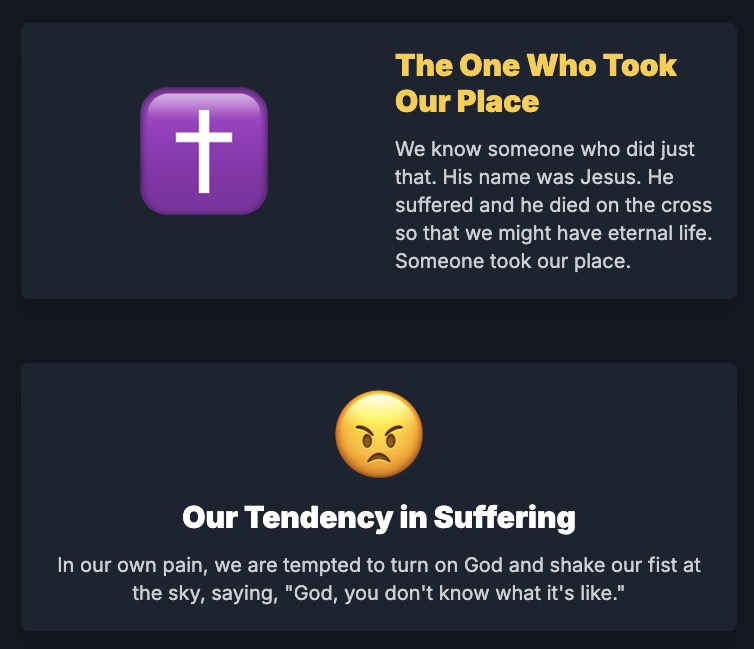
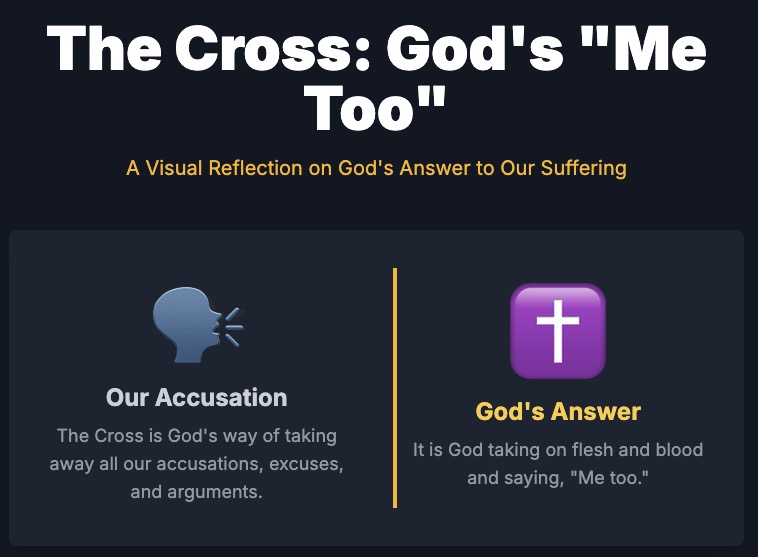
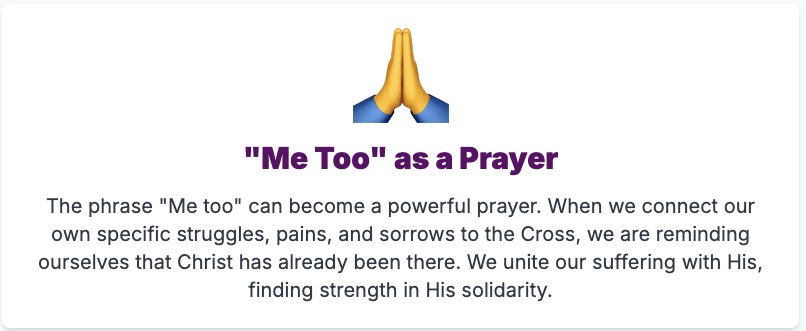
Nothing we have truly belongs to us. But we must care for it and pass it on.




Monsignor Peter Hahn
25th Sunday of Year C
Christians Are To Live
with Integrity

No Servant Can Serve
Two Masters
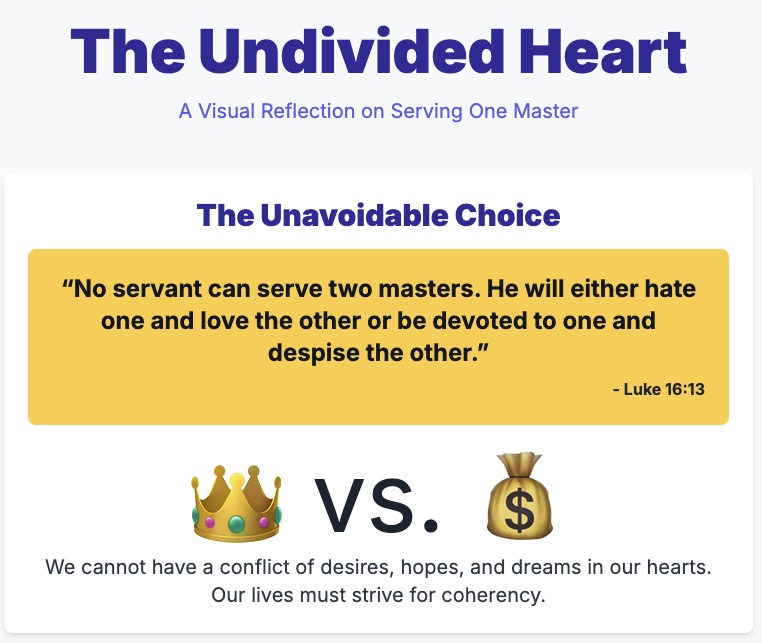
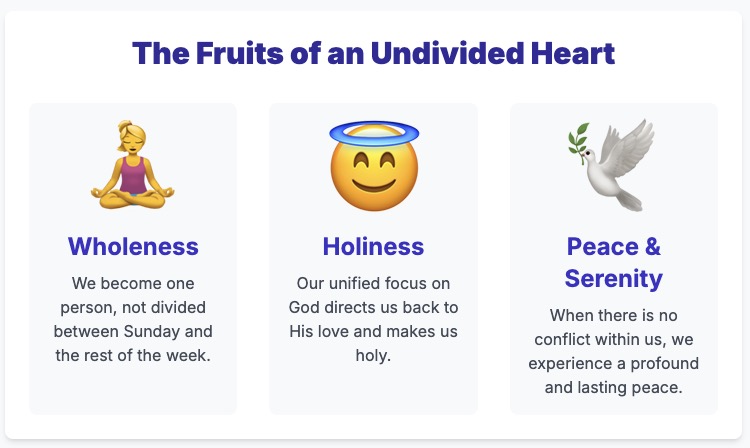
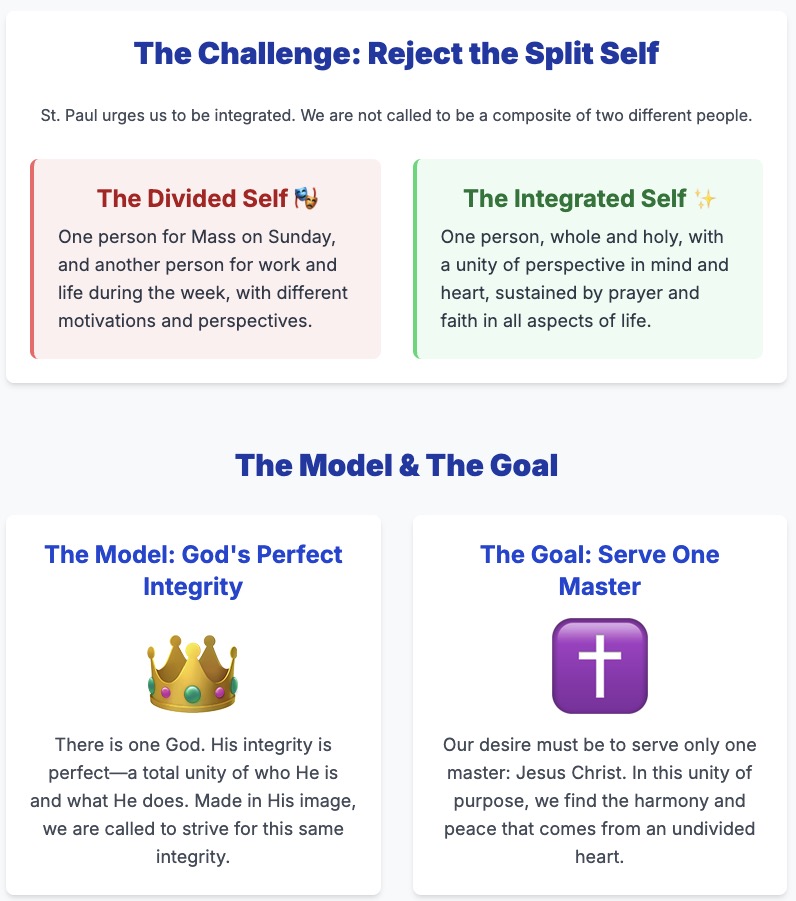
This homily calls us to have an undivided heart, stressing the impossibility of serving two masters. It explores true integrity, contrasts God’s merciful ways with human hypocrisy, and challenges us to be whole and holy.

Click to enlarge
Discussion Questions:
- The homilist speaks of a "conflict of desires" in our hearts. In what areas of modern life do you find it most difficult to serve only one master, God?
- What does "integrity" mean to you in a practical, day-to-day sense? Can you share an example of when you've seen this consistency between interior belief and exterior action in someone?
- The homily suggests that having an undivided heart and integrity leads to "peace and a serenity." Why do you think a lack of inner conflict brings about such peace?



Click to enlarge
Discussion Questions:
- The homilist contrasts the parables of God's unconditional mercy (Lost Sheep, Prodigal Son) with the human tendency toward sin and hypocrisy. How does remembering God's immense mercy help you combat your own moments of hypocrisy?
- The prophet Amos decries people who appear religious but are corrupt in their business dealings. What are some modern equivalents of "fixing the scales for cheating" while still claiming to be moral?
- The homily states that in sin, we "try to rationalize what is always irrational." Why do you think we are so prone to justifying our own wrongdoings?
Click to enlarge
Discussion Questions:
- What are the biggest pressures or temptations that cause a split between our "Sunday self" and our "rest-of-the-week self"?
- The homilist says we are called to have "one focus that we always strive to act following." What practical steps can a person take to cultivate this kind of single-minded focus on God throughout a busy week?
- How does being part of a faith community help us live with greater integrity and be "one person" in all aspects of our lives?
Frank Pavone
25th Sunday of Year C

Jesus, Justice, and
the Unborn
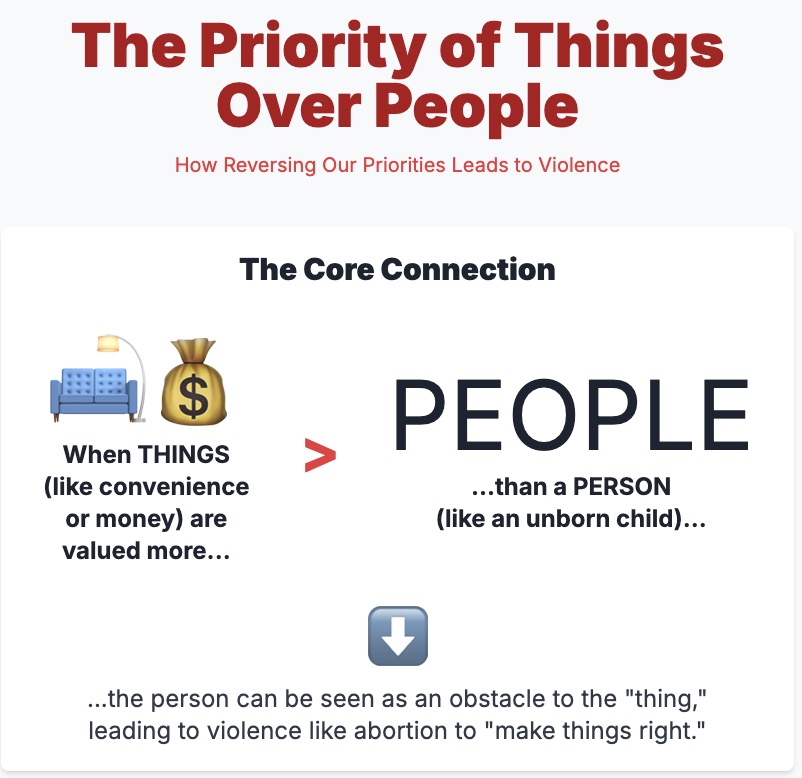
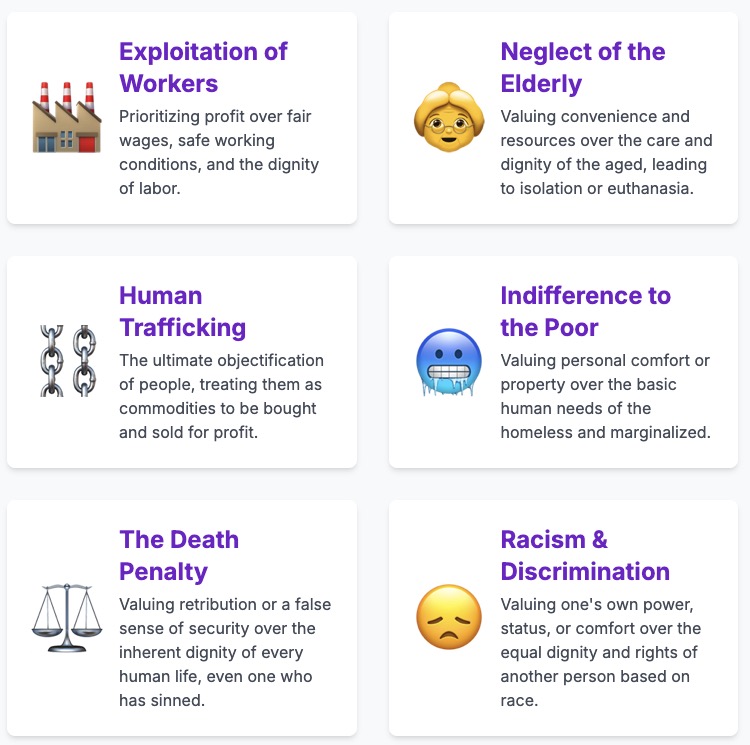
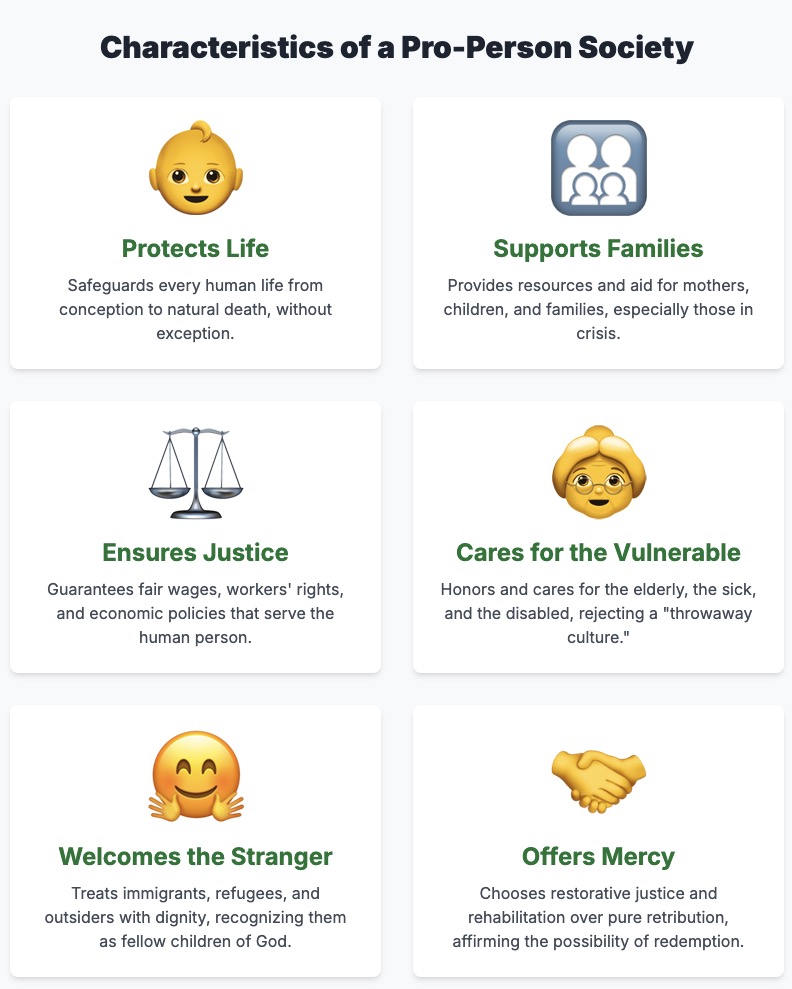
This reflection explains how the Incarnation connects our use of earthly things to our salvation. It reveals that prioritizing people over money is a core Christian truth that builds a culture of life.
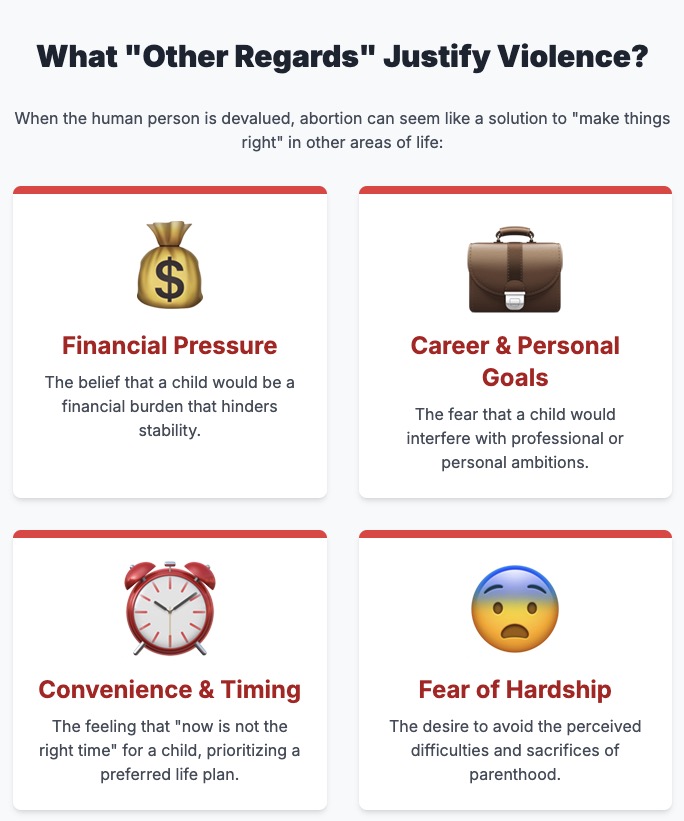
Click on infographics to enlarge them
Discussion Questions:
- How does the reality of the Incarnation—God becoming a physical human being—challenge the idea of separating our "spiritual life" from our daily, material life (work, finances, etc.)?
- What does it mean to make "proper use of the things of earth"? Can you share a practical example where using a material good properly or improperly impacted a relationship with God or others?
- Why do you think some people find it easier to focus on a "detached spiritual realm" rather than engaging with the messy reality of using earthly things for God's glory?

Discussion Questions:
- The reflection states that economies and governments exist for people, not the other way around. Where in our society do you see this principle being lived out well? Where do you see it being reversed?
- Describe a situation where you've seen someone's human dignity ignored for the sake of profit or efficiency. How does that "harm our relationship with God," as the homilist suggests?
- How can we personally apply the "priority of people over things" in our workplaces, our families, and our consumer choices this week?
Discussion Questions:
- Frank Pavone connects the "priority of things over people" directly to violence like abortion. Can you explain this connection in your own words? What "other regard" might lead someone to believe abortion will "make things right"?
- Besides abortion, what other forms of violence or "rejection of the human person" can happen when a society values things (like convenience, wealth, or power) more than people?
- The reflection concludes, "Only in the affirmation of the person can we ever find the path to God." What does a society that consistently "affirms the person" look like? What is one step our community could take to become more like that?
TIP: To make the most of the resources on this page start a video and allow it to play as you explore the infographics and reflection questions which were generated using Google Gemini 2.5 AI tools (w/ Chart.js and Tailwind CSS). Feel free to use them in any non-profit ministry. A Link or shoutout to THE WORD THIS WEEK would be greatly appreciated.