Papal Homilies
March 8, 2026
April 5, 2026
Easter Sunday

⬅️  ➡️
➡️

Theme of the Readings
Christ arose from the dead! This is the mystery we are celebrating today. The whole liturgy summarizes it in an important way: “Three days afterwards God raised him to life,” Peter preaches to Cornelius and to his entire household (first reading). For Paul the resurrection of Jesus Christ – the Christian awareness of this mystery – is the basis of all Christian ethics, and so invites us to think and seek heavenly and not earthly things (second reading). In the Gospel, taken from Chapter 20 of St. John, the whole narrative focuses on the empty tomb, but only in order to make the “beloved disciple’s” faith in the resurrection more prominent, since according to the Scriptures, Jesus must rise from the dead (Gospel).
SOURCE: YEAR A DICASTERY NOTES (2004-05)
Doctrinal Message
The first point to be noted is that we are facing a mystery. A mystery surprises and surpasses us. It is something that, without being irrational, breaks down the barriers of human reason and goes beyond our system of understanding reality. It is something grasped better by the heart and by faith, and less by reason and the intellect. It is something that brings with it a certain obscurity and does not let us dominate or manipulate it, however much we may desire to do so. Finally, it is something that is “there” in human life, intangible, sovereign and impressive. While we realize that “the mystery,” any mystery but most particularly this mystery of Jesus’ resurrection, regards us personally and we cannot pretend not to know about it. It would be something like pretending not to know of the reference point and coherence of our own life or our own happiness. A mystery from which the human person cannot “escape” without seriously jeopardizing himself, without harming his very being.
We add that it is good and very positive for people “to touch” or to be touched by this mystery. One could perhaps think that by being a mystery it humiliates us, damages our dignity, takes away our autonomy and greatness, topples us from the pedestal of reason and leads us down the blind alley of credulity. There is nothing more mistaken! Man’s confrontation with mystery, that is, with what transcends his experience of things and persons, is a sign of his origins in nothing that is purely earthly, and of his vocation to something superior than to a mere world of dust and ashes. Ultimately, the mystery reminds, recalls, and revives in the human being the place he comes from, his task in the world, his destination and his destiny. Is this not the greatness of the human person as compared with any other of the world’s creatures?
Today we are celebrating the mystery of the living Christ, the victory of life over death and the tomb, of the pledge and guarantee of our eternal life, hidden with Christ in God. This mystery was not bequeathed to us by history’s greatest thinkers or by the most intuitive mystics of the religion. Nor does it inform us of the magicians and shamans of every kind and of every epoch. This mystery was revealed to us by the witness of “those who saw and believed.” It is not the result of human effort, but the testimony of a startling experience that marked his life forever. As a witness one cannot demonstrate, one simply believes or does not believe. But a testimony, rendered credible in addition by martyrdom, is rational whether or not we accept it. This is why the resurrection of Jesus Christ is a mystery of faith but fully rational and credible and highly important to the life of the human person in this world.
SOURCE: YEAR A DICASTERY NOTES (2004-05)
Pastoral Suggestions
In catechesis and pastoral work during the Easter season, it can be interesting to give young people and adults a good explanation of the concept and meaning of mystery. We do this, on the one hand to avoid fideism and outright fundamentalism. On the other, we want to prevent mystery from being conceived as something irrational, for primitive or childish people, or for the psychologically weak, as something totally inappropriate for the person of today who is intellectually mature. Re-examining the concept of mystery with the faithful, in clear and unabridged terms, is important if one is to approach the great mysteries of Christian life with faith and with reason.
In this catechesis, I believe two most important dimensions should be emphasized. First, mystery is rational, however far it reaches beyond the bounds of reason. Reason will say: “This is out of my reach, but it is not contradictory nor contrary to the essential laws of thinking, and there are perceptible elements that make it rational.” Second, mystery is important for human persons. If they do not grasp that it has much to do with their life, that this mystery can change life’s direction, they will pay no attention to it and put store it away in the closet. Instead, if they see their life is affected, “touched” by mystery, then it will be a constant reference point, something vital that penetrates their whole being and is manifest in all their work. In the every day life of Christians, of parishioners, is the mystery of the resurrection of Jesus Christ important? How can it be made really important for everyone?
SOURCE: YEAR A DICASTERY NOTES (2004-05)
Infographics (visual aids) on this page were designed using Nano Banana Pro with Gemini 3.0. They draw inspiration from the 2004-05 Dicastery for the Clergy Notes (YEAR A | B | C cf. text above), but are not officially associated with or endorsed by the Holy See. They may be copied for personal use or for use in any non-profit ministry (e.g. parish bulletin inserts, classroom or group presentation, posters on community bulletin boards, etc.)
Easter Vigil in the Holy Night of Easter
8 April 2023 – Saint Peter’s Basilica
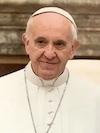
The night is drawing to a close and the first light of dawn is appearing upon the horizon as the women set out toward Jesus’ tomb. They make their way forward, bewildered and dismayed, their hearts overwhelmed with grief at the death that took away their Beloved. Yet upon arriving and seeing the empty tomb, they turn around and retrace their steps. They leave the tomb behind and run to the disciples to proclaim a change of course: Jesus is risen and awaits them in Galilee. In their lives, those women experienced Easter as a Pasch, a passage. They pass from walking sorrowfully towards the tomb to running back with joy to the disciples to tell them not only that the Lord is risen, but also that they are to set out immediately to reach a destination, Galilee. There they will meet the Risen Lord. The rebirth of the disciples, the resurrection of their hearts, passes through Galilee. Let us enter into this journey of the disciples from the tomb to Galilee.
The Gospel tells us that the women went “to see the tomb” (Mt 28:1). They think that they will find Jesus in the place of death and that everything is over, forever. Sometimes we too may think that the joy of our encounter with Jesus is something belonging to the past, whereas the present consists mostly of sealed tombs: tombs of disappointment, bitterness and distrust, of the dismay of thinking that “nothing more can be done”, “things will never change”, “better to live for today”, since “there is no certainty about tomorrow”. If we are prey to sorrow, burdened by sadness, laid low by sin, embittered by failure or troubled by some problem, we also know the bitter taste of weariness and the absence of joy.
At times, we may simply feel weary about our daily routine, tired of taking risks in a cold, hard world where only the clever and the strong seem to get ahead. At other times, we may feel helpless and discouraged before the power of evil, the conflicts that tear relationships apart, the attitudes of calculation and indifference that seem to prevail in society, the cancer of corruption – there is a great deal of it, the spread of injustice, the icy winds of war. Then too, we may have come face to face with death, because it robbed us of the presence of our loved ones or because we brushed up against it in illness or a serious setback. Then it is easy to yield to disillusionment, once the wellspring of hope has dried up. In these or similar situations – each of us knows our own plights, our paths come to a halt before a row of tombs, and we stand there, filled with sorrow and regret, alone and powerless, repeating the question, “Why?” That chain of “why”…
The women at Easter, however, do not stand frozen before the tomb; rather, the Gospel tells us, “they went away quickly from the tomb, fearful yet overjoyed, and ran to announce this to his disciples” (v. 8). They bring the news that will change life and history forever: Christ is risen! (v. 6). At the same time, they remember to convey the Lord’s summons to the disciples to go to Galilee, for there they will see him (cf. v. 7). Let us ask ourselves today, brothers and sisters: what does it mean to go to Galilee? Two things: on the one hand, to leave the enclosure of the Upper Room and go to the land of the Gentiles (cf. Mt 4:15), to come forth from hiding and to open themselves up to mission, to leave fear behind and to set out for the future. On the other hand, and this is very beautiful, to return to the origins, for it was precisely in Galilee that everything began. There the Lord had met and first called the disciples. So, to go to Galilee means to return to the grace of the beginnings, to regain the memory that regenerates hope, the “memory of the future” bestowed on us by the Risen One.
This, then, is what the Pasch of the Lord accomplishes: it motivates us to move forward, to leave behind our sense of defeat, to roll away the stone of the tombs in which we often imprison our hope, and to look with confidence to the future, for Christ is risen and has changed the direction of history. Yet, to do this, the Pasch of the Lord takes us back to the grace of our own past; it brings us back to Galilee, where our love story with Jesus began, where the first call took place. In other words, it asks us to relive that moment, that situation, that experience in which we met the Lord, experienced his love and received a radiantly new way of seeing ourselves, the world around us and the mystery of life itself. Brothers and sisters, to rise again, to start anew, to take up the journey, we always need to return to Galilee, that is, to go back, not to an abstract or ideal Jesus, but to the living, concrete and palpable memory of our first encounter with him. Yes, to go forward we need to go back, to remember; to have hope, we need to revive our memory. This is what we are asked to do: to remember and go forward! If you recover that first love, the wonder and joy of your encounter with God, you will keep advancing. So remember, and keep moving forward.
Remember your own Galilee and walk towards it, for it is the “place” where you came to know Jesus personally, where he stopped being just another personage from a distant past, but a living person: not some distant God but the God who is at your side, who more than anyone else knows you and loves you. Brother, sister, remember Galilee, your Galilee, and your call. Remember the Word of God who at a precise moment spoke directly to you. Remember that powerful experience of the Spirit; that great joy of forgiveness experienced after that one confession; that intense and unforgettable moment of prayer; that light that was kindled within you and changed your life; that encounter, that pilgrimage… Each of us knows where our Galilee is located. Each of us knows the place of his or her interior resurrection, that beginning and foundation, the place where things changed. We cannot leave this in the past; the Risen Lord invites us to return there to celebrate Easter. Remember your Galilee. Remind yourself. Today, relive that memory. Return to that first encounter. Think back on what it was like, reconstruct the context, time and place. Remember the emotions and sensations; see the colours and savour the taste of it. For it is when you forgot that first love, when you failed to remember that first encounter, that the dust began to settle on your heart. That is when you experienced sorrow and, like the disciples, you saw the future as empty, like a tomb with a stone sealing off all hope. Yet today, brother, sister, the power of Easter summons you to roll away every stone of disappointment and mistrust. The Lord is an expert in rolling back the stones of sin and fear. He wants to illuminate your sacred memory, your most beautiful memory, and to make you relive that first encounter with him. Remember and keep moving forward. Return to him and rediscover the grace of God’s resurrection within you! Return to Galilee. Return to your Galilee.
Dear brothers and sisters, let us follow Jesus to Galilee, encounter him and worship him there, where he is waiting for each of us. Let us revive the beauty of that moment when we realized that he is alive and we made him the Lord of our lives. Let us return to Galilee, the Galilee of our first love. Let each of us return to his or her own Galilee, to the place where we first encountered him. Let us rise to new life!
23 April 2011 | St Peter’s Basilica

The liturgical celebration of the Easter Vigil makes use of two eloquent signs. First there is the fire that becomes light. As the procession makes its way through the church, shrouded in the darkness of the night, the light of the Paschal Candle becomes a wave of lights, and it speaks to us of Christ as the true morning star that never sets – the Risen Lord in whom light has conquered darkness. The second sign is water. On the one hand, it recalls the waters of the Red Sea, decline and death, the mystery of the Cross. But now it is presented to us as spring water, a life-giving element amid the dryness. Thus it becomes the image of the sacrament of baptism, through which we become sharers in the death and resurrection of Jesus Christ.
Yet these great signs of creation, light and water, are not the only constituent elements of the liturgy of the Easter Vigil. Another essential feature is the ample encounter with the words of sacred Scripture that it provides. Before the liturgical reform there were twelve Old Testament readings and two from the New Testament. The New Testament readings have been retained. The number of Old Testament readings has been fixed at seven, but depending upon the local situation, they may be reduced to three. The Church wishes to offer us a panoramic view of whole trajectory of salvation history, starting with creation, passing through the election and the liberation of Israel to the testimony of the prophets by which this entire history is directed ever more clearly towards Jesus Christ. In the liturgical tradition all these readings were called prophecies. Even when they are not directly foretelling future events, they have a prophetic character, they show us the inner foundation and orientation of history. They cause creation and history to become transparent to what is essential. In this way they take us by the hand and lead us towards Christ, they show us the true Light.
At the Easter Vigil, the journey along the paths of sacred Scripture begins with the account of creation. This is the liturgy’s way of telling us that the creation story is itself a prophecy. It is not information about the external processes by which the cosmos and man himself came into being. The Fathers of the Church were well aware of this. They did not interpret the story as an account of the process of the origins of things, but rather as a pointer towards the essential, towards the true beginning and end of our being. Now, one might ask: is it really important to speak also of creation during the Easter Vigil? Could we not begin with the events in which God calls man, forms a people for himself and creates his history with men upon the earth? The answer has to be: no. To omit the creation would be to misunderstand the very history of God with men, to diminish it, to lose sight of its true order of greatness. The sweep of history established by God reaches back to the origins, back to creation. Our profession of faith begins with the words: “We believe in God, the Father Almighty, Creator of heaven and earth”. If we omit the beginning of the Credo, the whole history of salvation becomes too limited and too small. The Church is not some kind of association that concerns itself with man’s religious needs but is limited to that objective. No, she brings man into contact with God and thus with the source of all things. Therefore we relate to God as Creator, and so we have a responsibility for creation. Our responsibility extends as far as creation because it comes from the Creator. Only because God created everything can he give us life and direct our lives. Life in the Church’s faith involves more than a set of feelings and sentiments and perhaps moral obligations. It embraces man in his entirety, from his origins to his eternal destiny. Only because creation belongs to God can we place ourselves completely in his hands. And only because he is the Creator can he give us life for ever. Joy over creation, thanksgiving for creation and responsibility for it all belong together.
The central message of the creation account can be defined more precisely still. In the opening words of his Gospel, Saint John sums up the essential meaning of that account in this single statement: “In the beginning was the Word”. In effect, the creation account that we listened to earlier is characterized by the regularly recurring phrase: “And God said …” The world is a product of the Word, of the Logos, as Saint John expresses it, using a key term from the Greek language. “Logos” means “reason”, “sense”, “word”. It is not reason pure and simple, but creative Reason, that speaks and communicates itself. It is Reason that both is and creates sense. The creation account tells us, then, that the world is a product of creative Reason. Hence it tells us that, far from there being an absence of reason and freedom at the origin of all things, the source of everything is creative Reason, love, and freedom. Here we are faced with the ultimate alternative that is at stake in the dispute between faith and unbelief: are irrationality, lack of freedom and pure chance the origin of everything, or are reason, freedom and love at the origin of being? Does the primacy belong to unreason or to reason? This is what everything hinges upon in the final analysis. As believers we answer, with the creation account and with Saint John, that in the beginning is reason. In the beginning is freedom. Hence it is good to be a human person. It is not the case that in the expanding universe, at a late stage, in some tiny corner of the cosmos, there evolved randomly some species of living being capable of reasoning and of trying to find rationality within creation, or to bring rationality into it. If man were merely a random product of evolution in some place on the margins of the universe, then his life would make no sense or might even be a chance of nature. But no, Reason is there at the beginning: creative, divine Reason. And because it is Reason, it also created freedom; and because freedom can be abused, there also exist forces harmful to creation. Hence a thick black line, so to speak, has been drawn across the structure of the universe and across the nature of man. But despite this contradiction, creation itself remains good, life remains good, because at the beginning is good Reason, God’s creative love. Hence the world can be saved. Hence we can and must place ourselves on the side of reason, freedom and love – on the side of God who loves us so much that he suffered for us, that from his death there might emerge a new, definitive and healed life.
The Old Testament account of creation that we listened to clearly indicates this order of realities. But it leads us a further step forward. It has structured the process of creation within the framework of a week leading up to the Sabbath, in which it finds its completion. For Israel, the Sabbath was the day on which all could participate in God’s rest, in which man and animal, master and slave, great and small were united in God’s freedom. Thus the Sabbath was an expression of the Covenant between God and man and creation. In this way, communion between God and man does not appear as something extra, something added later to a world already fully created. The Covenant, communion between God and man, is inbuilt at the deepest level of creation. Yes, the Covenant is the inner ground of creation, just as creation is the external presupposition of the Covenant. God made the world so that there could be a space where he might communicate his love, and from which the response of love might come back to him. From God’s perspective, the heart of the man who responds to him is greater and more important than the whole immense material cosmos, for all that the latter allows us to glimpse something of God’s grandeur.
Easter and the paschal experience of Christians, however, now require us to take a further step. The Sabbath is the seventh day of the week. After six days in which man in some sense participates in God’s work of creation, the Sabbath is the day of rest. But something quite unprecedented happened in the nascent Church: the place of the Sabbath, the seventh day, was taken by the first day. As the day of the liturgical assembly, it is the day for encounter with God through Jesus Christ who as the Risen Lord encountered his followers on the first day, Sunday, after they had found the tomb empty. The structure of the week is overturned. No longer does it point towards the seventh day, as the time to participate in God’s rest. It sets out from the first day as the day of encounter with the Risen Lord. This encounter happens afresh at every celebration of the Eucharist, when the Lord enters anew into the midst of his disciples and gives himself to them, allows himself, so to speak, to be touched by them, sits down at table with them. This change is utterly extraordinary, considering that the Sabbath, the seventh day seen as the day of encounter with God, is so profoundly rooted in the Old Testament. If we also bear in mind how much the movement from work towards the rest-day corresponds to a natural rhythm, the dramatic nature of this change is even more striking. This revolutionary development that occurred at the very the beginning of the Church’s history can be explained only by the fact that something utterly new happened that day. The first day of the week was the third day after Jesus’ death. It was the day when he showed himself to his disciples as the Risen Lord. In truth, this encounter had something unsettling about it. The world had changed. This man who had died was now living with a life that was no longer threatened by any death. A new form of life had been inaugurated, a new dimension of creation. The first day, according to the Genesis account, is the day on which creation begins. Now it was the day of creation in a new way, it had become the day of the new creation. We celebrate the first day. And in so doing we celebrate God the Creator and his creation. Yes, we believe in God, the Creator of heaven and earth. And we celebrate the God who was made man, who suffered, died, was buried and rose again. We celebrate the definitive victory of the Creator and of his creation. We celebrate this day as the origin and the goal of our existence. We celebrate it because now, thanks to the risen Lord, it is definitively established that reason is stronger than unreason, truth stronger than lies, love stronger than death. We celebrate the first day because we know that the black line drawn across creation does not last for ever. We celebrate it because we know that those words from the end of the creation account have now been definitively fulfilled: “God saw everything that he had made, and behold, it was very good” (Gen 1:31). Amen.
3 April, 1999
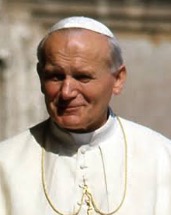
1. “The stone rejected by the builders has become the corner-stone” (Ps 117:22)
On this night, the liturgy speaks to us with all the abundance and wealth of the word of God. This Vigil is not only the heart of the liturgical year, but is in some ways its womb: from it springs all of sacramental life. We could say that on this night the table round which the Church gathers with her children, especially with those who are about to be baptized, has been lavishly prepared.
My thoughts turn to you, dear catechumens, who are soon to be reborn by water and the Holy Spirit (cf. Jn 3:5). With great joy I greet you and the lands from which you come: Albania, Cape Verde, China, France, Morocco and Hungary.
Through Baptism you will become members of the Body of Christ, sharing fully in the mystery of communion found there. May your life be immersed for ever in this Easter mystery, so that you will always be true witnesses to God’s love.
2. Not only you, dear catechumens, but all the baptized are called on this night, in faith, to experience profoundly what we have just heard in the Letter to the Romans: “Do you know that all of us who have been baptized into Christ Jesus were baptized into his death? We were buried therefore with him by Baptism into death, so that as Christ was raised from the dead by the glory of the Father, we too might walk in newness of life” (Rom 6:3-4).
To be Christians means to share personally in the Death and Resurrection of Christ. This sharing is brought about sacramentally by Baptism, upon which, as a solid foundation, the Christian life of each one of us is built. And this is why the Responsorial Psalm urged us to give thanks: “Praise the Lord, for he is good; for his mercy is everlasting… The Lord’s right hand… has worked wonders. I shall not die, I shall live and recount the works of the Lord” (Ps 117:1-2, 16-17). On this holy night, the Church echoes these words of thanksgiving, confessing the truth that Christ “suffered death and was buried; on the third day he rose again” (cf. Creed).
3. “This will be a night of vigil in honour of the Lord…from generation to generation” (Ex 12:42).
These words of the Book of Exodus conclude the account of the departure of the Israelites from Egypt. They resound with special eloquence during the Easter Vigil, from which they draw their full meaning. In this year dedicated to God the Father, how can we fail to think of this night, Easter night, as the great night of the Father’s “vigil”? This watch by God embraces to the entire Easter Triduum. But in a special way the Father keeps watch during Holy Saturday, while the Son lies dead in the tomb. The mystery of Christ’s victory over the sin of the world is kept safe precisely by the Father’s watching. He watches over the whole earthly mission of the Son. His infinite compassion reaches its summit in the hour of passion and death: the hour when the Son is abandoned, so that the sons and daughters might be saved; when the Son is despised and rejected, so that the sons and daughters might be found once again; when the Son dies, so that the sons and daughters may find new life.
The Father’s watch explains the Resurrection of the Son: even in the hour of death, the bond of love in God does not fail; nor does the Holy Spirit who, poured out by the dying Jesus on the Cross, fills with light the darkness of evil and raises Jesus from the dead, designating him as Son of God in power and glory (cf. Rom 1:4).
4. “The stone rejected by the builders has become the corner-stone” (Ps 117:22). In the light of Christ’s Resurrection, how wonderfully we see in all its fullness the truth of which the Psalmist sings! Condemned to a shameful death, the Son of Man, crucified and risen, has become the corner-stone of the Church’s life and of the life of every Christian.
“This is the work of the Lord: a marvel in our eyes” (Ps 117:23). It happened on this holy night. The women recognized it when, “the day after the Sabbath while it was still dark” (Jn 20:1), they went to the tomb to anoint the body of the Lord and found the tomb empty. They heard the angel’s voice: “Do not be afraid! You are looking for Jesus who was crucified. He is not here. He is risen” (cf. Mt 28:11-5).
Thus the prophetic words of the Psalmist were fulfilled: “The stone rejected by the builders has become the corner-stone”. This is our faith. This is the faith of the Church and we are proud to profess it on the threshold of the third millennium, because the Passover of Christ is the hope of the world, yesterday, today and for ever.
Amen!