Papal Homilies, Pope Francis, Pope Benedict, Pope John Paul II, Pope Leo
August 23, 2026
⭐⭐⭐ Pope Leo XIV



Holy See
- The Bible
- Catechism of the Catholic Church
- Codes of Canon Law
- Ecumenical Councils
- Official Acts of the Holy See
- Social Doctrine of the Church
- Abuse of Minors, the Church’s Response
- Press Office
- Vatican News – Radio Vaticana
- L’Osservatore Romano
- Vatican Websites
- Vatican City State
- Basilicas and Papal Chapels – Virtual Tours
- Liturgical Celebrations
- Tickets for Papal Audiences and Celebrations
21st Sunday of Year A


Theme of the Readings
FROM THE ARCHIVES (1999)
The figure of Peter, confessing Jesus as Messiah and Son of God, fills the liturgical scene of this Sunday. Jesus designates him the rock of the Church, giving him the keys of the Kingdom and entrusting him with the power to bind and loose (Gospel). In the first reading we are told about Eliakim, chosen by God to be the servant of the palace during the time of King Hezekiah, which foreshadows Peter. “He will be a father to the inhabitants of Jerusalem and to the House of Judah. I shall place the key of David’s palace on his shoulder.” In the second reading, Saint Paul is astonished by God’s unfathomable judgment and his inscrutable way of dealing with the People of Israel. In narrating the Gospel text, the liturgy invites us to admire and be astonished before the great mystery of God’s choice of Peter as the Rock and Servant of his Church.
Doctrinal Messages
“You are Peter, and on this rock I will build my church” (Mt 16: 18)
In the Old Testament, the symbol of the Rock applies to Yahweh, “He only is my rock” (Ps 62: 2). In the New Testament, Paul attributes this symbol to Christ: “For no other foundation can any one lay than that which is laid, which is Jesus Christ” (1 Cor 3:11). According to the Gospel of Matthew, Jesus attributes that symbol to Peter. There is no contradiction in the plurality of symbols. God is the only solid foundation of our security and faith. To reveal himself to us as such, he established the Church, whose invisible foundation is Jesus Christ. Peter, by the mysterious will of Christ, is the visible foundation upon which the building of the Church is erected. As Peter is only the representative of a divine foundation, we can understand the Lord’s promise: “And the powers of death shall not prevail against it” (Mt 16: 19). No power, however obscure and dark it may be, can ever destroy God, and therefore the Church, of which God is the true foundation, will always remain secure.
“I will give you the keys of the kingdom of heaven” (Mt 16: 19)
Peter receives from Christ the power and authority over the Church, as Eliakim received the keys of David’s palace. There is only one steward. That is why his authority is unique and exclusive. “He shall open, and none shall shut; and shall shut, and none shall open” (Is 22: 22). He is steward and father at the same time. “He shall be a father to the inhabitants of Jerusalem and to the house of Judah” (Is 22: 21). He must imitate God in his role as father. “You therefore must be perfect, as your heavenly Father is perfect” (Mt 5: 48). Therefore, he is a steward whose authority is oriented towards serving the family of God and is governed by love. He offers everyone the best way to serve the good and the truth.
“Whatever you bind on earth shall be bound in heaven, and whatever you loose on earth shall be loosed in heaven” (Mt 16: 19)
Peter is the interpreter authorized to carry out God’s plan in the often entangled vicissitudes of history. What he “binds or looses” does not respond to a natural or emotional inclination, but rather to an extraordinary will of faithfulness and obedience to God, who has charged him with this task. This is a great mystery, as we are reminded of in the second reading. These are human decisions affecting the life of other people, but they are decisions that originate and spring from God himself.
Pastoral Suggestions
Confidence in the Rock
We do not create the rock of our faith; it is God who gives it to us. This visible and human rock is the Pope. Having confidence in the rock, in essence, means trusting him who has given it to us. By the same token, not having confidence in the rock or dismissing it, at least in certain things and in certain cases, diminishing our confidence in God who has designated Peter and his successors as such. If our confidence in the rock staggers, perhaps this may be due to the fact that we focus our gaze and our attention on the man performing such a function. Instead we should direct our gaze towards God who is the guarantor of the solidity and strength of the rock. Do we, as priests, have such firm confidence in Peter and his successors? And what about our parishioners? What can we do to increase their confidence in the Holy Father, in his person, in his teachings, and in his decisions?
Love and obedience to the Pope
He is the father of all Christians, who loves and embraces everyone. Love breeds love. He is the rock of truth, which instills in us an unyielding security. Truth calls for assent and acceptance. It calls one to live enlightened by it. He is the steward of the Church, always ready to serve it in the best possible way. The attitude of service requires recognition and gratitude. He is the genuine interpreter of God’s revelation and plan. This vocation requires humility, docility and supernatural obedience of all Christians. He is a mystery of God, which goes beyond our human capabilities. Before this mystery we can only take on a generous and joyful attitude of faith and filial love. In a society so critical of authority, a wonderful service which we priests could provide would be to promote love, confidence, and obedience to the Holy Father, to his teachings, and to his exhortations. How can I help to achieve this is in my parish or in my community?
SOURCE: YEAR A DICASTERY NOTES (1999)
Note: The header image is an AI-generated visual concept illustrating the central themes, scripture quotes, and visual motifs from this week’s Mass readings.

21st Sunday of Year A
“Who Do You Say I Am?”
23 August 2020 Saint Peter’s Square (Angelus)
This Sunday’s Gospel reading (cf. Mt 16:13-20) presents the moment in which Peter professes his faith in Jesus as Messiah and Son of God. This Apostle’s confession is provoked by Jesus himself, who wishes to lead his disciples to take the decisive step in their relationship with him. Indeed, Jesus’ entire journey with those who follow him, especially with the Twelve, is a journey of educating their faith.
Public Opinion vs. The Perspective of Faith
First of all, he asks: “Who do men say that the Son of man is?” (v. 13). The Apostles liked to talk about people, as we all do. We like to gossip. Speaking about others is not so demanding; this is why we like it; even ‘flaying’ others. In this case the perspective of faith rather than gossip is already required, and so he asks, ‘What do the people say that I am?’. And the disciples seem to compete in reporting the different opinions, which perhaps, to a large extent, they themselves shared. They too shared them. In essence, Jesus of Nazareth was considered a prophet (v. 14).
The Personal Question and Peter’s Profession
With the second question, Jesus touches them to the core: “But who do you say that I am?” (v. 15). At this point, we seem to perceive a moment of silence, as each one of those present is called to put themselves on the line, manifesting the reason why they follow Jesus; therefore a certain hesitation is more than legitimate. Even if I were to ask you now, ‘For you, who is Jesus?’, there would be a little hesitation. Simon takes them off the hook by declaring forthrightly, “You are the Christ, the Son of the living God” (v. 16).
Faith as a Grace from the Father
This answer, so complete and luminous, does not come from an impulse of his own, however generous — Peter was generous — but rather it is the fruit of a particular grace of the heavenly Father. Indeed, Jesus himself says to him: “flesh and blood has not revealed this to you” — that is, culture, what you have studied, no, this has not revealed it to you. It was revealed to you by “my Father who is in heaven” (v. 17). To confess Jesus is a grace of the Father. To say that Jesus is the Son of the living God, that he is the Redeemer, is a grace that we must ask for: “Father, give me the grace to confess Jesus”.
Peter the Rock and the Foundation of the Church
At the same time, the Lord acknowledges Simon’s prompt response to the inspiration of grace and therefore adds, in a solemn tone, “you are Peter, and on this rock I will build my church, and the powers of death shall not prevail against it” (v. 18). With this affirmation, Jesus makes Simon understand the meaning of the new name He has given him, ‘Peter’: the faith he has just shown is the unshakeable ‘rock’ on which the Son of God wishes to build his Church, that is, the Community. And the Church goes forward always on the basis of Peter’s faith, that faith that Jesus recognizes in Peter and which makes him the head of the Church.
An Everyday Answer of Faith and Life
Today, we hear Jesus’ question directed to each one of us: ‘And you, who do you say I am?’. To each one of us. And each one of us must give not a theoretical answer, but one that involves faith, that is, life, because faith is life! ‘For me you are …’ and then to confess Jesus. An answer that demands from us too, as from the first disciples, inward listening to the voice of the Father and consonance with what the Church, gathered around Peter, continues to proclaim. It is a matter of understanding who Christ is for us: whether he is the centre of our life, whether he is the goal of our commitment in the Church, of our commitment in society. Who is Jesus Christ for me? Who is Jesus Christ for you, for you, for you …? An answer that we should give every day.
Keeping Christ at the Center of Charity
But beware: it is indispensable and praiseworthy that the pastoral care of our communities be open to the many forms of poverty and plights that are everywhere. Charity is always the high road of the journey of faith, of the perfection of faith. But it is necessary that works of solidarity, the works of charity that we carry out, not divert us from contact with the Lord Jesus. Christian charity is not simple philanthropy but, on the one hand, it is looking at others through the very eyes of Jesus and, on the other hand, it is seeing Jesus in the face of the poor. This is the true path of Christian charity, with Jesus at the centre, always. May Mary Most Holy, blessed because she believed, be our guide and model on the path of faith in Christ, and make us aware that trust in him gives full meaning to our charity and to all our existence.

August 23, 2020
21st Sunday of Year A
Two Different Ways of
Knowing Christ
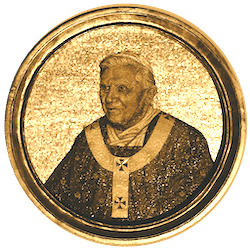
21 August 2011 | Cuatro Vientos Air Base, Madrid (World Youth Day Mass)
In this celebration of the Eucharist we have reached the high point of this World Youth Day. Seeing you here, gathered in such great numbers from all parts of the world, fills my heart with joy. I think of the special love with which Jesus is looking upon you. Yes, the Lord loves you and calls you his friends (cf. Jn 15:15). He goes out to meet you and he wants to accompany you on your journey, to open the door to a life of fulfilment and to give you a share in his own closeness to the Father. For our part, we have come to know the immensity of his love and we want to respond generously to his love by sharing with others the joy we have received. Certainly, there are many people today who feel attracted by the figure of Christ and want to know him better. They realize that he is the answer to so many of our deepest concerns. But who is he really? How can someone who lived on this earth so long ago have anything in common with me today?
The Gospel we have just heard (cf. Mt 16:13-20) suggests two different ways of knowing Christ. The first is an impersonal knowledge, one based on current opinion. When Jesus asks: “Who do people say that the Son of Man is?”, the disciples answer: “Some say John the Baptist, but others Elijah, and still others Jeremiah or one of the prophets”. In other words, Christ is seen as yet another religious figure, like those who came before him. Then Jesus turns to the disciples and asks them: “But who do you say that I am?” Peter responds with what is the first confession of faith: “You are the Messiah, the Son of the living God”. Faith is more than just empirical or historical facts; it is an ability to grasp the mystery of Christ’s person in all its depth.
Faith as a Gift and a Personal Call
Yet faith is not the result of human effort, of human reasoning, but rather a gift of God: “Blessed are you, Simon son of Jonah! For flesh and blood has not revealed this to you, but my Father in heaven”. Faith starts with God, who opens his heart to us and invites us to share in his own divine life. Faith does not simply provide information about who Christ is; rather, it entails a personal relationship with Christ, a surrender of our whole person, with all our understanding, will and feelings, to God’s self-revelation. So Jesus’ question: “But who do you say that I am?”, is ultimately a challenge to the disciples to make a personal decision in his regard. Faith in Christ and discipleship are strictly interconnected.
The Growth of Faith in Following the Master
And, since faith involves following the Master, it must become constantly stronger, deeper and more mature, to the extent that it leads to a closer and more intense relationship with Jesus. Peter and the other disciples also had to grow in this way, until their encounter with the Risen Lord opened their eyes to the fullness of faith.
Answering Christ’s Question with Courage
Dear young people, today Christ is asking you the same question which he asked the Apostles: “Who do you say that I am?” Respond to him with generosity and courage, as befits young hearts like your own. Say to him: “Jesus, I know that you are the Son of God, who have given your life for me. I want to follow you faithfully and to be led by your word. You know me and you love me. I place my trust in you and I put my whole life into your hands. I want you to be the power that strengthens me and the joy which never leaves me”.
The Foundation of the Church
Jesus’ responds to Peter’s confession by speaking of the Church: “And I tell you, you are Peter, and on this rock I will build my Church”. What do these words mean? Jesus builds the Church on the rock of the faith of Peter, who confesses that Christ is God.
The Indissoluble Bond Between Christ and His Church
The Church, then, is not simply a human institution, like any other. Rather, she is closely joined to God. Christ himself speaks of her as “his” Church. Christ cannot be separated from the Church any more than the head can be separated from the body (cf. 1 Cor 12:12). The Church does not draw her life from herself, but from the Lord.
Rejecting Individualism and Living Faith in Community
Dear young friends, as the Successor of Peter, let me urge you to strengthen this faith which has been handed down to us from the time of the Apostles. Make Christ, the Son of God, the centre of your life. But let me also remind you that following Jesus in faith means walking at his side in the communion of the Church. We cannot follow Jesus on our own. Anyone who would be tempted to do so “on his own”, or to approach the life of faith with that kind of individualism so prevalent today, will risk never truly encountering Jesus, or will end up following a counterfeit Jesus.
Nurturing Faith Through Sacraments and Prayer
Having faith means drawing support from the faith of your brothers and sisters, even as your own faith serves as a support for the faith of others. I ask you, dear friends, to love the Church which brought you to birth in the faith, which helped you to grow in the knowledge of Christ and which led you to discover the beauty of his love. Growing in friendship with Christ necessarily means recognizing the importance of joyful participation in the life of your parishes, communities and movements, as well as the celebration of Sunday Mass, frequent reception of the sacrament of Reconciliation, and the cultivation of personal prayer and meditation on God’s word.
Called to Be Disciples and Missionaries
Friendship with Jesus will also lead you to bear witness to the faith wherever you are, even when it meets with rejection or indifference. We cannot encounter Christ and not want to make him known to others. So do not keep Christ to yourselves! Share with others the joy of your faith. The world needs the witness of your faith, it surely needs God. I think that the presence here of so many young people, coming from all over the world, is a wonderful proof of the fruitfulness of Christ’s command to the Church: “Go into all the world and proclaim the Gospel to the whole creation” (Mk 16:15). You too have been given the extraordinary task of being disciples and missionaries of Christ in other lands and countries filled with young people who are looking for something greater and, because their heart tells them that more authentic values do exist, they do not let themselves be seduced by the empty promises of a lifestyle which has no room for God.
Final Prayer and Apostolic Blessing
Dear young people, I pray for you with heartfelt affection. I commend all of you to the Virgin Mary and I ask her to accompany you always by her maternal intercession and to teach you how to remain faithful to God’s word. I ask you to pray for the Pope, so that, as the Successor of Peter, he may always confirm his brothers and sisters in the faith. May all of us in the Church, pastors and faithful alike, draw closer to the Lord each day. May we grow in holiness of life and be effective witnesses to the truth that Jesus Christ is indeed the Son of God, the Saviour of all mankind and the living source of our hope. Amen.

August 21, 2011

21st Sunday of Year A
Proclaiming Christ and the Paths of Ecclesial Renewal
8 August 1999 | Angelus
In the Gospel passage presented to us in today’s liturgy, we once again listen to Jesus’ words to his terrified and fearful disciples: “Take heart, it is I; have no fear” (Mt 14:27). The Evangelist notes that encouraged by the Lord’s presence, “those in the boat worshiped him, saying, ‘Truly you are the Son of God'” (ibid, 14:33). The Church makes her own this profession of faith in the Son of God, and renews it constantly as she spreads the Good News which he came to bring the people of all times and places.
The Legacy and Witness of Paul VI
The Servant of God Paul VI, my venerable Predecessor, was also a tireless proclaimer and bold witness of Christ’s Gospel. On 6 August, 35 years ago now, he promulgated his first Encyclical entitled Ecclesiam suam. Fourteen years later, also on the Feast of the Transfiguration and precisely here in Castel Gandolfo, he was called to contemplate the Lord’s face forever in the blessed homeland.
Three Paths for the Church’s Mission
In Ecclesiam suam, this great Pontiff indicated the paths of an inspired ecclesial journey towards the third millennium:
- The Spiritual Path: Refers to the awareness the Church must have of herself to conform to the vocation entrusted to her by the Redeemer.
- The Moral Path: Concerns the authentic ascetic, practical, and canonical renewal she needs to carry out her mission in the world.
- The Way of the Apostolate: For the ecclesial community, the method of dialogue is becoming the way in which to work to bring the Lord’s comforting message of salvation everywhere.
Guided by Faith Toward the New Millennium
How is it possible not to thank God for the gift of this prophetic teaching which has guided the journey of the Christian people in the past 35 years? With the Second Vatican Council, wisely led by Paul VI, the Church more closely examined her inmost nature and universal mission. With the constant support of the Holy Spirit, her faith has remained steadfast in these last decades of the century, marked by many lights, but also by numerous shadows, and she is now preparing confidently to cross the threshold of the next millennium.

Matthew 16:13-20
Search Engine created by Jeff Pinyan
21st Sunday of Year A
Isaiah 22:19-23
Search Engine created by Jeff Pinyan
21st Sunday of Year A
Romans 11:33-36
Search Engine created by Jeff Pinyan
21st Sunday of Year A