Homily Starters, Fr. Tony’s Homily
Homily Starters, Fr. Tony’s Homily
February 15, 2026
February 15, 2026
6th Sunday of Ordinary Time (A)


- ANECDOTES
- EXEGESIS
- LIFE MESSAGES
HOMILY STARTERS
6th Sunday of Year A
Plato’s Chariot Allegory


Passion and Reason
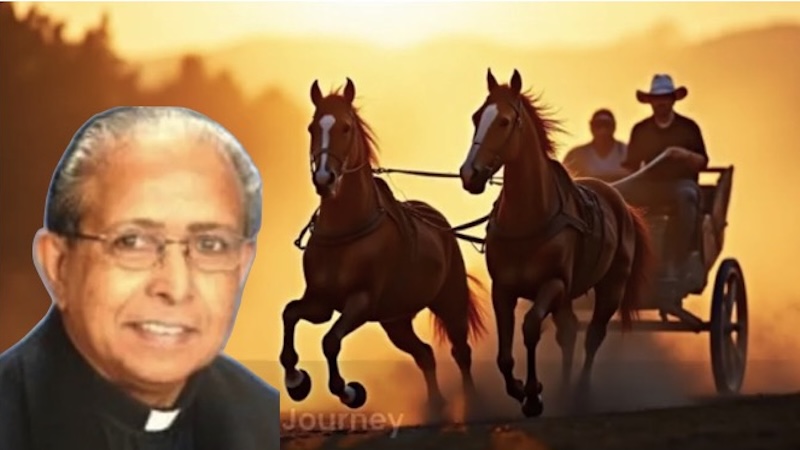
The Greek philosopher, Plato, four hundred years before Christ, wrote of two horses in the human heart, Passion and Reason. Passion is the wild untamed horse with boundless strength and energy, but very hard to control and direct. Reason is the tamed horse, accustomed to the reins, disciplined in stride and responding to directions. A chariot hitched to a pair of Passions might go anywhere but would surely crash or overturn before long. However, a charioteer who selects a pair of Reasons will be too cautious and fearful to go anywhere worthwhile. But if Passion and Reason can be paired, then the powerful energy is harnessed, and the journey of life can be enjoyed.
The teaching of Jesus strongly affirms the need for rules, but rules are to be understood as a means to the end, which is a life of spiritual strength and commitment.
SOURCE: Sylvester O’Flynn in The Good News of Mathew’s Year
6th Sunday of Year A
Peter Pan


Peter Pan
There is a delightful scene in James Matthew Barrie’s famous play, Peter Pan. Peter is in the children’s bedroom. They’re all jumping up and down with excitement. Peter has just flown across the room, and now the children want to fly too. They try to fly from the floor, then try to fly from the bed, but they can’t do it. “How did you do it?” John asks Peter. Peter answers, “It’s easy, John. Just think wonderful, beautiful thoughts. They will lift you off the ground and send you soaring into the air.”
It’s the same way with the Christian life. The way to live a Christian life is to “think wonderful, beautiful thoughts.” They will lift you off the ground and send you soaring to Heaven.
SOURCE: Mark Link in Sunday Homilies
6th Sunday of Year A
To Be or Not to Be

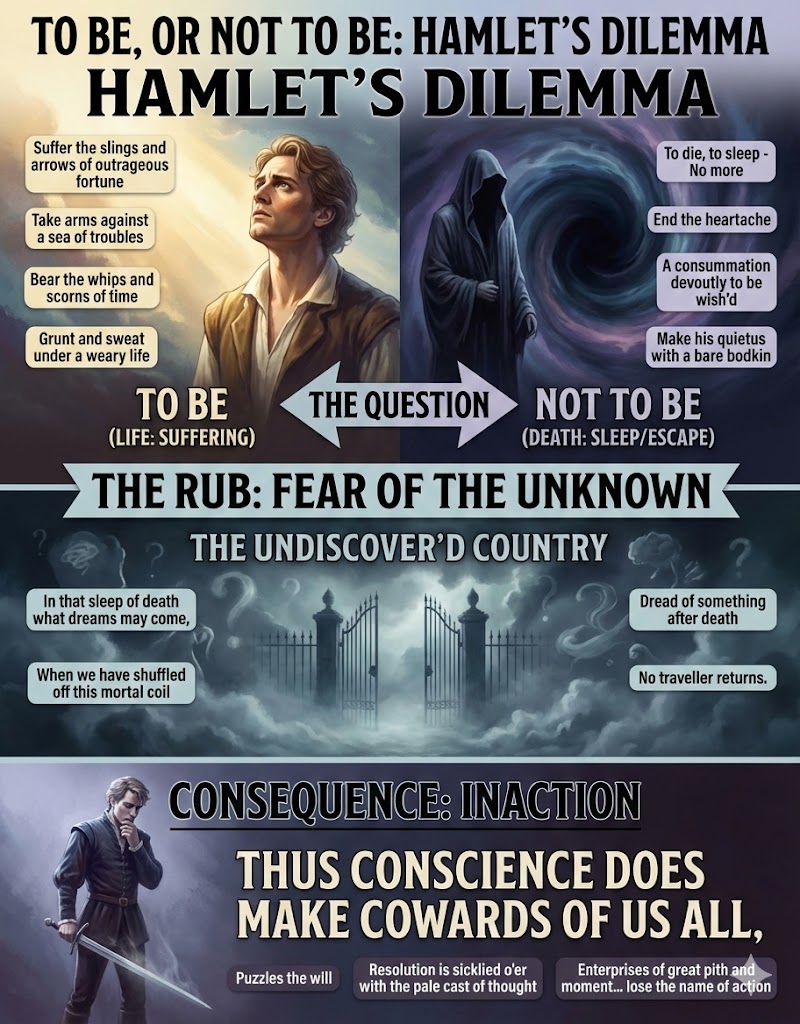
GUARDIAN CULTURE (3:06) – “Adrian Lester speaks Hamlet’s soliloquy from act III, scene 1, in which the prince reflects on mortality and considers taking his own life. To mark the 400th anniversary of Shakespeare’s death, we asked leading actors to perform key speeches from his plays.
To Be or Not To Be
To some extent every man is a split personality. There is a part of him which is attracted to good, and part of him which is attracted to evil. William Shakespeare presents this conflict beautifully in his play Hamlet. On a dark winter night, a ghost walked the ramparts of Elsinore Castle in Denmark. Discovered first by a pair of watchmen, then by the scholar Horatio, the ghost resembled the recently deceased King Hamlet, whose brother Claudius had inherited the throne and married the king’s widow, Queen Gertrude. When Horatio and the watchmen brought Prince Hamlet, the son of Gertrude and the dead king, to see the ghost, it spoke to him, declaring ominously that it was indeed his father’s spirit, and that he was murdered by none other than Claudius. Ordering Hamlet to seek revenge on the man who had usurped his throne and married his wife, the ghost disappeared with the dawn. Prince Hamlet devoted himself to avenging his father’s death, but, because he was contemplative and thoughtful by nature, he delayed, entering into a deep melancholy and even apparent madness. He thought of taking his life: “To be, or not to be: that is the question” . Hamlet was unable to make a decision. One part of him instigated him to end everything in death. But the other part told him that it was against the commandment of God.
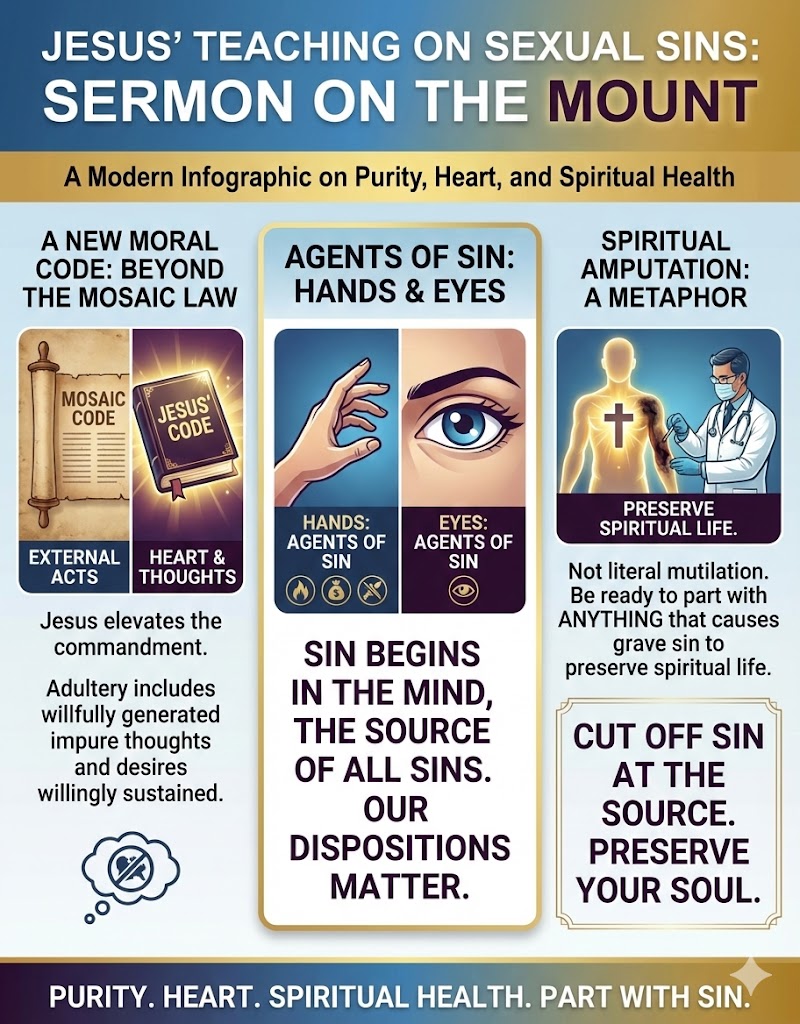
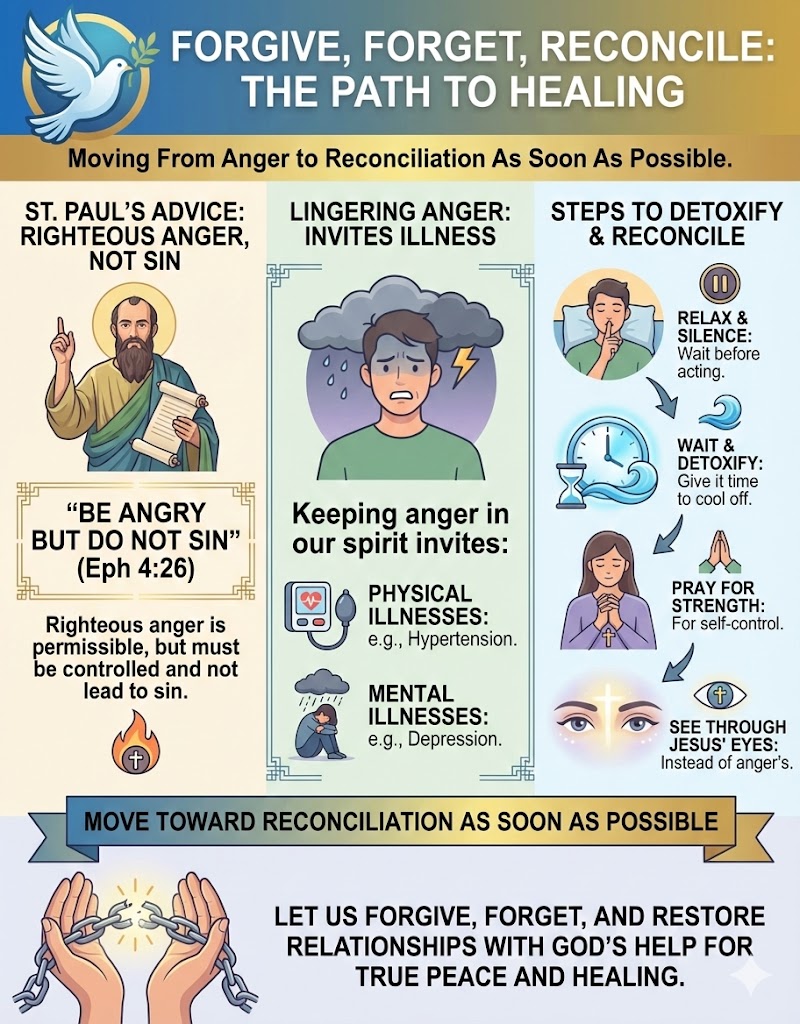
We all experience this inner tension. So long as there is this inner tension, this inner conflict, life must be insecure. In such circumstances the only way to safety, is to eradicate the desire for the forbidden thing for ever. The standard Jesus demands from us is not only our deeds but also our thoughts should be pure. So, Jesus forbids forever the anger which broods, the anger which will not forget, the anger which refuses to be pacified, the anger which seeks revenge.
6th Sunday of Year A
The Law


BIBLE PROJECT (6:18) – Have you ever wondered why there are so many ancient biblical laws in the first books of the Bible? What are modern readers supposed to do with them, and why are some of them so odd? In this video, we explore why the laws were given to ancient Israel and how they fit into the overall storyline of the Bible.
Dentist’s Mirror
Evangelist Fred Brown used three images to describe the purpose of the Law. First, he likened it to a dentist’s little mirror, which he sticks into the patient’s mouth. With the mirror, he can detect any cavities. But he doesn’t drill with it or use it to pull teeth. It can show him the decayed area or other abnormality, but it can’t provide the solution. Brown then drew another analogy. He said that the law is also like a flashlight. If suddenly at night the lights go out, you use it to guide you down the darkened basement stairs to the electrical box. When you point it toward the fuses, it helps you see the one that is burned out. But after you’ve removed the bad fuse, you don’t try to insert the flashlight in its place. You put in a new fuse to restore the electricity. In his third image, Brown likened the law to a plumb line. When a builder wants to check his work, he uses a weighted string to see if it’s true to the vertical. But if he finds that he has made a mistake, he doesn’t use the plumb line to correct it. He gets out his hammer and saw.
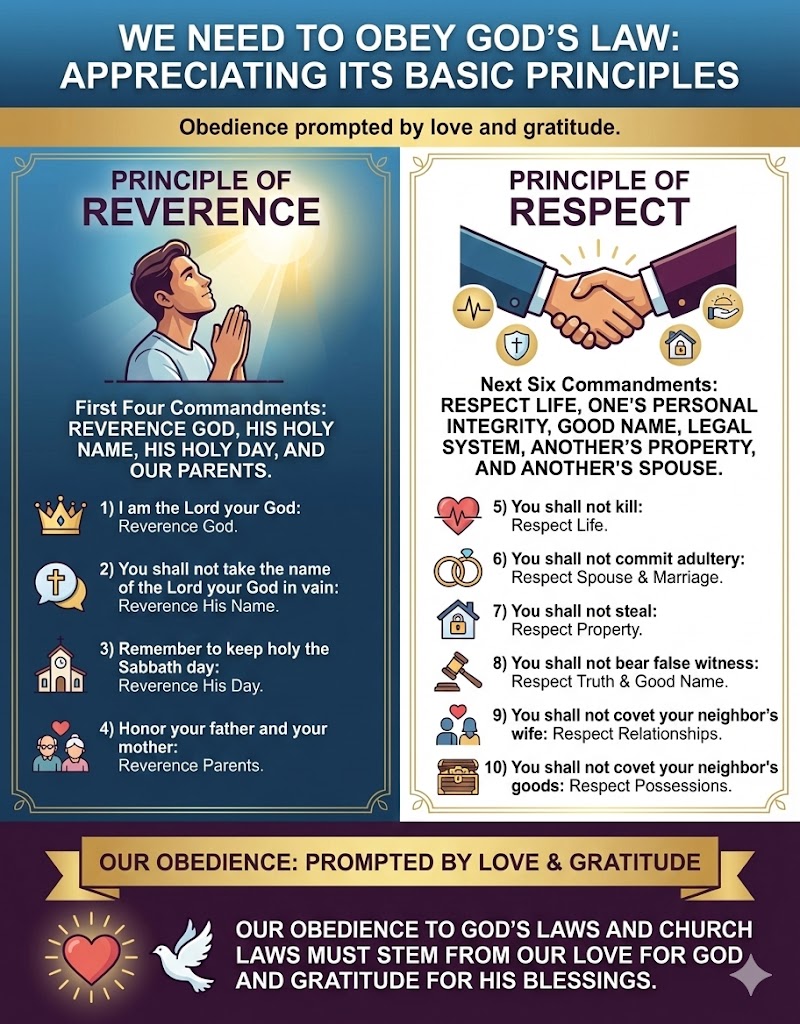
The law points out the problem of sin; it doesn’t provide a solution.
The 1st Reading Explained
6th Sunday of Year A
The 2nd Reading Explained
6th Sunday of Year A
The Gospel Reading Explained
6th Sunday of Year A

Message #1
Message #2
Message #3
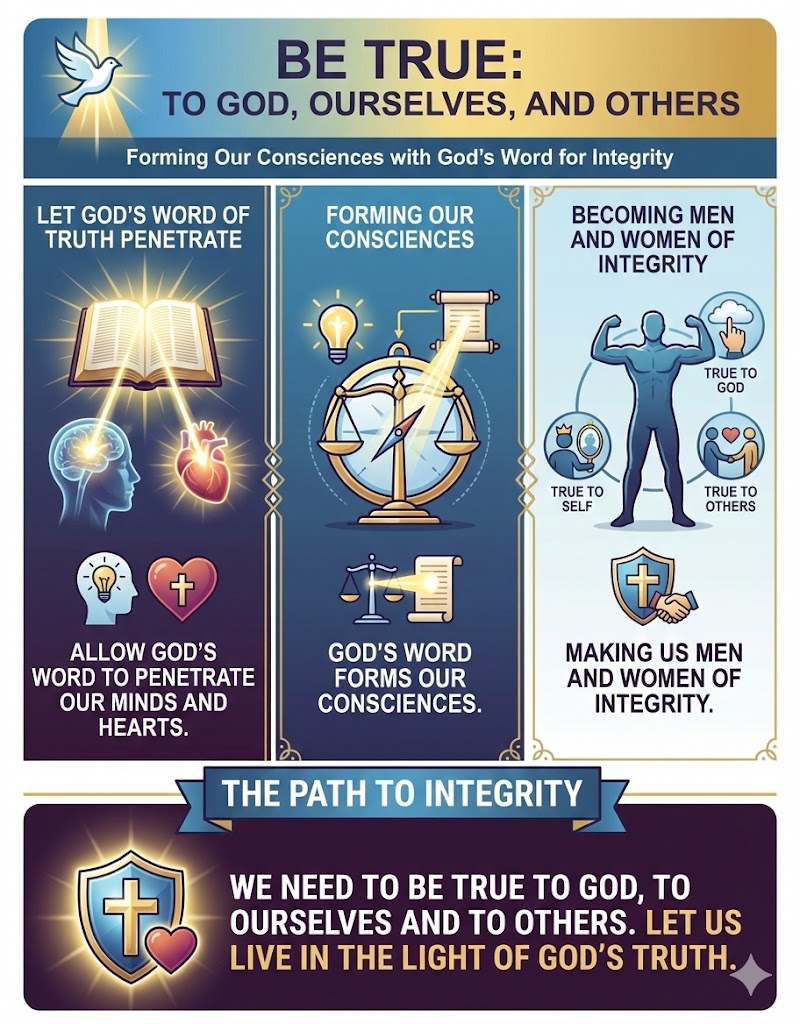
Infographics were created using Google Gemini 3 and Nano Banana Pro. Inspiration take from Fr. Tony’s Homilies; Non-profits may freely use this infographic in their publications and/or ministry. Please give credit or a shout out to TheWordThisWeek.NET.