Homily Starters, Fr. Tony’s Homily
Homily Starters, Fr. Tony’s Homily
February 8, 2026
February 8, 2026
5th Sunday of Year A


- ANECDOTES
- EXEGESIS
- LIFE MESSAGES
HOMILY STARTERS
5th Sunday of Year A
Stained Glass Windows

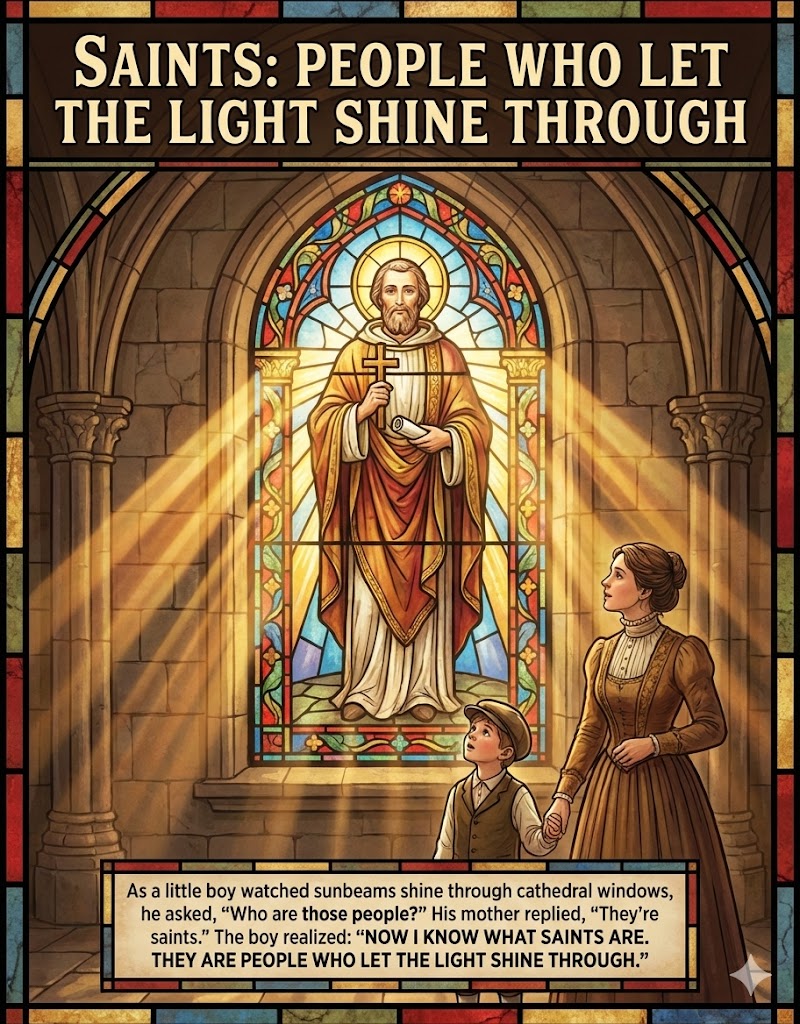
Saints are People who let the Light Shine Through
A little boy was taken by his mother to see a famous cathedral. On the windows were the pictures of various Christians. As he was watching the sunbeams shining through the stained-glass windows, he asked his mother, “Who are those people on the windows?” She said, “They’re saints.” The little boy looked at the windows and said, “Well, now I know what saints are. They are people who let the light shine through.”
That little boy got it right. That’s what a saint is-someone who lets the light of Jesus shine through his life.
5th Sunday of Year A
NaCl – Salt

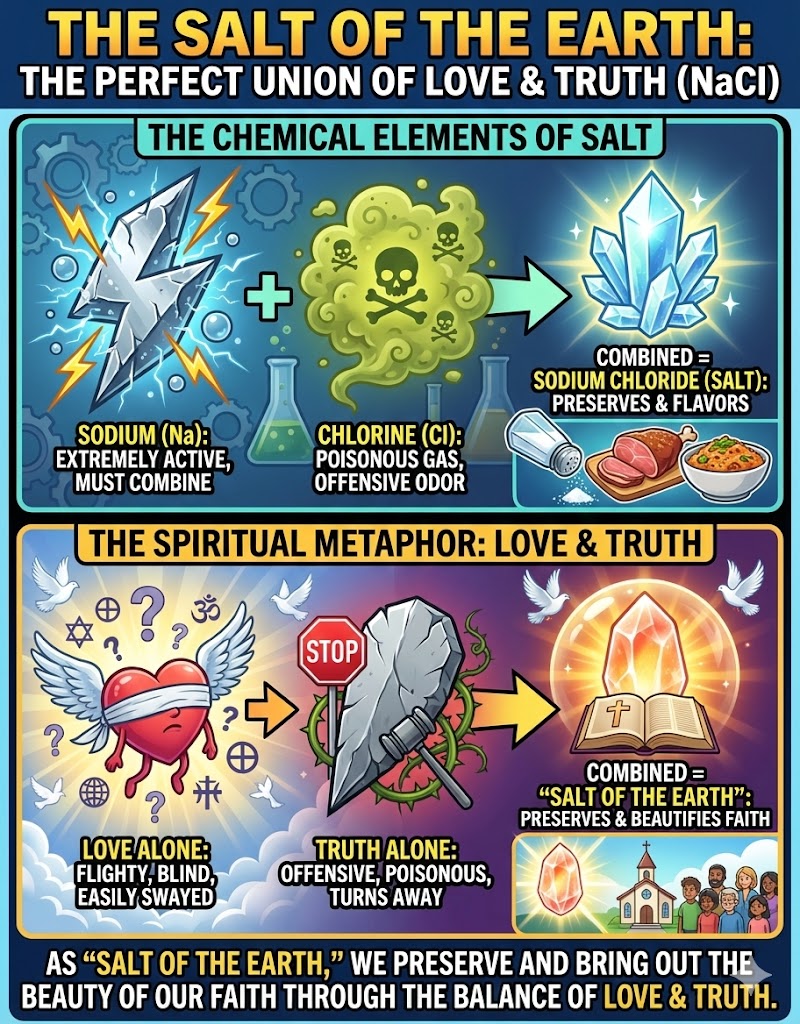
Sodium Chloride
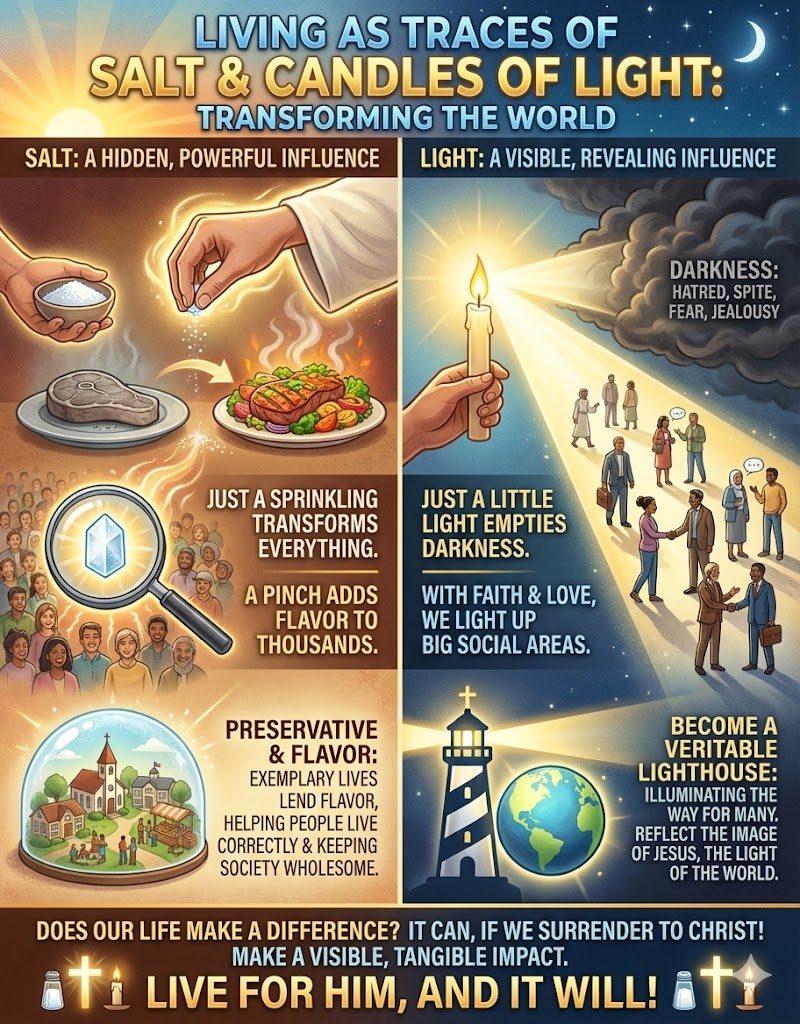
Sodium is an extremely active element found naturally only in combined form; it always links itself to another element. Chlorine, on the other hand, is the poisonous gas that gives bleach its offensive odor. When sodium and chlorine are combined, the result is sodium chloride–common table salt–the substance we use to preserve meat and bring out its flavor.
Love and truth can be like sodium and chlorine. Love without truth is flighty, sometimes blind, willing to combine with various doctrines. On the other hand, truth by itself can be offensive, sometimes even poisonous. Spoken without love, it can turn people away from the Gospel. When truth and love are combined in an individual or a Church, however, then we have what Jesus called “the salt of the earth,” and we’re able to preserve and bring out the beauty of our Faith.
SOURCE: David H. Johnson
5th Sunday of Year A
St. Teresa of Calcutta


LITURGICALLY SOUND (4:06) – “Come, carry Me into the dark of the poor, Come be My Light, come be My Love., Come, carry Me into the darkest of homes, Come be My Light, come be My Light.”
St. Teresa’s Invitation to Come be His Light
Saint Teresa of Calcutta received an inspiration from Our Lord to found the Missionaries of Charity and bring his Light to the poor and ailing of Calcutta. In her spiritual diaries, Saint Teresa described this invitation by Our Lord as an invitation to come be His light (see Mother Teresa: Come Be My Light: The Private Writings of the Saint of Calcutta, by Mother Teresa and Brian Kolodiejchuk). When she saw the squalor in which the poor of India lived, she felt Our Lord asking her to bring His Light into the darkness of those holes (Ibid). She once said, “Words which do not give the Light of Christ increase the darkness.” .
Even though her spiritual diaries show she experienced an intense spiritual darkness for much of her life, no one who knew her could see it in the way she treated others. She was always a shining beacon of joy, love, and peace
5th Sunday of Year A
Katy Perry – Firework

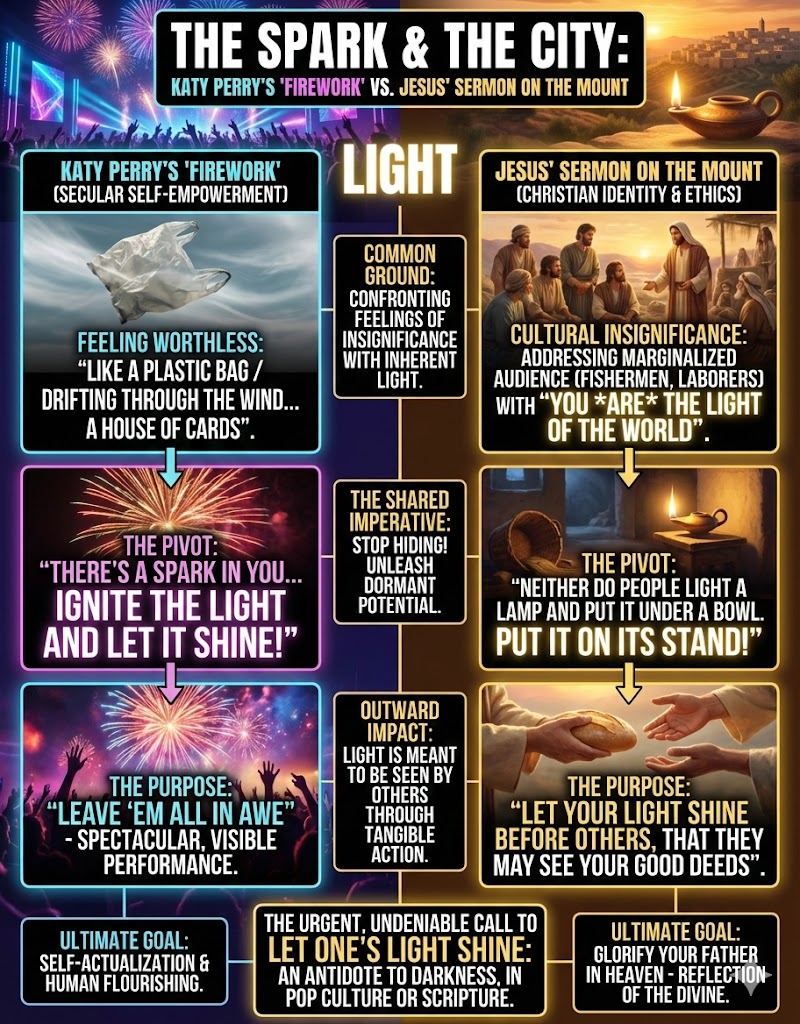
KATY PERRY (3:53) – This official music video has over 1.5 billion views on YouTube. “You just gotta Ignite the light, And let it shine…”
The Spark and the City
Despite disparate contexts, Katy Perry’s pop anthem “Firework” and Jesus’ Sermon on the Mount utilize a shared, powerful metaphor of “light” to combat feelings of insignificance. Both texts address the human tendency to feel worthless, countering it with the affirmation of inherent, latent power already present within individuals. They urgently call for a rejection of concealment, insisting that this internal “spark” or “lamp” must not be hidden but manifested externally through visible action.
Both texts agree that the purpose of this light is outward-facing; it is meant to be seen by others and to have a tangible impact. Perry sings of letting colors burst to “leave ’em all in awe,” suggesting a visible performance that inspires or stuns the observer. Jesus is even more specific about what this “shining” looks like: “let your light shine before others, that they may see your good deeds” (Matthew 5:16). Light is not an abstract feeling; it is concrete action—acts of mercy, justice, and kindness that are visible to the world.
However, they diverge in ultimate purpose. Perry’s song promotes self-actualization, urging listeners to dazzle the world for human recognition. Conversely, Jesus instructs disciples to shine through good deeds specifically to redirect glory toward God. Nevertheless, both provide an antidote to the tragedy of dormant potential by issuing an undeniable call to let one’s light shine.
The functional similarities between “Firework” and Matthew 5:13-16 are striking. They both recognize that the greatest tragedy of the human condition is dormant potential—the light hidden under a bowl, the spark buried deep. Whether the ultimate goal is self-empowerment or divine glorification, both Katy Perry and Jesus of Nazareth provide a necessary antidote to darkness: the urgent, undeniable call to let one’s light shine.
FIRST READING
5th Sunday of Year A
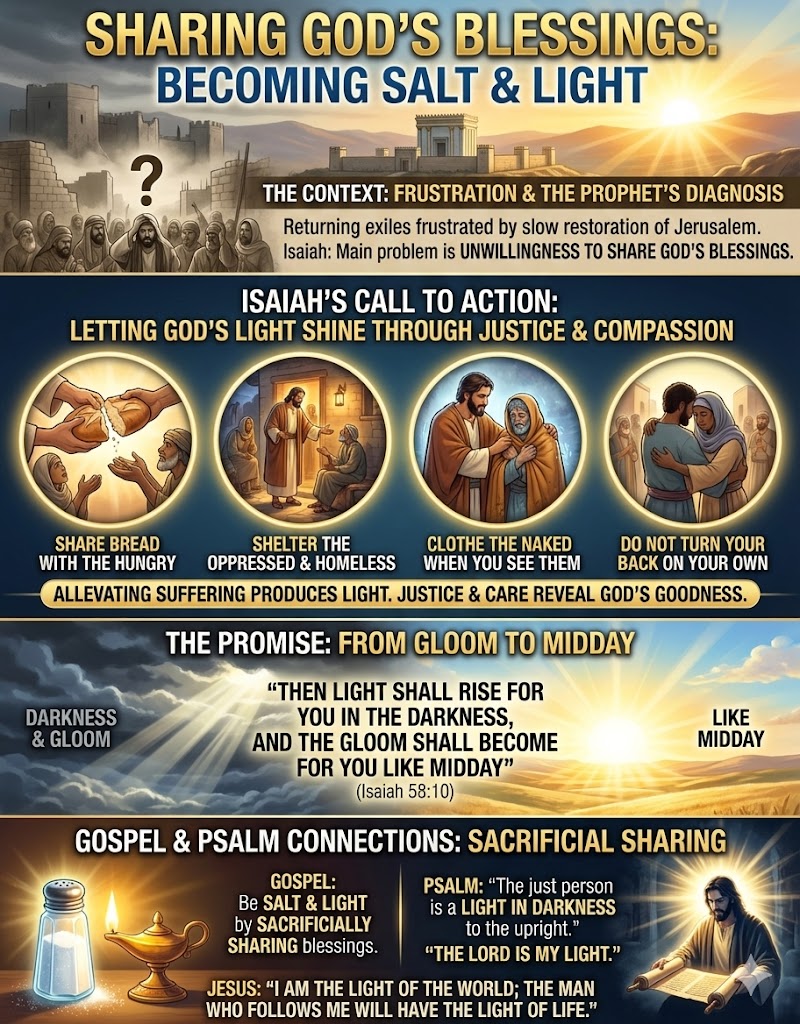
The exiles who returned from Babylon had hoped for a quick restoration of their beloved capital Jerusalem, but completion of that project was frustratingly slow. The people wondered why their suffering was so prolonged, and the prophet Isaiah told them that the main problem was their unwillingness to share God’s blessings with others. Hence, the prophet gives examples of how they were to allow the light of God to shine through them: “Share your bread with the hungry, sheltering the oppressed and the homeless; clothing the naked when you see them, and not turning your back on your own. Then light shall rise for you in the darkness, and the gloom shall become for you like midday” (58:7, 10). The Prophet Isaiah speaks in terms of justice and compassionate care for the weak, needy, and vulnerable because it is through them that the very goodness of God is revealed, and the disciple’s light will shine like the dawn. Alleviating the suffering of the oppressed and tending to the needs of others are the activities which produce light. It is by avoiding malice and by comforting the afflicted, that we enable others to see and experience the light of the Lord’s favor. Today’s Gospel also reminds us of our duty to become salt and light and tells us that the best means to do so is by sharing our blessings sacrificially with others. The Responsorial Psalm corroborates this, saying “The just person is a light in darkness to the upright.” The psalmist’s assertion, “The Lord is my light,” is echoed in Jesus’ words “I am the Light of the world; the man who follows me will have the Light of Life.”
SECOND READING
5th Sunday of Year A
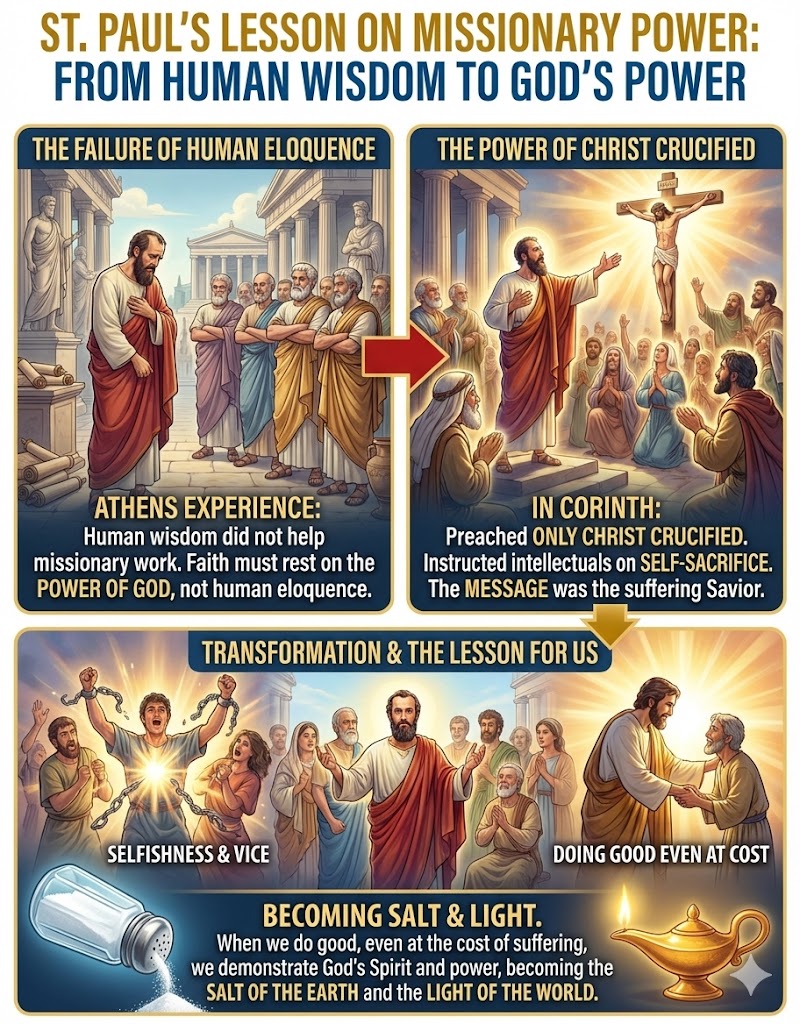
St. Paul learned the lesson from his experience in Athens that his human eloquence did not help his missionary work. Hence, in Corinth Paul says that he chose not to rely on human eloquence, “so that your Faith might rest, not on human wisdom, but on the power of God.” So, Paul started preaching only on Christ crucified in Corinth and instructed the intellectuals in Corinth to learn the lesson of self-sacrifice from the crucified Christ. When Paul persisted in preaching Jesus as the suffering Savior, the unexpected happened. Pagans, as well as Jews and God-fearers believed the message and found their lives transformed by a new, liberating power, which broke the stranglehold of selfishness and vice and purified them from within. St. Paul’s experience teaches us that when we start doing good to others, even if it costs us suffering and death, it will demonstrate God’s Spirit and power, and we will become the salt of the earth and the light of the world that Jesus challenges us to become in today’s Gospel.
GOSPEL
5th Sunday of Year A
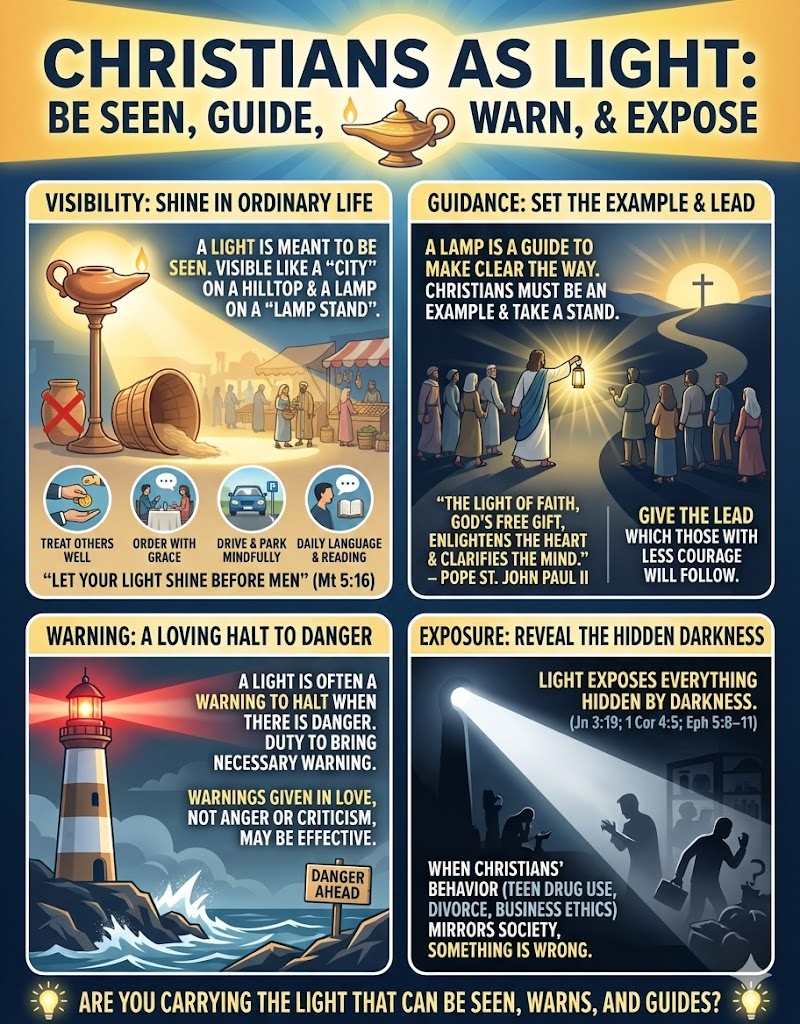
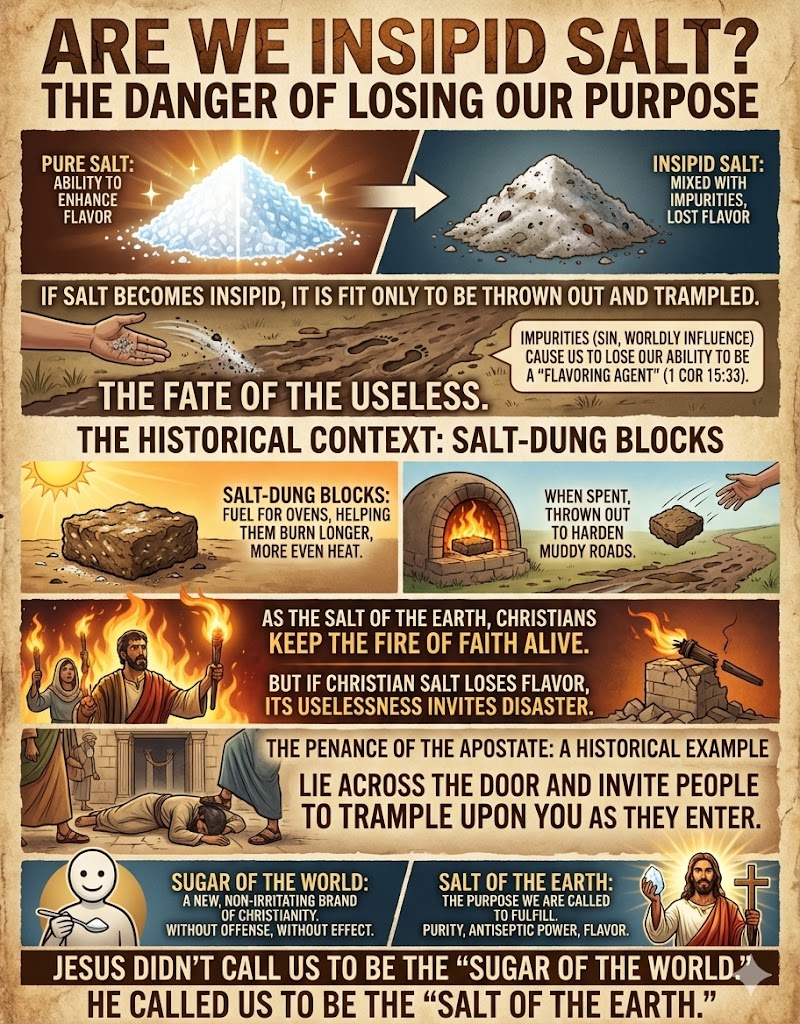
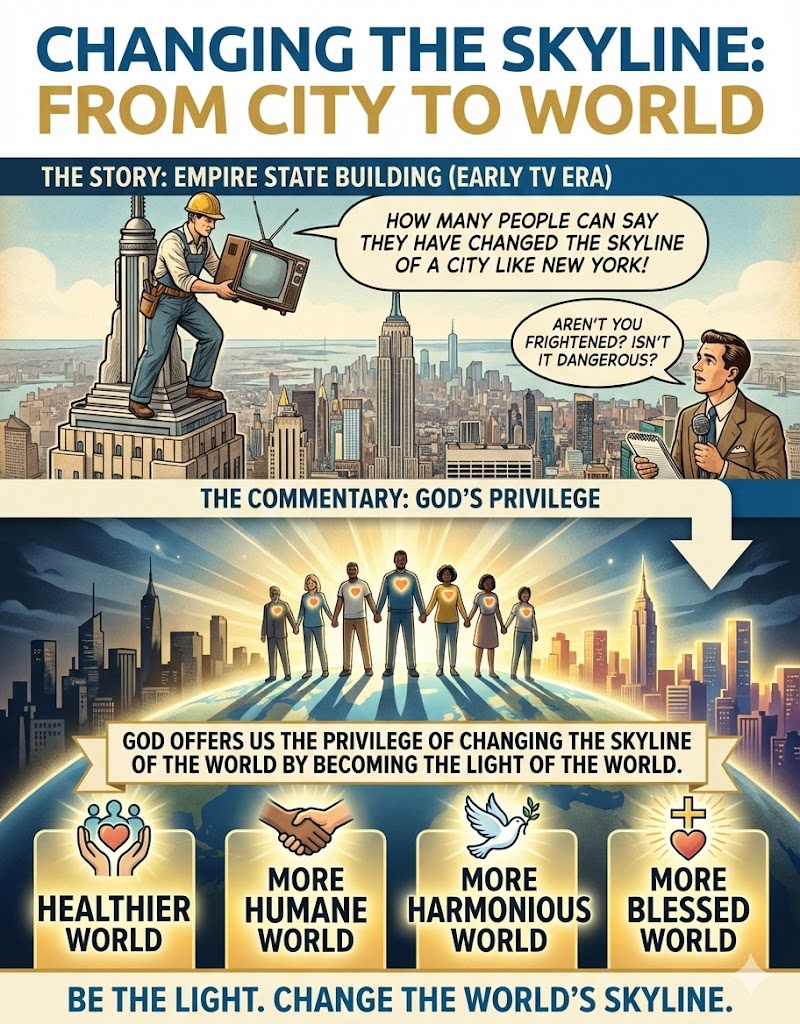
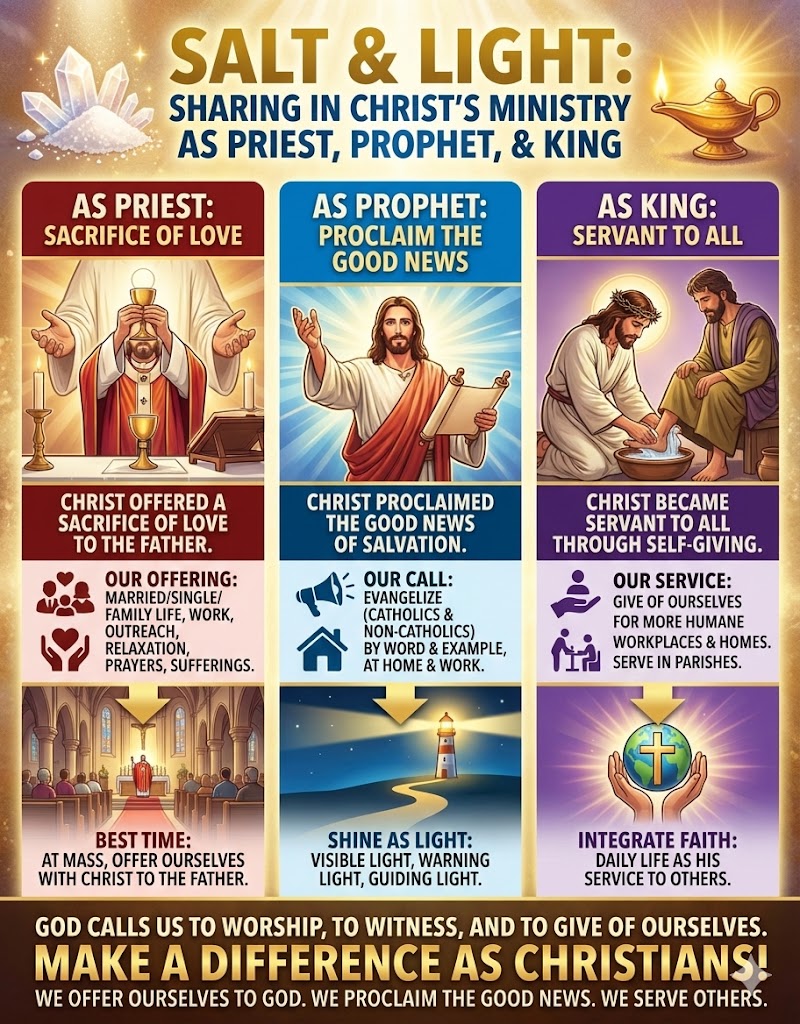
i) A light is something which is meant to be seen. (The lamp in Palestine was like a sauce-boat full of oil with a wick floating in it. When people went out, for safety’s sake, they took the lamp from its stand and put it under an earthen bushel measure, so that it might burn without risk until they came back). Christians must be visible like a “city” on a hilltop and a lamp on a “lamp stand.” Jesus therefore expects His followers to be seen by the world (Jn 13:35; 17:21). In addition, they must radiate and give light. “Let your light shine before men” (Mt 5:16). By this metaphor Jesus means that our Christianity should be visible in the ordinary activities of the world, for example, in the way we treat a shop assistant across the counter, in the way we order a meal in a restaurant, in the way we treat our employees or serve our employer, in the way we play a game or drive or park a motor car, in the daily language we use, in the daily literature we read.
(ii) A lamp or light is a guide to make clear the way. So then, a Christian must make the way clear to others. That is to say, a Christian must of necessity be an example. “The light which Jesus speaks of in the Gospel is the light of Faith, God’s free gift, which enlightens the heart and clarifies the mind. It is the God who said, ‘Let Light shine out of darkness,’ Who has shone in our hearts to give the light of the knowledge of the glory of God on the face of Christ’ (2 Cor 4:6). Our personal encounter with Christ bathes life in new Light, sets us on the right path, and sends us out to be his witnesses.” (Youth Day message by Pope St. John Paul II). It is the Christian’s duty to take a stand which the weaker brother will support, to give the lead which those with less courage will follow. The world needs its guiding lights. There are people waiting and longing for a leader to take a stand and to do the thing which they do not dare by themselves.
iii) A light can often be a warning light. A light is often the warning which tells us to halt when there is danger ahead. It is sometimes the Christian’s duty to bring to his fellowmen a necessary warning. If our warnings are given, not in anger, not in irritation, not in criticism, not in condemnation, but in love, they may be effective.
iv) Light exposes everything hidden by darkness. (Note Jn 3:19; 1 Cor 4:5; Eph 5:8–11). When our teens, baptized and confirmed, get pregnant and do drugs at the same rate as the general teenage population; when our marriages end in divorce at the same rate as the rest of society; when we cheat in business, or lie, steal, and cheat on our spouses at the same statistical level as those who say they are not Christians — something is wrong. Let us pause for a moment and ask ourselves whether we are carrying the Light which can be seen, the Light which warns, the Light which guides. These are the Lights which God shines through our Christian living.
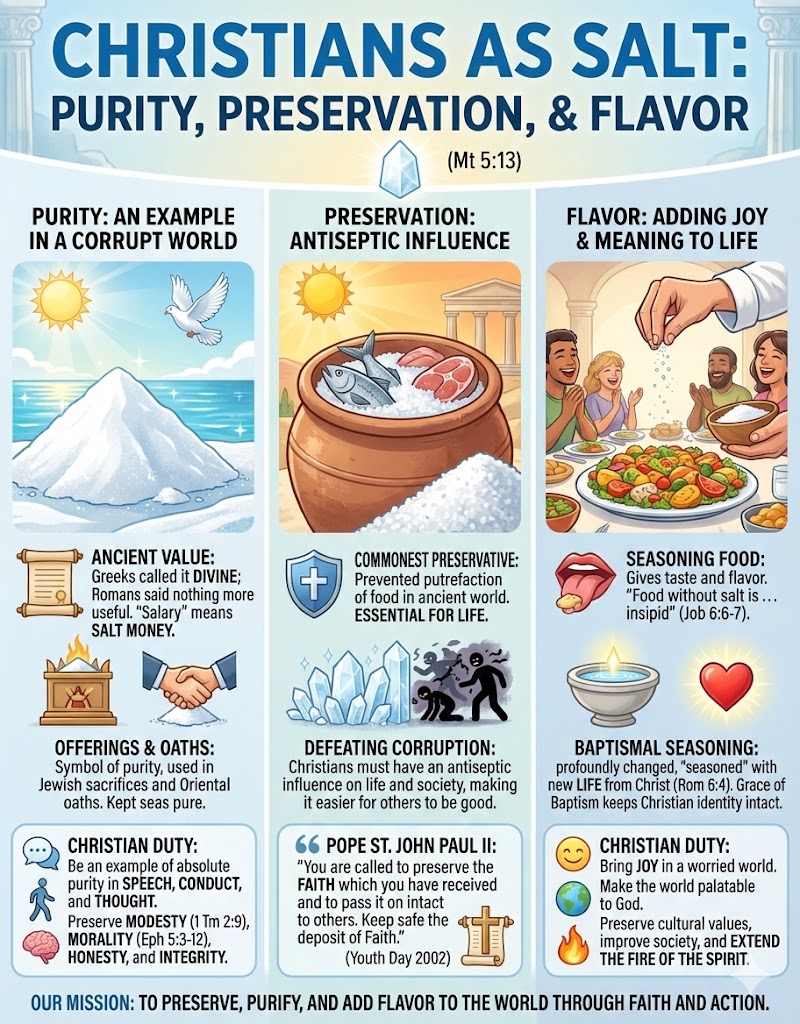

Infographics were created using Google Gemini 3 and Nano Banana Pro. Inspiration take from Fr. Tony’s Homilies; Non-profits may freely use this infographic in their publications and/or ministry. Please give credit or a shout out to TheWordThisWeek.NET.