Homily Starters, Fr. Tony’s Homily
Homily Starters, Fr. Tony’s Homily
February 1, 2026
February 1, 2026
4th Sunday of Ordinary Time (A)


- ANECDOTES
- EXEGESIS
- LIFE MESSAGES

HOMILY STARTERS
4th Sunday of Year A
The Screwtape Letters

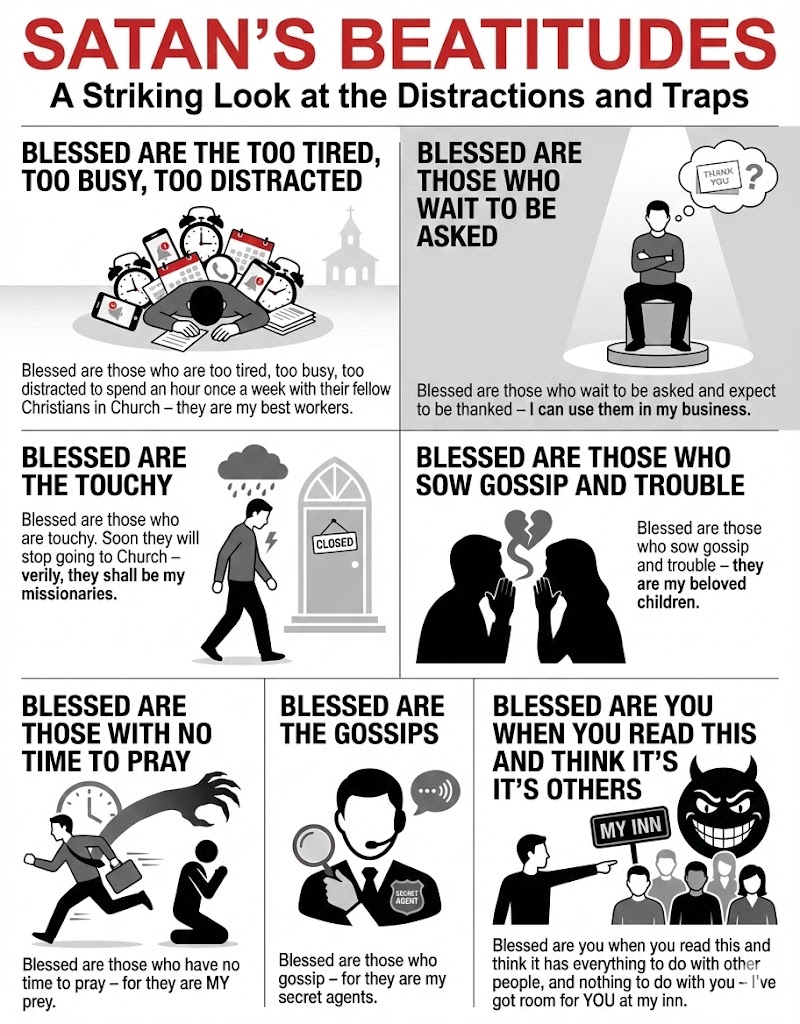
Satan’s Beatitudes
Blessed are those who are too tired, too busy, too distracted to spend an hour once a week with their fellow Christians in Church – they are my best workers.Blessed are those who wait to be askedand expect to be thanked – I can use them in my business.
Blessed are those who are touchy. Soon they will stop going to Church – verily, they shall be my missionaries.
Blessed are those who sow gossip and trouble – they are my beloved children.
Blessed are those who have no time to pray – for they are MY prey.
Blessed are those who gossip – for they are my secret agents.
Blessed are you when you read this and think it has everything to do with other people, and nothing to do with you – I’ve got room for YOU at my inn.
4th Sunday of Year A
Positivity Ratio

GREATER GOOD SCIENCE CITY (8:43) – Barbara Fredrickson shares her research on the ideal ratio of positive to negative emotions, and offers suggestions for how to flourish in life.
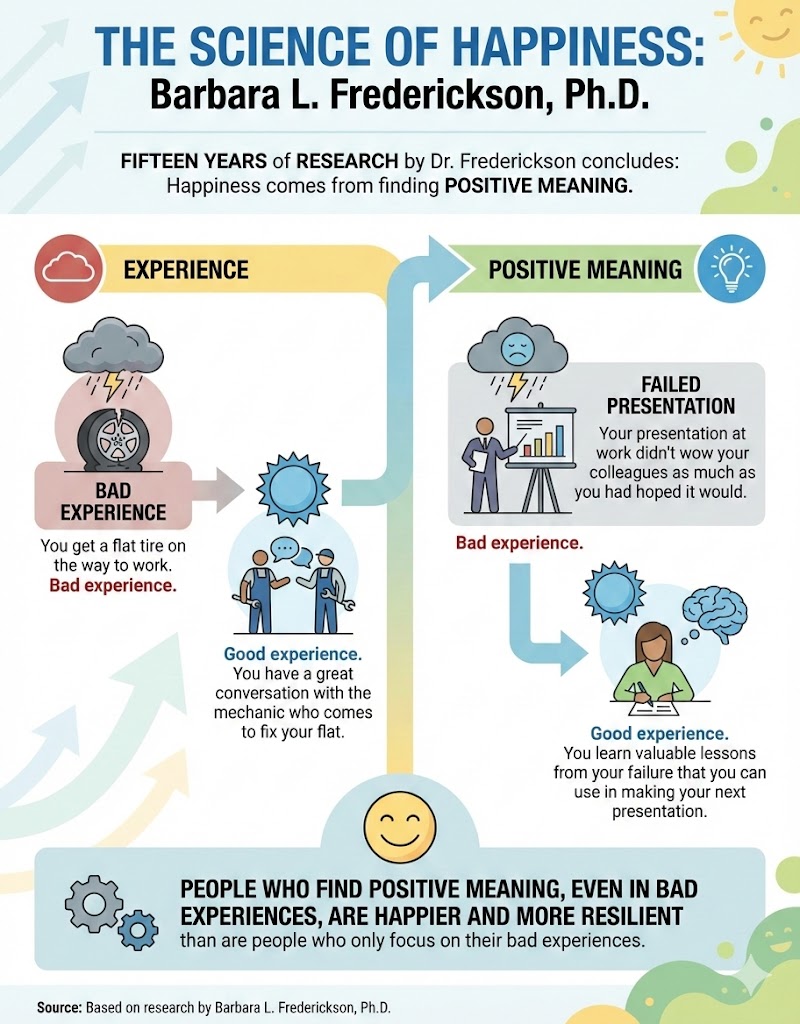
Finding Positive Meaning
Barbara L. Frederickson, Ph.D., has spent fifteen years studying happiness, and she has reached the conclusion that happiness comes from finding positive meaning in the things that happen to us. You get a flat tire on the way to work. Bad experience. You have a great conversation with the mechanic who comes to fix your flat. Good experience. Your presentation at work didn’t wow your colleagues as much as you had hoped it would. Bad experience. You learn valuable lessons from your failure that you can use in making your next presentation. Good experience. —
People who find positive meaning, even in bad experiences, are happier and more resilient than are people who only focus on their bad experiences.
SOURCE: Rev. Frank Lyman
4th Sunday of Year A
Dear Abby
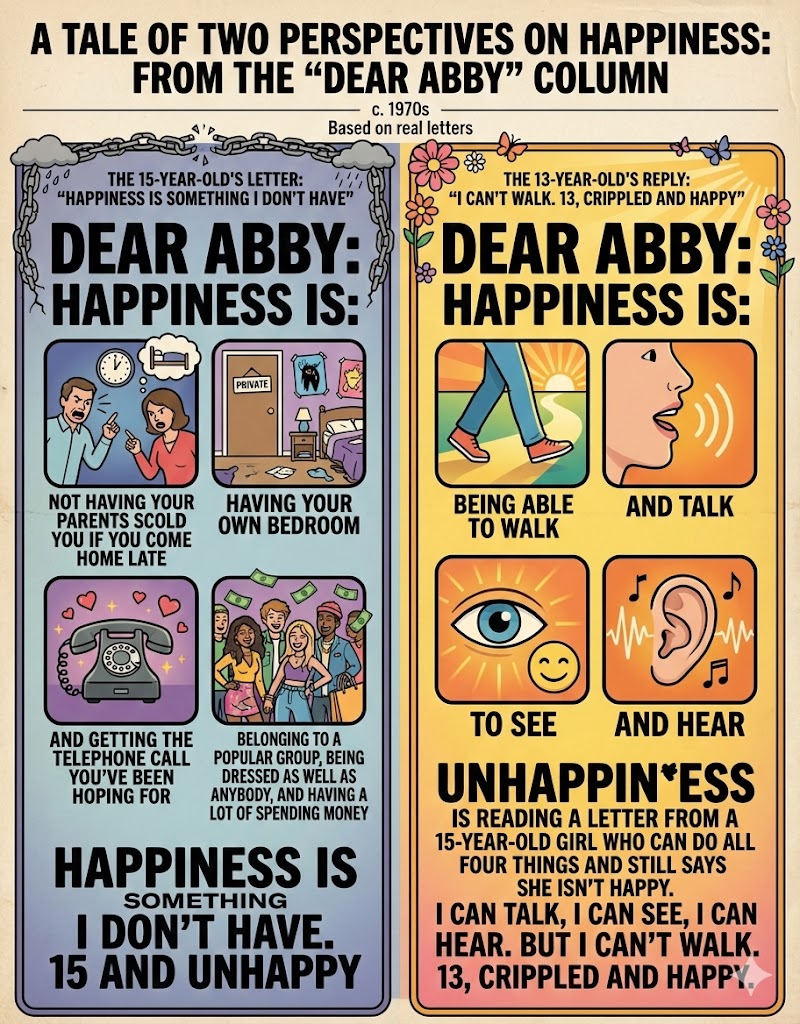
Happiness and Unhappiness
The “Dear Abby” Column once received a letter from a 15-year-old girl which read as follows: “Dear Abby: Happiness is: not having your parents scold you if you come home late, having your own bedroom, and getting the telephone call you’ve been hoping for. Happiness is belonging to a popular group, being dressed as well as anybody, and having a lot of spending money. Happiness is something I don’t have. 15 and Unhappy.” Shortly after the letter was published, “Dear Abby” received a reply from 13-year-old girl who wrote: Dear Abby: “Happiness is being able to walk and talk, to see and hear. Unhappiness is reading a letter from a 15-year-old girl who can do all four things and still says she isn’t happy. I can talk, I can see, I can hear. But I can’t walk. 13, crippled and Happy.”
These letters reflect two different points of view on happiness. Today’s gospel on the Beatitudes does the same.
SOURCE: Albert Cylwicki in His Word Resounds
4th Sunday of Year A
The Cobbler’s Wisdom

SUSH AND STORYTIME (4:32) – In a busy city, an old cobbler named Mr. Rao had a tiny shoe shop filled with the sound of his hammer and the wisdom of his words. When Priya, a young woman struggling with life, asked him the secret to his happiness, he shared a simple but powerful lesson: Happiness isn’t about what you have or lose—it’s about how you choose to see life.
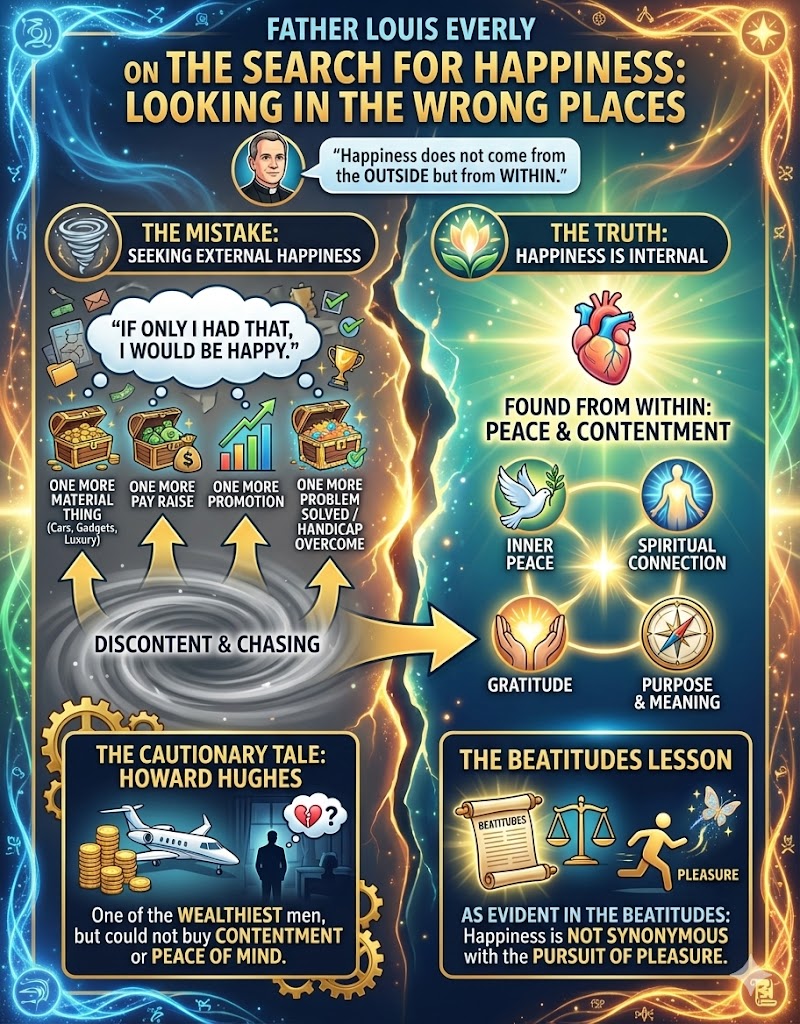
Searching for Happiness
Father Louis Everly, a noted Belgian theologian, priest and writer says that so many people never find happiness because they do not know where to look for it. Too many people make the mistake of seeking one more material thing, one more pay raise, one more promotion, one more problem solved, one more handicap overcome. “If only I had that,” they often say, “I would be happy.” Too late they learn that happiness does not come from the outside but from within. Howard Hughes was one of the wealthiest men who ever lived but he could not buy contentment or peace of mind. — That is the first thing that is evident as we view the Beatitudes. Happiness is not synonymous with the pursuit of pleasure.

FIRST READING
4th Sunday of Year A
Zephaniah prophesied in Jerusalem during a time when many in that city were faithless and corrupt. Most of the book of the prophet Zephaniah is about the terrible Day (“The Day of the Lord”) when the Lord will wreak vengeance upon idolaters and the unfaithful. But this passage describes a “remnant,” a humble and just minority, who will receive, not vengeance, but security. Both Jesus and Zephaniah address this remnant, or “moral minority.” They want their listeners not to choose the path of arrogance, not even to pine for power, but to “seek justice … seek humility, do no wrong, speak no lies (Zephaniah), and to “thirst for righteousness, be merciful, be peace-makers” (Jesus).
SECOND READING
4th Sunday of Year A
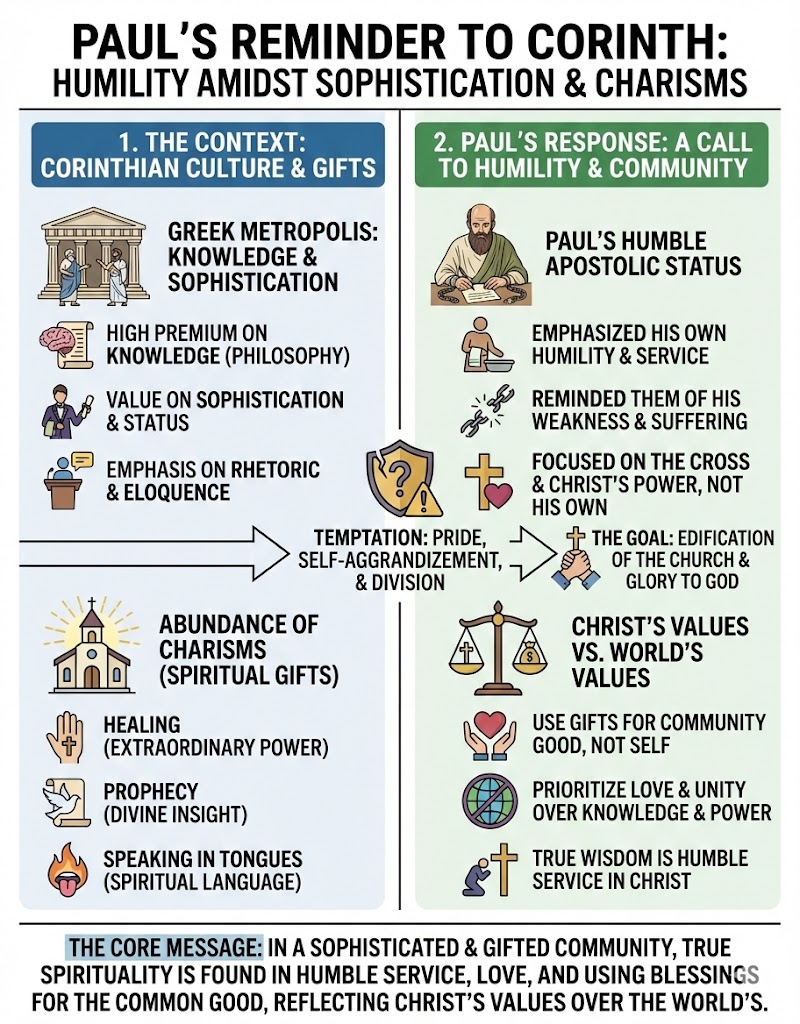
Two things about the situation in Corinth made it necessary for Paul to remind the Christians there of their humble station and of his own humble apostolic status: 1) Corinth was a Greek metropolis with philosophers placing a high premium on knowledge and sophistication; and 2) the Christians there enjoyed an abundance of what are called charisms, or spiritual gifts including some extraordinary powers like healing, prophecy, and speaking in tongues. Paul advised these Christians to use their gifts and heaven-sent blessings for the good of the community, not just for their own aggrandizement, and he reminded them of the contrast between Christ’s values and the world’s values.

GOSPEL
4th Sunday of Year A
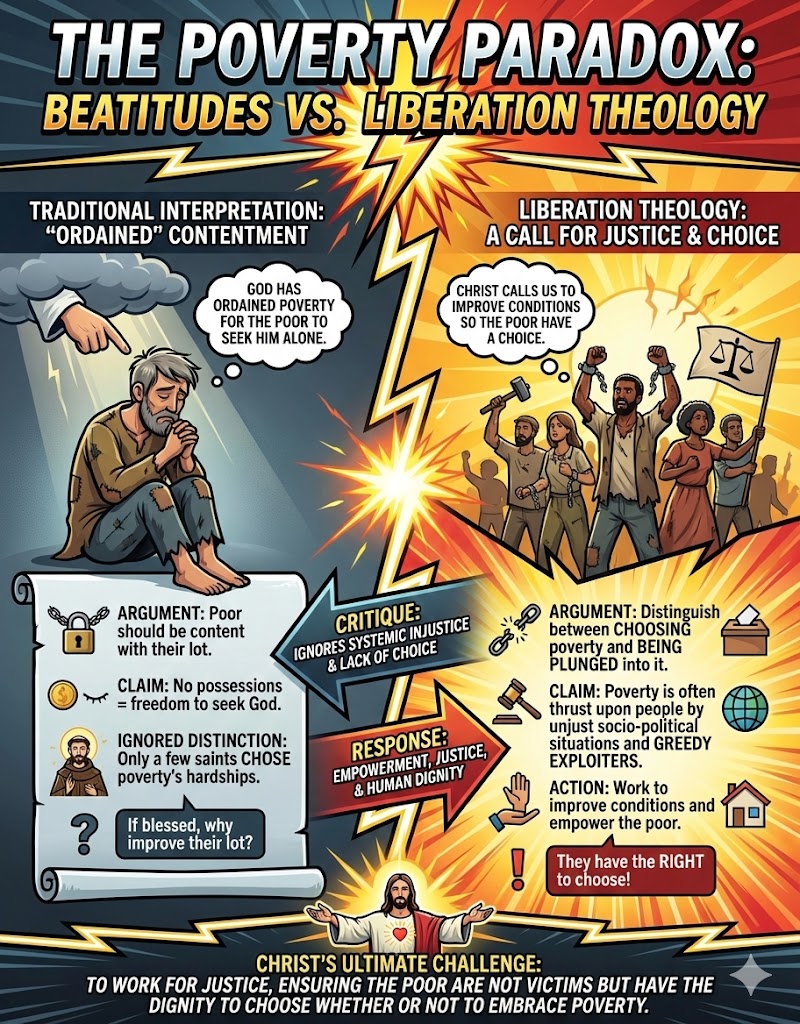
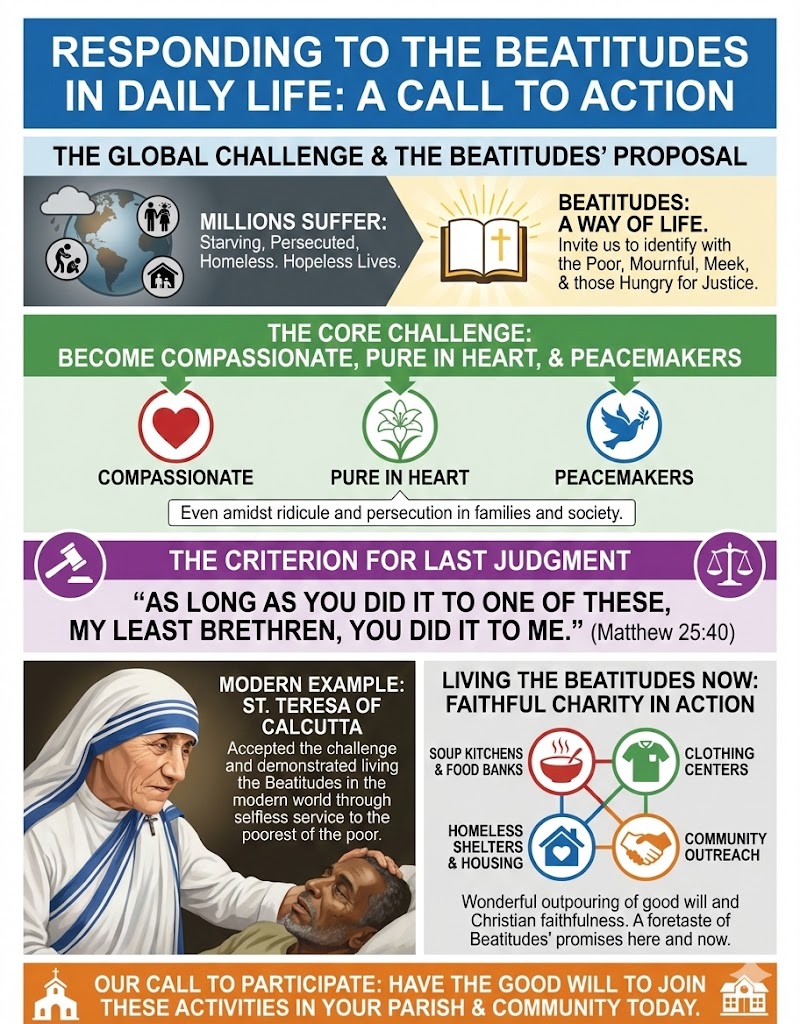
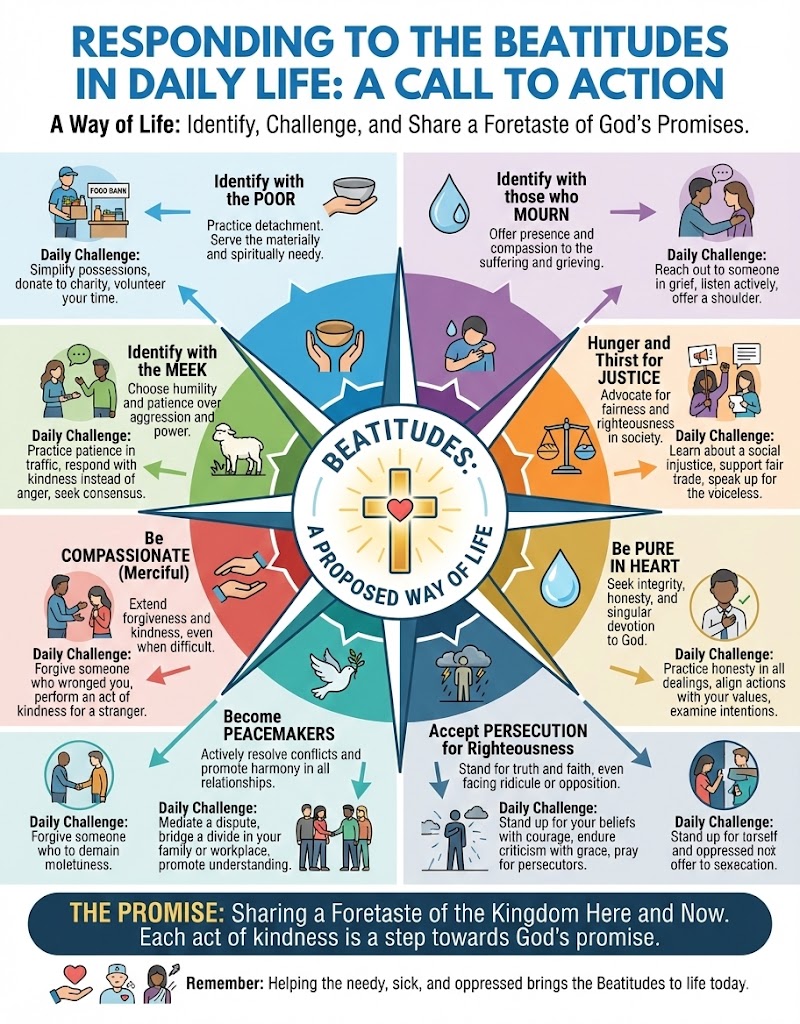
Bombshells: In both Matthew and Luke, the Beatitudes are a “series of bombshells” or “flashes of lightning followed by thunder of surprise and shock” because Jesus reverses our “natural” assumption that happiness lies in riches, power, pleasure, and comfort. We believe in personal pride; Jesus blesses poverty of spirit. We seek pleasure; Jesus blesses those who mourn. We see the prosperity of aggressive people; Jesus blesses the meek. We love good food and drink; Jesus blesses those who hunger and thirst for righteousness. He challenges his listeners to find fulfillment of their needs in God, in their particular socio-economic context. The peasants, the farm workers, and the artisans of the villages in Palestine were the oppressed class. The majority of them had no political power or rights. In contrast to them were the rich and powerful, who owned most of the land, collaborated with the hated Romans, controlled the Temple cult, and interpreted the laws of God. Jesus addresses this situation in his Beatitudes.
Christ is the center of the beatitudes: Each beatitude looks at the Christian life from a different perspective. Matthew’s first beatitude with its “the poor in spirit” ( 5:3 ) is the best known and perhaps the most difficult to interpret. Matthew’s “in spirit” indicates that these “poor” make no claim on God. Matthew’s eight beatitudes expand on the first. The mourners will experience God’s comfort (v. 4). The meek demonstrate a Christ-like attitude that demands nothing for itself. Thus the meek with Jesus shall inherit the earth (v. 5). Those who “hunger and thirst for righteousness” (v. 6) desire God’s saving righteousness in Christ. The mercy Christians show to others (v. 7) must be that of Christ, who showed mercy to his tormentors ( Luke 23:34 ). In the fifth petition of the Lord’s Prayer Christians pray that God will forgive them, just as they forgive others ( Matt 6:12 ). “Seeing God” is reserved to Christ ( John 1:18 ), but now the pure in heart will see God with him (v. 8). The Gospels reserve the phrase “Son of God” to Jesus alone, but the peace-makers show themselves to be reconciled to God, and all people are now entitled to a like honor in being called the sons of God (v. 9). The eighth beatitude follows the first with its promise of the kingdom of heaven, Christ’s pledge that they will participate in his suffering and glory.


Infographics were created using Google Gemini 3 and Nano Banana Pro. Inspiration take from Fr. Tony’s Homilies; Non-profits may freely use this infographic in their publications and/or ministry. Please give credit or a shout out to TheWordThisWeek.NET.