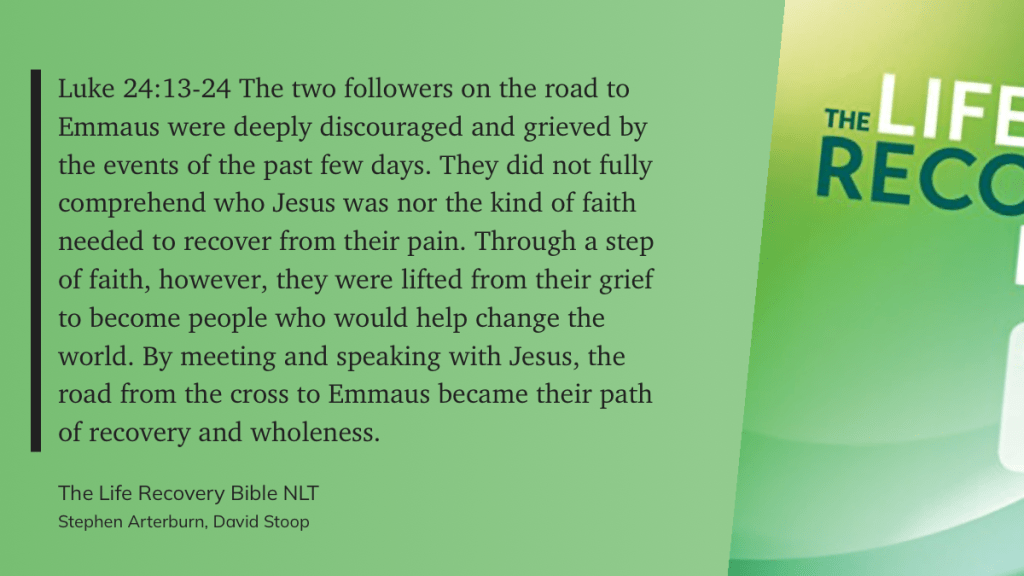
The story of the disciples on the road to Emmaus is a powerful metaphor for addiction and recovery. Addiction is often described as a journey, and much like the disciples, addicts start their journey with a heavy burden. Drug or alcohol addiction can be isolating, just like how the disciples were walking away from the other followers of Jesus towards Emmaus. The burden of the addiction grows heavier with time as addiction takes over the addict’s physical, mental, and spiritual well-being.
Similarly, the disciples on the road to Emmaus were weighed down by the burden of the crucifixion and their inability to make sense of what had happened. They are unsure of Jesus’ true nature and destiny. As addicts move towards rock bottom, their lives become more and more unmanageable, they struggle to find meaning and purpose in life, and may feel lost or disconnected from those around them, as if wandering aimlessly like the disciples.
The story of the two disciples on the road to Emmaus describes the journey from despair to hope, from confusion to clarity. It is a story of how people can find meaning, hope and strength in the darkest and most difficult of times, just as addicts may find hope and courage to start the journey to recovery.
The significance of the story is not lost on addicts seeking to get clean from substance use. During recovery, addicts find a source of strength not just in spiritual guidance but in the courage of others. The journey to recovery is filled with moments of despair and confusion, particularly as addicts detox and must confront their demons head-on. Such confronting of problems is much like what the disciples experienced before they could recognize the risen savior.
During the journey to recovery, addicts must face their fears and deepest problems to find meaning and purpose in life. It is a journey of self-awareness and self-discovery as they learn to accept themselves, their character defects and the underlying triggers that led to their addiction. Recovery does not follow a straight line, and there are often setbacks and moments of relapse. In such moments of setback, the addict must be prepared to bounce back and continue on the journey to sobriety just like how the disciples saw Jesus after their experience on the road to Emmaus.
Sobriety, like the possibility of the resurrection of Christ is maintained in the hope that hope can be miraculous. Through sober support systems, it is possible for addicts to gain the strength needed to overcome addiction. Faith in God, much as how the disciples put faith and trust in Jesus, is also important for addicts to find the motivation and strength to continue on the journey towards sobriety.
Just like the disciples recounted their experience to the other followers of Jesus, those who have completed the journey to sobriety can be an inspiration and help to others.
Cognitive Behavioral Therapy
In the story of Emmaus, the two disciples are struggling with negative thoughts and behaviors. They are filled with doubt, fear, and anxiety. They are convinced that Jesus is dead, and they have lost all hope. However, Jesus helps the disciples to reframe their thoughts and see the situation in a new light. He explains the scriptures to them and helps them to see that there is hope and life after death. This is similar to the way CBT works. By working with a therapist, individuals can learn to identify negative thought patterns and reframe them in a more positive light.
Additionally, the disciples in the story engage in problem-solving and action planning. They talk about their concerns and fears with Jesus, and he encourages them to find solutions and take action. This is also an important aspect of CBT, as individuals work with their therapist to establish achievable goals and develop strategies to achieve them.
Finally, the story of Emmaus shows how important social support can be in improving mental health. The disciples went on this journey together, and they were able to encourage and support each other along the way. This mirrors the way that social support can play a role in CBT. Individuals may be encouraged to seek out support from family or friends as a part of their treatment.
The power of personal transformation and the possibility for a brighter future beyond addiction
In Acts 2:22-33, Peter tells the crowd in Jerusalem about Jesus and his resurrection. Peter emphasizes that Jesus was not just any ordinary man, but instead was working through God’s power to perform miracles and fulfill prophecy. Peter’s message establishes a connection between Jesus and God, which is later used as evidence for his divinity.
This connection between God and Jesus resonates with individuals in addiction and recovery, as for many, a sense of spirituality is a key component of sobriety. Peter’s emphasis on divine power working through Jesus may serve as inspiration for individuals in recovery, reminding them that a higher power can work through them as well.
The mention of Jesus’ resurrection, too, can provide a comforting symbol for those in recovery. The idea of overcoming death or rebirth can relate to the struggle of recovery, as individuals work towards a new life free of addiction.
Furthermore, the idea of prophecy being fulfilled through Jesus’ actions can serve as a reminder that everyone has a purpose to fulfill. In recovery, individuals may find a sense of fulfillment in helping others who may be struggling with addiction, or finding a creative outlet to express themselves.
Peter’s message also emphasizes the forgiveness of sins through Jesus. In addiction and recovery, shame and guilt often play a significant role. The concept of forgiveness can provide comfort to those working towards their own personal redemption.
Similarly, the idea of Jesus’ ascension can represent the possibility for a brighter future for individuals in recovery. The difficult journey of addiction can often feel hopeless, but the belief that there is a better life beyond addiction can provide hope and motivation.
Overall, the themes and messages presented in Acts 2:22-33 can offer support and inspiration for individuals in addiction and recovery. The emphasis on divine power, rebirth, fulfillment, forgiveness, and hope can serve as guiding principles for those on a journey of recovery.
However, it’s also important to note that while spirituality can be beneficial in recovery for some, it is not a one-size-fits-all solution. Recovery is a unique experience for each individual, and what works for one person may not work for another.
Ultimately, the message of Acts 2:22-33 can serve as a reminder of the power of personal transformation and the possibility for a brighter future beyond addiction.
Addiction and Recovery, Sunday Readings, Catholic/h3>
Addiction and Recovery, Sunday Readings, Catholic
Addiction and Recovery, Sunday Readings, Catholic
Believers can draw strength to resist temptations and seek a transformed life that leads away from addiction
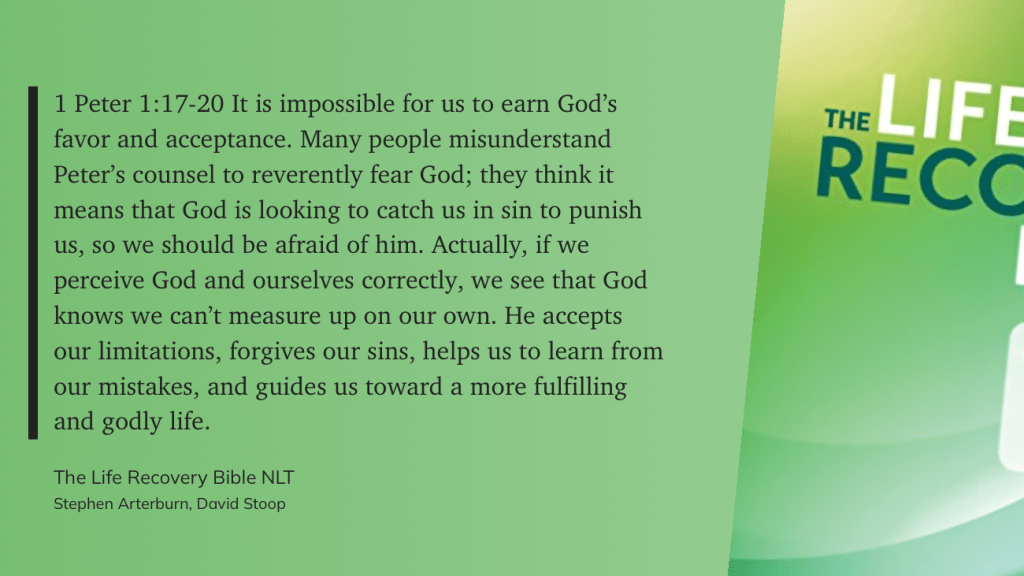
Addiction and recovery are complex subjects that involve physical, mental, and spiritual components. These verses in 1 Peter provide insight into how to approach addiction and recovery from a Christian perspective.
Peter encourages believers to conduct themselves with fear throughout the time of their exile. This fear is not a fear of punishment but a fear of God’s holiness and righteousness. It is a healthy fear that acknowledges God’s power and sovereignty over our lives. This fear can be helpful in addiction recovery as it reminds us that we are accountable to God for our actions.
Those who struggle with addiction feel trapped and helpless. They may have inherited a tendency towards addiction from their forefathers or fallen into it through poor choices. Regardless of how they arrived at addiction, they need to be reminded that they were ransomed from the futile ways of their past. Addiction is a fruitless pursuit that leads only to destruction. It is important to remember that we have been ransomed not with perishable things like silver or gold but with the precious blood of Christ.
Addiction recovery is not just about detoxing from drugs or alcohol, but it is a complete transformation of the mind, body, and spirit. It involves letting go of the old ways of life and embracing the new ways that come in Christ. Believers in God were foreknown before the foundation of the world, and Jesus Christ was made manifest for the sake of those who believe in him. Recovery is often characterized by a rocky journey, but knowing that God planned for our salvation from the beginning can offer hope during difficult times.
Recovery requires a complete surrender to God. Only then can the addict allow God’s transformation and healing to take place. Christ is wholly without blemish, and his purifying power can cleanse us of our addiction. The desire to return to addiction can be very strong, but believers can draw strength from the fact that the blood of Christ ransomed them from their futile ways.
God did not only want to save us from sin, but he also wants us to live a life of hope faith. Christ’s death and resurrection were the foundation for faith and hope to be in God. It is through the power of the Holy Spirit that believers in God can overcome addiction.
Addiction recovery is a journey that can be triggered and relapse prone. But faith and hope in Christ can drastically reduce the risk of relapsing into addiction. Christ provides believers with the strength to resist temptation, and the Holy Spirit is a guide that directs them to what is right.
In conclusion, the above context from 1 Peter 1:17-21 can relate to addiction and recovery. Addiction involves physical, mental, and spiritual aspects, and so does recovery. It is good to note that faith and hope in Christ are the foundations of addiction recovery. God’s power of transformation and healing comes in fullness when addicts surrender their addiction wholly to him. Fear of God’s holiness and righteousness can serve as a critical reminder of accountability to help during the journey.
Similarly, acknowledging that addiction is a futile pursuit that can only lead to destruction helps them cling to the knowledge that they are ransomed from it through Christ’s blood. Believers in God can also relate to the journey, knowing that they were foreknown before the foundation of the world and that Christ was made manifest for their sake.
Finally, it is only by the Spirit of God that believers can draw strength to resist temptations and seek a transformed life that leads away from addiction. That journey can be challenging, but the power of the Holy Spirit, faith, and hope in God comes in fullness to help believers live a victorious life that uproots addiction.
DISCLAIMER: The text on this page was generated by an AI Chatbot named ChatGPT which works by using algorithms to analyze and generate text based on prompts and questions from a user. The text has been edited and checked for inconsistencies and inaccuracies. However, due to limitations in the current state of AI technology, readers are advised to use their own critical analysis and fact-checking skills for reference or decision-making purposes.