Study | Preach | Teach

Bible Study

Bible Study

แŠCOMMENTARYBIBLE STUDYTIPS FOR LECTORSแ…

Matt ZemanekFr. Geoffrey PlantFr. Bryan KujawaKeith Nester

Matt Zemanek

YouTube player

SOURCE: St. Timothy Catholic Church, Laguna Niguel, CA

Jesus emphasizes the importance of spreading the gospel, standing firm in faith, and living out our faith unapologetically, while also warning against blasphemy of the Holy Spirit and discussing the power of faith, baptism, and sanctification in salvation.

SUMMARY w/ Timestamps
  • 00:00 Join us for the 10th Sunday in Ordinary Time as we study the Gospel of Mark, where Jesus begins his ministry, performs miracles, and redefines family as those who do the will of God.
    • Join us for our weekly Bible study in person or online, like and comment on the video, and subscribe to our channel for more content.
    • Remove distractions, be receptive to the Holy Spirit, and seek fulfillment in God's will.
    • The upcoming Sunday is the 10th Sunday in ordinary time, and we are now back in the cycle of readings of ordinary time in the gospel of Mark.
    • Jesus is beginning his ministry, performing miracles and healings, and displaying power over sin and death in the Gospel of Mark.
    • Jesus addresses the crowd, explaining that a divided kingdom cannot stand, and warns against blaspheming the Holy Spirit.
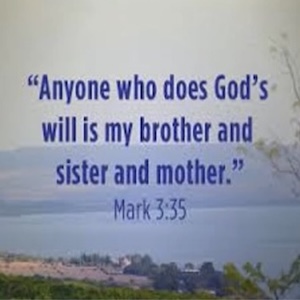
    • Jesus redefines family as those who do the will of God, and the passage encourages personal reflection on the message.
  • 07:32 Jesus addresses accusations and redefines family, emphasizing the importance of spreading the gospel and standing firm in faith despite persecution.
    • Jesus addresses accusations of being possessed by demons and explains the consequences of blaspheming against the Holy Spirit.
    • Jesus redefines family as those who do the will of God, inviting the audience to reflect on the passage and discuss with others.
    • The gospel of Mark was written to show that Jesus is the true king and is on the offensive against the forces of evil, drawing both positive and negative responses from people.
    • Expect persecution if you stand for your faith, as the world will hate you for living the Christian life.
    • If we don't actively spread the gospel, we are not fulfilling our mission, and we should approach God in prayer with trust and not doubt.
    • Blaming God for things happening in life and feeling immobilized and confused.
  • 14:09 Jesus is approached with trust in his power and providence, paralleling the consequences of sin with the accusation made against him by the scribes.
    • The passage reflects on the way people approach Jesus with trust in his power and providence, paralleling the consequences of sin with the accusation made against Jesus by the scribes.
    • In chapter 3, the man is accused of being in line with Basel bow, which is important because in 2 Kings chapter one, after Ahab's death, the king of Moab rebelled against Israel and Ahaziah fell through the lattice of his roof Terrace at Samaria.
    • Elijah's appearance and the events surrounding him parallel the need to seek healing from the true king, Jesus Christ, and the consequences of looking to evil authorities for hope.
    • The passage discusses the concept of intercalation in the gospels, using the stories of Jairus and the hemorrhaging woman as an example.
    • Jesus is restoring what sin has destroyed, and the division in his family can be explained by the ironic division present if he were doing these things in the name of Satan.
    • The passage in Matthew Chapter 10 is difficult for people to read.
  • 20:18 Jesus challenges people to love him more than their family, recognizing sin brings division but we should live out our faith unapologetically and defend it with love and gentleness.
    • Jesus brings division by challenging people to love him more than their own family, and those who respond with insecurity or hostility are not truly his family.
    • The term "brothers and sisters" in Greek does not necessarily mean blood siblings, but can also refer to relatives or kin, as seen in the case of Abram and Lot in Genesis.
    • Joseph may have been previously married and had older children, and Mary was a consecrated virgin, leading to the belief that Jesus had older half-siblings or cousins.
    • The punishment for a rebellious son was to be stoned to death, and accusations against Jesus' family members being older relatives rather than siblings.
    • Living our faith in a way that demands a response and being representatives of Christ in the world is the challenge of our baptism.
    • Recognizing sin will bring division, but Jesus is with us in the midst of it, so we should not shy away from living out our faith unapologetically, defending it with love and gentleness, and explaining it to those who are curious or seeking.
  • 27:37 Rejecting the opportunity for Jesus to save us is blaspheming against the Holy Spirit, the only unforgivable sin is the one we do not ask forgiveness for.
    • Mary's perpetual virginity is not a biological reality but a conceptual one, and the unforgivable sin is blasphemy against the holy spirit.
    • Rejecting the opportunity for Jesus to save us is blaspheming against the Holy Spirit, as the only unforgivable sin is the one we do not ask forgiveness for.
    • Blasphemy against the Holy Spirit is unforgivable, but it requires knowingly rejecting Jesus and the desire for forgiveness.
    • As Catholics, we have a higher responsibility to live up to the fullness of Truth, but we also receive bountiful Graces and access to the sacraments.
    • Rejecting the Holy Spirit and being an atheist may result in judgment based on the level of awareness and understanding.
    • The lack of room to eat in the beginning of the passage symbolizes the lack of space for fellowship and family, which leads to division and accusation.
  • 34:33 Jesus emphasizes the importance of removing sin to help others, warns against blasphemy of the Holy Spirit, and discusses the power of faith, baptism, and sanctification in salvation.
    • Jesus is saying that in order to help someone, you must first remove the presence of sin or Satan within them, otherwise he cannot come in and help.
    • Jesus is warning against blasphemy of the Holy Spirit, and while the Pharisees are guilty of this, we can create a clean spirit for ourselves over time through sanctifying grace and building virtue.
    • Salvation is a free gift from Jesus that requires faith and baptism, but ongoing justification and growth in sanctification are necessary to live up to the commitment made to the Lord.
    • Lucifer, Satan, and other demonic names are titles or false gods from Pagan religions, with each name representing certain qualities of the enemy or sin.
    • The devil's manifestations and the best way to bind him through priest exorcism or deliverance prayer are discussed, with mention of the correlation between demons and the seven deadly sins.
    • Jesus is more powerful than demons, and by speaking his name, we can unbind ourselves from the enemy.
  • 42:31 Pray for deliverance and healing in the name of Jesus, live in a state of grace, and remove spiritual obstacles through repentance and a change in lifestyle.
    • Exorcism can only be performed by a priest for full-blown possession, but individuals can use deliverance prayer for themselves and their family.
    • Pray for deliverance and healing in the name of Jesus, claim it out loud, and live in a state of grace for effective results.
    • Prayer is not a quick fix, it requires a change in lifestyle and repentance to remove spiritual obstacles.
    • The enemy cannot enter your home unless you invite them in, similar to the lore of vampires in Buffy the Vampire Slayer.
    • Participating in spiritual practices without protection can invite the enemy into our lives, leading to unintended influence and footholds, so it's important to repent, get rid of these practices, and actively root out sin.
    • The core doctrine is that Mary was a perpetual virgin, and the sacraments are effective regardless of the personal state of the priest.
  • 51:04 Claim the authority of Jesus Christ, repent from sin, and boldly stand up for the faith in a society facing a crisis of masculinity and fatherhood.
    • The authority structure within the home exists with the father as the spiritual head, and there is a crisis of masculinity and fatherhood in society.
    • The authority structure in the family doesn't change, but it illuminates the ways in which the enemy can work, and we all have a responsibility to claim the authority of Jesus Christ over those in our lives and actively repent from sin.
    • The speaker boldly proclaims their belief in Jesus and is unafraid to express it.
    • Have confidence in Jesus Christ, repent of your sins, and stand up boldly for the faith.

Fr. Geoffrey Plant

YouTube player

SOURCE: Fr. Geoffrey Plant’s Archives

Jesus’ public ministry and teachings in the gospel of Mark emphasize compassion, forgiveness, and the formation of a new family based on those who do the will of God.

SUMMARY w/ Timestamps
  • 00:00 The homily discusses the transition to Ordinary Time and the upcoming gospel readings, focusing on Jesus' public ministry and journey to Jerusalem for Passover.
    • The homily discusses the transition from the Easter season to Ordinary Time and the gospel readings for the upcoming Sundays.
    • The first reading complements the theme of the Gospel, and the Gospel of Mark begins with a prelude to Jesus' public ministry and continues with an account of his ministry in the Galilean region.
    • Jesus and his disciples journey to Jerusalem for Passover, with Mark giving a day-by-day account of the final week of Jesus' life, beginning with his triumphal entry into the city and concluding with the women at the empty tomb on Easter Sunday morning.
  • 04:12 The Bible contains the story of the serpent tempting the woman to eat the forbidden fruit, leading to their realization of their nakedness and hiding from God.
    • The Bible contains villains, with the first being the serpent in Genesis.
    • The serpent tempts the woman to eat from the tree of the knowledge of good and evil by convincing her that she will not die and will become like gods.
    • The woman is deceived by the serpent and eats the forbidden fruit, leading to her and her husband realizing their nakedness and hiding from God.
    • The man and woman hide from God, but God invites them to come out and be seen.
  • 10:06 Adam and Eve's expulsion from the garden of Eden is about their desire for moral autonomy.
    • Adam and Eve shift the blame for eating the forbidden fruit onto each other and God, leading to their expulsion from the garden of Eden.
    • The story of Adam and Eve's exile from the garden is not just about eating a piece of fruit, but about their desire for moral autonomy.
  • 12:57 Human beings commit idolatry by overriding God's law, leading to alienation from our true selves, but this can be overcome by God's power as seen in the lives of St Charles de Foucauld.
    • Human beings commit idolatry by attempting to override the law of God and usurp His sovereignty, leading to alienation from our true selves and failure to fulfill our vocation as image-bearers of the divine.
    • The meaning of "missing the mark" is reflected in the lives of St Charles de Foucauld and the example he set as a faithful servant, drawing others towards his Master.
    • God created the world and humans, but they fell from grace, leading to a constant struggle between good and evil, which can be overcome by God's power.
  • 18:26 Jesus demonstrates his authority to forgive sins, dines with sinners, challenges religious practices, and emphasizes compassion over strict rules in Mark's gospel.
    • The human heart needs to be changed by the presence of the living God, as seen in Mark's gospel where Jesus faces opposition but demonstrates his authority to forgive sins.
    • Jesus dines with tax collectors and sinners, stating that he came for sinners, not the righteous, and explains that his disciples cannot fast while he is with them.
    • Jesus challenges traditional religious practices and authority, emphasizing the importance of compassion and doing good over strict adherence to rules.
  • 22:41 Jesus faces opposition from both his family and others, as the scribes accuse him of casting out demons by the power of Beelzebul and his mother and brothers summon him.
    • The "Markan sandwich" storytelling technique in today's gospel illustrates the opposition to Jesus from both his family and others.
    • The scribes try to silence Jesus by accusing him of casting out demons by the power of Beelzebul, and Mark mentions that the mother and brothers of Jesus are outside and summon him.
  • 25:06 Jesus forms a new family based on those who listen to his word and do the will of God, rather than blood relationships, and his blood family gets a bad press in Mark's gospel.
    • Jesus forms a new family based on those who listen to his word and do the will of God, rather than blood relationships, and his blood family gets a bad press in Mark's gospel.
    • In Mark's world, creation is in chaos, with humans meant to have dominion but instead living in enemy-occupied territory, constantly in conflict with demons and malign forces.
  • 28:46 Jesus' arrival represents the renewal of creation, with the casting out of demons as a sign of God's rule and forgiveness for all sins except blasphemy against the Holy Spirit.
    • The arrival of the rule of God in Mark's gospel represents a renewal of the whole creation, acknowledging the reality of spiritual forces opposed to God and life.
    • The casting out of demons is a sign of God's rule, and Jesus rebuts the accusation of using Beelzebul's power by explaining that he is the stronger one who has bound Satan to set free those enslaved by evil powers.
    • Jesus promises forgiveness for all sins except for blasphemy against the Holy Spirit, which places one beyond the reach of God's saving grace.

Fr. Bryan Kujawa

SOURCE: Fr. Bryan Kujawa’s Archives.โ€‚Switch videos using icon in the upper right corner.

YouTube player

SOURCE: Fr. Bryan Kujawa’s Archivesโ€‚Switch videos using icon in the upper right corner.

Keith Nester
YouTube player

SOURCE: YouTube Video Playlist

God has a plan to fix the chaos in the world, and our faith in His ultimate glory motivates us to focus on His mercy and forgiveness, seek obedience and faith, and find hope and joy in suffering.

SUMMARY w/ Timestamps
  • 00:00 Keith Nester discusses the confusion around the 10th Sunday in Ordinary Time and prepares listeners for the upcoming Sunday readings, focusing on the impact of the Nova sordo and the importance of studying scripture.
    • Keith Nester discusses the confusion around the 10th Sunday in Ordinary Time and prepares listeners for the upcoming Sunday readings.
    • The speaker discusses the difference between the Latin Mass and the Nova sordo, and explains why they focus on the readings for the Nova sordo in order to have the biggest impact on everyday Catholics.
    • The speaker is frustrated because they couldn't access a website to find an article to share.
    • Ordinary time in the Catholic liturgical calendar is divided into two periods, with the second period starting on Pentecost Sunday and continuing until the Advent season, and certain solemnities and events taking precedence over ordinary time.
    • The speaker discusses the confusion and differences between the novas sorto missile and the Latin Mass missile, admitting to not being an expert on the liturgical calendar.
    • The speaker will focus on studying the scripture and including the responsorial Psalms in future episodes of unpacking the mass.
  • 06:06 God has a plan to fix the chaos in the world as shown in the readings from Genesis 3, and the speaker aims to maintain balance of responsibilities by removing time-consuming tasks.
    • The speaker aims to maintain the balance of responsibilities by removing time-consuming tasks that are less important.
    • The speaker will continue to unpack the gospel readings, but may skip some weeks in the interest of time, and wants viewers to understand his thought process.
    • God has a plan to fix the chaos in the world and we will see exactly what that plan is and who he works through, as shown in the readings from Genesis 3.
  • 09:26 The debate over the translation of Genesis 3:15 focuses on Jesus and the woman's role in crushing the head of the serpent, with the doctrine about the Virgin Mary unaffected by the specific wording.
    • The debate is about the translation of a biblical passage regarding who will crush the head of the serpent, with some Catholics preferring the Dewey Reams version that references the Blessed Mother, while modern translations refer to her Offspring.
    • The translation issue with St Jerome's Latin Vulgate led to debate over the use of masculine or feminine language in Genesis 3:15, but ultimately the focus is on Jesus and the woman's role in crushing the head of the serpent.
    • It's important not to get too attached to certain ideas and turn them into dogmas, as it can make us look unreasonable and we should be open to different explanations.
    • The woman mentioned in Genesis 3:15 is Mary, and the doctrine about the Virgin Mary is not affected by whether it's her heel or her offspring's heel that crushes the head of the serpent.
    • God's plan to fix the problems caused by Adam and Eve's disobedience is through Jesus as the new Adam and Mary as the new Eve, leading to the reconciliation of all the problems in the world.
  • 15:01 God's plan works through disobedience, Blessed Virgin Mary is important, Psalm 130 emphasizes mercy and redemption.
    • The speaker discusses the different interpretations of the phrase "her seed" in the Bible and encourages unity among Catholics despite differing views.
    • God's plan is at work even in disobedience, and the Blessed Virgin Mary plays a huge role in accomplishing his will.
    • The responsorial Psalm 130 emphasizes the mercy, redemption, and steadfast love of the Lord, urging Israel to hope in Him.
  • 17:52 Our faith in God's plan motivates us to focus on His ultimate glory, even in the midst of affliction and brokenness.
    • The Exodus 90 app offers daily scriptures, reflections, and prayers dedicated to the Sacred Heart of Jesus, and provides a powerful enthronement experience for you and your family.
    • St. Paul writes about having faith and speaking confidently, knowing that God will raise us up and extend grace to more people.
    • Affliction prepares us for eternal glory, as we focus on the unseen and have the same spirit as the psalmist who spoke of affliction.
    • Our faith motivates us to believe that even in the midst of brokenness and affliction, God has a plan for us and we need to focus on His ultimate glory.
  • 21:50 Prioritize the weight of Glory over worldly concerns, find hope and joy in suffering, and remember our eternal home from God.
    • The weight of Glory is more powerful and should be prioritized over worldly concerns.
    • To find hope and joy in suffering, remember the smallness of suffering compared to the glory of God, and let suffering increase your hunger for righteousness and God's glory.
    • Even if our earthly lives are destroyed, we have an eternal home from God, so don't lose heart and let the struggles of life keep you from speaking and praising God.
  • 24:52 Jesus addresses accusations of being possessed by demons, emphasizes the importance of accepting his ministry without personal agendas, and warns against attributing the work of the Holy Spirit to the devil, leading to eternal loss if one refuses to accept God's mercy and forgiveness.
    • Jesus addresses accusations of being possessed by demons and explains the consequences of division and blasphemy against the Holy Spirit.
    • Jesus emphasizes that those who do the will of God are his true family, highlighting the importance of accepting his ministry without imposing personal agendas.
    • The unforgivable sin according to Jesus is attributing the work of the Holy Spirit to the devil, which includes drawing us to Christ, convicting us of sin, and leading us to repentance.
    • Deliberately refusing to accept God's mercy and forgiveness can lead to eternal loss.
    • Committing the unforgivable sin is attributing the work of the Holy Spirit to Satan, cutting yourself off from repentance and hardening yourself into a state of refusal, ultimately leading to being lost if you die without turning back to God.
  • 29:40 Joining God's family through obedience and faith brings hope and a better future, so seek God's mercy, confess your sins, and don't lose hope.
    • Jesus is not minimizing his family, but inviting anyone who obeys the will of God to join his family.
    • Jesus entrusts the care of his mother to John, inviting all to join through obedience to God.
    • Joining God's plan of salvation through faith and obedience allows you to be part of his family, giving hope and a better future, with both faith and works being necessary.
    • God has a plan to deal with your problems on Earth, and when things get worse, remember that your eternal reward is better, so never attribute God's work to the devil, and if you're afraid of committing the unforgivable sin, know that seeking God's mercy shows that you haven't, so turn to Him, confess your sins, and don't lose hope.
    • Thanks for joining me on Unpacking The Masks, I appreciate your support and encouragement, take care and God bless.

Catholic Sunday Scriptures In Context

by Fr. Paul
Galetto, OSA

SOURCE: YouTube Video Playlist

SUMMARY w/ Timestamps
  • 00:00 The story of Adam and Eve in the Book of Genesis is about the consequences of not following God's instructions.
  • 00:50 People cannot hide their guilt before God and are experiencing spiritual deprivation, as seen in their immediate blame of others for their sins.
  • 01:19 Adam and Eve blame each other and the serpent for their choices, refusing to take responsibility, leading to the prediction of the Immaculate Conception.
  • 01:59 Paul discusses the struggle between life and death, emphasizing the power of the Resurrection to transform suffering.
  • 02:40 Our temporary world is contrasted with the eternal dwelling place being built for us in heaven.
  • 03:20 The Gospel of Mark ends with an example of intercalation, with two stories wrapped around each other.
  • 03:40 Family and scribes have different perspectives on Jesus, with the unforgivable sin being attributing evil to the holy spirit, and real kinship determined by acceptance of God's will.
FIRST READING
SECOND READING
GOSPEL

Bulletin
Inserts

by Edrianne Ezel

SOURCE: Cycle B Index

1st Reading: Consequences
2nd Reading: Looking Beyond
Gospel: The Odd Person

Michal
Hunt

Agape Bible Study

Overcoming Evil

10th Sunday of Year B

The First Reading and the Gospel Reading define the total phenomenon of evil as the Satan (ha satan, “the adversary” in Hebrew), also known as the devil (diabolos, “false accuser” in Greek), the serpent, and Beelzebul.  The Book of Revelation describes this entity of evil as, The huge red dragon, the ancient serpent, who is called the Devil and Satan who deceived the whole world, was thrown down to earth, and its angels thrown down with it (Rev 12:9).

FIRST READING

The Fall

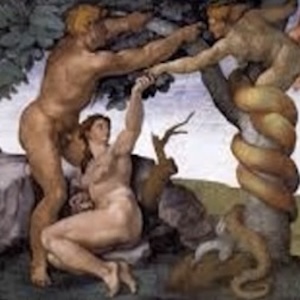
In the First Reading, Satan, disguised as a serpent, deceived our original parents and led them into sinning against God by eating the fruit of the forbidden tree (Gen 3:1-7). Their sin was an act of rebellion in the attempt to become like God in deciding for themselves what was good and what was evil. It is a decision that is on-going and continues to cause suffering for members of the human family.

In the Lord there is Mercy and Redemption

The Responsorial Psalm is a penitential psalm in which we cry out to God to forgive our sins and to have mercy on our souls. The psalmist has confidence that God will extend His mercy because He has promised His covenant people His forgiveness.  The psalmist has confidence that forgiveness will come in the same way that the sentinels (watchmen) are sure that dawn will come to announce another day.  The psalm calls on the covenant people in every generation to trust in the Lord and His promise to redeem them from all their sins.

READ MORE

Michal E Hunt, Copyright ยฉ 2014; revised 2023 Agape Bible Study; used with permission

SECOND READING

The Promise of Eternal Glory

In the Second Reading, like the psalmist, St. Paul proclaims his faith by affirming his belief in the promise of life beyond the limits of human death and the life-giving effect of his mission in preaching the Gospel of salvation to the Corinthians. When Paul writes with confidence concerning his belief in Jesus' Second Advent and the bodily resurrection of the righteous dead, to include the Corinthians Christians and their appearance in the presence of the Most Holy God.

READ MORE

Michal E Hunt, Copyright ยฉ 2014; revised 2023 Agape Bible Study; used with permission

GOSPEL

Blasphemy of the Scribes and
the Parable of the Strong Man

In the Gospel Reading, the scribes who are the teachers of the Law maliciously accuse Jesus of healing the afflicted by the power of Beelzebul, referring to Satan. In their arrogance, they failed to understand Jesus' mission. He is the promised Redeemer-Messiah who has come to undo the works of Satan and to restore humanity to the intimacy of the relationship Adam and Eve enjoyed with God before their fall from grace.

READ MORE

Michal E Hunt, Copyright ยฉ 2014; revised 2023 Agape Bible Study; used with permission

Vince
Contreras

Scripture Study

Discussion Questions

10th Sunday of Year B

  • In the first reading, what is Adamโ€™s excuse for his disobedience? Who is he really blaming (verse 12)? How can this be related to โ€œblaspheming the Holy Spirit (of God)โ€?
  • In the second reading, St. Paul talks about earthly afflictions, but he also testifies that he is not discouraged or focused on the hardships. In what does he place his hope? (verses 4:14-15, 17-18, 5:1)
  • In the Gospel reading, what might be the most likely motivation for the scribes to accuse Jesus of casting out demons by the power of Satan? Unbelief? Jealousy? Why?
  • What makes blasphemy of the Holy Spirit the unforgivable sin as compared to other sins?
  • What does Jesus say makes someone his brother, sister, or mother? How does this not exclude, but rather is exemplified by his biological mother, the Blessed Virgin Mary? (see Luke 1:42-49)
  • Why did Jesusโ€™ relatives think he was โ€œbeside himselfโ€? Have you ever been criticized for being โ€œtoo religiousโ€, or have you accused someone else of being so? What was the truth in either circumstance?
  • Who is the โ€œstrong manโ€ in verse 27? If a โ€œstrong manโ€ has gained a foothold in some area of your life, how can he be bound?

DOWNLOAD PDF

SOURCE: SundayScriptureStudy.com / used with permission