Free clip art, comics, graphics for bulletins, web pages, presentations, etc. for 2nd Sunday of Lent (A) Genesis 12:1-4a 2 Timothy 1:8b-10 Matthew 17:1-9

Clip art, comics, Bulletin Inserts for Sunday

Clip art, comics, Bulletin Inserts for Sunday

Clip art, comics, Bulletin Inserts for Sunday

Clip art, comics, Bulletin Inserts for Sunday

February 22, 2026

March 1, 2026

2nd Sunday of Lent (A)

FR. LONSDALE'S CLIPARTSUNDAY GRINSBULLETIN INSERTS

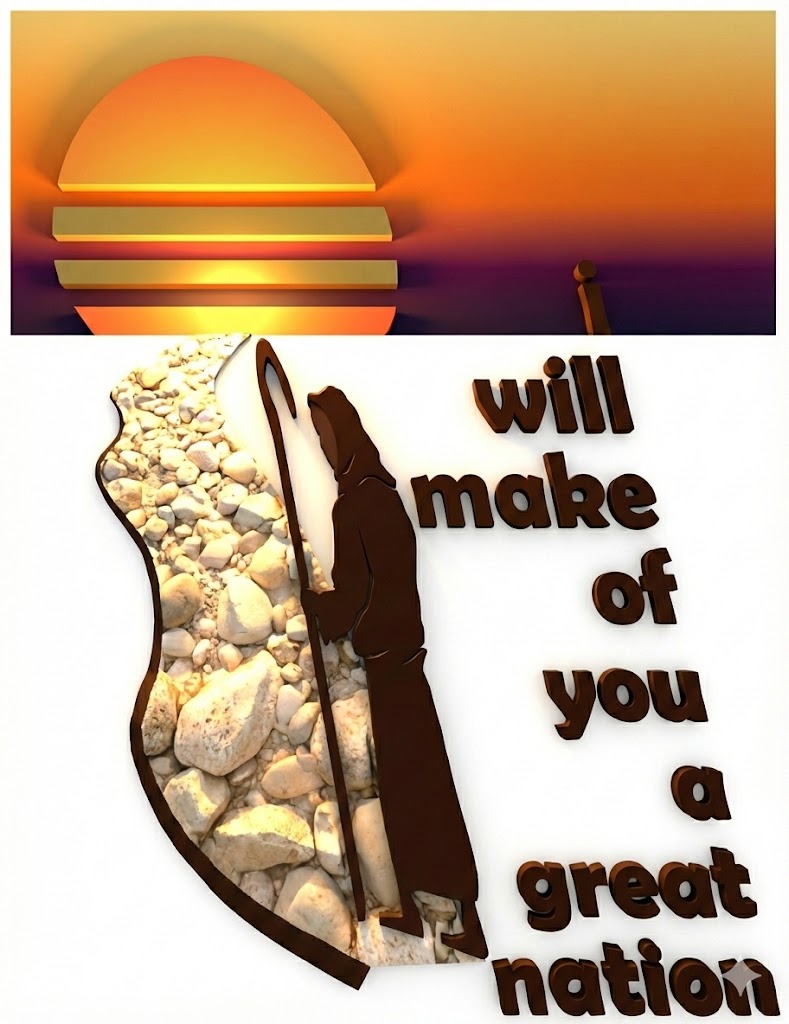
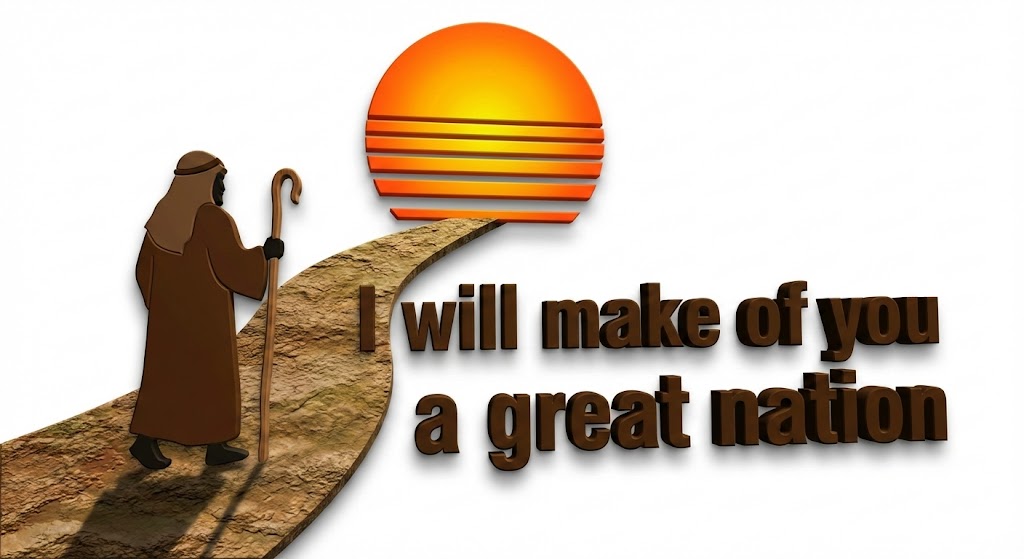
Using provided gif, reimagine it by colorizing it and making it 3-D so image pops out, keep the white background.

Give a detailed art and theology analysis of the image connecting it ############/

Genesis 12:1-4a

CLICK HERE FOR A MORE DETAILED ANALYSIS

Theological Context: Genesis 12:1-4a

This passage records the pivotal moment when God calls Abram (later Abraham) out of his homeland to begin a new relationship that will shape the course of biblical history.

  • The Divine Call (v. 1): God commands Abram, "Go from your country and your kindred and your father's house to the land that I will show you." This is a radical call to sever all ties to his past—his identity, security, and family—to trust in an unseen God and an unknown future. It is the ultimate test of faith.+1
  • The Sevenfold Promise (vv. 2-3): In response to this obedience, God makes a series of staggering promises:
    1. "I will make of you a great nation." This is the promise of land and innumerable descendants, a reversal of Abram's current state of childlessness.
    2. "I will bless you." A promise of personal divine favor, protection, and prosperity.
    3. "I will make your name great." God will bestow honor and reputation, in contrast to the human-led attempt to "make a name" at Babel (Gen. 11:4).
    4. "You will be a blessing." Abram is not just a recipient; he is to be a conduit of God's blessing to others.
    5. "I will bless those who bless you..."
    6. "...and him who dishonors you I will curse." God aligns Himself with Abram, offering divine protection.
    7. "In you all the families of the earth shall be blessed." The ultimate purpose of this covenant is universal redemption, extending God's grace to all humanity through Abram's lineage, a promise fulfilled in Jesus Christ.
  • Abram's Obedience (v. 4a): The text records Abram's immediate and simple response: "So Abram went, as the LORD had told him." His faith is demonstrated not in words, but in the action of stepping out onto the unknown path God set before him.+1

Artistic Analysis

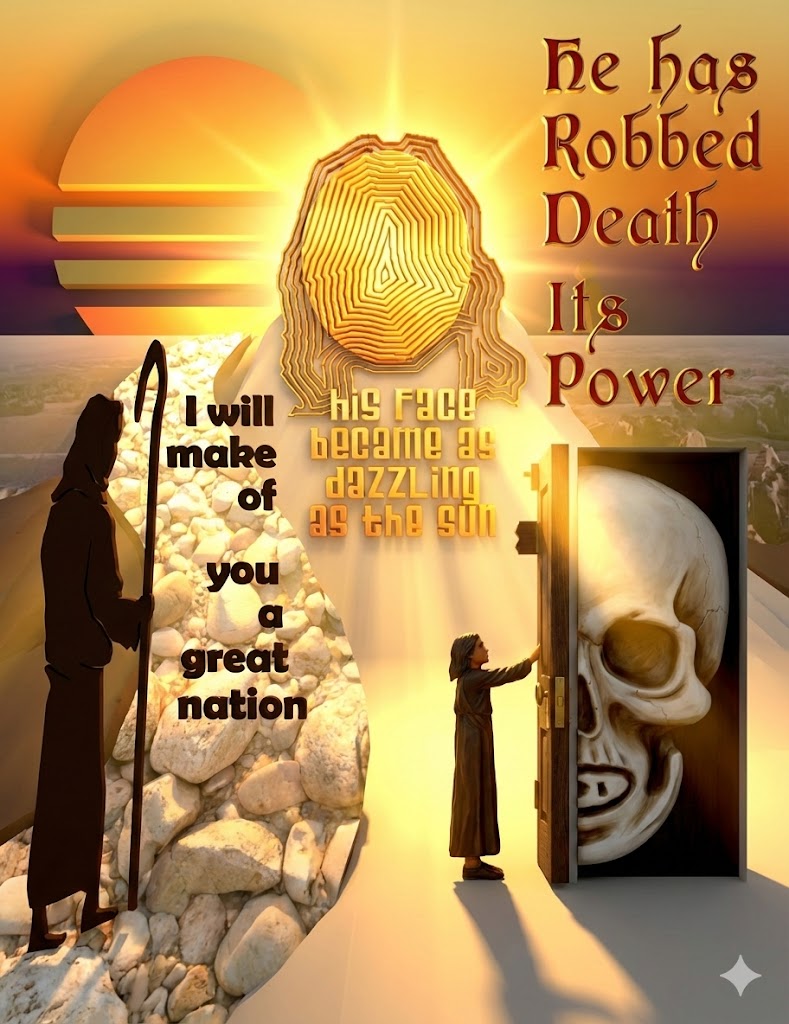
The image is a striking 3D conceptual illustration that uses a blend of warm, organic tones and clean, geometric forms to convey a spiritual message.

  • Composition and Symbolism: The composition is dominated by a strong diagonal line created by a winding, rocky path. This path leads the viewer's eye from a silhouetted shepherd figure in the foreground towards a stylized sunrise in the background. This visual journey immediately suggests themes of pilgrimage, faith, and moving towards a divine destination.
  • The Shepherd: The figure is a dark brown silhouette, a universal representation of a wanderer or leader. The presence of a staff identifies him as a shepherd, a deeply resonant biblical archetype symbolizing guidance, care, and a nomadic life lived in dependence on God. His forward-leaning posture indicates active movement and obedience.
  • The Path: The path is rendered with a light, rocky texture, suggesting a journey that is tangible and perhaps arduous, not an easy, smooth road. Its brightness, contrasting with the darker shepherd, implies it is illuminated by a divine light, a "path of righteousness."
  • The Sun and Sky: The background features a stylized sun composed of glowing orange and yellow horizontal bars rising from a deep purple and orange horizon. This "sunrise" motif evokes feelings of hope, new beginnings, and the dawning of a divine plan. The light from the sun appears to be the source of illumination for the entire scene.
  • The Text: The phrase "will make of you a great nation" is rendered in bold, three-dimensional brown letters that appear to float beside the path, linking the shepherd's journey directly to this specific promise. The solidity of the text makes the divine word feel substantial and undeniable.
Synthesis: Art and Theology

The image is a powerful visual exegesis of Genesis 12:1-4a, capturing the essence of Abram's call and God's promise.

  • The Journey of Faith: The central image of the shepherd on the rocky path perfectly embodies Abram's obedience to the command to "Go." The path leads away from the viewer, into the horizon, symbolizing the departure from the familiar "country and kindred" towards the unknown "land that I will show you." The rocky texture acknowledges the challenges of this life of faith, which is not without hardship but is guided by God.
  • The Promise of a Great Nation: The text "will make of you a great nation" is placed prominently, anchoring the viewer in the primary promise of the passage. Its solid, 3D rendering visually represents the certainty and immutability of God's word. Just as the text is tangible in the image, so too is God's promise to Abram a concrete reality he can rely on.
  • Divine Dawn and New Beginning: The sunrise is a rich theological symbol. It represents the dawning of this new covenant, a pivotal moment in salvation history where God begins a new work through one man. The sun itself represents God as the source of light, guidance, and blessing. The path leads directly to this divine light, showing that Abram's journey is ultimately a journey towards God Himself.
  • The Shepherd Motif: While Abram was a herdsman, the imagery of the shepherd connects him to a broader biblical theme of leadership chosen by God. It anticipates key figures like Moses and David, and ultimately points to Jesus Christ, the "Good Shepherd" who lays down his life for the sheep. In this context, the shepherd figure represents anyone who hears God's call and steps out in faith, trusting in His promises to lead them to a greater destiny.

The image masterfully uses the visual language of a journey towards light to illustrate the profound theological truths of Genesis 12. It depicts faith not as a static belief, but as active movement along a path defined by God’s powerful and irrevocable promises.

2 Timothy 1:8b-10

CLICK HERE FOR A MORE DETAILED ANALYSIS

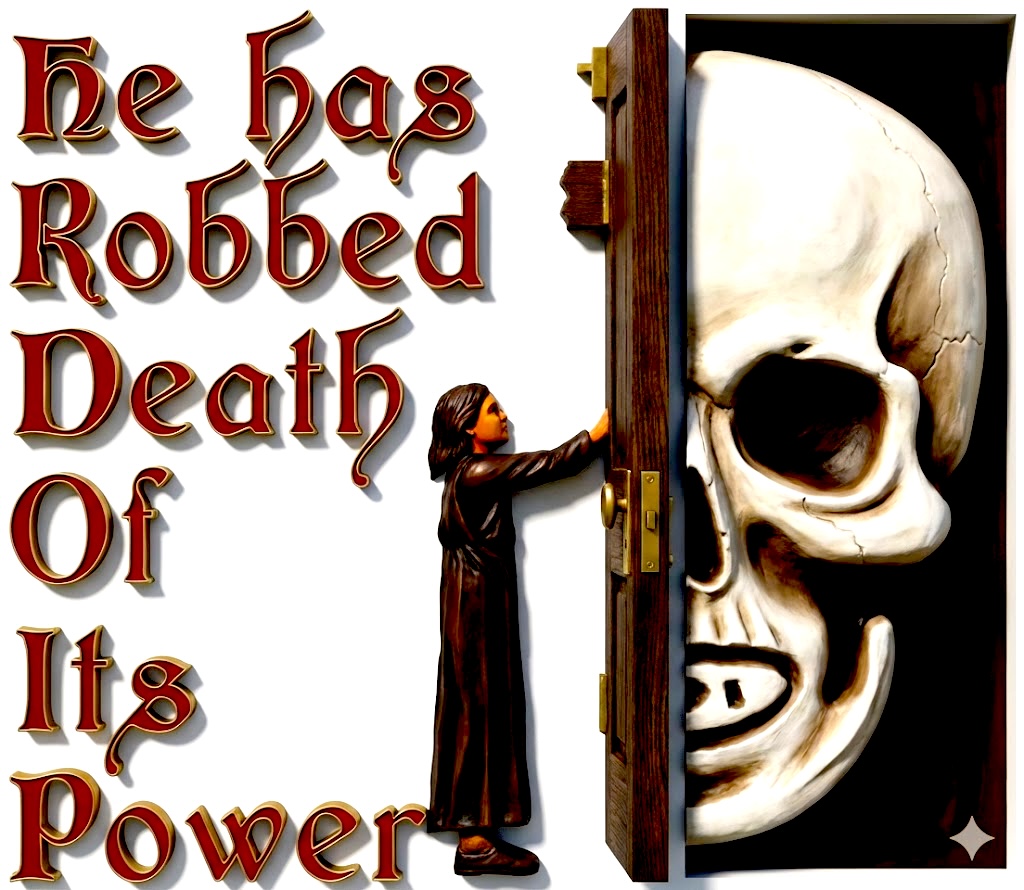
Theological Analysis: 2 Timothy 1:8b-10

The core of this passage culminates in verse 10, which states that God's grace "has now been revealed through the appearing of our Savior, Christ Jesus, who has destroyed death and has brought life and immortality to light through the gospel."

  • "Robbed Death of Its Power": The text in the image perfectly echoes Paul’s assertion that Christ has "destroyed" or "abolished" death. In Christian theology, physical death still occurs, but its eternal permanence and spiritual sting have been removed (or "robbed"). Death is no longer the ultimate victor; it has been reduced to a mere threshold.
  • Closing the Door on the Final Enemy: The act of shutting the door on the skull represents the finality of Christ's victory. Because Christ conquered the grave, humanity is now empowered to "close the door" on the fear, finality, and dominion of death.
  • Bringing Life to Light: Paul writes that Jesus brought "life and immortality to light." The image brilliantly captures this dualism. The realm behind the door where the skull resides is cloaked in deep shadow, while the side where the figure stands is bathed in stark, brilliant white. The gospel has literally brought the believer out of the dark and into the light.

Artistic Analysis: Visual Composition

The 3-D reimagining of this artwork uses scale, color, and physical boundaries to emphasize its theological weight.

  • Scale and Proportion: The most dramatic element is the massive size of the skull compared to the small, humble figure. The skull is overwhelming and imposing—representing how monumental and terrifying death feels to mortal humans. Yet, despite its size, the small figure is casually and confidently pushing the heavy door closed against it. This illustrates that victory over death does not rely on human strength, but on the divine power referenced in the text.
  • The Door as a Barrier: The thick, wooden door acts as the definitive barrier between the two realms. In Christian art, wood frequently serves as a subtle motif for the cross. It is the wood of the door (the cross) that effectively traps death and separates it from the living.
  • Color Palette and Typography: * Red and Gold: The lettering features deep reds and gold accents. The red evokes the blood of Christ (the mechanism of salvation in Christian theology), while the gold signifies royalty, divinity, and ultimate victory.
    • The Memento Mori: The skull is a classic memento mori (a reminder of death). However, rather than serving as a warning that death is coming for the viewer (as is traditional in art history), it is rendered powerless, stuck behind a closing door.
  • The Posture of the Figure: The figure is not straining, panicking, or bracing themselves against the door. Their posture is calm and deliberate. This reflects the peace and assurance that 2 Timothy 1 calls believers to have—a spirit of power, not of fear.

The image is a literal manifestation of Christian assurance. It takes the abstract theological concept of “destroying death” and makes it a tangible action. The believer can boldly shut the door on the darkest, most imposing force in human existence simply because, as the text proclaims, the entity behind the door has already been robbed of its power.
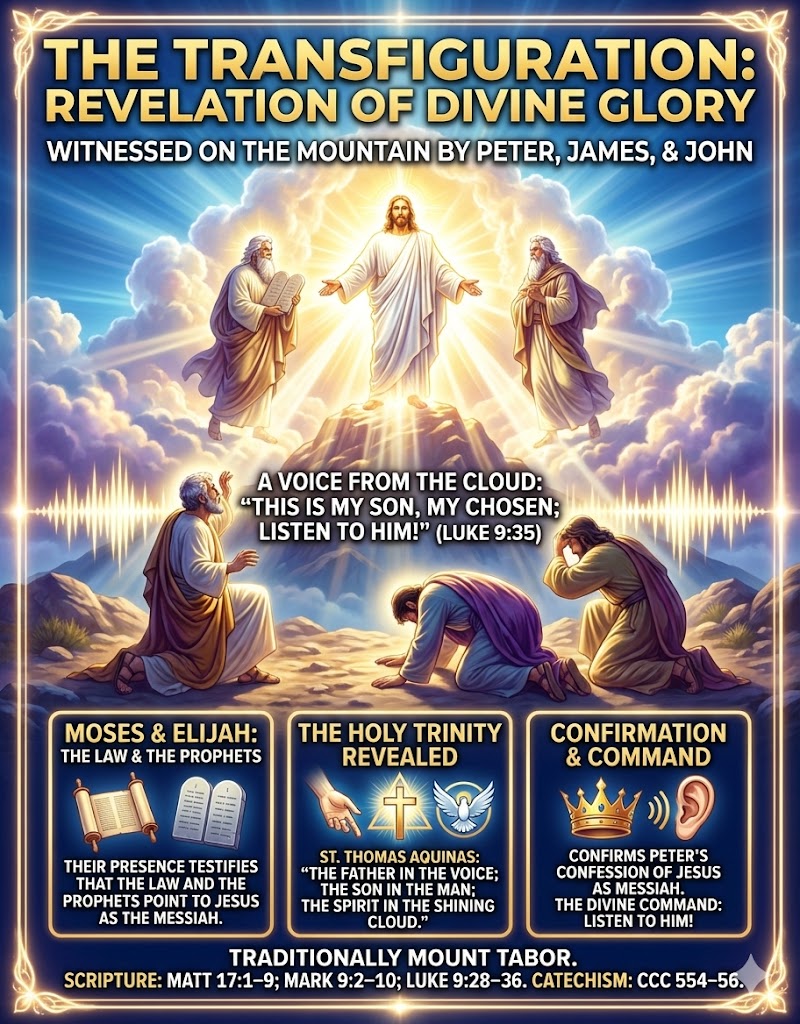
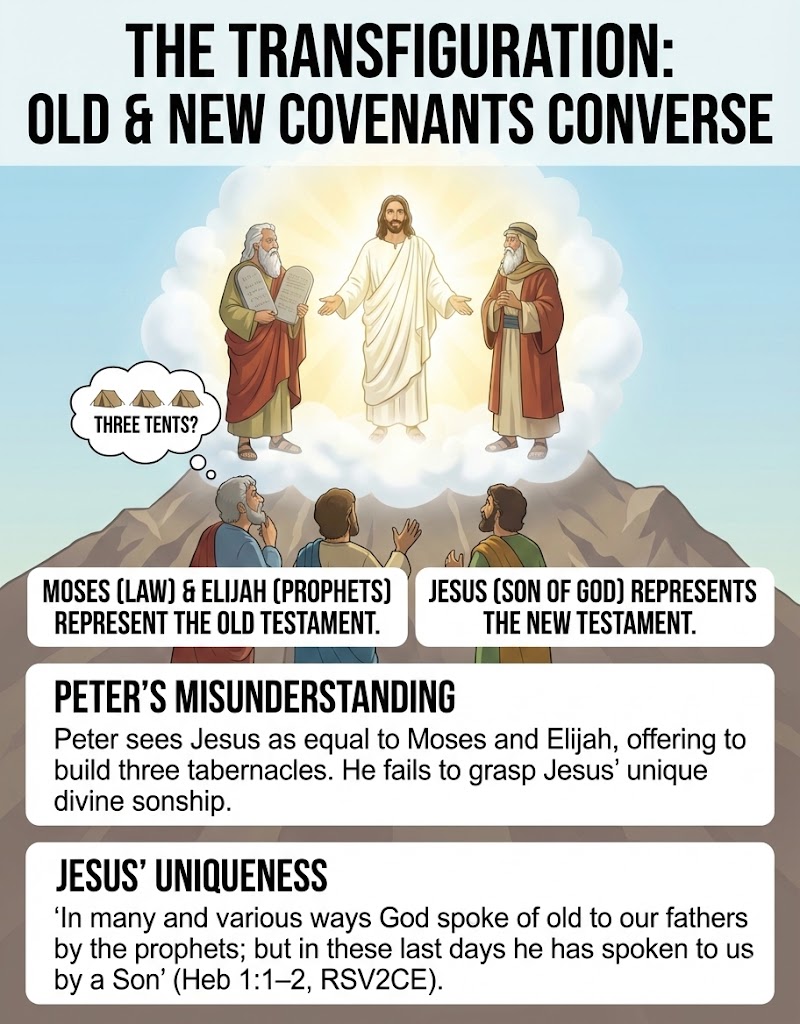
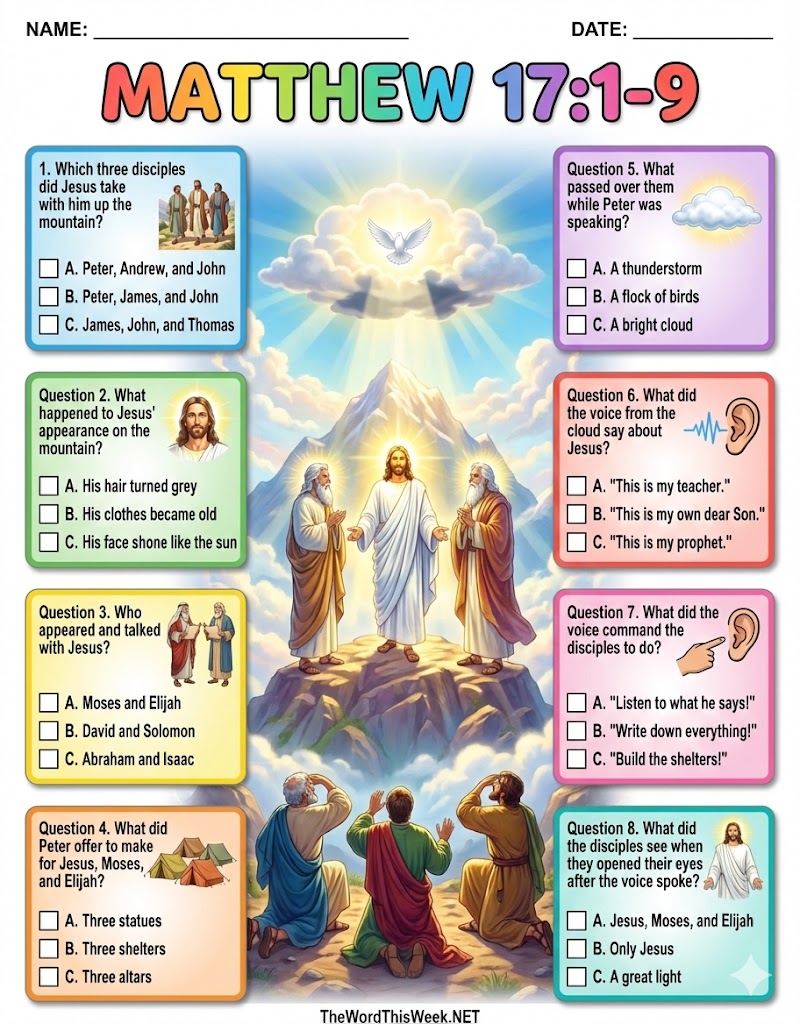
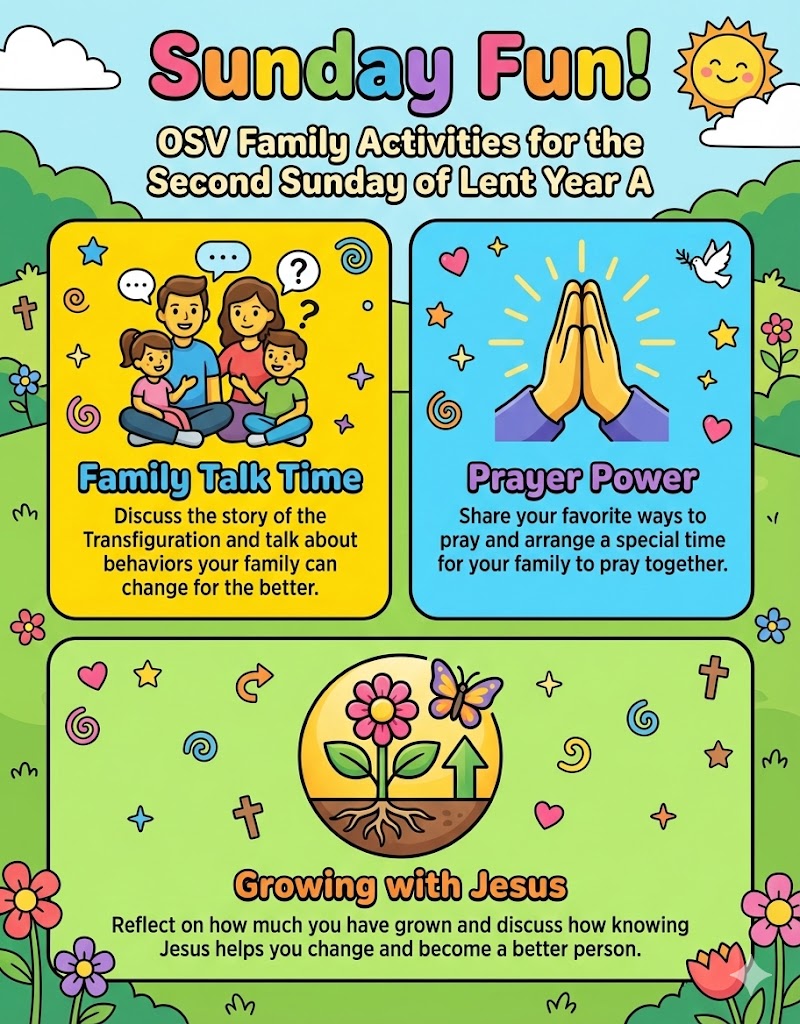
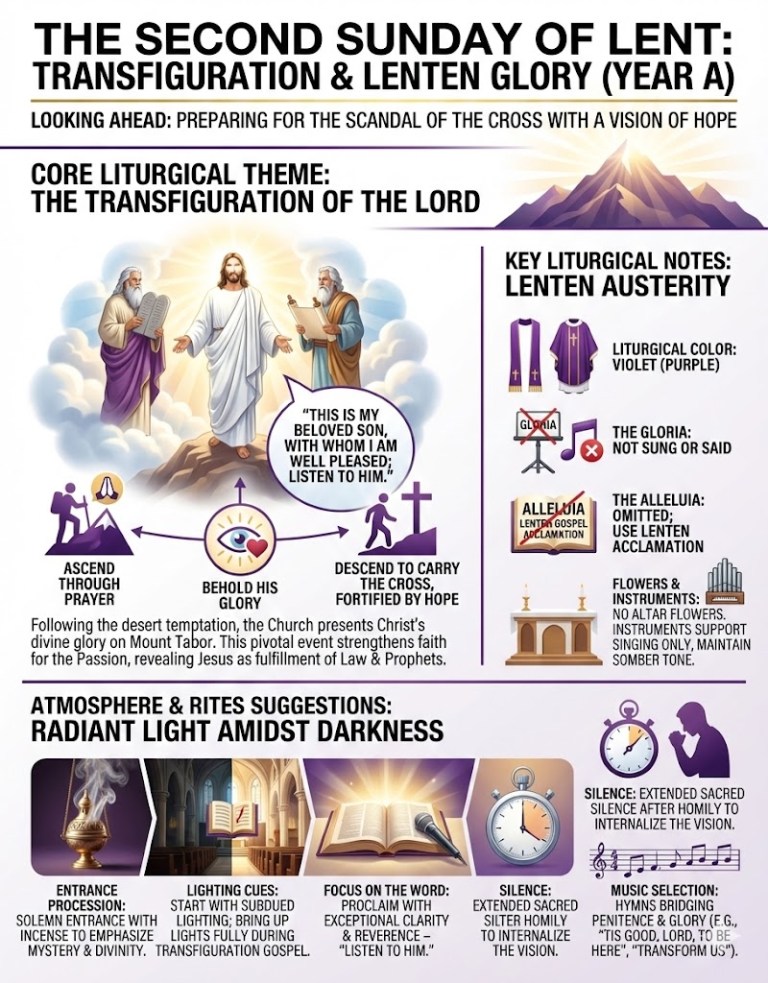
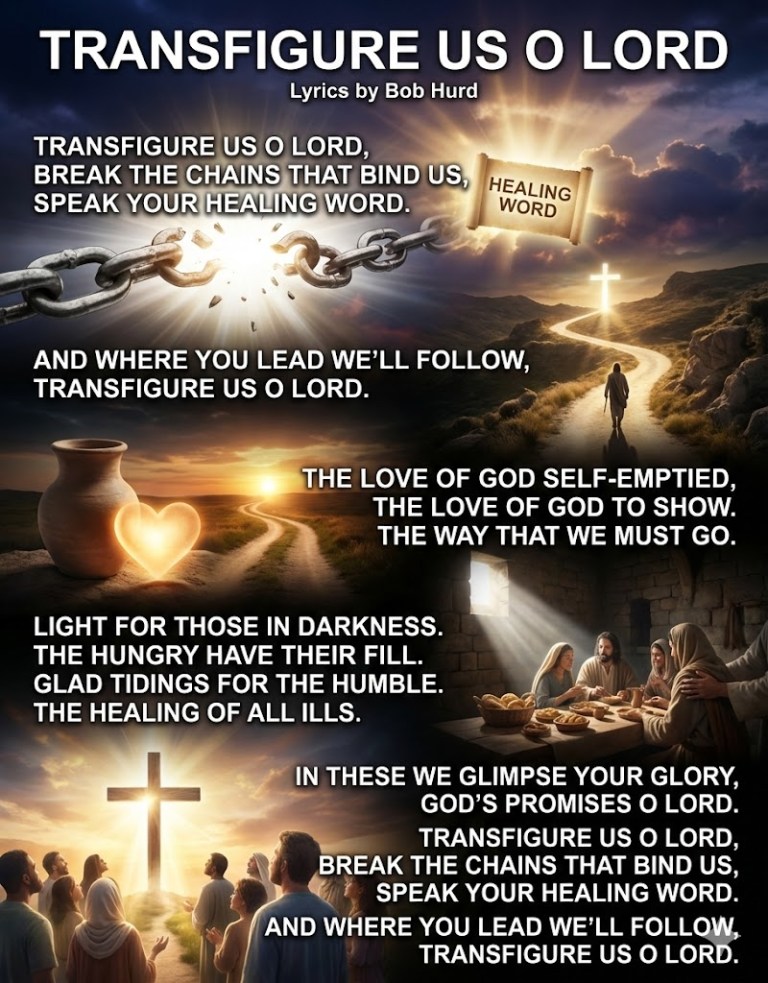
Matthew 17:1-9

CLICK HERE FOR A MORE DETAILED ANALYSIS

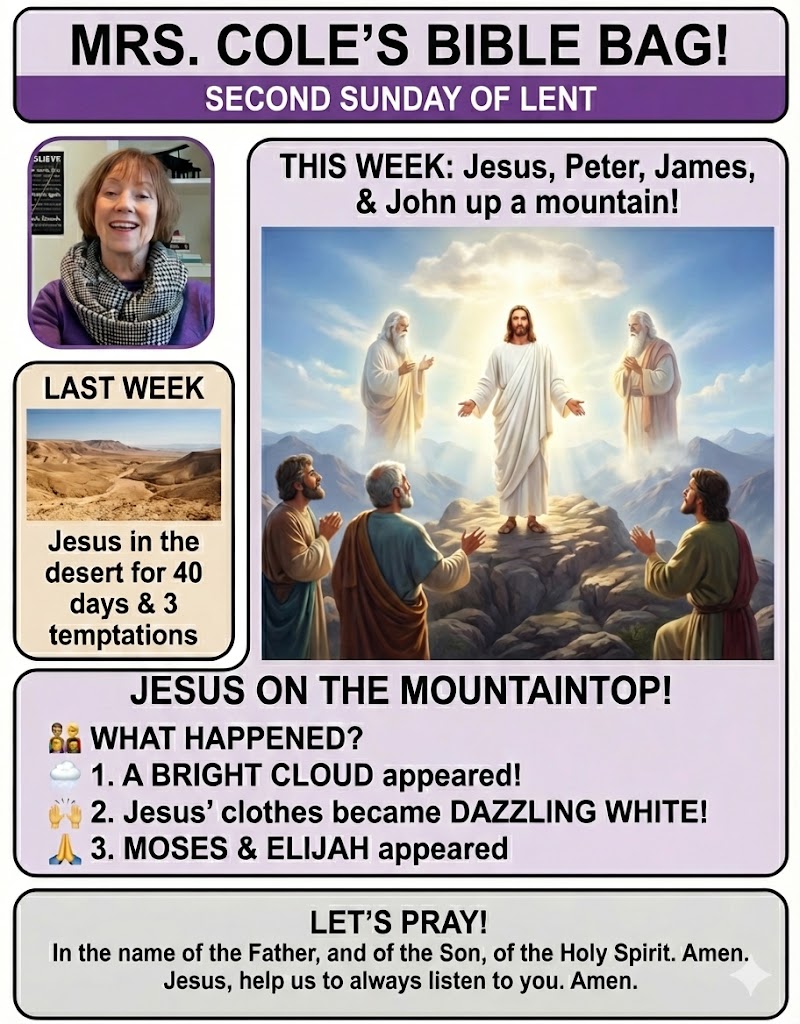
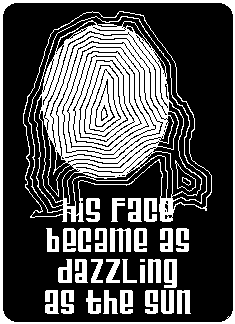
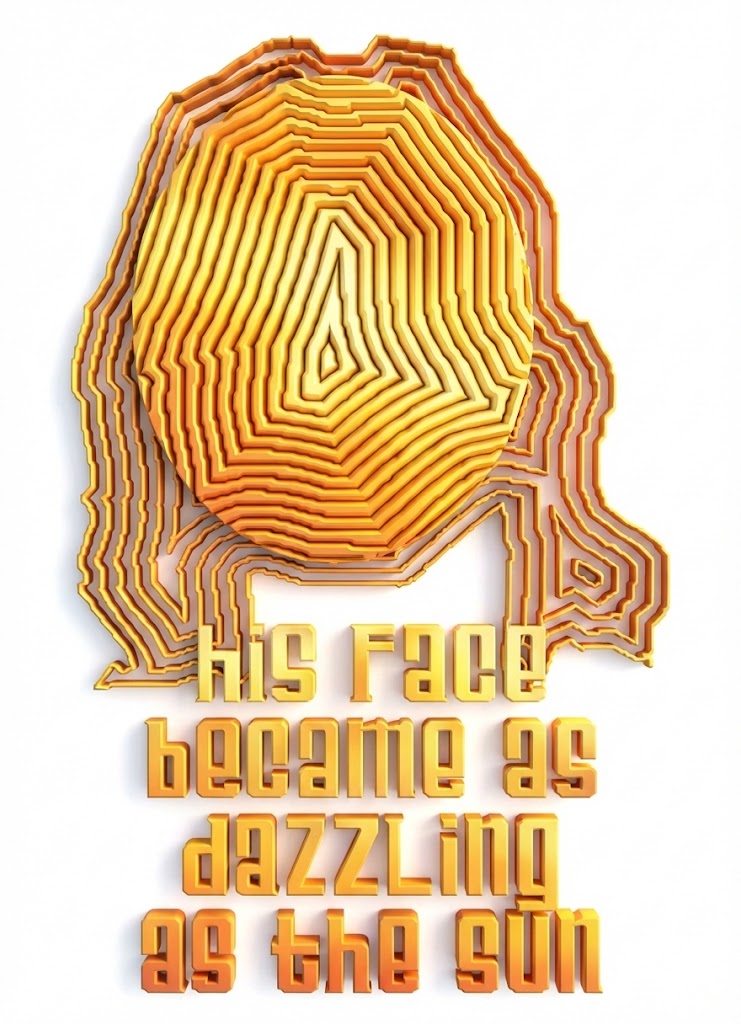
1. Visualizing the Unseeable (Theophany)

The central theological challenge of the Transfiguration is how to describe or visualize a theophany (a visible manifestation of God). The disciples were terrified and overwhelmed.

  • The Solar Metaphor: Matthew uses the simile "shone like the sun" because it is the brightest, most overwhelming light known to human experience. The artwork captures this literal description through its intense golden-orange gradient. It is a visualization of uncreated light—divine energy breaking through the veil of the material world.
  • Abstraction as Awe: The artist wisely chooses an abstract representation rather than a realistic facial portrait. To draw a human face with bright yellow skin would likely look cartoonish. By using abstract lines, the image preserves the mystery of the event. The disciples could not fully comprehend what they were seeing; the image respects that "cloud of unknowing" by giving us the effect of the glory rather than a literal documentation of facial features.

2. The Fingerprint of the Incarnation

The most brilliant theological stroke in this artwork is the use of the fingerprint pattern to define the face of Christ.

  • True Humanity: A fingerprint is the universal signifier of unique human identity. By forming the dazzling light into a fingerprint, the artist insists on the Incarnation. The Transfiguration was not Jesus shedding his humanity to reveal his divinity; it was his humanity being permeated and illuminated by his divinity. It is this specific human, Jesus of Nazareth, who is God Incarnate.
  • The Imprint of God: In scripture, the "finger of God" is associated with power, creation, and the writing of the Law (Exodus 31:18, Luke 11:20). Christ is often understood theologically as the perfect imprint or image (icon) of the invisible God (Colossians 1:15, Hebrews 1:3). The image suggests that Jesus is the ultimate "fingerprint" God has left upon creation—the definitive evidence of the divine in the human sphere.

3. Topography and the Holy Mountain

The topographic map aesthetic connects directly to the setting of Matthew 17:

  • The High Mountain: The event takes place on a mountain, a traditional biblical locus for meeting God (like Moses on Sinai). The layered, rising elevation of the face in the image subtly turns the person of Jesus into the "high place" himself. He is the mountain where heaven and earth meet.
  • The Ascent: The concentric lines draw the eye upward and inward toward the center, mirroring the spiritual ascent required of the disciples to witness this revelation.

This artwork is a powerful modern icon. It navigates the difficult theological balance of the Transfiguration: affirming Jesus’s complete, unique humanity (the fingerprint) while simultaneously revealing his terrifying, glorious divinity (the solar radiance). It successfully visualizes the text of Matthew 17:2 not by trying to show us what Jesus looked like, but by making us feel the intensity of what the disciples experienced.

SOURCES: Clip art on the left is from Father Richard Lonsdale © 2000. AI enhanced colorized reimagined clip art of Father Lonsdale’s original images are on the right. To copy the clipart images, click with your right mouse button and use “save picture (or image) as…” To view a complete list of clipart images and commentaries: Lonsdale Commentaries and Clipart
TEXT VERSION

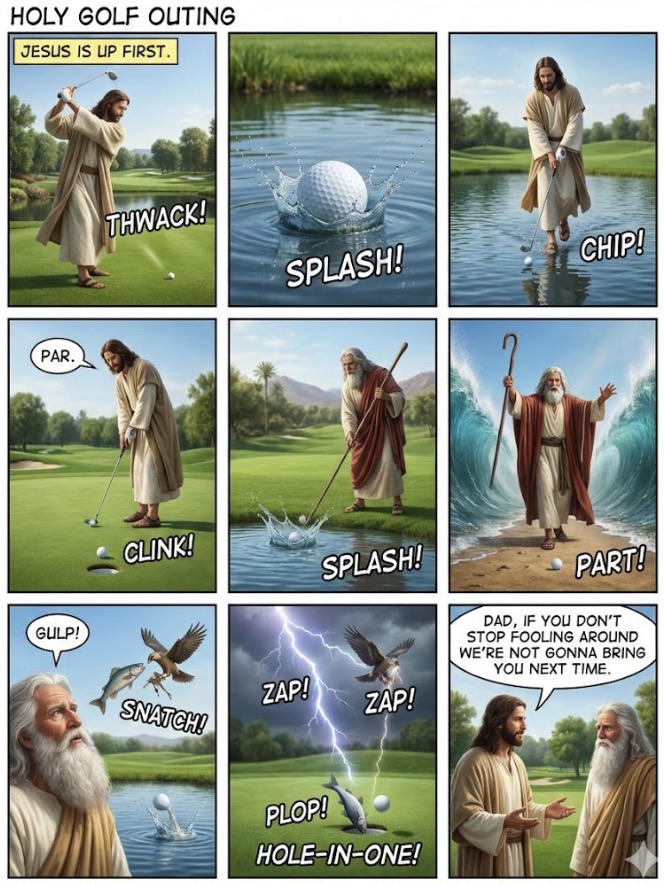
JESUS, MOSES, AND AN OLD MAN ARE PLAYING GOLF.

Jesus is up first. He drives the ball short, into the water trap in front of the green. So Jesus, being Jesus, walks on the water, chips the ball onto the green and putts for par.

Moses is next. He drives the ball into the same water trap. So Moses, being Moses, parts the water, chips the ball onto the green, and putts for par.

The old man is up. He drives the ball and it's heading for the water trap. Before the ball lands in the water, a fish jumps out and catches the ball in its mouth. Before the fish lands back in the water, a bird swoops down, snags the fish, and begins to fly away. As it's circling over the green, a bolt of lighting strikes the bird, causing it to drop the fish onto the green. The ball pops out of the fish's mouth, and rolls into the hole for a hole-in-one. Jesus turns to the old man and says, "Dad, if you don't stop fooling around we're not gonna bring you next time."

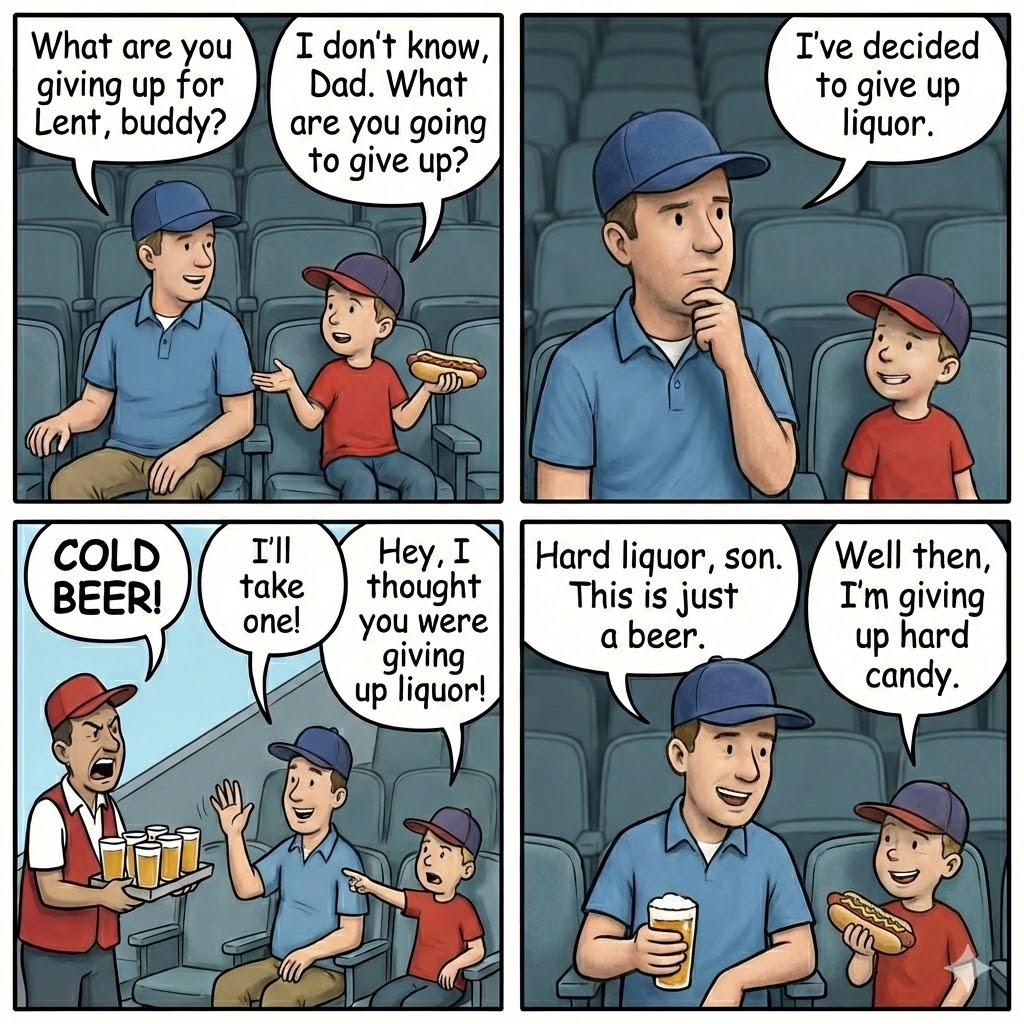
WHAT ARE YOU GOING TO GIVE UP FOR LENT?
TEXT VERSION

A man took his young son to a baseball game. While they were sitting there, he asked the boy what he was going to give up for Lent. The boy replied, “I don’t know, Dad. What are you going to give up?”
His father said, “I’ve thought about this a lot and decided to give up liquor.” Later in the game, the beer man came by, and the man ordered a beer. His son objected, “Hey, I thought you were giving up liquor!” His dad answered, “Hard liquor, son. I’m giving up hard liquor. This is just a beer.” To which the boy replied, “Well then, I’m giving up hard candy.”

GARDEN OF EDEN

TEXT VERSION

Why did Adam and Eve have to leave the Garden of Eden? They didn't read the Apple terms and conditions, and one byte caused the whole system to crash.

ADAM AND EVE

TEXT VERSION

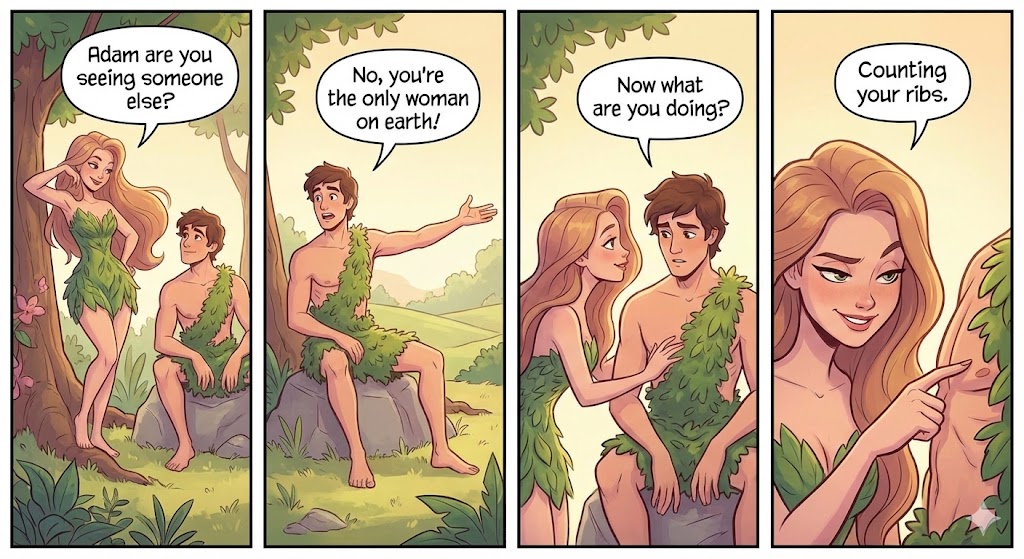
Eve: "Adam are you seeing someone else?"

Adam: "No, you're the only woman on earth!"

Adam: "Now what are you doing?"

Eve: "Counting your ribs."


TEXT VERSION

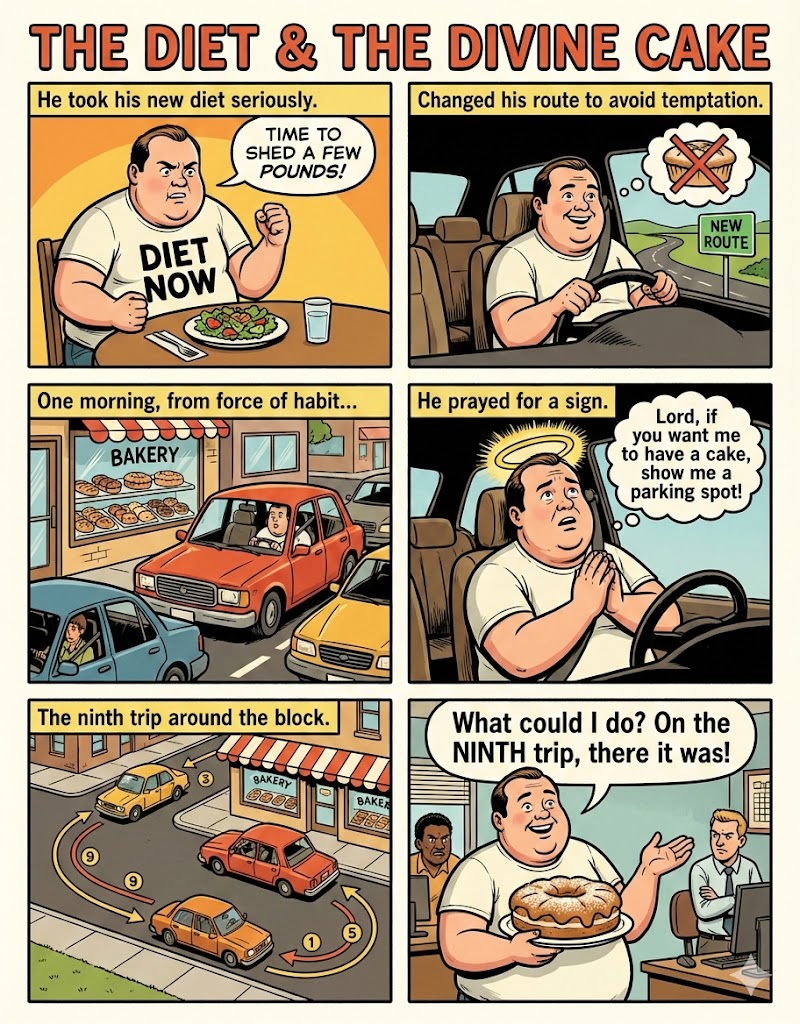
A comical, but illustrative, story shows us how adept we are at rationalizing our actions: A very overweight man decided that it was time to shed a few pounds. He went on a new diet and took it seriously. He even changed his usual driving route to the office in order to avoid his favorite bakery. One morning, however, he arrived at the office carrying a large, sugar-coated coffee cake. His office mates roundly chided him, but he only smiled, shrugged his shoulders and said, “What could I do? This is a very special cake. This morning, from force of habit, I accidentally drove by my favorite bakery. There in the window were trays of the most delicious goodies. I felt that it was no accident that I happened to pass by, so I prayed, ‘Lord, if you really want me to have one of these delicious coffee cakes, let me find a parking place in front of the bakery.’ Sure enough, on the ninth trip around the block, there it was!” — Temptation is strong, but we must be stronger. We should not tempt fate, and we should not rationalize our actions. 


BAPTISM: Catholic, Baptist, Jewish

TEXT VERSION

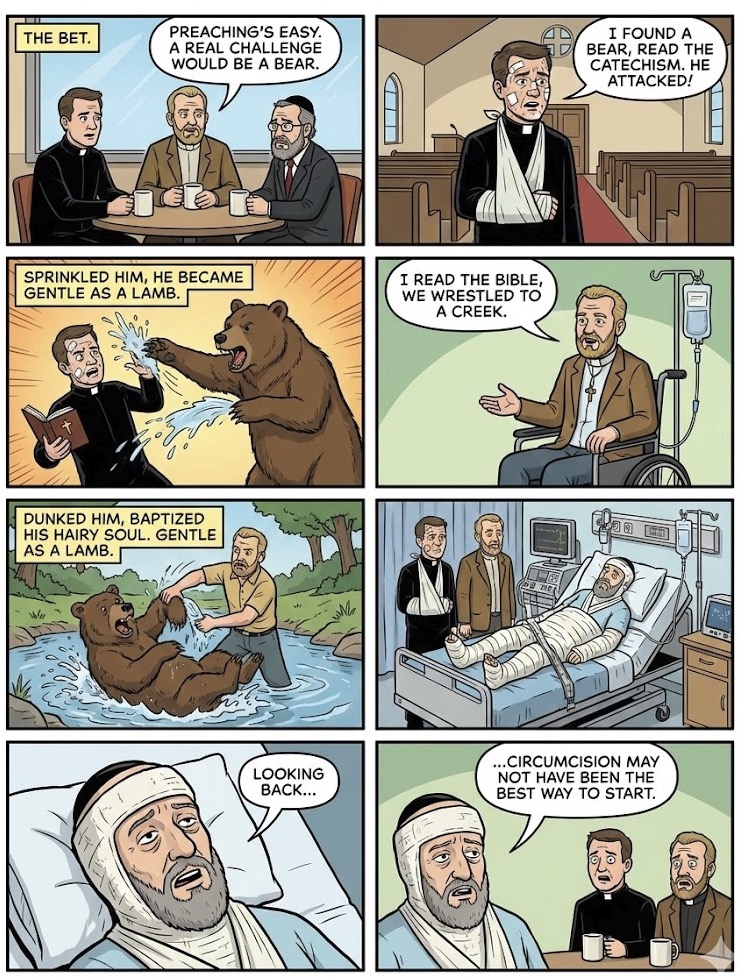
A Catholic Priest, a Baptist Preacher and a Rabbi were sitting around drinking coffee. Someone made the comment that preaching to people isn’t really all that hard, a real challenge would be to preach to a bear. One thing led to another, and they decided that each would find a bear and attempt to convert it to their religion. Seven days later, they all came together to discuss their experiences.

Father Flannery, who had his arm in a sling and had various bandages on his body and limbs, went first. ‘Well,’ he said, ‘I went into the woods to find me a bear. And when I found him, I began to read to him from the Catechism. Well, that bear came after me and began to slap me around. So I quickly grabbed my holy water, sprinkled him and, Holy Mary Mother of God, he became as gentle as a lamb.’

Reverend Billy Bob the Baptist spoke next. He was in a wheelchair and had an IV drip. ‘I went out and found me a bear. And then I began to read to my bear from the Bible! But that bear came after me. We wrestled down one hill, until we came to a creek. So, I quickly dunked him and baptized his hairy soul. And just like you said, he became as gentle as a lamb.

The Priest and the Reverend both looked down at the Rabbi, who was lying in a hospital bed. He was in a body cast and traction with IV’s and monitors running in and out of him. The Rabbi looked up and said: “Looking back on it, circumcision may not have been the best way to start? 

SOURCE: Comic panels were created using AI based on anecdotes/jokes found at Father Tony’s Homilies. Permission is given for them to be freely copied in any publication for non-commercial use.

Free Clip Art

TWTW bulletin inserts on this page were created using Nano Banana and Gemini AI 3.0 Pro. Permission is granted to non-profits to copy, paste them in their publications and websites. Please credit TWTW website.

Free Clip Art