Commentary Intro to Mass Readings for Sunday
CommentaryIntro to Mass Readings for Sunday
February 15, 2026
February 15, 2026
6th Sunday of Year A


Intro to Sunday’s Readings
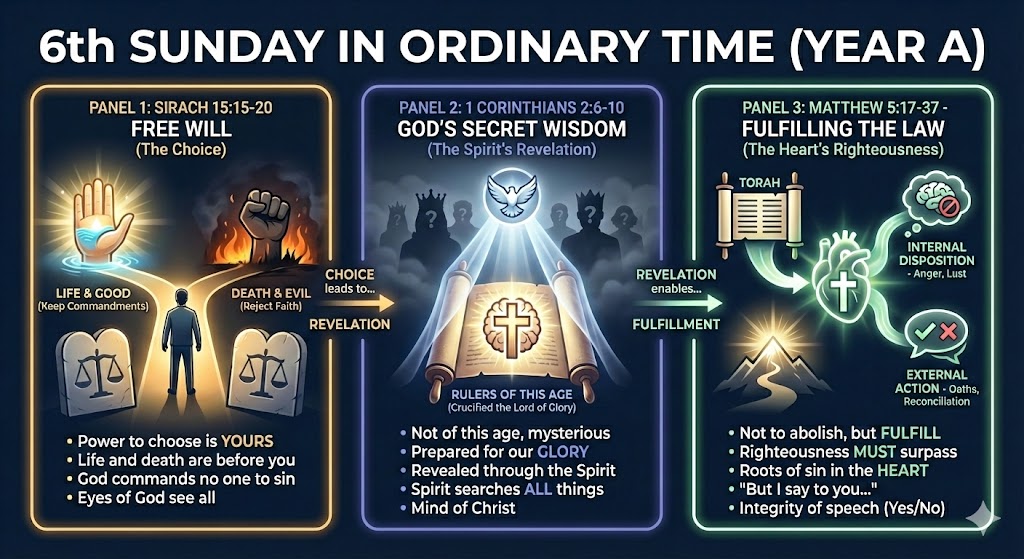
Scott Hahn – Catholic Bible Dictionary

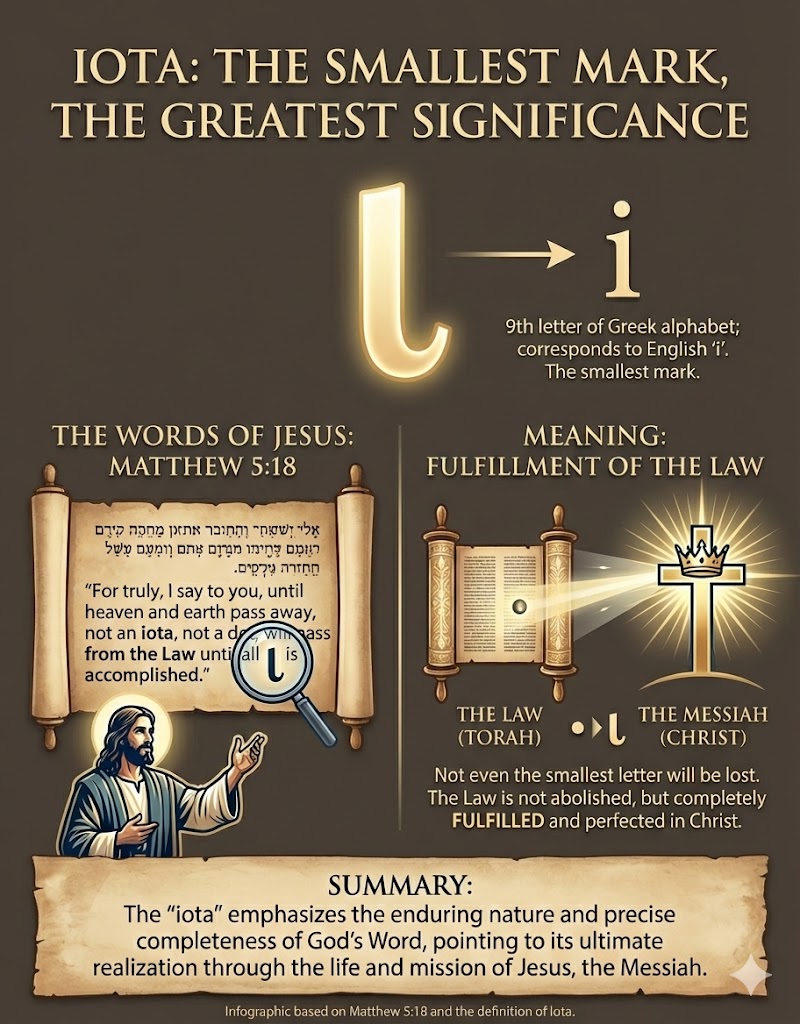
THE WORD THIS WEEK infographics are created using using GOOGLE’S AI Gemini 3 Pro. You are free to use the them in any non-profit ministry. Please give credit to sources of information contained in them.
Click on banner to learn more.
John Bergsma – The Word of the Lord
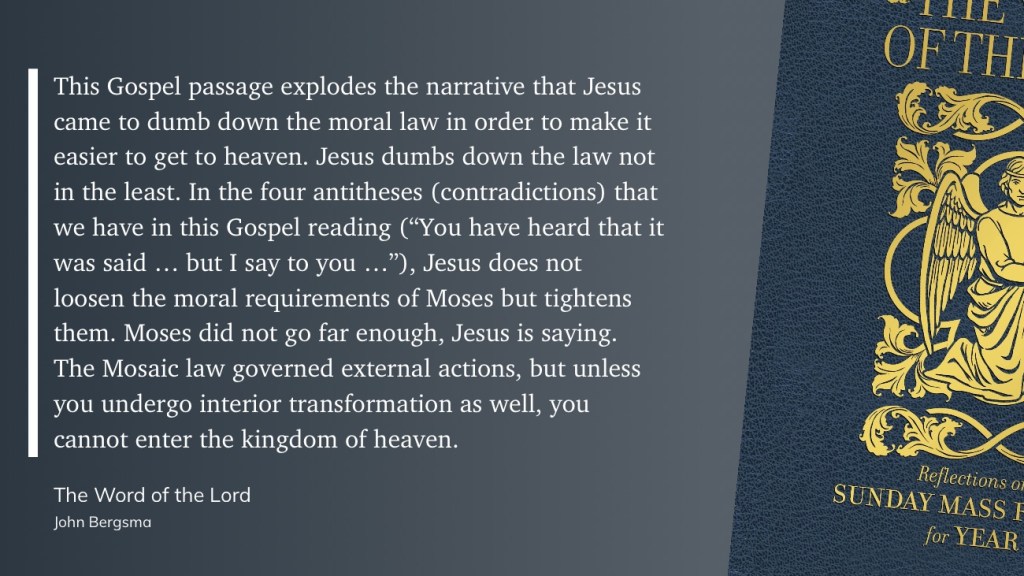
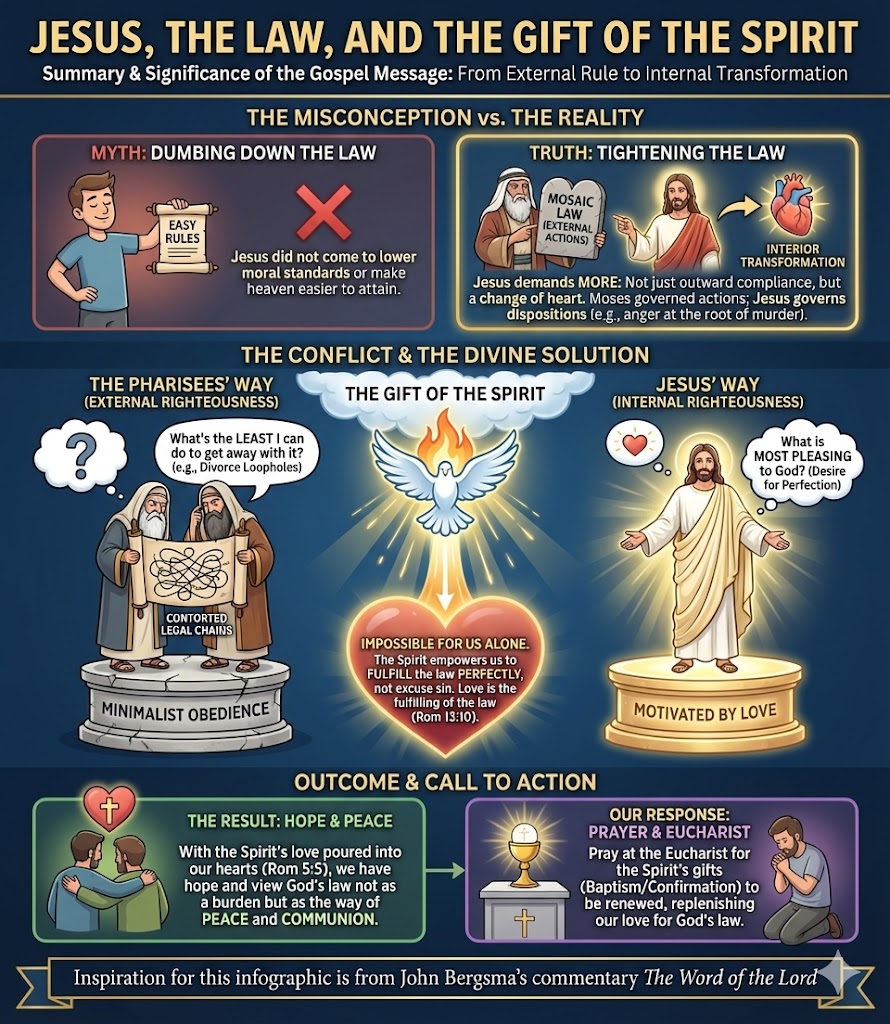
THE WORD THIS WEEK infographics are created using using GOOGLE’S AI Gemini 3 Pro. You are free to use the them in any non-profit ministry. Please give credit to sources of information contained in them.
Click on banner to learn more.
Pope Benedict XVI – Jesus of Nazareth
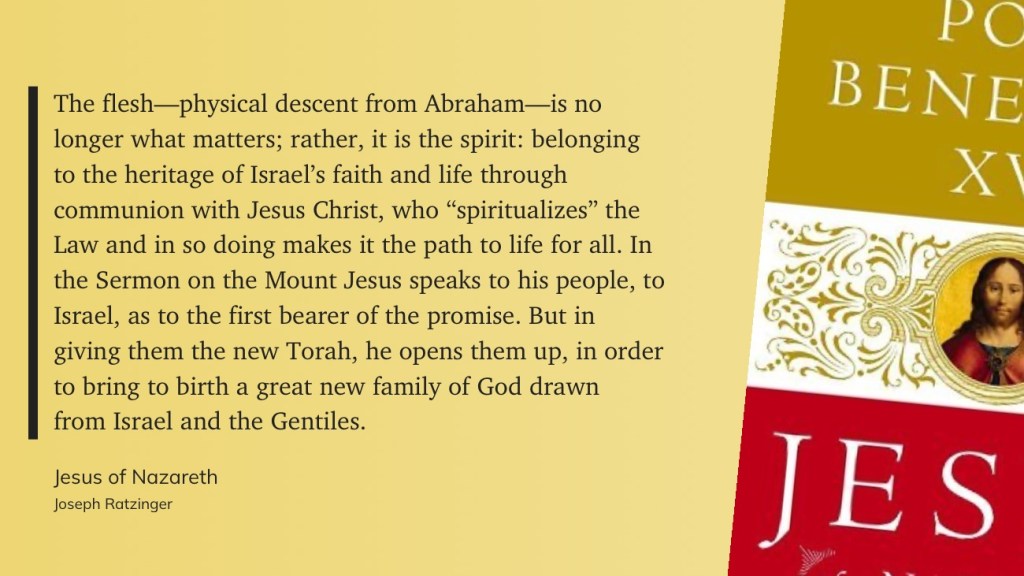

THE WORD THIS WEEK infographics are created using using GOOGLE’S AI Gemini 3 Pro. You are free to use the them in any non-profit ministry. Please give credit to sources of information contained in them.
Click on banner to learn more.
Christopher West – Word Made Flesh
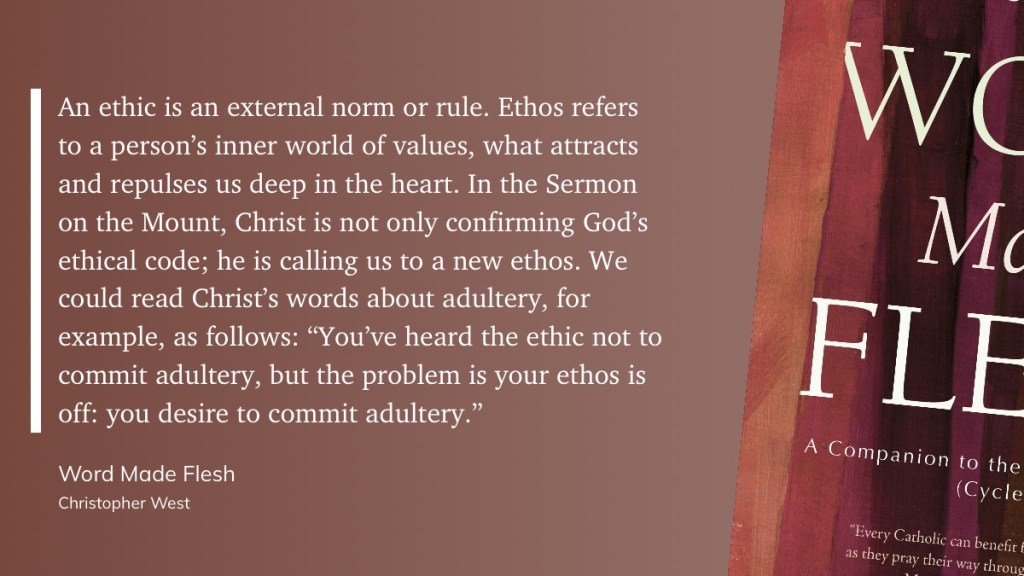
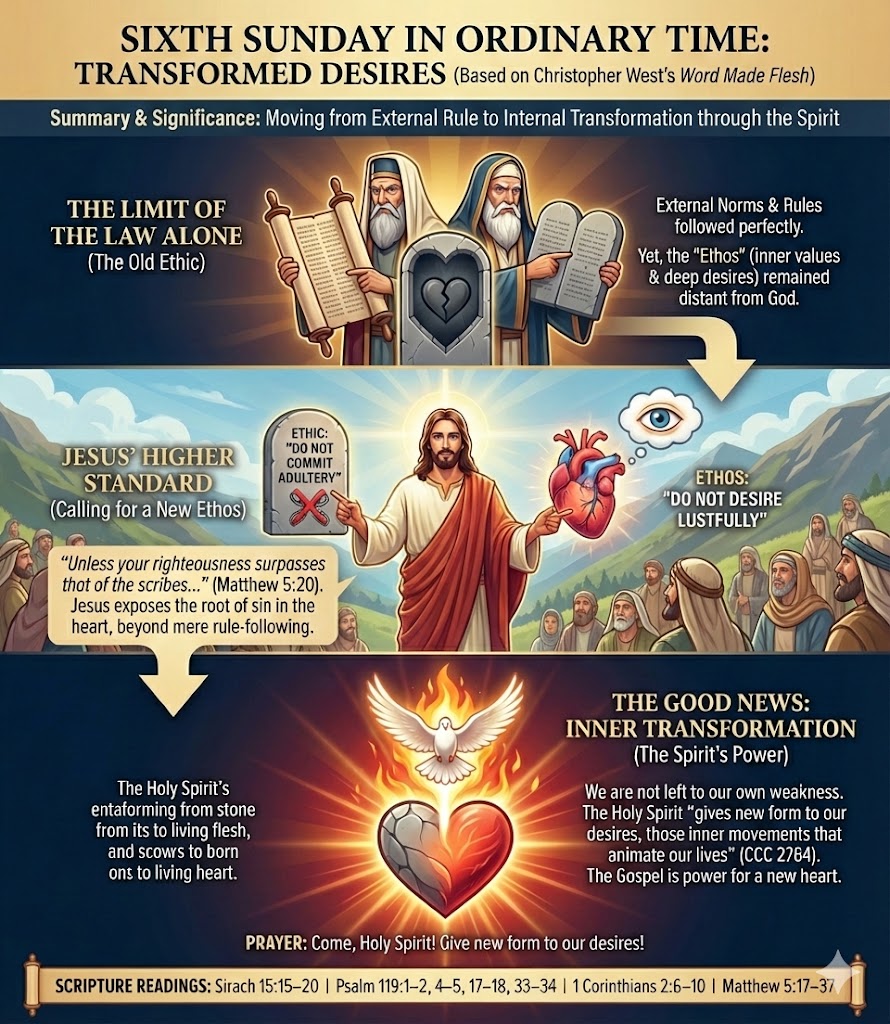
THE WORD THIS WEEK infographics are created using using GOOGLE’S AI Gemini 3 Pro. You are free to use the them in any non-profit ministry. Please give credit to sources of information contained in them.
Click on banner to learn more.

Larry Broding
Word-Sunday.com

You have permission to use THE WORD THIS WEEK infographics above in your parish/ community bulletin.
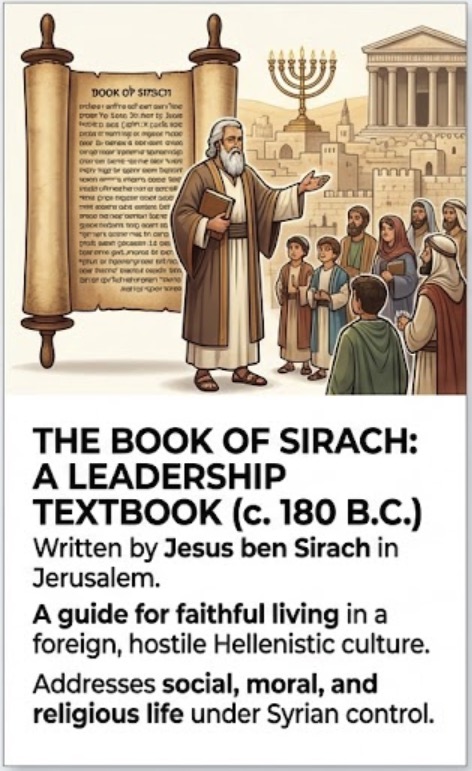
The Right Choice
How do you know you’re making the right choice?
How do you preach an ancient “leadership textbook” written over two millennia ago to a modern congregation distracted by the allures of a secular world? Larry Broding’s commentary on the book of Sirach masterfully bridges this gap. He takes us back to Jerusalem in 180 B.C., a time when Greek culture was aggressively pushing aside Jewish faithfulness, showing how Jesus ben Sirach’s urgent advice on navigating a hostile culture is startlingly relevant today.
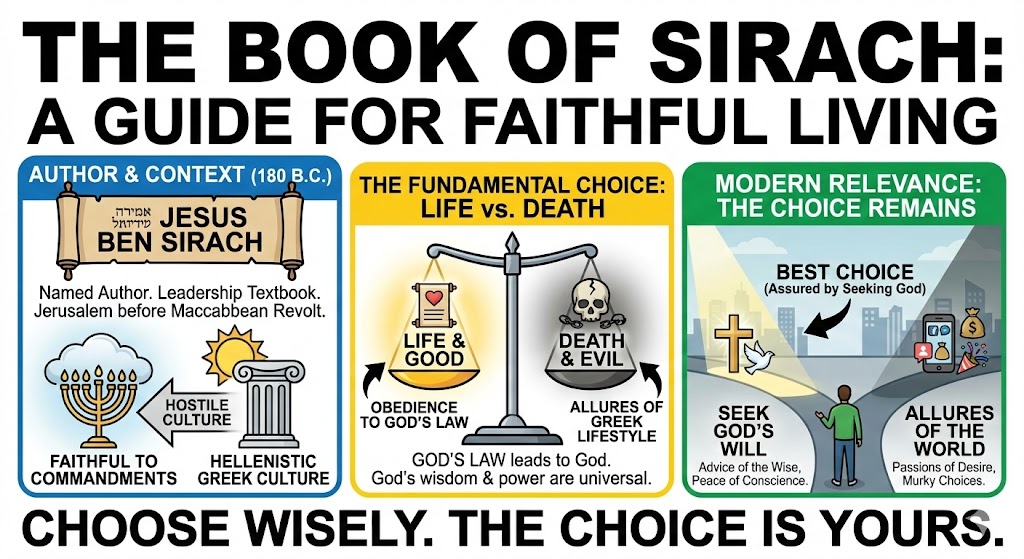
Here is why Broding’s commentary matters for your upcoming homily:
- It establishes vital context: Broding unpacks the historical pressure cooker of pre-Maccabean Judea, revealing why Ben Sirach’s call to obedience wasn’t just good advice, but a strategy for spiritual survival.
- It sharpens the central choice: He clarifies the fundamental dichotomy presented in the text—the seductive allure of a worldly lifestyle versus fidelity to God’s commandments—framing it not just as a lifestyle preference, but as a choice between life and death.
- It connects past to present: Broding helps you move beyond the historical setting to address the modern pew, articulating how, even when ethical choices seem murky, seeking the “advice of the wise and the peace of conscience over the passions of desire” remains the surest path to God.
Read Larry Broding’s full commentary to help your congregation navigate the difficult but necessary choices involved in living a faithful life amidst a complex and often conflicting culture.


THE WORD THIS WEEK infographics on this page were created using using GOOGLE’S AI Gemini 3 Pro. You are free to use the them in any non-profit ministry. Proper attribution, however, must be given to Larry Broding at Word-Sunday.com.
Larry Broding
Word-Sunday.com

You have permission to use THE WORD THIS WEEK infographics above in your parish/ community bulletin.
Do We Really Know Better?
In what ways do we live a better life than those in the past? In what ways did they live a better life?
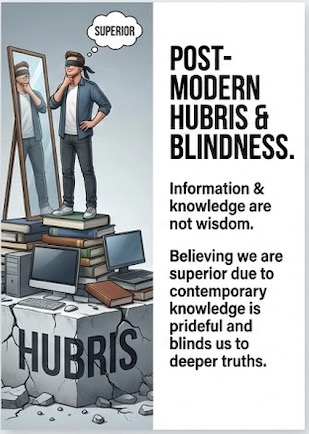
We live in an era drowning in information but starving for wisdom. It is tempting for us “post-moderns” to look back at history with a sense of enlightened superiority, convinced that our accumulated knowledge makes us morally better than our ancestors. Larry Broding’s powerful commentary on St. Paul’s message to the Corinthians shatters this modern hubris, offering a vital corrective that every congregation needs to hear. He masterfully explains how Paul reframes wisdom not as special “gnosis” or terabytes of data, but as the dynamic activity of God revealed ultimately in Jesus Christ.
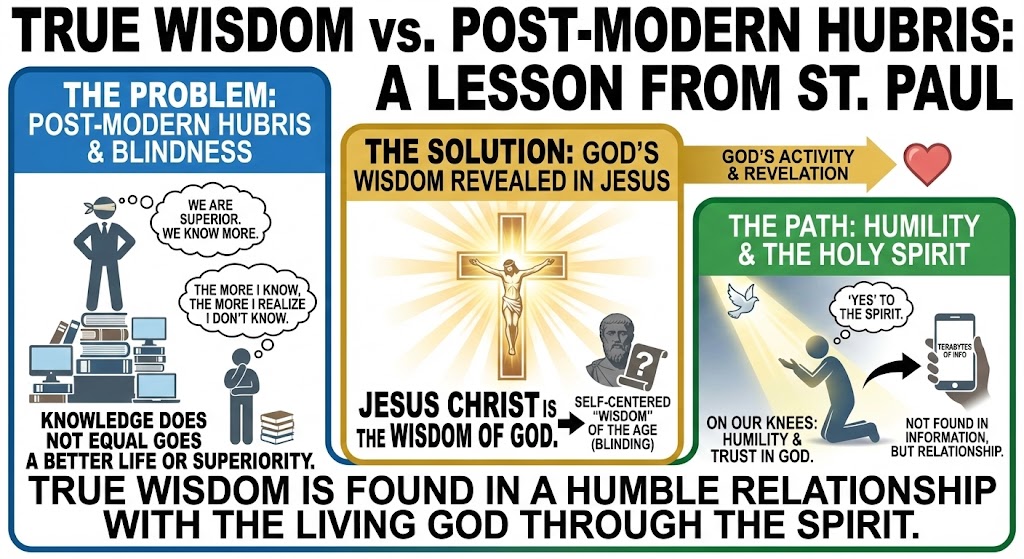
Why this commentary matters for your homily:
- It challenges contemporary arrogance: Broding provides the tools to gently but firmly confront the cultural assumption that technological progress equals spiritual or ethical maturity, reminding us that more information often just highlights how blind we still are.
- It recenters wisdom on the Cross: He clarifies Paul’s crucial pivot from Greek self-centered “wisdom” to Jewish wisdom, which is realized not in abstract concepts but in the concrete life, death, and resurrection of Jesus—a wisdom so counter-intuitive that the leaders of the age missed it entirely.
- It offers a practical posture for reception: Broding moves beyond theory to reveal how we access this divine wisdom: not through intellectual prowess, but through the humility of being “on our knees,” saying “Yes” to the Holy Spirit who alone searches the depths of God.
Read Larry Broding’s full commentary to help your congregation move past the superficial knowledge of our age and discover true wisdom through a humble, prayerful relationship with the Living God.

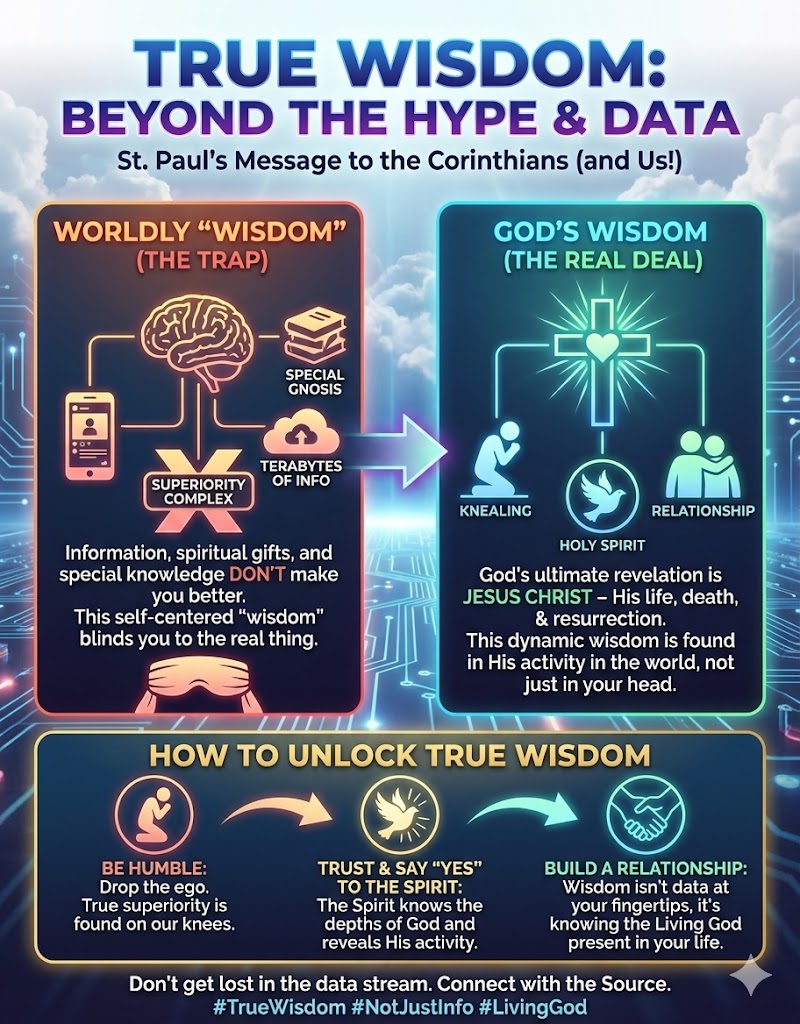
THE WORD THIS WEEK infographics on this page were created using using GOOGLE’S AI Gemini 3 Pro. You are free to use the them in any non-profit ministry. Proper attribution, however, must be given to Larry Broding at Word-Sunday.com.
Larry Broding
Word-Sunday.com
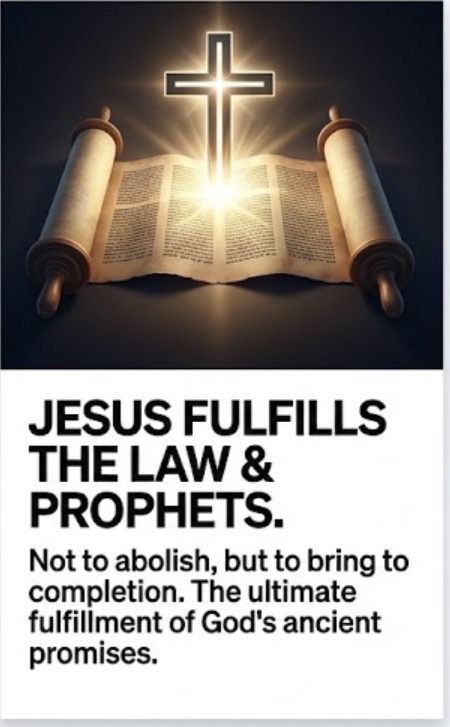
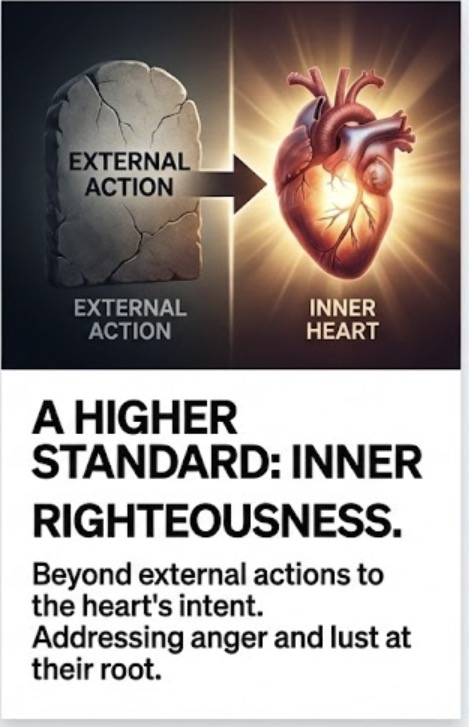

You have permission to use THE WORD THIS WEEK infographics above in your parish/ community bulletin.
Teacher of the Law
How do you try to live out God’s Laws? How has the effort brought you closer to God?
Jesus’ declaration that he came to “fulfill” the Law and Prophets is often misunderstood as a mere tightening of the rules or a dismissal of the Old Testament. Larry Broding’s commentary breaks open this pivotal moment in Matthew’s Gospel by situating Jesus firmly within his first-century Jewish context. He reveals Jesus not just as a new lawgiver, but as the culturally anticipated “Teacher of Righteousness” who radically reoriented how the community understood God’s will, offering an interpretation far more legitimate than the ruling elite’s.
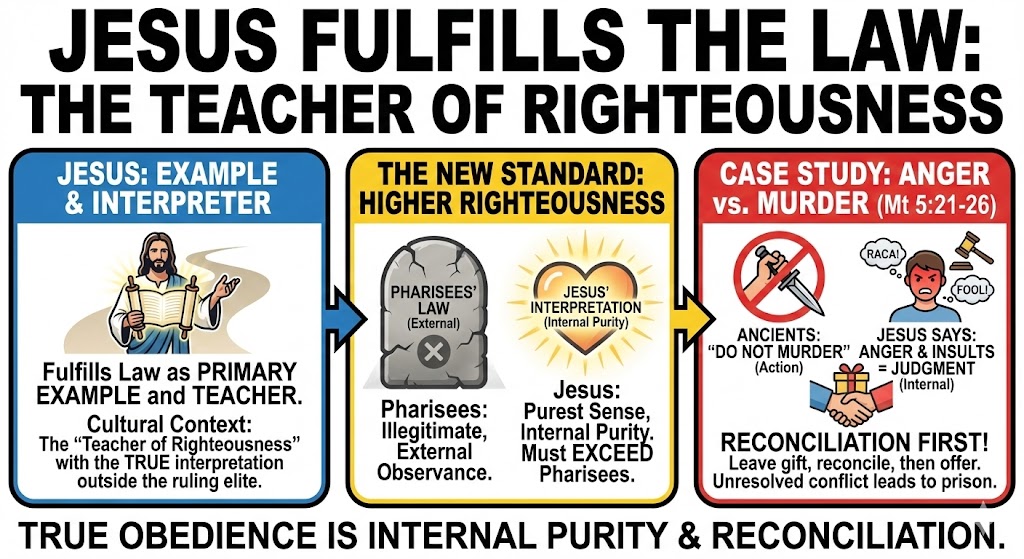
Why this commentary matters for your homily:
- It clarifies Jesus’s dual role as “fulfiller”: Broding explains that Jesus fulfills the Law in two distinct ways: He is the supreme moral example to emulate and the authoritative interpreter whose teaching defines the Christian community.
- It provides necessary historical texture: By connecting Jesus to the concept of the “Teacher of Righteousness” found in the Dead Sea Scrolls, Broding shows how Jesus offered a “pure” interpretation of the Torah that existed outside the established power structures of the Pharisees and Sadducees.
- It defines the stakes of discipleship: He unpacks the challenging call for a righteousness that “exceeds that of the Pharisees,” explaining that while “loose” interpreters may still be in the Kingdom, true Christian leadership demands seeking and teaching the purest intent of God’s precepts.
Read Larry Broding’s full commentary to help your congregation move beyond mere external obedience and discover how to interpret and live the Law in its purest sense, just as Jesus intended.
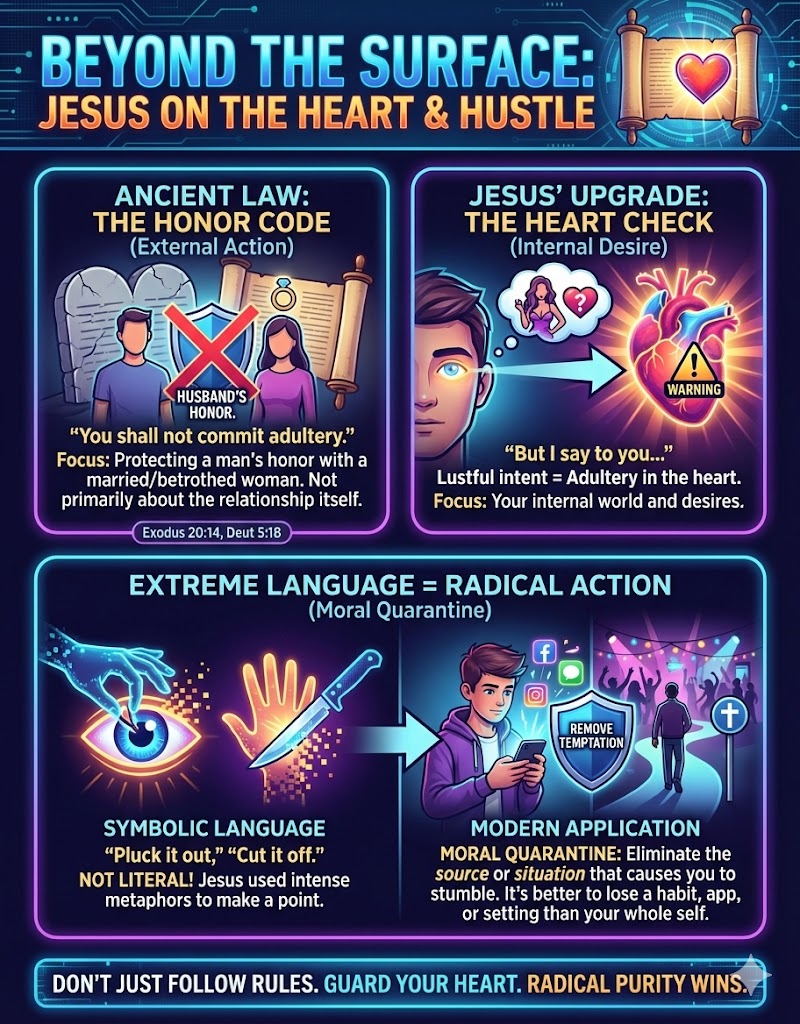
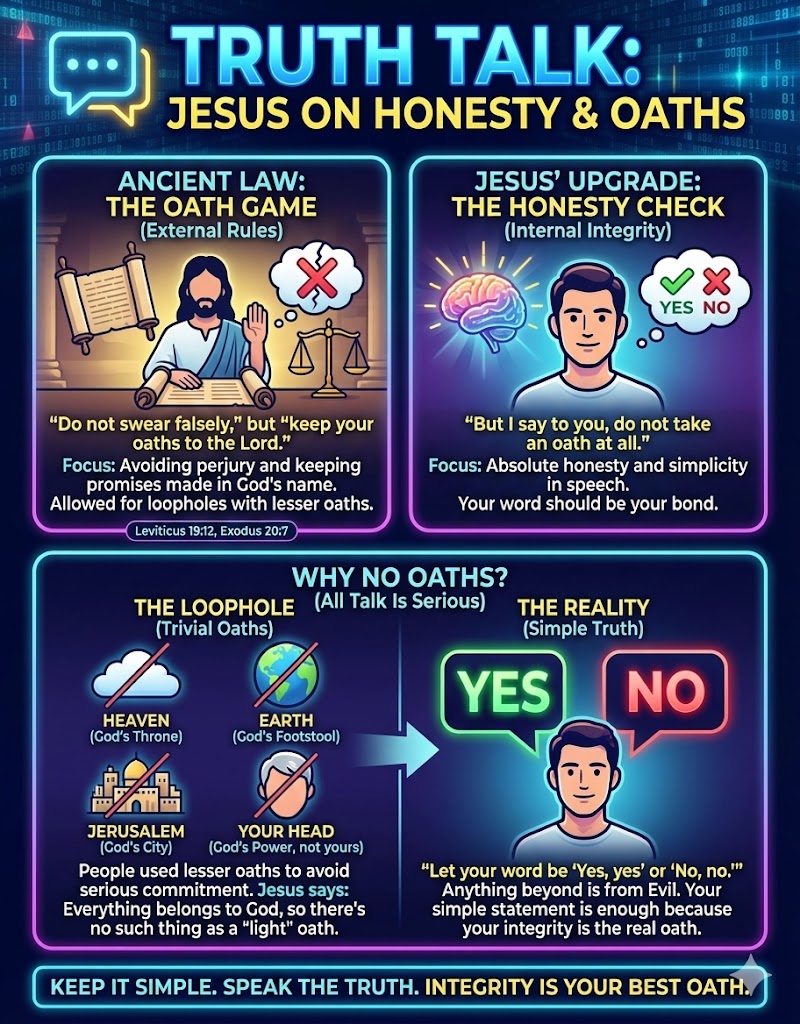
THE WORD THIS WEEK infographics on this page were created using using GOOGLE’S AI Gemini 3 Pro. You are free to use the them in any non-profit ministry. Proper attribution, however, must be given to Larry Broding at Word-Sunday.com.

Hector Molina – A Walk in the Word
Jesus teaches a higher standard of righteousness in the Sermon on the Mount, emphasizing that true righteousness requires a deeper transformation of the heart and spirit, going beyond outward obedience to internal intentions and a life of mercy, forgiveness, and reconciliation.
Fr. Tim Peters – Catholic Biblical Studies

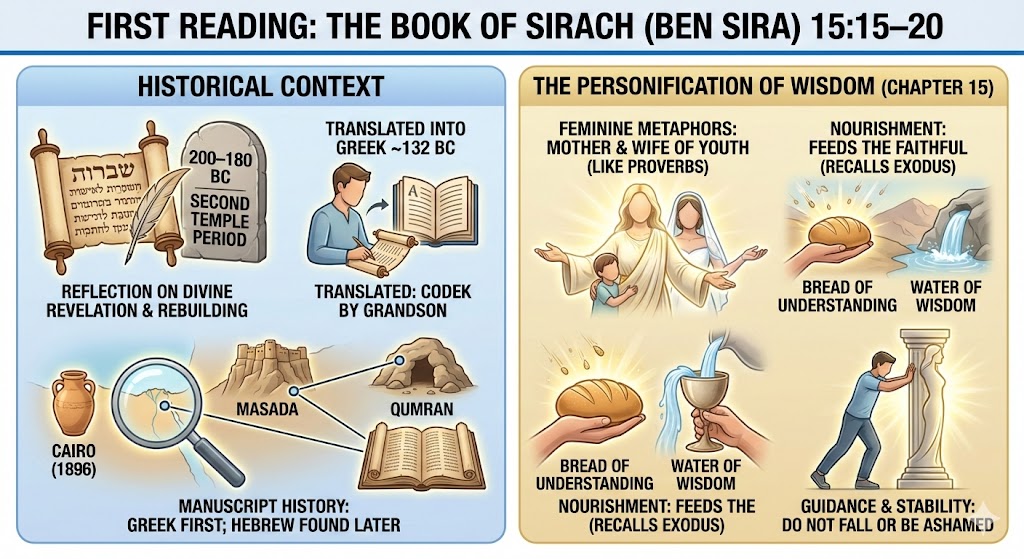
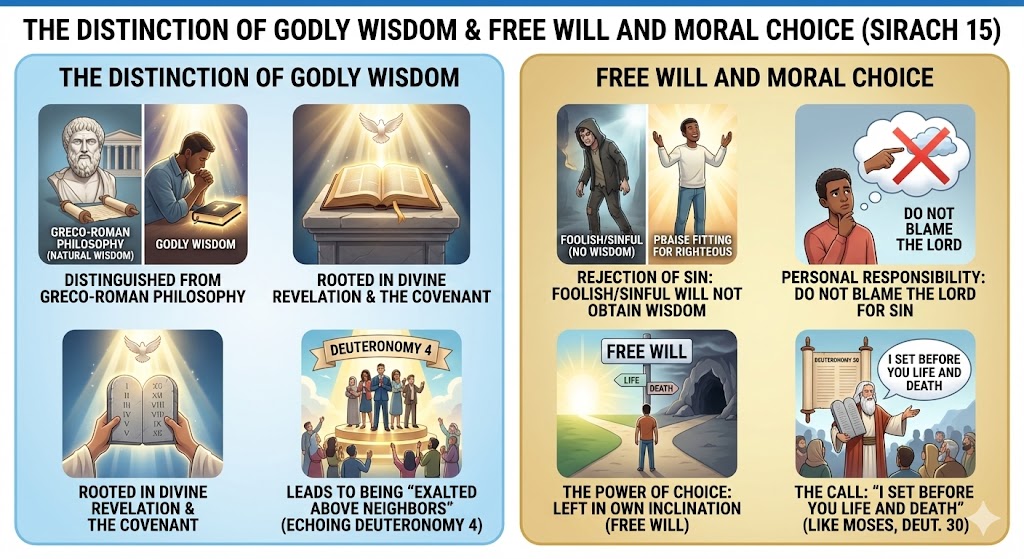
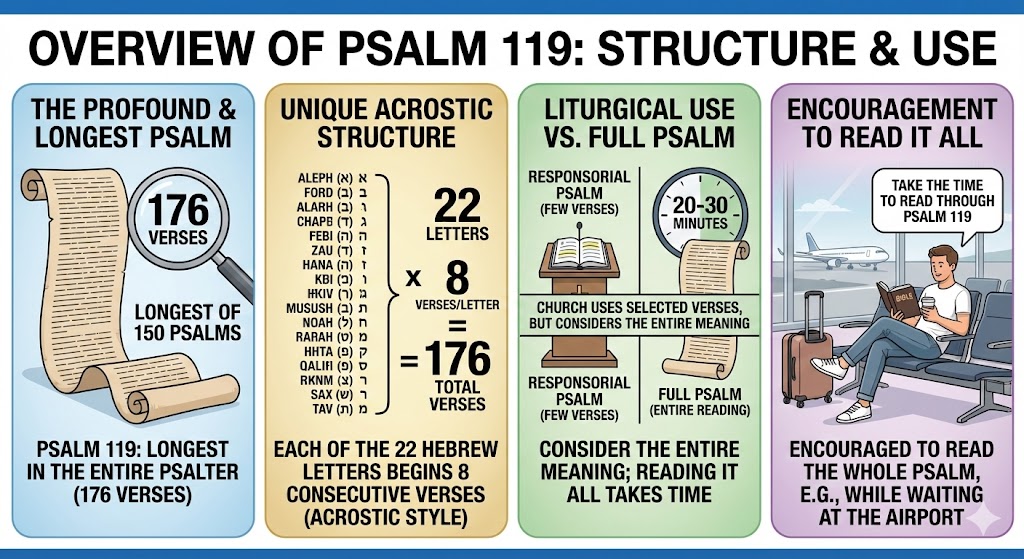
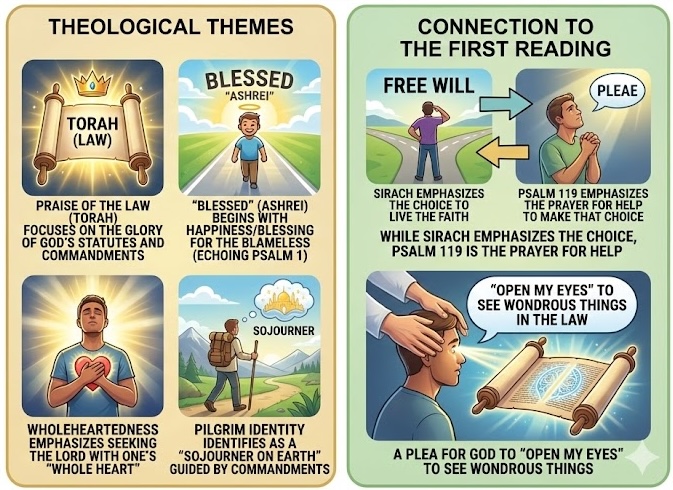
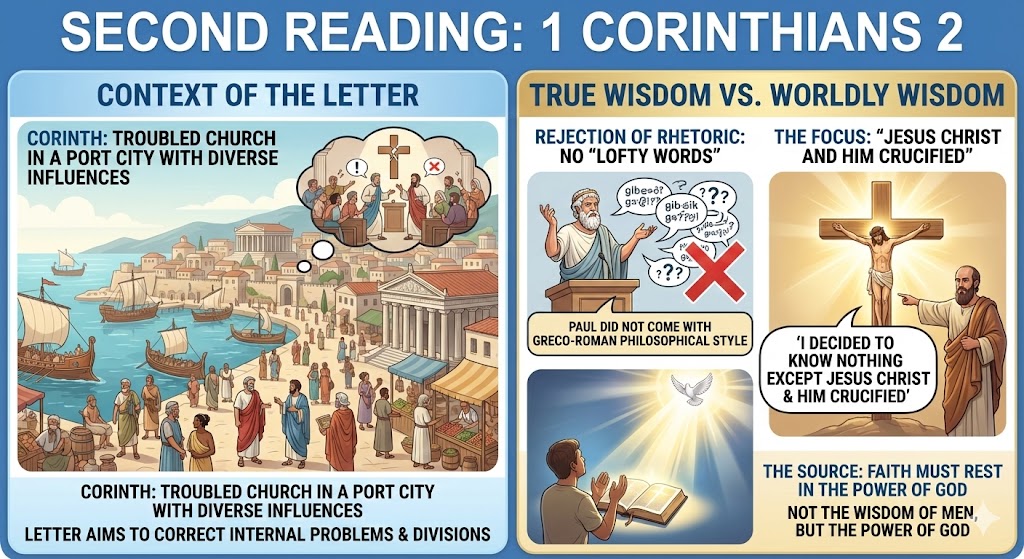
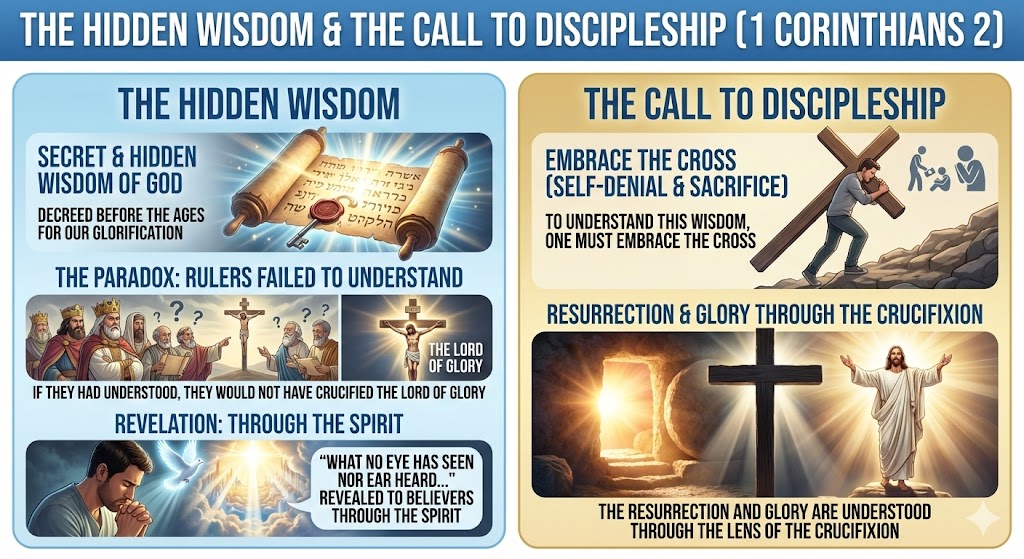


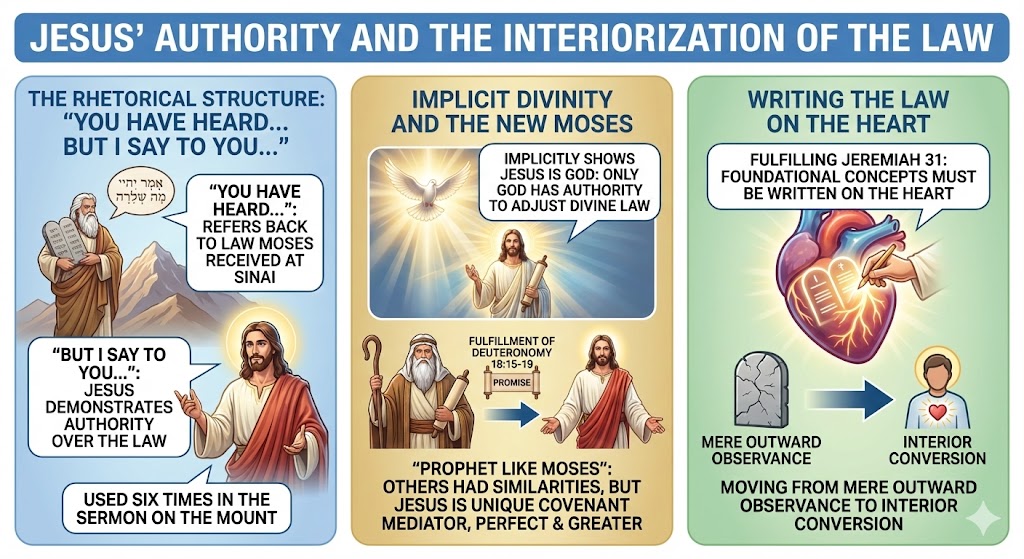

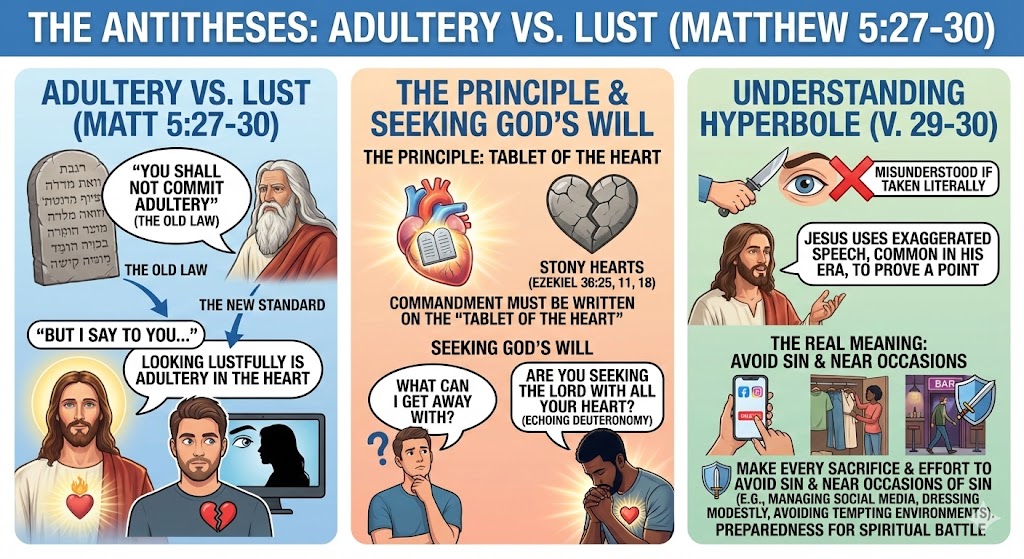
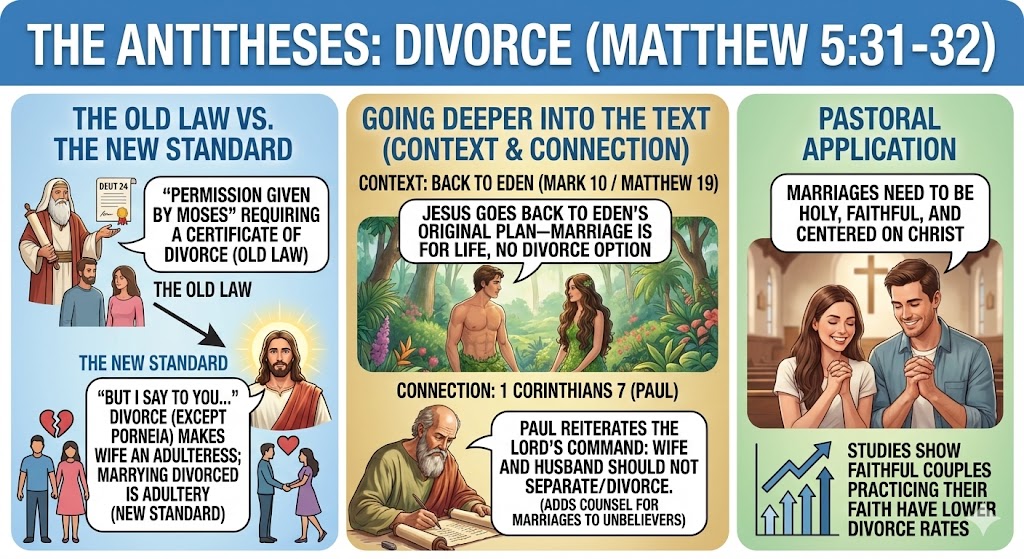
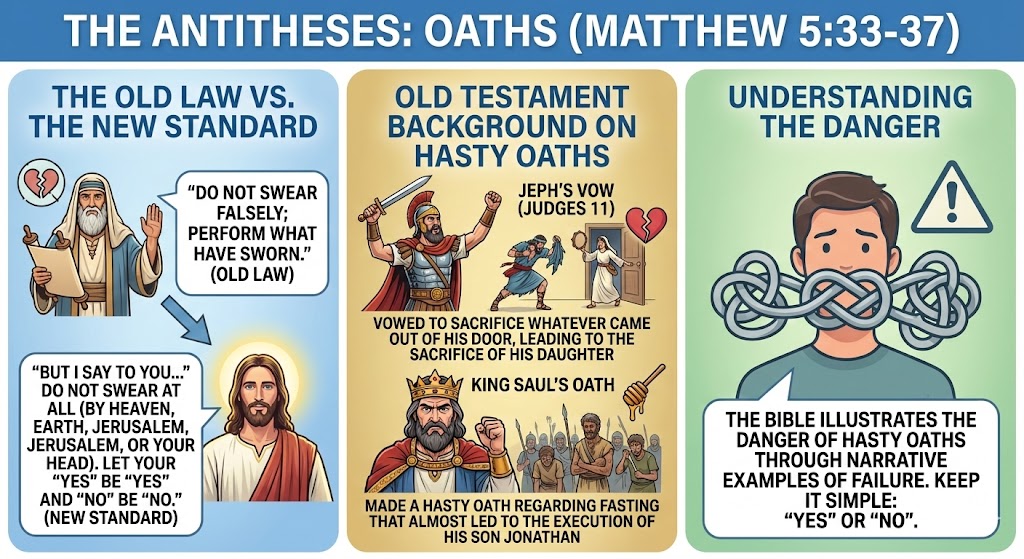
THE WORD THIS WEEK infographics are based off Father Peters' presentation. They were created using using GOOGLE’S AI Gemini 3 Pro. You are free to use the them in any non-profit ministry. Proper attribution, however, must be given to Father Tim Peters, S.Th.D.
Fr. Geoffrey Plant – Slide Presentation
