Commentary Intro to Mass Readings for Sunday
CommentaryIntro to Mass Readings for Sunday
November 23, 2025
November 23, 2025
Jesus Christ, King of the Universe (C)


Navarre Bible Commentary

Infographics were created using Nano Banana Pro with Gemini 3.0. They draw inspiration from the Navarre commentary but are not officially associated with or endorsed by the publisher. They may be copied for personal use or for use in any non-profit ministry. Please show your support by promoting this website.


The summary (right) and the infographic (click on the banner above) have been AI generated using content found in Joshua–Kings, pp 328–329.
The Symbolism of David’s Reign
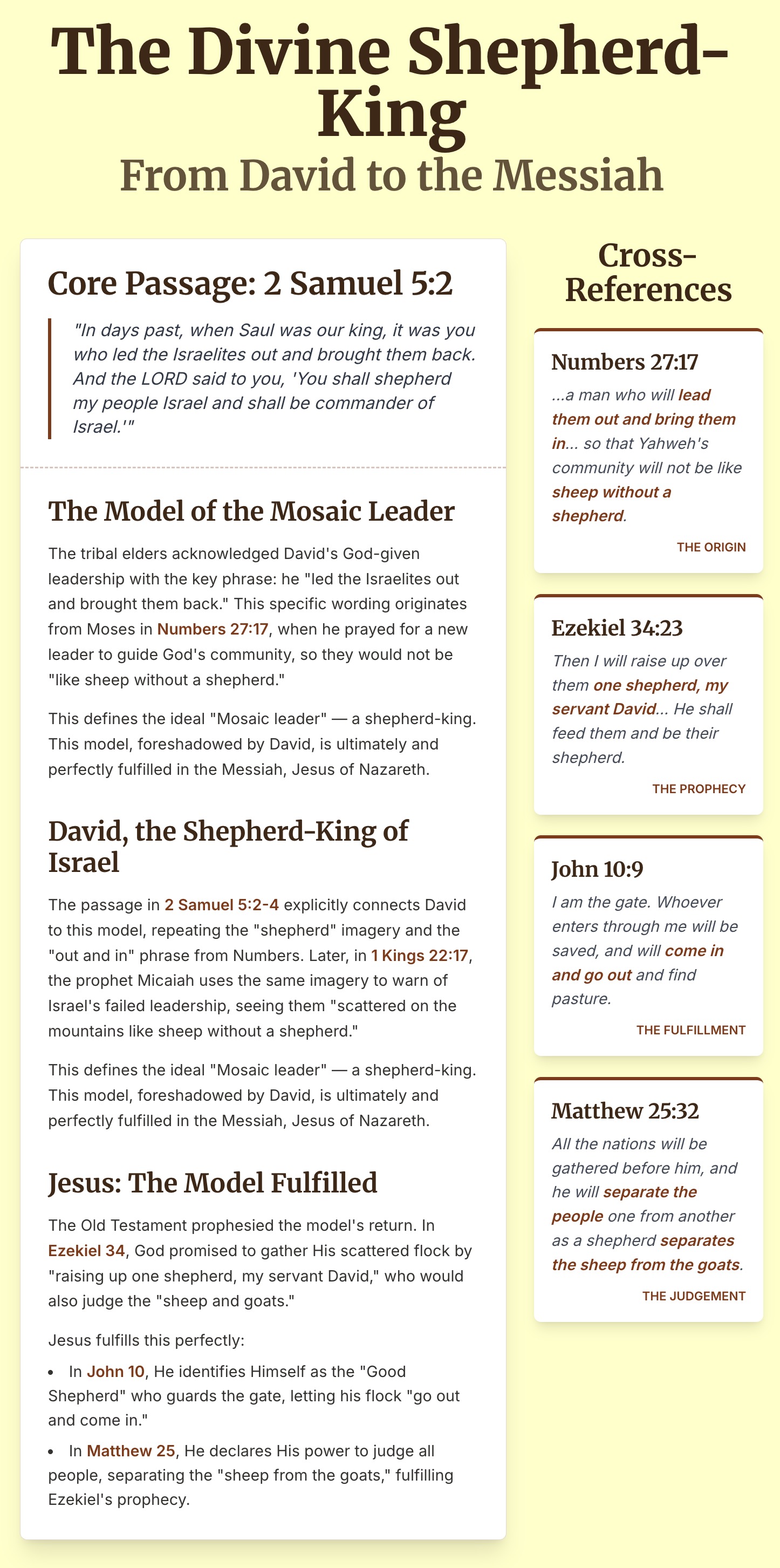
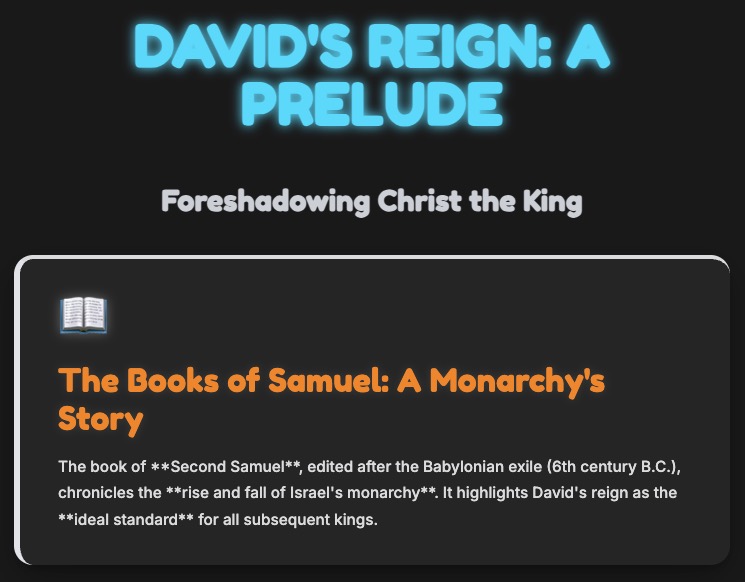
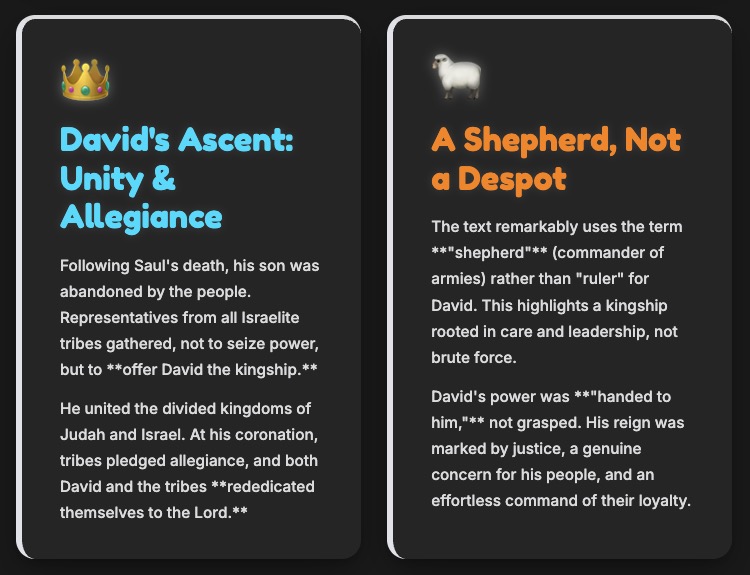
The Faculty of Theology of the University of Navarre highlights the significance of David’s anointing as king of Israel, emphasizing key elements that are crucial in the context of salvation history. The unity of the tribes, described as “flesh and bone,” underscores their brotherhood, while David’s role as a shepherd symbolizes a ruler who prioritizes the welfare of his people over personal gain. The covenant established between David and the leaders reflects the foundational doctrine of covenant in God’s relationship with His people. Furthermore, the numbers associated with David’s reign—seven years as king of Judah and forty years as king of both Judah and Israel—are seen as symbols of completeness, resonating with similar connotations found in the New Testament.
David as a Precursor to Christ
The commentary notes the historical significance of Hebron as David’s anointing site, which later transitioned to Jerusalem, symbolizing the establishment of a new kingdom. Furthermore, David is portrayed as a precursor to Jesus Christ, with both figures recognized as kings. The commentary draws on St. Augustine’s reflections to illustrate that Christ’s kingship is not about earthly power or military might but about spiritual governance, guiding souls towards eternal life.
The Liturgical Fulfillment
In Christ the King
The Church’s liturgical use of this passage during the solemnity of Christ the King, alongside the crucifixion narrative, reinforces the idea that Jesus achieved His kingship through obedience and sacrifice. This culminated in His death on the cross, which secured the salvation of humanity. This connection between David and Christ serves to deepen the understanding of Jesus’ role as the ultimate king, whose reign is characterized by spiritual guidance and self-sacrifice for the salvation of humanity.
Word-Sunday.com
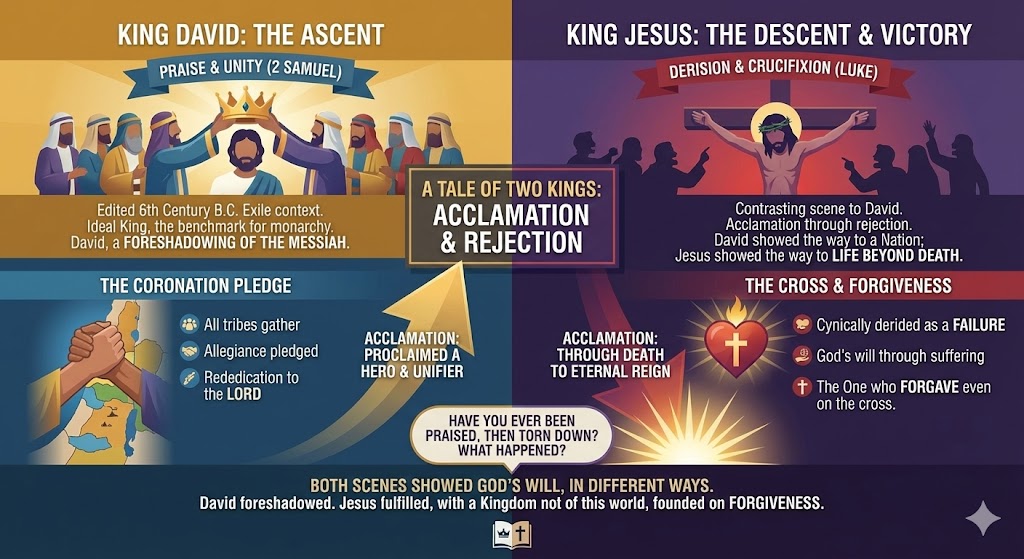
TWTW Infographics with images created using Nano Banana Gemini AI generator. Permission is granted to non-profits to use them in their ministry. Please give credit to TWTW website and Larry Broding’s commentary on which the graphic is based.




Coronation
by Larry Broding
Have you ever been praised by people? Have these same people torn you down? What happened?
In the cacophony of the Crucifixion—amidst the sneers of leaders and the taunts of soldiers—Larry Broding’s commentary unearths a profound dialogue on the nature of true power. Broding moves beyond the surface-level drama to analyze the "official disdain" of the Roman placard, revealing how the title "King of the Jews" served as a stumbling block for the proud but a lifeline for the humble.
By delving into the ancient cultural obsession with reputation and legacy, Broding offers a compelling psychological profile of the "Good Thief." He illustrates how this condemned man navigated past the crushing weight of his own guilt and the world’s mockery to find the "tiniest grain of faith." This is an essential resource for preachers looking to explore the theology of memory—how a simple request to be "remembered" became the doorway to Paradise.
Deep Dives
The Word Proclaimed
Click on timestamp links to watch different sections of the video.

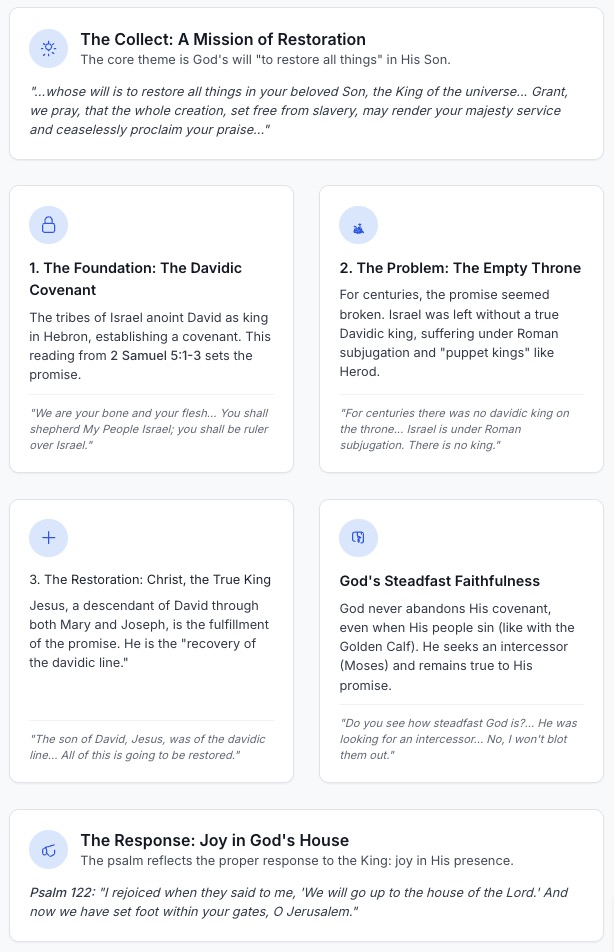
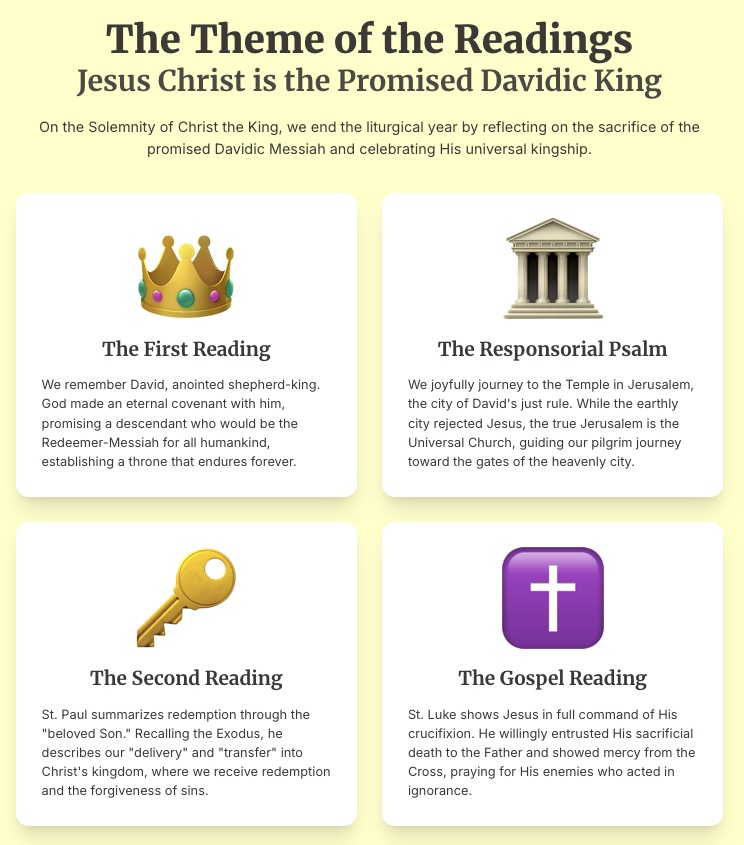
Jesus Christ, the Son of David, is the eternal King of Israel and the whole earth, whose kingship was fulfilled through his sacrifice and resurrection, and through whom all creation can be restored and have a direct connection to God.
- 00:00 Almighty God seeks to restore all things through Jesus Christ, his beloved Son, and prays that creation, set free from slavery, may serve and praise Him.
- 01:30 The tribes of Israel anoint David as their king, forming a covenant with him, recognizing him as their relative and leader chosen by God to shepherd His people.
- 03:32 God’s promise to David of a perpetual throne was fulfilled in Jesus, the son of David, who restored the kingship despite centuries of non-Davidic rulers and foreign domination.
- 06:37 God seeks an intercessor, like Moses, who stands in the breach to spare His people from punishment, mirroring Christ’s role.
- 07:32 Jesus is the recovery of the Davidic line, and the pretenders to the throne, including those installed by occupying forces, will have a reduced existence but not be completely eliminated.
- 08:50 We should be as proud to be part of the church as the Jews are of Jerusalem, since we have a direct connection to Heaven through the daily Eucharist.
- 09:47 The kingship of the Son of David is fulfilled as Jesus, the king, lays down his life for his people and the world, then rises to eternal kingship.
- 11:11 The 34th Sunday in Ordinary Time focuses on Jesus as the eternal King of Israel and the whole earth, previewing His judgment on all humanity.
- The 34th Sunday in Ordinary Time is the last Sunday of the year, focusing on the last day of existence.
- The church celebrates Jesus as the eternal King of Israel and the whole earth, whose kingship is being portrayed on this last Sunday of the year as a preview of the time when He will exercise judgment on all humanity.

Click to enlarge
Navarre Bible Commentary

Infographics were created using Nano Banana Pro with Gemini 3.0. They draw inspiration from the Navarre commentary but are not officially associated wit or endorsed by the publisher. They may be copied for personal use or for use in any non-profit ministry. Please show your support by promoting this website.



The summary (right) and the infographic (click on the banner above) have been AI generated using content found in Saint Paul’s Captivity Letters, pp 135–141.
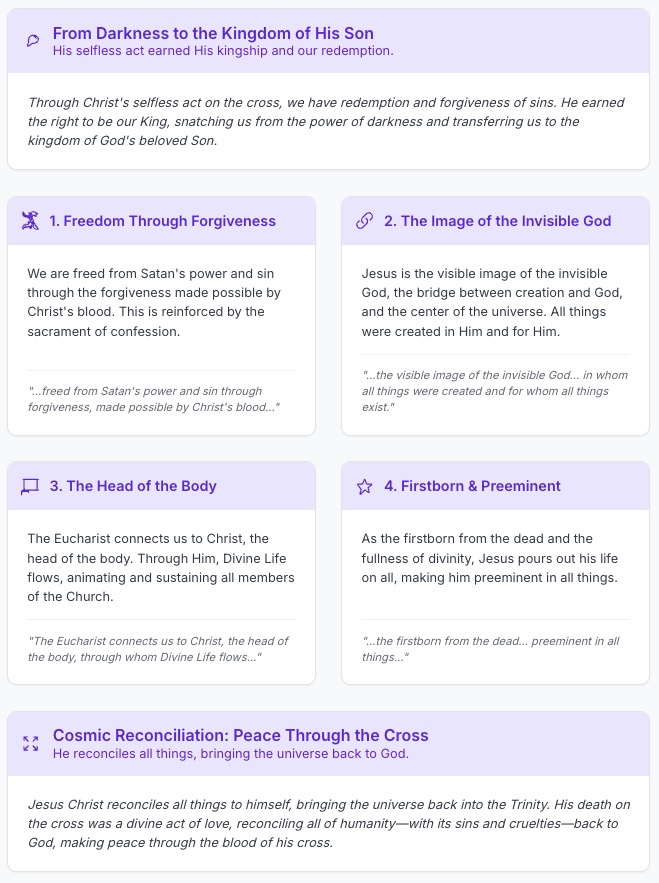
From Darkness to Light:
The Mystery of Redemption
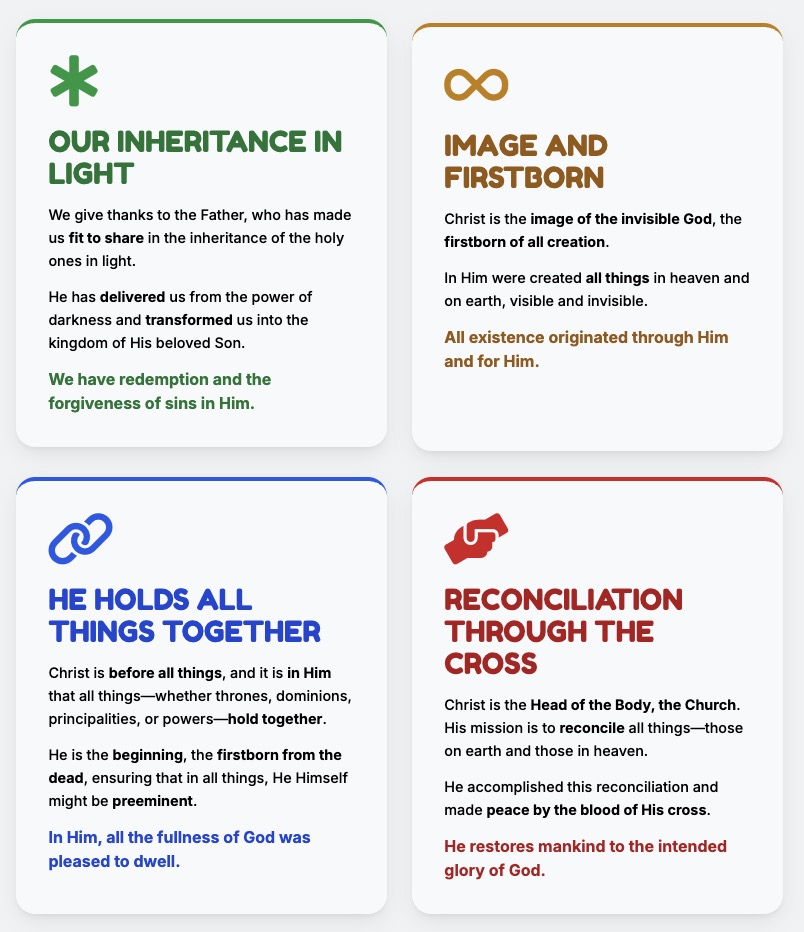
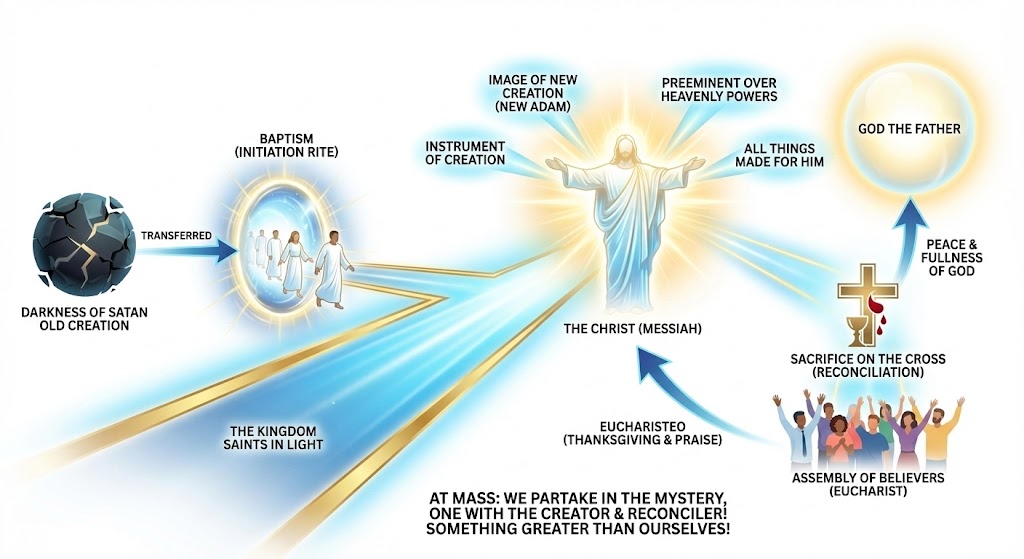
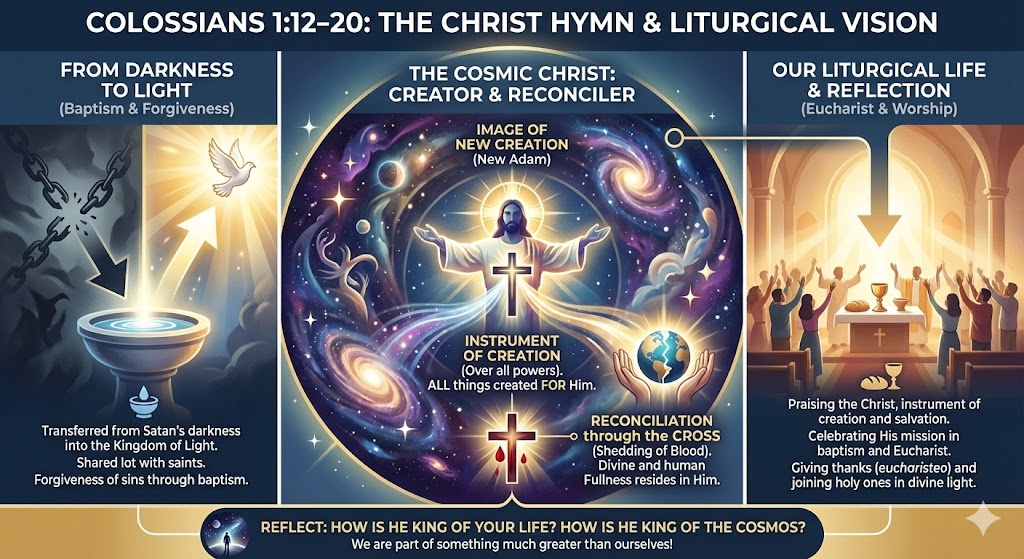
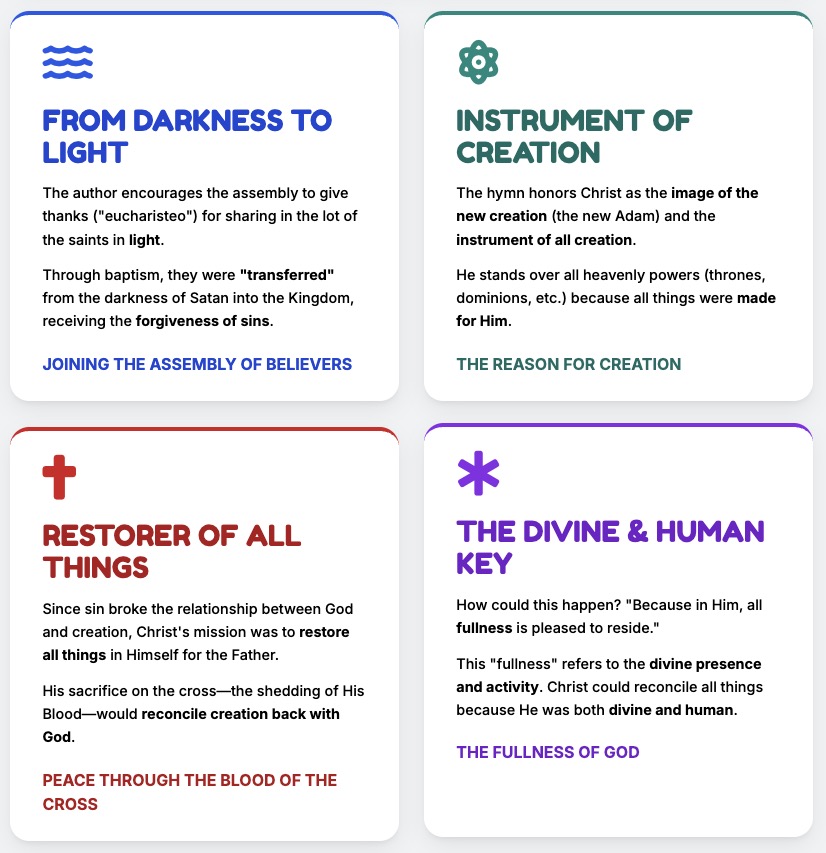
The Faculty of Theology of the University of Navarre discusses the profound themes of redemption, grace, and the preeminence of Christ in relation to creation and the Church. The commentary emphasizes the metaphor of transitioning from “darkness” to “light,” symbolizing the liberation from sin and the devil’s dominion through Christ’s redemptive act. It highlights that Christ embodies “light,” representing the fullness of grace and truth, which leads believers to eternal glory. The author notes that prior to redemption, humanity was enslaved by sin, but through Christ’s sacrifice, believers are granted forgiveness and the opportunity to share in the inheritance of the saints.
The Preeminence of
The First-Born
The commentary also presents a hymn praising Christ’s dual nature as both divine and human, underscoring His authority over all creation. It explains that Christ is the “first-born of all creation,” indicating His preeminence and role as the Creator and sustainer of the universe.
Christ as Head of the Church
The text further elaborates on the relationship between Christ and the Church, describing Him as the head of the body, which is the Church, emphasizing unity and mutual support among its members.
Reconciliation and
The Call to Action
The commentary concludes by discussing the concept of reconciliation, asserting that through Christ’s blood, peace is restored to all creation, and that this reconciliation is an ongoing process facilitated by the Holy Spirit. The author stresses the importance of individual cooperation in applying Christ’s redemptive work to the world, reinforcing the idea that believers are called to actively participate in the restoration of creation and the establishment of divine order.
Word-Sunday.com
TWTW Infographics with images created using Nano Banana Gemini AI generator. Permission is granted to non-profits to use them in their ministry. Please give credit to TWTW website and Larry Broding’s commentary on which the graphic is based.

The Christ We Worship
by Larry Broding
How are you inspired when you worship on Sunday? Reflect on Christ and your relationship to you. How is he King of your life? How is he King of the cosmos?
Are your homilies stuck in the past, treating the letters of St. Paul like dusty history lessons? It’s time to bridge the gap between the ancient "hymn of Christ" and the living, breathing assembly in your pews.
Larry Broding’s commentary on Colossians offers a brilliant liturgical key to unlocking the "High Christology" of Paul. He moves beyond dry academic analysis to reveal the dynamic movement of the Mass: a literal transfer from the dominion of darkness into the Kingdom of Light. By highlighting the ancient Greek concept of eucharisteo (giving thanks), Broding transforms this text from a theological treatise into a script for what is happening right now in your church.
Discover how the "new Adam" isn't just the ruler of the cosmos, but the very reason your parishioners gathered this morning. Read this commentary to challenge your assembly to look past the routine and see the supernatural reality of their worship.
Deep Dives
The Word
Proclaimed
Click on timestamp links to watch different sections of the video.

Through Jesus Christ’s selfless act of love on the cross, we are redeemed, forgiven, and transferred from the kingdom of darkness to the kingdom of God’s beloved Son, and that He is the center of the universe who reconciles all things to Himself.
- 00:00 Through Christ, we have redemption and forgiveness of our sins, and have been transferred from the power of darkness to the kingdom of God’s beloved Son.
- 02:41 Through his selfless act of love on the cross, Jesus Christ earned the right to be our King, snatching us from darkness and transferring us to his kingdom, where we have redemption and forgiveness of sins.
- 04:06 We are freed from Satan’s power and sin through forgiveness, made possible by Christ’s blood, and reinforced by the sacrament of confession, which allows us to repent and return to God’s kingdom.
- 05:26 Jesus Christ is the visible image of the invisible God, the bridge between creation and God, and the center of the universe, in whom all things were created and for whom all things exist.
- 07:31 The Eucharist connects us to Christ, the head of the body, through whom Divine Life flows, animating and sustaining us.
- 08:23 Jesus Christ, as the firstborn and fullness of divinity, reconciles all things to himself through his crucifixion, bringing the universe back into the Trinity.
- 09:54 Jesus, the firstborn from the dead, pours out his life on all, making him preeminent in all things, and through him, all things are reconciled to God.
- 11:23 Jesus Christ’s death on the cross was a divine act of love, reconciling all of humanity with its sins and cruelties back to God, making peace through the blood of his cross.

Click to enlarge
Navarre Bible Commentary
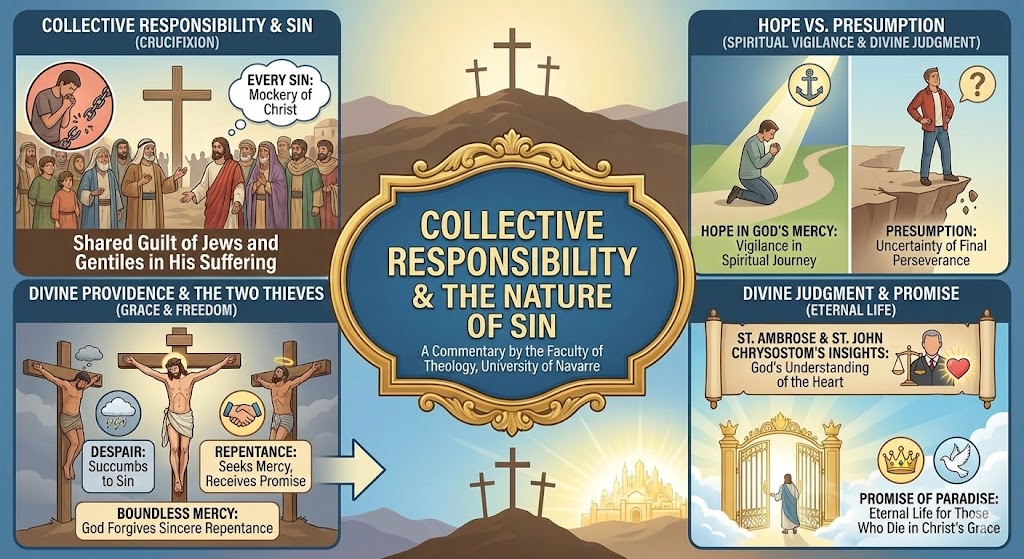
Infographics were created using Nano Banana Pro with Gemini 3.0. They draw inspiration from the Navarre commentary but are not officially associated wit or endorsed by the publisher. They may be copied for personal use or for use in any non-profit ministry. Please show your support by promoting this website.


The summary (right) and the infographic (click on the banner above) have been AI generated using content found in Saint Luke’s Gospel, pp 192–194.
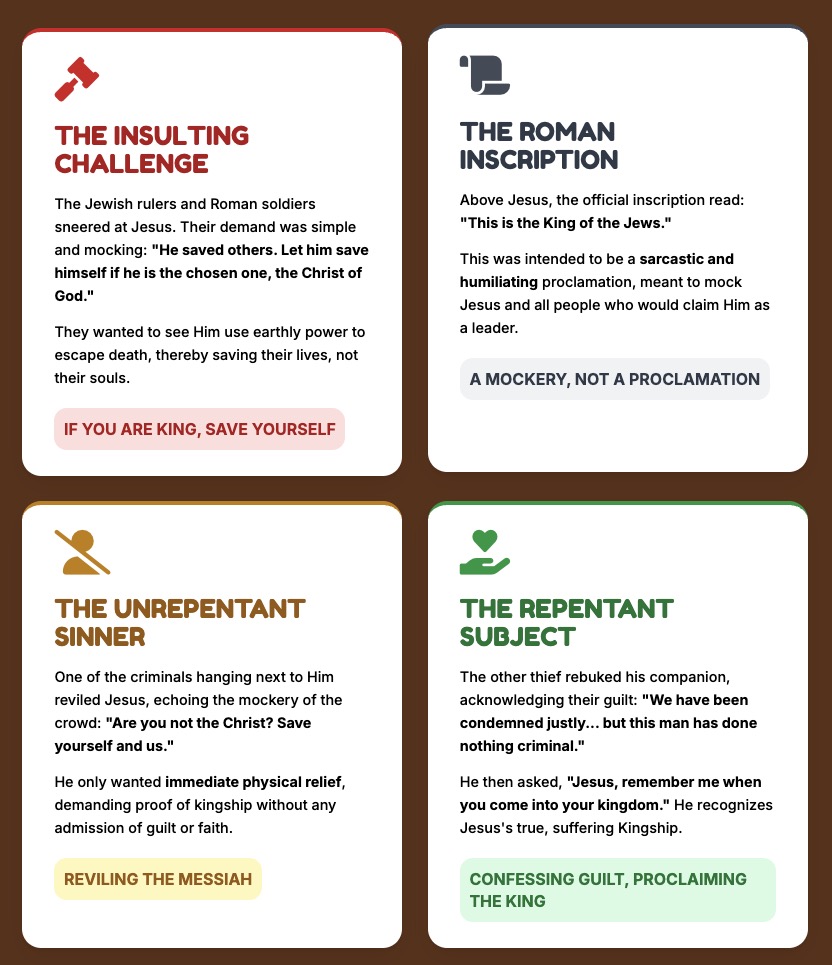
Collective Responsibility and
The Nature of Sin
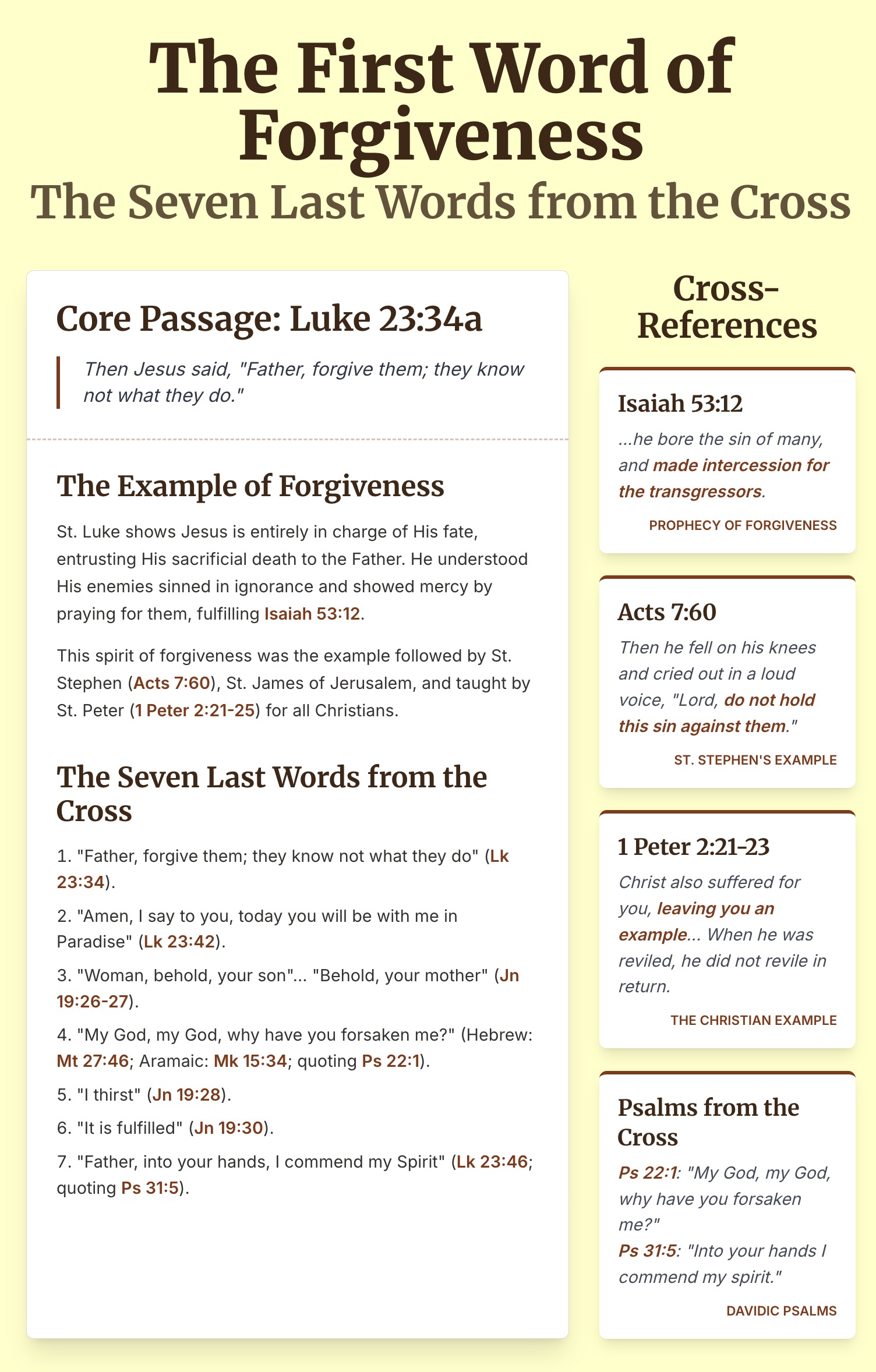
The Faculty of Theology of the University of Navarre reflects on the profound implications of the events surrounding Jesus’ crucifixion, emphasizing the collective responsibility of both Jews and Gentiles in contributing to His suffering. The commentary highlights that every sin we commit can be seen as a form of mockery towards Christ, echoing St. Paul’s assertion that such actions “crucify the Son of God.”
Divine Providence and
The Two Thieves
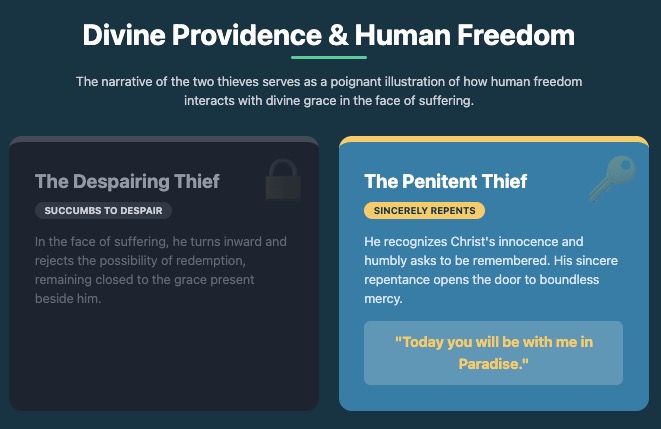
The narrative of the two thieves serves as a poignant illustration of divine providence, grace, and human freedom. While one thief succumbs to despair, the other repents and seeks Christ’s mercy, receiving the promise of salvation. This moment underscores the boundless mercy of God, who is always ready to forgive those who sincerely repent.
Hope vs. Presumption:
The Call to Vigilance
The author encourages readers to maintain hope in God’s mercy while cautioning against presumption regarding salvation, as none can be entirely certain of their final perseverance. This uncertainty is presented as a motivation for vigilance in one’s spiritual journey.
Divine Judgment and
The Power of Repentance
The commentary also draws on the insights of St. Ambrose and St. John Chrysostom, who emphasize the difference between human judgment and God’s understanding of the heart. The author expresses admiration for the penitent thief’s humble request to be remembered by Christ, illustrating how sincere repentance can lead to profound grace.
The Promise of Paradise and Eternal Life
Ultimately, the commentary affirms the belief in eternal life and the promise that those who die in Christ’s grace will be welcomed into Paradise, reinforcing the hope of resurrection and the continuity of the People of God beyond death.
Word-Sunday.com

TWTW Infographics with images created using Nano Banana Gemini AI generator. Permission is granted to non-profits to use them in their ministry. Please give credit to TWTW website and Larry Broding’s commentary on which the graphic is based.

by Larry Broding
Have you ever received help in the hour of despair? What happened?
The Crucifixion scene in Luke is a cacophony of voices: the sneering leaders, the mocking soldiers, and the desperate, cynical criminal. But amidst this noise of rejection, Larry Broding’s commentary uncovers a singular, stunning moment of silence and grace.
Broding masterfully deconstructs the "official disdain" of the Roman placard above Jesus’ head, revealing how it served as a stumbling block for the proud but a bridge for the humble. By exploring the cultural weight of "reputation" and "memory" in the ancient world, Broding offers a profound psychological profile of the Good Thief. He shows how this condemned man moved from guilt to the "tiniest grain of faith," rejecting the world’s verdict to ask for the only thing left: to be remembered by the King.
This commentary is essential reading for any preacher wanting to move their congregation beyond the historical event of the Crucifixion to the personal encounter of salvation. It transforms the "Good Thief" from a side character into a model of the perfect disciple—one who finds hope when all seems lost.
friarmusings.com

Christ the King
- Background
- Alliances against Jesus
- Crucifixion
- Father, Forgive Them
- Standing Against the Messiah
- The Penitent Thief
- Amen
- The King of Hearts
PDF COMMENTARY | INDEX
(Luke 23:35-43)
A Walk in the Word

Jesus Christ, as the New Adam and Son of David, reveals his sovereignty and mercy through his crucifixion, exercising royal authority over creation and restoring paradise lost to establish himself as the King of the Universe.
- 00:00 Jesus Christ, the King of the universe, is revealed through his crucifixion as the New Adam and son of David, showcasing his sovereignty, mercy, and typological connections to the Old Testament.
- 07:23 Jesus, the new Adam and Son of David, exercises royal authority over creation through his sacrifice on the cross, undoing the disobedience of the first Adam and original sin.
- 14:56 Jesus’ crucifixion recapitulates the three-fold temptation in the desert and Garden of Eden, as he resists deviating from his mission to save the world, in contrast to Adam’s and Eve’s failures.
- 19:52 Jesus Christ, as the New Adam and Son of David, restores paradise lost through his passion, death, and resurrection, regaining access to the tree of life for humanity.
- 27:48 Jesus, the New Adam and Son of David, was crucified on the site of Adam’s grave, shedding his blood to redeem humanity and establishing himself as King of the Universe.
- 35:58 Jesus, as the Son of David and Son of God, is anointed three times, affirming his identity and kingship over the universe.
- 41:25 Jesus Christ, the King of the universe, requires total submission to His sovereignty in every aspect of life, and Christians fulfill their royal dignity by serving Him and others.
More Deep Dives
The Word
Proclaimed
Click on timestamp links to watch different sections of the video.

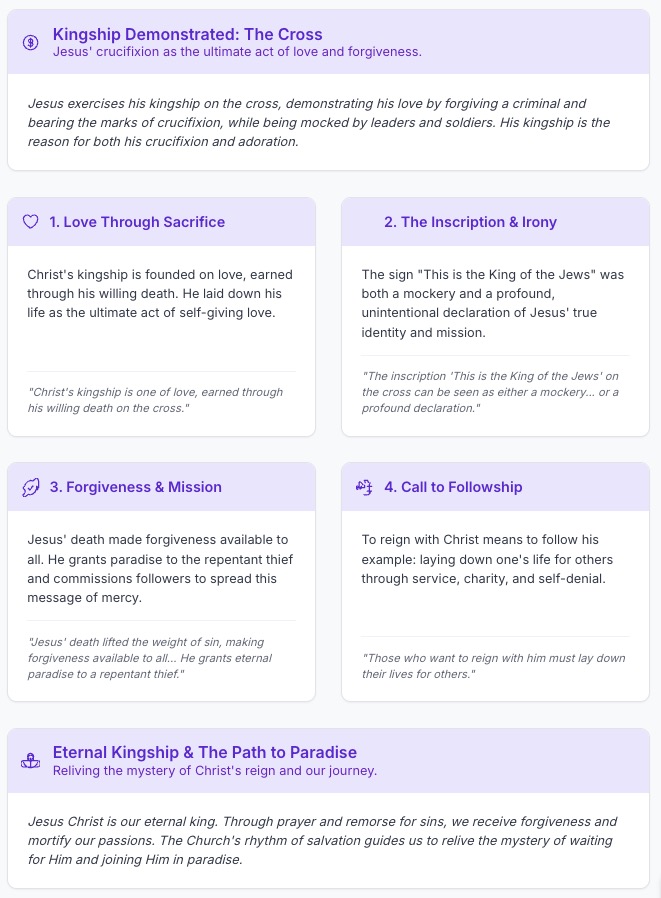
Jesus exercises his unique kingship through his crucifixion, demonstrating love, forgiveness, and sacrifice, and inviting others to follow his example by laying down their lives for others.
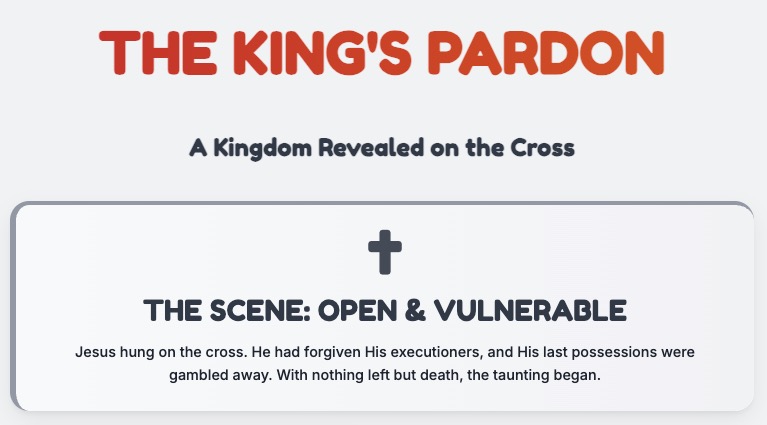
- 00:00 Jesus exercises his kingship on the cross, demonstrating his love by forgiving a criminal and bearing the marks of crucifixion, while being mocked by leaders and soldiers.
- 01:53 Jesus, crucified as the “King of the Jews,” forgives those mocking him, highlighting the irony that his kingship is the reason for both his crucifixion and adoration.
- 03:11 Christ’s kingship is one of love, earned through his willing death on the cross, and those who want to reign with him must lay down their lives for others.
- 04:37 The inscription “This is the king of the Jews” on the cross can be seen as either a mockery of Jesus’ claim to kingship or a profound declaration of his true identity and mission.
- 05:49 Jesus’ death lifted the weight of sin, making forgiveness available to all, and he asked followers to spread this message.
- When that man, Jesus, died, the weight of sin was lifted from the world, making forgiveness available to all, and he asked his followers to spread this message and bring others to baptism and faith.
- One criminal on the cross rebukes the other for mocking Jesus, acknowledging their own just condemnation, while noting Jesus has done nothing criminal.
- 08:10 Jesus grants eternal paradise to a repentant thief, and the speaker prays for forgiveness, to serve God, and care for the poor.
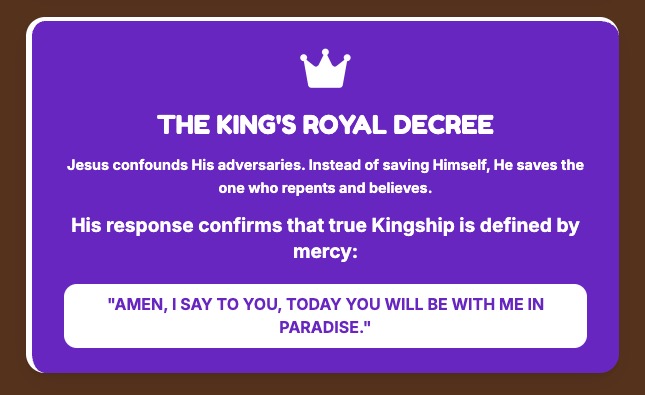
- The crucified Jesus, as the divine king, grants eternal paradise to a repentant thief crucified with him, saying “Today you’ll be with me in paradise” when the thief asks to be remembered in his kingdom.
- The speaker prays to be forgiven, to serve God with their whole heart, and to be with Him in His kingdom, caring for the poor and proclaiming Him to others.
- 10:17 Recalling Jesus through prayer and acknowledging sins with remorse allows one to receive forgiveness and mortify their passions under His mercy and kingship.
- The resurrection of Jesus initiates a new order of being, and recalling Him through prayer, such as the publican’s prayer, helps one mortify their passions by calling on His mercy and kingship.
- To receive forgiveness, one only needs to sincerely acknowledge their sins to God, express remorse, and accept forgiveness, which can be repeated if one sins again.
- 12:34 Jesus Christ is our eternal king, and the Church’s rhythm of salvation helps us relive the mystery of waiting for Him and joining Him in paradise.

Diocese of Phoenix
Christ the King (C)

Christ in Our Neighborhood
Bishop John Dolan
This program aims to foster deeper relationships with Christ through weekly Scripture study and prayer in small faith communities. It was introduced in December 2022


More Discussion Guides
Fr. Thibodeau
Bible Study Notes
Bp. John P. Dolan
Fr. Tobin
Fr. Conley Bertrand
Christ the King (C)
Cycle C (PDFs)
📖 Old Testament (43 pp.)
📖 Epistles (87 pp.)
📖 Gospels (182 pp.)
📖 Daily Gospels (208 pp.)
SOURCE: Come, Lord Jesus
Carmelite Reflections and Prayers
Lectio Divina
85-page PDF with reflections and prayers for each day of the month
Lectio Divina NOVEMBER 2025 (PDF)
Lectio Divina NOVEMBER 2025 [ePub]
______________
“Lectio divina is an authentic source of Christian spirituality recommended by our Rule. We therefore practise it every day, so that we may develop a deep and genuine love for it, and so that we may grow in the surpassing knowledge of Christ. In this way we shall put into practice the Apostle Paul’s commandment, which is mentioned in our Rule: “The sword of the Spirit, too, which is the word of God, is to dwell abundantly in your mouth and in your hearts; and whatever things you have to do, let them be done in the word of the Lord.” (Carmelite Constitutions (2019), n. 85.)
Source: Carmelites

Luke 21:5-8
Classic Translation
34. Then said Jesus, Father, forgive them; for they know not what they do. And they parted his raiment, and cast lots.
35. And the people stood beholding. And the rulers also with them derided him, saying, He saved others; let him save himself, if he be Christ, the chosen of God.
36. And the soldiers also mocked him, coming to him, and offering him vinegar,
37. And saying, If thou be the king of the Jews, save thyself.
CHRYSOSTOM. Because the Lord had said, Pray for them that persecute you, (Matt. 5:44.) this likewise He did, when He ascended the cross, as it follows, Then said Jesus, Father, forgive them, not that He was not able Himself to pardon them, but that He might teach us to pray for our persecutors, not only in word, but in deed also. But He says, Forgive them, if they should repent. For He is gracious to the penitent, if they are willing after so great wickedness to wash away their guilt by faith.
BEDE. Nor must we imagine here that He prayed in vain, but that in those who believed after His passion He obtained the fruit of His prayers? It must be remarked, however, that He prayed not for those who chose rather to crucify, rather than to confess Him whom they knew to be the Son of God, but for such as were ignorant what they did, having a zeal for God, but not according to knowledge, as He adds, For they know not what they do.
GREEK EXPOSITOR. But for those who after the crucifixion remain in unbelief, no one can suppose that they are excused by ignorance, because of the notable miracles that with a loud voice proclaimed Him to be the Son of God.
AMBROSE. It is important then to consider, in what condition He ascends the cross; for I see Him naked. Let him then who prepares to overcome the world, so ascend that he seek not the appliances of the world. Now Adam was overcome who sought for a covering. He overcame who laid aside His covering. He ascends such as nature formed us, God being our Creator. Such as the first man had dwelt in paradise, such did the second man enter paradise. But about to ascend the cross rightly, did He lay aside His royal garments, that you may know that He suffered not as God, but as man, though Christ is both.
ATHANASIUS. (Hom. in Pass. Dom.) He also who for our sakes took upon Him all our conditions, put on our garments, the signs of Adam’s death, that He might put them off, and in their stead clothe us with life and incorruption.
It follows, And they parted his raiment among them, and cast lots.
THEOPHYLACT. For perhaps many of them were in want. Or perhaps rather they did this as a reproach, and from a kind of wantonness. For what treasure did they find in His garments?
BEDE. But in the lot the grace of God seems to be commended; for when the lot is cast, we yield not to the merits of any person, but to the secret judgment of God.
AUGUSTINE. (de Con. Ev. lib. iii. c. 12.) This matter indeed was briefly related by the three first Evangelists, but John more distinctly explains how it was done.
THEOPHYLACT. They did it then mockingly. For when the rulers scoffed, what can we say of the crowd? for it follows, And the people stood, who in truth had entreated that He should be crucified, waiting, namely, for the end. And the rulers also with them derided.
AUGUSTINE. (ubi sup.) Having mentioned the rulers, and said nothing of the priests, St. Luke comprehended under a general name all the chief men, so that hereby may be understood both the scribes and the elders.
BEDE. And these also unwillingly confess that He saved others, for it follows, Saying, He saved others, let him save himself, &c.
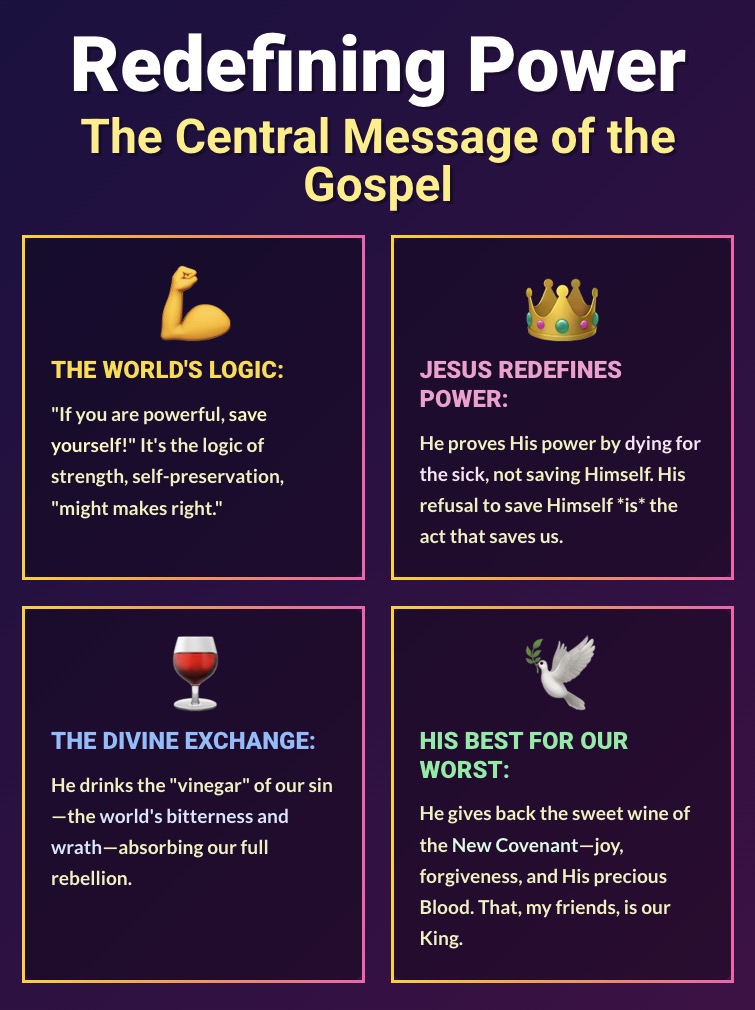
ATHANASIUS. (ubi sup.) Now our Lord being truly the Saviour, wished not by saving Himself, but by saving His creatures, to be acknowledged the Saviour. For neither is a physician by healing himself known to be a physician, unless he also gives proof of his skill towards the sick. So the Lord being the Saviour had no need of salvation, nor by descending from the cross did He wish to be acknowledged the Saviour, but by dying. For truly a much greater salvation does the death of the Saviour bring to men, than the descent from the cross.
GREEK EXPOSITOR. Now the Devil, seeing that there was no protection for him, was at a loss, and as having no other resource, tried at last to offer Him vinegar to drink. But he knew not that he was doing this against himself; for the bitterness of wrath caused by the transgression of the law, in which he kept all men bound, he now surrendered to the Saviour, who took it and consumed it, in order that in the place of vinegar, He might give us wine to drink, which wisdom had mingled. (Prov. 9:5.)
THEOPHYLACT. But the soldiers offered Christ vinegar, as it were ministering unto a king, for it follows, saying, If thou art the king of the Jews, save thyself.
Christ the King (C)
Contemporary Adaptation

Luke 23:34 (ESV) And Jesus said, “Father, forgive them, for they know not what they do.”
CHRYSOSTOM. Because the Lord had said, “Pray for those who persecute you,” (Matt. 5:44) He did exactly that when He ascended the cross. As it follows, Then said Jesus, “Father, forgive them.” He does this not because He was unable to pardon them Himself, but to teach us to pray for our persecutors—not just with our words, but with our actions.
But He says, “Forgive them,” which means, if they should repent. For He is gracious to the penitent, if they are willing, even after such great wickedness, to wash away their guilt by faith.
BEDE. We must not imagine that He prayed in vain. The fruit of His prayer was seen in all those who believed after His passion—think of the thousands converted at Pentecost! It must be remarked, however, that He wasn’t praying for those who knew He was the Son of God and chose to crucify Him anyway. He was praying for those who were ignorant of what they were doing, who had, as Paul would say, “a zeal for God, but not according to knowledge.”
GREEK EXPOSITOR. But for those who remain in unbelief even after the crucifixion, no one can suppose they are excused by ignorance. Why? Because of the notable miracles that followed—especially the resurrection—which proclaimed with a loud voice that He is the Son of God.
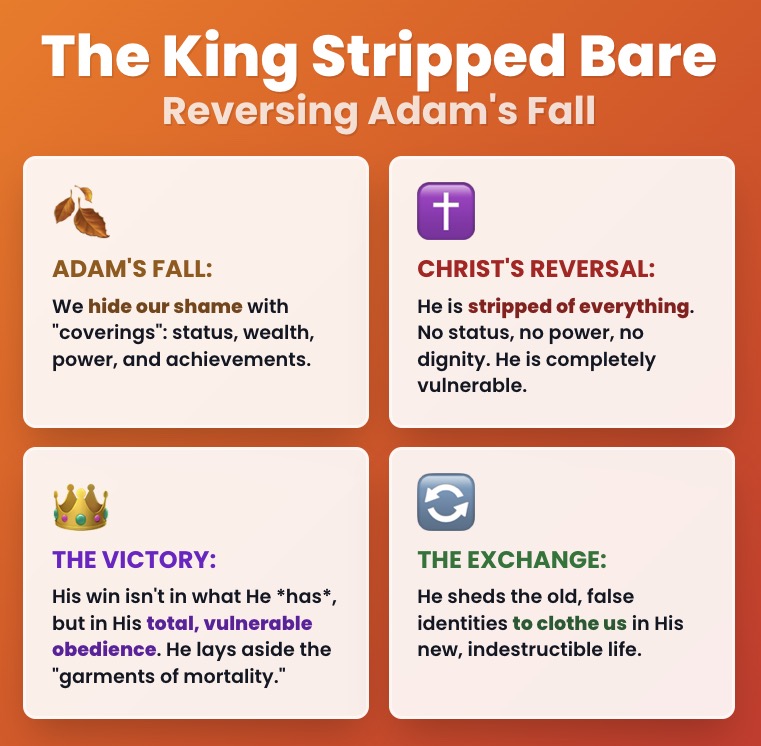
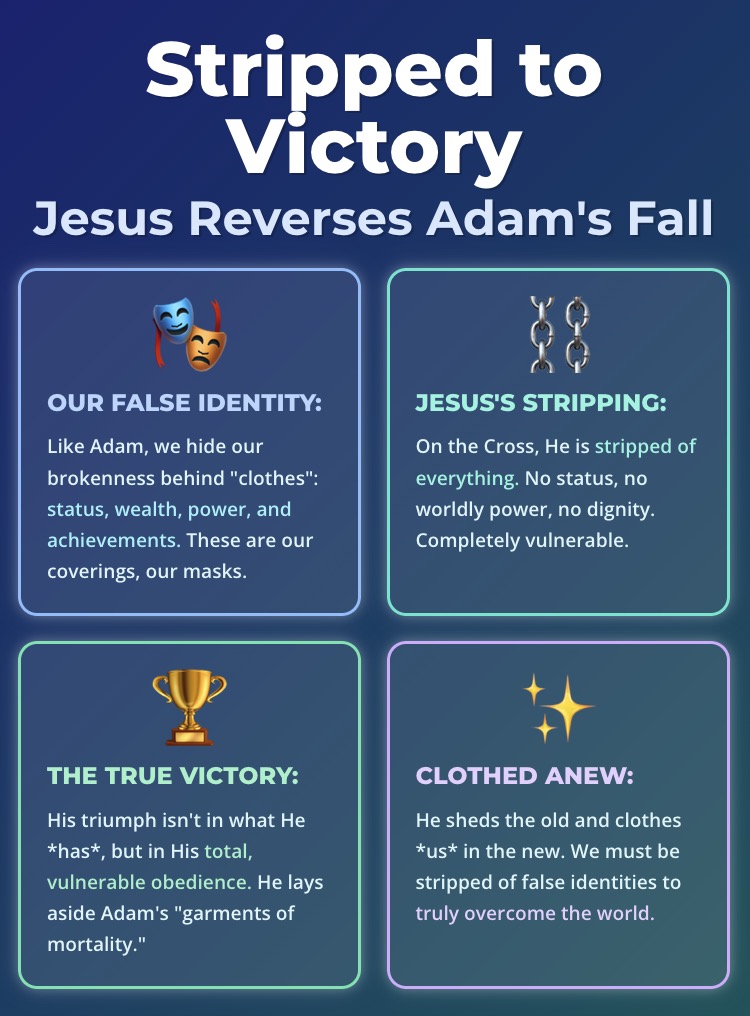
AMBROSE. It is critical to consider the condition in which He ascends the cross: I see Him naked.
Let the person who prepares to overcome the world ascend in the same way, seeking none of the appliances or comforts of the world. Adam was overcome because he sought a covering for his shame. Christ, the second Adam, overcame because He laid aside His covering. He ascends the cross in the state that nature formed us, as God our Creator made us. Just as the first man had dwelt in paradise, so the second Man enters paradise.
He rightly laid aside His royal garments before ascending the cross, so that you may know that He suffered not as God, but as man—though Christ is, of course, both.
ATHANASIUS. He who took upon Himself all of our conditions for our sake also put on our garments—the very signs of Adam’s death and mortality. He put them on in His birth, that He might put them off on the cross, and in their place, clothe us with life and incorruption.
Luke 23:34b (ESV) And they divided his garments and cast lots.
THEOPHYLACT. Why did they do this? Perhaps many of them were poor and needed the clothes. Or, more likely, they did this as a reproach, a final act of mockery and wantonness. What treasure could they possibly find in His simple garments?
BEDE. But in the casting of the lot, the grace of God is commended. For when the lot is cast, the outcome is not yielded to the merits or choice of any person, but to the secret judgment of God.
AUGUSTINE. This matter was related briefly by the first three Evangelists, but John explains more distinctly how it was done (referring to the seamless tunic in John 19).
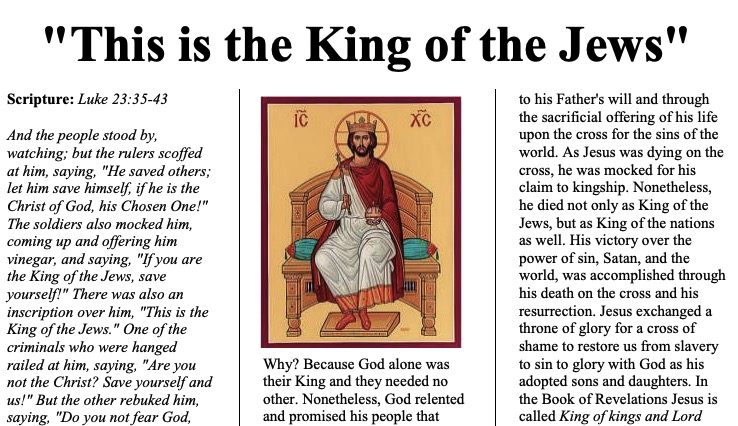
Luke 23:35-37 (ESV) And the people stood by, watching, but the rulers scoffed at him, saying, “He saved others; let him save himself, if he is the Christ of God, his Chosen One!” The soldiers also mocked him, coming up and offering him sour wine, and saying, “If you are the King of the Jews, save yourself!”
THEOPHYLACT. They did this mockingly. For if the rulers were scoffing, what can we say of the crowd? They had begged for Him to be crucified, and now they stood by, just “waiting, namely, for the end.”
AUGUSTINE. When St. Luke mentions the “rulers,” he is using a general name to comprehend all the chief men—the scribes, the elders, all of them.
BEDE. And in their mockery, they unwillingly confess the truth: “He saved others…”
ATHANASIUS. Now our Lord, being truly the Savior, did not wish to be acknowledged as the Savior by saving Himself. A physician isn’t known as a physician by healing himself, unless he also gives proof of his skill toward the sick. So the Lord, being the Savior, had no need of salvation. He did not wish to be acknowledged as Savior by descending from the cross, but by dying on it. For truly, the death of the Savior brings a much greater salvation to men than His descent from the cross ever could.
GREEK EXPOSITOR. The Devil, seeing that he had no protection, was at a loss. As a last resort, having no other resource, he tried to offer Him vinegar to drink. But he did not know he was doing this against himself. For the “bitterness of wrath” caused by the transgression of the law, in which he kept all men bound, he now surrendered to the Savior. Jesus took it and consumed it, in order that in the place of vinegar, He might give us wine to drink—the wine “which wisdom had mingled.” (Prov. 9:5)
THEOPHYLACT. The soldiers offered Christ vinegar, as it were “ministering unto a king”—a sarcastic gesture, for it follows, “If thou art the king of the Jews, save thyself.”
BEDE. It is worthy of remark that the Jews (who had the Scriptures) blaspheme and mock the name of Christ, the “Chosen of God.” The soldiers, however, as being ignorant of the Scriptures, do not insult the Christ, but only the “King of the Jews.”
Luke 21:9-11
Classic Translation
38. And a superscription also was written over him in letters of Greek, and Latin, and Hebrew, THIS IS THE KING OF THE JEWS.
39. And one of the malefactors which were hanged railed on him, saying, If thou be Christ, save thyself and us.
40. But the other answering rebuked him, saying, Dost not thou fear God, seeing thou art in the same condemnation?
41. And we indeed justly; for we receive the due reward of our deeds: but this man hath done nothing amiss.
42. And he said unto Jesus, Lord, remember me when thou comest into thy kingdom.
43. And Jesus said unto him, Verily I say unto thee, To day shalt thou be with me in paradise..
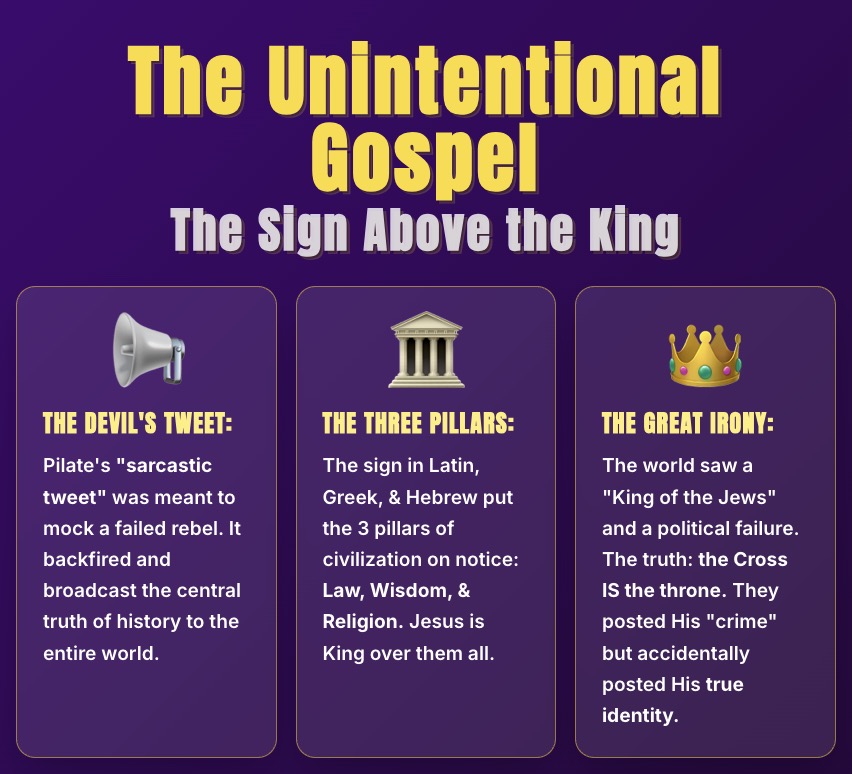
THEOPHYLACT. Observe a second time the device of the devil turned against himself. For in letters of three different characters he published the accusation of Jesus, that in truth it might not escape one of the passers by, that He was crucified because He made Himself King. For it is said, In Greek, Latin, and Hebrew, by which it was signified, that the most powerful of the nations, (as the Romans,) the wisest, (as the Greeks,) those who most worshipped God, (as the Jewish nation,) must be made subject to the dominion of Christ.
AMBROSE. And rightly is the title placed above the cross, because Christ’s kingdom is not of the human body, but of the power of God. I read the title of the King of the Jews, when I read, My kingdom is not of this world. (John 18:36.) I read the cause of Christ written above His head, when I read, And the Word was God. (John 1:1.) For the head of Christ is God. (1 Cor. 11:3.)
CYRIL OF ALEXANDRIA. Now one of the thieves uttered the same revilings as the Jews, but the other tried to check his words, while he confessed his own guilt, adding, We indeed justly, for we receive the due reward of our deeds.
CHRYSOSTOM. Here the condemned performs the office of judge, and he begins to decide concerning truth who before Pilate confessed his crime only after many tortures. For the judgment of man from whom secret things are hid is of one kind; the judgment of God who searches the heart of another. And in the former case punishment follows after confession, but here confession is made unto salvation. But he also pronounces Christ innocent, adding, But this man hath done nothing wrong: as if to say, Behold a new injury, that innocence should be condemned with crime. We kill the living, He raised the dead. We have stolen from others, He bids us give up even what is our own. The blessed thief thus taught those that stood by, uttering the words by which he rebuked the other. But when he saw that the ears of those who stood by were stopped up, he turns to Him who knoweth the hearts; for it follows, And he said to Jesus, Lord, remember me when thou comest into thy kingdom. Thou beholdest the Crucified, and thou acknowledgest Him to be thy Lord. Thou seest the form of a condemned criminal, and thou proclaimest the dignity of a king. Stained with a thousand crimes, thou askest the Fountain of righteousness to remember thy wickedness, saying, But I discover thy hidden kingdom; and thou turnest away my public iniquities, and acceptest the faith of a secret intention. Wickedness usurped the disciple of truth, truth did not change the disciple of wickedness.
GREGORY. (Mor. 18. c. 40.) On the cross nails had fastened his hands and feet, and nothing remained free from torture, but his heart and tongue. By the inspiration of God, the thief offered to Him the whole which he found free, that as it is written, With the heart he might believe unto righteousness, with the mouth he might confess unto salvation. (Rom. 10:10.) But the three virtues which the Apostle speaks of, (1 Cor. 13:13.) the thief suddenly filled with grace both received and preserved on the cross. He had faith, for example, who believed that God would reign whom he saw dying equally with himself. He had hope who asked for an entrance into His kingdom. He preserved charity also zealously in his death, who for his iniquity reproved his brother and fellow-thief, dying for a like crime to his own.
AMBROSE. A most remarkable example is here given of seeking after conversion, seeing that pardon is so speedily granted to the thief. The Lord quickly pardons, because the thief is quickly converted. And grace is more abundant than prayer; for the Lord ever gives more than He is asked for. The thief asked that He should remember him, but our Lord answers, Verily I say unto thee, This day shall thou be with me in Paradise. To be with Christ is life, and where Christ is, there is His kingdom.
THEOPHYLACT. And as every king who returns victorious carries in triumph the best of his spoils, so the Lord having despoiled the devil of a portion of his plunder, carries it with Him into Paradise.
CHRYSOSTOM. Here then might one see the Saviour between the thieves weighing in the scales of justice faith, and unbelief. The devil cast Adam out of Paradise. Christ brought the thief into Paradise before the whole world, before the Apostles. By a mere word and by faith alone he entered into Paradise, that no one after his sins might despair of entrance. Mark the rapid change, from the cross to heaven, from condemnation to Paradise, that you may know that the Lord did it all, not with regard to the thief’s good intention, but His own mercy.
But if the reward of the good has already taken place, surely a resurrection will be superfluous. For if He introduced the thief into Paradise while his body remained in corruption without, it is clear there is no resurrection of the body. Such are the words of some, But shall the flesh which has partaken of the toil be deprived of the reward? Hear Paul speaking, Then must this corruptible put on incorruption. (1 Cor. 15:53.) But if the Lord promised the kingdom of heaven, but introduced the thief into Paradise, He does not yet recompense him the reward. But they say, Under the name of Paradise He signified the kingdom of heaven, using a well-known name in addressing a thief who knew nothing of difficult teaching. Now some do not read it, This day shall thou be with me in Paradise, but thus, I say unto thee on this day, and then follows, thou shalt be with me in Paradise. But we will add a still more obvious solution. For physicians when they see a man in a desperate state, say, He is already dead. So also the thief, since he no longer fears his falling back to perdition, is said to have entered Paradise.
THEOPHYLACT. This however is more true than all, that although they have not obtained all the promises, I mean, the thief and the other saints in order that without us they might not be made perfect, (Heb. 11:40.) they are notwithstanding in the kingdom of heaven and Paradise.
GREGORY OF NYSSA. Here again, we must examine how the thief should be thought worthy of Paradise, seeing that a flaming sword prevents the entrance of the saints. But observe that the word of God describes it as turning about, so as it should obstruct the unworthy, but open a free entrance to life to the worthy.
GREGORY. (Mor. 12. c. 9.) Or that flaming sword is said to be turning, because that He knew the time would come when it must be removed; when He in truth should come, who by the mystery of His incarnation was to open to us the way of Paradise.
AMBROSE. But it must also be explained how the others, that is, Matthew and Mark, introduced two thieves reviling, while Luke, one reviling, the other resisting him. Perhaps this other at first reviled, but was suddenly converted. It may also have been spoken of one, but in the plural number; as in the Hebrews, They wandered in goat-skins, and they were sawn asunder; (Heb. 11:37.) whereas Elijah alone is related to have had a goat-skin, and Isaiah to have been sawn asunder. But mystically, the two thieves represent the two sinful people who were to be crucified by baptism with Christ, (Rom. 6:3.) whose disagreement likewise represents the difference of believers.
BEDE. For as many of us as were baptized in Christ Jesus, were baptized in His death; but we are washed by baptism, seeing we were sinners. But some, in that they praise God suffering in the flesh, are crowned; others, in that they refuse to have the faith or works of baptism, are deprived of the gift which they have received.
Christ the King (C)
Contemporary Adaptation
Luke 23:38 (ESV) There was also an inscription over him, “This is the King of the Jews.”
THEOPHYLACT. Observe this: a second time, the devil’s device is turned against himself. He wanted to publish the accusation of Jesus, but in letters of three different characters, he published the truth. It was written in Greek, Latin, and Hebrew, so that not a single person passing by could miss it: He was crucified because He made Himself King.
This signified that the most powerful of the nations (the Romans, represented by Latin), the wisest (the Greeks), and those who most worshipped God (the Jewish nation, by Hebrew) must all be made subject to the dominion of Christ.
AMBROSE. It is right that the title is placed above the cross, because Christ’s kingdom is not of the human body, but of the power of God. I read that title, “King of the Jews,” but I understand it by reading His other words: “My kingdom is not of this world.” (John 18:36). I read the cause of Christ written above His head, but I understand it by reading, “And the Word was God.” (John 1:1). For, as Paul says, “the head of Christ is God.” (1 Cor. 11:3).
Now we come to the thieves.
Luke 23:39-41 (ESV) One of the criminals who were hanged railed at him, saying, “Are you not the Christ? Save yourself and us!” But the other rebuked him, saying, “Do you not fear God, since you are under the same sentence of condemnation? And we indeed justly, for we are receiving the due reward of our deeds; but this man has done nothing wrong.”
CYRIL OF ALEXANDRIA. Now one of the thieves uttered the same revilings as the Jews, but the other tried to check his words, while he confessed his own guilt.
CHRYSOSTOM. Right here, the condemned criminal performs the office of a judge. He, who before Pilate would only confess his crime after many tortures, now freely confesses to find salvation. He pronounces Christ innocent: “But this man hath done nothing wrong.”
When he saw that the ears of those who stood by were stopped up, he turns to Him who knows the heart. It’s as if he’s saying, “You behold the Crucified, and I acknowledge You as my Lord. You see the form of a condemned criminal, and I proclaim the dignity of a king. Stained with a thousand crimes, I ask the Fountain of righteousness to remember me. I see Your hidden kingdom.” Wickedness had usurped this disciple, but truth did not fail to change him.
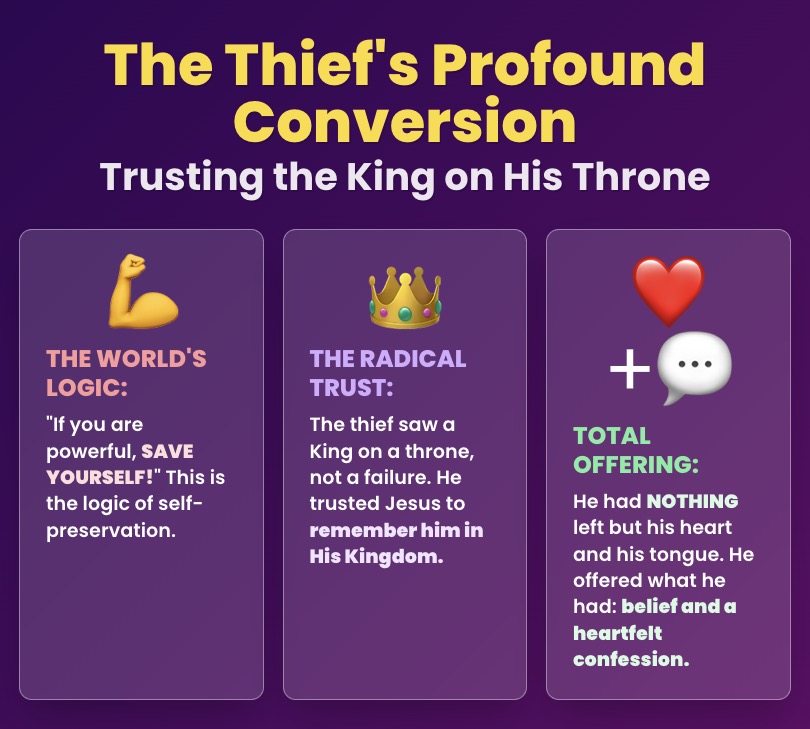
GREGORY. On the cross, nails had fastened his hands and feet. Nothing remained free from torture except his heart and his tongue. By the inspiration of God, the thief offered to Him the whole of what he found free. He offered what was left, that, as it is written, “with the heart one believes unto righteousness, and with the mouth one confesses unto salvation.” (Rom. 10:10).
The three virtues which the Apostle speaks of (1 Cor. 13:13)—faith, hope, and love—the thief, suddenly filled with grace, both received and preserved on the cross.
- He had faith, who believed that God would reign, whom he saw dying equally with himself.
- He had hope, who asked for an entrance into His kingdom.
- He preserved charity (love) also, in that he reproved his brother and fellow-thief, who was dying for a like crime.
Luke 23:42-43 (ESV) And he said, “Jesus, remember me when you come into your kingdom.” And he said to him, “Truly, I say to you, today you will be with me in Paradise.”
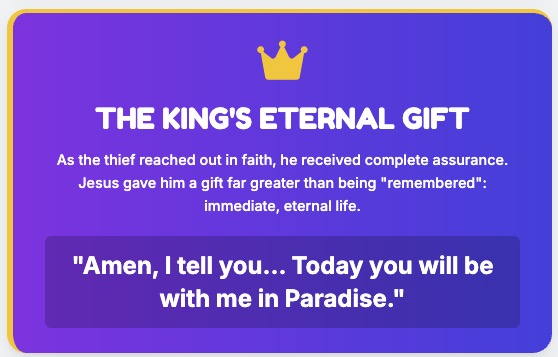
AMBROSE. This is the most remarkable example of conversion, seeing that pardon is so speedily granted. The Lord quickly pardons, because the thief is quickly converted. And grace is more abundant than prayer; for the Lord always gives more than He is asked for. The thief asked only that Jesus remember him, but our Lord answers, “Truly I say unto thee, This day shall thou be with me in Paradise.”
To be with Christ is life, and where Christ is, there is His kingdom.
THEOPHYLACT. Just as every king who returns victorious carries in triumph the best of his spoils, so the Lord, having despoiled the devil of a portion of his plunder, carries this thief with Him into Paradise.
CHRYSOSTOM. Here you see the Savior between the thieves, weighing faith and unbelief in the scales of justice. The devil cast Adam out of Paradise; Christ brought the thief into Paradise—before the whole world, even before the Apostles. By a mere word and by faith alone, he entered, so that no one, after all his sins, might despair of entrance.
Mark the rapid change: from the cross to heaven, from condemnation to Paradise. This shows that the Lord did it all, not with regard to the thief’s good intention, but by His own mercy.


- Ordained in 1967
- Started the “Scriptural Homilies” ministry in 2003 while serving as a chaplain
- Applied scientific methodology to homily ministry+ Reached hundreds of priests and Deacons through word-of-mouth, eventually reaching the Vatican Radio website and four other websites
- Distributed weekly homilies to nearly 3000 priests and Deacons via direct email
- His commentary and reflections were posted on the Vatican News website for several years.
Sunday and Daily Homily Resources
- Eight Minute Homily
- Introduction
- Scripture Summaries
- Exegesis
- Life Messages
- Homily Starter Anecdotes
- Jokes of the Week
Fr. Tony’s
Jokes of the
Week
Susan C. Kimber, in a book called Christian Woman, shares a funny piece of advice she received from her little son:
Tired of struggling with my strong-willed little son, Thomas, I looked him in the eye and asked a question I felt sure would bring him in line:
‘Thomas, who is in charge here?’
Not missing a beat, he replied, ‘Jesus is, not you.’ ”
Once a priest was giving a homily and as he went on, he became more animated. He made a sweeping gesture – and accidentally knocked his papers from the pulpit. He scrambled to pick them up, then asked,
“Now, where was I?”
A voice from the congregation responded, “Right near the end!”
— Well, we are at the end – not of the homily, but of the liturgical year
One day a kindergarten teacher nun said to the class of 5-year-olds,
“I’ll give $2 to the child who can tell me who was the most famous man who ever lived.”
An Irish boy put his hand up and said, “It was St. Patrick.
“The teacher said, “Sorry Sean, that’s not correct.”
Then a Scottish boy put his hand up and said, “It was St. Andrew.”
The teacher replied, “I’m sorry, Hamish, that’s not right either.
“Finally, a Jewish boy raised his hand and said, “It was Jesus Christ.”
The teacher said, “That’s absolutely right, Marvin, come up here and I’ll give you the $2.”
As the teacher was giving Marvin his money, she said,
“You know Marvin, you being Jewish, I was very surprised you said Jesus Christ.”
Marvin replied, “Yeah. In my heart I knew it was Moses, but business is business…”


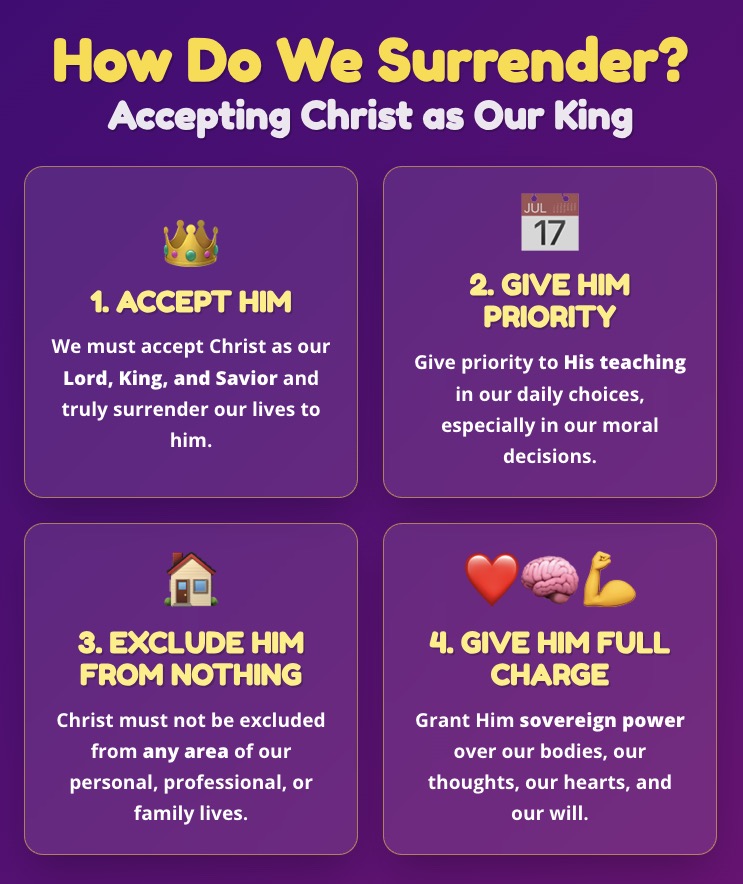
LIFE MESSAGE #1
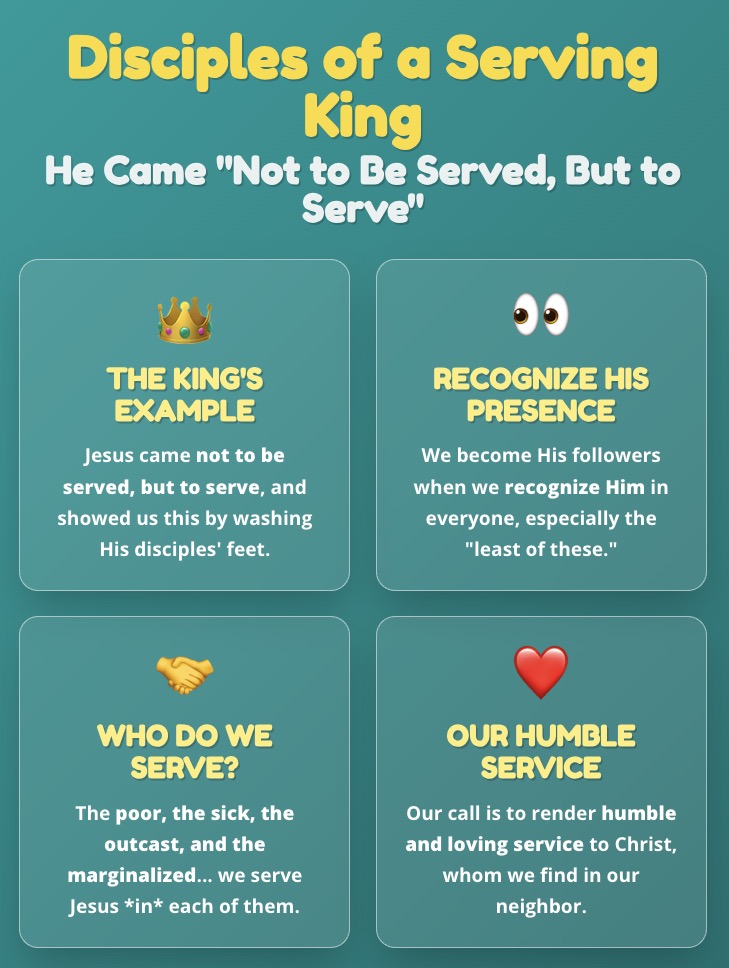
LIFE MESSAGE #2
Scroll to Read More