

SOURCE: The Jesuit Post

SOURCE: Archdiocese of Brisbane Homilies


SOURCE: Fr. Kevin’s Homilies
Words have immense power to either bring life, healing, and peace or cause harm, destruction, and death, and therefore should be used wisely and with intention.

Jesus’ declaration “I am the bread of life” presents a moment of crisis and decision for his followers, requiring them to choose between their old worldview and a new reality that comes with believing in him and his claims.
Bishop Robert Barron
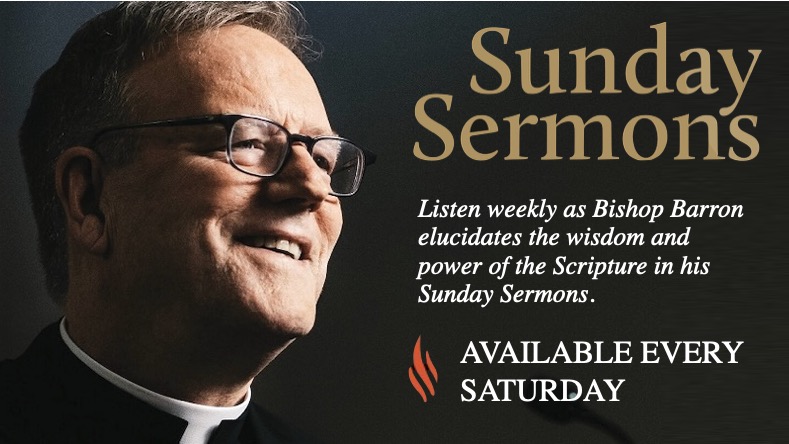

SOURCE: Word on Fire
2024 HOMILY – Jesus’ teaching on the Real Presence in the Eucharist is a literal claim that he is the living bread come down from heaven, and accepting or rejecting this doctrine is a crucial aspect of being a follower of Jesus.
Deacon Peter McCulloch
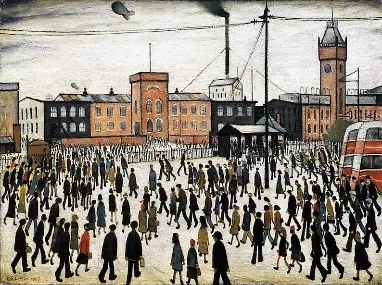
On Choice and Consequence
EXCERPT: LS Lowry’s painting Going to Work (1943) depicts a multitude of people leaving. Reflecting on this image, van der Vorst asks, ‘Where are they going, what are they walking towards?’
We might well ask ourselves that same question, because our choices do have consequences. Where are we going if we’re not walking with Christ towards heaven?
‘For Jesus, being a disciple is all about staying with him and being committed. It’s about discipleship, and not just being a passive follower.’
Fr. Andrew Ricci
PODCAST: The people in the first reading and the Gospel make choices in light of what they have heard and seen. Choices are an essential part of our lives and through the decisions we make we are either drawing closer to Christ or moving farther away.
Fr. Austin Fleming

How Many Masters Do You Serve?
EXCERPT: My guess is that most of us serve many masters. The masters we serve are those who become our priority, our focus; those who eat up our time; those who consume our worry, our sweat and our energy; For some , the master is the job; for some, family; for many it’s school. For some it’s a drink or a drug, sports or sex, a wager or the Internet. For others their master is their fear, anxiety, greed, envy, grief, loneliness or guilt. And most of us, whether we have a lot of it or just a little, most of us are servants of money. We all have many masters, and our masters have a leash on us and often manage our lives in ways we don’t even notice.
Dominican Blackfriars


EXCERPT: We have come to faith in Jesus; we, like Peter, know he has the words of eternal life. In the Holy Eucharist, we devoutly eat his Flesh and drink his Blood. But the challenge he laid down a year before he gave us the Eucharist can still strike us: Do we want to see all that this great Sign, this precious Sacrament, tells us? It shows us Jesus’ Sacrifice, and brings its power to us: do we want to see Jesus’ self-giving as our New Law, the Pattern to follow? Does this Sacrament of Jesus’ Sacrifice draw us to repent of our sins, which have helped bring about Jesus’ Death? Do we still nurture a ‘fleshly,’ this-worldly attitude? – or will we let the Spirit re-shape our priorities so that we hunger for eternal life, and cherish others with a lively hope that they will be our friends forever in God? Do we measure Jesus’ value to us in terms of what we would like him to do for us? – or are we open to the precise gifts the Divine Wisdom sees it best to grant? To what kind of deeper discipleship is the Holy Eucharist calling us?
Fr. Charles E. Irvin
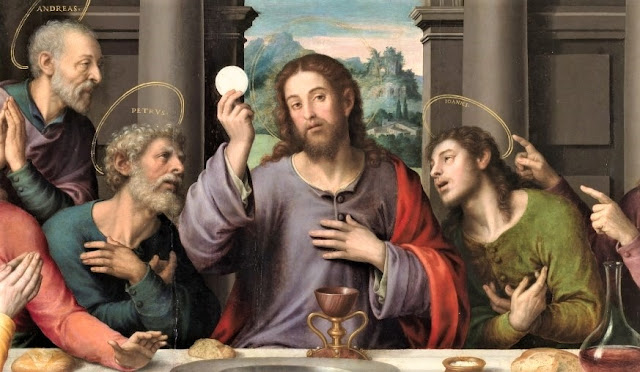
Choices, Decisions, and Commitments

EXCERPT: Our lives are shaped and determined by our decisions. We are who we are in large measure due to our decisions, some of them made for lifetime, and some of them renewed when necessary. Friendships need to be reaffirmed from time to time. Marriage vows likewise need to be reaffirmed. Commitments are more that just wishful thinking… they require renewal in our hearts and our decisions to be made once again.
Life is a series of choices presented to us, many times the same choices made repeatedly. But as hard as they be, and as difficult as they may sometimes be to fully understand, we are nevertheless who we are because of our decisions. It is love that empowers us. Many times what’s in our heads cannot suffice. It is love that truly motivates husbands and wives to maintain their commitments. It is love that empowers me as a priest to maintain my commitment to you. It is in love that the Son of God gives us His Body and Blood.
Fr. Leon Ngandu, SVD
Fr. Leon Ngandu, SVD
“Do you also want to leave?”
EXCERPT: Before we make this critical and personal decision, let us take the necessary time to review again all of Jesus’ teachings in this Bread of Life Discourse. Here are the recapitulating points: Jesus cares for us when we follow him. He feeds us like he fed the five thousand people (the first Sunday of our meditation). He invites us to work, not for the food that perishes, but for the food that endures for eternal life, which is to unite with him in the sacrament of the Eucharist at Mass (second Sunday). We are on our earthly journey to heaven, where we will meet God. So, to not starve with hunger, we need Jesus, the bread of life, to sustain us spiritually (third Sunday). His Flesh and Blood we receive in the Holy Communion make us remain in him and he in us, and have eternal life (fourth Sunday). This union transforms our lives. We become one with Jesus, he, who is the head, and we are the members of his body, which is the Church that Saint Paul talks about when he uses the analogy of love between wife and husband in today’s second reading (fifth Sunday).
Fr. Joe Jagodensky, SDS
EXCERPT: Joshua offers a choice, either stay on the toilet or get off of it. He says either worship the God who created you or go back to worshipping the gods that you’ve created. A choice. Jesus offers his followers the same ultimatum. He says, “Always look for something and someone greater than yourself and will find me, my Father and the Holy Spirit.” Jesus lost followers that day. Lost to either confusion, selfishness or ignorance. Peter admits, “Where else would I go?” Yes, indeed, where else can you experience the holy and sacred relationship like the One, True God gives us.
Fr. George Smiga
To Whom Shall We Go?

INTRODUCTION: I believe it was Winston Churchill who said, “Democracy is a terrible form of government.” But then he added, “There is no other form that is better.” Sometimes our best choice is far from perfect. We end up choosing something really does not please us, but we do so precisely because no better options are available.
This seems to be the situation with Peter in today’s gospel. Many people are finding that Jesus’ teaching is difficult, hard to accept. So they are leaving. They are no longer traveling in his company. Jesus asks Peter, “Do you also want to leave?” and Peter says, “Master, to whom shall we go? You have the words of eternal life.”
Fr. Anthony Ekpunobi, C.M.

EXCERPT: It is true that the teachings of Jesus will not go down well everybody. Christianity is a fundamental option. It will require conviction based on the understanding open to faith. The acceptance of Jesus as the living bread from heaven for the life of the world is given us through grace. Jesus made this clear in today’s gospel when he said; ‘This is why I told you that no one could come to me unless the Father allows him.’ In his teachings, Jesus presented the Eucharist to be at the centre of the Christian life. There is the need to reflect on our commitment to the Holy Eucharist. Are we truly drawn by the God’s grace to participate in the Holy communion? Are there reservations in our hearts with regards to the teaching of Jesus Christ? Are we willing to discuss it or reflect on it?
Msgr. Joseph Pellegrino

The Words of Eternal Life

EXCERPT: It is sad that throughout history many people have rejected the One who has the words of eternal life and have instead given themselves over to a blind following of those who can offer them no more than a political view of life. Demagogues appear everywhere and at every time. Many people are willing to drink the Koole Aide of multiple Jonestowns and destroy themselves to follow someone who cannot give them anything more than a sense of being a part of an idolizing crowd. So they said, “Hail Caesar,” and sacrificed the Roman Republic. They said, “Heil Hitler,” and sacrificed their morality.
Msgr. Charles Pope
Two Hard Saying in One Day
INTRODUCTION: The readings this Sunday feature two “hard sayings,” one on the Eucharist, the other on marriage. One is hard because it defies our sensibilities, the other because it is out-of-season and politically incorrect. This is a long reflection. What I present here is really two separate sermons, but both merit some attention.
I. The first “hard saying” is Jesus’ insistence that the Eucharist is actually His Body and Blood.
II. The second “hard saying” is hard for a different reason. it is (way) out-of-season and politically incorrect. It insists not only on headship within marriage but male headship. The Holy Spirit and the apostles apparently never got the memo that this teaching is a “no go” in our modern, “enlightened” age. Indeed, the text Wives should be subordinate to their husbands as to the Lord is like a stick in the eye to most moderns. Talk about a hard saying!
Bishop John Louis

EXCERPT: According to today’s first reading, Joshua, who eventually led the Israelites to the Promised Land, placed two options before them. They were to choose between God and other gods (Joshua 24:1-2, 15-18). Similarly, in the gospel reading, Jesus Christ asked the Twelve Apostles to make a choice between Himself and the crowd of thousands who were deserting Him: “Do you also wish to go?” (John 6:67). These readings alert us to ask the question: are we for God or against Him? Let us consider four instances in which we have to make a choice for or against God.
Fr. Michael Chua

EXCERPT: If you are unhappy with some teachings of the Church because they don’t seem to match up to your expectations or approve of your present lifestyle, grow up! Don’t expect the world or the Church to bend backwards and move the goalposts to feed your sense of entitlement. Catholics don’t have to follow every fad, fashion or new fancies of the world. We just need to follow St Paul’s command: “Stand firm and hold to the traditions which you were taught by us, either by word of mouth or by letter” (2 Thess. 2:15). Our anchor is Christ. Sacred Scripture and Sacred Tradition, our foundation. No matter what else changes or catches the fancy of man, the Gospel does not change. The Commandments do not change. The capital sins do not change. Morality does not change. Truth does not change. When they do change, or when man’s perception of them changes, it’s good to remember the advice of Margaret Carter, the belle of Captain America, narrated by her niece at her own funeral, “Even if everyone is telling you that something wrong, is something right. Even if the whole world is telling you to move, it is your duty to plant yourself like a tree, look them in the eye, and say ‘No, you move’.”
Fr. Tommy Lane
Deciding for God Gives Freedom

EXCERPT: Decisions, decisions, decisions. The Hebrews in the first reading (Josh 24:1-2, 15-18) decided to worship God because they saw that when you put God first you have freedom, but when you turn away from God you are not free. They saw that obeying God and putting God first brings a blessing, but forgetting about God and turning one’s back on God leaves one in the desert. In the Gospel (John 6:60-69), Peter understood and responded to Jesus, “Master, to whom shall we go? You have the words of eternal life.” (John 6:68) Indeed, to whom else shall we go? Going to anyone or anything else would be a mistake as we would have to double back in our tracks once again. Only in Jesus have we the freedom we seek and the second reading gives us a beautiful picture of the consequences of the new life in Christ for the families. “Master, to whom shall we go? You have the words of eternal life.”
Fr. John Kavanaugh, S.J.
Difficult Passages

EXCERPT: “Wives should be submissive to their husbands.” This sounds like fingernails on a blackboard. Feels like sandpaper on wounds. Tastes like abuse. Smells like patriarchy. Submission has been the problem. Why pose it as a solution?
Clearly there is a hierarchical context for Paul’s words to the Ephesians. Christ is compared to the husband, the church to the wife. The man is the head; the woman the body. This analogy has been acclaimed by some, who want to legitimate the privileged imaging of the male for Christ. But it has been roundly condemned by others, who see it as a devaluation of women. Both positions are worth examining, but what is the real theme of the Ephesians text? “Subordination” and “reverence” are its context. All the rest is application. We must all defer to and revere one another. Then Paul provides applications that may or may not be historically bound.
Bishop Frank Schuster
Remedy for Doubt and Fear
EXCERPT: When we receive Christ, we are then called to be Christ because we are what we eat. As a Eucharistic People, we are called to go forth from these doors and participate in what theologian Teilhard de Chardin called the transubstantiation of the world. What holds us back all to often is the constant war going on in our all too human hearts and the temptation to succumb to fear and
doubt. It is therefore appropriate that we conclude the Bread of Life Discourse with the question Jesus poses to the Twelve. As the crowd dissipated in disbelief, Jesus asks them, “Do you also want to leave?” Simon Peter answers for the Church and indeed for all of us, “Master, to whom shall we go? You have the words of eternal life.
Will You Also Go Away?

EXCERPT: The question in this morning’s Gospel is one that every generation of believers has had to face at one time or another: will you also go away?
Some, in fact, have gone away and left our church. I suspect that there are some of us here who know of someone, even members of our own family, who have left. Some have gone quietly and privately. Still, others have just drifted or faded away. Some have found the message of Jesus too hard to take. Others find the message beautiful and compelling, but cannot stand His church, cannot abide the Church’s leadership. Others have just moved away, perhaps to other churches.
Then there are others who have responded to Jesus’ question with Peter’s words, “To whom shall we go?” For all its limitations and its many problems, this is the church where we have touched God, and God has touched us. The reasons we stay are many and varied. Perhaps, it is the spirituality of our church, its prayers and sacramental life, especially the Eucharist.
