30th Sunday of Year B

October 27, 2024

Homilies

INTRODUCTION

HOLY SEE

HOMILIES

CONNECTIONS

Fr. Geoffrey Plant’s
video has moved to
Introduction/
Commentary

1 MIN. HOMILYTWO MIN. HOMILYFR. P. HAHNFR. LANGEHFR. RETTIG
YouTube player

SOURCE: The Jesuit Post

2021 HOMILY – Persistence in prayer demonstrates that God is always willing to respond to our needs.

KEY INSIGHTS

Faith and Persistence

Q: How did Bartimaeus demonstrate faith and persistence?
A: Bartimaeus persistently called out to Jesus despite others' warnings, showing unwavering faith in Jesus' ability to heal him and boldly asking for sight, which was ultimately rewarded.

Approaching God

Q: What does Bartimaeus' story teach about approaching God?
A: It teaches us to approach God boldly with our needs, even when faced with opposition or attempts to silence us, trusting that God will provide what we need when we need it.

God's Provision

Q: How is God's care for His people described?
A: God is portrayed as a watchful shepherd providing care to Israel, with the understanding that He will give us what we need without human-imposed limits, similar to how parents have the primary duty to meet their children's needs.

PRACTICAL LIFE APPLICATIONS

Approaching God

Q: How should I approach God with my needs?
A: Boldly and persistently bring your needs to God, even if others discourage you, as there's no limit on what God will do for us according to scripture and Church tradition.

Faith and Persistence

Q: What does the story of Bartimaeus teach us about faith?
A: Bartimaeus' story demonstrates that faith and persistence in calling out to Jesus can be rewarded, as seen when he received his sight despite others' warnings.

God's Provision

Q: How does God provide for His people?
A: God acts as a shepherd and father to His people, providing watchful care and meeting our needs at the right time, without limitations we might impose.

CULTURAL/RELIGIOUS CRITIQUES

Controversial Divine Intervention

Q: Does God really heal physical ailments like blindness?
A: According to the video, Jesus healed Bartimaeus' blindness, demonstrating that God has no limits on what He will do for those who have faith and persistence.

Divine Nature and Accessibility

Q: Is God truly accessible to everyone, regardless of their status or problems?
A: The video suggests that God's unlimited care is fundamental to His nature, and we should boldly approach Him with our needs, regardless of perceived importance or magnitude.

Religious Symbolism

Q: Are biblical metaphors like "shepherd" and "father" still relevant in modern interpretations of God?
A: The video references both the Old Testament portrayal of God as a shepherd and the Church's tradition of God as a father, indicating these symbols remain significant in contemporary religious teachings.

YouTube player

SOURCE: Archdiocese of Brisbane Homilies

2021 HOMILY – True vision comes from recognizing our vulnerabilities and seeking divine help, which empowers us to transform despair into hope and serve others as disciples.

  • 00:00 Bartimaeus, though physically blind, possessed a deeper vision of life that surpassed those with sight.
  • 00:48 Acknowledging Jesus as the ‘Son of David’ marked a significant moment, as it was the first time someone from the community recognized Him as the Messiah, prompting the crowd to silence him.
  • 01:15 Acknowledging our vulnerabilities and believing in healing can liberate us from the limitations that hinder our potential.
  • 02:10 Humble cries for God’s help and courageous service to the vulnerable transform despair into hope, making us beacons of light through our discipleship.
YouTube player

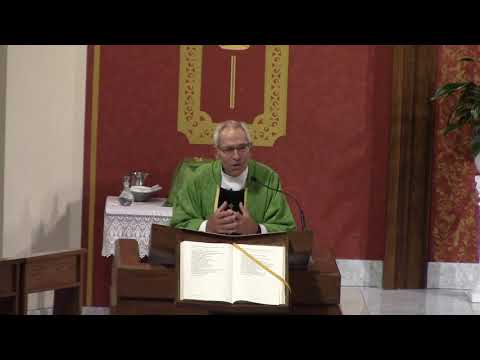
SOURCE: Fr. Peter Hahn Archive of Homilies

2018 HOMILY – The journey of spiritual healing and growth involves acknowledging our struggles, seeking divine assistance, and deepening our communion with God through faith and the sacraments.

KEY INSIGHTS w/ TIMESTAMPS
  • 00:00 A decade ago, a 30-day silent retreat profoundly impacted my spiritual journey and continues to shape my role as your pastor.
  • 01:10 The gospel passage discussed holds significant importance in both the 30-day silent retreat and in our personal lives.
  • 01:32 Bartimaeus symbolizes our spiritual blindness and need for Jesus' help, reminding us to acknowledge our struggles and seek divine assistance.
  • 03:07 Prepare each week with a sincere desire to encounter the Lord in the Holy Eucharist, boldly responding to His call for healing and communion.
  • 03:56 God remains with us in our personal exiles and sins, urging us to call out for His mercy to receive healing.
  • 04:39 Our communion with God deepens this week as we continue exploring the letter to the Hebrews over the next few Sundays.
  • 04:59 Every high priest is chosen by God, not for personal holiness, but to acknowledge their own weaknesses and rely on the eternal high priest for strength and healing.
  • 05:47 Embracing the healing grace of faith allows us to transform and follow the Lord more closely on our spiritual journey.
PRACTICAL LIFE APPLICATIONS

Spiritual Healing and Growth

Q: How does Bartimaeus symbolize our spiritual journey?
A: Bartimaeus represents each of us suffering from original sin and loss, crying out to Jesus for help, acknowledging our need for healing as we come to Holy Mass with the intention of encountering the Lord.

Q: What can we learn from Bartimaeus' response to Jesus?
A: We must boldly respond like Bartimaeus, crying out to the Lord and acknowledging our need, rather than hesitating or failing to see that He is really there to help us.

Faith in Adversity

Q: How does Jeremiah's example apply to our faith?
A: Even in the midst of corporate loss and exile, we must boldly proclaim God's praise like Jeremiah, affirming that God can never abandon us and not being ashamed to cry out for healing.

Priestly Responsibilities

Q: What is crucial for a priest's spiritual well-being?
A: Priests must cry out to the Lord daily for healing and strength, going to confession regularly to receive healing grace and be able to share it with others.

Following Christ

Q: How should we emulate Bartimaeus after receiving healing?
A: Like Bartimaeus, we should follow Jesus more closely on our earthly journey with restored sight and renewed hearts, hoping it will lead us to Him.

Priesthood and Christ

Q: What is the foundation of a priest's ministry?
A: A priest's priesthood depends entirely on the one eternal high priest who has called him to this role, emphasizing the need for constant spiritual renewal and dependence on Christ.

CULTURAL/RELIGIOUS CRITIQUES

YouTube player

SOURCE: Fr. Jude Thaddeus Langeh Basenbang

2018 HOMILY – The story of Bartimaeus illustrates the transformative power of faith in Jesus, who offers healing and restoration to those suffering from physical and spiritual blindness.

YouTube player

SOURCE: Fr. Kevin’s Homilies

2021 HOMILY – True vision involves recognizing our limitations and embracing humility, which allows for a deeper understanding of the world and a more authentic connection with others.

KEY INSIGHTS w/ Timestamps
  • 00:00 A man helps a blind boy by changing his sign, leading to an overflow of donations.
  • 00:56 A boy learns that a man's rephrasing of his sign reveals a deeper truth about appreciating the beauty of the day.
  • 01:34 Recognizing the deeper desires of those who cannot see, like Bartimaeus, reveals a longing not just for beauty, but for a fuller understanding of the world around us.
  • 02:29 The harsh realities of the world can make one wish for ignorance, yet true vision lies in recognizing our limitations and seeking deeper understanding.
  • 03:57 Two Filipino archbishops challenged their fellow bishops in Rome, asserting that true blindness lies in their false sense of vision.
  • 04:32 Embracing the humility of Jesus and listening in silence is essential for the church to authentically connect with people and seek truth.
  • 05:37 New evangelization requires humility, as arrogance among messengers hinders the spread of Christ's message, necessitating credible role models and a return to the simple, humble example of Christ.
  • 07:19 A call for greater humility, love, and listening in both the church and the world, alongside a personal desire for spiritual vision.

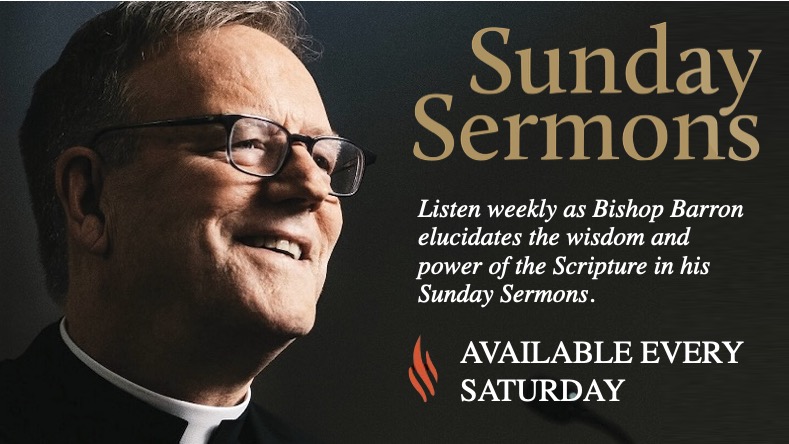
Bishop Robert Barron

2021 SERMON2024 SERMON
YouTube player

SOURCE: Word on Fire

2021 SERMON – Friends, in todayโ€™s Gospel, we hear the marvelous story of the healing of blind Bartimaeusโ€”an icon of tremendous power and a sacred picture of the spiritual life and the process of salvation. We all find ourselves, in our need of Christ, in this image, as our own blindness distorts our vision of spiritual reality and the meaning of life.
KEY INSIGHTS w/ TIMESTAMPS
  • 00:00 Bartimaeus' healing symbolizes humanity's spiritual blindness and the necessity of divine mercy in a sinful world.
  • 02:18 We are powerless against sin and must seek divine help, recognizing our need for mercy and redemption.
  • 03:34 In a city of sin, seeking help often meets resistance from those entrenched in dysfunction, but one must persist despite the crowd's discouragement.
  • 05:18 Bartimaeus shows the importance of recognizing our need for salvation and persevering in prayer amidst chaos, with Jesus as our unwavering hope.
    • Bartimaeus exemplifies the virtues of recognizing one's need for salvation and the importance of perseverance in prayer.
    • Bartimaeus persistently seeks Jesus despite opposition, illustrating that in a chaotic world, Jesus remains the still point of hope and clarity.
  • 07:44 Christ invites sinners to leave their old lives behind and embrace a new identity in Him through the Church, as shown by Bartimaeus.
    • Christ calls sinners out of the world and into communion with him through the Church, as exemplified by Bartimaeus.
    • Bartimaeus' act of throwing aside his cloak symbolizes the abandonment of his old life and his embrace of a new identity in Christ through baptism.
  • 10:11 Responding to Christ's call revitalizes us, freeing us from the burdens of sin and opening us to a life of love and possibility.
  • 11:21 Christ's question prompts us to seek deeper desires for true understanding, as we acknowledge our spiritual blindness beyond worldly success.
    • Christ's question, "What do you want me to do for you?", challenges individuals to reflect on their true desires beyond superficial wants like wealth, popularity, or power.
    • Desiring true understanding, we should echo Bartimaeus' plea to Christ, "Master, I want to see," recognizing our spiritual blindness despite worldly success.
  • 13:22 True faith transforms our vision by moving from self-reliance to trust in God, as exemplified by Blind Bartimaeus' journey of discipleship and purpose in following Jesus.
    • True faith heals and restores vision by shifting focus from personal autonomy to trust in a greater power.
    • Blind Bartimaeus, after regaining his sight and responding to Christ's call, symbolizes the journey of discipleship and the restoration of purpose in following Jesus.
PRACTICAL LIFE APPLICATIONS

Spiritual Growth

How can I improve my prayer life? Practice persistent prayer, as emphasized in the Bible, to expand your soul and receive God's gifts, despite any opposition or discouragement you may face.

What's the key to gaining spiritual insight? Seek to "see things aright spiritually" by acknowledging your spiritual blindness and asking God to restore your vision, just as Bartimaeus did when he said, "Master, I want to see."

Personal Transformation

How can I symbolically start a new life in Christ? "Throw off your old self" by letting go of your past life and being willing to be clothed with salvation, mirroring Bartimaeus' action of casting aside his cloak and springing up to meet Jesus.

What's the first step in overcoming addiction? Acknowledge your inability to save yourself from sin and addiction, and give yourself over to a "higher power", following the example of Bartimaeus who begged for salvation.

Discipleship

How does one respond to God's call? When you hear God's call, "spring up with new energy" and come to Jesus, symbolizing your readiness to enter into fellowship with Christ and the Church ("ekklesia").

What should I do after experiencing spiritual healing? "Follow Jesus on the way", embracing discipleship and readiness for spiritual growth and development, just as Bartimaeus did after his sight was restored.

CULTURAL/RELIGIOUS CRITIQUES

Controversial Theological Interpretations

Q: Is sin really the root cause of spiritual blindness?
A: According to the sermon, sin distorts our vision of spiritual reality and life's meaning, with Bartimaeus representing every sinner blind to spiritual truth in dysfunctional communities.

Q: Does living in a city inherently lead to more sinful behavior?
A: The sermon portrays Jericho as a symbol of sin and dysfunctional human society, suggesting that urban environments can perpetuate sinful behavior both individually and systemically.

Challenging Religious Practices

Q: Should we persistently beg God for help despite opposition?
A: The sermon presents Bartimaeus' perseverance in calling out to Jesus despite crowd rebuke as a model for sinners to persist in prayer, claiming the Lord wants souls to expand to receive his gifts.

Q: Is following Jesus literally necessary for spiritual growth?
A: The sermon interprets Bartimaeus' physical act of following Jesus after healing as representing how sinners, once called by Christ and restored to sight, are ready for spiritual growth and discipleship.

Controversial Church Doctrine

Q: Is the Church truly "called out" from the world?
A: The sermon links Jesus' calling of Bartimaeus to the Greek word "kalein" (to call), root of "ekklesia" (church), implying the Church is called out of the world to fellowship with Christ.

Q: Can faith alone heal spiritual blindness?
A: The sermon suggests that faith and trust in a higher power can heal the spiritual blindness caused by sin, which prevents us from seeing things correctly in relation to God and ourselves.

YouTube player

SOURCE: Word on Fire

2024 SERMON – Friends, all three readings for this Thirtieth Sunday of Ordinary Time have a golden thread running through them, which is the idea of the callโ€”of the primacy of Godโ€™s action in the life of salvation. Whenever we start thinking that this is our own ego project and that we are in command, we are ipso facto on the wrong path.

KEY INSIGHTS OF THE READINGS

Divine Initiative and Human Response

Q: How does God's action relate to human salvation?
A: God's action always comes first in salvation, with humans cooperating through grace, but God doesn't want us to become puppets in the process.

Q: What does the theme of blindness represent spiritually?
A: The biblical theme of blindness illustrates the spiritual state of being lost and helpless, contrasting with the ego-driven desire to be in control.

Transformation and Baptismal Symbolism

Q: How does Bartimaeus's response to Jesus symbolize baptism?
A: Bartimaeus throws off his old life like a cloak, symbolizing baptismal themes of stripping off one's old life and being clothed in a new one.

Q: What does Bartimaeus's desire to see represent?
A: His desire to see represents wanting the vision of what his life is about now that he has been called into intimacy with Jesus.

Church and Divine Calling

Q: How does the etymology of "church" relate to Jesus's call?
A: The Greek word "ekklesia" (church) comes from "ek kaleo" (to call out from), illustrating that the church is a relationship to the one who's called us.

Q: What is the significance of repeating "Kyrie eleison" in Mass?
A: Repeating "Kyrie eleison" at every Mass compels everyone to enter into the space of blindness and begging, acknowledging one's lack of control and waiting for divine guidance.

PRACTICAL LIFE APPLICATIONS

Responding to God's Call

Q: How should I approach God's call in my life?
A: Recognize that God's action comes first in salvation, cooperate with His grace rather than relying on ego projects, and be open to calls that may initially feel like resistance against your will.

Q: What can we learn from Bartimaeus' example?
A: Acknowledge your spiritual blindness and helplessness, sit by the roadside "begging" like Bartimaeus, admitting you're not in control of your life and recognizing your sinful state.

Taking Action

Q: How should I respond when I hear God's call?
A: Throw off your old life (symbolized by Bartimaeus' cloak), spring up, and come to Jesus decisively, surrendering to God's power to receive new life.

Q: What should I ask of God when He calls me?
A: Like Bartimaeus, ask for spiritual sight, saying "Master, I want to see," to gain clarity on your identity and purpose in following Jesus.

Understanding the Church

Q: What's the deeper meaning of the word "church"?
A: The Greek word "ekklesia" (church) comes from "ek kaleo", meaning "to be called out," signifying that believers are summoned from their cramped, helpless lives to intimacy with Jesus.

Biblical Examples

Q: Are there examples of people resisting God's call in the Bible?
A: Yes, Abraham, Jeremiah, Peter, and Paul all initially resisted God's call, demonstrating that resistance often comes from outside the ego rather than willful disobedience.

CULTURAL/RELIGIOUS CRITIQUES

Controversial Biblical Interpretations

Q: Is God's call truly against one's will?
A: According to the video, God's call is a vocation that summons one against their will, often met with initial resistance, as seen in stories of Abraham, Jeremiah, Peter, and Paul.

Q: Does God's call come from within or outside?
A: The video states that God's call comes from outside the ego, summoning one to a life of intimacy with Jesus and the church, rather than being an ego project.

Challenging Traditional Views

Q: Does human effort play any role in salvation?
A: The video emphasizes the primacy of God's action in salvation, stating that grace always comes first, with human cooperation being secondary.

Q: Is blindness a metaphor for spiritual ignorance?
A: The story of Bartimaeus is used to illustrate how spiritual blindness can be overcome through faith and surrender to Jesus' power.

Unconventional Interpretations

Q: Is Peter's fishing a metaphor for faith?
A: The video interprets Jesus telling Peter to "go out into the depths" as a call to go beyond one's own ego projects and into deeper faith.

Q: Are biblical readings interconnected across books?
A: The video suggests a golden thread running through readings from Jeremiah, Hebrews, and Mark, all emphasizing God's initiative in calling people back to Him.

Deacon Peter McCulloch

Deacon of the
Diocese of Broken Bay, Australia

RECENT

2021 HOMILY2024 HOMILY

On Seeing Clearly

Jer.31:7-9; Heb.5:1-6; Mk.10:46-52

2021 EXCERPT: Helen Keller was only 19 months old when she became deaf and blind. But she still learned to read, write and speak, and she lived a full life.

One day, when a friend returned from a long walk in the woods, Helen asked her what she had seen. Her friend replied, โ€˜Nothing in particular.โ€™

Helen couldnโ€™t believe it. โ€˜How is this possible,โ€™ she asked herself, โ€˜when I who cannot hear or see, find hundreds of interesting things through mere touch? I feel the delicate shape and design of a leaf. I pass my hands lovingly over the rough bark of a pine tree. Occasionally, I place my hand quietly on a small tree, and if Iโ€™m lucky, Iโ€™ll feel the quiver of a bird in full song.โ€™

โ€˜The greatest calamity that can befall people,โ€™ Keller said, โ€˜is not that they should be born blind, but that they should have eyes, yet fail to see.โ€™

Layers of Blindness

Jer.31:7-9; Heb.5:1-6; Mk.10:46-52

2024 EXCERPT: So, what about you? Whatโ€™s holding you back from really seeing Jesus? Is it your obsessions? Or laziness? Or fear? Can you let these things go?

Bartimaeus knows heโ€™s blind. But what about you? Lots of people today have blind-spots but donโ€™t know it, for there are layers of blindness.

Thereโ€™s emotional blindness, moral blindness and cultural blindness. Thereโ€™s also spiritual blindness, which is much more common than physical blindness. Many people are blind to Godโ€™s Creation. Theyโ€™re blind to Jesusโ€™ love and compassion. Theyโ€™re blind to the suffering and injustice that surrounds them. 

Fr. Andrew Ricci

Priest of the
Diocese of Superior,
Wisconsin

RECTOR OF CHRIST THE KING
CATHEDRAL

RECENT

What do we want from the Lord?

2021 PODCAST: The exchange between Jesus and Bartimaeus reveals the longing within the blind manโ€™s heart: he wants to see! This passage provides insight for us as we ponder the Lordโ€™s question โ€œWhat do you want me to do for you?โ€ in our lives today.

Fr. Austin Fleming

Priest of the
Archdiocese of
Boston

HOMILIES

VIDEOS

“Lord, I want to See!”

2018 EXCERPT:  TAs you can plainly see, I have corrected vision.  I can, of course, see without my glasses – but without them I don’t see very well:
I donโ€™t see very clearly and what I do see is out of focus. In fact, I wear tri-focals and I wear them all the time: one third of my lens helps me see you and things at a distance, another third helps me read a computer screen or newspaper; and another third helps me read a book sitting on the altar
or my homily here at the ambo. But even with my glasses on, I can still make the prayer of Bartimaeus my own:   โ€œLord, I want to see!โ€ 

Dominican Blackfriars


Dominican Friars
of England & Wales,
Scotland

HOMILIES

ARCHIVE

SMALL GROUP DISCUSSION GUIDE

Introduction
- Introduce the topic of blindness and healing from the Gospel story of Bartimaeus.
- Reflect on Brother Vincentโ€™s experience as a lens to understand spiritual blindness and salvation.

Reflection Questions
1. Brother Vincent's Experience
- How did Brother Vincentโ€™s transition to complete blindness enhance understanding of blindness as more than just physical?
- What insights into neuropsychology and human perception does his story offer?

2. Understanding Blindness
- Discuss the difference between being blind and simply lacking the sense of sight, like a rock or a plant.
- How does this distinction help us understand the nature of blindness in the context of human beings?

3. Restoration in Healing
- In what way does Christโ€™s healing of Bartimaeus restore something natural rather than granting a superpower?
- How does this concept of restoration relate to the idea of salvation in our own lives?

4. Desire and Faith
- Explore Bartimaeus's clear and urgent desire for healing. What role does his faith play in his ability to receive healing from Jesus?
- How can recognizing our own needs and desires influence our faith and openness to salvation?

5. The Role of Others
- Analyze the role of the other brother in Vincentโ€™s story. How did his intervention help Vincent recognize his reality?
- How can we relate this to the ways we help each other prepare to receive Godโ€™s message and salvation?

Personal Application
- Reflect on areas in your life where you may be experiencing "blindness" and need restoration.
- Consider how you can be more open to the possibility of restoration and salvation in your life.
- Identify ways you can support others in recognizing their needs and preparing them to receive the Gospel.

Prayer and Closing
- End with a group prayer asking for Godโ€™s help in recognizing and restoring areas of blindness in our lives.
- Pray for the strength to trust in Godโ€™s power to heal and restore the fullness of our humanity.

2021 EXCERPT: In restoring sight to Bartimaeus, Christ reveals his power over the created world, as he does in all his miracles, and as with all the miracles of healing, he shows that he exercises that power in kindness and love for humanity. More than that, though, in Christโ€™s words spoken to Bartimaeus we can see how this restoration of sight to a blind man is an image for us of the restoration to humanity of what we have lost through sin, that restoration of the fullness of our humanity which we call salvation.

Fr. Charles E. Irvin
Priest of the
Diocese of Lansing
(1933 – 2021) 

HOMILIES

How Do We Respond To Suffering?

SMALL GROUP DISCUSSION GUIDE

Introduction

Reflect on the transformative power of grace as illustrated through the story of John Newton and the blind beggar, Bartimaeus. Consider different forms of blindness and the power of faith and vision in seeking spiritual truth.

John Newton's Story

- Discuss John Newton's transformation from a self-destructive lifestyle to one of faith.
- How does his story illustrate "Amazing Grace" and the idea of being "lost" and "found"?

Blindness and Vision

1. The Nature of Blindness
- What does it mean to be "blind" in different life contexts? Consider physical, spiritual, and emotional blindness.
- Discuss the concept of thinking we "see" when in fact we do not. How does self-confidence in our knowledge become limiting or harmful?

2. The Imperial Self
- What is the "Imperial Self"?
- How do self-centeredness and subjective realities limit true perception and understanding?

3. Judgment and One-Dimensional Vision
- How do we judge others based on narrow criteria such as appearance, intelligence, or status?
- Reflect on personal experiences of one-dimensional vision. How can we expand our perspectives?

Learning from Bartimaeus

1. Recognizing Blindness
- Bartimaeus acknowledged his blindness openly. How often do we recognize our own blind spots?
- Consider the spiritual blindness mentioned. How does it affect our understanding of God and our lives?

2. Pushing Past Barriers
- Discuss the voices and societal forces that might prevent us from seeking truth and understanding.
- How does the story of Bartimaeus encourage courage and risk in faith?

3. Jesus' Response
- Jesus pausing for Bartimaeus signifies individual importance. Discuss the personal nature of divine attention and love.
- How might this affect one's self-worth and faith practice?

4. Following Jesus
- After receiving his sight, Bartimaeus followed Jesus. What does it mean to follow in His footsteps in today's world?
- How can we apply this in our daily lives?

Seeing the Unseen

- Who are the "unseen" in our world today? Discuss the importance of recognizing and caring for marginalized individuals.
- Reflect on societal blindness and its consequences. How does it affect justice, equality, and compassion?

Christ's Vision for Us

- Discuss self-perception versus how Christ might see us.
- Consider the complexities of truly understanding and living as a human person in light of faith.

Closing Prayer Reflection

Engage with the closing prayer provided in the sermon:
- Seek guidance in seeing yourself and others through the eyes of Jesus.
- Request healing of personal and societal blindness to nurture a more compassionate and understanding world.

Conclusion

Encourage ongoing reflection and action based on the insights gained from this discussion. How can participants apply what theyโ€™ve learned to live more fully in faith and awareness?

EXCERPT: I want to draw four points out of todayโ€™s gospel account.

  • The first and the most important point is that Bartimaeus knew he was blind. Do we? 
  • The second observation I have is that those around Bartimaeus tried to hush him up and keep him from Jesus. 
  • Thirdly, Jesus stopped everything to pay personal attention to him.
  • Finally I want to note that after Bartimaeus received his sight he followed in Jesusโ€™ footsteps,

Fr. Leon Ngandu, SVD

Fr. Leon Ngandu, SVD

BIBLE TEACHER AT
SAINT AUGUSTINE CATHOLIC HIGH SCHOOL IN THE ARCHDIOCESE OF NEW ORLEANS

HOMILIES

What Discipleship Entails

SMALL GROUP DISCUSSION GUIDE

Introduction

Begin the discussion by summarizing the main themes of the sermon: understanding discipleship through the story of Bartimaeus, the role of Jesus as our messianic Savior, and how the narrative ties into our call to a dedicated relationship with God.

1. Determination in Prayer

- Discussion Questions:
- How does the example of Bartimaeus demonstrate the importance of prayer in our spiritual journey?
- What does it mean to address Jesus as "Son of David"?
- In what ways can we show determination in our prayer life today?

- Reflection Activity:
- Reflect on your personal prayer life and discuss ways to deepen this practice, showing faith in Jesus as the Messiah.

2. Perseverance in Faith

- Discussion Questions:
- What are the "crowds" or situations in your life that may prevent you from connecting with God?
- How can we draw inspiration from Bartimaeusโ€™ persistence despite obstacles?

- Action Step:
- Identify one challenge you face in your spiritual journey and share how you plan to persevere in faith despite it.

3. Using Spiritual Ears

- Discussion Questions:
- How did Jesus use his heart rather than his ears to hear Bartimaeus?
- How can we apply this principle in our daily lives to listen to those in need?
- Role-Playing Activity:
- Take turns role-playing scenarios where you use empathy and your heart to listen to someone in need.

4. Encouraging Others

- Discussion Questions:
- How can we become encouragers and mediators between Jesus and those who are spiritually blind?
- What role do words of encouragement play in our relationships with others?
- Group Exercise:
- Partner up and practice giving words of encouragement to each other, using the phrases from the Gospel like "Take courage" and "Get up."

5. Removing Obstacles

- Discussion Questions:
- Discuss the significance of Bartimaeus throwing aside his cloak. What does this represent in our lives?
- What are some possessions or sins you need to let go of to follow Jesus fully?
- Personal Reflection:
- Write down one thing you would like to "throw aside" to strengthen your discipleship journey, and share your reflections.

6. Permanent Discipleship

- Discussion Questions:
- How does Bartimaeusโ€™ decision to follow Jesus permanently inspire us to commit to a lifelong discipleship?
- What steps can you take to ensure you are following Jesus not temporarily, but permanently?
- Commitment Pledge:
- Encourage each member to share a commitment they can make to follow Jesus more permanently in their daily lives.

Conclusion
Conclude by reflecting on the overall message of the sermonโ€”the call to true discipleship through constant prayer, listening with an open heart, encouraging others, and following Jesus with perseverance and joy. Pray together for strength and guidance in pursuing this path

EXCERPT: Our Gospel text is a narrative story through which Mark teaches his readers what discipleship entails. Discipleship is a determination to initiate a personal encounter with Jesus through prayer. (46-47). It entails perseverance in prayer. It requires using spiritual ears, as Jesus did, to hear the people of God who are in need (v. 49a). It is becoming Jesusโ€™ mediators who tell people, encourage them, and help them to go to God and start their personal relationships with him (v. 49b).  Discipleship requires getting rid of anything (sins and possessions) that obstructs the personal relationship with God (v. 50). Discipleship is following Jesus not temporarily but permanently (v.52).  
Fr. Joe Jagodensky, SDS

SOULFUL MUSE

RECENT

2021 EXCERPT: Itโ€™s got to be possibly the best question posed in the Bible. Oh wait, Iโ€™m wrong once again. It is the absolute best question recorded in the Bible. And, itโ€™s asked by Jesus Christ.

โ€œWhat do you wish me to do for you?โ€ Unfortunately, the question seems to get lost while being distracted by hearing the jealousy of those two apostles. โ€œI want to sit on His right!โ€ โ€œYou always want to sit on His right side?โ€ Sounds like the Smothers Brothers; except this time itโ€™s James and John. Dumb and Dumber, anyone?

Fr. George Smiga

Homiletic Professor
at St. Mary Seminary

ARCHIVE

Living a Second Time Around

2003 EXCERPT:  What if you could live your life over?  What if you had a second chance to live life again?  What would you change?  What you keep the same?  Or to put it terms of todayโ€™s gospel, what would you want to see differently?

The cry of Bartimaeus in todayโ€™s gospel is โ€œLord, I want to see.โ€ If that cry were to become true for you, what would you want to see?  Father William Bausch in a beautiful essay on the Bartimaeus story suggests that there are three things we would want to see differently: (1) relationships, (2) the overlooked and (3) the hints of Godโ€™s grace in our lives.

The first thing Fr. Bausch says we would want to see differently is what our heart has always told us is true: that relationships are the most important part of life.  This would lead us to ask ourselves why we allowed the madness of individualism and consumerism to get ahead of our relationships?  Why did we allow our careers and our schedules, our entertainment and our desire to accumulate things push the people in our lives to the side? When we look at our lives, all to often our most important relationshipsโ€”the relationships between husband and wife, children and parents, and friendsโ€”are not as treasured as we know they should be.  We donโ€™t eat together, we donโ€™t take time for the people we love.  Yet, in our most sober moment we know that nothing is more important than our relationships.  Then why don we see it?

Msgr. Joseph Pellegrino

Priest of the Diocese
of St. Petersburg,
Florida

HOMILIES

Formerly Blind, Now Following the Lord

2024 EXCERPT: I can’t understand this. I knew so much when I was in my 20’s & 30’s. I knew everything about everything. But the older I get the more I realize how little I know. Where did all that knowledge go? When I was a young priest, people would come to me with their problems and I would have an instant solution. Now, I am not sure I can comprehend their difficulties, let alone offer solutions. Perhaps, the wisdom of age is realizing how little we know, and how much we are dependent on God to step into His view of the world. Part of this wisdom is realizing that we need God to guide us from
our blindness into His Light. Bartimaeus, the blind man of todayโ€™s Gospel, was dependent on others for sight. But he could hear well. He heard that Jesus of Nazareth was passing by, so he called out to him. He was healed. And then, Bartimaeus did something a blind person cannot do. He followed Jesus, not just figuratively, but literally. Bartimaeus walked behind Jesus along with the other disciples of the Lord.

Msgr. Charles Pope

Priest of the
Archdiocese of
Washington D.C.

HOMILIES

No Homily Available

A Man Who Saw by Hearing

2021 EXCERPT: In todayโ€™s gospel there is a very familiar story of the healing of the blind man Bartimaeus. As with any familiar story, the danger is that we, upon hearing its opening lines say, โ€œOh that story,โ€ and we just sort of tune out. But there are many things in the details of the story that we can easily miss. Ultimately the story of Bartimaeus is also our story, for we too must let the Lord heal our blindness and give us sight. One paradox of this gospel that we shall note, is that the man receives his sight as the result of hearing.

Letโ€™s look at this gospel in 6 stages.

I. Perception of the Problem
II. Proclamation that is Prescribed
III. Perseverance that Produces

IV.  Priority that is Presented
V. Permission that is Procured
VI. Path that is Pursued

Bishop John Louis

Auxiliary Bishop of
Archdiocse of Accra,
Ghana

HOMILIES

2021 EXCERPT:  Todayโ€™s gospel narrates the story of the healing of the blind beggar, Bartimaeus, by Jesus Christ. The name โ€œBar-Timaeusโ€ (son of Timaeus) could have several meanings: โ€œson of honourโ€, โ€œson of integrityโ€ or โ€œson of uncleanโ€.

Though Bartimaeus was supposed to be the son of honour and of integrity, he was seen by many as the โ€œson of uncleanโ€, due to his blindness, poverty and his untidy appearance. This initial circumstance of Bartimaeus might have been depressing for him. Fortunately, our Lord Jesus would restore unto Bartimaeus honour and integrity of the higher order. That is, the story of the initially insignificant man became so significant that it has been recorded in the Bible to edify thousands of generations after him.

Fr. Michael Chua

Priest of Archdiocese
of Kuala Lumpur,
Malaysia

HOMILIES

2018 SERMON2021 SERMON

2018 EXCERPT: Today, the gospel presents us with the familiar story of the healing of the blind man, Bartimaeus. It is an important story because it is the last healing miracle to be recorded by St Mark in his gospel and it comes after Jesusโ€™ triple prediction of His passion, death and resurrection, and at the end of the lessons given by our Lord to his disciples on the theme of discipleship. Thus, the story of Bartimaeus serves as a conclusion to our Lordโ€™s catechesis on both His mission and that of His disciples. The clue to understanding this story is found at the end, where our Lord names faith as what impels Bartimaeus. The rest of the story shows us what that faith is.

Weโ€™ve been taught since young, that shouting and yelling are rude and offensive. So, weโ€™ve learnt measured speech, how to tone down and moderate the volume of our voice, speak in a hushed and muffled tone in public places, out of respect for others. We have been so good at this that we have forgotten that the essence of evangelisation, of proclaiming the Good News calls for the reverse. In the first reading, the Prophet Jeremiah tells the people to proclaim the good news of how God will rescue them in three imperative commands: โ€œProclaim! Praise! Shout!โ€ Can you imagine if he told the people to do this: โ€œBe quiet! Lower your volume! Whisper if you really have to say anything!โ€ Thank God he didnโ€™t. We wouldnโ€™t be here today if Christians in past centuries had chosen to remain quiet.

Fr. Vincent Hawkswell
Priest of the
Archdiocese of
Vancouver

RECENT HOMILIES
B.C. Catholic

2024 EXCERPT: โ€œEvery high priest chosen from among men is put in charge of things pertaining to God on their behalf…. And one does not presume to take this honour, but takes it only when called by God, just as Aaron was.โ€

This passage aptly describes the office of Pope for, in personally choosing the first incumbent of that office, Peter, Jesus said, โ€œI will entrust to you the keys of the kingdom of heaven. Whatever you declare bound on earth shall be bound in heaven; whatever you declare loosed on earth shall be loosed in heaven.โ€ 

Moreover, Jesus said, โ€œthe jaws of deathโ€ would not prevail against his Church, meaning that Peterโ€™s office would survive Peter. 

Fr. Denis J. Hanly

Father Denis J. Hanly (1932-2014) was a Maryknoll Missionary for over 55 years. 

HOMILIES

Fr. Tommy Lane

Priest of the
Diocese of Cloyne,
Ireland

HOMILIES

Why pray when God knows what we want?

EXCERPT: โ€œWhy should we pray when God already knows what we want?โ€ is a question I am asked. It is true that God already knows what we need but why then did Bartimaeus have to ask Jesus for help in todayโ€™s Gospel? (Mark 10:46-52) Anyone watching would, no doubt, have thought that it must be obvious that the man wants Jesus to restore his sight but yet Jesus asked him, โ€œWhat do you want me to do for you.โ€ (Mark 10:51) And when he said, โ€œMaster, let me see again,โ€ Jesus cured him. Jesus knew everything about people: he knew Judas was going to betray him, he knew about Nathanael under the fig tree (John 1:48), he knew the woman in Samaria had five husbands before her present partner (John 4:18). Jesus knew about this blind man, he didnโ€™t need to be told he needed his sight restored, but yet he asked him what he wanted. Bartimaeus did not need to tell Jesus, but telling Jesus was preparing Bartimaeusโ€™ heart for the gift of having his sight restored. Once again, the question I am asked is, โ€œWhy should we pray when God already knows what we want?โ€ My response is that prayer is not about informing God what our needs are. God already knows our needs and does not need our prayer to keep him up to date on what is happening in our lives. Instead, prayer is for our benefit, not Godโ€™s benefit. Prayer is to prepare our heart for what God wishes to give us.

Fr. John Kavanaugh, S.J.

Jesuit Homilist,
Scholar and Author
(1941-2012)

HOME

The Terror of Love

EXCERPT: Bartimaeus summoned a courage that many of us lack. To make matters worse, the people around him scolded him. They tried to shut him up. But he yelled out all the more, โ€œSon of David, have pity on me!โ€

This persistent, bold trust must have stopped Jesus, who ordered his people to call the blind man over. Then the crowd changed its tone: โ€œYou have nothing whatever to fear from him. Get up. He is calling you.โ€

The best instincts of historyโ€™s Christian crowd echo the refrain. There is nothing to fear from him. And yet we halt. We had better wait. What will he ask of us? How might we be properly prepared to enter his presence? How can we be worthy to approach him?

Bishop Frank Schuster

Auxiliary Bishop of
Archdiocese of
Seattle

HOMILIES

YEAR B

What Bartimaeus Was Willing to Do

2021 EXCERPT: What is Bartimaeus willing to do to encounter Jesus? The blind beggar Bartimaeus discovers that the miracle worker Jesus of Nazareth is walking by him. He cries out, โ€œJesus, Son of David, have pity on me.โ€ What happens next? The people around him start rebuking him, telling him to be quiet. How typical. But what is Bartimaeus willing to do to encounter Jesus?

You can imagine the scene. The crowd was honored that Jesus was visiting their town of Jericho. They didnโ€™t want the cries of a poor blind beggar to spoil Jesusโ€™ impression of them. When Bartimaeus cries out to Jesus, the crowd tells him to be quiet. We donโ€™t want you to embarrass us. Bartimaeus isnโ€™t discouraged. Despite the resistance, he cries out all the louder, โ€œJesus, Son of David, have pity on me!โ€ Jesus hears Bartimaeusโ€™ cries. Jesus says, โ€œCall him.โ€ And it is somewhat humorous to see how quickly the crowd changes their tune. Instead of telling Bartimaeus to be quiet, they quickly change their message, โ€œTake courage, get up, Jesus is calling you.โ€ The irony here is, Bartimaeus had already proven himself to be the most courageous person there.

Fr. Bob Warren, SA

Franciscan Friars of the Atonement

Diocese of Phoenix

HOMILIES

Who is Truly Blind?

2021 EXCERPT: Who was truly blind? The beggar or the followers of Jesus? Blindness is difficult to cure, but it is also difficult to diagnose. One man brushes his young daughter away when she wants to show him her school work, โ€œCanโ€™t you see I am trying to watch the game? Go bother your mother.โ€ Another father is so overwhelmed by his love for his daughter that he writes a song in her honor. It is called, โ€œIsnโ€™t she lovely.โ€ He writes she is truly the angels best, we have been heaven blessed. I canโ€™t believe what God has done, isnโ€™t she lovely? His name is Stevie Wonder, the blind singer. Which man truly sees his daughter? Which man is blind?

HOME | BLOG UPDATES

Homilies

Homilies – Top Rated

Homilies – Top Rated

Homilies – Top Rated