Homilies
Homilies
December 14, 2025
December 14, 2025
3rd Sunday of Advent (A)


────── ⋆⋅☆⋅⋆ ──────
Bishop Robert Barron

Permission granted for non-profits to use in ministry
The infographic was created using Nano Banana, Google's Revolutionary AI Image Generator. Infographic may not be sold or used for personal financial gain. Please show your appreciation by letting others know about TheWordThisWeek.NET.

Wait for the Desert to Bloom
Friends, today we come to the third Sunday of Advent, and the great image from Isaiah is that of the blooming desert. Many of us pass through desert times, dry periods of trial and training. But perhaps the Lord has drawn us into the desert to awaken a deeper sense of dependence upon him. In this season of waiting, we look toward Christmas—the great blooming in the desert.

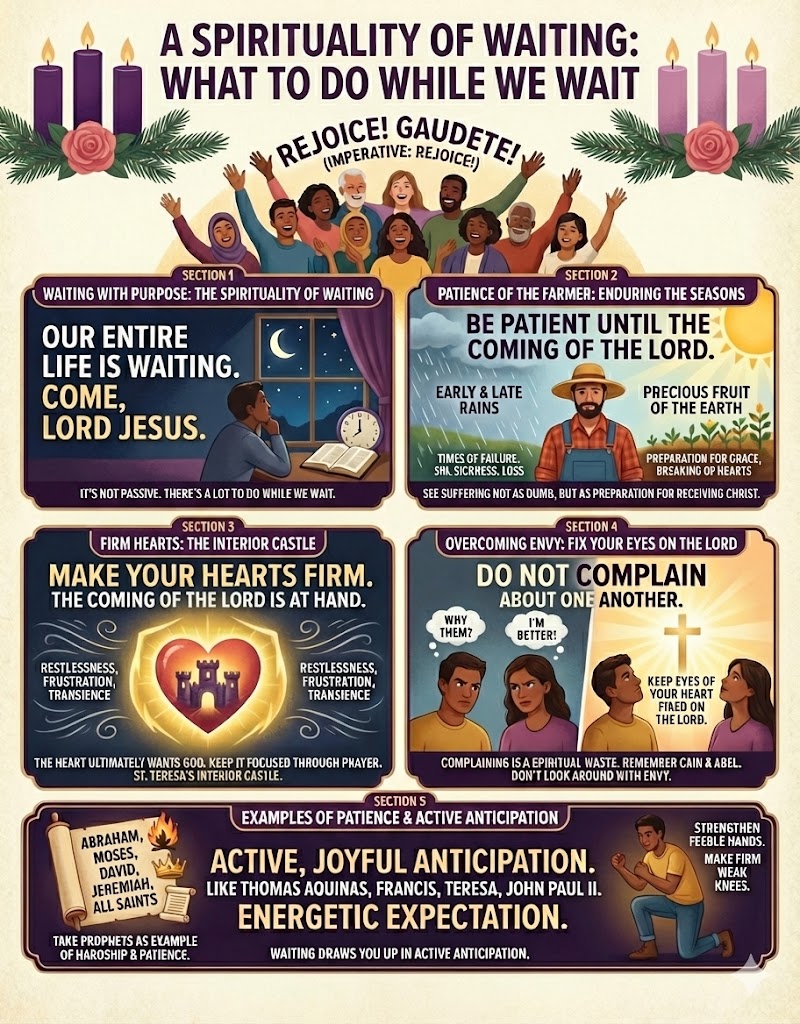
Waiting in Action
Friends, our readings for this Third Sunday of Advent help us understand what to do while we wait for the Lord. An Advent spirituality of waiting is part of Christian life; our entire life, in a way, is waiting. We pray, “Come, Lord Jesus,” waiting for Christ to come back. But this is not just a passive stance; there is a lot to do while we wait.

────── ⋆⋅☆⋅⋆ ──────
Deacon Greg Kandra
Permission granted for non-profits to use in ministry
The infographic was created using Nano Banana, Google's Revolutionary AI Image Generator. Infographic may not be sold or used for personal financial gain. Please show your appreciation by letting others know about TheWordThisWeek.NET.
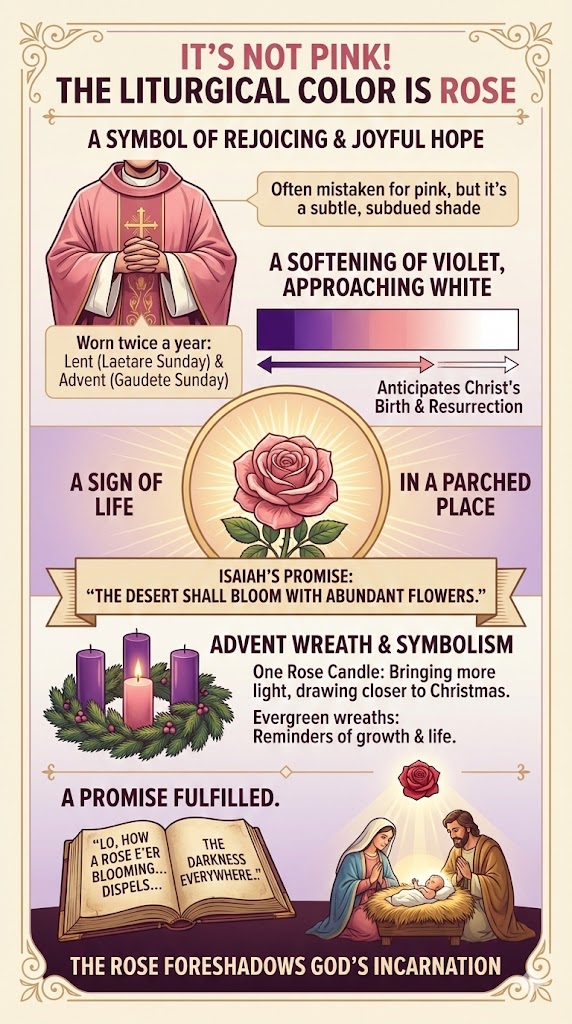
It’s Not Pink
The color, in fact, is called “rose.” It’s a subtle difference, but it has a more subdued shade than pink. Liturgists will tell you it signifies rejoicing, and signals a spirit of joyful hope during Lent and now, during Advent. It breaks the more somber tone of those penitential times of the year. Thinking about that, I would argue other colors convey that, too – for example, why don’t we wear yellow or gold?
— originally preached in 2013
────── ⋆⋅☆⋅⋆ ──────
Deacon Peter McCulloch

Permission granted for non-profits to use in ministry
The infographic was created using Nano Banana, Google's Revolutionary AI Image Generator. Infographic may not be sold or used for personal financial gain. Please show your appreciation by letting others know about TheWordThisWeek.NET.
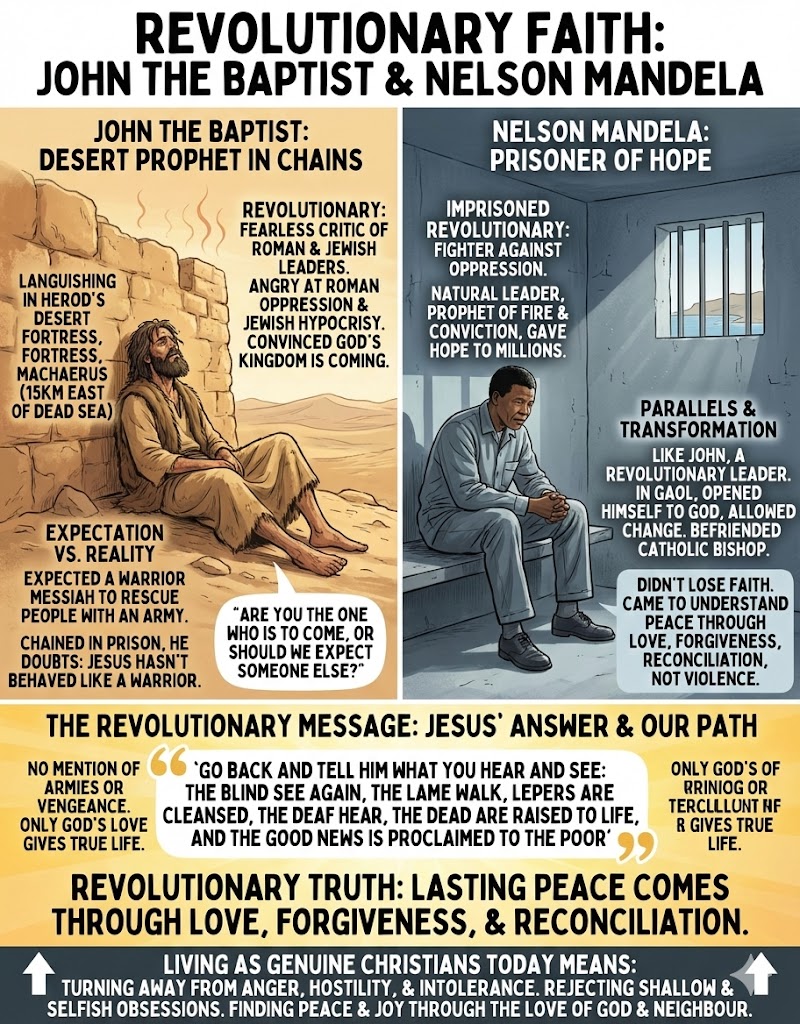
Revolutionary
In 2023, for the 10th anniversary of the death of Nelson Mandela, Deacon Peter highlighted the similarities between him and John the Baptist—both “troublemakers,” both imprisoned, both expecting political change but learning a deeper truth. This makes the figure of John the Baptist feel immediate and modern. By starting with a known 20th-century figure, Deacon Peter lowered the cognitive load for the listener, making the Gospel reading seamless and engaging.
Permission granted for non-profits to use in ministry
The infographic was created using Nano Banana, Google's Revolutionary AI Image Generator. Infographic may not be sold or used for personal financial gain. Please show your appreciation by letting others know about TheWordThisWeek.NET.
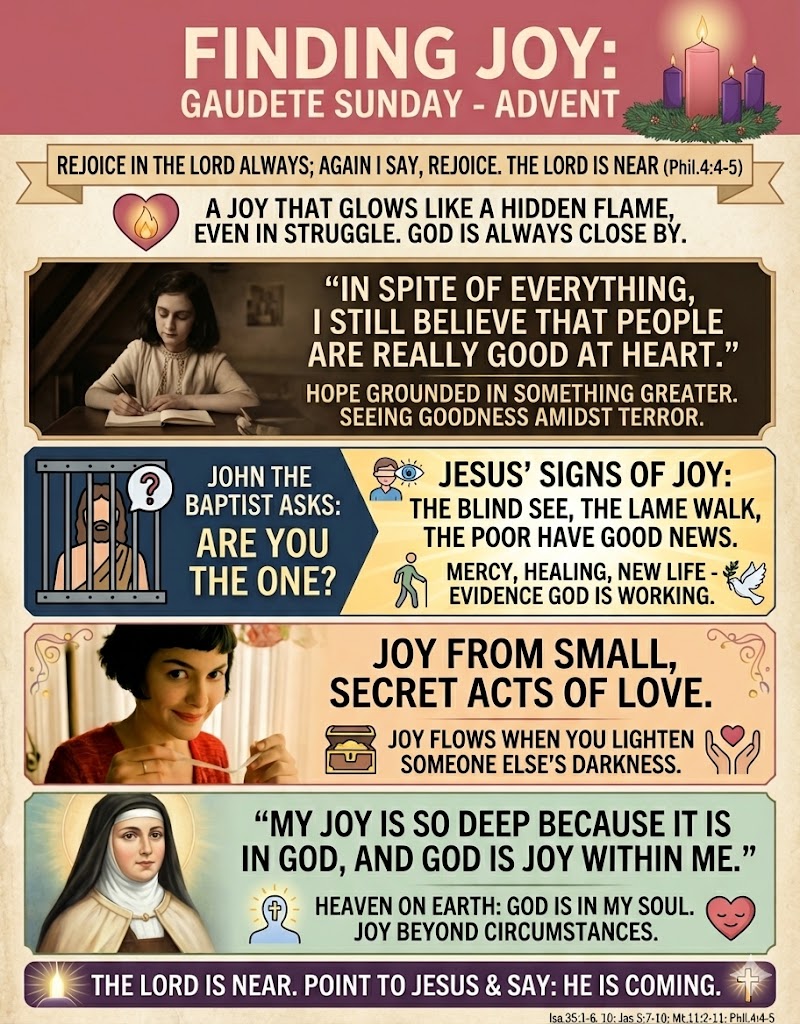
Finding Joy
Today as we light the rose candle in our Advent wreath, we recall that the name Gaudete Sunday comes from St Paul who says, ‘Rejoice in the Lord always; again I say, rejoice. The Lord is near’ (Phil.4:4-5).
The joy he speaks of isn’t shallow cheerfulness, or pretending that everything is fine. It’s a joy that glows like a hidden flame, even in times of struggle. And it comes from understanding that God is always working and always close by.
────── ⋆⋅☆⋅⋆ ──────
Dominican Blackfriars
Dominican Blackfriars
Permission granted for non-profits to use in ministry
The infographic was created using Nano Banana, Google's Revolutionary AI Image Generator. Infographic may not be sold or used for personal financial gain. Please show your appreciation by letting others know about TheWordThisWeek.NET.
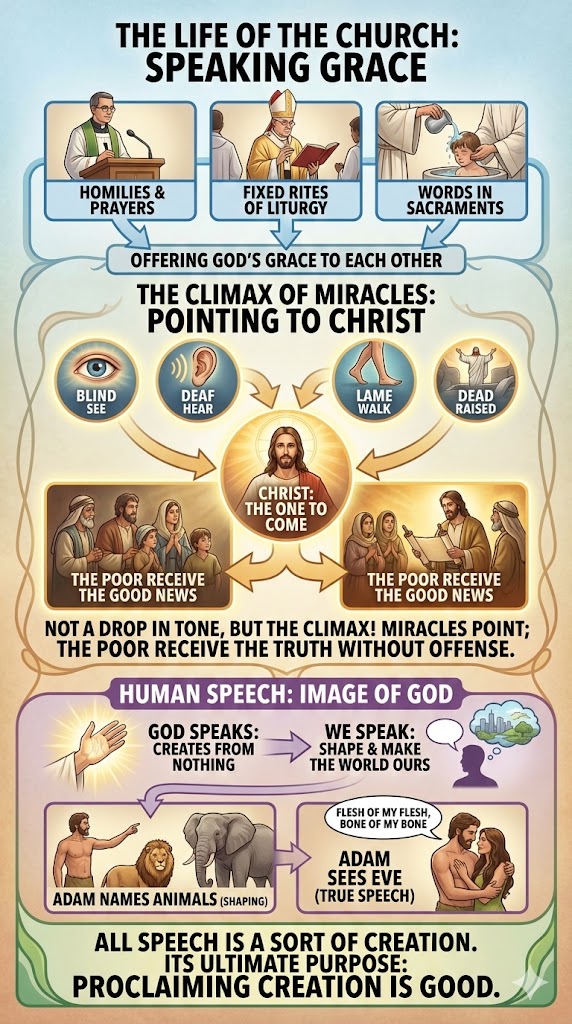
God Speaks
Third Sunday of Advent. Fr Euan Marley considers the relationship between vision and speech.
Seeing and speaking may seem quite different actions, but not for God. In the book of Genesis, God says ‘let there be light’. Then he saw that the light was good. Many have discussed whom God is addressing in his speech, but the Trinity is an eternal speech, the speaking of the eternal and perfect Word of God in the breath of the Holy Spirit, the Father expressing his whole being in the Son. The creation is the extension of that speech, allowing others to exist who can hear that word. God sees by his word. He is not looking at his creation as we look , when he saw that it was good. His word cannot fail, so he sees what he has made by the certainty of the power of his word, and an this way, he sees that it is good.
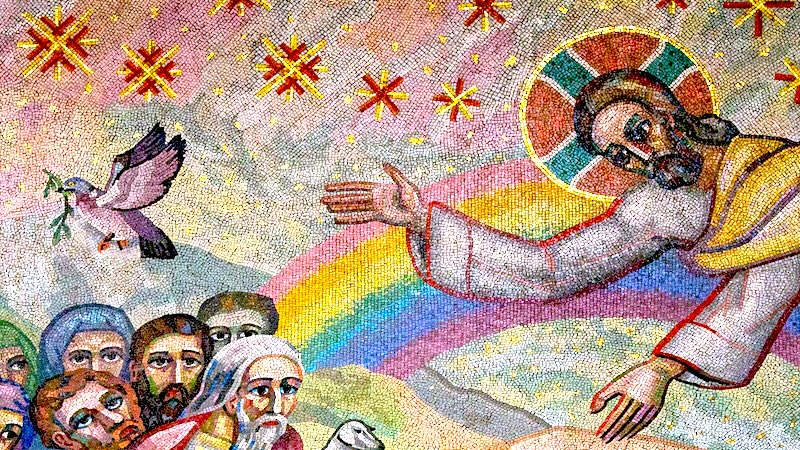
Rejoice Always! Again, I Say Rejoice!
Third Sunday of Advent. Fr Andrew Brookes preaches on the true meaning of Gaudete.
Rejoice always! Again, I say rejoice!’ Those words of St Paul are the entrance antiphon of today’s Mass. This is Gaudete Sunday, named after the first of those words in Latin. The priest wears pink joyful vestments to emphasize the point further. The Church wants us to rejoice and keep rejoicing.
It might sound attractive but joy is not an easy disposition to maintain. Even the most exuberant of personalities have off-days! And many of us do not have naturally optimistic upbeat excited personalities. But, of course, Paul and Mother Church are thinking supernaturally: ‘Rejoice in the Lord and by the power of the Spirit of the Lord! Joy is named by Paul second in the list of fruit of the Holy Spirit after love. Joy is the happiness we find in the love of God for us, and in living a life of love.
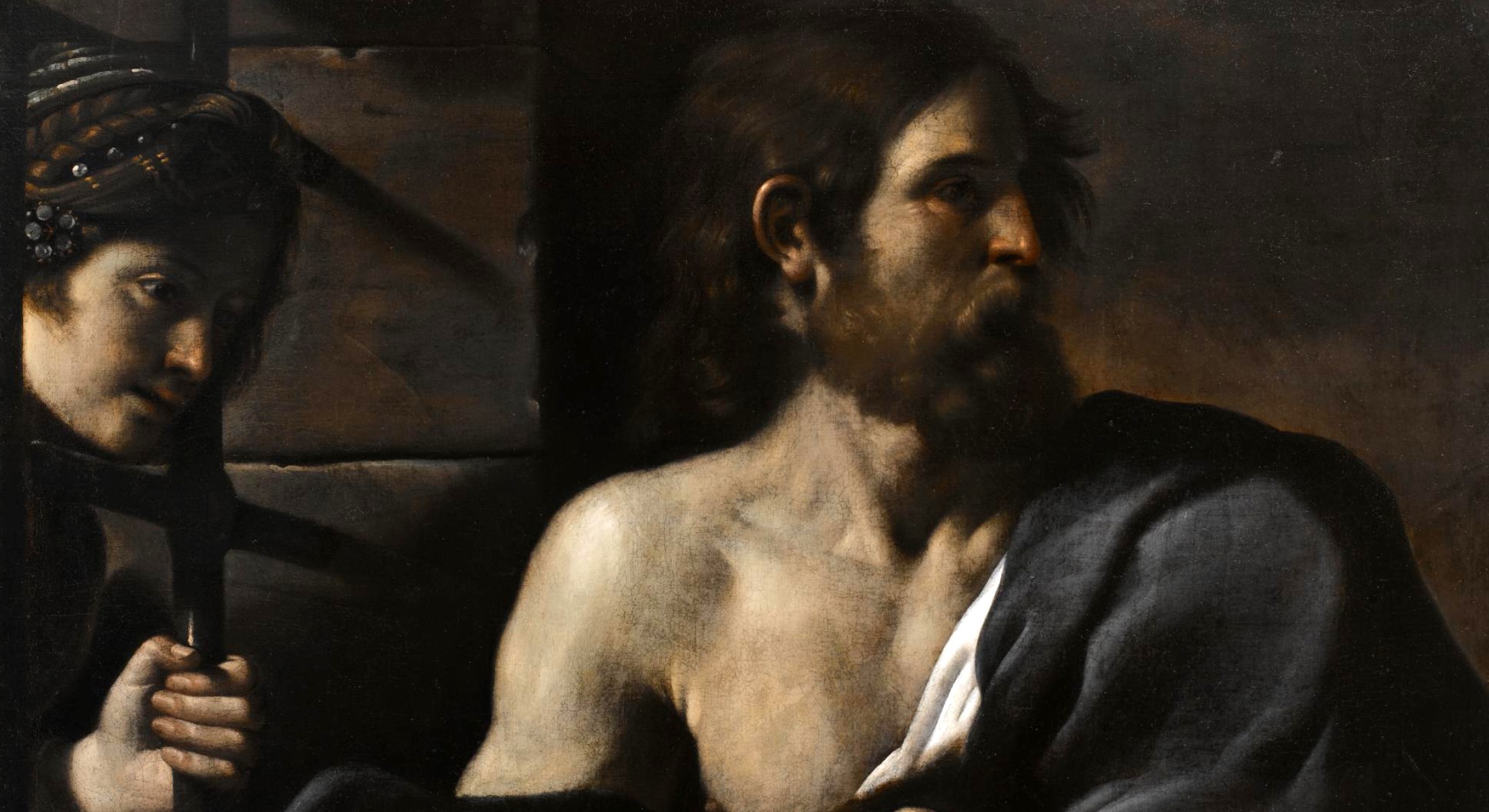
Image: detail from John the Baptist visited by Salome in Prison by Giovanni Francesco Barbieri, photographed by Lluís Ribes Mateu.
────── ⋆⋅☆⋅⋆ ──────
Dicastery for the Clergy

────── ⋆⋅☆⋅⋆ ──────
Fr. Joe Jagodensky, SDS
Fr. Joe Jagodensky, SDS
Permission granted for non-profits to use in ministry
The infographic was created using Nano Banana, Google's Revolutionary AI Image Generator. Infographic may not be sold or used for personal financial gain. Please show your appreciation by letting others know about TheWordThisWeek.NET.
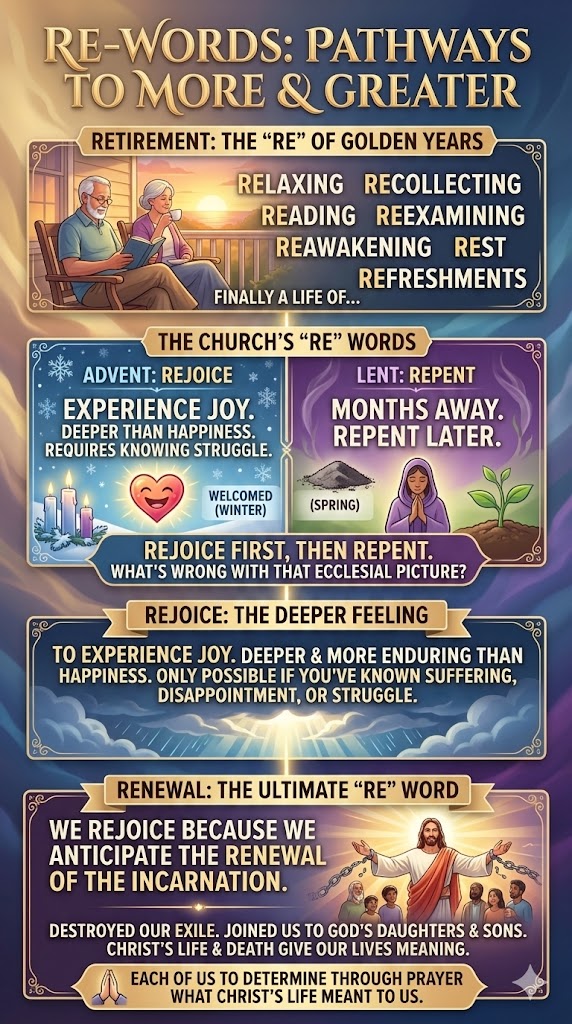
Rejoice & Suffering

Ahhhh. REtirement, the “Golden Years.” Finally a life of relaxing, recollecting, reading, reexamining, reawakening, rest and refreshments. Excellent “re” words that fill your days for the rest of your lives. (Notice the “re” in rest!?)
Then there are the Church’s two “RE” words. Advent has “rejoice” and Lent has “repent.” The former is welcomed but the latter…well, that’s months away. In other words, let’s rejoice first and then repent later. (In terms of weather, isn’t it interesting that we “rejoice” in winter and “repent” in the spring? What’s wrong with that ecclesial picture?)
“Rejoice,” is to experience joy. Can you feel joy? I don’t mean happiness but joy, a must deeper feeling and much more enduring. You can only rejoice if you’ve known some suffering, disappointment or struggle in your life.
────── ⋆⋅☆⋅⋆ ──────
Fr. Austin Fleming


Permission granted for non-profits to use in ministry
The infographic was created using Nano Banana, Google's Revolutionary AI Image Generator. Infographic may not be sold or used for personal financial gain. Please show your appreciation by letting others know about TheWordThisWeek.NET.
Be patient, brothers and sisters…
you, too, must be patient…
So writes St. James to us this morning.
By December 12, parents know that patience may be in short supply
for themselves and for their children as December 25th approaches.
For kids, Christmas can’t come quickly enough.
For older folks, sometimes it’s December 26th that we long for.
Of course, St. James wasn’t thinking about Christmas when he urged us to be patient. Rather, he was mindful of the trials of life we all endure as we wait, mindfully or unconsciously, for Christ to come again.
────── ⋆⋅☆⋅⋆ ──────
Fr. Carmen Mele, O.P.
Permission granted for non-profits to use in ministry
The infographic was created using Nano Banana, Google's Revolutionary AI Image Generator. Infographic may not be sold or used for personal financial gain. Please show your appreciation by letting others know about TheWordThisWeek.NET.
Mismatch of Expectations

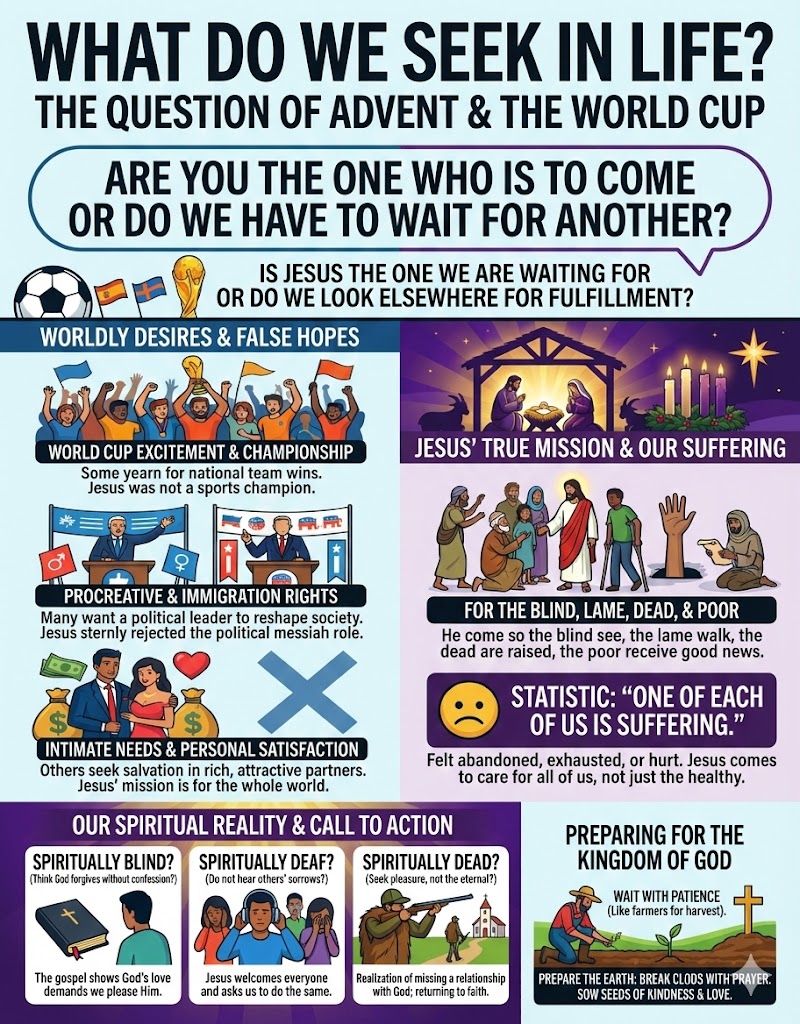
Are we not spiritually blind when we think that if God exists, He will forgive my sins whether I confess them or not? Are we not spiritually dead when we always seek our own pleasure and not the good, the true and the eternal? A man spent many fall weekends hunting. He liked to sit in a hide waiting for a deer. One Saturday the man was in the field with his rifle. It occurred to him that his life was missing something necessary: a relationship with the One who created the earth and all that it holds. The hunter got up and returned to his parish to confess. He now lives happily as a committed layman.
────── ⋆⋅☆⋅⋆ ──────
Fr. Charles E. Irvin

Permission granted for non-profits to use in ministry
The infographic was created using Nano Banana, Google's Revolutionary AI Image Generator. Infographic may not be sold or used for personal financial gain. Please show your appreciation by letting others know about TheWordThisWeek.NET.
Our Identity as Christians

As you live out life as a Christian, trying to make the life of Jesus a reality in your own life, many are going to be observing you. In key moments, some people are going to be looking to you for help, hope maybe you’ll be their salvation, their way out. Very indirectly, perhaps very quietly, or perhaps quite directly, they might ask you: ARE YOU THE ONE WHO CAN HELP ME… WHO CAN BRING ME SALVATION IN THIS MESS… OR DO I LOOK FOR ANOTHER?
You are a Christian. You openly and publicly bear the name of Christ… and you do it for all to see. You identify yourself as a Catholic. You attend Mass… receive the Sacraments. As a result people are going to look at you… to examine your actions… to look into your life. And they will ask you questions about why you are a Catholic.
────── ⋆⋅☆⋅⋆ ──────
Fr. George Smiga
Permission granted for non-profits to use in ministry
The infographic was created using Nano Banana, Google's Revolutionary AI Image Generator. Infographic may not be sold or used for personal financial gain. Please show your appreciation by letting others know about TheWordThisWeek.NET.
Celebrating Two Christmases

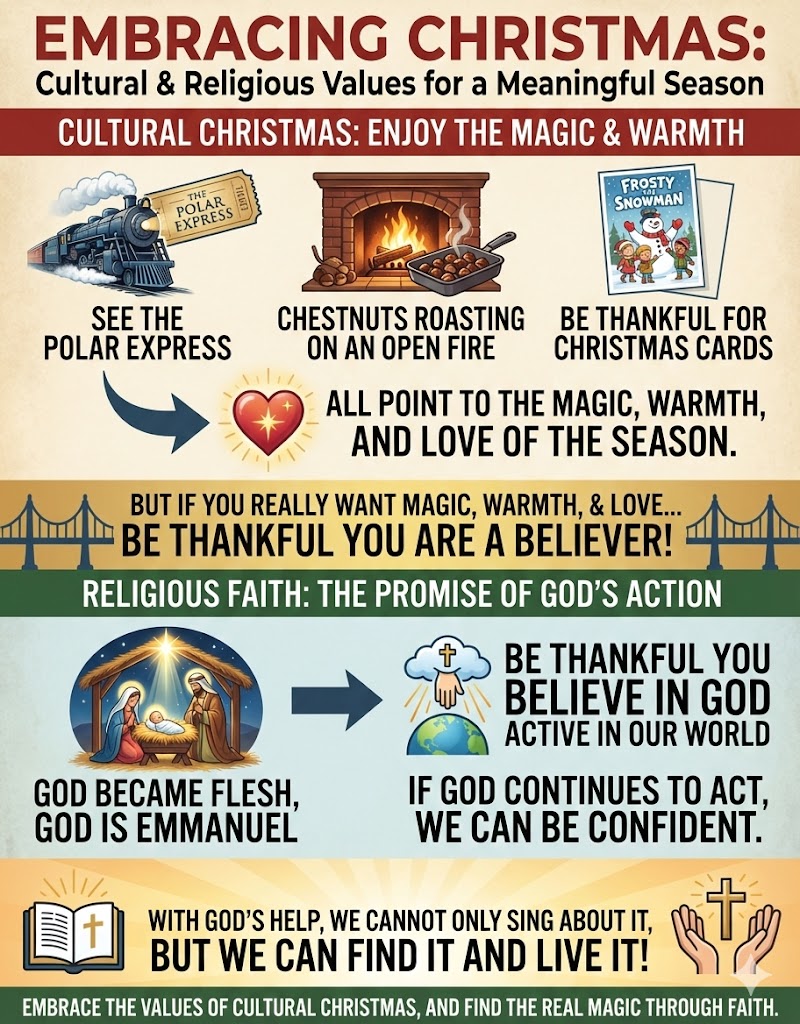
2004 HOMILY – Christmas is a cultural phenomenon. It is also a religious event. There is a great advantage in keeping the similarities and the differences between these two Christmases clear. That is why today I want to spend a few moments comparing and contrasting cultural Christmas with religious Christmas.
Cultural Christmas has a tremendous impact on all of our lives, certainly an economic one. Without increased Christmas sales most retailers would not be able to survive. Yet the influence of cultural Christmas is not limited to money, for it also conveys to our society a set of spiritual beliefs. People who do not believe in Jesus or even in God are nevertheless influenced by cultural Christmas. At this time of year they feel the increased importance of family, an invitation to be more generous, and a general feeling of hope. Whenever we listen to a cultural Christmas song or watch a T.V. special it is likely that these spiritual values will be present, inviting us to care for one another, to work for peace, to make the world a better place. If you go and see the movie The Polar Express you will hear the admonition: “never forget the magic the mystery of Christmas.” The movie is encouraging us to be the best people, the most loving people we can be. Now are these spiritual beliefs of cultural Christmas valuable? Absolutely. Should we as believers espouse them? Certainly.
────── ⋆⋅☆⋅⋆ ──────
Father Kevin Rettig

Permission granted for non-profits to use in ministry
The infographic was created using Nano Banana, Google's Revolutionary AI Image Generator. Infographic may not be sold or used for personal financial gain. Please show your appreciation by letting others know about TheWordThisWeek.NET.
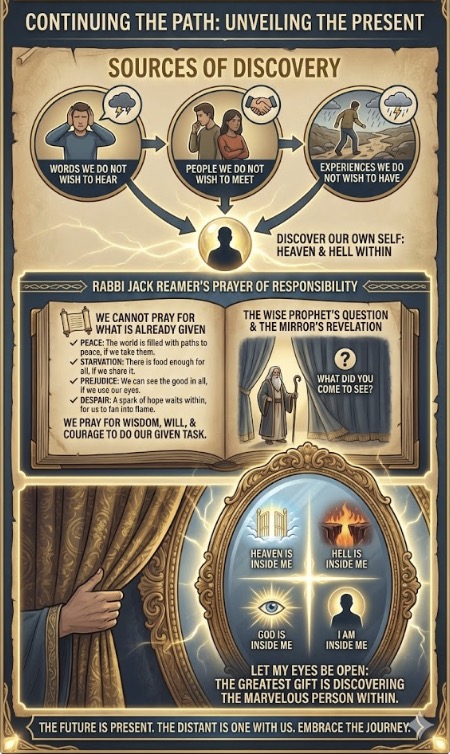
The Gift of Self-Discovery
The wise prophet might well ask us to what did you come to see what did you come to see. I have come to see the path that leads to Heaven that I may take it and the path that leads to hell that I may avoid it. I have come to find God grant me. This gift and the prophet leads us up to the curtain that we may peer through it ourselves. When the curtain is drawn aside. It reveals a simple mirror. It is then that we suddenly come to see. Heaven is right inside of me. Hell is right inside of me. God is right inside of me I am right inside of me let. My eyes be open to that gift of seeing that mysterious marvelous magical person waiting to be discovered inside of me and that Discovery is the greatest gift of all.


The Gift of Wonderment
Experiencing a sense of wonder and awe, whether through everyday moments or profound spiritual experiences, has the power to transform and elevate human existence, allowing us to connect with something greater and live a life of deeper meaning. A young boy’s visit to his grandparents’ farm in Idaho sparks wonder and unforgettable experiences, including feeding chickens and witnessing the miracle of collecting a fresh egg. Many people have lost the ability to stand in awe and wonder at the world’s beauty, blinded by technology and becoming jaded to the awesome wonders around them.

────── ⋆⋅☆⋅⋆ ──────
Monsignor Peter Hahn
Permission granted for non-profits to use in ministry
The infographic was created using Nano Banana, Google's Revolutionary AI Image Generator. Infographic may not be sold or used for personal financial gain. Please show your appreciation by letting others know about TheWordThisWeek.NET.
The Joy of Gaudete Sunday
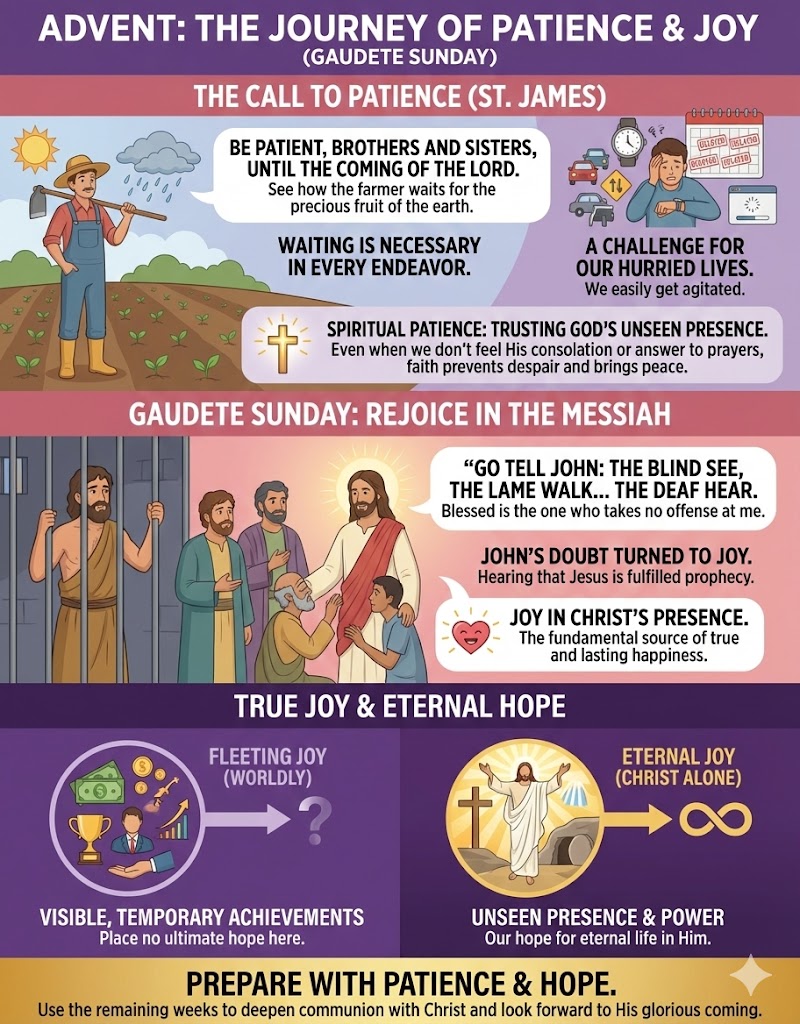
Today we’ve come to the halfway point of our holy season of Advent two weeks ago. You and I have countless opportunities each day when things are delayed when we are put on hold and in seems that we can so easily get agitated instead of seeing in that time of waiting and opportunity an opportunity to be in a deeper communion with Christ today we hear it so bluntly in our second reading the letter of St James when he says be patient brothers and sisters. Until the coming of the Lord. He gives us the example of the farmer and how it was necessary for…


Permission granted for non-profits to use in ministry
The infographic was created using Nano Banana, Google's Revolutionary AI Image Generator. Infographic may not be sold or used for personal financial gain. Please show your appreciation by letting others know about TheWordThisWeek.NET.
Advent: Change, Patience, and Joy
Most of us live in harried and hurried lives with deadlines and daily pressures and patience has in a sense become a lost art in our time but is so necessary in our spiritual life for there will be times and maybe. These times are more common than others.
When we do not feel, God’s consolation or presence there will be times and maybe there are many times and we do not feel. God has answered our prayers in the way that we thought he would or as quickly as we hoped he would and if we are not patient we will soon despair and we will lose that solace and that peace that our faith is always meant to give us if we are not patient. We will so easily become agitated with the way things are instead of…

────── ⋆⋅☆⋅⋆ ──────
Msgr. Joseph Pellegrino

In a world that would relativize and pervert every aspect of life to serve its own self interests, in a world of darkness, we have found light. That light is Jesus Christ.
“Are you the Messiah, Jesus, or should we look for another?” John the Baptist’s disciples asked. People of Good Will, people who have heard angels singing Gloria, have asked the same question throughout the ages. “Look around,” responded Jesus. The signs of the Messiah are all around you. The time of light is upon you.
Rejoice! It is Gaudete Sunday. Rejoice Sunday. Our joy is far more profound than the superficial happiness of contrived Christmas emotions. We rejoice because the light of truth has destroyed the darkness of sin. We rejoice because we have been drawn by the truth. We rejoice because Jesus Christ is the truth. He embodies the truth. He is the truth. And He and the truth are, as the Letter to the Hebrews states, “The same, yesterday, today and forever.”
────── ⋆⋅☆⋅⋆ ──────
Msgr. Charles Pope
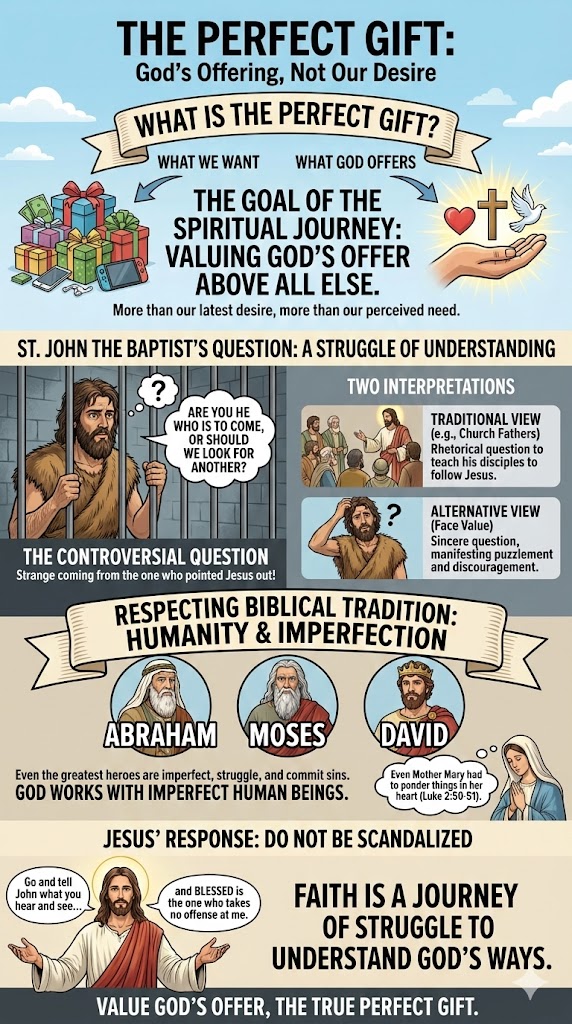
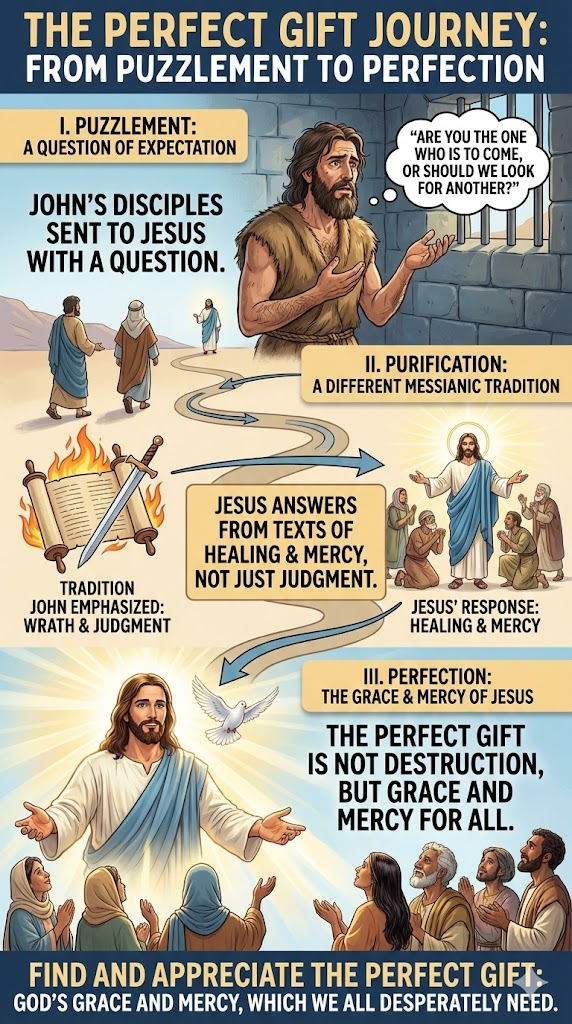
Permission granted for non-profits to use in ministry
The infographic was created using Nano Banana, Google's Revolutionary AI Image Generator. Infographic may not be sold or used for personal financial gain. Please show your appreciation by letting others know about TheWordThisWeek.NET.

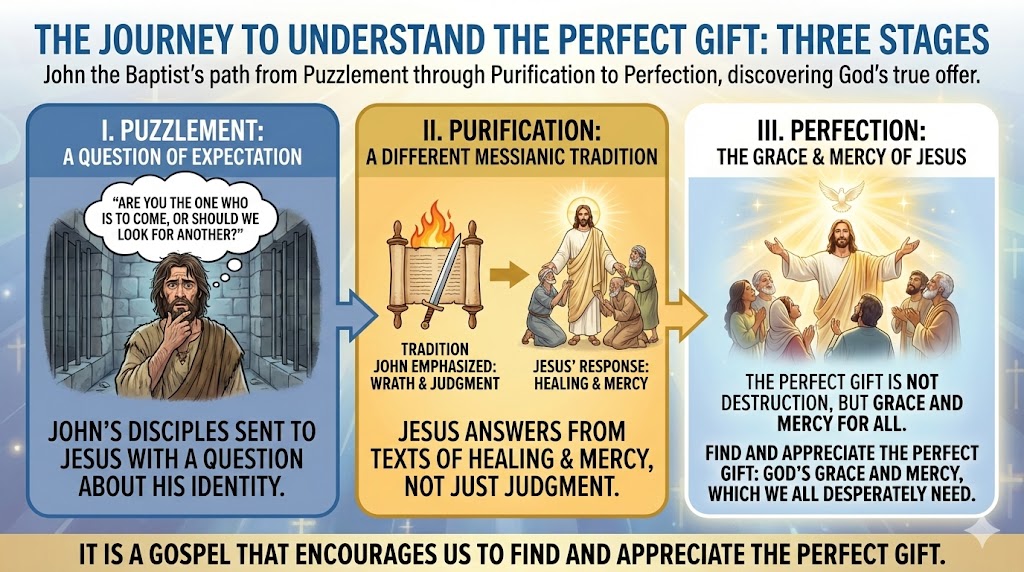
In reviewing today’s Gospel, I am going to take a stance regarding St. John the Baptist that I realize is not without controversy. The Gospel opens with John (who is in prison) sending his disciples to Jesus with a strange question: “Are you he who is to come, or should we look for another?” This is a strange question coming from the one who pointed Jesus out and spoke so powerfully of Him!… Today’s Gospel is best seen in three stages, as John the Baptist is encouraged to make a journey from puzzlement, through purification, to perfection; a journey to understand that the perfect is gift is not one of our own imagining but of God’s true offer. It is a Gospel that encourages us to find and appreciate the perfect gift.
────── ⋆⋅☆⋅⋆ ──────
Fr. Michael Chua

Permission granted for non-profits to use in ministry
The infographic was created using Nano Banana, Google's Revolutionary AI Image Generator. Infographic may not be sold or used for personal financial gain. Please show your appreciation by letting others know about TheWordThisWeek.NET.

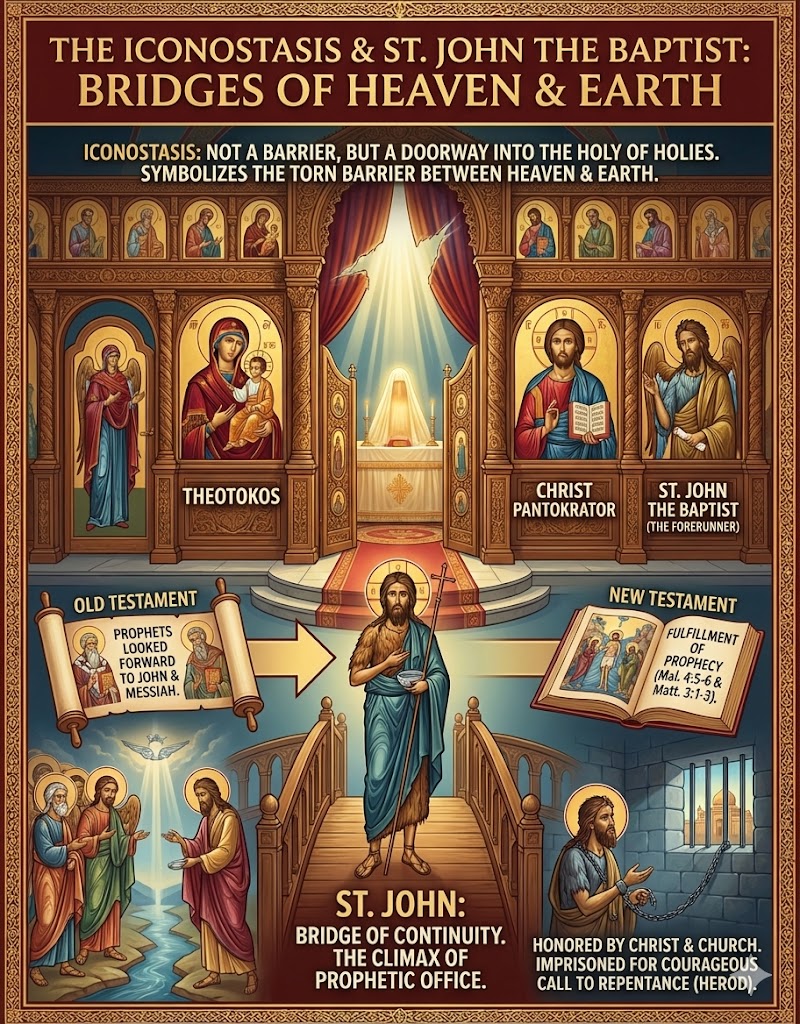
Fr. Chua presents St. John the Baptist as the bridge between the Old and New Testaments, likening him to the Eastern Orthodox iconostasis. He addresses John’s inquiry to Jesus from prison, explaining that Jesus offered assurance through fulfilled prophecy. This serves as encouragement for modern believers to maintain faith amidst darkness and scandal. Chua defines John as an unyielding martyr who died for the Truth. However, he explains that the “least in the Kingdom” are technically greater than John because baptized Christians possess the full reality of the Resurrection and the Holy Spirit. The homily concludes by urging the faithful to seek God’s approval rather than human praise.
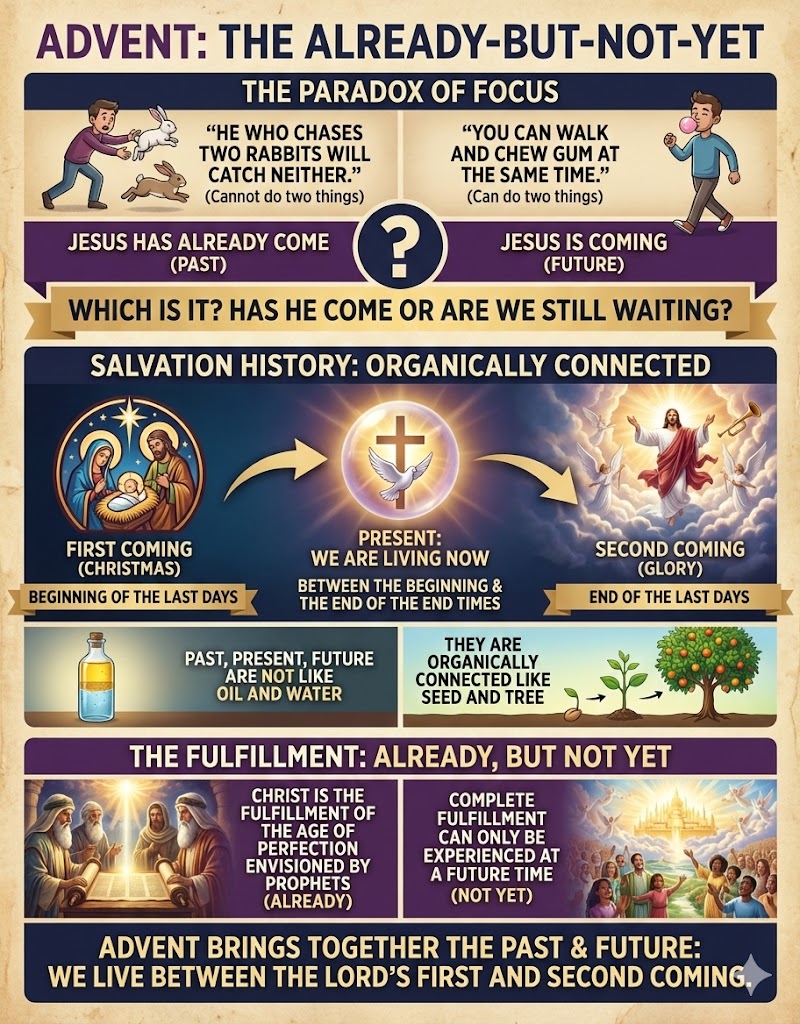


Permission granted for non-profits to use in ministry
The infographic was created using Nano Banana, Google's Revolutionary AI Image Generator. Infographic may not be sold or used for personal financial gain. Please show your appreciation by letting others know about TheWordThisWeek.NET.
Fr. Chua explores the Advent paradox of the “already-but-not-yet,” explaining that Christians live in the tension between Christ’s first coming and His future return. He uses Isaiah’s prophecies and Jesus’ response to John the Baptist to demonstrate that while the Messiah has arrived and initiated redemption, the final fulfillment of history is still pending. Consequently, believers experience Christ’s victory over death through the sacraments while still enduring the struggles of a fallen world. Fr. Chua encourages the faithful to view their ongoing sanctification through this lens, urging them to rejoice in their certain redemption and practice patience as advised by St. James.
There are so many ways in which we can begin to cultivate and grow in patience this Advent season. We can grow in patience when we have no visible results for our prayers, sacrifices, and efforts. We can practice patience when we experience our many personal failures and see the failures of others. We can mature in patience when we feel helpless in the face of all the evil and injustice spreading in our world. We can practice patience as we see our Church riddled with scandals and threats of heresies. Our patience is strengthened when we endure many trials and temptations and overcome personal struggles. We grow in patience as we love the ones who irritate and annoy us. So don’t worry. Our patient God will provide us many moments to grow in this virtue of patience as well as the graces of being patient like Him. So, “be patient; do not lose heart, because the Lord’s coming will be soon.”
────── ⋆⋅☆⋅⋆ ──────
Fr. Jude Thaddeus Langeh, CMF

────── ⋆⋅☆⋅⋆ ──────
Father Geoffrey Plant


Tell John what you see and hear
John, it would seem, is struggling with doubt. From prison he hears reports of Jesus’ ministry—works of healing, mercy, and forgiveness, rather than the fiery judgment he had proclaimed. He had expected the Messiah to separate wheat from chaff, to lay the axe to the root of the tree. Both John and Jesus begin with the same call to repentance, but they understand it differently. For John, repentance means the axe, the winnowing fork, and the unquenchable fire. For Jesus, it means that God’s reign is revealed in mercy, healing, forgiveness, and inclusion.
────── ⋆⋅☆⋅⋆ ──────
Additional Sunday Homilies & Resources
The reflection questions and infographics featured in this section have been created with the help of Google Gemini 3 AI tools, using Chart.js and Tailwind CSS and Nano Banana Pro. THE WORD THIS WEEK is happy to offer these resources to any non-profit ministry for use, and kindly request th