MAY 4, 2025


Homilies
Homilies
- Bishop Barron
- MORE
- 1-MINUTE HOMILY
- 2-Minute Homily
- MSGR. Peter Hahn
- Fr. Jude Langeh
- FR. RUTTIG
- FR. MCCARTHY, OSA
BISHOP
BARRON
3rd Sunday of Easter C

For Easter Season (2022), Bishop Barron preached each Sunday on the Second Reading from the Book of Revelation.

3rd Sunday of Easter C


ONE MINUTE
HOMILY

3rd Sunday of Easter C


TWO MINUTE
HOMILY

3rd Sunday of Easter C


MSGR. PETER
HAHN
3rd Sunday of Easter C


FR. JUDE
LANGEH, CMF


FR. KEVIN
RUTTIG

3rd Sunday of Easter C


FR. TOM
McCARTHY, OSA

3rd Sunday of Easter C


Deacon Peter McCulloch
Deacon of the
Diocese of Broken Bay, Australia
Now Featuring Google Notebook LM Podcasts
With each edition THE WORD THIS WEEK will provide conversations between two AI hosts for selected homilies, simulating a podcast-style discussion.
Each NotebookLM discussion is based on the provided homilies. The AI hosts summarize the material, and make connections between topics.
3rd Sunday of Easter C

Saxum Visitor Center (2:02) – Tabgha: Primacy of Peter

On Feeding My Lambs
Click below to show/hide questions.
This discussion guide has been generated by the WORD THIS WEEK'S Catholic AI Assistant based on Deacon Peter's homily.

Location Context
- Discuss the significance of Tabgha on the northwest shore of the Sea of Galilee where Jesus is found in the Gospel. Consider its proximity to Capernaum and past miracles such as the Sermon on the Mount and the miracle of the loaves and fishes.
- What is the historical significance of the area known as Heptapegon ('Place of Seven Springs')?
Miracle of the Fish
- Explore the story where the disciples, after a long night of unsuccessful fishing, are instructed by Jesus to cast their nets on the other side, resulting in a large catch.
- Compare this episode to a similar story in Luke 5:1-11. How do these stories frame Jesus' ministry?
Symbolism of Fish
- Discuss the metaphor of fish as souls and the significance of the number 153. What interpretations can be drawn from this number in the context of bringing people to Jesus through the Church?
The Eucharistic Meal
- Reflect on the Eucharistic implications of Jesus cooking and sharing a meal of fish and bread with his disciples. How does this event resemble the Eucharist shared in Mass today?
- What role do shared meals play in strengthening the disciples' relationship with Jesus?
St Peter Primacy
- Delve into the significance of the site called ‘St Peter Primacy’ and the ‘Mensa Christi’. How does tradition enhance our understanding of this event?
Peter's Redemption
- Analyze the moment when Jesus asks Peter three times if he loves him, undoing Peter’s three denials. How does this highlight Peter's transformation and his entrusted role?
- Discuss the instructions given to Peter to "feed my lambs" and "take care of my sheep." How do these directives establish leadership roles within the Church?
Application to Modern Life
- Compare how the responsibilities given to Peter can apply to our actions today. What does it mean to "take care of my people" in our lives?
- Reflect on the Gospels' purpose to instruct us, not just the apostles. How do we embody the Eucharistic principles in our daily lives?
- Consider the personal calling from Jesus with the question, “Do you love me?” How does this shape our faith journey and relationship with others?
Reflective Questions
- How do we actively seek nourishment and relationship with Jesus today, akin to his disciples?
- What actionable steps can we take to manifest our love for Jesus through caregiving and community support?
Use this guide to deepen your understanding and engage in thoughtful discussions about the sermon’s messages and their implications for personal and communal spiritual growth.
Homily Excerpt
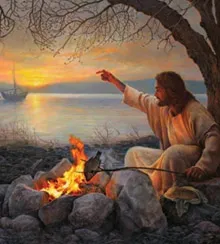
In today’s Gospel Jesus is at Tabgha, a quiet beach on the northwest shore of the Sea of Galilee. Jesus knew it well. It’s 3km from Capernaum and his Sermon on the Mount and his miracle of the loaves and fishes occurred nearby.
In ancient times Tabgha was called Heptapegon (‘Place of Seven Springs’). These are hot springs that still flow into the lake today, feeding algae and attracting fish.
Peter and the disciples have been night fishing, but caught nothing. At dawn, as they return to shore, someone calls out and tells them to cast their nets on the other side. They don’t recognise Jesus, but he must have sounded important because they do what he says and they catch lots of fish.
This story’s very similar to Luke 5:1-11, when Jesus tells Peter, James and John to cast out into the deep and they catch a huge haul of fish. Luke’s story is at the start of Jesus’ public ministry; but today’s story is from John’s last chapter.

CATHOLIC ONLINE (3:54)
Learning from St. Peter
Click below to show/hide questions.
This discussion guide has been generated by the WORD THIS WEEK'S Catholic AI Assistant based on Deacon Peter's homily.
I. Introduction and Context
- Background on St Peter: Discuss the limited information about Peter’s early life, including his birthplace, family, and profession as a fisherman. Consider why many people are drawn to Peter as a relatable figure.
- Encounter with Jesus: Explore Peter’s introduction to Jesus through his brother Andrew and Jesus’ significant renaming of Simon to Cephas (Peter), implying a foundational role for him.
II. Peter's Character and Relationship with Jesus
- Traits of Peter: Examine Peter’s personality traits such as being impulsive, headstrong, and sometimes mistaken. Consider specific examples from the Bible, such as Peter’s denial of Jesus and his impulsive actions.
- Close Relationship: Discuss Peter’s close relationship with Jesus, highlighted by his participation in significant events like the Transfiguration and the Agony in the Garden.
III. Jesus' Choice of Peter
- Peter as the ‘Rock’: Analyze Jesus’ decision to choose Peter as the foundation of his Church despite his flaws. Reflect on what qualities Jesus saw in Peter, such as his faith and humility.
- Love and Redemption: Consider the significance of the breakfast encounter in John 21:1-19, where Jesus gives Peter a chance to reaffirm his love three times, mirroring his earlier denials.
IV. Peter’s Leadership and Legacy
- Growth into Leadership: Discuss how Peter evolved from a fearful disciple to a powerful leader who boldly confronted the Sanhedrin. What role did the Holy Spirit play in this transformation?
- Contributions to the Early Church: Reflect on Peter’s work in Jerusalem, Antioch, and Rome, his role as the first bishop of Rome, and his martyrdom under Emperor Nero.
V. Lessons from Peter’s Life
- Model for Imperfect Lives: Discuss how Peter’s life serves as a model for us. What can we learn from his imperfections and growth into sainthood? How do love, faithfulness, and loyalty to Jesus play a role?
- Call to Action: Encourage group members to identify personal ways to follow Peter’s example in their own spiritual journeys—considering how to respond to their own callings, grow in faith, and serve others.
VI. Discussion Questions
- Why do you think Jesus chose someone like Peter, someone who was flawed and imperfect, to lead his Church?
- What particular qualities or moments in Peter’s life resonate with you, and why?
- How can Peter's story inspire us to overcome our own failures and doubts in our spiritual lives?
- What steps can we take to respond to our own ‘calls’ from Jesus, as Peter did?
Homily Excerpt
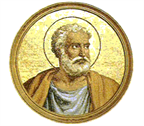
Jesus believed in Peter, and gave him the time he needed to grow into a gifted preacher and a strong leader who converted thousands of people. After Jesus’ Ascension, Peter worked for about ten years in and around Jerusalem and Antioch, and for his last 25 years he served as the first bishop of Rome. However, the emperor Nero hated Christians, and in c.67AD he had Peter crucified upside down. He was buried on Vatican Hill where St Peter’s Basilica now stands.
St Peter was an ordinary, humble and imperfect man who became one of the greatest saints, and today he is a model for our own lives. When Peter heard his call, he dropped everything to follow Jesus. He came to love and trust Jesus completely, even when he didn’t understand him. And although Peter did make mistakes, with Jesus’ love and forgiveness he learnt to do better. St Peter teaches us that you don’t have to be perfect to be a saint. You only have to be faithful, loving and loyal to Jesus.

The Big Fisherman
This discussion guide has been generated by the WORD THIS WEEK'S Catholic AI Assistant based on Deacon Peter's homily.
1. Historical Context:
- Why was fishing so important to the people living near the Sea of Galilee?
- How did fishing impact the culture and economy during Biblical times?
2. The Calling of Peter:
- What was Peter's background, and how did his fishing career prepare him for his role as a disciple?
- Discuss the significance of Jesus calling Peter while he was engaged in his daily work. What does this tell us about the nature of Jesus' calling?
3. Fishermen as Disciples:
- Why do you think Jesus chose fishermen as his first disciples?
- What are the similarities between the skills required for fishing and those needed to be a good apostle?
4. The Miracle of the 153 Fish:
- In what ways does the miraculous catch of fish after Jesus' resurrection serve as a symbol for the disciples' future mission?
- How would you interpret the significance of Jesus preparing breakfast for the disciples with bread and fish?
5. Eucharistic Symbolism:
- How does this meal of bread and fish reflect Eucharistic themes?
- Discuss the symbolism of the word "Ichthus" and its relevance to Christians during persecution.
6. Peter's Redemption:
- What does Jesus’ questioning of Peter about his love reveal about Peter’s character and Jesus' understanding of him?
- How does this interaction between Jesus and Peter demonstrate the possibility of redemption and new beginnings?
7. Lesson in Leadership:
- What leadership qualities does Peter exhibit, and what can we learn from his journey?
- Discuss how failure can be an opportunity for growth and transformation, as shown through Peter's life.
Homily Excerpt

This meal is very Eucharistic. Why? It’s because the bread reflects Jesus himself, who we know is the Bread of Life. And together with the fish, it reminds us of Jesus’ many teachings and miracles which involve fish and bread, including his feeding of the multitudes (Mt.14:13-21; Mk.8:16-21).
But why does Jesus serve fish instead of wine? Well, this fish is the fruit of the disciples’ labours and it’s central to their identity and culture, so it binds them together in communion.
But Jesus also loves to make people think, and he recognises the deep symbolism of the fish. The letters of the Greek word for fish, Ichthus, summarise our Christian faith. I (iota) stands for Jesus, X (chi) for Christ, O (theou) for God, U (upsilon) for son, and S (sigma) for Saviour.

THE WORD THIS WEEK invites you to check out the Catholic AI assistant (located at the bottom right-hand corner), a homily preparation resource you can use to clarify or develop the insights and themes of Deacon Peter’s homilies.
Fr. Austin Fleming
3rd Sunday of Easter C

2016 HOMILY – There are two charcoal fires in the New Testament. One of them is in the gospel we just heard. This is one of my favorite scenes in the whole of scripture: the risen Christ having breakfast at the shore with his friends – brunch on the beach with Jesus – sounds good to me!… Jesus turns to Simon Peter and asks him, “Do you love me?” What a question to hear from the lips of Jesus… “Do you love me?” And as soon as it’s asked, I’m sure Peter remembers the other charcoal fire.
Do you remember that other fire? You heard about it on Palm Sunday and Good Friday: a fire in the courtyard of the high priest, on a Thursday night, a fire at which Peter warmed himself in the chill of the evening air – while Jesus was being held for questioning. And by the light of that fire three different people asked Peter another question: “Aren’t you one of his followers?” And, in reply, Peter, three times, denied even knowing Jesus.
This discussion guide has been generated by the WORD THIS WEEK’S Catholic AI Assistant based on Father Austin’s homily. NEED HELP? Copy and paste a question into the chat bot in the lower right corner of the screen and have our Catholic Assistant help you.
Introduction to the Scene
– Begin your discussion by setting the scene described in the sermon. Imagine the peaceful morning on the shore of the Sea of Tiberius. How do you think it felt to have breakfast with Jesus on the beach?
– Reflect on the symbolism of the charcoal fire and its significance in the context of this story and its counterpart from the night of Jesus’ questioning.
Deep Dive into Peter’s Experience
– Discuss Peter’s threefold denial during Jesus’ trial. What do you think was going through Peter’s mind by that first charcoal fire?
– Explore the parallel structure in the story: discuss the significance of Jesus asking Peter three times, “Do you love me?” How does this reflect Peter’s earlier actions?
– What does Peter’s response, “Lord, you know everything,” reveal about his understanding of his relationship with Jesus and his own shortcomings?
Personal Reflection and Modern-Day Parallels
– Consider the statement “Whether we welcome him or ignore him, he’s going to be there.” What does this reveal about the nature of Jesus’ presence in our lives?
– Reflect on personal “charcoal fire” moments where you might have been more focused on your own needs rather than on your faith or relationship with Jesus.
Jesus’ Invitation and Love
– Discuss how Jesus’ invitation to Peter to “follow him and tend to others” is a call to action. How can this apply in our lives today?
– The sermon mentions Jesus’ love being constant, even in moments of failure. How have you experienced this steadfast love in your own life or witnessed it in others?
Engagement with the Eucharist
– Reflect on the symbolic importance of bread and wine as mentioned at the end of the sermon. How do these symbols connect us with the idea of Jesus feeding and inviting us into a deeper relationship with him?
Application to Daily Life
– Think about how we can incorporate this message into our daily lives. What are some practical ways to “follow” Jesus as Peter was invited to do?
– How can we use our past failures as opportunities for growth and reconciliation, as shown in Peter’s story?
THE WORD THIS WEEK invites you to check out the Catholic AI assistant (located at the bottom right-hand corner), a homily preparation resource you can use to clarify or further develop the insights and themes of Fr. Fleming’s homily.
Dominican Blackfriars

3rd Sunday of Easter C
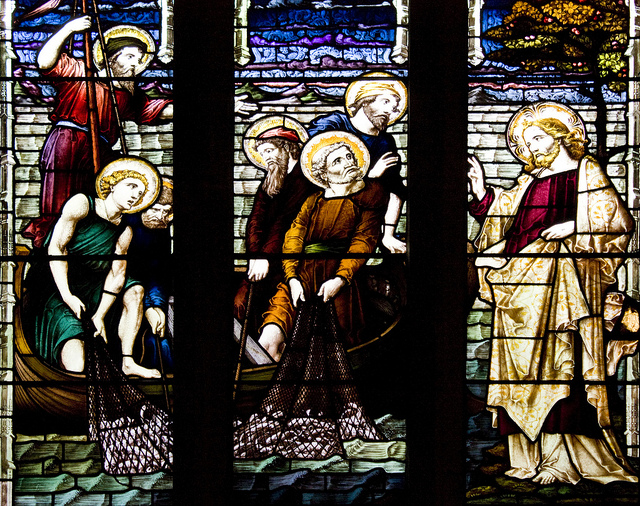
The image above is from Newcastle Cathedral.
Click below to show/hide questions.
This discussion guide has been generated by the WORD THIS WEEK'S Catholic AI Assistant based on the Dominican Blackfriars' homily for this week.
Introduction
- Begin with a quick personal reflection: What does patience mean to you? Can you share an instance where you struggled with patience?
- Discuss the significance of the fridge magnet quote: “Lord, give me patience, but I want it right now!” How does it resonate with our current societal mindset about instant gratification?
Hope and Patience in the Easter Story
- Explore the dual themes of hope and patience as presented in the Easter story. How do these themes provide a narrative for the future?
- Discuss the distinction between the "Holy Week" and "Easter" stories. Why is it important to see Easter as the continuation of Jesus' revelation to his disciples and us?
Jesus’ Presence and Resurrection Moments
- Reflect on the story of the disciples fishing and Jesus’ unexpected appearance. What does this teach us about recognizing Jesus in unexpected moments?
- Discuss the significance of Jesus being bodily present and sharing a meal. How does this reflect his engagement with our everyday lives and struggles?
The Power of Forgiveness and Resurrection
- Analyze the interaction between Jesus and Peter. How does Jesus’ patient and therapeutic approach to Peter’s denial illustrate forgiveness?
- Reflect on how resurrection’s power allowed the apostles to witness with courage despite adversities. How can this empower us today?
Vision of the Resurrection and the Role of Patience
- Examine John’s vision on the island of Patmos. How does this vision offer a deeper understanding of history, evil, and the triumph of good?
- Discuss the ways in which the Lord continues to reveal the Resurrection today. Share personal experiences where you might have felt or witnessed a 'resurrection moment.'
Patience in Life’s Trials
- Reflect on how being immobilized on our crosses can be moments of revelation and transformation. Why might these moments be necessary for growth?
- Discuss how ordinary experiences, such as a sunset or a piece of music, can be manifestations of God’s presence.
The Practice of Abiding in Risen Life
- Explore the concept of abiding in knowledge of the Resurrection. How can this practice bring courage and grace in times of trial?
- Contrast the serenity of living with Resurrection knowledge against the voice of bigotry and fear. How does grace offer a deeper peace than mere emotional responses?
Homily Excerpt
Third Sunday of Easter. fr Dominic White invites us to rest in the experience of the risen Christ.

A friend who knows me too well once gave me a fridge magnet, on which was written, “Lord, give me patience, but I want it right now!” I like to think I’m more patient than I when I first became the proud owner of that fridge magnet. But there’s still a way to go. And (if I may say in my defence) we do live in a society which is all about now – and it’s perhaps all about now because it has no story for the future.
So we need hope for the future as well as patience. And the Easter story offers us both. Incidentally, we often speak of “the Easter story” as the story of Holy Week. But Easter itself is about the Lord’s Resurrection from the dead, and how he reveals himself risen to his disciples, how he gives them Resurrection. And this is a story which continues to this day, with us.
Unlike before his death, when Jesus was more or less “on tap” for his friends, now they feel much more his absence – and when he does appear to them, it’s never when – or how – they expect. This time, they’re out fishing – back to the old job. But no success. An irritatingly simple suggestion from a stranger on the shore, and they net a record catch. ‘It is the Lord.’ They have a resurrection moment, the passage from the sterility of death to the abundance of life.
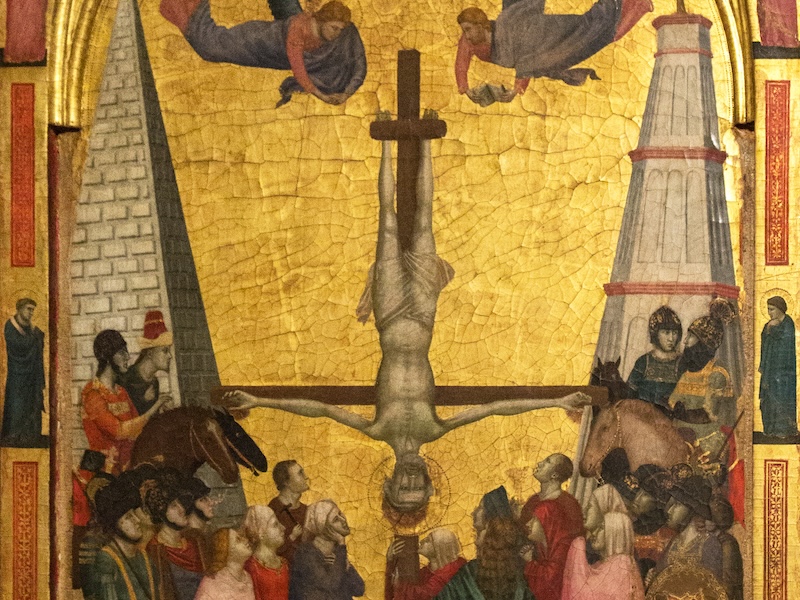
Photograph by Fr Lawrence Lew OP of the Martyrdom of St Peter from the Vatican Museum.
Click below to show/hide questions.
This discussion guide has been generated by the WORD THIS WEEK'S Catholic AI Assistant based on the Dominican Blackfriars' homily for this week.
Introduction and Purpose:
Fr. Marley's homily reflects on the unity of life, the role of Christ in shaping our past, present, and future, and the significance of love and faith as we confront life's ultimate choices.
Discussion Points:
1. The Unity of Life:
- Discuss the idea that every human life culminates in a decision of 'yes' or 'no' to love, truth, and creation. How does this perspective impact the way we live daily?
- Reflect on the statement that while we cannot fully grasp the unity of our lives, significant decisions can be made in mere moments. Can anyone share a personal experience where a short period had a profound impact on their life?
2. The Gospel Narrative as a Unified Story:
- Examine the three parts of the Gospel story: the miraculous catch of fish, Jesus asking Peter about his love, and the prophecy of Peter’s death. How do these parts create a unified message about life and faith?
- How does the concept of being a "new kind of fisherman" relate to your personal or community journey in faith?
3. Love and Redemption:
- Why is the question “Do you love me?” significant both in the context of St. Peter and for us today? Discuss how an individual’s past, present, and potential future integrate into this question.
- Share thoughts on St Peter’s redemption. How does this narrative of failure and redemption resonate with personal faith journeys?
4. Jesus' Prophecy of St. Peter's Death:
- Analyze the prophecy of St. Peter’s death. What is the deeper truth or lesson that it imparts about the nature of death and divine glory?
- Consider how the imagery of being "looked after" at the end of life may relate to God’s care in life and death. How does this shape your understanding of mortality?
Application:
- In what ways can this sermon inspire us to approach our daily lives differently?
- How can these reflections encourage us to seek unity in our lives and perceive our journeys with love and purpose?
Closing Reflection:
- End the session by contemplating the invitation to “come and follow him.” How can this call become more central to our lives as individuals and as a community?
- Encourage sharing any commitments or changes individuals feel moved to make in response to the homily.
Homily Excerpt
Third Sunday of Easter (C) | Fr Euan Marley points to the past, present, and future held in God’s providence and grace.
In the end, every human life comes to a point, a simple ‘yes’ or ‘no’ to love, to truth, and to the gift of creation. There is a unity in our lives, but we cannot grasp that unity for ourselves, we cannot be sure what our final decision will be. Even as we approach the end of life, there is still doubt, and the last few days, hours, or even moments may be significant. In my time as a hospital chaplain, I often said to a patient the same thing, a little speech which seemed important to me to get across. Time is elastic, I would say, you can go through years of life without much happening of any importance, and then a lot can happen in a very short time.
I think this is why today’s Gospel should be seen as a unity. There are three parts to the story, the miraculous draft of fish, Jesus asking Peter if he loves him, and then the odd prophecy of his death. The prophecy is odd because it is not obviously about the death we know about in tradition. St Peter being nailed to an upside down cross, seems rather different from this depiction of an old man being cared for, losing his freedom and becoming utterly dependent on others as he approaches death. There is a unity there though, a unity to be found both in the life of St Peter and in the nature of all lives…

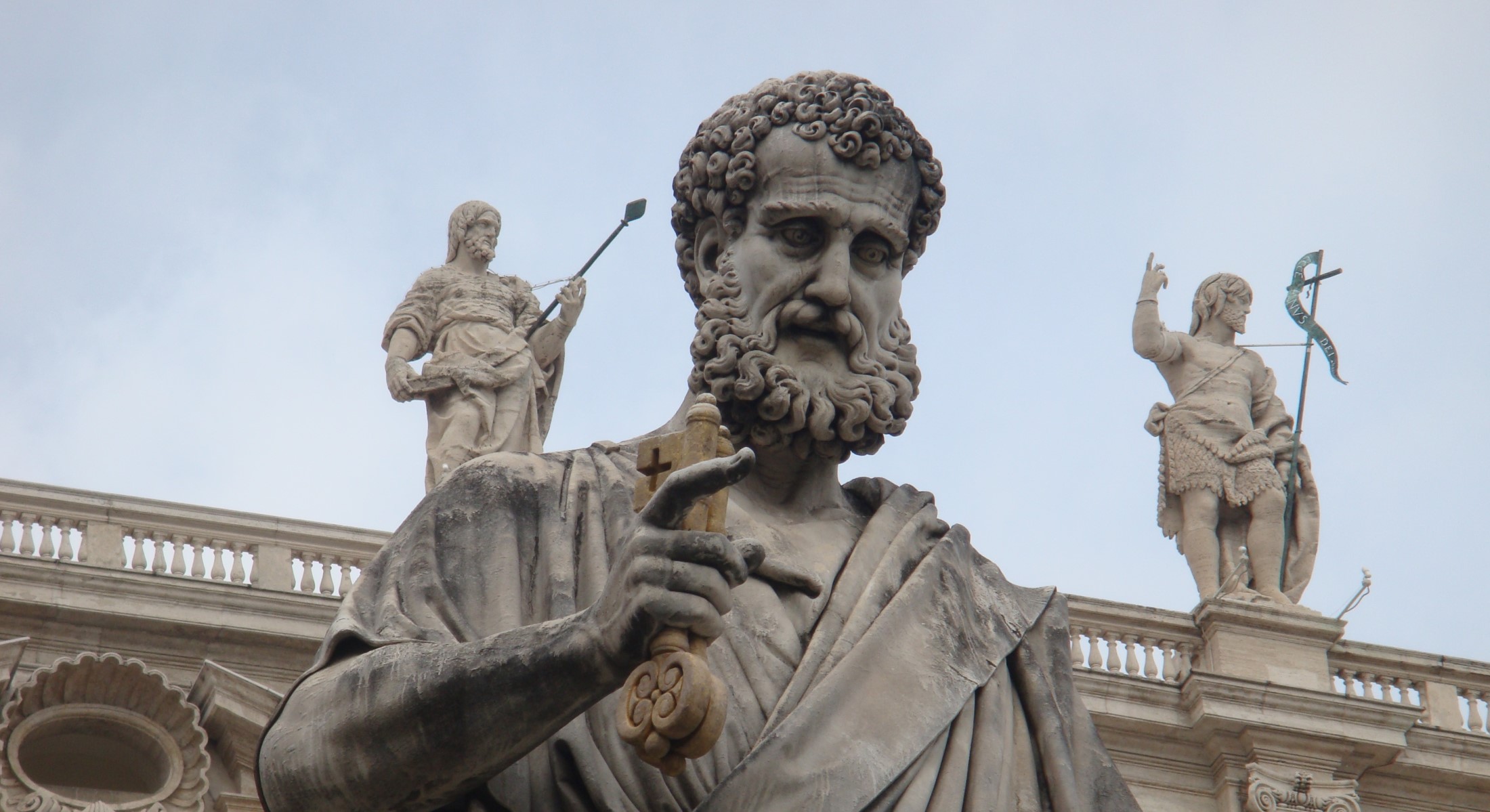
Image: detail from ‘St Peter’s / Urbi et Orbi’ photographed by Images George Rex
Click below to show/hide questions.
This discussion guide has been generated by the WORD THIS WEEK'S Catholic AI Assistant based on the Dominican Blackfriars' homily for this week.
1. Understanding 'Urbi et Orbi'
- Explore the significance of the Pope's blessing 'Urbi et Orbi' and its historical context.
- Discuss the role of the Pope as the Vicar of Christ and its origins from the words of Jesus to St. Peter (Mt. 16).
2. Reflection on Current Global Conflicts
- Analyze how recent events, such as the conflict in Ukraine, highlight the need for Christ's teachings.
- How does the reference to the spirit of Cain help illustrate human conflict?
3. Witnessing Resilience and Neighborly Love
- Share insights from the experiences of the Dominicans in Ukraine during the war.
- Discuss examples of fortitude and hospitality offered by countries to refugees.
4. The 'Easter of War' and Need for Christ's Presence
- Reflect on Pope Francis’s term ‘Easter of War’ and how it speaks to our times.
- Discuss the importance of welcoming the risen Christ into our lives as a source of love, reconciliation, and peace.
5. The Victory of Love through Christ
- Explore the meaning of the 'victory of love' achieved through Christ's crucifixion and resurrection.
- Discuss the invitation to return to Galilee and its symbolism in our pursuit of peace.
6. Bearing Witness to Christ’s Passion and Resurrection
- Discuss how listening to the Passion encourages us to be good witnesses of Christ's suffering and resurrection.
- Explore how Christ's resurrection is a beacon of hope and a testament to God's love as seen in Acts 10.
7. Easter Joy and Contemporary Challenges
- Discuss the joy of Easter and how it contrasts with the challenges of consumerism and inequality highlighted by Pope Francis.
- Reflect on the call to be good listeners and how we can incorporate this into our daily lives as witnesses of Christ’s teachings.
8. Call to Prayer and Reflection
- Lead a prayer that incorporates themes from the sermon and asks for the peace of Easter to touch those affected by global suffering.
- Encourage group members to reflect on personal experiences of witnessing the suffering and resurrection of Christ.
9. Personal Application and Action
- How can individuals in the group apply the teachings of the sermon in their personal lives?
- What actions can the group take to address local or global issues as part of their faith journey?
Homily Excerpt
Third Sunday of Easter. Fr Leo Edgar draws attention to the Pope’s call for Easter values to transform the world.
Every year on Easter Sunday the Pope gives a blessing to The City of Rome and to the World – ‘URBI et ORBI’. It reminds us that Pope Francis is the Vicar of Christ in the world today and of the words spoken by Jesus to St Peter (Mt. 16) that he was to be the first of many Vicars of Christ to speak in the place of Christ in the world as his Vicar. Recent events of conflict in the Ukraine are a sharp reminder of this – if a reminder is necessary – to the whole world, that the teaching of Christ needs to be heard now, perhaps as never before when the voice of evil is so evident. In his address from the balcony of St. Peter’s in Rome on Easter Day, Pope Francis addressed the evil that exists in the world when he said, ‘We are showing that we do not have within us the spirit of Jesus; rather the spirit of Cain, who saw Abel not as a brother, but as a rival, and thought about how to eliminate him.’
Click below to show/hide questions.
This discussion guide has been generated by the WORD THIS WEEK'S Catholic AI Assistant based on the Dominican Blackfriars' homily for this week. NEED HELP? Copy and paste a question into the chat bot in the lower right corner of the screen and have our Catholic Assistant help you.
Opening Reflection
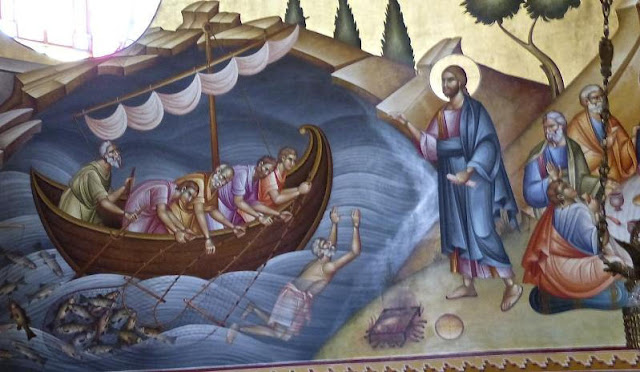
Begin by reflecting on the moment described in the Gospel of Luke where Jesus first instructs Peter to cast his net into the deep for a catch. Consider Peter’s initial hesitation, followed by his obedience to Jesus’ word and the miraculous result. How does this set the stage for Peter's relationship with Jesus?
Scripture Passage
Read aloud the Gospel passages from Luke and John involving the encounters between Peter and the risen Christ. Focus on the details of the scenes: the repeated act of casting the net and the charcoal fire setting.
Discussion Questions
1. Compare and Contrast: What are the similarities and differences between Peter’s initial encounter with Jesus in Luke and his later encounter in John?
2. Recognition of Jesus: Why do you think Peter did not initially recognize Jesus by the sea? What led to his eventual recognition, and what does this tell us about the nature of faith and understanding?
3. Peter’s Denial and Restoration: Why is it significant that this meeting involves a charcoal fire similar to the one where Peter denied Jesus? Discuss the symbolism and emotional weight of Jesus asking Peter three times, “Do you love me?”
Peter’s Psychological State
Consider Peter's possible feelings of guilt and unworthiness despite his joy at seeing Jesus. How might these emotions affect his actions and responses to Jesus’ questions? Reflect on times when you have felt similarly conflicted in your faith journey.
Jesus’ Perfect Love
4. Assurance of Love: How does Jesus’ knowledge of Peter’s love and the command to feed his flock serve as a reassurance for Peter?
5. Overcoming Weakness: In what ways are we similarly called to look beyond our weaknesses and imperfections? How does focusing on our tasks and service to others aid in overcoming a sense of unworthiness?
Exhortation to Love and Serve
6. Live by Love: Reflect on the exhortation from John 14:15—If you love me, keep my commandments. How does this relate to Peter’s call to feed Jesus’ sheep?
7. Perfecting Our Love: In what ways can we see our love being perfected through acts of service? What practical steps can we take to "feed his lambs and sheep" in our daily lives?
Homily Excerpt
Third Sunday of Easter. Fr Thomas Mannion ponders St Peter’s encounter with the risen Christ.
In his first meeting he falls to his knees and says: ‘leave me Lord, I am a sinful man’. This conversation is going to be similar. A charcoal fire is lit, a fire like the one in the courtyard where Peter denied Jesus three times. Three times Jesus asks: ‘Do you love me?’; three times Peter replies yes; three times Jesus commands Peter to feed his flock.
We are not given an insight into Peter’s psychological state, whether even after the various apparitions of Jesus if Peter, whilst full of joy to see the Lord, is still internally wracked by the guilt of his own sins. Perhaps Jesus repeats this question three times not only as a sort of reversal of Peter’s denial but as a positive building up of Peter. Does Jesus, who knows the secret thoughts of others in the Gospels, not know Peter’s love? Of course he does. If Jesus was not convinced of his love, would he entrust the care of his lambs and sheep to him? A consolation for Peter. Peter is not ultimately defined by his weakness, by the imperfections of his love, but by Jesus’ perfect love for him and his love for Jesus which is being perfected over time.
THE WORD THIS WEEK invites you to check out the Catholic AI assistant (located at the bottom right-hand corner), a homily preparation resource you can use to clarify or further develop the insights and themes of the homilies above.
Fr. Charles E. Irvin
3rd Sunday of Easter C

The words “We are witnesses of all this” apply to you and me just as much as they applied to the disciples of Jesus. We, too, are His disciples. What Jesus said and did with them He says and does with us. All of Christ’s disciples stand together in the same place as Christians who witness to the risen Christ. A witness re-presents events, transactions, words and ideas, making them present again and that is what our lives should be all about. What, then, does your life represent?
When you wear your high school or college letter jacket around town you are representing your school and all that your school stands for. When folks see you act they are being presented with what your letter jacket stands for and what you say your school stands for. All that you do reflects not just on you, it reflects on your school and your family…
This discussion guide has been generated by the WORD THIS WEEK’S Catholic AI Assistant based on Fr. Irvin’s homily.
1. The Early Church’s Response
– Read Acts 5:27-32 as presented in the sermon.
– Discuss the courage and conviction of Peter and the apostles in facing the Sanhedrin.
– How does this passage illustrate the apostles’ commitment to witnessing for Christ?
2. Modern-Day Challenges
– Identify contemporary examples where Christian beliefs are challenged or suppressed.
– Share personal experiences of encountering opposition to Christian witness in daily life.
3. Personal Witness
– Discuss the analogy of wearing a school letter jacket and its implications for representing one’s faith.
– Share reflections on what one’s life represents and how it aligns with Christian ideals.
4. Effective Witnessing
– Explore what constitutes effective Christian witnessing in today’s world. Consider the importance of actions over words.
– How can we demonstrate our faith through everyday interactions and values?
5. Overcoming Feelings of Inadequacy
– Reflect on feelings of inadequacy in witnessing for Christ.
– How does receiving Holy Communion empower us to be better witnesses?
– Share strategies for relying on faith and community support when feeling unworthy.
6. Avoiding Fruitless Debates
– Address the futility of engaging in religious debates and how to witness through quiet strength instead.
– Reflect on personal experiences with debates and what has been more effective for witnessing faith.
7. Living Christian Values
– Discuss Philippians 4:8 and its application to daily life.
– How can focusing on what is true, honorable, just, and lovely guide our actions?
– Share practical tips for keeping one’s mind and heart aligned with these virtues.
8. Conclusion and Prayer
– Reflect on the sermon’s message on being a witness for Christ in subtle and profound ways.
– Close with a group prayer for strength and guidance in living out the Christian witness in everyday life.
THE WORD THIS WEEK invites you to check out the Catholic AI assistant (located at the bottom right-hand corner), a homily preparation resource you can use to clarify or further develop the insights and themes of Fr. Irvin’s homily.
Fr. George Smiga
- No Homily - 2004
- No Homily - 2007
- Accepting Second Best - 2010
- No Homily - 2013
- No Homily - 2016
- No Homily - 2019
- No Homily - 2022
Accepting Second Best

2010 HOMILY – How much frustration do we have in our life because the people in our life are not the people we want them to be. We want our leaders in the church and in government to be wise and to anticipate problems and to solve them before those problems hurt us. But very frequently those leaders fall short. They get behind the curve and they appear confused or inadequate. We want our spouse to be understanding and attentive. But many times we experience him or her as harsh or preoccupied. We want our boss to be creative and flexible. But many times all that is asked of us is attention to routine detail. If only our children would be more motivated; if only our parents could be less stubborn; if only our friends would be on time. In matters large and small the people in our life often fall short of who we want them to be. And the message that comes to us from Jesus’ action with Peter is that we are still to accept them as the people that they are. We are to love them for the goodness that they offer us rather than criticize them for the goodness that they lack.
Now this does not mean that Jesus asks us to put up with anything, or that we should not hold people accountable, or that we should not challenge people to grow. But it does tell us is that when people love us, there is wisdom in accepting that love even if it is second best.
There is a line from an old film, Sunday Bloody Sunday, where one lover tells another: “I know I’m not giving you what you want, but I’m giving you what I have.” In a way, that is what Peter says to Jesus in today’s Gospel. “I’m not giving you the love you want but I’m giving you the love I have.” Jesus accepts that love and commissions Peter to feed his sheep. Jesus does that because that is the way Jesus loves us. That also is the way he wants us to love one another.
This discussion guide has been generated by the WORD THIS WEEK’S Catholic AI Assistant based on Fr. Smiga’s homily.
Understanding Love in the Gospel
1. Definitions of Love: Discuss the different Greek words for love mentioned in the sermon: agape and philia. How do these definitions enhance our understanding of love in the context of the Gospel and beyond?
2. Jesus and Peter’s Conversation: Reflect on the interaction between Jesus and Peter where different Greek terms for love are used. How does this distinction affect your perception of their dialogue?
The Lesson from Jesus’ Response to Peter
3. Expectations vs. Reality: What does it mean for Jesus to accept Peter despite Peter offering a lesser form of love? How does this reflect God’s acceptance of us in our own lives?
4. God’s Love and Our Inadequacies: How does Jesus’ response to Peter provide comfort concerning our personal inadequacies? In what ways does it challenge us?
Applying the Gospel Lesson to Our Lives
5. Frustrations with Expectations: Identify areas in your life where you might feel frustrated with others who do not meet your expectations. How can you apply the lesson of accepting “second best” love to these relationships?
6. Acceptance vs. Accountability: How might you balance accepting others for who they are while still holding them accountable and challenging them to grow?
Reflecting on Personal Relationships
7. Real-Life Application: The sermon includes a quote from “Sunday Bloody Sunday”: “I know I’m not giving you what you want, but I’m giving you what I have.” How can you relate this sentiment to personal relationships in your life?
8. Emulating Jesus’ Love: In what specific ways can you strive to love others as Jesus loves us, accepting their limitations and appreciating their efforts?
Conclusion and Personal Commitment
9. Identifying Opportunities: Discuss how you can identify opportunities in your life to practice accepting and appreciating the “ordinary love” offered by those around you.
10. Taking Action: Share a personal commitment or action step you plan to take this week to apply the lessons from this sermon to your relationships.
THE WORD THIS WEEK invites you to check out the Catholic AI assistant (located at the bottom right-hand corner), a homily preparation resource you can use to further clarify or further develop the insights and themes of Fr. Smiga’s homilies.
Pro-Life Homily Resources
3rd Sunday of Easter C

When Life Comes to Us
oday’s readings make it clear that Jesus’ resurrection does not only bring life to him. Rather, it begins a process whereby, through our obedience, life comes to us and extends through us to all the world.
The theme of obedience to the Risen Christ comes through in the Gospel passage where the fruitless, all-night efforts of the fishermen-apostles are contrasted to a simple act of obedience to one command of the Risen Lord. The 153 fish, as some commentators have pointed out, represents the number of known kinds of fish in that day, and therefore symbolizes that people of every race, nation, and language are called to acknowledge the Lord and will be brought into the Kingdom by the preaching of the Church. As the second reading mentions, “every creature” will worship before the throne. Obedience to God and to the Lamb is the call of everyone.
THE WORD THIS WEEK invites you to check out the Catholic AI assistant (located at the bottom right-hand corner), a homily preparation resource you can use to clarify or develop the insights and themes of Frank Pavone’s homily notes for preachers.
Msgr. Joseph Pellegrino
3rd Sunday of Easter C

Father, He is Risen!

The man who entered the Church the week after Easter was old, very old. He was stooped over. He carried an oxygen pack. He had a cane, but he could barely walk. His face was thinned and his hair was a distant memory. He had to have been in his late 90’s. He saw me and looked up, and with a smile said, “Father, He is risen.” He said all that needs to be said.
The reality of Easter impacts the core of our being. Jesus Christ has risen from the dead. The spiritual is real. And we who are united to Him through our baptism have risen with Him. This life is full of limitations, but there are no limitations to the resurrected life. What I heard the elderly gentleman saying was, “My life here is coming to an end, but I have great hope. My life with Jesus is forever. He is risen. And so am I.” And so are we!
Everything is changed. Everything is renewed. We speak about the new life of the Lord at Easter, but perhaps we do not really understand the profound implications of His rising from the dead. Nothing that happens in this world has value unless it flows from Him and leads back to Him.
This discussion guide has been generated by the WORD THIS WEEK’S Catholic AI Assistant based on Msgr. Pellegrino’s homily.
1. Opening Reflection:
– Reflect on the opening anecdote about the elderly man entering the church after Easter. What emotions does this story evoke? How does it set the tone for the sermon’s message on resurrection and hope?
2. Core Message of Easter:
– Jesus is Risen: Discuss the significance of the proclamation “He is risen.” How does this affirmation impact the lives of believers?
– The Idea of Resurrected Life: What does it mean that through baptism, we are united with Jesus in His resurrection? How is this new life different from our current existence?
3. The Importance of Hope and Transformation:
– How does the elderly man’s statement reflect a life transformed by hope in Jesus? In what ways does this hope manifest in challenging situations?
– Personal Transformation: Can you share a personal story or an experience of how understanding and accepting this hope has transformed your life or perspective?
4. Apostolic Courage and Example:
– Peter and the Apostles’ Boldness: Discuss the change in the apostles, particularly Peter, after Jesus’ resurrection. What gave them the courage to stand before the Sanhedrin?
– Lessons from Gamaliel’s Advice: What can we learn from Gamaliel’s perspective on discerning God’s work?
5. Peter’s Restoration and Call:
– Peter’s Affirmations: Analyze the significance of Peter affirming his love for Jesus three times. What does this reveal about forgiveness, redemption, and responsibility in leadership?
– Application to Our Lives: How can we answer Jesus’ question, “Do you love me?” in our lives today? What practical steps can we take to “feed His sheep”?
6. Real-Life Application:
– Facing Challenges for Christ’s Sake: Reflect on the costs associated with living a life committed to Christ. How can we find strength to endure hardships similarly to the apostles?
– Making Choices Aligned with Faith: Discuss the importance of making choices that reflect our commitment to God, even when faced with worldly temptations.
7. Conclusion: Experiencing Continuous Joy:
– Reflect on the idea that worldly happiness is fleeting, but finding joy in the Lord is eternal. How does living with this perspective affect daily life and interactions with others?
THE WORD THIS WEEK invites you to check out the Catholic AI assistant (located at the bottom right-hand corner), a homily preparation resource you can use to clarify or develop the insights and themes of Msgr. Pelligrino’s homily.
Msgr. Charles Pope
3rd Sunday of Easter C

Back to the Future
This Sunday’s Gospel is remarkable in that although the apostles have seen the resurrected Jesus several times, they seem to be retreating into the past. Jesus must summon them—if you’ll pardon the expression—back to the future.
They were going to return to fishing, but the Lord calls them away and points them to the future, in which they go out to all the nations and summon them to saving faith.
This Gospel shows Jesus summoning the apostles back to their crucial call, one focused not in the past but in the future. Indeed, fellow believers, if this had not gone the right way, our faith might well have been in jeopardy. We are the future that Jesus sought to preserve. Our coming to the faith depended on Jesus successfully summoning Peter and the other apostles back to the future.
Let’s look at today’s Gospel in four stages.
I. Regrettable Reversal
II. Redeeming Reminder
III. Reorienting Repast
IV. Required Remedy
THE WORD THIS WEEK invites you to check out the Catholic AI assistant (located at the bottom right-hand corner), a homily preparation resource you can use to clarify or develop the insights and themes of Msgr. Pope’s homily.
Fr. Jude Siciliano, OP

3rd Sunday of Easter C

WORD ON FIRE (1:37) – Engage in classic Catholic poetry with the warm voice of Jonathan Roumie, the actor who plays Jesus in “The Chosen” television series.
God’s Grandeur
What I find consoling in today’s gospel is this: even though the disciples still carried questions – even after seeing Jesus in the upper room – it is not they who find him. It is Jesus who finds them. And he doesn’t find them in prayer at the temple. He finds them at work. Where are we looking for the risen Christ? Where do we expect to find him? He surprises us by coming to us in ordinary places – just like the ones we find ourselves in today.
Or, as the poet Gerard Manley Hopkins put it, “The world is charged with the grandeur of God.”
Today’s gospel and the vision of poets like Hopkins, remind us that the risen Lord walks our streets, faces our dangers, shares our pain, and enters into our deaths. And that is not the end of the story. Christ brings new life where once there was only death.
THE WORD THIS WEEK invites you to check out the Catholic AI assistant (located at the bottom right-hand corner), a homily preparation resource you can use to clarify or develop the insights and themes of Fr. Jude’s homily notes.
Society of African Missions

3rd Sunday of Easter C
‘Do you Love me?’
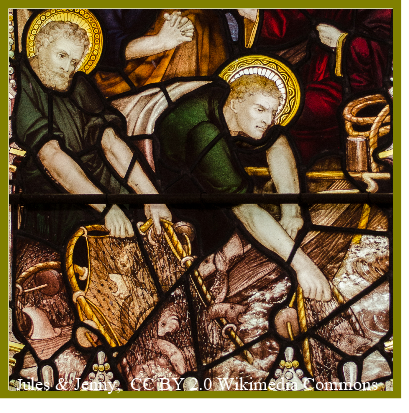
EXCERPT – Today’s gospel from John gives us a detailed and moving account of ‘the third time that Jesus showed himself to his disciples after rising from the dead’ (Jn 21: 10). The setting for this appearance of the Risen Jesus is by the Sea of Tiberias in Galilee, about eighty miles from Jerusalem. The disciples have left the safe house in Jerusalem but not yet embarked on the mission Jesus gave them on the evening of the first day of the week following his resurrection (cf. Jn 20:23). Instead, they have returned to the homes they had left behind to follow Jesus, and resumed their former occupation – fishing.
Bishop John Kobina Louis
3rd Sunday of Easter C

Sunday Homilies

Bishop John Kobina Louis, PhD, is an auxiliary bishop of the Archdiocese of Accra, Ghana. He was ordained as an auxiliary bishop on 19th April 2023.
Fr. Michael Chua
3rd Sunday of Easter C
Homily Excerpt

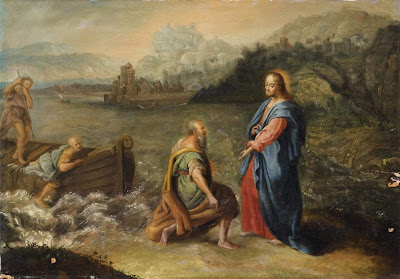
Peter and his brothers stand with so many others in the history of the Church. The Church on earth has always known various tribulations, in the likeness of her Lord. She experiences betrayal, calumny, torture and finally martyrdom. Are we shocked and horrified by the hundreds that were killed, maimed and injured in Sri Lanka last Easter? We should be rightly so but let us not forget that the Church takes the same path as her Lord. For her too, it is necessary that she suffer these things, and so enter into her glory. This is the brilliant vision painted in the second reading. As the Church had suffered the fate, mission, and mistreatment of her Master on earth, now she will share in the glory of the Master who reigns supreme in heaven. This is because the Cross can never be separated from the Resurrection.
St Peter will carry the mission entrusted to him by the Lord to Rome eventually. As an old man, he will be girded by the soldiers of Nero, and made to climb. He will be crucified with his feet upward – his own request, being so unlike his Master! His face will be low to the ground: the dust of men! In his heart … the shore of Galilee, the voice of Christ speaking to him, yesterday, today, and forever. “Simon, son of John, do you love me?” And with his dying breath, Peter finally answers, “Yes, Lord, you know I love you. I have fed your sheep.”
Homily Excerpt
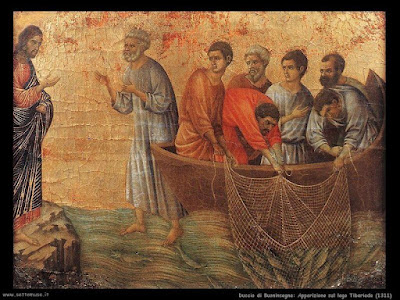
It’s strange but also true, that the most painful memories are usually the ones that stick, no matter how much you try to forget them. It’s so hard to forget pain, but it’s even harder to remember sweetness. We have no scars to show for happiness.
In today’s Gospel passage, we see both the memory of St Peter and the memory of the reader being invoked. But it is not just mere sentimentality that is being stirred here. Such memory is needed to understand the progression in Peter’s spiritual journey. On the eve of his Master’s death, Peter descends a path that almost leads to his destruction, a cause of great shame and guilt, a memory that he would rather choose to forget. And yet, our Lord does not wish for him to forget. This is so because our Lord does not wish to give up on him. Through the use of memory, our Lord begins the slow process of rehabilitation and restoration.

Homily Excerpt
The gospel provides us with the post end-credits of the Gospel of John, where we see a disillusioned Peter, who has abandoned his mission and vocation to return to his earlier profession, being brought to life once again by the Risen Lord. Our Lord could have gone in search of fresh candidates to continue His mission of building and tending His Church but instead chooses to return to the one who had denied Him, abandoned Him and who even now leads others astray by guiding them to return to the work of being fishers of fish rather than of men.
Both stories, that of Peter’s and Ignatius’, provide us with some important insights into the process and anatomy of conversion.
Firstly, conversion is an invitation given by our Lord to all. It’s much easier for us to think that conversion is for some, but not us. The sinner, the unbeliever, the lapsed Catholic, the one who has betrayed and hurt us – they need conversion. But not us. Heaven forbid. But conversion is a constant ever-developing process of us growing closer to the Lord. It is a call to repentance, because everyone of us are sinners. It is a call to sanctification because none of us are finished products, just work in progress. In this chapel, Ignatius experienced a conversion but it wasn’t his last experience, just the first. Likewise, though Peter seemed to have been “resurrected” and restored to his mission and vocation, scripture and tradition tells us of other instances where he would falter again, needing a wake-up call to return to his original vocation.
THE WORD THIS WEEK invites you to check out the Catholic AI assistant (located at the bottom right-hand corner), a homily preparation resource you can use to clarify or develop the insights and themes of Fr. Chua’s homilies.
Fr. Vincent Hawkswell
3rd Sunday of Easter C

Homily Excerpt

2022 HOMILY – At Easter, I love the change into white or gold vestments and the transformation of the church during the Easter Vigil, when the statues are unveiled, flowers are carried in, the bells ring, and the organ bursts forth with the Gloria.
Humans are “amphibian,” says C.S. Lewis: spirit and animal. As spirits, we belong to the eternal world and can direct our souls to the unchangeable God, but as animals, we inhabit time, with our bodies, passions, and imaginations in continuous change.
Our nearest approach to constancy, therefore, is “undulation,” Lewis says: a series of “troughs and peaks.”
THE WORD THIS WEEK invites you to check out the Catholic AI assistant (located at the bottom right-hand corner), a homily preparation resource you can use to clarify or develop the insights and themes of Fr. Hawkswell’s homily.
Fr. Denis J. Hanly
3rd Sunday of Easter C

Homily Excerpt

This gospel, as you know, is in two parts. The first part, of course, is the third appearance of Jesus to his disciples, his apostles.
There were seven in the boat with Peter.
And all of them had a bit of a shady past in the sense that there was doubtful Thomas who doubted that Jesus had risen, there was Nathanael from Cana who, when he heard from Philip that they had found the Messiah from Nazareth, said very slyly, “Can anything decent or good ever come out of Nazareth?”
And so it was that the sons of Zebedee, John and his brother James, they themselves once asked their mother to ask Jesus to put them in charge of everybody, that they would be Number One and Number Two in the Kingdom, and this was kind of an embarrassing thing.
THE WORD THIS WEEK invites you to check out the Catholic AI assistant (located at the bottom right-hand corner), a homily preparation resource you can use to clarify or develop the insights and themes of Fr. Hanly’s homily.
Fr. Tommy Lane
3rd Sunday of Easter C
- Allow good to come out of evil 2022
- Jesus forgives Peter and restores him
- Related Homilies: Transformed by meeting Jesus 2013
- Joy of the Gospel 2021
- Begin again 2022
- Second Reading Related Revelation/Apocalypse (Saints in Heaven)
- stories about God’s Mercy and conversion
Fr. John Kavanaugh, S.J.
3rd Sunday of Easter C

Pause a moment. There is something great stirring here. Have you or I ever uttered those words to another? “Do you love me?” Most of us, once beyond childhood, are terrified at the thought of asking such a question. It is hard enough for some men to tell the beloved she is loved. But it can be excruciating to ask, “Do you love me?” How often have teenagers, sometimes eager to profess their love, been found to ask whether they are loved. To ask it. Has one ever asked a friend as much? A brother or sister?
I could think of scores of questions Christ might have put to Peter. Do you promise never to betray me again? Will you finally be more modest in your claims? Do you now, at long last, after having denied me, amend your life? Will you please modulate your vaunted professions of faith? Now do you see why I had to wash your feet? Well, big-mouth?
This discussion guide has been generated by the WORD THIS WEEK’S Catholic AI Assistant based on Fr. Kavanaugh’s homily.
1. Peter’s Boldness and Courage in Acts
– Discussion Prompt: Reflect on Acts of the Apostles where Peter proclaims, “better for us to obey God than men!” What does this declaration signify about Peter’s transformation?
– Group Activity: Discuss the implications of Peter’s bold stance despite facing threats. How can you apply this principle of obedience to God in today’s world?
2. Peter’s Denial and Redemption
– Discussion Prompt: Reflect on Peter’s denial of Christ. How do you think this affected him personally and his reputation among followers of Jesus?
– Group Activity: Share instances in your life where you have experienced failure. How did those moments shape your faith journey?
3. The Role of Forgiveness and Restoration
– Discussion Prompt: Examine Peter’s encounter with the resurrected Jesus at the Sea of Tiberius. How does Jesus’ questioning about love serve as a form of restoration for Peter?
– Activity: Spend time in pairs and discuss a time when you needed to seek forgiveness. How did that experience influence your relationship with others?
4. The Significance of “Do you love me?”
– Discussion Prompt: Why do you think Jesus repeated the question “Do you love me?” three times? What impact did this have on Peter and his role as a leader?
– Group Activity: Reflect on the act of asking and expressing love. How does this vulnerability strengthen or challenge your relationships?
5. Understanding God’s Nature Through Peter’s Story
– Discussion Prompt: Consider the forgiving nature of God and how it is revealed in Peter’s story. Discuss what this teaches us about God’s priorities.
– Activity: Individually, meditate on the question, “Do you love me?” and write down what loving Christ means in your everyday life.
6. Worship and Glorification
– Discussion Prompt: Summarize how Peter’s life change reflects the call to glorify Christ. What can we learn from his ultimate sacrifice in martyrdom?
– Group Activity: As a closing, read aloud Revelation passages about worship and discuss what it means to glorify God with our lives.
Conclusion
Reflect on how Peter’s journey from failure to faithfulness inspires your spiritual walk. Reaffirm your commitment to love and serve God with boldness and humility.
THE WORD THIS WEEK invites you to check out the Catholic AI assistant (located at the bottom right-hand corner), a homily preparation resource you can use to clarify or develop the insights and themes of Fr. Kavanaugh’s homily.
Bishop Frank Schuster
3rd Sunday of Easter C
Homily Excerpt
Scripture Scholar Fr. Raymond Brown suggested that, although the two stories in today’s Gospel reading seem to follow one after the other haphazardly, they are, nevertheless, related and held together by the common theme of discipleship. There is Peter in the boat out in the water. The boat reminds us of the Church, Peter’s boat, sailing over the waters of time. Jesus is at the shore, calling to mind the end of time, our heavenly destination. Jesus, looking from heaven, sees the Church not being very successful in its evangelization, not catching many fish. Notice that it is dark when this happens. The darkness calls to mind the sinfulness of its evangelizers.
I think this is a helpful commentary. When the light appears at dawn, the light of the world is standing at the shore. Jesus teaches his disciples how to evangelize and where to put their nets. They catch so many fish that they have trouble pulling the nets to the heavenly shore. Many scholars have argued that the 153 fish mentioned in the Gospel represent the number of known species of fish at the time of its writing. This is an interesting thought. That the nets do not tear suggests that the saving nets 2 of the Church can hold every soul in the world without tearing. This is quite the challenge the Lord offers the Apostles in the Gospel reading this weekend and I believe this challenge is relevant for us today.
THE WORD THIS WEEK invites you to check out the Catholic AI assistant (located at the bottom right-hand corner), a homily preparation resource you can use to clarify or develop the insights and themes of Bishop’s Schuster’s homily.

3rd Sunday of Easter C

Have You Caught Anything?
The unprofitable night indicates that, both literally and figuratively, they are at sea. “Have you caught anything?” asks a voice on the shoreline. Their answer: We have labored all night and caught nothing.
Aren’t these frequently our words? How often have we in one form or another spoken them? Perhaps it was after fruitlessly trying to pick up the pieces of life after a death in the family; a sickness; a setback. The loss of job, or depression, a divorce, the empty nest. And we feel like nothing was caught. Nothing.
And so, like the Disciples, we labor at familiar tasks. We keep busy but it seems all day long and all night long, we catch nothing. There is just an empty net. But then one day we are aware of the stranger on the shoreline. We cannot quite make Him out, but one day there is someone there and this time something connects. A friend walks into our life, or maybe we are struck by a bible verse. Or in a prayer we have heard a hundred times before there is a new and encouraging word. A sign, a gesture that sparks a slow sensation that things are beginning to come together. There are fish in the net.
THE WORD THIS WEEK invites you to check out the Catholic AI assistant (located at the bottom right-hand corner), a homily preparation resource you can use to clarify or develop the insights and themes of Fr. Warren’s homily.
Fr. Jagodensky, SDS
3rd Sunday of Easter C
Homily Excerpt

Oh, wait! I got it. Jesus says, We’re the fish caught on the correct side of the boat. No. We’re all branches to his vine. No. We’re sheep, and he’s our shepherd. No, still. Here it is.
We’re the burning lamp atop a Steinhafel’s table. No, still, still. Silly me, we’re the mustard seed that grows into a humongous tree. Or, are we the clay and he the potter?
Dust! That’s it. We’re dust until he breathed life into us. Oh, wait once again. How could I forget, we’re the Prodigal Son asking for forgiveness. Or, on second thought, are we that small, little man in the tree looking for a glimpse of salvation. Now some of you may be Lazarus, thought dead but alive and well. Or, how about being pregnant at 86, like Elizabeth. Or sadly, sharing your husband as Sarah did….
I’ve never understood us being “fish” or “sheep” in the eyes of Jesus. Both creatures are foolish and silly. Yet, both also are committed to community. A union of purpose and spirit. And, both needing a leader. But, I guess, even one fish and a single sheep can get wrapped up in oneself, self-serving, and thoughtless in uncaring and uncharitable ways.
Is this about us? I thought we were talking about fish and sheep? Oh, wait.
Please note that the provided video clips serve as additional resources to complement the homily. They may not have a direct correlation with the contributor’s original content. They aim to inspire preachers to enrich their own homilies, drawing ideas and insights from both the written material and the visual content explored.