September 7, 2025
September 7, 2025


Doctrinal Messages, Pastoral Suggestions & Papal Homilies
Homily Notes
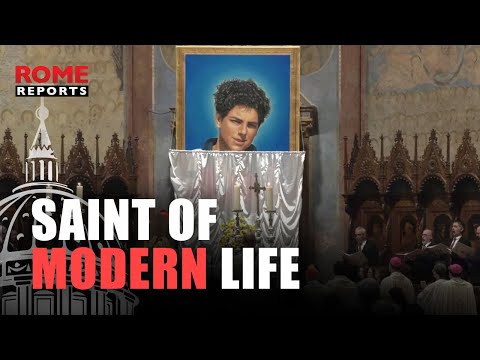
ROME REPORTS (2:40) – Carlo Acutis was often on his PlayStation, liked Nutella, and went out with his friends. He spoke about God with the same tone with which he spoke of jeans or sneakers. He was also a computer science prodigy and used his talent to bring the Eucharist to everyone online.
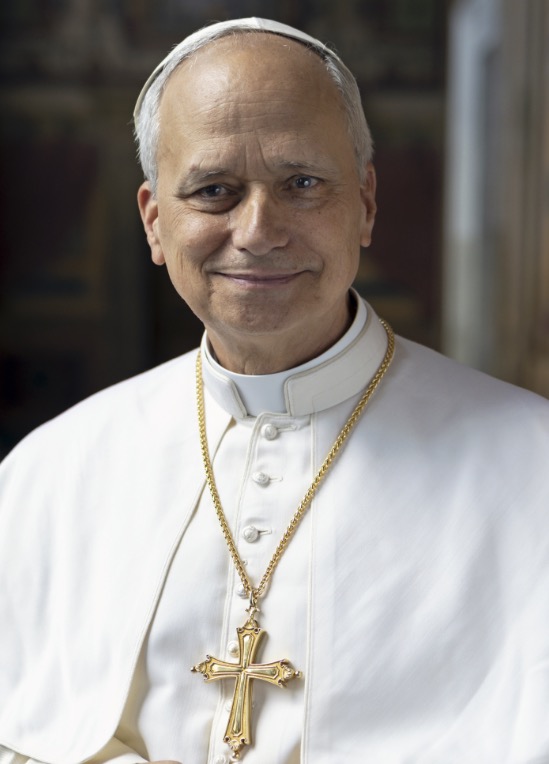
Pope Leo XIV


Wisdom
23rd Sunday of Year C
Wisdom is the key word in the three readings. The human ability to think, so weak and uncertain, is countered by the wisdom with which God teaches people in order for them to achieve salvation (First Reading). Human prudence induces a person to be calculating, to see whether he has the sufficient means to build a tower or enough soldiers to attack the enemy. Such prudence is necessary, but to be a disciple of Jesus Christ, wisdom from God is also required (Gospel). Isn’t Saint Paul’s Letter to Philemon the highest expression of human prudence and wisdom, learned in the school of faith?
© 2000 Dicastery for the Clergy A | B | C
VIEW 2025 NOTES – Father Gaetano Piccolo (SI)
Following Jesus
8 September 2013 – Saint Peter’s Square
Homily Summary
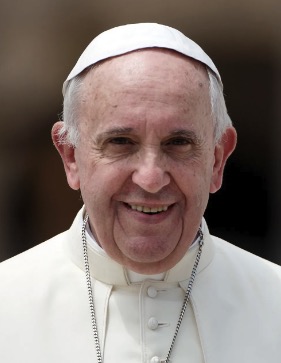
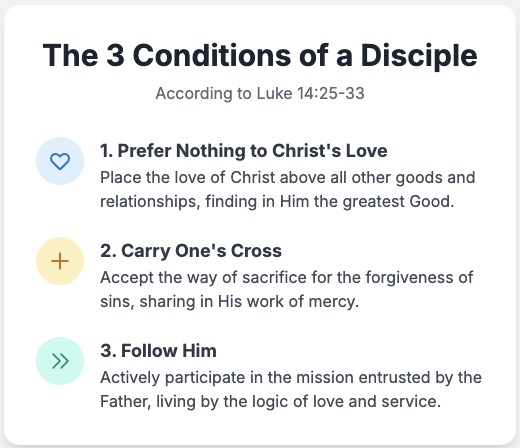
In this homily, Pope Francis reflects on the Gospel of Luke 14:25-33, highlighting the conditions Jesus sets for being his disciples. He emphasizes that following Jesus entails preferring nothing over the love of Christ, carrying one’s cross, and participating in his merciful love and mission of forgiveness.
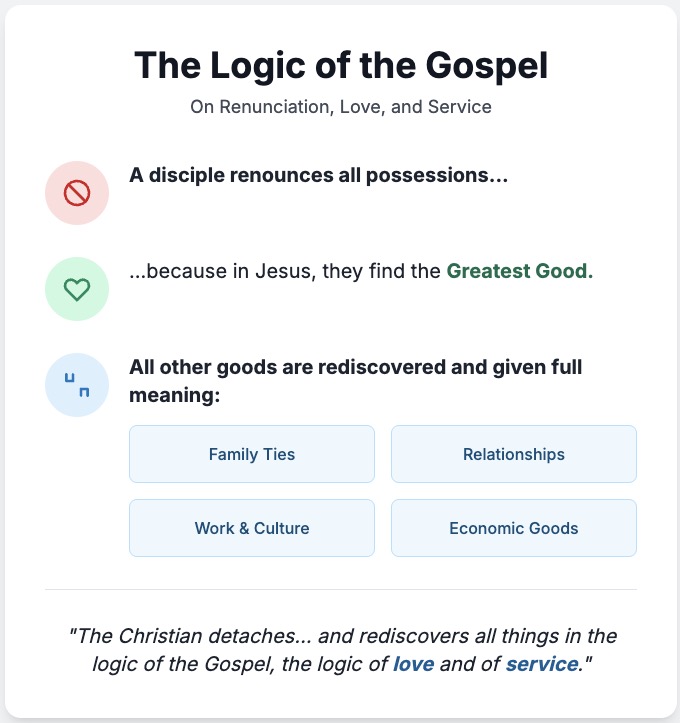
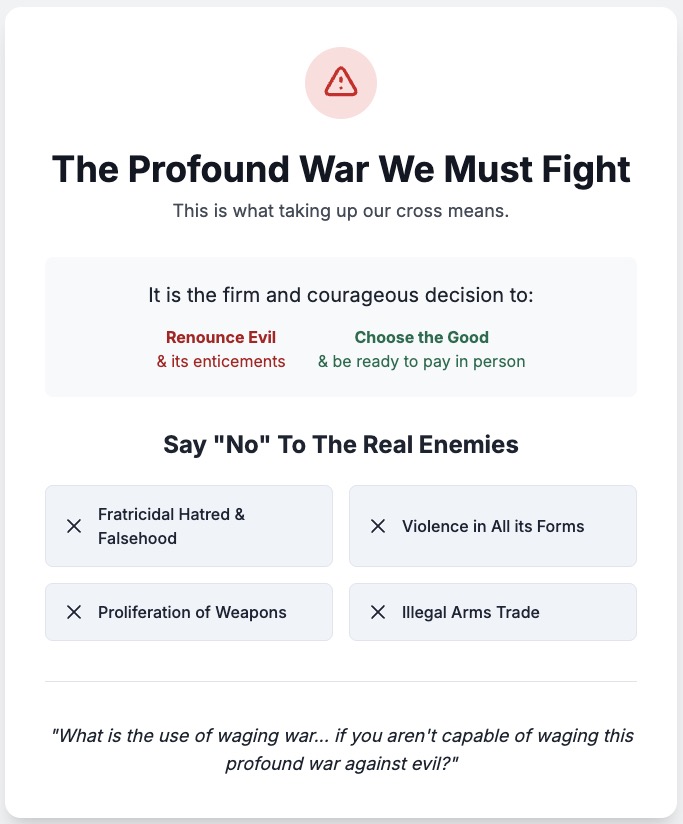
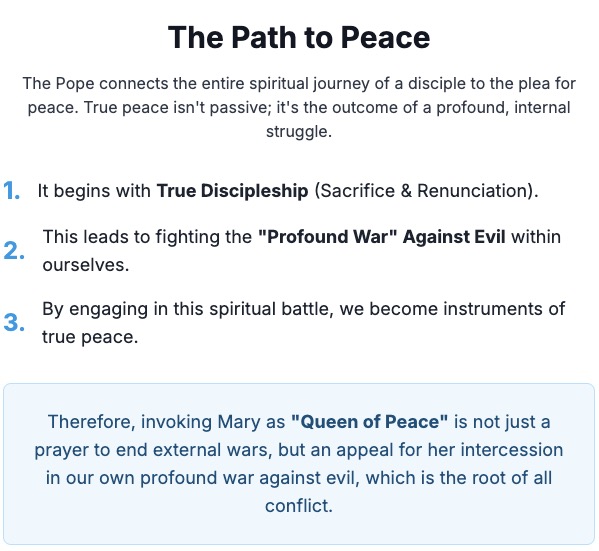
Pope Francis explains that a true disciple of Jesus should detach from worldly possessions and rediscover their meaning through the lens of the Gospel’s logic of love and service. He also asserts that there is a deeper spiritual war against evil that we must all fight, including rejecting hatred, violence, and the proliferation of weapons.
Finally, Pope Francis commemorates the Nativity of the Virgin Mary, encouraging prayers for peace in the world, especially in conflict-ridden areas such as Syria and the Middle East. He concludes by invoking Mary as the Queen of Peace and asking for her intercession.
This discussion guide has been generated by GOOGLE’S AI Gemini 2.5 Flash LLM.
Part I: The Conditions of True Discipleship
The first part of the homily focuses on what it means to follow Jesus, contrasting it with a “triumphal procession.”
- Pope Francis begins by stating the three conditions for being a disciple of Jesus. What are they?
- The Pope says Jesus “did not want to disappoint anyone” by hiding the reality of what awaited him: “the Way of the Cross.” In your own words, what is the difference between being part of a “triumphal procession” and “sharing his merciful love”?
- The homily states that Jesus’s work is “precisely, a work of mercy, a work of forgiveness and of love!” How does the Pope say we are to be involved “in the mission that the Father entrusted to him”?
Part II: Renunciation and the Logic of Love
This section explores the call to detach from possessions to find the “greatest Good.”
- What does the homily say a disciple renounces? According to the text, why do they do this?
- Pope Francis speaks of rediscovering all things “in the logic of the Gospel, the logic of love and of service.” What do you think this “logic” means? How might it change the way a person views family, work, or money?
- Discuss the concept of Jesus as the “greatest Good” in which every other good receives its “full value and meaning.” Can you think of an example of how this might work in practice?
Part III: The ‘Profound War’ Against Evil
Using the parable of the king, the Pope pivots to a discussion about the most important battle we must fight.
- Pope Francis clarifies that Jesus’s parable is not about literal war. What is the “more profound war that we must all fight”?
- The Pope asks a powerful question: “What is the use of waging war, so many wars, if you aren’t capable of waging this profound war against evil?” What do you believe is the connection between this internal, “profound war” and the external wars and violence in the world?
- The homily lists several specific things we must say “no” to in this war. What are they?
- The Pope raises a “doubt” that some wars might be “a commercial war for selling weapons in illegal trade.” Why do you think he calls this out so specifically as an “enemy to fight”?
Part IV: Mary, Dawn and Queen of Peace
The homily concludes by turning to the Virgin Mary.
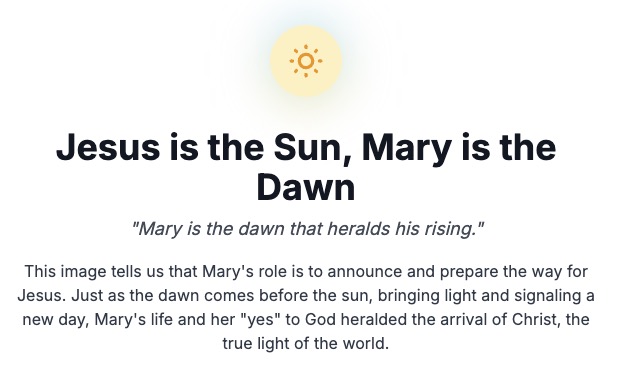
- Pope Francis uses the image of Jesus as the “sun” and Mary as the “dawn.” What does this beautiful image tell us about Mary’s role?
- How does the Pope connect the entire homily—on discipleship, sacrifice, and the war against evil—to his final prayer for peace and his invocation of Mary as “Queen of Peace”?
The Lowest Place,
The Highest Good
29 August 2010 | Castel Gandolfo
Homily Summary
On his last journey to Jerusalem someone asked him: “Lord, will those who are saved be few?” And Jesus answered: “Strive to enter by the narrow door; for many, I tell you, will seek to enter and will not be able” (Lk 13: 23-24). What does this “narrow door” mean? Why do many not succeed in entering through it? Is it a way reserved for only a few of the chosen?
Indeed, at close examination this way of reasoning by those who were conversing with Jesus is always timely: the temptation to interpret religious practice as a source of privileges or security is always lying in wait. Actually, Christ’s message goes in exactly the opposite direction: everyone may enter life, but the door is “narrow” for all. We are not privileged. The passage to eternal life is open to all, but it is “narrow” because it is demanding: it requires commitment, self-denial and the mortification of one’s selfishness.

This discussion guide has been generated by GOOGLE’S AI Gemini 2.5 Flash LLM.
The homily begins by explaining that Jesus’s parable is not about etiquette, but a crucial lesson on humility. “Every one who exalts himself will be humbled, and he who humbles himself will be exalted.”
- The text says Jesus is not giving a “lesson on etiquette.” What is the difference between being polite to make a good social impression and the spiritual virtue of humility?
- The “lowest place” is presented as representing the “condition of humanity degraded by sin.” How does thinking about sin in this way (as a low place we have put ourselves in) change your understanding of the need for a savior?
Christ’s Radical Humility
The guide connects our “lowest place” to Christ’s own act of self-emptying. “Christ himself ‘took the lowest place in the world—the Cross—and by this radical humility he redeemed us.'”
- How does viewing the Cross as the “lowest place in the world” help you understand the depth of Christ’s love and humility?
- The text says that Christ “constantly comes to our aid” from this place of humility. How have you experienced God’s help not as a display of overwhelming power, but as a gentle, humble presence in your life?
The Call to Gratuitous Giving
Jesus suggests inviting to our table not those who can repay us, but the poor and marginalized, “so that the gift may be given freely.”
- Why is it so natural for us to practice “transactional” hospitality (inviting those who can invite us back) rather than “gratuitous” hospitality?
- The true reward for selfless giving will be given by God. Why is it often difficult to trust in this future, divine reward rather than seeking an immediate, earthly one?
- Who are the “poor, kinsmen, or rich neighbours” in your life? Who are the “poorer and more marginalized people” that Jesus is calling you to invite?
The Model of the Saints
The homily points to Christ and St. Louis IX as models of humility, especially in the face of temptation and prosperity.
- We are called to learn from Christ “patience in temptation, meekness in offence, obedience to God in suffering.” Which of these three is most challenging for you to practice?
- St. Louis IX wrote to his son, “If the Lord grant you some prosperity… take care not to become worse by boasting.” How can success and prosperity sometimes become spiritual dangers that lead us into conflict with God?
- What is one practical way you can “humbly thank” God for a specific gift or success in your life without letting it lead to pride?
Doctrinal
Messages
Human knowledge, and the wisdom of faith.
The DICASTERY NOTES contrast human knowledge, our continuous pursuit of truth, with the divinely inspired, limitless, and eternal wisdom of faith. While knowledge may inflate egos, wisdom cultivates humility. Both can coexist and complement each other, but wisdom transcends earthly understanding. The Gospel emphasizes the wisdom of the Cross, while the second reading showcases wisdom through love and compassion.
The wisdom of faith in action
The readings emphasize the importance of embracing wisdom and faith in following Christ. This involves choosing Christ over worldly attachments, accepting the cross, and relinquishing possessions. St. Paul’s letter to Philemon exemplifies faith-based wisdom by advocating for Onesimus, showcasing faith’s transformative power in relationships. Integrating this wisdom into daily life nurtures love, unity, and reconciliation within our relationships and communities.
Pastoral Suggestions
Wisdom within everybody’s reach
Wisdom, especially faith-based wisdom, is within everyone’s reach, as God has made it accessible. While scientific knowledge may be limited for some, wisdom is not bound by intellectual abilities and can be cultivated by individuals from diverse backgrounds. Despite personal choices and external factors that may hinder its acceptance, nurturing wisdom within families and faith communities from an early age allows it to take root in our lives and shape our actions positively.
Knowledge against wisdom?
God has made wisdom, particularly faith-based wisdom, universally attainable. While some may have limited scientific knowledge, wisdom transcends intellectual boundaries, enabling individuals from various backgrounds to nurture it. Despite obstacles that may hinder its acceptance, fostering wisdom within families and faith communities from a young age ensures it becomes deeply ingrained in our lives and influences our actions in positive ways.
- HUMAN KNOWLEDGE AND THE WISDOM OF FAITH
- THE WISDOM OF FAITH IN ACTION
- WISDOM WITHIN EVERYBODY’S REACH
- Knowledge AGAINST WISDOM?
Doctrinal Messages

Click to Enlarge
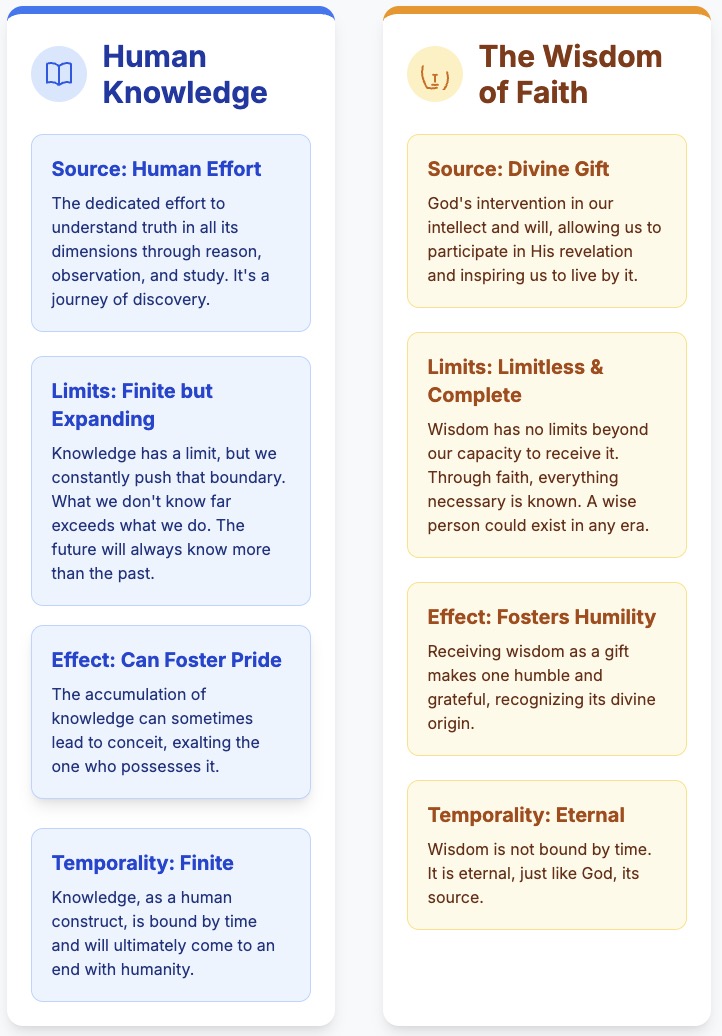
Human knowledge, and the wisdom of faith. The first expression refers to the effort made by human beings to know the truth in all of its dimensions, and live by it. The second expression refers to God’s intervention in our intellect, which makes us participate in his revelation, and in our will, to induce us to live according to that revelation. There are many differences between the two types of knowledge, but also many things in common and such a great complementarity!
Knowledge is characterized by the fact that it has a limit. But we are constantly pushing the limit further, and the process goes on. This is why in principle, the human beings of the present have more knowledge than those of the past, and those of the future will have more knowledge than those of the present.
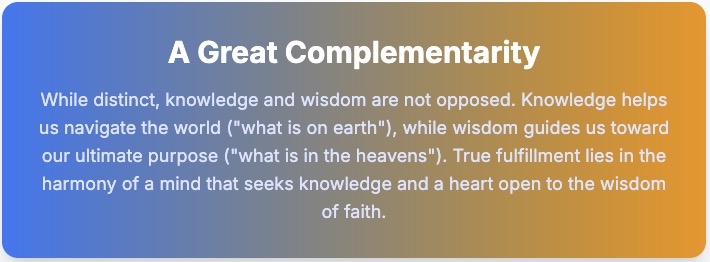
In the Book of Wisdom we read, “It is hard enough for us to work out what is on earth, laborious to know what lies within our reach; who, then, can discover what is in the heavens?”
Wisdom has no limits, except for the ones set by our poor intelligence. This explains why there may have been wiser human beings in the past than in the present, or there may be human beings who are less wise in the future. Since it is a gift of God, wisdom is not subject by time. “And who could ever have known your will, had you not given Wisdom and sent your holy Spirit from above?” (First Reading).
Knowledge is a human effort and wisdom is a divine gift. At the level of knowledge, what we don’t know far exceeds what we do know, whereas by faith everything necessary is known. Knowledge often makes conceited and exalts those who possess it, whereas wisdom makes those who receive it humble and grateful. Knowledge will come to an end with human beings, while wisdom is eternal, like God, its source. In the Gospel we find a beautiful formulation of the wisdom of the Cross, and in the second reading the wisdom of charity with a slave who, lo and behold, has become a brother!
Click to Enlarge
© 2000 Dicastery for the Clergy A | B | C
Infographics on this page have been added by THE WORD THIS WEEK using AI generative tools (i.e. Chart.js and Tailwind CSS). They may be copied for personal use or for any non-profit ministry. Graphics may not be sold or used for personal financial gain.
Human Knowledge and the Wisdom of Faith: A Catechetical Reflection
The Dicastery notes draw a clear and insightful distinction between the knowledge acquired through human effort and the wisdom that comes as a divine gift. This framework is foundational to Catholic thought, which sees the human person as created with a natural capacity for truth, yet ultimately requiring God’s grace and revelation for complete fulfillment.
1. Human Knowledge: The Natural Quest for God
The Dicastery Notes: “The first expression refers to the effort made by human beings to know the truth in all of its dimensions, and live by it… Knowledge is characterized by the fact that it has a limit… Knowledge often makes conceited and exalts those who possess it…”
The Catechism affirms that the “desire for God is written in the human heart” (CCC 27). This innate desire fuels our quest for truth. The Church teaches that humanity can, through the natural light of reason, come to know God with certainty from the created world (CCC 36, 50). This is the realm of “human knowledge” you describe—the noble, yet limited, effort of the human intellect.
However, the Catechism also acknowledges the precise limits you mention. Quoting the First Vatican Council, it states that while reason can know God, it encounters many difficulties. Furthermore, the truths about God “completely transcend the order of sensible things” and require self-surrender and self-abnegation, which is difficult for a person wounded by sin (CCC 37). This struggle is echoed in your quote from the Book of Wisdom: “It is hard enough for us to work out what is on earth… who, then, can discover what is in the heavens?”
The danger that “knowledge often makes conceited” is a recognition of the temptation to pride, where the human person relies solely on their own intellectual power, forgetting the source of all truth.
2. The Wisdom of Faith: A Divine Gift
The Dicastery Notes: “The second expression refers to God’s intervention in our intellect… Since it is a gift of God, wisdom is not subject by time… wisdom makes those who receive it humble and grateful… by faith everything necessary is known.”
This aligns perfectly with the Church’s teaching on Divine Revelation. God does not leave us to our own limited efforts. “It pleased God, in his goodness and wisdom, to reveal himself” (CCC 50). This revelation is not something we earn; it is a gift.
- Faith as a Grace: The Catechism is explicit that “faith is a supernatural gift from God” (CCC 153). It is an act of grace that moves the heart and opens the mind, allowing us to assent to divine truth. This directly corresponds to your description of wisdom as a “divine gift.”
- The Role of the Holy Spirit: Your quote, “And who could ever have known your will, had you not given Wisdom and sent your holy Spirit from above?” is central. The Catechism teaches that we cannot believe “except by the grace and the interior help of the Holy Spirit” (CCC 154). Wisdom is specifically named as one of the seven gifts of the Holy Spirit, which “complete and perfect the virtues of those who receive them” (CCC 1831).
- Humility and Gratitude: Faith requires “a humble submission of intellect and will to God who reveals” (CCC 143). This is the antidote to the pride of knowledge. We become grateful recipients, not proud possessors.
- Completeness and Eternity: While human knowledge is partial, faith gives us access to all that is necessary for salvation. It is “the guarantee of things hoped for” and the “beginning of eternal life” (CCC 163). It is, as you say, “eternal, like God, its source.”
3. Complementarity: Faith and Reason
The Dicastery Notes: “There are many differences between the two types of knowledge, but also many things in common and such a great complementarity!”
This is a cornerstone of Catholic intellectual tradition. The Catechism dedicates a section to the relationship between faith and reason, stating that there can be no real discrepancy between them. Both originate from God, who can neither deceive nor be deceived.
“Consequently, methodical research in all branches of knowledge, provided it is carried out in a truly scientific manner and does not override moral laws, can never conflict with the faith, because the things of the world and the things of faith derive from the same God.” (CCC 159)
Human knowledge (science, philosophy) helps us understand the “how” of the natural world, while the wisdom of faith reveals the “why”—our ultimate purpose and relationship with God. They are two wings on which the human spirit rises to the contemplation of truth.
4. The Wisdom of the Cross and Charity
The Dicastery Notes: “In the Gospel we find a beautiful formulation of the wisdom of the Cross, and in the second reading the wisdom of charity with a slave who, lo and behold, has become a brother!”
- The Wisdom of the Cross: This is the ultimate example of divine wisdom appearing as foolishness to the world. The Catechism, referencing St. Paul, notes that God’s plan of salvation through the death of His Son was a “stumbling block to Jews and folly to Gentiles, but to those who are called… Christ the power of God and the wisdom of God” (CCC 599, quoting 1 Cor 1:23-24). This wisdom subverts worldly logic, revealing strength in sacrifice and life in death.
- The Wisdom of Charity: The example of the slave becoming a brother (from the Letter to Philemon) is a profound illustration of how faith transforms human relationships. This wisdom of charity, which is the “new commandment” (CCC 1823), elevates human dignity beyond social status or law. It reflects the truth that all are created in the image of God and are brothers and sisters in Christ. This is a truth grasped not by worldly knowledge, but by the wisdom of a heart transformed by God’s love.
Opening Prayer & Introduction (5 minutes)
Begin with a prayer, perhaps asking the Holy Spirit for the gift of Wisdom.
Icebreaker Question: Share a time when you learned something that changed your perspective on the world. Was this through study, experience, or a moment of insight?
Part 1: The Nature of Human Knowledge (15 minutes)
Read aloud the section “1. Human Knowledge: The Natural Quest for God” from the text.
Discussion Questions:
- The text says the “desire for God is written in the human heart” (CCC 27) and that this fuels our quest for truth. Where do you see this “quest for truth” in the world around you today (e.g., in science, art, philosophy)?
- The reflection notes that knowledge has limits and can sometimes make people “conceited.” Can you think of examples (from your own life or from society) where knowledge without humility has been a problem?
- How does the quote, “It is hard enough for us to work out what is on earth… who, then, can discover what is in the heavens?” resonate with your own experience of trying to understand complex or profound truths?
Part 2: The Wisdom of Faith as a Gift (15 minutes)
Read aloud the section “2. The Wisdom of Faith: A Divine Gift.”
Discussion Questions:
- The text describes wisdom as a “divine gift” and an “intervention” from God, not something we earn. How does this idea challenge the modern emphasis on self-reliance and achievement?
- Wisdom is described as timeless, meaning a person from the past could be wiser than someone today. Who is a historical figure (or a person in your own life) you consider truly wise? What qualities did they possess?
- How does faith make a person “humble and grateful” rather than proud? Share an experience where your faith helped you see a situation with more humility.
Part 3: Two Wings: Faith and Reason (10 minutes)
Read aloud the section “3. Complementarity: Faith and Reason.”
Discussion Questions:
- The Catechism teaches there is no conflict between faith and reason, as both come from God. Why do you think they are often pitted against each other in modern culture?
- The text uses the beautiful image of faith and reason as “two wings on which the human spirit rises.” How can you use both “wings” in your daily life to better understand the world and your purpose in it?
Part 4: Wisdom in Action (15 minutes)
Read aloud the section “4. The Wisdom of the Cross and Charity.”
Discussion Questions:
- The “Wisdom of the Cross” suggests that strength is found in sacrifice and life is found in death. This is contrary to worldly logic. How can we live out this “foolish” wisdom in our families, workplaces, or communities?
- The example of the slave becoming a brother shows how the “wisdom of charity” transforms relationships. How does our faith call us to see and treat others differently than the world does? Can you share an example?
Closing Reflection (5 minutes)
Final Question: After this discussion, what is one practical step you can take this week to seek divine wisdom more intentionally, rather than just accumulating worldly knowledge?
Doctrinal Messages


Click to Enlarge
The wisdom of faith in action. Following Christ is not an original choice on the part of the human being, but a choice made in response to a call that comes from God. Precisely for this reason, one cannot follow Christ on the basis of pure human reasoning. Rather, the following of Christ requires the wisdom of faith.


The Gospel text places a number of choices before us that will have to be enlightened by God’s wisdom.
- There is the choice to follow Christ, even at the expense of the closest of family ties, when they enter into conflict with the call.
- There is the option for the cross, following Christ’s footsteps in his journey towards Jerusalem.
- There is the renouncing of all possessions, all wealth, all power, in order to radically live the sequela Christi.
Don’t all of these choices require the profound wisdom of faith?
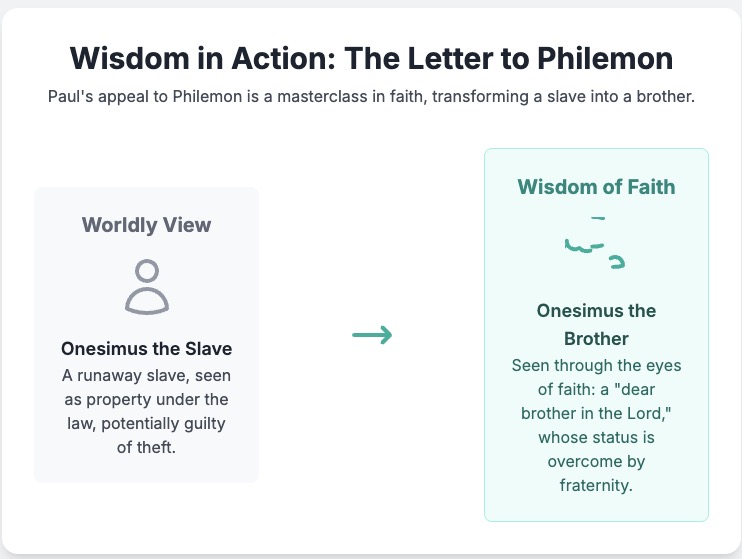
In the second reading, in his Letter to Philemon Paul gives us a wonderful example of this divine wisdom. Paul’s wisdom manifests itself in the admirable delicacy, discretion and tact with which he makes his request about Onesimus (a slave of Philemon’s, who had fled from his master possibly due to a theft, whom Paul had converted and baptized, and whom he sent back to Philemon to be received as a brother). Paul exhorts Philemon, a believer, to wisdom: he calls on Philemon to see in Onesimus a “child” of Paul’s heart; to see in Onesimus not a slave (although he would continue to be one), but a dear brother in the Lord. According to this wisdom, how can Philemon not welcome Onesimus back home? Onesimus’ condition as a slave is completely overcome by the fraternity that springs from faith.

Click to Enlarge
© 2000 Dicastery for the Clergy A | B | C
Infographics on this page have been added by THE WORD THIS WEEK using AI generative tools (i.e. Chart.js and Tailwind CSS). They may be copied for personal use or for any non-profit ministry. Graphics may not be sold or used for personal financial gain.
The Divine Initiative of Faith
Your notes rightly state that following Christ is a response to a call from God, not a choice originating from “pure human reasoning.” This directly aligns with the Catechism’s teaching on faith as a grace and a divine initiative.
- Faith as a Grace: The Catechism teaches that faith is a supernatural gift from God. “Before this faith can be exercised, man must have the grace of God to move and assist him; he must have the interior helps of the Holy Spirit, who moves the heart and converts it to God, who opens the eyes of the mind and ‘makes it easy for all to accept and believe the truth'” (CCC 153). Your note about faith not being based on “pure human reasoning” is echoed here; it is the Holy Spirit, not logic alone, that opens our hearts to belief.
- God Calls First: The idea of a “choice made in response to a call” is central to the concept of vocation. The Catechism affirms, “God calls man first…For God has created man to live in communion with him” (CCC 27). Our entire life of faith is a response to this initial, loving call from God. This is why following Christ requires the “wisdom of faith”—a wisdom that comes from God, not from ourselves.
The Radical Demands of Discipleship
The specific choices the DICASTERY NOTES mention—family, the cross, and possessions—are classic themes of Christian discipleship that the Catechism addresses as necessary costs of following Christ.
- Christ, Family, and the Kingdom: Jesus’ call to follow him can sometimes create conflict with our closest human relationships. The Catechism acknowledges this difficult teaching: “Jesus asks for a radical choice: to gain all, one must lose all. ‘He who loves father or mother more than me is not worthy of me…’ (Mt 10:37). He will be ‘hated by all for my name’s sake’ (Mt 10:22)” (CCC 544, 1618). This isn’t a rejection of family, but a reordering of loves, placing God and the coming of His Kingdom as the ultimate priority.
- The Option for the Cross: Embracing the cross is central to Christian life. The Catechism is clear: “The way of perfection passes by way of the Cross. There is no holiness without renunciation and spiritual battle” (CCC 2015). Following Christ means uniting our own sufferings to His, which is a profound act of faith that human reasoning often finds incomprehensible. Jesus “calls his disciples to ‘take up their cross and follow him’ (Mt 16:24), for ‘Christ also suffered for you, leaving you an example, so that you should follow in his steps'” (CCC 618).
- Renouncing Possessions: The call to renounce wealth and power is a call to freedom and dependence on God. The Catechism highlights Jesus’s teaching on this: “‘You cannot serve God and mammon’ (Mt 6:24). The precept of detachment from riches is obligatory for entrance into the Kingdom of heaven” (CCC 2544). This radical detachment is not about despising creation, but about freeing the heart from attachment to worldly things so it can be completely available for God and neighbor.
Faith in Action: The Case of Philemon and Onesimus
The example of Paul’s letter to Philemon is a perfect illustration of how the “wisdom of faith” transforms social relationships.
- The Dignity of the Person and Fraternity: Paul’s appeal for Philemon to receive Onesimus “no longer as a slave…but as a beloved brother” (Philem 1:16) is a powerful application of Christian teaching. The Catechism, reflecting on this, teaches that the Gospel brings about a new fraternity that transcends social distinctions. “The seventh commandment forbids…treating human beings as merchandise” (CCC 2414). While the Church did not immediately overturn the entire social structure of the Roman Empire, the “Good News of Christ” began to transform mentalities.
- Charity and the Social Order: Paul’s wisdom is the wisdom of charity, which is the “soul of the apostolate” (CCC 826). He doesn’t issue a command but makes a gentle, loving appeal to Philemon’s faith. This reflects the Church’s social teaching, which aims to inspire a “civilization of love” (CCC 1889). By seeing Onesimus as a “child” of Paul’s heart and a “brother in the Lord,” Philemon is called to see with the eyes of faith. This new relationship, rooted in baptism, makes the master-slave dynamic secondary to their shared identity as children of God. The Catechism notes that baptismal grace creates a “real equality” among believers (CCC 1263), which is precisely the wisdom Paul is asking Philemon to embrace.
In essence, the DICASTERY NOTES capture the journey of Christian discipleship: it begins with a call from God, is accepted in faith, leads to radical life choices, and ultimately transforms how we see and relate to others, creating a new fraternity in Christ.
The Wisdom of Faith in Action
Objective: To explore the nature of faith as a response to God’s call, understand the radical choices it requires, and see how this faith transforms our relationships and worldview, using the Letter to Philemon as a prime example.
Opening Prayer: Come, Holy Spirit, fill the hearts of your faithful and kindle in them the fire of your love. Send forth your Spirit and they shall be created, and you shall renew the face of the earth. O God, who by the light of the Holy Spirit did instruct the hearts of the faithful, grant that by the same Holy Spirit we may be truly wise and ever enjoy His consolations, Through Christ Our Lord. Amen.
Part 1: The Call of Faith – A Divine Initiative
Read Aloud: “Following Christ is not an original choice on the part of the human being, but a choice made in response to a call that comes from God. Precisely for this reason, one cannot follow Christ on the basis of pure human reasoning. Rather, the following of Christ requires the wisdom of faith.”
Catechism Connection:
- CCC 153: Faith is a grace, a supernatural gift from God. To believe, we need the “interior helps of the Holy Spirit, who moves the heart and converts it to God, who opens the eyes of the mind.”
- CCC 27: God calls man first. Our life of faith is a response to His loving initiative.
Discussion Questions:
- Can you recall a time in your life when you felt a “nudge” or a “call” from God that didn’t necessarily make logical sense at the time? How did you respond?
- How does the idea that faith is a response rather than an original choice change how you view your own spiritual journey?
- In what areas of your life is it most difficult to trust the “wisdom of faith” over “pure human reasoning”?
Part 2: The Radical Choices of Discipleship
Read Aloud: “There is the choice to follow Christ, even at the expense of the closest of family ties… There is the option for the cross… There is the renouncing of all possessions, all wealth, all power…”
Catechism Connection:
- On Christ & Family (CCC 1618): Following Jesus sometimes requires a painful reordering of our loves, placing him even before family (Mt 10:37).
- On the Cross (CCC 618, 2015): The path to holiness passes through the Cross. We are called to take up our own cross and follow in Christ’s footsteps.
- On Possessions (CCC 2544): Detachment from riches is “obligatory for entrance into the Kingdom of heaven.” We cannot serve both God and mammon.
Discussion Questions:
- How do we balance love for our family with the call to put Christ first? What does this look like in practical, everyday life?
- What does “taking up your cross” mean to you personally today? What are the modern-day “crosses” that disciples are asked to bear?
- The call to renounce possessions is radical. How can we live this call faithfully in a consumer-driven society?
Part 3: Faith in Action – The Wisdom of Philemon
Read Aloud: “Paul exhorts Philemon… to see in Onesimus not a slave… but a dear brother in the Lord. According to this wisdom, how can Philemon not welcome Onesimus back home? Onesimus’ condition as a slave is completely overcome by the fraternity that springs from faith.”
Catechism Connection:
- Human Dignity (CCC 2414): The seventh commandment forbids treating human beings as merchandise. Faith reveals the inherent dignity of every person.
- Fraternity in Christ (CCC 1263): Baptismal grace creates a “real equality” among all believers. Our shared identity in Christ transcends all social, economic, and racial distinctions.
Discussion Questions:
- Looking at the infographic, contrast the “Worldly View” of Onesimus with the “Wisdom of Faith” view. What is the fundamental difference?
- Paul doesn’t command Philemon but appeals to his faith and love. Why is this approach an example of “divine wisdom”?
- Who are the “Onesimuses” in our society today—people who are viewed through a worldly lens of status, usefulness, or past mistakes? How does the wisdom of faith call us to see them differently?
- How can our parish or community better live out the “fraternity that springs from faith,” overcoming worldly divisions?
Closing Reflection: The wisdom of faith is not a set of abstract ideas, but a new way of seeing—seeing God’s call, seeing the value of sacrifice, and seeing the true dignity of every person. Where is God inviting you to see with the eyes of faith this week?
Closing Prayer: Lord Jesus, grant us the wisdom of faith to hear your call and the courage to follow it. Help us to embrace our crosses, to hold loosely to worldly things, and to see every person not through the eyes of the world, but as a beloved brother or sister in you. Amen.
Pastoral Suggestions
Click to Enlarge
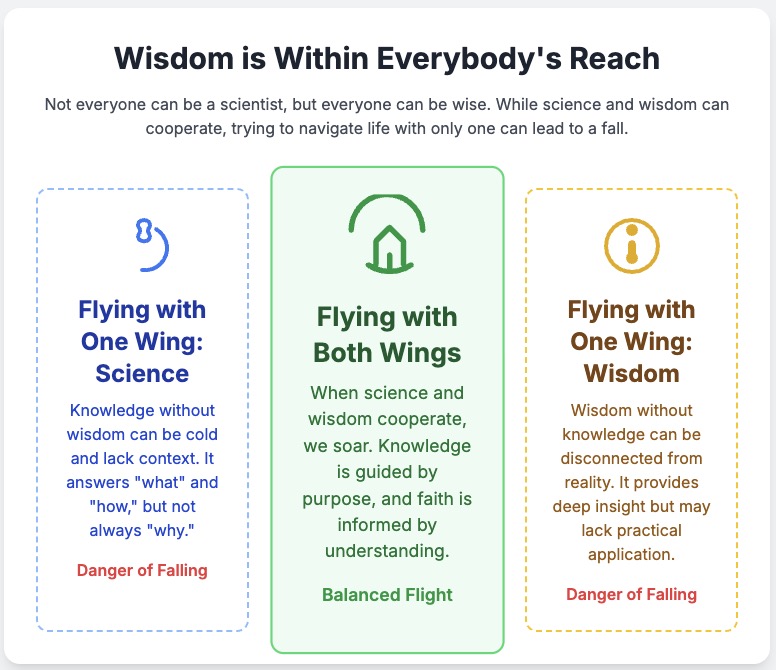
Wisdom within everybody’s reach. One thing is certain: not everyone has what it takes to be a “scientist” , a man of great knowledge. But we are all able to be wise, and to receive the wisdom of faith. Another thing is sure, and apparently paradoxical: there are scientists who lack wisdom and people who know nothing about science but are great in terms of their wisdom. Science and wisdom don’t necessarily have to be in opposition with one another; rather, it would be good for them to cooperate and be of mutual service. If only we could all fly with these two wings across the space of our existence! But it is not always so, and there are many instances in which we try to fly with only one wing, with the real danger of falling to the ground.

Click to Enlarge
Anyway, what should fill us with admiration and gratitude is that God has wanted to place wisdom within everybody’s reach. Has he even placed wisdom within the reach of children? And what about those who are ignorant, or have a very low IQ? What about the disabled? Historical reality throughout the centuries, and especially in the 20th century, has shown very clearly that these brothers and sisters of ours are often endowed with an enviable divine wisdom.
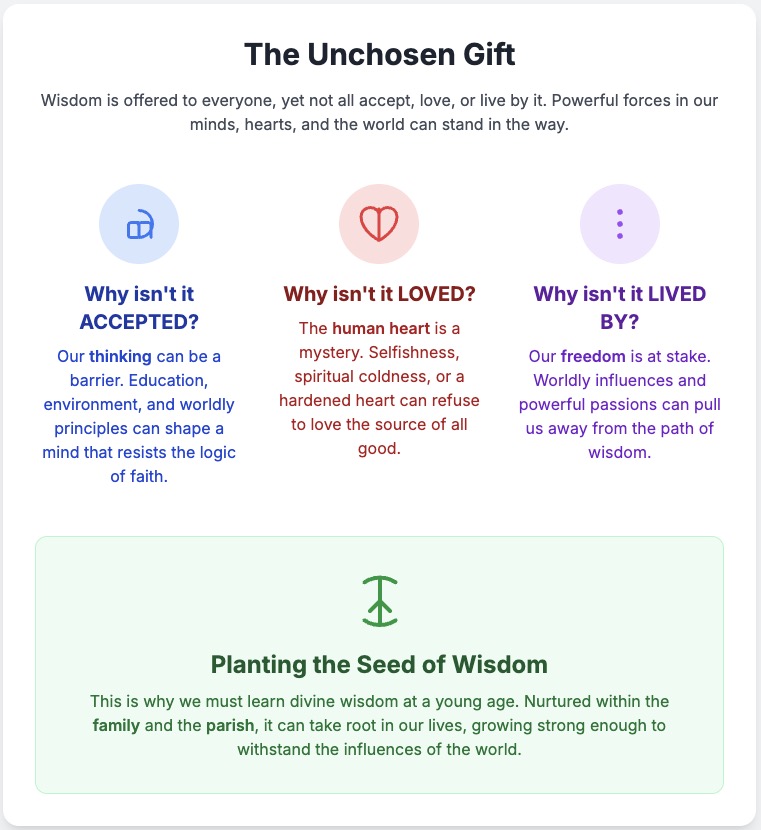
While we assert the universal reachability of wisdom, we cannot fail to note that not everyone accepts it, loves it or lives by it. Why doesn’t everyone accept it? The ways of human thinking are unsearchable! The elements that come into play include education, the environment in which one has grown up and lived, the principles regulating one’s existence… Why doesn’t everyone love it? The human heart is an unfathomable chasm! Perhaps it is because of selfishness, perhaps because of a hardened heart. Perhaps it is because of spiritual coldness or the power of passion… Why doesn’t everyone live by it? Human freedom is at stake here, and so are the influences exercised by the world in which we live. Our passions are extremely powerful and often run wild. And so, we must learn this divine wisdom at a young age, within the family and the parish, so that little by little it takes root in life.
© 2000 Dicastery for the Clergy A | B | C
Infographics on this page have been added by THE WORD THIS WEEK using AI generative tools (i.e. Chart.js and Tailwind CSS). They may be copied for personal use or for any non-profit ministry. Graphics may not be sold or used for personal financial gain.
Faith and Reason: The Two Wings
The DICASTERY NOTES distinguish between the knowledge of a “scientist” and the wisdom of faith, suggesting they should cooperate like “two wings.” This beautifully reflects the Church’s teaching on the relationship between faith and reason.
- No Contradiction: The Catechism teaches that there can be no true conflict between faith and reason because the same God who reveals mysteries is the one who gives us the light of reason. CCC 159 states, “Though faith is above reason, there can never be any real discrepancy between faith and reason. Since the same God who reveals mysteries and infuses faith has bestowed the light of reason on the human mind, God cannot deny himself, nor can truth ever contradict truth.” Your analogy of trying to fly with one wing illustrates the danger of separating them.
God’s Wisdom for the Humble
The DICASTERY NOTES rightly notes that God’s wisdom is within everyone’s reach, especially those the world might overlook—children, the ignorant, and the disabled. This highlights the theme of God’s preferential love for the poor and lowly.
- Revelation to the “Childlike”: Jesus himself praises the Father for this reality: “I thank thee, Father, Lord of heaven and earth, that thou hast hidden these things from the wise and understanding and revealed them to babes” (Mt 11:25). The Catechism affirms this, stating that the poor and humble are the first to receive the Good News. CCC 544 explains that “the ‘little ones'” are the privileged recipients of the Kingdom and that to receive it, one must accept it like a child.
- The Dignity of All: The emphasis on the wisdom found in the disabled affirms the Church’s teaching on the inviolable dignity of every human person, regardless of their physical or mental abilities (CCC 2274). Their lives often bear a powerful witness to dependence on God, which is the very heart of wisdom.
Barriers to Wisdom: Mind, Heart, and Will
The DICASTERY NOTES astutely identify three areas where the gift of wisdom can be rejected. These correspond directly to classic Catholic teachings on sin and freedom.
- Why isn’t it ACCEPTED? (The Mind): You point to education, environment, and worldly principles. The Catechism acknowledges that our capacity to know God can be obscured by our own attitudes. CCC 37 notes that the human mind can be “darkened by the senses and imagination and warped by disordered desires.” Worldly thinking can create a barrier to accepting a truth that is beyond pure reason.
- Why isn’t it LOVED? (The Heart): You mention selfishness and a “hardened heart.” This is the essence of sin. CCC 1849 defines sin as “a failure in genuine love for God and neighbor.” A hardened heart, closed by pride and selfishness, cannot love the gift of divine wisdom because it refuses to love the Giver.
- Why isn’t it LIVED BY? (Freedom and Passions): You correctly identify human freedom and the power of passions. The Catechism teaches that our freedom makes us responsible for our actions (CCC 1731). However, this freedom is wounded. The passions (emotions and desires) are a natural part of being human, but due to sin, they can “run wild,” as you say, and pull us away from the good (CCC 1768). Living by wisdom requires ordering our passions through virtue and grace.
Nurturing Wisdom: The Family and the Parish
The DICASTERY NOTES’ conclusion is a cornerstone of Catholic teaching: wisdom must be nurtured from a young age in the family and the parish.
- The Domestic Church: The Catechism calls the family the “ecclesia domestica” or “domestic church.” It is the first and most important school of faith. CCC 2223 states, “Parents have the first responsibility for the education of their children. They bear witness to this responsibility first by creating a home where tenderness, forgiveness, respect, fidelity, and disinterested service are the rule… Parents have a grave responsibility to give good example to their children.”
- The Role of the Parish: The parish supports the family in this mission. It is “the Eucharistic community and the heart of the liturgical life of Christian families; it is a privileged place for the catechesis of children and parents” (CCC 2226). It is where the seed of wisdom planted in the home is watered and allowed to grow in the wider community of faith.
Wisdom Within Everybody’s Reach
Objective: To explore the difference between knowledge and wisdom, to celebrate that God’s wisdom is available to all, and to understand the barriers that prevent us from accepting this gift and how to overcome them.
Opening Prayer: Lord, you promised to give wisdom to all who ask. Open our minds and hearts today. Help us to see the difference between the world’s knowledge and your divine wisdom. Grant us the humility to receive this gift and the courage to live by it. We ask this through Christ our Lord. Amen.
Part 1: Flying with Two Wings
Read Aloud: “One thing is certain: not everyone has what it takes to be a ‘scientist’… But we are all able to be wise… Science and wisdom don’t necessarily have to be in opposition… it would be good for them to cooperate… If only we could all fly with these two wings across the space of our existence!”
Discussion Questions:
- What is the difference between being knowledgeable (a “scientist”) and being wise? Can you think of an example of someone who is one but not the other?
- The text uses the beautiful image of flying with the “two wings” of science and wisdom. What does it look like in practical, everyday life to use both?
- In what areas of your life (or in our society) do you see people trying to “fly with only one wing”? What are the consequences?
Part 2: A Gift for Everyone
Read Aloud: “What should fill us with admiration and gratitude is that God has wanted to place wisdom within everybody’s reach. Has he even placed wisdom within the reach of children? And what about those who are ignorant… the disabled? Historical reality… has shown very clearly that these brothers and sisters of ours are often endowed with an enviable divine wisdom.”
Discussion Questions:
- Why do you think people the world might overlook (children, the simple, the disabled) are often the ones most open to divine wisdom?
- Can you share an experience where you learned a profound lesson from someone you might not have expected to be a “teacher”?
- How does this truth challenge our society’s ideas about who is valuable or intelligent?
Part 3: The Unchosen Gift
(Refer to the infographic “The Unchosen Gift” with ID 1724853033106)
Read Aloud: “While we assert the universal reachability of wisdom, we cannot fail to note that not everyone accepts it, loves it or lives by it.”
Discussion Questions (using the infographic sections):
- Why isn’t it ACCEPTED? (The Mind): The infographic points to our thinking, education, and environment. What are some “worldly principles” today that make it difficult for people to accept the wisdom of faith?
- Why isn’t it LOVED? (The Heart): The text mentions selfishness and a hardened heart. How does a focus on self prevent us from loving a gift that comes from God?
- Why isn’t it LIVED BY? (Freedom): We are free to choose, but worldly influences and our passions are powerful. What is one passion or worldly influence that you find most challenging to your commitment to live wisely?
Part 4: Planting the Seed of Wisdom
Read Aloud: “And so, we must learn this divine wisdom at a young age, within the family and the parish, so that little by little it takes root in life.”
Discussion Questions:
- What are some practical ways families can “plant the seed of wisdom” in children, beyond just teaching rules?
- How can our parish be a place where wisdom is not just taught, but actively nurtured and lived out?
- For us as adults, how can we continue to help this seed “take root” in our own lives?
Closing Reflection: Wisdom is not a prize to be won, but a gift to be received. It is offered to us every day. What is one small step you can take this week to be more open to accepting, loving, and living by God’s wisdom?
Closing Prayer: God of all wisdom, thank you for offering us a gift far greater than knowledge. Forgive us for the times our minds have doubted, our hearts have hardened, and our wills have turned away. Help us to create homes and communities where your wisdom can take root and flourish for generations to come. Amen.
Pastoral Suggestions
Click to Enlarge
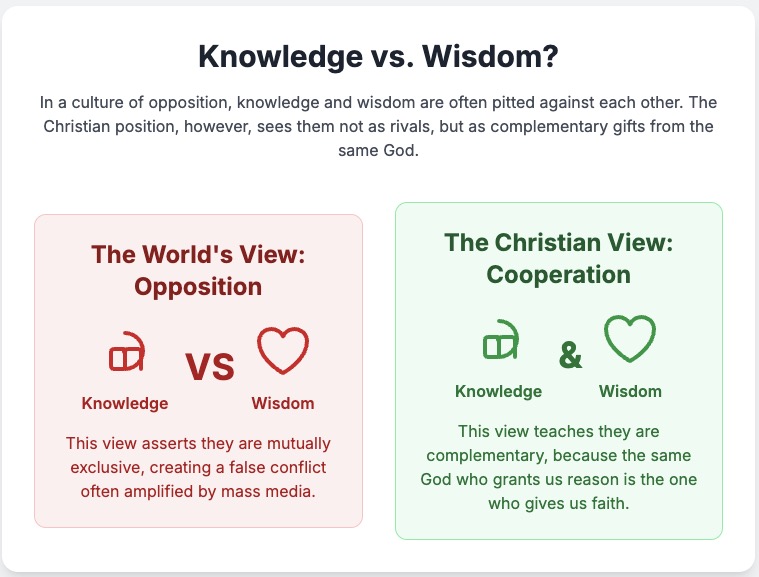
Knowledge against wisdom? In a culture based on contrast and opposition, it would seem correct to answer this question affirmatively. The knowledge of human beings is opposed to the wisdom of God, and the wisdom of God is opposed to the knowledge of human beings. As a result, there can be no possible way of reconciling knowledge and wisdom. This reflects the way of thinking of many of our contemporaries, and is asserted heatedly by the press and the mass media.
However, this is not the Christian position, nor can it be. Christian doctrine teaches us to say, “Knowledge and wisdom.” We do not view the two as being in opposition but as cooperating; the two are not mutually exclusive but complementary. The reason, for us believers, is simple: he who grants us the ability of knowing is the same God who grants us the gift of being wise.
Click to Enlarge
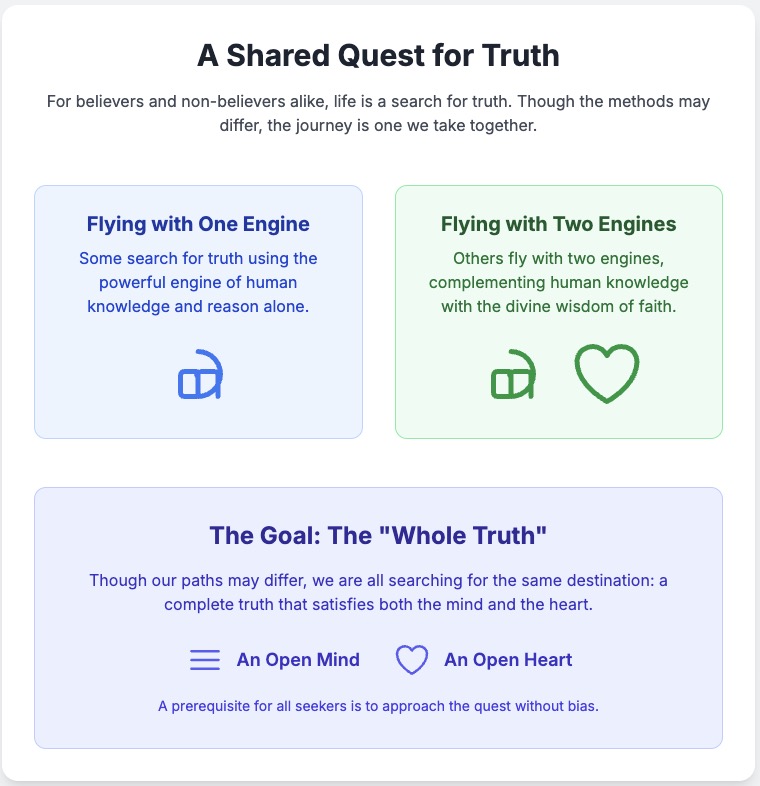
For non-believers, in both cases there is a search for truth, although it may happen in different ways. We are all involved in this quest together: some fly with only one engine, while others fly with two.
Why is it that in this search for truth on the part of both, results are sometimes different? We must all keep searching for the “whole truth,” the truth that will meet the needs of human knowledge and divine wisdom. A prerequisite for both parties is not to have biases of any kind, to have an open mind and an open heart.
© 2000 Dicastery for the Clergy A | B | C
Infographics on this page have been added by THE WORD THIS WEEK using AI generative tools (i.e. Chart.js and Tailwind CSS). They may be copied for personal use or for any non-profit ministry. Graphics may not be sold or used for personal financial gain.
Knowledge and Wisdom: Two Wings from the Same God
The DICASTERY NOTES correctly identify that a common modern viewpoint pits human knowledge against divine wisdom, treating them as irreconcilable opposites. The Christian position, as you state, is one of harmony and cooperation. This is a central theme in Catholic teaching on faith and reason.
The Catechism is unequivocal on this point: “Though faith is above reason, there can never be any real discrepancy between faith and reason. Since the same God who reveals mysteries and infuses faith has bestowed the light of reason on the human mind, God cannot deny himself, nor can truth ever contradict truth” (CCC 159). This paragraph is the foundation of the Christian position you outlined. It affirms your core reason: the same God is the source of both our ability to know (reason/knowledge) and our ability to believe (faith/wisdom). Therefore, they cannot be in opposition.
The Universal Quest for Truth
The idea that believers and non-believers are “all involved in this quest together” speaks to a fundamental teaching about the human person. The Catechism teaches that this search for truth and meaning is written into our very nature.
“The desire for God is written in the human heart, because man is created by God and for God; and God never ceases to draw man to himself” (CCC 27). This desire is universal. It is the engine for the “search for truth” that you mention. Whether one flies with the “one engine” of reason or the “two engines” of reason and faith, the innate drive to seek truth is a shared human experience because we are all created by God.
The “Whole Truth” and the Open Heart
The goal is the “‘whole truth,’ the truth that will meet the needs of human knowledge and divine wisdom.” You also identify the key prerequisite for this search: an open mind and an open heart, free from bias.
The Catechism acknowledges that even though we can know God through reason, it’s not always easy. Our human condition creates obstacles. The faculties of the human mind can be “darkened… and warped by disordered desires” (CCC 37). This is why a moral disposition—an “open heart”—is necessary.
Furthermore, the search for the “whole truth” from a Christian perspective ultimately leads to a person: Jesus Christ. The Catechism teaches that in Christ, God has said everything. “Christ, the Son of God made man, is the Father’s one, perfect, and unsurpassable Word. In him he has said everything; there will be no other word than this one” (CCC 65). He is the “whole truth” who perfectly satisfies both the deepest questions of the human mind (knowledge) and the deepest longings of the human heart (wisdom). The shared quest, therefore, is a journey toward this fullness of truth, which requires humility and openness from all who seek it.
Knowledge and Wisdom: A Shared Quest
Objective: To contrast the worldly view of knowledge vs. wisdom with the Christian view of cooperation, and to explore the shared human search for the “whole truth.”
Opening Prayer: God of all truth, you are the source of both the knowledge we can learn and the wisdom we receive in faith. Open our minds to understand and our hearts to receive. Guide our discussion so that we may grow in our shared quest for the “whole truth” that is found in you. Amen.
Part 1: Opposition or Cooperation?
Read Aloud: “In a culture based on contrast and opposition… The knowledge of human beings is opposed to the wisdom of God… However, this is not the Christian position… Christian doctrine teaches us to say, ‘Knowledge and wisdom.’ We do not view the two as being in opposition but as cooperating… he who grants us the ability of knowing is the same God who grants us the gift of being wise.”
Discussion Questions:
- Where do you see the idea of “knowledge vs. wisdom” played out in our culture, the press, or mass media today? Can you think of a specific example?
- Why do you think the idea of a conflict between knowledge (or science) and wisdom (or faith) is so popular?
- How does the Christian view—that the same God gives us both gifts—change your perspective on this supposed conflict?
Part 2: The Shared Quest
Read Aloud: “For non-believers, in both cases there is a search for truth… We are all involved in this quest together: some fly with only one engine, while others fly with two.”
Discussion Questions:
- What are the strengths of “flying with one engine” (human knowledge and reason)? What are its limitations?
- What are the benefits of “flying with two engines” (knowledge and wisdom)? How do the two engines support each other?
- How can we respectfully engage with those who are “flying with one engine” in our shared search for truth? How can we learn from each other?
Part 3: Seeking the “Whole Truth”
Read Aloud: “We must all keep searching for the ‘whole truth,’ the truth that will meet the needs of human knowledge and divine wisdom. A prerequisite for both parties is not to have biases of any kind, to have an open mind and an open heart.”
Discussion Questions:
- What do you think the “whole truth” means? Why does it need to satisfy both the mind (knowledge) and the heart (wisdom)?
- There is a need for an “open mind” and an “open heart.” What is the difference between the two? Why are both essential for finding truth?
- What is one personal bias that might sometimes get in the way of your own search for truth? How can you work to keep your mind and heart more open?
Closing Reflection: The journey toward truth is one we all share. This week, consider one way you can better integrate your “two engines”—using your mind to learn more about your faith, or using the wisdom of your faith to guide your daily knowledge and decisions.
Closing Prayer: Lord, thank you for the gifts of reason and faith. Help us to use them together, so that in our shared quest for truth, we may all be led closer to you, who are the Truth itself. Amen.