August 24, 2025
August 24, 2025


Homily Starters Anecdotes Preaching Illustrations
Homily Starters Anecdotes Preaching Illustrations
- Ordained in 1967
- Started the “Scriptural Homilies” ministry in 2003 while serving as a chaplain
- Applied scientific methodology to homily ministry+ Reached hundreds of priests and Deacons through word-of-mouth, eventually reaching the Vatican Radio website and four other websites
- Distributed weekly homilies to nearly 3000 priests and Deacons via direct email
- His commentary and reflections were posted on the Vatican News website for several years.
Sunday and Daily Homily Resources
- Eight Minute Homily
- Introduction
- Scripture Summaries
- Exegesis
- Life Messages
- Homily Starter Anecdotes
- Jokes of the Week
Fr. Tony’s
Jokes of the
Week
An open-air evangelist, preaching on today’s Gospel text was warning his congregation about the eternal damnation. “On the Day of Judgment,” he said, “there will be weeping and grinding of teeth.” But an old woman in the crowd responded, “Look preacher, I got no teeth!” “Never mind,” said the evangelist, “teeth will be provided.”
Irish solidarity on the “wide way” to hell. The Irish pastor said, “Everyone who wants to go to Heaven stand up!” and the whole church stood up. And he said, “And those who want to go to hell, remain standing!” At the back of the church, old Murphy remained standing. The pastor said, “Murphy, do you want to go to hell?” Murphy said, “No, Father… I just hate to see you go there all by yourself!” (No offence intended to my great Irish friends!).
A little boy once asked his mother if people who told lies went to Heaven. She replied, “Of course not.” “Well,” he said, “it must be awfully lonesome and boring there with only God and George Washington.”
- FEatured HOMILY ANECDOTES
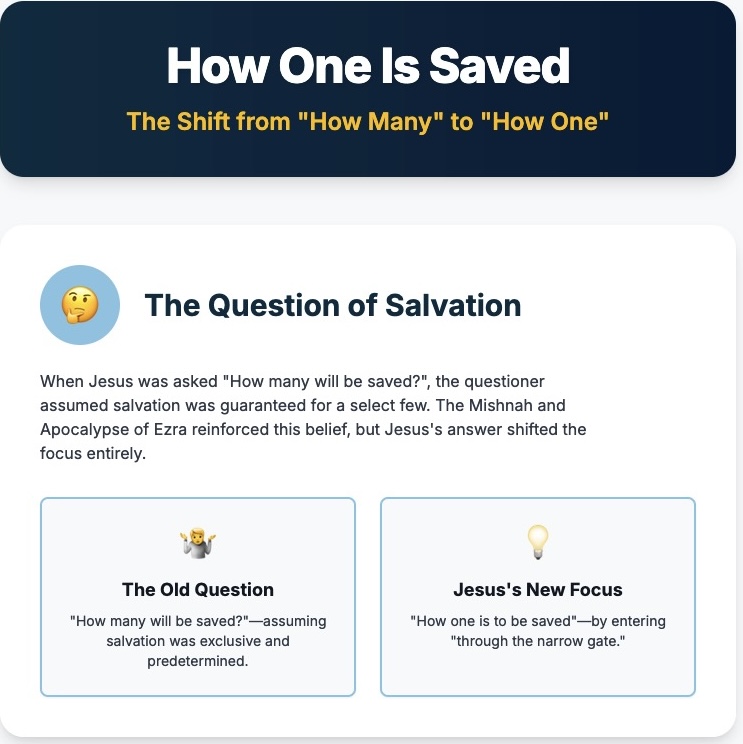
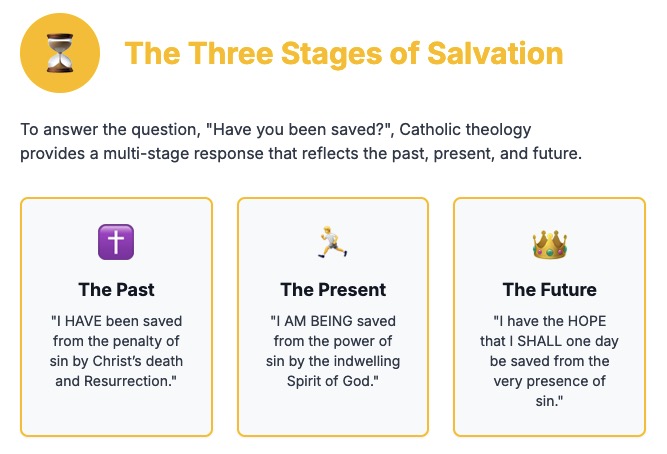
- Being Saved
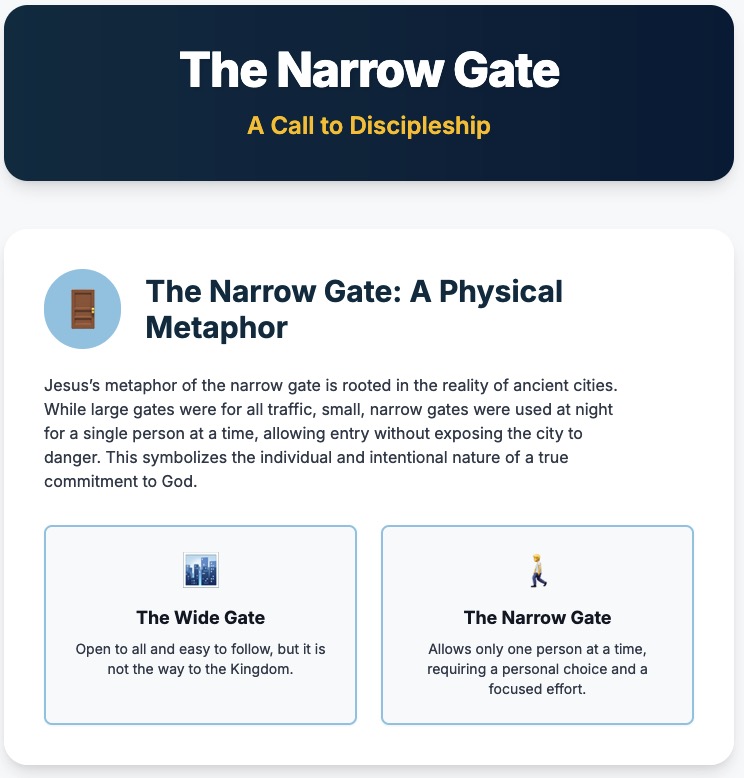
- THE NARROW GATE

2016 SUMMER OLYMPICS (07:00) – Screenshot of every National Olympic Committee from the Summer Olympic Games 2016 Opening Ceremony in Rio de Janeiro (NO SOUND)

Click on the banner to view
The concept of unity in diversity has long been celebrated and cherished by various cultures and societies throughout history. In the context of the Olympics, athletes from diverse backgrounds come together to represent their nations, sharing a common goal and passion for sportsmanship. The opening and closing ceremonies serve as a symbolic representation of unity among nations, as they march together in solidarity, transcending boundaries of culture, language, and political ideologies.
Similarly, the vision of Trito-Isaiah in the first reading presents a powerful image of unity among nations as they embark on a spiritual pilgrimage to Jerusalem. The prophet invites his contemporaries to imagine a world where diverse people come together to worship and glorify God, fostering harmony and peace. This vision emphasizes the importance of shared faith and purpose, urging individuals to look beyond their differences and embrace unity in their spiritual journey.
Both the Olympic ceremonies and Trito-Isaiah’s vision remind us of the beauty and strength that come from embracing our diversity while focusing on our common goals and values.
These examples inspire us to strive for unity in our communities, nations, and global society, working together towards a harmonious and inclusive world.
Robert Frost Poem

“Two roads diverged in a yellow wood,
And, sorry I could not travel both
And be one traveler, long I stood
And looked down one as far as I could
To where it bent in the undergrowth
Then took the other as just as fair….
I shall be telling this with a sigh
Somewhere ages and ages hence:
Two roads diverged in a wood,
and I took the one less traveled by,
And that has made all the difference.”
The poem suggests the speaker will regret having taking “the road less traveled by” on the grounds that he had not come back to take the other; our Gospel agrees that choice of path is vital for salvation, but teaches us that the Way to Salvation, following Jesus faithfully, is narrow and the gate narrow, and so it is “less traveled by,” but will end in everlasting glory!
Charlie Brown’s Narrow Door
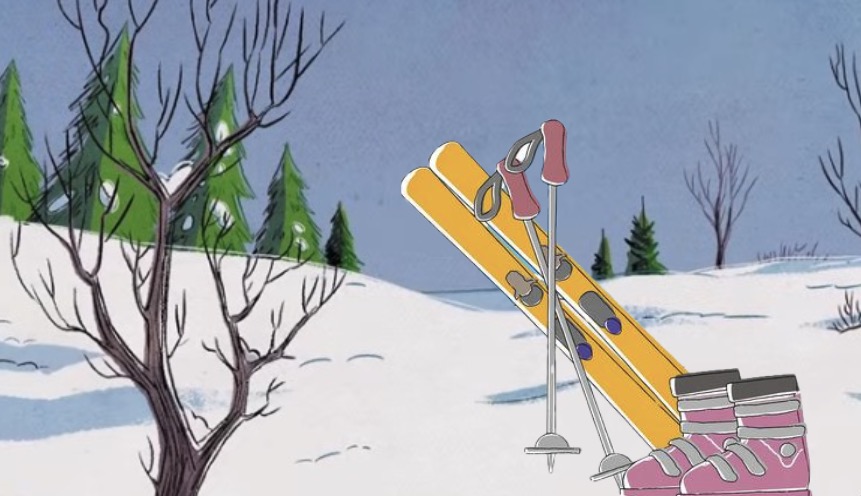
In an interesting cartoon in the Peanuts series, Charlie Brown wakes up one morning and looks out of the window. It has snowed all night but now the sun is shining brightly, so he decides to go out skiing. Donning all the winter gear he can find; he collects his shoes and skis and makes for the door.
Unfortunately, he is unable to get through, because the clothes he has worn make it impossible to pass. He makes one unsuccessful effort after another. Finally, in desperate frustration, he screams at the top of his lungs:
“Will someone please tell me what I have to do to get through this door?”
Charlie Brown’s inability to pass through the door due to his bulky winter gear illustrates how our own attachments and worldly entanglements can hinder our pursuit of salvation. Just as Charlie Brown must shed some layers or find a different approach to get through the door, we too must be willing to let go of the things that impede our spiritual growth and strive for sincere faith in God.
Jesus emphasizes that merely acknowledging or seeking entrance is not enough – genuine effort and commitment are required. Similarly, Charlie Brown cannot simply desire to go skiing; he must actively find a way through the door to reach his goal. Thus, the anecdote encourages us to reflect on our own spiritual journeys, asking ourselves what burdens we must release and what actions we must take in order to “pass through the narrow door” and attain eternal life.
The Lady, or the Tiger?

UPSIDE DOWN DREAMER (14:39) – The famous short story written by Frank R. Stockton in 1882 takes place in an unnamed land from long ago where a king presides over an unusual justice system of his own invention in which an accused subject’s innocence or guilt is determined by “impartial & incorruptible chance”. The conflict of the story centers on the trial of a young man who is brought into a public arena where he must choose one of two identical doors to open without knowing behind which is a beautiful lady and an fierce, hungry tiger
In the Short Story The Lady, or the Tiger? Frank R. Stockton sets before the reader the dilemma of a gladiator who faces his fate in the arena standing before two doors. He must choose which of them to open. Behind one door waits a hungry tiger. Behind the other is a lovely maiden.
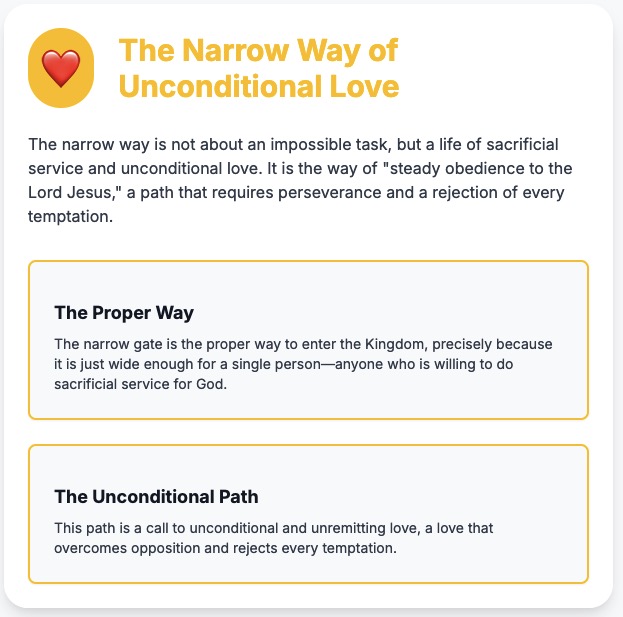
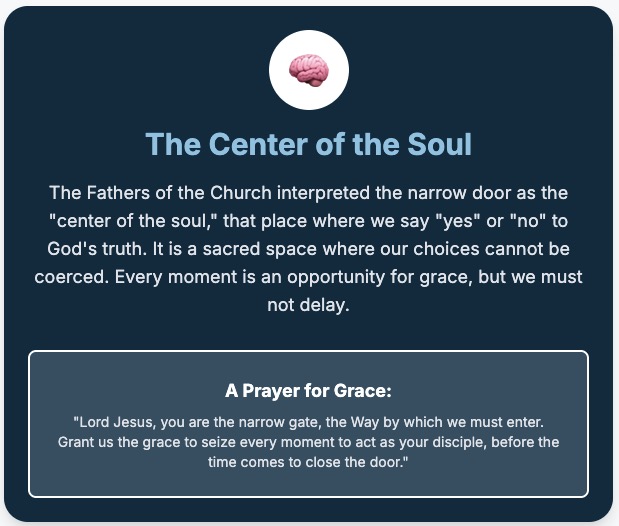
Jesus presents us with a similar dilemma in this parable. Behind one door to the Kingdom waits the tiger of Divine wrath. Behind the other door stands the fair maiden of grace. Jesus, in today’s Gospel, envisions a crowd, clamoring at the entrance to get in. But the door will be closed and locked to them. Grace will not be granted to the multitudes battering the gates of Heaven. What is not available to the masses of seeking pilgrims can be obtained, one person at a time, if each will strive to enter by way of the narrow door.
Narrow Stadium Gates
Have you ever been among the great crowd moving toward the entrance to a big-time football game? At first the entrance seems wide and open to all, but once you begin seriously pushing and struggling to go in, you discover that the gate is not wide at all. The broad gate narrows down to a turnstile where you enter one by one, and the keeper says, “Hold your own ticket, please.”
The football game analogy serves as a powerful reminder that while the path to salvation may initially appear accessible to all, it is ultimately a personal and focused journey. By embracing the challenge of spiritual growth and nurturing our relationship with God, we can ensure our entrance through the narrow gate and secure our place in the eternal kingdom.
Bad Accident
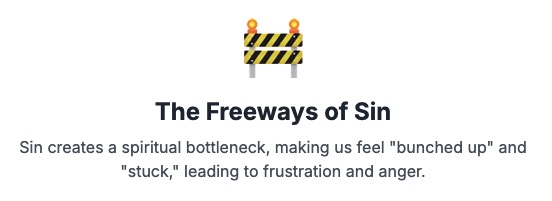
- The metaphor compares sin to a car accident that causes a bottleneck on a freeway. In what ways can sin make you feel "bunched up" or "stuck" in your spiritual life?
- The infographic mentions "overheated tempers." How does the frustration and anger caused by spiritual obstacles mirror the frustration of a traffic jam?
- Can you identify a specific "bottleneck" in your life that is causing you to feel upset or isolated from God?
Jesus, the Open Door
- The metaphor states that only Jesus has to pass through the door. How does this idea change your perspective on your own spiritual struggles?
- The infographic highlights that our task is to "be united with Jesus." What does this mean to you in a practical sense?
- How do the Sacraments of Baptism, Reconciliation, and the Eucharist help you to feel more "united with Jesus"?
The Solution: Unity with Christ
- The infographic contrasts "fussing and fuming" with "unity with Jesus." What is one specific action you can take this week to choose unity with Christ over frustration and anger?
- The essay mentions that our salvation comes from "a simple act of faith and communion with Him, not our own struggle." How does focusing on a relationship with Christ simplify your spiritual life?
- How can a person's life, lived in unity with Christ, become a living sign of hope for others who are still "stuck in traffic"?
Click on the banner to view
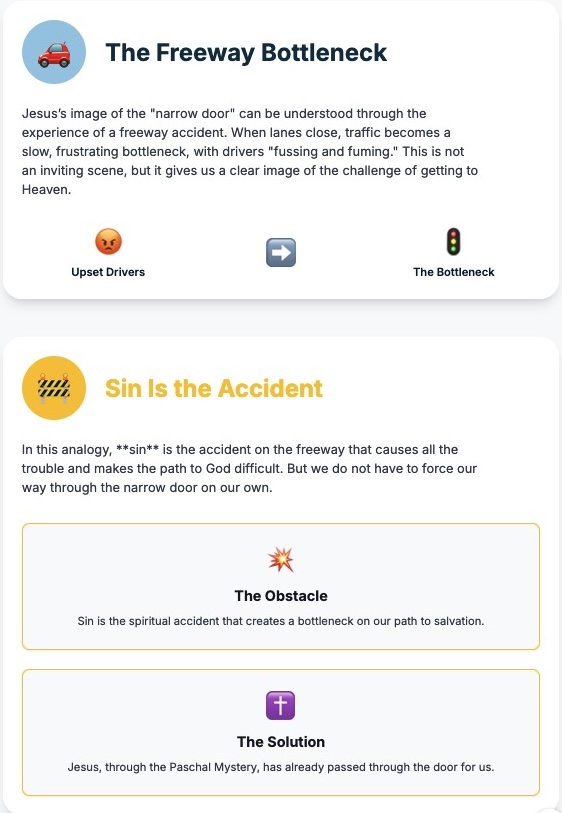
I think of what happens on the freeway or expressway when there is a bad accident. The police close off three lanes; only one single lane is open, which is like the narrow door. All the traffic slows down and at times comes to a complete stop because of the bottleneck. As I think of the narrow door Jesus refers to, I see people all bunched up like cars on the freeway, moving very slowly, trying to squeeze through the one open lane. Drivers are upset. They are fussing and fuming and making obscene gestures at each other. Cars and tempers are overheating. The bottleneck is a pain in the neck.
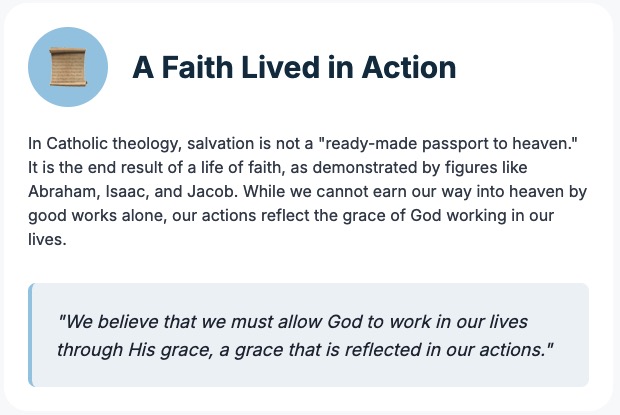
Sin is like the accident on the freeway which causes all the trouble. This is not an inviting scene but is an image of what it means to get to Heaven. I realize that only one person has to get to that door. That person is Jesus Christ. And through that door he has passed in the paschal mystery of the death and resurrection. We do not have to force our way through that door. All we have to do is make sure we are united with Jesus, who is the door to heaven. (Charles Miller C.M. in Sunday Preaching.)
King Arthur and the Knights of the Round Table

In the legend of King Arthur and the Knights of the Round Table, a vision of the Holy Grail comes to Sir Gawain. He vows to set off in search of it the very next day. All the other Knights of the Round Table vow that they, too, will go in search of the sacred chalice. But they will not journey together. As dawn breaks the following morning, each of the knights enters the forest alone, where he perceives it to be the darkest and the thickest. No knight follows a pathway. To do so would be to go where someone else had already searched.
Each knight’s solitary journey into the darkest and thickest part of the forest mirrors the individual spiritual quest we all must undertake to enter the kingdom of God. The decision not to follow a path already taken underscores the importance of seeking a unique and personal relationship with God, rather than relying on the experiences or actions of others.
Just as the knights venture alone into the unknown, trusting that their dedication and determination will lead them to the Holy Grail, so too must we approach our spiritual lives with sincere faith and commitment, unafraid to forge our own path in pursuit of salvation. The legend of the knights serves as a powerful reminder that while the journey may be challenging, the pursuit of God’s kingdom demands our full hearts and a willingness to embark on a journey uniquely our own.
“Pointed” Humor
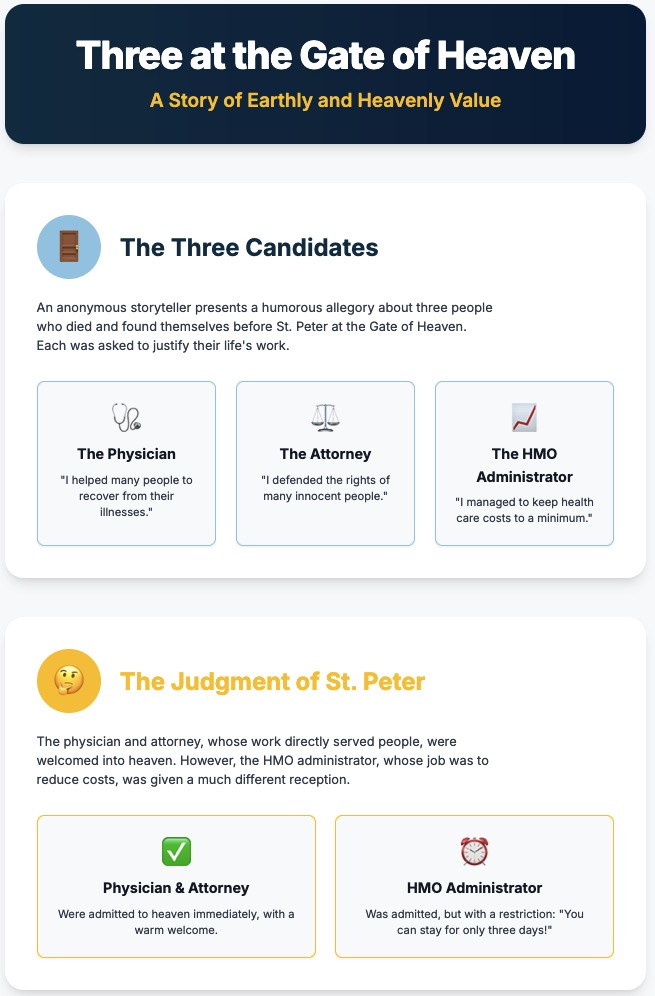
According to an anonymous storyteller, three people who died found themselves together before the Gate of Heaven. When asked by St. Peter what they had done to gain entrance, the first answered, “I was a physician and I helped many people to recover from their illnesses.” Peter admitted the doctor to Heaven.
He then questioned the second person similarly, “Why should I let you in?” In response, she explained, “I was an attorney and I defended the rights of many innocent people.” “Welcome to your eternal home”, said Peter.
Then he put the same question to the third candidate who replied, “I was the administrator of a Health Management Organization and I managed to keep health care costs to a minimum.” After a few moments of thought, Peter decided, “You may come in,” he said, “but you can stay for only three days!”
Pointed humor like this entertains while it teaches. The story of Peter and the three potential residents of eternity illustrates the truth that earthly words and works have eternal consequences. This does not suggest that Heaven can be merited or earned by any human activity. Eternal happiness will forever remain a gracious gift of God. Nevertheless, the manner in which God’s gifts are appropriated in time and space will have a bearing on the enjoyment of those gifts within that reign that perdures beyond time and space. (Patricia Datchuck Sánchez).
Venerable Fulton Sheen




Infographics on this page have been created using content from Fr. Tony’s Homilies and having AI generative tools (i.e. GOOGLE’S AI Gemini 2.5 Flash LLM, Chart.js and Tailwind CSS) do its magic. You are free to use these infographics for any non-profit ministry. Please show your appreciation by sharing a link or giving a shoutout to either to Fr. Tony’s Homilies at https://frtonyshomilies.com/ or The Word This Week at https://thewordthisweek.net/