October 12, 2025


Liturgy Notes Sunday Prep
Liturgy Notes Sunday Prep

Live-Streamed
Masses

The Church
Governments and Salvation of the World
Those Burdened by Adversity
Local Parish / Faith Community
CALENDAR
OCTOBER
- Domestic Violence Awareness Month
- Respect Life Month
- October 5 — Respect Life Sunday
- October 19 — World Mission Sunday
NOVEMBER
- Black Catholic History Month; Native American Heritage Month
- November 1: Solemnity of All Saints. See below.
- November 2: Commemoration of all the Faithful Departed (“All Souls”). See below. Daylight Savings Time Ends.
- November 9: Feast of the Dedication of St. John Lateran (replaces the 32nd Sunday in Ordinary Time)
- November 15: Feast of the Dedication of the Cathedral (a Solemnity at the Cathedral itself)
o The texts for the Anniversary of the Dedication of a Church are used. - November 16: World Day of the Poor (33rd Sunday in Ordinary Time)
- November 23: Solemnity of Our Lord Jesus Christ, King of the Universe
- November 30: First Sunday of Advent (Year A)
SOURCE: Diocese of Davenport

Liturgy Links
- Art & Architecture
- Canon Law
- Centers of Study
- Gateways / Collections
- Liturgical Ministries (including Music)
- Liturgy of the Hours
- Mulitucultural / Intercultural Ministry
- Persons with Disabilities
- Professional Groups
- Publishers (Music, Resources, Ritual Texts)
- Recursos liturgicos en Español
- Sacraments (including RCIA)
- U.S. Church
- Websites of Individual Liturgists
- Youth in Liturgy
Preaching Links
Jubilee of Catechists (September
26–28)
The Jubilee of Catechists is a special event that is part of the larger Jubilee Year 2025, a worldwide celebration in the Catholic Church.
- Pope Francis declared 2025 a Jubilee Year with the theme “Pilgrims of Hope,” and it includes special days dedicated to different groups, including catechists.
- While Catechetical Sunday is a national event, the Jubilee for Catechists is an international event, with official celebrations taking place in Rome.
- The event recognizes and honors catechists from around the world and includes special masses, pilgrimages, and opportunities for spiritual renewal.


28th Sunday of Year C
Washington D.C.

TOctober 13, 2019 Mass with Rev. Msgr. Charles E. Pope as the Celebrant and Homilist. The Mass also features the St. Charles Borromeo Catholic Church Choir (27:21). For liturgists preparing for next Sunday’s mass, this archived video serves as a resource to support planning and coordination.
Contemporary Mass

Church of the Nativity (Baltimore)
October 9th, 2022 Mass from Church of the Nativity in Timonium, Maryland led by Father Michael White. We are in the first week of our current message series called Redirecting Route. Church of the Nativity is a Roman Catholic Church with the vision of growing Disciples amount disconnected Catholics. LEARN MORE
Montreal, Quebec

Jesuit Institute of South Africa

Jesuit Institute of South Africa Archive
Lismore Diocese, Australia

Key Themes of Readings
28th Sunday of Year C

Penitential Rite
28th Sunday of Year C
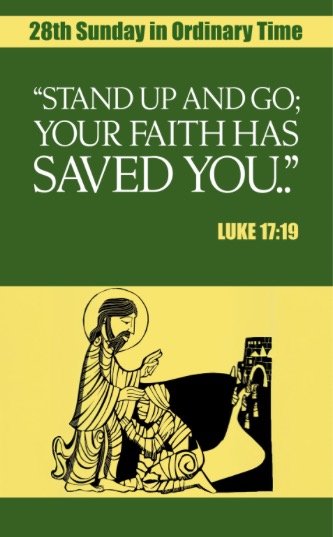
- Lord Jesus, you healed the ten lepers who asked for your pity: Lord, have mercy.
- Christ Jesus, you praised the one who returned to give thanks: Christ, have mercy.
- Lord Jesus, you call all of us to faith and gratitude: Lord, have mercy.
SOURCE: CELEBRATION


Fr. Lawrence Mick
28th Sunday of Year C

1923-2017
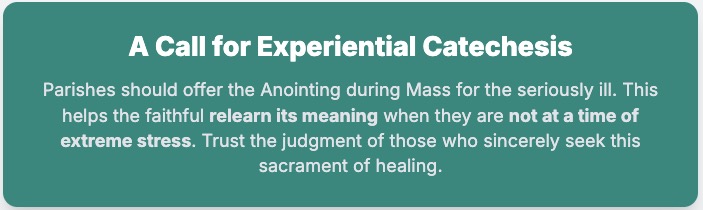
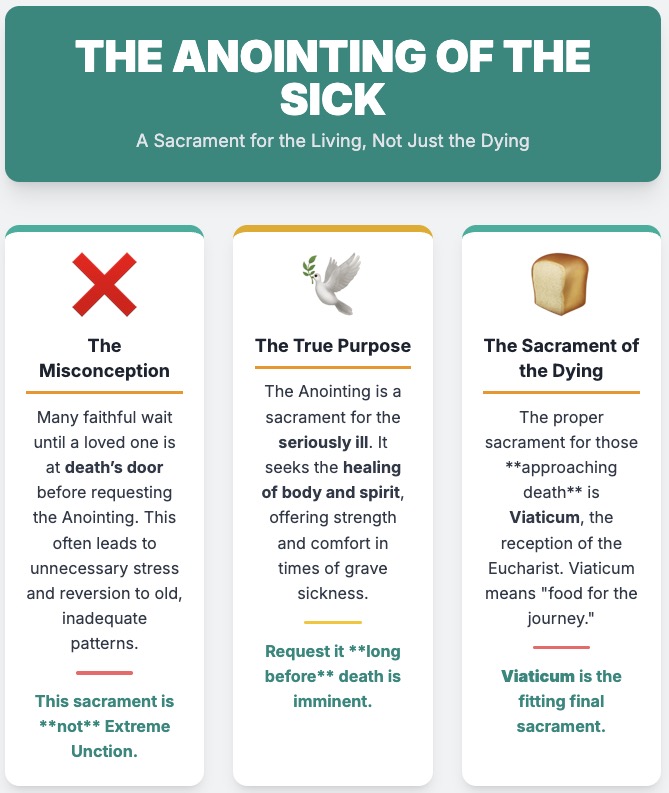
Both the first reading and the Gospel today present stories of lepers being healed, which might make this a good day to focus on care of the sick and the sacrament of anointing. Even though it has been many decades since this sacrament was revised after Vatican II, ignorance of its true purpose is widespread in the Catholic community.
Far too many people still wait until the sick person is at death’s door before requesting the anointing. Some of this may be a reversion to old patterns at a stressful time, but it also indicates a woefully inadequate catechesis of the faithful.
The anointing of the sick is, as its name implies, a sacrament for the sick, not specifically for the dying. There will always be emergency situations when the specter of death arrives unexpectedly, and the anointing may be appropriate at such times. But far more often, the anointing should be celebrated long before a person stands at death’s door. It is a sacrament of the sick, and it seeks healing of body and spirit.