August 3, 2025
August 3, 2025


Intro to Mass Readings for Sunday
Intro to Mass Readings for Sunday
Catholic Infographics and Deep Dive at bottom of page


18th Sunday of Year C
Ecclesiastes 1:2; 2:21-23
Ecc 1:2; 2:21-23
POP-UP Video | NAB w/ Notes | LECTIONARY
Click graphic to view intro to reading

The message of Ecclesiastes emphasizes that life’s true meaning lies in present labor and joy, not in accumulating future possessions, as worldly things are temporary like breath or vapor.
Clipart by Fr. Richard Lonsdale

Vanity and Faith
by Larry Broding

In an exploration of the timeless wisdom of Ecclesiastes, Larry Broding tackles the age-old question: why have faith when life is filled with vanity and futility? This profound reflection invites preachers to delve into the complexities of faith and the human experience, offering invaluable insights for crafting thought-provoking homilies.
As Broding poignantly observes, “When someone turns to God, they do not turn their back on the world; they just look at the world with new eyes and trust in a greater power who is master of the world, who can explain the mysteries of life, who can justify their existence.” This powerful perspective serves as a guiding light, illuminating the path toward discovering true meaning and purpose amidst life’s challenges.
Drawing from Ecclesiastes’ ancient teachings, Broding’s reflection encourages us to confront the temptation of giving up and instead embrace a deeper spiritual quest. In doing so, we are challenged to seek real meaning and ultimate purpose, even in a world that often seems fruitless. Prepare to be inspired and enlightened as you engage with this compelling exploration of faith and vanity.
CATHOLIC BIBLE STUDY VIDEO SERIES
RELATED
Bishop David Walker
Bishop John Dolan
Fr. Geoffrey Plant
Fr. Bryan Kujawa
Matt Zemanek
Keith Nester
Norma Woodcock
Fr. Tim Peters
FIRST READING



- Kieren O’Mahony OSA
- Fr. Conley Bertrand
- Fr. George Corrigan OFM
- Fr. Thibodeau
- St. Charles Borromeo
- Edriann Ezell
- Vince Contreras
- Bp. John P. Dolan
- Fr. Eamon Tobin
- Carmelite Lectio Divina
Featured Commentary

18th Sunday of Year C
TWTW Deep Dive (1st Reading)
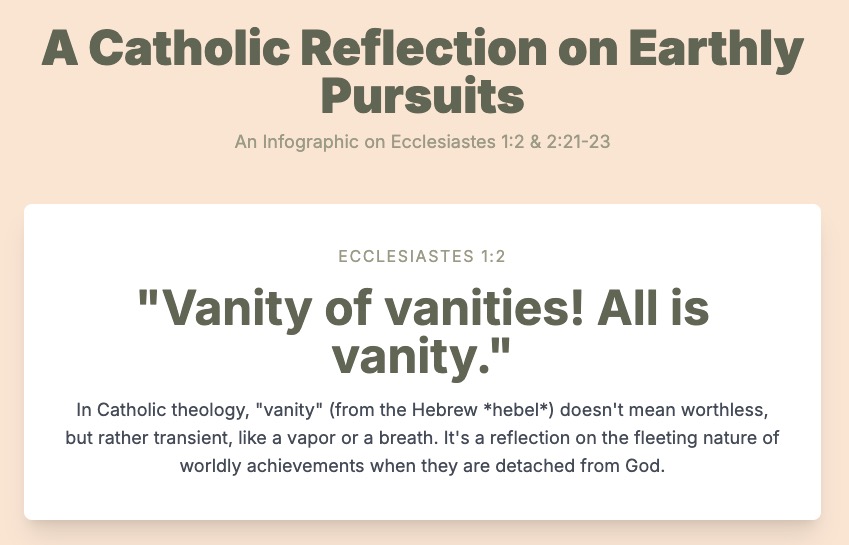
Ecclesiastes 1:2 famously declares, “Vanity of vanities! All is vanity.” This stark pronouncement sets the stage for the book’s exploration of human endeavor, particularly highlighted in Ecclesiastes 2:21-23, where the Preacher laments the futility of laboring only to leave one’s gains to another who did not toil. This passage confronts the inherent emptiness of earthly pursuits when detached from ultimate meaning. For Roman Catholics, this concept of “vanity” (Hebrew: hebel, meaning breath or vapor) is not a condemnation of creation itself, but a profound theological reflection on the transient nature of worldly achievements and possessions when they become ends in themselves, rather than means to God.
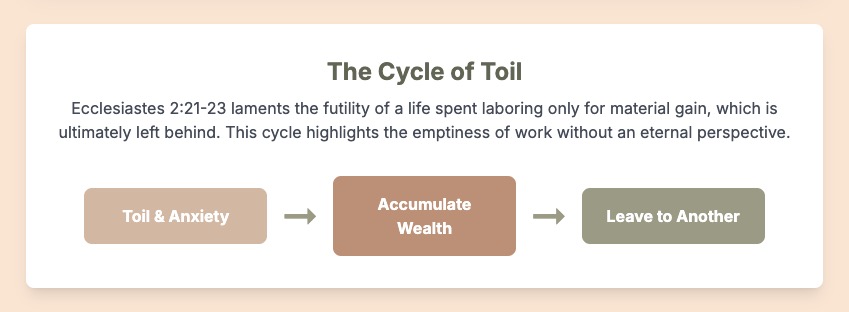
Within Catholic theology, the Preacher’s lament resonates with the Church’s teaching on detachment and the pursuit of eternal goods. The Catechism of the Catholic Church emphasizes that while material creation is good, it is not our ultimate destiny. Our true treasure lies in heaven, and earthly possessions are gifts to be stewarded responsibly for God’s glory and the good of others, not hoarded or worshipped. The fleeting nature of wealth and accomplishment, as described in Ecclesiastes, serves as a powerful reminder of the four last things—death, judgment, heaven, and hell—and the call to live with an eternal perspective, rather than being consumed by temporal anxieties or ambitions.
For contemporary Catholics, Ecclesiastes 1:2; 2:21-23 offers a vital counter-cultural message. In a world often driven by consumerism, career advancement, and the accumulation of status, this passage challenges us to re-evaluate our priorities. A modern application might involve a Catholic choosing to prioritize family time and spiritual growth over relentless work hours for a higher salary, recognizing that true fulfillment isn’t found in material gain. It also encourages generous stewardship, prompting believers to use their resources for charitable causes, like supporting Catholic missions or local food banks, rather than solely for personal indulgence. Ultimately, this scripture calls Catholics to transform mundane work into a spiritual offering, finding purpose not in the outcome’s permanence, but in its dedication to God.
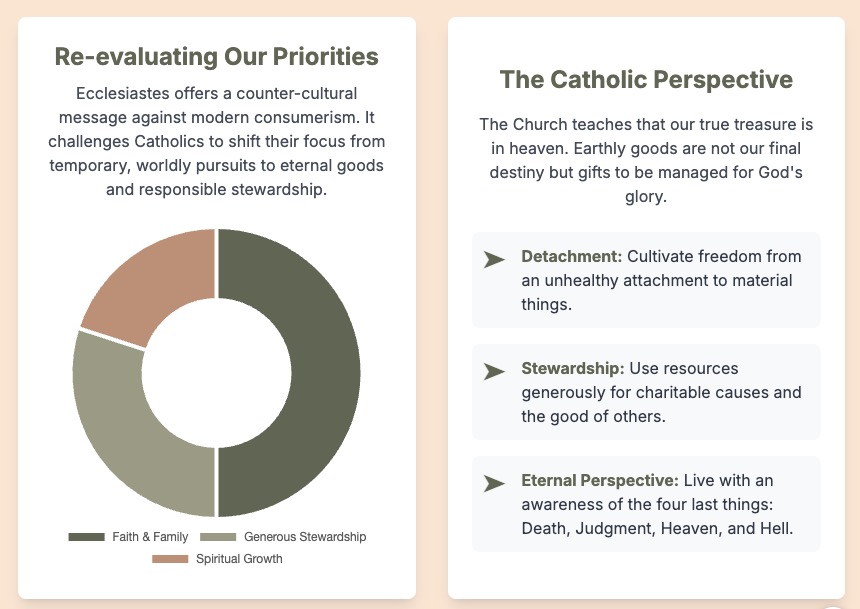
THE WORD THIS WEEK’S Catholic Infographics were created using an AI generative tools (i.e. Chart.js and Tailwind CSS. Content may be copied for personal use or for use in any non-profit ministry. Materials may not be sold or used for personal financial gain.
Catholic Infographics and Deep Dive at bottom of page
18th Sunday of Year C
Colossians 3:1-5, 9-11
Colossians 3:1-5, 9-11
POP-UP Video | NAB w/ Notes | LECTIONARY
Click graphic to view intro to reading

Colossians 3 teaches that baptism unites believers with Christ’s death and resurrection, urging them to turn away from earthly vices and embrace heavenly virtues.
Clipart by Fr. Richard Lonsdale
Life Of A Christian in
a Secular World
by Larry Broding
Larry Broding’s reflection dives into the heart of what it means to be a Christian amidst the complexities of modern society. Drawing from the wisdom of the author of Colossians, Broding explores the delicate balance between life within the faith community and life in the secular world.
As Broding eloquently states, “Being a Christian in a secular world has its own challenges and compromises.” This powerful observation underscores the reality that many Christians face as they navigate their faith journey. By examining the two worlds in which Christians live – the community of faith and the secular realm – Broding highlights the importance of focusing on the divine and embracing our shared humanity in Christ.
With a thoughtful exploration of baptism, the challenges of daily living, and the role of evangelization, Broding’s reflection serves as a guiding light for preachers seeking to create meaningful homilies. Prepare to be inspired as you delve into this engaging examination of faith, identity, and our call to bring others to Christ in a secular world.
CATHOLIC BIBLE STUDY VIDEO SERIES
RELATED
Bishop David Walker
Bishop John Dolan
Fr. Geoffrey Plant
Fr. Bryan Kujawa
Matt Zemanek
Keith Nester
Norma Woodcock
Fr. Tim Peters
SECOND READING

- Kieren O’Mahony OSA
- Fr. Conley Bertrand
- Fr. George Corrigan OFM
- Fr. Thibodeau
- St. Charles Borromeo
- Edriann Ezell
- Vince Contreras
- Bp. John P. Dolan
- Fr. Eamon Tobin
- Carmelite Lectio Divina
Featured Commentary
18th Sunday of Year C
TWTW Deep Dive (2nd Reading)
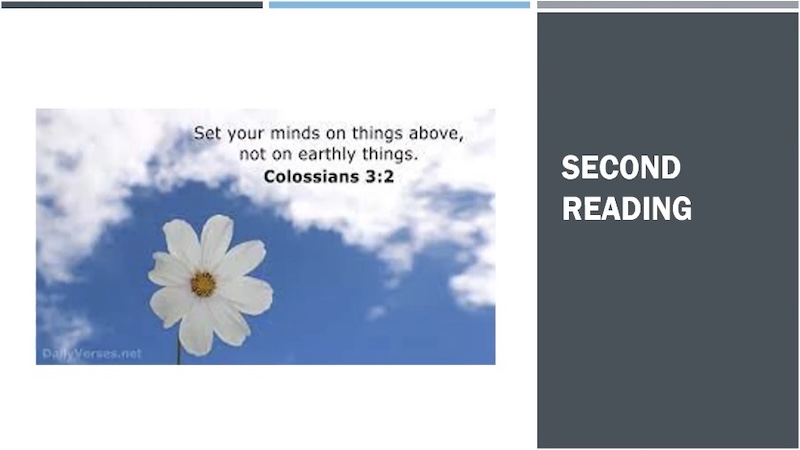
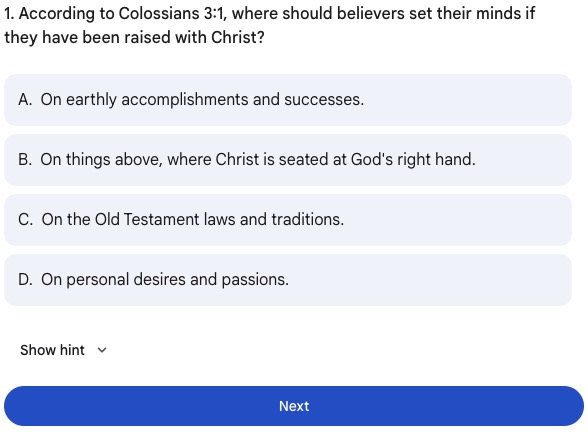
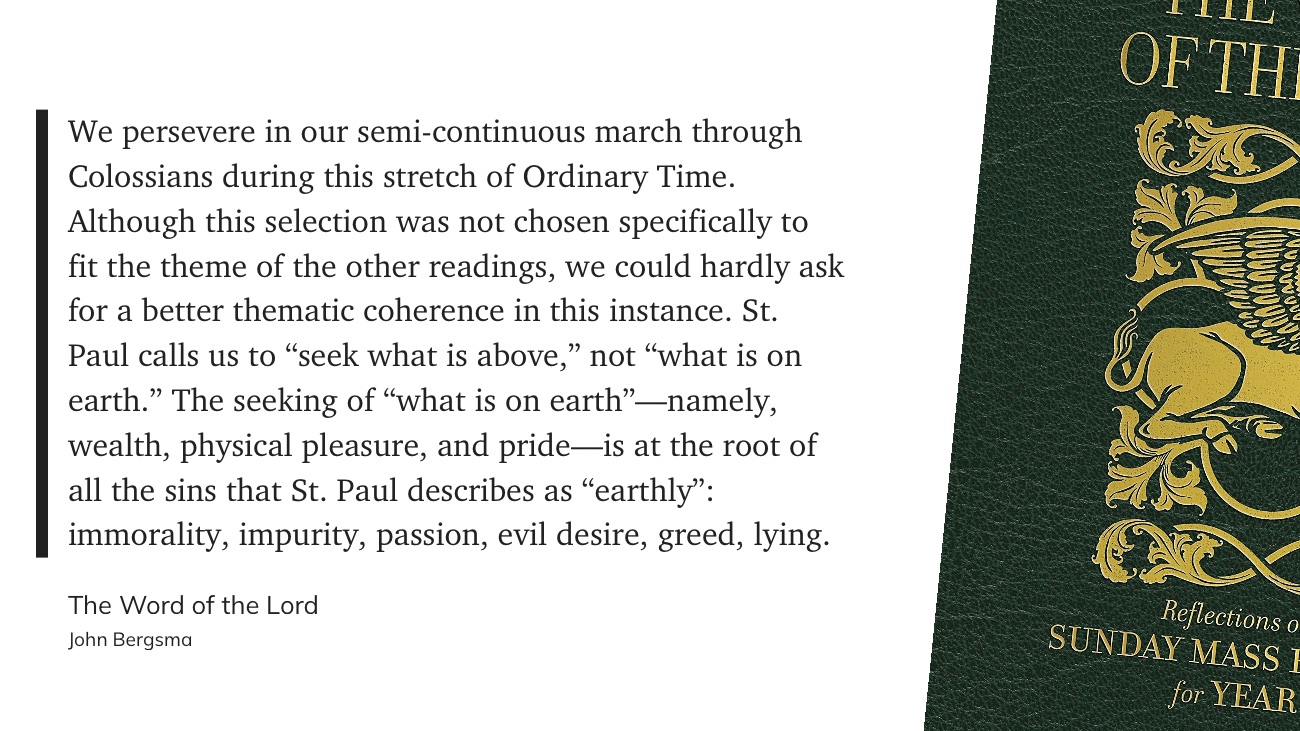
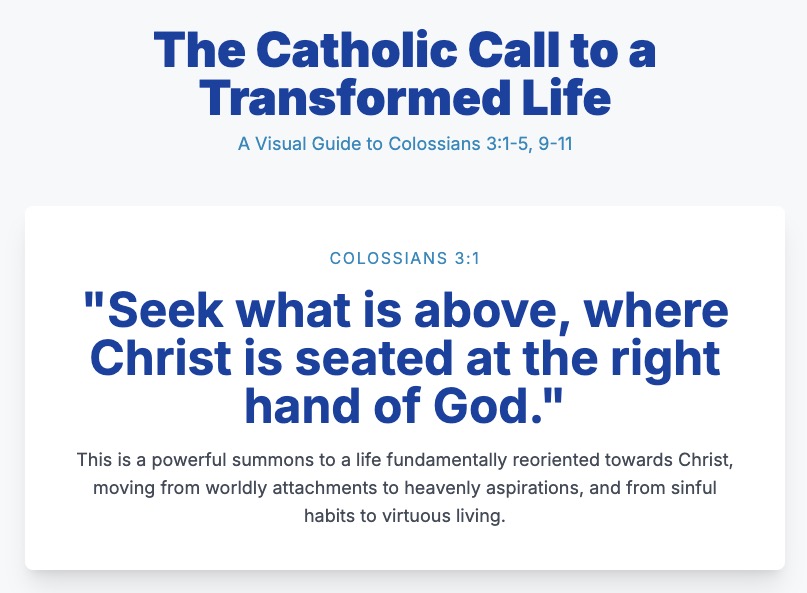
Colossians 3:1-5, 9-11 issues a powerful summons to a life fundamentally reoriented towards Christ. Paul exhorts believers to “seek what is above, where Christ is seated at the right hand of God” (Colossians 3:1) and to “put to death, therefore, whatever belongs to your earthly nature: sexual immorality, impurity, lust, evil desires and greed” (Colossians 3:5). Furthermore, he commands, “Do not lie to each other, since you have taken off your old self with its practices and have put on the new self, which is being renewed in knowledge in the image of its Creator” (Colossians 3:9-10). This passage underscores the radical transformation inherent in Christian life, moving from worldly attachments to heavenly aspirations, and from sinful habits to virtuous living.
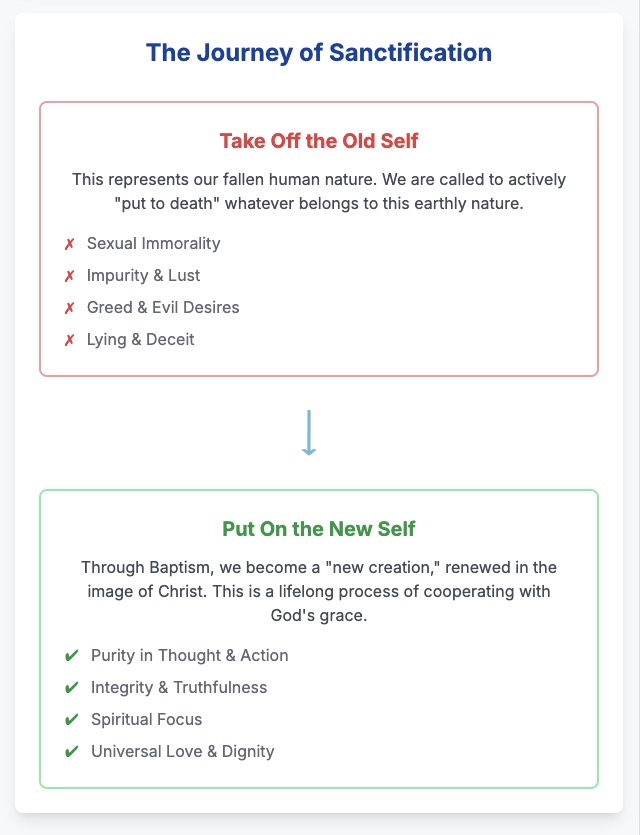
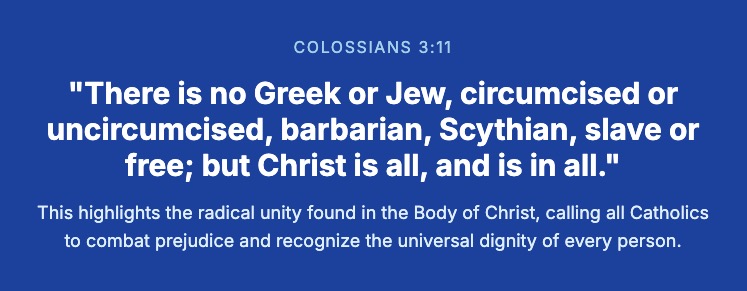
Within Roman Catholic theology, this transformation is deeply rooted in the Sacrament of Baptism. Through Baptism, a person dies to sin and rises with Christ, receiving the grace to live as a “new creation.” The “old self” represents the fallen human nature prone to sin, while the “new self” is Christ-like, renewed by grace. The Church teaches that this is an ongoing process of sanctification, a lifelong journey of cooperating with God’s grace to shed vices and cultivate virtues. The call to put to death earthly desires aligns with Catholic moral teaching on combating concupiscence and pursuing holiness. The passage’s emphasis that “there is no Greek or Jew, circumcised or uncircumcised, barbarian, Scythian, slave or free; but Christ is all, and is in all” (Colossians 3:11) also highlights the Catholic understanding of the universal dignity of all persons and the unity found in the Body of Christ.
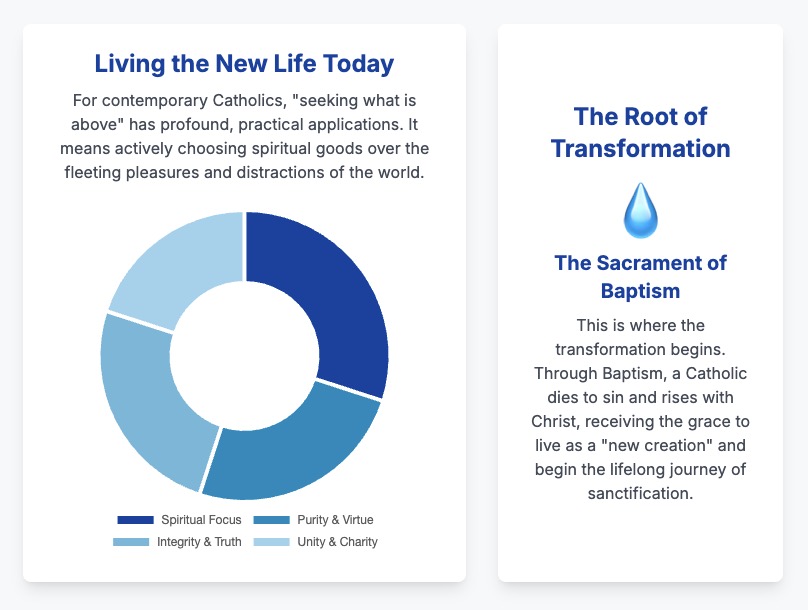
For contemporary Catholics, Colossians 3 offers profound practical guidance. In a world saturated with materialism and fleeting pleasures, “seeking what is above” means prioritizing spiritual growth over consumerism, choosing prayer and spiritual reading over endless digital scrolling. “Putting to death” earthly desires challenges Catholics to cultivate purity in thought and action, resisting the pervasive influence of pornography and immodesty. Furthermore, “putting on the new self” compels us to live with integrity and truthfulness in all interactions, both online and offline, and to actively combat prejudice and division, recognizing Christ in every person regardless of their background or identity. This scripture calls Catholics to live out their baptismal promises daily, striving for a life that truly reflects Christ.
THE WORD THIS WEEK’S Catholic Infographics were created using an AI generative tools (i.e. Chart.js and Tailwind CSS. Content may be copied for personal use or for use in any non-profit ministry. Materials may not be sold or used for personal financial gain.
Catholic Infographics and Deep Dive at bottom of page
18th Sunday of Year C
Luke 12:13-21
Luke 12:13-21
POP-UP Video | NAB w/ Notes | LECTIONARY
Click graphic to view intro to reading

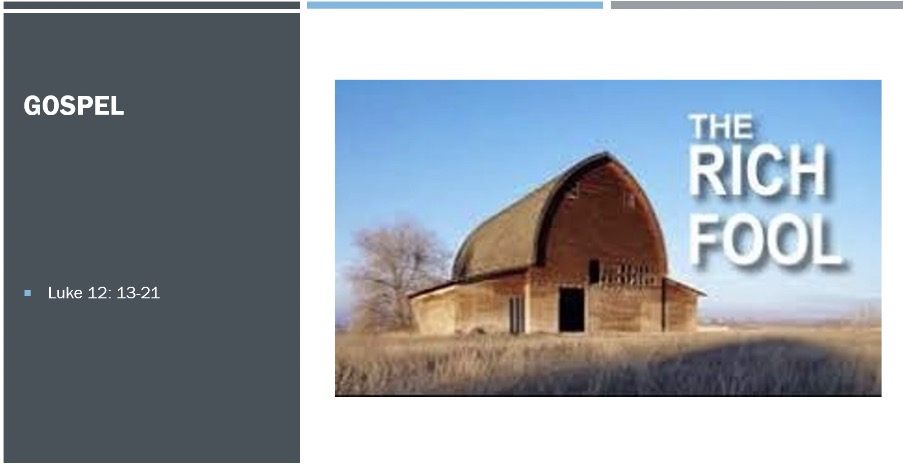
The parable of the rich fool in Luke 12 illustrates that life’s value is found in good works and sharing, not in self-centered wealth accumulation.
Clipart by Fr. Richard Lonsdale
What’s Really Important?
by Larry Broding
Larry Broding’s thought-provoking reflection tackles the age-old question of what truly constitutes success. In a society that often equates achievement with material wealth, fame, or power, Broding examines Jesus’ teachings to shed light on the importance of faith, compassion, and spiritual fulfillment.
As Broding insightfully observes, “Faith in God flies in the face of cynicism. Compassion flies in the face of greed. Together, faith and compassion challenge what people believe is really important in life.” This powerful statement encapsulates the essence of Broding’s reflection, urging readers to reevaluate their priorities and embrace the values that Jesus emphasizes in the Gospel.
By exploring the context of Jesus’ teachings and the parable of the rich man, Broding invites preachers to delve deeper into the role of faith and compassion in our lives. Prepare to be inspired as you engage with this compelling examination of what truly matters and the lasting impact of our choices on our spiritual journey.
CATHOLIC BIBLE STUDY VIDEO SERIES
RELATED
Bishop David Walker
Bishop John Dolan
Fr. Geoffrey Plant
Fr. Bryan Kujawa
Matt Zemanek
Keith Nester
Norma Woodcock
Fr. Tim Peters
GOSPEL


- Kieren O’Mahony OSA
- Fr. Conley Bertrand
- Fr. George Corrigan OFM
- Fr. Thibodeau
- St. Charles Borromeo
- Edriann Ezell
- Vince Contreras
- Bp. John P. Dolan
- Fr. Eamon Tobin
- Carmelite Lectio Divina
Featured Commentary
18th Sunday of Year C

TWTW Deep Dive (Gospel Reading)
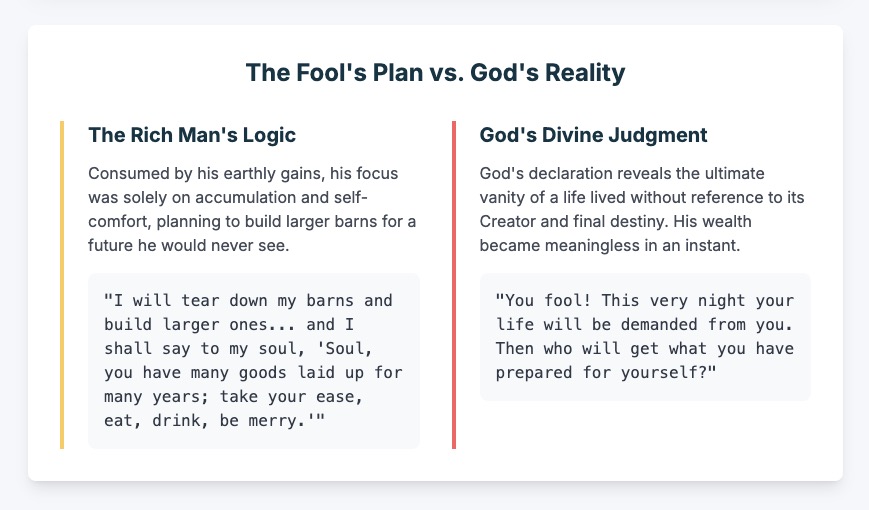
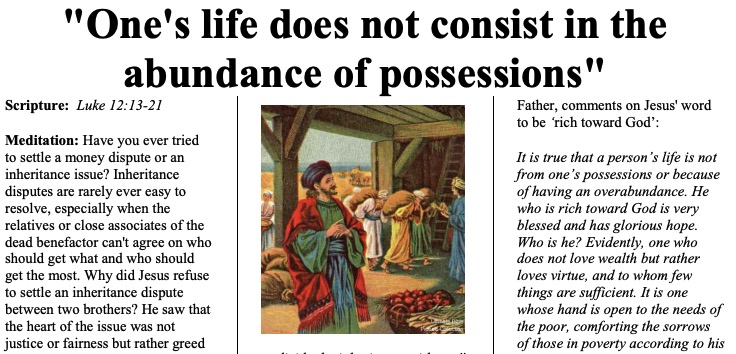
Luke 12:13-21 recounts the parable of the rich fool, a stark warning against avarice and the folly of placing one’s security in material possessions. Jesus cautions, “Beware of all kinds of greed; for one’s life does not consist in the abundance of possessions” (Luke 12:15). The rich man, consumed by his earthly gains, plans to build larger barns, only to hear God declare, “You fool! This very night your life will be demanded from you. Then who will get what you have prepared for yourself?” (Luke 12:20). This parable profoundly underscores the transient nature of wealth and the eternal consequences of a life lived solely for accumulation, rather than being “rich toward God” (Luke 12:21).
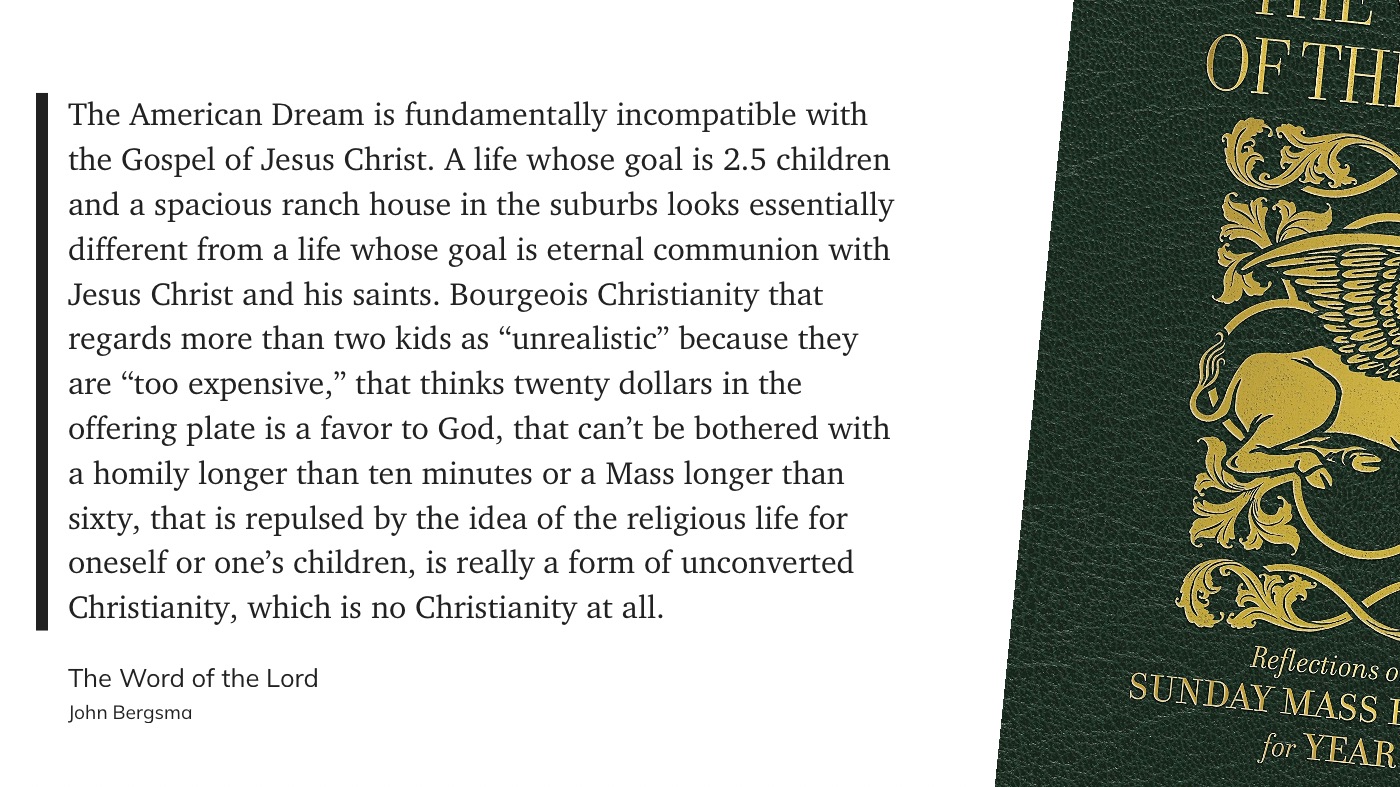
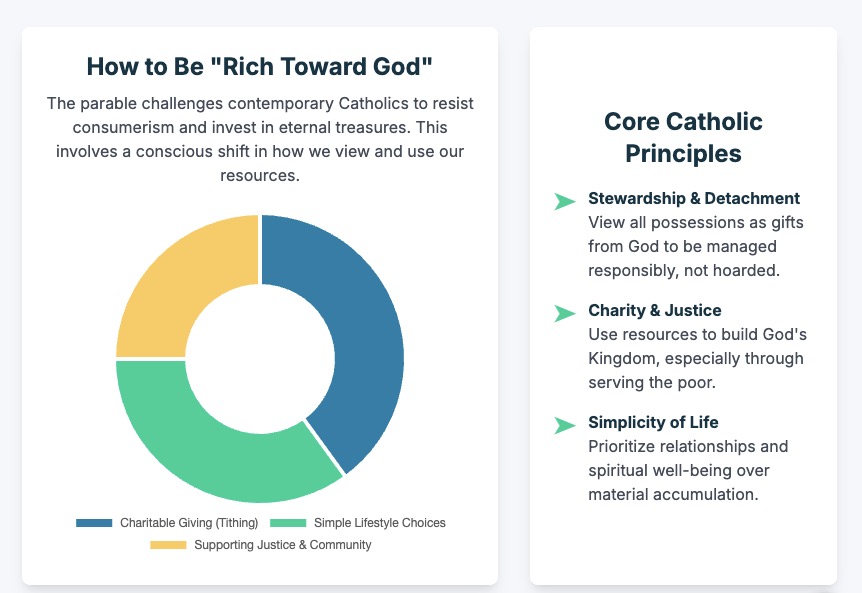
In Roman Catholic theology, this passage is a foundational text on the proper understanding of material possessions and the grave sin of greed (avarice), one of the seven deadly sins. The Church teaches that all earthly goods are gifts from God, intended for the good of all, and are to be used with detachment and stewardship. Wealth is not inherently evil, but an inordinate attachment to it can lead one away from God and neighbor. The Catechism of the Catholic Church emphasizes that our true treasure is spiritual, and that we are called to use our resources to build up the Kingdom of God, particularly through charity and concern for the poor, reflecting the preferential option for the poor.
For contemporary Catholics, the parable of the rich fool serves as a potent challenge in a consumer-driven world. It calls us to examine our relationship with money and possessions. A modern application involves resisting the constant pressure to accumulate more, instead choosing a simpler lifestyle. This might mean prioritizing experiences and relationships over material purchases, or generously tithing and contributing to charitable causes rather than hoarding wealth. It also encourages Catholics to avoid excessive debt and to use their financial resources responsibly, recognizing that true security and lasting fulfillment are found not in what we possess, but in our relationship with God and our selfless service to others.
THE WORD THIS WEEK’S Catholic Infographics were created using an AI generative tools (i.e. Chart.js and Tailwind CSS. Content may be copied for personal use or for use in any non-profit ministry. Materials may not be sold or used for personal financial gain.



Fr. Conley Bertrand
18th Sunday of Year C
Cycle C (PDFs)
📖 Old Testament (43 pp.)
📖 Epistles (87 pp.)
📖 Gospels (182 pp.)
📖 Daily Gospels (208 pp.)
SOURCE: Come, Lord Jesus
Fr. George Corrigan, OFM
18th Sunday of Year C

Fr. Thibodeau
Bible Study Notes
Small Group Discussion Guide

Bp. John P. Dolan
Fr. Tobin
Carmelite Reflections and Prayers
Lectio Divina

90-page PDF with reflections and prayers for each day of the month
Lectio Divina JULY 2025 (PDF)
Lectio Divina JULY 2025 [Mobi]
Lectio Divina JULY 2025 [ePub]
______________
“Lectio divina is an authentic source of Christian spirituality recommended by our Rule. We therefore practise it every day, so that we may develop a deep and genuine love for it, and so that we may grow in the surpassing knowledge of Christ. In this way we shall put into practice the Apostle Paul’s commandment, which is mentioned in our Rule: “The sword of the Spirit, too, which is the word of God, is to dwell abundantly in your mouth and in your hearts; and whatever things you have to do, let them be done in the word of the Lord.” (Carmelite Constitutions (2019), n. 85.)
Source: Carmelites
FIRST READING | SECOND READING | GOSPEL