July 27, 2025
July 27, 2025


Intro to Mass Readings for Sunday
Intro to Mass Readings for Sunday


17th Sunday of Year C
Genesis 18:20-32
Genesis 18:20-32
POP-UP Video | NAB w/ Notes | LECTIONARY
Click graphic to view intro to reading

Negotiating with God
Outline of Word-Sunday Essay
by Larry Broding

EXCERPT: Only one question remained. How small could a community be to act as an example of a just and merciful God? Here, Abraham persisted until God and he agreed upon the number ten. [18:26-32] But, the number ten did not only tell us the size of Lots family; it told us what was the minimum number believers that were necessary to form a faith community. Ten was the minimum number needed to start a synagogue and the minimum number needed to hold services at a synagogue.
When we pray to God, we should take Abraham’s example to heart. Pray with a clear request, look for the logic in the bigger picture (God’s will), and persist in prayer, even when we pray for something small.
How can you be clear in your prayer, logical in its implications, and persistent in its petition? How does your prayer reflect these qualities?
Fr. Tim Peters
FIRST READING

Fr. Peters teaches at Saint John’s Seminary in Camarillo, CA.
INTERACTIVE QUIZ
Created by Google Gemini for TWTW

- Kieren O’Mahony OSA
- Fr. Conley Bertrand
- Fr. George Corrigan OFM
- Fr. Thibodeau
- St. Charles Borromeo
- Edriann Ezell
- Vince Contreras
- Bp. John P. Dolan
- Fr. Eamon Tobin
- Carmelite Lectio Divina
Featured Commentary
17th Sunday of Year C
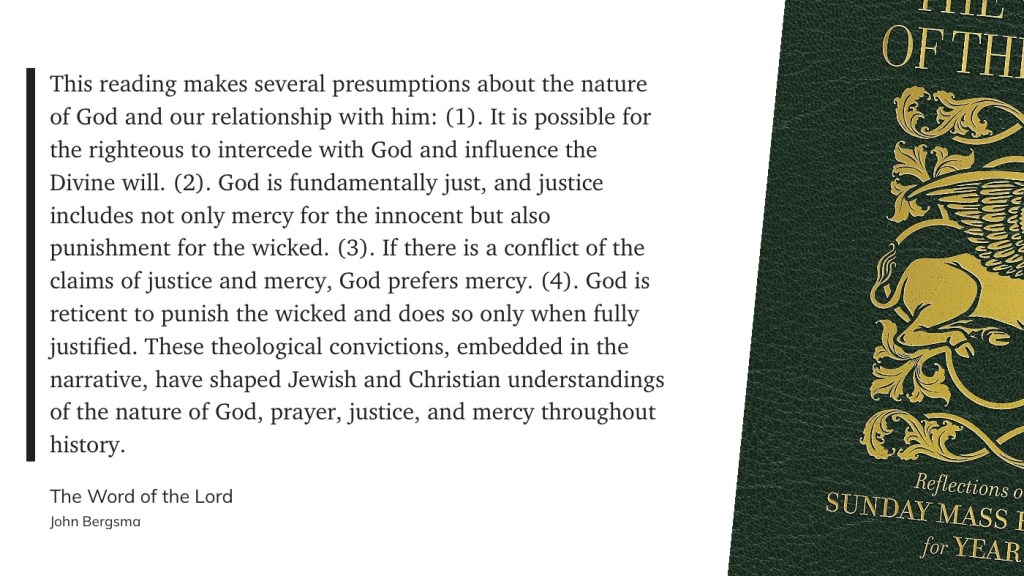
EXCERPT from Reflections on the Sunday Mass Readings for Year C
THE WORD PROCLAIMED – Fr. Francis Martin
17th Sunday of Year C
In Genesis 18:20-32, Abraham intercedes for the cities of Sodom and Gomorrah, which are about to be destroyed due to their inhabitants’ wickedness. This passage highlights the Roman Catholic theological concept of intercessory prayer, emphasizing the importance of prayerfully interceding for others, as our prayers can make a difference in people’s lives.

Abraham’s persistent intercession exemplifies the power of prayer. Despite the sinful nature of Sodom and Gomorrah, Abraham negotiates with God to spare the cities if there are even a few righteous people. This story encourages Catholics to persistently pray for others, as our prayers can result in mercy and blessings for those in need.
Pope Francis has emphasized the significance of intercessory prayer in contemporary times. He urges Catholics to pray for the needs of others, particularly the most vulnerable in society. Catholics can apply this passage’s lessons by interceding for global issues such as poverty, conflicts, and environmental degradation.
Furthermore, this passage calls Catholics to act as agents of change in their communities. While prayer is vital, we must also work to alleviate suffering and promote justice. Catholics can follow the example of saints like Mother Teresa, who combined prayer with active service to transform the lives of the poor and marginalized.
In conclusion, Genesis 18:20-32 reminds us of the power and responsibility Catholics have in interceding for others through prayer. As we actively engage in intercessory prayer and accompany our prayers with action, we contribute to the healing and transformation of the world., which the Catechism describes as “the theological virtue by which we believe in God and believe all that he has said and revealed to us” (Catechism of the Catholic Church, 1814). Thus, Abraham serves as a model of unwavering faith and trust in God’s divine plan, an example that remains relevant for modern-day Catholics.
Clipart by Fr. Richard Lonsdale

17th Sunday of Year C
Colossians 2:12-14
Colossians 2:12-14
POP-UP Video | NAB w/ Notes | LECTIONARY
Click graphic to view intro to reading
Our Only Need
Outline of Word-Sunday Essay
by Larry Broding
EXCERPT: Notice the key phrase is “in HIM.” Those who were in Christ (i.e., had a intimate relationship with Christ) experienced the reality of his death on the cross. They would also share in his glorious destiny at the general resurrection. Just as Christ reconciled the world to God with his death, those who died “in HIM” would enjoy that reconciliation with the forgiveness of their sins. How did Christ reconcile the world with its Maker? In his death, Christ fulfilled the Law (“God nailed it to the cross”), so he “lifted away” its obligations.
In the greater scheme of things, we only need Christ. In him, we are reconciled to God, united with God. That should be our primary focus.
What can get in the way of your relationship with Christ? How can you refocus your efforts on Christ?
Fr. Tim Peters
SECOND READING
Fr. Peters teaches at Saint John’s Seminary in Camarillo, CA.
INTERACTIVE QUIZ
Created by Google Gemini for TWTW
- Kieren O’Mahony OSA
- Fr. Conley Bertrand
- Fr. George Corrigan OFM
- Fr. Thibodeau
- St. Charles Borromeo
- Edriann Ezell
- Vince Contreras
- Bp. John P. Dolan
- Fr. Eamon Tobin
- Carmelite Lectio Divina
Featured Commentary
17th Sunday of Year C

EXCERPT from Reflections on the Sunday Mass Readings for Year C
THE WORD PROCLAIMED – Fr. Francis Martin
17th Sunday of Year C
Colossians 2:12-14 emphasizes the saving power of Christ and the triumph over sin and death through his sacrifice. This passage highlights several key Roman Catholic theological concepts, including baptism, redemption, and the centrality of Jesus Christ.
Baptism is the sacrament of initiation into the Catholic Church. Through baptism, Catholics are buried with Christ, dying to their old selves and rising to new life in Christ. Colossians 2:12-14 underscores the transformative nature of baptism, where believers experience forgiveness, redemption, and spiritual rebirth.
Moreover, the passage stresses that Christ’s redemptive act has freed humanity from the bondage of sin. This redemption is central to Catholic theology, as it affirms the role of Jesus as the Savior, whose death on the cross reconciles humans with God.
In the modern context, Catholics can apply the message of Colossians 2:12-14 by deepening their understanding of baptism and living out its transformative effects in their daily lives. By embracing the grace received in baptism, Catholics can strive for holiness, love, and service.
Pope Francis has highlighted the importance of baptism in shaping Christian identity, calling the faithful to live out their baptismal commitments. Catholics can draw inspiration from saints like John Paul II, who exemplified living a baptismal vocation through his emphasis on evangelization, mercy, and solidarity with the oppressed.
In conclusion, Colossians 2:12-14 invites contemporary Catholics to reflect on their baptismal calling and commit themselves to following Christ’s example in their lives. By embracing the transformative power of baptism and living out the Catholic Church’s mission, believers can bear witness to the saving love of Christ in a world yearning for redemption.
Clipart by Fr. Richard Lonsdale
17th Sunday of Year C
Luke 11:1-13
Luke 11:1-13
POP-UP Video | NAB w/ Notes | LECTIONARY
Click graphic to view intro to reading
Ask God!
Outline of Word-Sunday Essay
by Larry Broding
EXCERPT: How many times have you fully reflected on the Lord’s Prayer? What insights did you gain?
“As we pray, so we believe.” This old theological insight is as true today as it was when Jesus taught his followers the Our Father. The prayer focuses our sights on things greater than daily concerns. It sets our sights on the Kingdom.
But questions remain. Do we dare allow the Our Father to change us as we repeat the words? Do we allow the prayer to make us citizens of the Kingdom in the making? If we dare, we can. Ask God!
This week ask God for personal needs, but remember to ask for his will, his intentions. Ask for his presence in your life.
Fr. Tim Peters
GOSPEL

Fr. Peters teaches at Saint John’s Seminary in Camarillo, CA.
INTERACTIVE QUIZ
Created by Google Gemini for TWTW
Hector Molina

- Kieren O’Mahony OSA
- Fr. Conley Bertrand
- Fr. George Corrigan OFM
- Fr. Thibodeau
- St. Charles Borromeo
- Edriann Ezell
- Vince Contreras
- Bp. John P. Dolan
- Fr. Eamon Tobin
- Carmelite Lectio Divina
Featured Commentary
17th Sunday of Year C

EXCERPT from Reflections on the Sunday Mass Readings for Year C
THE WORD PROCLAIMED – Fr. Francis Martin
17th Sunday of Year C
Luke 11:1-13 recounts Jesus teaching his disciples the Lord’s Prayer and emphasizing the importance of persistence in prayer. This passage has significant implications for Roman Catholic theology, highlighting the centrality of prayer in the Christian life and God’s responsiveness to our petitions.
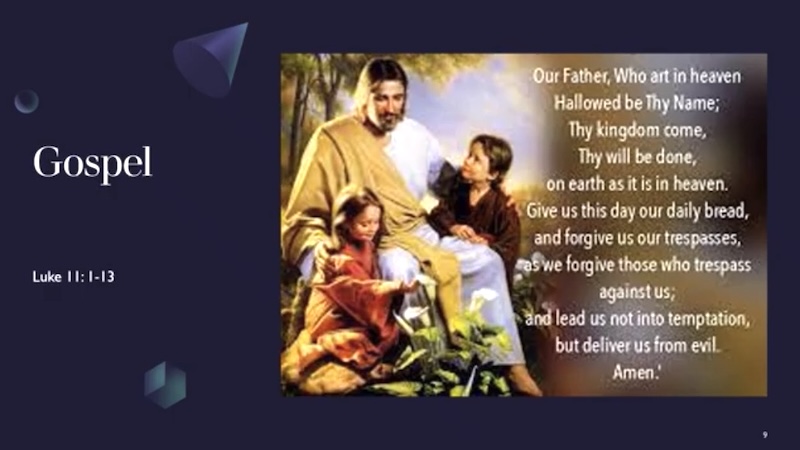
The Lord’s Prayer, or the “Our Father,” is a foundational prayer in Catholicism, encapsulating essential elements of the faith, such as adoration, contrition, thanksgiving, and supplication. Catholics believe that through this prayer, Jesus teaches his followers to address God with reverence and trust, acknowledging divine providence and seeking God’s will.
Additionally, Luke 11:1-13 stresses the value of persistent prayer. Jesus assures his disciples that God, as a loving Father, will provide for their needs when they ask, seek, and knock with faith and perseverance. Catholics can apply this message to their prayer lives, cultivating a habit of prayerful communion with God and trusting in divine provision.

Pope Francis has encouraged Catholics to make the Lord’s Prayer the “prayer of the heart,” emphasizing its role in shaping Christian identity and mission. Catholics can draw inspiration from saints like St. Monica, whose persistent prayers for her son, St. Augustine, exemplify the power of unwavering faith in God’s mercy.
In conclusion, Luke 11:1-13 reminds contemporary Catholics of the importance of prayer, particularly the Lord’s Prayer, as a means of communicating with God and growing in faith. By embracing a life of prayer and perseverance, Catholics can deepen their relationship with Christ and bear witness to God’s love and providence in the world.tening to God. As we navigate the demands of contemporary life, let us embrace this holistic vision of discipleship, nurturing both our active and contemplative sides in the pursuit of true spiritual fulfillment.
Clipart by Fr. Richard Lonsdale
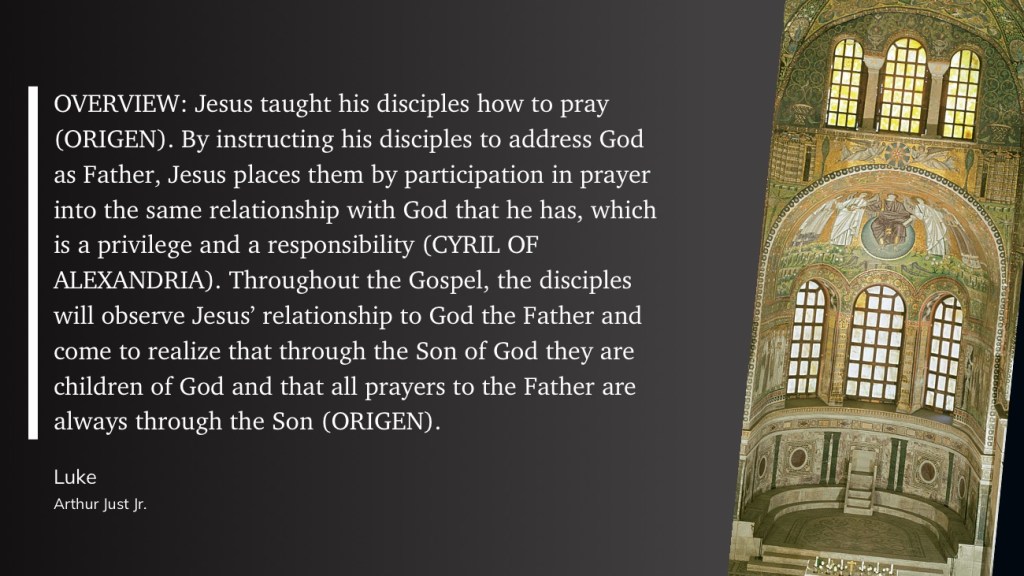
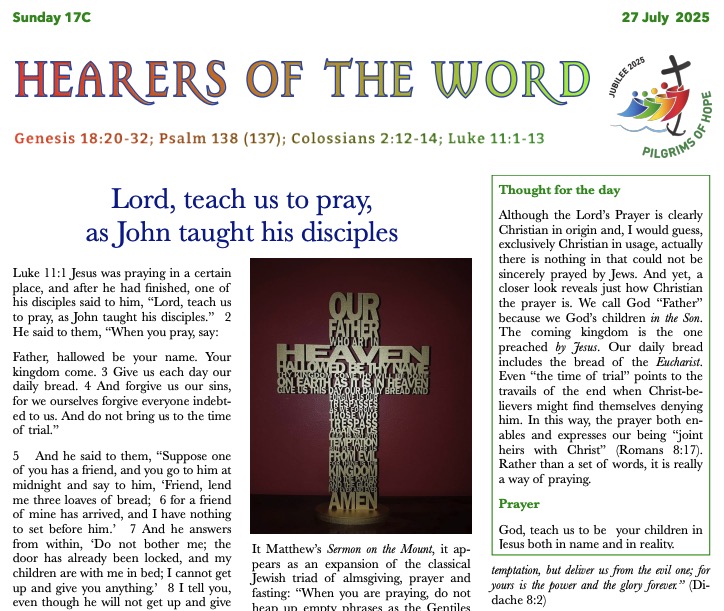
Fr. Conley Bertrand
17th Sunday of Year C

Cycle C (PDFs)
📖 Old Testament (43 pp.)
📖 Epistles (87 pp.)
📖 Gospels (182 pp.)
📖 Daily Gospels (208 pp.)
SOURCE: Come, Lord Jesus
Fr. George Corrigan, OFM
17th Sunday of Year C

Fr. Thibodeau
Bible Study Notes
Small Group Discussion Guide



Bp. John P. Dolan
Fr. Tobin
Carmelite Reflections and Prayers
Lectio Divina

90-page PDF with reflections and prayers for each day of the month
Lectio Divina JULY 2025 (PDF)
Lectio Divina JULY 2025 [Mobi]
Lectio Divina JULY 2025 [ePub]
______________
“Lectio divina is an authentic source of Christian spirituality recommended by our Rule. We therefore practise it every day, so that we may develop a deep and genuine love for it, and so that we may grow in the surpassing knowledge of Christ. In this way we shall put into practice the Apostle Paul’s commandment, which is mentioned in our Rule: “The sword of the Spirit, too, which is the word of God, is to dwell abundantly in your mouth and in your hearts; and whatever things you have to do, let them be done in the word of the Lord.” (Carmelite Constitutions (2019), n. 85.)
Source: Carmelites
FIRST READING | SECOND READING | GOSPEL