Homilies
Homilies
May 24, 2026
⭐⭐⭐ Profiles in Courage: Tiananmen Square


Filled with the Holy Spirit
Pentecost Sunday (A)
Click on above banner to SHOW/HIDE content.


SDS


CMF





PAPAL HOMILIES



RECOMMENDED
The Augustinian Province of St. Thomas of Villanova maintains a dedicated “Homilies” page with reflections grounded in the Confessions and the Rule of St. Augustine.
✍️ Augustinian Province – Weekly Homilies
📺 Fr. Paul Galetto
📺 Fr. Tom McCarthy
✍️ Fr. Kieran J. O’Mahony
Core Charism: Interiority (searching for God within), community life (“one mind and one heart on the way to God”), and the restless heart that finds repose only in God.
Pentecost Sunday (A)
Primary Scripture: 1 Corinthians 12:3b-7, 12-13
Key Phrase: “One Mind and One Heart in God”
The Hook: The Holy Spirit is the “Bond of Love” between the Father and the Son, and it is this same Love that unites a restless people into one community. Our hearts are restless until they find their rest in the unity of the Spirit.
Opening: “St. Augustine famously wrote that ‘our hearts are restless until they rest in Thee.’ But he also knew that we do not find that rest alone. In his Rule, he emphasizes being ‘of one mind and one heart on the way to God.’ St. Paul’s letter to the Corinthians captures this Augustinian ideal perfectly: ‘For in one Spirit we were all baptized into one body.’ Pentecost is the divine answer to our restlessness. It is the descent of the ‘Beauty so ancient and so new’ into the communal life of the Church. The Spirit is the ‘Soul’ of the Body of Christ. Just as the soul animates every limb of the physical body, the Holy Spirit animates every member of this parish, drawing our individual desires into one Great Desire for God.”
Outline:
- The Restless Heart: Seeking the Spirit in the depths of the interior life.
- Unity in Diversity: How the “Bond of Love” creates community without erasing individuality.
- The Spirit as Teacher: Learning to love what God loves through the gift of the Spirit.
Takeaway Application: Reach out to someone in your community with whom you have felt “disconnected,” seeking to find that “one heart” again.
RECOMMENDED
Many Benedictine Abbeys publish the Abbot’s homilies online. Quarr Abbey and Saint Meinrad Archabbey are excellent sources for traditional Benedictine “Lectio” style preaching.
✍️ Saint Meinrad Archabbey Reflections
✍️ Monastery of Christ in the Desert
✍️ Mepkin Abbey

Core Charism: Ora et Labora (Prayer and Work), Stability, Hospitality, Lectio Divina, Listening with the “ear of the heart.”
Pentecost Sunday (A)
Primary Scripture: John 20:19-23
Key Phrase: “Peace, Breath, and Stability”
The Hook: In the stillness of the cloister or the silence of the heart, the Spirit arrives not always as a whirlwind, but as the quiet breath of the Risen Christ. Pentecost is the foundation of a community bound by the “Peace” that only Christ can give.
Opening: “In the Rule of St. Benedict, the very first word is ‘Listen.’ Today, in the Gospel of John, we find the disciples behind locked doors, listening to their own fears. Then, Jesus stands among them and says, ‘Peace be with you.’ He does not give them an elaborate lecture; He breathes on them. This Ruah—the breath of God—is the lifeblood of the monastic community. For us, Pentecost is a call to ‘Stability.’ Even when the world feels chaotic, the Spirit provides a center of gravity. As we live together in community, we realize that the ‘forgiveness of sins’ Jesus mentions is the daily work of the monastery—and the family. It is the breath of Christ that allows us to prefer nothing whatever to Christ, binding us together in a school of the Lord’s service.”
Outline:
- The Gift of Peace: Finding the “Statio” (stillness) amid the world’s noise.
- The Breath of Life: The Spirit as the animator of our daily “Ora et Labora” (Prayer and Work).
- Community and Forgiveness: The practical application of “whose sins you forgive are forgiven.”
Takeaway Application: Practice “Lectio Divina” with the Gospel passage, focusing on the word “Peace,” and bring that peace into a tense situation at home or work.
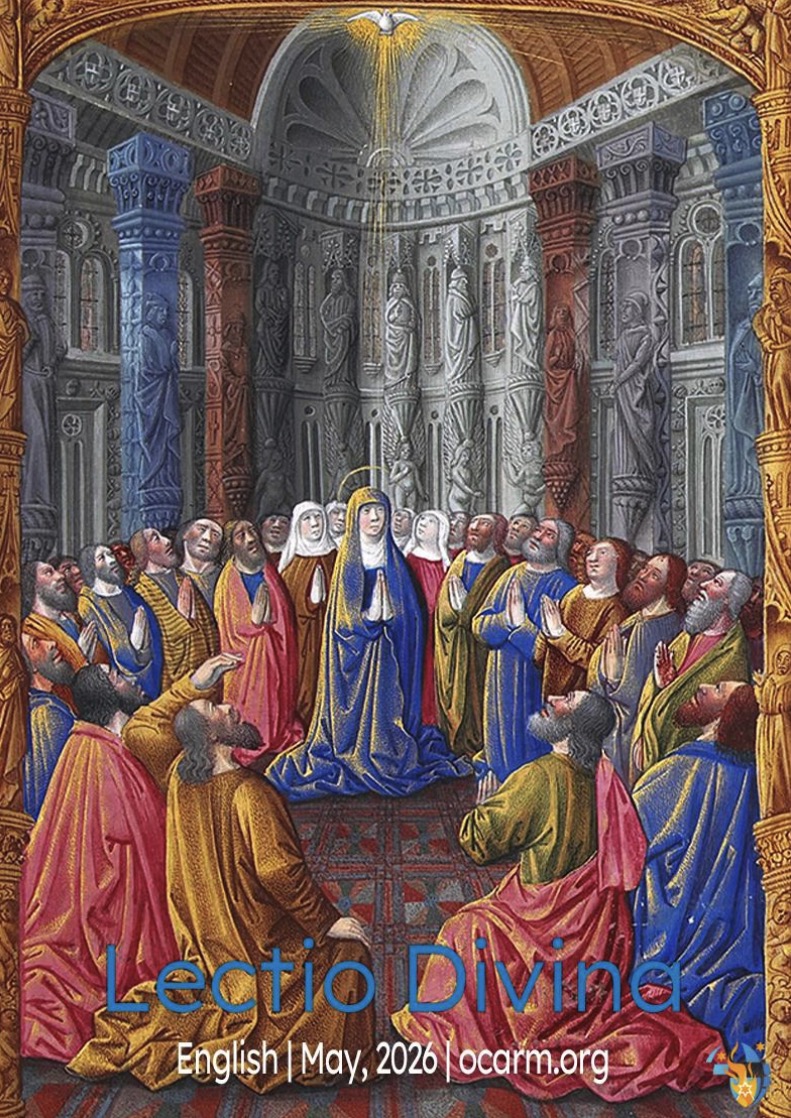
LECTIO DIVINA
MAY 2026 (PDF)
RECOMMENDED
The Carmelites offer a unique “Lectio Divina” style reflection for each Sunday through their international headquarters.
✍️ OCarm.org – Lectio Divina for Sundays
📺 Fr. Greg
Core Charism: Contemplation, The Desert, Prayer as Friendship, The Dark Night, Elijah, St. Teresa of Avila.
Pentecost Sunday (A)
Primary Scripture: John 20:19-23
Key Phrase: “The Living Flame of Love”
The Hook: The Spirit is the silent presence that transforms the “Interior Castle” of the soul. Pentecost is the moment the “Sheer Whisper” heard by Elijah on Horeb becomes a fire that purifies and unites the soul with the Beloved.
Opening: “St. John of the Cross spoke of the ‘Living Flame of Love’ that ‘tenderly wounds’ the soul in its deepest center. Today, that flame is made manifest. To the world, Pentecost is a loud wind and a public miracle; to the Carmelite, it is the ‘Living Water’ that St. Teresa of Avila spoke of—the water that quenches the thirst of the soul. When Jesus breathes on the disciples, He is initiating them into a life of profound interiority. ‘As the Father has sent me, so I send you.’ We are sent from the silence of prayer into the world, carrying a hidden fire. The Spirit does not just give us ‘tasks’ to do; the Spirit transforms who we are. On this Pentecost, we ask for the grace of ‘Nought’—to empty ourselves of all that is not God, so that the Spirit may fill every room of our interior castle with His light.”
Outline:
- The Interior Fire: The Spirit’s work in the hidden life of prayer.
- Transformation in Christ: Moving from the “Dark Night” of fear to the light of the Spirit.
- The Apostolic Fruit of Silence: How deep prayer fuels our mission in the world.
Takeaway Application: Spend ten minutes in absolute silence today, not asking for anything, but simply inviting the “Living Flame” to dwell in your heart.
RECOMMENDED
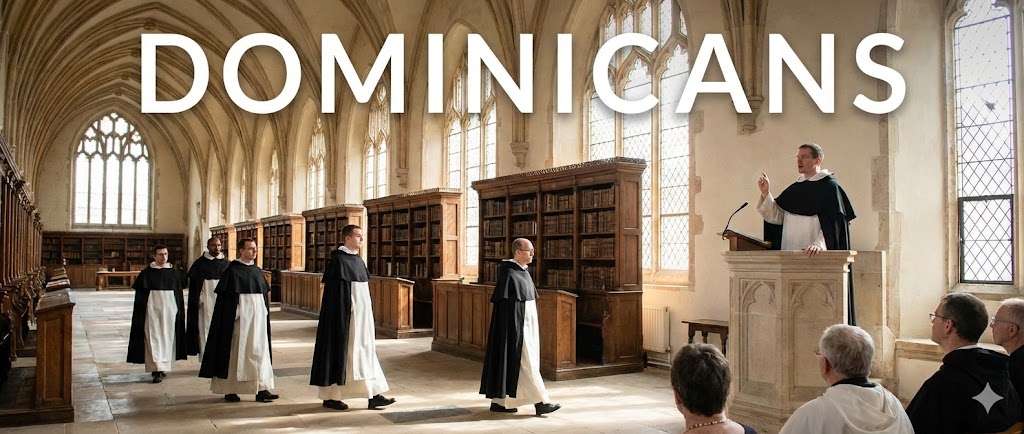
The Dominicans have one of the most robust preaching websites called “Torch.” It features a new homily every week from a different friar.
✍️ English Dominican Friars – Torch
Core Charism: Veritas (Truth), Preaching, Study, Combatting Error with Clarity, Contemplation passed on to others.
Pentecost Sunday (A)
Primary Scripture: Acts 2:1-11
Key Phrase: “To Contemplate and to Share the Fruits of Contemplation”
The Hook: The “tongues of fire” represent the divine illumination of the intellect and the empowerment of the tongue to preach Truth (Veritas). Pentecost is the commissioning of the world as a pulpit for the Word.
Opening: “The Order of Preachers was founded on the belief that the Word must be spoken clearly and truthfully to a world in search of meaning. At Pentecost, we see the Holy Spirit acting as the ultimate Preacher. The ‘noise like a strong driving wind’ was the sound of barriers breaking down, and the ‘tongues of fire’ were the visible signs of a new intellectual and spiritual clarity. For a Dominican, this day is about the relationship between study and proclamation. We do not receive the Spirit merely for our own sanctification; we receive the Spirit so that we may contemplari et aliis contemplata tradere—to contemplate and to hand on to others the fruits of our contemplation. The miracle was not just that the Apostles spoke, but that they spoke the ‘mighty acts of God’ with such theological precision that every heart was pierced.”
Outline:
- The Spirit of Truth: How the Paraclete guides the Church into all truth.
- The Necessity of Preaching: The Spirit’s fire as a mandate to combat error and ignorance.
- Unity in Doctrine: How the one Spirit harmonizes the many voices of the faithful.
Takeaway Application: Commit to studying one complex aspect of your faith this week so that you can better explain the “mighty acts of God” to someone who asks.
RECOMMENDED
St. Anthony Messenger and the various provinces often provide “Franciscan Spirit” reflections that focus on the Gospel of the day.
✍️ Franciscan Media – Sunday Homily Helps
📺 Fr. Paul Galetto
📺 Fr. Tom McCarthy
✍️ Fr. Kieran J. O’Mahony

Core Charism: Poverty, Minority (being “lesser”), Fraternity, and finding God in the grit of humanity and creation.
Pentecost Sunday (A)
Primary Scripture: Acts 2:1-11
Key Phrase: “God in the Ordinary and the Diverse”
The Hook: Pentecost is the ultimate “rebuilding of the Church,” not with stones, but through a Spirit that speaks every language of the marginalized. It is the breath of God animating the “Lesser ones” to recognize the Divine in all of creation.
Opening: “My brothers and sisters, when St. Francis heard the crucifix at San Damiano tell him to ‘rebuild my church,’ he initially thought of bricks and mortar. But today, the rushing wind of the Spirit reminds us that the Church is a living, breathing landscape. In the streets of Jerusalem, the Spirit didn’t choose a single, holy language; He chose them all. He spoke through the Galileans to the Parthians, Medes, and Elamites. This is the ‘Fratellanza’—the universal brotherhood—of the Spirit. The same Fire that warmed the heart of Francis on Mount La Verna is the fire that descends today, not to consume us, but to ignite a love for the ‘Lady Poverty’ found in the diversity of the human family. We are called to hear the Gospel not as a distant echo, but as a song sung in our own native tongue: the tongue of the poor, the suffering, and the Earth itself.”
Outline:
- The Humility of the Spirit: God descends to meet us in our specific cultural “languages.”
- The Fire of Charity: How the Spirit compels us to leave the “upper room” and enter the marketplace.
- Rebuilding through Joy: Moving from fear to the “Perfect Joy” found in the Spirit’s presence.
Takeaway Application: Identify one person whose “language” (perspective or life experience) you find difficult to understand and ask the Spirit for the grace to hear God speaking through them this week.


Core Charism: Ad Maiorem Dei Gloriam (For the Greater Glory of God), Discernment of Spirits, Finding God in All Things, Imaginative Contemplation.
Pentecost Sunday (A)
Primary Scripture: 1 Corinthians 12:3b-7, 12-13
Key Phrase: “Finding God in All Gifts”
The Hook: Discernment is the art of recognizing which “stirrings of the soul” come from the Holy Spirit to build up the Body of Christ. We are invited to move from the desolation of the locked room to the consolation of active mission.
Opening: “St. Ignatius of Loyola often spoke of the ‘motions’ of the soul—those inner tugs toward God or away from Him. Today, St. Paul gives us a masterclass in spiritual discernment. He tells us that ‘there are different kinds of spiritual gifts but the same Spirit.’ For the Jesuit, Pentecost is not just a historical event; it is the ongoing ‘Composition of Place’ where we stand in that upper room and feel the transition from paralyzed fear to ‘Magis’—the more. The Spirit is the ‘Interior Teacher’ who clarifies our unique role within the one Body. We ask ourselves: How is the Spirit manifesting through me for the common good? Am I using my talents to build my own kingdom, or am I being ‘set on fire’ to go out and set the world on fire for the greater glory of God?”
Outline:
- The Grace of Connection: Understanding that “no one can say ‘Jesus is Lord’ except by the Holy Spirit.”
- Variety as Strength: The Ignatian value of utilizing diverse talents for the mission.
- The Call to Mission: Being sent forth as “contemplatives in action.”
Takeaway Application: Spend fifteen minutes in an Examen tonight, specifically looking for where you felt a “nudge” from the Spirit today and how you responded.

Core Charism: Preaching “Plentiful Redemption” (Copiosa Redemptio), especially to the abandoned and sinners; Moral Theology (St. Alphonsus Liguori).
Pentecost Sunday (A)
Primary Scripture: John 20:19-23
Key Phrase: “Plentiful Redemption for the Fearful”
The Hook: The Spirit is the “Consoler” sent to those trapped in the “upper rooms” of modern life—shame, addiction, and despair. We are sent to proclaim that the mission of mercy is now in our hands.
Opening: “St. Alphonsus Liguori founded our congregation to reach those who were most abandoned. Could there be anyone more abandoned than the disciples hiding in that room, paralyzed by the memory of their own desertion of Jesus at the Cross? Yet, the Risen Lord does not come with a rebuke; He comes with a gift. ‘Receive the Holy Spirit.’ This is the ‘Copiosa Apud Eum Redemptio’—plentiful redemption. The Spirit is the power to forgive, to heal, and to restore. As Redemptorists, we see Pentecost as the moment the floodgates of mercy were thrown open. The same Spirit that empowered the Apostles to forgive sins is the Spirit that works through us today to tell every soul: You are not your past, you are not your failures, you are a temple of the Holy Spirit, chosen for a mission of love.”
Outline:
- God’s Unconditional Mercy: The Spirit as the antidote to fear and guilt.
- The Mission to the Abandoned: Carrying the “Peace” of Christ to the fringes of society.
- The Spirit of Prayer: Following the Alphonsian path of heart-to-heart conversation with God.
Takeaway Application: Identify a “locked door” in your own life—something you are afraid to face—and invite the Holy Spirit to breathe peace into that space today.
Bishop Robert Barron

Pentecost Sunday (A)
Surrender to the Spirit

Friends, we’ve come to the great Solemnity of Pentecost, which is, along with Christmas and Easter, one of the most important feasts of the Christian year. It is the celebration par excellence of the Holy Spirit. It is also the birthday of the Church—and we are meant to see ourselves in the readings for today.
Fr. Michael Chua
2026 | 2023 | 2020 | 2017 | 2014 | 2011
Pentecost Sunday (A)
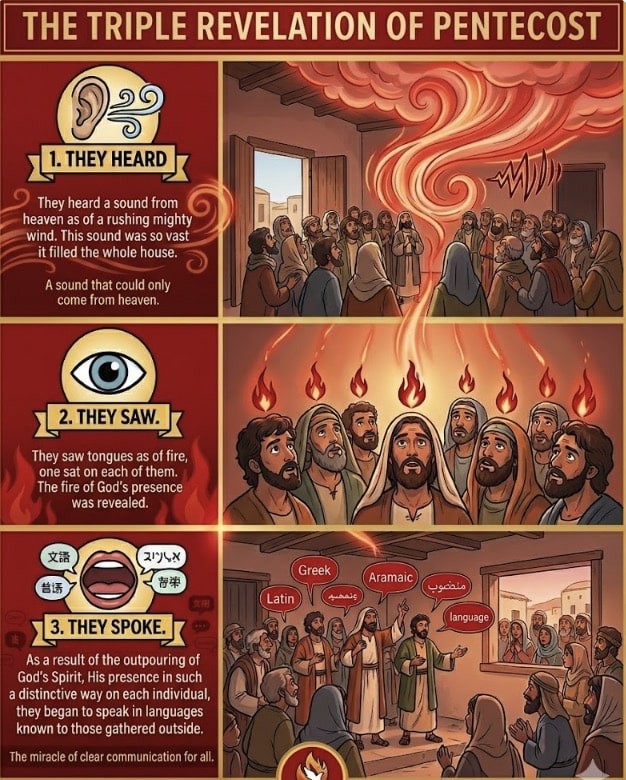
They Heard…They Saw…They Spoke

Father Michael Chua’s homily explores Pentecost as the divine reversal of the Tower of Babel and the fulfillment of Sinai. While acknowledging both Johannine and Lucan accounts of the Spirit’s descent, the preacher emphasizes the sensory experience—hearing, seeing, and speaking—as the primary movement of grace. By contrasting the prideful, self-sufficient construction of Babel with the humble docility of the Apostles, the text argues that human pride fractures communication and reality. Ultimately, the Holy Spirit restores linguistic and communal unity by grounding human speech in Divine Truth, empowering the Church to witness to a fragmented, post-Christian world.
HOMILY HELPER
Suggestions for writing your own homily using insights and themes from Fr. Michael Chua’s homily.
Dominican Blackfriars
Pentecost Sunday (A)
The Breath of God
This homily explores the Holy Spirit through the intimate lens of the “breath of God,” metaphorically described as a divine sigh. Fr. Bailham transitions from the human experience of sighing—expressing weariness, joy, or solidarity—to the biblical “sigh” of Christ at the tomb of Lazarus. He argues that Pentecost is the ultimate creative exhalation of God, which imparts life, vigor, and mission to the Church. Because the mission to witness to the Gospel is impossible by human strength alone, the Holy Spirit acts as the essential fire that transforms the believer’s heart, enabling both virtuous living and courageous proclamation.

HOMILY HELPER
Suggestions for writing your own homily using insights and themes from the Dominican Blackfriar homily.
Fr. Austin Fleming
Pentecost Sunday (A)
A Transformative Power
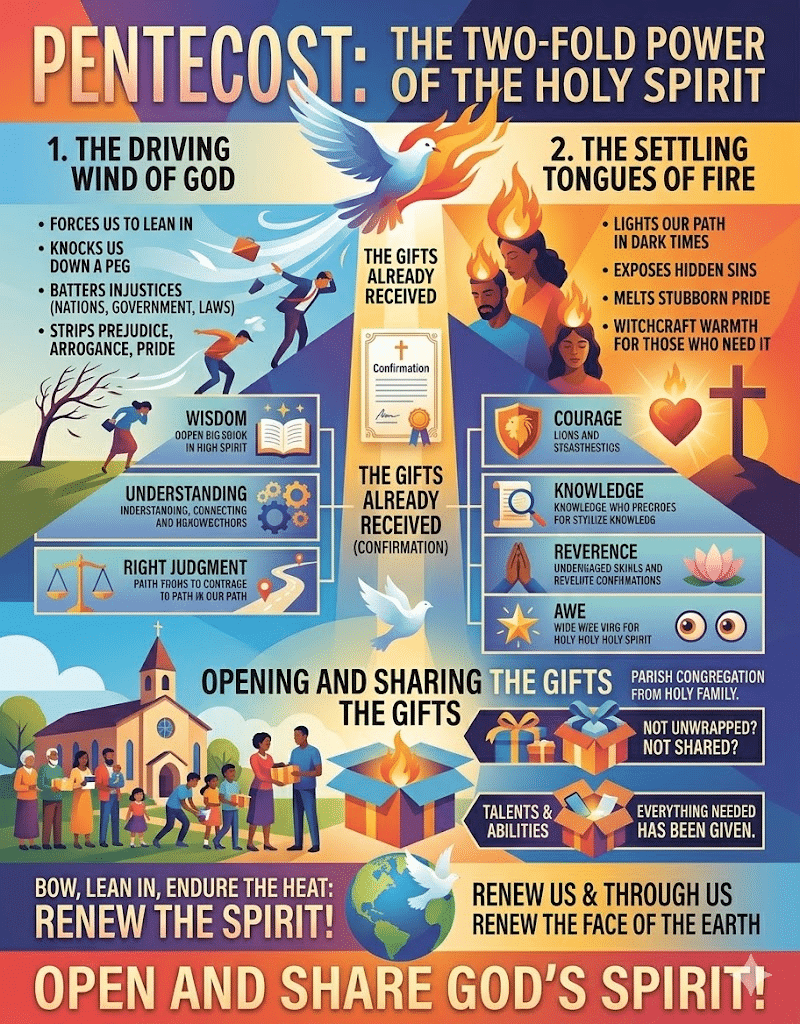
Fr. Austin Fleming’s homily presents Pentecost as a dynamic choice between two visceral forces: the driving wind and the settling fire. He frames the Holy Spirit not as a passive influence, but as a transformative power that “strips us of what we clutch” and “brands our hearts” with the heat of the Cross. Moving from cosmic imagery to the specific Seven Gifts of the Holy Spirit received in Confirmation, the text challenges the congregation to “unwrap” the latent talents already present within the parish. It concludes by linking the Spirit’s power to sanctify the Eucharistic elements with His power to sanctify and mobilize the people of the parish.
HOMILY HELPER
Suggestions for writing your own homily using insights and themes from Fr. Austin Felming’s homily.
Monsignor Peter Hahn

Pentecost Sunday (A)
The Architecture of Unity
Msgr. Hahn presents Pentecost as the “grand culmination” of Easter, revealing the Holy Spirit’s primary purpose: the radical unification of the human family. By contrasting the shattered barrier of language in Acts with St. Paul’s metaphor of the Body of Christ, he argues that diversity is intended to be complementary rather than divisive. Crucially, he links the Spirit’s descent to the power of forgiveness and the Eucharist, asserting that true peace is impossible without reconciliation. The homily concludes with a call to move beyond “unintentionally ignoring” the Spirit, instead allowing the Eucharist to overwhelm us into a state of divine unity.

HOMILY HELPER
Suggestions for writing your own homily using insights and themes from Msgr. Peter Hahn’s homily.
Fr. Charles E. Irvin
Pentecost Sunday (A)
The Mystery of the Final Movement

Fr. Irvin presents Pentecost as the “final movement” of God’s relentless pursuit of a shattered and prideful humanity. Beginning with the initial movement in Eden and contrasting it with the hubris of Babel, he argues that humans cannot “discover” God through intellect or construction; rather, God discovers us. Pentecost is the completion of the Annunciation—where the Word became flesh, the Spirit now enters human hearts to “re-ligament” the dried bones of a divided world. This “unitary whole” of Christ’s work reconciles the alienated, transforming ordinary lives into extraordinary vessels of divine love and second chances.
HOMILY HELPER
Suggestions for writing your own homily using insights and themes from Fr. Charles E. Irvin’s homily.
Fr. Joe Jagodensky, SDS
Pentecost Sunday (A)
Pentecost, “The Third Person?”

Writing from the witty, first-person perspective of the Holy Spirit, Fr. Joe Jagodensky challenges the “binary” thinking (Left/Right, Sin/Grace) that often ignores the “Third Person.” He presents the Spirit not as a theological footnote, but as the fluid, uncontainable energy of God that “swirls, gnaws, and nudges” believers out of complacency. From hovering over Genesis to coaching the “opening of windows” at Vatican II, the Spirit is depicted as the “most patient member of the Trinity,” whose primary task is to guide individuals into a place of peace where the unimaginable becomes real.

HOMILY HELPER
Suggestions for writing your own homily using insights and themes from Fr. Joe Jagodesky’s homily.
Fr. Langeh, CMF

Pentecost Sunday (A)
Baptism of Fire! Free Gift to the Church
Fr. Jude Thaddeus Langeh contextualizes Pentecost as the fulfillment of the Sinai Covenant, moving from the agricultural and legal roots of Israel to the “Baptism of Fire.” He clarifies a common theological misconception, emphasizing that the “Baptism of the Holy Spirit” is not a second or replacement sacrament for water Baptism, but rather the completion of Christ’s work within us. Drawing on St. Augustine and Cardinal Newman, he describes the Spirit as the “soul” of the Church’s body, transforming the “finished” work of Christ into a lived reality for every believer through the sevenfold gifts.
HOMILY HELPER
Deacon Peter McCulloch
Pentecost Sunday (A)
Thirst
Deacon Peter explores Pentecost as the answer to the innate spiritual “thirst” with which every human is born. Drawing heavily on the insights of Richard Rohr and the story of AA co-founder Bill Wilson, he distinguishes between “going through the motions” of water baptism and the transformative “baptism of the Holy Spirit and fire.” The homily argues that spiritual emptiness often leads to destructive addictions—the “low-level equivalent” of a thirst for God. Ultimately, the Holy Spirit is presented not as a distant doctrine, but as the only power capable of fanning the gifts we already possess into a life of service, excitement, and true freedom.

HOMILY HELPER
Suggestions for writing your own homily using insights and themes from Fr. Pteer McCulloch’s homily.
Msgr. Charles Pope
Pentecost Sunday (A)
I have Come to Cast a Fire on the Earth
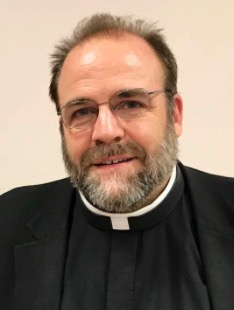
Msgr. Charles Pope delivers a high-energy call to action, framing Pentecost as a “divine resuscitation” that challenges the “lazy, sleepy, and tepid” Christian life. He organizes the work of the Spirit into three movements: the Portraits (Wind as CPR for the soul, Fire as a refining agent), the Proclamation (the move from cowardice in the Upper Room to bold public testimony), and the Propagation (the Great Commission). He asserts that God intends to fill the “orb of the earth” not through magic, but through the fiery transformation of individual saints—including the person sitting in the pew.
HOMILY HELPER
Suggestions for writing your own homily using insights and themes from Msgr. Charles Pope’s homily.
Father Kevin Rettig

2026 HOMILIES | ARCHIVE: 2023 | 2020
Pentecost Sunday (A)
Profiles in Courage
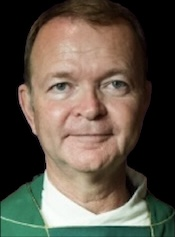
Fr. Kevin presents Pentecost as the descent of courage, framing the gift of Fortitude through the iconic image of “Tank Man” in Tiananmen Square. He argues that courage is not the absence of fear, but the “form of every virtue at the testing point.” Moving from global history to personal spirituality, he highlights that true courage is found in the “weak” acts of forgiving, begging for forgiveness (citing John Paul II), changing course (citing Mother Teresa), and knowing when to step down (citing Benedict XVI). Ultimately, he defines the opposite of courage as conformity, calling the faithful to be “living fish” who swim against the flow of a crushing world.
HOMILY HELPER
Suggestions for writing your own homily using insights and themes from Fr. Kevin Rettig’s homily.
Fr. George Smiga
Pentecost Sunday (A)
Finding Our Fire

Fr. George Smiga draws a direct parallel between the frightened Apostles huddled in the Upper Room and the modern experience of isolation during a global crisis. He emphasizes that the Holy Spirit descends not primarily to console, but to empower. Highlighting that each disciple receives an individual tongue of fire, he argues that every believer has a unique mandate and a specific “job” to do. Whether it is the heroism of healthcare workers or the simple, consistent outreach of an elderly woman, the Spirit’s fire is found in the dedicated fulfillment of our particular roles in the lives of others.
HOMILY HELPER
Suggestions for writing your own homily using insights and themes from Fr. George Smiga’s homily.
Additional Homilies
Pentecost Sunday (A)