Homilies
Homilies
October 18, 2026
⭐⭐⭐ Cancer’s Crucible—Pope Leo XIV


29th Sunday of Year A

Looking for the perfect homily opener? Each week, TWTW features standout anecdotes from Fr. Tony Kadavil’s longstanding collection, along with a few fresh picks of our own.
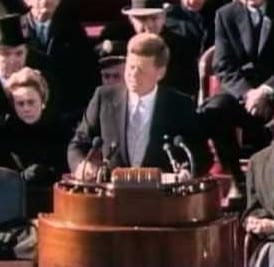
Ask Not What…
In his Inaugural Address on January 20, 1961, John F. Kennedy, the newly-elected President of the United States, gave the famous challenge: My fellow Americans, ask not what your country can do for you; ask what you can do for your country.
SCRIPTURAL CONNECTIONS
- The Dual Call of Duty
- Giving vs. Taking
- Human Agency as Stewardship
- Integrity and Limits of Earthly Evaluation
Papal Homilies / Catechism
29th Sunday of Year A


Featured Homilies
Deacon Peter McCulloch
29th Sunday of Year A
✍️ Giving to Caesar, Giving to God
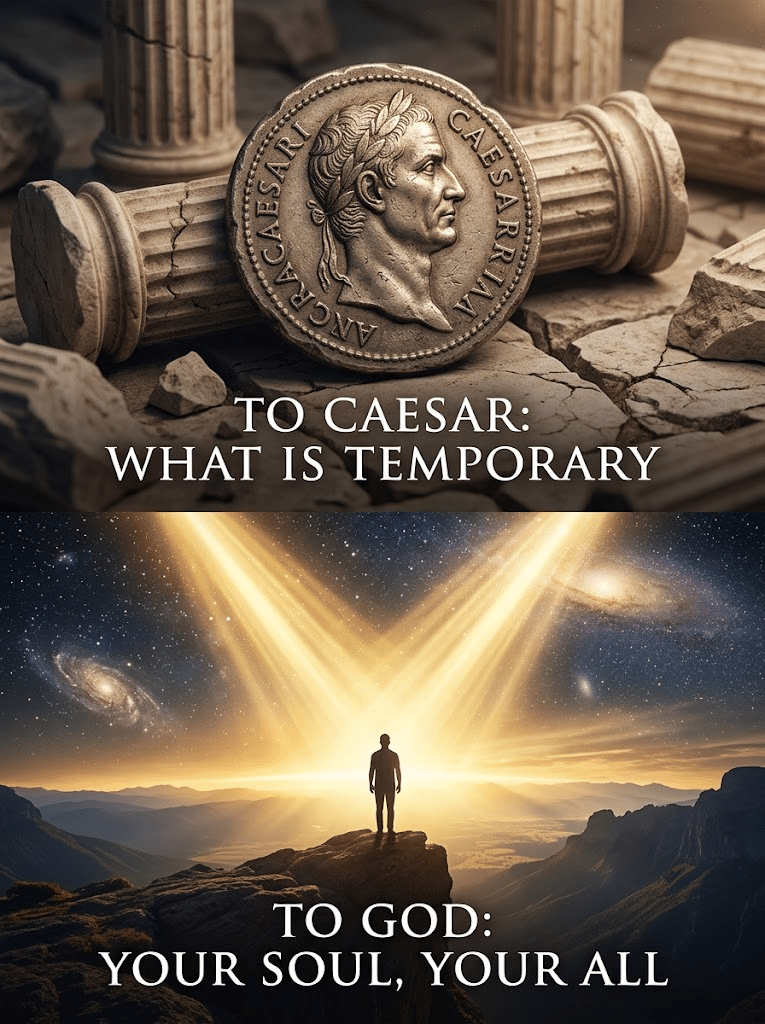
SUMMARY (2023): Deacon Peter examines Jesus’ famous response to the Pharisees and Herodians regarding the Roman census tax: “Give back to Caesar what belongs to Caesar, and to God what belongs to God.” Seeking to trap Jesus with a politically dangerous question, his opponents present a Roman denarius. Jesus exposes their hypocrisy by noting that the coin bears the image and blasphemous inscription of Emperor Tiberius. Just as the coin belongs to the emperor whose image it carries, human beings belong entirely to God, having been created in His divine image (Genesis 1:27).

Click to Enlarge
Bishop Robert Barron
29th Sunday of Year A
▶️ The Coin Belongs to Caesar,
But Caesar Belongs to God
Friends, on this Twenty-ninth Sunday of the year, our Gospel features the question from the Pharisees about paying taxes. In response to the trap, Jesus offers one of the most famous one-liners in history: “Repay to Caesar what belongs to Caesar and to God what belongs to God.” His answer didn’t automatically solve the problem of the relationship between church and state, but it did point the way through two opposite extremes, both of which are predicated on a false understanding of how God relates to the world.
Watch the video, then dive deeper with TWTW study materials below:
- Visuals: 5 companion infographics to follow along with the message
- Transcript: Full sermon text for reading and reference
- Discussion Guide: 25 questions tailored for small groups and classrooms
Bishop James Misko
29th Sunday of Year A
▶️ Return to God What is God’s

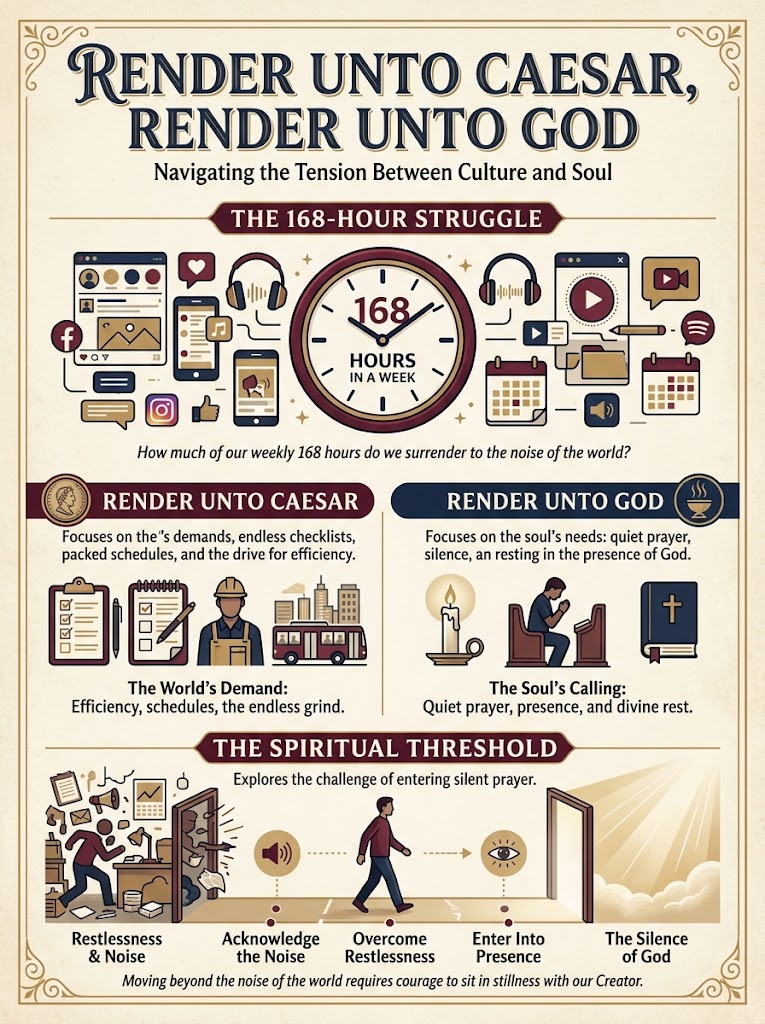
SUMMARY (2026): Reflecting on rendering unto Caesar and unto God, Bishop Misko illustrates how modern culture and efficiency overpower spiritual life. Citing Thomas Merton and Henri Nouwen, he warns that obsessions with productivity and entertainment reduce prayer to an afterthought. While believers easily dedicate hours to careers and civic duties, quiet communion with God feels demanding and foreign. Yet, Bishop Misko explains that the restlessness felt in silence is not a failure, but an essential threshold where the soul begins returning to God what is rightfully His.
In the News
29th Sunday of Year A
Cancer’s Crucible—
Faith, Hope, and Love
Thessalonians 1:1-5b
Saint Paul begins his letter to the Thessalonians not from an ivory tower of ease, but from the raw crucible of apostolic labor. He writes to a community born in strife, yet flourishing in grace. His words do not trade in cheap optimism; they are forged in reality:
“We give thanks to God always for all of you… unceasingly calling to mind your work of FAITH and labor of LOVE and endurance in HOPE of our Lord Jesus Christ.”
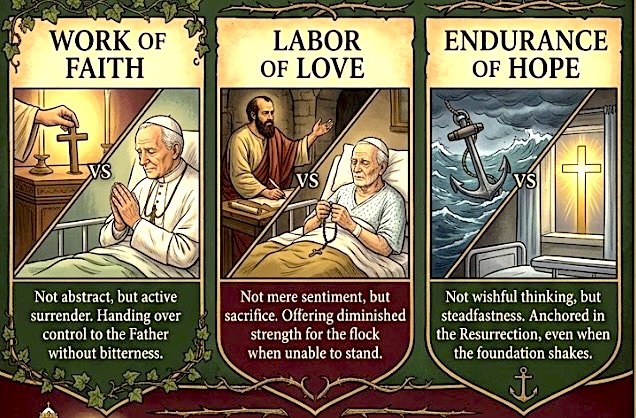
Notice the active weight Paul gives to these three theological virtues. Faith is not an abstract concept; it is a work. Love is not mere sentiment; it is a grueling labor. Hope is not wishful thinking; it is endurance—a steadfast refusal to collapse when the foundation shakes.
This is precisely where the Word of God intersects with the bulletin from Rome: our Holy Father, Pope Leo XIV, has been diagnosed with lung cancer, facing surgical resection of his lung and a grueling recovery. Cancer is the ultimate crucible for the theological virtues.
When a diagnosis strips away control, the work of faith means handing over the outcome to the Father without bitterness or despair. When physical vitality wanes and every breath requires conscious effort, the labor of love persists as the Pope offers his diminished strength for the flock, interceding from a hospital bed when he cannot stand at the ambo. And in the face of an uncertain prognosis, the endurance of hope anchors his soul—not in a clean scan, but in the resurrection of Jesus Christ.

KGUN9 (1:43) - Bishop James Miscoco from Tucson says Pope Leo’s lung cancer diagnosis is a challenge that tests and purifies faith. He emphasizes that God never leaves people to face their challenges alone.
The Fragility of Breath and the Wounded Shepherd
There is an unavoidable, painful poignancy in an affliction of the lungs. The breath—the pneuma, the ruah of God—is the very vehicle of life and proclamation. Scripture tells us that God formed the human creature from the dust of the ground and breathed into his nostrils the breath of life. It is with our breath that we profess our faith, with our breath that the priest elevates the Eucharistic prayer, and with breath that the Successor of Peter exercises his office to teach, govern, and sanctify. To suffer in the lungs is to feel our fundamental fragility with every single inhalation.
When a shepherd suffers in his body, the whole flock feels the vulnerability. It reminds us that the Vicar of Christ is not an untouchable monarch, but a fellow pilgrim wrapped in mortal clay. Yet, as Paul reminds us today, it is precisely within this fragile vessel that God’s election becomes unmistakable: "knowing, brothers and sisters loved by God, how you were chosen. For our gospel did not come to you in word alone, but also in power and in the Holy Spirit and with much conviction."
An Opportunity for Grace: Faith Purified
As the Holy Father lay on the operating table, Bishop James Misko led a liturgy of prayer in Tucson, gathering the faithful to intercede for the Pope and every member of his surgical team. When the grave confirmation of cancer came, Bishop Misko offered an insight that sounds almost counterintuitive to our modern world: a diagnosis like this is fundamentally an opportunity for grace.
When cancer strikes, it strips away our illusions of self-sufficiency. It confronts us with the ultimate opportunity to give ourselves completely over to God, anchoring our hearts in the certainty that He never abandons us to face our trials alone.
Reflecting on a recent meeting with Pope Leo in Rome, Bishop Misko recalled the quiet depth of his pastoral spirit: a shepherd who is deeply calm, who looks you directly in the eye, who truly listens, and who imparts a genuine, supportive presence. And that presence raises the inevitable, aching question: Why does cancer strike the Pope?
God does not intervene to banish every cancer from our earthly existence; if that were His design for this fallen world, He would have eliminated it already. God permits illness for one redemptive purpose: to purify our faith. He permits the fire so that our faith is not cheap, theoretical, or shallow, but qualified—tempered and proven in the crucible of real suffering. Even now, as the Holy Father convalesces in his hospital room, he is living what he has preached. He is discerning how this cross becomes an integral part of his apostolic ministry—teaching the Church and the world what it means to bear cancer and remain steadfastly faithful.
Beyond Word Alone: The Authenticating Cross
The Gospel never reveals its true power when life is effortless. Anyone can proclaim faith when health is robust and the road ahead is smooth. Anyone can speak of hope when nothing tests our resilience. But when a tumor invades, when a surgeon’s scalpel must excise diseased tissue, when breath becomes measured and labored—that is when the Gospel is stripped of mere rhetoric. It ceases to be "in word alone."
In Pope Leo’s diagnosis and physical diminishment, we witness the living reality of the Thessalonian virtues. We see the work of faith that surrenders to medical vulnerability without despair. We see the labor of love that continues to carry the universal Church from a hospital bed. And we see that stubborn, supernatural endurance in hope which declares that our destiny is never dictated by an oncology report, but by the risen Christ.
The cross is not an interruption to the apostolic ministry; it is its authenticating seal. Just as Christ’s most powerful word from the cross was uttered with dying breath, the witness of a suffering Pope speaks louder than encyclicals or decrees. His wounded lung becomes a sanctuary where the Holy Spirit works with quiet conviction, challenging a secular culture that equates human dignity with physical utility. The Gospel proclaims the divine paradox: when we are weak, then we are strong, because Christ’s grace is sufficient.
Our Altar, Our Shepherd, Our Call
As we gather around this altar today, we join Paul, Silvanus, and Timothy—and all our brother bishops—in praying unceasingly for our Holy Father. We pray for his healing, for the restoration of his breath, and for the wisdom of the doctors and nurses attending him.
Above all, let his suffering awaken our own baptismal vocation. Let us refuse to live a discipleship of words alone. May our faith be an active work, our love an untiring labor, and our hope an unshakeable endurance that breathes deep of the Holy Spirit, anchored always before our God and Father.
This essay based on this Sunday's readings and current events was developed collaboratively using artificial intelligence alongside human pastoral curation and theological editing. It is not intended as a finished script, but as a catalyst to spark reflection, provide thematic inspiration, and support preachers in crafting their own authentic homilies for their communities.
The Fragility of Breath and the Wounded Shepherd
An Opportunity for Grace: Faith Purified
Beyond Word Alone: The Authenticating Cross
Our Altar, Our Shepherd, Our Call
Fr. Mike Schmitz
29th Sunday of Year A

SUNDAYS WITH ASCENSION: Fr. Mike Schmitz is the chaplain for the Newman Center at the University of Minnesota Duluth (UMD) and serves as the Director of Youth and Young Adult Ministry for the Diocese of Duluth.
▶️ Apostrophe S: We are Claimed by God
Jesus tells us to give to Caesar what belongs to Caesar and to give to God what belongs to God. But if a coin bears Caesar’s image, whose image do we bear? We were created in God’s image and purchased at a price. Before we ever knew Him, we already belonged to Him. We are not our own, and we are not on our own.
Fr. Michael Chua
29th Sunday of Year A
✍️ Give to God What Belongs to God

EXCERPT (2023): The more we reflect on today’s passage, the more we realise that everything important about human life belongs not to Caesar but to God: our intellect, our talents, our free will, the people we love, Truth, the beauty and goodness in the world, our soul, our moral integrity and of course, our hope for Eternal Life. These are the things worth struggling to ennoble and defend, and none of them came from Caesar or anyone or any government who succeeded him. We owe civil authority our respect and appropriate obedience. However, that obedience is limited by what belongs to God. In reality, all belongs to God and nothing — at least nothing permanent and important — belongs to Caesar. Why? Because just as the coin bears the stamp of Caesar’s image, we bear the stamp of God’s image in baptism. We belong to God, and only to God.
Dominican Blackfriars
29th Sunday of Year A
✍️ Seeing to the Heart
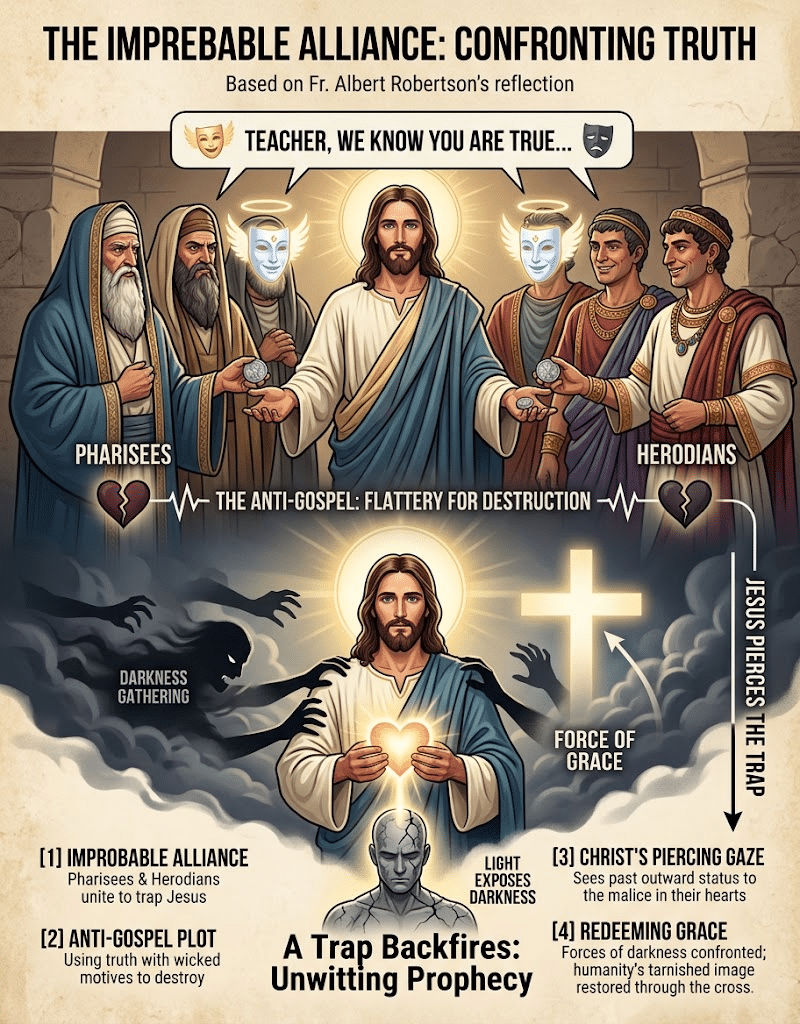
SUMMARY (2020): Fr. Albert Robertson, O.P. highlights the improbable alliance between the Pharisees and Herodians, natural adversaries who unite to trap Jesus ahead of His Passion. Although they address Him with theological truth—calling Him sincere and impartial—their flattery constitutes an “anti-Gospel” designed for destruction. Ultimately, their scheme backfires. By acknowledging that Jesus looks beyond external status, they unwittingly prophesy their own exposure, as Christ perceives their hidden malice. Beyond debates on church and state, the passage reveals the gathering forces of darkness confronting Jesus, who looks past outward appearances to redeem humanity’s tarnished image and restore it through grace.
Fr. Austin Fleming
29th Sunday of Year A
✍️ Everything Belongs to God
Fr. Austin Fleming
EXCERPT (2014): Every good in our lives is a gift- and every good gift comes from God. Every gift from God is, if you will, on loan to us: something for us to be grateful for, to reverence, to use well, to share – or to give away.
And if you’re still sitting there trying to come up with something you think of as yours that doesn’t fit this category, then keep in mind that even life (your life, my life) is a gift of God on loan to us: a gift to be grateful for, to reverence, to use well, to share – or to give away.
So I don’t need a W-2 or a 1099 or a 1040 to figure out what belongs to God, what I owe God. Everything I have, all my stuff, belongs to God – and I owe God – for the whole of it.
Monsignor Peter Hahn
29th Sunday of Year A
▶️ Whose Image Do You Bear?
Msgr. Peter Hahn
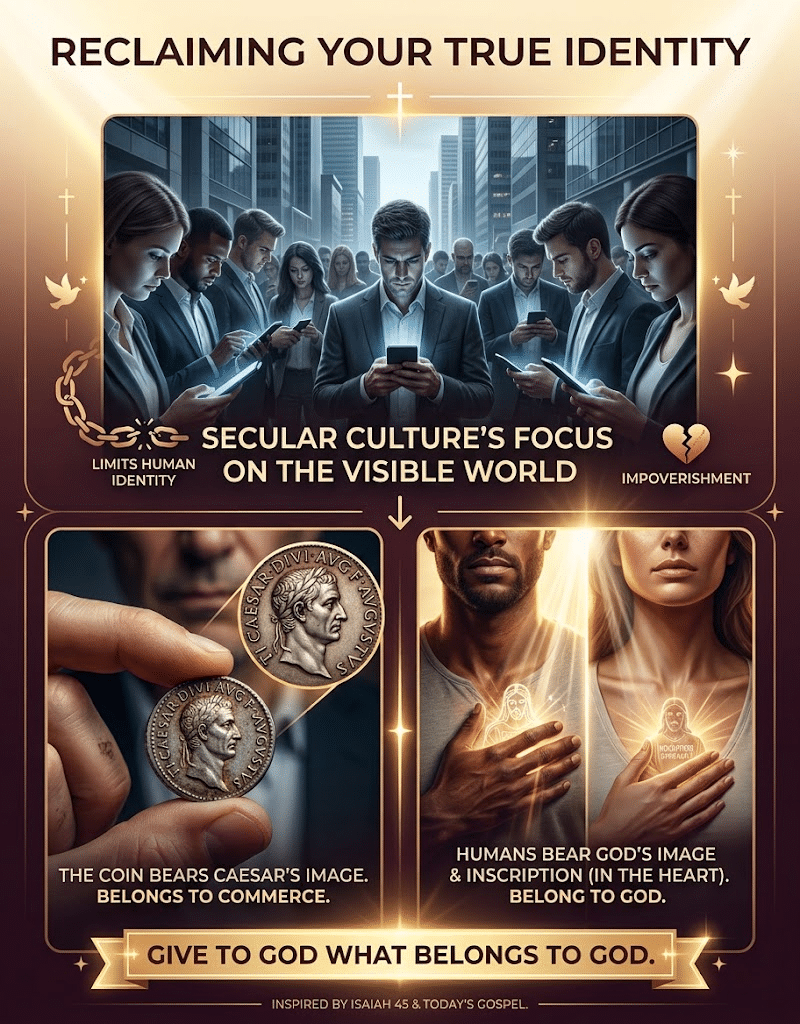
SUMMARY (2017): Msgr. Hahn cautions against a secular culture that reduces life to the material world, stripping away human dignity and our eternal destiny. Reflecting on Christ’s response to repay Caesar what is Caesar’s and God what is God’s, he emphasizes that while coins bear the emperor’s likeness, human beings bear the indelible image of God. Just as God providentially guided history through King Cyrus, He remains sovereign over all creation. Earthly duties and temporal empires inevitably pass away; true peace is found only by surrendering our lives to the Lord, trusting His providence, and honoring Him with worship, gratitude, and steadfast faith.
Fr. Charles E. Irvin
29th Sunday of Year A
✍️ God’s Party for Us

Fr. Charles E. Irvin
SUMMARY: Fr. Irwin examines Jesus’ encounter with the Pharisees and Herodians over paying Roman taxes, highlighting that Jesus exposed His opponents’ hypocrisy without removing secular society from God’s moral authority. While acknowledging that the separation of church and state protects religious freedom in America, Fr. Irwin argues that this principle has been distorted into “freedom from religion,” pushing faith out of civic life.
He points to key modern challenges, including withholding federal disaster relief from faith-based organizations, contraceptive mandates imposed on the Little Sisters of the Poor, and political scrutiny of judicial nominees’ personal beliefs. Grounding his argument in founders like Thomas Jefferson and Abraham Lincoln, Fr. Irwin maintains that our constitutional republic requires a strong moral foundation under God’s purview. Ultimately, he calls believers to actively live out their faith in the public square and fulfill their civic duty by voting.
Fr. Tommy Lane
29th Sunday of Year A
✍️ Giving to Caesar and to God

Fr. Tommy Lane
SUMMARY (2023): Reflecting on Matthew 22:21, Fr. Lane explores the principle of giving to Caesar what belongs to Caesar and to God what belongs to God, which has historically guided Church-State relations. He warns that modern efforts to squeeze God out of society—such as infringing on religious freedom and conscience rights—yield damaging consequences, reminding listeners through Jesus’ exchange with Pilate that civil authority is ultimately subject to God.
Christians live as “dual citizens,” holding responsibilities both to earthly nations and to heaven. Giving to God does not prevent active participation in improving the world; on the contrary, history shows that faith and secular progress harmonize when each respects its domain. Highlighting priest-scientists like Fr. Caselli and Fr. Callan, Fr. Lane illustrates that faith and science work cooperatively. While science advances human life, only God reveals its ultimate purpose and meaning.
Fr. Langeh, CMF
29th Sunday of Year A

▶️ God or Caesar? Everything belongs to God!
EXCERPT (2020): Our Gospel passage today ends with the words: ‘Very well, give back to Caesar what belongs to Caesar – and to God what belongs to God.’ This famous statement has been interpreted in so many ways. As a way of driving religious authorities from “politics”, this is often cited. Those who still hand on traditional practices and rituals, wanting to justify their acts often cite, etc. Rulers use this to keep church authority subservient to that of the nation. Some pertinent questions arise: Must we obey all the laws of our nation? When there are laws that transgress God’s Law or our Christian Values, are we obliged to obey them? In effect, what belongs to God?
Msgr. Charles Pope
29th Sunday of Year A
✍️ God and God Alone
Msgr. Charles Pope
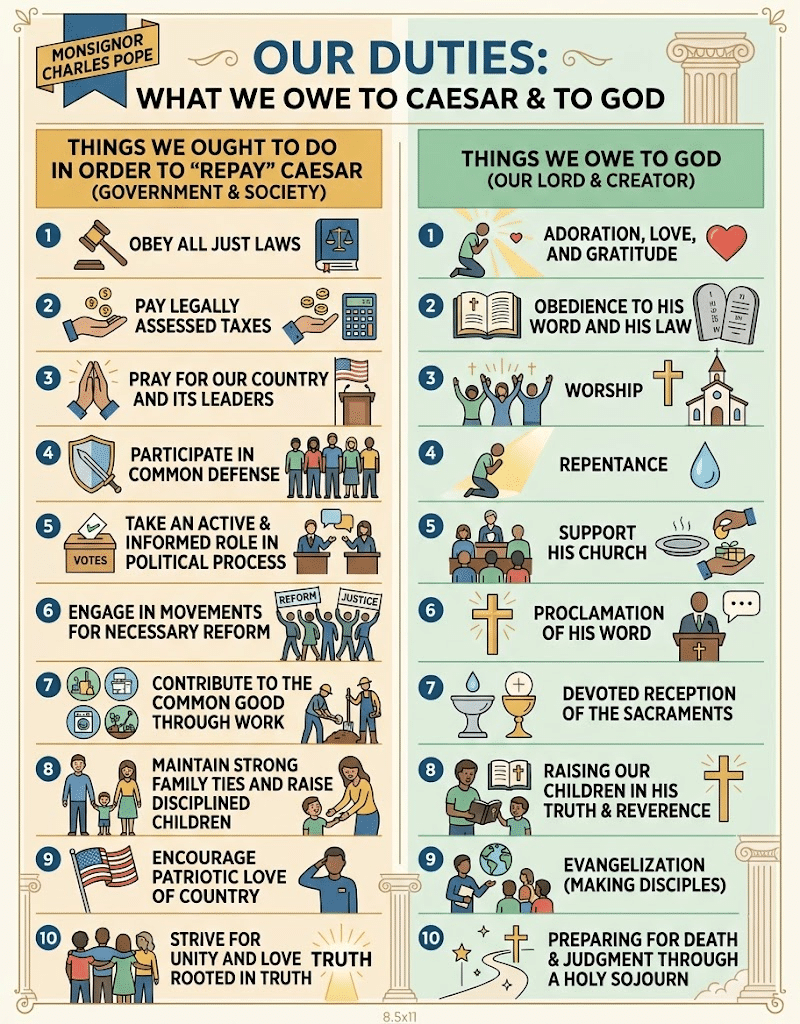
EXCERPT (2023): The Gospel for Sunday contains lots of interesting juxtapositions: hatred for Jesus but grudging respect, real questions vs. rhetorical ones, politics and faith, duties to Caesar and duties to God. The word “juxtaposition” comes from the Latin juxta, meaning “near” and positio, meaning “place” or “position”… Let’s look at the juxtapositions in today’s Gospel, concentrating most of our attention on our duties to God as compared to our duties to “Caesar.”
- The Plotting of the Peculiar Partners
- The Praise that is actually a Perilous Provocation
- The Protesting of their Pretext and Pretense
- The Pointed Proclamation of the Principle
Father Kevin Rettig
29th Sunday of Year A

▶️ Give to God
ABSTRACT (2020): A folksy tale tells of Jesse James giving a penniless widow money to pay off her cruel debt collector, only to ambush the collector afterward to steal the cash back. While financial debts remain a frightening reality, Jesus addressed obligation by telling his followers to render to Caesar what is Caesar’s, but to God what is God’s. Unlike coins stamped with Caesar’s portrait, human souls bear the divine imprint. Giving to God means offering our very best and honoring that sacred image through our unique gifts, identities, and lives, ultimately returning ourselves to our Creator.

Fr. George Smiga
29th Sunday of Year A
✍️ Cyrus: God’s Anointed

Matthew 22:1-14
EXCERPT (2002): Sometimes we limit God’s activity to places where it is obvious. We know that God is present in the Eucharist, as we gather together to share the meal that Jesus gave us. We believe that God is active in the hearts of those who accept Jesus and treasure his word. We are confident that God is working when people of faith act with kindness and oppose what is unjust. All fine and good. But Isaiah says we must not stop there. Even people who are secular and non-religious can be used by God for God’s purposes. Even those who wield power and influence without any thought of God can become God’s blessing to us. Most of us can confirm this from our own experience. When we look at our lives, how often have the words or actions of someone without faith given us insight or comfort? We can receive guidance and hope from the advice of a secular person at school or at work, a song we hear on Spotify which is written by a non-believer, an act of kindness by a non-Christian that comes at a crucial time in our lives. God is God, and there is no other.

Religious Orders
29th Sunday of Year A

Featured Priests
SCROLL FOR MORE
Whose Image Do You Bear?
Reading: Matthew 22:15–21
Augustinian Theme: Interiority (Interioritas)
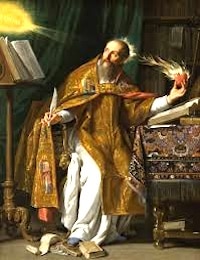
When the Pharisees hand Jesus a Roman coin, they seek a political trap. But Christ turns the coin in His hand, cuts past their petty rivalry, and pierces straight into the human heart. “Whose image and inscription is this?” he asks. They answer, “Caesar’s.” And Jesus responds with words that echo across centuries: “Repay to Caesar what belongs to Caesar and to God what belongs to God.”
Saint Augustine reflected often on this encounter, drawing from it a profound question for our daily lives: Caesar demanded back the silver coin because his likeness was stamped in cold metal. But what belongs to God?
You do.
Augustine reminds us: “Caesar seeks his image; God seeks His.” We are created in the image and likeness of the Living God. Yet how often do we wander outside ourselves, scattering our thoughts across worldly anxieties, daily noise, and passing applause? We fret over earthly debts and status, exhausting our spirits while neglecting the treasury within.
Augustine discovered that God is not found by scanning distant skies; He is intimior intimo meo—closer to us than we are to our own souls. But to discover Him, we must practice interiority. We must have the quiet courage to return home to our hearts, step out of the frantic marketplace, and sit in sacred silence.
Look beneath the dust of routine and regret. The divine imprint stamped upon your soul at creation has never vanished; it only waits to be uncovered and polished by grace. Caesar may claim his currency, but your heart was made for a far greater King. Turn inward today. Offer back to God what has always been His: your whole mind, your whole heart, and the living image He longs to embrace.
Featured Friars & Monks
SCROLL FOR MORE
Faith Made Visible in the Daily Rhythm
Reading: 1 Thessalonians 1:1–5b
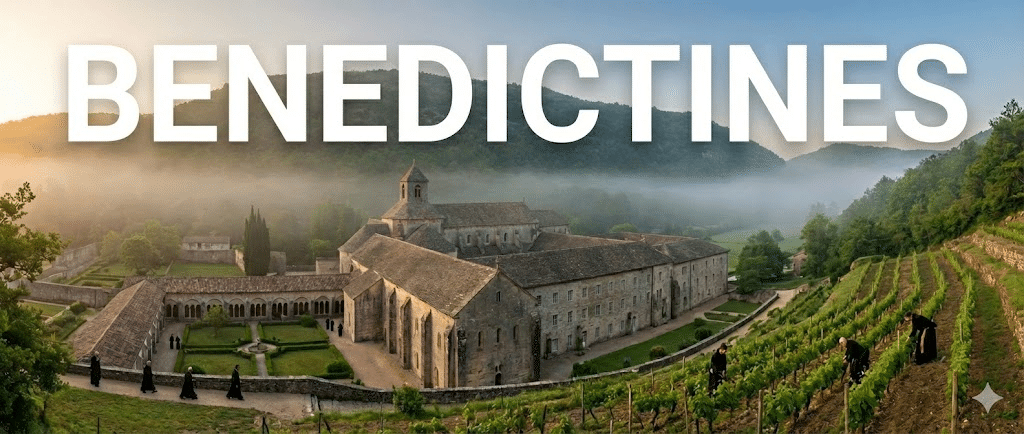
Benedictine Theme: Prayer and Work (Ora et Labora)
In his greeting to the church at Thessalonica, Saint Paul offers a prayer of profound gratitude, giving thanks for three inseparable realities: their “work of faith and labor of love and endurance in hope.” Notice that Paul does not separate spiritual life from active toil. Faith is not an abstract sentiment confined to the head; it works. Love is not merely a warm affection; it labors. Hope is not passive waiting; it endures through every ordinary hour.
Centuries later, Saint Benedict captured this very truth in the enduring rhythm of monastic life: Ora et Labora—prayer and work. Benedict understood human nature deeply. Left solely to contemplation, the spirit risks drifting into idle daydreams; left solely to labor, the soul quickly burns out in exhaustion and self-reliance. But when interwoven, prayer sanctifies our labor, and honest work grounds our prayer.
In the Benedictine vision, no task is too small to be sacred. Saint Benedict instructed that even the simple garden tools and kitchen pots should be handled with the same reverence as the golden vessels of the altar. When we wash dishes, care for a family member, draft a project at a desk, or mend what is broken, our daily labor becomes our labor of love. Work is transformed into a living liturgy.
Paul reminds us that the Gospel came “not in word only, but also in power and in the Holy Spirit.” That divine power does not ask us to flee our daily duties, but to sanctify them. As you enter this coming week, offer up the steady labor of your hands alongside the quiet intentions of your heart. Let your daily work be an ongoing prayer, and let your prayer bear fruit in enduring, active love.


The God Who Girds Us in the Dark
Reading: Isaiah 45:1, 4–6
Carmelite Theme: The “Dark Night” and Purification
Through the prophet Isaiah, the Lord speaks words of startling mystery to Cyrus, a foreign king: “I have girded you, though you did not know me, that men may know, from the rising of the sun and from the west, that there is none besides me; I am the Lord, and there is no other.”
God is at work long before Cyrus recognizes the divine hand. The King of the universe directs history, breaks iron bars, and guides footsteps through unfamiliar, shadowy terrain—even while the traveler remains unaware of the Sacred Presence holding him up.
In the Carmelite tradition, Saint John of the Cross named this experience the Dark Night. We often assume that closeness to God must always feel like luminous warmth, emotional consolation, or clear vision. But Carmel teaches us that when our senses grow quiet and the familiar lights of our feelings flicker out, God has not abandoned the path. Rather, He is purifying our vision so we might seek Him for who He truly is, not merely for the spiritual gifts He gives.
In the dark night of spiritual dryness, fatigue, or silent waiting, the Lord is quietly girding you. Stripping away our illusions of self-reliance, He draws us past exterior noise into the profound stillness of faith. Like Cyrus, we may feel as though we “do not know” how God is operating in our current trials or where the journey is heading.
Take heart in the silence. Carmel whispers that the darkness is not absence—it is the shadow of His protective hand. Rest your restless heart in pure trust. The Lord who creates light and permits the dark is forming in you an unshakeable love, proving that there is none beside Him.

Featured Friars & Websites
SCROLL FOR MORE
The Truth That Sets the Soul Free
Reading: Matthew 22:15–21
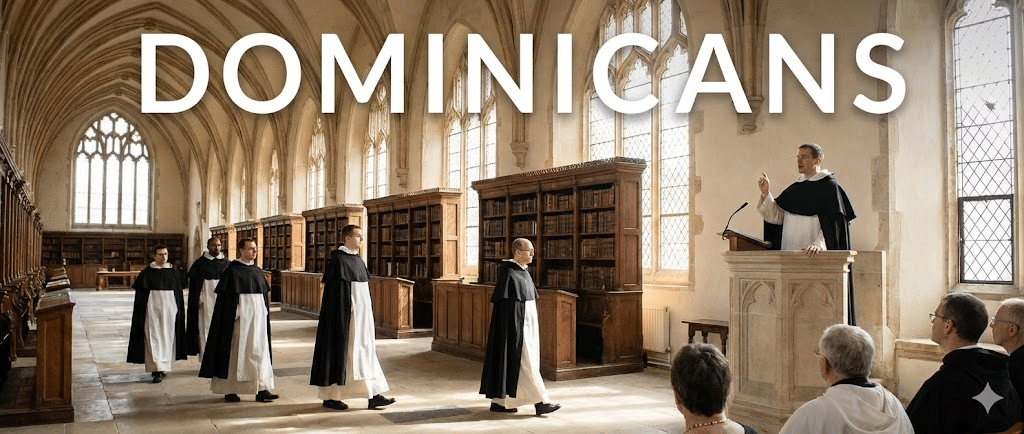
Dominican Theme: Veritas (The Pursuit of Truth)
The Pharisees approach Jesus not in search of wisdom, but to entangle Him in human opinion: “Is it lawful to pay taxes to Caesar or not?” They present a false dilemma designed to force a political compromise. But Christ, who is Truth incarnate, refuses to be trapped by deceit. He looks past their flattering words and calls them directly into the light: “Why put me to the test, you hypocrites? Show me the coin.”
In the Dominican tradition, the motto Veritas is not an abstract slogan; it is a sacred pursuit. Saint Dominic understood that error and confusion thrive in darkness, but they are instantly dispelled when brought before the clear light of divine truth. Truth demands that we look beneath the surface of worldly arguments and see reality as it truly is before God.
Holding the Roman denarius, Jesus distinguishes between two distinct realms of authority: “Repay to Caesar what belongs to Caesar and to God what belongs to God.” Caesar’s face is etched into perishable silver, claiming temporal allegiance. But who holds claim over the human soul?
Veritas reveals the profound answer: we belong entirely to God. Stamped not with the fleeting insignia of an empire, but with the eternal image of our Creator, our ultimate dignity can never be owned, purchased, or silenced by worldly powers.
As followers of Christ, we are called to bring this liberating truth into our daily conversations, workplaces, and communities. The world often tempts us with easy compromises, cynicism, and half-truths. Yet like Dominic, we must seek truth fearlessly, grounded in prayer and illuminated by Scripture. Let us live with minds clear and spirits unbound, giving this world its due diligence, but reserving the full devotion of our lives for the God who authored our very being.

Featured Websites
SCROLL FOR MORE
Good News in Flesh and Blood
Reading: 1 Thessalonians 1:1–5b
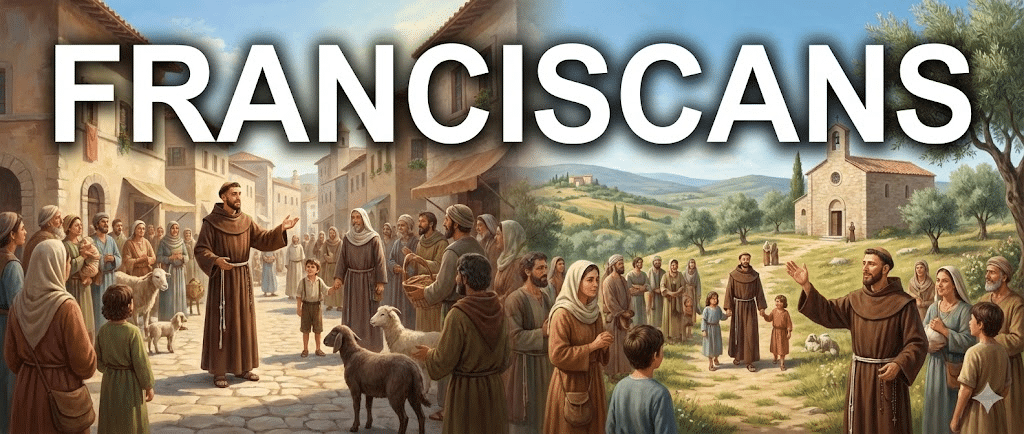
Franciscan Theme: Gospel Living (Incarnational Faith)
Saint Paul begins his letter to the Thessalonians with warmth and deep affection: “Our gospel did not come to you in word only, but also in power and in the Holy Spirit and with full conviction.”
For Saint Francis of Assisi, this verse captures the beating heart of discipleship. Francis never intended to write a complex theological treatise; his entire rule was simply “to observe the Holy Gospel of our Lord Jesus Christ.” He knew that words alone, no matter how eloquent, remain hollow unless they are given flesh. The Gospel became real to the world when God stepped into human poverty in the manger of Greccio, and it continues to come alive whenever Christ’s love is made tangible in our everyday lives.
Notice how Paul describes the Thessalonians’ faith: it is a “work of faith and labor of love and endurance in hope.” Faith for Francis was never an abstract theory to debate, but an incarnational journey to walk barefoot. It meant getting your hands dirty in service, stepping into the margins to embrace the leper, and greeting every stranger as a beloved brother or sister. When we live simply, forgive readily, and extend peace to someone who tests our patience, the Good News ceases to be mere ink on ancient parchment. It becomes living, breathing fire.
The world today does not need more speeches or digital noise. It is hungry for authentic witness—for souls whose kindness reveals the tenderness of Christ. As we go forth this week, let us take Saint Francis’s joyful call to heart. Do not let the Gospel remain trapped in words alone. Let it be seen in the patience of your listening, the gentleness of your hands, and the quiet charity of your daily life.

Featured Websites
SCROLL FOR MORE
The Unseen Presence in Every Frontier
Reading: Isaiah 45:1, 4–6
Jesuit Theme: Finding God in All Things
Through the prophet Isaiah, the Lord utters words that disrupt our comfortable spiritual boundaries: “I am the Lord, and there is no other… I have girded you, though you did not know me.” God is speaking not to a Hebrew prophet or an anointed priest, but to Cyrus of Persia—a foreign ruler who does not worship the God of Israel. Yet the Lord walks beside him, opening doors and shaping history through unexpected hands.
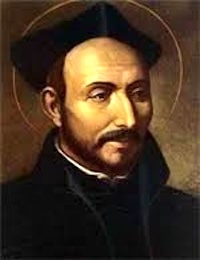
Saint Ignatius of Loyola built a spirituality around this very mystery: Finding God in All Things. For the Jesuit, God is not confined to cathedral walls, sacred texts, or familiar rituals. God is already actively laboring in the heart of creation, moving through culture, science, human labor, and history itself. Long before we arrive on any scene, grace is already there, quietly preparing the soil.
Like Cyrus, the people and circumstances we encounter every day may not carry explicit religious labels. We meet God on crowded commute routes, in difficult workplace meetings, within modern technology, and across complex conversations with people who see the world differently than we do. When Isaiah declares that God forms the light and creates the darkness, he reminds us that nothing human, natural, or worldly lies beyond the reach of divine providence.
This reality calls us to holy attentiveness. Rather than retreating in fear from a rapidly changing culture, Ignatius urges us to step forward as contemplatives in action. Look closely at your week ahead. Where might God be girding you in places you least expect? Cultivate eyes to see His fingerprints in the ordinary, the secular, and the unexpected. Recognize that in every encounter, the living God is already waiting to be discovered, loved, and served.
Featured Websites
SCROLL FOR MORE
The Welcoming Hand Beneath the Law
Reading: Matthew 22:15–21
Redemptorist Theme: Gentle Moral Theology and Compassionate Confession
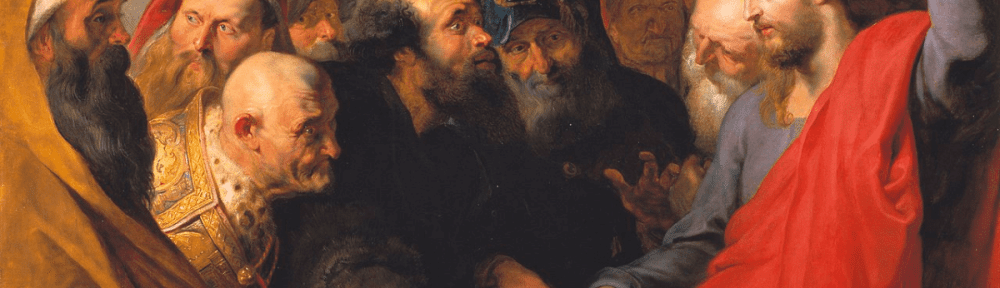
The Pharisees and Herodians approach Jesus with a question wrapped in malice: “Is it lawful to pay taxes to Caesar or not?” They do not seek spiritual guidance; they seek to trap Him in legalistic crossfire. In their world, religion had become a rigid web of scrutiny, where any misstep invited condemnation.
Yet look at how Christ responds. He asks for a coin, cuts through their calculating traps, and delivers a truth filled with liberation: “Repay to Caesar what belongs to Caesar and to God what belongs to God.”
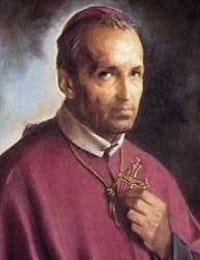
Saint Alphonsus Liguori founded the Redemptorists to free souls from that very same spirit of harsh legalism. In an age poisoned by cold, guilt-driven Jansenism, Alphonsus stepped into the confessional not as a severe magistrate holding a balance scale, but as a tender physician binding up wounds. He reminded a fearful Church that our God is not an exacting tyrant waiting to catch us in a mistake, but the Most Holy Redeemer whose mercy is plentiful (Copiosa Redemptio).
Caesar’s coin is cold silver, marked by power and civic duty. But what belongs to God? You do. And unlike earthly empires that demand perfection and threaten punishment, God claims our hearts not to crush them, but to heal them. When Jesus asks us to give God what is God’s, He invites us to surrender our fragile, imperfect lives into hands of infinite tenderness.
Do not let guilt or past failings keep you at a distance. If you feel battered by life’s demands or weighed down by your own stumbling, remember Alphonsus’s gentle counsel: approach the Lord with immense confidence, as a wounded child runs into the arms of a loving parent. God does not demand cold perfection; He asks only for your trusting heart, ready to be restored by His boundless mercy.
Additional Homilies
29th Sunday of Year A
| HIGHLIGHTS


Fr. George Corrigan, OFM
Flow and Direction
Taxes and Faith
The Question
The Response
An Underlying Thought
Giving Back
In Whose Image..
Msgr. Joseph Pellegrino (PDF) | Archive
Render to Caesar and to God What is God’s (2026)
Doing Our Bit (2017)
Forming Citizens (2014)
Fr. Michael Fallon, MSC | Archive
29th Sunday in Ordinary Time (PDF)
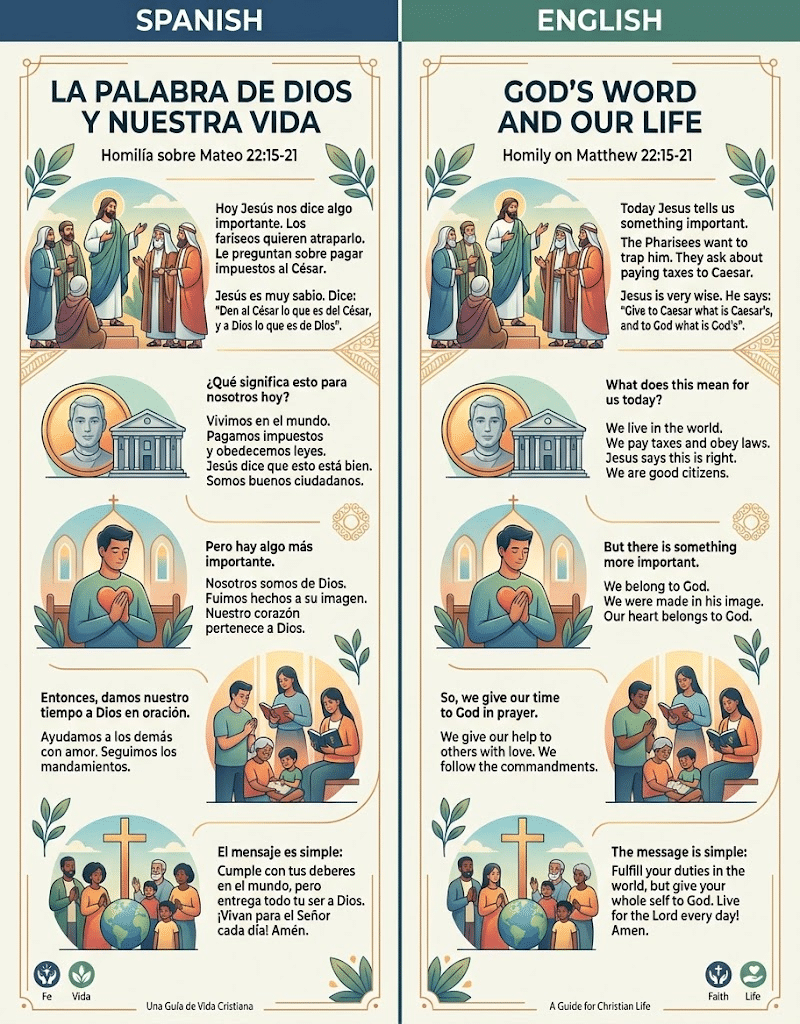
Bilingual Homily
29th Sunday of Year A
| HIGHLIGHTSA brief homily for those who are learning Spanish or English. The grammar is kept uncomplicated and uses present-tense vocabulary to ensure it is easy to deliver. The homily focuses on the practical, everyday meaning of Sunday’s Gospel.
 Highlight text or double-click a paragraph anywhere on the site to ADD TO NOTES. You can also click ASK AI to copy your selection to the clipboard with a command prompt, ready for you to paste manually into the chat above.