Homilies
Homilies
September 6, 2026
⭐⭐⭐ The Cry of the Himalayas


23rd Sunday of Year A

Looking for the perfect homily opener? Each week, TWTW features standout anecdotes from Fr. Tony Kadavil’s longstanding collection, along with a few fresh picks of our own.

Accountability
This week’s collection explores the moral and relational imperatives of the 23rd Sunday of Year A, pairing contemporary cultural narratives with Scripture to illuminate the demands of communal vigilance, unconditional charity, and personal reconciliation.
The Watchman’s Duty:
Valery Legasov (Chernobyl)
Evan (Sandy Hook Promise)
The Debt of Love:
Unsung Hero (Thai Life Insurance)
Direct Reconciliation and Restoration:
Worlds Apart (Heineken)
Papal Homilies / Catechism
23rd Sunday of Year A




Featured Homilies
Deacon Peter McCulloch
23rd Sunday of Year A
✍️ The Gentle Art of Correction
EXCERPT: We are a family because by our baptism we all share the same heavenly Father, the same mother Mary and the same brother Jesus. That’s why in today’s Gospel Jesus says, ‘If your brother does something wrong, go and have it out with him.’ That’s also why in our first reading, God sends Ezekiel to watch over his people. His job is to protect them by speaking up if they do anything wrong or if they put themselves in danger.
We know this isn’t always easy to do. Fear and pride often stop us from giving or receiving advice. But that’s why St Paul in our second reading reminds us to always respect others, to always love our neighbours as ourselves, for we have a responsibility to them.

Click to Enlarge
Bishop Robert Barron
23rd Sunday of Year A
Bishop Barron’s Homily has moved to a separate page.
In the News
23rd Sunday of Year A
The Cry of the Himalayas:
A Global Warning
High above the plains, across the jagged spine of Nepal and the high plateau of Tibet, lies what glaciologists call the “Third Pole.” It is the world’s greatest repository of frozen freshwater outside the polar caps, feeding ten major river systems that sustain nearly two billion people.
Yet today, these majestic ridges, long revered as sacred dwelling places of peace, are weeping. Glaciers are retreating at unprecedented speeds, carving out precarious glacial lakes that threaten to burst in devastating flash floods, burying mountain villages under torrents of mud and stone. Downstream, erratic monsoons wash away fragile terraced farms, while dry seasons leave mountain wells parched.
This Himalayan crisis is not a distant, localized ecological misfortune; it is a profound moral indictment. It is the cry of creation groaning under human indifference.
The Watchman's Mandate
In today’s reading from the prophet Ezekiel, the Lord speaks with striking urgency: “Son of man, I have appointed watchman for the house of Israel; when you hear me say anything, you shall warn them for me.”
In ancient times, the watchman stood on the highest parapet of the city walls, peering into the dark horizon. While the inhabitants slept, farmed, and traded, the watchman’s duty was singular: scan for approaching peril and sound the horn. If the watchman saw the sword coming and held his peace, God warned, the blood of the fallen would be required at his hand.
Eight years ago, Pope Francis stood on the modern world's moral parapet and sounded that trumpet in Laudato si’, an urgent watchman’s call renewed and sharpened in Laudate Deum. Francis reminded us that we cannot separate the cry of the earth from the cry of the poor. When we destabilize the atmosphere through unbridled consumption and technocratic hubris, the swords of calamity strike first and hardest against the most vulnerable.
The Innocence of the Afflicted
Consider the villagers of the Khumbu Valley in Nepal or the nomadic pastoralists on the Tibetan Plateau. They contributed virtually nothing to the greenhouse gases warming the globe. Their carbon footprint is infinitesimal compared to our energy-intensive, disposable lifestyles. Yet it is their homes that are swept away by glacial lake outburst floods. It is their ancestral lands that are drying into dust.
Ezekiel’s warning dismantles the dangerous illusion of neutrality. The passage makes it clear: silence is complicity. When systemic destruction threatens life and we choose comfortable denial, we share in the guilt of the harm that follows. The wicked way from which we must turn is not merely personal, private sin; it is also the collective sin of ecological apathy—the willful blindness that shrugs at melting glaciers so long as our shelves remain stocked and our thermostats cool.
Sounding the Horn Today
o be a Christian today is to inherit the mantle of the watchman. Pope Francis calls the Church to shake off what he terms the "globalization of indifference." The watchman does not stay silent out of politeness or fear of causing discomfort. The watchman speaks out because lives depend on the warning.
What does it mean for us to sound the horn?
- Look to the high ramparts: Refuse to look away from the suffering of our brothers and sisters in Nepal, Tibet, and every frontline community bearing the cross of climate disruption. We must educate our consciences and acknowledge our shared responsibility in the web of life.
- Embrace ecological conversion: Re-examine how we live, consume, and govern our desires. Are our choices feeding the flames that melt the Himalayas, or are they rooted in restraint, solidarity, and reverence for God's creation?
- Exercise civic courage: Speak out to power by advocating for just climate policies, the rapid transition away from polluting fuels, and tangible financial support for mountain communities adapting to disasters they did not cause.
God tells Ezekiel that if the watchman sounds the warning, he saves his own soul. Faith cannot be a bunker where we hide from the groaning world. Today, the high peaks of the Himalayas are sending down their distress signal. The trumpet is in our hands. Let us not be silent.

This essay based on this Sunday's readings and current events was developed collaboratively using artificial intelligence alongside human pastoral curation and theological editing. It is not intended as a finished script but as a catalyst to spark reflection, provide thematic inspiration, and support preachers in crafting their own authentic homilies.
Ezekiel’s Mandate
The Innocence of the Afflicted
Sounding the Horn Today
Fr. Mike Schmitz
23rd Sunday of Year A

Fr. Mike Schmitz is the chaplain for the Newman Center at the University of Minnesota Duluth (UMD) and serves as the Director of Youth and Young Adult Ministry for the Diocese of Duluth. He has created an extensive amount of online video content addressing faith, morality, and culture. 2023 video courtesy of Sundays with Ascension
Fr. Michael Chua
23rd Sunday of Year A
✍️ Admonish the Sinner

Fr. Michael Chua
Homilies (2026)
If your brother sins, go and have it out with him (2020)
Where two or three are gathered, there are bound to be fights (2017)
Don’t Spare the Rod (2014)
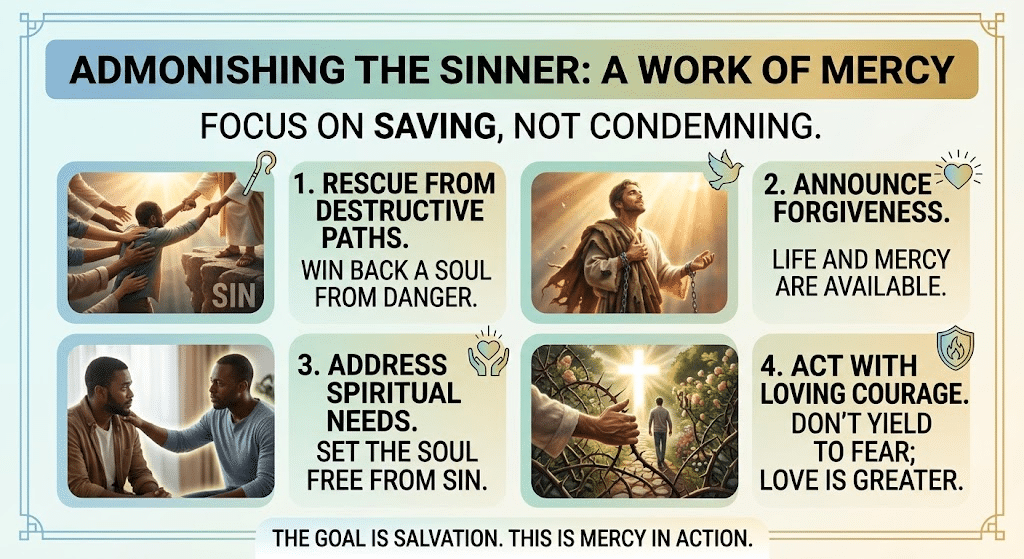
EXCERPT: To admonish others effectively, there are two points we must keep in mind. First, we must practice what we preach. In other words, we have to be working at striving for holiness and avoiding sin in our own lives if we expect others to do the same. Our words have little value if we are perceived as hypocrites – not matching words to action. The second point is to avoid the terrible attitude of self-righteousness with its judgmental view of others. Self-righteousness puts a person into the mindset of the Pharisees who were quick to condemn sin in others but overlooked it in themselves. To carry out this work of admonishing the sinner, a person must have a sense of compassion for human weakness, and we can only learn that by recognising our own weaknesses. This requires humility and honesty.
We must remember that the goal is not to tell others how terrible they are; this is, after all, a work of mercy. Neither is the goal to win an argument or to feel superior. Rather, the goal is to win the sinner back from a destructive path, to announce the forgiveness of sins available to all who repent. The goal is salvation. Even greater than all our bodily needs, is the spiritual need to be set free from sin and receive the life of God. This is why admonishing the sinner is so important. To admonish sinners is to call lovingly to those in danger and draw them back from the edge of the abyss. To avoid doing this would only betray our real intention – we cannot bear the backlash that sometimes comes when we warn people who do not want to be warned. But if we yield to this fear, we are showing that we love ourselves too much and do not love God and others enough.
Dominican Blackfriars
23rd Sunday of Year A
✍️ Structures of Love

EXCERPT: Our society seems to admire the rugged individualist, the self-made person, someone who doesn’t worry what other people think, the one who sets their own agenda and doesn’t wait to be invited to act.
Yet we also rather fear individuals like that; we wonder how much they care for the community around them, how kind they will be to vulnerable people. We might, too, want to point out that however individualistic they claim to be, they are in fact dependent on a lot of other people for their success in doing things; they are part of many networks, and couldn’t do anything without other people being around. If they deny that they are part of society, and try to live as if they aren’t, they will achieve some things, hurt many people, and will in fact be living a lie.

Fr. Austin Fleming
23rd Sunday of Year A
✍️ Love Thy Neighbor

Fr. Austin Fleming
EXCERPT: What is it that makes it so difficult for us to warn someone whom we see walking into harm’s way? And I’m not talking about grabbing the arm of someone about to walk into the path of an oncoming car. I trust we all still have the common sense to do that. But why are we so slow to act and reticent to speak – when we see someone walking into an unhealthy relationship? What silences us when we see someone we care for making poor choices and bad decisions? Why do we keep our mouths shut in conversations in which what we know to be wrong is condoned; what we believe to be false is accepted as true; what we judge unjust is defended as fair?

Monsignor Peter Hahn
23rd Sunday of Year A

▶️ The Importance of Loving Correction
Msgr. Peter Hahn
EXCERPT: How many times in our lives have we yelled out stop or look out maybe to our children maybe to some friends as they were about to do something dangerous how often did when we heard that or when we said it. They averted a kind of injury or an accident that might have happened you and I need warnings in so many ways and certainly warnings are part of the prophetic mission of Christ and his church. We all know of the fragile Human Condition. We all know how each of us is prone to sin. We all know how we can easily be mistaken and so we need warnings and correction and certainly our readings speak of this to us. Today the Lord says to Ezekiel that he must warn the people and educate them in the ways of God…

Fr. Charles E. Irvin
23rd Sunday of Year A
✍️ Living in Interdependency with Others

Fr. Charles E. Irvin
EXCERPT: Living in interdependency with others isn’t something we have easily acquired. When we were little children, we had to learn to put aside words like “my,” “me,” and “mine.” In our teen years, we struggled with self-centeredness while at the same time seeking to belong. Then we had to figure out to whom we wanted to belong. Some people have never adequately answered that question even on into their adult lives. Who am I? How do others see me? Am I popular? Am I attractive? Do others like to be around me?
And what about criticism, especially when I am the person being criticized. For some of us, any criticism is devastating. Actually, if we want to excel, we should seek out people whom we respect and ask them to evaluate, to criticize and mentor us. The sad truth is that many of us never really figure out who we really are, where and with whom we belong, and what our lives are really all about.
Fr. Tommy Lane
23rd Sunday of Year A
✍️ Brotherly Correction and Love of Neighbor

Fr. Tommy Lane
I heard of an alcoholic who refused to admit that he had a problem. When those closest to him spoke to him individually of their concern for him, he told them he did not have a problem and that he was fine. He was in denial. But those closest to him, being concerned for his welfare, knew they had to do something. They realized they would have to somehow make him understand the reality of his illness and addiction. They decided they would have to confront him together instead of talking to him individually. So they arranged a surprise meeting with him and together they all confronted him with the situation of his life. It worked; he admitted his problem and agreed to get help and joined AA.
Fr. Langeh, CMF
23rd Sunday of Year A

▶️ Brotherly Correction
EXCERPT: In today’s Gospel, Jesus reminds us of our responsibility to one another in mutual correction. This is not an option but a duty that arises from Christian responsibility. This entails we owe our neighbour fraternal or brotherly correction. Love demands that we do everything we can to correct a brother or sister who is doing wrong to us. It follows three s stages:
First: one has to talk personally to the brother, man to man, face to face. Everything must be resolved in secret, to prevent someone from finding out what happened.
The second step to take is to ask for help from one or two sensible and wise brothers of the community. Never forget the goal: the recovery of the brother. One should never give the impression of cornering him or putting him in front of someone who looks for ways to convict. He must perceive that he is dealing with friends who want his good and willing to testify in front of the brothers of his good disposition.
The last stage is the recourse to the community. This can happen only when the sin committed risks to disturb the brothers and sisters, especially those who are weak in the faith. If so and the culprit does not want to amend, then he must be considered as a pagan and as a publican.
Msgr. Charles Pope
23rd Sunday of Year A

✍️ The Obligation of Clear, Compassionate Correction of the Sinner

Msgr. Charles Pope
EXCERPT: We live in times in which there is a widespread notion that to correct sinners is to “judge” them. Never mind that it is sin that we judge, not the sinner. Never mind that in accusing us of judging, the worldly-minded are themselves doing the very judging they condemn. Never mind any of that; the point of the charge is to try to shame us into silence. Despite the fact that Scripture consistently directs us to correct the sinner, many Catholics have bought into the notion that correcting the sinner is “judging” him. In this, the devil, who orchestrates the “correcting is judging” campaign, rejoices; for if he can keep us from correcting one another, sin can and does flourish.
Today’s Gospel is an important reminder and explanation of our obligation, as well instruction on how we should correct the sinner and be open to correction ourselves. Let’s look at it in four steps.
I. PRESCRIPTION
II. PURPOSE
III. PROCESS
IV. POWER
Father Kevin Rettig

23rd Sunday of Year A
▶️ God in the People

ABSTRACT: Reflecting on worship in Sofia, Bulgaria, Fr. Kevin contrasts the grand solemnity of Alexander Nevsky Cathedral with the quiet intimacy of a nearby Russian church. While the cathedral inspired awe through golden domes, ornate pageantry, and operatic choir music, the smaller sanctuary offered a profound encounter with the divine through darkened icons and simple harmony. Utilizing lighthearted anecdotes, the narrative underscores that authentic worship does not depend on architectural grandeur or prominent dignitaries. Rooted in Christ’s promise to be present wherever believers gather, the piece affirms that God is most powerfully experienced in the communion of the faithful.

Fr. George Smiga
23rd Sunday of Year A
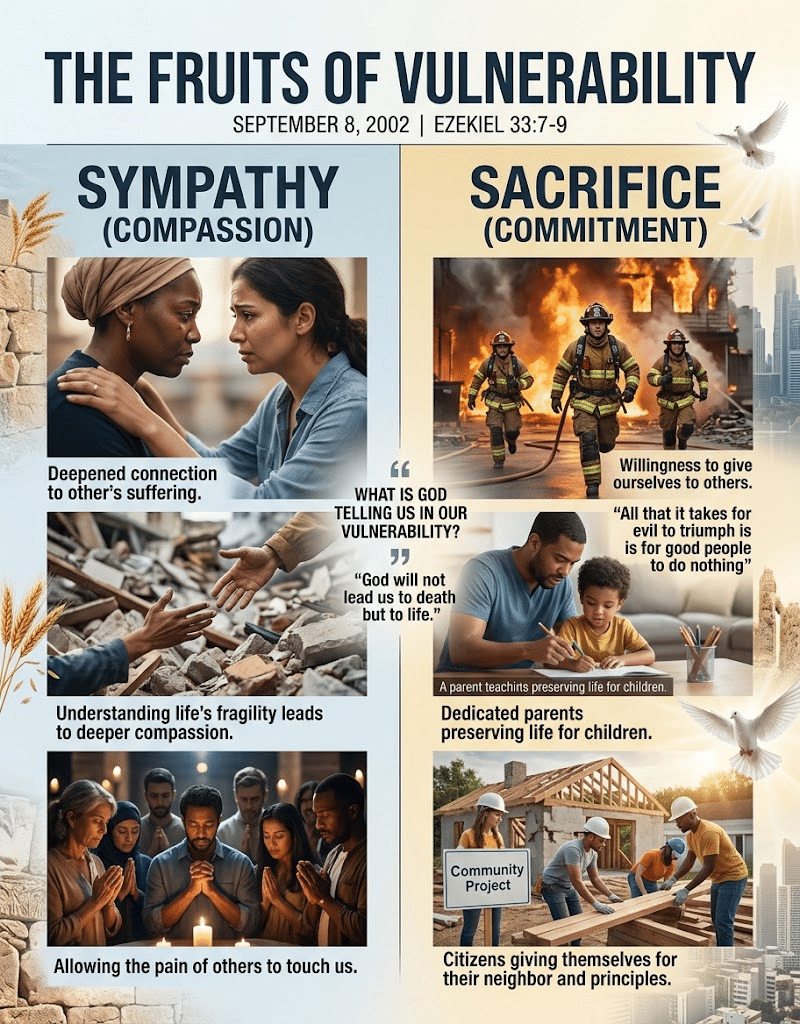
✍️ The Fruits of Vulnerability

Ezekiel 33:7-9
EXCERPT (2002): God’s word calls us to sympathy, but it also calls us to sacrifice. In light of September 11th we know now the preciousness of life in a new way, and we are more aware that if life is going to continue, it needs committed people who are dedicated to preserve it and promote it. “All that it takes for evil to triumph is for good people to do nothing.” [Edmund Burke]
It is true that our vulnerability can paralyze us and deflate us. It can also lead us to sacrifice — to the willingness to give ourselves to others. If our world is less safe, we need now, more than ever, parents willing to sacrifice for their children, friends willing to sacrifice for each other, citizens willing to give of themselves for their neighbor. Vulnerability can lead to paralysis. It can also lead to commitment. Whenever we allow our vulnerability to lead us to sacrifice for the people we love and the principles we believe in, we are responding to the word of God speaking to us in the aftermath of September 11th.
Religious Orders
23rd Sunday of Year A


The Hard Work of Healing Together
Reading: Matthew 18:15–20
Augustinian Theme: Radical Community & “One Mind and Heart”
In today’s Gospel, Jesus speaks directly to the delicate, often painful reality of living together: “If your brother sins against you, go and tell him his fault between you and him alone.”
For Saint Augustine, community is never an idealized sanctuary where people simply coexist without friction. It is the very forge of holiness. In his Rule, Augustine establishes our primary call: to be of one mind and one heart intent upon God. Yet, anyone who has ever shared a home, a workplace, or a pew knows that living as one heart is demanding work. Human community is imperfect because we are imperfect.
When someone hurts us, our instinct is often either to retreat into silent resentment or to broadcast the grievance to others. But Augustine reminds us that true Christian charity—caritas—seeks the healing of the other, not the vindication of the self. Fraternal correction is not about proving ourselves right or winning an argument; it is a ministry of reconciliation. When we approach a brother or sister in private humility, we are not casting them out; we are reaching out our hand to pull them back into the fold of communion.
Christ concludes with a promise that anchors Augustinian life: “Where two or three are gathered together in my name, there am I in the midst of them.”
Christ does not wait for us to achieve flawless harmony before making Himself present. He enters precisely into our messy attempts to love, forgive, and bridge division. In every hard conversation rooted in love, every quiet act of forgiveness, and every shared prayer, our fractured hearts are stitched together.
May we have the courage to forgive quickly, speak truthfully in love, and daily renew the commitment to journey together—one heart and one mind—toward the God who holds us all.

Staying at the Table of Reconciliation
Reading: Ezekiel 33:7–9
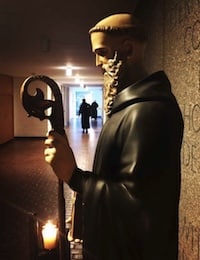
Benedictine Theme: Stability
In today’s first reading, the prophet is given a sober commission: “You, son of man, I have made a watchman for the house of Israel.” God places the prophet on the ramparts not to stand above the people in judgment, but to remain tethered to their survival. If danger approaches and the watchman stays silent, he shares in the tragedy.
In the Benedictine tradition, this deep spiritual solidarity finds its home in the vow of Stability.
Unlike the wandering monk who moves on whenever relationships fray or environments grow difficult, the Benedictine makes a radical promise: to stay. Stability means planting roots in a particular place with particular, imperfect people. It is the commitment to remain present when discomfort arrives, trusting that the soil of holiness is not found somewhere else, but right where God has placed us.
Being a spiritual watchman in our families, churches, and neighborhoods does not mean pointing fingers from a safe distance. Rooted in stability, it means caring enough about our community to speak the truth in charity and staying present to help bear the weight of what follows. When someone we love drifts toward destructive choices, walking away or pretending not to see is the easiest option. Stability demands the harder, more courageous path: remaining at the table, leaning in with honest care, and refusing to abandon each other.
Saint Benedict reminds us that true transformation does not come from running away from tension, but by enduring through it alongside our brothers and sisters.
May we embrace the gift of stability in our daily lives—anchored in fidelity, watchful in love, and committed to walking one another home to God.


Lectio Divina
ePUB | PDF
The Debt of Love
Reading: Romans 13:8–10
Carmelite Theme: The “Little Way” of Confidence and Love
In today’s epistle, Saint Paul writes with striking simplicity: “Owe nothing to anyone, except to love one another; for the one who loves another has fulfilled the law.”
For the Carmelite, this debt of love is not a burdensome obligation or a legal checklist. It is the very heartbeat of contemplation. When Saint Thérèse of Lisieux searched the Scriptures to understand her place in the mystical body of Christ, she discovered her true vocation in a flash of divine clarity: “In the heart of the Church, my Mother, I will be love.”
Saint Teresa of Ávila reminds us that the human soul is an interior castle, and at its innermost center dwells the King of love. Prayer is not a performance of grand words, but an intimate friendship with the One who loves us unconditionally. When we allow ourselves to be filled with that divine presence in the quiet of our hearts, love naturally overflows into every relationship.
Saint Paul shows us that love does no evil to the neighbor. But Thérèse takes us a step further into the Little Way: love is revealed in the smallest, most hidden moments of daily life. It is the gentle word spoken when irritation rises, the quiet patience offered to someone who frustrates us, the unseen sacrifice made without seeking praise. We do not need grand, heroic stages to fulfill the law; we only need to surrender our small efforts to God, letting His charity transform our ordinary interactions.
Today, let us lay down the heavy burden of trying to earn our worth or keep score with others. May we rest in the quiet center of God’s presence, allow His tender love to fill us, and carry that same gentle, unassuming flame into our homes and communities.arkness is not the end of the story—it is the holy crucible where God refines the soul, preparing the heart for profound, unshakable union with Him.


The Voice of St. Dominic
Reading: Ezekiel 33:7–9
Dominican Theme: Preaching for the Salvation of Souls
In today’s first reading, God gives the prophet a profound and sobering mandate: “You, son of man, I have made a watchman for the house of Israel; whenever you hear a word from my mouth, you shall give them warning from me.” The watchman’s voice is not called to condemn or dominate; it is summoned to preserve life. Silence in the face of spiritual danger is not charity—it is abandonment.
This sacred urgency is the very heartbeat of the Dominican charism: Preaching for the Salvation of Souls. When Saint Dominic wept in the night, his continuous, aching prayer was simple:
“Lord, what will become of sinners?”
Dominic understood that preaching the Gospel is never an academic exercise or an opportunity to win arguments. It is an act of pure, rescuing love. The Order of Preachers was born from a deep compassion for a wandering world hungry for truth.
To live the Dominican spirit today means recognizing that each of us is called to be a watchman of hope in our daily circles. In a culture often crowded with cynicism, confusion, and despair, our words possess enormous power. When we speak, do we offer the luminous truth of Christ—Veritas—or do we withhold the word of healing out of comfort or fear?
Dominic reminds us that truth spoken without love is harsh, but love without truth is empty. True preaching begins in contemplation, where we let God soften our own hearts before we dare to speak to another. May we find the holy courage to use our voices—in gentle witness, patient encouragement, and truthful clarity—so that every word we utter helps draw our brothers and sisters closer to the redeeming light of Christ.


Meeting the Broken Heart
Reading: Matthew 18:15–20
Franciscan Theme: Peace and Reconciliation
In today’s Gospel, Jesus offers a blueprint for healing when wounds occur within the family of faith: “If your brother sins against you, go and tell him his fault between you and him alone.”
For Saint Francis of Assisi, this instruction is not a judicial process or a step-by-step method for proving someone wrong. It is a sacred summons to Peace and Reconciliation—an invitation to become living instruments of Christ’s peace in a fractured world. Francis greeted everyone with the prayer “Pax et Bonum” (Peace and Goodness), recognizing that true peace is never the mere absence of conflict, but the patient, tender labor of repairing broken relationships.
When we are hurt, the world teaches us to protect our pride, nurse our grievances, or seek allies to validate our anger. But the Franciscan posture of minoritas—of making ourselves small and humble—calls us to step toward our wounded brother or sister with gentle vulnerability. Notice the tender wisdom in Jesus’ words: “between you and him alone.” Francis knew that true conversion is never sparked by public humiliation, but by the quiet mercy of an open heart that seeks communion over victory.
Where two or three gather in Christ’s name, He is present—not just in moments of joyful worship, but especially in the fragile spaces where people choose reconciliation over resentment. In every quiet conversation where forgiveness is offered, in every bridge built across painful divides, the humble, poor Christ is revealed in our midst.
May we put aside the armor of self-righteousness, embrace the lowliness of Christ, and walk boldly into the fractured corners of our lives with the simple prayer: Lord, make me an instrument of your peace.


Care for the Whole Person
Reading: Matthew 18:15–20
Jesuit Theme: The Spiritual Exercises (Discernment of Spirits)
In today’s Gospel, Jesus offers a delicate, demanding pathway for healing broken relationships: “If your brother sins against you, go and tell him his fault between you and him alone.”
At first glance, this can look like a disciplinary procedure. But through the lens of Saint Ignatius of Loyola and the Jesuit tradition, it is an exercise in Cura Personalis—care for the unique, whole person standing before us.
When someone hurts us, our reactive impulse is often to reduce them to their offense, nurse our wounded pride, or seek validation by speaking to everyone except the person involved. Ignatius warns us against these knee-jerk interior movements of desolation. Instead, cura personalis calls us to look beneath the surface of the injury and see the human being before us: their history, their fragility, their unseen burdens, and their inherent dignity as a child of God.
Jesus insists on going “between you and him alone” because real love protects the person, not the grievance. Approaching someone privately is not about winning an argument or asserting moral superiority; it is a discerning act of reverence. It provides a sacred, safe space where truth can be spoken with tenderness and where genuine conversion can take root without shame.
Christ promises that wherever two or three gather in His name, He is right there in the midst. He is present not only in our moments of shared praise, but most intimately in the courageous, vulnerable conversations where we choose understanding over judgment.
May we cultivate the interior freedom to approach one another with deep respect, gentle honesty, and a steadfast commitment to care for the whole person—all ad majorem Dei gloriam, for the greater glory of God.

Plentiful Redemption
in the Ministry of Healing
Reading: Matthew 18:15–20
Redemptorist Theme: Gentle Moral Theology and Compassionate Confession
In today’s Gospel, Jesus offers a gentle yet urgent framework for addressing human brokenness: “If your brother sins against you, go and tell him his fault between you and him alone.”
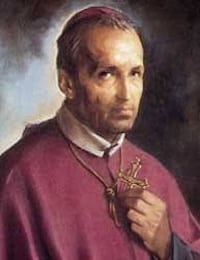
When Saint Alphonsus Liguori founded the Redemptorists, he walked among the forgotten, weary goatherds and peasants around Naples. In an era dominated by harsh, rigid Jansenism—where God was often portrayed as an exacting judge waiting to catch sinners—Alphonsus championed a revolutionary truth: in Christ, there is Copiosa Apud Eum Redemptio—plentiful, abundant redemption. He insisted that the work of reconciliation must never become a cold tribunal, but a warm sanctuary of divine mercy.
When Jesus tells us to go to a brother “between you and him alone,” He is teaching us the heart of Redemptorist pastoral care. We do not confront one another to humiliate, control, or impose shame. True fraternal correction is born solely out of love for the soul. It mirrors the gentleness of Christ, who bends down to wash tired feet rather than point an accusing finger.
When someone falters, our goal is not to win the moral high ground, but to restore a wounded sister or brother to the joy of communion. Saint Alphonsus taught confessors to receive penitents with the tenderness of a loving parent, remembering that human fragility is never beyond the reach of grace.
Where two or three gather in Jesus’ name, the Redeemer Himself stands among them. He is present whenever we choose compassion over resentment and mercy over condemnation.
May we look upon each other with the gentle eyes of Alphonsus and the tender heart of Christ—believing with unfailing confidence that no wound is too deep for the abundant redemption of our God.
Click a tab to view different ways of understanding the readings.
Additional Homilies
23rd Sunday of Year A
Fr. George Corrigan, OFM
Liturgical Choices and Narrative Continuity
Instruction for the Community
Sins Against You: Prelude
Sins Against You: Restoration
Sins Against You: Listening
Sins Against You: What’s Next
How Serious a Sin?
Msgr. Joseph Pellegrino (PDF) | Archive
The Church, the Vehicle of Mercy (2023)
Fr. Michael Fallon, MSC | Archive
23rd Sunday in Ordinary Time (PDF)
Bilingual Homily
23rd Sunday of Year A
A brief homily for those who are learning Spanish or English. The grammar is kept uncomplicated and uses present-tense vocabulary to ensure it is easy to deliver. The homily focuses on the practical, everyday meaning of Sunday’s Gospel.
VOCABULARY

