Homilies
Homilies
August 23, 2026
⭐⭐⭐ Pope Leo vs. Trump


21st Sunday of Year A


EHANCE YOUR LISTENING EXPERIENCE —click through the thumbnails as the homily plays.

Fr. Mike Schmitz is the chaplain for the Newman Center at the University of Minnesota Duluth (UMD) and serves as the Director of Youth and Young Adult Ministry for the Diocese of Duluth. He has created an extensive amount of online video content addressing faith, morality, and culture. 2023 video courtesy of Sundays with Ascension
Homily Anecdotes
21st Sunday of Year A

Fr. Tony Kadavil
God is the Source of
All Authority
The following anecdotes approach Sunday’s scripture readings from different angles: rebellion against cultural consensus, structural stability under pressure, and the necessity of personal decision.
- “Think Different” (1997 Apple)
- “Like a Rock” (1991-2004 Chevrolet Trucks)
- “Who is Jesus?” (C.S. Lewis)
Dicastery Notes / Papal Homilies
21st Sunday of Year A


Featured Homilies
Deacon Peter McCulloch
21st Sunday of Year A
✍️ Strange Gods
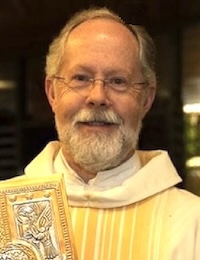
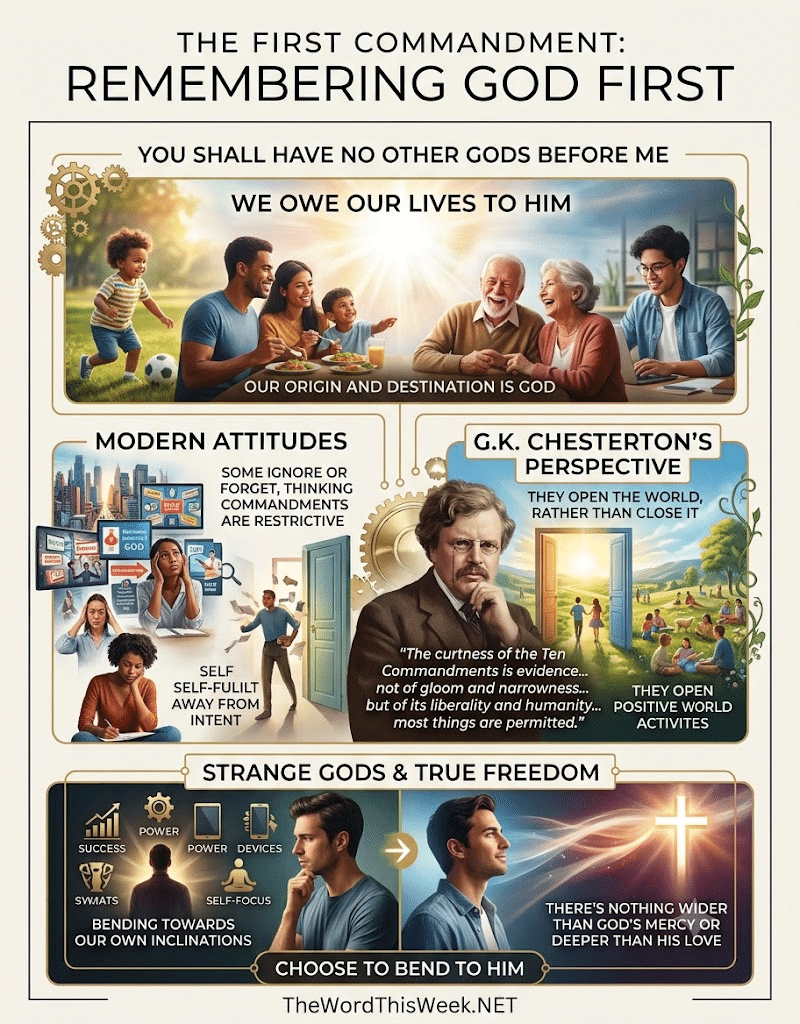
EXCERPT: Do you remember the First Commandment? That’s the one which says, ‘You shall have no other gods before me’. It tells us that God should always come first in our lives. Why? It’s because we owe our lives to Him. We all come from God, and right now we’re all on our way back towards God. But many people forget this, or they choose to ignore it because they think the Ten Commandments are much too restrictive for our modern world. GK Chesterton thought differently. He saw in the Ten Commandments not a world full of no, but of yes, and he argued for their beauty. ‘The curtness of the Ten Commandments is evidence,’ he wrote, ‘not of the gloom and narrowness of a religion, but… of its liberality and humanity because most things are permitted.’
Click to Enlarge
Bishop Robert Barron
21st Sunday of Year A

2026 video courtesy of Word on Fire
The Church Prevails (2026) – Friends, for this Twenty-first Sunday in Ordinary Time, the Church brings us once again, with Jesus and the disciples, to Caesarea Philippi, and to a famous question: “Who do you say that I am?” The main characters in this endlessly fascinating scene are Jesus and Peter, and whenever the focus is on Peter, we’re talking about ecclesiology, the study of the Church. So we learn something very important here about both Jesus and the Church, and it has to do with the Rock upon which the former builds the latter.
In the News
21st Sunday of Year A
The Burden of a Keyhole
With the election of Pope Leo XIV—the first Pope born on American soil—the Church and the world find themselves contemplating a striking contrast in leadership. When an American sits in the Chair of Saint Peter alongside global figures like President Donald Trump, prime ministers, and temporal sovereigns, human instinct tempts us to view the Supreme Pontiff through the exact same political framework. We analyze papal press releases as if they were executive orders, weigh encyclicals like Congressional legislation, and expect a commander-in-chief of faith. Yet, to understand Pope Leo XIV through the lens of a secular presidency is to misunderstand the Gospel.
As the Pope himself recently clarified on a return flight from Africa when asked about comparisons to political leaders: “I do not look at my role as being a politician. I don’t want to get into a debate… To put my message on the same plane as what the President has attempted to do here, I think, is not understanding what the message of the Gospel is.”

Last April, Pope Leo XIV during his trip to Africa, said the world was being “ravaged by a handful of tyrants” who spend billions on war. These comments were seen as a sharp escalation in an almost week-long feud with the White House over the US-Israel war on Iran.
The Biblical Foundation of the Keys
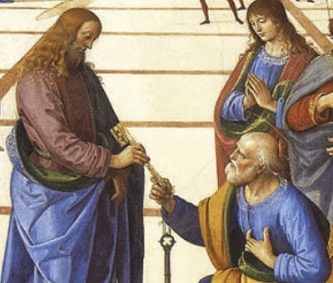
In the twenty-second chapter of the Prophet Isaiah, we witness a dramatic transfer of office. Shebna, a master of the royal palace who misused his authority for self-aggrandizement, is stripped of his robe and sash. In his place, the Lord calls Eliakim, declaring, "I will place on his shoulder the key to the house of David; what he opens, no one will shut, and what he shuts, no one will open." Centuries later, on the rocky slopes of Caesarea Philippi, those ancient words echo with sudden, unexpected clarity. Jesus looks at Simon, a fiery fisherman from Galilee, and makes a promise that echoes down the ages: "I will give you the keys of the kingdom of heaven."
Temporal Force vs. Delegated Stewardship
Earthly power, whether exercised from the Oval Office or any capitol across the globe, is inherently territorial, coercive, and temporary. President Trump and world leaders command military forces, enforce civil statutes, wield economic sanctions, and draw authority from constitutional mandates or geopolitical strength. Their primary instrument is force—the power of the sword to enforce law and protect national boundaries. Their reign is defined by terms of office, political coalitions, and the passing tides of human history.
The authority given to Saint Peter, and carried today by Pope Leo XIV, is altogether different. It is not derived from electoral majorities, economic leverage, or military might. It is a delegated stewardship. The keys handed to Eliakim in Isaiah and to Peter in the Gospel do not signal absolute ownership; they signal accountability to the true King. Speaking candidly at a peace conference in Africa, Pope Leo XIV laid bare the tragic reality of unchecked temporal force: "The world is being ravaged by a handful of tyrants, yet is held together by a multitude of supportive brothers and sisters. The masters of war pretend not to know that it takes only a moment to destroy, yet often a lifetime is not enough to rebuild. They turn a blind eye to the fact that billions of dollars are spent on killing and devastation, yet the resources needed for healing, education, and restoration are nowhere to be found."
Executive Mandate vs. Servant Leadership
Where world leaders rule by executive mandate, the Pope governs by servant leadership. Where presidents defend geographical borders, the Successor of Peter is called to shepherd universal souls. Where secular authority binds through temporal law and punishment, Petrine authority binds and looses through the sacrament of reconciliation, the proclamation of truth, and the medicine of mercy. A president's duty is to preserve a temporal nation; a pope's duty is to guard the deposit of faith and unitively guide the Pilgrim Church toward eternity.
For Pope Leo XIV, carrying the legacy of an American upbringing into the universal ministry of Peter highlights this vital distinction. The American ethos rightly values democracy, enterprise, and national sovereignty. Yet the Papacy reminds us of a kingdom not of this world—one that cannot be bought with capital, won through campaigns, or secured by borders. The Pope’s primary pulpit is not a political podium, but the altar of sacrifice. His ultimate authority is realized not when he commands, but when he kneels to wash the feet of the weary.
This holy authority carries the duty to speak truth to power without becoming entangled in its games. At that same African summit, Pope Leo issued a grave warning against co-opting faith for temporal ambition: "Jesus told us, 'Blessed are the peacemakers.' But woe to those who manipulate religion in the very name of God for their own military, economic, or political gain, dragging that which is sacred into darkness and filth."
Anchoring Our Allegiance
Reflecting on his mission while in transit back to Rome, Pope Leo reaffirmed the core of the Petrine mandate: "The message of the Gospel is very clear... I will not shy away from inviting all people to look for ways of building bridges and for peace and reconciliation, of ways to avoid war anytime that's possible... I don't think that the message of the Gospel is meant to be abused in the way that some people are doing...Too many people are suffering in the world today. Too many innocent people are being killed, and I think someone has to stand up and say there's a better way to do this."
As we pray for Pope Leo XIV and for all who hold public office, let us remember where our ultimate allegiance lies. World leaders may shape the geopolitical landscape of a passing era, but Christ alone builds His Church upon the rock, promising that the gates of the netherworld shall not prevail against it. May we honor legitimate civil authority while anchoring our hearts in the eternal authority of Christ, whose keys unlock not temporal kingdoms, but the door to everlasting life.
This essay based on this Sunday's readings and current events was developed collaboratively using artificial intelligence alongside human pastoral curation and theological editing. It is not intended as a finished script, but as a catalyst to spark reflection, provide thematic inspiration, and support preachers in crafting their own authentic homilies for their communities.
The Biblical Foundation of the Keys
Temporal Force vs. Delegated Stewardship
Executive Mandate vs. Servant Leadership
Anchoring Our Allegiance
Fr. Michael Chua
21st Sunday of Year A
✍️ Between a Key and a Rock
EXCERPT: When Christ turned to St Peter and said, “I will give you the keys of the kingdom of heaven”, He was not speaking in a vacuum. At the start of the Bible, Man is placed in a garden and given the task of guarding it. But Adam was guilty of dereliction of duty. Caught off guard, he allowed the serpent to enter the garden and deceive his wife. In failing to guard the garden a chain reaction was triggered, resulting in the Fall. Man had been entrusted as the guardian and steward of Eden. By failing in his stewardship, the keys to the garden were taken from him and given to the angels. It was now the angels’ duty to lock the garden to intruders, as they brandish a sword of fire at the doorway of Eden. And it was they who were given the privilege of delivering the Law, a role originally reserved for Man. So, here in the gospel, our Lord returns the keys to St Peter, the very keys which Adam lost.
There is another reference to keys and it is found in Chapter 22 of the Book of the Prophet Isaiah, which we just heard in the first reading. Here, it involves the story of Eliakim, who prefigures Peter, just as King David is a type of Christ. The previous steward, Shebna, just like Adam, had been removed from office for dereliction of duty. He is now to be replaced by the faithful Eliakim. The reading then provides us with a job description of the position of steward. His function was namely this: to reside “over the house” of the king (that is why he is known in Hebrew as “al-bayit”, which literally means the one in charge of the house/palace), ruling in the place of the king when the latter was absent. This sacred stewardship allowed the vicar of Judah’s king to open what others had shut and to close what had been opened. Additionally, the position of steward was an established royal office; it was to have successors.
Dominican Blackfriars
21st Sunday of Year A
✍️ Unlocking the Kingdom
EXCERPT: We believe as Catholics that by a gift of the Holy Spirit the successors of Peter, the Popes, inherit his keys. By this we mean that the Church will always be able to open the doors to the Kingdom in her Sacraments and in her preaching and teaching because she will always be guided by the Holy Spirit to recognise the Truth about Jesus. As the Bride of Christ, the Church will always, fundamentally, be able to know and love her Bridegroom. The keys of Peter, then, are a gift to all of us. They open up to us the possibility of an extraordinary depth of intimacy with Christ our King and our God. May we pass joyfully through the doors that Peter and his successors open wide for us, and so enter in to the courts of the heavenly palace of our King, and may we be bold in inviting others from far and wide to come with us and share in his banquet.

Fr. Austin Fleming
21st Sunday of Year A
✍️ Keys in Your Pocket, Keys to Your Heart
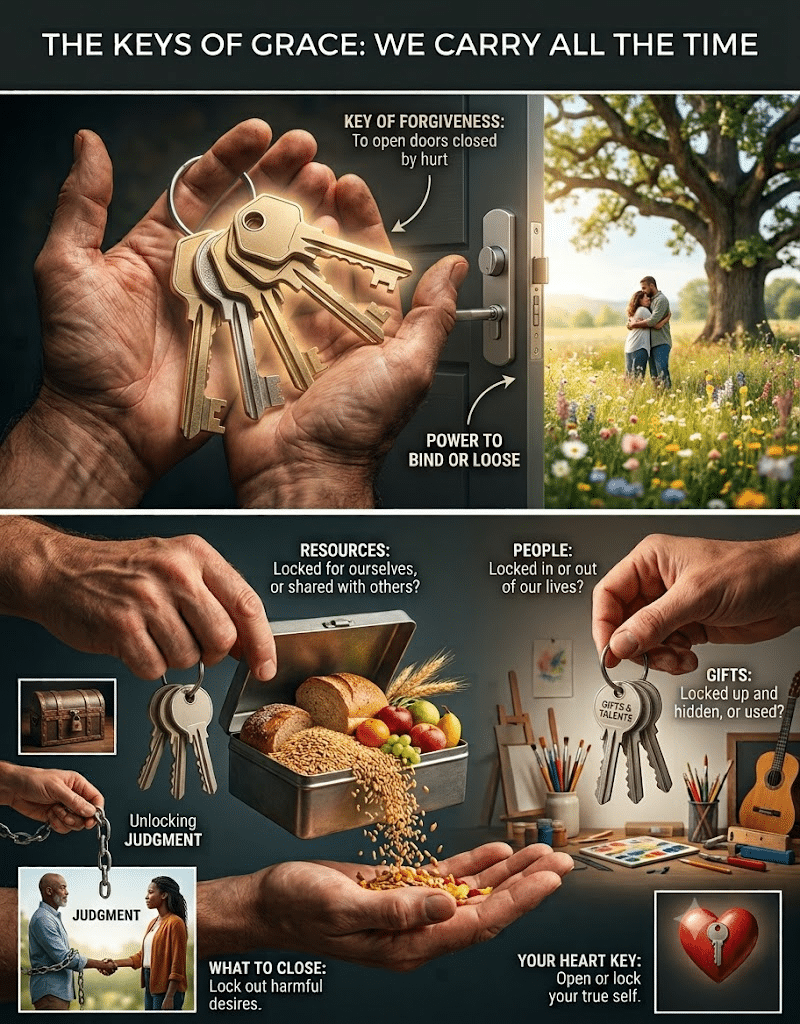
EXCERPT: Let’s think of the keys of grace that you and I carry all the time, keys with the power to bind and loose, to open and close, in our own lives and the lives of others.
• How many of us carry in our hearts the key of forgiveness but are slow or even refuse to use that key to open a door we’ve closed and locked shut in the face of someone who has hurt us?
• How many young people have locked their parents and families, out of their lives and hearts? And how many older folks have locked out the young because of their life styles and choices?
Monsignor Peter Hahn
21st Sunday of Year A

▶️ Faith: Our Identity as Children of God
EXCERPT: Faith is not just choosing what I want to believe. It is one of the super natural virtues given to each of us in Baptism. It’s this priceless gift that enables us to understand and see things that are hidden from the visible world. Faith is able to then reveal to us the truths of who God is and who we are called to be and so in faith. Peter proclaims that Jesus is to Christ and he’s given a new name. He’s now no longer Simon. But he’s Peter the rock upon which Jesus will build the church and that happened to each and every one of us in our baptism.

Fr. Charles E. Irvin
21st Sunday of Year A
✍️ Good News About Ourselves

EXCERPT: We all have a little inner voice that constantly gives us bad news about ourselves. People around us sometimes give us bad news about ourselves. Jesus, on the other hand, comes to give us good news. The good news of Jesus Christ is all about who we really are and who we can become. The good news is this: inside each one of us there is the person God meant us to be. Deep within us is the person God our Father dreams we can be. Hopefully we will eventually come to see that. There’s an identity, a name that God has given you that is nothing but good. We don’t need to import anything from the outside. All of the skills and talents God originally gave us are still there. All of the personality traits are there. We simply need to become the person our Father always meant us to be, to bring out of ourselves the best that’s within us.
Fr. Tommy Lane
21st Sunday of Year A
✍️ Evil Will Not Prevail

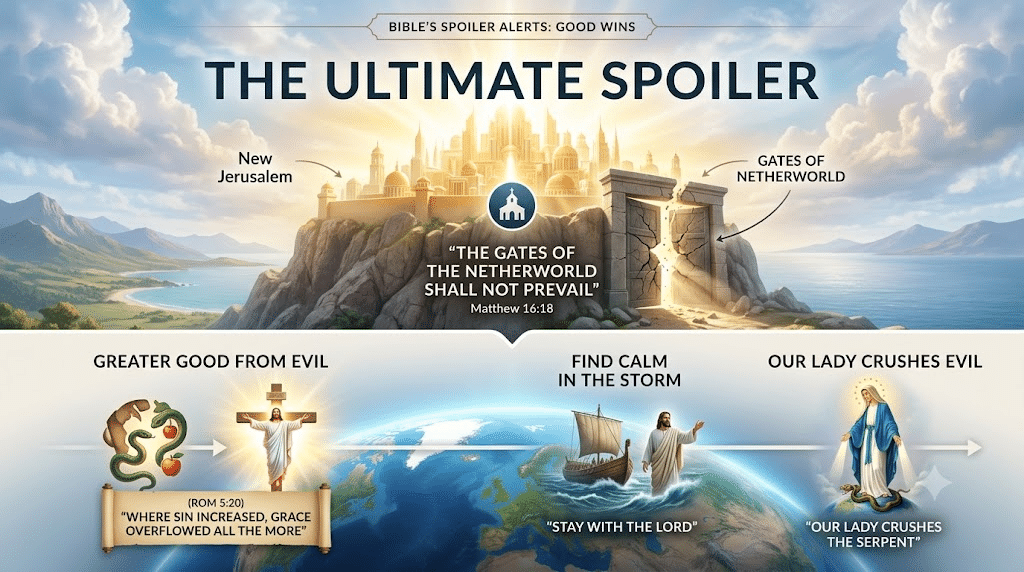
EXCERPT: Spoiler Alert! A spoiler alert warns us that information about the plot of a movie or book is about to be revealed that will spoil the excitement of watching that movie or reading that book if we hear the spoiler. There is, what we might call, a spoiler in the Gospel today: “upon this rock I will build my church, and the gates of the netherworld shall not prevail against it.” (Matt 16:18) This tells us how everything will end: the gates of the netherworld will not prevail against the Church. No matter what has happened or will happen, no matter how hopeless things may seem, stay with the Lord because the gates of the netherworld will not prevail. Evil will not prevail; evil will be conquered, and God will win.
Fr. Langeh, CMF
21st Sunday of Year A

▶️ Keys of the Kingdom
EXCERPT: When we hear of keys, we immediately think of locking and unlocking. The Bible uses Keys figuratively, in a sense of authority or power, as well as literally. It is called in Hebrew maphteah , i.e., the opener as used in Judges 3:25 “And they waited till they were utterly at a loss; but when he still did not open the doors of the roof chamber, they took the key and opened them; and there lay their lord dead on the floor”. It is in the Greek New Testament as kleis used to denote shutting as used in Matthew 16:19 ; Luke 11:52 ; Revelation 1:18 , etc.
Msgr. Charles Pope
21st Sunday of Year A
✍️ Of Peter and the Papacy
VIDEO: Peter and the Papacy (24:39)
EXCERPT: The Gospel today sets forth the biblical basis for the Office of Peter, the Office of the Papacy, for Peter’s successors are the Popes. The word “pope” is simply an English version (via Anglo-Saxon and Germanic tongues) of the word “papa.” The Pope is affectionately called “Papa” in Italian and Spanish as an affectionate indication that he is the father of the family, the Church.
Let’s look at the basic establishment of the Office of Peter in three steps.
I. The Inquiry that Illustrates
II. The Individual that is Inspired
III. The Installation that is Initiated
Father Kevin Rettig

21st Sunday of Year A
▶️ Do You Know Who I Am?
Videos (2026)
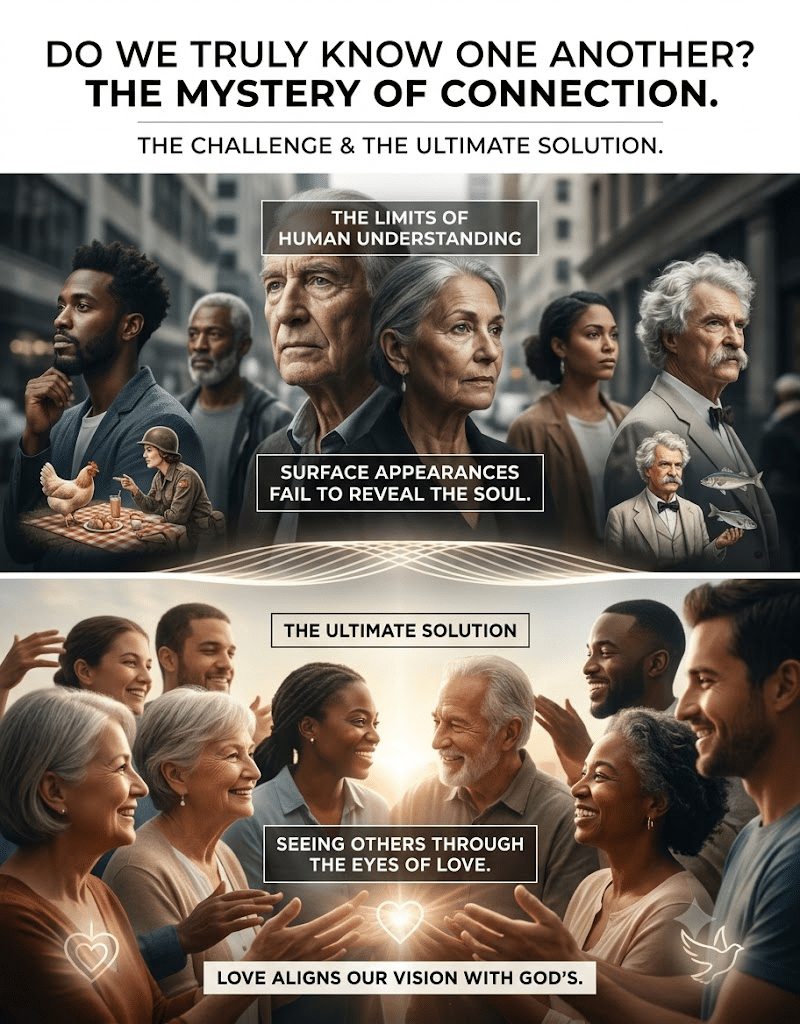
SUMMARY: Human relationships often struggle with the fundamental barrier of fully understanding one another. Through illustrative stories—Governor Christian Herter’s humbling experience at a picnic, Joan Crawford being unrecognized by a soldier, and Mark Twain attempting to hide his identity from a game warden—it becomes clear that surface appearances and long acquaintance fail to grant complete access to another’s soul. This inherent limitation creates isolation, causing people to either conceal their true selves or crave genuine recognition.
While intellectual perception falls short, spiritual insight bridges the gap. As demonstrated when Peter identified Jesus as the Christ, divine revelation transcends mere human observation. Furthermore, when Jesus asked Peter, “Do you love me?” he highlighted the ultimate solution to human disconnection. We cannot fully know one another through intellect alone; true understanding requires seeing others through the eyes of love, which aligns our vision with God’s.
Fr. George Smiga
21st Sunday of Year A
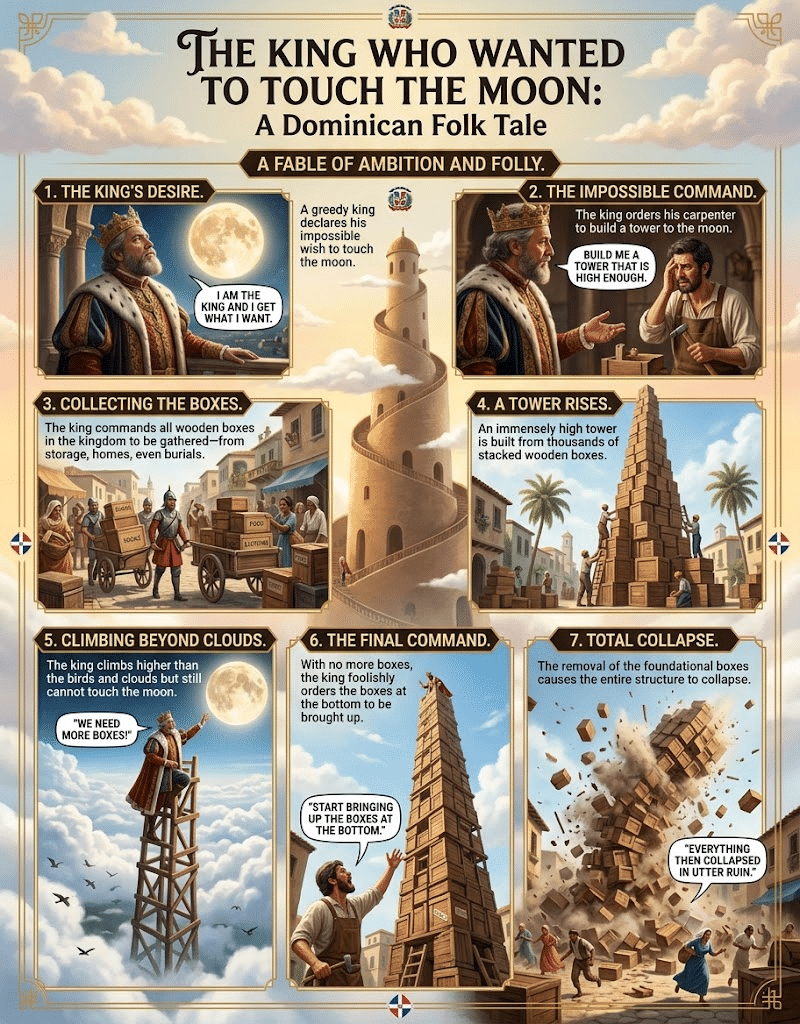
✍️ The Power to Touch the Moon

Matthew 16: 13-20
EXCERPT: The story [below] is an absurd one, but it resonates with the sad experience of many people throughout the world, people whose countries are ruled by a dictators or despots who are only concerned about their own power. Look at Libya, or Syria or Bahrain or many other countries where political leaders are willing to expend the country’s resources and do violence against their own people in order to stay in power. They want to touch the moon, and they are willing to go higher and higher regardless of the cost.
In today’s gospel, Jesus presents to us another vision of power, another kind of authority. He gives Peter authority in the church. But, Peter’s authority is not to be the highest of all, but rather the lowest of all. Peter’s role is to be the rock—the rock on which the church will be built. So, instead of climbing higher and higher over the resources and the lives of others, Peter’s role is to be the solid foundation upon which the lives of others can be built. In Jesus’ vision, true authority is not the authority of importance. It is the ability to ground and enhance the lives of others.
This teaching of Jesus should lead us to thankfulness and commitment. Let us begin with thankfulness. Who are the people in your life who gave you the foundation to be who you are?
Religious Orders
21st Sunday of Year A

Keys of Grace, Heart of Unity
Matthew 16:13-20
In the Gospel of Matthew, Jesus asks His disciples the definitive question: “Who do you say that I am?” Peter, stepping forward in faith, answers, “You are the Christ, the Son of the living God.” In response, Jesus bestows upon him the keys to the Kingdom.
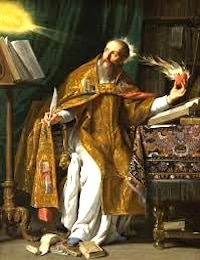
It is easy to view these keys as symbols of absolute power or administrative authority. Yet, viewed through the lens of Augustinian spirituality—specifically the theme of Radical Community—these keys reveal something far deeper. They are not meant to build walls or hoard control, but to open doors, foster reconciliation, and forge a people who are “of one mind and one heart intent upon God.”
Saint Augustine understood that true authority in the Church is never about self-reliance or individual glory; it is a ministry of unity. Peter’s confession was not made in isolation. He spoke from within the circle of the disciples, voicing a shared, emerging faith. When Jesus entrusts Peter with the power to bind and loose, He is establishing the Church not as a hierarchy of perfection, but as a living sacrament of community. Here, human frailty is bound by mutual forgiveness, and souls are loosed from the isolation of sin into the freedom of love.
We cannot walk the Christian pilgrimage alone. The keys of the Kingdom are exercised whenever we choose harmony over ego, bear one another’s burdens, and recognize Christ resting in the heart of our neighbor. Like Peter—a man whose noble confession was matched by his need for God’s mercy—our strength is found in our shared vulnerability. May we use the keys given to us not to divide, but to unlock our hearts to one another, building a community where God is truly our center and love is our only measure.
The Quiet Wisdom of Surrender
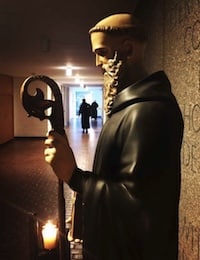
Romans 11:33-36
In St. Paul’s letter to the Romans, we encounter a moment of pure, breathless awe: “O the depth of the riches and wisdom and knowledge of God! How unsearchable are his judgments and how inscrutable his ways!” Paul steps back from his intricate theological arguments and yields entirely to the mystery of God, concluding: “For from him and through him and for him are all things.”
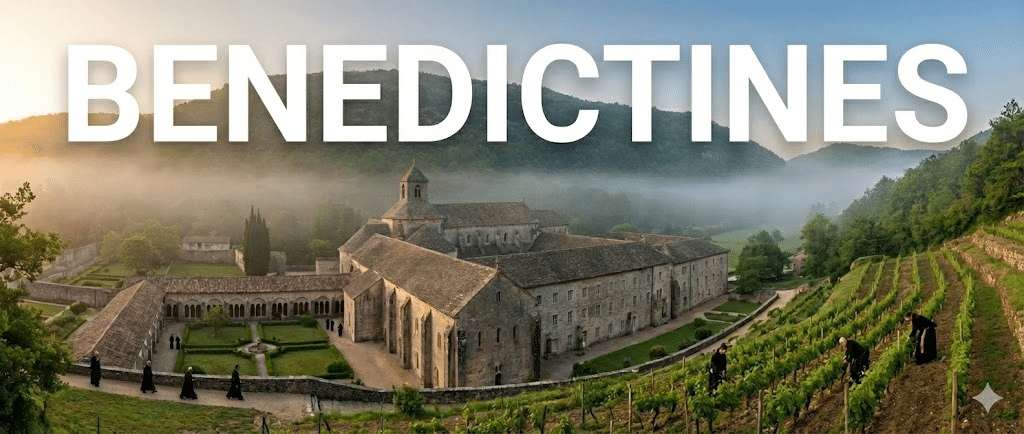
This profound passage resonates deeply with the Benedictine charism of Humility—specifically the posture described in Chapter 7 of the Rule of Saint Benedict. True Benedictine humility is not self-deprecation or weakness; it is accurate self-awareness before the majesty of God. It is the wisdom to realize that we are not the directors of the universe, nor the ultimate source of our own knowledge.
Paul reminds us that no one has been God’s counselor, and no one has given a gift to God that needs to be repaid. In a world that relentlessly urges us to assert our egos, master every circumstance, and demand immediate answers, the virtue of humility offers us a holy breath of relief. It invites us to stop striving for total control and step onto Benedict’s “ladder,” where each descending step away from pride brings us closer to the heart of Christ.
When we cultivate a humble heart, Paul’s doxology becomes our daily refrain. We learn to look at our lives, our work, and our community with reverence, acknowledging that every breath is sustained by divine grace. Surrendering our demand to understand every unsearchable judgment opens up a quiet inner space—a place where peace takes root, anxiety fades, and we can simply rest in the truth that from Him, through Him, and for Him, all things exist.

Hearing the Whispers of the Castle

Lectio Divina
ePUB | PDF
Matthew 16:13-20
In the quiet dust of Caesarea Philippi, Jesus turns to His companions with a question that penetrates every human heart: “Who do you say that I am?”
The crowds offered easy categories—John the Baptist, Elijah, or one of the prophets. They defined Jesus through external labels and public rumor. But Jesus bypassed the noise of the crowds and looked directly into the souls of His disciples. It was Peter who looked past the surface and declared, “You are the Christ, the Son of the living God.”
This encounter reveals the profound Carmelite movement of The Interior Castle and Spiritual Journey. As Saint Teresa of Ávila envisioned, the soul is a vast, radiant castle of diamond and crystal, containing many mansions, with God dwelling at its innermost center. The crowds standing outside the castle could only offer superficial guesses about who Jesus was because they remained in the outer courtyards, consumed by external distractions. Peter’s confession, however, was born from an interior touch—a moment where divine light shone from the center of his soul, revealing the true identity of Christ.
Jesus reminds us that Peter did not arrive at this truth through “flesh and blood,” but through a gift from the Father. This is the heart of Carmelite prayer. We do not find God by accumulating intellectual theories or remaining on the surface of our lives. We discover Him when we have the courage to enter our own interior solitude, traversing the mansions of the heart until we meet the One who dwells at our core.
Today, Christ asks each of us in the quiet of our inner castle: Who am I to you? May we step away from the world’s noise, enter the silence of our hearts, and allow His presence to answer.
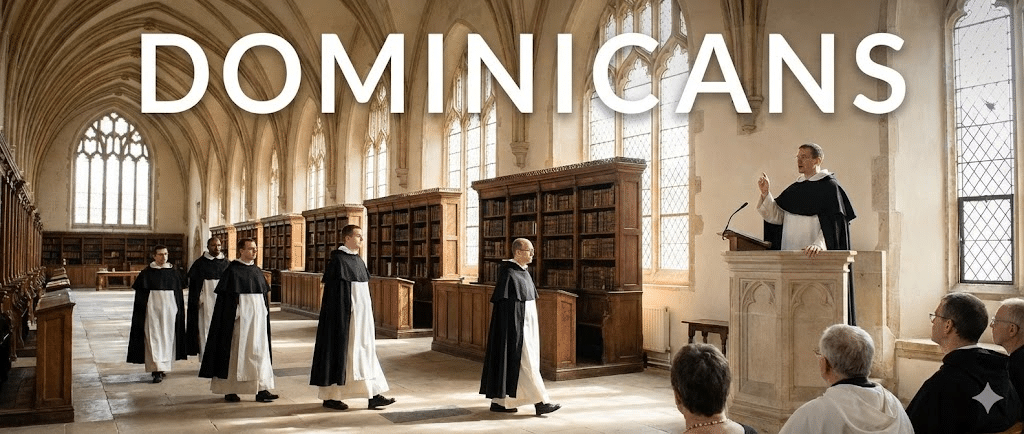
Contemplating Truth and
Handing It On

Matthew 16:13-20
In the Gospel of Matthew, Jesus pauses in the region of Caesarea Philippi to ask His disciples a searching question: “Who do you say that I am?”
It is Peter who steps forward, illuminated by divine grace, to speak the truth: “You are the Christ, the Son of the living God.” In response, Jesus declares Peter the rock upon which He will build His Church, entrusting him with the authority to proclaim and safeguard that holy revelation.
This powerful encounter sits at the very heart of the Dominican motto: Veritas (The Pursuit of Truth), alongside our sacred charge—Contemplare et contemplata aliis tradere (“To contemplate and to hand on to others the fruits of contemplation”).
For Saint Dominic and his Order of Preachers, truth is not a cold set of abstract dogmas or rigid doctrines. Veritas is a Person—Jesus Christ Himself. Peter’s declaration was not a calculated political statement or a guess born of human cleverness; it was the fruit of silent contemplation, of walking alongside Jesus, watching His mercy, and listening deeply to His voice. Peter contemplated the divine presence in Christ, and out of that interior light, he spoke the truth clearly to the world.
As Christians, we are all called to share in this Dominican vocation. Before we can speak meaningfully about God to a searching and fragmented world, we must first sit in quiet contemplation of His Word. We must seek Veritas through prayer, study, and honest reflection. Only when our hearts are filled with the light of truth can our words carry the power to illuminate the darkness around us. Like Peter, may we cultivate a deep, contemplative love for Christ, so that when the world asks us where our hope lies, we too can hand on the unshakeable truth of who He is.
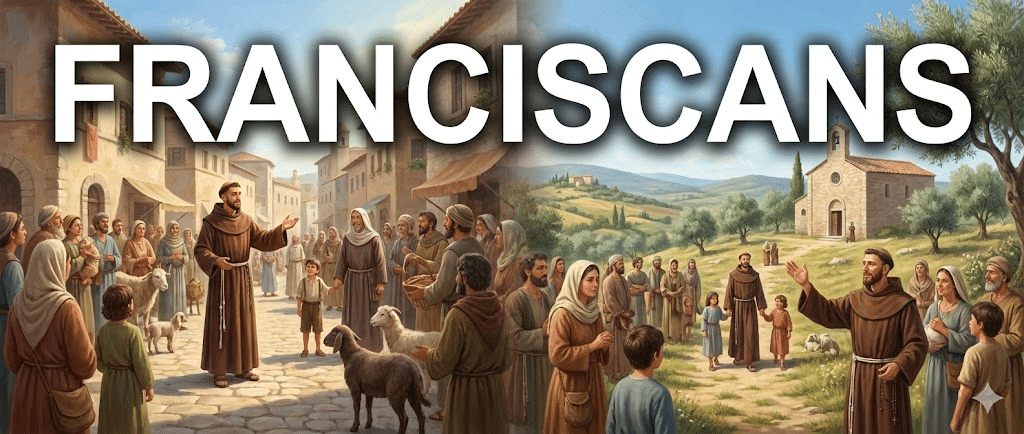
The Keys of Service and Lesser-ness

Matthew 16:13-20
In the Gospel of Matthew, Jesus leads His disciples to the region of Caesarea Philippi—a place dominated by towering rock formations and symbols of imperial power. There, He asks them: “Who do you say that I am?”
Peter responds with vibrant faith: “You are the Christ, the Son of the living God.” In turn, Jesus gives Peter a new name—Rock—and promises him the keys to the Kingdom of Heaven.
It is easy to view these keys as symbols of earthly status, power, or authority. Yet, viewed through the lens of the Franciscan charism of Minoritas (Lesser-ness and Humility), Jesus is offering something entirely different. For Saint Francis of Assisi, to follow Christ was not to climb higher on the social ladder, but to descend—to choose the lowest place, to be a “lesser brother,” and to serve rather than to rule.
When Jesus entrusts Peter with the keys, He does not crown him as an earthly monarch. He calls him to be a servant key-holder: one who unlocks the doors of mercy, lifts the burdens of the weary, and opens the gates of salvation for the poor and forgotten. The rock on which the Church is built is not a pedestal of pride, but a foundation of humble, loving service.
To hold the keys in a Franciscan spirit means using whatever influence or gifts we have not to exert power over others, but to kneel before them—just as Jesus washed the feet of His disciples. True authority in the Kingdom is measured by how gently we carry one another’s burdens. May we embrace our own minoritas, laying down our desire for prestige so that we may unlock God’s boundless love for a hurting world.

An Ignatian View of Peter’s Confession
Matthew 16:13-20
In the region of Caesarea Philippi, surrounded by the noise of public opinion and pagan shrines, Jesus asks His followers a question that echoes through every human life: “Who do you say that I am?”
The crowds responded with safe, external answers—John the Baptist, Elijah, or Jeremiah. But Jesus bypassed these surface rumors and asked His companions to look deeper: “Who do you say that I am?” Peter stepped forward and, guided by an interior movement of grace, declared: “You are the Christ, the Son of the living God.”
This pivotal moment illuminates the core Jesuit principle of Ad Majorem Dei Gloriam (AMDG)—For the Greater Glory of God. Saint Ignatius of Loyola taught that every choice, desire, and action should be directed toward what most fully reveals God’s presence in the world. But to choose what brings God greater glory, we must first learn to see clearly.
Peter’s confession was not an abstract theological answer or a memorized formula. It was the fruit of a deep, interior discernment—a moment where Peter recognized the authentic movement of God within his own experience of walking with Jesus. In recognizing who Christ truly was, Peter also discovered his own deepest identity and mission as the Rock.
Christ poses that same intimate question to us today: Who am I to you? Finding God in all things means looking honestly at our daily lives, our consolations, and our struggles to recognize His living presence. When we have the courage to answer Him not with hollow words, but with the raw truth of our hearts, we step out of mediocrity. We enter into the magis—offering our lives, decisions, and relationships for the greater glory of God and the service of His people.
Abundant Mercy at the Threshold
Isaiah 22:19-23
In the prophecy of Isaiah, we witness a dramatic shift in authority. The self-serving steward Shebna is cast down, and Eliakim is elevated in his place, clothed in royal robes and invested with true fatherly authority. God declares: “I will place on his shoulder the key of the house of David; he shall open, and none shall shut; and he shall shut, and none shall open.”
This image of the open door illuminates the beating heart of the Redemptorist charism: Copiosa Apud Eum Redemptio—Plentiful Redemption.
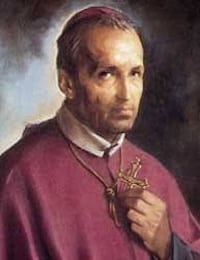
Saint Alphonsus Liguori founded the Redemptorists after encountering the abandoned goatherds and poor laborers in the hills outside Naples—people who felt excluded, forgotten, and weighed down by harsh religious legalism. Alphonsus knew that God never entrusted authority to His stewards to keep people out, but to fling wide the doors of salvation.
The key placed upon Eliakim’s shoulder prefigures the ultimate key-bearer, Jesus Christ, who came not to condemn, but to offer a redemption so abundant, so overflowing, that no human misery or past failure can exhaust it. In a world that so often shuts doors on the vulnerable, the wounded, and those who feel morally bankrupt, the Redemptorist perspective reminds us of the true nature of God’s kingdom. The key to the house of David is turned by mercy, not judgment.
When we carry Christ into our daily lives, we are called to be Eliakims of grace—stewards who use our influence, forgiveness, and love to unlock doors for others. No matter how far someone has fallen, with Christ there is always plentiful redemption. The door stands wide open, and the Father is waiting to welcome every traveler home.
Click a tab to view different ways of understanding the readings.
Additional Homilies
21st Sunday of Year A
Fr. George Corrigan, OFM
The Three Questions
Forming the Church
Christology for 21st Sunday (A)
An Emerging Church
The Developing Church
The Keys to the Kingdom
What Kind of Person…What Kind of Community
When We Don’t Feel Rock Solid
Msgr. Joseph Pellegrino (PDF) | Archive
You Are Peter (2026)
Fr. Joe Jagodensky, SDS | Archive
Fr. Michael Fallon, MSC | Archive
21st Sunday in Ordinary Time (PDF)
Spanish Homily
21st Sunday of Year A
A brief homily for those who are learning Spanish or English. The grammar is kept uncomplicated and uses present-tense vocabulary to ensure it is easy to deliver. The homily focuses on the practical, everyday meaning of Sunday’s Gospel.
VOCABULARY