Homilies
Homilies
October 4, 2026
⭐⭐⭐ Pope Leo’s Trip to France


27th Sunday of Year A

Looking for the perfect homily opener? Each week, TWTW features standout anecdotes from Fr. Tony Kadavil’s longstanding collection, along with a few fresh picks of our own.

Wild Grapes
Or A Worthy Harvest?
In today’s Gospel, humanity is warned against ignoring God’s prophetic signs and rejecting His Son. Ultimately, the true “fruit” expected from God’s vineyard is not forced obligation, but the transformation of the heart.
Brother Sun, Sister Moon: This song inspired by St. Francis moves us from anxiety-driven media to content centered on purity and light. It serves as a practical demonstration of Paul’s instructions in Philippians 4:6–9.
From Prison to President: Emerging from twenty-seven years in prison, Nelson Mandela forgave his oppressors to lead a transformed, multi-racial South Africa as its president, embodying the biblical truth of the rejected stone becoming the cornerstone.
Paid in Full: A comic strip of a mother confronting her son’s transactional itemized bill illustrates how recognizing God’s unmerited grace transforms a legalistic mindset into a heartfelt, grateful response of love.
Papal Homilies / Catechism
27th Sunday of Year A


Featured Homilies
Deacon Peter McCulloch
27th Sunday of Year A
✍️ The Parable of the Wicked Tenants
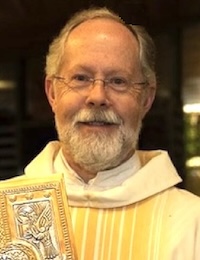
EXCERPT (2023): Our English language is full of biblical references, but few know this. Consider, for example, ‘Labour of love’ (1Thess.1:3); ‘Letter of the law’ (2Cor.3:6); ‘Apple of my eye’ (Deut.2:10); ‘Signs of the times’ (Mt.16:3); ‘At my wit’s end’ (Ps.107:27); ‘Bite the dust’ (Ps.72:9); and ‘Drop in the bucket’ (Is.40:15). And did you notice the words ‘Sour Grapes’ in our first reading today? We all use these phrases, but who remembers where they come from? For most people, too, Sundays are no longer for God. They’re for sports, shopping and seeing friends. And most are unaware that the Church started the schools, hospitals and welfare services we all now take for granted.
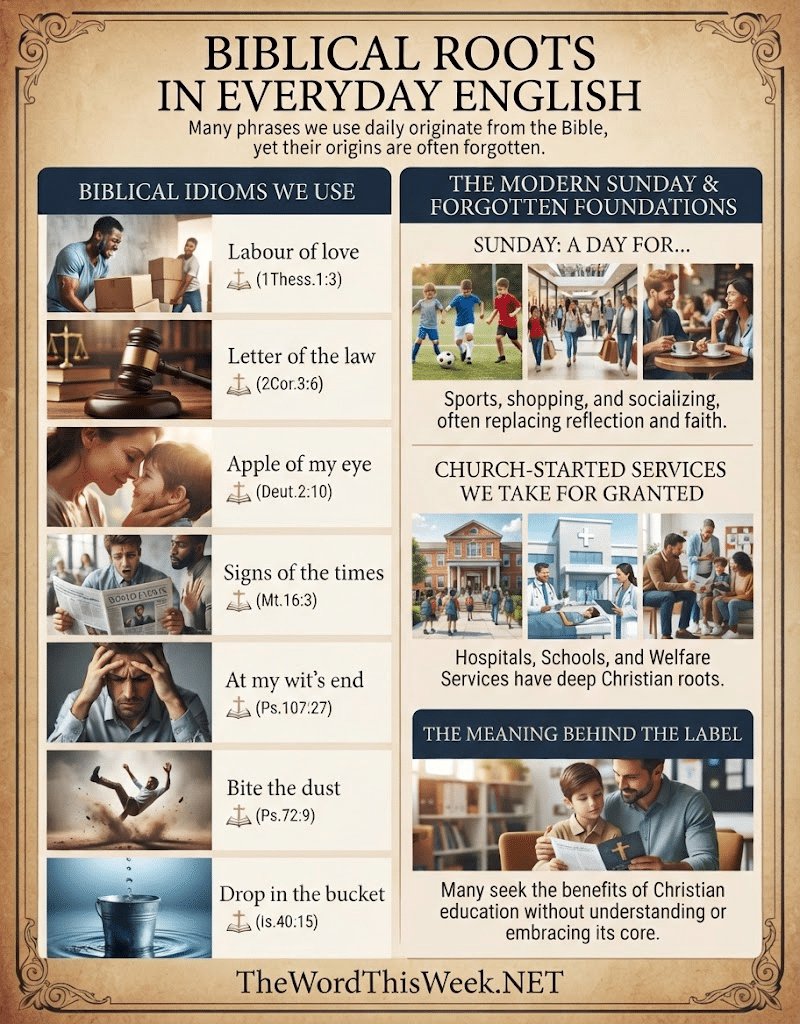
Click to Enlarge
Bishop Robert Barron
27th Sunday of Year A
▶️ The Key to Human Flourishing

Friends, in biblical imagery, the vineyard symbolizes the people of God. The Lord nourishes us as our caretaker, but he desires (even demands) that we bear good fruit. The Mass, the Eucharist, the teaching office of the Church, priests and bishops—through these means and through the Church, God cultivates his vineyard.
Watch the video, then dive deeper with TWTW study materials below:
- Visuals: 5 companion infographics to follow along with the message
- Transcript: Full sermon text for reading and reference
- Discussion Guide: 25 questions tailored for small groups and classrooms
In the News
27th Sunday of Year A
The Song of the Heartbroken Vinedresser
When the Lord poses that poignant question—“What more was there to do for my vineyard that I had not done?”—we are summoned into deep self-examination, taking up the plea of Psalm 80: “Lord, make us turn to you; let us see your face and we shall be saved.”
In our contemporary spiritual landscape, this ancient cry for the renewal of God’s vineyard resonates with startling clarity, especially as we reflect on the Apostolic Journey of Pope Leo to France just last month, in September 2026.
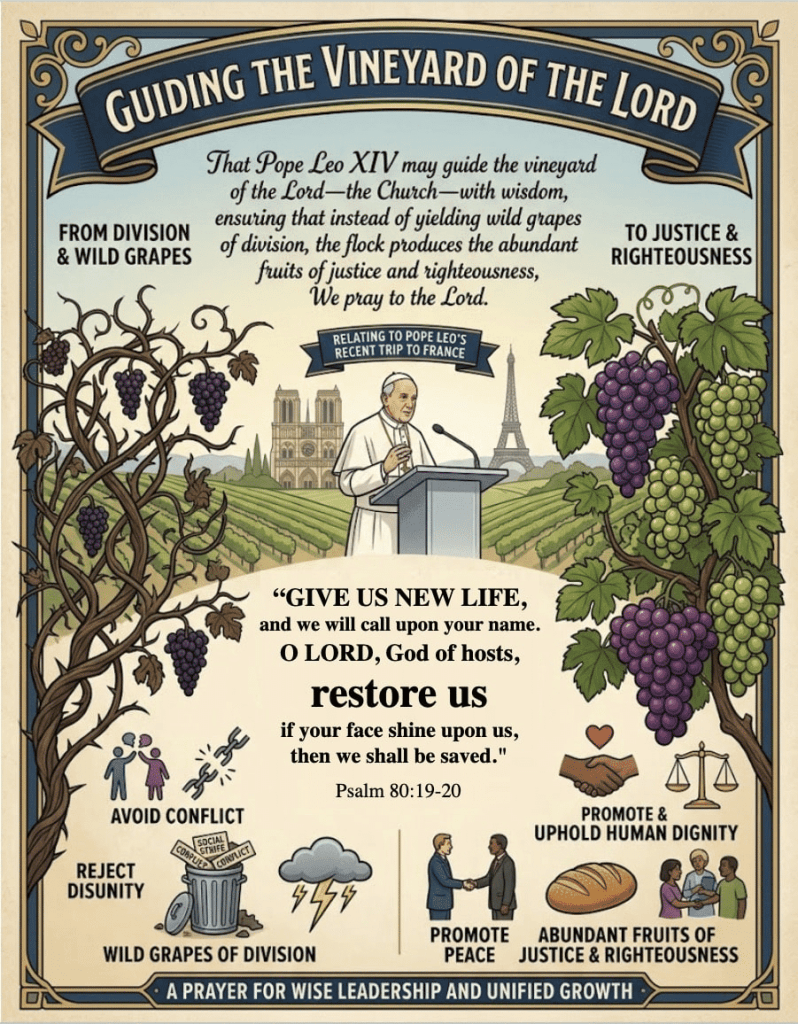

EWTN NEWS (7:22) - Pope Leo XIV makes a historic Apostolic Journey to France, visiting Paris, Lourdes and Metz 18 years after the last official papal state visit. From Notre-Dame and a prayer vigil with nearly 80,000 young people at the Stade de France to Mass with some 800,000 faithful in Paris, the Grotto of Lourdes and the legacy of Robert Schuman in Metz, the Pope calls France to a renewal of faith and Europe to rediscover its Christian roots.
The Eldest Daughter’s Vineyard
France has long been hailed in Catholic history as the “eldest daughter of the Church”—a land fertile with spiritual tradition, adorned with towering Gothic cathedrals that stretch like stone vines toward the heavens, consecrated by the blood of countless martyrs from Blandina of Lyon to Jacques Hamel, and sanctified by luminaries like Irenaeus, Joan of Arc, Vincent de Paul, and Thérèse of Lisieux. In every sense of Isaiah’s metaphor, this terrain was meticulously cultivated. The stones of pagan barbarism were cleared; the choicest vines of faith, culture, human dignity, and charity were planted deep within its soil.
Yet, as the Holy Father witnessed during his days in Paris, Marseille, and Lisieux, modern Europe—and the West at large—often resembles a vineyard in the throes of spiritual desolation. Secularism, widespread religious indifference, ideological fragmentation, and a quiet cynicism have left many grand sanctuaries quiet and many souls parched.
Standing in the shadow of great sanctuaries, Pope Leo’s presence was neither one of triumphalism nor of despairing nostalgia. Instead, his homilies and addresses sounded the very theme of Isaiah: God has invested everything in us, yet what fruit are we bearing today?
The Restored Watchtower
Nowhere was this prophetic tension more breathtakingly visible than in Paris, when Pope Leo crossed the threshold of the restored Cathedral of Notre-Dame. Standing beneath vaulting that only years ago seemed lost to catastrophic fire, the Holy Father looked upon an architectural embodiment of Isaiah’s vineyard. Notre-Dame had stood for over eight centuries as the Lord’s watchtower—its flying buttresses arching like tendrils of the true vine, its soaring spire keeping vigil over the heart of Christendom. When the inferno brought that oak forest crashing down in 2019, the world felt the visceral chill of Isaiah’s warning: “I will remove its hedge, that it may be burned; I will break down its wall, that it may be trampled.”
Yet inside the risen cathedral, Pope Leo reminded us that the Vinedresser never abandons what His hands have labored to plant. Looking upon the purified limestone and the gold cross gleaming in the chancel, the Holy Father warned against admiring Notre-Dame merely as a museum of past glory or a triumph of secular engineering. A watchtower is meaningless if the guards fall asleep; an altar is hollow if the harvest is barren. He challenged the gathered assembly to realize that the painstaking restoration of timber and stone was an urgent summons to internal conversion. “Do not rebuild the walls while allowing your hearts to remain desolate,” Pope Leo urged. God did not preserve this mother church so tourists could marvel at ancient craftsmanship, but so that a living people, scorched by the fires of secular apathy, might once again drink the living water and yield the sweet wine of holiness.
Wild Grapes
Isaiah makes clear what the sour fruit truly is. At the close of the passage, the prophet offers a striking Hebrew wordplay: God looked for mishpat (justice), but saw mispah (bloodshed); He looked for tsedaqah (righteousness), but heard tse’aqah (an outcry of the oppressed). The wild grape is not simply a failure of ritual observance; it is the bitter harvest of indifference, neglect of the marginalized, social alienation, and the breakdown of genuine fraternity.
Throughout his September journey across France, Pope Leo addressed these exact wounds. In Marseille, looking out over the Mediterranean—a sea that has become an open cemetery for desperate migrants—the Pope pleaded for an end to the "globalization of indifference." He reminded the faithful and civil leaders alike that a society cannot claim to be civil, enlightened, or Christian if it turns a deaf ear to the outcry of the poor and displaced. When human beings are discarded, when the elderly are left in isolation, when the unborn and the vulnerable are treated as burdens, the vineyard is producing wild grapes.
Furthermore, Isaiah warns us of what happens when the hedge is taken away and the vineyard is given over to thorns and briers. When a civilization cuts itself off from its living root—from the transcendent love of the Creator—its spiritual defenses crumble. It becomes vulnerable to disorientation, anxiety, and moral fatigue. We see this exhaustion in the faces of so many today: a loneliness that material prosperity cannot soothe, a restlessness that digital connectivity cannot heal.
Pruning the Vineyard
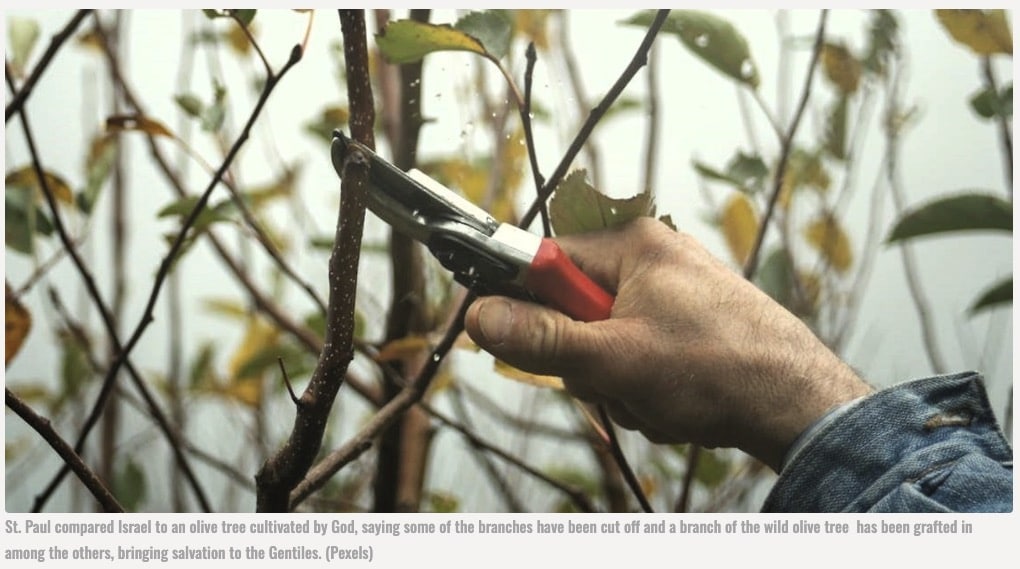
Yet, we must be careful not to hear Isaiah’s song as a declaration of hopeless doom. In the prophetic tradition, judgment is never God’s final word; it is the urgent, unyielding pedagogy of divine love. When the Lord allows the hedge to fall, it is not out of malice, but to strip away our false self-reliance so that we might realize our desperate need for the living water.
In Lisieux, at the resting place of Saint Thérèse, the Holy Father offered the antidote to our bitter harvest. He reminded the pilgrims that the renewal of the Church does not begin with political grandiosity or structural reorganization; it begins with the humble rediscovery of the "Little Way." It begins when we allow Christ to prune our pride, spade away the hardened stones of our resentment, and re-graft us onto Himself.
As Jesus said in the Gospel of John, completing Isaiah’s metaphor: “I am the true vine, and my Father is the vine grower... Whoever remains in me and I in him will bear much fruit, because without me you can do nothing” (John 15:1, 5).
The lesson of Pope Leo’s visit to France is that the vineyard is not abandoned. The God who cleared the stones in centuries past has not grown tired of laboring in our hearts. Even amidst secular winter, green shoots are emerging. We see them in young people seeking quiet Eucharistic adoration, in families opening their homes to refugees, in parishes revitalizing their neighborhoods through hidden acts of charity, and in ordinary believers daring to live with holiness in a distracted world.
A Harvest Worthy of Love
The prophet’s question is addressed not to our neighbor, but directly to you and to me this morning: “What more was there to do for my vineyard that I had not done?”
God has spared nothing. He gave us His Word, His sacraments, His Church, and ultimately, He gave us His only-begotten Son on the hill of Calvary—the ultimate hillside where the true Vine was crushed in the wine press of the Cross so that we might drink the chalice of salvation.
Let us resolve today to sweep away the stones of compromise and sloth. Let us cast out the bitter grapes of cynicism, division, and neglect. Rooted in Christ, may our lives yield the sweet wine of justice, authentic charity, and radiant hope, so that when the Master of the vineyard arrives, He may find a harvest worthy of His tireless love.
This essay based on this Sunday's readings and current events was developed collaboratively using artificial intelligence alongside human pastoral curation and theological editing. It is not intended as a finished script, but as a catalyst to spark reflection, provide thematic inspiration, and support preachers in crafting their own authentic homilies for their communities.
The Eldest Daughter’s Vineyard
The Restored Watchtower
Wild Grapes
Pruning the Vineyard
A Harvest Worthy of Love
Fr. Mike Schmitz
27th Sunday of Year A

SUNDAYS WITH ASCENSION (2023): Fr. Mike Schmitz is the chaplain for the Newman Center at the University of Minnesota Duluth (UMD) and serves as the Director of Youth and Young Adult Ministry for the Diocese of Duluth.
▶️ Lost: Have No Anxiety at All
St. Paul urges the Philippians—writing from a prison cell—to have no anxiety, but instead present their requests to God with thanksgiving. This requires moving from a future-focused “What if?” mindset to a present-focused, gratitude-driven “What is?” mindset of abundance. The homily’s core message is that true peace comes from trusting God’s purpose, so we can move forward confidently even when life feels directionless.
Fr. Michael Chua
27th Sunday of Year A

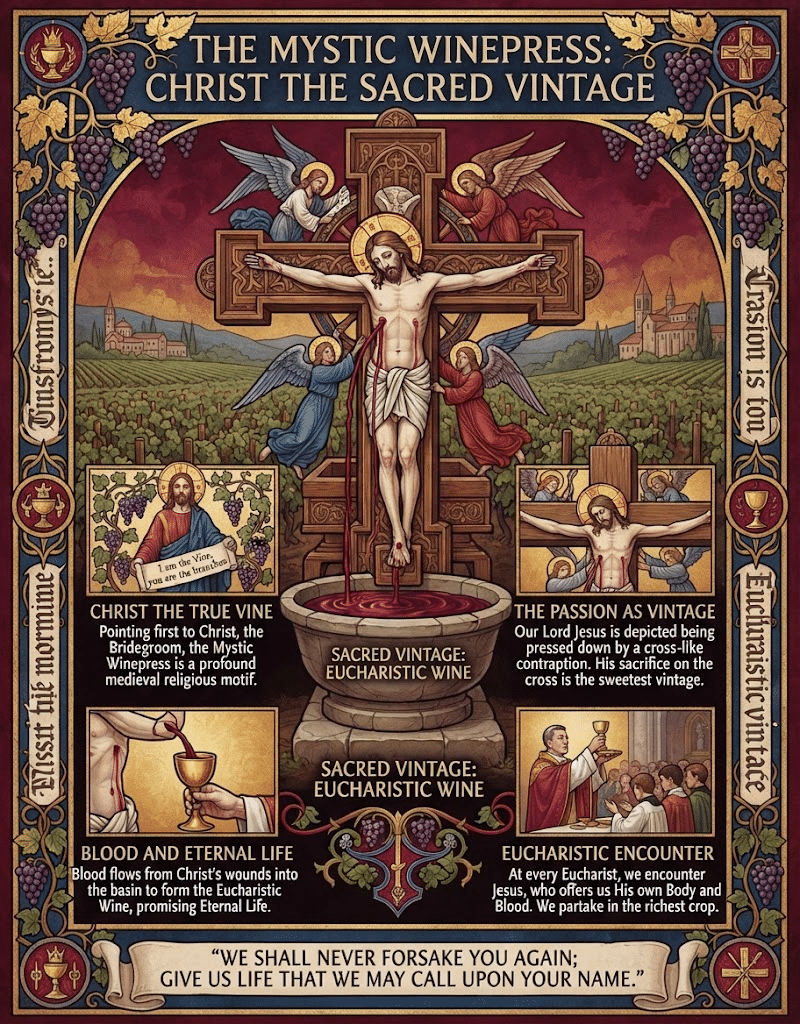
A 1571 painting by the Italian Mannerist painter Marco Pino. It shows Christ being pressed in a winepress. The imagery imagery represents Christ’s Passion, His blood, and the Eucharist.
✍️ The Mystical Winepress
EXCERPT (2023): The image of the vineyard points in the first place to Christ, the Bridegroom, the Mystic Winepress and Sacred Vintage. One of the most popular motifs in religious art in the Middle Ages was the depiction of our Lord as the mystic wine press…. Blood flows from Christ’s wounds into the basin below to form the wine. Christ Himself has become the grapes by which through His passion and death produces the Wine. His sacrifice on the cross has produced the sweetest vintage that promises Eternal Life to those who have the privilege of drinking it. It is a powerful Eucharistic image. Instead of wine produced through the fermentation of grapes, our Lord offers us His own Body and Blood in the Eucharist.
Dominican Blackfriars
27th Sunday of Year A
✍️ The Cornerstone of Our Lives

EXCERPT (2020): Cathedrals are built around solid, simple principles: the line, the square, the circle. The people of the Middle Ages didn’t compartmentalize knowledge: so the principles of architecture were understood not just for their practical purpose, but also their spiritual meaning. The line was not only horizontal, but also vertical – connecting heaven and earth. The square represented the earth (four cardinal points, four corners, etc.), while the circle, being an endless line, symbolised the eternity of heaven… But to become a master mason required understanding of the keystone (sometimes called cornerstone). The keystone is crucial to holding together the arch, or vault, or dome.
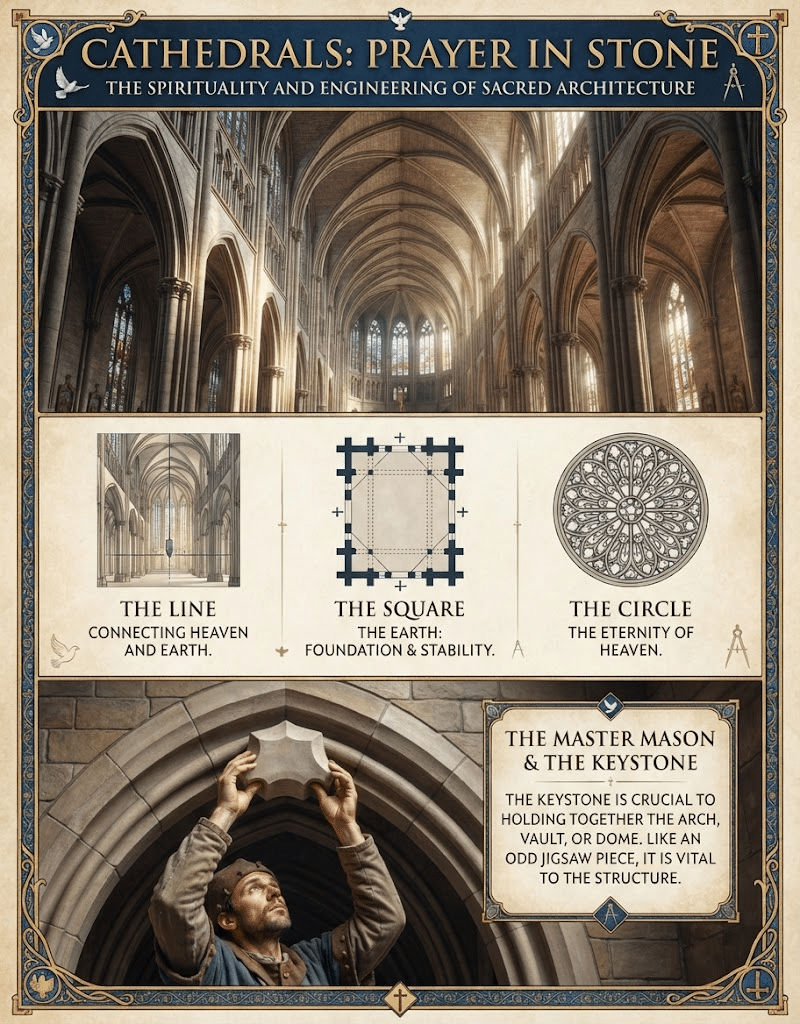
Although this homily makes reference to the 2020 COVID-19 PANDEMIC, a preacher today may want to refer to the 2026 U.S.-IRAN WAR.
Fr. Austin Fleming
27th Sunday of Year A
✍️ Bad News, Good News
Fr. Austin Fleming
EXCERPT (2017): I’ve heard a number of folks say they’re reluctant to pick up the daily paper or listen to the news for fear it will just be more of the same – or worse. I’ve also heard some folks ask, “Where’s God in all of this? Why doesn’t God do something about all this bad news?” Well, I have to wonder if God in heaven isn’t reacting just as we are. Must not God be tired too, weary of all the bad news?…
But there’s good news in the scriptures today, too…in the words we heard from Saint Paul: “Brother and sisters, have no anxiety at all…think about whatever is true, whatever is honorable, whatever is just whatever is pure, whatever is lovely, whatever is gracious; if there is anything of excellence, anything worthy of praise…

Monsignor Peter Hahn
27th Sunday of Year A

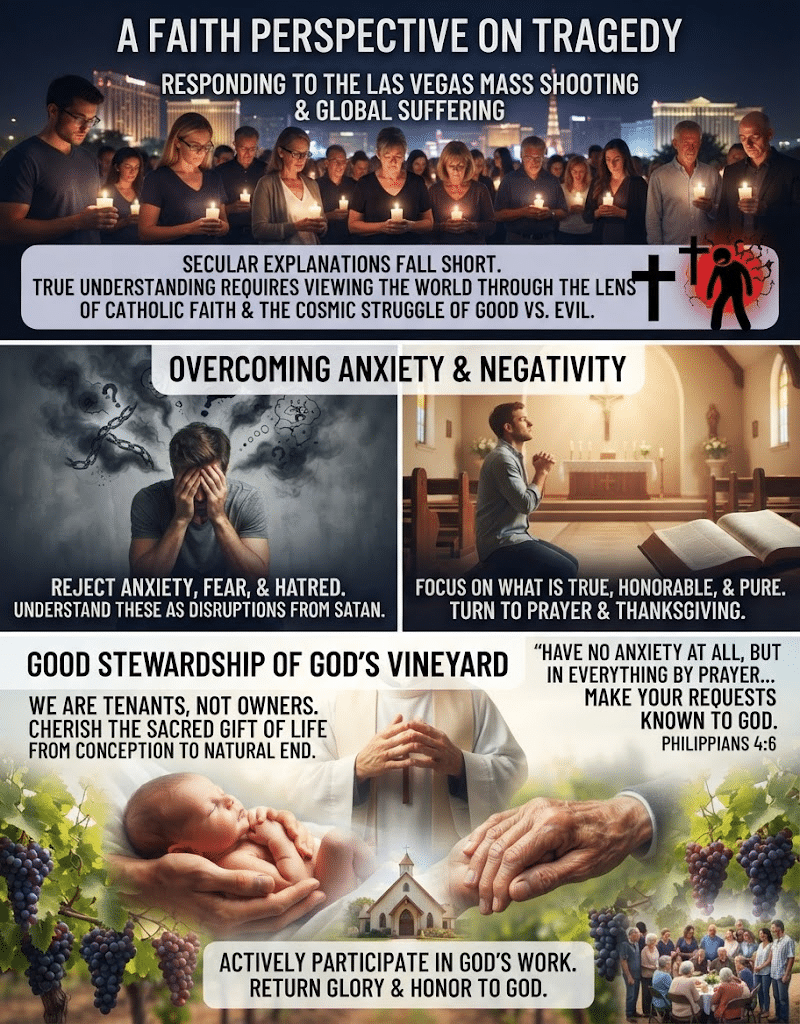
▶️ A Faith Perspective on Tragedy
Msgr. Peter Hahn
SUMMARY (2017): Addressing the LAS VEGAS SHOOTING, the homily asserts that secular analyses fall short, and true understanding of such profound evil requires viewing the world through the lens of Catholic faith and the cosmic struggle between good and evil. Believers are urged to reject anxiety and negative thoughts—viewed as disruptions from Satan—by focusing their minds on prayer, thanksgiving, and whatever is true, honorable, and pure. Drawing from the scriptural parable of the tenants and the vineyard, the message reminds the faithful that humans are stewards, not owners, called to cherish the sacred gift of life from conception to natural end and return glory to God.
Fr. Charles E. Irvin
27th Sunday of Year A
✍️ The Pain of Rejection

Fr. Charles E. Irvin
EXCERPT: The pain of rejection is horrible. That pain is made crystal clear and perfectly evident when we take a good look at the crucifix and understand its profound message, namely our rejection of God’s love for us. That’s why there’s a human body hanging on it. It’s not an empty cross, it’s a cross loaded to the full with rejection, the worst kind of pain that any of us can ever experience. The crucifix presents us with God nailed and immobilized because we won’t listen to him!
There’s no defense against rejection. No words can deal with rejection. There’s nothing we can do against it — which is perhaps why Jesus stood before Pontius Pilate, the personification of human judgment and rejection, and stood there in utter silence. Words simply cannot deal with the reality of rejection. Nothing can.
The parable we just heard in the Gospel is more than just a parable about us. It is, rather, a glimpse into God’s heart. It tells us about how He feels, about the hurt and pain He experiences at our hands.
Fr. Tommy Lane
27th Sunday of Year A
✍️ Tenants of the Vineyard

Fr. Tommy Lane
EXCERPT (2023): At the end of the Eucharistic Prayer in every Mass, the priest elevates the paten with the Sacred Host and the Chalice with the Precious Blood and prays to the Father, “Through him, and with him, and in him, O God almighty Father, in the unity of the Holy Spirit, all glory and honor is yours.” So, we pray that through Jesus, with Jesus and in Jesus, all glory and honor from all creation go to the Father. How true indeed that prayer is. Our Father in heaven does receive all honor and glory as the priest elevates the paten with the Body of Jesus and the Chalice with the Blood of Jesus. How sad that the same name of Jesus is not always honored in speech or on TV.
But after Jesus told his parable, he quoted a psalm:
The stone that the builders rejected
has become the cornerstone (Ps 118:22)
Jesus is that cornerstone, on which everything rests. Take away the cornerstone and everything crumbles. But thanks be to God for the tenants—grandparents, parents, and teachers—who pass on the faith that Jesus is the cornerstone on which everything rests.
Fr. Langeh, CMF
27th Sunday of Year A

▶️ We are All Tenants
EXCERPT (2017): Through our sins we have rejected him and the prophets before him back upon ourselves. We have neglected justice, we have been partial, we have not borne lasting fruits. We also act with violence against our fellow human beings, sons and daughters of God. As faithful tenants, we must care deeply about justice, will love to show mercy, and will walk in humility and submission to God (Micah 6:6-8). As faithful tenants we must be loving, joyful, peacemakers, peace-filled person, patient, kind, good, faithful, gentle, and self-controlled (Galatians 5:21-22.). As faithful servants we must take care of the flock God has handed to us. This can be our children, our family, our society and especially our Church.
Msgr. Charles Pope

This video features the words of an old spiritual: Sinner please don’t let this harvest pass, and die and lose your soul at last. I made this video more than a year ago and in it there is a picture of Fr. John Corapi preaching. Since I made it long before his recent “troubles,” please do not attribute any implication from me by its inclusion; it is simply indicative of the “age” of the video.—Msgr. Pope
27th Sunday of Year A
✍️ Sinner Please Don’t Let This Harvest Pass
Msgr. Charles Pope
EXCERPT (2023): There is an urgency and clarity about today’s Gospel that is often lacking in modern Christians, including the clergy. In this Gospel, the message is urgent, provocative, and clear: there is a day of judgment coming for every one of us and we simply must be ready. The message is a sobering one for a modern world that is often dismissive of judgment and certainly of Hell. Yet Jesus says clearly that the Kingdom of God can be taken from us for our refusal to accept its fruits in our life.
- THE SOWING
- THE SEEKING
- THE SINNING
- THE SENTENCING

Father Kevin Rettig
27th Sunday of Year A

▶️ God or Google?
EXCERPT (2026): A computer is an outstanding tool, a marvelous helpmate, but not a cornerstone for any life worthy of a human being. Let us not lose our life, nor the humanness of our life with all its wonderful possibilities for imagination and wonder and poetry and love. A soul is not a machine. A human heart is not a search engine. How easily can these wonderful devices take over our time, take the place of the truly human, the truly worthwhile in life. Let us not say I had a life once, now I have a computer. Let us use these magnificent tools as instruments for dispelling negativity, not spreading it, for building up the edifice whose cornerstone is something far deeper. For by these modern means, a little love can truly go a long way fast. Let us rediscover that the basis for a truly human life is not a hard drive, but a heart drive. By the Lord has this been done, and it is wonderful in our eyes.

Fr. George Smiga
27th Sunday of Year A
✍️ Just War Principles and Iraq

Matthew 21:33-43
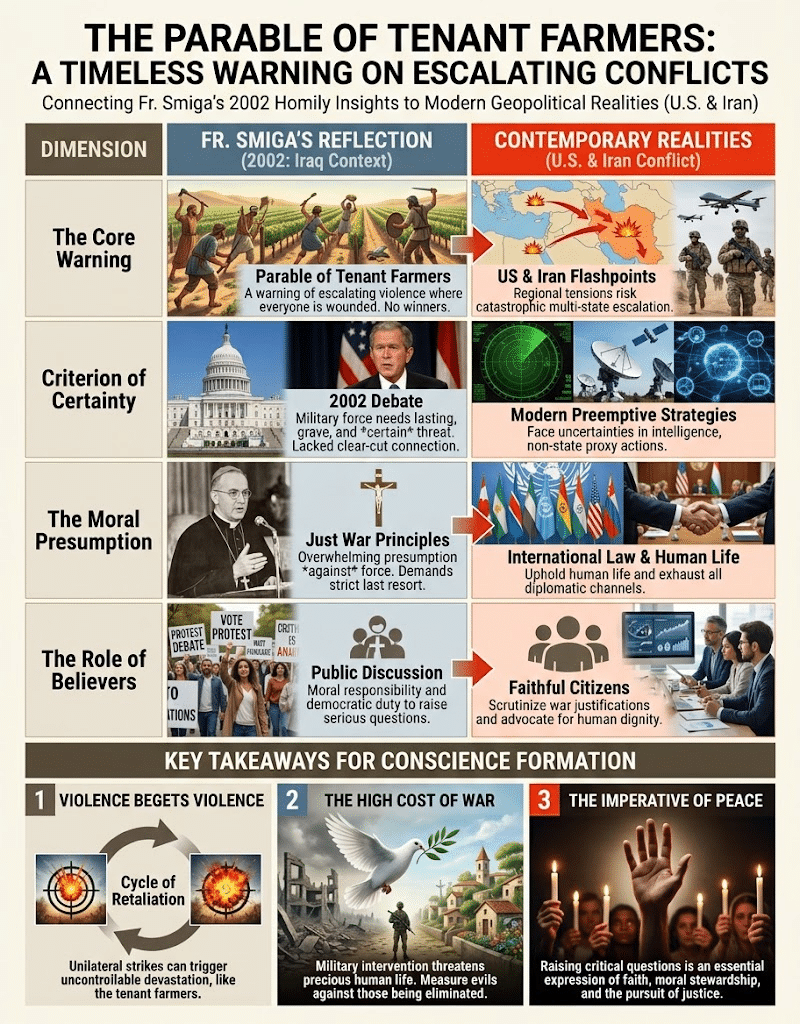
EXCERPT (2002): Not all the parables of Jesus show us how to live. Some merely describe the world as it is, and sometimes those descriptions can be frightening. This is the case with today’s parable of the tenant farmers in the vineyard. This parable does not show us what we need to do, but instead describes a frightening pattern that is present in our world: the pattern of escalating violence. The tenants kill the owner’s slaves, then they kill more slaves, then they kill his son, and in turn the owner comes and kills them. There are no winners in this parable. Everyone is mortally wounded. This parable is not an example but is rather a warning, a warning of how dangerous it is to live in a world where violence can spin out of control and hurt us all. As Americans, the warning of this parable is particularly appropriate for us today as our country contemplates war with Iraq…
The warning of today’s parable must be taken seriously. We live in a world where violence begets violence. We live in a world where the destruction of human life can all too easily escalate. We owe it to ourselves to make sure that if our country uses military force, that use of violence will not create evils that are greater than the evil we seek to eliminate. As Christians and as Americans we must not only assure ourselves that military action is a just action; we must also try to be very sure that if we go to war, such violence is truly a last resort.
Religious Orders
27th Sunday of Year A


Featured Priests
SCROLL FOR MORE
The Vineyard Within:
Weeding the Soil of the Heart
Reading: Matthew 21:33–43
Augustinian Theme: Interiority
When Christ speaks of the vineyard, our first impulse is often to look outward—to see the world, the Church, or the corrupt tenants of history. Yet Saint Augustine reminds us that before we cast our eyes into the distance, we must return to where God truly dwells: within.
Your heart is that vineyard. God has planted it with exquisite care, clearing its stones, walling it with His mercy, and placing His very breath within you. He is not a distant landlord awaiting an impossible tribute; He is intimior intimo meo—closer to you than you are to yourself.
Yet how often do we lock the gates against Him? We fill our interior life with noise, ambition, and the illusion of self-possession. We act as if our lives, our gifts, and our time belong exclusively to us. When God whispers in the quiet of our conscience, asking for the fruits of humility, patience, and love, we silence the messenger. We exile Christ from the very garden He planted, preferring the frantic illusions of control to the tender demands of truth.
Interiority invites us to stop running from our own depths. It asks for the quiet courage to sit before God in silence, letting His gentle gaze reveal what our vineyard has truly yielded. Are we nurturing the wild, bitter fruit of pride, or the rich grapes of charity?
Do not fear what you find in that quiet self-examination. God does not enter your heart to dispossess you, but to redeem you. Open the gates. Surrender the harvest of your affections to the true Vinedresser, and allow His living presence to make your soul fruitful once again.
Featured Friars & Monks
SCROLL FOR MORE
Finding God in the Soil Where We Stand
Reading: Matthew 21:33–43
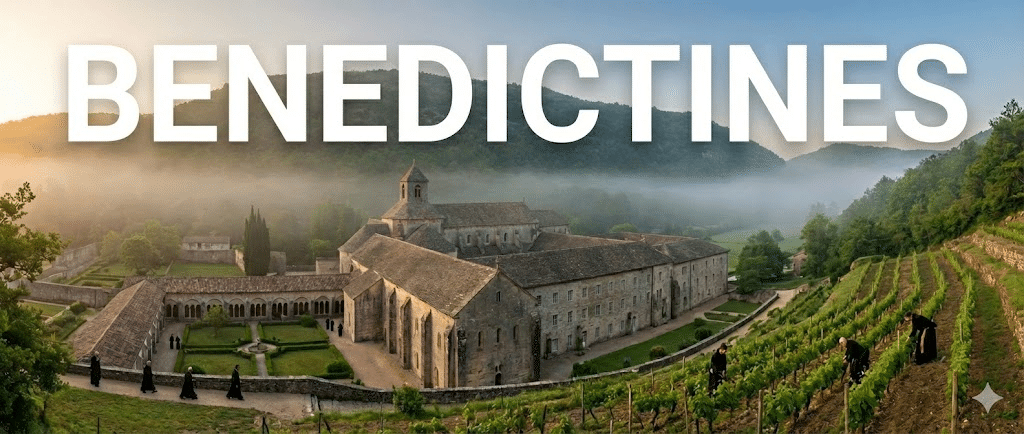
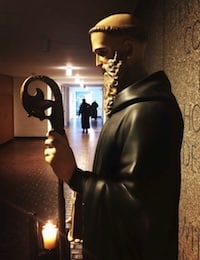
Benedictine Theme: Stewardship and Moderation (with the grace of Stability)
In the Gospel, the landowner plants a vineyard, builds a hedge around it, digs a wine press, and entrusts it to tenants. It is a portrait of tender care. Saint Benedict would recognize this immediately. In Chapter 31 of the Rule, Benedict directs the cellarer to regard all the monastery’s goods, even the common tools of daily work, as though they were the sacred vessels of the altar.
Nothing in God’s creation is disposable. Nothing is purely ours to exploit.
The tragic fall of the tenants in the vineyard began the moment they forgot they were stewards, not owners. They allowed possessiveness to poison their hearts. Instead of cultivating the vines with reverent hands and offering the harvest back to the master in gratitude, they grasped, hoarded, and destroyed.
How easily we fall into that same trap in our own daily lives. We can begin to treat our relationships, our time, our work, and even the earth itself as territory to control rather than sacred ground to tend. When anxiety or greed drives us, moderation vanishes. We extract rather than nurture; we guard our borders instead of welcoming the harvest.
Benedictine spirituality calls us back to the gentle truth: we are caretakers of a grace that is not our own. God has placed you in a particular vineyard—your home, your parish, your workplace, this very day. You do not need to flee to find holiness. The call is simply to remain, to care for what has been entrusted to you with patient, humble hands, and to remember whose garden it truly is. When we live with reverent stewardship, our ordinary daily labors become an offering, yielding fruits of peace, justice, and enduring love.


The Grace of Emptying
Reading: Isaiah 5:1–7
Carmelite Theme: The “Dark Night” and Purification
Isaiah’s song of the vineyard begins not with anger, but with an aching love song: “Let me sing for my beloved my love song concerning his vineyard.” The Beloved dug the soil, cleared every stone, and planted the choicest vines. Yet when He looked for sweet grapes, it yielded only wild, bitter fruit.
In Carmelite tradition, St. John of the Cross teaches that God looks upon the human soul with this same fierce, tender gaze. God does not demand our love from afar; He tends our souls with infinite patience. Yet within us, bitter fruit so often takes root—the stubborn weeds of self-reliance, disordered attachments, and the subtle pride that turns us inward away from His grace.
When the Lord in Isaiah permits the hedge to be removed and the wall broken down, our first instinct is to hear abandonment. But the Carmelite soul recognizes here the sacred, purifying mystery of the Dark Night. God does not dismantle our defenses to destroy us, but to strip away the false securities we cling to. When our exterior consolations dry up, when our spiritual life feels barren and unwatered by rain, God is not absent—He is pruning the vines.
The bitter grape is our attachment to loving ourselves more than the Beloved. The pruning shears of trial, silence, and spiritual dryness feel devastating, but they are instruments of mercy. They tear away the wild, tangled growth of our ego so that only true charity can survive.
Do not despair when your vineyard feels unhedged and exposed to the wilderness. Stand in the quiet stillness of trust. Allow God to clear the stones of self-will from your heart, so that from the ashes of your stripped garden, the sweet, authentic fruit of divine union may finally bloom.

Featured Friars & Websites
SCROLL FOR MORE
Dwell on These Things:
Truth as the Anchor of Peace
Reading: Philippians 4:6–9
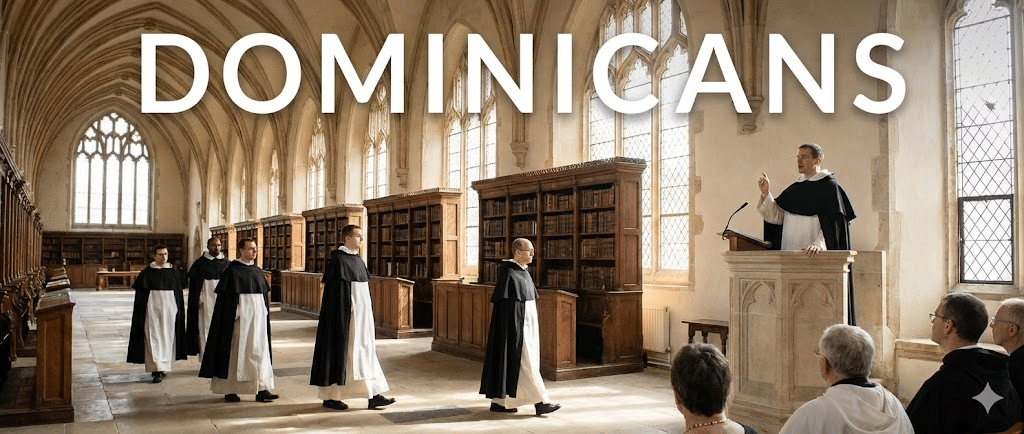
Dominican Theme: Veritas (The Pursuit of Truth)
Saint Paul gives us a command that feels almost startling in its scope: “Have no anxiety at all.” In a world consumed by noise, fracture, and relentless worry, anxiety often feels like an unavoidable companion. Yet Paul does not offer empty optimism. Instead, he directs the mind toward an anchor: “Whatever is true, whatever is honorable, whatever is just, whatever is pure, whatever is lovely, whatever is gracious… think about these things.”
For the Dominican soul, this instruction touches the very heartbeat of our vocation: Veritas—the tireless pursuit of Truth.
Truth is not an abstract formula or a weapon to win arguments. Truth is a Person, Jesus Christ, who illuminates every corner of reality. Saint Thomas Aquinas taught that all truth, no matter who utters it, comes from the Holy Spirit. Paul recognizes that what occupies our minds inevitably shapes our souls. When we fix our gaze solely on catastrophe, fear, and division, our spirits wither in dread. But when we train our intellect and heart to contemplate what is genuinely true, noble, and good, our understanding expands, and anxiety loses its grip.
To pursue Veritas is an act of holy defiance against despair. It means refusing to let our thoughts be hijacked by falsehood or panic. It means actively seeking God’s fingerprint in the beauty of creation, the integrity of honest labor, the pursuit of justice, and the quiet dignity of our neighbor.
When you fix your mind upon Truth, you are not escaping the world; you are learning to see it as God sees it. Let Christ illuminate your mind today. Dwell on what is true, and the peace of God, which surpasses all human understanding, will guard your heart.

Featured Websites
SCROLL FOR MORE
Choosing the Lowest Place
Reading: Matthew 21:33–43
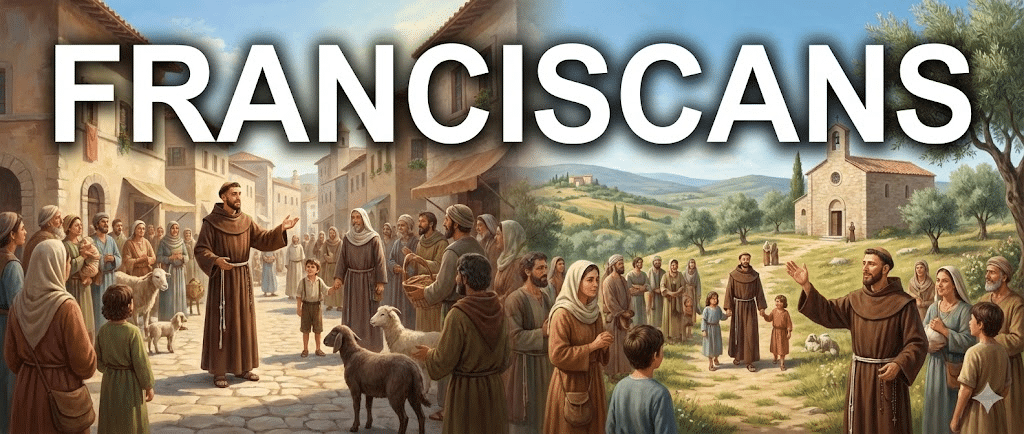
Franciscan Theme: Minoritas (Lesser-ness and Humility)
In the parable of the wicked tenants, Jesus quotes the ancient psalm: “The stone that the builders rejected has become the cornerstone; by the Lord has this been done, and it is wonderful in our eyes.”
The builders of this world are always looking for what is grand, polished, powerful, and imposing. They measure value by dominance and control. But our God does something entirely contrary to human ambition. He builds His eternal kingdom not from the grand pillars of empire, but from the discarded rubble—the stone tossed aside into the dust.
This is the very soul of the Franciscan path: Minoritas. When Saint Francis chose to call his brothers the Friars Minor—the lesser ones—he was not adopting a clever title of false modesty. He was choosing to stand precisely where Christ stood: at the bottom, among the forgotten, stripped of prestige, title, and the violent urge to possess.
The tenants in the vineyard fell because they hungered for ownership. They wanted to seize the inheritance and make themselves masters. Francis recognized that the desire to rule and grasp always ends in violence and estrangement from God. True freedom is found in letting go of our grasp entirely.
When we embrace minoritas, we stop competing for the chief seats. We no longer fear rejection, because Christ has already hallowed the place of the rejected stone. In choosing the lowest place, we encounter the humble Jesus who was born in an open feed-trough and hung naked on a rough cross for our sake.
Do not exhaust your soul trying to prove your importance to the world. Step down from the pedestal. Embrace your littleness, love the ordinary and the overlooked, and trust that God weaves His greatest marvels out of humble, surrender-filled hearts.

Featured Websites
SCROLL FOR MORE
The Examen of the Vineyard
Reading: Isaiah 5:1–7
Jesuit Theme: The Daily Examen
In Isaiah’s aching song of the vineyard, the Lord asks a piercing question that echoes through every human life: “What more was there to do for my vineyard that I had not done? Why, when I looked for a crop of good grapes, did it bring forth wild grapes?”
God does not stand aloof from the soil of our lives. He clears the stones of our past, plants within us the choicest gifts of grace, and surrounds us with His relentless mercy. Yet, when the season arrives for harvest, He so often finds the sour, wild fruit of impatience, indifference, and fractured charity.
Saint Ignatius of Loyola gave the Church a profound spiritual tool to face this exact question: the Daily Examen. Ignatius understood that a life unreflected upon easily drifts into bitterness. The Examen invites us to pause at the close of each day, quiet the frantic noise, and look honestly upon our personal vineyard under the warm gaze of God’s love.
We begin with gratitude—marveling at how the Divine Vinedresser has labored over us this day. We notice where grace was alive in our encounters, our work, and our quiet moments. But then, with holy courage and without despair, we look at the sour fruit. Where did God look for compassion in our words, yet found sharp defensiveness? Where did He seek justice in our choices, but found complacency?
The Examen is never an exercise in shame; it is an encounter with a God who refuses to give up on the soil of our hearts. By naming the wild grapes honestly, we invite Christ to prune what is dead and water what is tender. In that nightly stillness, our scattered days are re-anchored in grace, transforming our hearts into fruitful vineyards that yield the sweet harvest of His love.

Featured Websites
SCROLL FOR MORE
Wild Grapes and Plentiful Mercy:
Healing the Broken Soil
Reading: Isaiah 5:1–7
Redemptorist Theme: Plentiful Redemption
Isaiah’s song of the vineyard carries the tender, aching sorrow of a lover whose devotion meets heartbreak: “What more was there to do for my vineyard that I had not done? Why, when I looked for a crop of good grapes, did it bring forth wild grapes?”
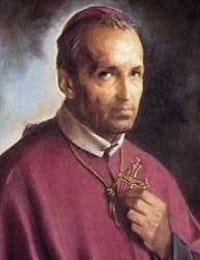
If we read this through the lens of human discouragement, we hear an ending—a failed harvest, an abandoned garden, and judgment. But through the heart of Saint Alphonsus Liguori, we hear something far deeper. Alphonsus looked out at the broken, forgotten laborers of his world and saw that human frailty is never the final word. He anchored the Redemptorist mission in a blazing promise from Psalm 130: Copiosa apud eum redemptio—with Him there is plentiful redemption.
How often does our own interior vineyard yield the bitter, wild grapes of frustration, compromise, and sin? We want to bear the sweet fruit of patience, holiness, and charity, yet we find ourselves stumbling over the same stones. When we see our sour fruit, our immediate instinct is shame. We fear God has grown weary of tending us, that His patience has finally run dry.
Alphonsus gently shatters that fear. God did not pour His labor into the vineyard because the soil was already perfect; He labored because He loved it from all eternity. The song of Isaiah points us directly to the Cross, where Christ’s own blood waters our parched ground. In Jesus, God’s answer to our wild grapes is not abandonment, but an overabundance of healing grace.
Redemption is not scarce; it is plentiful, overflowing, and free. Come to the Master with complete confidence, as a wounded child turns to a loving friend. No failure in your past has exhausted His mercy. Surrender your barren branches into His tender hands today, and let the infinite warmth of His Redeemer’s heart make your soul blossom anew.
In the News
27th Sunday of Year A
The Vineyard and
Our Tools
At every turning point in human history, a deep, quiet spiritual crisis is exposed: the temptation to mistake what we do for who we are, and the recurring fear that new human inventions will displace the divine spark within us.
In Germany, around 1440, Johannes Gutenberg altered civilization by introducing the movable-type printing press. Adapting the wooden screw press used in Rhineland vineyards to crush grapes, he turned an agricultural tool into an engine of thought. Before then, scribes painstakingly copied manuscripts by hand. When a machine produced in thirty seconds what took a trained hand three days, panic ensued. Scribe guilds lobbied authorities, warning that the machine was dangerous, imprecise, and an existential threat to authentic scholarship. Church critics worried that pre-printed collections of sermons would foster intellectual laziness, fearing priests would cease praying over the Scriptures and merely recite words off a page without pastoral care. Instead of diminishing the Word, the press distributed it into eager hands everywhere.

AI IS THE NEW PRINTING PRESS (5:26)
The Anxiety of Change
Yet this anxiety was far from new. For the first millennium of the Church, musical instruments were largely barred from the liturgy. The early Church Fathers associated them with pagan excess. As late as the thirteenth century, Saint Thomas Aquinas noted that the Church avoided instruments lest the liturgy imitate temple ceremonies rather than relying on the pure human voice. The underlying fear was simple: how could a soulless apparatus of bellows, wood, and pipes express authentic human prayer? Critics feared the machine would drown out genuine faith.
A similar crisis of authenticity unfolded in the nineteenth century with the advent of photography. When the daguerreotype emerged in 1839, the painter Paul Delaroche cried out, "From today, painting is dead." Religious critics went further, calling the capture of light by chemistry and mirrors blasphemous, arguing that man was made in the image of God and that divine reality could not be captured by a mechanical contraption. They feared it would replace the divine inspiration of human sacred art with soulless optical reproduction.
Tenants in the Master's Field
This exact pattern of defensive possessiveness lies at the heart of our Scripture readings. In the Gospel of Matthew, Jesus tells the parable of the tenants in the vineyard. A landowner prepares a magnificent estate—he clears the stones, plants choice vines, hedges it about, digs a winepress, and builds a watchtower. He spares no resource, entrusts the entire gift to tenants, and journeys abroad.
Yet when harvest arrives and the owner sends servants to collect the rightful produce, the tenants turn violent. They beat one, stone another, and murder the heir himself, thinking, "Come, let us kill him and take his inheritance." They forgot the fundamental truth of their existence: they were tenants, not owners. The vineyard was an entrusted grace, not an empire for self-preservation. When disruption and accountability arrived, they chose violent clinging over righteous stewardship.
Isaiah sings the very same sorrow in his Song of the Vineyard. God planted a choice hillside, expecting a harvest of sweet grapes, but the soil yielded only bitter, wild fruit. The Lord looked for justice—mishpat—but saw bloodshed; for righteousness—tzedakah—but heard a cry of distress. The landowner provided every necessary implement and structure so the vines could flourish. Yet the tragic failure was not a defect in the hedge, the tower, or the winepress; the failure lay in what the tenants chose to yield. The tools and infrastructure were fully provided, but tools cannot manufacture the moral and spiritual fruit that only a faithful human heart can render to God.
From the Altar to the Kitchen Sink
Over centuries of prayerful discernment, the Church discovered that human tools do not destroy sacred vocations; they clarify them. Throughout history, our recurring error has been mistaking the mechanical instrument for the fruit itself. The pipe organ did not silence the congregation; it supported and sustained the people's voices, leading the Second Vatican Council to praise it as an instrument that "adds a wonderful splendor to the Church’s ceremonies and powerfully lifts up man’s mind to God."
Photography did not kill art; it freed painters from mere optical reproduction to explore mystery and emotion. The Church embraced the camera: Pope Pius IX used portraits to unite a global flock, and the photographic negative of the Shroud of Turin became an enduring aid to contemplation. In our own era, when handheld calculators entered classrooms, critics warned that mathematical thinking would perish. Instead, removing the drudgery of rote arithmetic allowed students to engage higher-order calculus and engineering.
We see this exact transformation not just in grand history, but right inside our own homes. Consider the domestic revolutions of the last century: the washing machine, the dishwasher, the microwave, the vacuum. Before these appliances, keeping a household running consumed endless, backbreaking hours—hauling buckets of water, boiling linens over fires, tending wood stoves, and scrubbing plates until late into the night. When those machines entered the home, they were not meant to replace the warmth of home life; they were designed to absorb the drudgery of daily survival.
The dishwasher was never built to love our children, and a microwave cannot tuck anyone into bed. But by washing the dishes and warming a meal in minutes rather than hours, they quietly grant us a gift far more precious than mechanical efficiency: the gift of time. They free us from being chained to the kitchen sink so that we can step into the living room, sit on the floor to play with our grandchildren, linger across the dinner table in genuine conversation with a spouse, or truly listen to a family member who had a difficult day. In scriptural terms, they clear the briars and thorns of sheer survival so that the domestic church can actually bear the choice grapes of charity, presence, and familial love.
Guarding the Soul for the Harvest
Today, artificial intelligence brings us to that same threshold. Tools now summarize, analyze, cross-reference, and draft faster than any human hand. The instinctive reaction is fear: If a machine can perform this labor, what becomes of my worth?
The answer lies in understanding the limits of the instrument. AI is simply the modern concordance, the modern printing press, the calculator for language and research—or in the imagery of Matthew 21, the modern winepress and watchtower. It is equipment given to the tenant to help tend the soil. AI cannot pray. It cannot experience the mercy of the confessional. It cannot shed a tear at a graveside. It cannot love, repent, or offer forgiveness. But when it handles the administrative arithmetic—drafting schedules, organizing research, or lifting the paralysis of a blank page—the intellect is not atrophying. It is freed for higher-order discernment.
Most importantly, this technology reclaims our time for the true work of the vineyard. In Matthew’s Gospel, Jesus warns of tenants who became so obsessed with control, self-preservation, and possessing the vineyard for themselves that they neglected their one true task: handing over the harvest to the Master in its proper season. When administrative burdens, endless desk work, and daily mechanics consume our lives, pastoral care and authentic human presence wither. We become like those anxious, defensive tenants, clinging to the tasks and the stones of the estate, producing only the wild, sour grapes of exhaustion and isolation.
If modern tools can assemble routine tasks in moments, those hours can be returned to where Christ commands: sitting at the bedside of the suffering, counseling the brokenhearted, being fully present with our families, and walking out into our communities to encounter those drifting in loneliness.
This is why Saint Paul’s counsel to the Philippians speaks directly to our technological transition: "Have no anxiety at all, but in everything, by prayer and petition, with thanksgiving, make your requests known to God. Then the peace of God that surpasses all understanding will guard your hearts and minds in Christ Jesus." Paul urges us to fix our gaze on what actually matters: "Whatever is true, whatever is honorable, whatever is just, whatever is pure, whatever is lovely, whatever is gracious, if there is any excellence and if there is anything worthy of praise, think about these things."
Virtue, compassion, and divine love are not algorithmic functions. God never created you to be a biological copying press or a mechanical calculator. He placed you in His vineyard to bear the fruit of the Spirit. Let the tools do what tools were made to do. Cast your anxieties upon God, anchor your dignity in Whose you are, and step out into the field to offer back a harvest worthy of His grace.
This essay based on this Sunday's readings and current events was developed collaboratively using artificial intelligence alongside human pastoral curation and theological editing. It is not intended as a finished script, but as a catalyst to spark reflection, provide thematic inspiration, and support preachers in crafting their own authentic homilies for their communities.
The Anxiety of Change
Tenants in the Master’s Field
From the Altar to the Kitchen Sink
Guarding the Soul for the Harvest
Additional Homilies
27th Sunday of Year A



Fr. George Corrigan, OFM
A Call for Change
Matthew’s Vineyard
Bearing Fruit
The Coming Change
Give and Take
A Final Thought
Msgr. Joseph Pellegrino (PDF) | Archive
Caring for the Vineyard (2023
Tenant Farmers All(2020)
Wicked Laborers, St. Francis & Us (2017)
Actions and Consequences (2014)
Fr. Michael Fallon, MSC | Archive
27th Sunday in Ordinary Time (PDF)
Bilingual Homily
27th Sunday of Year A
A brief homily for those who are learning Spanish or English. The grammar is kept uncomplicated and uses present-tense vocabulary to ensure it is easy to deliver. The homily focuses on the practical, everyday meaning of Sunday’s Gospel.
VOCABULARY


 Highlight text or double-click a paragraph anywhere on the site to ADD TO NOTES. You can also click ASK AI to copy your selection to the clipboard with a command prompt, ready for you to paste manually into the chat above.