Fr. Tony’s Homily, Homily Starters
Fr. Tony’s Homily, Homily Starters
October 4, 2026

⬅️  ➡️
➡️


RELATED
PAGES


From Prison to President
27th Sunday of Year A

Nelson Mandela
South Africa is a country blessed by God in a great many ways. But the country which should have been a haven for all the peoples of Southern Africa became instead a heaven for a privileged white minority. Many people tried in vain to change South Africa’s apartheid system. Finally, Nelson Mandela appeared on the scene. He too tried to bring about reforms. But like reformers before him, he was rejected. Worse, he was hounded by the government, and ended up spending twenty-seven years in prison. However, he not only survived prison, but came out of it with the respect of his enemies and of the entire world. Furthermore, he came out without bitterness. He immediately sought reconciliation with the leaders of the regime that kept him, in prison.
SOURCE: Flor McCarthy in New Sunday and Holy Day Liturgies; quoted by Fr. Botelho
But even greater things were to follow. The man once rejected was to become the President of a new multi-racial South Africa. The stone which the builders rejected became the cornerstone of a new and better building.
Warnings Ignored
27th Sunday of Year A

Recently the New York Times Magazine showed a series of photographs of a rock formation in Yosemite National Park near Bridal Veil Falls. A prominent sign in yellow plastic was attached to the rocks which clearly said: “DANGER! Climbing or scrambling on rocks and cliffs is extremely dangerous. They are slippery when dry or wet. Many injuries and even fatalities have occurred.” One picture showed a woman walking on the rocks in a tight dress and high heels. Another showed a couple walking on the rocks. The man was carrying his dog apparently because he thought it was too slippery for the dog. Another showed a man carrying a month-old baby in his arms while walking on the rocks.
SOURCE: “Slippery Slope in Yosemite” New York Times Magazine, September 9, 1994, p. 14.
27th Sunday of Year A
Bearing Fruit
27th Sunday of Year A
The clipart is from the archive of Father Richard Lonsdale © 2000. It may be freely reproduced in any non-profit publication.
The common theme of today’s readings is the necessity of bearing fruit in the Christian life. The readings warn us of the punishment for spiritual sterility, ingratitude, and wickedness.
Isaiah 5:1-7

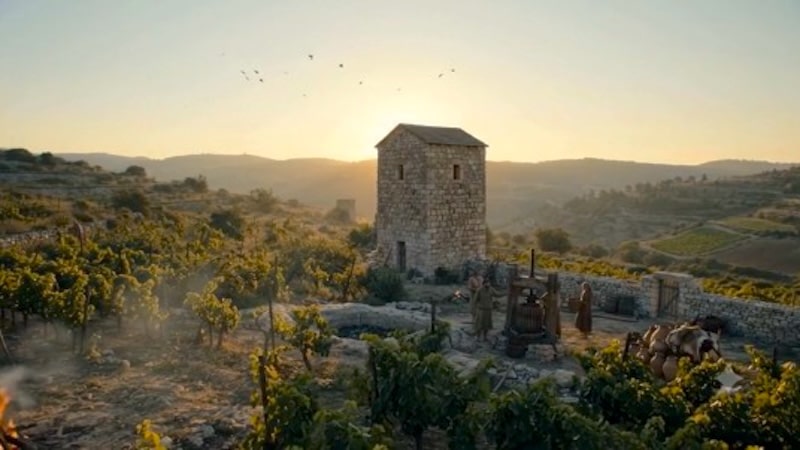
In today’s first reading, called, Isaiah’s Song of the Vineyard, the prophet describes God’s care of, and expectations for, His Chosen People. God’s Chosen People failed to bear fruit, in spite of the blessings lavished upon them by a loving and forgiving God. Further, they were poor tenants in the Lord’s vineyard. Hence, God laments: “I expected My vineyard to yield good grapes. Why did it yield sour ones instead?”
By the late eighth century BC, God’s people in the Promised Land had become divided into a Northern Kingdom, Israel, with its capital in Samaria, and a Southern Kingdom, Judah, with its capital in Jerusalem. Assyria, the dominant power in the region, controlled the Northern Kingdom. Isaiah assured both Kingdoms that a new King would come to the throne in Judah and would see to the reunion of the North and the South and the expulsion of the Assyrians. But in the earlier chapters of his prophecy, the prophet had criticized his own unfaithful people. In today’s first reading, calledIsaiah’s Song of the Vineyard, the prophet describes God’s care for, and interest in, His Chosen People. “What more was there to do for My vineyard that I had not done?” Yahweh asks rhetorically. Following the classic Biblical imagery, Isaiah’s prophecy describes Israel as a non-productive vineyard. Though God has done everything necessary to produce a good crop, the vineyard yields only “wild grapes.”
From the call of Abraham (about 1800 B.C.), and especially after the Exodus (1300 B.C.), the history of God’s chosen people was one continuous reminder of God’s benevolence towards them. But Israel — God’s Vineyard – failed Him miserably, producing wild, bitter grapes. Israel disobeyed God by idolatry, perpetuating injustice and shedding the blood of the innocent. We are reminded that the same God of love and benevolence has shown even more love and benevolence to His new ‘chosen people’– the Church. He sent His prophets to reveal Himself and His message to the Jews, but He has sent His own Divine Son to live and die in our midst – for us! By Baptism, which Jesus instituted, we are made the adopted children of God and heirs of Heaven. But by our cold indifference to God and our excessive attachment to worldly goods, many of us become, and remain, more ungrateful than the Israelites. Thus, we, too, are the unproductive Vineyard the Heavenly Father says He will destroy, laying it waste. Let us pay attention to this strong warning and become His grateful and generous children.
Philippians 4:6-9

In the second reading, Paul tells Philippians about the high expectations he has for them, reminding them that they need to become fruit-producing Christians by praying and giving thanks to God and by practicing justice, purity, and graciousness in their lives.
Since the Christians at Philippi received the Gospel enthusiastically and continued to support Paul after he evangelized them, Paul tells them affectionately of the high expectations he has for them and shows them how they are to become fruit-producing Christians. Using the Greek moralist phrases, “whatever is true, whatever is honorable, whatever is just, whatever is pure, whatever is lovely, whatever is gracious,” Paul instructs them to accept and live in the true peace of God by “prayer and petition with thanksgiving,” and to “keep on doing what they have learned and received and heard and seen” in him. Paul’s words of instruction as to how the Philippians should be fruit-bearing vines are equally applicable to us. We, too, must grow in our relationship to God through prayers of adoration and thanksgiving. These should be followed by prayers of contrition for our failings, and of petition in which we ask for spiritual and temporal favors for ourselves and for others, living and deceased. Paul assures us, too, that such prayers will bring peace of mind in this life and eternal peace and happiness in the life to come.
Matthew 21:33-43

In today’s Gospel, Jesus tells an allegorical parable in which the landowner is God, the vineyard is Israel as God’s special people, and the tenants are the political and religious leaders of Israel. The story emphasizes the failure of the tenants, the Chosen People of God and their leaders, to produce fruits of righteousness, justice, and mercy. Giving a theological explanation of Israel’s history of gross ingratitude through the parable, Jesus reminds us Christians that, since we are the “new” Israel, enriched with additional blessings and provisions in the Church, we are expected to show our gratitude to God by bearing fruits of the kingdom, fruits of the Holy Spirit, in our lives, giving Him all the Glory.
The context and the objective: The parable of the wicked tenants is an allegory told by Jesus during Passover week in the Temple precincts of Jerusalem. A parable normally presents one lesson and the details are not relevant. In an allegory, on the other hand, each detail has a symbolic meaning. This story is one of the three “parables of judgment” which Jesus told in response to the question put forward by the Scribes and the Pharisees about his authority to teach in the Temple. It was intended to be a strong warning to the Jews in general — and to the Scribes and the Pharisees in particular, as they were planning to kill Jesus, the Messiah for whom Israel had waited for centuries. Thus, this parable of the wicked tenants is a theological summary of the entire history of the ingratitude, infidelity, and hard-heartedness of the Chosen People. Its importance is shown by its appearance in all the three Synoptic Gospels.
The background of the parable: The parable reflects the frictions in tenant- landlord relations in Palestine. Most of the vineyards were owned by rich, absentee landlords living in Jerusalem, Damascus, or Rome, who leased their lands to tenants and were interested only in collecting rent. The country was seething with economic unrest. The working people were discontented and rebellious, and the tenant farmers had picked up the revolutionary slogan, “land for the farmer.” Hence, they often refused to pay the rent previously agreed upon and, in some cases, assaulted the landowner’s representatives. It is natural, then, that Jesus’ parable should reflect the popular hatred of foreign domination and the monopolizing of agricultural land by a rich minority who supported Roman rule.
The Old Testament roots of the parable. The New Jerusalem Bible says of the vineyard image: “The theme of Israel as a vine, chosen and then rejected, had been introduced by Hosea, 10:1, and was to be taken up by Jeremiah, 2:21; 5:10; 6:9; 12:10, and Ezekiel, 15:1-8; 17:3-10; 19:10-14; cf. Ps 80:8-18; and Isiah, Is 27:2-5. Jesus gave it a new twist in the parable of the wicked husbandmen in Mt 21:33-44 and parallel Gospel passages. In John 15:1-2 Jesus unfolds the mystery of the ‘true’ vine. Other aspects of the vine theme appear in Dt 32:32-33 and [Sirach] 24:17.” This powerful prophetic allegory was so well-known that Jesus’ Jewish audience immediately understood that he was talking about them in the parable. But Jesus makes changes in Isaiah’s imagery. He makes himself the vineyard owner’s son and adds the concept of “tenant-farmers.” Here, instead of Yahweh destroying the wild vines, Jesus’ owner, according to the judgment of the audience whom Jesus asked for a judgment, “will bring that wicked crowd to a bad end and leases the vineyard to others who see to it that he has grapes at vintage time.” In this parable, the ungrateful and murderous tenants are the uncooperative vines of Isaiah. Jesus then turns the crowd’s stern verdict, calling for rejection and destruction, against themselves through a telling quotation of Psalm 118, “the stone that the builders rejected has become the cornerstone.”
The meaning of the parable: As an allegory, this parable has different meanings:
1) Like the Jews, the second- and third-generation Christians also understood God as the landlord. The servants sent by the landowner represented the prophets of the Old Testament. They were to see to it that God’s Chosen People produced fruits of justice, love, and righteousness. But the people refused to listen to the prophets and produced the bitter grapes of injustice, immorality, and idolatry. They persecuted and killed the prophets. (See 1 Kgs 19:10, 14; 2 Chr 24:18-22; 36:15-16; Acts 7:51-53; Mt 23:29-39). As a final attempt, the landowner sent his son, (Jesus), to collect the rent (fruits of righteousness), from the wicked tenants (the Jews). But they crucified him and continued to lead a lives of disloyalty and disobedience. Hence, God’s vineyard was to be taken away from His chosen people and given to a people (Gentile Christians), who were expected to produce fruits of righteousness. “The basic theological thrust of the parable of the vineyard is to place the suffering and death of Jesus in line with the mistreatment of God’s messengers throughout the centuries. (Daniel J. Harrington, SJ). The parable of the vineyard, in both Isaiah’s account and Jesus’ re-formulation of it for his contemporaries, must in some way be a message given by the Holy Spirit to today’s Church. Although we believe in Jesus’ promise that the armies of Hell will not prevail against us, that should not lead us to think that we ourselves cannot squander the gift of the vineyard. (John Kavanaugh, SJ).
2) The Lord’s Vineyard at present is the Church, and we Christians are the tenants from whom God expects fruits of righteousness. The parable warns us that if we refuse to reform our lives, and to become spiritual fruit-producers we, too, could be replaced, just as the old Israel was replaced by us. As good tenants of God’s Vineyard, we need to pay serious attention to relating to others as loving fellow-servants to our commonMaster. In the parable, the rent the tenants refuse to pay stands for the relationship with God and with all the people of Israel which the religious leaders refuse to cultivate. This means that before anything else, God checks on how well we are fulfilling our responsibilities to each other as children of God. The parable teaches that instead of glorying in isolated splendor, rejoicing in our privileges and Christian heritage, we are called to deeds of love, compassion, patience, generous assistance, forgiveness and mercy, for these are the witness-bearing personal and corporate actions and attitudes that invite and welcome others into God’s kingdom.
The parable also challenges us to ask the question: How do we treat the prophets of our time? Over the centuries, how many prophets in our Christian communities have been rejected, abused and even killed? How did we treat Joan of Arc, Thomas More, Oliver Plunkett and, in our own times, Bishop Oscar Romero, Martin Luther King, the countless victims of violence in Africa, (Rwanda, among other places), Central and South America — not to mention Northern Ireland? The sad fact is that they were killed not by pagans but by fellow-Christians, tenants in the Lord’s vineyard.
The second image: An application of Psalm 118:22-23 introduces a second image at the end of the parable: The Church, the interim expression of the final-age Kingdom, as a building made of stone whose cornerstone is Jesus. This image has its Old Testament roots in Is 8:14-15 and Dn 2:34, 44-45. That Jesus is “head of the corner” affirms his essential role in the salvation of God’s people. He is the cornerstone, placed at the corner of the foundation where two rows of stones come together, and also the keystone or capstone completing the arch and supporting the entire structure. Verse 44 is reminiscent of the comment, “You can’t break God’s laws; you can only break yourself on them,” which is rather like saying, “You can’t break the law of gravity; you can only break yourself by ignoring it.” People in every age have the option of accepting or rejecting Jesus. If we accept Jesus the Son of God Incarnate, and his Church as the cornerstone of our lives, that becomes our sure foundation. If we reject him, we are the losers. Hence, let us build our lives on Jesus Christ, the cornerstone.
Today’s Gospel story (Mt 21:33-43) is both sad tale and a forewarning (Bishop Clarke). First comes the sadly distressing part. Even though so many of us (who call ourselves ‘Christian’) have “found the treasure” –- the Messiah — many more who were the originally ‘chosen’ people have rejected him because he did not meet their political expectations. These latter folks recognized that Jesus was a Jew, but despite the evidence they denied his Resurrection from the dead; denied that he is the Messiah; and denied that he is the Son of God, the only faithful and true Israelite who could represent his people and save them. The second part or “forewarning” is implicit in the story. Since so many Israelites did not bear fruit (i.e., respond appropriately to their Call to be the light to the Gentiles), the “vineyard” was turned over to others, to Gentiles who would indeed “bear fruit” and harvest the kingdom of God. Therefore, the responsibility to bear fruit, to bring others to the Truth by acting as the light of Christ to the world, will always remain a significant challenge for Christians. If we become lax and our light goes out, then we will be in no better position that the first group who did not believe. In fact, we will be in a worse dilemma, because we believed but stopped acting on that belief. The Call of the Israelites was to be a light to All the Nations. It was not a gift to be hoarded by them, producing a sense of superiority over others. Instead, it was a call to be a Servant for others. Now that same Call falls upon you and me, to be a beacon for Christ. Are we helping to build up the Body of Christ by our thoughts, words, deeds and prayers? Can we see how inactivity on our part might lead to our own personal loss of the vineyard, and consequently the same awesome judgment from the owner?
Life Messages
27th Sunday of Year A
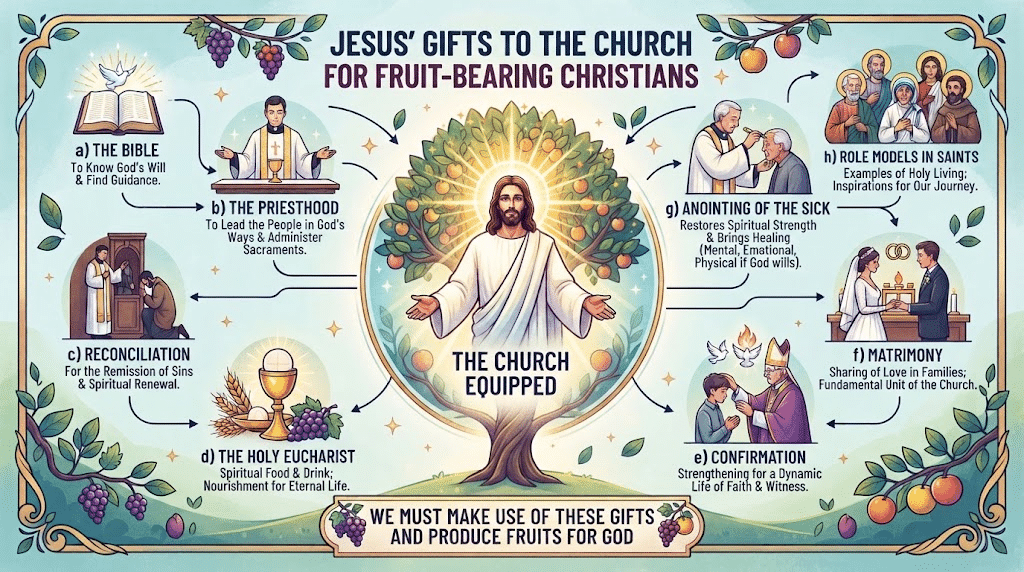
Are we good fruit-producers in the vineyard of the Church?

Jesus has given the Church everything necessary to make Christians fruit-bearing: a) The Bible to know the will of God. b) The priesthood to lead the people in God’s ways. c) The Sacrament of Reconciliation for the remission of sins. d) The Holy Eucharist as our spiritual Food and Drink. e) The Sacrament of Confirmation for a dynamic life of Faith. f) The Sacrament of Matrimony for the sharing of love in families, the fundamental unit of the Church. g) The Sacrament of (Last) Anointing to restore and strengthen spiritual life and bring mental emotional and physical healing as well, if that is what God wills h) Role models in thousands of saints We are expected make use of these gifts and produce fruits for God.
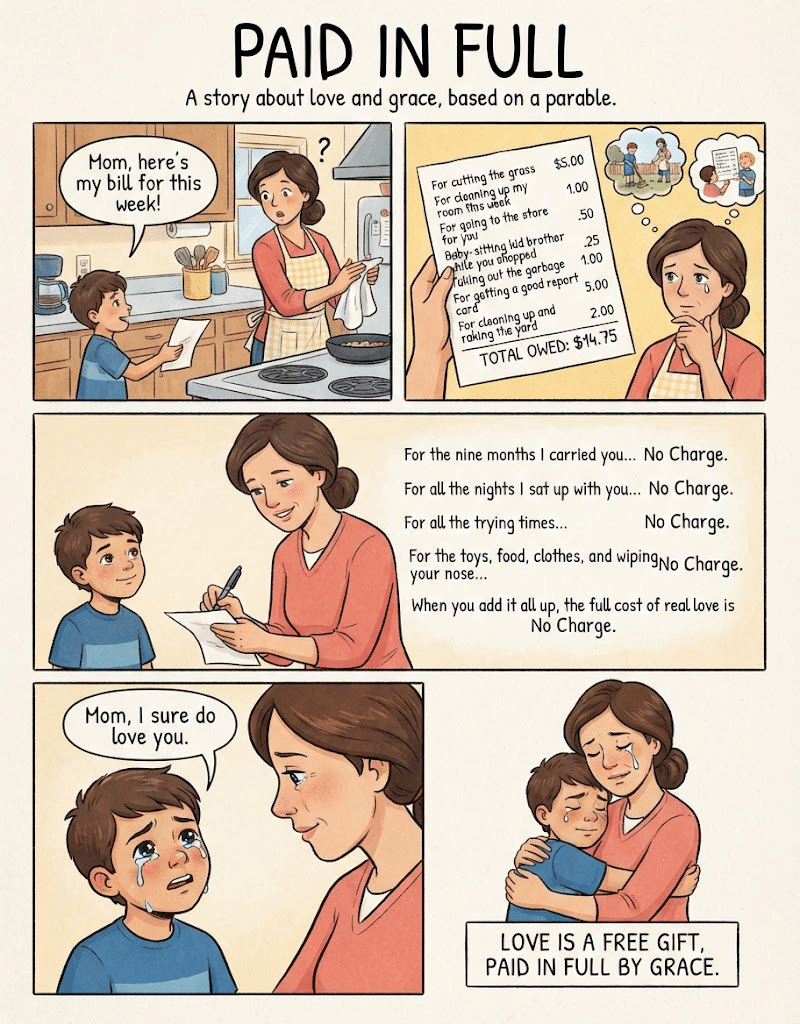
By the mutual sharing of blessings, by sacrificing time and talents for the members of the family, by humbly and lovingly serving others in the family, by recognizing and encouraging each other and by honoring and gracefully obeying our parents, we become producers of “good fruit” or good vines in our families and give God the Glory for these accomplishments.
Are we ready to face these hard questions?
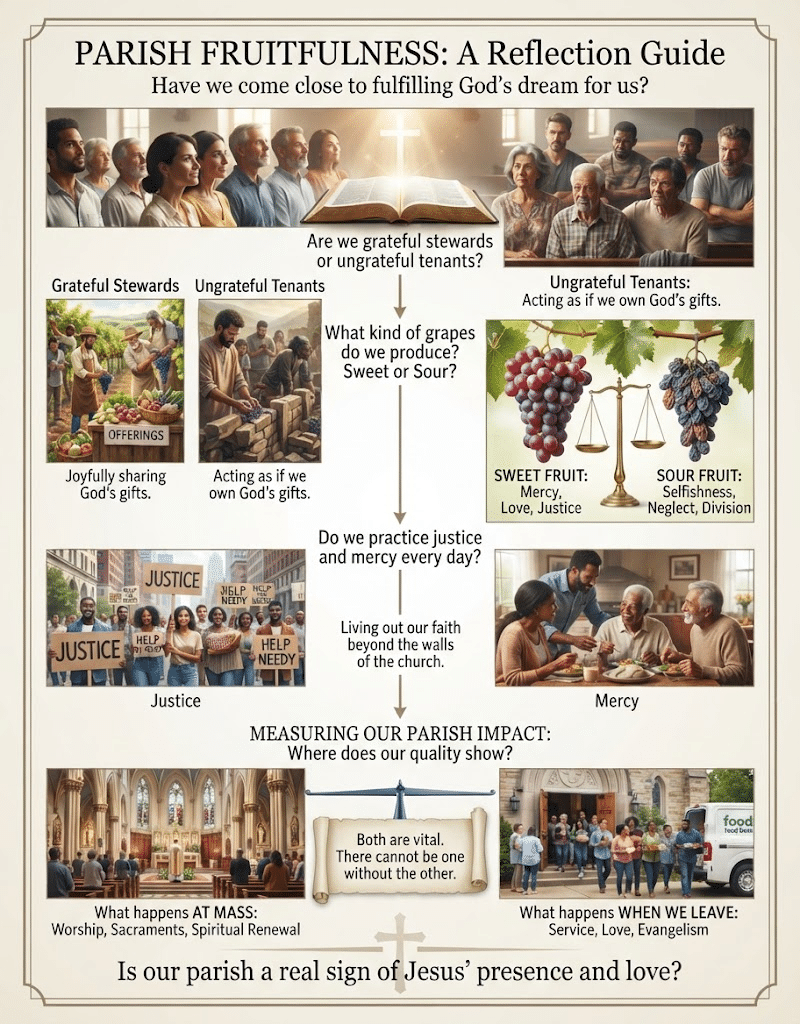
Have we come close to fulfilling God’s dream about us? What kind of grapes do we as a parish community produce? Are they sweet or sour? What is our attitude toward everything God has given to us? Are we grateful stewards for everything God has given to us, or are we like the ungrateful tenants who acted as if they owned everything God had given them? Do we practice justice every day of our lives? Do we recognize the righteousness of God that keeps us from self-righteousness? Do we remember to show mercy? Is our parish a real sign of Jesus’ presence and love? What kind of impact do we have? Do we measure the quality of our parish by what happens during Mass, or on what happens when we leave Church? Obviously, both are important but there cannot be one without the other.