Homilies
Homilies
October 11, 2026
⭐⭐⭐ Isaiah’s Mountain Feast…


28th Sunday of Year A

Looking for the perfect homily opener? Each week, TWTW features standout anecdotes from Fr. Tony Kadavil’s longstanding collection, along with a few fresh picks of our own.

Heavenly Banquet
This week’s featured anecdotes for the 28th Sunday of Year A include:
- The Balloon Experiment: At an Evangelical conference, worshippers given helium balloons to release upon feeling joy left most unreleased by the end, illustrating how easily we treat church as a somber duty rather than a joyful celebration.
- Churchill’s Blunder: In 1943, Winston Churchill insulted Joseph Stalin by attending a formal state banquet in utility coveralls instead of a dress uniform, highlighting how inappropriate clothing disrespects a host—mirroring the guest without a wedding garment in Matthew 22.
- The Heavenly Banquet Joke: An elderly couple reaches heaven to find endless free, decadent food, prompting the husband to angrily blame his late wife’s strict low-fat diet for keeping them from paradise ten years earlier.
Papal Homilies / Catechism
28th Sunday of Year A




Featured Homilies
Deacon Peter McCulloch
28th Sunday of Year A
✍️ Excuses, Excuses
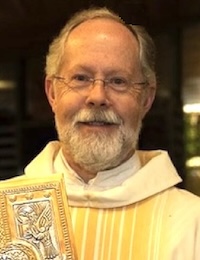
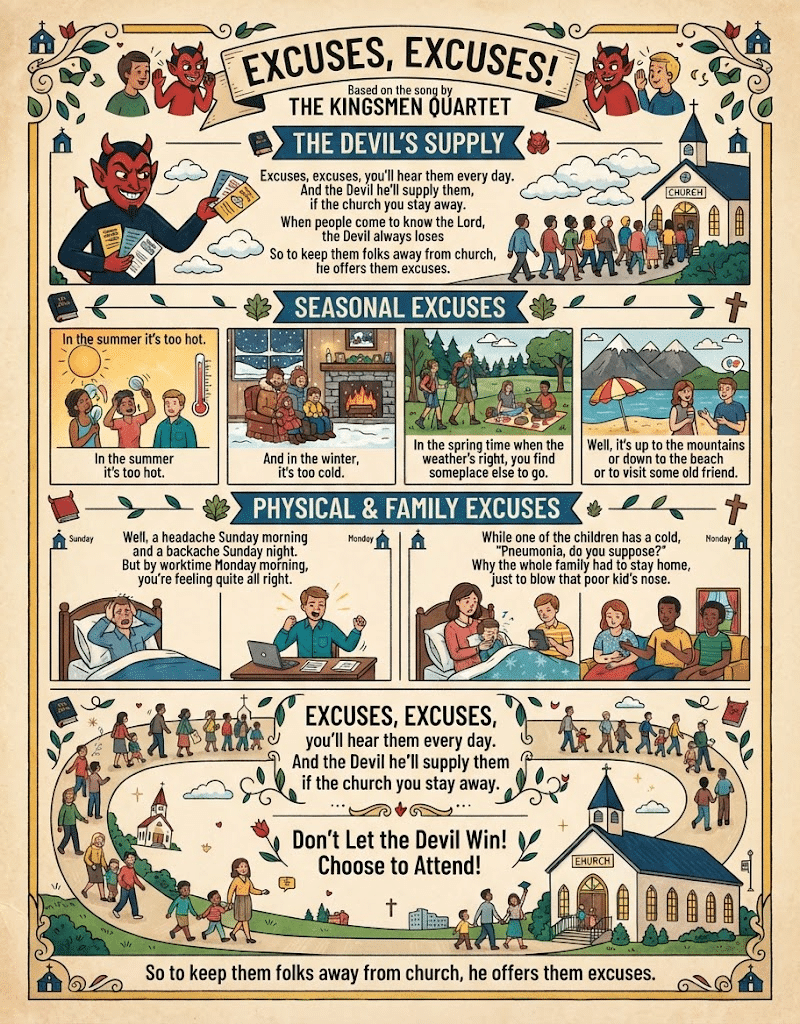
SUMMARY (2023): Deacon Peter’s homily explores the human tendency to make excuses, tracing this pattern from Adam and Eve in Genesis to Moses and modern daily life. People often default to avoidance out of a fear of embarrassment or a desire to dodge discomfort, failing to take responsibility for their choices.
This theme connects directly to Jesus’ Parable of the Wedding Banquet in the Gospel, where invited guests miss out on the king’s celebration because they prioritize worldly distractions, work, and personal affairs. Meanwhile, outsiders, the poor, and the marginalized embrace the invitation. The homily emphasizes that God’s invitation to eternal joy remains open today, urging believers to stop making excuses and accept His plan for hope and a future. Deacon Peter concludes by looking at some verses from an old song by the Kingsmen quartet.
Click to Enlarge
Bishop Robert Barron
28th Sunday of Year A
▶️ The Summit of the Christian Life
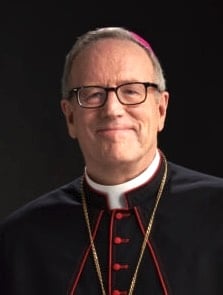
Friends, the mountain is a great image throughout the Bible. It is the place where we go up and where God comes down to meet us. Today’s first reading from Isaiah orients us to three holy mountains of the Lord: first, the historical Mount Zion; second, its fulfillment in the heavenly Mount Zion; and third, a sort of “middle mountain” of the Mass, where we raise our minds and hearts to God, who comes to gather us, to speak his word, and to feed us.
Watch the video, then dive deeper with TWTW study materials below:
- Visuals: 5 companion infographics to follow along with the message
- Transcript: Full sermon text for reading and reference
- Discussion Guide: 25 questions tailored for small groups and classrooms
In the News
28th Sunday of Year A
Isaiah’s Mountain Feast and the Waters of Hope
Unrelenting headlines lead into next month’s UN COP31 climate summit. The tragedy in Nepal—where catastrophic flash floods swallowed entire valleys—weighs heavily alongside warnings of a strengthening Super El Niño that threatens millions with severe food insecurity, drought, and winter extremes through early 2027.
Negotiations among international leaders at this conference will be dominated by urgent appeals for “loss and damage” relief—a sterile diplomatic term for what is, in truth, profound human grief, displacement, and vulnerability. It is easy in moments like this to succumb to paralysis or dread. When the earth under our feet groans and familiar seasons seem unmoored, it is easy to succumb to dread and feel utterly helpless.

COP31 Türkiye (3:51) - The world comes together in Antalya for the UN Climate Change Conference, taking place on November 9–20, 2026.
The Interconnected Trust of Creation
However, look closely at the waters that bring such fierce devastation when out of balance. Consider a single drop. Sometimes a drop is the humble beginning of a river. Sometimes it is the gentle breath of a lake, the blue of an inland sea, or the vast boundlessness of an ocean. Water flowing down from high mountain peaks finds its way into streams, from streams into rivers, and from rivers into the great deep. All waters are interconnected veins of the exact same life. For in God’s creation, everything belongs to a greater whole.
Oceans keep record of all that we surrender to their depths. Nothing is truly lost or hidden; waste cast into the waves, litter strewn along the shore, and discarded nets abandoned on the seabed all remain in the quiet memory of the water. That is why our water resources—and every single drop entrusted to our generation—must be stewarded with reverent care. It sustains the food on our tables, the air in our lungs, our fellow living creatures, and the inheritance of our children. When leaders gathering at COP31 speak of safeguarding our "common home," protecting the blue of our planet, and leaving behind a living legacy rather than ecological wreckage, they touch upon an inescapable spiritual truth: creation is a sacred trust, and we are its stewards, not its conquerors.
Isaiah’s Mountain: Abundance in an Age of Siege
Peril was the defining reality of the world into which the prophet Isaiah stepped. Into this very tension between human frailty and global crisis, his voice broke through the silence. When Isaiah proclaimed the words we hear today, his community was not sitting in tranquil comfort. Jerusalem was an anxious, embattled city enduring imperial terror, the threat of brutal military siege, and relentless political upheaval. The Assyrian army was steadily devouring neighboring territories, shattering economies, displacing populations, and leaving starvation in its wake. The shadow of violence hung over the hills of Judea like a suffocating shroud. Fields were plundered, cisterns and springs were endangered, and the future was cloaked in dread.
Even in the center of their vulnerability—when reason told them to wall up their gates in despair—the prophet points their weary eyes upward to a holy summit: "On this mountain the Lord of hosts will provide for all peoples a feast of rich food and choice wines, juicy, rich food and pure, choice wines." Isaiah does not dismiss their real-world terror; he confronts it with a higher, radical reality. Where human violence brought scorched earth, God promises abundant nourishment. Where empires divided nations into conquerors and captives, the Lord prepares a table open to all peoples without exception. It is precisely when the earth feels violently unmoored that God’s steadfast mountain is revealed as our true refuge.
Lifting the Shroud of Grief
Across our shared earth, the "web woven over all nations" in our time feels painfully recognizable. It is the suffocating shroud of loss and systemic vulnerability cast across creation—most visibly in the crisis of our damaged climate and poisoned waters. This web is not an abstract projection; it is a lived injustice where those who contributed least to planetary degradation invariably absorb its most violent shocks. We see the strands of this web stretching into every corner of the world:
- The subsistence farmer watching generational soil bake into dust, powerless to feed family or livestock.
- The low-lying island community watching high-tide surges claim their shorelines, facing the quiet terror of displacement.
- The vulnerable elderly neighbor trapped inside a sweltering apartment without cooling as emergency sirens echo through the night.
Behind every crisis are real human faces. The suffering are not statistics for a plenary agenda or talking points for multilateral negotiations; they are living persons bearing distinct names and shedding real tears. Crucially, Isaiah never asks us to avert our gaze from this sorrow or spiritualize away the physical agony of the world. The prophet acknowledges the veil precisely because it is heavy and blinding. Yet into the heart of this universal shroud comes the audacious revelation of divine tenderness: "The Lord God will wipe away the tears from every face."
Our sovereign Creator, who fashioned galaxies, stoops down with intimate closeness to touch each sorrowing cheek. God does not issue a remote decree from the clouds or dismiss our grief as the inevitable cost of a broken world; God draws near to dry the eyes of the afflicted.
Hope as an Active Allegiance
Unflinching and resolute, biblical hope is never passive optimism. It is not an excuse to look at polluted seas, parched soils, and catastrophic storms and say, "God will fix it all eventually, so we need not care." To believe that God will swallow up tears is to declare that death and destruction do not have the final say over creation. If God values human life so intensely that He promises to wipe away every tear, then we cannot turn a blind eye to the suffering caused by ecological breakdown today.
Nothing less than an active, stubborn allegiance to God’s coming future defines true Christian hope. While delegates gather at global summits to negotiate roadmaps and emission targets, our mandate begins right here in our own pews and neighborhoods. We are called to embody the hospitality of Isaiah’s mountain. That means refusing apathy. It means recognizing that care for our common home and care for the poor are inseparable. When we support disaster relief funds, protect our local waterways from waste, practice responsible stewardship, and stand with communities hit hardest by extreme weather, we participate in God’s work of removing the shroud of despair. We become the hands that begin to dry those tears.
Bearing Witness at the Altar
Drawn each Sunday to the holy table, we gather around an altar that anticipates Isaiah’s mountain—a sanctuary far higher and surer than the rising waters of any valley. Here, at this Eucharistic banquet, Christ offers Himself as food and drink, breaking the power of death and knitting our fractured world together into one body. So when we step forward today, we do not leave the world behind. We bring the heavy ache of this week’s headlines directly to the altar. We bring the mud-stained valleys of Nepal, the millions bracing for drought and storms in this Super El Niño season, and the silent grief behind every sterile debate over "loss and damage." We bring the cries of our groaning earth, the sacred memory of every poisoned drop of water, and the tears of our displaced brothers and sisters to the table.
Sustenance from heaven is given as bread is broken, so that our paralysis may be shattered. Here, the cup of salvation is poured out to remind us that death and disaster will not have the final say. May this holy meal transform our dread into courage, strengthen our hands to protect the beauty of creation, and send us forth as a living shelter for the vulnerable—bearing witness to a God whose mountain stands firm, and whose love will hold our fragile world to the very end.
This essay based on this Sunday's readings and current events was developed collaboratively using artificial intelligence alongside human pastoral curation and theological editing. It is not intended as a finished script, but as a catalyst to spark reflection, provide thematic inspiration, and support preachers in crafting their own authentic homilies for their communities.
UN – HOPE ABOUNDS
The Interconnected Trust of Creation
Isaiah’s Mountain: Abundance in an Age of Siege
Lifting the Shroud of Grief
Hope as an Active Allegiance
Bearing Witness at the Altar

Fr. Michael Chua
28th Sunday of Year A
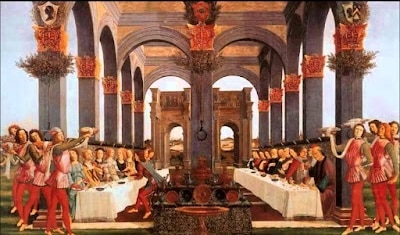
The Story of Nastagio degli Onesti (forth episode) – circa 1483 by Sandro Botticelli
✍️ A Banquet for All Peoples

Fr. Michael Chua
Homilies (2026)
Come to the Wedding (2020)
Hell exists because the invitation can never be forced (2017)
EXCERPT (2023): The focus of the parable seems to be on the response made to this invitation, rather than on the feast itself. A rejection of a king’s invitation to such an important event was unimaginable because it would be political suicide and yet we find the invited guests turning down the invitation not just once but twice and on the second instance, even abusing and killing the king’s emissaries that had been sent to them to persuade them to reconsider the invitation. The first time could be seen as a grievous insult, but the second rejection was an outright act of rebellion. One can then understand the king’s violent response in putting down this rebellion.
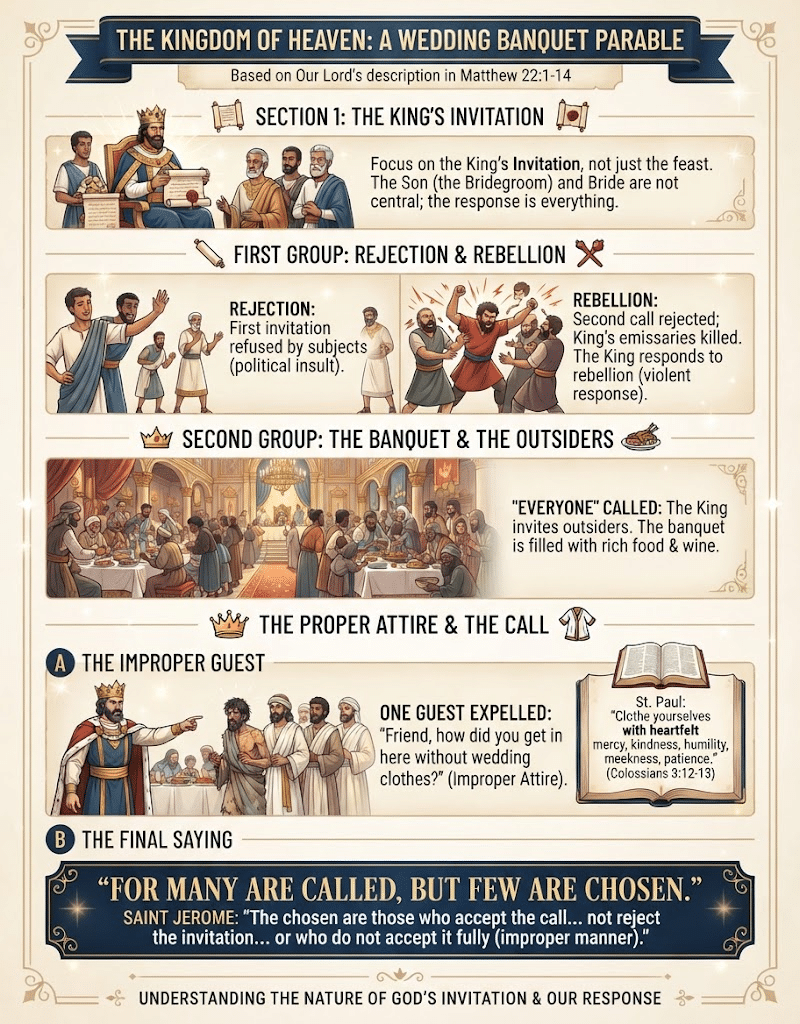
Dominican Blackfriars
28th Sunday of Year A
✍️ The Joy of the Kingdom

EXCERPT (2020): The joy of a wedding feast is not increased by lavishing great wealth, but is in the love and commitment of this couple, celebrated and supported by those who love them. Marriages should unite us together, and the unity of the man and woman provides the basis for the unity of human society, a unity which would come to an end without the birth of children, for rich and poor alike. It is this we celebrate, it is this that brings hope and joy. Our heavenly Father’s marriage feast, the marriage feast of the lamb, unites us to Him through His son in the love which is the Holy Spirit.

Fr. Austin Fleming
28th Sunday of Year A
✍️ Intimacy with Christ
Fr. Austin Fleming
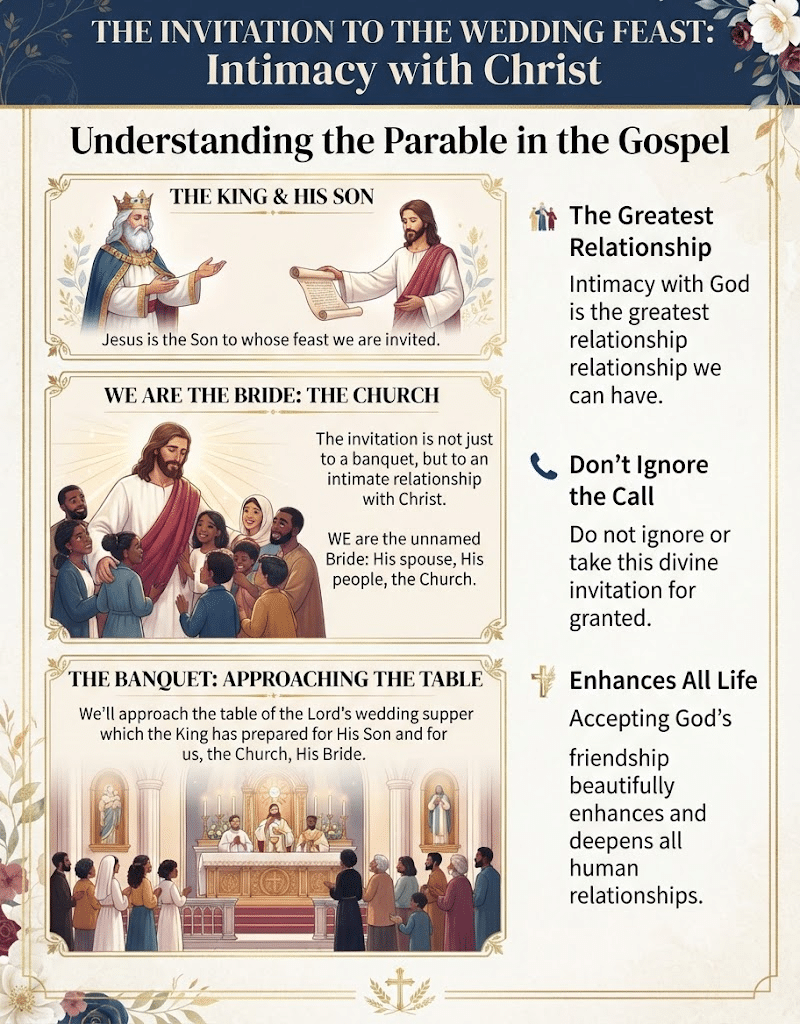
EXCERPT (2014): In the parable in the gospel, Jesus is the son to whose feast we are invited and WE are the unnamed bride: his spouse, his people, the Church. Thus the invitation is not just to the wedding, to the banquet, but an invitation to an intimate relationship with one who invites us. If we ignore this invitation to intimacy with God, or worse, if we take it for granted, then we ignore the greatest relationship we as human beings might ever have – bar none. Nothing offered us in this life is greater than the intimacy God desires to have with each of us. Nothing offered us in this life can more easily enhance and deepen all our human relationships more beautifully than our acceptance of God’s invitation to friendship. In a few moments we’ll approach the table of the Lord’s wedding supper which the king has prepared for his son and for us, the Church, his bride.
Monsignor Peter Hahn
28th Sunday of Year A
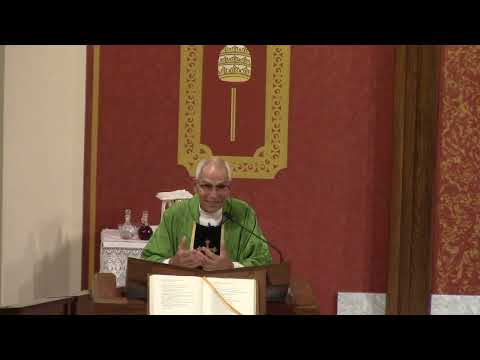
▶️ Finding Peace Amidst the World’s Agitations Through God’s Generosity
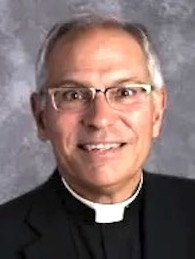
Msgr. Peter Hahn
SUMMARY (2023): Reflecting on the tragic war in the Middle East, Msgr. Hahn contrasts human conflict with God’s infinite goodness and generosity. Drawing from the weekend’s scripture readings, he reminds us that the Lord provides a rich feast and shepherds us so that “there is nothing I shall want.” He urges the faithful to replace restless desires with complete acceptance of God’s presence in all circumstances.
The Gospel parable of the wedding banquet emphasizes our response to God’s universal invitation. While some ignore the call due to worldly distractions, God invites all people—good and bad alike—to share in His divine life. However, entering the feast requires wearing the “wedding garment,” which symbolizes the good works, obedience, and love we are called to offer. Ultimately, Msgr. Hahn connects this earthly struggle and divine invitation to the Holy Eucharist, a foretaste of the eternal banquet of heaven.

Fr. Charles E. Irvin
28th Sunday of Year A
✍️ God’s Party for Us

Fr. Charles E. Irvin
EXCERPT: God is throwing a party for us. He made the earth a garden of beauty. Even when in the Garden of Eden things didn’t turn out right God started over. And He did so again and again after that. Finally, He sent his Son to throw us a party, a celebration in a new garden, the Garden of the Resurrection.
Listen again now to the prophet Isaiah: On this mountain the Lord of hosts will provide for all peoples a feast of rich food and choice wines, juicy, rich food and pure, choice wines. On this mountain he will destroy the veil that veils all peoples, the web that is woven over all nations; he will destroy death forever…
The point of it all is that we come to God’s party, His banquet life, not because we have earned a right to be there, not because we can buy an invitation, not because our friends have good political influence with Him, but simply because He gives us entrance out of His free generosity. The enjoyment of life comes to us from God’s free choice and totally because of His sheer generosity.
Fr. Tommy Lane
28th Sunday of Year A
✍️ Called to Be Chosen

Fr. Tommy Lane
EXCERPT (2023): Jesus concluded the parable saying many are called but few are chosen; the man without the wedding garment was called and invited but eventually not chosen because he did not bother with the wedding garment. To be chosen means answering God’s invitation in such a way that God will chose us to enjoy his banquet in his kingdom. Many can go through the motions but only some are genuine and authentic in answering God’s call to them. Again we have the impression this part of the parable is being lived out in our time. May we be among those called and invited who will answer God’s invitation in such a way that we will also be chosen to enter God’s kingdom.way the cornerstone and everything crumbles. But thanks be to God for the tenants—grandparents, parents, and teachers—who pass on the faith that Jesus is the cornerstone on which everything rests.
Fr. Langeh, CMF
28th Sunday of Year A
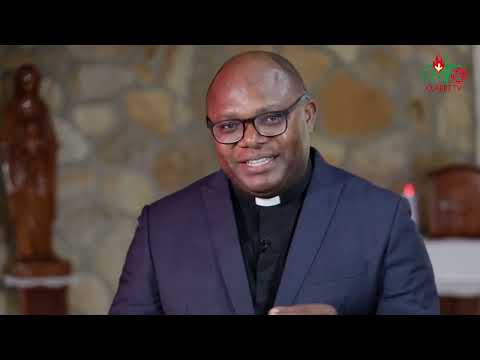
▶️ Clothing Ourselves with Holy Joy
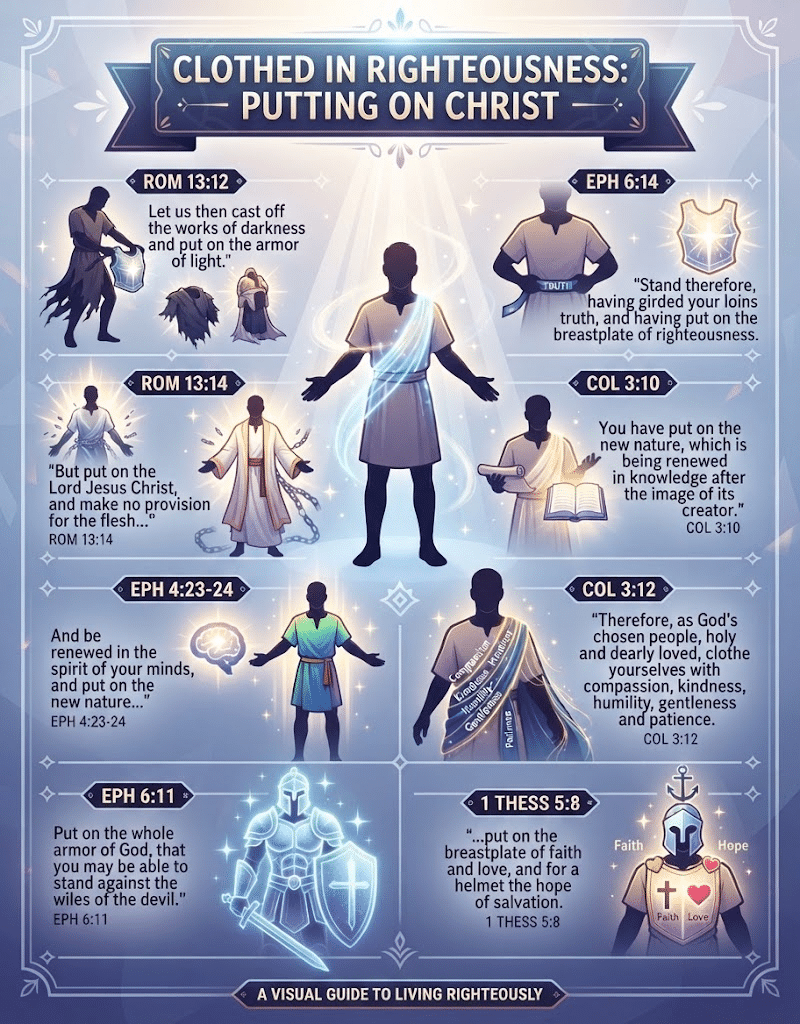
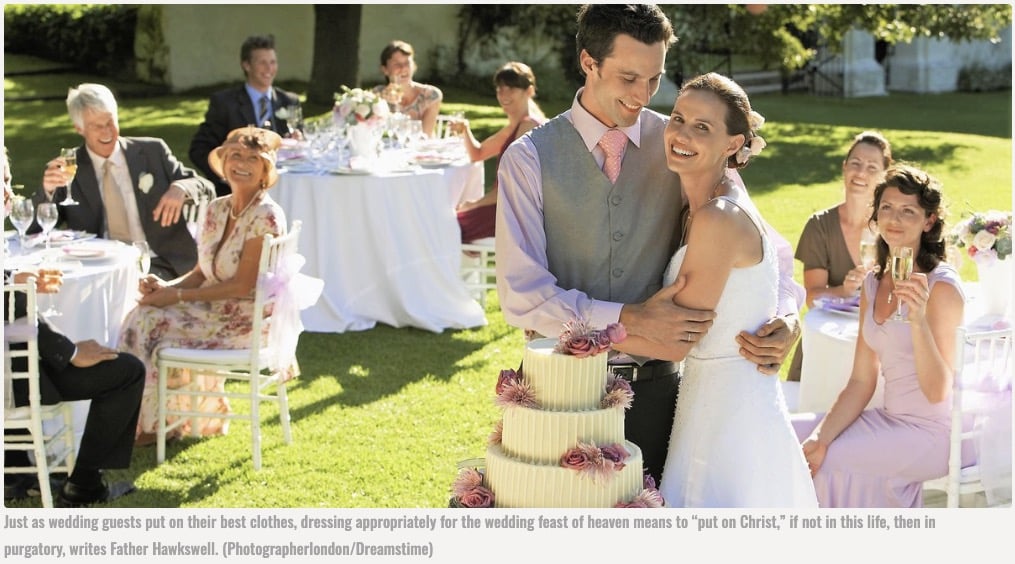
EXCERPT (2023): Let us reflect on the nature of our Parties: Are they places of a “holy hilarity” or Holy Joy? What is at the centre of our parties? At times even in Religious Festivals, we get into excess drinking and eating and latter on in a drunken state we commit sin. Our “Joy” therefore turns into Sin… The Eucharist is the greatest festival in which the Lord Invites us : “Blessed are those who are invited to the supper of the lamb”. It is offered for us free of Charge. Some of us do not bother when we do not receive Communion in Church. We are like those invited who refuse to come. Although everyone is invited, there is a dressing code! Saint Paul repeatedly speaks about “putting on Christ”, clothing yourself in him. This has to do with clothing your heart and soul with Christ’s attitudes toward others, with His ways of treating others.
Msgr. Charles Pope

28th Sunday of Year A
✍️ Party or Perish
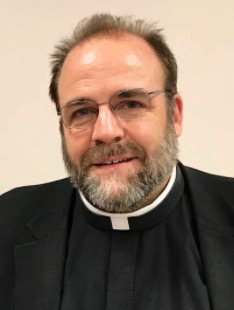
Msgr. Charles Pope
EXCERPT (2023): As with past Sundays, there is the warning of hellish destruction for the refusal of the Kingdom. This view must be balanced, however, by the vision of a seeking Lord who wants to fill His banquet and will not stop urging us until the end. You might say the theme of this Gospel is “Party or Perish!”
Let’s look at today’s Gospel in five stages.
- RICH REPAST
- RUDE REJECTION
- RESULTING RUIN
- RELENTLESS RESOLVE
- REMAINING REQUIREMENT
Father Kevin Rettig
28th Sunday of Year A

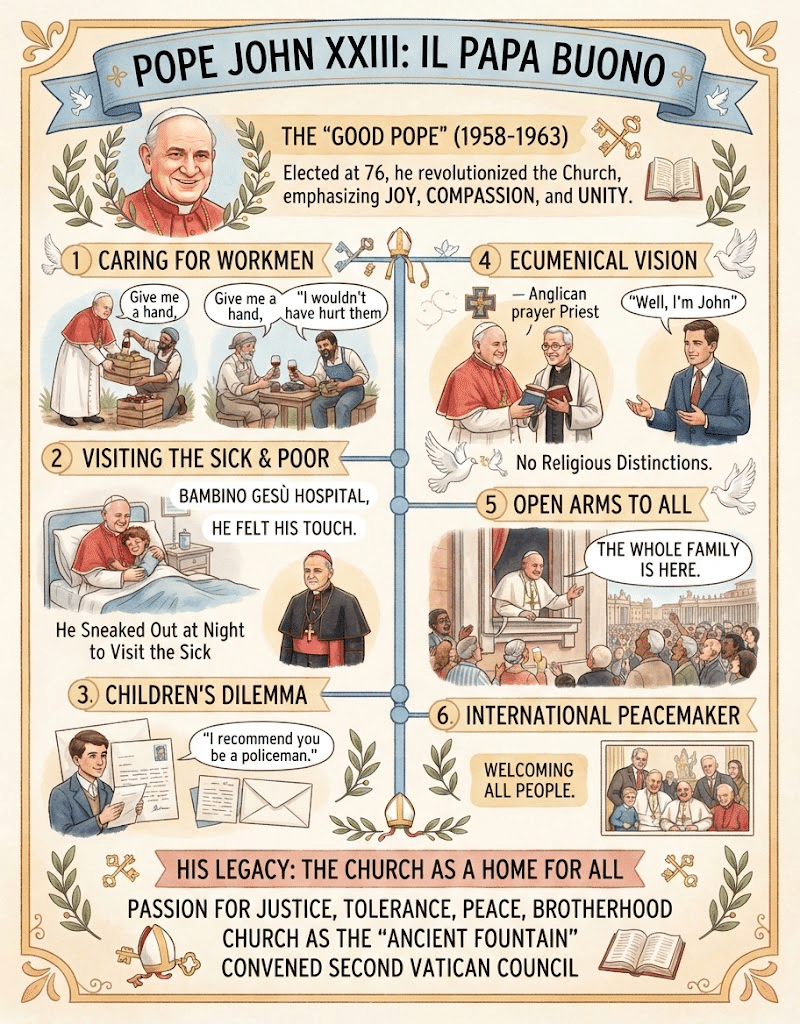
▶️ Good Pope John

ABSTRACT (2020): Elected in 1958 at age seventy-six, Pope John XXIII transformed the Catholic Church during a brief five-year reign. Known as “Il Papa Buono,” he discarded rigid protocol for humor and humility. Whether helping workmen, sneaking out to comfort the sick, or warmly welcoming children and atheists, he embraced humanity without boundaries.
Rejecting exclusion, he viewed the Church as a living fountain to quench every generation’s thirst. This remarkable peasant Pope captured global affection, leaving a legacy of justice and peace that reminded all people they have a rightful place at the banquet of God’s love.
Fr. George Smiga
28th Sunday of Year A
✍️ Worthiness for the Wedding Banquet

Matthew 22:1-14
EXCERPT (2002): Never think that God loves you because you are good, because you come to church, because you give to charity, because you are a good parent or spouse or friend. All of these things are commendable. But, God’s love for you is prior to, and greater than, any of your achievements. None of the good things you do have any claim on God’s love. Because, before all of them God freely chose to create you, to save you in Jesus Christ, and to call you to eternal life.
Never believe that God has stopped loving you because you have sinned, because you have failed, because you have cheated or lied, because you have hurt other people, because you are prejudiced or selfish. God’s love is prior to, and greater than, any of your sins or failures.

Religious Orders
28th Sunday of Year A


Featured Priests
SCROLL FOR MORE
The Banquet of Grace
Reading: Matthew 22:1-14
Augustinian Theme: The Primacy of Grace
When we look at the Gospel reading from Matthew—the parable of the wedding feast where the king invites all people, good and bad alike, into the banquet hall—we see the ultimate reflection of The Primacy of Grace, one of the deepest pillars of our Augustinian tradition.
Saint Augustine reminds us that we do not earn God’s favor through moral perfectionism or our own achievements. The guests in the parable did not qualify for the feast because of their resume, their wealth, or their flawless behavior; they were gathered simply because the king desired their presence. Grace always comes first. Our human willpower is fragile and prone to stumbling, but God’s grace heals, lifts, and enables us to love.
In our daily lives, it is so easy to fall into the trap of spiritual pride. We think God loves us because we managed to be patient today, because we came to church, or because we kept all the rules. But as the Doctor of Grace teaches, God’s love is prior to, and greater than, any of our successes. When we inevitably stumble or fall short, Augustinian spirituality calls us not to despair in self-reliance, but to humbly surrender to the outstretched hand of Christ.
The feast is already prepared. The invitation is freely given. Let us stop trying to earn what has already been given as a free gift. Instead, let us step into the banquet hall with humble, grateful hearts, relying entirely on the mercy of the One who first loved us.
How might you surrender your need for self-reliance to God’s grace this week?
Featured Friars & Monks
SCROLL FOR MORE
Welcoming the King
Reading: Matthew 21:1-14
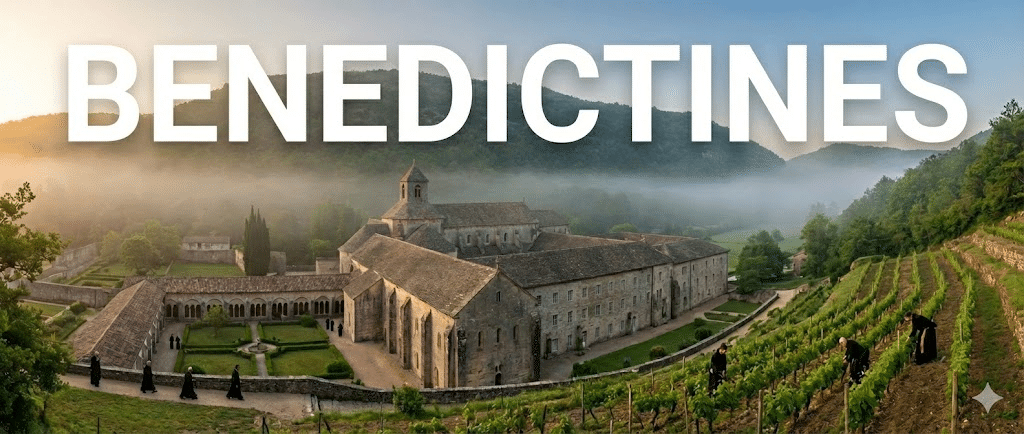
Benedictine Theme: Hospitality
Dear brothers and sisters, when we encounter the famous parable of the wedding banquet in Matthew’s Gospel, where the king reaches out to the highways and byways to gather everyone—good and bad alike—into the feast, we see the ultimate portrait of divine welcome. Viewed through a Benedictine lens, this Gospel speaks straight to the heart of Hospitality.
In the Rule of Saint Benedict, Chapter 53 instructs us with startling radicalness: “All guests who present themselves should be welcomed as Christ.” Benedictine hospitality is not merely polite hosting or opening our doors to those who look like us, think like us, or share our background. True monastic hospitality mirrors the heart of the king in our Gospel. It is an expansive, unearned, and boundary-breaking embrace that reaches out to the corners of the streets, inviting the weary, the broken, the unexpected, and the unworthy right into the center of the celebration.
In our daily lives, how often do we curate our own tables? We prefer to surround ourselves with comfort, familiarity, and control. Yet God’s kingdom operates on an entirely different logic. The banquet is prepared, and the invitation goes out to all. When we live out the Benedictine charism of hospitality, we learn to look at our neighbor not with judgment, but with the eyes of Christ. We recognize that we, too, were once wandering outsiders on the highways of life, brought to the feast only by grace.
As we gather around this Eucharistic table today, let us open our hearts wide. Let us welcome one another with the profound reverence due to Christ Himself, stepping fully into the great, unending banquet feast prepared for us from the beginning of time.
How might you extend Christ-like hospitality to an unexpected guest or a difficult neighbor this week?


The Feast of Intimacy
Reading: Matthew 22:1-14
Carmelite Theme: Contemplative Prayer
as we listen to today’s Gospel from Matthew—where the king eagerly gathers all people from the streets into the grand wedding banquet—we are invited into an astonishing picture of divine romance. Viewed through the lens of Carmelite spirituality, this banquet is not merely a future reward; it is an invitation to deep, interior union with God right now.
Saint Teresa of Ávila taught that the human soul is like a magnificent castle filled with many dwelling places, with God residing in the very center. Prayer, in the Carmelite tradition, is not a matter of reciting a long list of words, but an intimate sharing between friends, a quiet resting in the presence of “one who we know loves us.” In the parable, the king desires nothing from the guests except their presence. He does not ask for a resume of their accomplishments or a proof of their moral perfection; he simply calls them into the inner chambers of his joy.
Too often, we wander through life standing outside the castle gates, convinced we are too unworthy, too broken, or too distracted to enter. We try to earn our place at the table through our own striving. But the Carmelite charism reminds us that the door is already open. Contemplative prayer is our way of saying “yes” to that invitation—stepping away from the noise of the world, silencing our anxieties, and sitting quietly with the One who longs to sup with us.
The table is prepared, and the feast of God’s love awaits within the silence of your heart. Let us leave behind our striving, quiet our restless spirits, and enter into the wedding feast of intimate communion with our Lord.
How might you carve out a few moments of silent, interior stillness this week to rest in God’s loving gaze?

Featured Friars & Websites
SCROLL FOR MORE
Dwell on These Things:
Truth as the Anchor of Peace
Reading: Philippians 4:12–14, 19–20
Dominican Theme: Contemplative Foundation
St. Paul tells us something extraordinary: whether facing abundance or need, he can endure all things through Christ who strengthens him. In the Dominican tradition, this profound resilience connects directly to our theme of Contemplative Foundation.
St. Dominic understood that authentic service and true preaching cannot spring from our own frantic efforts alone. Action must flow directly from prayer. Without a deep, silent interior life anchored in God, our daily work easily becomes empty exhaustion. Paul’s ability to remain steadfast in every circumstance comes precisely from this deep wellspring—an intimate, living communion with the Divine.
When we experience times of scarcity or overwhelming burden, it is tempting to rely solely on our own willpower. Yet, the Dominican charism reminds us that our strength is a gift received in quiet contemplation before it is ever poured out in action. By resting in God first, we discover that our needs—and the deep hungers of the world around us—are fully met by God’s glorious riches in Christ Jesus.
Let us pause today to anchor our hearts in silent prayer. When we are deeply rooted in the contemplation of God’s love, we too can look at every trial with peace, knowing we possess the enduring strength to face whatever comes our way.


Featured Websites
SCROLL FOR MORE
A Feast for All People
Reading: Isaiah 25:6-10a
Franciscan Theme: Universal Brotherhood
When the prophet Isaiah speaks of the Lord preparing a feast of rich food and pure wines on this mountain for all peoples, he gives us a breathtaking glimpse of God’s heart. From a Franciscan perspective, this glorious banquet resonates deeply with the theme of Fraternity and Universal Brotherhood.
St. Francis of Assisi looked out at the world and saw every single person—and indeed all of creation—not as a stranger, but as a beloved brother or sister. In God’s kingdom, there are no elite guest lists, no social hierarchies, and no exclusive VIP sections. The banquet table described by Isaiah is spread out under the open sky for everyone, especially the weary, the marginalized, and the forgotten.
Francis understood that the Incarnation—God becoming human in the humble vulnerability of the manger—shattered every artificial wall we build between ourselves. Jesus came to make us a single family. When Isaiah tells us that the Lord will wipe away the tears from every face and destroy the veil that covers all nations, we see the ultimate Franciscan dream realized: a world reconciled in tender love and universal peace.
Today, as we gather around our own Eucharistic table, let us remember that we are part of God’s vast, beautiful family. May we look upon our neighbors with the warm, inclusive gaze of St. Francis, knowing that we are all invited to taste and see the boundless goodness of our God. Amen.


Featured Websites
SCROLL FOR MORE
The Banquet of the Greater Glory
Reading: Matthew 22:1–14
Jesuit Theme: Finding God in All Things
In today’s Gospel, Jesus offers the striking parable of the king who prepares a lavish wedding feast for his son, inviting all people—both good and bad—from the street corners into the hall. From an Ignatian perspective, this vivid imagery speaks directly to the core Jesuit theme of Finding God in All Things.
St. Ignatius of Loyola taught us that God is not locked away in some distant, untouchable realm; rather, God is actively laboring in the very fabric of our daily lives, inviting us into an intimate, ongoing dialogue. The banquet table in the parable is a profound symbol of God’s abundant grace, spread out right in the messy, bustling crossroads of human history. The king’s persistent call reaches out to everyone, reminding us that no place is too ordinary, and no person is too far gone, to be touched by divine love.
Yet, the parable also challenges us with the man who arrived without a wedding garment—a metaphor for a closed heart. Ignatian spirituality calls us to active receptivity. It asks us: Are we truly dressed in the spirit of grace, ready to let God transform us from the inside out?
When we look out at our world today, the invitation is extended to each of us. God is offering a feast of deep communion, urging us to step away from our self-reliance and enter into His joy. Let us respond with open hearts, seeking and finding God not just in holy spaces, but right in the midst of our daily encounters, living out lives that bring Him the greatest glory.
Featured Websites
SCROLL FOR MORE
Plentiful Redemption at the Feast
Reading: Isaiah 25:6–10a
Redemptorist Theme: Copiosa Apud Eum Redemptio
when the prophet Isaiah tells us that the Lord of hosts will provide on this mountain a feast of rich food and pure wines for all peoples, he is painting a breathtaking portrait of God’s boundless heart. From a Redemptorist perspective, this glorious passage beats with the very pulse of our core motto: Copiosa Apud Eum Redemptio—with Him there is plentiful redemption.
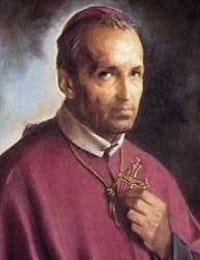
St. Alphonsus Liguori founded the Redemptorists because he looked out at the poor, the abandoned, and the weary laborers of the Neapolitan hills and saw souls who desperately needed to know that God’s mercy is not locked behind elite doors or reserved for the flawless. God’s grace is an open invitation, spread out on a lavish table for everyone.
In Isaiah’s vision, the Lord removes the veil that shrouds all nations and wipes away the tears from every face. This is the radical, tender mercy that Alphonsus spent his life proclaiming. God does not wait for us to clean up our lives before welcoming us; He runs out to meet us, spreading a feast right in the midst of our brokenness and struggles.
No matter what burdens you carry today, or what corners of life have left you feeling forgotten, hear the prophet’s promise anew. The feast is ready, the table is set, and God’s redemption is entirely free, abundant, and overflowing for you. Let us come forward with confidence, resting in the overwhelming love of a God who invites every single one of us to share in His eternal joy.
Additional Homilies
28th Sunday of Year A



Fr. George Corrigan, OFM
The Wedding Banquet of the King
Matthew’s Version
The Invitation
The King Responds
Dressed for the Occasion
The Elect of God
Filling Up
Msgr. Joseph Pellegrino (PDF) | Archive
I Can Do All Things… (2023)
….In Him Who Strengthens Us (2017)
Wearing Our Christianity (2014)
Fr. Michael Fallon, MSC | Archive
28th Sunday in Ordinary Time (PDF)
Bilingual Homily
28th Sunday of Year A
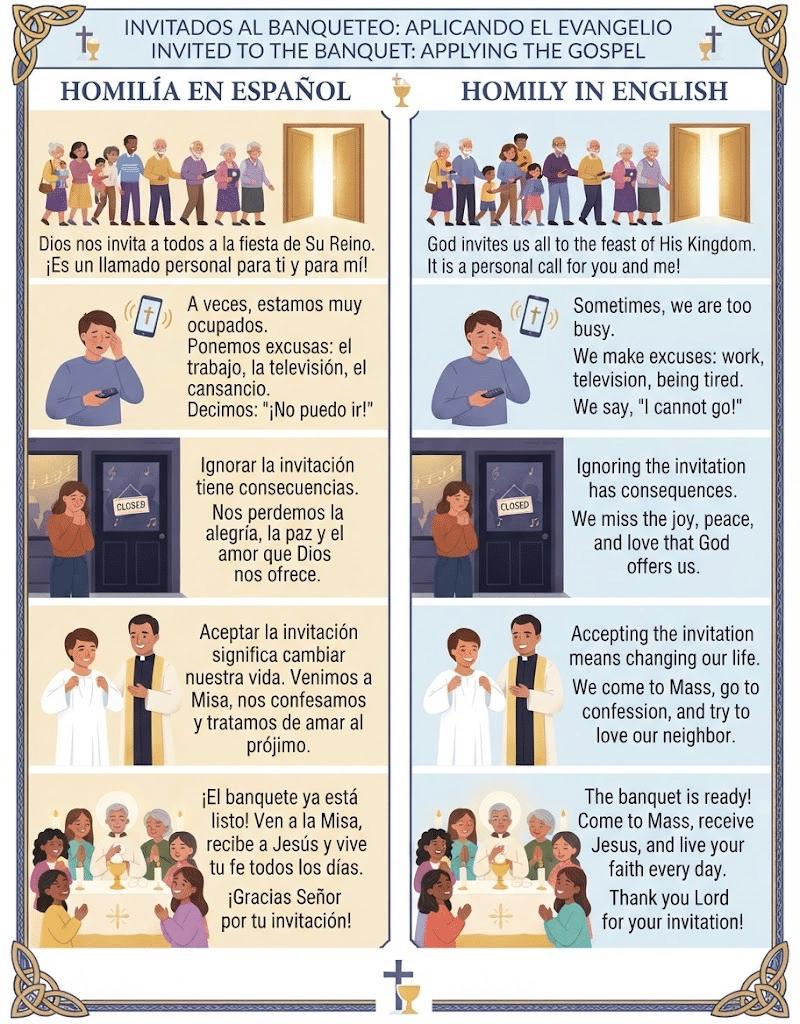
A brief homily for those who are learning Spanish or English. The grammar is kept uncomplicated and uses present-tense vocabulary to ensure it is easy to deliver. The homily focuses on the practical, everyday meaning of Sunday’s Gospel.
VOCABULARY
 Highlight text or double-click a paragraph anywhere on the site to ADD TO NOTES. You can also click ASK AI to copy your selection to the clipboard with a command prompt, ready for you to paste manually into the chat above.