Homilies
Homilies
August 16, 2026
⭐⭐⭐ Immigration Enforcement

Homily Anecdotes
20th Sunday of Year A

Looking for the perfect homily opener? Each week, TWTW features standout anecdotes from Fr. Tony Kadavil’s longstanding collection, along with a few fresh picks of our own.

Welcomed, Heard, and Caught: The Posture of True Faith
The following homily anecdotes approach this Sunday’s scripture readings from different angles: Radical Inclusion, Desperate Intercession, and Complete Surrender.
Religious Orders

20th Sunday of Year A

The Weight of a Mother’s Love
Matthew 15:21–28
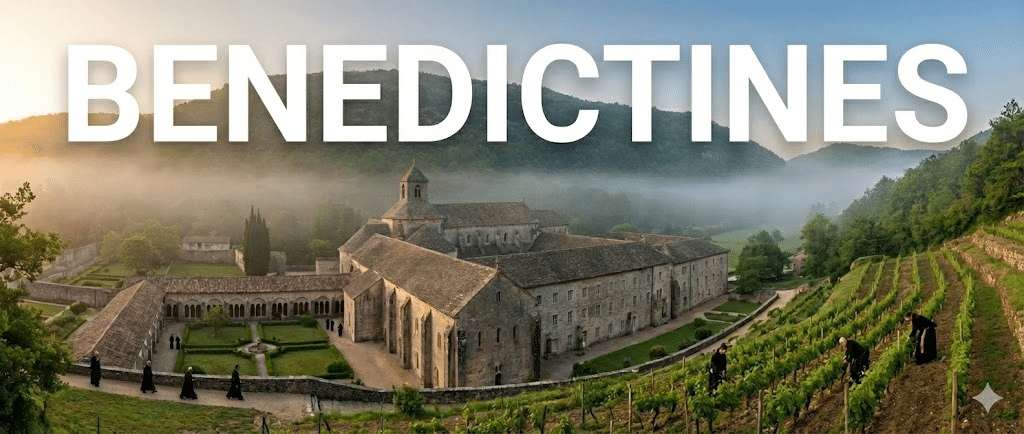
Saint Augustine famously wrote, “Amor meus pondus meus”—“My love is my weight; by it I am borne wherever I am borne.” Love is the gravity of the soul, the unseen force that pulls us toward our true home. In today’s Gospel, we witness the irresistible gravity of a mother’s love pulling her relentlessly into the presence of Jesus.
Consider this Canaanite woman. She was an outsider, silenced by the disciples, and initially met with the testing silence of Christ Himself. By all human standards, she should have walked away. Yet she refuses to yield. Why? Because her love for her suffering daughter was greater than her personal pride. Caritas gave her the audacity to kneel, to plead, and to look into the eyes of Mercy itself, declaring: “Even the dogs eat the crumbs that fall from their master’s table.”
Augustine understood that love is not a passive sentiment; it is a fierce, active force that reorders our entire life. When our love is anchored in God, it turns stubbornness into holy perseverance. The Canaanite woman did not come with grand theological arguments; she simply brought her aching, heavy love to the feet of the Redeemer.
Her faith reveals the heart of Augustinian spirituality: love softens us to the suffering of others while rendering our trust in God unbreakable. Her daughter’s pain became her own, and that weight carried her straight to Christ.
As we leave this chapel today, let us ask ourselves: What is the gravity of your heart pulling you toward? Are we consumed by fleeting distractions, or do we allow genuine love to drive us toward Christ and our neighbor? Bring your restless longings to the Lord. Let love be your guide, for as Augustine reminds us: “Love, and do what you will.”
20th Sunday of Year A
The Open Door of God’s House
Isaiah 56:1, 6–7
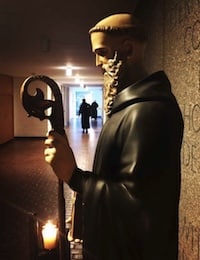
In Chapter 53 of his Rule, Saint Benedict sets forth a radical standard that lies at the very heart of monastic life: “All guests who present themselves should be welcomed as Christ.” Not merely greeted with politeness, but received as the Lord Himself.
Today, the prophet Isaiah speaks with that very same Benedictine heart. Writing to an exiled people rebuilding their lives, Isaiah declares a bold vision of God’s kingdom: the foreigner, the outsider, the stranger who was once excluded is now brought to the holy mountain. God declares through the prophet, “For my house shall be called a house of prayer for all peoples.”
Notice how God’s hospitality functions. He does not ask the outsider to abandon their identity before crossing the threshold. Instead, He honors their search, accepts their sacrifices, and makes room for them at the altar. God’s sanctuary is not a fortress built to keep the world out, but an open doorway drawing all people in.
In our fragmented world, it is easy to build walls—both physical and spiritual—to protect our comfort. We tend to welcome those who look like us, think like us, and pray like us. But Saint Benedict reminds us that every traveler who knocks on our door carries the face of Christ in disguise.
To practice Benedictine hospitality means cultivating an open heart long before we open the front door. It requires us to lay down our suspicions, quiet our judgments, and create space where the stranger feels truly seen and valued.
May we transform our hearts, our homes, and our parish into true houses of prayer—places where every guest is met with warmth, dignity, and the unmistakable presence of Christ.

20th Sunday of Year A

Lectio Divina
ePUB | PDF
The Mercy Waiting in the Dark
Romans 11:13–15, 29–32
Saint John of the Cross taught that when God feels furthest away, He is often doing His most profound work within us. He called this experience the “Dark Night”—a sacred time of spiritual trial and dryness where God strips away our illusions, purifies our attachments, and deepens our faith so that we can receive a love far greater than our minds can comprehend.
In today’s reading from Romans, Saint Paul writes into a moment of profound spiritual tension and confusion. He wrestles with the mystery of Israel’s resistance to the Gospel, yet in the mid-flight of this struggle, Paul anchors himself in an unshakeable Carmelite truth: “The gifts and the call of God are irrevocable.”
Paul sees that even disobedience and spiritual blindness are permitted by God for a greater, divine purpose. Why? “So that he might show mercy to all.”
When we journey through our own interior dark nights—when prayer feels cold, when our circumstances seem hopeless, or when God’s promises appear hidden beneath the weight of our daily struggles—we are tempted to believe that God has abandoned us. But Saint John of the Cross reminds us that the dark night is not a sign of God’s absence; it is the blinding light of His mercy purifying our hearts.
God permits us to feel our own poverty and helplessness so that we stop relying on our fragile strength and surrender entirely to Him. The dark night breaks open our narrow expectations of God so that His infinite mercy can fill every corner of our soul.
If you find yourself in the shadows today, do not lose heart. Trust in the God whose gifts are never withdrawn. Let the darkness strip away your self-reliance, and wait in patient silence for the quiet, transformative morning of His grace.
20th Sunday of Year A

Truth in Unexpected Places
Matthew 15:21–28
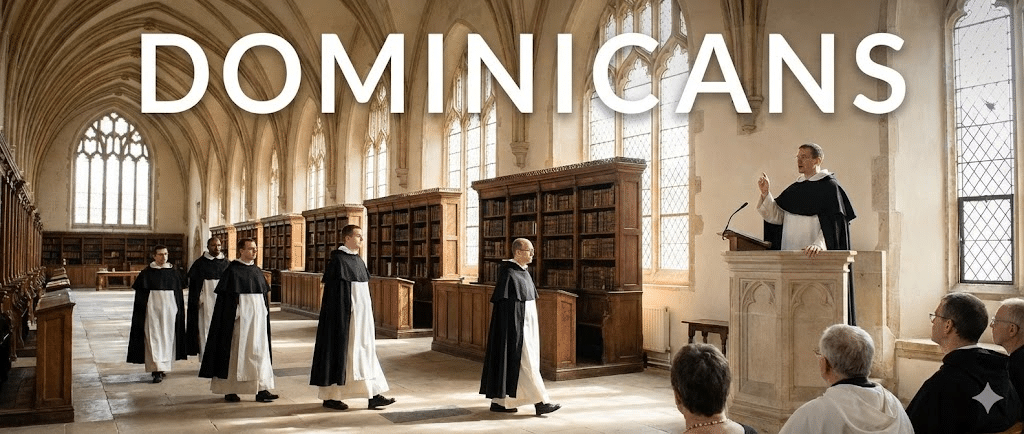
The motto of the Dominican Order is a single, powerful word: Veritas—Truth. For Saint Dominic and his friars, truth was not a rigid hammer to wield against others, but a divine light to be sought wherever it could be found. Saint Thomas Aquinas taught that every truth, regardless of who speaks it, comes from the Holy Spirit.
In today’s Gospel, we witness a dramatic, surprising moment where the fullness of divine Truth encounters human truth in a woman who was an outsider, a Canaanite, someone completely outside the covenant of Israel.
When Jesus tests her, noting that His mission was sent first to the lost sheep of Israel, she does not retreat in anger or despair. Instead, she engages in a rapid, brilliant dialogue of faith and intellect. She searches for the deeper truth behind Christ’s words and responds with razor-sharp insight: “Yes, Lord, yet even the dogs eat the crumbs that fall from their master’s table.”
In that single moment, her words illuminate the universal scope of God’s mercy. She recognized who Jesus was before the religious experts of the day did. Jesus Himself marveled at her sharp, persistent faith, exclaiming: “O woman, great is your faith! Let it be done for you as you wish.”
The Dominican tradition calls us to emulate this courageous woman—to seek truth with an open mind and a passionate heart. She refused to settle for surface-level assumptions. She listened, reasoned, and spoke with profound clarity born of deep love and conviction.
May we, like her, pursue the truth of God’s boundless love without fear, trusting that when we seek Veritas with humility and boldness, we will always find Christ standing there to receive us.

20th Sunday of Year A

Finding Christ on the Margins
Matthew 15:21–28
The decisive turning point in the life of Saint Francis of Assisi did not happen in a quiet chapel, but on a dusty road outside Assisi. There, Francis encountered a leper—a person utterly rejected, feared, and cast to the margins of society. When Francis stepped forward, embraced him, and kissed his hand, what had previously seemed bitter turned into sweetness of soul and body. Francis saw the broken, humble face of the crucified Christ in an outcast.
In today’s Gospel, we witness a strikingly similar encounter. Jesus travels to the region of Tyre and Sidon—pagan territory, far beyond the comfortable boundaries of Israel. A Canaanite woman approaches Him, crying out for her suffering daughter. She is a double outcast: a foreigner and a woman begging in public. Even the disciples urge Jesus to send her away because her desperate shouting is uncomfortable and disruptive.
Yet, look at what happens in their dialogue. She approaches Christ not with entitlement or status, but with absolute humility—the spirit of Franciscan Minoritas. She accepts the lowest place, kneeling before Him and declaring that even the dogs eat the crumbs that fall from the master’s table.
In her raw vulnerability, Jesus reveals her faith to the world. He lifts her up, honoring her love and healing her daughter instantly.
Saint Francis taught that if we want to find Christ, we must go to the margins—to those our world considers “lesser,” forgotten, or inconvenient. The Canaanite woman reminds us that God’s grace is never limited by human boundaries. May we have the Franciscan courage to embrace the outcasts in our midst, lowering ourselves in humble love so that we, too, may meet the living Christ in them.

20th Sunday of Year A
Beyond Quick Labels
Matthew 15:21–28
In the Ignatian tradition, we are called to practice cura personalis—a deep, attentive care for the whole person that meets individuals precisely where they are, honoring their unique history, pain, and quiet dignity. To exercise cura personalis, we must first learn the art of Ignatian discernment: paying careful attention to what is happening beneath the surface of human interactions.
In today’s Gospel, we see Jesus engaged in a profound moment of pastoral encounter. At first glance, His dialogue with the Canaanite woman appears harsh, almost distant. The disciples, overwhelmed by her persistent shouting, quickly write her off as an annoying distraction and ask Jesus to send her away. They see only a foreigner causing a scene; they fail to see her heart.
Jesus, however, looks past the cultural barriers and the noise. He creates space for an authentic, dynamic dialogue—a spiritual encounter where this woman is truly seen and heard. He tests her not to dismiss her, but to allow her inner depth and remarkable faith to manifest fully.
She brings her entire reality before Christ: her heartbreak as a mother, her desperate love for her suffering child, her sharp intellect, and her fierce, persistent hope. She refuses to be reduced to an outsider. In response, Jesus recognizes her full humanity, marveling at her spirit: “O woman, great is your faith!”
Cura personalis challenges us to look beyond quick labels, surface noise, and social boundaries. Who are the people in our lives that we dismiss too quickly? Where is Christ asking us to pause, listen deeply, and care for the whole person—body, mind, and soul? May we cultivate hearts of Ignatian discernment, ready to discover the living God working in the real, messy, and beautiful lives of those around us.
20th Sunday of Year A
Boundless Grace for Every Heart
Isaiah 56:1, 6–7
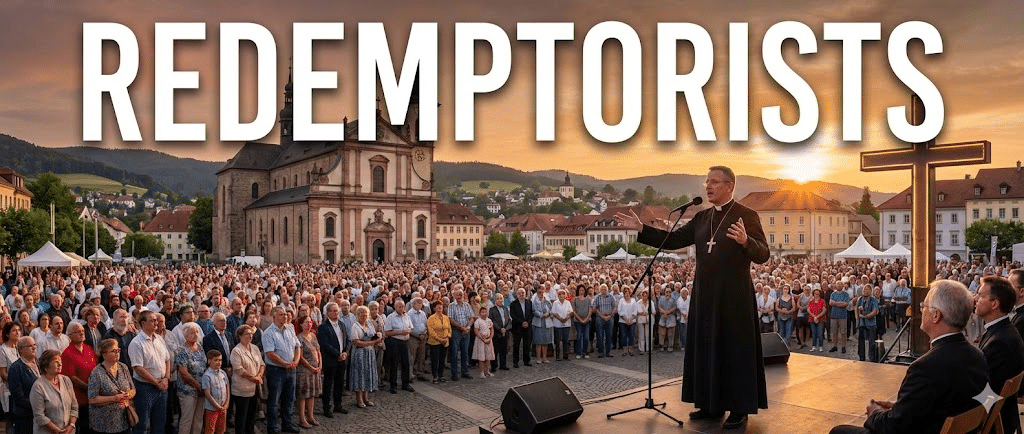
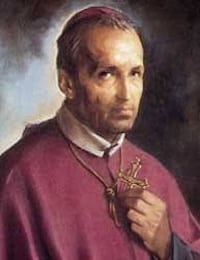
The foundational promise of the Redemptorist charism is captured in four words from the Psalms: Copiosa Apud Eum Redemptio—“With Him there is plentiful redemption.” Saint Alphonsus Liguori founded our Order upon this overwhelming truth: God’s mercy is not a scarce commodity reserved for a perfect few. It is an abundant, overflowing ocean meant for everyone—especially those who feel far away, forgotten, or unworthy.
Today, the prophet Isaiah proclaims this exact vision of abundant grace. Speaking to a community tempted to close its borders and restrict God’s favor, Isaiah delivers a startling message from the Lord: the foreigner, the outsider, and the stranger who seeks God will not be sent away empty-handed.
God declares, “The foreigners who join themselves to the Lord… these I will bring to my holy mountain and make them joyful in my house of prayer.”
Notice the sheer warmth of God’s invitation. He does not set up impossible conditions or demand moral perfection before opening His doors. Instead, He promises joy, acceptance, and a place at His altar. God’s house is not an exclusive club; it is a sanctuary of plentiful redemption where every weary traveler can find rest.
In a world that so often judges, excludes, and ranks human worth, Saint Alphonsus reminds us to speak to God with complete confidence, as a friend speaks to a friend. No matter your past, your doubts, or the burdens you carry today, God’s redemption is vast enough to cover every wound and heal every broken place.
Let us open our hearts to this plentiful grace, and let us make our parish a true home of mercy where all are welcomed into the joyful love of Christ.
Click a tab to view different ways of understanding the readings.
Dicastery Notes / Papal Homilies
20th Sunday of Year A




Featured Homilies
Deacon Peter McCulloch
20th Sunday of Year A
✍️ Persistence
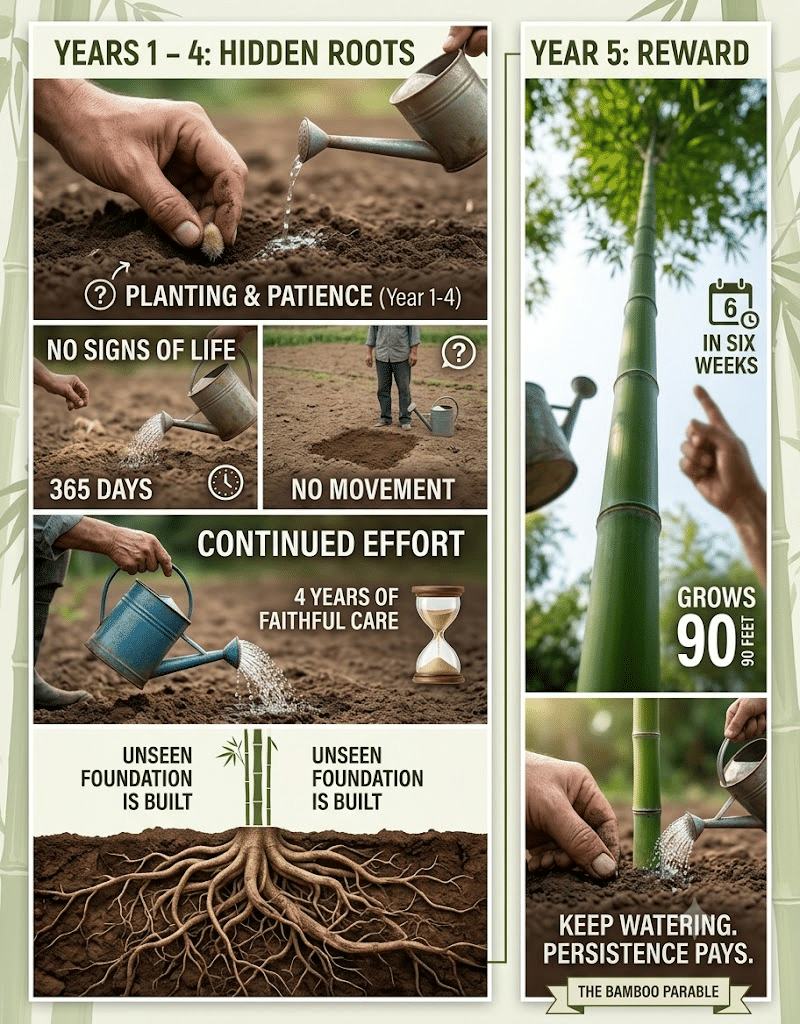
EXCERPT: In today’s fast-paced world, many people simply give up when they don’t quickly get what they want. But it’s often wiser to persevere, isn’t it? Especially with things that are good and worthwhile, and that you really believe in…
In China there’s a type of bamboo tree that you must water every day. When you plant that seed, nothing comes out of the ground. There’s no growth for the whole first year. Now what would you do if you plant and water a bamboo tree for 365 days and there’s not even the slightest movement? In the second year there’s no movement. The third year, nothing. The fourth year, nothing. Why waste any more water on that lazy tree? But the people have faith. They keep watering that tree and in the fifth year, within six weeks the tree grows some ninety feet.
Click to Enlarge
Bishop Robert Barron
20th Sunday of Year A
Friends, for this Twentieth Sunday in Ordinary Time, we hear the story of the Syrophoenician woman. Jesus famously puts off this woman—first by ignoring her, then by dismissing her, and finally by insulting her—and she offers one of the most famous comebacks in literary history. A common reading of this story is that Jesus is cranky from a tough day of ministry, and a plucky woman from Syrophoenicia straightens him out. But this turns Jesus into a sinner—and the whole structure of Christianity falls apart. The Church Fathers had a much better, more convincing, and spiritually more helpful interpretation.
In the News
20th Sunday of Year A
Opening the Doors:
From Exclusion to Encounter
In today’s Gospel, a Canaanite woman—an outsider by blood and religion—cries out to Jesus for her suffering daughter. The disciples’ immediate reaction is to push her away, asking Jesus to send her off because her desperate pleading disrupts their peace. This exact Gospel tension played out in many Catholic parishes in recent months as immigration enforcement in sensitive spaces intensified. Last Fall, 40 members of a Catholic parish just two miles from the White House were detained. Like the disciples in Tyre and Sidon, our immediate human instinct is to keep the outsider at arm’s length and protect the sanctuary inside our own gates. Yet, just as Jesus moved past traditional boundaries to heal the woman’s daughter, the Church today is called to move beyond self-preservation. Sacred Heart reminds us that a true “house of prayer for all nations” cannot turn a blind eye to the cries at its doorstep, but must meet fear with radical welcome and active support.
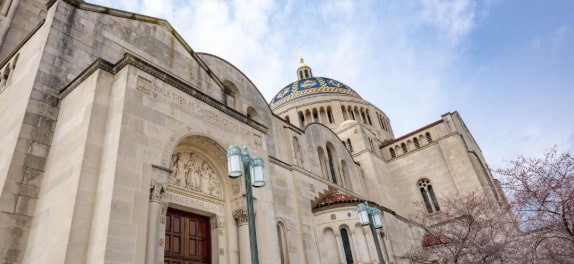
The Wall of Division
this Canaanite woman refuses to be defined by human lines or rigid borders. She kneels, looks past the wall of division, and simply prays, "Lord, help me."
In doing so, she echoes the fundamental Catholic understanding of human dignity. Long before modern border policies, legal frameworks, or enforcement directives were drawn up, Scripture proclaimed that every human person is created in the Imago Dei—the image and likeness of God. No earthly policy, national border, or legal status can ever erase that divine stamp.
Encounter, Sanctuary, and Transformation
What unfolds next in Tyre and Sidon is a pivotal moment of divine encounter. Jesus does not push her away. He listens to her quick, faithful wit, recognizes her incredible devotion, and declares, "Woman, you have great faith!" In that single exchange, the boundary vanishes. The "outsider" is revealed to be an exemplar of faith for everyone present, transforming a moment of exclusion into a moment of radical welcome.
This moment reflects what Pope Francis called the "Culture of Encounter." In Catholic tradition, real spiritual growth rarely happens behind protective walls or closed doors; it happens when we allow ourselves to meet another person face-to-face, truly listening to their suffering.
Like the disciples in the Gospel, our human instinct in times of crisis might be to seek quiet safety, to avoid disruption, or to keep the struggles of the "outsider" beyond our gates. But Sacred Heart shows us what it looks like when a faith community refuses to let fear have the final word.
Rejecting Victimhood Through Active Love
The people and leaders of Sacred Heart rejected being reduced to powerless victims. Instead of closing their doors, they stepped into the breach. Pastors and volunteers began walking alongside their brothers and sisters—attending immigration court hearings to offer accompaniment, pooling resources to cover rent and legal fees, and delivering food directly to families who were afraid to leave their homes.
This is the Gospel in action. When vulnerable neighbors face the threat of detention or deportation while seeking to work, pray, or live in peace, the Church cannot remain a silent bystander.
The U.S. Catholic Bishops, in their pastoral letter against racism, Open Wide Our Hearts, remind us that systemic prejudice and xenophobia are not merely social faults—they are sins that divide the human family and deny the fundamental truth of the Gospel. When we allow fear to dictate who is welcomed, or when we view the immigrant and refugee as a burden rather than a brother or sister in Christ, we obstruct the visible unity of the Body of Christ.
A Spiritual Imperative and Catholic Social Teaching
The prophet Isaiah offers us God’s true vision for the Church: "My house shall be called a house of prayer for all peoples." Not just for the documented, not just for the citizens, and not just for those who look or speak like us, but for all peoples.
Standing with vulnerable migrants through legal accompaniment, financial aid, and physical presence is not a secular political project; for followers of Christ, it is a core spiritual imperative rooted in Catholic Social Teaching:
- The Principle of Solidarity demands that we recognize every person as our neighbor, bound together in one global family across every national line.
- The Preferential Option for the Poor and Vulnerable calls the Church to stand firmly alongside those who are pushed to the margins, just as the Canaanite woman was.
Dismantling walls requires us to move past passive sympathy into active, sacramental courage. Like the parishioners at Sacred Heart, it calls us to examine our consciences, confess where we have chosen comfort over courage, and actively extend the tangible protection and love of the Church to those seeking refuge.here we have chosen comfort over courage, and actively extending the protection of the Church to those seeking refuge.
Stepping Beyond Comfort: The Eucharistic Call
The Canaanite woman’s faith reminds us that God's grace and mercy cannot be restricted by human laws or political boundaries. Every time we gather around the Eucharistic altar, we participate in a heavenly banquet where there are no VIP seats, no national borders, and no second-class believers. The Eucharist is a sacrament of radical unity, calling us to become what we receive: one Body in Christ.
Like Jesus in Tyre and Sidon, and like the faithful at Sacred Heart, we are called to step across the borders of our comfort zones. May we have the courage to make our parishes true sanctuaries—dismantling the walls of fear and prejudice wherever we find them—so that every person who cries out for help is recognized not as an outsider, but as a cherished child of God.
This essay based on Sunday's readings and current events was developed collaboratively using artificial intelligence alongside human pastoral curation and theological editing. It is not intended as a finished script, but as a catalyst to spark reflection, provide thematic inspiration, and support preachers in crafting their own authentic homilies for their communities.
The Wall of Division
Encounter and Transformation
Rejecting Victimhood Through Active Love
A Spiritual Imperative and Catholic Social Teaching
Stepping Beyond Comfort: The Eucharistic Call
Fr. Michael Chua
20th Sunday of Year A

✍️ Racism is a Sin

EXCERPT: Jesus recognises the woman’s wisdom, insight and faith; this is the only time that faith is described as ‘great’—something of a contrast to the ‘little faith’ of Peter when he gets out of the boat! At the end of the day, it is not racial identity, or one’s political beliefs or sexual orientation which can unite us, what more save us. It is faith. In fact, all this talk about “diversity” is actually a cover for division. At the end of the day, it is faith which unites us and saves us and helps us move beyond all these divisive categories. When St. Paul said that “in Christ there is neither Jew nor Greek” (Gal. 3:28), he was talking about how Christ brings unity based on religion, not race. Our Lord does not destroy our cultural and racial identity but redeems it and brings it to alignment with God’s will and purpose for all humanity.
Yes, we are bad at talking about race, in part, because we do not trust each other. Such a lack of trust is a barrier to honesty. And it is hard to have meaningful conversations without that. But our Lord teaches us that we must engage in such conversations, difficult as it may be. This is what evangelisation is all about. Evangelisation is having conversations with those who hold values which are at odds with the gospel. We do so by being both truthful and respectful. Such conversations can never take place without humility and perseverance. Humility is necessary for listening with an open heart rather than being on the defensive or offensive. Perseverance is also necessary because the path to conversion is never quick nor easy. But finally, the solution to racism is not just a human one. The solution to racism is just like a solution to every other problem which arises from sin. The solution is repentance and faith. Here alone is hope for racial reconciliation.
Dominican Blackfriars
20th Sunday of Year A
✍️ Sparring with Christ
EXCERPT: Jesus sometimes seems to spar with us when we pray, when, like the Canaanite woman, we beg him to heal someone we love and care for – or to heal us. It can seem that he’s rebuffing us, as he seemed to rebuff her. Sometimes he is leading us on to get the better of him, to persist until we do get what we want. Always he recognises our faith; always he uses it to further the growth of his Kingdom. When we don’t seem to get what we want, he’s asking us to reflect on the clearest, the most eloquent, the most unfathomable thing he said, namely his act of Sacrifice. It’s his great lesson to us. It won for him his Resurrection, and won for us our future share in his Resurrection when, at last, all prayers and longings will be answered.

Fr. Austin Fleming
20th Sunday of Year A
✍️ Does It Matter What We Believe?
EXCERPT: How often have you heard someone say, Well, it doesn’t really matter what god you believe in or how you name your god. It doesn’t really matter what you believe in as long as you believe in something, some god, some power.
Well, all three scriptures today do highlight the universality of God and God’s love and grace.
- Isaiah reminds us that the Lord’s house will be a house of prayer – for allpeoples.
- St. Paul is clear that although his own people, the Jews, have yet to accept the gospel God’s covenant with them, his chosen people, is irrevocable.
- And here is Jesus, reaching beyond his own mission to the house of Israel, reaching out to a pagan woman whose interest is inspired perhaps not so much by any faith as much as personal desperation.

Monsignor Peter Hahn
20th Sunday of Year A
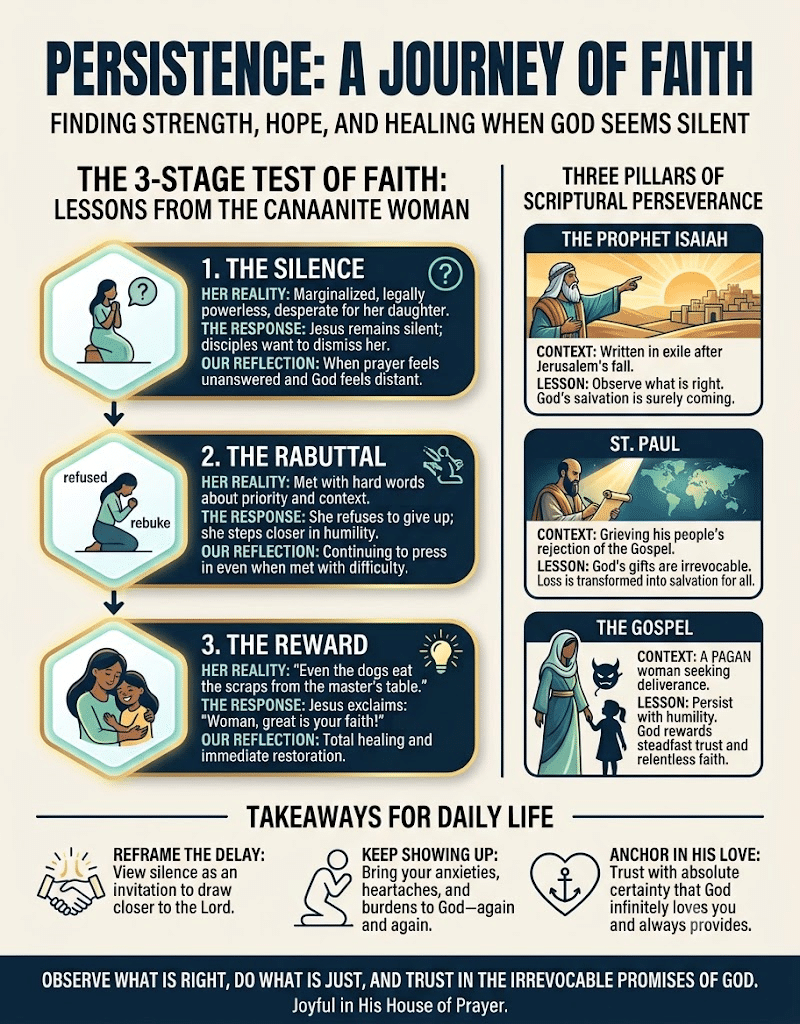
▶️ Persistence: A Journey of Faith
EXCERPT: We must go to the Lord and we must persist in prayer. Like the Canaanite woman. We must go to him and then go to him again and again that we might persevere like Saint Paul. As he knows the promise of the Lord is irrevocable to the chosen people. It is so in an even greater way to us in the church. The new Israel As We Gather here and every Sunday joyful in his House of Prayer trusting that even despite what we think we lack and what we might see as perceived needs that are unfulfilled to know with absolute certainty that God always provides. Us in his infinite love with everything we need.
Fr. Charles E. Irvin
20th Sunday of Year A
✍️ Faith That Withstands Any Assault

EXCERPT: The key that unlocks the mystery contained in this verbal duel is to recognize that Jesus saw in this Canaanite woman a reality that she didn’t even see herself. He saw in her a faith that could withstand any assault; a love that was divine; a hope that could not be shaken. He tested her mettle and she found something within herself that she didn’t know even existed. Joined into the humiliation that Christ would later suffer, she transcended ordinary humanity and came into a level of life that was God’s. Her three-step journey in faith mirrored Christ’s.
The critical point of it all is that Jesus sees the same thing in you and in me. For He has an unrealized dream about who you really are and what you’re really made of. In Christ’s life, passion, and death we find the stuff of our real humanity, particularly so when we share in His suffering, passion, and death.
Had Jesus granted her request right away, this woman would never have ascended to the heights of glory that she did. We must see that in the divine scheme of things, the more we lose the more we win. The more we give away, the more we gain. The more we go down, the higher we ascend. In that, we pass from what is human into what is divine. It’s the path of Jesus.
Fr. Joe Jagodensky, SDS
20th Sunday of Year A
✍️ No Homily Available

Fr. Langeh, CMF
20th Sunday of Year A
▶️ Never Give Up – Top Up

EXCERPT: Being a foreigner should not bar us from having God’s favours. That is why the first reading makes us understand that “Foreigners who have attached themselves to the Lord to serve him and to love his name and be his servants – all who observe the Sabbath, not profaning it, and cling to my covenant – these I will bring to my holy mountain. I will make them joyful in my house of prayer”.
The Lord is ready to help us despite our conditions. We all have our own problems that we carry in our hearts and we surely have brought these problems to Jesus. Let us not lose heart if we have not yet received a response from Jesus. Let us continue to persist, continue to humble ourselves before Him and untiringly beseech His guidance and help.
The woman never gave-up until she got what she wanted from Jesus. So we too must never give-up we must continue to badger Jesus with our humble and persistent prayers. Often times we don’t get what we want from Jesus because we easily give-up. Same as with our ambitions in life; we don’t get what we want because we give-up. We should never give up, we should be ready to top up our faith.
Msgr. Charles Pope
20th Sunday of Year A
✍️ While on Others Thou Art Calling, Do Not Pass Me By
EXCERPT: The Gospel this Sunday teaches us to pray always and not to lose heart. It is about being tenacious in prayer, continuing to beseech the Lord even when the results are discouraging. It is also about the Lord’s will to extend the Gospel to all the nations and to make the Church truly catholic.
Let’s look at this Gospel in five stages.
OUTLINE:
I. TRAVELS
II. TORMENT
III. TEST
IV. TENACITY
V. TRIUMPH
Father Kevin Rettig

20th Sunday of Year A
▶️ Amid the Bombs
SUMMARY: Erected in the 1890s and largely destroyed during a 1943 bombing of Berlin, the Kaiser Wilhelm Memorial Church stands as a poignant reminder of war’s devastation. Its skeletal spire was preserved alongside a new 1960s structure dedicated to peace and reconciliation.
Inside the sanctuary, over 21,000 blocks of deep blue glass create the atmosphere of a night sky, pierced by vivid red, green, and yellow lights that hauntingly evoke the terrifying “Christmas tree” flare bombs of World War II. A magnificent golden figure of Christ hovers above, signifying a comforting, universal presence in the midst of fear.
Recalling an interfaith service held within its walls, the author highlights how the space unites people across all national, cultural, and religious divisions. Ultimately, the church delivers a profound message: even during life’s darkest horrors and trials, a loving, all-encompassing God remains present to melt human hatred and provide enduring hope for all.

Fr. George Smiga

20th Sunday of Year A
✍️ What Labels Convey

Romans 11:13-15, 29-32; Matthew 15:21-28
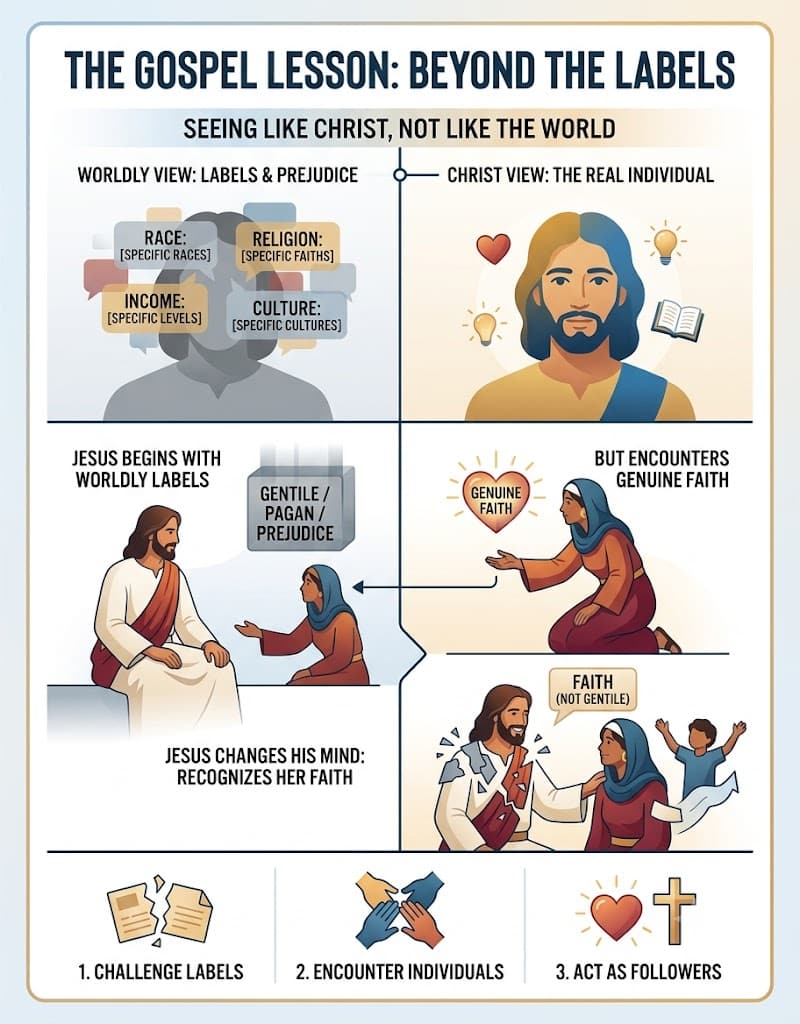
EXCERPT: In our world, people come to us with labels: labels of race, income, religion, and culture. But we would be amiss if we were to confuse the labels from the real people that we encounter. In fact, as followers of Christ, we are called to be very wary about what labels convey because they are often at odds with the real people we meet. Jesus deals with labels in today’s Gospel. He is in pagan territory and a Canaanite woman comes up to him. She is a Gentile, a non-Jew. In the culture of Jesus’ day, there was a prejudice against Gentiles, that they were unable to have a genuine relationship with God. For a while Jesus participates in this prejudice. He refuses to heal the woman’s child, saying that his ministry is only for the lost sheep of the House of Israel. But the woman persists, and in time Jesus recognizes her faith and heals her daughter.
As far as I can tell this is the only scene in the gospels in which Jesus changes his mind. Instead of relating to the woman with the label “Gentile,” he perceives her as a genuine woman of faith. What Jesus does in the Gospel, we are called to do. As followers of Jesus, we are asked to deal with people, not through the labels they bear, but as the people that they are.
Additional Homilies
20th Sunday of Year A
Fr. Vincent Hawkswell | Archive
NO HOMILY AVAILABLE THIS WEEK (2023)
Fr. George Corrigan, OFM
Traditions and Great Faith
The Canaanite Woman
A Framework to Understand the Response
How are We to Understand Jesus’ Response?
Universal Salvation
Msgr. Joseph Pellegrino (PDF) | Archive
One Church (2026)
Fr. Tommy Lane | Archive
Persisting in prayer like the Canaanite woman and Saint Monica
Related: on faith: Have faith during crises
Why pray when God knows what we want?
on healing We have faith in the power of Jesus to heal us and pick us up
stories about persistence
Scripture Commentary: Jesus’ ministry to those on the margins
Fr. Michael Fallon, MSC | Archive
20th Sunday in Ordinary TPDF)
Spanish Homily
⬅️  ➡️
➡️
20th Sunday of Year A
A brief homily for those who are learning Spanish or English. The grammar is kept uncomplicated and uses present-tense vocabulary to ensure it is easy to deliver. The homily focuses on the practical, everyday meaning of Sunday’s Gospel.
VOCABULARY

