Papal Homilies, Pope Francis, Pope Benedict, Pope John Paul II, Pope Leo
August 16, 2026
⭐⭐⭐ Pope Leo XIV



The Holy See
- The Bible
- Catechism of the Catholic Church
- Codes of Canon Law
- Ecumenical Councils
- Official Acts of the Holy See
- Social Doctrine of the Church
- Abuse of Minors, the Church’s Response
- Press Office
- Vatican News – Radio Vaticana
- L’Osservatore Romano
- Vatican Websites
- Vatican City State
- Basilicas and Papal Chapels – Virtual Tours
- Liturgical Celebrations
- Tickets for Papal Audiences and Celebrations
20th Sunday of Year A

Theme of the Readings
FROM THE ARCHIVES (1999)
God reveals himself to Elijah in the soft murmur of the breeze on Mount Horeb (first reading). Jesus Christ reveals himself to the disciples as the Son of God by mastering the rough waves of the sea and with his mysterious words. “It’s me! Don’t be afraid” (Gospel). On his part, Paul is very aware that God has revealed himself to the People of Israel. “To them belong the sonship, the glory, the covenants, the giving of the law, the worship, and the promises” (Rom 9: 4). Elijah’s reaction is one of sacred fear before the presence of Yahweh. “He covered his face with his cloak” (1 Kings 19: 13). Peter’s response is one of doubt. “You have so little faith, why did you doubt?” (Mt 14: 31). The response of the group of disciples is one of faith. “Truly, you are the Son of God” (Mt 14: 33). Paul knows full well that the People of Israel have not responded to God and have not been faithful to divine Revelation. Thus he feels great sorrow and unremitting agony in his heart (second reading). God’s Revelation and man’s response – here in summary is the message of the liturgy.
Doctrinal Messages
God reveals himself to men not through concepts but by means of symbolic action or an interpersonal relationship. After Elijah flees to Mount Carmel to avoid being killed by Jezebel (1 Kings 19: 1-3), God makes him cross the land of Palestine from north to south to Mount Horeb. On the mountain, in solitude and prayer, God reveals himself to Elijah. God had revealed himself to Moses as the Lord of the powers of nature in the midst of lighting, fire, and thunder (cf. Ex 19: 16-19). Centuries later and on the same mountain, he will reveal himself to Elijah in the murmur of a soft breeze, with the softness of a mother’s kiss.
Jesus Christ spent long hours in prayer and dialogue with the Father (cf. Mt 14: 23). The disciples almost powerlessly fought the rough waves on Lake Tiberias. All of a sudden they see a human figure resembling Jesus coming towards them. They are frightened. They think they are seeing a ghost. Jesus takes advantage of this circumstance to reveal himself to them in his most intimate identity, by means of a symbolic gesture. Like Yahweh (cf. Job 9: 8; Ps 77: 20), he walks over the waves of the sea, thus showing that he is the lord of the sea and of nature. Like Yahweh (cf. Ex 3: 15), he reveals his divine name, “I am.” Jesus shows his divine power, but he especially reveals his divine sonship to the disciples.
Paul reminds us of the extraordinary prerogatives of God in relation to Israel, underscoring that “To them belong the patriarchs, and of their race, according to the flesh, is the Christ” (Rom 9: 5). With the patriarchs the historic revelation of God begins. With Christ such revelation culminates and reaches its plenitude, and this mystery is fulfilled among the Chosen People. This is how God reveals himself to us as the faithful one par excellence, as the one who does not regret his choice or his promises. God’s covenant with Israel continues in spite of Israel’s infidelity. God’s Revelation is a dialogue with each person, and by its very nature requires an answer. Elijah responds with the obedience of faith (1 Kings 19: 15-18) so that belief in Yahweh would be preserved in the land. Peter responds with fear and doubt to a situation he caused, challenging the power of Jesus. The People of Israel responded by rejecting the Revelation of Jesus as Messiah and of his divine sonship. Finally, the disciples are the ones who gave the best and most exhaustive response; “Truly, you are the Son of God.”
Our response to God’s Revelation, preserved and passed on to us by the Church, must be in the words of Vatican Council II, “The obedience of faith…. By faith man freely commits his entire self to God…, willingly assenting to the Revelation given by him” (DV 5).
Pastoral Suggestions
In order to answer one’s interlocutor, one must know the content of their message or proposal. If the person of today wishes to give a responsible and mature answer to God’s Revelation, he must first of all know such a Revelation. It is rather evident that for a certain number of years there was a “doctrinal vacuum” in catechesis (perhaps still existing in some areas today). Thus the Revelation of God that the Church conveys to us is partially unknown, misknown or insufficiently known. There is a major formative task to be carried out in parishes, youth groups, and Church groups. It is a difficult but absolutely necessary task so that a strong conversion experience or moment of religious enthusiasm does not become disappointing or simply a temporary explosion of feelings. We cannot place enough emphasis on the pressing need for numerous and well formed catechists, catechists working with the faithful of all ages so that their response of faith may be genuine and mature.
It is not enough to know God’s Revelation. The experience of past centuries and of contemporary times has taught us – and this is witnessed by this Sunday’s liturgy – that by virtue of his freedom, man can give very different responses, and in fact he does. There are those whose response is one of rejection, a lack of interest, or indifference. For others there is open hostility towards the Christian message. There are those who believe but in their own way, letting themselves be guided by subjective criteria. Others do believe but their faith has “holes or leaks,” and it is thus “impossible” for them to accept certain truths of the Catholic faith or morality. The real answer, the one we must seek for ourselves and for our parishioners, is the complete, sure, and responsible answer: the obedience of faith.
SOURCE: YEAR A DICASTERY NOTES (1999)

20th Sunday of Year A
Great Faith is that which
Brings its Own Story
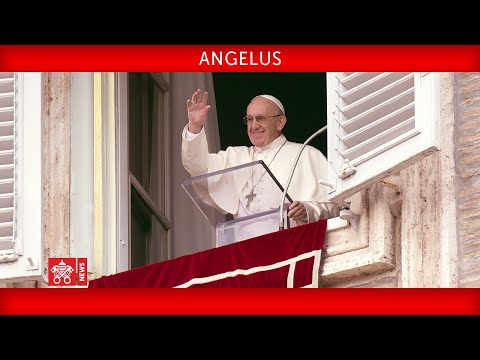
16 August 2020 Saint Peter’s Square (Angelus)
This Sunday’s Gospel (see Matthew 15:21–28) describes the meeting between Jesus and the Canaanite woman. Jesus is to the north of Galilee, in foreign territory. The woman was not Jewish; she was a Canaanite. Jesus went there to spend time with His disciples away from the ever-growing crowds.
A woman approached Him seeking help for her sick daughter, crying out, “Have mercy on me, Lord!” (v. 22). It is a cry born out of a life marked by suffering—the helplessness of a mother who sees her daughter tormented by evil, unable to heal her. Jesus initially ignores her, but this mother insists. She continues to press on, even when the Master tells the disciples that His mission is directed only to “the lost sheep of the house of Israel” (v. 24) and not to the Gentiles.
A Test of Faith and Goodness
She continues to beg Him, and at that point, He tests her by citing a proverb: “It is not fair to take the children’s food and throw it to the dogs” (v. 26). Quick and filled with anguish, the woman responds, “Yes, Lord, yet even the dogs eat the crumbs that fall from their masters’ table” (v. 27).
With these words, that mother shows she has perceived the goodness of God Most High present in Jesus, who is open to the needs of all His creatures. This wisdom, filled with trust, touches Jesus’s heart and draws out His admiration: “Woman, great is your faith! Let it be done for you as you wish” (v. 28).
Bringing Our Broken Stories to the Lord
What type of faith is great? Great faith brings its own story—marked even by wounds—to the Lord’s feet, asking Him to heal those wounds and give them meaning.
Each one of us has a story, and it is not always a clean story or one easily shared. Many times it is a difficult story with much pain, misfortune, and sin. What do we do with our story? Do we hide it? No! We must bring it before the Lord and say, “Lord, if You will it, You can heal me!”
This wonderful mother teaches us the courage to lay our painful stories before Jesus to experience His tenderness. Let each of us think of our own story. There are always painful things in a story. Let us go to Jesus, knock on His heart, and say, “Lord, if You will it, You can heal me!”
Knowing the Heart of Christ
We can do this if we keep the face of Jesus before us and understand what His heart is like: a heart that feels compassion, bears our pain, our sins, our mistakes, and our failures. He loves us as we are, without pretense.
To know His heart, it is necessary to grow familiar with Him. Always carry a small pocket-sized Gospel—in your purse, in your pocket, or on your phone—and read a passage every day. There you will find Jesus as He is: One who loves us deeply and desires our well-being.
May the Lord help all of us to pray this beautiful prayer taught to us by a Canaanite woman: “Lord, if You will it, You can heal me!”
August 16, 2020
20th Sunday of Year A
The Woman Was Not Afraid
to Cry to Jesus
14 August 2011 | Castel Gandolfo
This Sunday’s Gospel passage begins by indicating the district to which Jesus was going: Tyre and Sidon, to the north-west of Galilee, a pagan land. And it was here that he met a Canaanite woman who spoke to him, asking him to heal her daughter who was possessed by a demon (cf. Mt 15:22).
In her supplication we can already discern the beginning of a journey of faith, which in her conversation with the divine Teacher grows and becomes stronger. The woman was not afraid to cry to Jesus “Have mercy on me”, an expression that recurs in the Psalms (cf. 50:1), she calls him “Lord” and “Son of David” (cf. Mt 15:22), thus showing a firm hope of being heard. What was the Lord’s attitude to this cry of anguish from a pagan woman?
The Purpose Behind Christ’s Silence
Jesus’ silence may seem disconcerting, to the point that it prompted the disciples to intervene, but it was not a question of insensitivity to this woman’s sorrow. St. Augustine rightly commented: “Christ showed himself indifferent to her, not in order to refuse her his mercy but rather to inflame her desire for it” (Sermo 77, 1: PL 38, 483).
Persistent Humility and the Reward of Faith
The apparent aloofness of Jesus who said: “I was sent only to the lost sheep of the house of Israel” (v. 24), did not discourage the Canaanite woman who persisted: “Lord, help me” (v. 25). And she did not even desist when she received an answer that would seem to have extinguished any hope: “It is not fair to take the children’s bread and throw it to the dogs” (v. 26). She had no wish to take anything from anyone; in her simplicity and humility a little was enough for her, crumbs sufficed, no more than a look, a kind word from the Son of God. And Jesus was struck with admiration for an answer of such great faith and said to her: “Be it done for you as you desire” (v. 28).
The Call to Grow in Faith
Dear friends, we too are called to grow in faith, to open ourselves in order to welcome God’s gift freely, to have trust and also to cry to Jesus “Give us faith, help us to find the way!”. This is the way that Jesus made his disciples take, as well as the Canaanite woman and men and women of every epoch and nation and each one of us.
Faith as a Personal Relationship with God
Faith opens us to knowing and welcoming the real identity of Jesus, his newness and oneness, his word, as a source of life, in order to live a personal relationship with him. Knowledge of the faith grows, it grows with the desire to find the way and in the end it is a gift of God who does not reveal himself to us as an abstract thing without a face or a name, because faith responds to a Person who wants to enter into a relationship of deep love with us and to involve our whole life.
Daily Conversion and Spiritual Openness
For this reason our heart must undergo the experience of conversion every day, every day it must see us changing from people withdrawn into themselves to people who are open to God’s action, spiritual people (cf. 1 Cor 2:13-14), who let themselves be called into question by the Lord’s word and open their life to his Love.
Nourishing the Life of Faith
Dear brothers and sisters, let us therefore nourish our faith every day with deep attention to the word of God, with the celebration of the Sacraments, with personal prayer as a “cry” to him, and with charity to our neighbor.all he expects of us is that we trust totally in him, that we really take hold of his hand.

August 14, 2011
20th Sunday of Year A
Proclaiming Christ and the Paths of Ecclesial Renewal
8 August 1999 | Angelus
In the Gospel passage presented to us in today’s liturgy, we once again listen to Jesus’ words to his terrified and fearful disciples: “Take heart, it is I; have no fear” (Mt 14:27). The Evangelist notes that encouraged by the Lord’s presence, “those in the boat worshiped him, saying, ‘Truly you are the Son of God'” (ibid, 14:33). The Church makes her own this profession of faith in the Son of God, and renews it constantly as she spreads the Good News which he came to bring the people of all times and places.
The Legacy and Witness of Paul VI
The Servant of God Paul VI, my venerable Predecessor, was also a tireless proclaimer and bold witness of Christ’s Gospel. On 6 August, 35 years ago now, he promulgated his first Encyclical entitled Ecclesiam suam. Fourteen years later, also on the Feast of the Transfiguration and precisely here in Castel Gandolfo, he was called to contemplate the Lord’s face forever in the blessed homeland.
Three Paths for the Church’s Mission
In Ecclesiam suam, this great Pontiff indicated the paths of an inspired ecclesial journey towards the third millennium:
- The Spiritual Path: Refers to the awareness the Church must have of herself to conform to the vocation entrusted to her by the Redeemer.
- The Moral Path: Concerns the authentic ascetic, practical, and canonical renewal she needs to carry out her mission in the world.
- The Way of the Apostolate: For the ecclesial community, the method of dialogue is becoming the way in which to work to bring the Lord’s comforting message of salvation everywhere.
Guided by Faith Toward the New Millennium
How is it possible not to thank God for the gift of this prophetic teaching which has guided the journey of the Christian people in the past 35 years? With the Second Vatican Council, wisely led by Paul VI, the Church more closely examined her inmost nature and universal mission. With the constant support of the Holy Spirit, her faith has remained steadfast in these last decades of the century, marked by many lights, but also by numerous shadows, and she is now preparing confidently to cross the threshold of the next millennium.

Matthew 15:21-28
Search Engine created by Jeff Pinyan
20th Sunday of Year A
Isaiah 56:1, 6-7
Search Engine created by Jeff Pinyan
20th Sunday of Year A
Romans 11:13-15, 29-32
Search Engine created by Jeff Pinyan
20th Sunday of Year A