Homilies
Homilies
September 20, 2026
⭐⭐⭐ The Gospel in the Age of AI


25th Sunday of Year A

Looking for the perfect homily opener? Each week, TWTW features standout anecdotes from Fr. Tony Kadavil’s longstanding collection, along with a few fresh picks of our own.

Moving from Entitlement to Gratitude
The 25th Sunday in Ordinary Time (Year A) contrasts human merit with the radical generosity of God’s Kingdom in the Parable of the Laborers in the Vineyard (Matthew 20:1–16). While we cling to transactional fairness and status, God dismantles entitlement with sovereign grace.
Like a Girl: Inverting this idiom shows how God overturns human hierarchies, restoring dignity to the marginalized rather than validating social rank.
Sally’s Letter to Santa (Charlie Brown Christmas): Demanding her “fair share” captures the dawn laborers’ resentment, showing how an entitlement mindset treats grace given to others as personal injustice.
Generous Lottery Winners (Listopedia): Choosing openhanded philanthropy over hoarding reflects the landowner’s scandalous, unearned generosity toward latecomers.
Papal Homilies / Catechism
25th Sunday of Year A


Featured Homilies
Deacon Peter McCulloch
25th Sunday of Year A
✍️ A Year Without Grumbling
EXCERPT (2023): When a big family finds itself squashing into a small house, you can expect lots of grumbling.
That’s what the Goyers found when they adopted seven children. They created a family of eleven people: two parents, eight children and one grandmother with dementia. As they gradually settled in together, there was lots of emotion and plenty of noise, mess, laundry – and grumbling.
Tricia Goyer, the mother, found all this grumbling hard to take, and one day she decided: let’s aim for a year without grumbling, and she wrote about it in her book, The Grumble-Free Year.
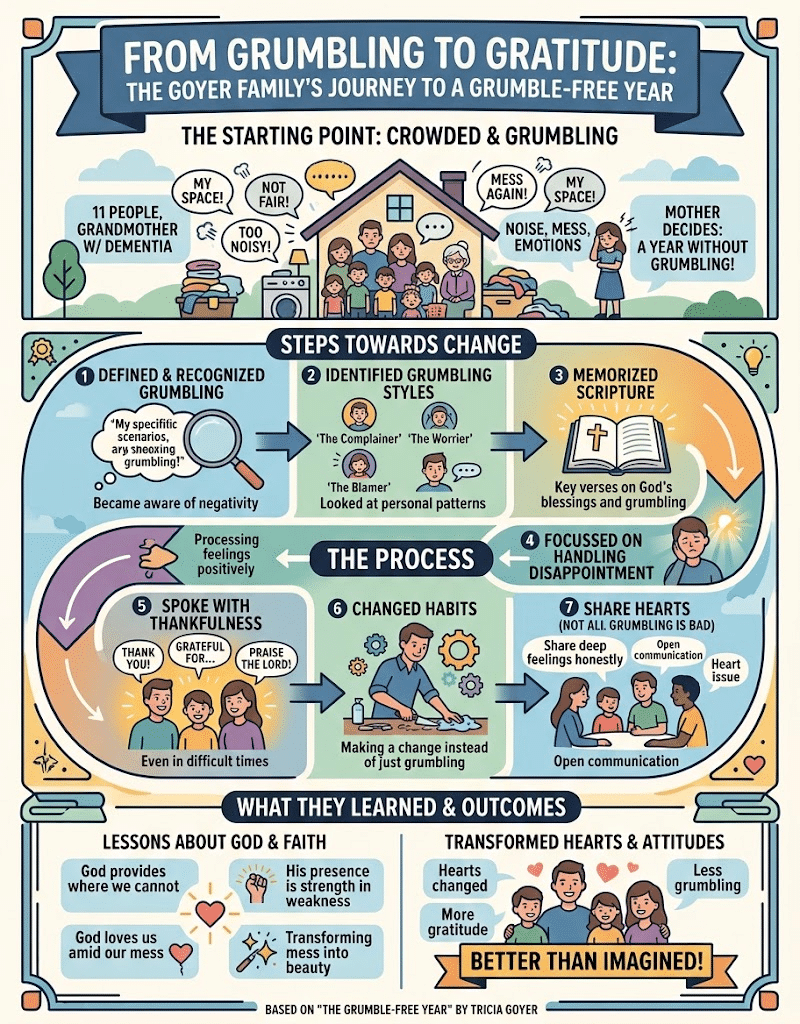
Click to Enlarge
Bishop Robert Barron
25th Sunday of Year A
▶️ How Not to Think About Heaven

Friends, the parable at the heart of our Gospel today from Matthew 20 is one of those passages in the New Testament that really bothers people. It proves that this parable is not just conveying correct information about God; it is reaching into our souls and doing spiritual work, shining light upon a certain darkness in us that resists him. And in this case, the darkness is a false view of what heaven is all about.
Watch the video, then dive deeper with TWTW study materials below:
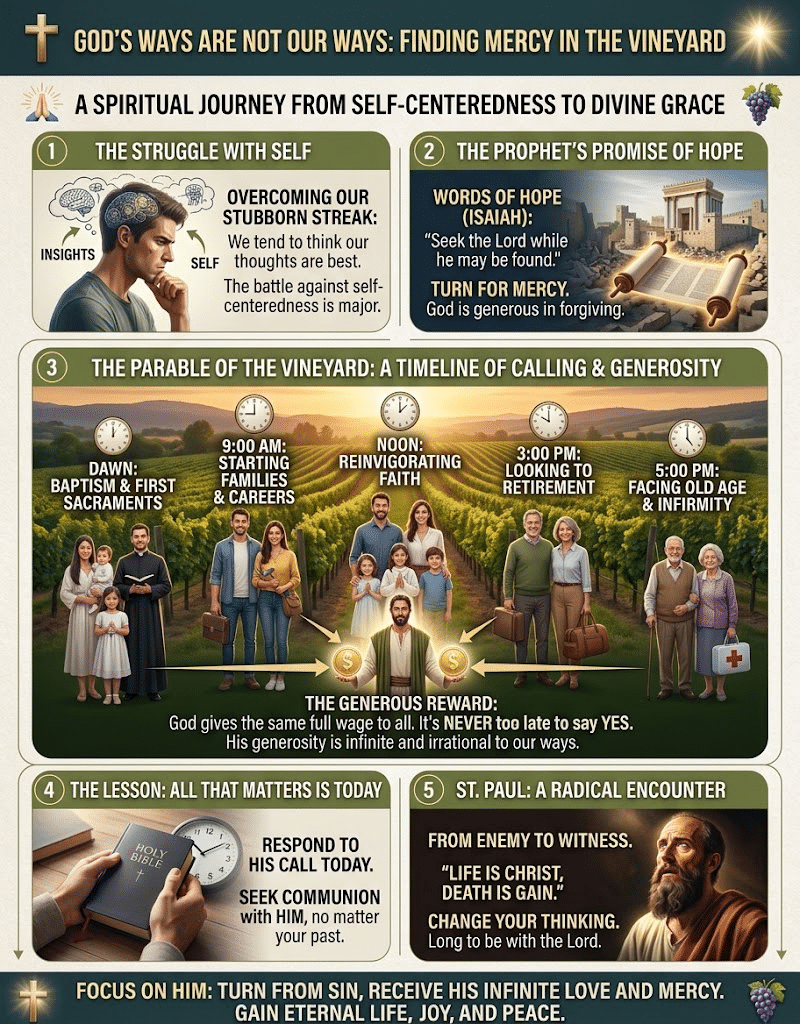
- Visuals: 5 companion infographics to follow along with the message
- Transcript: Full sermon text for reading and reference
- Discussion Guide: 25 questions tailored for small groups and classrooms
In the News
25th Sunday of Year A
The Gospel in the
Age of AI
Although in chains under Rome’s imperial apparatus—uncertain whether the next dawn would bring freedom or an executioner’s blade—the Apostle Paul wrote to the church at Philippi with breathtaking composure: “For to me, to live is Christ and to die is gain.” He was not reckless. He was untethered from fear because his allegiance belonged to a different kingdom. But Paul does not let the Philippians retreat into passive mysticism while they wait for heaven. Instead, he issues a direct charge: “Let your manner of life be worthy of the gospel of Christ.”
In the original Greek, that phrase is captured in a single, potent verb: politeuesthe. It is an explicitly civic term. Paul was telling them: Live as worthy citizens. He tells them that their ultimate citizenship belongs to Christ, and that this heavenly citizenship demands a public, visible ethic of integrity in the earthly city.

REUTERS (1:06)—UN rights chief Volker Turk warned that artificial intelligence could become powerful enough to threaten humanity, and said he would urge companies in the coming days to reduce the risks.
The Modern Public Square: AI, Drones, and Human Power
That charge echoes sharply today. Just this week, headlines from Global Issues News reported on the United Nations Security Council convening to push for new, binding global safeguards on emerging artificial intelligence and autonomous drone systems in counter-terrorism. Diplomats and ethicists are grappling with a terrifying question: What happens when the power over life and death is delegated to an algorithm? What happens when speed, efficiency, and automated power outrun human conscience?
The debate in the halls of the UN is not merely a technical argument over code and telemetry. It is an urgent attempt to exercise civic duty—to establish moral boundaries and human accountability where raw power threatens to run unchecked. It is an effort to declare that expediency cannot become our highest god.
Gospel Ethics and the Sanctity of Life
Here lies the deep connection to Paul’s gospel. To politeuesthe—to live as citizens worthy of the gospel—is to bring moral responsibility into every arena of human authority. When humanity builds tools that can target, strike, and destroy without hesitation, the gospel intervenes with an entirely different vision of what it means to be human. The gospel reveals a God who possessed all power, yet did not wield it to subjugate or automate destruction. Instead, Christ took the form of a servant, submitting Himself to our broken systems of justice to redeem us.
If Christ redefined power through sacrificial love, we cannot be indifferent to how power is wielded in our world. Setting ethical safeguards around autonomous weapons is not a secular luxury; it is a profound expression of the civic integrity Paul demands. It insists that human life carries an intrinsic dignity that no machine can calculate and no military balance sheet can dismiss. It declares that accountability must never be outsourced to code.
Personal Accountability: Living as Citizens of the Kingdom
Yet Paul’s challenge cuts deeper than international policy. It comes home to each of us. We may not sit in the UN Security Council or design autonomous drones, but we live in a culture increasingly driven by algorithmic efficiency, instant reaction, and self-preservation. It is easy to outsource our moral conscience—to drift along with whatever is technologically feasible, economically advantageous, or culturally dominant. We are tempted to conduct our public lives according to the prevailing politics of grievance, fear, and self-interest.
Paul asks us: Does your public conduct reflect the gospel? When you speak in the public square, when you cast your vote, when you build businesses, when you post online, when you interact with your neighbors—are you living as a citizen of the Kingdom, or merely as a subject of the empire? To live worthy of the gospel means our public ethic must be marked by courage and restraint. It means standing up for the vulnerable, demanding accountability from systems of power, and refusing to let human beings be reduced to data points or collateral damage.
A Public Banner
Paul could face Caesar’s court without terror because Christ had already conquered death. He knew that whether by life or by death, Christ would be exalted. That same assurance frees us. We do not have to compromise our integrity out of panic about the future. We do not have to surrender our humanity to machines of war or algorithms of fear.
“To live is Christ.” That is not just a personal comfort; it is a public banner. It calls us to embody His justice, His mercy, and His radical accountability in every corner of our civic life, standing together with one spirit and one mind, striving side by side for the faith of the gospel.
This essay based on this Sunday's readings and current events was developed collaboratively using artificial intelligence alongside human pastoral curation and theological editing. It is not intended as a finished script, but as a catalyst to spark reflection, provide thematic inspiration, and support preachers in crafting their own authentic homilies for their communities.
AI, Drones, and Human Power
Gospel Ethics and the Sanctity of Life
Living as Citizens of the Kingdom
A Public Banner
Fr. Mike Schmitz
25th Sunday of Year A

SUNDAYS WITH ASCENSION (2023): Fr. Mike Schmitz is the chaplain for the Newman Center at the University of Minnesota Duluth (UMD) and serves as the Director of Youth and Young Adult Ministry for the Diocese of Duluth.
▶️ Tough Love: Receive and Rejoice
We are all confronted with the temptation towards resentment, when we see the blessings or gifts that others have. This temptation towards envy can be overcome when we choose to receive the gifts we’ve been given with gratitude, and choose to rejoice in the gift of others.
Fr. Michael Chua
25th Sunday of Year A
✍️ The Economics of the Cross

Fr. Michael Chua
Homilies (2026)
Should we be envious of God’s generosity? (2020)
EXCERPT (2023): Our society has truly been infected by an epidemic of envy and complaints. Rather than blaming God for the injustices in the world, the parable calls for honest self-examination – have we truly allowed our obsession with self-interest to dampen our joy and blind us to the needs of our neighbours? Pope Francis rightly states the problem in the second paragraph of Evangelii Gaudium,
“The great danger in today’s world, pervaded as it is by consumerism, is the desolation and anguish born of a complacent yet covetous heart, the feverish pursuit of frivolous pleasures, and a blunted conscience. Whenever our interior life becomes caught up in its own interests and concerns, there is no longer room for others, no place for the poor. God’s voice is no longer heard, the quiet joy of his love is no longer felt, and the desire to do good fades. This is a very real danger for believers too. Many fall prey to it, and end up resentful, angry and listless.” (EG 2)
The generosity of God should always awaken us to greater mercy, compassion and generosity, rather than be a cause for complaint and grumbling. At the end of the day, for Christ’s disciples, all rewards are really “gifts” or expressions of divine favour and not earned “wages” or “mercy”. Don’t ask “what’s in it for me?” but rather, “What’s in it for the other guy?” That is a hard lesson to learn, because oftentimes when we go to God in prayer we think we deserve something from Him. We believe He owes us something. The same goes with service offered to the community of the Church. This parable is a painful but necessary reminder that what we receive from God is an undeserved gift. The Church owes us nothing. God owes us nothing. In fact, we owe the Church and God who works through the Church, everything.
Dominican Blackfriars
25th Sunday of Year A
✍️ Love, Finally

EXCERPT (2023): On hearing or reading certain gospel passages, we almost instinctively resist them. Or at least we need more convincing than usual that they actually mean what they seem to be saying. Today’s gospel is one of them – but, then, by using a parable Jesus could well have intended to startle us into the truth.
The parable moves in steps, and so should our reflections. It is a vivid story about a group of unemployed or casual agricultural labourers, and we wonder what the next step will be and how it will all end. What will be the final reckoning for each of them? Apart from the first group, the labourers were not promised a fixed payment. We are kept in suspense because the labourers are paid in the opposite order in which they were employed. Those who worked from the beginning of the day, who laboured longest, are paid last. Like them, we expect they will be paid more because they have worked more.

Fr. Austin Fleming
25th Sunday of Year A
✍️ Windows of Opportunity
Fr. Austin Fleming
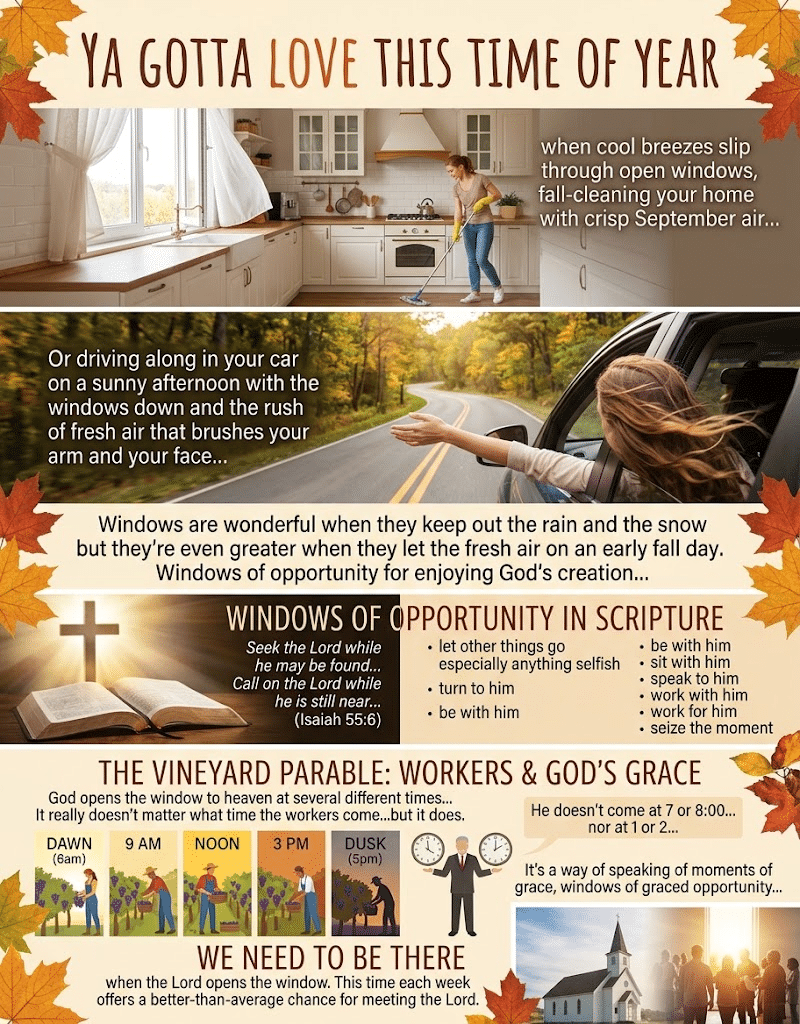
EXCERPT (2008): Ya gotta love this time of year when cool breezes slip through open windows, fall-cleaning your home with crisp September air… Or driving along in your car on a sunny afternoon with the windows down and the rush of fresh air that brushes your arm and your face…
Windows are wonderful when they keep out the rain and the snow but they’re even greater when they let in the fresh air on an early fall day.
Windows of opportunity for enjoying God’s creation… There are windows of opportunity in the scriptures today, too: “Seek the Lord while he may be found…” because on another day he may not be easy to find… “Call on the Lord while he is still near…” because on another day the Lord may seem to be far away…
Monsignor Peter Hahn
25th Sunday of Year A

▶️ God’s Thoughts, Not Ours
Msgr. Peter Hahn
EXCERPT (2017): God is free to do as he wishes and he only wishes each day to fill us with his love his joy and his peace again. This is the lesson for the gospel parable for all of us. Today it doesn’t matter how late in the day it is for us. It doesn’t matter what we have done in the past. All that matters is today all that matters is whether or not we respond to his call today to seek to grow in this treasure of our faith to grow in our communion with him. St. Paul of course knows this best. He has worked for years against Christ and His Church but then everything changes after that dramatic encounter that he has on the road to Damascus. Now he knows the great joy of working in the Lord’s vineyard and he knows of this communion with Christ and that changes everything in the way of his thinking he writes for to me.
Fr. Charles E. Irvin
25th Sunday of Year A
✍️ “It Isn’t Fair”

Fr. Charles E. Irvin
EXCERPT: How often do you hear the cry “It isn’t fair?” It is, of course, a complaint you hear many times from children and teens. Students complain their teachers aren’t fair with their exams. Some adults and parents complain that giving grades on performance isn’t fair. How often do parents tell us that teachers aren’t fair? And what about university admissions policies, are they fair or unfair?
- The Hurricane Katrina disaster brought forth a host of concerns about fairness. So, too, in follow-ups from other natural disasters.
- Capitalism, we are told, isn’t fair. In the name of fairness, socialism and communism were tried and found not to be fair.
- The Church, we are often told, isn’t fair. The way it treats women isn’t fair, we are told. The way it appoints bishops isn’t fair. The way it treats victims of abuse isn’t fair, nor is the way it deals with priests who have broken the law and grievously sinned.
- The way Jesus Christ rewarded Mary and ignored Martha’s complaint wasn’t, according to Martha, very fair.
Life isn’t fair – bad things happen to good people.
- Finally, we hear the ultimate complaint – God isn’t fair!
Fr. Tommy Lane
25th Sunday of Year A
✍️ It’s Never Too Late

Fr. Tommy Lane
It’s never too late. It’s never too late to turn to the Lord. It’s never too late to be welcomed by the Lord. It’s never too late to stop living an aimless life and live a life full of meaning. It’s never too late to leave sin and be welcomed by the mercy of Jesus. It’s never too late to be welcomed by the love of Jesus. Jesus told the Parable of the Laborers in the Vineyard (Matt 20:1-16) to teach us that it is never too late to turn to him. It is never too late to receive the grace of Jesus. The Lord continues to go out to the marketplace every hour to invite people to his vineyard.
Those in the parable who complained that they worked hard all day in the heat and received only the same pay as those who worked only for one hour do not reflect our attitude. Their attitude is the attitude of those engaged in economics. Instead, for us, it is a joy to work in the Lord’s vineyard all day. If we did not work in the Lord’s vineyard we would be missing out on time with the Lord. Instead of grumbling about those who come late to the vineyard, perhaps as late as their deathbed, we feel privileged to work in the Lord’s vineyard. What a joy it is for us to see people coming to the Lord’s vineyard no matter how late.
More Homilies for the Twenty-Fifth Sunday Year A
Fr. Langeh, CMF
25th Sunday of Year A

▶️ Quality of Our Output
EXCERPT (2017): How can one justify the same payment for those who have worked for the whole day and those who worked just for one hour? Is it really possible especially in contexts where labourers are paid per number of hours they worked? It is really customary that those who work longer should earn better than those who work shorter hours! Jesus however breaks this convention!
Our human thinking does not correspond always to that of the divine. Isaiah tells us clearly in the First Reading : “for my thoughts are not your thoughts, my ways not your ways ….Yes, the heavens are as high above earth as my ways are above your ways, my thoughts above your thoughts”. God is merciful and pardons unconditionally, while we do not. God’s grace is generous and rewards everyone, saints as well as sinners, while we would like to make a difference. He gives the sinner opportunity even at the “last hour”: Let the wicked man abandon his way, the evil man his thoughts. Let him turn back to the Lord who will take pity on him, to our God who is rich in forgiving.
Msgr. Charles Pope
25th Sunday of Year A

✍️ Don’t Ask for Fairness, Ask for Mercy!
Msgr. Charles Pope
EXCERPT (2023): What Jesus teaches in this Sunday’s Gospel is one of those parables that rock our world and challenge our worldly way of thinking. Frankly, that is one of its purposes. We are tempted to side with the laborers who worked the longest, thinking that their being paid the same amount as those who worked only for an hour is unfair.
Think very carefully before asking God to be “fair.” What we really should ask of God is that He be merciful, for if He were fair, we’d all be in Hell right now. We have no innate capacity to stand before God in pure justice; we simply cannot measure up. It is only grace and mercy that will win the day for us. So be very careful about challenging God’s fairness. In fact, when we see Him being merciful to someone else, we ought to rejoice, for it means that we might stand a chance.
There are other aspects of this Gospel that are important to learn from, in particular, the various dispositions of discipleship. As the parable unfolds, we can see five teachings. Let’s consider each in turn.
- The AVAILABILITY of Discipleship
- The AUTHORITY of Discipleship
- The ALLOTMENT of Discipleship
- The ABIDING of Discipleship
- The ASSESSMENT of Discipleship
Father Kevin Rettig
25th Sunday of Year A

▶️ Gregorian Calendar
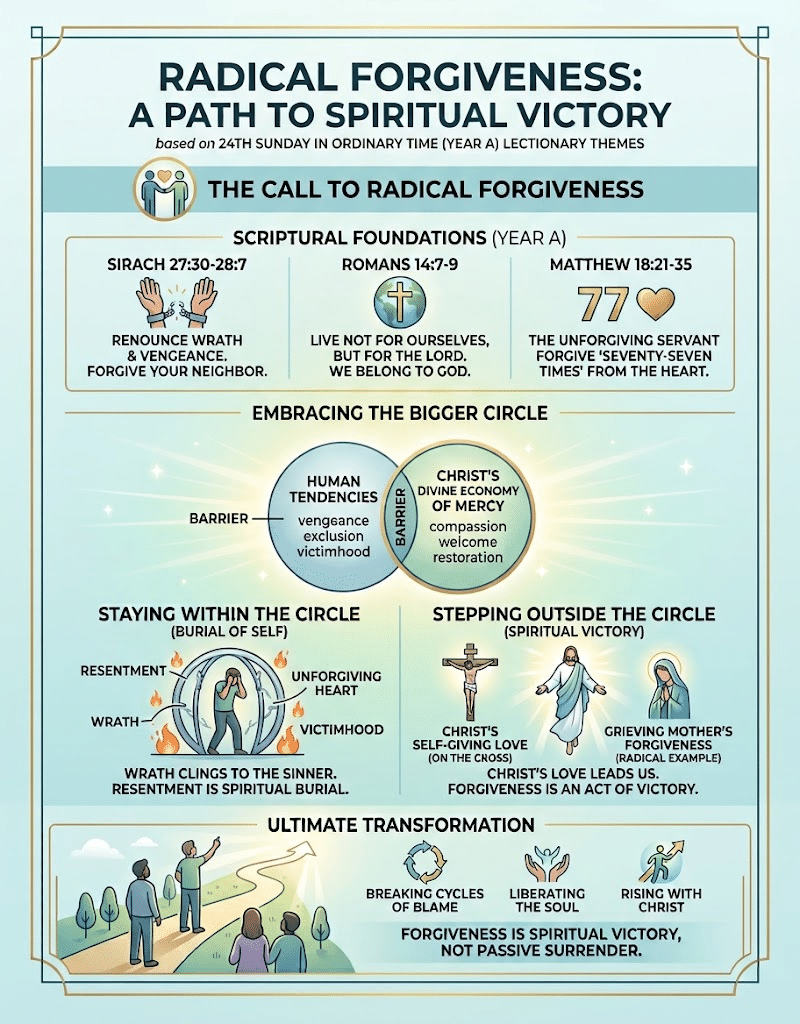
ABSTRACT (2020): The modern Gregorian calendar, instituted by Pope Gregory XIII in 1582 to replace the inaccurate Julian calendar, was initially resisted by non-Catholic nations due to religious friction. This hesitation caused historical chaos, with countries following different timelines; for example, Great Britain and its American colonies skipped 11 days when they finally transitioned in 1752, sparking public protests. Even today, several countries utilize traditional or modified calendars alongside the Gregorian system.
Despite its scientific precision, the Gregorian calendar still gains 26 seconds annually and will be a full day ahead of the solar year by 4909, illustrating the fundamental illusion of tracking time. Drawing a parallel to Jesus’ parable of the vineyard laborers, the text argues that humans often become enslaved to hours, dates, and accounting. Ultimately, it encourages readers to transcend strict temporal calculations in favor of a deeper relationship with God, embracing the eternal present.
Fr. George Smiga
25th Sunday of Year A
✍️ Happiness in an Unfair World

Matthew 20: 1-16
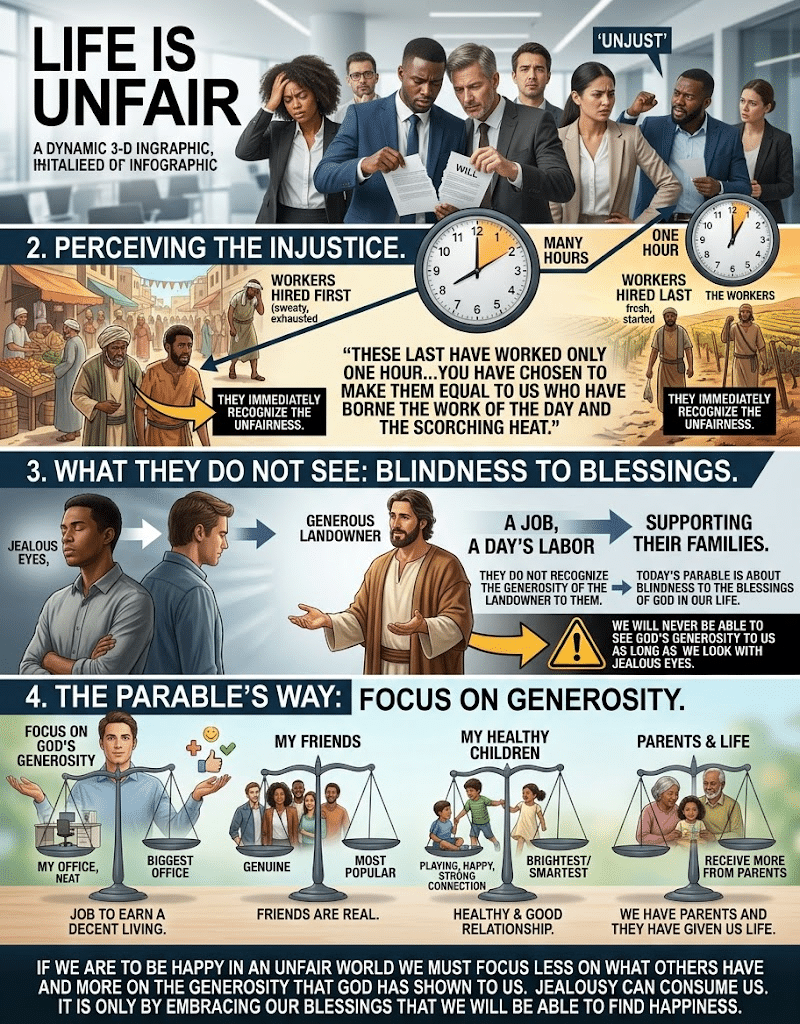
EXCERPT (2005): The parable [of the laborers in the vineyard] is realistic. It accepts the world as it is. It recognizes that things are unfair and there is not that much we can do about it. So the parable does not give us some magic formula which would allow us to give each person what is deserved. But what the parable provides is a way—a way in which we can be happy even in a world where some receive more than others. The parable tells us that if we are to be happy in an unfair world we must focus less on what others have and more on the generosity that God has shown to us. Yes, we may not have the biggest office or the highest salary but we do have a job, a job by which we can earn a decent living. We may not be the most popular person in our school or on our street, but we do have friends and those friends are real. Our children may not be the brightest or the smartest, but they are healthy and we have a good relationship with them. Others in our family may receive more from our parents, but we have parents and they have given us life.
In an unfair world, jealousy can consume us. If we compare ourselves to others, that comparison can make us blind to the blessings that we have received. The gospel reminds us that our blessings are real, and it is only by embracing them that we will be able to find happiness regardless of how much more others seem to be given.
Religious Orders
25th Sunday of Year A


Featured Priests
SCROLL FOR MORE
Beyond the Ledger of Merit
Reading: Matthew 20:1–16a
Augustinian Theme: The Primacy of Grace (Doctor Gratiae)
Our human instinct runs on a ledger. We calculate worth in hours logged, burdens borne, and merit accumulated. When the landowner pays the eleventh-hour laborer the exact same wage as those who endured the scorching day, our inner accountant revolts. It offends our sense of commercial fairness.
Yet Saint Augustine reminds us that the Kingdom of Heaven does not operate on an economy of earned wages, but on the mystery of pure gift. Augustine, writing against the moral perfectionism of his era, insisted that no one bargains with God. The denarius given to the laborers is not a payoff for human sweat; it is eternal life. And eternal life is Christ Himself. Can Christ be divided into fractions? Can God give half of His mercy to the latecomer and a double portion to the early riser?
“What do you have that you did not receive?” Augustine asks. The laborers hired at dawn were blessed to have spent their day in the master’s presence, shielded from the marketplace’s despair. Their labor was not a down payment on God’s favor, but the fruit of having been called first. The tragedy is that their eyes turned envious precisely where God was lavish.
How often do we fall into the trap of spiritual pride, measuring our fidelity against our neighbor’s stumbling? We imagine we have earned God’s love through our discipline, forgetting that the very desire to seek Him was already His grace stirring within our restless hearts.
Grace is never a trophy for the righteous; it is the medicine for the broken. Let us lay down our ledgers and rest in the scandalous generosity of the Vine-dresser, who searches the empty squares until the dying light, desperate to give us all that He is.
Featured Friars & Monks
SCROLL FOR MORE
Stepping Down the Ladder of Pride
Reading: Matthew 18:21–35
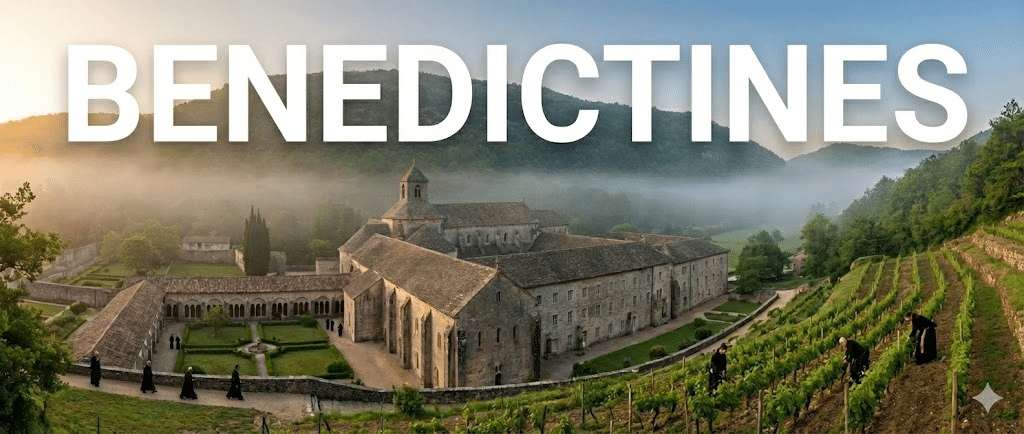
Benedictine Theme: Humility (Humilitas)
When the master of the vineyard hands a full day’s denarius to the laborers who arrived just before sunset, the early workers murmur with bitter indignation: “You have made them equal to us.” In that single complaint, human pride reveals its ancient wound. We instinctively measure our worth by comparing our burdens to those of our neighbors.
Saint Benedict, in Chapter 7 of the Rule, describes humility not as self-loathing, but as a ladder of truth that descends away from ego and ascends toward genuine peace. The first laborers stumble precisely because they cling to the illusion of spiritual superiority. They imagine their long sweat gives them a higher claim on the master’s love. But in the Benedictine vision, standing before God means recognizing that none of us stands on our own achievements.
The eleventh-hour workers waited all day in the marketplace simply because “no one hired us.” They knew the ache of feeling unwanted, useless, and overlooked. When the master finally invites them into the rows, they come with open hands, expecting nothing, grateful for anything. They unknowingly embody Benedict’s portrait of humility: quiet gratitude in the face of unearned mercy.
Our daily spiritual life is often poisoned by the murmuring of the first group. We look across the pews, or across our dinner tables, resentful when another person receives kindness, forgiveness, or a fresh start that feels unmerited. But Benedict reminds us that true humility cures envy. When we step down the ladder of our self-importance, we stop clutching our grievances and begin celebrating the abundance of the cellarer who gives each soul what it needs to live.
The vineyard is not an arena for competition; it is a community of grace. May we surrender our comparisons, welcome the latecomer as a brother, and rejoice that our Master’s generosity surpasses our narrow judgments.


The Holy Tension of Love
Reading: Philippians 1:20c–24
Carmelite Theme: Living in Allegiance to Jesus Christ
Writing from the confinement of a prison cell, Saint Paul confesses a profound interior ache: “For to me life is Christ, and death is gain… I am caught between the two. I long to depart this life and be with Christ, for that is far better. Yet that I remain in the flesh is more necessary for you.”
This is not the despair of a tired man seeking an escape; it is the burning cry of a mystic caught in the fire of divine intimacy. Saint Teresa of Ávila echoed this exact longing when she wrote her famous refrain: “I live, yet do not live in myself; and so lofty is the hope I harbor, that I die because I do not die.” In the Carmelite tradition, contemplative prayer is not merely reciting devotions—it is a progressive falling in love with “One who we know loves us,” until our life is so intertwined with His that our personal ego dissolves.
For Paul, as for Teresa and Saint John of the Cross, the goal of the spiritual journey is transforming union. To say “life is Christ” means Christ has become the air he breathes, the center of his interior castle. And when the heart reaches such fullness of love, an agonizing paradox appears: the soul yearns to drop every earthly veil and rest completely in God’s embrace.
Yet true Carmelite contemplation never ends in self-absorbed isolation. The deeper the union with Christ, the wider the soul stretches in love for others. Paul willingly remains in the flesh, postponing his heavenly rest because his spiritual children still need fruit from his labor. Love surrenders even its own spiritual consolation for the sake of the beloved.
May we cultivate that same silent, hidden fire. When we encounter Christ in the stillness of our souls, may our daily labor cease to be a burden and become what it was for Paul: an offering poured out so that others might taste the joy of His presence.

Featured Friars & Websites
SCROLL FOR MORE
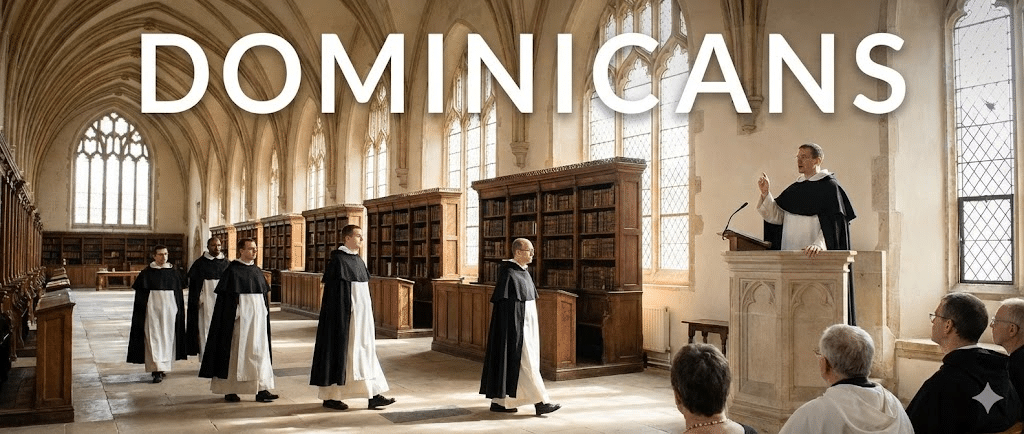
The Horizon of Uncreated Light
Reading: Isaiah 55:6–9
Dominican Theme: Veritas & the Contemplative Foundation
Through the prophet Isaiah, God confronts the persistent human temptation to reduce the divine mystery to our own intellectual dimensions. We construct manageable idols out of our limited logic, mistaking our small, finite categories for the infinite reality of God.
Saint Thomas Aquinas and the Dominican tradition remind us that the pursuit of Veritas—Truth itself—begins with profound humility before the divine transcendence. Truth is not an abstract theory we master or conquer; it is a Living Reality that exceeds and envelops our grasp.
When God declares that His thoughts are far beyond ours, He is not mocking our intellect. Rather, He is inviting us out of our intellectual shallows into the infinite horizon of His wisdom.
Dominic sent his friars to study and preach, but he knew that genuine truth can only be handed on to others when it has first been gazed upon in silence. Study and contemplation are acts of worship that purify our minds. They break our narrow, defensive assumptions so that we might see reality not through the lens of human resentment or pettiness, but through the luminous generosity of God’s providence.
The world around us is starved for genuine light, weary of slogans, and trapped in self-referential arguments. We are called, like Dominic, to listen deeply before we speak. When we bring our bewildered questions into the quiet of prayer, the vastness of God’s ways ceases to frighten us; it consoles us.
Let us seek the Lord while He may be found. May our contemplation of His boundless truth dispel the darkness in our minds and overflow into words that heal, enlighten, and draw every searching heart to salvation.

Featured Websites
SCROLL FOR MORE
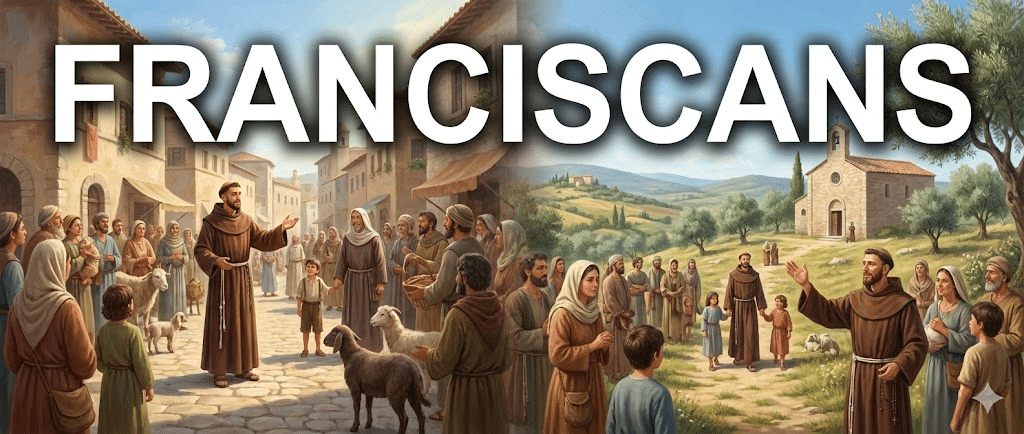
Empty Hands, Open Hearts
Reading: Matthew 20:1–16a
Franciscan Theme: Solidarity with the Marginalized
At five in the afternoon, the marketplace is nearly empty. The sun begins its slow descent, casting long shadows across the dust. Only a few men remain standing by the wall, weary and hollow-eyed. When the landowner asks why they have stood idle all day, their answer carries the quiet sting of human rejection: “Because no one has hired us.”
They were not lazy; they were simply passed over. In the ancient world, an unhired day laborer meant a family went to sleep without bread that night.
Saint Francis of Assisi understood this ache with his entire being. His conversion caught fire the moment he dismounted his horse and embraced a leper—the man society had discarded and deemed unfit to touch. Francis chose minoritas, deliberately stepping down from prestige to become a little brother alongside those at the very margins of the world. He knew that the measure of a society, and of a heart, is found in how we look upon the forgotten.
When the Master of the vineyard walks into the square at the eleventh hour, He acts not as a shrewd business manager, but as a tender father. He does not ask what profit these exhausted workers can yield in one short hour. He simply looks at their humanity, sees their need, and restores their dignity. And when the wage is paid, He gives them the full daily denarius—enough to sustain life, enough to feed their children, enough to declare that in God’s eyes, no human being is excess cargo.
Let us step out of our privileged circles and look into the town squares of our own lives. May we find Christ in the unhired, the lonely, and the overlooked, rejoicing whenever love outruns logic and mercy covers the poor.

Featured Websites
SCROLL FOR MORE
Care for the Whole Person
Reading: Philippians 1:20c–24, 27a
Jesuit Theme: Holy Freedom and Indifference (Tanto Quanto) & Ad Majorem Dei Gloriam (AMDG)
Sitting chained in a Roman prison, Saint Paul stares directly into his uncertain future and voices an extraordinary spiritual equilibrium: “For to me life is Christ, and death is gain… I am caught between the two. I long to depart this life and be with Christ… yet that I remain in the flesh is more necessary for you.”
Centuries later, Saint Ignatius of Loyola would enshrine this very interior posture into the foundation of the Spiritual Exercises. Ignatius called it holy “indifference”—not a cold, unfeeling apathy toward life, but a radiant inner freedom. In the Principle and Foundation, Ignatius reminds us that we ought not to fix our desires simply on health rather than sickness, wealth rather than poverty, honor rather than dishonor, or a long life rather than a short one. Instead, the soul desires solely whatever conducts us Ad Majorem Dei Gloriam—to the greater glory of God and the salvation of our neighbor.
Paul embodies this radical tanto quanto—using all things only insofar as they lead to Christ. His heart is neither clinging anxiously to earthly survival nor running away from earthly duty. He is utterly detached from personal self-interest, tethered only to the mission of love. If he lives, it means fruitful labor for Christ; if he dies, it means immediate union with the Lord. Because Christ is his center, neither prison walls nor impending death can rob him of his purpose.
We, too, are constantly pulled between competing desires, anxieties, and ambitions. Our hearts grasp tightly at outcomes we cannot control. Ignatian discernment invites us into Paul’s holy freedom: to hold our plans with open hands and ask, “Lord, what choice right now gives You the greater glory and best serves my neighbor?” When we are anchored in Christ, every breath—whether spent in labor or quiet surrender—becomes an offering of praise.

Featured Websites
SCROLL FOR MORE
Mercy That Outruns the Hourglass
Reading: Matthew 20:1–16a
Redemptorist Theme: Copiosa Apud Eum Redemptio (Plentiful Redemption) & Mission to the Abandoned
The shadow of the fifth hour falls long and cold over the village square. The marketplace is emptying, the stalls are packed away, and only a handful of discarded men stand against the wall. When the landowner asks why they linger in the dust, their answer is a quiet confession of abandonment: “Because no one has hired us.”
They had spent the day carrying the quiet humiliation of the unwanted, convinced that evening would bring only an empty cupboard and their family’s hungry tears.
When Saint Alphonsus Liguori walked among the neglected goatherds and laborers in the hills of Scala, he saw those very same faces—men and women convinced that holiness, dignity, and grace were treasures reserved for the privileged few. Against the cold, scolding spirit of Jansenism that measured out mercy with an eyedropper, Alphonsus raised the joyful cry of Psalm 130: Copiosa apud Eum redemptio—with the Lord there is plentiful redemption!
The landowner in the Gospel does not count the minutes of labor; he counts the desperate need of His children. When he places a full day’s denarius into the calloused, trembling palms of the latecomer, he shatters the illusion that God’s love must be earned through heroic performance. Plentiful redemption means that even if you stagger into the vineyard at the very end of your strength, after a lifetime of feeling bypassed, worthless, or broken, the Redeemer greets you not with a reprimand, but with the fullness of life.
No soul is too late, too wounded, or too far gone for the reach of Christ’s mercy. Let us abandon our anxious calculations and trust in a Savior whose love is overflowing, unconditional, and lavishly, wonderfully abundant.
Additional Homilies
25th Sunday of Year A


Fr. George Corrigan, OFM
Thoughts on what we pass over
About Blessings and Radical Grace
The Parable of Workers in the Vineyard
The Landowner
The Laborers
Caught in the Midst of Assumptions
The Complaints
A Final Thought
Msgr. Joseph Pellegrino (PDF) | Archive
Amazing Grace (2023)
Justice and Mercy (2020)
Graced Moments (2017)
It is Never Too Late (2014)
Are You, Am I, Good Enough? (2011)
The Amazing Grace of the Divine Employer (2008)
Fr. Michael Fallon, MSC | Archive
25th Sunday in Ordinary Time (PDF)
Bilingual Homily
25th Sunday of Year A
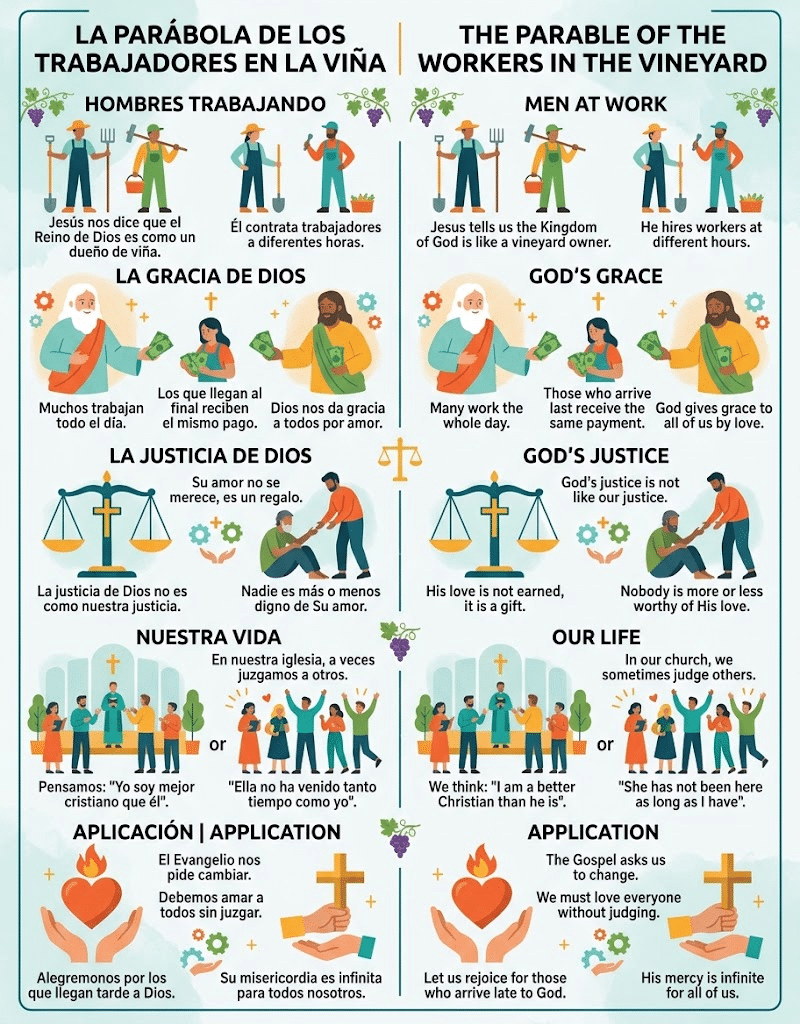
A brief homily for those who are learning Spanish or English. The grammar is kept uncomplicated and uses present-tense vocabulary to ensure it is easy to deliver. The homily focuses on the practical, everyday meaning of Sunday’s Gospel.
VOCABULARY
SCROLL FOR MORE