Commentary Intro to Mass Readings Sunday Readings
CommentaryIntro to Mass Readings Sunday Readings
September 20, 2026
⭐⭐⭐ Fr. George Corrigan, OFM—PDF


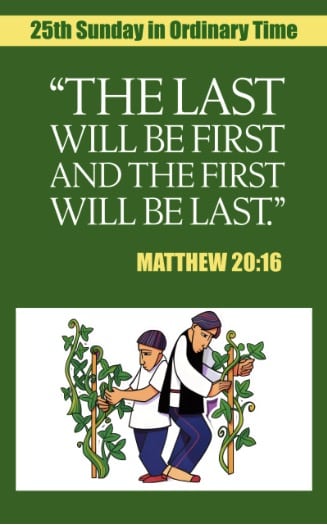
September 20, 2026
Our Sunday Readings *
Edrianne Ezell
Catholic Scripture Study *
Vince Contreras
Hearers of the Word *
Fr. O’Mahony OSA
Friar Musings, OFM *
Fr. George Corrigan, OFM
Echoing God’s Word *
Fr. Clement Thibodeau



“A Walk in The Word” series is based on the Sunday Mass readings and led by International Catholic evangelist and bible teacher, Hector Molina.

Ten minute video excerpts from the “The Mass Readings Explained” subscription series based resource from Catholic Productions.

Francis Martin (1930 – 2017) was an American Catholic priest of the Archdiocese of Washington, and a professor of Sacred Scripture. His teaching appointments included the Dominican House of Studies, the John Paul II Institute, the Catholic University of America, and Sacred Heart Major Seminary.

Kevin Aldrich
Kevin Aldrich’s “Doctrinal Homily Outlines” is a lectionary-based aid for homilists. A career Catholic K-12 educator in Catholic schools., he has written the teacher guides for nine of the Didache series high school religion texts. He has a Master’s Degree in Theology with an emphasis on Sacred Scripture from Holy Apostles College and Seminary.

Fr. Geoffrey Plant
25th Sunday of Year A

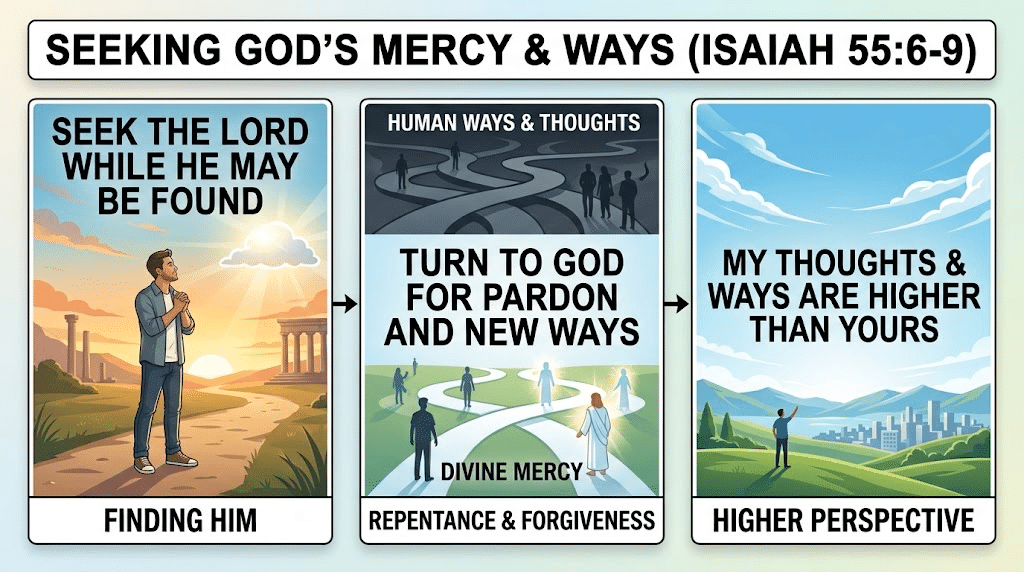
Isaiah 55:6-9
Create a verse by verse (NAB) commentary relating xxxxxxxxxxxxx TO CATHOLIC doctrine and practice. Give real life applications when appropriate
give me three thought provoking questions followed up with detailed answer reflection based on xxxxxxxxxxxx
Isaiah 55:6
"Seek the LORD while he may be found, call him while he is near."
Catholic Doctrine
This verse underscores the reality of actual grace and human free will (CCC 1996, 2002). God initiates the encounter, placing the desire for truth in the human heart, but grace requires a timely response. The urgency reflects the Catholic understanding of kairos—the opportune, decisive moment of salvation. While God's mercy is infinite, human life is finite; our opportunity to turn toward God belongs to the present moment.
Catholic Practice
- The Liturgical Seasons: Embodied especially during Lent and Advent, which are dedicated penitential seasons designed to reorient the soul toward God.
- Eucharistic Adoration: Drawing near to Christ’s real, substantial presence in the Blessed Sacrament, taking active time out of the week to "seek Him while He is near."
Real-Life Application
Resist the temptation of spiritual procrastination ("I’ll take my faith seriously once my career settles or after retirement"). If you feel a prompt in your conscience to pray, read Scripture, or return to Church, act on it today rather than waiting for a "more convenient" season.
Isaiah 55:7
"Let the wicked forsake their way, and sinners their thoughts; let them turn to the LORD to find mercy; to our God, who is generous in forgiving."
Catholic Doctrine
This verse articulates the full theology of metanoia (interior conversion) and the boundless nature of Divine Mercy (CCC 1427–1431). Catholic teaching identifies three essential elements of true penance:
- Contrition of heart (forsaking sinful thoughts)
- Firm purpose of amendment (forsaking sinful ways)
- Trust in God’s pardon (plene ad ignoscendum—abundant, unearned forgiveness)
Catholic Practice
- The Sacrament of Reconciliation: Confession requires both interior repentance (renouncing sins of thought) and exterior change (penance, restitution, avoiding the near occasion of sin).
- Daily Examination of Conscience: Ending the day by reviewing actions, words, and interior thoughts, followed by an Act of Contrition.
Real-Life Application
Conversion starts upstream in our thought life before it becomes an action. If you struggle with habits like gossip, envy, or viewing illicit content online, true repentance involves cutting off the internal mental loops and immediate triggers (such as deleting apps, changing social habits, or instituting internet filters) rather than merely regretting the behavior after the fact.
Isaiah 55:8
"For my thoughts are not your thoughts, nor are your ways my ways—oracle of the LORD."
Catholic Doctrine
This speaks to Divine Transcendence and the Mystery of Divine Providence (CCC 42, 302–305). Human reason is a gift capable of knowing God, yet human intellect remains finite, while God is infinite. God governs the world with an eternal perspective that frequently confounds worldly logic, most visibly demonstrated in the Paradox of the Cross (1 Cor 1:23–25)—where victory and salvation come through suffering and apparent defeat.
Catholic Practice
- The Liturgy of the Hours & Petitions: Praying the Lord’s Prayer daily with sincere intent on the phrase, "Thy will be done on earth as it is in heaven."
- The Virtue of Hope & Resignation to God's Will: Practicing surrender through prayers like the Surrender Novena or the Ignatian Suscipe ("Take, Lord, and receive all my liberty...").
Real-Life Application
When plans unravel—such as a sudden job loss, an unanswered prayer for a specific outcome, or an unexpected diagnosis—guard against despair or anger at God. Acknowledge that divine metrics of success (sanctity, humility, eternal life) often look entirely different from human metrics (comfort, status, immediate resolution).
Isaiah 55:9
"For as the heavens are higher than the earth, so are my ways higher than your ways, my thoughts higher than your thoughts."
Catholic Doctrine
This verse affirms the Beatific Vision and the virtue of Faith (fides) (CCC 157, 1023). Because God’s vision spans eternity, divine governance accounts for all causal connections across human history. Catholic theology teaches that while we "see through a glass darkly" in this life (1 Cor 13:12), trusting in God's higher perspective enables the Christian soul to persevere through suffering, knowing that God works all things toward the good for those who love Him (Rom 8:28).
Catholic Practice
- Lectio Divina & Contemplative Prayer: Sitting in silent contemplation, allowing God's Word to reshape our worldview rather than imposing our own assumptions onto Scripture.
- Marian Devotion: Looking to Mary’s Fiat ("Let it be done to me according to your word") as the model of trusting God’s overarching plan, even when the path leads to the foot of the Cross.
Real-Life Application
Shift your prayer life from presenting God with a strict roadmap to presenting Him with open hands. When discerning major decisions (such as marriage, career changes, or relocating), ask: "Lord, how does this align with Your kingdom and my eternal soul?" rather than solely evaluating short-term personal comfort.arity by interpreting others' ambiguous intentions in the best possible light (St. Ignatius of Loyola’s Spiritual Exercises, Presupposition).
Algorithmically generated text
give me three thought provoking questions followed up with detailed answer reflection based on xxxxxxxxxxxx. Keep questions and answers appropriate for Sunday congregation giving real life application.
Isaiah opens with a sharp call to action: "Seek the LORD while he may be found, call him while he is near" (v. 6). In a modern congregation, few people outright reject God; instead, the far more common pitfall is spiritual delay. We tell ourselves that we will commit to daily prayer once the kids are older, establish a habit of Confession once work slows down, or mend a broken relationship after retirement.
The Prophet reminds us that grace is offered in the living present. Waiting for the "ideal season" assumes two things we cannot guarantee: tomorrow’s time and tomorrow’s open heart. The longer we postpone turning toward God, the more our hearts become desensitized to His promptings.
- Real-Life Action: Identify the single spiritual commitment you have delayed the most—whether that is returning to the Sacrament of Reconciliation, scheduling 15 minutes of silent prayer each morning, or forgiving someone who hurt you. Put it on your actual calendar this week rather than leaving it as a vague good intention.
Algorithmically generated text
Isaiah 55:7 does not just say to change your actions; it explicitly demands: "Let the wicked forsake their way, and sinners their thoughts." Most of us learn how to present a polished exterior at church, at work, and with family. However, authentic Christian conversion (metanoia) happens upstream, in the secret spaces of the mind. Resentment, jealousy, quiet judgment of others, lust, and anxiety all take root in our thought patterns long before they produce visible fruit.
God’s promise to be "generous in forgiving" is not just a legal clearance of guilt; it is an invitation to interior renewal. When we bring our unfiltered, messy thoughts directly to God without rationalizing them, His grace begins to rewire how we perceive our neighbors, our setbacks, and ourselves.
- Real-Life Action: Practice a nightly "Thought Audit" during an Examination of Conscience. Instead of asking only "What did I do wrong today?", ask: "What recurring toxic or critical thought did I entertain today, and how can I replace it with Christ's truth tomorrow?"
ReVerses 8 and 9 deliver one of Scripture’s most humbling reminders: "For my thoughts are not your thoughts, nor are your ways my ways... For as the heavens are higher than the earth, so are my ways higher than your ways." We frequently treat prayer as a negotiation where we give God our preferred outcome and ask Him to sign off on it. When prayers seem unanswered—a career pivot stalls, a medical report brings hard news, or a child wanders from the faith—the temptation is to believe God is either indifferent or inactive.
Isaiah uses the distance between heaven and earth to remind us of perspective. A child cannot see why a parent sets boundaries, just as a traveler caught in a storm cannot see the clear sky above the clouds. Trusting that God’s ways are higher means accepting that His primary goal for our lives is holiness and eternal life, not uninterrupted earthly ease.
Real-Life Action: Bring one unresolved disappointment or unanswered prayer into prayer this week. Instead of praying "Lord, fix this the way I want," try praying with open hands: "Lord, I don't understand this path, but I trust Your vision for my life more than my own. Give me the grace to take the next faithful step."
Algorithmically generated text
Create a simple, modern infographic illustrating [INSERT BIBLE PASSAGE OR TOPIC]. Use a [SPLIT-SCREEN / 3-PANEL] layout. The style should be clean, high-quality digital art or vector illustration.
Visuals:
Panel 1: Show [DESCRIBE SCENE 1 – e.g., a stormy sea].
Panel 2: Show [DESCRIBE SCENE 2 – e.g., Jesus calming the waves].
Text & Typography:
Font: Use EXTRA LARGE, BOLD, SANS-SERIF FONT (like Arial). Ensure high contrast so text is easily readable.
Header: Write “[INSERT MAIN TITLE]” at the top.
Captions: Include short, punchy text summaries in the panels: “[TEXT FOR PANEL 1]” and “[TEXT FOR PANEL 2]”.
Overall Vibe: Professional, educational, and uncluttered. Avoid small details; focus on big images and big text.

Write an engaging description meant to get readers to read Larry Broding’s commentary which can be used to help preachers prepare their own homily. After a brief introduction give bulletin points of why this commentary matters for your homily.
My Ways Are Not Your Ways

Crafting a homily that speaks directly to modern hearts requires wrestling with the same tensions that shaped Scripture. Larry Broding unpacks the pivotal theological shift from a protective, tribal faith to a radical, universal monotheism—offering a powerful roadmap for preaching grace over exclusivity.
- Bridges Ancient Crisis to Modern Culture: Highlights how the Babylonian exile transformed God from a localized deity into the universal Lord of all nations.
- Challenges the “Enclave Mentality”: Directly confronts the natural temptation of faith communities to hunker down into self-righteous, exclusive circles rather than opening their doors to those seeking renewal.
- Reframes Divine Justice vs. Human Merit: Demonstrates that a life of active faith does not grant us an exclusive claim on God’s intentions, urging listeners to trust God’s justice even when life feels unfair.
- Provides a Pastoral Call to Radical Welcome: Equips preachers with clear theological reasoning from Second Isaiah to proclaim that God’s boundless compassion welcomes repentant sinners, overriding the urge to judge or gatekeep grace.

Commentary by Dr. Brant Pitre | Catholic Productions

Commentary by Fr. Francis Martin | The Word Proclaimed
clean up grammar and spelling, divide into sections with titles for the following transcript xxxxxxxxxxxx
Verbal fillers, stumbles, and repetitions have been removed while keeping the original phrasing, theological precision, and cadence intact.
Liturgical Context and Reading Structure
For the 25th Sunday in Ordinary Time, we look at the First Reading and the Psalm. The theme for this week, as always, is anchored in the Gospel. The lectio continua, which is foundational to the Liturgy, centers on the Gospel. A text from the Old Testament is then selected to shed light on it. The second reading, most often from Paul, follows its own semi-continuous rhythm; it always fits because it is the Word of God, though it is not always as easy to blend immediately with the others.
The First Reading is taken from Isaiah 55:6–9:
"Seek the Lord while he may be found, call upon him while he is near."
The Call to Conversion and the Boundless Mercy of God
"Let the scoundrel forsake his way, and the wicked man his thoughts; let him turn to the Lord for mercy, to our God, who is generous in forgiving."
To "return to the Lord" expresses the core biblical concept of conversion. Conversion means to turn around. The Hebrew root for repentance is shuv (שוב), meaning to return or turn back, and the noun for repentance is teshuvah (תשובה).
When the prophet says, "Let him return to the Lord," this dynamic movement is launched. The wicked person abandons their former way, the deceitful person surrenders their schemes, and they turn back to Adonai to receive mercy. The Lord is generous, large-hearted, and abundant in forgiveness. We hear this truth so often that we risk forgetting its depth. God’s mercy is the very foundation of our confidence. When we look at our sins, the only reality greater than our wrongdoing is God’s mercy. That is the source of our hope.
God’s Ways vs. Human Ways: Preparing for the Gospel
This passage from Isaiah directly prepares us for the Gospel:
"For my thoughts are not your thoughts, nor are your ways my ways, says the Lord."
The Gospel recounts the parable of the workers hired at different hours of the day to labor in the vineyard, all receiving the same wage at the end. In Isaiah, the Lord declares that His perspective is entirely different from ours. We are invited to learn how God thinks and acts so that, as Paul reminds us, we may imitate Him as dear children.
Why are God’s thoughts so different from human thoughts? Left to ourselves, we tend to be small-minded, score-keeping, and vindictive. We often project those same traits onto God, fearing Him because we assume He operates with the same pettiness. Instead of being transformed by mercy and extending that mercy to others, we retreat in fear.
"As high as the heavens (shamayim) are above the earth, so high are my ways above your ways and my thoughts above your thoughts."
The Lord reassures us: when He forgives, it is complete. That divine generosity should inspire our confidence to return to Him and be formed in His ways.
The Literary Structure and Unity of the Book of Isaiah
To understand this text more deeply, it helps to review the structure of Isaiah:
- First Isaiah: Chapters 1–39 (pre-exilic period)
- Second Isaiah (Deutero-Isaiah): Chapters 40–55 (exilic period, where our reading is located)
- Third Isaiah (Trito-Isaiah): Chapters 56–66 (post-exilic period)
Although these sections reflect distinct historical periods, the inspired redactors and editors carefully woven them into a unified prophetic message.
In Isaiah 65, near the conclusion of the entire book, we read:
"Before they call, I will answer; while they are yet speaking, I will hear. The wolf and the lamb shall graze alike, and the lion shall eat hay like the ox."
This imagery deliberately echoes the Messianic vision of Isaiah 11:
"A shoot shall sprout from the stump of Jesse... and none shall hurt or destroy on all my holy mountain."
The post-exilic editors deliberately recalled the ancient Davidic promises of Isaiah 11 as they brought the entire collection to a close.
The Davidic Covenant, the Exilic Crisis, and the Messianic Promise
The Babylonian exile ended the reign of the historical Davidic monarchy in the Southern Kingdom of Judah. With no king seated on the throne in Jerusalem, Israel wrestled with the question: What happened to God's eternal promise to David? (as lamented in Psalm 89).
The prophetic answer was clear: God’s word remains trustworthy. In Isaiah 55:3, the prophet proclaims:
"Come to me heedfully, listen, that you may have life. I will renew with you the everlasting covenant, the benefits assured to David."
As the biblical scholar Brevard Childs noted in his commentary on Isaiah, the role of the Davidic covenant in chapter 55 shows an intentional link being formed between the imagery of the Servant of the Lord and the Messianic Davidic rule. The eternal covenant blessings once promised to David’s royal line are now extended to the entire faithful community. Yet, the prophetic text maintains that a definitive Davidic King—the Messiah—will personally embody and lead this community.
Fulfillment in Jesus Christ: The King and Suffering Servant
Through centuries of sacred composition, reflection, and canonical editing, these prophetic strands converge:
- The royal prophecy of the shoot of Jesse (Isaiah 7 and 11).
- The unconditional covenant established with David (2 Samuel 7:14; Psalm 89).
- The vocation of the faithful Messianic community (Isaiah 55).
- The redemptive mission of the Suffering Servant (Isaiah 52–53).
All of these themes find their ultimate fulfillment in one person: Jesus Christ. He is the true Son of David, the anointed King, and the Suffering Servant who reconciles humanity to the Father. When people in the Gospels cry out, "Son of David, have pity on me," they are invoking this grand tapestry of biblical promise and divine mercy.
Click chevron banner to read transcript
organized into thematic sections.
25th Sunday of Year A

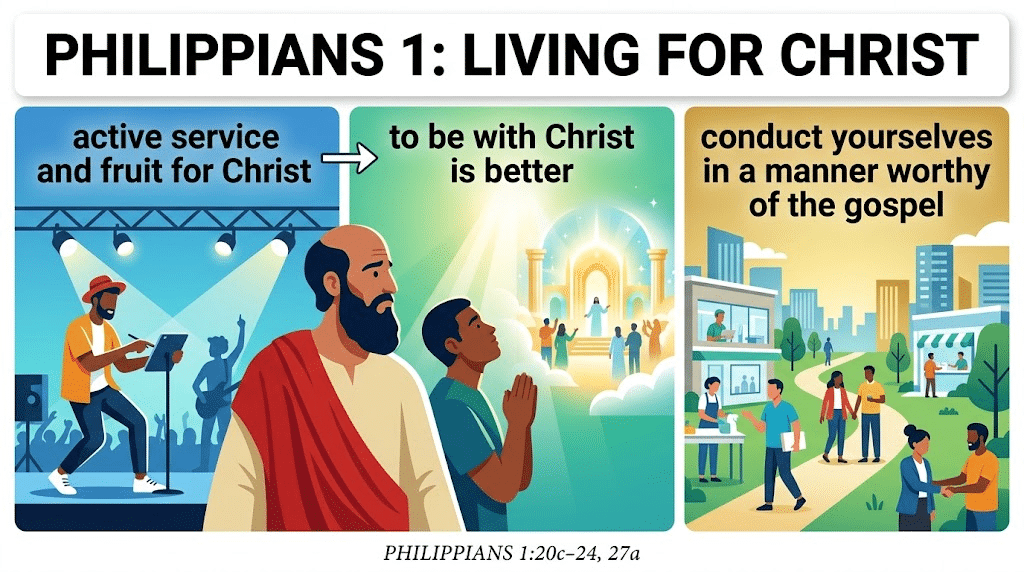
Phil 1:20c-24, 27a
Create a verse by verse (NAB) commentary relating xxxxxxxxxxxxx TO CATHOLIC doctrine and practice. Give real life applications when appropriate
give me three thought provoking questions followed up with detailed answer reflection based on xxxxxxxxxxxx
Philippians 1:20c
"Christ will be magnified in my body, whether by life or by death."
Catholic Doctrine
- Theology of the Body & Sanctification: The human body is not a disposable shell or prison of the soul, but an integral part of the human person created by God and redeemed by Christ (CCC 364, 1004).
- Redemptive Suffering: Catholic teaching affirms that a Christian's physical trials, illness, and mortality can be united with the Passion of Christ to manifest God's glory and bear supernatural fruit (CCC 618, 1505).
Catholic Practice
- The Sign of the Cross & Bodily Postures: Engaging the physical body in prayer through genuflections, kneeling, fasting, and making the Sign of the Cross, recognizing that physical gestures embody interior worship.
- Anointing of the Sick: Receiving the sacrament during serious illness or decline, formally consecrating one’s physical vulnerability and bodily suffering to Christ.
Real-Life Application
Treat your daily physical health, habits, and limitations as avenues for holiness. When facing aging, chronic aches, fatigue, or illness, offer up those physical hardships in the morning offering rather than giving in to resentment, asking that your patience in suffering reflect Christ to those caring for you.
Philippians 1:21
"For to me life is Christ, and death is gain."
Catholic Doctrine
- Christian Eschatology & The Four Last Things: Death is not the end of personal existence but the gateway to eternal communion with God (CCC 1010–1014). For the soul in a state of grace, physical death transforms into an entry into the Beatific Vision.
- Christocentric Existence: Sanctifying grace establishes a vital, living union between the soul and Christ, making Him the source, center, and goal of earthly life (CCC 1997).
Catholic Practice
- Praying for a Holy Death (Bona Mors): Regularly invoking the intercession of St. Joseph (Patron of a Happy Death) and reciting the Hail Mary with intentional focus on the phrase, "now and at the hour of our death."
- The Liturgy of the Dead: Celebrating the Mass of Christian Burial, which proclaims the victory of the Resurrection over the grave.
Real-Life Application
Evaluate what currently defines your life's core identity. If your primary sense of purpose rests on career status, financial wealth, or social approval, death is experienced as total loss. Grounding your identity in Christ frees you from the paralyzing fear of loss, allowing you to hold worldly achievements with an open hand.
Philippians 1:22–23
"If I go on living in the flesh, that means fruitful labor for me. And I do not know which I shall choose. I am caught between the two. I long to depart this life and be with Christ, for that is far better."
Catholic Doctrine
- Particular Judgment & The Intermediate State: The Church teaches that immediately upon death, the soul undergoes the Particular Judgment and enters Heaven, Purgatory, or Hell (CCC 1021–1022). Paul's desire to "depart and be with Christ" confirms that the faithful departed are consciously oriented toward the Lord prior to the final bodily resurrection.
- The Sanctity of Life vs. Euthanasia: While longing for heavenly union is holy, human life is a sacred trust from God. One may neither actively terminate life nor despair of its earthly value, because God assigns purpose to every stage of our earthly existence (CCC 2258, 2277).
Catholic Practice
- Devotion to the Saints & Holy Souls: Honoring the Communion of Saints who have already departed and now enjoy proximity to Christ, while also offering prayers, indulgences, and Masses for the souls in Purgatory.
- Vocational Discernment: Regularly discerning how God wants to produce "fruitful labor" through one's specific state in life (marriage, holy orders, consecrated life, or single life).
Real-Life Application
When experiencing spiritual exhaustion, grief, or the heavy burdens of life, it is natural to desire heavenly rest. Channel that longing not into escapism, passivity, or despair, but into purposeful stewardship of today: as long as God gives you breath, He has people for you to serve, love, and support.
Philippians 1:24
"Yet that I remain in the flesh is more necessary for your benefit."
Catholic Doctrine
- The Communion of Saints & Solidarity: Members of the Mystical Body of Christ do not live as isolated individuals; the spiritual health, sacrifices, and labors of one member directly build up the entire Church (CCC 946–953, 1939).
- Self-Emptying Charity (Agape): True Christian love mirrors the self-giving sacrifice of Christ, prioritizing the salvation and pastoral care of others above one's personal preferences or ease.
Catholic Practice
- Spiritual and Corporal Works of Mercy: Sacrificing personal leisure time to feed the hungry, visit the lonely, instruct the ignorant, and comfort the afflicted.
- Parish Ministry & Family Life: Serving within the parish community (catechesis, liturgy, outreach) and fulfilling duties to spouse, children, and elderly relatives as an offering to God.
Real-Life Application
Look at your current responsibilities—caring for an aging parent, mentoring a younger colleague, raising children, or volunteering—through the lens of mission. When these duties feel demanding, reframe them from mundane chores into a deliberate act of staying present for the spiritual and temporal benefit of others.
Philippians 1:27a
"Only, conduct yourselves in a way worthy of the gospel of Christ..."
Catholic Doctrine
- The Universal Call to Holiness & Moral Integrity: Faith must be animated by charity and expressed through authentic Christian conduct (CCC 1815, 2013). The Greek term used by Paul (politeuesthe) implies living as citizens of heaven while residing on earth, bearing public witness to the Gospel.
- Catholic Social Teaching: The moral life demands active engagement in society with justice, honesty, defense of human dignity, and solidarity with the vulnerable (CCC 2419–2425).
Catholic Practice
- Frequent Examination of Conscience: Reviewing daily speech, business transactions, digital habits, and interpersonal relationships against the Gospel standard of charity and truth.
- Apostolic Witness in the Secular World: Living out the Catholic faith openly in the workplace, neighborhood, and public square without compartmentalizing faith from daily civic life.
Real-Life Application
Examine how your behavior outside church walls aligns with your profession of faith. A lifestyle "worthy of the Gospel" means maintaining rigorous honesty at work, refusing to participate in office gossip or slander, showing charity and restraint on social media, and treating every person—regardless of disagreement—with Christian dignity.
Algorithmically generated text
give me three thought provoking questions followed up with detailed answer reflection based on xxxxxxxxxxxx. Keep questions and answers appropriate for Sunday congregation giving real life application.
St. Paul writes from imprisonment with the bold conviction that "Christ will be magnified in my body, whether by life or by death" (v. 20c). In our culture, the body is often treated either as an instrument for productivity and self-image, or as an inconvenience when it weakens. When energy declines, chronic pain flares up, or routine fatigue sets in, the natural human reaction is frustration, resentment, or withdrawal.
Paul reminds us that Christian discipleship is embodied. Magnifying Christ does not require peak physical vitality, flawless health, or an unburdened schedule. Often, the Gospel is proclaimed most powerfully not when life is effortless, but in how we bear weakness: with patience instead of bitterness, kindness toward caregivers and family members, and trust rather than despair.
- Real-Life Action: Identify a physical frustration you are currently facing—whether it is chronic pain, the limitations of aging, exhausting work hours, or sleepless nights caring for family. Begin your morning by offering that specific physical hardship to God: "Lord, let my patience, speech, and attitude today reflect Your grace even while I feel weak."
Algorithmically generated text
Paul candidly shares his interior tension: "I am caught between the two. I long to depart this life and be with Christ, for that is far better. Yet that I remain in the flesh is more necessary for your benefit" (vv. 23–24). While Paul's holy longing was for eternal union with God, many of us experience a more mundane desire to simply escape our daily burdens—zoning out into screens, quiet-quitting relationships, or waiting passively for a difficult season to pass.
Paul resolves his tension not with self-pity or checked-out apathy, but with mission: if he is still here, it means "fruitful labor." God does not leave anyone on earth by accident. Regardless of age, employment status, or health, as long as you have breath, God has people who benefit from your presence, prayers, wisdom, and service.
Real-Life Action: Shift your focus from “When will this exhausting season be over?” to “Who needs my presence right now?” Reach out to one person this week—a struggling grandchild, a lonely neighbor, a parishioner dealing with grief, or a coworker under pressure—and offer an encouraging word, a shared meal, or intentional prayer.
Algorithmically generated text
Paul’s summarizing mandate is straightforward: "Only, conduct yourselves in a way worthy of the gospel of Christ" (v. 27a). In the original language, this phrasing carried civic weight—it meant living as good citizens of a heavenly kingdom while walking the streets of an earthly city. It is easy to compartmentalize our faith into a Sunday morning routine while adopting the secular world's standards for business ethics, digital discourse, and workplace competition during the week.
Living worthy of the Gospel is not about projecting moral superiority or pretending to be perfect; it is about integrity and genuine charity. It is revealed in how we speak about people when they leave the room, how we handle financial transactions, how we respond when cut off in traffic or treated unfairly, and how quick we are to apologize when we fall short.
Real-Life Action: Pick one area where your private or public conduct is most vulnerable to compromise—such as workplace venting, online arguments, road rage, or short-tempered reactions at home. Choose one concrete discipline this week (such as pausing for five seconds before speaking or refusing to participate in gossip) to ensure your everyday witness honors Christ.
Algorithmically generated text
Create a simple, modern infographic illustrating [INSERT BIBLE PASSAGE OR TOPIC]. Use a [SPLIT-SCREEN / 3-PANEL] layout. The style should be clean, high-quality digital art or vector illustration.
Visuals:
Panel 1: Show [DESCRIBE SCENE 1 – e.g., a stormy sea].
Panel 2: Show [DESCRIBE SCENE 2 – e.g., Jesus calming the waves].
Text & Typography:
Font: Use EXTRA LARGE, BOLD, SANS-SERIF FONT (like Arial). Ensure high contrast so text is easily readable.
Header: Write “[INSERT MAIN TITLE]” at the top.
Captions: Include short, punchy text summaries in the panels: “[TEXT FOR PANEL 1]” and “[TEXT FOR PANEL 2]”.
Overall Vibe: Professional, educational, and uncluttered. Avoid small details; focus on big images and big text.
Write an engaging description meant to get readers to read Larry Broding’s commentary which can be used to help preachers prepare their own homily. After a brief introduction give bulletin points of why this commentary matters for your homily.
The Choice Between
Now and Eternity
Preaching on Paul’s prison letters often means confronting the raw, vulnerable humanity behind the theology. Larry Broding examines Paul’s intimate tension between the weary desire to be with Christ and the faithful call to remain in service.
- Humanizes the Apostle Paul: Unpacks Paul’s emotional vulnerability from a prison cell, allowing you to present him not as an untouchable hero of faith, but as a person wrestling with exhaustion and longing.
- Reframes Christian Purpose in Hardship: Provides a clear pastoral distinction between escapism and surrender, reminding your listeners that when life feels confining or out of control, our purpose remains anchored in serving others.
- Addresses the Spiritual Weight of Burnout: Speaks directly to parishioners who feel “imprisoned” by difficult circumstances, offering spiritual validation while gently redirecting their gaze outward toward God’s design.
- Delivers a Memorable Core Proclamation: When the world teaches people to give up or toughen up in isolation, authentic Christian discipleship chooses to stay and serve.
Commentary by Dr. Brant Pitre | Catholic Productions

Commentary by Fr. Francis Martin | The Word Proclaimed
clean up grammar and spelling, divide into sections with titles for the following transcript xxxxxxxxxxxx
Verbal fillers, stumbles, and repetitions have been removed while keeping the original phrasing, theological precision, and cadence intact.
Historical and Contextual Background to Philippians
We turn now to the Second Reading, taken from Saint Paul’s Letter to the Philippians. Having concluded our semi-continuous reading through Romans, we begin a more selective journey through Philippians, focusing today on Philippians 1:20–24, 27.
The Christian community at Philippi holds a distinct place in salvation history: they were the very first community on the European continent to be evangelized. In the Acts of the Apostles (Acts 16), Paul and his companions attempted to travel into Asia Minor, but the Holy Spirit prevented them. While waiting, Paul received a vision of a Macedonian man pleading, "Come over to Macedonia and help us." The Gospel entered Europe, taking root in Philippi. Throughout his life, Paul maintained a deep, reciprocal love for this community.
At the time of writing, Paul is imprisoned. Because he is a Roman citizen, any impending execution would not be by crucifixion, but by decapitation. Yet, despite facing a potential death sentence, Paul’s sole concern remains the proclamation of the Gospel.
Imprisonment and the Advance of the Gospel
Paul explains that his confinement has unexpectedly advanced the Gospel rather than hindering it:
"My imprisonment has become well known in Christ throughout the whole praetorium... so that the majority of the brothers, having taken encouragement in the Lord from my imprisonment, dare more than ever to proclaim the word fearlessly."
Even when others preach Christ out of rivalry or selfish ambition rather than love, Paul refuses to be discouraged. For Paul, motives are secondary: as long as Christ is proclaimed in truth, he rejoices. His only personal concern is that he will not be put to shame, but that Christ will be magnified in his body—his entire physical existence—whether through life or through death.
"To Live Is Christ, to Die Is Gain"
Paul captures his spiritual posture with a striking Greek wordplay:
"For to me, to live is Christ (Christos), and to die is gain (kerdos)."
After a lifetime of grueling missionary work—surviving three shipwrecks, multiple beatings, stoning at Lystra, and constant peril—Paul is physically exhausted. He knows that death means the immediate fulfillment of his deepest longing: to be "with Christ" (syn Christō).
Yet, Paul does not face death out of fear or mere escapism. He understands his life in total surrender to the Lord:
- If he lives on in the flesh, it means fruitful labor—bringing more souls to know Christ.
- If he dies, he attains the eternal goal for which he was created and called on the road to Damascus.
The Apostle’s Dilemma: Depart or Remain
Paul finds himself caught between two compelling realities:
"I am torn between the two: I long to depart and be with Christ, for that is far better by far (pollō mallon); yet that I remain in the flesh is more necessary for your benefit."
The Greek term Paul uses for "depart" (analyein) carries the imagery of pulling up tent stakes or untying a ship's moorings to set sail. As he reflects elsewhere (2 Corinthians 5), he is ready to fold up this earthly tent.
Human nature often clings to physical comfort, security, and longevity. Paul exhibits profound spiritual maturity: he leaves the outcome entirely in God’s hands. While being with Christ is far better personally, remaining to serve the spiritual progress and joy of the Philippians is more necessary pastorally.
Living Worthy of the Gospel
Paul expresses confidence that he will remain in active service for their growth in faith:
"Only conduct yourselves in a way worthy of the gospel of Christ, so that whether I come and see you or am absent, I may hear that you are standing firm in one spirit, with one mind struggling together for the faith of the gospel, not intimidated in any way by your opponents."
Paul’s final exhortation directs the Philippians’ attention away from his personal fate and toward their communal witness. Whether he is released to visit them again or called home to the Lord, his mission is fulfilled if they remain steadfast, united in the Spirit, and fearless in proclaiming Christ.
Click chevron banner to read transcript
organized into thematic sections.
25th Sunday of Year A

Matthew 20:1-16a
Create a verse by verse (NAB) commentary relating xxxxxxxxxxxxx TO CATHOLIC doctrine and practice. Give real life applications when appropriate
Matthew 20:1–2
"The kingdom of heaven is like a landowner who went out at dawn to hire laborers for his vineyard. After agreeing with them for the usual daily wage, he sent them into his vineyard."
Catholic Doctrine
- The Universal Call to the Vineyard: The vineyard represents the Kingdom of God and the Church. God is the divine Landowner who actively initiates the call to salvation and apostolic mission (CCC 541–543, 863).
- Justice and the Covenant: The "usual daily wage" (a denarius) reflects the dignity of human work and strict justice. In salvation history, this initial agreement echoes God’s foundational covenant with the early workers of His vineyard (the house of Israel).
Catholic Practice
- Lay Apostolate: Through Baptism and Confirmation, every Catholic is commissioned to work in the Lord’s vineyard, bringing the Gospel into family life, workplaces, and civil society (Decree on the Apostolate of the Laity, Apostolicam Actuositatem).
- Fair Wage Teaching: Grounded in Catholic Social Teaching on economic justice, upholding the moral necessity of a living wage that supports human dignity and family life (CCC 2434).
Real-Life Application
Fulfill your daily secular duties with integrity and craftsmanship. Whether you are clocking in at an office, managing household chores, or completing a trade job, treat your daily labor as an offering to God, providing honest effort for fair compensation.
Matthew 20:3–7
"Going out about nine o’clock, he saw others standing idle in the marketplace, and he said to them, 'You too go into my vineyard, and I will give you what is just.' So they went off. And he went out again around noon, and around three o’clock, and did likewise. Going out about five o’clock, he found others standing around, and said to them, 'Why do you stand here idle all day?' They answered, 'Because no one has hired us.' He said to them, 'You too go into my vineyard.'"
Catholic Doctrine
- Actual Grace Throughout the Lifespan: God repeatedly visits human souls at every stage of life—youth (dawn), adulthood (midday), and old age (the eleventh hour). Grace is never restricted to a single moment (CCC 1996, 2002).
- The "Eleventh-Hour" Conversion: Catholic theology affirms that as long as a person draws breath, the door to saving repentance and baptism or reconciliation remains open (exemplified by St. Dismas, the Good Thief).
Catholic Practice
- Sacrament of the Anointing of the Sick & Viaticum: Administering the "Last Rites" to the dying, trusting that God’s saving mercy can transform a soul in its final earthly hours.
- Adult Initiation (OCIA / RCIA): Welcoming adult converts into the Church at any age or stage of life, recognizing that God calls individuals along varied timelines.
Real-Life Application
Never write anyone off as "too far gone" or "too old" to return to faith. Continue praying for wandering children, estranged relatives, or elderly friends who have spent decades away from the Sacraments, knowing God visits them with invitations at the eleventh hour.
Matthew 20:8–10
"When it was evening the owner of the vineyard said to his foreman, 'Summon the laborers and give them their pay, beginning with the last and ending with the first.' When those who had started about five o’clock came, each received the usual daily wage. So when the first came, they thought that they would receive more, but each of them also got the usual wage."
Catholic Doctrine
- Grace as an Unmerited Gift: The denarius represents eternal life (the Beatific Vision). Salvation cannot be multiplied or divided into fractions; to see God face-to-face is an infinite gift of pure grace, not a mathematical transaction based strictly on human stamina (CCC 1996, 2008–2009).
- Particular & Final Judgment: The "evening" signifies the end of earthly life and the final reckoning when Christ, the divine Judge, rewards each according to divine mercy and justice (CCC 1021–1022).
Catholic Practice
- Praying for the Dying: Offering the Chaplet of Divine Mercy or the Rosary for souls in agony, imploring that they receive the fullness of Christ's saving merit regardless of past failures.
- The Mass as the Pure Sacrifice of Christ: Recognizing at every Eucharist that our eternal reward is won by Christ’s sacrifice on Calvary, not by our self-generated spiritual merit.
Real-Life Application
Guard against spiritual entitlement. If you were raised in the faith and have practiced devotions for decades, remember that heaven is still a gift of unmerited mercy, not a prize earned to hold over others.
Matthew 20:11–12
"And on receiving it they grumbled against the landowner, saying, 'These last ones worked only one hour, and you have made them equal to us, who bore the day’s burden and the heat.'"
Catholic Doctrine
- The Sin of Envy & Spiritual Pride: Envy (invidia) is a capital sin defined as sorrow or resentment at another’s spiritual or material good (CCC 2538–2540). The grumbling workers mirror the elder brother in the Parable of the Prodigal Son (Luke 15:28–30).
- The Temptation of Pelagianism: The belief that salvation is primarily earned by human exertion rather than bestowed by divine favor (CCC 1999, 2011).
Catholic Practice
- Examination of Conscience: Routinely confessing hidden resentment, spiritual jealousy, and judgmental attitudes toward newer or less-practicing parish members.
- Fostering Fraternal Charity: Rejoicing in the spiritual gifts, conversions, and blessings of others rather than comparing resumes of church involvement.
Real-Life Application
When someone who has lived a reckless or indifferent life experiences a profound conversion and is warmly welcomed into the parish, celebrate their return rather than quietly thinking, "Where were they when the parish needed volunteers or financial support all these years?"
Matthew 20:13–15
"He said to one of them in reply, 'My friend, I am not cheating you. Did you not agree with me for the usual daily wage? Take what is yours and go. What if I wish to give this last one the same as you? Or am I not free to do as I wish with my own money? Are you envious because I am generous?'"
Catholic Doctrine
- Divine Sovereignty & Infinite Mercy: God's justice is never less than fair, but His mercy freely transcends human concepts of strict distribution (CCC 271, 302). God treats no one with injustice, but reserves the divine right to be superabundantly generous.
- The "Evil Eye" (Oculus Malus): The literal Greek asks, "Is your eye evil because I am good?" Scripture warns against allowing comparison to corrupt our perception of God’s goodness.
Catholic Practice
- Acts of Thanksgiving (Eucharistia): Cultivating a disposition of perpetual gratitude for God’s gifts, focusing entirely on what the Lord has done for one's own soul rather than measuring someone else’s blessings.
- Spiritual Direction: Unpacking roots of comparison, perfectionism, and resentment with a confessor or spiritual director to foster humility.
Real-Life Application
When peers, siblings, or coworkers receive unearned advantages, sudden promotions, or visible blessings that you feel you worked harder to deserve, resist bitterness. Remind yourself: God’s generosity to another person does not diminish His personal care and justice toward you.
Matthew 20:16a
"Thus, the last will be first, and the first will be last."
Catholic Doctrine
- The Great Reversal of the Kingdom: In the Kingdom of God, status is determined by humility, charity, and openness to divine grace, not worldly status, tenure, or human pride (CCC 544, 2546).
- The Beatitudes in Action: The truly "first" in heaven are the poor in spirit and the humble who recognize their total dependence upon the mercy of God.
Catholic Practice
- The Litany of Humility: Praying regularly to be delivered from the desire to be esteemed, preferred, or praised above others.
- Hidden Service: Engaging in unheralded acts of charity—cleaning the church hall, cooking meals for the sick, visiting the homebound—without seeking recognition or public thanks.
Real-Life Application
Seek opportunities to take the lower seat in your family, community, or parish life. Let others take the credit, allow someone else to speak first in meetings, and measure your spiritual growth not by your visible achievements, but by your quiet willingness to serve those who can offer you nothing in return.
Algorithmically generated text
give me three thought provoking questions followed up with detailed answer reflection based on xxxxxxxxxxxx. Keep questions and answers appropriate for Sunday congregation giving real life application.
In Matthew 20:11–12, the all-day workers complained: "These last ones worked only one hour, and you have made them equal to us, who bore the day’s burden and the heat." Their discontent did not stem from being underpaid—they received exactly the fair wage they agreed upon. Their frustration was sparked entirely by comparison.
This reaction reflects everyday human nature. We often measure our worth and satisfaction not by what we have received, but by how our share compares to our neighbor's. In parish life, family dynamics, and the workplace, it is easy for long-serving, hardworking individuals to resent the newcomer who receives equal praise, the coworker who lands a promotion with less tenure, or the estranged family member who is warmly welcomed back with open arms. The Gospel warns that an "evil eye" of comparison blinds us to the real gifts in front of us.
Real-Life Action: Identify one person whose success, sudden blessing, or recognition has quietly caused you envy or irritation. Pray specifically for their continued well-being this week, and consciously thank God for three distinct blessings in your own life that you did nothing to earn.
Algorithmically generated text
The laborers who started at dawn viewed their relationship with the landowner as a strict, transactional ledger. Because they had put in twelve hours under the scorching sun, they felt entitled to more than those who came late.
It is remarkably easy for faithful Christians—especially those who have attended Mass weekly for decades, contributed financially, or volunteered on parish committees—to slide into a subtle mindset of spiritual entitlement. We may begin to believe that God "owes" us an easy life, good health, well-behaved children, or smooth retirement because we have been faithful.
However, the denarius in this parable represents eternal life and communion with God—gifts of infinite value that no amount of human sweat or stamina could ever purchase. When we realize that even our ability to work in the vineyard is an unearned privilege, entitlement dissolves into genuine gratitude.
Real-Life Action: The next time you face an unexpected hardship or unanswered prayer, guard against the thought, "Why is this happening to me after all I've done for God?" Instead, shift your prayer to humility: "Lord, everything good in my life is a gift of Your mercy. Help me trust Your justice and love even when circumstances are hard."
Algorithmically generated text
The landowner went out at the eleventh hour—5:00 PM, with only one hour left of daylight—and called those standing idle into the field. When payday arrived, he gave them a full day's wage so their families would not go hungry.
Like the father welcoming home the Prodigal Son or Christ forgiving the Good Thief on the cross, God does not ration His saving grace based on how early someone showed up. Yet human communities often struggle with this radical mercy. We can easily maintain a mental "probationary period" for returning Catholics, former addicts, or people who lived recklessly before their conversion, subtly treating them like second-class citizens in the parish.
The Kingdom of God operates on grace, not seniority. God’s heart constantly seeks the person standing idle on the margins, and our calling as the Church is to offer them a shovel, invite them into the row next to us, and celebrate that they made it home.
Real-Life Action: Think of someone in your family or circle of acquaintances who has been away from faith or living an unsettled life. Reach out with a no-strings-attached invitation—a cup of coffee, a check-in phone call, or a warm greeting at church—ensuring they know the door is always open and that they will be met with welcome, not judgment.
Algorithmically generated text
Create a simple, modern infographic illustrating [INSERT BIBLE PASSAGE OR TOPIC]. Use a [SPLIT-SCREEN / 3-PANEL] layout. The style should be clean, high-quality digital art or vector illustration.
Visuals:
Panel 1: Show [DESCRIBE SCENE 1 – e.g., a stormy sea].
Panel 2: Show [DESCRIBE SCENE 2 – e.g., Jesus calming the waves].
Text & Typography:
Font: Use EXTRA LARGE, BOLD, SANS-SERIF FONT (like Arial). Ensure high contrast so text is easily readable.
Header: Write “[INSERT MAIN TITLE]” at the top.
Captions: Include short, punchy text summaries in the panels: “[TEXT FOR PANEL 1]” and “[TEXT FOR PANEL 2]”.
Overall Vibe: Professional, educational, and uncluttered. Avoid small details; focus on big images and big text.
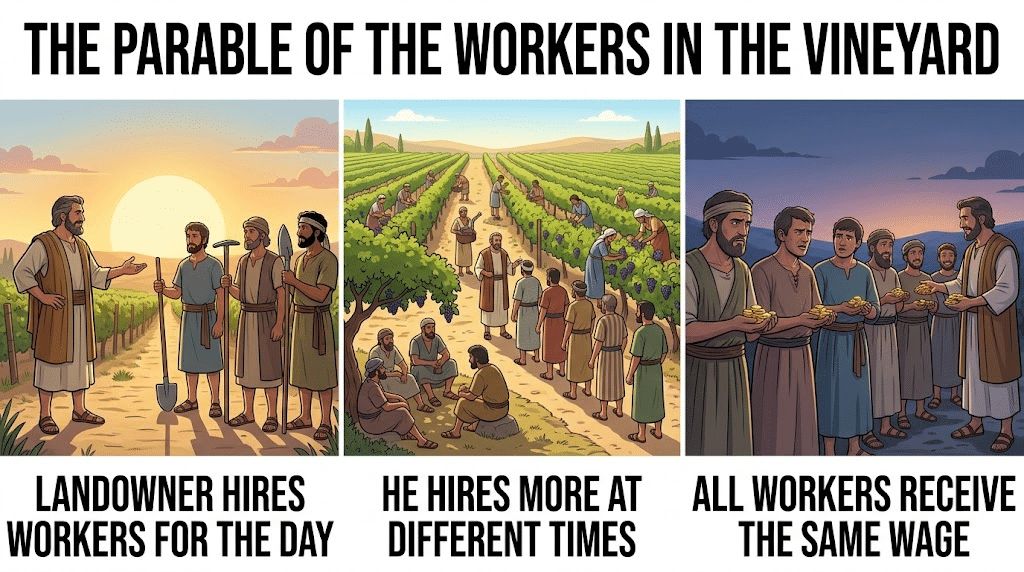
Write an engaging description meant to get readers to read Larry Broding’s commentary which can be used to help preachers prepare their own homily. After a brief introduction give bulletin points of why this commentary matters for your homily.
Justice in the Kingdom
The Parable of the Laborers in the Vineyard strikes a nerve because it confronts our deeply ingrained human desire for fair compensation and hierarchical honor. Larry Broding unpacks the cultural and economic realities of first-century day labor to reveal the shocking, upside-down economy of the Kingdom of God—offering preachers a clear framework to address entitlement, grace, and spiritual envy in the pews.
- Clarifies Historical and Cultural Nuances: Explains the time-counting system (from the dawn start to the eleventh hour at 5:00 P.M.) and unpacks the Greek idiom behind the “evil eye” (v. 15) as a bitter look of contempt and negative judgment.
- Levels Human Status and Credentials: Demonstrates that God bypasses worldly prerequisites and religious tenure, calling the transient, unskilled, and latecomers into the same full dignity as the lifelong faithful.
- Delivers a Challenging Message to Committed Leaders: Provides a pastoral warning to veteran believers and church leaders who may feel slighted or unappreciated, reminding them that God’s boundless generosity leaves no room for spiritual comparison or resentment.

Commentary by Fr. Francis Martin | The Word Proclaimed
clean up grammar and spelling, divide into sections with titles for the following transcript xxxxxxxxxxxx
Verbal fillers, stumbles, and repetitions have been removed while keeping the original phrasing, theological precision, and cadence intact.
Context: The Discourse on Community Life (Matthew 18–20)
For the 25th Sunday in Ordinary Time, we turn to the Gospel of Matthew (Matthew 20:1–16). It presents a wonderful challenge. We often think of our Lord as simply kind and gentle, but then He tells a parable like this one, revealing values fundamentally different from our own.
Chapter 20 forms the climax of a major discourse on community life that began in Matthew 18:
- True Greatness: When the disciples ask, "Who is the greatest in the kingdom of heaven?" Jesus calls a little child into their midst. As Catherine Doherty, foundress of Madonna House, used to pray: "Lord, give me the heart of a child and the awesome courage to live it." True greatness lies in remaining open, trusting, and unhardened by cynicism.
- Scandal and the Millstone: Jesus warns against leading others into sin, stating with stark hyperbolic realism that it would be better to have a heavy millstone hung around one’s neck and be drowned in the sea than to cause a little one to stumble.
- The Lost Sheep: The community must never abandon the vulnerable; the Shepherd leaves the ninety-nine to seek the one who has strayed.
- Radical Forgiveness: In response to Peter’s question about forgiving seven times, Jesus calls for seventy-seven times (or seventy times seven). He illustrates this with the parable of the unmerciful servant whose massive, unpayable debt was forgiven by the king, yet who refused to forgive a fellow servant's small debt.
- Blessing Children and the Rich Young Man: Children are welcomed and blessed with loving affection, while the rich young man is invited to surrender earthly wealth to follow Christ in radical detachment—a call answered by the Apostles.
Leveled by Mercy: The Parable of the Vineyard Laborers
Having addressed every rank and state in the community, Matthew 20 demonstrates how everyone is leveled by divine mercy. Whether prominent or obscure, gifted or ordinary, lifelong believer or latecomer—all stand equal before the generosity of God.
"The kingdom of heaven is like a landowner who went out at dawn to hire laborers for his vineyard."
This reflects a scene familiar across cultures: day laborers gathering at daybreak, waiting to be hired for subsistence wages.
- The landowner agrees with the first group for the standard daily wage (a denarius) and sends them into the vineyard.
- He returns to the marketplace at the third hour (9:00 A.M.), the sixth hour (noon), the ninth hour (3:00 P.M.), and finally the eleventh hour (5:00 P.M., near the close of the workday).
- Finding men still standing idle because no one had hired them, he sends them into the vineyard with the promise to give whatever is just.
The Scandal of Divine Generosity
At the end of the day, the owner instructs his foreman:
"Summon the laborers and give them their pay, beginning with the last and ending with the first."
Those hired at the eleventh hour receive a full denarius. When the first group arrives, they assume they will receive more, but they too receive the agreed-upon denarius. They grumble against the landowner:
"These last ones worked only one hour, and you made them equal to us, who bore the day's burden and the heat."
The landowner replies:
"My friend, I am not cheating you. Did you not agree with me for the usual daily wage? Take what is yours and go. What if I wish to give this last one the same as you? Or am I not free to do what I wish with my own money? Are you envious because I am generous?"
The literal Semitic idiom behind verse 15 asks: "Is your eye evil because I am good?" In biblical thought (echoed in Psalm 73), an "evil eye" denotes jealousy, malice, and resentment toward another’s blessing. They look with bitterness upon the owner’s generosity simply because he showed mercy to those who arrived last.
The Reward of the Kingdom: Christ Himself
Jesus concludes:
"Thus, the last will be first, and the first will be last."
This parable forces every disciple to confront their ultimate motive:
- What is the true daily wage of the Kingdom? It is not earthly prestige, merit badges, or negotiated compensation—it is life with the Holy Trinity through Jesus Christ forever.
- Why do we serve? If a lifelong disciple resents a deathbed convert receiving eternal life, it reveals a transactional mindset. The Lord asks us: Have you been laboring for yourself, or out of love for Me?
In the Church—whether married, single, clergy, or consecrated—the primary prerequisite for remaining in communion is the willingness to forgive and celebrate divine mercy. We do not work for contractual wages; we serve out of love for Christ.urden. Living out that act of the will brings deeper freedom to both the one who forgives and the one who is forgiven.
Click chevron banner to read transcript
organized into thematic sections.
Doctrinal Homily Outlines

Central idea: Fruitful workers
Doctrine: Right Conduct
Application: Stop sinning and start loving
Sunday Prep Videos
25th Sunday of Year A