Commentary Intro to Mass Readings Sunday Readings
CommentaryIntro to Mass Readings Sunday Readings
September 27, 2026
⭐⭐⭐ Fr. George Corrigan, OFM—PDF

⬅️  ➡️
➡️
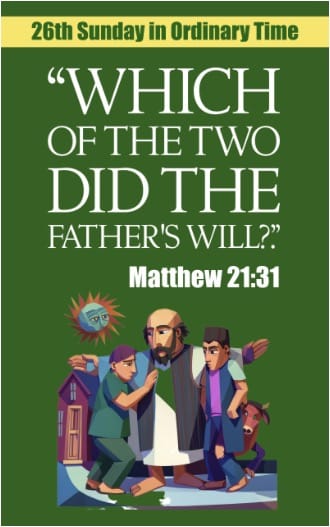
September 27, 2026
Our Sunday Readings
Edrianne Ezell
Catholic Scripture Study
Vince Contreras
Hearers of the Word
Fr. O’Mahony OSA
Friar Musings, OFM
Fr. George Corrigan, OFM
Echoing God’s Word
Fr. Clement Thibodeau


“A Walk in The Word” series is based on the Sunday Mass readings and led by International Catholic evangelist and bible teacher, Hector Molina.

Ten minute video excerpts from the “The Mass Readings Explained” subscription series based resource from Catholic Productions.

Francis Martin (1930 – 2017) was an American Catholic priest of the Archdiocese of Washington, and a professor of Sacred Scripture. His teaching appointments included the Dominican House of Studies, the John Paul II Institute, the Catholic University of America, and Sacred Heart Major Seminary.
Kevin Aldrich
Kevin Aldrich’s “Doctrinal Homily Outlines” is a lectionary-based aid for homilists. A career Catholic K-12 educator in Catholic schools., he has written the teacher guides for nine of the Didache series high school religion texts. He has a Master’s Degree in Theology with an emphasis on Sacred Scripture from Holy Apostles College and Seminary.

Fr. Geoffrey Plant
26th Sunday of Year A

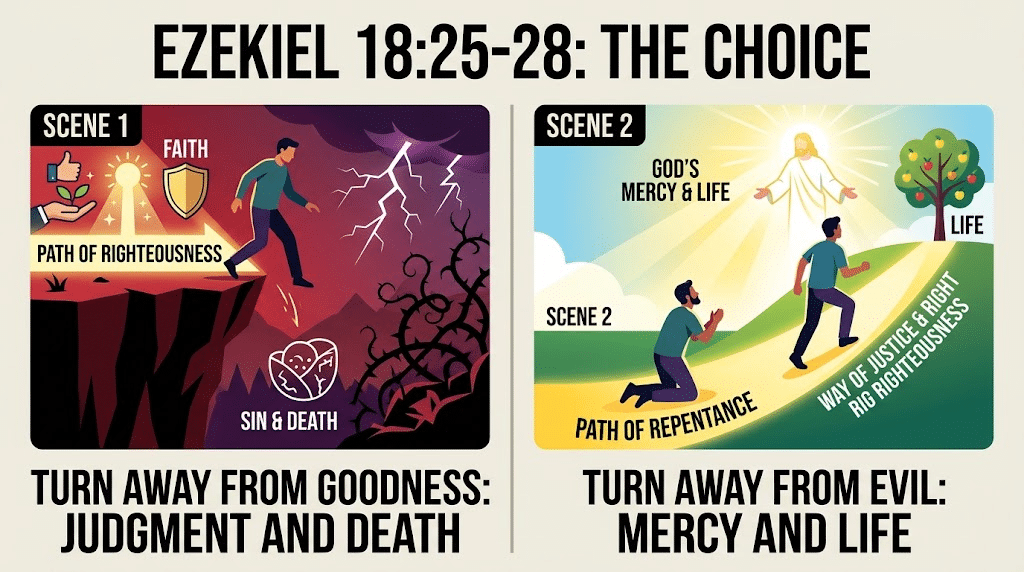
Ezekiel 18:25-28
Create a verse by verse (NAB) commentary relating xxxxxxxxxxxxx TO CATHOLIC doctrine and practice. Give real life applications when appropriate
give me three thought provoking questions followed up with detailed answer reflection based on xxxxxxxxxxxx
Ezekiel 18:25
"You say, 'The Lord’s way is not fair!' Hear now, house of Israel: Is it my way that is unfair? Are not your ways unfair?"
- Catholic Doctrine & Theology: This verse tackles human presumption and moral projection. In Catholic moral theology, God is Justice and Goodness itself (Summa Theologiae I, q. 21). When humanity accuses God of unfairness, it stems from fallen human reason judging divine justice by self-serving metrics. Israel was clinging to the fatalistic idea that they were being punished solely for the sins of their ancestors (the proverb of the sour grapes in Ezek 18:2). God reframes the debate: divine justice is grounded in objective moral reality and personal responsibility, whereas human "fairness" often rationalizes laxity or excuses personal guilt.
- Catholic Practice: This serves as an examination of conscience regarding how we view Church teachings that challenge cultural norms (e.g., sexual ethics, social justice, sanctity of life).
- Real-Life Application: When facing personal tragedy, prolonged illness, or the natural consequences of our poor choices, the immediate human reaction is often, "Why is God doing this to me? It's not fair." The practical response is shifting from blaming Providence to honest interior inventory—distinguishing between the fallen world’s brokenness, our own agency, and God’s invitation to trust His providence even when our immediate circumstances feel unjust.
Ezekiel 18:26
"When the virtuous turn away from virtue to commit iniquity, and die, it is because of the iniquity they committed that they must die."
- Catholic Doctrine & Theology: This directly anchors the Catholic doctrine of Mortal Sin and rejects the doctrine of unconditional eternal security ("once saved, always saved"). The Council of Trent (Session VI, Decree on Justification, Canon 23 & Chapter 15) defined that the grace of justification can be lost through mortal sin. A lifetime of accumulated good deeds does not grant an automatic immunity pass; free will remains operative until death. To choose grave sin with full knowledge and deliberate consent is to deliberately sever oneself from sanctifying grace.
- Catholic Practice: It highlights the necessity of the theological virtue of perseverance (final perseverance) and the ongoing need for vigilance through prayer, fasting, and regular reception of the Eucharist.
- Real-Life Application: A person who has been active in ministry, served the parish for decades, and lived a devout life cannot coast into moral entitlement. If later in life that individual falls into financial fraud, an affair, or unrepentant malice, prior fidelity does not neutralize the present destruction. Spiritual complacency is a real hazard: past sanctity is not a blank check for present rebellion.
Ezekiel 18:27
"But if the wicked turn away from the wickedness they have committed and do what is right and just, they will preserve their life."
- Catholic Doctrine & Theology: This expresses the boundless availability of Divine Mercy and the efficacy of Penance. Just as a virtuous person can freely choose death, the sinner can freely respond to actual grace and turn toward life. The Catechism of the Catholic Church (CCC 1864) teaches that there are no limits to the mercy of God, provided the sinner is willing to repent and accept conversion (metanoia). God desires "all people to be saved and to come to the knowledge of the truth" (1 Tim 2:4).
- Catholic Practice: This is the sacramental reality of the Sacrament of Reconciliation (Confession). Absolution restores sanctifying grace, forgiving mortal sin and rescuing the soul from spiritual death.
- Real-Life Application: Consider the criminal or the person estranged from the Church for thirty years due to severe moral compromise, addiction, or violence. The world frequently writes people off as permanently tainted. Ezekiel affirms that redemption is accessible at any second. A genuine conversion, accompanied by restitution where possible, wipes the slate clean before God.
Ezekiel 18:28
"Since he has turned away from all the sins that he committed, he shall surely live; he shall not die."
- Catholic Doctrine & Theology: Verse 28 details the anatomy of authentic repentance. The Hebrew sense of turning away denotes concrete action, not mere sentimentality or intellectual assent. In Catholic theology, authentic contrition requires both sorrow for sin committed and a firm purpose of amendment—a resolved will to avoid near occasions of sin and cultivate virtues (doing what is right and just). God’s judgment focuses on the current state of the soul at the moment of death (particular judgment, CCC 1021–1022).
- Catholic Practice: This underpins the Church's pastoral care of the sick and dying, specifically the Viaticum, the Apostolic Pardon, and deathbed confessions (typified by the Good Thief on Calvary in Luke 23:39–43).
- Real-Life Application: Breaking a pattern of vice requires more than feeling guilty the morning after. If an individual struggles with alcoholism or viewing pornography, turning away means installing accountability software, getting professional help, or walking away from friendships that foster the vice. When that decisive turn is made and maintained by grace, the past no longer defines the person's eternal standing. best possible light (St. Ignatius of Loyola’s Spiritual Exercises, Presupposition).
Algorithmically generated text
give me three thought provoking questions followed up with detailed answer reflection based on xxxxxxxxxxxx. Keep questions and answers appropriate for Sunday congregation giving real life application.
The Scripture Connection: Ezekiel 18:26 warns that when a righteous person turns away from righteousness and commits iniquity, they die for it—none of their previous good deeds are counted to excuse present sin.
Detailed Reflection: It is tempting to believe that decades of faithful church service, tithing, or past sacrifices grant us leeway to harbor resentment, compromise our integrity, or quietly step back from walking in holiness. Spiritual maturity is not a static retirement fund; it is an active, daily relationship. A runner who leads a marathon for twenty miles but stops to sit on the curb a mile before the finish line does not complete the race. God does not measure discipleship by who we were ten years ago, but by who we are yielding to this morning.
Algorithmically generated text
The Scripture Connection: In verse 25, the house of Israel protests, “The way of the Lord is not just.” God counters directly: “Is it my way that is not just? Is it not your ways that are not just?”
Detailed Reflection: When life grows difficult or God’s commands challenge cultural norms and personal desires, human nature defaults to accusing God of being unfair. We want forgiveness without repentance, and grace without personal accountability. When someone else receives unexpected mercy, we grumble like the older brother of the prodigal son; yet when our own sin is exposed, we appeal for infinite leniency. True justice begins when we stop measuring God’s wisdom against our limited self-interest and submit our instincts to His holy standard.
Algorithmically generated text
The Scripture Connection: Verses 27–28 offer profound hope: when a wicked person turns away from their wrongdoing and does what is just and right, “because he considered and turned away from all the transgressions that he had committed, he shall surely live; he shall not die.”
Detailed Reflection: Guilt often whispers that past failures define our destiny, leading to spiritual paralysis. The text outlines a deliberate, practical two-step response: considering and turning. Considering means taking an honest, sober look at destructive patterns—whether an unspoken addiction, an unforgiving spirit, or dishonesty at work. Turning means taking concrete action to abandon them. The cross proves that no one is too far gone for redemption; the only fatal mistake is choosing to remain where we are when the invitation to turn and live stands open right now.
Algorithmically generated text
Create a simple, modern infographic illustrating [INSERT BIBLE PASSAGE OR TOPIC]. Use a [SPLIT-SCREEN / 3-PANEL] layout. The style should be clean, high-quality digital art or vector illustration.
Visuals:
Panel 1: Show [DESCRIBE SCENE 1 – e.g., a stormy sea].
Panel 2: Show [DESCRIBE SCENE 2 – e.g., Jesus calming the waves].
Text & Typography:
Font: Use EXTRA LARGE, BOLD, SANS-SERIF FONT (like Arial). Ensure high contrast so text is easily readable.
Header: Write “[INSERT MAIN TITLE]” at the top.
Captions: Include short, punchy text summaries in the panels: “[TEXT FOR PANEL 1]” and “[TEXT FOR PANEL 2]”.
Overall Vibe: Professional, educational, and uncluttered. Avoid small details; focus on big images and big text.

Write an engaging description meant to get readers to read Larry Broding’s commentary which can be used to help preachers prepare their own homily. After a brief introduction give bulletin points of why this commentary matters for your homily.
The Judgment of the Righteous

Preaching to the choir is notoriously hard because the people in the pews already consider themselves the “good guys.” Larry Broding’s commentary cuts straight through the comfortable illusion of moral self-assurance, providing preachers with the theological edge needed to convict and renew upright congregations without alienating them.
- Unmasks the subtle sin of the “good”: Helps you expose how high moral standards quietly morph into spiritual pride, subtly dethroning God and setting up the believer as the ultimate judge.
- Challenges moral delusion: Equips you to address the universal tendency to dismiss our own failings as “minor quirks” while harshly judging the overt sins of others.
- Dismantles presumption of divine favor: Preaches against the dangerous assumption that spiritual privilege or past faithfulness guarantees immunity from God’s righteous standards.
- Draws urgent prophetic parallels: Connects Ezekiel’s stinging warning to sixth-century B.C. Jerusalem with modern spiritual complacency, illustrating the communal and societal fallout when leaders and their people buy into their own righteousness.
- Shifts the focus back to God’s holiness: Reminds us that God’s justice operates far beyond human calculations.

Commentary by Dr. Brant Pitre | Catholic Productions

Commentary by Fr. Francis Martin | The Word Proclaimed
clean up grammar and spelling, divide into sections with titles for the following transcript xxxxxxxxxxxx
Verbal fillers, stumbles, and repetitions have been removed while keeping the original phrasing, theological precision, and cadence intact.
Liture Principle of Repentance: God Meets Us Where We Are
In this second part, we examine the First Reading and the Responsorial Psalm, focusing on the overarching theme of this Sunday: repentance, or contrition. The foundational principle is that wherever you are right now is where God sees you. If someone has lived as a grave sinner for fifty years and is now truly sorry, God meets them in that repentance. Reparation may still be required—restitution must be made if one has caused injury or stolen money—but in terms of justification, God sees the soul where it stands today. That is the encouraging reality of repentance: when we are truly contrite, our sins are forgiven, and God beholds us as reconciled.
The Word of the Prophet: Ezekiel 18
This principle is laid down directly in the First Reading from the Prophet Ezekiel (Ezekiel 18:25–28):
“Thus says the Lord: You say, ‘The Lord’s way is not fair!’ Hear now, house of Israel: Is it my way that is unfair, or rather, are not your ways unfair? When someone virtuous turns away from virtue to commit iniquity, and dies, it is because of the iniquity he committed that he must die. But if he turns from the wickedness he has committed, and does what is right and just, he shall preserve his life.”
In the original Hebrew, to "preserve his life" literally means he shall cause his soul to live (nephesh chayah). It is not merely that a debt is wiped off the ledger; his very soul is made alive. The passage continues: “Because he turned away from all the sins he committed, he shall surely live; he shall not die.”
God's judgment is based on the reality of where our heart rests. If a sinner repents, he is restored to the divine favor. In Latin, the word for favor is gratia—grace. If one has lived uprightly but turns aside into serious sin and refuses to repent, he remains spiritually dead, severed from that grace. We see this exact dynamic echoed in the Gospel parable of the two sons: the first says, “I am going,” but fails to go; the second refuses at first, but repents and works in the vineyard. It is the one who repents and acts who fulfills the Father's will.
The Desert Tradition: Penthos and the Piercing of the Heart
The early Desert Fathers and Mothers understood this simplicity. There is an account of a former courtesan who went into the desert to live an ascetic life of penance. When the desert elders began referring to her honorifically as an Amma—a spiritual mother—she resisted, insisting, “Call me Mary the Sinner.” She preferred the truth of her unworthiness before God to human titles of honor, resting simply in His mercy.
The desert elders were masters of this interior movement of sorrow, which Eastern Christian tradition calls penthos (compunction). In the Western Latin tradition, the term is compunctio, derived from the concept of piercing or lancing a wound to release the venom within.
This piercing of the heart is not accomplished through harsh self-hatred, but through being overwhelmed by the mercy of God. Mercy does not mean God minimizes sin by saying, “You are fine as you are.” Rather, it means that experiencing His boundless mercy produces tears that are simultaneously sorrowful and joyful: sorrow because we have offended so good a God, and joy because we are completely forgiven.
This explains why great saints wept continually over seemingly minor faults. We readily understand the tears of someone like St. Camillus de Lellis, who was converted from a violent life of gambling and soldiering. But even St. Thérèse of Lisieux, or St. Teresa of Ávila reflecting on her early monastic compromises, wept bitterly decades later. Through the illumination of grace, they beheld their sins through the eyes of Christ. Looking through His eyes, one sees the true gravity of sin alongside the depth of His compassion. In that light, there is no need to make excuses; one can simply acknowledge, “I have sinned,” and let His mercy heal the wound.
A Cry for Guidance and Mercy: Psalm 25
This same spirit of repentance and reliance on God animates the Responsorial Psalm, Psalm 25:
“Your ways, O Lord, make known to me; teach me your paths. Guide me in your truth and teach me, for you are God my savior.”
The psalmist asks to be instructed in God’s "ways" (derek) and "paths" (orach). In modern Hebrew, a tour guide leading travelers through the land is called a madrich—one who shows the way. The psalmist is praying: “Lord, show me how You think and act; teach me Your ways so that my mind and heart conform to Yours.” Truth (emet) here signifies God’s unshakeable reliability, steadfastness, and fidelity.
The prayer then appeals to God’s covenantal nature:
“Remember that your compassion, O Lord, and your mercy (chesed) are from of old. The sins of my youth and my frailties do not remember; in your kindness remember me, because of your goodness, O Lord.”
The psalmist pleads on the basis of God’s rachamim (tender mercies) and chesed (covenantal, steadfast love), praying that the Lord will look past youthful transgressions and remember the soul according to His own boundless goodness.
The passage concludes with the assurance of divine guidance:
“Good and upright is the Lord; thus he shows sinners the way. He guides the humble to justice, and teaches the humble his way.”
The Hebrew root used for sin (chata) means to miss the mark or stray from the path. Even when we wander off, the Lord in His uprightness does not abandon us; He seeks us out, restores us to the road, and teaches us how to walk in His presence once again.
Click chevron banner to read transcript
organized into thematic sections.
26th Sunday of Year A

Philippians 2:1-11
Create a verse by verse (NAB) commentary relating xxxxxxxxxxxxx TO CATHOLIC doctrine and practice. Give real life applications when appropriate
give me three thought provoking questions followed up with detailed answer reflection based on xxxxxxxxxxxx
Philippians 2:1–11 contains the famous Carmen Christi (Christ Hymn), one of the earliest liturgical and theological formulas of the Church, directly undergirding the dogmatic definitions of the Councils of Nicaea and Chalcedon.
Verses 1–4: Communal Charity and Humility
Verse 1
“If there is any encouragement in Christ, any solace in love, any participation in the Spirit, any compassion and mercy…”
- Catholic Doctrine & Practice: St. Paul appeals to the foundational reality of grace received in the Sacraments of Initiation—Baptism and Confirmation. "Participation in the Spirit" (koinonia) refers to the communion established by the Holy Spirit among the faithful, making the Church the Mystical Body of Christ (CCC 790, 948).
- Real-Life Application: Before escalating a parish dispute, workplace grievance, or family tension, recall your common baptismal dignity. When an interpersonal fracture occurs, ask whether your posture reflects the communion given at the altar or personal ego.
Verse 2
“…complete my joy by being of the same mind, with the same love, united in heart, thinking one thing.”
- Catholic Doctrine & Practice: This is an appeal for visible, doctrinal, and moral unity. The Church professes in the Creed that she is "One." The Magisterium and communion with the successor of Peter exist precisely to safeguard this "same mind" across cultures and centuries (CCC 813–815).
- Real-Life Application: Intellectual pride often prompts people to curate their own private cafeteria Catholicism. Living this verse means giving the obsequium religiosum (religious submission of intellect and will) to authentic Church teaching, even when countercultural or personally challenging.
Verse 3
“Do nothing out of selfishness or out of vainglory; rather, humbly regard others as more important than yourselves…”
- Catholic Doctrine & Practice: This targets the capital sins of pride and vainglory, countering them with humility—the foundation of prayer and moral life (CCC 2559). Catholic spiritual tradition (e.g., St. Benedict’s Twelve Steps of Humility or the Litany of Humility) identifies this attitude as essential for sanctification.
- Real-Life Application: Practice deferred gratification in everyday conversations. Let someone else have the final word in a debate, resist the urge to turn dinner conversation back toward your own achievements, and quietly do unseen chores around the home or office.
Verse 4
“…each looking out not for his own interests, but [also] everyone for those of others.”
- Catholic Doctrine & Practice: Catholic Social Teaching defines this as the principle of Solidarity and pursuit of the Common Good (CCC 1906, 1939). True charity is not merely affective (feeling well-disposed), but effective (concrete action for the neighbor’s spiritual and temporal good).
- Real-Life Application: Evaluate spending habits and calendar commitments. Solidarity means deliberately scheduling time or tithing funds for vulnerable persons—volunteering at a local St. Vincent de Paul pantry, or checking in on an isolated elderly neighbor.
Verses 5–8: The Incarnation and the Self-Emptying (Kenosis)
Verse 5
“Have among yourselves the same attitude that is also yours in Christ Jesus…”
- Catholic Doctrine & Practice: Christian moral life is rooted in the imitation of Christ (Imitatio Christi), made possible by sanctifying grace. We do not imitate Christ merely through external mimicry, but by putting on His mind through sacramental life and the interior gifts of the Holy Spirit (CCC 1694).
- Real-Life Application: When faced with perceived insults or loss of status, make a habit of briefly praying: "Lord Jesus, give me Your heart and Your mind in this moment," rather than reacting in immediate self-defense.
Verse 6
“…Who, though he was in the form of God, did not regard equality with God something to be grasped.”
- Catholic Doctrine & Practice: The term morphe theou ("form of God") denotes Christ’s eternal, divine essence. Defined at Nicaea I (325 AD), the Son is consubstantial (homoousios) with the Father (CCC 242, 464). Unlike Adam, who attempted to grasp equality with God through disobedience (Gen 3:5), Christ, the true God, does not exploit His divine prerogatives.
- Real-Life Application: Reject the temptation of entitlement. When you hold positional authority (as a manager, parent, or community leader), refuse to leverage rank for personal comfort or prestige; instead, view authority strictly as a mandate for service.
Verse 7
“Rather, he emptied himself, taking the form of a slave, coming in human likeness; and found human in appearance…”
- Catholic Doctrine & Practice: The dogma of the Incarnation and the concept of Kenosis (self-emptying). In becoming man, Christ did not lose His divinity; rather, He assumed a true human nature into the unity of His divine Person (the Hypostatic Union, Council of Chalcedon, 451 AD; CCC 467). He voluntarily embraced the conditions of human limitation and servitude.
- Real-Life Application: The Eucharist is the daily continuation of this kenosis—Christ hides His glory beneath the humble species of bread and wine. Participating in Eucharistic Adoration reminds us to empty ourselves of distractions and vanity so Christ can dwell in us.
Verse 8
“…he humbled himself, becoming obedient to death, even death on a cross.”
- Catholic Doctrine & Practice: Christ’s Redemptive Obedience reverses the disobedience of Adam (Rom 5:19; CCC 612–614). The Roman crucifix was the most shameful, degrading form of capital punishment, reserved for slaves and rebels. In Catholic theology, the Cross is the definitive sacrifice of atonement, re-presented sacramentally in the Holy Sacrifice of the Mass.
- Real-Life Application: Embrace your daily crosses and the virtue of obedience—whether to the Church's moral precepts, legitimate workplace duty, or marital vows—especially when obedience demands personal suffering, loss of esteem, or genuine self-sacrifice.
Verses 9–11: The Exaltation and Universal Lordship
Verse 9
“Because of this, God greatly exalted him and bestowed on him the name that is above every name…”
- Catholic Doctrine & Practice: Christ’s Resurrection and Ascension into heaven. His human nature is exalted to the right hand of the Father (CCC 659–664). The "Name above every name" refers to YHWH (the Divine Name), applied definitively to the incarnate Son. This forms the theological bedrock for the Catholic devotion to the Most Holy Name of Jesus (promoted by saints like Bernard of Clairvaux and Bernardino of Siena).
- Real-Life Application: Guard speech carefully. Use the name of Jesus with conscious reverence, never as an expletive, filler, or casual exclamation. Re-introduce the traditional Catholic habit of a slight, interior bow of the head whenever speaking or hearing the Holy Name.
Verse 10
“…that at the name of Jesus every knee should bend, of those in heaven and on earth and under the earth…”
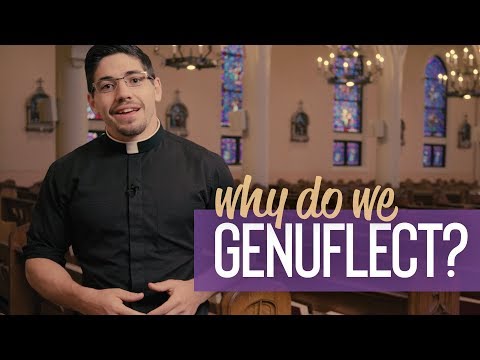
- Catholic Doctrine & Practice: Universal adoration (latria) due to Christ alone, spanning the Church Triumphant (in heaven), the Church Militant (on earth), and the Church Penitent or souls in Sheol/Purgatory ("under the earth") (CCC 954). This verse provides the explicit biblical basis for the physical posture of genuflection before the Blessed Sacrament (GIRM 274).
- Real-Life Application: When entering a Catholic church, do not treat genuflection as a careless routine. Touch your right knee deliberately to the floor facing the Tabernacle, consciously acknowledging Jesus Christ as the absolute Sovereign over your time, possessions, and life.
Verse 11
“…and every tongue confess that Jesus Christ is Lord, to the glory of God the Father.”
- Catholic Doctrine & Practice: Proclaiming Jesus as Kyrios ("Lord") echoes Isaiah 45:23 and fulfills the Old Testament prophecies of universal divine rule. This is the primary baptismal confession of faith (CCC 446–451). Furthermore, all Christ-centered honor and adoration does not detract from the Father, but brings Him glory, highlighting the Trinitarian harmony of Catholic worship.
- Real-Life Application: Evangelization in the secular sphere. Living this verse means having the moral courage to publicly confess Christ—by defending Christian truth in academic or corporate settings, making the sign of the cross when saying grace in public restaurants, and ordering all career ambitions to God's ultimate glory.erson—regardless of disagreement—with Christian dignity.
Algorithmically generated text
give me three thought provoking questions followed up with detailed answer reflection based on xxxxxxxxxxxx. Keep questions and answers appropriate for Sunday congregation giving real life application.
Reflection: St. Paul reveals that Christ, "though he was in the form of God, did not regard equality with God something to be grasped" (Phil 2:6). He possessed every divine right and privilege, yet chose not to exploit them for personal comfort or protection. Human instinct runs in the exact opposite direction: when wronged, slighted, or challenged, we instinctively grasp for control, assert our credentials, or fight to preserve our ego.
Real-Life Application: Consider the last conflict at the family dinner table, with a difficult colleague, or during a parish committee debate. When a disagreement heats up, what is the default goal: winning the argument and establishing dominance, or understanding the other person? Christ invites us to loosen our grip on being right or looking good. Next time an offense happens, resist the urge to immediately retaliate or defend your status. Let someone else take credit for an idea, let another person have the last word, and meet a slight with quiet gentleness rather than indignation.
Algorithmically generated text
Reflection: Verse 7 says Christ "emptied himself, taking the form of a slave." In Catholic moral teaching, Christian charity is never merely convenience or spare change; it is self-gift. When Jesus bent down to wash feet or hung upon the Cross, He gave until there was nothing left to hold back. Too often, our spiritual life and charitable works operate purely within our comfort zones—giving time only when our schedule is clear, or offering patience only to those who are easy to love.
Real-Life Application: Look honestly at your weekly calendar and personal energy. Where is the Lord calling you to pour yourself out rather than protect your leisure? It might mean answering a late-night phone call from a grieving friend when you are exhausted, spending an afternoon visiting an elderly relative who repeats the same stories, or giving financially to a local family in crisis to the point where your own spending habits must change. True kenosis always costs something comfortable, but it makes room for grace to enter.
Algorithmically generated text
Reflection: St. Paul proclaims that "at the name of Jesus every knee should bend... and every tongue confess that Jesus Christ is Lord" (Phil 2:10–11). In Catholic liturgy, genuflection and bowing before the Blessed Sacrament are physical declarations that Christ reigns supreme. Yet the great danger of routine faith is an outward bend of the knee paired with a stubborn, unbending will. Calling Jesus "Lord" on Sunday means He holds sovereign authority over Monday's ethics, speech, and private decisions.
Real-Life Application: The next time you genuflect toward the Tabernacle or hear the Holy Name uttered in prayer, let that physical posture serve as an internal surrender. Ask yourself: Is there any corner of my life where I refuse to let Christ be Lord? This could be a grudge you refuse to release, an untruthful shortcut at work, or an addiction hidden behind closed doors. Bowing before Jesus in the pews must translate into carrying His merciful, self-sacrificing obedience through the office doors, onto social media, and into every encounter of daily life.
Algorithmically generated text
Create a simple, modern infographic illustrating [INSERT BIBLE PASSAGE OR TOPIC]. Use a [SPLIT-SCREEN / 3-PANEL] layout. The style should be clean, high-quality digital art or vector illustration.
Visuals:
Panel 1: Show [DESCRIBE SCENE 1 – e.g., a stormy sea].
Panel 2: Show [DESCRIBE SCENE 2 – e.g., Jesus calming the waves].
Text & Typography:
Font: Use EXTRA LARGE, BOLD, SANS-SERIF FONT (like Arial). Ensure high contrast so text is easily readable.
Header: Write “[INSERT MAIN TITLE]” at the top.
Captions: Include short, punchy text summaries in the panels: “[TEXT FOR PANEL 1]” and “[TEXT FOR PANEL 2]”.
Overall Vibe: Professional, educational, and uncluttered. Avoid small details; focus on big images and big text.

Write an engaging description meant to get readers to read Larry Broding’s commentary which can be used to help preachers prepare their own homily. After a brief introduction give bulletin points of why this commentary matters for your homily.
Living the Way We Worship
In a culture obsessed with being “Number One,” the ancient Christ-hymn of Philippians 2:6–11 delivers a shock to our modern instincts. Larry Broding’s commentary unpacks the breathtaking theology and radical counter-cultural power on true Christian humility.
- Reveals a breathtaking early high Christology: Traces how the earliest Christian communities—predating even Paul’s letters—already worshipped a divine Savior who voluntarily emptied Himself into human frailty, shattering conventional messianic expectations.
- Tackles the “Number One” instinct head-on: Provides a direct theological counterweight to the cultural fixation on personal ambition, nationalistic pomp, and displays of raw power, contrasting human pride with divine self-emptying (kenosis).
- Grounds humility in the cross, not weakness: Equips you to explain that Christ’s humiliation under Roman execution was not an accidental tragedy, but the definitive revelation of God’s character and the sole pathway to true divine glory.
- Transforms liturgical praise into moral action: Shows that singing the hymn is not enough; it demands an active, everyday commitment to putting others first.

Commentary by Dr. Brant Pitre | Catholic Productions

Commentary by Fr. Francis Martin | The Word Proclaimed
clean up grammar and spelling, divide into sections with titles for the following transcript xxxxxxxxxxxx
Verbal fillers, stumbles, and repetitions have been removed while keeping the original phrasing, theological precision, and cadence intact.
Paul’s Exhortation to the Philippians: The Call to True Koinonia
The Second Reading for this Sunday is taken from the Letter to the Philippians. Having concluded our continuous reading of Romans, we now enter Philippians, encountering one of the masterpieces of all Pauline literature. It is so sublime that scholars often debate whether Paul borrowed an existing early Christian hymn or composed it himself.
Philippi was seemingly Paul’s favorite community. He loved them deeply, and they supported his mission with generous assistance. Later in the letter, he writes apecho—a commercial term meaning "here is your receipt in full"—as an expression of his deep gratitude for their support.
He opens this passage with an urgent appeal to the inner life of grace:
"If there is any encouragement in Christ, any solace in love, any participation in the Spirit, any compassion and mercy, complete my joy..."
The word he uses for encouragement is paraklesis, closely linked to parakletos—the Paraclete, the Advocate and Consoler. He asks if there is any consolation of love, any koinonia (the shared communion of life in the Holy Spirit), and any splanchna. While in contemporary English we use "guts" to mean fortitude or courage, in the biblical Greek world the splanchna (the viscera or inner organs) represented the seat of deep tenderness, mercy, and compassion.
Paul asks them to fulfill his joy by being of one mind—having that shared mindset (phronema). In Romans 8, Paul contrasted the phronema of the flesh with that of the Spirit; here, he urges them to cultivate a shared disposition of affection, faith, and purpose. He calls them to be sympsychoi—literally "one-souled," united in heart, thinking and desiring as one.
This is far deeper than a superficial "can't we all just get along" appeal. In Russian spirituality, there is a term, sobornost—an organic, spiritual unity and communal harmony that cannot be reduced to organizational conformity. True Christian communion cannot be manufactured through politics or polite socializing; it is born when believers are drawn into the mutual love of Christ.
Achieving that oneness requires continuous, quiet self-denial and preferring the other ahead of oneself. Our fallen nature tends toward egotism, seeking personal security, comfort, and the affirmation of others. Paul challenges us to yield that self-preoccupation for the sake of authentic koinonia.
The Antidote to Vain Glory: Humility and Regard for Others
Paul then issues a concrete directive:
"Do nothing out of selfishness or out of vainglory; rather, humbly regard others as more important than yourselves, each looking out not for his own interests, but also for those of others."
The Greek word for vainglory is kenodoxia—literally "empty glory" (kenos and doxa). It is the pursuit of fleeting applause and external prestige that holds no eternal weight. One cannot build a genuine Christian community on vanity and social posturing.
Instead, the apostle calls for authentic humility: considering others as higher than oneself. When viewed purely through worldly competition, this sounds absurd—someone will always be wealthier, more accomplished, or more capable. But true humility is grounded in penthos—the recognition of our own poverty before God. When a person knows their utter dependence on divine mercy, stepping aside to let another be honored is no longer an agonizing struggle.
While many dismiss Paul’s vision of mutual self-giving as an impossible ideal, it genuinely occurs in healthy Christian families, vibrant religious houses, and grace-filled parishes. It does not mean individuals become sinless; rather, it means their shared life is governed by charity rather than rivalry.
The Christ Hymn: The Self-Emptying (Kenosis) of God
To ground this moral exhortation, Paul does not turn to mere human techniques for conflict resolution. He directs the Philippians to the ultimate source of Christian life: the love revealed in the self-emptying of Christ.
"Have among yourselves the same attitude that is also yours in Christ Jesus, Who, though He was in the form of God, did not regard equality with God something to be grasped. Rather, He emptied Himself, taking the form of a slave, coming in human likeness; and found human in appearance, He humbled Himself, becoming obedient to death, even death on a cross."
The Greek term translated as "form" is morphe (morphe Theou), which denotes Christ's intrinsic, divine nature—not a temporary outward appearance. Existing eternally in equality with the Father, He did not regard that divine status as harpagmos—a prize to be exploited or clung to for selfish advantage.
Instead, through His Incarnation, He emptied Himself (ekenosen). The Lord of the cosmos entered human history as an ordinary laborer in a subjugated land, walking the roads of Galilee and Judea. He embraced the humble reality of our human estate, stooping to the ultimate depth of obedience: death on a Roman cross, the most torturous and degrading execution of the ancient world.
Exaltation and the Cosmic Acclamation of the Kyrios
Because Christ willingly descended to the depths out of love for the Father and humanity, the Father exalted Him:
"Because of this, God greatly exalted Him and bestowed on Him the name that is above every name, that at the name of Jesus every knee should bend, of those in heaven and on earth and under the earth, and every tongue confess that Jesus Christ is Lord, to the glory of God the Father."
The phrase "greatly exalted" echoes the Fourth Servant Song of Isaiah (Isaiah 52:13). The name bestowed upon the incarnate Son is the divine name itself—Adonai in Hebrew, rendered in the Greek Scriptures as Kyrios ("Lord").
Here, Paul cites one of the most uncompromising monotheistic proclamations of the Old Testament, Isaiah 45:23, where Yahweh declares: "To Me every knee shall bend; by Me every tongue shall swear." Paul reveals that this universal adoration belongs to Jesus Christ. To confess Kyrios Iesous Christos—"Jesus Christ is Lord"—is the foundational Christian confession of faith.
This universal acclamation does not set up a rivalry between the Father and the Son; rather, every confession of Christ’s Lordship resounds directly to the glory of God the Father. When a Christian community shares this mindset of Christ—exchanging pride for sacrificial humility—rivalry and factionalism dissolve, and Christ’s peace reigns.
Click chevron banner to read transcript
organized into thematic sections.
26th Sunday of Year A


Matthew 21:28-32
Create a verse by verse (NAB) commentary relating xxxxxxxxxxxxx TO CATHOLIC doctrine and practice. Give real life applications when appropriate
Verses 28–30: The Call to the Vineyard and the Two Responses
Verse 28
“‘What is your opinion? A man had two sons. He came to the first and said, “Son, go out and work in the vineyard today.”’”
- Catholic Doctrine & Practice: The vineyard is a foundational scriptural image for the People of God (Isa 5:1–7) and the Church (CCC 755). The Father’s call is intimate ("Son") and immediate ("today"). In Catholic dogmatic theology, God’s call to grace (gratia operans) requires human cooperation through the intellect and will (gratia cooperans, Council of Trent, Session VI). The Christian life is not passive observation; it is labor in the vineyard of the Church through the universal call to holiness (Lumen Gentium, 39–42).
- Real-Life Application: Recognize that the command is for today, not when life settles down or retirement begins. Discern where God is calling you to labor right now—within your domestic church (raising children, caring for an aging parent), in your local parish apostolate, or through daily fidelity to your profession.
Verse 29
“‘He said in reply, “I will not,” but afterwards he changed his mind and went.’”
- Catholic Doctrine & Practice: This son embodies the sacrament of Penance and Reconciliation (CCC 1422–1439). His initial rebellion represents original and actual sin, but his change of heart (metanoia) reflects true contrition and subsequent conversion. Catholic doctrine teaches that no matter how grave the initial refusal, grace remains available through the sorrow of heart and firm purpose of amendment. Justification is dynamic; a past "no" does not permanently bar one from entering into life.
- Real-Life Application: Do not let past rebellion, missed years away from the Church, or deep moral failure foster despair. If you have spent decades rejecting God’s commandments or avoiding the sacraments, an authentic return begins the moment you step into the confessional. A late start in the vineyard does not diminish the value of genuine labor.
Verse 30
“‘The man came to the other son and gave the same order. He said in reply, “Yes, sir,” but did not go.’”
- Catholic Doctrine & Practice: This highlights the grave danger of nominalism, legalism, and a faith limited to external formula without works. Catholic theology firmly rejects sola fide (faith alone): as the Epistle of James affirms, "faith of itself, if it does not have works, is dead" (Jas 2:17; CCC 1815, 2008). Professing fidelity while refusing God's actual moral will renders baptismal commitments fruitless.
- Real-Life Application: Examine the gap between verbal assent and concrete obedience. It is easy to assent intellectually to the Creed on Sunday, serve on parish councils, or share religious content online, while quietly neglecting daily prayer, refusing to forgive a family member, or using unfair business practices during the week.
Verses 31–32: The Divine Verdict and the Way of Righteousness
Verse 31
“‘Which of the two did his father’s will?’ They answered, ‘The first.’ Jesus said to them, ‘Amen, I say to you, tax collectors and prostitutes are entering the kingdom of God before you.’”
- Catholic Doctrine & Practice: Christ makes the elders pass judgment on themselves. Entering the Kingdom requires conformity to the Father’s will (Matt 7:21; CCC 2822). Tax collectors and prostitutes—public outcasts and ritual sinners—understood their profound moral bankruptcy and therefore were receptive to Divine Mercy. The religious leaders, blinded by spiritual pride and self-righteous presumption, felt no need for a physician (Mark 2:17).
- Real-Life Application: Guard against spiritual pride and judgmental attitudes within parish life. When encountering those visibly broken by modern culture—addiction, broken marriages, or scandalous pasts—do not view them with condescension. Like the prodigal and the first son, their acute awareness of their own brokenness often allows grace to take root far more deeply than in someone insulated by smug moral superiority.
Verse 32
“‘When John came to you in the way of righteousness, you did not believe him; but tax collectors and prostitutes did. Yet even when you saw that, you did not later change your minds and believe him.’”
- Catholic Doctrine & Practice: "The way of righteousness" reflects the prophetic call to authentic penance and moral reform heralded by St. John the Baptist, the Precursor. The leaders suffered from hard-heartedness (obduratio), an obstinacy against the movements of the Holy Spirit (CCC 1864). Seeing the tangible, miraculous transformation of notorious sinners into holy penitents should have provoked their own conversion, yet envy and defensiveness kept them stagnant.
- Real-Life Application: Be receptive to the witness of conversion around you. When you see someone radically reformed by grace, let it challenge your own spiritual complacency rather than treating them with skepticism or skepticism of their motives. Ask the Holy Spirit to root out subtle stubbornness whenever Church teaching or a homily points out personal areas that still require repentance.to take the lower seat in your family, community, or parish life. Let others take the credit, allow someone else to speak first in meetings, and measure your spiritual growth not by your visible achievements, but by your quiet willingness to serve those who can offer you nothing in return.
Algorithmically generated text
give me three thought provoking questions followed up with detailed answer reflection based on xxxxxxxxxxxx. Keep questions and answers appropriate for Sunday congregation giving real life application.
Reflection: The second son in the parable responded with polite, immediate respect: "Yes, sir." Yet his obedience stopped at his lips; he never set foot in the field. It is dangerously easy to cultivate a polished religious exterior—reciting the Creed, nodding along with the homily, or agreeing enthusiastically with moral principles—while quietly withholding our actual time, energy, and obedience from God throughout the workweek. Authentic discipleship is not measured by the fluency of our spiritual vocabulary, but by whether our feet actually carry us into the labor of love.
Real-Life Application: Look closely at your commitments this coming week. When you pray the Our Father and say, "Thy will be done," where does that promise stall out? It might mean following through on the commitment to help a struggling neighbor instead of offering a vague "I'll pray for you," or finally scheduling that quiet half-hour of daily prayer rather than treating it as an optional leftover. Faith becomes real the moment intent turns into physical action.
Algorithmically generated text
Reflection: The first son bluntly refused his father: "I will not." Yet despite his initial rebellion, scripture notes that "afterwards he changed his mind and went." In the spiritual life, many people carry the quiet burden of wasted years, past moral failures, or seasons of open indifference toward God. The adversary tempts us to believe our past disqualifies our present, whispering that it is too late to begin. But God’s call is always rooted in the present moment: "Go out and work in the vineyard today." Grace does not require an unblemished past; it asks for a contrite heart and an obedient step forward right now.
Real-Life Application: If you have spent months, years, or even decades away from regular prayer, sacramental confession, or active parish life, do not let shame convince you that you are permanently benched. A delayed start does not nullify the value of honest labor. Walk into the confessional, lay down the old rebellion, and ask the Lord where He needs your hands and heart today—whether that means reconciling with an estranged child, mentoring someone younger, or serving quietly behind the scenes.
Algorithmically generated text
Reflection: Jesus dropped a theological bombshell on the religious leaders: "Tax collectors and prostitutes are entering the kingdom of God before you." The outcasts knew their deep moral bankruptcy; because their wounds were visible, they ran toward the divine physician with tears of true repentance. The leaders, insulated by ritual prestige and social respectability, felt entirely healthy and had no use for a Savior. The greatest hazard for faithful churchgoers is the creeping illusion that our routine good behavior places God in our debt, blinding us to our own need for ongoing conversion.
Real-Life Application: The next time you encounter someone whose lifestyle, past, or appearance clashes with your idea of respectability, watch your interior reaction. Do you feel condescension, or do you recognize a fellow soul in need of the exact same Savior? Guard your heart against spiritual pride by making a daily examination of conscience. When you see someone broken by addiction or scandal find their way into a pew, celebrate their courage rather than questioning their motives, remembering that in God's eyes, the only difference between the saint and the sinner is repentance.
Algorithmically generated text
Create a simple, modern infographic illustrating [INSERT BIBLE PASSAGE OR TOPIC]. Use a [SPLIT-SCREEN / 3-PANEL] layout. The style should be clean, high-quality digital art or vector illustration.
Visuals:
Panel 1: Show [DESCRIBE SCENE 1 – e.g., a stormy sea].
Panel 2: Show [DESCRIBE SCENE 2 – e.g., Jesus calming the waves].
Text & Typography:
Font: Use EXTRA LARGE, BOLD, SANS-SERIF FONT (like Arial). Ensure high contrast so text is easily readable.
Header: Write “[INSERT MAIN TITLE]” at the top.
Captions: Include short, punchy text summaries in the panels: “[TEXT FOR PANEL 1]” and “[TEXT FOR PANEL 2]”.
Overall Vibe: Professional, educational, and uncluttered. Avoid small details; focus on big images and big text.

Write an engaging description meant to get readers to read Larry Broding’s commentary which can be used to help preachers prepare their own homily. After a brief introduction give bulletin points of why this commentary matters for your homily.
True Change
To modern ears, the Parable of the Two Sons seems like an obvious moral lesson about following through on promises. Larry Broding’s commentary upends this surface-level reading by unlocking the first-century Mediterranean world of honor and shame.
- Shatters modern assumptions with the honor-shame dynamic: Explains why Jesus’ contemporaries would have favored the polite younger son who lied to save his father’s public reputation over the rebellious son who openly shamed his family.
- Reframes the debate from social etiquette to active faith: Highlights how Jesus cuts straight past communal reputation, social standing, and face-saving manners to ask the only question that counts: Who actually did the Father’s will?
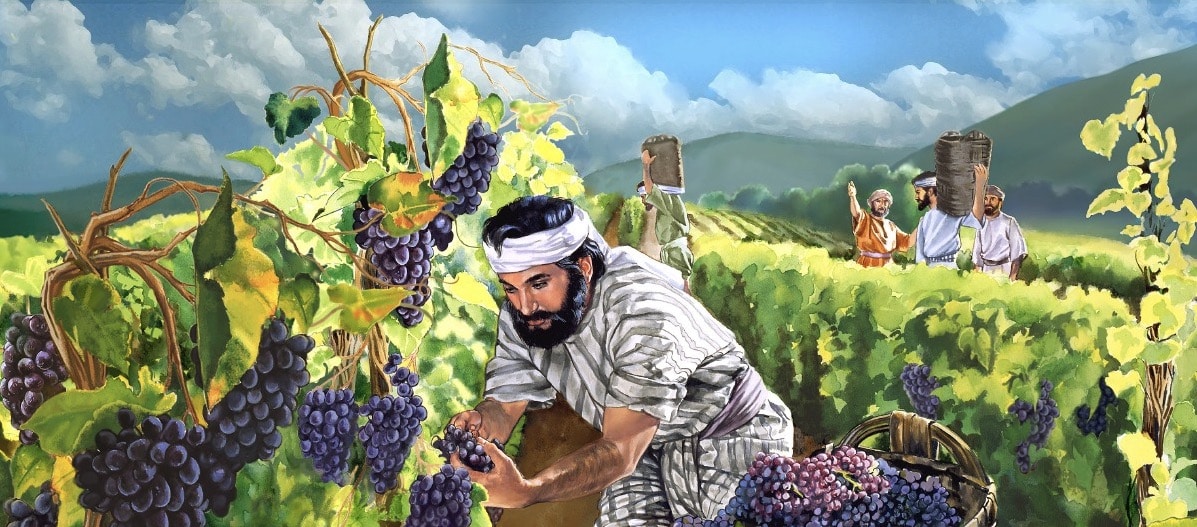
- Grounds “vineyard work” in prophetic repentance: Illuminates the imagery of the vineyard as Israel and its labor as preparation for God’s Kingdom, connecting the older child’s change of heart directly to the preaching of John the Baptist.
- Exposes the spiritual paralysis of religious pride: Demonstrates how being immersed in one’s own standing blinds believers to the reality of grace, warning modern congregations that polite lip service without a converted heart leaves one outside the Kingdom while notorious sinners enter ahead.


Commentary by Fr. Francis Martin | The Word Proclaimed
clean up grammar and spelling, divide into sections with titles for the following transcript xxxxxxxxxxxx
Verbal fillers, stumbles, and repetitions have been removed while keeping the original phrasing, theological precision, and cadence intact.
The Parable of the Two Sons and the Precedence of Repentance
And now we are at the Gospel, where our Lord gives us such encouragement to return to Him. It begins: “How does this appear to you?” He addresses the chief priests and elders of the people: “A man had two sons. Going up to the first one, he said, ‘Son, go into my vineyard and work today.’ He responded saying, ‘Ego, kyrie’—‘I am on my way, sir’—but he never went. Then he went to the second son in the same way, and the second one said, ‘I do not want to.’ But later he had a change of mind, he repented, and he went.”
That is the parable. Then Jesus asks, “Now, which of these two did the will of the father?”
They answered, “The second one.”
He changed his mind. That change of mind is compunction; that is teshuvah; that is metanoia.
Jesus asks, “Which of them did the thelema—the will—of the father?”
They all say, “The second.”
Then Jesus says, “Amen, I say to you that the tax collectors and the prostitutes are going to precede you into the Kingdom of Heaven.” John came to you setting forth the way of righteousness, and you did not believe him; you did not yield to him; you did not accept it. Yet the tax collectors and the prostitutes listened to him. Even when you saw that, you did not change and believe. When you saw tax collectors—known extortioners—giving back money, changing their entire lifestyle, and finding joy, it did not move you. You saw prostitutes transform their lives, and you were not moved.
This is an urgent call regarding the preciousness of repentance. Jesus’ message aligns directly with the Prophet Ezekiel: if you warn the wicked and they turn from their sin, they shall surely live; but if a righteous person turns away and commits iniquity, they shall die. Here, Jesus illustrates this with a simple, unavoidable parable: a father tells his first son to work, and the son says, “Yes, sir,” but never goes. The second son refuses at first, but repents and goes. Which one fulfilled the will of the father? The one who actually went and did the work.
The tax collectors and the prostitutes, despite their dissolute lives, heard John the Baptist and turned their lives around. They responded to the call of God, and therefore they enter the Kingdom of Heaven before the self-righteous. The townspeople saw a woman completely transform her life—living quietly, weaving for a living, and showing charity to everyone—yet their hearts remained hardened.
Penthos and the Gift of Tears
In Eastern monasticism—though rich traditions exist in the West as well—the core concept is captured by the Greek word penthos, meaning compunction or godly sorrow for sin. It is a pure grace. We often feel mere human embarrassment over our sins, wishing we had never committed them; but genuine sorrow is interpersonal. It exists directly between ourselves and Jesus.
The heart of this grace is the gift of tears. There is an ancient prayer from the Roman Missal: “O God, who brought forth water from the rock, strike the hardness of our hearts that we may weep for our sins.” It is within that contrition that the Holy Spirit dwells.
St. Symeon the New Theologian, the great Byzantine monastic writer of the turn of the first millennium, taught that this contrition is essential to prepare for what we refer to as the baptism in the Holy Spirit. St. Symeon was perhaps the only writer between the apostolic age and modern renewal movements to use that specific terminology. He understood it as an experiential encounter with living faith, given as an extraordinary gift. He taught that because we have all fallen into sin, receiving the gift of tears cleanses the heart, making it a pure dwelling place where the Holy Spirit can act freely. For St. Symeon, spiritual reading and instruction are not enough; one must be moved to weep for one's sins.
Transformed by Divine Mercy
Weeping out of mere embarrassment or wounded pride is entirely different from being undone by divine mercy. This is why our Lord revealed His Sacred Heart to St. Margaret Mary Alacoque, saying, “Behold this Heart which has loved humankind so much.” His pierced Heart does not stand in condemnation; He offers life and mercy.
The true gift of tears allows us to see our sins through the eyes of Jesus. Ontologically, we see their gravity—a weight we could never bear on our own strength. Too often, we treat the Sacrament of Penance like paying a parking ticket: “I did this, I did that; say five Hail Marys, receive absolution.” We walk out, truly forgiven of our guilt, but fundamentally unchanged. The real gift of grace is inward transformation. And how are we transformed? We are won over by the mercy of God; there is no other way.
This theology is developed profoundly in The Doctrine of Compunction in the Christian East by Father Irénée Hausherr, S.J. He opens by quoting Father Nicholas Arseniev of St. Vladimir’s Seminary, who observed that the joy of the Resurrection is the foundational reality of the Christian East, precisely because it is life out of death. Another desert tradition recalls: “Truly you are blessed, Abba Arsenius, for you wept for yourself in this world.”
In the Western tradition, St. Benedict provides a similar witness in the Rule, listing among the tools for good works: “To confess one’s past sins to God daily in prayer with sighs and tears, and to amend those sins for the future; not to fulfill the desires of the flesh; to hate one's own will; and not to wish to be called holy before one is, but first to be holy, that one may be truly called so.” The Latin term compunctio implies a piercing—puncturing an abscess so the poison is drained away. It is driven out through tears born not of terror, but of overwhelming mercy.
Compunction as the Source of Joy
We witness this same stream of grace across the saints: St. Margaret Mary Alacoque; St. Thérèse of Lisieux offering herself to the Merciful Love of the Father; and St. Faustina Kowalska, through whom our Lord requested Divine Mercy Sunday on the Octave of Easter. Divine mercy is the only power that effects authentic metanoia. One can perform rigorous spiritual exercises and achieve self-improvement, but that is not transformation. True conversion means the heart itself is made new.
It is the work of a lifetime, yet it brings deep interior freedom. When you see your sins in the light of Christ’s mercy, you can only say, “Lord, You have forgiven all of this?” and weep in profound gratitude. If we were to name this Sunday, instead of merely a Sunday in Ordinary Time, we might call it "Compunction Sunday"—Penthos Sunday. It is a day to hear the Lord say: “Come to Me, and let Me grant you a vision of mercy that will cause you to weep for pure joy.”
When we dwell on our sins out of self-absorption, it leads only to despair and shame. But when we look upon them in the presence of Christ, tears of compunction bring life. As Father Arseniev wrote, the joy of the Resurrection is our deliverance from darkness into light, a foretaste of the restoration of our whole being by the Trinity.
This truth is captured in the wisdom of the Desert Fathers. A brother in the monastic settlement had fallen into a serious fault, and the elders assembled in council to judge him and determine his punishment. They sent for one of the great hermits, Abba Moses the Black, who lived alone out in the desert, but he refused to come. When they summoned him again, he finally arose, took an old basket filled with sand and stones, placed it on his shoulders, and began walking toward the assembly.
As he approached, the monks saw the cloud of dust and watched him dragging this leaking burden across the desert. They asked him, “Father, what does this mean?”
He replied, “My sins run out behind me where I cannot even see them, and today I have come to judge the faults of my brother.” Hearing this, the council forgave the brother in silence. Amen. out that act of the will brings deeper freedom to both the one who forgives and the one who is forgiven.
Click chevron banner to read transcript
organized into thematic sections.
Doctrinal Homily Outlines
Central idea: The attitude of Christ
Doctrine: Thy will be done
Application: Loving the will of God
Sunday Prep Videos
26th Sunday of Year A