Fr. Tony’s Homily, Homily Starters
Fr. Tony’s Homily, Homily Starters
August 23, 2026

⬅️  ➡️
➡️


RELATED
PAGES


Think Different (1997)
21st Sunday of Year A
Apple Commercial
Applicable Scripture:
“When Jesus came to the region of Caesarea Philippi, he asked his disciples, ‘Who do people say the Son of Man is?’ They replied, ‘Some say John the Baptist; others say Elijah; and still others, Jeremiah or one of the prophets.’ ‘But what about you?’ he asked. ‘Who do you say I am?'” — Matthew 16:13–15
Summary:
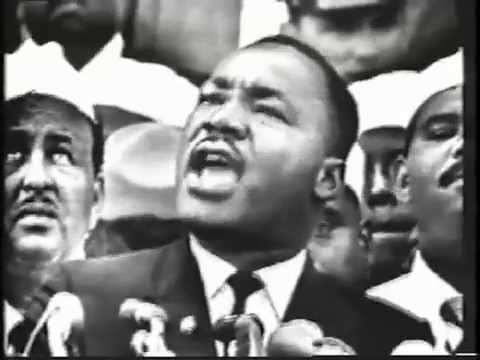
The commercial displays black-and-white footage of iconic historical figures—including Albert Gandhi, Martin Luther King Jr., and John Lennon—while a voiceover (Steve Jobs) praises “the crazy ones, the misfits, the rebels” who see the world differently and refuse the status quo.
Theological Connection:
In Matthew 16, public opinion surrounding Jesus was fragmented and conventional. The crowds attempted to fit Him into safe, familiar categories—viewing Him merely as a returned Elijah, Jeremiah, or another classical prophet. Apple’s “Think Different” campaign highlights individuals who rejected popular consensus to perceive reality clearly. Peter’s confession breaks through the surrounding culture’s noise to declare a revolutionary truth: Jesus is not merely a moral reformer or historical figure, but the Messiah.
Theologically, recognizing Christ requires stepping away from public polling (“Who do people say…”) and making a personal, counter-cultural confession (“Who do you say…”). Authentic Christian faith frequently appears foolish or non-conformist to mainstream culture, yet it is grounded in divine revelation that reshapes history rather than conforming to it.
Like a Rock (1991-2004)
21st Sunday of Year A

Chevrolet Truck Commercial
Applicable Scripture:
“And I tell you that you are Peter, and on this rock I will build my church, and the gates of Hades will not overcome it.” — Matthew 16:18
Summary:
Set to Bob Seger’s iconic song, the commercial shows Chevy pickup trucks hauling heavy loads, navigating rugged terrain, and enduring extreme weather, highlighting unyielding strength, durability, and reliability over time. In 1991, the “Like A Rock” advertising campaign was launched for Chevrolet trucks, with Bob Seger’s song of the same name serving as its foundation. The campaign ran through 2004 and is regarded as one of the auto industry’s most successful.
Theological Connection:
Chevrolet’s “Like a Rock” campaign relies on the metaphor of stone to convey immovable stability, endurance, and structural integrity against harsh elements. In Mt 16:18, Jesus changes Simon’s name to Peter (Petros) and promises to build His church upon this “rock” (petra), assuring that even the gates of death will not collapse it.
Theologically, the church is not built on shifting cultural opinions or human fragility, but on the unshakeable foundation of the Christ-confession. While worldly systems crumble under stress, the foundation Christ establishes remains steadfast and invincible against spiritual forces. The imagery of the rock emphasizes that placing one’s faith in Jesus offers permanent security, spiritual resilience, and an enduring sanctuary built to withstand the fiercest trials of history.
Who is Jesus? (C.S. Lewis)
21st Sunday of Year A

In his teens, C.S. Lewis was a professed agnostic. He was influenced in his conversion to Christianity in part through the influence of two of his Christian friends. After his conversion, he wrote a number of books defending Christianity. During the Second World War, in his famous BBC radio talk, “Mere Christianity,” he said:
“I am trying to prevent anyone saying the really foolish thing that people often say about Jesus: ‘I’m ready to accept Jesus as a great moral teacher, but I don’t accept his claim to be God.’ That is the one thing we must not say. A man who is merely a man and said the sort of things Jesus said would not be a great moral teacher. He would either be a lunatic, on the level with a man who says he is a poached egg, or else he would be the Devil of Hell. You must make your choice. Either this man was, and is, the Son of God, or else a madman or something worse.”
This trilemma—popularly summarized as Lord, Liar, or Lunatic—mirrors the crucial moment in Matthew 16:13–20 at Caesarea Philippi. There, Jesus asks His disciples, “Who do people say the Son of Man is?” after which they report the various human opinions of the crowd—labeling Him merely as a prophet, Elijah, or John the Baptist. But Jesus forces a direct personal decision by asking, “But what about you? Who do you say I am?”
Just as Peter steps forward with divine insight to confess, “You are the Messiah, the Son of the living God,” Lewis emphasizes that neutrality regarding Christ’s identity is an impossibility. We cannot reduce Jesus to a mere human prophet or moral teacher while ignoring His explicit claims to divinity. Ultimately, like Peter, every individual is confronted with Jesus’s true identity and must make a personal confession: acknowledging Him not merely as an inspiring teacher, but as the Son of God.
Do You Know Who I Am?
21st Sunday of Year A

Rock of Faith
21st Sunday of Year A

From Presidents to Saints: Faces on the Rock
When one thinks of South Dakota, one thinks of Mount Rushmore. Carved into the mountainside by Gutzon Borglum are the heads of four of the great leaders of the United States. It’s ironic that this monument is in the heart of an area sacred to the Lakota and Dakota people whose ancestors possessed the land centuries before George Washington’s family came to America. Thousands of Americans visit Mount Rushmore each year. Many come away with flags, patriotic symbols, and T-shirts reading, “God Bless America.” Perhaps they feel a rush of pride and make resolutions to be better Americans in the future.
Let us remember that Christians are part of the Rock. Jesus built his Church on the Rock of Peter as a reward for his great confession of Faith in the Divinity of Christ. The members of the Church are given a new face on the same Rock, the face of Jesus, as they proclaim his love, mercy, and forgiveness in their daily lives.
In the AI generated image above (right to left):
- St. Peter – Identified by the key carved near his collar, representing the “Keys to the Kingdom.”
- St. Paul – Identified by the sword carved at his chest (symbolizing his martyrdom and the “Sword of the Spirit”) and the scroll (representing his epistles).
- St. Francis of Assisi – Depicted in a Franciscan habit surrounded by birds and a wolf (the Wolf of Gubbio), reflecting his connection to nature and animals.
- St. Catherine of Siena – Depicted in a religious habit/veil with a quill and book, symbolizing her status as a Doctor of the Church and writer.
You are the Christ
21st Sunday of Year A

Fr. Herbert O’Driscoll uses a wonderful image to explain the structure of the Church. His idea is to look at all of the last 20 centuries as rings of time, or as concentric circles of time. Today’s Christians, in the 21st century, are in the outermost circle, farthest away from the center – which is a Cross. We are brought into the circle, into the Faith, in large part because somewhere, somehow, someone in the circle just before ours took us by the hand and said, “Come,” and so drew us in. That is one very important reason why we are here. That person was able to do this for us because someone had taken him or her by the hand and had drawn that person in. And so it went, back through all the centuries until we reach the hands that had actually touched the mark of the nails. In this way, Christ builds his Church. We constantly re-live this Gospel story.
When we say to Jesus, “You are the Christ,” he says to each of us—“You, too, are Peter, you too, are a rock, and with you, also, I am building my Church.” What happened to Peter continues to happen and actually includes us.
Pencil Story for Kids
21st Sunday of Year A

There is a beautiful story about the pencil. The pencil maker took the pencil aside, just before putting it into the box. “There are five things you need to know,” he told the pencil, “before I send you out into the world. Always remember them and never forget, and you will become the best pencil you can be.
One: You will be able to do many great things, but only if you allow yourself to be held in someone’s hand.
Two: You will experience a painful sharpening from time to time, but you’ll need it to become a better pencil.
Three: You will be able to correct any mistakes you might make.
Four: The most important part of you will always be what’s inside.
Five: On every surface on which you are used, you must leave your mark. No matter what the condition, you must continue to write.”
The same applies to each one of us too. When we find an answer to Jesus’ question (“Who do you say that I am?”), we will be able to make ourselves useful to our contemporaries. We have to undergo the process that the pencil undergoes.
One: We will be able to do many great things, but only if we allow ourselves to be held in God’s hand, and allow other human beings access to the many gifts we possess.
Two: We will experience a painful sharpening from time to time, by going through various problems in life, but we’ll need it to become a stronger person.
Three: We will be able to correct any mistakes we might make.
Four: The most important part of us will always be what’s on the inside.
Five: On every surface we walk through, we must leave our mark. No matter what the situation, we must continue to do our duties to the best of our abilities.
Allow this parable on the pencil to encourage you to know that you are a special person and only you can fulfill the purpose to which you were born to accomplish. Never allow yourself to get discouraged and think that your life is insignificant and cannot make a change.
God is the Source of All Authority
21st Sunday of Year A
The clipart is from the archive of Father Richard Lonsdale © 2000. It may be freely reproduced in any non-profit publication.
We might call this Sunday “Power Sunday” because the main theme of all three readings is that God is the Source of all authority. God shares His authority with civil rulers elected to serve the people and with the Pope and the other Church leaders for the material and spiritual welfare of His children. Today’s Gospel challenges us to accept the authority of Jesus as our Lord and Savior as St. Peter did at Caesarea Philippi.
Isaiah 22:19-23
The first reading, taken from Isaiah, tells us how God hates unfaithful and selfish officials. He removed the proud “master of the royal palace” from his office, taking from Shebna the power and responsibility of which he had proven unworthy, and gave both to the humble and faithful Eliakim. The robe, the sash, and the keys are the insignia of this office. In today’s Responsorial Psalm (Ps 138), David thanks God for having raised him from lowly origins and given him authority as king over the people of Israel.
Symbolism of Eliakim’s Investiture
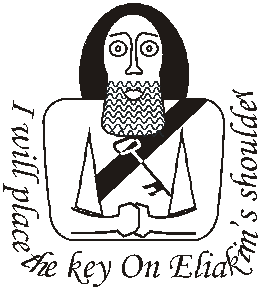
Chapters thirteen through twenty-three of Isaiah record oracles in which the prophet Isaiah pronounces God’s judgment against various nations. In chapter twenty-two, Shebna, the proud, unfaithful royal official, is severely criticized and told by the Lord God, through Isaiah, that he will have to yield to a replacement named Eliakim: “I will thrust you from your office and pull you down from your station.”
The reason for the degradation of Shebna, the “master of the royal palace,” (the most powerful person next to the King), was that he had tried to immortalize himself by beginning to construct his own tomb in a lofty place on the mountain. The Lord demands faithfulness to His way and His word. Hence, Shebna was removed from his position of controlling access both to the city and to the king.
The “master of the royal palace” proudly carried the “key,” an iron bar of considerable size, on his shoulder during state occasions. This “key” symbolism recalls Eliakim’s installation as “major domo” (second in command to the king) in King Hezekiah’s palace. The robe and the sash indicate that Eliakim has been invested with authority. The key symbolizes jurisdiction, and the tent peg is a sign of stability.
Messianic Fulfillment and the Papacy
The reference to the “key of the house of David” in this text prompted some Fathers to see in it a Messianic prophecy, foretelling the removal from power of the leaders of the Chosen People of the Old Testament, and the transfer of that power to Christ, who in turn would hand it on to Peter as head of His Church.
This passage prepares us for today’s Gospel, Matthew 16:13-20, in which Jesus grants Peter “the keys to the Kingdom of Heaven.” The “key of David” connects with Matthew’s “keys to the Kingdom of Heaven.” Isaiah emphasizes the charismatic dimension of authority, stating that it is Yahweh who gives certain individuals the charism of leadership. “Isaiah foretells that the keys to David’s kingdom would be given to a new master, who would rule as father to God’s people. Jesus, the root and offspring of David, alone holds the Kingdom’s keys (see Rv 1:18; 3:7; 22:16)” (Dr. Scott Hahn).
The True Purpose of Authority
The purpose of authority in the Church, or of authority at any level, is not to control the lives of others, but rather to help them to seek the values that will bring them lasting joy, both in this changing world and in the next.In short, the prophet reports, everyone has a part to play in God’s plan—even those who don’t belong to the “true religion.”
Romans 11:33-36
In the second reading, St. Paul praises God for the depth of His wisdom, knowledge, and correct judgments, asserting that He is the Source of all authority on earth and in Heaven.
A Hymn of Praise
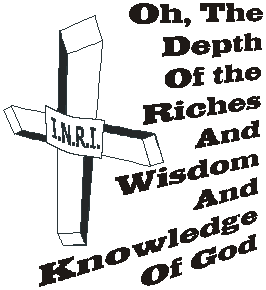
Paul praises the wisdom of God and His inscrutable ways of bringing salvation to all people. Paul marvels at the Divine Goodness, Wisdom, and Knowledge. He emphasizes the wisdom of God (described in chapters 9-11), which allowed the Jews to reject Jesus and called a few Jewish believers, like Paul, empowering them to evangelize the Gentiles. When the Gentiles had been converted, some of the Jews might be impressed and accept Christ themselves. These Jews would attain salvation through the example provided by the Gentiles.
The result would be the salvation of the whole world – a good greater than the election of Israel. Thus, the ancient promise of God to Abraham would be fulfilled. With this in mind Paul exclaims, “Oh, the depth of the riches and wisdom and knowledge of God! How inscrutable are His judgments and how unsearchable His ways!”
Matthew 16:13-20
Today’s Gospel passage shows us how Peter confesses Jesus as his Lord and Savior and how Jesus, in turn, approves Peter’s words and gives him teaching and ruling authority in his Church. Thus, Jesus establishes a “Magisterium” in his Church to serve the spiritual and physical needs of the Church members. By Jesus’ statement, “I will give you the Keys to the Kingdom of Heaven,” he gives Peter and his successors the power to bind and to loose (make laws; exercise authority) in the Church, and the assurance that their decisions will be ratified in Heaven.
In Matthew and Mark, Jesus asked certain questions about his identity. This incident took place at Caesarea Philippi, (presently called Banias), twenty-five miles northeast of the Sea of Galilee. Jesus asked a question in two parts.
The First Question: Public Opinion
The first question: “What is the public opinion?” The apostles’ answer was, “Some say John the Baptist, others Elijah, still others Jeremiah or one of the prophets.”
John the Baptist was so great a figure that it might well be that he had come back from the dead. Elijah, the greatest of the prophets, was believed to be the forerunner of the Messiah [“Behold, I will send you Elijah the prophet before the great and terrible day of the Lord comes” (Mal 4:5). In 2 Esdr 2:18 the promise of God is: “For thy help I will send my servants Isaiah and Jeremiah”]. The phrase “one of the prophets” suggested that Jesus had a ministry like that of the former prophets.
When the people identified Jesus with Elijah and with Jeremiah, they were, according to their lights, paying him a great compliment and setting him in a high place, for Jeremiah and Elijah were the expected forerunners of the Anointed One of God. When they arrived, the Kingdom would be very near indeed.
The Second Question: Peter’s Personal Confession
The second question: “What is your personal opinion?” For the first time in their relationship Peter, speaking for the other disciples, declared publicly: “You are the Christ (Messiah), the Son of the living God.” Peter was the first apostle to recognize Jesus publicly as the Anointed One (also translated Messiah or Christ; Christ is the Greek word for the Hebrew word Messiah). Peter was saying that Jesus is the Christ, the anointed one of God, Immanuel, the Salvation of God — God Himself who became Man to save sinners!
t is evident that Jesus was well pleased with Peter’s answer. Jesus first pronounced a blessing upon Peter, the only disciple in the Gospels to receive a personal blessing: “Blessed are you, Simon son of John!” Next, Jesus confirmed Peter’s insight as a special revelation from God: “No mere man has revealed this to you, but my Heavenly Father.” However, Jesus was quick to explain to the disciples that he was not a political Messiah. He was, rather, a Messiah who must suffer, die, and be raised to life again.
The Promise and the Foundations of Papal Authority

The promise: “You are Peter and upon this rock I will build my Church.” Ever since Pope Stephen I (254-257) used this text against Cyprian of Carthage to defend Roman primacy, these verses have been among the most disputed in the New Testament. Historically, they have been central to issues of authority in the Church, especially of the authority of the episcopacy and of the Bishop of Rome.
Jesus’ promise to Peter is the Catholic basis for the position of the Pope and of the Church. The Church teaches that Peter was given the keys which admit a man to Heaven or exclude him from it, and that to Peter was given the power to absolve or not to absolve a man from his sins. In other words, Jesus gave to Peter the authority to determine what courses of action would be permitted or forbidden in the Church. It is further argued by the Catholic Church that this power given to Peter has descended to all the Bishops of Rome throughout all ages, and that it exists today in Pope Francis, who, as the direct successor of Peter, is the head of the Church and the Bishop of Rome.
Definitions of the Magisterium (Vatican I)
The Magisterium of the Church in the First Vatican Council defined the doctrine of the primacy of Peter and his successors in these terms: “We teach and declare, therefore, according to the testimony of the Gospel, that the primacy of jurisdiction over the whole Church was immediately and directly promised to and conferred upon the blessed Apostle Peter by Christ the Lord. For to Simon, Christ had said, ‘You shall be called Cephas’ (John 1:42). Then, after Simon had acknowledged Christ with the confession, ‘You are the Christ, the Son of the living God’ (Mt 16:16), it was to Simon alone that the solemn words were spoken by the Lord: ‘Blessed are you, Simon Bar-Jona. For flesh and blood has not revealed this to you, but my Father who is in Heaven. And I tell you, you are Peter, and on this rock I will build my Church, and the powers of hell shall not prevail against it. I will give you the keys of the kingdom of Heaven, and whatever you bind on earth shall be bound in heaven, and what you loose on earth shall be loosed in Heaven’ (Mt 16:17-19). Then, after His Resurrection, Jesus conferred upon Simon Peter alone the jurisdiction of supreme shepherd and ruler over His whole fold with the words, ‘Feed my lambs … Feed my sheep’” (Jn 21:15-17).
The Keys of Heaven and the Power to Bind and Loose
The wording has its roots in Is 22:22: “I will place on Eliakim’s shoulder the key of the house of David; he shall open, and no one shall shut; he shall shut, and no one shall open.” Eliakim thus became the steward of the house, responsible for opening the house in the morning, closing it at night, and controlling access to the royal presence. According to Jewish historian Josephus, “The power of binding and loosing was always claimed by the Pharisees. Under Queen Alexandra the Pharisees became the administrators of all so as to be empowered to banish and readmit whom they pleased as well as to loose and bind.”
So here, in the New Testament, we see Jesus handing over these “keys” to the Kingdom of Heaven to Peter, one of the apostles. We notice the similarities and differences between this passage and the one from Isaiah. Where Eliakim has the key placed on his shoulder, Jesus hands the keys to Peter; where “he shall open, and none shall shut; and he shall shut, and none shall open,” Peter is told “whatever you bind on earth shall be bound in Heaven, and whatever you loose on earth shall be loosed in Heaven.”
The Anchor Bible commentary, an interfaith work (Catholic, Protestant, and Jewish scholars), notes: “By conferring the power to bind and loose upon Church leadership, Jesus authorizes it to interpret the Scriptures and establish norms for Christian behaviour (vol. 1).”
Martin Luther, five years after the Reformation, declared: “So we stand here and with open mouth stare heavenward and invent still other keys. Yet Christ says very clearly in Mt 16:19 that he will give the keys to Peter. He does not say he has two kinds of keys, but He gives to Peter the keys He Himself has and no others. It is as if He were saying: ‘Why are you staring heavenward in search of the keys? Do you not understand I gave them to Peter? They are indeed the keys of Heaven, but they are not found in Heaven. I left them on earth. Don’t look for them in Heaven or anywhere else except in Peter’s mouth where I have placed them. Peter’s mouth is my mouth, and his tongue is my key case. His office is my office, his binding and loosing are My binding and loosing.’”
In this role, Peter was the first to preach Christ, doing so to three thousand people at Pentecost (Acts 2), and he became the spokesman to the Council of Jerusalem (Acts 15). “Bind and loose” also concerns doctrine and ethical conduct, declaring certain actions as either forbidden or permitted. Later Christian tradition extended this principle to include the power to forgive or retain sins (Mt 18:18; Jn 20:23). In Mt 18:18, Jesus extends this authority to the whole group of disciples, saying, “Truly I tell you, whatever you bind on earth will be bound in Heaven, and whatever you loose on earth will be loosed in Heaven.”
Catholics believe that Peter’s authority passed from Peter to the Popes who followed him. As Dr. Scott Hahn notes: “In giving those Keys to Peter, Jesus fulfills that prophecy, establishing Peter – and all who succeed him – as holy father of His Church. His Church, too, is the new house of God – the spiritual temple founded on the ‘rock’ of Peter, and built up out of the living stones of individual believers (see 1 Peter 2:5).”
Guarantees Given to Peter and His Successors
The Catholic Church teaches that by giving Peter the “keys” along with the promise that all his decisions would be ratified in Heaven, Christ gave Peter the power of freedom from error when he was officially teaching the universal Church. In other words, Peter received primacy in the Church and the gift of infallibility in his official teaching on matters of faith and morals. The First Vatican Council defined this dogma, and the Second Vatican Council reconfirmed it. As the Church was to continue long after Peter had died, it was rightly understood from the beginning that those privileges given to him which were necessary for the successful mission of the Church were given to his lawful successors — the Popes.
Interpretations of “Upon This Rock I Will Build My Church”
- Patristic / Allegorical: Origen interpreted the text to mean that Peter is the type of every true, spiritual Christian on whom the Church is built.
- Eastern Tradition: The “Eastern” Church interpreted the rock as the faith of Peter, so that the Church is built on the faith of believing Christians.
- Roman / Pontifical: Dating from the fourth century, this interpretation holds that the rock is Peter himself, and the promises made to Peter apply also to Peter’s successors in the Petrine ministry. Since Vatican I, this has been the normative interpretation for Roman Catholics.
- Christological: Popularized in the Middle Ages, this view holds that Christ Himself is the Rock (see 1 Cor 3:11, 10:4).
While non-Catholics argue that there is no explicit biblical evidence that Peter’s ministry would be successive, the overall imagery indicates a lasting role:
- The Nature of the Rock: The image of the rock is, by its very nature, a timeless and everlasting foundation.
- Eternal Steward: In Matthew 16, Jesus notes that the steward’s ministry carries an enduring dimension where the gates of hell will not prevail against it.
- The Eternal Shepherd: The image of the shepherd is eternal because God Himself is the ultimate Good Shepherd.
For these structural roles to endure throughout history, the ministry given to Peter is understood as requiring succession.
Authority Understood as Service
In a dramatic return to the Spirit of the Apostolic Church, the participants at the Second Vatican Council affirmed the teaching of Jesus that authority is always to be exercised as a service and in a collegial manner for the building up of the community (Lumen Gentium / Dogmatic Constitution on the Church, #27). Following Vatican II, ecumenical dialogues have resulted in broader consensus among Christians concerning authority:
Lutheran–Catholic Dialogue: Emphasizes that all Christian authority is rooted in Christ and in the Gospel (Rom 1:16), proclaimed by witness-servants who share in the authority of Christ, the ultimate Witness-Servant model.d, one trusts Him and fashions one’s prayer requests accordingly (CCC #2610).
Anglican–Roman Catholic International Commission (1977): In An Agreed Statement on Authority in the Church, the model of authority is framed not as political, sociological, structural, or juridical, but rather as one of koinonia — a union based on mutual loving service in the truth of Christ, activated by the Holy Spirit.

Jesus as Lord and personal Savior
Jesus is not merely the founder of a new religion, or a revolutionary Jewish reformer, or one of the great teachers. For Christians, he is the Son of God and our personal Savior. This means that we have to see Jesus as the Good Shepherd, the Savior, and the Redeemer. He is our beloved Friend, closer to us than our dear ones, and a living experience, who walks with us, loves us, forges us, helps us, and transforms our lives and outlook. We have to give all areas of our lives to him. He must have a say in our daily lives, and we must radiate all around us his sacrificial agápe love, unconditional forgiveness, overflowing mercy, and committed service. The joy, the love, and the peace that we find in Jesus should be reflected in the way we live our lives.
Surrendering to Jesus
That surrender requires that we freely give all areas of our lives to Jesus and radiate to all around us Jesus’ sacrificial agápe love, unconditional forgiveness, overflowing mercy, and committed service. The joy, the love, and the peace that we find in Jesus need to be reflected in the way we live our whole lives. We also surrender our lives to Jesus by rendering humble, loving service to others with the strong conviction that Jesus is present in every person.