Homilies
Homilies
August 2, 2026
⭐⭐⭐ Anxiety in the News


Homily Anecdotes
18th Sunday of Year A

Looking for the perfect homily opener? Each week, TWTW features standout anecdotes from Fr. Tony Kadavil’s longstanding collection, along with a few fresh picks of our own.

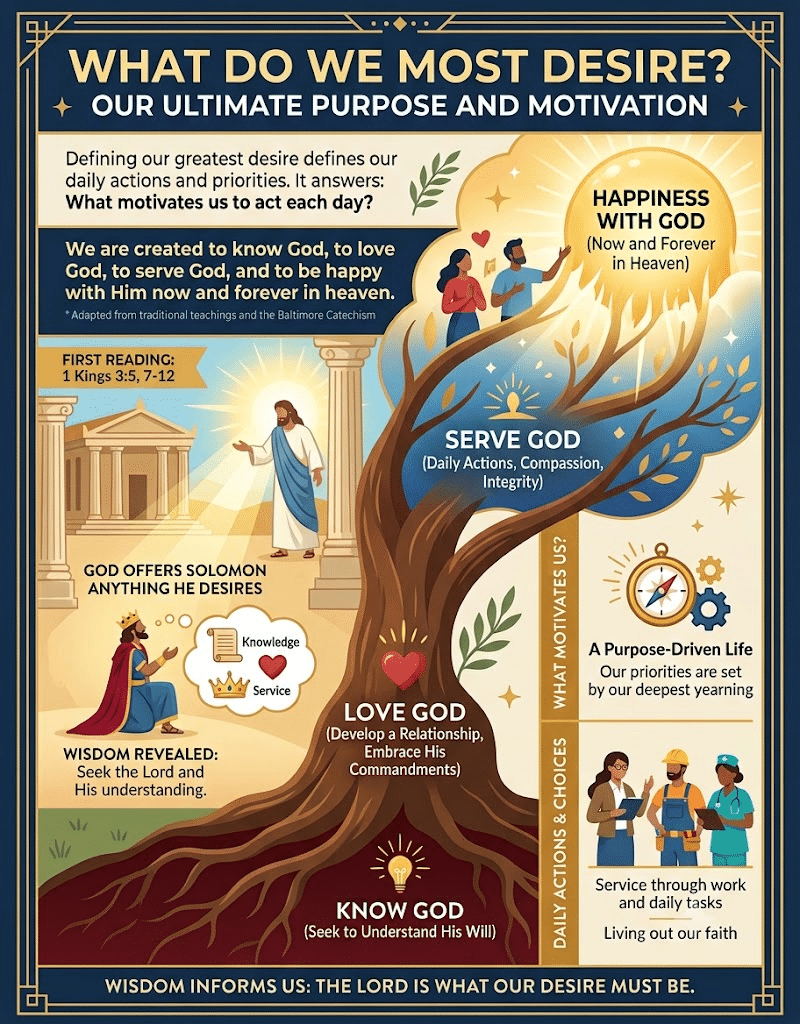
From Superficial Self-Gratification to True, Divine Fulfillment
The following homily anecdotes utilize distinct cultural and cinematic narratives to illustrate the movement from superficial self-gratification to true, divine fulfillment as presented in the readings for the 18th Sunday in Ordinary Time:
Religious Orders

18th Sunday of Year A
Radical Community & “One Mind and Heart” (Anima Una et Cor Unum)

Matthew 14:13-21
When Jesus heard of John’s death, He withdrew to a deserted place to be alone. We understand this impulse. When grief strikes, our instinct is to retreat into ourselves, to shield our broken hearts from the world. Yet, as Jesus steps off the boat, He encounters a vast, hungry crowd. Instead of turning away, His heart moves with profound compassion. He sees not an overwhelming burden, but His family.
Saint Augustine reminds us that we are never meant to walk toward God as isolated individuals. In his Rule, he calls us to be “of one mind and one heart intent upon God.” Community is not merely a convenience; it is a sacred encounter. We find Christ most clearly when we look into the eyes of our neighbor.
Notice what happens when the evening comes. The disciples, operating from a place of scarcity and self-reliance, urge Jesus to send the crowd away to buy food for themselves. How often do we do the exact same thing? We see the massive physical, emotional, and spiritual hunger around us, and we say, “Let them handle it on their own.”
But Jesus responds with a radical command: “Give them some food yourselves.” He takes five loaves and two fish—fragile, insufficient gifts—blesses them, and breaks them. In the hands of a united community, sharing what little they have, a miracle unfolds. No one was left hungry, and twelve baskets overflowed with leftovers.
Holiness is forged in the shared vulnerability of our common life. When we bring our meager gifts, our wounded hearts, and our willingness to serve, Christ multiplies them. Let us stop sending one another away. May we become a refuge for each other, bound together as one heart and one mind, breaking bread and carrying one another home.
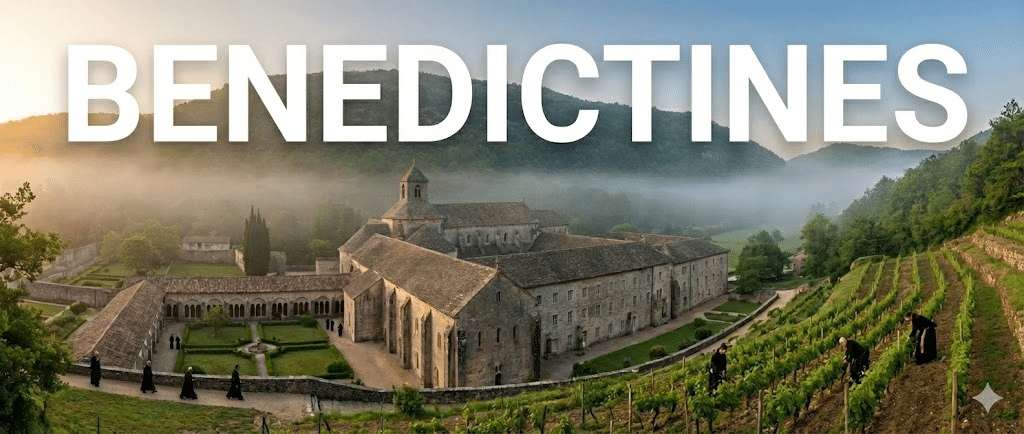
18th Sunday of Year A
Feeding the World at Our Table
Matthew 14:13–21
In today’s Gospel, Jesus seeks a quiet, deserted place after hearing of the death of John the Baptist. He longs for solitude, yet when he steps ashore, he meets a vast, hungry crowd. Instead of turning them away to protect his own space, his heart moves with compassion. He heals their sick, and when evening comes, he refuses to send them into the surrounding villages to fend for themselves. “You give them something to eat,” he tells his disciples.
From a Benedictine perspective, this moment in the wilderness is a masterclass in radical Hospitality. Saint Benedict writes in Chapter 53 of his Rule that every guest who arrives at the monastery door must be received as Christ himself. True hospitality is never a mere social formality or an easy gesture extended only when it is convenient. It is an intentional, open-hearted choice to make room for others precisely when our own reserves feel depleted.
When the disciples look at the five loaves and two fish, they see scarcity. They see a logistical problem and urge Jesus to dismiss the crowd. But Benedictine hospitality trusts in divine abundance over human anxiety. Jesus takes what little is offered, blesses it, and breaks it. In doing so, he transforms a barren field into a shared monastic refectory—a table where thousands are welcomed, fed, and filled to overflowing, with twelve baskets left over.
We are called to live this same spirit today. Hospitality means looking at the exhausted, hungry, and seeking souls around us and offering whatever small loaves we possess—our time, our listening ear, our patience. When we welcome the stranger and nourish one another in community, we discover that Christ is not only the Host who feeds us, but the very Guest standing at our door.

18th Sunday of Year A
The Still, Small Voice in the Desert

Lectio Divina
ePUB | PDF
Romans 8:35, 37–39
Our Gospel opens with a poignant detail: when Jesus hears of the death of John the Baptist, He withdraws in a boat to a deserted place by Himself. In His grief, Christ seeks what every Carmelite soul instinctively long for: the sanctuary of silence and solitude, where the human heart can rest directly in the presence of the Father.
Yet, as Jesus steps ashore, He is met not by quiet, but by a vast, expectant crowd. Here, we glimpse the profound mystery of Carmelite spirituality. Silence is never a selfish retreat from the world; it is a sacred space where the soul is filled by God so completely that it can respond with deep, overflowing compassion.
Jesus enters interior quiet to align His heart with the Father’s love. Out of that deep, contemplative stillness springs a miracle. When the disciples see only five loaves and two fish—scarcity in a desolate place—Jesus looks up to heaven, blesses the bread, and reveals divine abundance.
St. Teresa of Ávila reminded us that God dwells at the very center of our interior castle, yet we so often live in the noisy outer courtyards of distraction and worry. Today, Christ invites us to step into the quiet of our own hearts. Do not fear the deserted places of your life or the quiet moments of prayer. In that holy silence, where words fall away, your exhaustion meets His restful presence, and your small, fragile offerings are transformed into a feast that truly satisfies.
18th Sunday of Year A
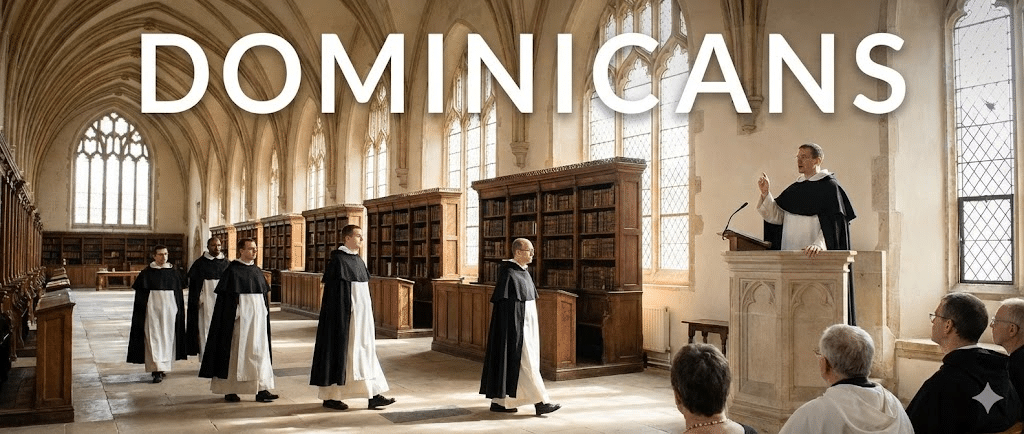
Truth that Satisfies the Soul

Isaiah 55:1–3
The prophet Isaiah poses a fundamental question about the human condition: “Why spend your money for what is not bread, your wages for what does not satisfy?” We live in a world overflowing with information, yet starving for true wisdom. We constantly consume empty promises, fleeting distractions, and partial answers that leave our minds restless and our spirits bone-dry.
St. Dominic de Guzmán founded the Order of Preachers around a single, luminous word: Veritas—Truth. But for a Dominican, Truth is not a cold, abstract formula or a rigid list of doctrines. Veritas is a person. Jesus Christ is the living Truth who satisfies the deepest intellectual and spiritual longings of the human heart. St. Dominic recognized that when people wander into confusion or despair, it is often because they are attempting to feed their immortal souls on the dust of falsehood.
Isaiah’s prophecy offers the ultimate antidote to this spiritual malnutrition: “Come to me heedfully, listen, that you may have life.” To seek Truth requires us to become quiet, to contemplate, and to listen deeply to the Word of God. Study and prayer are not mere academic exercises; they are holy acts of love where we draw near to the source of all reality.
When we align our minds with Christ’s Truth, we no longer need to chase after what fails to nourish us. God offers us an everlasting covenant—a feast of divine grace, understanding, and peace, given freely to all who seek Him. Today, let us lay down our futile pursuits, open our hearts to the light of Veritas, and come receive the truth that truly gives life.
18th Sunday of Year A
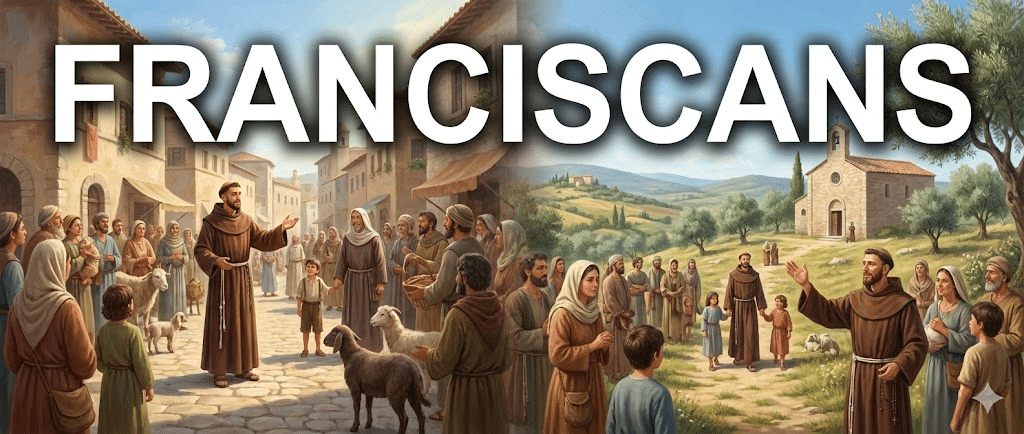
Free to Feast

Matthew 14:13–21
The prophet Isaiah calls out to a weary world with an invitation that sounds almost foolish to our modern ears: “All you who are thirsty, come to the water! You who have no money, come, receive grain and eat; come, without paying and without cost, drink wine and milk!”
For St. Francis of Assisi, this passage describes the very heart of Lady Poverty. Francis recognized a profound paradox in our human journey: the more we clutter our hands with wealth, status, and material security, the less room we have to receive the boundless gifts of God. We spend our energy and wages on that which fails to satisfy, chasing false securities that only leave us feeling emptier and more isolated.
Francis chose radical simplicity not as a harsh punishment, but as a path to total spiritual freedom. By letting go of the need to possess, control, or hoard, he opened his hands and heart wide to trust entirely in the Father’s loving providence. When we travel light, we discover that the most precious things in life—God’s unmerited mercy, the beauty of Brother Sun, the warmth of fraternity—are gifts that cannot be bought or sold. They are freely given.
Isaiah asks us directly: “Why spend your money for what is not bread, your wages for what does not satisfy?” Today, Christ invites us to drop our heavy baggage at the door. Embrace Franciscan simplicity. Step away from the endless cycle of earning and striving, and come to the table as a child of God. Your Father is offering a rich, soul-nourishing feast—and the only cost of entry is a heart open to receive it.

18th Sunday of Year A
Boundless Love in the Desert

Romans 8:35, 37–39
St. Paul poses a question that strikes at the core of our daily human experience: “What will separate us from the love of Christ?” He goes on to list the very realities that threaten to pull us into spiritual desolation—hardship, distress, persecution, famine, or peril.
For St. Ignatius of Loyola, the spiritual life was not about escaping these realities, but leaning into them with radical trust. The foundational hallmark of Ignatian spirituality—Finding God in All Things—reminds us that there is no corner of creation, no moment of suffering, and no shadow of human weakness where grace cannot penetrate. God does not wait for us to clean up our lives before stepping into them. God is actively laboring alongside us right in the middle of our daily complexities.
When Paul declares that neither death nor life, nor present things nor future things, can separate us from God’s love, he is teaching us how to practice holy discernment. When trials hit, our immediate instinct is often to feel abandoned. Yet, Ignatian consolation invites us to look deeper—to notice the subtle, persistent presence of the Spirit holding us together when everything else seems to fall apart.
We are not called to ignore the reality of human pain. Rather, as “contemplatives in action,” we are invited to meet Christ directly within it. Whether you are navigating personal loss, career uncertainty, or the quiet ache of anxiety, know this: God’s love is not a distant reward for perfection. It is an unshakeable foundation beneath your feet today. In every valley, across every mountain, and through every trial, the love of God in Christ Jesus remains entirely inseparable from you.

18th Sunday of Year A
Feed the Hungry Heart
Matthew 14:13–21
When Jesus steps off the boat into a deserted place, He seeks solitude to mourn the death of John the Baptist. Instead, He meets a vast, exhausted, and hungry crowd. His response is not irritation, but deep, gut-wrenching compassion. When the disciples urge Him to send the people away to fend for themselves, Jesus gives a radical command: “They do not need to go away. You give them something to eat.”
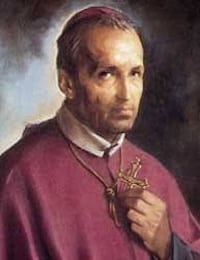
This moment reveals the very heart of Copiosa Apud Eum Redemptio—the plentiful, overflowing redemption that defines our Redemptorist charism. St. Alphonsus Liguori founded our Congregation after encountering the abandoned goatherds in the hills of Naples, people told by the world that they were “too poor” or “too far gone” for God’s concern. But in Christ, no one is sent away empty-handed. God never doles out His mercy in strictly measured, reluctant drops.
Look at what happens in that desolate field. Five loaves and two fish—scarcity in human eyes—are placed into the hands of the Redeemer. When Jesus blesses and breaks the bread, it does not merely satisfy basic hunger; it leaves twelve baskets overflowing. This is the logic of divine grace. Christ does not offer a bare minimum of salvation or conditional love. He offers a feast of total, unconditional redemption to every wounded, weary soul.
Whatever burden you bring today—be it financial strain, spiritual dryness, or the heavy ache of feeling forgotten—hear the Gospel’s promise. You do not need to go away. Do not let shame convince you that your scraps are too little or your sins too great. Bring your small, fragile self to the Altar. In Christ, your emptiness meets an abundance that never runs dry.
Click a tab to view different ways of understanding the readings.
Dicastery Notes / Papal Homilies
18th Sunday of Year A


Featured Homilies
Deacon Peter McCulloch
18th Sunday of Year A
✍️ Two Drops of Oil

EXCERPT: The secret of happiness, the wisest of wise men says, is to see all the marvels of the world, without forgetting the two drops of oil on the spoon.
In other words, we need to start seeing beyond the superficial (1Sam.16:7), by maintaining a constant balance between our spiritual and human selves. We need to develop spiritual insight.
Spirituality is wisdom of the spirit; it provides a kind of sixth sense which helps us to intuitively see and appreciate the movement of God in our ordinary human lives.
How might we achieve that?
By cultivating a life nourished by prayer, meditation, and the Holy Eucharist.
Bishop Robert Barron
18th Sunday of Year A
▶️ The Heart of Christianity (2026)

Friends, on this Eighteenth Sunday in Ordinary Time, I want to focus on the Second Reading from Saint Paul’s Letter to the Romans. The eighth chapter of Romans represents the culmination of an argument Paul’s been making, and the reading for today is the rhetorical high point of that conclusion. This is the first great theologian of the Church naming what is essential to Christianity—so we have to pay attention!
2023—The Loop of Grace
2020—God’s Gift to You
2002—Loaves and Fishes
In the News
18th Sunday of Year A
More Than Conquerors
Our world is defined by both remarkable innovation and profound turbulence. As we look at the headlines, we see a landscape marked by complex global shifts: the ongoing pursuit of security in Ukraine, the high-level deliberations of last month’s NATO summit in Ankara, and the persistent scientific efforts to bridge global divides in sustainability and technology.
Closer to home, our hearts are heavy with the loss of Senator Lindsey Graham, whose sudden passing this week reminds us of the fragility of even our most prominent public figures. We watch with concern the renewed escalation of the U.S. war with Iran in the Strait of Hormuz, where military strikes and counter-strikes threaten regional stability. And we keep in our prayers the people of Venezuela, where thousands have perished and countless others remain displaced following the devastating twin earthquakes that struck on June 24.

The Apostolic Response to Anxiety
The Unbreakable Bond
The Final Word of Faith
A Call to Bridge-Building
Fr. Michael Chua
18th Sunday of Year A
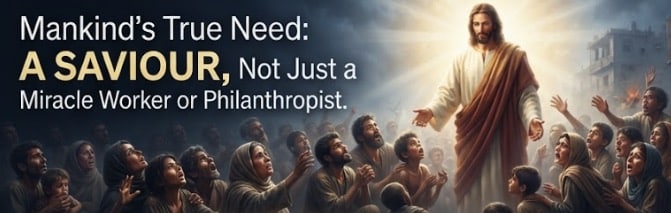
✍️ Give Them Something to Eat Yourselves


EXCERPT: What mankind needs more than a miracle worker or a philanthropist is a Saviour, because our greatest problem is not poverty, hunger or war, it is sin. And the Saviour chooses to enlist us in this grand work of salvation.
But what kind of people does He use? You would imagine that He would zoom in on the gifted, the resourceful or the rich. But He doesn’t. Instead, He takes anyone who is willing to risk sharing and trusting.
Dominican Blackfriars
18th Sunday of Year A
✍️ The True Miracle

EXCERPT: Ministering to others includes providing leadership. For us, that could mean leadership in the church, including vocations to the priesthood and the religious life. Alternatively, it could mean active participation in the life of the parish. Also, it could mean providing leadership in the communities in which we live. For the laity, there is the option of entering local politics, or even national or international politics… There certainly is a need for politicians motivated by faith to speak up for the real needs of the crowd.

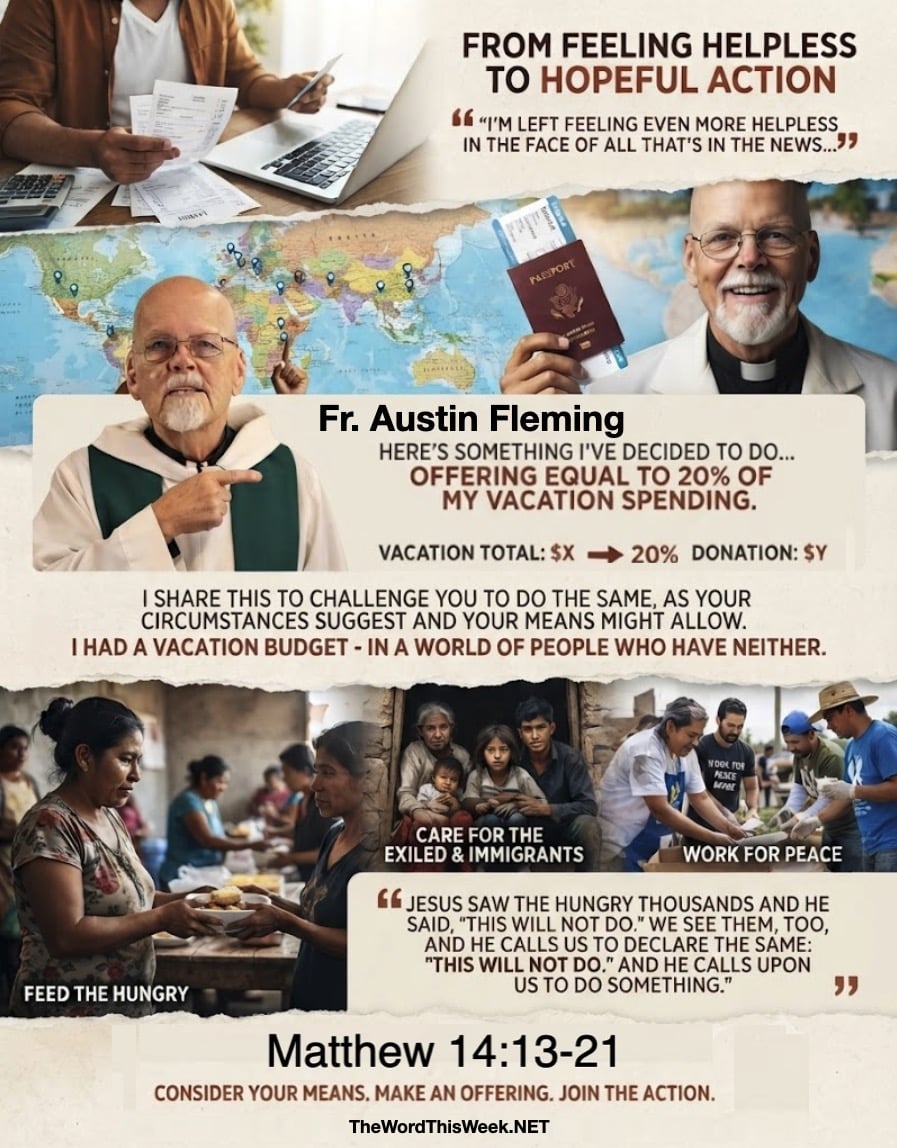
Fr. Austin Fleming
18th Sunday of Year A
✍️ No, It Won’t Do…
EXCERPT: I’m left feeling even more helpless in the face of all that’s in the news these days. Jesus saw the hungry thousands and he said, “This will not do.”
We see them, too, and he calls us to declare the same: “This will not do.” So here’s something I’ve decided to do… I’m going to total up what I spent on my vacation and make an offering equal to 20% of that to organizations that feed the hungry, care for the exiled and immigrants and work for peace. Doing this wasn’t in my vacation budget. But here’s the point: I had a vacation budget – in a world of people who have neither budgets nor vacations. My small gesture won’t solve the world’s problems but it might begin to resolve one of mine: my insulated exile from the suffering of others.
Monsignor Peter Hahn
18th Sunday of Year A
NO HOMILY AVAILABLE THIS WEEK
Fr. Charles E. Irvin

18th Sunday of Year A
✍️ Satisfying the Soul’s Hunger

EXCERPT: We just heard: “Thus says the LORD: All you who are thirsty, come to the water! You who have no money, come, receive grain and eat; come, without paying and without cost, drink wine and milk! Why spend your money for what is not bread; your wages for what fails to satisfy? Heed me, and you shall eat well, you shall delight in rich fare.”
Observers of the American scene tell us that we are a nation of overfed and overweight people. When you go to a shopping mall and look that the shapes of the people there you will see that. What you won’t see are those who have a hidden hunger– a hunger for acceptance, a hunger for respect, for love, and for lives that matter…
Years ago a famous English poet, T.S. Eliot, wrote a magnificent poem he titled “The Wasteland.” It was a devastating look into, and commentary upon, our present day culture. He showed us how we are spiritually living in a modern desert, a wasteland, and deserted place. Eliot was echoing the cry of Isaiah: Why spend your money for what is not bread; your wages for what fails to satisfy?…
We need to ask ourselves: “What really sustains us? What is our true sustenance? Just what sort of food is feeding us? Junk food? Food that doesn’t nourish us? Are our bodies bloated and fat while our souls are lean and hungry? Why should we go on living in spiritual starvation?
Fr. Joe Jagodensky, SDS
18th Sunday of Year A
✍️ Not by Bread Alone

EXCERPT: We so often rely only on material food that so very often only yields illusions in a safe and a carefully guarded version of ourselves. It’s so much easier and enjoyable to eat a hamburger than to prayerfully delve deeper into your spiritual life and personal behavior.
“Food that perishes,” that’s a polite word for our bathroom visits. Or, is the food we need one that prompts us to be better Christians, a complete person; the person God created each of us to be. A welcome digestion to reside and live in your soul.
Fr. Langeh, CMF
18th Sunday of Year A
▶️ Our Generous God

EXCERPT: All throughout history, God has been providing food to his people. He gave them manna, quails and water in the desert (Exodus 16; Numbers 11). In effect, this gave them strength during the 40 years they spent in the desert. “The Israelites ate this manna for forty years, until they came to the settled land; they ate manna until they reached the borders of Canaan” (Ex 16: 35). God fed his people through the Prophet Elisha (2 Kings 4:42-44).
After taking care of the spiritual needs of people, Jesus, in our Gospel today encourages us to be Generous. The Apostles were trying to send the people away to look for food: When evening came, the disciples went to him and said, ‘This is a lonely place, and the time has slipped by; so send the people away, and they can go to the villages to buy themselves some food.’
Jesus could make manna fall from heaven at that instance, but he challenged the apostles: ‘There is no need for them to go: give them something to eat yourselves. The foundation paradise as a friend of mine will always say is SHARING. This sharing is at three levels: sharing one’s doing, one’s being, and one’s having: Sharing what we do – Sharing who we are – Sharing what we have
Msgr. Charles Pope

18th Sunday of Year A
✍️ It is Easier to Wear Slippers than to Carpet the Whole of the Earth
EXCERPT: We all know that this world is in an increasingly bad state: rampant secularism, moral relativism, and a Church with many self-inflicted wounds. This has all led to the fact that we have a real mess on our hands. And the problems are overwhelming: sexual confusion, the culture of death, the breakdown of marriage, compulsive sin, compulsive overspending, greed, insensitivity to the poor, deep and widespread addiction to pornography, drugs, and alcohol, abortion, widespread promiscuity, adultery, corruption, cynicism, low mass attendance and on an on.
The problems seem overwhelming and our resources seem so limited to turn back the tide. What will we ever do with only five loaves and two fishes? Jesus says, bring them to me. There is an old saying that it is easier to wear slippers that to carpet the whole of the earth. Indeed it is. If it is a converted world you want, start with yourself. Bring your loaves and fishes to Jesus, bring your slippers, and let’s get started…
OUTLINE:
I. THE IMAGE THAT IS EXTOLLED
II. THE ISSUE THAT IS EVADED
III. THE INSTRUCTION THAT ENSUES|
IV. THE INSUFFICIENCY THAT IS EXPRESSED
V. THE IMMENSITY THAT IS EXPERIENCED
Father Kevin Rettig

18th Sunday of Year A
▶️ Long Division
EXCERPT: We say, “I don’t have enough.” And God says, “Oh yes, you do. Look at what you have, accept it, be grateful for it, and you will be amazed that there is enough for you and for everyone else.” Then comes the great miracle.
They call it the miracle of the multiplication of the loaves, but we should rather call it the miracle of the division of the loaves. Jesus does not wave a magic hand and produce thousands of loaves of bread on the spot; what He did was divide.
What was there—the miracle of multiplication—came through the division. What an amazing mathematician God is; multiplication comes when we divide. It is when we subtract from what we have that something is added to it through this division.

Fr. George Smiga

18th Sunday of Year A
✍️ A Relationship Not a Bargain

Romans 8:35, 37-39
EXCERPT: Many people who want to market Christianity will try to make it into a bargain. “If you do this, God will do that. If you believe and pray, you will be wealthy or healthy. If you believe in Jesus you will not have to experience sickness or worry or pain.” But in Paul’s expression there is no sign of such bargaining. In fact, Paul admits painfully that we as believers in Christ undergo the same trials and tribulations as everyone else in the world. Believing in Christ does not insure us that we can avoid cancer, or that our marriage will last, or that we will be able to protect the people we love. Believing in Christ is not a guarantee to a charmed and easy life. What faith is, is the acceptance of a relationship. What faith is, is believing in a God who caresses us with blessings and who gently strokes us in our pain. Believing in Christ is admitting that there is a God who will never stop loving us.
Additional Homilies
18th Sunday of Year A
Fr. Vincent Hawkswell | Archive
Nothing Can Separate Us from God’s Love (2020)

Fr. George Corrigan, OFM
Food for Life
Commentary (PDF)
Msgr. Joseph Pellegrino (PDF) | Archive
The Culture of Life (2020)
Fr. Tommy Lane | Archive
Give to Jesus and he gives to you
Let Jesus feast with you!
Related Homilies: Jesus expands our small vision to his limitless vision
Homilies on the Eucharist stories about the Eucharist
Fr. Michael Fallon, MSC | Archive
18th Sunday in Ordinary Time (PDF)
