Fr. Tony’s Homily, Homily Starters
Fr. Tony’s Homily, Homily Starters
July 26, 2026



RELATED
PAGES




MasterCard (1997)
17th Sunday of Year A




Looking for a powerful way to begin your homily? Use the anecdote below, and feature one of the infographics above in your parish bulletin. It’s an excellent visual reminder to help your congregation carry the message of The Word This Week home with them.
A classic MasterCard commercial from 1997 shows a rapid succession of transactional purchases with concrete prices listed on screen (e.g., two tickets to a baseball game: $28; two hot dogs and drinks: $18; an autographed baseball: $45). The commercial then shifts to an emotional, intangible moment between a father and son, labeled as “Priceless.” The famous tagline follows: “There are some things money can’t buy. For everything else, there’s Mastercard.”
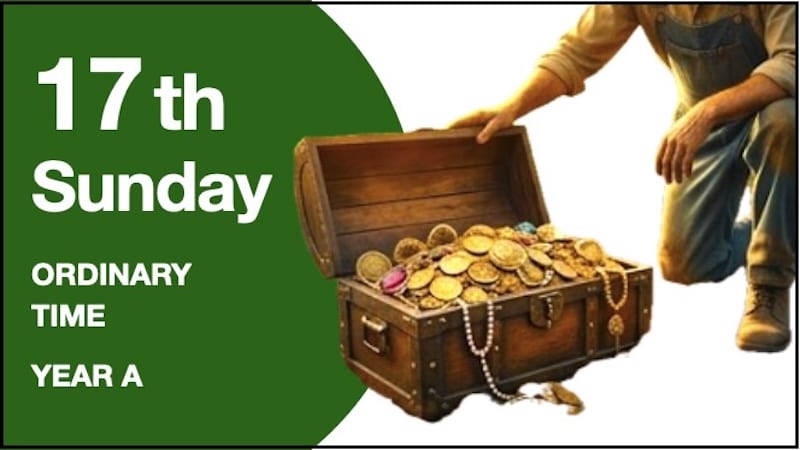
The Connection: The parables of the Hidden Treasure and the Pearl turn standard economics upside down. The finder doesn’t begrudgingly sell everything he owns; he does it “in his joy.” The Mastercard campaign captures this exact shift in value calculus. It contrasts the finite, everyday currencies of life with an ultimate experience that transcends monetary calculation. To gain the “priceless” reality, one must look past the immediate cost of the investments required to get there.
The Red Pill or the Blue Pill?
17th Sunday of Year A



In the movie, The Matrix, Morpheus offers Neo a choice between the blue pill (returning to his comfortable, familiar, yet artificial life) and the red pill (discovering the unsettling truth of reality). Neo chooses the red pill, completely severing his connection to everything he has ever known.
The Connection: This echoes the man discovering the treasure in the field. Once Neo gets a glimpse of the true nature of reality (an awakening parallel to discovering the Kingdom), he cannot simply go back to normal. He abandons his entire established life, his career, and his safety to pursue the absolute truth.
The Biggest Diamond
17th Sunday of Year A

This is a true story, no matter how much like a fairy tale it may sound. In early 1905, at Premier Mine #2 near Pretoria, South Africa, a totally unsuspecting man literally stumbled upon the world’s largest diamond—all 3,106 carats of it. Known as the Cullinan diamond, this amazing stone was sent to England in an ordinary cardboard box. Eventually, 105 individual stones were cut from it. Two of the largest stones produced from the rough diamond—the 530-carat Star of Africa (Cullinan I) and the 317-carat Cullinan II—were mounted on the Scepter with the Cross of the British Monarch as part of the royal Crown Jewels. Today, Cullinan I remains the second largest polished gem in the world, while Cullinan II stands as the fourth largest polished diamond. [Isaac Asimov, Book of Facts, (New York: Wings Books, 1979), pp. 16-17.]
The Connection: In today’s Gospel, Jesus compares the Kingdom of God with such a treasure. Just as the Cullinan diamond was a staggering, unmatched reality hidden in the earth until someone unexpectedly came across it, the Kingdom of God represents a prize of absolute, incomparable worth. It is a treasure so immense that finding it changes everything, transforming the ordinary ground of our daily lives into the setting for a royal inheritance.
God is in Charge
17th Sunday of Year A

Henry Ford (1863-1947) was the famous American motor manufacturer who pioneered large-scale motor production. He was the founder of the Ford Motor Company. A man, who went to interview Mr. Ford when he was very old, was surprised to find him calm and serene. The interviewer asked him, “Sir, are you not worried in your life? You have to face so many problems every day and deal with so many workers. Don’t you feel the strain on yourself?” Henry Ford replied, “No! I am not worried. I believe that God is managing the affairs and He doesn’t need my advice. With God in charge, I believe that everything will work for the best in the end.”
The Connection: “All things work for good for those who love God,” assures St. Paul in today’s second reading. (John Rose in John’s Sunday Stories; quoted by Fr. Botelho).
Yates Oil Field
17th Sunday of Year A

In west Texas, there is a famous oil field known as the Yates Oil Field. It is a giant oil field in the Permian basin of west Texas, bordering Pecos River. The field has produced more than one billion barrels of oil, making it one of the largest in the United States. Estimated recoverable reserves are still approximately one billion barrels, which represents approximately 50% of the original oil in place. During the depression, this field was a sheep ranch owned Mr. Ira and Mrs. Ann Yates. Ira was not able to make enough money on his ranching operation to pay the principal and interest on his mortgage, so he was in danger of losing his ranch. With little money for clothes or food, his family, like many others, had to live on a government subsidy. Day after day, as he grazed his sheep over those rolling west Texas hills, he was no doubt greatly troubled about how he would be able to pay his bills. Ira heard about oil excavation in Texas and invited Transcontinental Oil Company to explore his land for oil. A crew from the oil company came into the area and told Mr. Yates that there was oil on this land. They asked permission to drill a wildcat well, and he signed a lease. At a little more than a thousand feet, they struck a huge oil reserve, giving eighty thousand barrels a day. In fact, thirty years after the discovery, a government test of one of Mr. Yates’ wells showed that it still could produce more than a hundred thousand barrels of oil a day. And Mr. Yates owned it all. The day he had purchased the land, he received the oil and mineral rights. And yet, he had been living on relief – a multimillionaire living in poverty. Why? He did not know the oil was there! He owned it, but he did not possess it. [James Hewett, How to Live Confidently in a Hostile World (Wheaton, IL: Word Publishing, 1989), p. 177.]
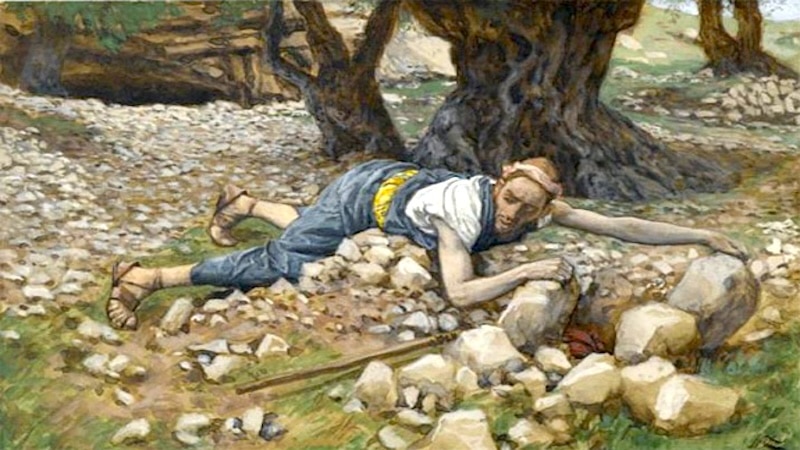
The Connection: In today’s Gospel Jesus compares the Kingdom of God to a treasure hidden in a field.
The Art of Listening: Wisdom and the Reign of God
In today’s Gospel, Jesus concludes a long series of parables about the reign of God by praising those wise men and women who have listened carefully, understood and responded to his message.
1 Kings 3:5, 7-12
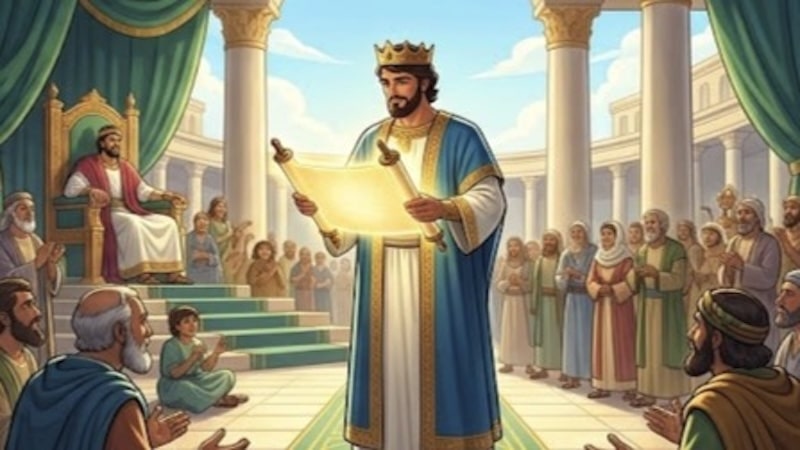
The first reading tells us how the young King Solomon opted for the great treasure of accepting God to rule his life and then doing God’s will. That is why he asked of God “an understanding heart” “to distinguish right from wrong,” so that he might govern God’s people properly. Yahweh was pleased with his request and granted him “a wise and discerning heart” which enabled him to surpass everyone in wisdom.
In today’s Responsorial Psalm (Ps 119), the psalmist says of the commands of God, “For I love Your commands more that gold however fine. For in all Your precepts, I go forward; every false way I hate,” thus showing real Wisdom.
The first reading (1 Kings 3:5, 7-12) explained: In the Old Testament, dreams were the accepted means of Divine communication, especially for rulers seeking God’s guidance. In our first reading, God appears to young king Solomon with an undeserved, generous offer: “Ask something of Me and I will give it to you.” The ancient Semitic belief was that people think with their hearts and feel with their kidneys. The latter were considered the source of our emotions and the former, the source of our thoughts and insights. Thus, when Solomon says, “Give Your servant an understanding heart to judge Your people and to distinguish right from wrong,” he’s simply requesting a mind capable of seeing what others overlook. He asks for an understanding heart so that he will be able to deal well with people, act compassionately and discern right from wrong. He selflessly asks for “a heart with skill to listen” — sensitivity in understanding his subjects’ needs, skillful decision-making — in order to build a just society. Wisdom gives us insight into what is truly important in life, an awareness of the meaning and purpose of living, of what really matters. Wisdom is an understanding of where our real well-being and happiness lie. Wisdom is indeed the “pearl of great price,” that Jesus speaks of.
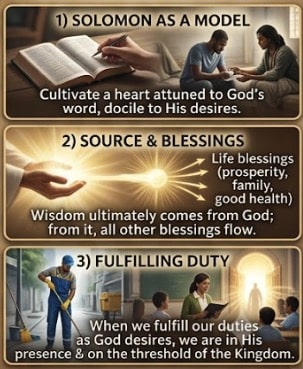
While Solomon discerns and follows the right way, he is a model and a challenge for us. His request here invites us to cultivate his prayer for a heart and mind attuned to God’s word and docile to His desires. Prayer means asking God for what He wants to give — that which makes us better able to do His will of loving service to others. In this reading, Solomon recognizes two things: 1) wisdom ultimately comes from God; and 2), from wisdom, all other blessings will flow. Using the language, we find in today’s parables, we could say that Solomon asked for a “treasure” or a “pearl of great price.” And he got it. The reading teaches us that when we fulfill our duties as God desires, we are in His presence and on the threshold of the Kingdom.
Romans 8:28-30
In the second reading, Paul teaches that the wisdom to perceive God’s grace is essential for those who want to follow Him and to do His will, thus remaining in His kingdom. He assures Rome’s Christian community that “all things work for good for those who love God, who are called according to His purpose.”
Matthew 13:44-52
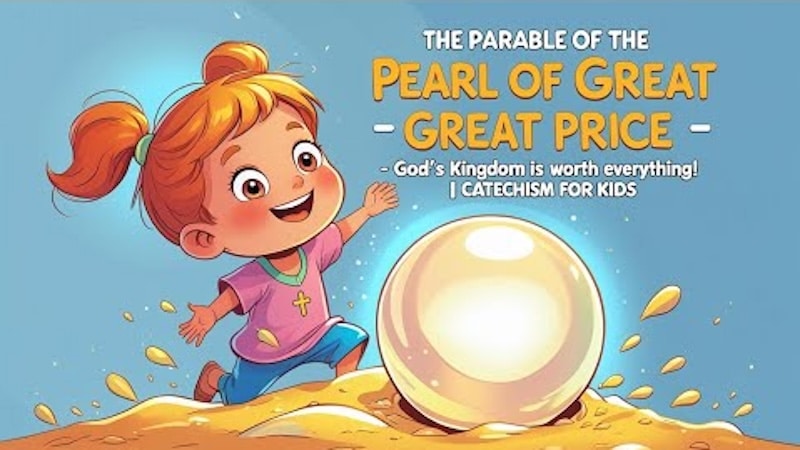
In the Gospel, Jesus teaches us that God’s Kingdom (the rule of God in us, established by accepting Jesus as our God and Savior, putting our Faith in God and doing His will), is something of extraordinary value, like a hidden treasure or costly pearl. Possessing that treasure demands from us a total commitment if we are to preserve it. The Kingdom of God is God’s reign in our hearts, in our lives, in our homes, in our society, and in our world. Only those who develop searching minds and are willing to give up everything for the great treasure of God’s Kingdom will be rewarded. Through the first and second parables, of the treasure and the pearl, Jesus teaches us that identifying God’s will and living according to the Gospel, both with His help, are the most precious and worthwhile things in life. Through Jesus and his Gospel, we come to know and understand the real meaning of life and the most important things we must do to secure our eternal salvation.


Most of the time, we are chasing false treasures such as money, status or pleasure. Often, we are locked into regrets over the past, or focused too much on the future. As a result, the enriching present passes us by, and the treasure is never discovered. Thus, the really valuable pearl of sharing in God’s life through Jesus here on earth and later in Heaven is never found. Let us always remember that Heaven is within the reach of all of us who try to do the will of God, following the ordinary vocations of life and enjoying this world’s joys and pleasures within the framework of God’s Commandments. Right now, it is for us to use the time given to us to go in search of the pearl of great price and to help others in their search. We are challenged to search and discern where the Lord is calling us so that we may know what path to take. Let us remember that whenever we fight against discrimination, whenever we trust completely in God, whenever our selflessness conquers selfishness, whenever our love overcomes sin and our Faith overcomes suffering, whenever we render humble service to others, we are doing the will of God as it is done in Heaven, Hence, we are already living in the Kingdom of Heaven while we are still on earth. The pearl of great price in this life is also found in our human relationships: a happy family, good friends, and people who love and accept us, even if neither we nor they are perfect. We must give all we have to possess this great pearl because, through selfishness and self-worship, we can destroy entirely the bond of love joining us to God and each other, a bond that otherwise would flourish, surviving in spite of sickness, disease or geographical distance, and growing stronger when death divides us.
Precautions to Keep
Our Greatest Treasure Safe
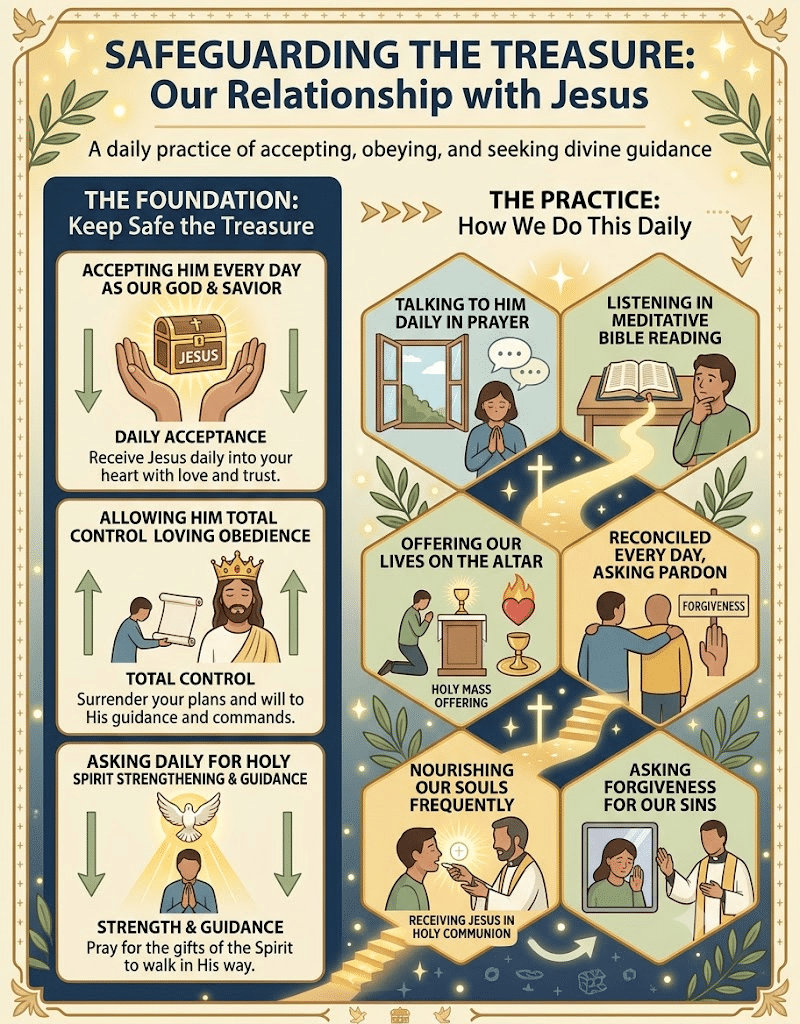
We will be able to keep safe the treasure of our personal relationship with Jesus by accepting him every day as our God and Savior, by allowing him to have total control over our lives through our loving obedience to his will, and by asking him daily for the strengthening and guidance of his Holy Spirit. We do this by talking to him daily in prayer, by listening to him in our meditative reading of the Bible, by getting reconciled to him and others every day, asking pardon and forgiveness for our sins, by offering Him our lives on the altar during the Holy Mass, and by nourishing our souls frequently, receiving Jesus in Holy Communion.
The Lesson of the Dragnet
This parable offers us a lesson in tolerance and compassionate understanding. In this, it resembles the parable of the weeds growing up with the wheat, for both parables teach us that the kingdom is a mixed body of saints and sinners (wheat and weeds; good and rotten fish). There will be always a temptation for those who feel they are more “faithful” to separate themselves from the “weeds”/” bad fish.”
But Jesus reminds us that the final judgment resulting in reward or punishment is God’s work. Thus, we must learn to be patient, compassionate and understanding with those who seem to us to fall far below the requirements of the Gospel and the Kingdom.
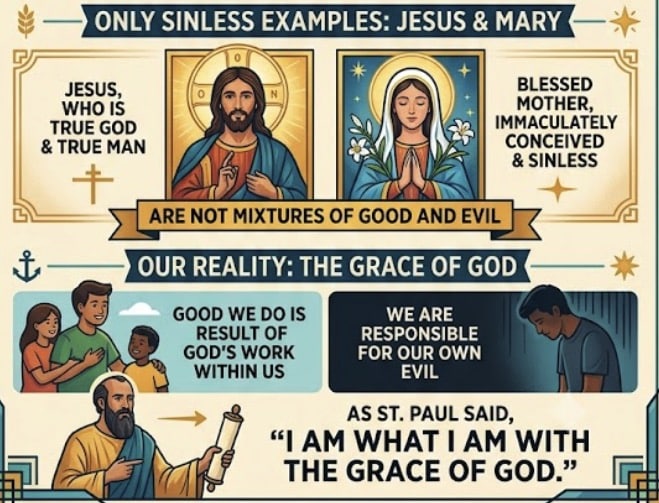
Let us humbly admit the fact that only Jesus, Who is True God and True Man, and our Blessed Mother who is simply human though Immaculately conceived and remaining sinless throughout her life, are not mixtures of good and evil! For the rest us, the good we do is the result of God’s work within us, while we are responsible for the evil. Let us gratefully declare as St. Paul did, “I am what I am with the grace of God.”