Vocations, Discernment
Vocations, Discernment
July 26, 2026


Follow Me…
Discover Your
Purpose
AT A GLANCE
- Joyful Surrender: Evangelical counsels (poverty, chastity, and obedience) are not acts of begrudging deprivation, but a joyful trade-off to possess the Kingdom of God entirely.
- The Ultimate Prize: Discerning a vocation means recognizing Christ as the hidden treasure and the Pearl of Great Price, worth more than all competing worldly attachments.
- Integrated Ministry: A modern response to a vocation requires a “scribal” stewardship—safeguarding the timeless, ancient deposit of faith (the old) while dynamically engaging with contemporary cultural realities (the new).
REFLECTION
QUESTIONS
- Examining the “Cost”: When you think about your vocation, does your mind focus primarily on what you are giving up, or on the Treasure you are gaining? Where is the root of that fear?
- Identifying the Competitors: What are the modern “fields” (e.g., career prestige, complete autonomy, digital validation) that most aggressively compete for your heart’s ultimate allegiance?
- The Memory of Joy: Can you recall the exact moment or season you first felt the joyful spark of your calling? How can you bring that memory into the dry or routine aspects of your current formation?
REAL-LIFE
APPLICATION
- The Challenge: Choose one tangible attachment this week that acts as a safety net or a distraction from your discernment—whether it is an app, a habit of comfort, or an obsession with a backup plan. Fast from it for seven days. Use that deliberately created empty space to spend 15 minutes in silent adoration or prayer, repeating the simple prayer of Samuel: “Speak, Lord, for your servant is listening.” Experience the freedom of clearing the field to make room for the Pearl.
17th Sunday of Year A
The ordained priesthood includes both diocesan and religious order priests.
The Joy of
The Surrendered Heart
Discerning a vocation to diocesan priesthood or religious life can often feel like walking through a dense, shifting mist. Whether you are tentatively whispering your first “yes” in the quiet of your room, or you are already navigating the structured, demanding days of a seminary or novitiate, the same fundamental question likely echoes in your heart: Is it truly worth giving up everything? When the initial emotional high fades and the weight of a lifelong commitment sets in, the sacrifice can loom large.

Yet, the answer to this existential hesitation is woven into the very fabric of the Gospel. In Matthew 13:44-52, Jesus provides a definitive, beautiful blueprint for the discerning heart. He compares the kingdom of heaven to a treasure hidden in a field and to a merchant searching for fine pearls. Notably, in both parables, the discoverer does not reluctantly or sorrowfully surrender his possessions. Instead, out of joy, he goes and sells everything he has to purchase what he has found. The surrender is not a loss; it is a triumphant acquisition.
The Illusions of Modern Field Hunting
In our contemporary, hyper-connected world, you are constantly bombarded with alternative “fields” to buy. Culture relentlessly insists that security is found in financial independence, that identity is forged through personal branding, and that fulfillment is achieved by keeping your options perpetually open. To a society obsessed with radical autonomy and immediate gratification, committing to a life of celibacy, poverty, and obedience looks like absolute foolishness. It appears as a subtraction—a narrowing of life.
However, the modern landscape is crowded with what last Sunday’s Gospel called “weeds”—anxieties, endless choices, and superficial connections that mask a deep, societal loneliness. True freedom does not come from having every option available; it comes from finding the one option that actually matters. The quiet, persistent calling you feel is an encounter with that Pearl of Great Price. Your vocation is not a list of deprivations; it is a profound expansion of love. By clearing away the clutter of competing attachments, you are making room to fully possess the ultimate prize.
A Paradigm Shift: Celibacy and religious life are not the absence of love, but the radicalization of it. You are not choosing loneliness; you are choosing an exclusive availability to the Lord and His people.
Bringing Forth New and Old Treasures
As you discern or advance through formation, Jesus also calls you to be like the “master of a household who brings out of his storeroom new treasures as well as old.” This is the dual identity of the modern priest or religious.
On one hand, you are the guardian of the “old”—the timeless, beautiful treasury of Catholic faith, liturgy, and monastic wisdom that has sustained the Church through centuries of crisis. On the other hand, you are called to bring the “new.” You are a man of this generation, equipped with an understanding of contemporary anxieties, technological shifts, and cultural heartbreaks. You are uniquely positioned to translate ancient truth into a language that a fractured, modern world can understand.
Practical Applications for the Journeyearcher of Hearts
To keep your vision clear and your joy intact amidst the daily grind of academic studies, community life, or early discernment, you must ground your discernment in concrete action:
- Conduct Daily Radical Audits: Periodically sit before the Blessed Sacrament and ask, “What am I holding onto that prevents me from fully buying the field?” Identify the subtle attachments—whether it is an obsession with digital affirmation, a desire for comfort, or intellectual pride—and intentionally surrender them.
- Cultivate the Memory of Joy: When the routine of seminary or discernment feels dry, academic, or frustrating, actively remember the initial “joy” of your first discovery. Re-read old journals, return to the scriptures that first pierced your heart, and anchor your daily, mundane tasks in love.
- Bridge the Old and the New: Commit deeply to your theological formation (the old), but actively practice empathy. Listen to the doubts of your secular peers, understand the unique griefs of our era, and learn how to present the Gospel not as an outdated rulebook, but as the living answer to modern despair.
Do not be afraid of the cost of the field. The man who sold everything did not look back at his empty house with regret; he looked at his new field with sheer, radiant joy. Trust the King who called you, for He is both the architect of your heart and the treasure you seek.
Essay and animation created with AI tools and human editorial oversight.
His Hands,
His Feet,
Your Vocation
AT A GLANCE
- The Logic of Total Surrender: The Kingdom of Heaven is not a cheap commodity; it is a priceless treasure that demands our total investment. True discipleship is not a reluctant sacrifice, but a joyful surrender.
- The Liturgical Appraisal: At the ambo and the altar, the deacon acts as a divine appraiser—proclaiming the incomparable value of the Word and the Eucharist over the fleeting “beads” of worldly wealth and status.
- The Treasure in the Margins: Christ’s presence is dynamically hidden in the “fields” society overlooks. True diakonia requires digging beneath the dirt of poverty, sickness, and incarceration to uncover the supreme dignity of Christ in the poor.
REFLECTION
QUESTIONS
- Identifying the “Beads”: What specific worldly attachments (comfort, status, control, or time) are you currently treating as more valuable than the Kingdom of God?
- Evaluating Your Surrender: When you sacrifice for your faith or your parish, does it feel like a heavy burden, or do you experience the joyful relief of a merchant who knows they got the better deal?
- Recognizing the Hidden Christ: Who are the “forgotten treasures” or marginalized individuals in your local community whom you have overlooked or viewed as a problem rather than a pearl?
REAL-LIFE
APPLICATION
- The “Audit of the Soul”: Conduct a rigorous audit of your weekly schedule and bank statement. Identify one area of excess—whether in leisure time, material subscriptions, or resource hoarding—and “sell” it (relinquish it) to reinvest those resources directly into a parish ministry or charity.
- Dig in an Overlooked Field: Step out of your comfort zone this week to encounter Christ at the margins. Commit to volunteering at a local prison, hospital, or shelter, focusing not on “fixing” people, but on listening to them and honoring them as the true treasures of the Church.
- Exude Radical Joy: Choose one demanding act of service this week—whether within your family, your workplace, or your parish—and perform it with intentional, uncomplaining joy. Let your attitude be a living proof to those around you that serving Christ is a privilege, not a chore.
17th Sunday of Year A
Deacons receive the Sacrament of Holy Orders but are ordained unto ministry and service rather than the priesthood. Because permanent deacons are often married and hold secular jobs, treating them as a distinct category makes a lot of practical and theological sense.
The Merchant of Mercy
Gospel: Matthew 13:44–52
Theme: The pearl of great price
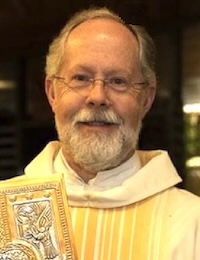
McCulloch
(Diocese of Broken Bay)
At the end of his parable discourse, Jesus gives two final, intimate images for the Kingdom of Heaven. It is a treasure hidden in a field, and a pearl of great price. In both cases, the response is identical: the person who finds it is filled with joy and goes to sell everything to acquire it.
This is the logic of the Gospel: the Kingdom is not a cheap find; it is a priceless treasure that demands, and is worth, our totalinvestment. This is not a reluctant sacrifice, but a joyful surrender.
The deacon’s entire life, consecrated to service, is a living parable of this very discovery. His “yes” to ordination is the act of the merchant who has found the pearl. He is a man who has given up much time, comfort, and personal ambition to gain everything in Christ. As St. John Chrysostom said, “What can equal the joy of discovering the Kingdom within you?” The deacon’s ministry is to witness to that joy, showing the world where the true riches lie.
AT MASS
The Proclamation of the Treasure
At Mass, the deacon is the herald who announces that the pearl has been found and is now present among us.
• Proclaiming the Pricelessness: When the deacon proclaims this Gospel, he is not just telling a story; he is making an appraisal. He is the voice who declares that the Kingdom, present in Word and Sacrament, is worth more than everything else the world is trying to sell.
• The Homily of True Riches: The deacon’s preaching is gem appraisal in action. He must sell the Kingdom to the assembly, contrasting the pearl of Christ with the mere beads of this world (including power, status, and wealth). And he must challenge the parish: What are you willing to ‘sell’ to possess this extraordinary joy?
• Minister of the Pearl: The deacon’s service at Mass, especially as the ordinary minister of the Chalice, is the high point of his ministry. He holds the priceless treasure of the Body and Blood of Christ, and serves it to the people. He is the merchant who, having found the pearl, now joyfully shares it.
IN THE PARISH
The Ministry of Joyful Surrender
The deacon’s dual vocation is the most visible living parable of the merchant.
• The Sale of Ordination: The deacon is a man who truly lives this Gospel. In effect, he sells his time (time from his family, his job, and his leisure) to buy the field of service. This is not a burden he complains about, however. It is the joyful surrender of the man who knows he has made the better deal.
• A Witness to the Kingdom Within: The deacon’s joy in his ministry is the witness. The parish sees a man who gives his all, and in his joy, they see the value of the pearl. He shows, by his life, that belonging to Christ and His Kingdom is the true source of joy.
• Animator of the Sale: As the animator of charity, the deacon challenges the parish to be the merchant. He asks the community to sell its excess (in its budget, its time, and its resources) to buy the treasure of justice, mercy, and compassion for the poor.
AT THE MARGINS
The Discovery in the Field
The divine treasure is hidden in a field and must be found. The deacon is the one ordained to go digging in the fields that others overlook, at the margins of society.
• Finding the Hidden Treasure: The deacon’s diakonia is the work of the merchant. He goes into the field of the hospital, the prison, or the shelter. And there, hidden under the dirt of poverty, sickness, or crime, he finds the treasure, which is Christ in the poor.
• The Pearl of the Poor: St. Lawrence called the poor the treasures of the Church. The deacon’s service is a constant reminder that the greatest treasure is not in the tabernacle alone, but also in the least of these.
• A Pearl Worth Every Sacrifice: The deacon’s ministry shows the world that the poor and the marginalized are not a problem to be solved, but the pearl of great price for whom Christ sold everything on the cross. His service is the living proof that this treasure, this communion with the forgotten, is the one worth every sacrifice.
Faith in Action—
Grace in the
Everyday
AT A GLANCE
- The Solomon Request: True wisdom in marriage begins by acknowledging our limitations and asking God for an “understanding heart” to navigate family complexities.
- Living Liturgy: The Theology of the Body isn’t just for the marriage bed; chores, parenting, and daily sacrifices are bodily expressions of Christ’s self-giving love.
- Divine Purpose in Trials: The friction and hardships of family life are not obstacles to holiness—they are the tools God uses to conform spouses to the image of His Son.
- The Domestic Church: By anchoring daily routines in grace, the home is transformed from a place of mere cohabitation into a sanctuary of radical love.
REFLECTION
QUESTIONS
- When daily friction or misunderstandings occur in our home, is our first instinct to defend our rights or to pray for an understanding heart?
- How can we better recognize the physical and emotional exhaustion behind each other’s sharp remarks or distant behavior?
- In what ways are we tempted to seek worldly solutions (wealth, control, comfort) for our family’s problems rather than divine wisdom?
- Do we view the daily sacrifices of parenting and household management as interruptions to our spiritual life, or as the very path to our holiness?
- How does knowing that “all things work for good” change the way we view current financial, physical, or emotional trials in our marriage?
- Is our home an active “domestic church” where our children witness authentic forgiveness, or is it merely a hub for busy activities?
- How can we more intentionally use our bodies—through touch, acts of service, and attentive listening—to make God’s invisible love visible to each other this week?
REAL-LIFE
APPLICATIONS
- The “Ten-Second Shift”: When your spouse or child acts out, deliberately pause for ten seconds before responding. Use that window to silently pray: “Lord, give me an understanding heart to see their hidden need right now.”
- Sanctifying the Chore Wheel: Reframe repetitive household tasks. When folding laundry, washing dishes, or mowing the lawn, intentionally offer up the physical exertion as a silent prayer for the specific intentions or healing of your spouse.
- A “Tech-Free” Sanctuary Time: Establish a 20-minute daily window where all phones and devices are put away. Use this time to look each other in the eye, listen to the highs and lows of the day, and physically reaffirm your presence to one another.
- The Grace Audit: Sit down together at the end of the week and identify one specific challenge or trial you faced. Explicitly discuss how God might be using that specific stressor to chip away at selfishness and conform you closer to His image.
17th Sunday of Year A
The lay state is lived through Holy Matrimony—a sacramental vocation building the domestic church—and the committed single life, which offers a lifetime of unique flexibility to serve God. The single state also includes those patiently waiting and preparing for marriage.
An Understanding Heart
in the Domestic Church
In the quiet of the night at Gibeon, God issued a staggering invitation to the young King Solomon: “Ask something of me and I will give it to you” (1 Kings 3:5). Faced with the daunting task of leadership, Solomon did not ask for wealth, longevity, or power. Instead, recognizing his own limitations, he prayed: “Give your servant, therefore, an understanding heart… to distinguish right from wrong” (1 Kings 3:9).
For Catholic married couples, this ancient prayer hits remarkably close to home. When a man and a woman stand at the altar, they enter a covenant to build a domestic church—a sanctuary of faith, hope, and charity within the home. Yet, navigating the daily complexities of family life can quickly make spouses feel like Solomon: young, unskilled, and standing before a task far greater than themselves. The pressures of modern culture, the emotional demands of parenting, and the continuous vulnerability of sharing life with another imperfect human being require something far deeper than mere human stamina. They require divine wisdom.
The Liturgy of Domestic Life and
Theology of the Body
St. John Paul II’s Theology of the Body reminds us that the human body—and the marital embrace specifically—is designed to be a visible sign of an invisible reality: God’s own free, total, faithful, and fruitful love. In marriage, your very bodies speak a liturgical language of self-gift. However, this self-gift is not confined to the marriage bed; it is meant to leaven every corner of your home.
When a parent wakes up in the middle of the night to soothe a sick child, or when a spouse chooses to listen patiently after a exhausting workday rather than retreat into isolation, the Theology of the Body is being lived out dynamically. The body becomes the instrument through which Christ’s love is made tangible.
To sustain this radical self-gift, couples need the exact grace Solomon requested: an understanding heart. In the context of a family, an understanding heart is the ability to see past the surface level of daily friction. It is the wisdom to recognize that a spouse’s sharp remark might stem from deep exhaustion rather than malice, or that a child’s tantrum is a cry for connection. Seeking this wisdom allows couples to transform their homes from places of mere cohabitation into schools of holiness.
Conformed to His Image
in Daily Trials
When family life inevitably brings unexpected hardships, St. Paul offers a profound anchor in the second reading: “We know that all things work for good for those who love God, who are called according to his purpose” (Romans 8:28). This promise does not mean that family life will be free from suffering. Rather, it guarantees that no trial within the domestic church is wasted if it is surrendered to Christ.
St. Paul explains that God’s ultimate plan is for us “to be conformed to the image of his Son” (Romans 8:29). The daily friction of family life is often the primary tool God uses to achieve this transformation. The sacrifices demanded by marriage and parenthood chip away at our deeply rooted selfishness, gradually shaping us into the likeness of Jesus, who poured Himself out completely. The unexpected financial strain, the prolonged illness, or the emotional toll of a difficult season are not interruptions to your path to holiness—they are the path.
Practical Applications for the Home
Living out these profound scriptural truths requires practical, intentional habits within the rhythm of your week:
- The Solomon Prayer for Spouses: Before entering into difficult conversations or when tension arises in the home, pause together and pray explicitly for an understanding heart. Acknowledge your limitations to one another and to God, asking for the grace to see the situation through the lens of divine charity rather than defensive pride.
- Creating a Sacred Space for Prayer: Dedicate a specific area of the home—an altar, a corner with an icon, or a crucifix—as the focal point for the domestic church. Gather there daily, even if just for five minutes, to place the day’s anxieties into the hands of the Father, trusting that He is working all things together for your good.
- The Sacrament of the Present Moment: Intentionally view physical tasks—cooking meals, cleaning the house, driving carpools—as extensions of the marital liturgy. Offer these bodily actions as a living prayer for the sanctification of your spouse and children.
By grounding your marriage in the wisdom of Solomon and the radical trust of St. Paul, your family life becomes a luminous witness. In a world searching for meaning, the joy and resilience of your domestic church will stand as a beautiful testament to the transforming power of God’s love.
Essay and animation created with AI tools and human editorial oversight.
Consecrated life consists of religious sisters, brothers, monks, and nuns who take vows of poverty, chastity, and obedience.