Liturgy, Liturgy Notes, Liturgy Planner, Sunday Prep, Planning for Mass
Liturgy Notes, Liturgy Planner, Sunday Prep, Planning for Mass
July 26, 2026
⭐⭐⭐ The Kingdom of God is Like…

⬅️ ➡️
July 26, 2026
The Church
Governments and Salvation of the World
Those Burdened by Adversity
Local Parish / Faith Community
SUNDAY PLANNING
July 26, 2026
RESOURCES
General Instruction of the Roman Missal
A Simple Guide to Liturgical Enviornment (DIocese of New Ulm PDF)
Common Questions on Liturgical Norms – by Father Edward McNamara, professor of liturgy at the Regina Apostolorum Pontifical Athenaeum
I want you to do two things.
First, create an 8.5×11 infographic using photorealistic images and large arial bold fonts summarizing and giving key points from the transcript. It is important that the infographic is able to show connections and how each part is related to whole. Extract only the major themes and highlights; do not print every word. Clean up the text to ensure grammatical precision, remove any redundancies or verbal fillers, and organize the information into brief thematic sections. Use large, photorealistic images and large, bold typography (like Arial or Open Sans) so it is easily readable. Ensure there are no cite markings anywhere on the infographic. [Insert Text Here]
Second, write a series of petitions for Prayers of the faithful be sure to have petitions for the church, the world, special needs, and the local assembly, also include an opening words of the presider, and. a closing prayer. All prayers should be based on the provided transcripts for each.

Video courtesy of Catholic Women Preach

THE WORD THIS WEEK infographics are created using using GOOGLE’S AI Gemini 2.5 Pro. You are free to use the above infographic in any non-profit ministry. Please give credit to TheWordThisWeek.net and Catholic Women Preach video series.
The Kingdom of Heaven is a multifaceted concept that encompasses God's love, redemption, justice, and unity, and can be experienced and understood through personal relationships, faith, and everyday life.
- 00:00 The Kingdom of Heaven is like a treasure, a pearl, or a net that collects all kinds of people, offering concrete examples of God's love and redemption in everyday life.
- 01:04 A wedding celebration becomes a miraculous and joyful scene where former enemies and young people mingle, and parents show intense care for each other.
- 01:38 The Kingdom of Heaven is like a current reality where people take action for justice and fairness, and awaits us after life, sparking reflections on faith and the afterlife.
- 02:28 A person's faith and understanding of heaven can be deeply personal and experiential, rooted in their lifelong relationship with God and loved ones, rather than solely in theological study.
- 03:41 Wisdom, gained through life experience and knowledge, is a unique quality that individuals, like Solomon and Jesus, can attain by living a life in pursuit of the Kingdom of Heaven.
- 04:28 Knowing God as a loving parent helps set aside worries and fretting, trusting that God will take care of us unconditionally, just as we care for our children.
- 05:32 Saint Ignatius of Loyola's spiritual exercises aim to help people gain self-awareness, know Jesus personally, and serve others, reflecting his values of living in God's love and serving those on the margins.
- 06:54 Heaven is a place of ultimate wisdom, unity, and inclusivity where all people, regardless of background, status, or identity, are one in Christ and feel at home.
July 30, 2023: Anne Hansen Preaches for the Seventeenth Sunday in Ordinary Time
Vision of the Kingdom of Heaven
Q: What does the Kingdom of Heaven look like in terms of social inclusion? A: The Kingdom of Heaven is envisioned as a place where gang members and socialites converse, women preach and participate in all seven sacraments, the LGBTQ community is integrated into the fabric, and immigrants from everywhere feel at home, creating a radically inclusive communion of saints around a very long table.
Q: How does social justice work exemplify the Kingdom of Heaven on earth? A: Los Angeles Catholic Workers embody the Gospel message by risking arrest to join hospitality employees in their fight for fair wages and decent working conditions, demonstrating that heaven's values manifest through solidarity with workers seeking economic justice.
Models of Redemption and Transformation
Q: What organization demonstrates unlimited grace through gang rehabilitation? A: Homeboy Industries, founded by Father Greg Boyle in Los Angeles, operates as a gang rehabilitation program that reflects God's unconditional love by offering second, third, fourth, and fifth chances freely to former gang members seeking transformation.
Q: How did Saint Ignatius transform suffering into spiritual wisdom? A: Saint Ignatius of Loyola converted his personal suffering into spiritual exercises 500 years ago that help people gain wisdom to know themselves, understand Jesus, and serve others, creating a lasting framework for spiritual development.
Biblical Imagery of Heaven
Q: What biblical wedding feast illustrates the impossible nature of heaven? A: The wedding feast at Cana represents heaven as a place where ancient enemies danced together, young people flirted, and guests experienced the paradox of being relaxed yet caring more intensely, an impossible combination achievable only through divine intervention.
Q: What everyday image did Jesus use to make heaven relatable? A: Jesus used the concrete example of family gathered together, eating and laughing with the barbecue fired up and sun shining, meeting his followers where they live by grounding the Kingdom of Heaven in familiar, tangible experiences.

Video courtesy of Ascension Press

THE WORD THIS WEEK infographics are created using using GOOGLE’S AI Gemini 2.5 Pro. You are free to use the above infographic in any non-profit ministry. Please give credit to TheWordThisWeek.net and Sundays with Ascension video series "Encountering the Word."
Becoming obsessed with God's kingdom and prioritizing it above all else brings a unique joy and peace, and is worth sacrificing everything for, as it is a treasure of great value.
- 00:00 Obsession with something can grab a hold of a person's heart, causing everything else to revolve around it.
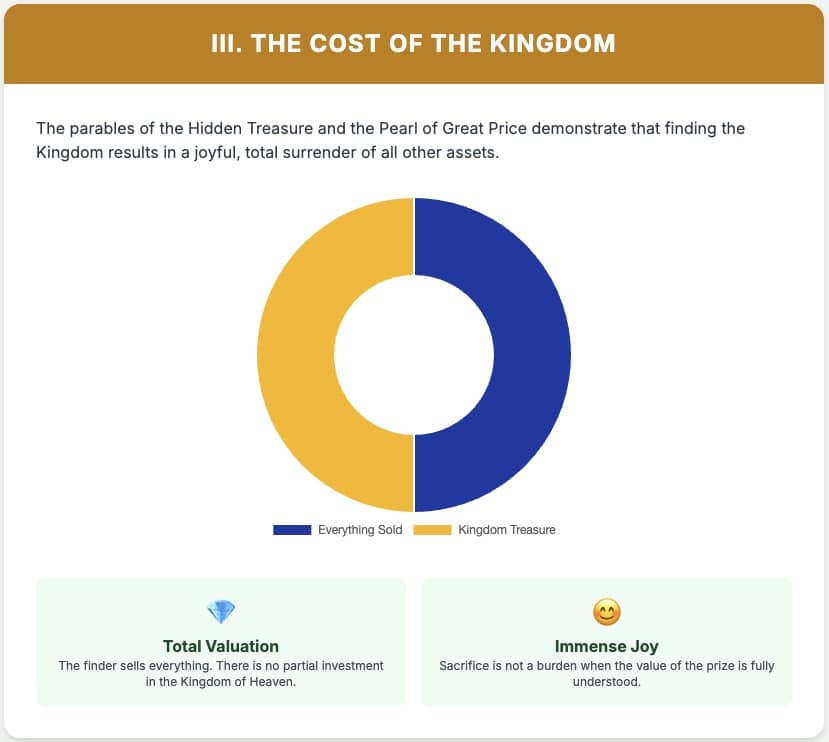
- 00:40 The kingdom of God is a treasure so valuable that it motivates one to willingly sell everything else to attain it.
- 01:24 The kingdom of God is like a pearl of great value that one merchant found, selling all to obtain it, and Christians are called to have a similar all-consuming passion for it.
- 02:07 Focusing on the kingdom of heaven, one pearl of great price, brings a unique joy and peace that can't be found in worldly passions and desires.
- 02:45 The abundance of choices in the western world can be a distraction, similar to the forbidden tree in the Garden of Eden, requiring discernment on what to focus on.
- 03:09 Become obsessed with God's kingdom, where His rule and reign in your life make everything else dispensable, and you'll reflect a treasure to those around you.
What Is the Pearl of Great Price? — Jeff Cavins' Reflection for the 17th Sunday in Ordinary Time
Understanding the Kingdom's Value
Q: What do the parables in Matthew 13:44-46 reveal about the kingdom of God's worth?
A: The kingdom of God is compared to treasure hidden in a field and a pearl of great value where both the finder and merchant sold everything they had to obtain it, demonstrating the kingdom's supreme worth above all earthly possessions.
Q: What does it mean to become obsessed with the kingdom of God?
A: Becoming obsessed with the kingdom means making it the central focus of your life, requiring you to curtail spending and passions for the sake of obtaining that one pearl, treating everything else as dispensable in comparison.
Emotional and Spiritual Impact
Q: What internal transformation occurs when prioritizing the kingdom over worldly things?
A: When focused on the kingdom of God, there is joy and peace in the heart that is absent when obsessed with worldly things, mirroring the joy the man experienced when he found the treasure in Matthew 13:44.
Modern Application
Q: What unique challenge does living in the Western world present for kingdom seekers?
A: Living in the Western world, particularly the United States, presents many distractions comparable to the Garden of Eden, requiring believers to choose to eat from the right tree and actively prioritize the kingdom of God.
Practical Transformation
Q: How can prayer specifically reshape one's perspective on the kingdom?
A: Praying to God to become obsessed with His rule and reign in your life can lead to a transformed perspective where the kingdom becomes paramount and everything else becomes dispensable.

Video courtesy of the Diocese of Colorado Springs

THE WORD THIS WEEK infographics are created using using GOOGLE’S AI Gemini 2.5 Pro. You are free to use the above infographic in any non-profit ministry. Please give credit to TheWordThisWeek.net and Diocese of Colorado Springs video series.
The kingdom of God disrupts our normal view of the world, emphasizing that God actively searches for and notices the vulnerable, and that our priority should be to seek and surrender to Him in order to receive His immense grace.
- 00:00 Parables disrupt our normal view of the world, turning it upside down to help us see God's perspective, where the small and vulnerable are noticed over the big and bright.
- 00:35 The kingdom of God can come to us unexpectedly, like a treasure buried in a field that someone stumbles upon and discovers.
- 00:44 Our faith is about God finding us, not us finding God, and when we put ourselves in a place to be found, we receive immense grace.
- 01:07 The kingdom of God is like a pearl of great value that one seeks throughout life, and when found, it requires surrendering everything to obtain it, reflecting the ongoing search and longing for God that prepares our hearts to receive His grace.
- 01:44 The kingdom of God must be the top priority in our lives, and in doing so, we allow God to lead us to a life that is truly good for us.
- 02:20 God searches for us, and through Jesus' self-giving on the cross, we are claimed by His love and made worth it to Him.
- 02:52 The kingdom of God is like a net that gathers everyone, and to prepare for judgment, one must allow Christ to claim and save them.
Bishop Golka's Reflection on the Seventeenth Sunday in Ordinary Time
Grace and Salvation
Q: Is salvation earned through good works or given freely?
A: Golka teaches that finding the treasure and pearl represents grace coming unexpectedly, emphasizing it's not earned but a gift from God, challenging merit-based salvation views.
Judgment and Exclusion
Q: Does God's net gathering everyone mean universal salvation?
A: The net thrown into the sea gathers everyone but symbolizes judgment, where Golka stresses being with Christ saves us, not self, implying some will not be claimed by Him despite being gathered.
Worldview Disruption
Q: Do parables comfort or challenge believers?
A: Golka states parables in Matthew 13 intentionally disrupt our worldview to reveal God's perspective focusing on the small and vulnerable, contradicting conventional religious comfort narratives.

Video courtesy of Dominican Friars (Chicago)

THE WORD THIS WEEK infographics are created using using GOOGLE’S AI Gemini 2.5 Pro. You are free to use the above infographic in any non-profit ministry. Please give credit to TheWordThisWeek.net and Dominican Friars, Province of St. Albert the Great.
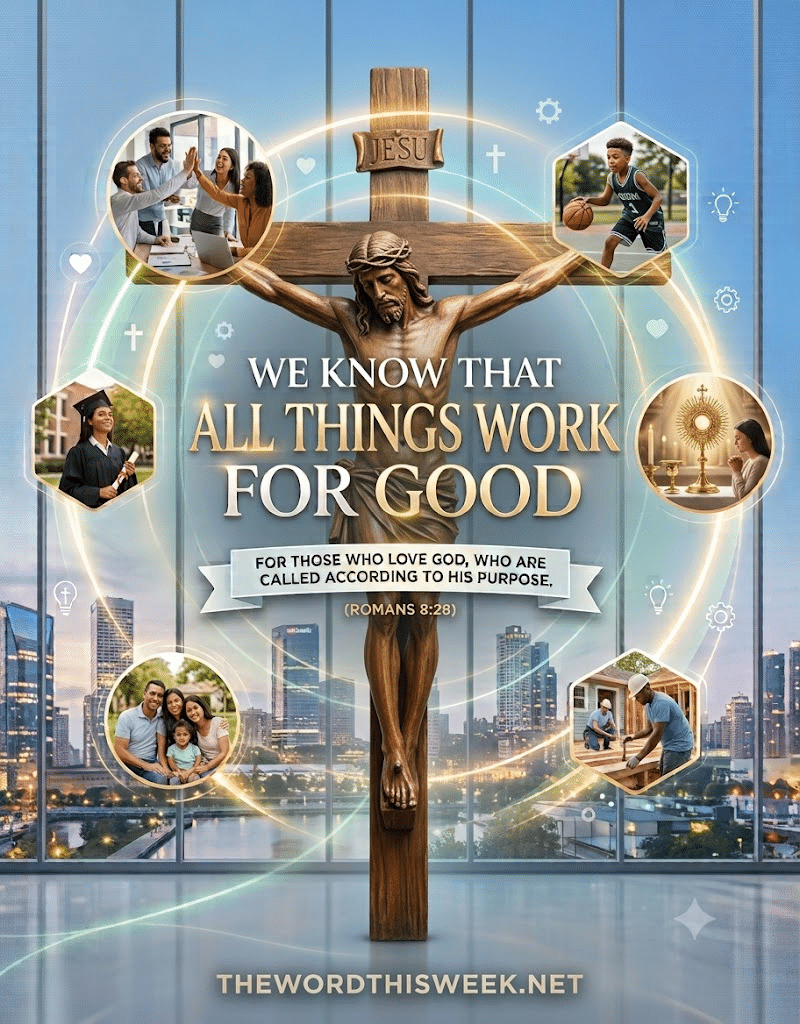
Trusting in God and seeking His purpose and wisdom enables believers to navigate life's challenges, including suffering, and live a life conformed to the image of Christ, marked by wisdom, discernment, and eternal fulfillment.
- 00:00 All things work together for good for those who love God and work for God's purpose, leading to a life conformed to the image of Christ.
- 01:40 The reading does not specify what was not said.
- 01:42 When we are one with God, we can trust that everything will be okay, even in suffering, because God is our foundation, identity, and purpose.
- 02:56 Solomon, in his dream, humbly tells God he's too young and inexperienced to lead a vast people and doesn't know what he's doing.
- 03:23 God is delighted with Solomon's request for an understanding heart, which shows his selflessness and desire to judge with wisdom.
- 03:59 God promises to make someone the wisest human being the world has ever seen, with no one like them before or after.
- 04:08 Praying for a wisdom of heart enables us to discern right from wrong and live according to God's purpose.
- 04:46 God is our treasure, and our lives should be judged and directed by the pursuit of His purpose, which brings wisdom and eternal fulfillment.
Judgment and Recognition of God's Presence
Q: Why shouldn't we quickly judge others as "weeds" in our communities? A: Fr. Brendan Curran warns that those we perceive as weeds—whether family, neighbors, or new immigrants—may actually be blessings and fertile in nurturing God's presence, making hasty judgment a dangerous spiritual practice.
Q: What does the parable teach about how Christians should conduct themselves? A: The parable cautions against acting like arrogant wheat that points fingers and judges others as weeds, reminding us to practice Christianity with humility rather than self-righteousness.
Divine Support and Growth
Q: How does God support us during weakness and vulnerability? A: The letter to the Romans promises that the spirit of God intercedes for us with inexpressible groanings, searching our hearts and knowing the spirit's intention as a powerful promise for those who stay faithful.
Q: What does the mustard seed parable reveal about spiritual growth? A: The mustard seed, one of the smallest seeds, when planted and cultivated grows strong roots and rises as a majestic shrub, exemplifying the process of growing into true holiness and helping others grow.
God's Justice and Compassion
Q: How does God's power relate to justice and kindness? A: The book of wisdom teaches that God, as the great caregiver of the Earth, shows might and source of justice with compassion, demonstrating that those who are just must also be kind.
Q: What does recognizing the abundant presence of God in others require? A: Fr. Brendan Curran challenges us to shift from considering people unworthy or as thorns to recognizing the abundant presence of God in all individuals, particularly those we're tempted to dismiss.
THE WORD THIS WEEK infographics are created using using GOOGLE’S AI Gemini 2.5 Pro. You are free to use the above infographic in any non-profit ministry. Please give credit to TheWordThisWeek.net and Dominican Friars, Province of St. Albert the Great.

Video courtesy of The Jesuit Post

THE WORD THIS WEEK infographics are created using using GOOGLE’S AI Gemini 2.5 Pro. You are free to use the above infographic in any non-profit ministry. Please give credit to TheWordThisWeek.net and THE JESUIT POST.
To truly desire God's kingdom, one must be willing to make significant sacrifices, mirroring the ultimate sacrifice Jesus made by giving His life.
- 00:00 To truly desire God's kingdom, one must be willing to give anything to obtain it, just as Jesus gave his whole life, and we should reflect on our own level of desire for it.
Are You a Weed or Wheat? | One-Minute Homily
Spiritual Discernment
Q: Why does Jesus advise against immediately removing weeds from our lives?
A: In the parable, weeds grow alongside wheat unnoticed until the wheat bears fruit, and the master harvester instructs to let them grow together until harvest because attempting to pull weeds risks tearing up the wheat in the process.
Focus and Trust
Q: What should we focus on instead of obsessing over our flaws?
A: Jesus encourages nourishing the good wheat and blessings in our lives while entrusting the weeds (flaws and failures) to him as the master harvester, rather than fixating on removing imperfections when we notice them.

Video courtesy of Priests for Life

THE WORD THIS WEEK infographics are created using using GOOGLE’S AI Gemini 2.5 Pro. You are free to use the above infographic in any non-profit ministry. Please give credit to TheWordThisWeek.net and PRIESTS FOR LIFE.
God gives his people time for repentance.
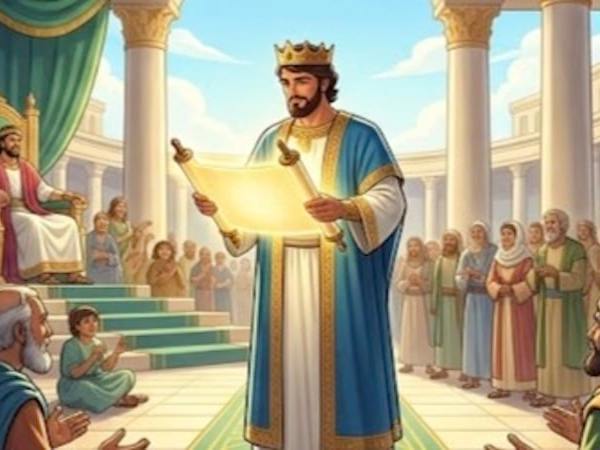
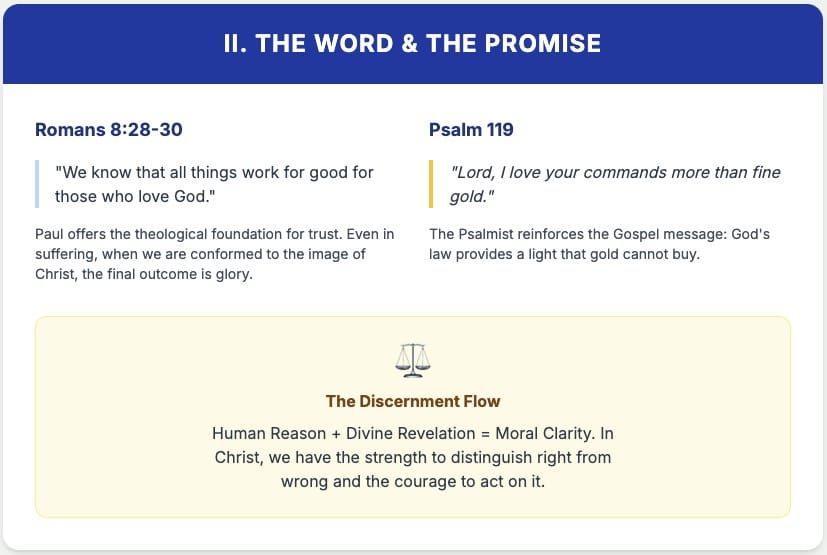
Solomon requests and receives the gift of “understanding.” Solomon understands his solemn duty as king of the people, and therefore asks for this gift “to distinguish right from wrong.”
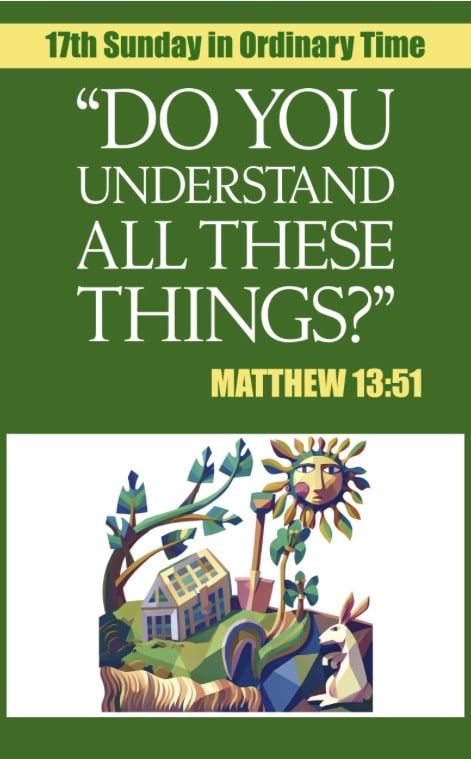
The Psalmist picks up on this theme, praising the Lord’s word and his commands because they “shed light, giving understanding to the simple.” Jesus, furthermore, asks his disciples, “Do you understand all these things?” By his words to them, he seeks to impart that gift of understanding.
We are beneficiaries of this gift as well. If the Psalmist could praise God’s commands for giving understanding, how much more can we, who have the added benefit of the Gospels and the Church. Human reason itself can distinguish right from wrong. Enlightened and strengthened by revelation in Christ, we have no reason to be ignorant of moral truth.
Yet we see all around us Solomons without wisdom, public officials who have responsibility to govern the people but who claim that what is right or wrong for the human family cannot be known with certainty. This problem has been addressed frequently by the Magisterium. In the 2002 “Doctrinal Note on some questions regarding the participation of Catholics in political life,” issued by the Congregation for the Doctrine of the Faith, the problem is described this way: “…[C]itizens claim complete autonomy with regard to their moral choices, and lawmakers maintain that they are respecting this freedom of choice by enacting laws which ignore the principles of natural ethics and yield to ephemeral cultural and moral trends, as if every possible outlook on life were of equal value.”
Today’s readings make it clear that no believer can make this claim. Part of the “good news” is that we can indeed know the difference between right and wrong, and have the strength to carry it out. Among the goods we need to preserve, the “pearl of great price” is life itself, the foundation and condition of every other right and good that we possess.
Religious Authority in Democratic Lawmaking
Q: Can Catholic public officials claim moral uncertainty on issues like abortion?
A: The 2002 Vatican doctrinal note explicitly rejects this position, stating that lawmakers who enact laws ignoring natural ethics and yield to ephemeral cultural trends are falsely claiming that citizens have complete autonomy over moral choices, when believers can actually know the difference between right and wrong with certainty through human reason, Gospels, and Church teaching.
Hierarchy of Human Rights
Q: What is the foundational right that supersedes all others?
A: Life itself is described as the "pearl of great price" and the foundation and condition of every other right and good that humans possess, making it non-negotiable compared to other moral or political considerations.
Rejection of Moral Relativism in Governance
Q: Does the Church accept that different outlooks on life have equal value in lawmaking?
A: The Congregation for the Doctrine of the Faith's 2002 note explicitly condemns the position that "every possible outlook on life were of equal value," arguing instead that natural ethics principles must guide legislation rather than treating all moral choices as equally valid.

Video courtesy of Society of Our Lady of the Most Holy Trinity

THE WORD THIS WEEK infographics are created using using GOOGLE’S AI Gemini 2.5 Pro. You are free to use the above infographic in any non-profit ministry. Please give credit to TheWordThisWeek.net and Society of Our Lady video series "Liturgy Prep."
By seeking God's wisdom and guidance, we can lead ourselves and others effectively, trusting that He will work everything for our good.
- 00:00 Solomon asks God for wisdom to govern a great nation, a relatable plea for guidance in leading oneself and others.
- 01:13 By letting go of worldly power and following God, we can trust that all things will work for our good, even when the world's path diverges from ours.
- 01:49 We can renew our commitment to governing with God's wisdom and having a listening heart to judge rightly in the things entrusted to our care.
Discernment of Interior Movements
Q: How does the Catechism describe the spiritual battle within every person?
A: The Catechism of the Catholic Church teaches that weeds of sin will always be mixed with the good wheat of the Gospel in everyone, requiring constant discernment of thoughts and movements of the heart that either lead toward or away from God.
Saint Ignatius's Method of Discernment
Q: What did Saint Ignatius discover about distinguishing true calling from false passion?
A: Saint Ignatius identified the difference between short-lived passion for being a great knight versus lasting excitement from living like the Saints by examining the intention of the heart, recognizing that the one who searches hearts knows the intention of the spirit.
Practical Criteria for Spiritual Discernment
Q: What specific indicators distinguish wheat from weeds in our thoughts?
A: Wheat thoughts produce joy, peace, love, patience, kindness, gentleness, faithfulness, self-control, and increase of faith, hope, and love, while weed thoughts leave envy, anger, impatience, sarcasm, self-indulgence, and infidelity.

Video courtesy of Eternal Word Television Network

THE WORD THIS WEEK infographics are created using using GOOGLE’S AI Gemini 2.5 Pro. You are free to use the above infographic in any non-profit ministry. Please give credit to TheWordThisWeek.net and EWTN video series "The Word on the Word."
King Solomon's request for wisdom from God and the subsequent blessings he received highlight the importance of seeking divine guidance and being grateful for the good things in life.
- 00:00 King Solomon asked God for the gift of wisdom to effectively govern God's chosen people, recognizing the enormous responsibility of following his father King David.
- 00:32 God granted Solomon the gift of wisdom, and also gave him other gifts, prompting reflection on God's goodness and gratitude for the blessings in one's life.
Prayer and the Holy Spirit
Q: How does the Holy Spirit help when we struggle to pray?
A: According to Romans 8:26, the Holy Spirit intercedes for us when we feel inadequate in prayer, helping us pray properly even when we mangle our words or don't know how to express ourselves, magnifying our prayers through sighs too deep for words.
Divine Intercession in Prayer
Q: What happens when I don't know how to pray properly?
A: The Holy Spirit intercedes for you with "sighs too deep for words" according to Romans 8:26, meaning the Spirit translates your inadequate prayers into articulate communication with God even if you never become well-spoken, essentially having your back in prayer weakness.
Liturgy Notes
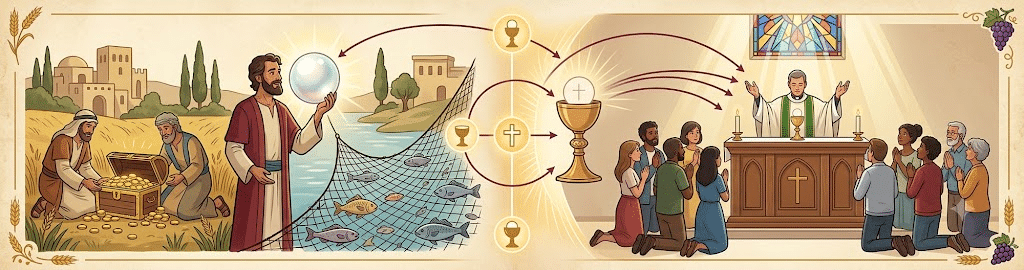
create a 600x160px infographic showing relationship or connection between xxxxxxxxxxxxxxxx and what takes place at Mass, if an image of the altar is used have altar and priest facing the people vatican II. Do not use any of these words in the infographic.


create a Liturgy notes for xxxxxxxxxx Year A 8.5x11 infographic in a one-column format with multiple 'card' sections, using large fonts that give the core liturgical theme include liturgical color, readings, themes and rites, entrance antiphon, suggestions for atmosphere, etc.


create an 8.5x11 infographic for xxxxxxxxxxxxx(A) wtih sweeping large photo realistic images . Do not present in a stacked layout, but rather offer a continues flowing unified whole theme showing connections and relationships takeaways from Fr. lawrence Mick's Liturgy Planning Notes.
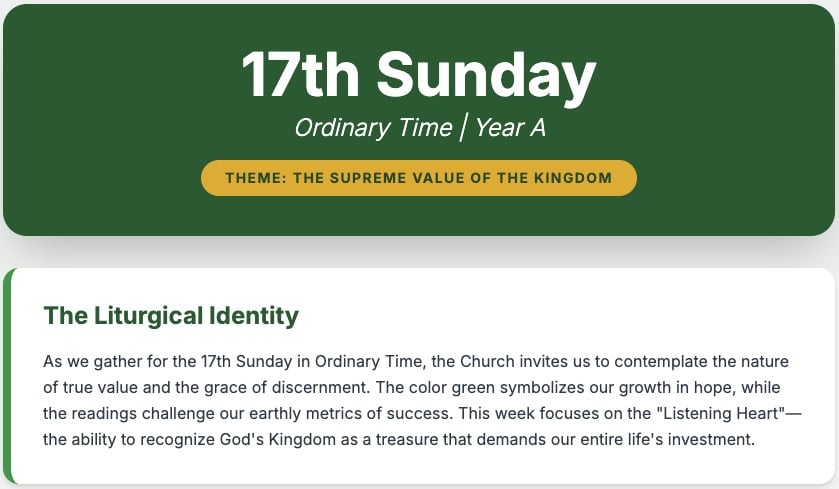
17th Sunday of Year A
Transforming Wisdom:
The Liturgy and the Kingdom of God
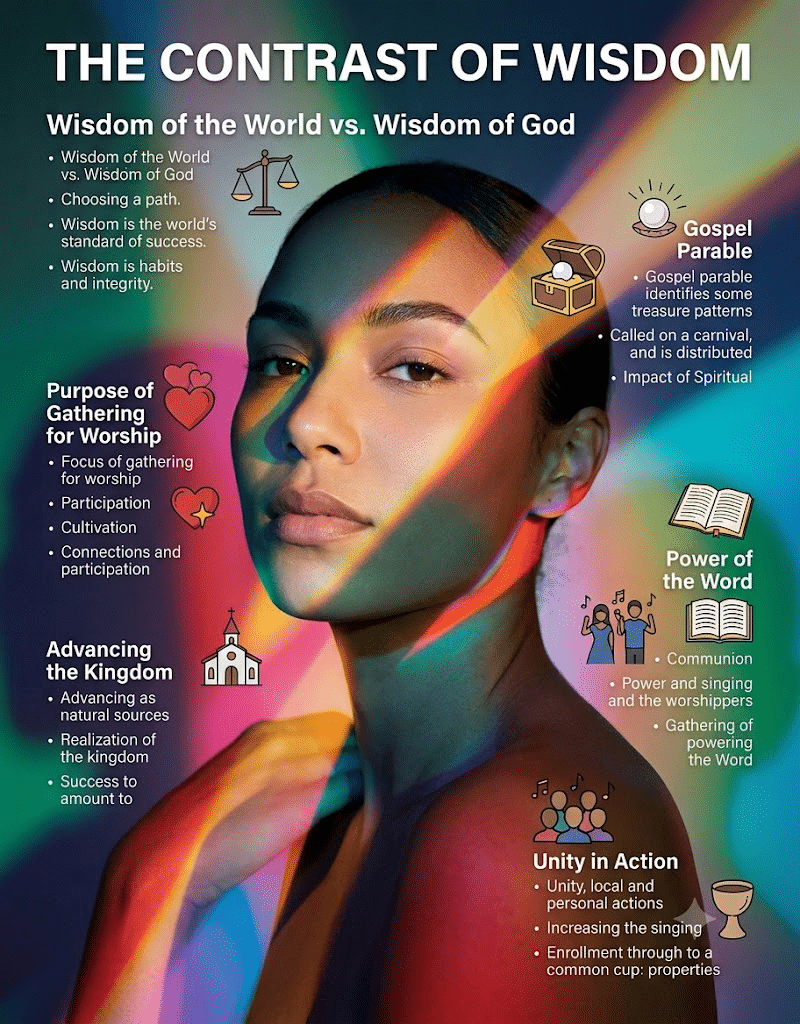
The Contrast of Wisdom
Today’s readings place before us the contrast between the wisdom of the world and the wisdom of God. Solomon asks God for “an understanding heart to judge your people and to distinguish right from wrong.” The psalm continues the contrast, speaking of loving God’s commands more than gold.
Paul does not use the word “understanding” or “wisdom,” but he says, “For those he foreknew he also predestined to be conformed to the image of his Son.” Such conformity to the Son certainly involves living by God’s wisdom.
In the Gospel, Jesus compares the kingdom to a pearl and a treasure, worth seeking at all costs. That’s another strong statement that God’s way is better than what the world values.
The Purpose of Gathering
So what does all this have to do with liturgy? We might ask ourselves just why we gather for worship. It is an expectation and a commandment, though that seems to motivate fewer people these days. But, what is the liturgy supposed to do for us? What are we seeking when we come to church?
For some, of course, it’s just habit. For others, it is a comfort, a reassurance of God’s care. For some, no doubt, it’s insurance against eternal damnation. For some, it offers important social contact.
Advancing the Kingdom
But, the purpose of the liturgy should be the furtherance of the kingdom of God. That kingdom is not a political system or a nation. The kingdom exists wherever people align their minds and hearts and lives with God, whenever people allow God to reign. That’s what the liturgy invites us to do, cajoles us to accept, encourages us to embrace. The liturgy constantly nudges us to change. Isn’t that why we really gather — to let God change us, make us better, conform us more fully to the image of Christ?
The Power of the Word
And how does the liturgy do it? There are many ways. Certainly, the proclamation and preaching of the word of God is crucial. It calls us, challenges us, comforts us and encourages us. That’s why planners should be ever vigilant to make sure lectors are well-trained and well-prepared each week. It’s why preachers need to devote significant time each week to homily preparation. It’s why we need silence before and after each reading and homily so that the word has time to sink in.
Unity in Action
The actions that we do also shape us. Singing together unites us, sometimes in spite of ourselves, in one voice. Sharing Communion is all about unity with one another in Christ, which should be reflected in the Communion song and maintaining a common posture during the procession until all have received.
What other ways can you see the liturgy transforming you and your parish?
Full Series: Cycle A Resources
OCP MUSIC
Create an 8.5x11 inch vertical infographic with a clean, two-column layout. The theme should be Catholic Liturgy, using a palette of soft blues, sage greens, and a cream/parchment background with a subtle gold border. Use high-contrast, large, readable fonts.
1. Header Section:
Main Title: "Feast of the Holy Family" (Large, Bold, Blue)
Subtitle: "OCP Liturgy Podcast (2019)" (Smaller, Dark Blue)
2. Body Layout (6 Horizontal Rows):
Left Column: Contains a large, flat-style vector icon representing the part of the Mass.
Right Column: Contains the text for the specific Chant/Hymn and the book references.
Alternating Backgrounds: Alternate the background color of the rows between light blue and light green/white for readability.
3. Row Details:
Row 1 (Entrance Chant): Icon of a Church or Procession.
Row 2 (Responsorial Psalm): Icon of a Bible.
Row 3 (Gospel Acclamation): Icon of a Dove.
Row 4 (Presentation): Icon of Bread and Wine/Altar.
Row 5 (Communion): Icon of a Chalice/Host.
Row 6 (Sending Forth): Icon of Angels or Church. T

17th Sunday of Year A
Entrance
In This Place (Trevor Thomson)
Spirit & Song #219; Never Too Young #18; Breaking Bread #308
In concert with the Entrance Antiphon, Trevor Thomson offers a gentle call to worship. “Our hearts and our spirits are nurtured by grace. It is Jesus who fills us. Here is here in this place.”
Response & Acclaim
Response & Acclaim

Lord, I Love Your Commands (PJ Anderson)
Spirit & Psalm 2026: p. 256
PJ Anderson brings an edgy vibe to his verbatim psalm setting that will appeal to young musicians and the young at heart.
2026 PLAYLIST (152 VIDEOS)


Alleluia: Mass of Renewal (Curtis Stephan)
Spirit & Psalm 2026: p. 258
This acclamation verse has been repeated in the past several Sundays to serve as a reminder for us to open our hearts to God with the wonder of a child.
2026 PLAYLIST (152 VIDEOS)
Presentation & Preparation
Presentation and Preparation

Prayer of St. Augustine (Ken Canedo)
God pursues us! He never gave up on young Augustine, who finally understood and accepted God’s invitation to holiness. You will find the sheet music in the link above.
Communion
Communion

I Will Choose Christ (Tom Booth)
Spirit & Song #220; Never Too Young #261; Breaking Bread #514
God has first loved us! How do we respond?
THE COMMONS
Sending Forth
Sending Forth

Just Like You (Matt Maher)
Spirit & Song #322; Never Too Young #100
Today’s Gospel asks: What do you treasure? In this uplifting favorite, Matt Maher sings to God and expresses for all of us: “Like a burning fire, be my one desire. I want to be holy just like You…”
THE COMMONS
Liturgy Blog is a weekly liturgy planning resource for musicians, liturgists, homilists, youth groups, faith sharing groups, and all who look to the liturgical readings for inspiration and nourishment. Join Ken Canedo as he breaks open the Scripture and suggests tracks from the Spirit & Song contemporary repertoire.
Design an 8.5x11-inch infographic offering practical, actionable delivery tips for lectors proclaiming the First Reading from Ezekiel 37:12-14 (NAB). Using the provided text below, organize the information into clear visual sections. Please generate highly specific suggestions regarding vocal pacing, where to pause, words to emphasize, and the overall tone required to convey the gravity of the text. Ensure the layout is clean, legible, and appropriate for a liturgical ministry guide.
you are a lector coach and your task is to instruct lectors. Create an 8.5x11 infographic showing how to best proclaim the following reading. Offer tips on pacing, pronunciation, clarity, etc. . Proclaim the text with authority and purpose, not just reading it, and maintain a prayerful, confident demeanor. Key techniques include using pauses, making eye contact, and dressing appropriately. high light key tips for lectors from following transcript
17th Sunday of Year A

Video courtesy of Lector with Lisa
Act as an expert lector coach and visual designer. Create a highly scannable, single-page 8.5x11 instructional "At-A-Glance Guide" for a church lector based on the following specific instructions.
Do not use citation markings, footnotes, or dense blocks of text. Prioritize quick scannability at the ambo using a clean Markdown table layout, bold headings, and horizontal rules.
Your output must include the following distinct sections:
1. MAIN HEADER: State the Sunday in Ordinary Time and which reading it is (First, Second, etc.).
2. THE WATCHWORD BOX: Highlight the overarching pacing theme, core concept vs. story reminder, and the required vocal emotional profile using a prominent Markdown blockquote.
3. DELIVERY BLUEPRINT TABLE: Create a 3-column Markdown table with these exact headers:
| Text Segment | Vocal Tone | Pacing & Ambo Actions |
Break the reading down line-by-line, matching the specific vocal shifts, mandatory pauses, eye contact cues, and word definitions based on my instructions.
4. THREE AMBO REMINDERS: Conclude with three sharp, numbered, actionable structural takeaways for the lector to keep in mind right before they step up to proclaim.
Here is the context and delivery strategy for the reading:
Delivery Blueprint & Pacing Control
Text Segment | Vocal Tone | Pacing & Ambo Actions |
"The Lord appeared to Solomon in a dream at night." | Narrative, steady, engaging. | Ambo Action: Establish firm eye contact with the congregation before speaking. Pause briefly after "night." |
"God said: 'Ask something of me and I will give it to you.'" | Warm, inviting, deeply supportive. | Vocal Shift: Lower the pitch slightly to signify God's direct address. Emphasize "Ask" and "give." |
"Solomon answered: 'O Lord, my God, you have made me, your servant, king to succeed my father David;'" | Humble, prayerful, trembling. | Vocal Shift: Shift to Solomon's perspective. Drop volume slightly to convey deep reverence. |
"'...but I am a mere youth, not knowing at all how to act.'" | Vulnerable, raw trepidation. | Ambo Action: Drop your shoulders slightly to physically manifest Solomon’s self-professed inadequacy. Drop your voice to a hushed, honest tone. |
"'I serve you in the midst of a people you have chosen, a people so vast...'" | Overwhelmed, expansive. | Pacing: Stretch out the words "so vast" to convey the staggering scale of the kingdom. |
"'...that it cannot be numbered or counted.'" | Awe-struck, breathless. | Mandatory Pause: Count a full 3-second pause here. Allow the weight of Solomon's immense responsibility to settle over the room. |
"'Give your servant, therefore, an understanding heart to judge your people and to distinguish right from wrong,'" | Pleading, earnest, intense focus. | Vocal Tone: Lean slightly toward the microphone. Soften the tone into a pure, heartfelt petition. |
"'...for who is able to govern this vast people of yours?'" | Defenseless, relying entirely on grace. | Mandatory Pause: Take a long, deliberate pause. Scan the room. Prepare the audience for the structural pivot in the text. |
"The Lord was pleased that Solomon made this request." | Bright, celebratory, shifting tone. | Vocal Shift: Return to the narrator voice, but lift the energy. Let your face reflect God's complete satisfaction. |
"So God said to him: 'Because you have asked for this—'" | Strong, resonant, profoundly pleased. | Pacing: Slow down to carefully delineate what Solomon did not ask for. |
"'...not for a long life for yourself, nor for riches, nor for the life of your enemies...'" | Contrastive, firm, deliberate. | Vocal Tone: Use a dismissive, lighter tone for "long life," "riches," and "enemies" to show how secondary they are to God's will. |
"'...but for understanding so that you may know what is right—'" | Rising inflection, climactic. | Pacing: Build anticipation. Lean into the word "understanding." |
"'...I do as you requested.'" | Immediate, powerful, definitive. | Vocal Shift: Emphasize the immediacy. This is happening right now, in the present tense. |
"'I give you a heart so wise and understanding...'" | Expansive, majestic, loving. | Ambo Action: Look up and make direct eye contact with the entire congregation as you deliver this promise. |
"'...that there has never been anyone like you up to now, and after you there will come no one to equal you.'" | Unmatched gravity, finality. | Pacing: Put heavy vocal weight on "to equal you." Let the finality of God's blessing ring clearly through the space. |
[Long Devotional Silence] | Complete stillness. | Mandatory Pause: Step back slightly from the ambo. Wait a full 4–5 seconds before announcing the closing formula. |
"The word of the Lord." | Firm, grounded, grateful. | Vocal Tone: Flatten expression into a standard, confident proclamation. |
1 Kings 3:5, 7-12

Courtesy of Greg Warnusz
Our Liturgical Setting: Today's gospel, Matthew 13:44-52, concludes a long series of parables about the reign of God. Summing them up, Jesus praises those who have listened carefully and understood. This praise of the wise in today's gospel seems to justify this choice of first reading. It's the famous story of Solomon's request for wisdom.
The Historical Situation: In the Hebrew Scriptures there is a large section of history divided, somewhat arbitrarily, into the books from Joshua to 2 Kings. The drama consistently goes like this: God is good to the people and asks only their fidelity; the people and their leaders (kings, priests and prophets) sin, usually by idolatry; God angrily punishes them, often through an enemy nation; the people suffer and ask forgiveness; God grants mercy and the cycle begins again. Today's reading tells of a spiritual high point in the life of King Solomon, but other chapters predictably tell of his sins.
Proclaiming It: You should read this as a story, that is, dramatically, making the voices of the speakers sound like real dialog. I don't mean this irreverently, but think of how you would tell a child a story about a beachcomber who finds a brass lamp; a genie emerges and offers the finder three wishes ... Today's first reading has a similar dramatic character, although theologically it's miles above anything in The Arabian Nights.
Your reading should make wisdom sound like the most desirable thing on earth. Make God sound absolutely delighted to grant Solomon's wish. Make your listeners want to ask God for wisdom. Make them want wisdom more than they want a winning lottery ticket or a brass lamp.

17th Sunday of Year A

Video courtesy of Lector with Lisa
Delivery Blueprint & Pacing Control
Text Segment | Vocal Tone | Pacing & Ambo Actions |
"Brothers and sisters:" | Warm, inclusive, intentional. | Ambo Action: Make direct eye contact with a specific man and a specific woman in the pews to immediately personalize the greeting. |
"We know that all things work for good for those who love God," | Reassuring, confident, grounded. | Vocal Shift: Emphasize "all things" and "good." Deliver this with the calm assurance that the Holy Spirit is constantly weaving through our lives. |
"who are called according to his purpose." | Definitive, purposeful. | Pacing: Pause briefly after "purpose" to let the foundational promise settle before climbing into Paul's theological ladder. |
"For those he foreknew he also predestined" | Deep, ancient, foundational. | Definition & Focus: Predestined means decided from the outset. Lean into this word to convey God's timeless, deliberate plan. |
"to be conformed to the image of his son," | Sculptural, active, tender. | Ambo Action: Look up at the assembly. Think of the image of Christ as his compassion, charity, humility, and obedience. Visually match that warmth. |
"so that he might be the firstborn among many brothers and sisters." | Expansive, familial, joyful. | Pacing: Broaden your delivery on "many brothers and sisters" to emphasize the shared community and restored humanity. |
"And those he predestined he also called;" | Direct, intimate, personal. | Vocal Shift: Imagine God calling people individually by name. Infuse the word "called" with distinct clarity and personal recognition. |
"and those he called he also justified;" | Unshakable, secure, rock-solid. | Definition & Focus: Justified means set on a solid basis, a secure foundation with God. Deliver this with an absolute "I've got you" vocal safety. |
"and those he justified he also glorified." | Radiant, climactic, triumphant. | Vocal Shift: This is the peak of the ladder. Let your voice bloom with light and completion. God stays with us to the end, making us the light he needs. |
[Long Devotional Silence] | Total stillness. | Mandatory Pause: Keep your eyes on the assembly and remain perfectly still for a full 4 seconds. Allow the sequence of God's work to resonate. |
"The word of the Lord." | Grounded, simple, deeply grateful. | Vocal Tone: Step back slightly and deliver with authoritative, steady finality. |
Romans 8:28-30

Courtesy of Greg Warnusz
First of Two Possible Liturgical Settings: Perhaps the ambitious preacher in your congregation has been speaking about the series of readings from Romans that began in early June. If so, this survey of the selections from Romans in the Lectionary this season will help you appreciate where the preacher is going. It may remind you of the ground that your congregation has recently covered. That, in turn, will inform your proclamation, so you can help all to move forward another step.
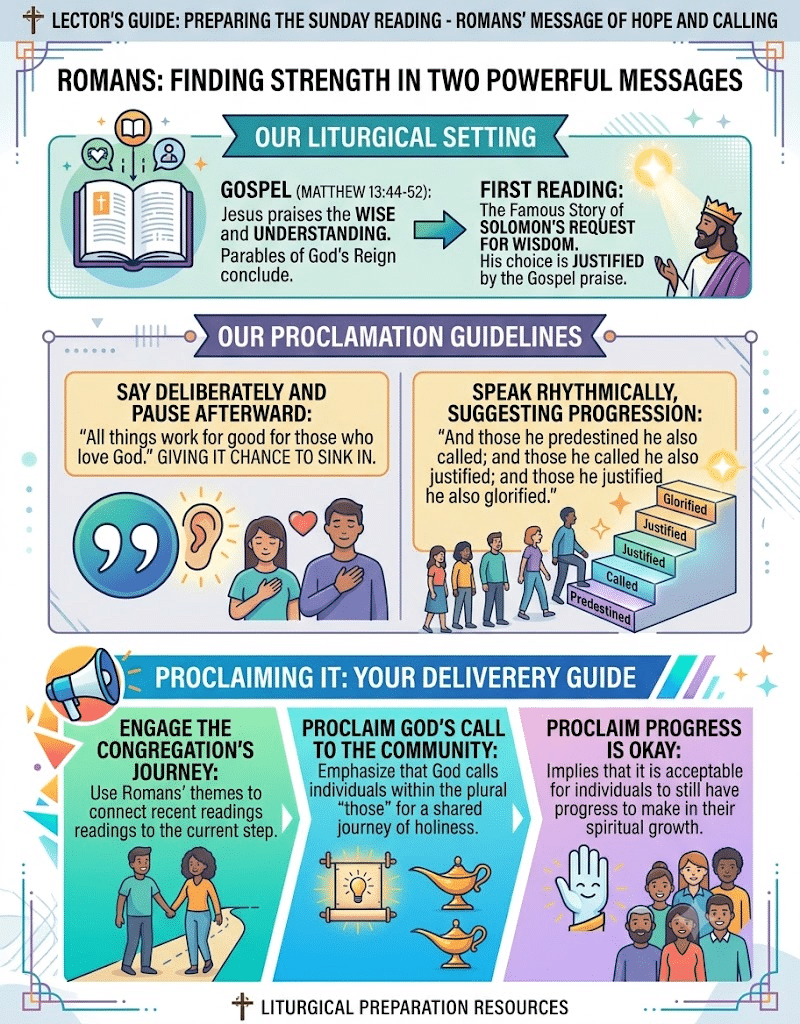
Proclaiming it in Another Possible Liturgical Setting: But maybe no one is helping your community tune in to this challenging letter. Still, there are two sayings here that might fall on some eager ears.
- "All things work for good for those who love God."
Say that deliberately, and pause afterward. Give it a chance to sink in. Someone there needs to hear this, even if they'll make of it something other than Paul intended. - "And those he predestined he also called; and those he called he also justified; and those he justified he also glorified."
This means God is calling people through stages of spiritual growth, whatever the meaning of the technical terms for each stage. Name the stages (speak the clauses) rhythmically, suggesting that they're progressive (and implying that it's OK to have progress still to make).
That those called are plural is also significant. God calls individuals to holiness only in the community context. (And the plural number of the verb "predestined" excuses everyone from another dreary discussion of individual predestination.)
Extra! Each Sunday passage from Romans in context: Click here to see a table summarizing the readings from Romans from the 9th to the 24th Sundays of Ordinary Time, this year.
The 4th of July and the Catholic Mass
Catholic History Show (7:28)

Catholic Lectionary Readings
ORDINARY TIME
Date
Sunday
First
Reading
Responsorial
Second Reading
Alleluia / Gospel
Lect # Sunday or Feast
Gospel Passage Prescribed
vv. of Matthew OMITTED