Homilies
Homilies
July 12, 2026
⭐⭐⭐ Bloom Where You Are Planted

⬅️  ➡️
➡️
15th Sunday of Year A
Vesuvius, Artificial Intelligence, and
the Parable of the Sower

Nearly 2,000 years ago, the catastrophic eruption of Mount Vesuvius flash-fried and carbonized hundreds of papyrus scrolls in the ancient library of Herculaneum. For millennia, they remained nothing more than charred, fragile fragments. To touch them or force them open meant watching them instantly crumble into dust.
Recently, however, by pairing advanced X-ray imaging with modern technology, researchers did something beautiful: they read a closed, blackened scroll for the very first time.
This breakthrough reveals a profound truth: the words were always there. They were fully intact, safely preserved in the dark. But that hidden wisdom couldn’t bear fruit until the way we approached it was completely prepared to receive it.
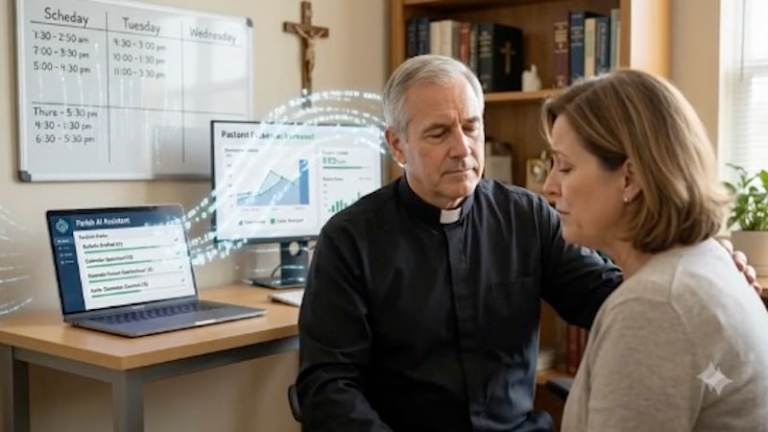


The Four Environments of Reception
1. The Path: The Danger of a Hardened Mind
2. Rocky Ground: Enthusiastic but Shallow
3. Thorns: The Choking Noise of Busyness
4. Good Soil: Integrated, Fruitful Cultivation
Unrolling the Heart
Fr. Tony’s Homilies
15th Sunday of Year A
The Parable of the Sower
- Fr. Tony Kadavil, Fr. Tony’s Homilies – Anecdotes
- Saint John Chrysostom, Homilies on the Gospel of Matthew, Homily 44
- Saint Augustine, Sermons on the New Testament, Sermon 73 on Matthew 13
- Catechism of the Catholic Church, sections 543-546 (on the parables of the Kingdom) and 2707 (on meditation and the Word)
- Pope Francis, Evangelii Gaudium, on the reception of the Word and the homily
- Pope Benedict XVI, Jesus of Nazareth, Volume One, chapter on the parables
- Navarre Bible Commentary on the Gospel of Matthew
- Scott Hahn, Ignatius Catholic Study Bible: The Gospel of Matthew
Deacon Peter McCulloch
15th Sunday of Year A
✍️ On Soils and Souls
Using Max Lucado’s illustration of offering free cash to a hesitant congregation, this text explores the dynamics of giving and receiving, parallel to Jesus’s Parable of the Sower. Just as people hesitate to accept a free gift due to pride, embarrassment, or fear, they often resist God’s freely offered divine love.
The summary breaks down the four conditions of the heart, or “soil,” drawing on insights from Pope Francis:
- The Pathway: Hard and unyielding hearts that reject the seed entirely.
- Rocky Ground: Superficial hearts that welcome God only when convenient, lacking deep roots.
- Thorny Ground: Hearts choked by worldly fixations, wealth, and power.
- Rich Soil: Open hearts ready to accept grace and bear abundant fruit.
Ultimately, God respects human freedom but continuously works to soften our hearts. A truly receptive heart, like the woman who immediately passed on Lucado’s cash gift, naturally transforms grace received into generosity shared.

Bishop Robert Barron
15th Sunday of Year A
▶️ God has Spoken; Are You Listening?

Drawing from Isaiah 55 and the Gospel of Matthew, this reflection explores the dual dynamics of the Word of God: its inherent creative power from God’s side and our responsibility in receiving it. Unlike passive human speech that merely describes reality, God’s Word is performative and creative; it effects what it says, establishing the very structure and intelligibility of the universe. This divine communication culminated historically through Israel’s covenants and ultimately became flesh in Jesus Christ.
However, God respects human freedom and does not overwhelm us. In the Parable of the Sower, Christ demonstrates that while the Word is powerful, its efficacy depends on our response. If we allow it to be choked by a lack of understanding, fleeting enthusiasm, or worldly anxieties, it fails to mature. Conversely, when cultivated in rich soil through intentional focus, the Word radically transforms us, yielding fruit thirty, sixty, and a hundredfold.
Fr. Michael Chua
15th Sunday of Year A
✍️ Sowing with Reckless Abandonment

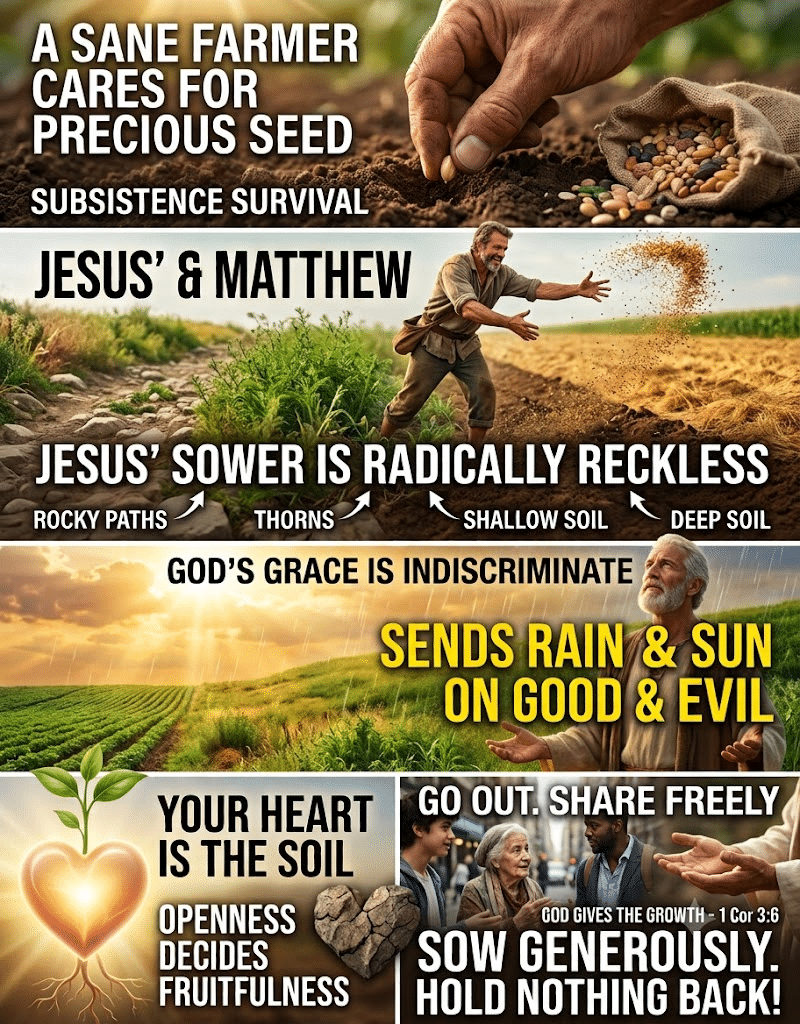
Examined through the eyes of a subsistence farmer, Jesus’ Parable of the Sower reveals a shocking truth: the sower is radically, even irresponsibly, reckless. In a survival culture where seed was precious and expensive, no sane farmer would throw it onto hard-packed trails or weed beds. Yet, this sower scatters seed everywhere with absolute abandon.
While common interpretations focus heavily on the various soil types representing human hearts, the narrative equally highlights the character of the farmer. This imagery depicts a God who showers grace generously and indiscriminately upon all.
Consequently, followers of Christ are called to imitate this bold, fearless outreach rather than limiting the Gospel to receptive audiences. Christians must overcome the temptation to be overcautious or stingy with the Word. By sowing generously and holding nothing back, believers trust the inherent power of God to transform even the most hardened hearts and produce a rich harvest.
Dominican Blackfriars
15th Sunday of Year A
✍️ More than Words

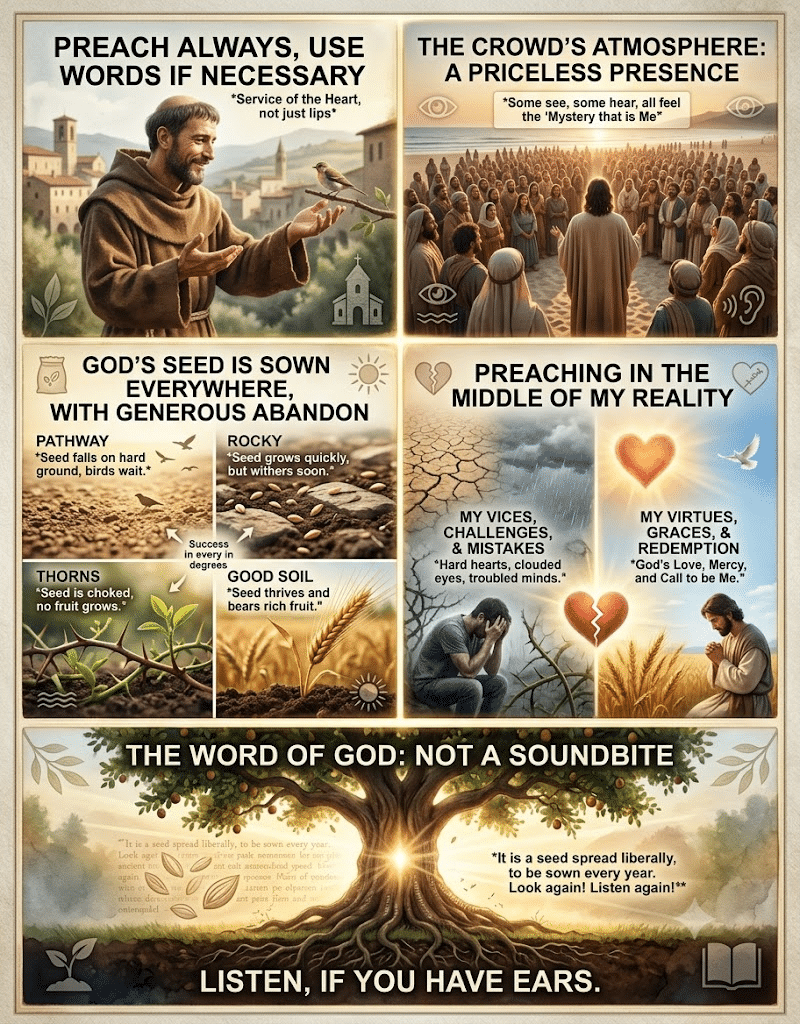
This reflection centers on St. Francis’s maxim to preach constantly, using words only when necessary. When Jesus preached to the crowds on the beach, his primary focus was not literal comprehension, but creating a sacred atmosphere where personal dignity and God’s presence could be fully experienced.
Unlike restrictive human communication, the Word of God operates with a completely non-judgmental spirit. It acts as a seed spread liberally across every terrain—pathways, rocks, thorns, and good soil—achieving a degree of success wherever it lands. This divine grace meets individuals in their deepest reality, sitting directly in the middle of their virtues, vices, and personal limitations. Rather than settling for a static understanding, believers are challenged to continuously see and hear this message anew. Ultimately, the Word transcends modern, brief soundbites, offering continuous redemption to troubled minds and hardened hearts alike.
Fr. Austin Fleming
15th Sunday of Year A
✍️ The Power of Words
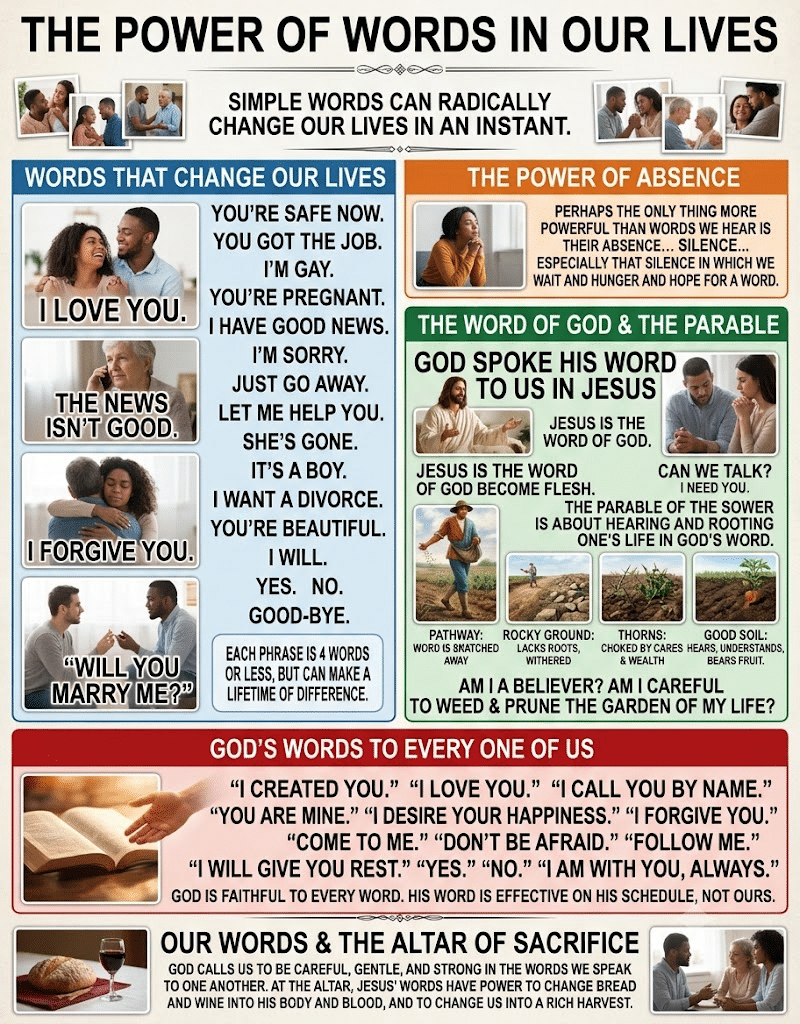
This homily contemplates the profound impact of simple, brief human phrases that can alter a lifetime in an instant. Yet, the absence of a word—a waiting, hopeful silence—can be equally powerful. Understanding this depth, God uniquely communicated with humanity by speaking His Word made flesh in Jesus Christ.
The Parable of the Sower challenges individuals to examine their baseline belief: do they actively listen for God’s voice through the Church, loved ones, or even in times of divine silence? True belief requires carefully weeding out personal distractions so the divine seed can flourish on God’s timeline rather than our own.
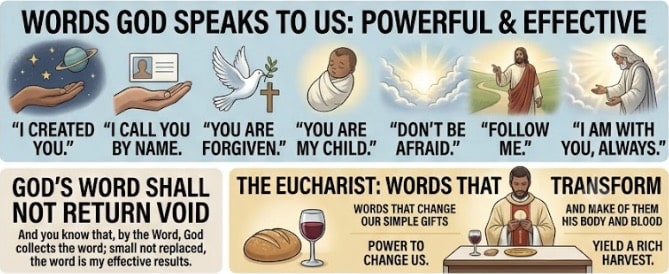
Ultimately, God’s personal words to us are both constant and effective. Because our own speech holds immense power to shape others, we are called to use words with care and strength, mirroring the enduring efficacy of Christ’s words that continue to transform the Eucharist and human lives today.
Monsignor Peter Hahn
15th Sunday of Year A
▶️ Certainty to God’s Plan
Msgr. Peter Hahn’s homily connects the Parable of the Sower with a profound prophecy from the Book of Isaiah, written around 550 BC during the Babylonian Exile. Faced with decimated homes and lost identities, the Israelites felt abandoned. Yet, God assured them of the certainty and inevitability of His divine plan, comparing His effective Word to rain and snow that fertilizes the earth.
While we often try to control our lives, it is ultimately God who achieves all that is good within us. Saint Paul echoes this hope, noting that present sufferings pale in comparison to future glory. However, we must actively cooperate with God’s grace. The four surfaces in the parable represent our shifting spiritual states. By intentionally tending to the soil of our hearts through daily prayer, scripture reading, and self-denial, we soften our indifference and uproot distractions, allowing God’s Word to flourish.
Fr. Charles E. Irvin
15th Sunday of Year A
✍️ Facing Our Failures

This homily reinterprets the Parable of the Sower as a profound message of hope rather than despair. Like the farmer whose seeds frequently fail to take root, we often experience the pain of rejection and unmet expectations when giving our best to others. Even Christ faced extensive apparent failure—rejected by his hometown, dismissed by countrymen, and abandoned by his own apostles.
However, Jesus did not allow these setbacks to stop Him; His parable celebrates an inevitable, spectacular harvest. True success is not measured by worldly standards or vague philosophies, but by the enterprise of faith and hope. Just as distressed parents must trust that the seeds of faith planted in their children will eventually blossom, we are called to keep sowing goodness. Ultimately, Christian success is judged by Matthew 25: handing our efforts to God’s providence and serving Christ in the least of our brethren.
Fr. Joe Jagodensky, SDS
15th Sunday of Year A
✍️ The Sower of the Seed

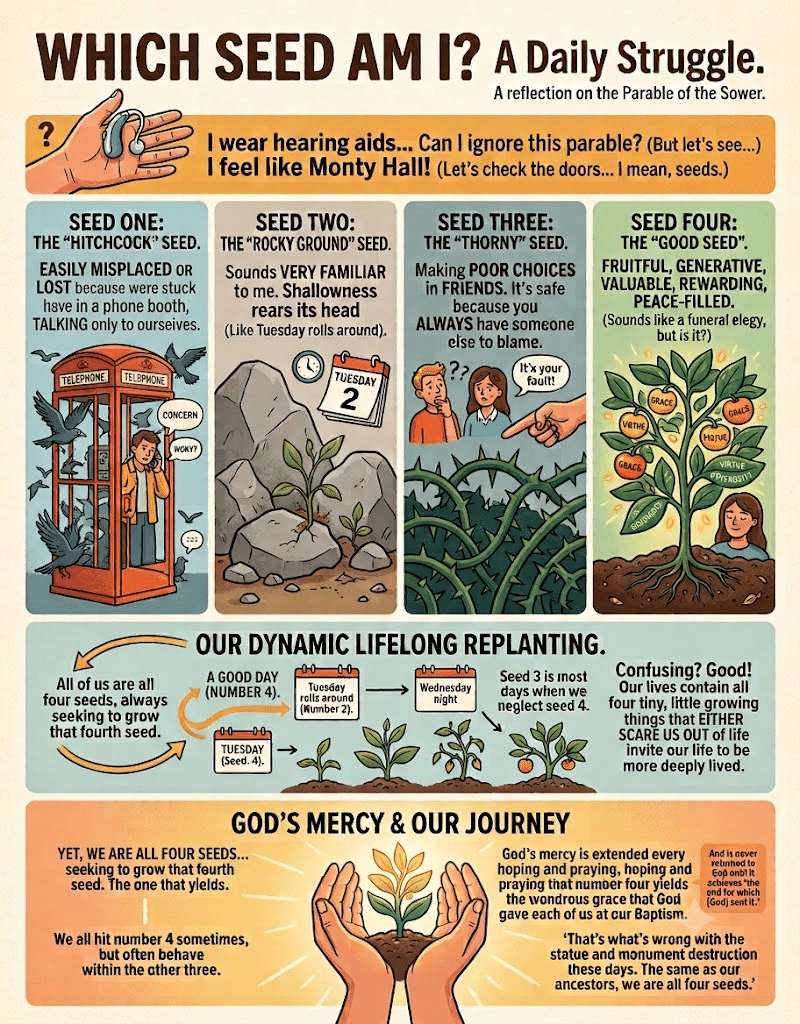
This reflection approaches the Parable of the Sower with humor and humility, viewing the four seeds not as static categories for different people, but as internal spiritual states that fluctuate daily within every individual.
Fr. Joe breaks down the four seeds through personal, everyay analogies:
Seed One: Relates to an Alfred Hitchcock film where the word is easily lost or misplaced because we are stuck in a phone booth, talking only to ourselves.
Seed Two: Represents the shallow, rocky ground holding us down.
Seed Three: Symbolizes the thorny tendency to make poor choices in friends and blame external circumstances for our own wayward actions.
Seed Four: Represents a fruitful, generative, and peaceful life—though sometimes painted with “over-the-top” perfection reminiscent of funeral elegies.
Ultimately, we do not embody just one soil; we are all four seeds depending on the day of the week. On a good day, we flourish in the fourth seed, but by mid-week, we may easily slip into the shallowness, blame, or isolation of the first three. Our spiritual journey requires constant replanting. God’s abundant daily mercy is extended precisely to our flawed, rocky, and thorny moments, continuously inviting us to soften our hearts so that the grace of our Baptism can yield a rich harvest and achieve the divine end for which it was sent.
Fr. Langeh, CMF
15th Sunday of Year A
▶️ We are the Soil

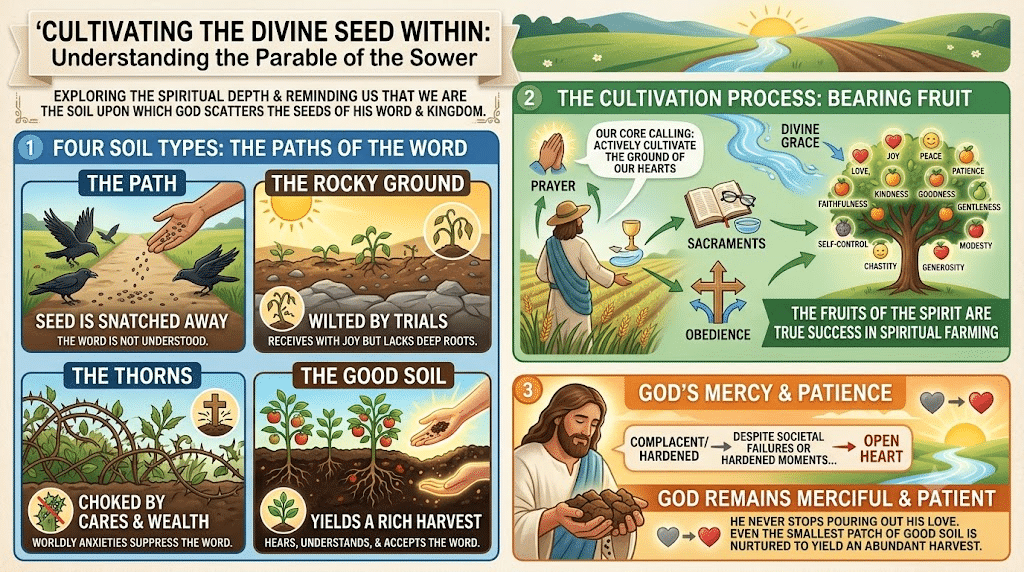
This homily explores the spiritual depth of the Parable of the Sower, reminding us that we are the very soil upon which God relentlessly scatters the seeds of His Word and Kingdom. While three of the soil types—the path, the rocky ground, and the thorns—fail to yield results, the rich soil represents those who cooperate with divine grace to bear lasting fruit.
Our core calling is to actively cultivate the ground of our hearts, transforming our lives to progressively reflect the image of Jesus Christ. True success in this spiritual farming is measured by the fruits of the Spirit: love, joy, peace, patience, kindness, goodness, gentleness, and self-control. Despite societal failures or moments when we grow complacent and hardened, God remains merciful and patient. He never stops pouring out His love, nurturing even the smallest patch of good soil within us to yield an abundant harvest.
Msgr. Charles Pope
15th Sunday of Year A
✍️ My Word Shall Not Return to Me Empty
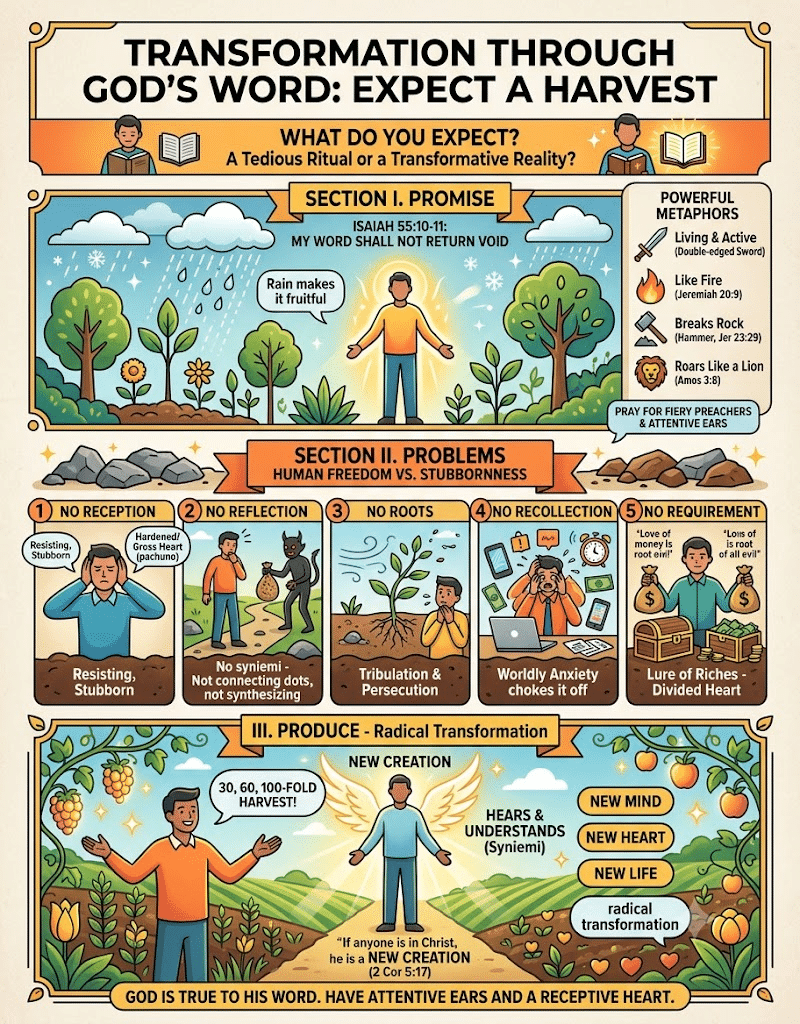
Expecting the Fire of Transformation challenges the passive, ritualistic approach to Scripture, urging believers to anticipate radical, life-altering change. God’s Word possesses an active, inherent power—acting as a fire or a breaking hammer that demands an interior response. However, human obstacles like a lack of reception, reflection, roots, recollection, or felt requirement can stall this harvest. When hearts are hardened, distracted by anxiety, or seduced by wealth, the Word cannot take hold. Conversely, those who actively synthesize and apply Scripture experience an abundant, transformative harvest, allowing God’s truth to renew them into entirely new creations.
Father Kevin Rettig

15th Sunday of Year A
▶️ Bloom where You are Planted
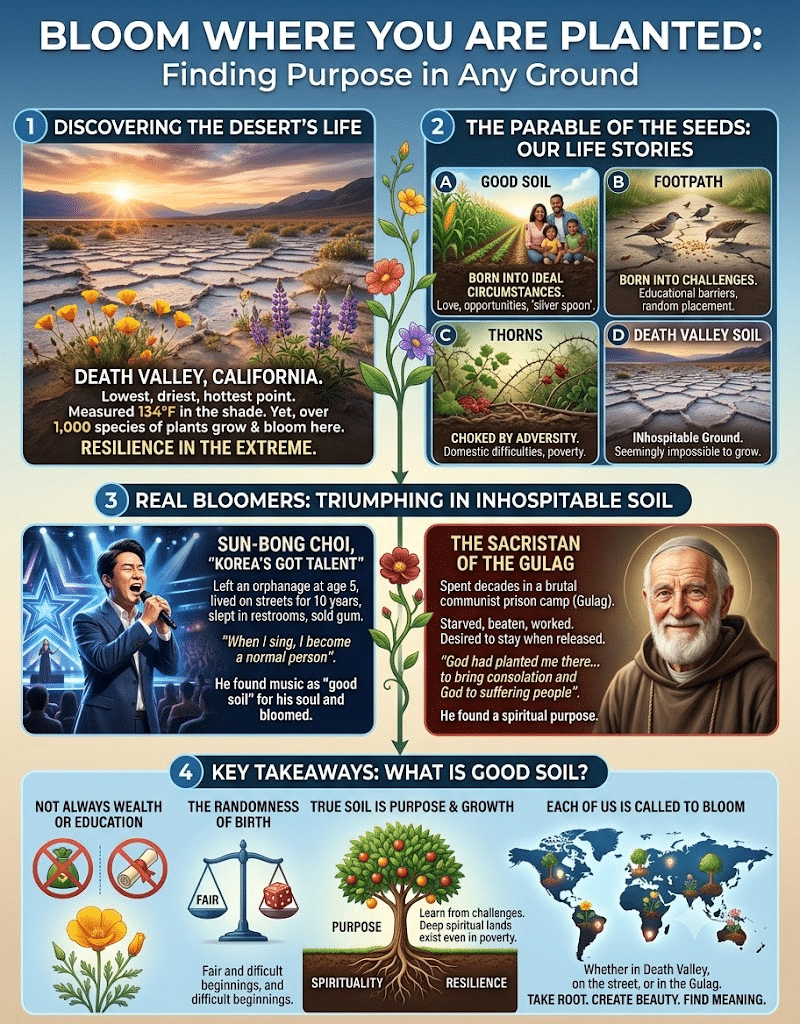
Fr. Kevin’s homily showcases the unexpected beauty of Death Valley, where over a thousand plant species miraculously thrive in harsh, salty sand. This resilience mirrors Saint Francis de Sales’ famous exhortation to “bloom where you are planted” and offers a profound perspective on Jesus’ Parable of the Sower. While the randomness of birth places individuals in vastly different human circumstances, material luxury does not equate to “good soil,” nor does severe adversity prevent spiritual fruitfulness.
Two moving examples illustrate this truth: Sung-bong Choi, a homeless orphan who survived severe abuse to become an operatic singer, and a Hungarian sacristan who found divine purpose in a brutal Gulag, remaining there to comfort dying prisoners. Ultimately, true growth does not depend on wealth or education. Whether placed in luxury, poverty, or a prison camp, each person is called to find deep spiritual roots and blossom where they are planted.
Fr. George Smiga
15th Sunday of Year A
✍️ A Parable of Triumph or Tragedy?

Whether the Parable of the Sower is viewed as a tragedy or a comedy depends entirely on one’s perspective, reflecting the contours of human existence rather than agriculture. While a pessimistic reading focuses on the seeds lost to birds, thorns, or scorching heat—symbolizing our unfulfilled dreams, failed projects, and broken relationships—the parable is ultimately a positive story of growth.
Jesus calls listeners to focus on the rich, final harvest rather than wasting life on guilt, self-pity, or useless “what-ifs.” Despite inevitable losses, the goals achieved and the relationships that survive yield a bountiful harvest of thirty, sixty, or a hundred-fold. Ultimately, the parable presents a profound personal choice: people can either dwell on dead dreams in despair or accept the blessings they have been given with gratitude and joy, deciding for themselves whether their life is a triumph or a tragedy.

Additional Homilies
15th Sunday of Year A
Fr. Vincent Hawkswell | Archive
Why Does Evil Exist? (2023)
Fr. George Corrigan, OFM
A Sower Went Out To Sow
Will They Produce Fruit?
From Mystery to Truth
Preparing Good Soil
Msgr. Joseph Pellegrino (PDF) | Archive
Be Good Soil
Fr. Tommy Lane | Archive
Producing fruit for Jesus 2023
We need spiritual cardiac surgery to be fertile soil for Jesus’ words 2008
May the Word Jesus sows in us produce fruit
Related: Homilies on the Word of God
Second Reading Related: Faith in the resurrection enables us to endure suffering
Stories: Parable of the Sower (a dialogue)
Fr. Michael Fallon, MSC | Archive