Papal Homilies
July 12, 2026
⭐⭐⭐ Pope Leo XIV



AT A GLANCE
- The Power of the Word: The Word of God is alive, active, and possesses a profound, transforming power that works in synergy with the sacraments.
- The Need for Open Soil: Like rain watering the earth or a seed falling on the ground, the fruitfulness of God’s Word depends directly on the openness and disposition of the heart receiving it.
- Word and Sacrament are Indivisible: The Liturgy of the Word prepares the soul for the Eucharist, and the Eucharist deepens our capacity to accept and live the Word. Both are essential nourishment.
QUESTIONS FOR REFLECTION
- When I hear the readings at Mass or read scripture on my own, what kind of “soil” does the Word encounter in me—distracted, indifferent, or receptive?
- Do I view the Liturgy of the Word as a vital encounter with Christ, or just a preliminary step before the Liturgy of the Eucharist?
- How is the seed of the Gospel visibly bearing fruit in my daily attitudes, decisions, and interactions with others?
ACTIONABLE TAKEAWAY
Commit to the Whole Mass: Shift your mindset regarding the Sunday liturgy. Make a deliberate effort to arrive early, consciously preparing yourself to be fully present for the Liturgy of the Word so you can receive the complete spiritual nourishment of both Word and Sacrament.m me, for I am gentle and humble in heart.’ In these words, the Son of Man reveals the deep law of his being and his mission. Divine love does not impose itself by earthly power or the noise of arrogance; it enters the world in simplicity and vulnerability.
Practice Lectio Divina: Spend 10–15 minutes before this Sunday reading the upcoming Gospel passage. Read it slowly, meditate on a single word or phrase that stands out to you, and pray with it to prepare your “soil” before Mass begins.
15th Sunday of Year A

Theme of the Readings
FROM THE ARCHIVES (1999)
The Word of God is effective and fruitful; this is why we are urged to accept it and put it into practice. Isaiah compares it to the rain that fertilizes the earth and makes the seed germinate (first reading). In explaining the parable of the sower, Jesus teaches that the seed is the Word of God that, if it falls on rich soil (those who listen to and accept the message), produces its crop, some a hundredfold, some sixty, some thirty. In the second reading some fruits of the Word and of divine Revelation are pointed out: the freedom and glory of the Son of God, the participation of the universe in the “hope [of man].”
Doctrinal Messages
Until quite recent times, it was usual to establish a poor and incomplete relationship between the sacrament and the word. The emphasis was on the effectiveness of the sacrament, by virtue of an inherent efficiency, the famous ex opere operato, and little importance was given to the disposition of the person who was receiving it, that is, the ex opere operantis. With reference to the word, its character as revelation and above all its moral value were stressed, somewhat at the expense of its transforming force. The Church’s current reflection, based on the teaching of the Second Vatican Council, has recovered notably the power and the synergy of the Word of God, recalling the famous passage of the letter to the Hebrews: “The word of God is something alive and active: it cuts like any double-edged sword but more finely: it can slip through the place where the soul is divided from the spirit, or joints from the marrow; it can judge the secret emotions and thoughts” (4:12-13). The Word, on a par with the sacrament, has an efficiency of its own, and is effective in proportion to the disposition of those who hear it.
The Word reaches everyone, but not everyone listens to it and accepts it (the parable of the sower gives credibility to the truth of this proposal). Already at the end of the first century AD, it could be said that Jesus’ message had been taken to all the corners of the world known at the time. Today, thanks to printing (the Bible, or at least the New Testament, is translated into more than 1,500 languages), the mass media with an international outreach, and above all the missionaries and evangelizers, it can almost be guaranteed, without fear of being mistaken, that the seed of the Word of God has been sown in all the corners of our planet. Together with this comforting reality, another evident reality can be noted: some listen to the Word, accept it and try to live it; others receive it with indifference, one more among so many words that reach their ears; but there are also many who accept it, meditate upon it, love it and express it in attitudes and behavior.
When man is well disposed, the Word gives abundant fruit. The rain, an image of the word in the first reading, does not return to God empty. The seed, an image of the Word in the Gospel, produces a superabundance of fruit in human soil well-prepared to receive it: from thirty percent it is wonderful if, as it seems, the average yield in the land of Judaea was ten percent at the most. This is why Paul speaks of results that exceed all imagination: through his Spirit, God revealed to us our condition and our glory as his children and the mysterious final participation of men in the glory of the cosmos (second reading). This abundant crop is not by chance, nor at the margin of God’s will; it is God himself who, as a kind and generous Father, wants his Word to produce the most abundant fruit.
Pastoral Suggestions
Frequent reading of the Word of God and meditation on it. Much has been done and is being done to spread the Bible among Christians, as well as among those who do not believe in Christ. Much has also been accomplished to ensure that the Christian faithful read and meditate on the Bible, both individually or in groups. Many courses, weeks and festivals are also organized throughout the year in a great many countries. Lectio divina and other similar forms of reading and biblical meditation have become widespread not only in monasteries and religious institutes, but also among secular persons. We should thank God for the immense harvest that all this work is producing in Christians and in the Church. Let us use this Sunday to reflect on the presence and efficacy of God’s Word in our diocese, in our parish, in our community. What have we done until now? What are the results? What could we improve? Has the time come to promote new initiatives in this field of the pastoral ministry?
Word and sacrament. These are two indivisible entities. This is what the Church has meant since her origins, uniting them in the liturgy of the Eucharist. First the effective word that falls, like a seed, on those participating in the Eucharist and makes Jesus’ Christ’s revelation present. Then the effective sacrament which, through the consecration, makes Jesus Christ’s revelation present. The Word of God prepares us for the sacrament, and the sacrament of the Eucharist predisposes us to accept the word sincerely. A sound and constant catechesis on the need to participate in the whole Eucharistic celebration is therefore important. It is not principally a moral problem: “whether or not the Mass is valid, because I arrived at the homily or the Creed….” It is above all a spiritual subject (the soul needs the nourishment of the divine Word) and one of Christian pedagogy (teaching people a complete and very rich conception of the Eucharistic celebration, uprooting out of date ways of thinking).
SOURCE: YEAR A DICASTERY NOTES (1999)
Message of Pope Francis
AT A GLANCE
- Accessible Grace: Jesus uses simple, everyday language to freely offer the profound mysteries of the Kingdom of God, inviting rather than forcing our participation.
- The Generosity of the Sower: God continually and patiently casts the seed of His Word into our lives, desiring to give Himself to us completely.
- The Condition of the Soil: The fruitfulness of God’s Word depends entirely on the receptivity of our hearts.
- The Need for Purification: We must actively cooperate with God to remove the “rocks” of laziness and superficiality, as well as the “thorns” of worldly attachments, to allow grace to take root.
QUESTIONS FOR REFLECTION
- If Jesus were to perform a “spiritual X-ray” on my heart right now, which type of soil would be most prominent?
- What are the specific “rocks of laziness” in my life that cause my faith to be fleeting or prevent my prayer life from going deeper?
- Can I honestly name the “thorns” in my daily routine—whether they are material desires, anxieties, or a drive for status—that are currently choking out God’s presence?
ACTIONABLE
TAKEAWAYS
- Name Your Thorns: Take five minutes in quiet prayer this evening to specifically identify one vice, distraction, or worldly attachment that is hindering your spiritual growth. Acknowledge it by name.
- Reclaim the Soil in Confession: Bring the specific “rocks and thorns” you identified to the Sacrament of Reconciliation. Allow Jesus, the Good Sower, to actively clear away the debris, purify your heart, and prepare you to receive His Word anew.
15th Sunday of Year A
The Soils of the Heart
16 July 2017- Saint Peter’s Square (Angelus)
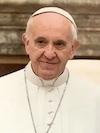
When Jesus spoke, he used simple words and images taken from daily life to be easily understood by all. This is why people listened to him willingly and appreciated his message, which directly touched their hearts. He did not use complicated language like the Doctors of the Law of that time, whose speech was rigid and distanced people. With simple language, Jesus made the mystery of the Kingdom of God understood; it was not complicated theology. One example is today’s Gospel passage: the parable of the sower (Matthew 13:1-23).
The Generous Sower
The sower is Jesus. With this image, he presents himself as one who does not impose himself, but rather offers himself. He does not attract us by conquering us, but by donating himself: he casts seeds. With patience and generosity, he spreads his Word, which is not a cage or a trap, but a seed which can bear fruit. How can it bear fruit? If we welcome it.
A Spiritual X-Ray of the Heart
The parable concerns us especially. It speaks more of the soil than of the sower. Jesus carries out a “spiritual X-ray” of our heart, which is the soil on which the seed of the Word falls. Our heart, like the soil, may be good and allow the Word to bear great fruit, but it can also be hard and impermeable. This happens when we hear the Word but it bounces off of us, just as on a street: it does not enter.
The Rocky Soil of Superficiality
Between the good soil and the asphalt—if we throw a seed on cobblestones, nothing grows—there are two intermediate types of soil which we can have within us. The first, Jesus says, is rocky. Rocky ground is a terrain that “does not have much soil” (Matthew 13:5), so the seed sprouts but is unable to put down deep roots. This is how the superficial heart is: it welcomes the Lord, wants to pray, love, and bear witness, but does not persevere. It becomes tired and never takes off. It is a heart without depth, where the rocks of laziness prevail over the good soil, and where love is fickle and fleeting. Whoever welcomes the Lord only when they want to does not bear fruit.
The Thorny Ground of Worldly Cares
Then, there is the thorny ground, filled with briars which choke the good plants. What do these thorns represent? “The cares of the world and the delight in riches” (Matthew 13:22), as Jesus explicitly states. The thorns are the vices that battle with God and choke his presence. Above all, these are the idols of worldly wealth, living avidly for oneself, for possessions, and for power. If we cultivate these thorns, we choke God’s growth within us. Each of us can recognize our big or small thorns, the vices that inhabit the heart, those deeply rooted briars that prevent us from having a clean heart. It is necessary to tear them out; otherwise, the Word cannot bear fruit, and the seed will not grow.
Reclaiming the Soil
Jesus invites us today to look inside ourselves: to give thanks for our good soil and to tend the soil that is not yet good. Let us ask ourselves if our heart is open to welcome the seed of the Word of God with faith. Let us ask ourselves if our rocks of laziness are still numerous and large; let us identify our thorns of vice and call them by name. Let us find the courage to reclaim the soil and effect a true conversion of our heart, bringing to the Lord in Confession and in prayer our rocks and our thorns. In doing this, Jesus, the Good Sower, will be glad to carry out an additional task: purifying our hearts by removing the rocks and the thorns which choke his Word.
Message of Pope Benedict XVI
AT A GLANCE
- The Autobiographical Seed: The Parable of the Sower reflects Jesus’ own lived experience as a preacher. He is the Sower whose divine message encounters varying degrees of human receptivity.
- The Purpose of Parables: Christ’s use of parables is a deliberate teaching method designed to spark conversion. By requiring active interpretation, parables engage both the intellect and human free will.
- Christ as the Ultimate Parable: Jesus is Himself the supreme “Parable of God.” His sacred humanity simultaneously conceals and reveals His divinity, inviting our belief rather than forcing it.
- The Freedom of Love: God never forces human allegiance; instead, He draws souls to Himself through the irresistible beauty, truth, and goodness of His incarnate Son.
QUESTIONS FOR REFLECTION
- Looking closely at your current spiritual life, which soil represents you best: Are you easily distracted (pathway), quick to fade under trial (rocky ground), choked by worldly anxieties (thorns), or actively producing fruit (good soil)?
- How often do you approach the words of Sacred Scripture with the intellectual and spiritual effort required to truly interpret and apply them to your daily life?
- If love always respects human freedom, in what ways might you be resisting the gentle, non-coercive invitations that Christ is offering you right now?
- Following the example of St. Benedict, does God truly occupy the absolute first place in your daily schedule, or does He receive only the leftover fragments of your time?
ACTIONABLE
TAKEAWAYS
- Cultivate the Soil Daily: Protect the seed of the Word from worldly anxieties by setting aside the first fifteen minutes of your morning for silent Scripture reading before looking at any digital devices or news.
- Embrace the Effort of Interpretation: Choose one complex teaching or parable of Jesus this week and study a trustworthy commentary or homily to engage your mind and deepen your understanding.
- Sanctify Your Daily Labor: Adopt the Benedictine ethos of Ora et Labora (Prayer and Work). Dedicate the beginning and ending of your workday to God with a brief, intentional prayer offering your efforts up to Him.
- Examine Your Freedoms: Identify one “worldly enticement” or attachment that regularly chokes your spiritual growth, and make a conscious decision to fast from or limit it over the next seven days.
15th Sunday of Year A
The Freedom of Faith
10 July 2011 | St Peter’s Square

In this Sunday’s Gospel (Mt 13:1-23), Jesus recounts to the crowd the well-known Parable of the Sower. In a certain way it is an “autobiographical” passage, for it reflects the very experience of Jesus, of his preaching. He identifies himself with the sower who scatters the good seed of the Word of God and notes the different effects it obtains, in accordance with the way in which people hear the proclamation.
Some listen superficially to the Word but do not take it in; others accept it at the time but are unable to persevere and lose it all; there are those who are engrossed by worldly concerns and enticements; and those who listen receptively, like the good soil: here the word bears an abundance of fruit.
The Pedagogy of Parables
However, this Gospel also puts the accent on Jesus’ preaching “method”, that is, on his use of parables. “Why do you speak to them in parables?”, his disciples ask (Mt 13:10). And Jesus answers distinguishing between them and the crowd: to his disciples — namely to those who have already decided for him — he can speak openly about the Kingdom of God, to others, instead, he must proclaim it in parables, precisely to encourage their decision, conversion of the heart; indeed, by their very nature parables demand the effort of interpretation, they not only challenge the mind but also freedom. St. John Chrysostom explained: “And this he [Jesus] says to draw them unto him, and to provoke them and to signify that if they would convert he would heal them” (cf. Homily on the Gospel of Matthew, 45, 1-2).
God’s True “Parable”
Basically, God’s true “Parable” is Jesus himself, his Person who, in the sign of humanity, hides and at the same time reveals his divinity. In this manner God does not force us to believe in him but attracts us to him with the truth and goodness of his incarnate Son: love, in fact, always respects freedom.
St. Benedict and the Art of Listening
Dear friends, tomorrow we shall be celebrating the Feast of St. Benedict, Abbot and Patron of Europe. In the light of this Gospel reading let us look to him as to a master of listening to the Word of God, a profound and persevering listening. We must always learn from the great Patriarch of Western monasticism to give God his proper place, the first place, offering him in morning and evening prayer our daily work.

Message of Pope Saint John Paul II
AT A GLANCE
- The Command to Proclaim: Just as Christ instructed the disciples to move the private message into the public light, the Church is called to proclaim the Gospel through the modern “housetops”—our global communications networks.
- The Answer to the Human Heart: Amidst profound existential questions about life, purpose, and suffering, the Church offers the only satisfying answer: Jesus Christ.
- Engagement, Not Retreat: While media culture often promotes relativism or entertainment over truth, the Church must not withdraw. Instead, we are called to an active, imaginative, and courageous engagement with all forms of media.
- A Prophetic Duty: Christian communicators have a specific vocation to challenge the false idols of our age (materialism, hedonism, consumerism) and boldly declare the truth of the Word made flesh.e.
QUESTIONS FOR REFLECTION
- Internalizing the Message: In my daily life, do I share the truth of the Gospel with the same urgency as I share personal news or opinions?
- Evaluating Media: How does my personal consumption of media (news, social platforms, entertainment) shape my understanding of “truth”? Do I allow the media to dictate my worldview, or do I filter it through the lens of faith?
- Identifying the “Housetops”: Where are my personal “housetops”? In what spaces—digital or physical—do I have the opportunity to speak of Christ, and how am I currently utilizing those spaces?
- Overcoming Fear: Am I hesitant to speak about my faith in public or online? What specifically do I fear, and how does the example of the Apostles encourage me to persist?
ACTIONABLE
TAKEAWAYS
- Curate for Truth: Be intentional about the content you support, share, and promote online. Use your personal digital presence to amplify messages that uphold human dignity and the Gospel, rather than those that thrive on division or falsehood.
- Speak with Intention: Identify one conversation or digital interaction this week where you can move beyond small talk to offer a perspective rooted in Christian hope or values.
- Practice Intellectual Courage: When you encounter media narratives that dismiss absolute truth or promote consumerism, take a moment to reflect on a specific scripture or teaching of the Church that contradicts that narrative. Use that as a foundation for your own internal stance.
- Pray for Media Professionals: Specifically pray for those working in journalism, technology, and entertainment—that they may be guided by the Holy Spirit to seek, speak, and defend the truth.
15th Sunday of Year A
“Preach from the housetops”:
The Gospel in the Age of Global Communication
27 May 2001 | 35th WORLD COMMUNICATIONS DAY
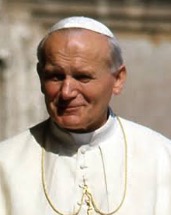
The theme chosen for World Communications Day 2001 echoes the words of Jesus himself. It could not be otherwise, for it is Christ alone whom we preach. We remember his words to his first disciples: “What I tell you in the dark, utter in the light; and what you hear whispered, proclaim upon the housetops” (Mt 10:27). In the secret of our heart, we have listened to the truth of Jesus; now we must proclaim that truth from the housetops.
In today’s world, housetops are almost always marked by a forest of transmitters and antennae sending and receiving messages of every kind to and from the four corners of the earth. It is vitally important to ensure that among these many messages the word of God is heard. To proclaim the faith from the housetops today means to speak Jesus’ word in and through the dynamic world of communications.
The Church’s Role in a Changing World
In all cultures and at all times—certainly in the midst of today’s global transformations—people ask the same basic questions about the meaning of life: Who am I? Where have I come from and where am I going? Why is there evil? What is there after this life? (cf. Fides et Ratio, 1). And in every age the Church offers the one ultimately satisfying answer to the deepest questions of the human heart—Jesus Christ himself, “who fully reveals man to himself and brings to light his high calling” (Gaudium et Spes, 22). Therefore, the voice of Christians can never fall silent, for the Lord has entrusted to us the word of salvation for which every human heart longs. The Gospel offers the pearl of great price for which all are searching (cf. Mt 13:45-46).
It follows that the Church cannot fail to be ever more deeply involved in the burgeoning world of communications. The global communications network is extending and growing more complex by the day, and the media are having an increasingly visible effect on culture and its transmission. Where once the media reported events, now events are often shaped to meet the requirements of the media. Thus, the relationship between reality and the media has grown more intricate, and this is a deeply ambivalent phenomenon. On the one hand, it can blur the distinction between truth and illusion; but on the other, it can open up unprecedented opportunities for making the truth more widely accessible to many more people. The task of the Church is to ensure that it is the latter which actually happens.
Navigating Media Culture and Evangelization
The world of the media can sometimes seem indifferent and even hostile to Christian faith and morality. This is partly because media culture is so deeply imbued with a typically postmodern sense that the only absolute truth is that there are no absolute truths or that, if there were, they would be inaccessible to human reason and therefore irrelevant. In such a view, what matters is not the truth but “the story”; if something is newsworthy or entertaining, the temptation to set aside considerations of truth becomes almost irresistible. As a result, the world of the media can sometimes seem no more friendly an environment for evangelization than the pagan world of the Apostles’ day. But just as the early witnesses to the Good News did not retreat when faced with opposition, neither should Christ’s followers do so today. The cry of Saint Paul echoes among us still: “Woe to me if I do not preach the Gospel” (1 Cor 9:16).
Yet, as much as the world of the media may at times seem at odds with the Christian message, it also offers unique opportunities for proclaiming the saving truth of Christ to the whole human family. Consider, for instance, satellite telecasts of religious ceremonies which often reach a global audience, or the positive capacities of the Internet to carry religious information and teaching beyond all barriers and frontiers. Such a wide audience would have been beyond the wildest imaginings of those who preached the Gospel before us. What is therefore needed in our time is an active and imaginative engagement of the media by the Church. Catholics should not be afraid to throw open the doors of social communications to Christ, so that his Good News may be heard from the housetops of the world!
The Mission Ad Gentes and the Prophetic Task
It is vital too that at the beginning of this new millennium we keep in mind the mission ad gentes which Christ has entrusted to the Church. An estimated two thirds of the world’s six billion people do not in any real sense know Jesus Christ; and many of them live in countries with ancient Christian roots, where entire groups of the baptized have lost a living sense of the faith, or no longer consider themselves members of the Church and live lives far removed from the Lord and his Gospel (cf. Redemptoris Missio, 33). Certainly, an effective response to this situation involves much more than the media; but in striving to meet the challenge Christians cannot possibly ignore the world of social communications. Indeed, media of every kind can play an essential role in direct evangelization and in bringing to people the truths and values which support and enhance human dignity. The Church’s presence in the media is in fact an important aspect of the inculturation of the Gospel demanded by the new evangelization to which the Holy Spirit is summoning the Church throughout the world.
As the whole Church seeks to heed the Spirit’s call, Christian communicators have “a prophetic task, a vocation: to speak out against the false gods and idols of the day—materialism, hedonism, consumerism, narrow nationalism…” (Ethics in Communications, 31). Above all, they have the duty and privilege to declare the truth—the glorious truth about human life and human destiny revealed in the Word made flesh. May Catholics involved in the world of social communications preach the truth of Jesus ever more boldly and joyfully from the housetops, so that all men and women may hear about the love which is the heart of God’s self-communication in Jesus Christ, the same yesterday, and today, and forever (cf. Heb 13:8).